Day trips · From Tokyo · Index
Among the trips on this page, the quickest from central Tokyo are Yokohama (about 25 minutes from Tokyo Station), Kawagoe (about 30 minutes from Ikebukuro) and Kamakura (about an hour from Tokyo Station). Enoshima is about 66 minutes and Hakone about 80 minutes from Shinjuku on Odakyu’s Romancecar, Nikko about 1 hour 50 minutes from Asakusa on Tobu, and Kawaguchiko Station, the gateway to the Fuji Five Lakes, about 1 hour 45 minutes by highway bus from Busta Shinjuku. Several of the classic trips run on private railways that a Japan Rail Pass does not cover, and some times below are to a station with a bus or cable car still to go. One date to plan around: on Saturday 7 November 2026 the JR Yokosuka Line does not run between Tokyo and Shinagawa all day, so Kamakura trains start from Shinagawa.
October and November 2026: the Kawagoe Festival runs on Saturday 17 and Sunday 18 October; the kochia at Hitachi Seaside Park usually turn red around mid-October, though the peak shifts from year to year; Hotokuji in Kiryu holds its autumn floor-reflection opening from 17 October to 30 November, with the maples at their best for only part of it; and Karuizawa Prince plans to open its 2026–27 ski season on 31 October.
Compare the day trips at a glance
One-way adult fares, correct in October 2026; paper-ticket fares unless noted, and IC-card or online fares can differ. On a phone, swipe the table sideways for the route and JR Pass columns. “From” is the exact starting point: Tokyo, Shinjuku, Ikebukuro or Asakusa station, or the Busta Shinjuku bus terminal. Times are to the arrival station or bus stop in the route, not to the sights — allow extra time for onward buses, cable cars and walks.
| Day trip | One way | From | How | JR Pass | Our guide |
|---|---|---|---|---|---|
| Yokohama | about 25 min · ¥530 | Tokyo | JR Tokaido Line, including Ueno-Tokyo Line trains | Yes | — |
| Kawagoe | 30–35 min · ¥490 | Ikebukuro | Tobu Tojo Line express (or JR from Shinjuku, about 60 min, ¥810; or Seibu from Seibu-Shinjuku to Hon-Kawagoe, 50–55 min, ¥600) | Tobu: no · JR: yes | Kawagoe guide |
| Kamakura | 57–60 min · ¥1,040 | Tokyo | JR Yokosuka Line, no change | Yes | Things to do in Kamakura |
| Enoshima | about 66 min by Romancecar, longer by express · ¥650 base fare, plus the Romancecar charge if you take it | Shinjuku | Odakyu to Katase-Enoshima: direct Romancecar (seat charge extra), or an express usually changing at Fujisawa | No (JR to Fujisawa: yes) | — |
| Kinchakuda | 60–75 min · ¥630 | Ikebukuro | Seibu Ikebukuro Line to Koma, change at Hanno | No | Kinchakuda |
| Mito | 65–80 min · fare plus limited-express charge | Tokyo | JR limited express Hitachi or Tokiwa | Yes | Mito day trip |
| Nasu Highlands | 70–80 min to Nasu-Shiobara, plus the bus · Shinkansen fare | Tokyo | Tohoku Shinkansen to Nasu-Shiobara, then a bus up to the highlands | Train yes, bus no | Nasu Highlands |
| Hakone | 75–107 min · ¥2,470 | Shinjuku | Odakyu Romancecar to Hakone-Yumoto | No (JR to Odawara: yes) | Tokyo to Hakone |
| Hitachi Seaside Park | about 85 min to Katsuta, plus the bus · fare plus limited-express charge, plus bus | Tokyo | JR limited express to Katsuta, then bus about 15 min | Train yes, bus no | Flower calendar |
| Fuji Five Lakes | about 1 hr 45 min · ¥2,200, or ¥2,000 where the online fare applies | Busta Shinjuku | Highway bus to Kawaguchiko Station | No | Day trip or overnight? |
| Atami | 1 hr 42 min · ¥2,090 by local train; about 45 min by Kodama, at a higher fare | Tokyo | JR Tokaido Line local, or Kodama Shinkansen | Yes | Kinomiya Shrine |
| Nikko | about 1 hr 50 min · ¥2,850–¥3,250 on a Kegon, by date; Spacia X costs more | Asakusa | Tobu limited express Spacia X or Kegon to Tobu-Nikko | No | Nikko Toshogu |
| Mount Mitake | 1 hr 45–55 min to Mitake Station · ¥1,040, plus bus and cable car | Shinjuku | JR Chuo then Ome Line to Mitake Station, usually changing at Ome; then a bus and the cable car | Yes | Mount Mitake |
| Sawara | 1 hr 50 min–2 hr · ordinary JR fare, no surcharge | Tokyo | JR Sobu Rapid and Narita Line | Yes | Sawara |
South: Kamakura, Enoshima and the Shonan coast
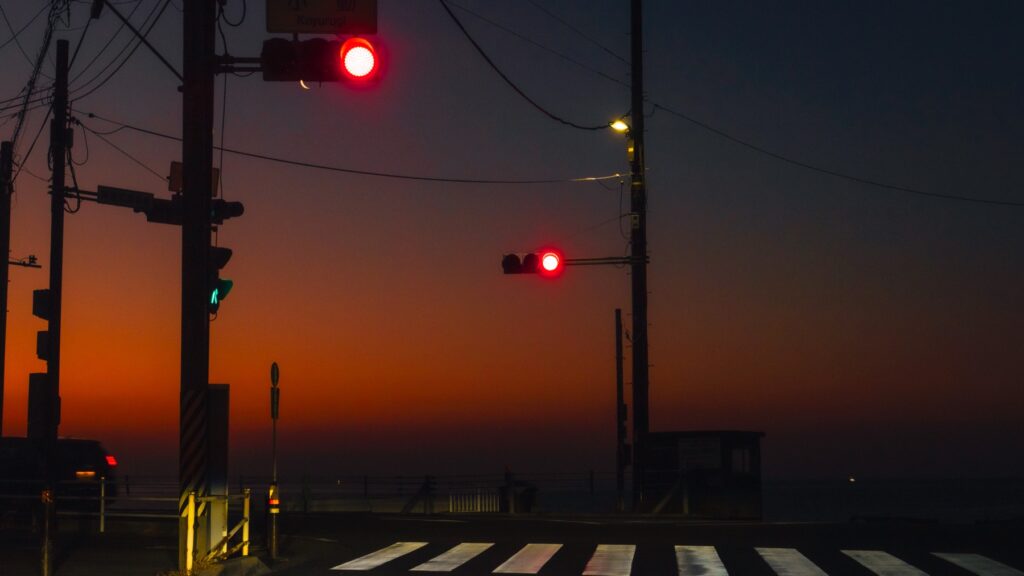
Kamakura is the easiest big day trip from Tokyo Station: one JR line, no change, temples and a bronze Buddha at one end and the sea at the other. The Enoden tram takes about 25 minutes along the coast from Kamakura to Enoshima Station, with a walk across to the island after that, so the two fit into one day. On Saturday 7 November 2026 the Yokosuka Line does not run between Tokyo and Shinagawa: ride the Yamanote, Keihin-Tohoku or Tokaido line to Shinagawa and change there. JR East is not offering alternative transport via other railway companies that day.
- Things to do in Kamakura — the classics, the quiet streets and routes that work in a day
- The Great Buddha at Kotoku-in
- Tsurugaoka Hachimangu, the shrine at the head of town
- Hasedera — the hillside temple, its Sagami Bay view and the June hydrangea path
- Zeniarai Benten and the fox-torii valley, 25 minutes on foot from the station
- The Slam Dunk crossing and how to avoid the crowd
- Shichirigahama at sunrise and three Mt. Fuji photo spots on the same beach
- Shonan at 5 a.m. — the quieter Koyurugi crossing
- Miura Kaigan’s early cherry blossoms (February–March), further down the peninsula on Keikyu
- Minatoan, a one-kilogram plate of Yokohama soba for the price of a bowl
Kawagoe and Saitama
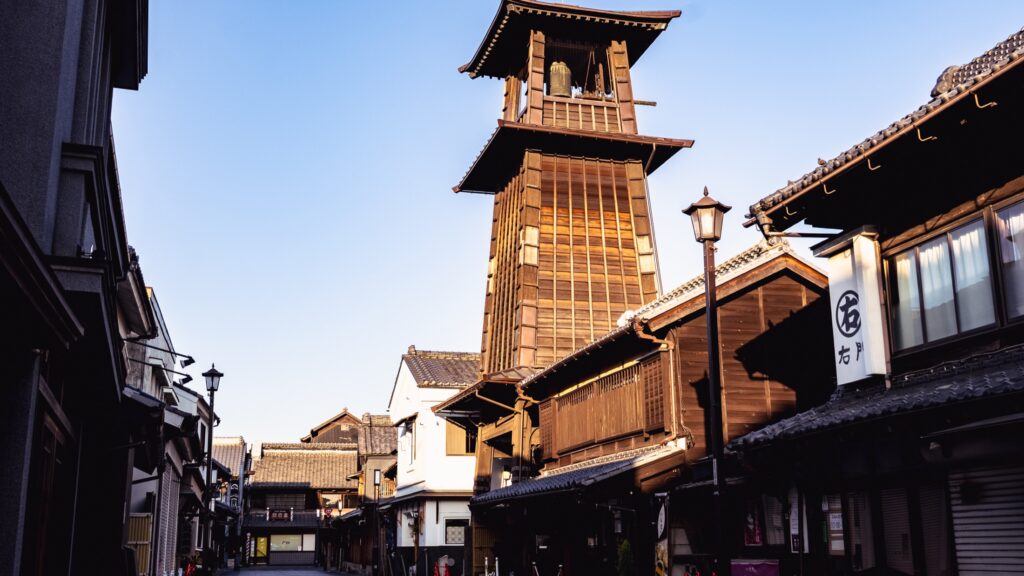
Kawagoe — “Little Edo” — is one of the easiest old-town day trips from central Tokyo, with three railways into it. The warehouse street, the bell tower and two temples fill a relaxed day; the October festival fills the streets with 26 floats. Kinchakuda, on the Seibu line west of Ikebukuro, is the September red-spider-lily trip.
- Kawagoe sightseeing guide — a day in Little Edo
- Kawagoe Festival 2026, 17–18 October
- Kurazukuri Street and the Toki no Kane bell tower
- Kitain — rooms from the original Edo Castle and 538 stone rakan
- Kawagoe Castle Honmaru Goten and Senba Toshogu
- Kawagoe Kumano Shrine and its six rituals you can try
- The Starbucks on Kanetsuki-dori
- Kinchakuda’s red spider lilies (late September)
North: Nikko, Nasu and Kiryu
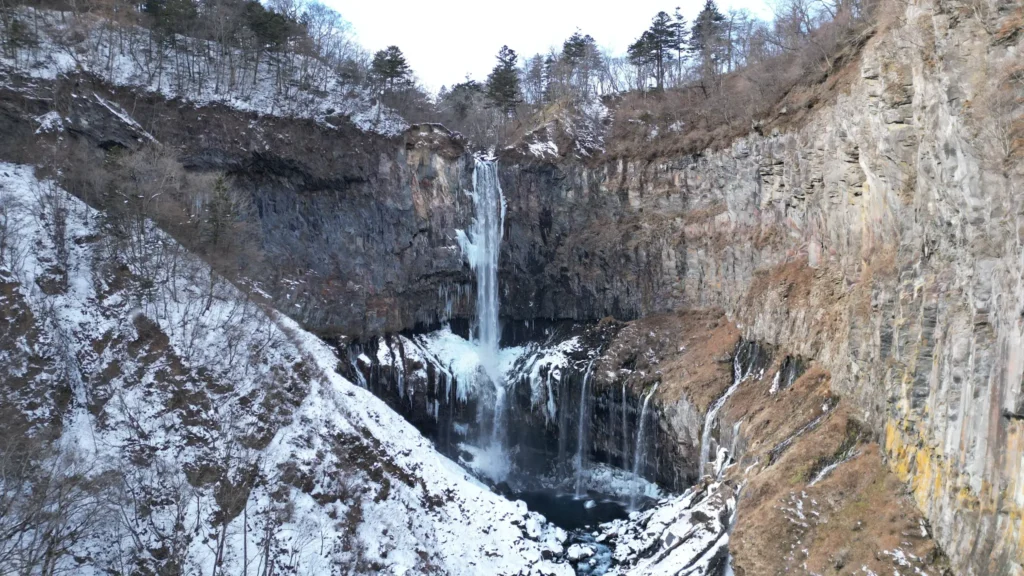
Nikko is a full day: Tobu’s limited express reaches Tobu-Nikko in about 1 hour 50 minutes from Asakusa, the shrines are a short bus ride up the hill, and Kegon Falls and Lake Chuzenji are a ¥1,250 one-way Tobu bus ride up the Irohazaka road beyond that. Nasu-Shiobara is about 70–80 minutes by Shinkansen, with a bus up to the highlands; Kiryu’s Hotokuji, reached by JR and a local bus, is the autumn trip.
- Nikko Toshogu — what to know before you go
- Nikko in winter, with Kegon Falls, Lake Chuzenji, the Irohazaka road and the wild monkeys
- Ten Tochigi waterfalls around Nikko, Shiobara and Nasu
- Nasu Highlands, under an active volcano
- Hotokuji’s floor maples in Kiryu, 17 October – 30 November 2026
West: Mount Mitake, Jindaiji and Mt. Fuji
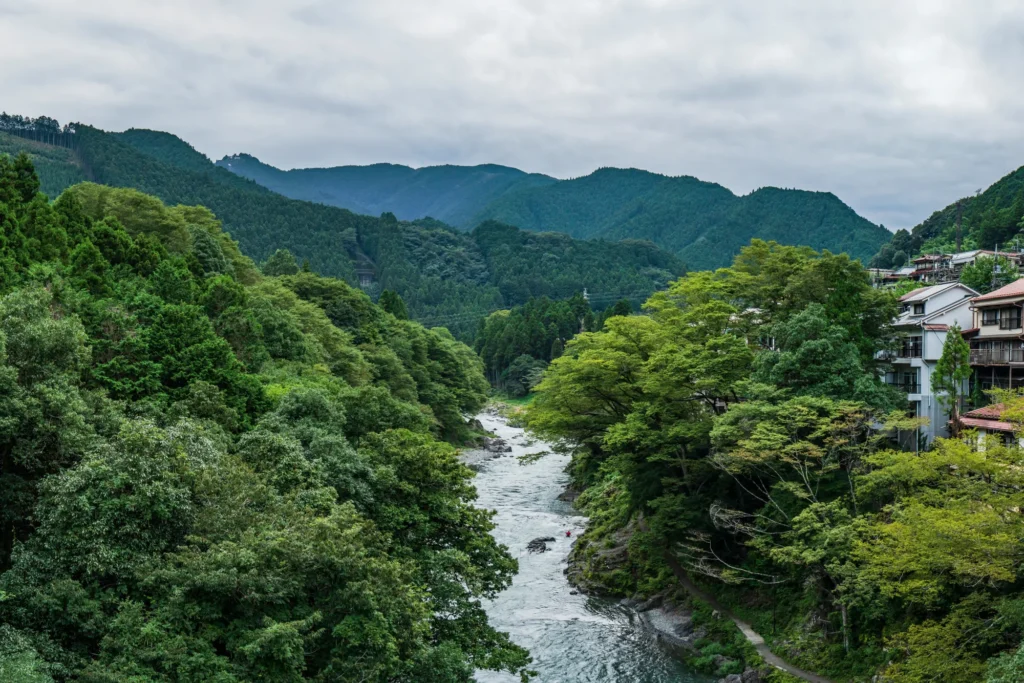
West of the city the trains climb into the hills. Mount Mitake is still inside Tokyo but feels nothing like it; Jindaiji is a temple-and-soba half day. Mt. Fuji has its own guides — whether to go for the day or stay a night is the first decision.
- Mount Mitake — the Rock Garden loop, the shrine and the cable car
- Jindaiji Daruma Ichi (March) and the temple’s soba
- Mt. Fuji: day trip or overnight? and everything else in our Mt. Fuji guide
- Day-trip onsen around Mt. Fuji — eleven baths compared
Southwest: Hakone, Atami and Izu
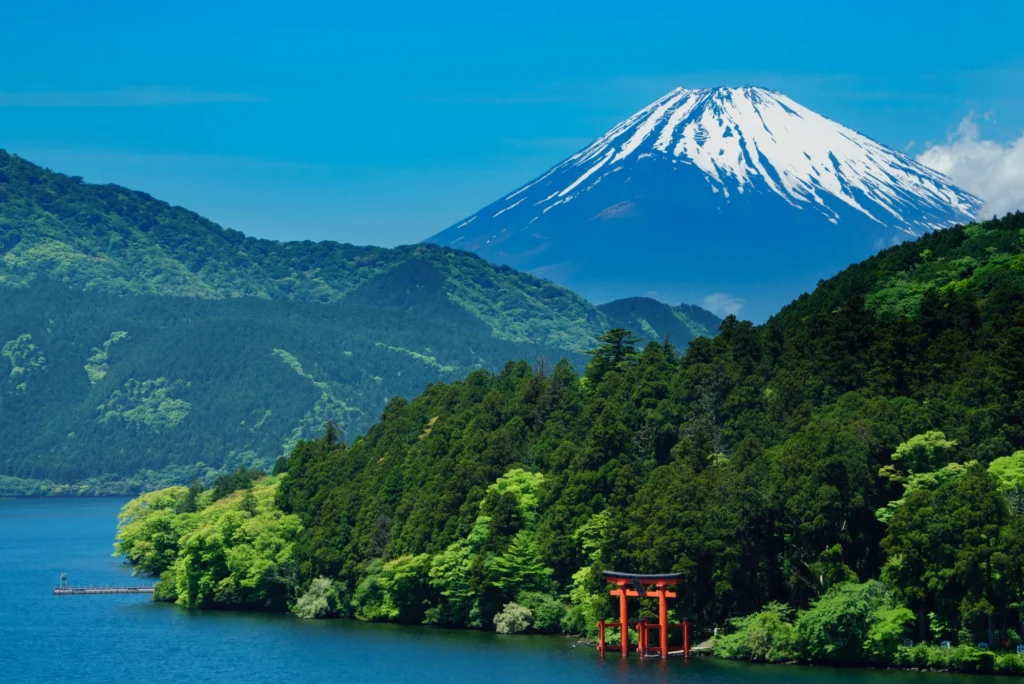
Hakone is the classic: a Romancecar from Shinjuku, then the mountain train, cable car, ropeway and boat loop. Atami is a seaside onsen town on the Tokaido Line and the gateway to the Izu Peninsula.
- Tokyo to Hakone — Romancecar or Shinkansen, the loop, and when the Freepass pays
- Ryuguden Honkan, a day-use onsen with Mt. Fuji over Lake Ashi
- Kinomiya Shrine and its great camphor, with the roasted-barley manju next door
- Atami’s plum blossom festival (winter)
- Matsuda’s early cherry blossoms with Mt. Fuji (February)
- Kaisei’s hydrangea paddies (June)
East and northeast: Ibaraki and Chiba
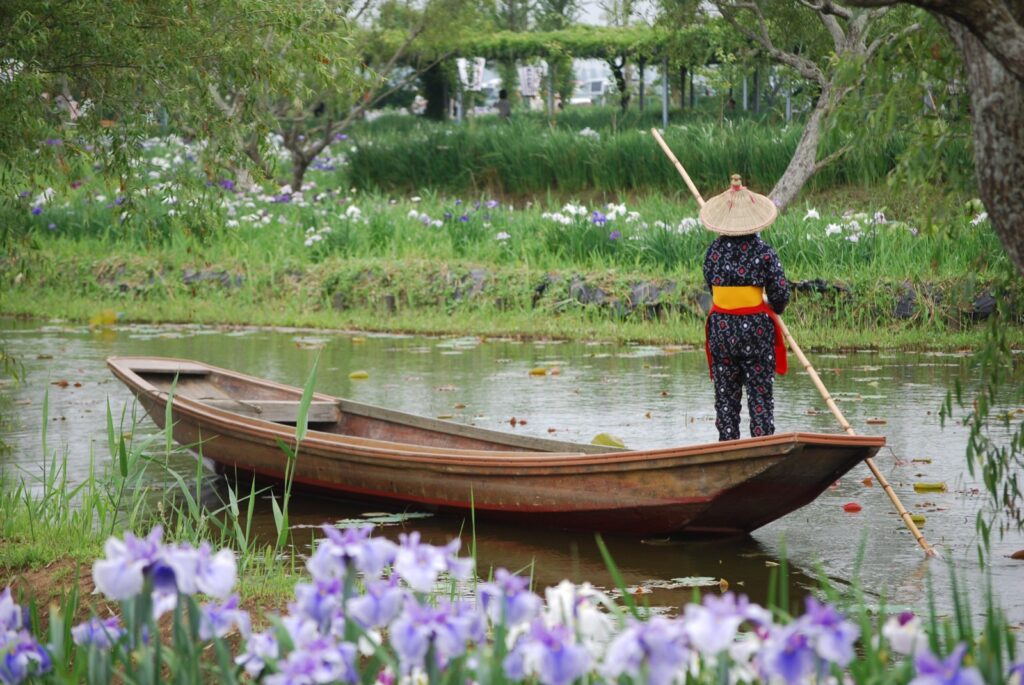
On a JR Pass, the limited expresses make Ibaraki an easy day out: Mito in 65–80 minutes, and Katsuta for Hitachi Seaside Park in about 85 minutes, with a 15-minute bus to the park. Sawara’s canal town is closer to Narita Airport than to Tokyo — useful on an arrival or departure day.
- Hitachi Seaside Park — the month-by-month flower calendar and when the kochia turn red
- Mito — the natto museum, a factory tour and Kairakuen
- Nakaminato Fish Market, best in winter
- Sawara and its canal boats
- The Tone River fireworks (September)
Picks by season
Spring
Early cherry blossoms at Miura Kaigan and Matsuda, plum at Atami, and the nemophila hill at Hitachi Seaside Park from mid-April.
Summer
Go up: ten cooler day trips ranked by August temperatures, Nasu, Mitake, and hydrangeas at Kaisei and Hasedera in June.
Autumn
The Kawagoe Festival, red kochia at Hitachi, Hotokuji’s floor maples and the leaves at Hakone and Mitake.
Day trips without a Japan Rail Pass
The JR Pass covers JR trains, so it works for Kamakura, Yokohama, Atami, Mito, Katsuta (for Hitachi Seaside Park), Sawara, Mitake Station and Nasu-Shiobara — not the buses and cable cars beyond them. It does not cover the private railways that serve many of the classic trips: Odakyu to Hakone-Yumoto and Katase-Enoshima, Tobu to Nikko from Asakusa and to Kawagoe from Ikebukuro, Seibu to Kawagoe and Kinchakuda, Keikyu to Miura Kaigan, the Enoden tram, and the highway buses to the Fuji Five Lakes. Tobu says so itself: a JR Pass alone will not get you onto a Tobu train. JR can still take you part of the way — to Odawara for Hakone, or Fujisawa for Enoshima — with the private railway paid separately from there. Odakyu’s Hakone Freepass pays off if you ride the whole Hakone loop as well as the return journey.
On ordinary tickets, limited expresses need a limited-express or seat charge on top of the fare. A Japan Rail Pass includes that charge on JR trains such as the Hitachi and Tokiwa to Ibaraki, but not on the Romancecar or on Tobu’s Spacia X and Kegon, whose charge also changes with the season.
Questions
What is the easiest day trip from Tokyo?
For the shortest ride, Yokohama: about 25 minutes from Tokyo Station. For temples and the sea in one day, Kamakura: one JR line, no change, about an hour, and covered by the JR Pass. On Saturday 7 November 2026 start from Shinagawa instead: the line does not run between Tokyo and Shinagawa that day.
Which day trips can I do in under 90 minutes by train?
Yokohama, Kawagoe, Kamakura, Enoshima, Mito and Nasu-Shiobara station are all under 90 minutes from the starting points in the table above; Hakone-Yumoto can be under 90 minutes on some Romancecars, but others take up to 107 minutes, so check the timetable if that matters. Nikko, Kawaguchiko, Hitachi Seaside Park, Mount Mitake and Sawara take about two hours each way, some with a bus still to go.
Is the JR Pass worth it for day trips from Tokyo?
Being covered is not the same as being worth it. The pass covers JR to Kamakura, Atami, Mito, Katsuta, Sawara, Mitake and Nasu-Shiobara, but not Odakyu, Tobu or Seibu. Compare the JR fares and JR limited-express or Shinkansen charges you would otherwise pay during the pass’s validity with the price of the pass. Private railway and bus fares are extra either way.
Can I visit Nikko and Kegon Falls in one day?
Yes, with an early start. Tobu-Nikko is about 1 hour 50 minutes from Asakusa; Kegon Falls and Lake Chuzenji are a ¥1,250 one-way Tobu bus ride up the Irohazaka road beyond the station, so the shrines and the falls together make a long day.
Which day trips may need a bus or cable car after the train?
Common examples are Hitachi Seaside Park (a bus from Katsuta), Mount Mitake (a bus and the cable car from Mitake Station), the Nasu Highlands (a bus from Nasu-Shiobara), Hotokuji in Kiryu (a local bus) and Kegon Falls (a bus from Tobu-Nikko). In Hakone the onward transport depends on where you are going. Check the last bus or cable car back before you set out.
Where the times and fares come from, checked 7–8 October 2026
- JR East — fare revision of 14 March 2026 (Kamakura, Yokohama, the JR route to Kawagoe, Atami, Sawara, Mitake) and timetables
- JR East — Yokosuka Line closure between Tokyo and Shinagawa, 7 November 2026
- Hitachi Seaside Park — access by train and bus (about 85 minutes Tokyo–Katsuta by limited express, then about 15 minutes by bus)
- Odakyu — Shinjuku–Katase-Enoshima; Romancecar charges (Shinjuku–Hakone-Yumoto ¥1,270 fare + ¥1,200), with timetable detail in our Tokyo to Hakone guide
- Tobu — Spacia X guide, Asakusa–Tobu-Nikko fare and express charges, seasonal calendar, JR Pass not valid on Tobu; Tobu Bus — Nikko fares
- Seibu — fare table from 14 March 2026 (Hon-Kawagoe, Koma)
- Hotokuji, Kawagoe Festival and Karuizawa Prince dates — Hotokuji, Kawagoe City, Prince Hotels
- Fujikyu — Shinjuku–Kawaguchiko highway bus