Gunma · Autumn 2026
Japan’s national tourism board has exactly one English page about the floor maples at Hotokuji, and it puts the temple in the wrong prefecture — the text says Kumamoto, the address block on the same page says Gunma. That is the problem with the English record here: it exists, and it is inconsistent. The temple’s own English page is much better and still gets the November illumination an hour wrong. None of the five English pages I found mentions that tripods and monopods are banned. The dates you actually want are 17 October to 30 November 2026, ¥800 in October and ¥1,200 in November.
What yuka-momiji is, and why you can photograph it here
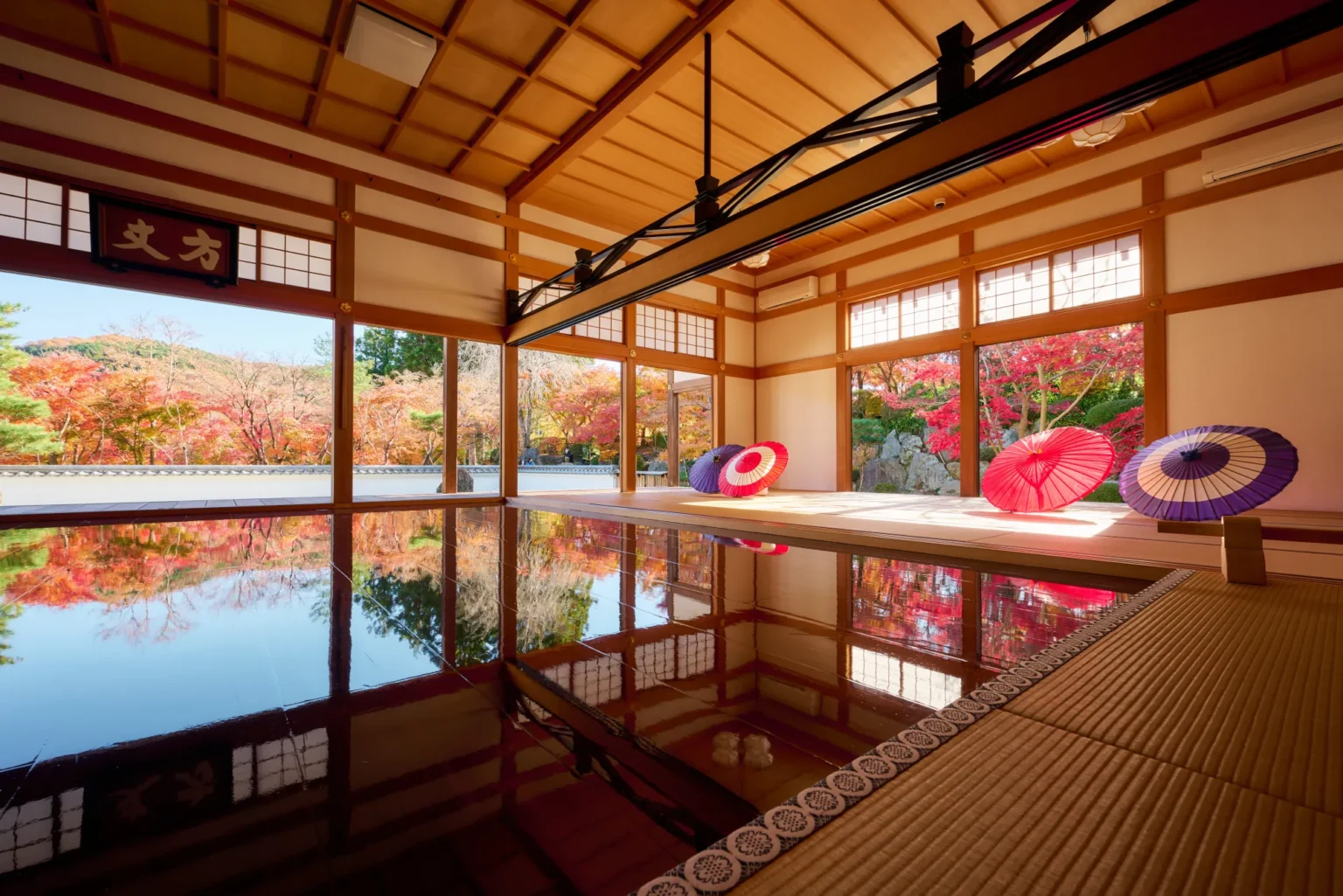
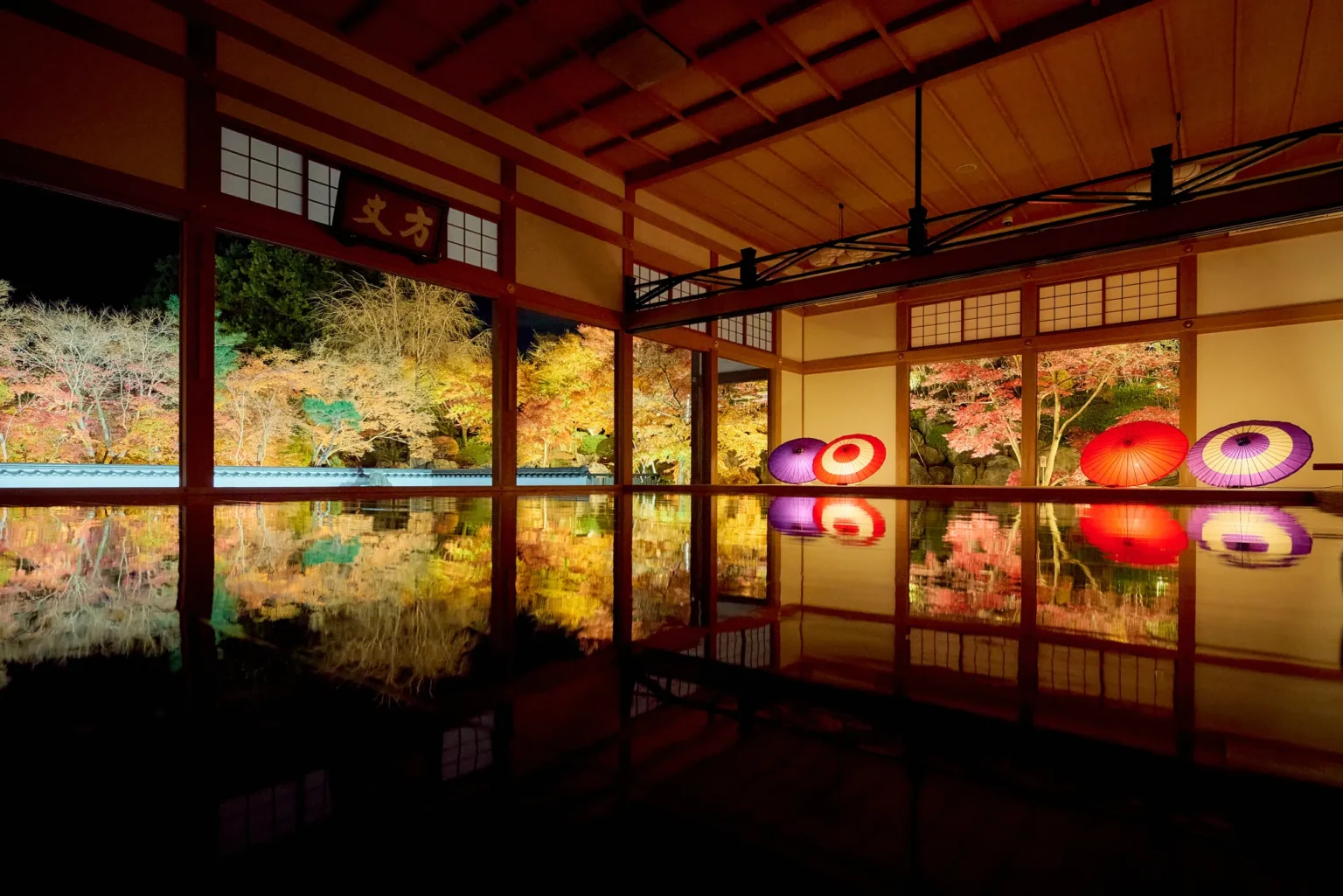
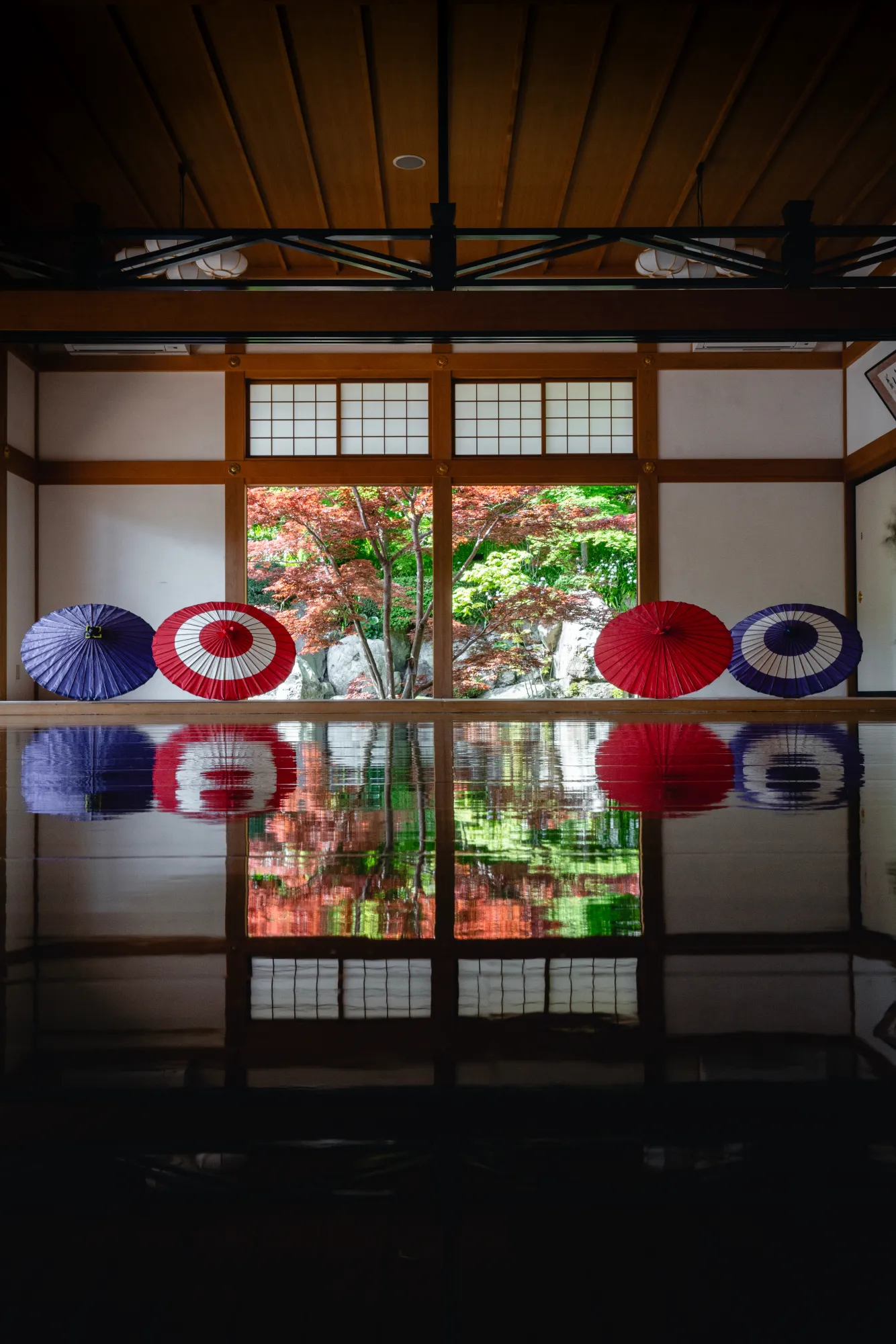
Yuka-momiji — floor maples — is a reflection, not a mirror trick and not an installation. In the main hall at Hotokuji the maples outside appear in a dark, polished floor, across what the temple describes as twenty-eight tatami mats’ worth of it.
Two things have to be true for it to work. The outside has to be much brighter than the inside, and the surface has to be dark and smooth enough to absorb the scattered light that would otherwise wash the image out. That is why these are always dark-floored halls rather than bright modern rooms. Viewing angle matters too: a polished surface returns far more light at a glancing angle than to someone looking straight down at it, which is why this kind of reflection reads best from a low seated position rather than standing.
One correction to a thing you will read: the image flips top to bottom, not left to right. The reflecting surface is horizontal, so the reversal is vertical — the reflected branches hang downward. Photographers then crop the floor and rotate the frame, which is why the results are so hard to tell from the real thing.
The temple most associated with floor maples is the one where you may not photograph them.
For a photographer that is the difference that matters. Jissoin in Kyoto is one of the names most closely tied to yuka-momiji, and its own front page says, in its own English: “Taking photographs of the inside is prohibited.” The ban covers both the autumn yuka-momiji and the green yuka-midori, and it is not new — the same wording has been on the site since at least 2018, with a stricter version going back to 2015.
Hotokuji goes the other way. Photography and social posting are permitted, and that is confirmed independently by JNTO, which writes that “both taking photos and posting them to social media is freely allowed.” I would stop short of the claim the temple itself makes on its Japanese page — that it is probably the only place in Japan where you can do this. Rurikoin in Kyoto bans tripods, monopods, photo sessions and unauthorised commercial work, but not ordinary handheld photography; and Kankyo Geijutsu no Mori in Saga actively advertises its reflecting table as the site’s most popular photo spot. Hotokuji is one of the few, not the only one.
“Floor” is doing a lot of work in that phrase
The surfaces are not all floors. Jissoin and Hotokuji reflect in hall floors. Rurikoin’s famous image is a desk on the upper floor of its shoin — and Rurikoin has never called it yuka-momiji; that name came from photographers and media, not the temple. Kankyo Geijutsu no Mori reflects in a lacquered table. If you go to Rurikoin expecting a floor you will be looking at the wrong thing.
The 2026 dates, and forecasts that land at the very end
Hotokuji runs the floor maples three times a year, and outside those windows you cannot see the effect at all — the temple states that directly. Its English page adds that ordinary entry is free when no paid event is running.
| 2026 opening | Dates and adult admission | Hours |
|---|---|---|
| Autumn floor maples | 17 Oct – 30 Nov · ¥800 in Oct, ¥1,200 in Nov | 9:00–16:00, gate 16:30 |
| Autumn illumination | 14 – 30 Nov · ¥1,200 | 17:00–19:00, gate 19:30 |
| Spring, new green | 18 Apr – 17 May · ¥800 | 9:00–16:00, gate 16:30 |
| Summer, with wind chimes | 27 Jun – 23 Sep · ¥800 | 9:00–16:00, gate 16:30 |
High school age and under is free at every one of them, and there is no separate rate for younger children. Parking is free for ordinary cars; a microbus or anything larger is ¥5,000 and must be booked, and the temple warns that unbooked coaches will not be admitted.
Now the awkward part. Weathernews published its first 2026 foliage forecast on 3 September and gave Hotokuji a start of peak colour on 2 December — tied for the latest of the thirty Gunma locations it tracks. The special opening ends on 30 November. By 5 October its Hotokuji page had moved the date to 29 November, and after its second forecast on 8 October the page gave 27 November (checked 10 October), with leaves starting to fall from 4 December — so the forecast peak now begins three days before the doors shut rather than two days after. The Japan Weather Association also publishes a Hotokuji forecast on its tenki.jp page (Japanese).
How much to trust that
Not very much on its own, but do not ignore it either: Weathernews now puts the start of peak colour three days before the opening ends. The forecaster and the temple also disagree about the normal window: the temple says colour usually peaks “around mid-November”, and Weathernews stretches it to early December. The temple’s own page adds that the opening “may be extended depending on the state of the colour” — which is exactly what you would want it to say in a year forecast like this one. Check the temple’s site in the second half of November before you commit to a late date.
While you are checking, ignore the aggregators on this one. Walkerplus lists the illumination as running from 17 November, a date its own page marks as a Saturday — 17 November 2026 is a Tuesday. The temple says 14 November, which is a Saturday. The same Walkerplus entry still carries a December admission price left over from last year.
What the English pages get wrong
Kiryu is further than it looks
English coverage of this temple is not missing. It is present, and inconsistent. I found five pages and checked each against the temple’s Japanese pages.
| Page | What it gets wrong | Length |
|---|---|---|
| JNTO | Says the temple is in Kumamoto Prefecture; the address on the same page says Gunma. Gives only “mid-October to late November” and no prices | 217 words |
| Hotokuji’s own English page | 2026 dates and prices are right. Illumination hours are not — it says 17:00–20:00, closing 20:30; the Japanese says 17:00–19:00, closing 19:30 | ~1,060 words |
| Good Luck Trip | Says the illumination requires a reservation. The temple says in both languages that it does not | 423 words |
| MATCHA | A sponsored piece from 2025. Gives only “around mid-November” — no exact dates, prices or rules | 663 words on the temple |
| Gunma Prefecture (English) | Says parking is paid in spring and autumn. It is free. Last updated December 2020 | Short entry |
The illumination one is the expensive mistake. An English-only reader who plans to arrive at 19:15 for a session they believe runs until 20:00 will get to a temple whose reception closed at 19:00 and whose gate shuts at 19:30 — and the last bus back to Kiryu Station will already have left, at 18:54.
None of the five mentions the tripod and monopod ban. Nor does any of them carry the two lines that actually determine whether you see anything, which appear only in Japanese: the morning is backlit, so the floor maples are best from about 10:00; and the hall goes dark as the sun drops, so the temple asks you to arrive by about 15:00. For planning, treat 10:00 to 15:00 as the safe window inside a seven-hour opening — which makes those two lines the most useful sentences on the whole site.
The five hours that work, and the rules inside them
Timing
Aim for 10:00 to 15:00. The temple says the scene is backlit before about ten, and that the hall goes too dark once the sun drops, so it asks visitors to arrive by around three. It puts average time on site at about forty minutes, so this is a stop, not a day.
Photography
Handheld only. Tripods and monopods are banned across the whole opening because, in the temple’s words, they cause too much trouble. Anything commercial has to be cleared with the temple in advance.
Access inside
Not barrier-free. Nine steps on the approach, gravel through the grounds, steps at the hall entrance, and wheelchairs cannot go inside the hall. Walking sticks are fine. Eating anywhere in the grounds is prohibited, and pets are asked to stay away during the autumn opening — though they are welcome in spring and summer.
There are no numbered tickets, no timed entry and no booking, for either the daytime opening or the illumination. What the temple does say is that it may limit how long you can stay when it gets busy, and that the illumination is at its most crowded between 17:00 and 18:00.
If you collect goshuin, November is different: the temple writes by hand in October but issues pre-written seals only from 1 to 30 November. Within October, Tuesdays and Fridays are pre-written or returned by post.
Getting there
Hotokuji is at 5-1608 Kawauchi-cho in Kiryu, 20 to 40 minutes from Kiryu Station by local bus depending on the service. Kiryu itself is on the JR Ryomo Line — about 45 minutes from Takasaki or 55 from Oyama by the temple’s own reckoning, and both of those are shinkansen stops.
The bus is the Orihime Bus Kawauchi line from the north exit of Kiryu Station, and you want the stop called Hotokuji-iriguchi. Three things about it are worth knowing before you rely on it.
Three things about the Orihime Bus
It runs eight times a day. Eight services from Kiryu Station reach Hotokuji-iriguchi: 8:25, 10:18, 11:06, 13:08, 14:13, 15:31, 16:45 and 18:09. Coming back there are ten to the station, the last at 18:54.
The journey time is not fixed. The same trip takes anywhere from 19 to 39 minutes depending on the service. The temple’s Japanese page says 20 to 40 minutes; its English page says 20 to 25, which is only the fast end.
You cannot pay with an IC card. Kiryu City’s own instructions list cash, a coupon book or a pass — Suica and PASMO are not mentioned anywhere. The fare is a flat ¥200 and the on-board changer takes ¥1,000 notes only, so a wallet of ¥10,000 notes from the airport will not get you on. A day pass is ¥500.
The consequence for the illumination is straightforward: the last bus back leaves Hotokuji-iriguchi at 18:54, and the gate does not close until 19:30. You can see part of a session and still catch it, but you cannot stay to the end by bus. A taxi solves it, with one caveat the temple prints in Japanese and not in English — taxis do not wait at Aioi Station, so you have to phone for one.
If you want the illumination
The daytime opening can work as a day trip from Tokyo if you start early, and needs no bed. The illumination is the one that does, because the bus problem above has no public-transport answer. Kiryu’s own tourist association lists seventeen places to stay, most of them small; Gunma Prefecture’s English site singles out one guesthouse near the station as having English-speaking staff. If nothing there suits, Takasaki and Oyama are both shinkansen stops within an hour by local train.
Making a day of it in Kiryu
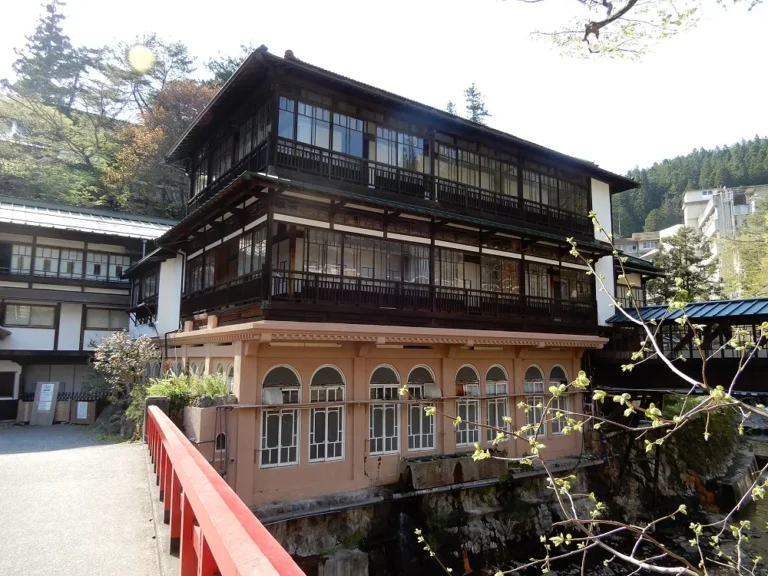
Kiryu was a weaving town, and it still looks like one. The Kiryu Shinmachi district was designated a national Important Preservation District for Groups of Traditional Buildings in July 2012 — the 94th in the country — covering about 13.4 hectares, roughly 260 metres east to west and 820 metres north to south.
Set your expectations honestly, though. Of the 180 protected buildings in the district, only six are factories. The city’s own list of surviving sawtooth-roof weaving sheds runs to 27 addresses, notes that it only includes buildings whose owners agreed to be listed, and has not been updated since 2016 — and the same page says outright that these sheds are being demolished year by year. Gunma Prefecture’s English page on the sawtooth roofs states that “260 buildings still remain”; I could not trace that figure to any Japanese source, and the page was last updated in March 2021.
Two practical warnings. The district has no car park of its own and the city asks visitors to use paid parking nearby; it also asks you not to enter private plots or photograph without permission, because most of these buildings are lived in. And carry cash: on the tourist association’s own map of forty local restaurants, the legend has icons for credit cards, e-money and QR payment but none at all for English menus. Fujiya Shokudo, a well-known sauce-katsudon shop, carries no cashless icon of any kind.
If you were planning to add the Watarase Keikoku Railway, check first. The Torokko Wasshi trolley service is not operating between July and September 2026. The other trolley service runs only between Omama and Ashio rather than from Kiryu, which turns it into a full day and does not combine with the temple.
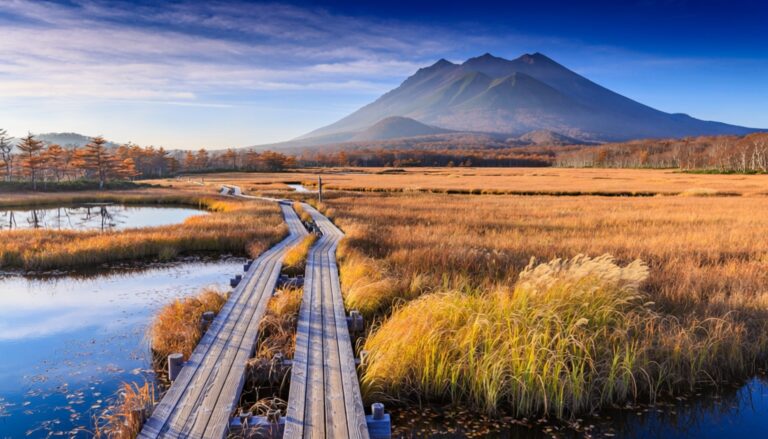
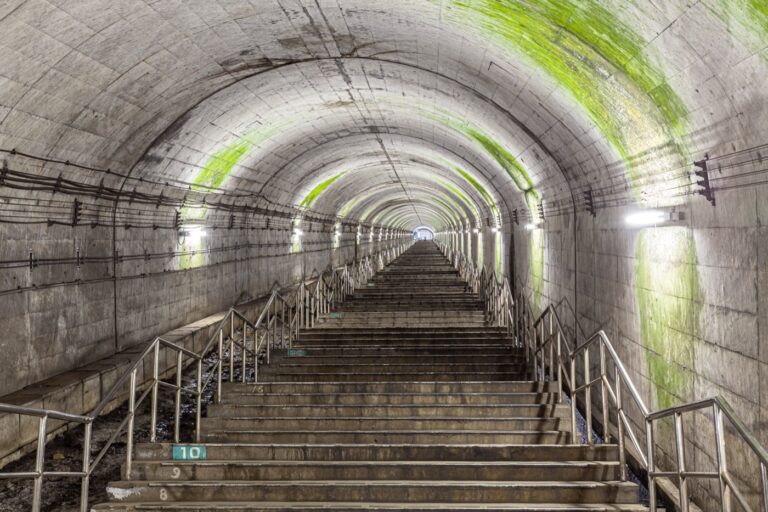
For where this sits in the wider season, our koyo tracker follows the forecasts as they are revised and Japan in November 2026 sets out the month. Elsewhere in Gunma we have written about Doai Station, the platform buried under a mountain and about the grass autumn at Oze, which peaks weeks before anything in this article. If you like places where the English record is thin or wrong, the same approach produced our pieces on the Aigi Tunnels, Yujaku Park and Raizan Sennyoji and the Kawaguchiko autumn festival.
Questions people actually ask
Can I photograph the floor maples at Hotokuji?
Yes, handheld, and you may post the results. Both the temple and JNTO say so explicitly. Tripods and monopods are banned for the whole opening period, which none of the English pages I checked mentions, and commercial shoots have to be arranged with the temple in advance. This is unusual: Jissoin in Kyoto, the best-known floor-maple temple, prohibits all indoor photography.
When exactly is the 2026 autumn opening?
17 October to 30 November 2026, reception 9:00 to 16:00 with the gate closing at 16:30. Admission is ¥800 in October and ¥1,200 in November, free for high school age and under. The illumination runs 14 to 30 November, 17:00 to 19:00 with the gate closing at 19:30, at ¥1,200. The temple says the opening may be extended if the colour is late, so check before travelling for a date near the end.
What time of day should I go?
Between 10:00 and 15:00. The temple’s Japanese page explains why: the morning sun is behind the garden, so the reflection does not read well before about ten, and the hall gets too dark once the sun drops, so it asks visitors to arrive by around three. Average time on site is about forty minutes.
Can I do the illumination without a car?
Not comfortably by bus. The last bus from Hotokuji-iriguchi to Kiryu Station leaves at 18:54 and the gate does not close until 19:30. A taxi works, but the temple warns — in Japanese only — that taxis do not wait at Aioi Station, so you would need to call one. If the illumination is why you are going, plan on driving or staying nearby.
Can I see the floor maples outside the special openings?
No. The temple states that the floor maples cannot be viewed except during the spring, summer and autumn special openings. Outside those periods the temple is open 9:00 to 16:00 and there is no admission charge, but the effect is not set up.
Is it accessible for a wheelchair user?
No. The temple is direct about this: the approach has nine steps, the grounds are gravel, there are steps at the hall entrance, and wheelchairs cannot be taken inside the hall. Walking sticks are permitted. The English page mentions stairs and gravel but not the step count or the wheelchair restriction.
Is this the same Hotokuji I have read about near Nara?
No. There is a Hotokuji in Yagyu, Nara — the Yagyu family temple — which also appears in English travel writing. This one is Daikozan Hotokuji, a Rinzai temple of the Kenchoji branch founded around 1450 in what is now Kiryu, Gunma. If you are searching, include Kiryu or Gunma.
Sources
The primary sources behind every figure above
- Hotokuji — official Japanese pages for the spring, summer and autumn openings, the main hall, the temple history, goshuin, the photography scheme and the travel-trade page, plus the official English page and the access map images
- Jissoin — official site, including its own English notice on photography, and archived versions from 2015 and 2018 · Rurikoin — admission conditions · Kankyo Geijutsu no Mori — official facility page
- Kiryu City — Orihime Bus timetables and fare and payment pages, the Kiryu Shinmachi preservation district pages, the sawtooth-roof factory list · Kiryu Tourism and Products Association — lodging list and restaurant map (January 2026)
- Weathernews 2026 foliage forecast, published 3 September 2026, prefecture and spot pages (Hotokuji page re-checked 5 and 10 October 2026, after the second forecast of 8 October) · Japan Weather Association, Hotokuji page on tenki.jp · Walkerplus
- Watarase Keikoku Railway — trolley train pages
- JNTO, Good Luck Trip, MATCHA, Gunma Prefecture’s English site, japan-guide, Time Out, Tokyo Cheapo and Voyapon, all checked 4 September 2026
- The Japan News (Yomiuri), December 2024 and May 2025, for established English usage of yuka momiji · HyperPhysics, Georgia State University, for the law of reflection
Join travelers discovering Japan's hidden side
Weekly dispatches from off-the-beaten-path Japan — spots and stories you won't find in guidebooks.
No spam. Unsubscribe anytime.
Welcome aboard!
You're in. See you in your inbox soon.