Tochigi · Highland · Active Volcano
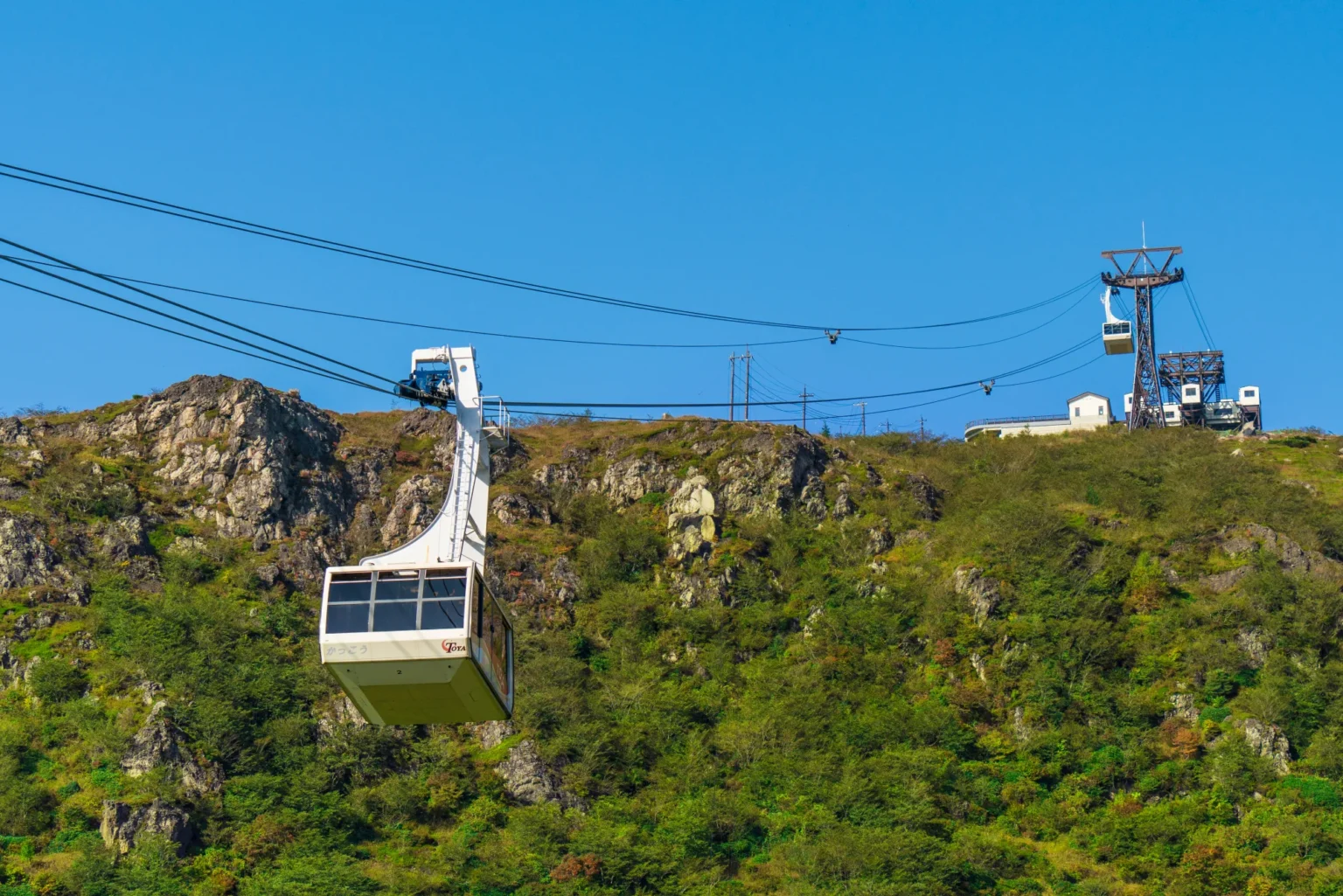
Nasu Highlands is a cool-summer plateau under an active volcano, about 75 minutes north of Tokyo by Shinkansen. The resort belt sits roughly 600–1,000 m up, so midsummer highs hover around 25°C — noticeably cooler than the Kanto plain, which is why it has long been a summer retreat, with the imperial family’s villa in the forest here. This is the Nasu area of Nikko National Park. This guide covers the highland: riding the ropeway up Mt. Chausu, the sulphur springs and the “killing stone,” the free dairy farm, and how to reach it all by train or car in 2026.
Nasu Highlands: quick facts
Why Nasu is a cool escape
The cool comes from altitude. The Nasu Kogen resort belt runs roughly 600 to 1,000 metres above sea level, and by the standard rule of about 0.6°C lost per 100 metres, that puts it several degrees below the Kanto plain on the same day — midsummer highs sit around 25°C while Tokyo swelters. It has been a recognised summer retreat (hisho-chi) for well over a century. Above the resorts, the land tips up into the bare, steaming Nasu volcano group, and that contrast — cool pastures below, volcanic summits above — is the shape of a Nasu day.
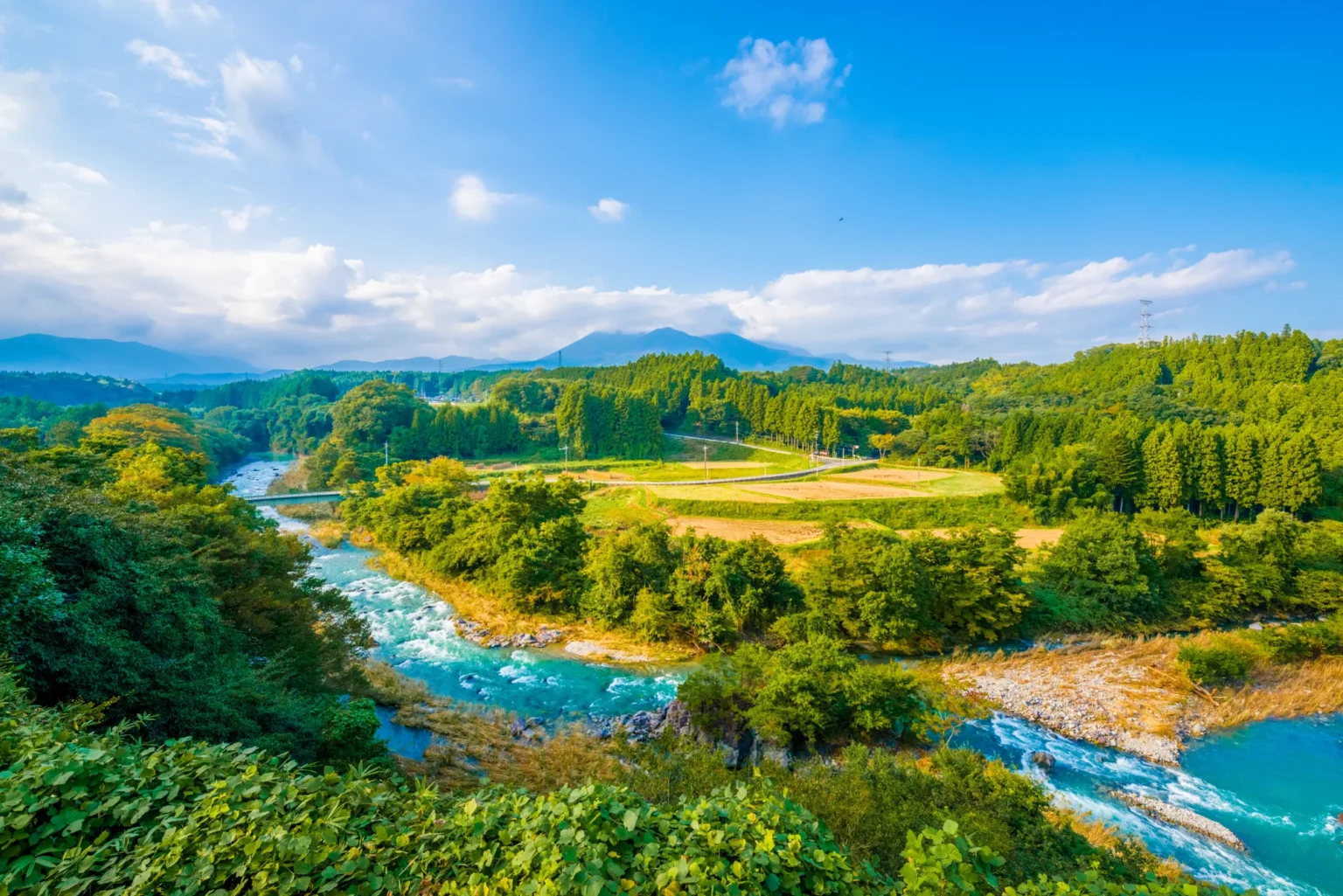
Riding the Nasu Ropeway up Mt. Chausu
The main event up top is the Nasu Ropeway, which climbs the flank of Mt. Chausu (Chausudake) — at 1,915 m the main peak of the Nasu volcano group, and an active volcano. The cabin runs from the base station at about 1,391 m up to the top station at 1,684 m in roughly four minutes, leaving you on open, wind-scoured slopes with long views back over the highland. Reaching the true summit from the top station is a further climb of roughly 50 minutes on foot over open volcanic ground — an estimate, not a stroll, so check the conditions and the alert first.
| Nasu Ropeway (2026) | Detail |
|---|---|
| Operating season | March 20 – December 13, 2026 (may change for maintenance) |
| Hours | 8:30–16:30 (last ascent 16:00), departures every 20 min |
| Adult fare | ¥2,000 round trip / ¥1,500 one way |
| Child fare (age 3–elementary) | ¥1,000 round trip / ¥750 one way |
| Parking | ~150 free spaces at the base station |
The volcanic side: the “killing stone” and the sulphur springs
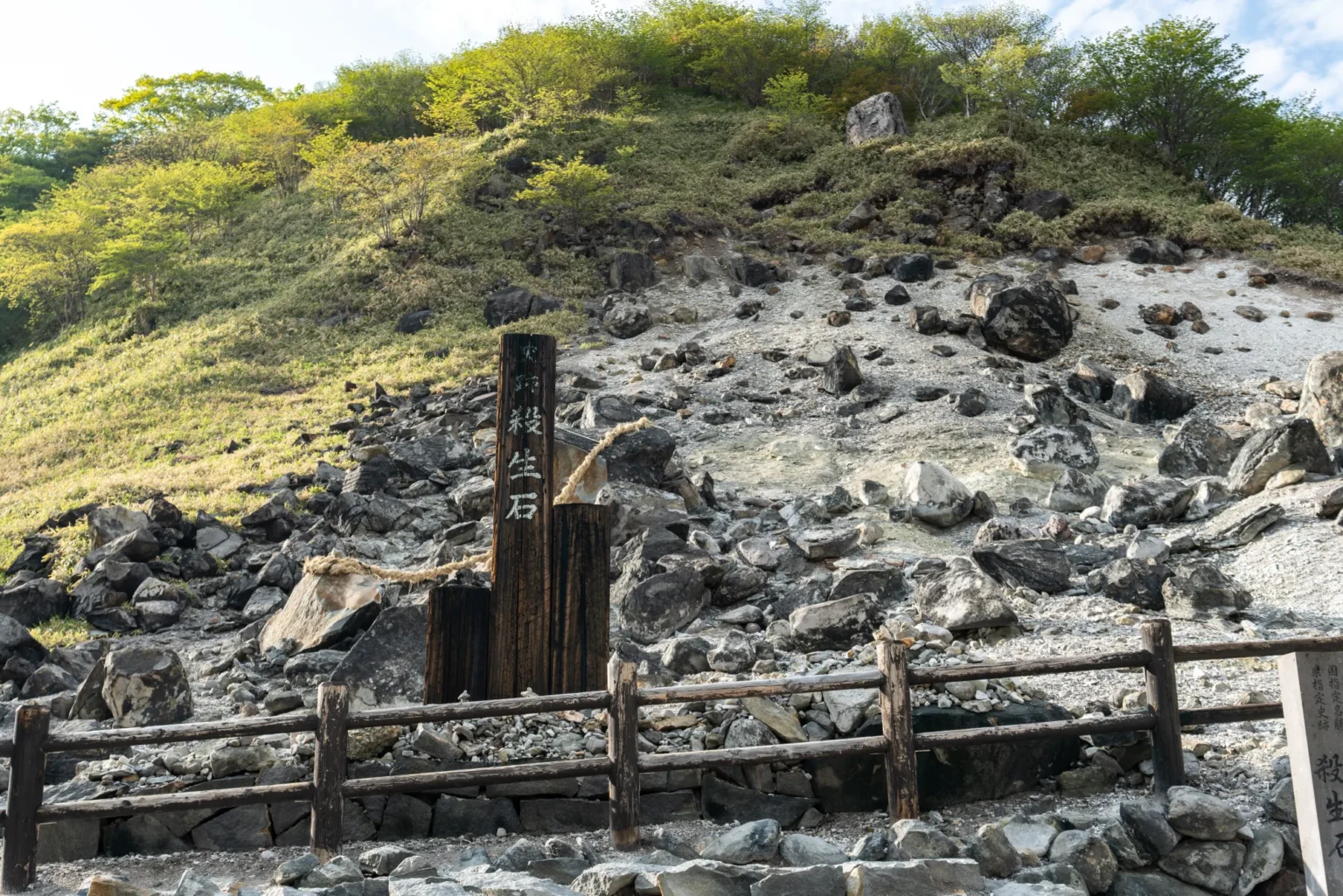
Down at the foot of the volcano is one of Nasu’s strangest sights. Sessho-seki, the “killing stone,” sits in a barren lava field called Sai-no-kawara where volcanic gases — sulphur dioxide and hydrogen sulphide — seep from the ground, leaving the hollow bare of plants. In legend it is the petrified form of a murderous nine-tailed fox; the poet Bashō walked past it on his Oku no Hosomichi journey, and the rock famously split in 2022. A wooden boardwalk circuits the field — stay on it and follow the gas warnings.
Right beside it is Nasu Yumoto Onsen, the highland’s old hot-spring village, where sulphurous water has been drawn for centuries below the Onsen Shrine. It is the most atmospheric base for a night, and — usefully — it sits directly on the bus line up from the station.
Beyond the volcano: farms, forest and a suspension bridge
Most of a Nasu day is spent lower down, in the green belt of farms and forest. These are the highland’s easy, family-friendly stops.
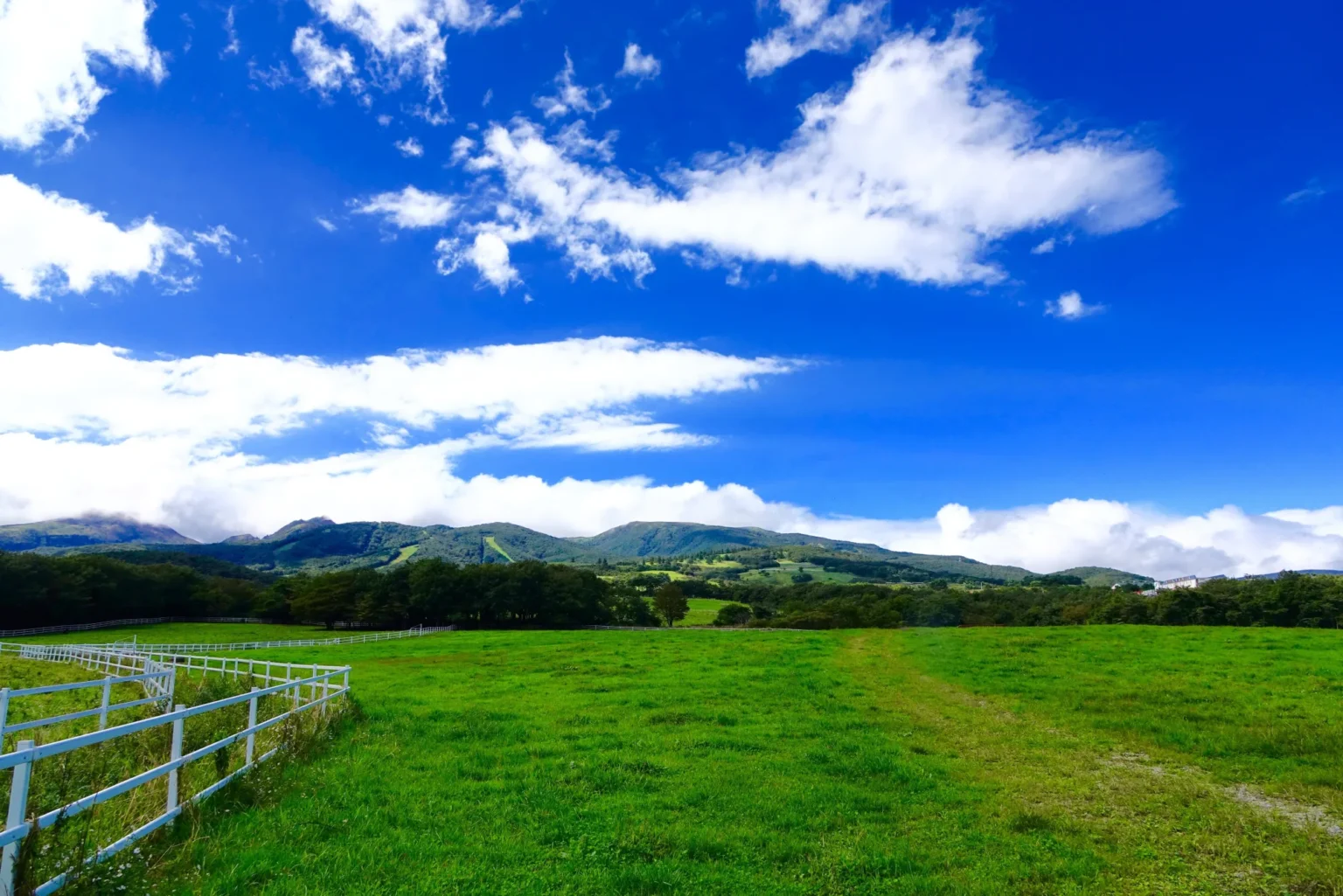
Minamigaoka Farm 南ヶ丘牧場
A working dairy at about 650 m — free to enter and free to park — with rare Guernsey cattle, sheep and horses, plus soft-serve, cheese and animal contact. The signature Nasu stop for families.
Nasu Heisei-no-Mori 那須平成の森
Part of the old imperial villa grounds, opened to the public in 2011 — a large, quiet forest of walking trails and guided nature zones, and the trailhead for the emerald-green Komadome Falls (about 20 m).
Tsutsuji Suspension Bridge つつじ吊橋
A pedestrian suspension bridge about 130 m long and 38 m above the gorge near the Nasu Kogen viewpoint, with views toward the Nasu range — best when azaleas colour the slopes in early summer.
Highland food
Nasu is dairy land: at Minamigaoka Farm the draw is Guernsey “golden milk,” soft-serve and yogurt, and highland menus lean on Nasu Kogen vegetables and local cheese.
How do I get to Nasu Highlands?
Nasu is one of the easier highland escapes to reach without a car — but only in season.
By train + bus (car-free, April–November)
- Take the Tohoku Shinkansen from Tokyo to Nasushiobara Station — about 75 minutes on the Nasuno service.
- From the station’s West Exit, ride the Kanto Bus “Nasu Line” up through Nasu Yumoto Onsen to the Nasu Ropeway base — about 75 minutes, ¥1,640 one way.
- Get off at your onsen, farm or the ropeway along the way; the bus threads the main highland sights.
By car
Leave the Tohoku Expressway at the Nasu IC (or the ETC-only Nasu Kogen Smart IC) and climb Prefectural Route 17, the old Volcano Highway, up to the ropeway — roughly 30 minutes from the interchange. Parking at the ropeway base is free (about 150 spaces), but it can fill and lock during the summer holidays and autumn foliage, when a prefectural overflow lot a short walk down the trail takes the spillover. A car also unlocks the pensions and glamping sites spread off the bus line.
Flying in
There’s no practical airport at the door — Fukushima Airport is small and transfer-heavy. International and Southeast-Asian travelers reach Nasu the same way most Tokyo day-trippers do: into Haneda or Narita, across to central Tokyo, then the Shinkansen to Nasushiobara.
Some links below are affiliate links — booking through them supports this site at no extra cost to you.
Plan a Nasu trip
Where to stay
For atmosphere and the easiest car-free trip, sleep in Nasu Yumoto Onsen — the old sulphur-spring village nearest the volcano, lined with ryokan and right on the Kanto Bus line, so you can arrive and get around without a car. The wider Nasu Kogen highland spreads out into resort hotels, log-cabin pensions and a growing cluster of glamping sites (some on working dairy ranches) — characterful, but many sit off the bus route, so they suit a car or a lodging shuttle. For the most hotel choice and English support, Nasushiobara and the plain below are the fallback.
Base on the highland
Booking.com covers the resort hotels and Nasushiobara; Rakuten Travel has the traditional onsen ryokan in Nasu Yumoto. Stay on the highland, not down on the plain, to wake up in the cool.
When to visit
July and August are the sweet spot: the highland stays around 25°C while the plain bakes, and the ropeway and Mt. Chausu hiking season is in full swing. Go on a weekday morning to beat both the heat below and the parking lockouts up top. Spring brings azaleas to the slopes; autumn brings foliage and the year’s biggest crowds. Winter is quiet and cold — the ropeway closes and the buses stop short — but the onsen are at their best.
Make it a wider trip
Nasu pairs naturally with the highlands and waterfalls just west of it — the falls around Nikko, Shiobara and Nasu are an easy add-on. If you’re building a cool-weather itinerary, Nasu is one of the stops in my guide to Japan’s coolest summer drives, and it fits the wider 2026 coolcation idea of trading the lowland heat for altitude.
Practical tips
- Check the volcano status. Chausu is active — read the JMA Nasudake alert before hiking above the ropeway top station.
- Buy the bus pass. The 1-day (¥1,500) or 2-day (¥3,000) Kanto Bus pass beats paying per ride.
- Mind the season. Ropeway and full bus service run roughly April–November; winter closes both.
- Layer up top. The base is mild, but the exposed 1,684 m top station is windy and cool even in August.
- Arrive early on peak days. The free ropeway lot locks when full in the summer holidays and foliage season.
Common questions
How cool is Nasu Highlands in summer?
The resort belt sits around 600–1,000 m, so midsummer highs run near 25°C — several degrees below the Kanto plain and Tokyo. It has been a summer retreat for over a century, which is why the imperial villa is here. Up at the 1,684 m ropeway top station it’s cooler and windier still.
How much is the Nasu Ropeway in 2026?
Adults pay ¥2,000 round trip (¥1,500 one way) and children (age 3 to elementary) ¥1,000 round trip; junior-high students and older pay the adult fare. It runs March 20 to December 13, 2026, 8:30–16:30 with departures every 20 minutes, and base-station parking is free.
Can I visit Nasu without a car?
Yes, from April to November. Take the Shinkansen to Nasushiobara (~75 min from Tokyo), then the Kanto Bus Nasu Line up through Nasu Yumoto Onsen to the ropeway (~75 min, ¥1,640). For a round trip, the 2-day Nasu Kogen Free Pass (¥3,000) covers the Nasu Line; the ¥1,500 one-day pass is only for the local sightseeing loop. In winter the buses stop lower down and the ropeway closes.
Is Mt. Chausu safe to visit?
The ropeway and the marked trails are open and popular, but Chausu is an active volcano kept under a JMA alert level (Level 1 at last report). The ropeway and marked trails are open and popular; if you plan to hike to the summit, check the JMA Nasudake alert that day and stay clear of fumarole zones.
What’s the “killing stone”?
Sessho-seki is a rock in a barren, gas-seeping lava field beside Nasu Yumoto Onsen, wrapped in a legend of a murderous nine-tailed fox. Volcanic gases keep the ground bare; a boardwalk crosses the field. The famous stone split in 2022.
Is Minamigaoka Farm free?
Yes — both entry and parking are free at Minamigaoka Farm, a working dairy at about 650 m with Guernsey cattle, soft-serve and animal contact. You pay only for what you eat and do.
Plan the trip
Three doors into a Nasu visit. Book the onsen base first.
Keep reading
- Japan’s coolest summer drives 2026 — where Nasu fits in a nationwide cool-weather list.
- Tochigi waterfalls — 10 falls around Nikko, Shiobara and Nasu.
- Coolcation Japan 2026 — how I trade the summer heat for altitude.
Written by Nobu, hiddenjapan-gems.com. Last updated August 2026. Ropeway season, hours and 2026 fares, bus fares and passes, and site details checked against the Nasu Ropeway official site, the Nasu Tourism Association (nasukogen.org), Kanto Bus and Nasu Town. Volcanic-alert status changes — check the JMA Nasudake page before any summit hike — and bus timetables and seasonal dates shift, so confirm the current year’s schedule before you travel.
Join travelers discovering Japan's hidden side
Weekly dispatches from off-the-beaten-path Japan — spots and stories you won't find in guidebooks.
No spam. Unsubscribe anytime.
Welcome aboard!
You're in. See you in your inbox soon.