
Introduction
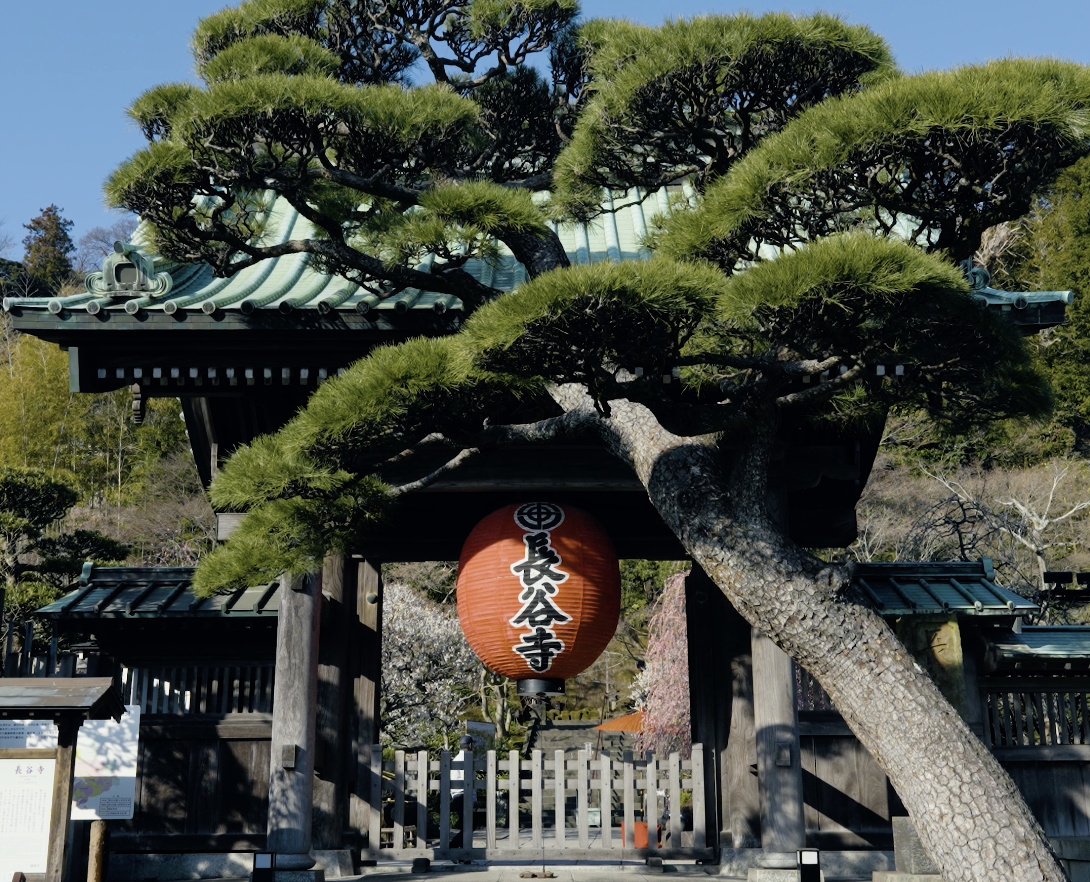
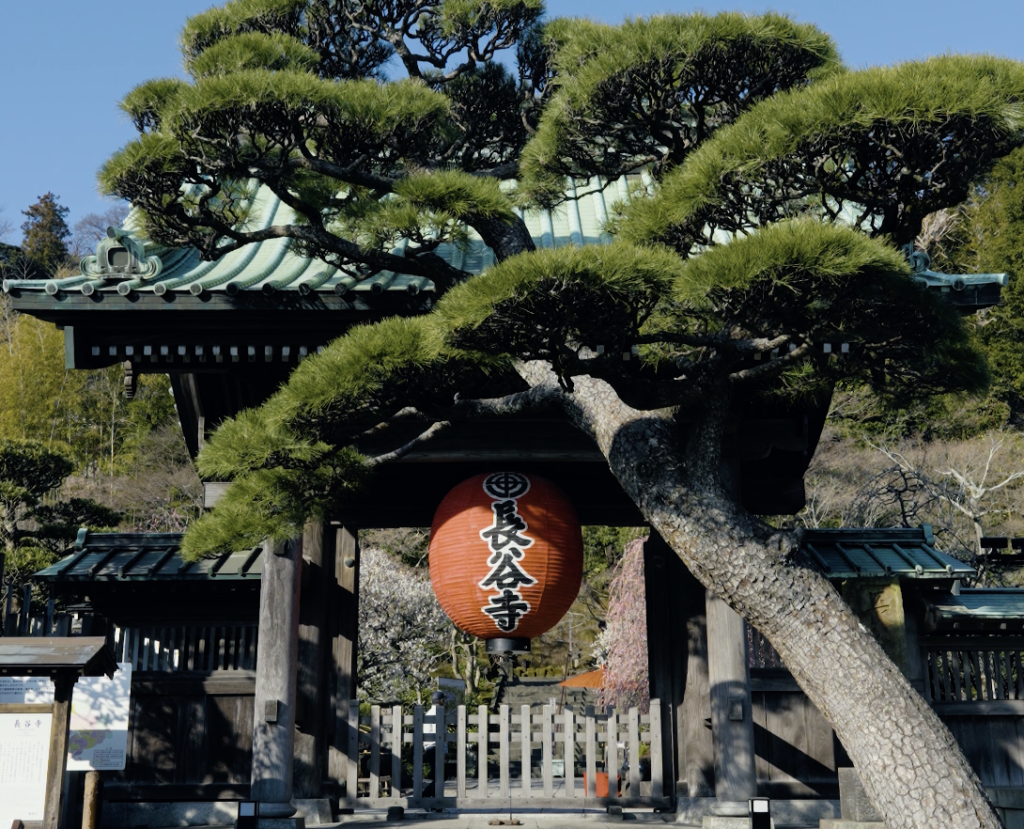
Kaikōzan Hasedera is an 8th-century Jōdo-sect temple on the wooded hillside above Hase Station in Kamakura, founded in 736 around an eleven-headed Kannon statue said to have washed ashore from Nara fifteen years after its twin was carved. The lower garden is flat; the upper grounds climb to a Sagami Bay viewpoint and the Ajisai Path with about 2,500 hydrangea plants. I have visited in February for the plum garden (the photos in this guide are from that trip), in June for the hydrangeas, and in late November for the maples — the temple feels like four different places depending on which month you arrive. For the ajisai-specific deep dive comparing Hasedera Kamakura to its 8th-century twin in Nara, see Two Hasedera, Two Hydrangea Weeks: Kamakura and Nara Twin Temples (June 2026).
Table of Contents
Quick Facts
| Feature | Details |
| Best Time to Visit | Early–mid June for hydrangeas; late February for plum blossoms; late Nov–early Dec for autumn leaves. |
| Time Needed | 1.5 to 2 hours (2.5 hours in ajisai season with the queue) |
| Nearest Station | Hase Station (Enoden Line), 5-min walk |
| Admission Fee | Temple: ¥400 adults / ¥200 children. Ajisai Path (June only): additional ¥500 Ajisai-ken per person. |
| Hydrangeas (June) | ~2,500 plants, 40+ varieties on the Ajisai Path; peak early to mid June. |
| Online Reservation | Required for Ajisai Path on peak weekends. Opens Thursdays at 10:00 JST for the following week on hasedera.jp. |
| Payment Methods | Cash (temple gate). Online Ajisai-ken accepts credit cards. |
| Crowd Level | Moderate year-round. Peak June weekends: 2–3 hour wait without reservation. |
| Accessibility | Lower grounds mostly flat. Upper grounds and Ajisai Path involve stairs. Not wheelchair accessible. |
An Overview of Hasedera’s Charm
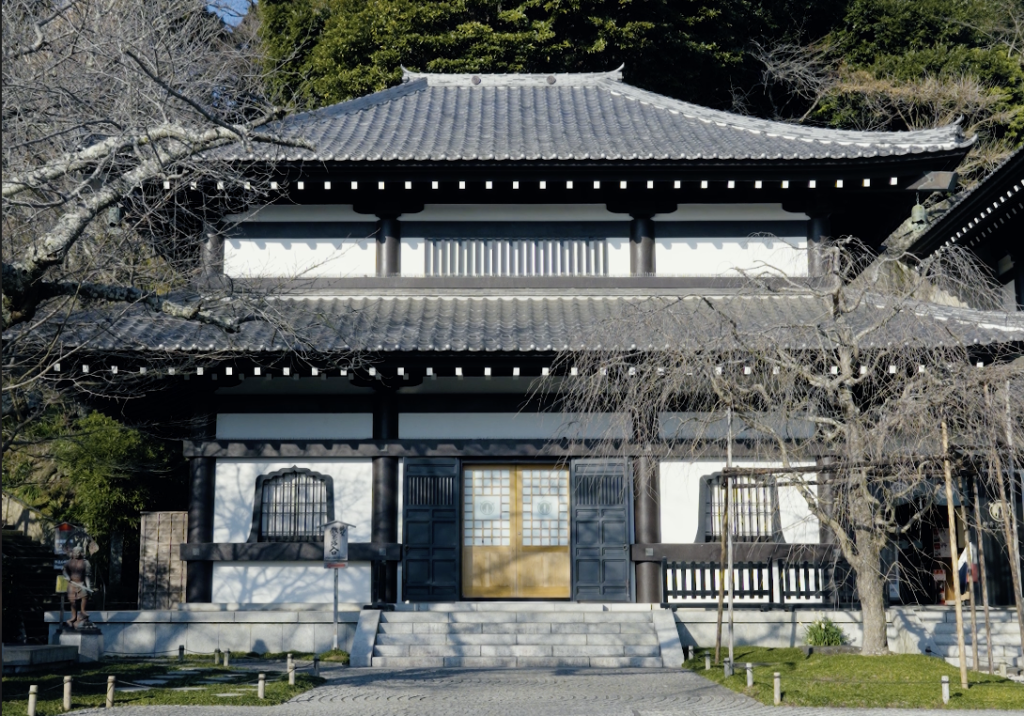
Hasedera, formally known as Kaikouzan Jishouin Hasedera, is a temple of the Jodo sect, founded in the year 736 . Perched on a wooded hillside, it is most famous for its massive, eleven-headed statue of Kannon, the goddess of mercy. At 9.18 meters (about 30 feet) tall, this gilded wooden statue is one of the largest of its kind in Japan and is a truly awe-inspiring sight. But the temple’s appeal extends far beyond its main hall. The grounds are split into a lower level, with a beautiful traditional garden and pond, and an upper level, which offers panoramic views of Kamakura’s coastline and the town below.
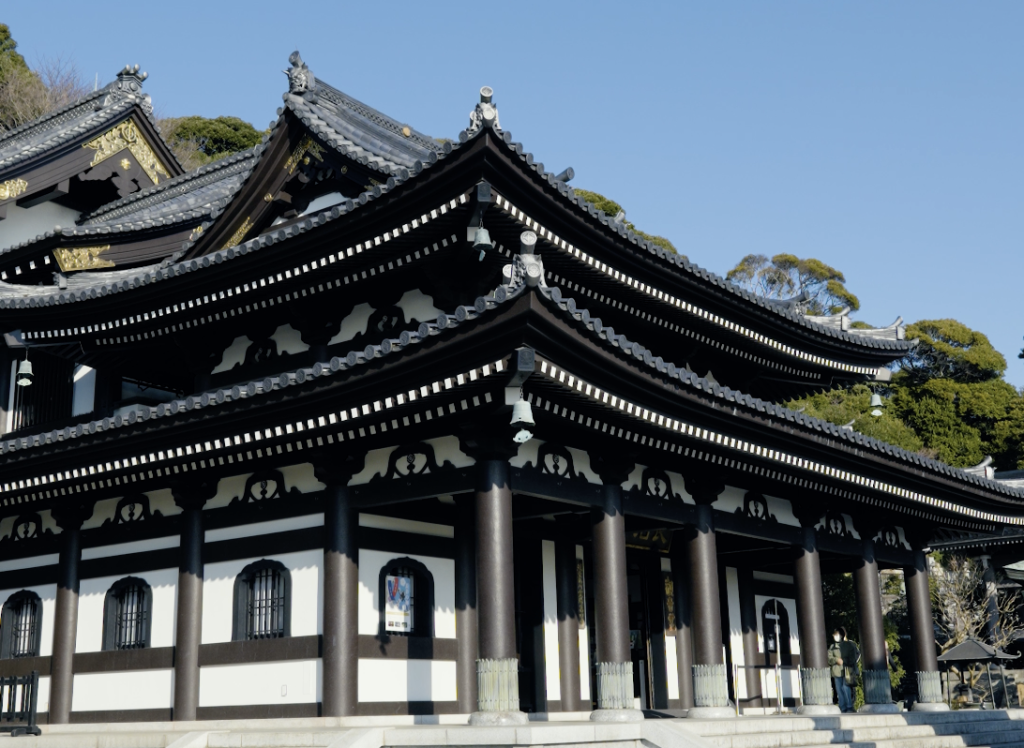
Known as the “flower temple,” Hasedera’s gardens are meticulously maintained and offer a different spectacle each season, from the famous hydrangeas in summer to the serene plum blossoms of late winter.
Best Time to Visit
While Hasedera is a wonderful destination year-round, its beauty peaks during certain seasons. The most famous is the rainy season in June and July, when over 40 different varieties of hydrangeas burst into color along the temple’s dedicated “Hydrangea Path” (Ajisai-ro) .
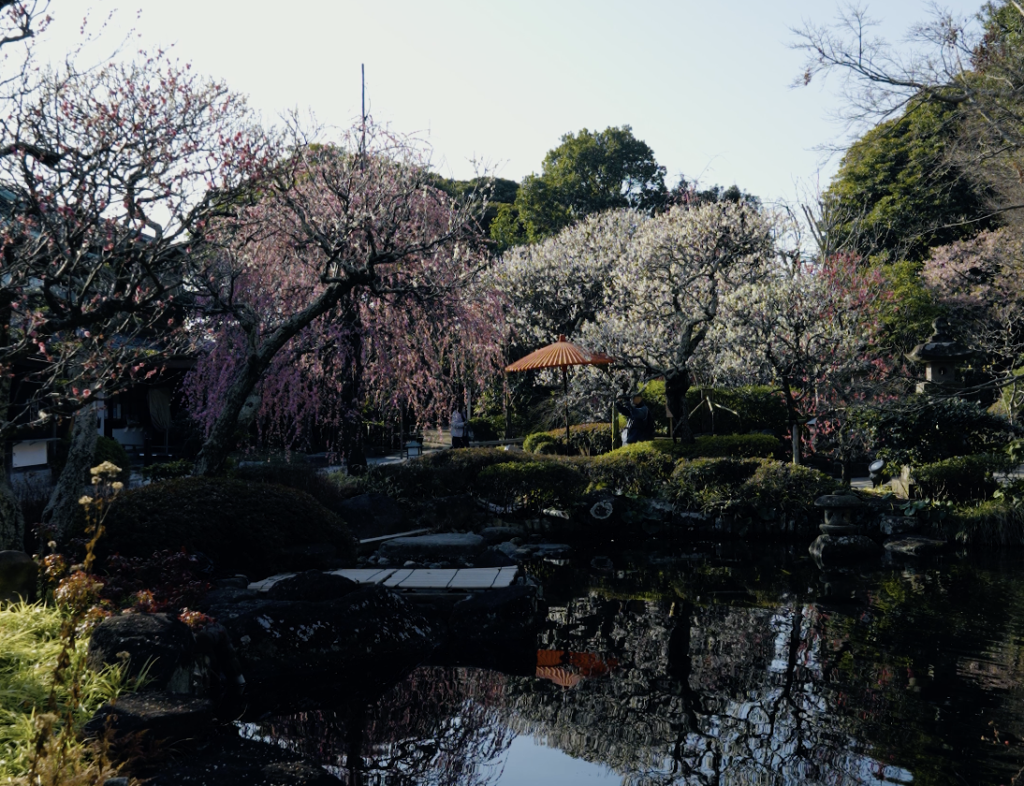
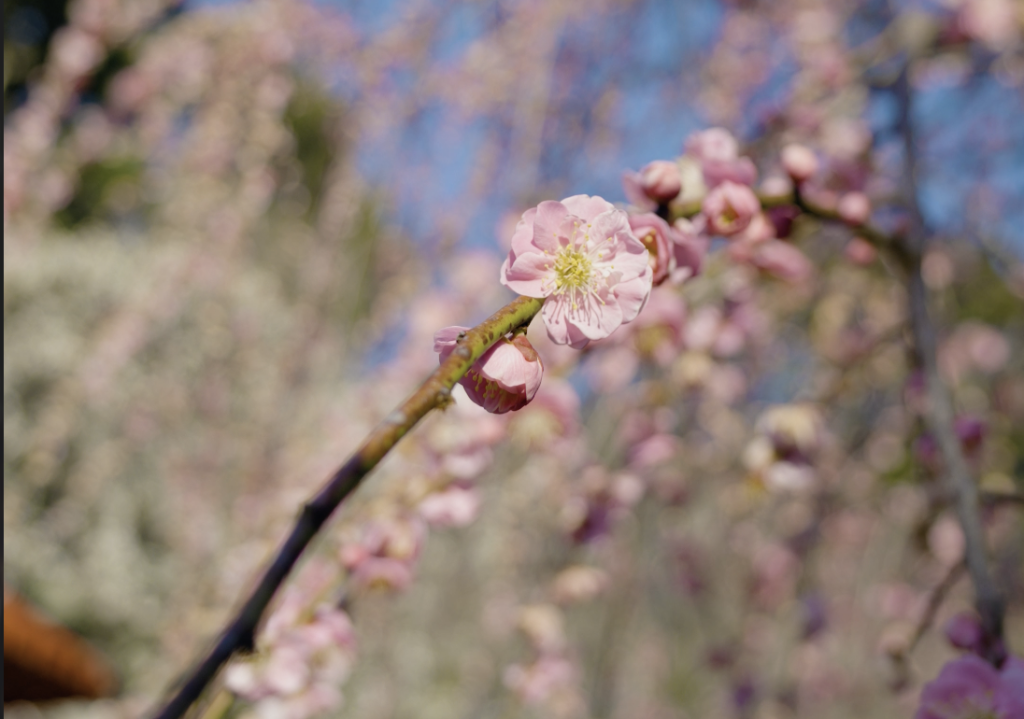
However, a visit in February, as experienced for this article, offers a quieter but equally enchanting experience. The temple’s Japanese garden comes alive with the delicate pink and white hues of plum blossoms, signaling the first signs of spring. The crisp winter air and smaller crowds make for a peaceful and reflective visit.
Autumn (late November to early December) is another excellent time to visit, as the maple trees on the hillside turn brilliant shades of red and orange, creating a stunning contrast with the temple buildings and the blue sea.
Ajisai Season 2026: The Path, the Ticket, the Queue
The Ajisai Path at Kamakura Hasedera holds about 2,500 hydrangea plants across more than 40 varieties, with peak bloom early to mid June and access controlled by a separate ¥500 ticket (Ajisai-ken) on top of the ¥400 temple admission. Online reservation opens every Thursday at 10:00 JST on the temple’s official website for the following week. Walk-ins are issued numbered tickets at the gate and wait until called — peak weekend wait is 2–3 hours.
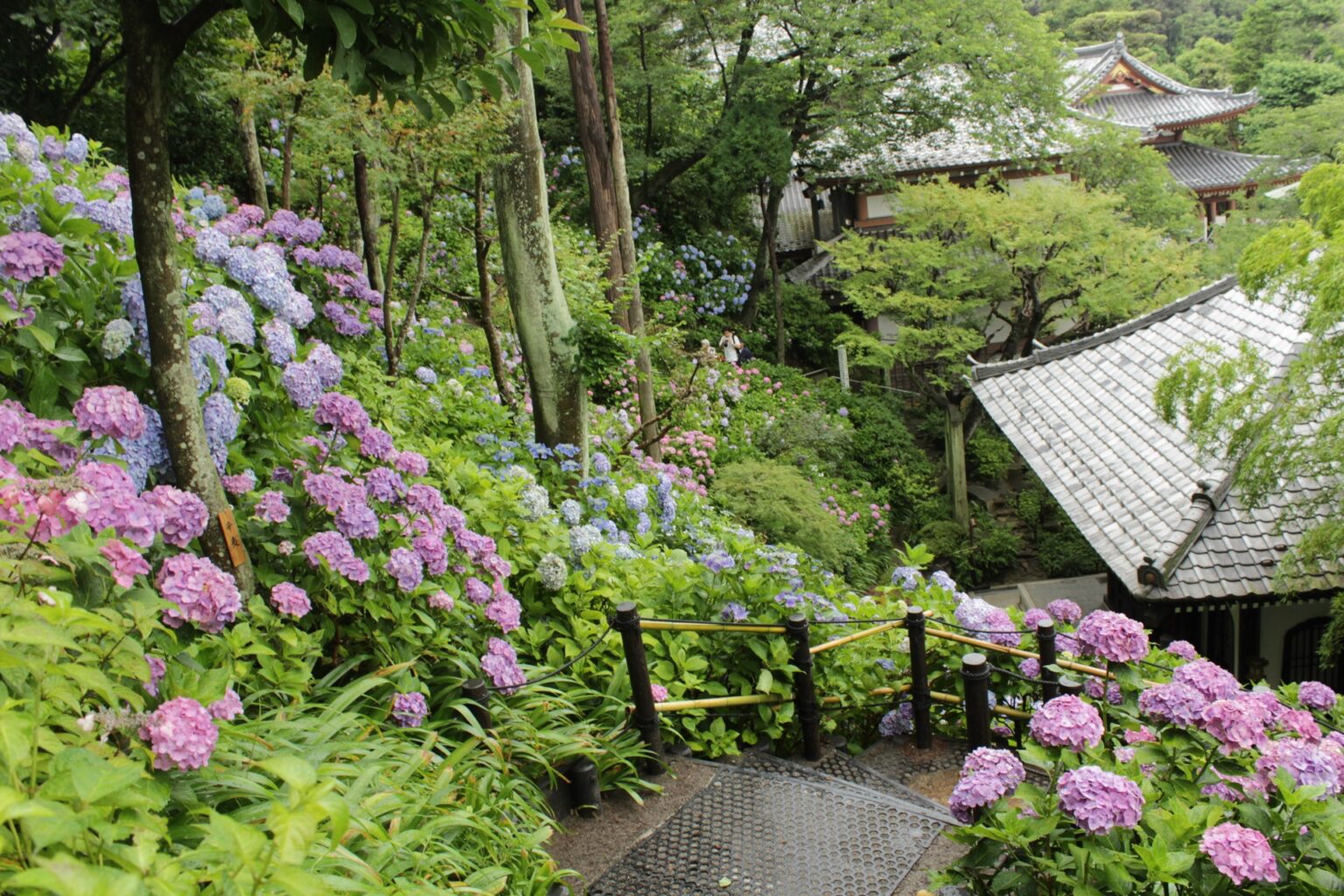
The first time I did the Ajisai Path in season was 2022 — a Saturday at 11:00 with no reservation. I waited two hours twenty minutes for my numbered ticket to be called. The path itself, once you finally got on it, takes about 25 minutes if you don’t stop. The second time was 2024, on a Tuesday at 8:30 with an online reservation booked the previous Thursday. I walked straight up. Same path, completely different visit.
The reason the Ajisai-ken is worth the extra ¥500 even with the queue: the upper viewpoint (kenchō-dai) is the only place in Kamakura where you can frame the Pacific behind the hydrangeas. Meigetsu-in is hemmed in by trees. Goryō Shrine in front of the Enoden tracks is at street level. Hasedera puts the entire Sagami Bay horizon behind the flowers, and the pink-and-blue mophead varieties the temple cultivates look brighter against the saltwater color than against forest green. Meigetsu-in is monochrome blue; Hasedera is a deliberate gradient.
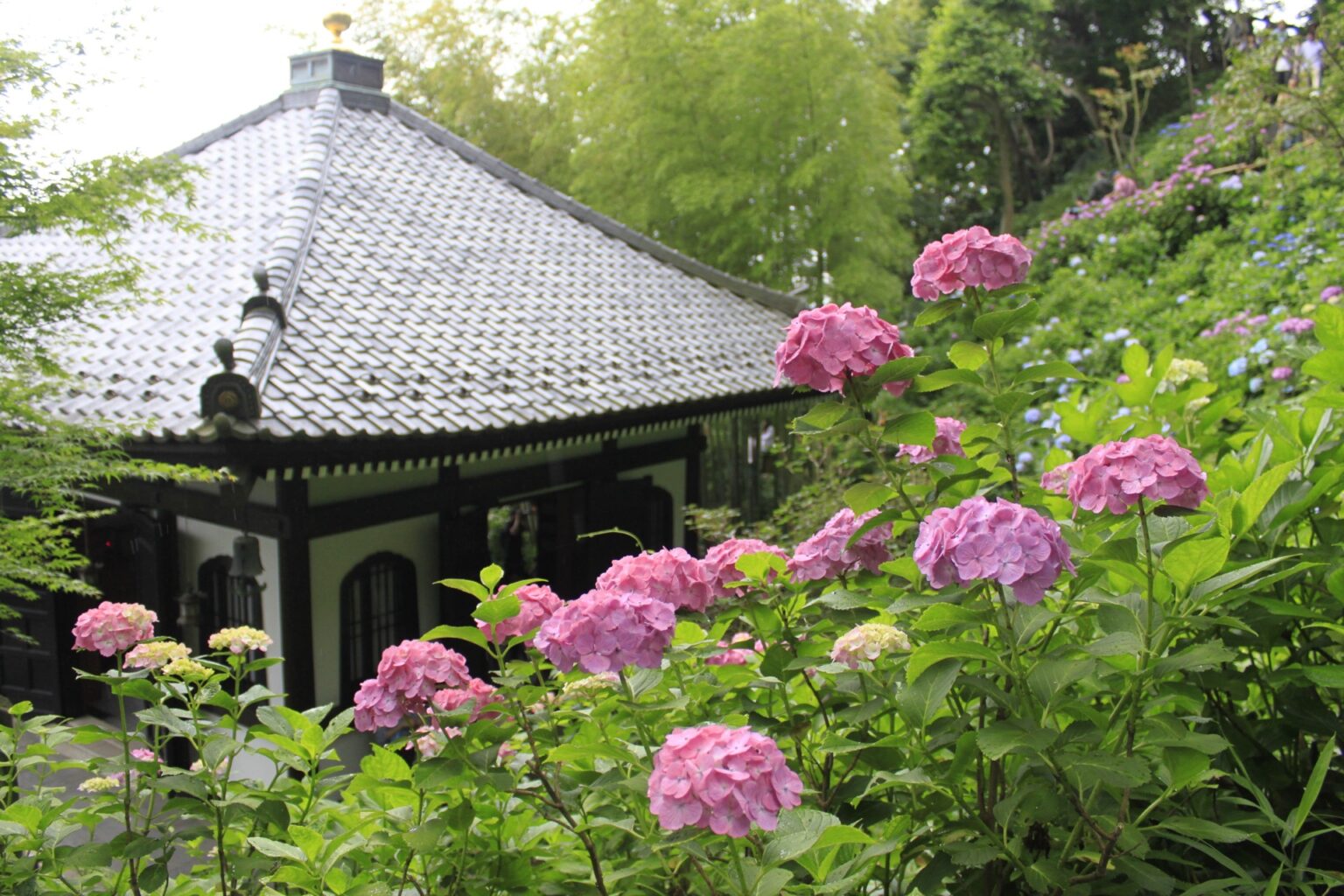
Best arrival: 7:30–9:30 weekday morning with online reservation. Walk straight up.
Acceptable: 8:00 weekday morning without reservation, take a numbered ticket, wait 30–60 minutes.
Avoid: 11:00–15:00 weekend without reservation — you will spend more time staring at the queue screen than at flowers.
If you are planning a longer June trip and want to compare Hasedera Kamakura to its 8th-century twin in Nara — which peaks 2.5 weeks later, has no queue, and centers on a covered 399-step staircase rather than a hillside loop — see Two Hasedera, Two Hydrangea Weeks: Kamakura and Nara Twin Temples (June 2026). For the wider Kanto rainy-season picture, the Japan Tsuyu 2026 guide covers Meigetsu-in, Goryō Shrine, and three other tested hydrangea spots.
How to Get There
Plan the Kamakura day trip
Hasedera is easily accessible from central Kamakura and Tokyo.
By Train:
1.Take the JR Yokosuka Line or Shonan-Shinjuku Line to Kamakura Station. The journey takes about 1 hour from Tokyo Station or Shinjuku Station.
2.At Kamakura Station, transfer to the Enoshima Electric Railway (Enoden), a charming local train line.
3.Ride the Enoden for three stops (about 5 minutes) to Hase Station.
4.From Hase Station, the temple is a pleasant 5-minute walk along a street lined with small shops and cafes.
What to Do and See at Hasedera
Hasedera is filled with fascinating sights. Here are a few highlights not to be missed:
1. Admire the Eleven-Headed Kannon
The main attraction is the breathtaking Kannon statue housed inside the Kannon-do Hall. Its serene expression and intricate detail are captivating. Please note that photography is not permitted inside the hall .
2. Explore the Gardens and Ponds
The lower grounds feature a stunning strolling garden with two ponds. In February, the garden is a canvas of pink and white from the weeping and standard plum trees. The reflections in the pond create a perfect picture of tranquility.
3. Find the Nagomi Jizo Statues
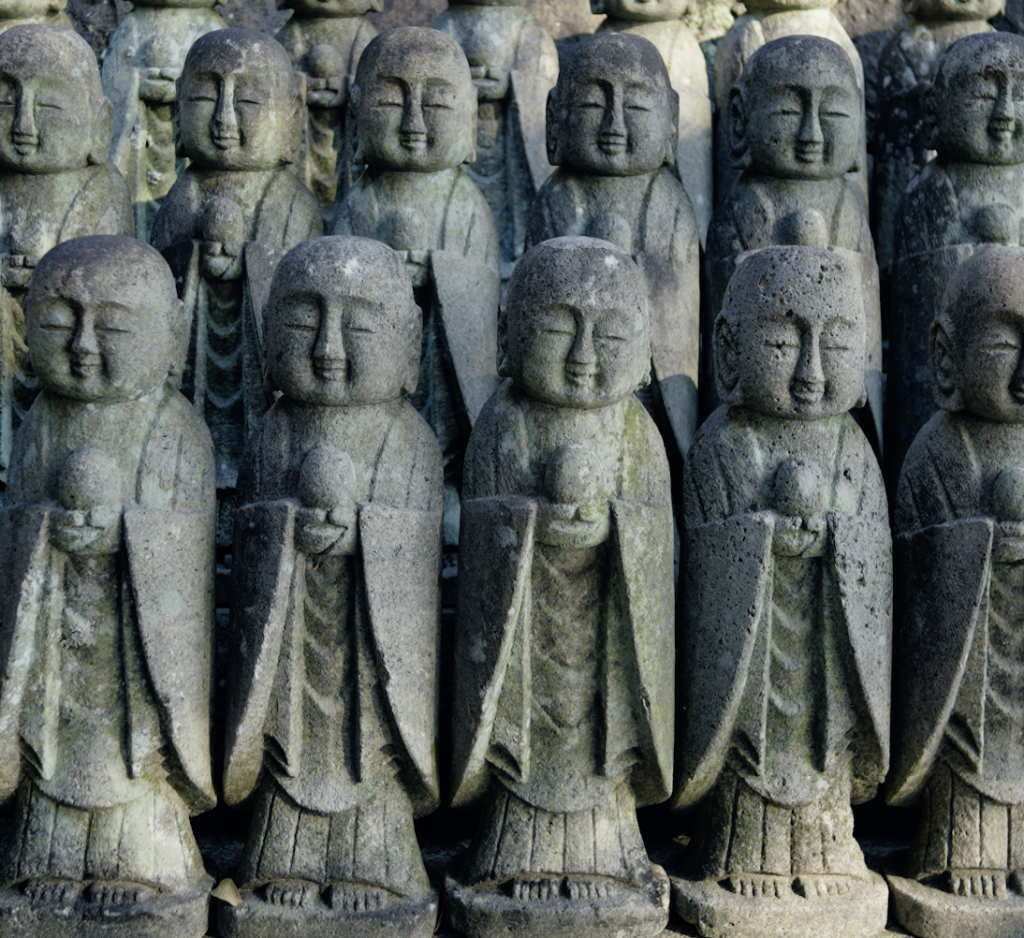
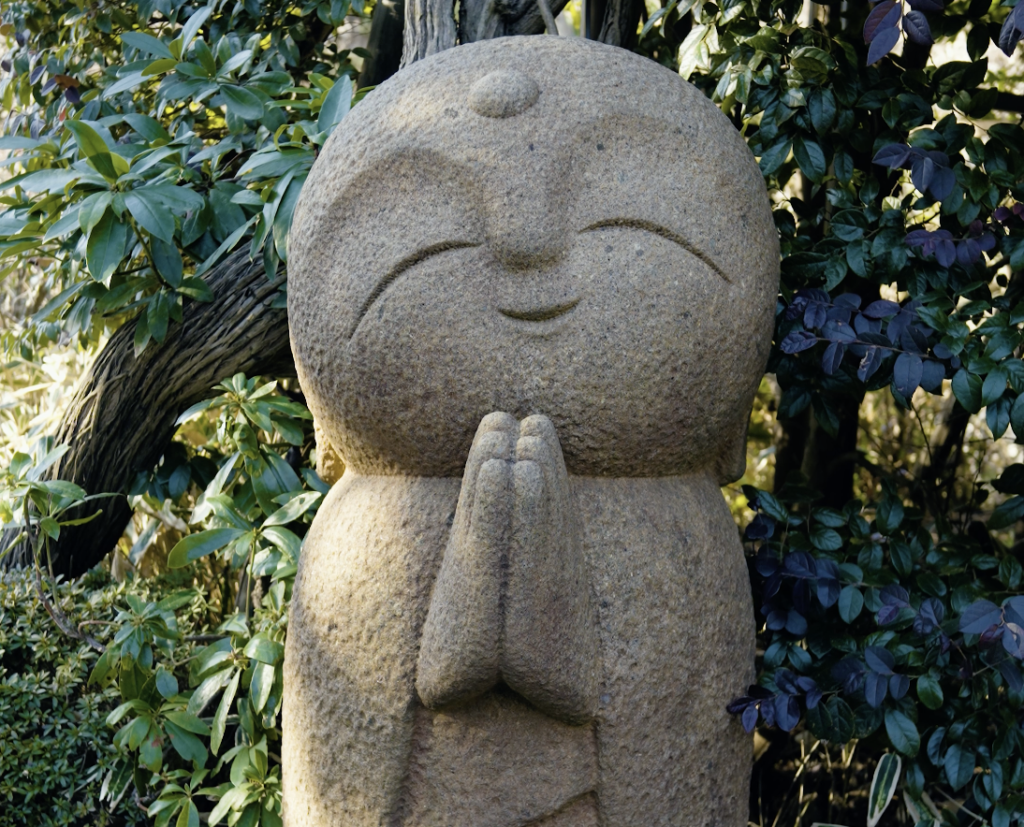
Scattered throughout the temple grounds are adorable Jizo statues. The most famous is the trio of small, smiling “Nagomi Jizo” (Soothing Jizo) statues. It is said that finding all three will bring you good fortune in relationships . Keep your eyes peeled as you explore the paths and stairways!
4. Enter the Benten-kutsu Cave
Near the entrance is a small cave called Benten-kutsu, dedicated to Benzaiten, the goddess of feminine beauty and wealth. Inside the low-ceilinged, winding cave, you’ll find numerous sculptures of Benzaiten and her sixteen followers carved into the rock walls. It’s a mystical and atmospheric experience.
5. Enjoy the View from the Observation Deck
After climbing the main stairs to the upper level, you’ll be rewarded with the Miharashi-dai Observation Deck. It offers one of the best panoramic views in Kamakura, overlooking the tiled roofs of the town, the curve of Yuigahama Beach, and the vast expanse of the Pacific Ocean.
Practical Tips for Your Visit
•Wear Comfortable Shoes:
The temple is built on a hillside and involves a lot of stairs, especially if you want to see the upper viewing path.
•Cash is King:
Be sure to bring enough cash for the entrance fee and any offerings or purchases, as credit cards are not widely accepted.
•Photography Etiquette:
Photography is welcome in most of the outdoor areas, but it is strictly forbidden inside the main Kannon-do Hall and other sacred buildings .
•For Families:
While beautiful, the numerous stairs make it difficult to navigate with a stroller. The lower garden area is more accessible.
Where to Stay Nearby
While Hasedera itself does not offer lodging, the surrounding Hase and Kamakura areas have excellent options. Consider staying near Kamakura Station for the best access to transport, restaurants, and other major sights.
Where to Eat Nearby
The temple has its own restaurant, Kaikoan, located on the upper level near the observation deck. It serves vegetarian-friendly “temple curry” and traditional Japanese sweets with a spectacular view . The street leading from Hase Station to the temple is also lined with cafes, snack vendors, and small restaurants.
Suggested Mini-Itinerary (Half-Day)
Arrive at Hase Station. Walk to Hasedera Temple.
Explore Hasedera. Start with the lower garden and Benten-kutsu cave, then climb to the main hall to see the Kannon statue. Finish at the observation deck.
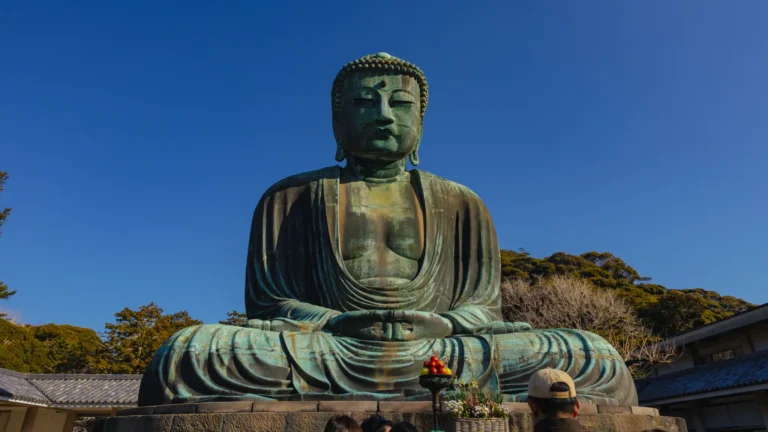
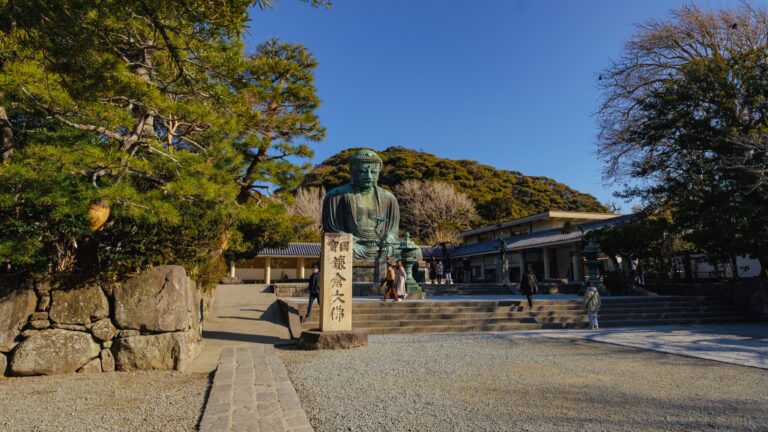
Walk to the nearby Kotoku-in Temple to see the Great Buddha of Kamakura (Daibutsu), which is only a 10-minute walk away.
Enjoy lunch at a restaurant near Hase Station or back in central Kamakura.
Frequently Asked Questions
How much time should I spend at Hasedera?
Plan for at least 1.5 to 2 hours to see all the main sights without rushing.
Is Hasedera crowded?
It can be, especially on weekends and during the peak hydrangea season in June. Visiting on a weekday or early in the morning is recommended.
Can I see Mount Fuji from Hasedera?
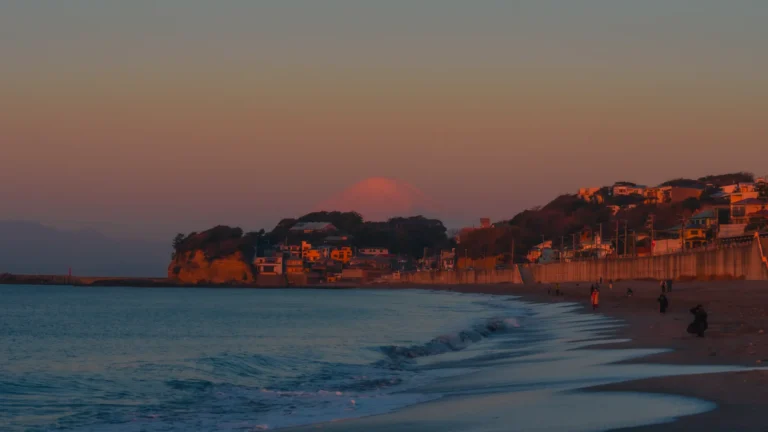
On very clear days, you might be able to see a distant view of Mount Fuji from the upper observation deck, but it is not a primary viewing spot.
What is the significance of the Jizo statues?
Jizo is a bodhisattva regarded as the guardian of children, particularly those who have died. The thousands of small statues at Hasedera are offerings made by parents in their memory.
Is it worth visiting if it’s not flower season?
Absolutely. The temple’s architecture, the impressive Kannon statue, the mysterious cave, and the panoramic ocean views make it a worthwhile visit in any season.
Related Reading
- Two Hasedera, Two Hydrangea Weeks: Kamakura and Nara Twin Temples (June 2026) — The 8th-century twin in Nara peaks 2.5 weeks after Kamakura. Worth visiting both if you have ten days.
- Japan Tsuyu 2026: Regional Calendar + 4 Tested Hydrangea Spots — Includes Meigetsu-in, Goryō Shrine, and the rainy season planning context.
- Japan in June 2026: Hydrangeas, Fireflies and the Cheapest Week of the Year — Month-wide hub for June planning.
Sources Checked
Kaikōzan Hasedera official site (hasedera.jp) and the May 6, 2026 notice “6月のあじさい路について”. Personal visits in February 2022, June 2022, June 2024, and November 2023.
A short walk or bus ride from Hasedera, Tsurugaoka Hachimangu is Kamakura’s most important shrine and an easy pairing for the same day.
Join travelers discovering Japan's hidden side
Weekly dispatches from off-the-beaten-path Japan — spots and stories you won't find in guidebooks.
No spam. Unsubscribe anytime.
Welcome aboard!
You're in. See you in your inbox soon.