Saitama · Tokyo Day Trip
Kinchakuda’s red spider lilies: a September day trip from Tokyo
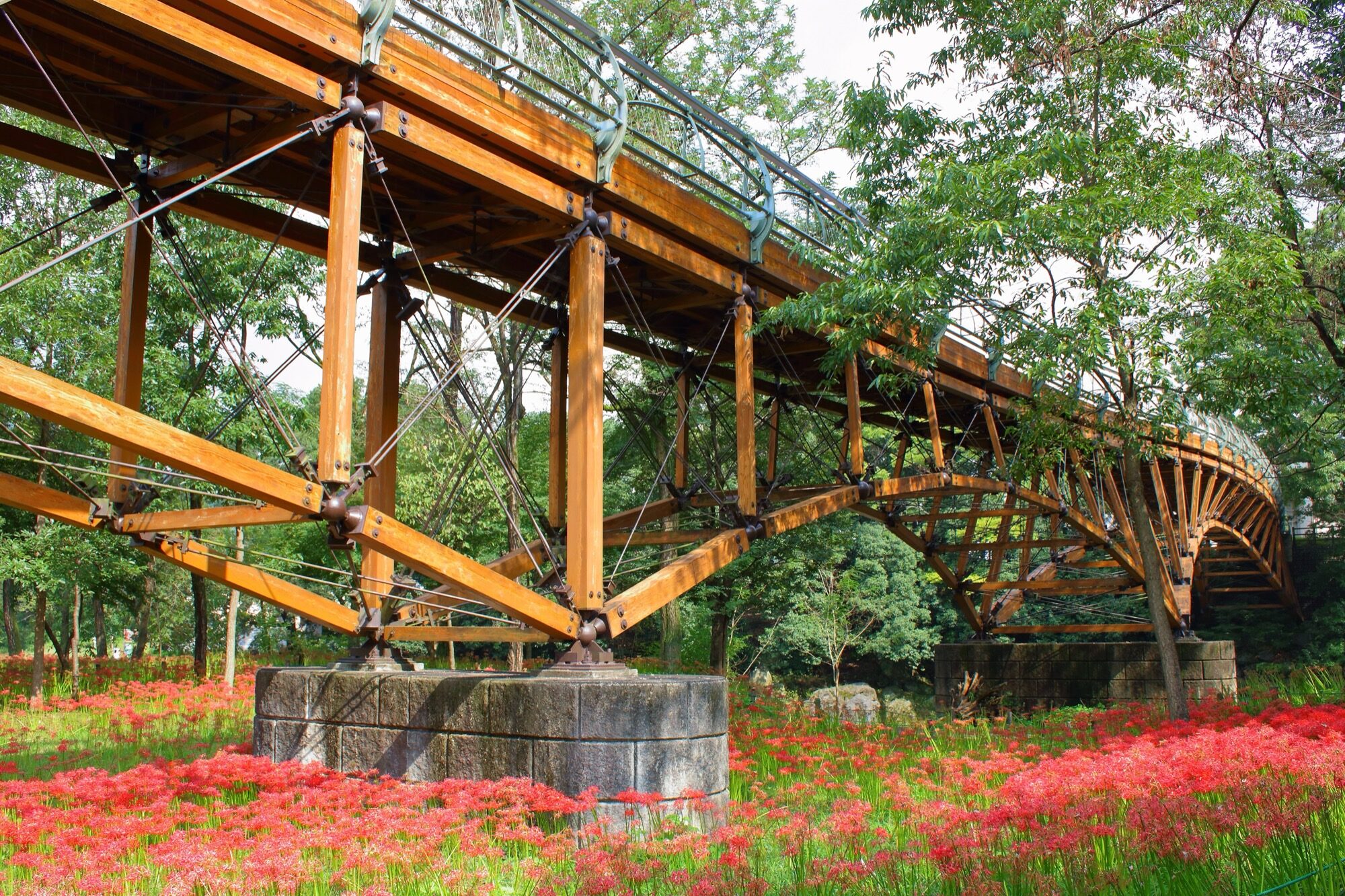
Around five million red spider lilies (higanbana) carpet the forest floor at Kinchakuda in Hidaka, Saitama — and it’s barely an hour from Ikebukuro. Come back to the same Seibu line in November and the prefecture has two autumn sites the English guides skip. The bloom comes and goes fast, usually peaking around the autumn equinox in the second half of September, which is exactly why so many Tokyo travellers miss it. In 2026 the Manjushage Festival runs September 21 to October 6, though the flowers keep their own schedule: the official advice is to check the bloom before you go. Get the timing right and you walk into a solid red understory under the trees, fifteen minutes from a train station.
What you’re actually looking at
The higanbana takes its name from higan, the autumn equinox week, because that’s when it flowers — the Kinchakuda staff note it’s often at its best right through the equinox period, which is where the name comes from. Its other name, manjushage, is the one you’ll see on the festival banners. The plant is a fixture of the Japanese countryside because it was deliberately planted along paddy ridges and irrigation banks for practical reasons over centuries — the bulbs are toxic, useful for holding banks and discouraging pests, and were historically processed into a famine food only in times of hardship — the raw plant is poisonous and must never be eaten. At Kinchakuda specifically, the colony is thought to have started from bulbs washed down the Koma River and settling on this bend — the river loops almost all the way around the site, which is what gives it the “drawstring purse” (kinchaku) shape and name.
Getting there
This is one of the easier flower trips out of Tokyo — a single Seibu line most of the way, then a short walk. During the bloom the official advice is emphatic: come by train, because the roads around Kinchakuda can become heavily congested during the bloom.
| Leg | How | Time / cost |
|---|---|---|
| Ikebukuro → Koma | Seibu Ikebukuro line (change at Hanno) | ~1 hr · IC ¥627 |
| Koma station → park | On foot | ~15 min |
| Alt: JR Komagawa → park | On foot or local bus | ~40 min walk |
A ¥500 entry applies to the flower area during the bloom, generally collected 7:00–17:00; the festival stalls and events run 9:00–16:30. The exact paid dates are set closer to the season. On Silver Week and weekends, Seibu has in past years added extra Hanno–Koma trains and even stopped some limited expresses at Koma, and Hidaka City has run a free shuttle from Koma Shrine on some days — but the 2026 special-transport plans aren’t published yet, so check nearer the time.
Make a day of it
Kinchakuda itself takes an hour or two. Three easy add-ons turn it into a full day — or give you a backup if the bloom timing doesn’t line up. If you’d rather have the day guided, a Tokyo food or walking tour pairs well on either side of the trip.
Hiwada-san hike
The 305 m hill right beside Kinchakuda, with a view straight down over the red carpet and the river’s loop. From the Aiai Bridge it’s about 10 minutes to the trailhead and around 40 minutes to the top — the best way to see the “drawstring” shape that gives the site its name.
Gongendo (Satte)
A second great spider-lily site on the other side of Saitama: about three million manjushage along an embankment, free to enter, usually mid-September to early October. Quieter than Kinchakuda and the same red spectacle — a good plan B if Kinchakuda’s dates don’t suit.
Showa Kinen Park
The Tokyo-side backup, in Tachikawa: spider lilies plus cosmos fields and the first fragrant osmanthus, all in one park (adult entry around ¥450). Two minutes from JR Nishi-Tachikawa. Handy if you want a September flower fix without leaving greater Tokyo.
Where it fits in your September
Kinchakuda’s peak often lands around Silver Week — though it can shift by a week or more with the weather — so it pairs naturally with a Tokyo base and a holiday day out — compare Tokyo stays if you haven’t booked yet. If your dates are flexible, a weekday morning beats a Silver Week afternoon by a wide margin. For everything else the month offers — from Kishiwada’s floats to the first mountain koyo — see the September calendar, and the Silver Week guide for planning around the holiday crowds. For more escapes within reach of the city, see our day trips from Tokyo.
Basing yourself in Tokyo for the September flowers
FAQ
When is the best time to see the spider lilies at Kinchakuda?
Usually the second half of September, around the autumn equinox, but the exact peak shifts a week or so each year with the late-summer weather. The bloom itself lasts only about one to two weeks. Check Kinchakuda’s official bloom report in the days before you travel rather than relying on the festival’s calendar dates.
How much does it cost and what are the hours?
Entry to the flower area is ¥500 during the bloom, generally collected 7:00–17:00; the exact paid period is set closer to the season, and the festival stalls run 9:00–16:30. Getting there from Ikebukuro is about ¥630 (IC ¥627) and roughly an hour by Seibu train.
Can I drive there?
You can, but you probably shouldn’t during the bloom — the official guidance warns of heavy congestion on the surrounding roads and recommends the train. Koma station is a 15-minute walk from the park.
Is the spider lily really an “unlucky” flower?
That folklore exists, but it’s only part of the picture. The plant was planted across the countryside on purpose — on paddy ridges and banks — because it’s hardy, toxic to pests, useful for holding soil, and was even processed as a famine food. At Kinchakuda it’s simply the star of the autumn season, and the festival draws big, cheerful crowds.
What if the flowers aren’t out when I visit?
Have a backup. Gongendo in Satte has about three million spider lilies on a similar schedule and is free; Showa Kinen Park in Tachikawa adds cosmos and osmanthus and stays reliable across a longer window. Both are easy day trips from Tokyo.
Sources
Kinchakuda Manjushage Park official site (2026 festival dates, rules, FAQ, flower count); Hidaka City; Seibu Railway (fares and past festival services); Satte City & tourism association (Gongendo); Showa Kinen Park; MAFF agricultural research on higanbana. Fares and 2026 festival dates verified August 2026; the paid-entry window and special transport are confirmed closer to the season.
More for September: the full Japan in September 2026 calendar · Silver Week 2026 guide.
Join travelers discovering Japan's hidden side
Weekly dispatches from off-the-beaten-path Japan — spots and stories you won't find in guidebooks.
No spam. Unsubscribe anytime.
Welcome aboard!
You're in. See you in your inbox soon.