Kawagoe · Saitama · Kanto
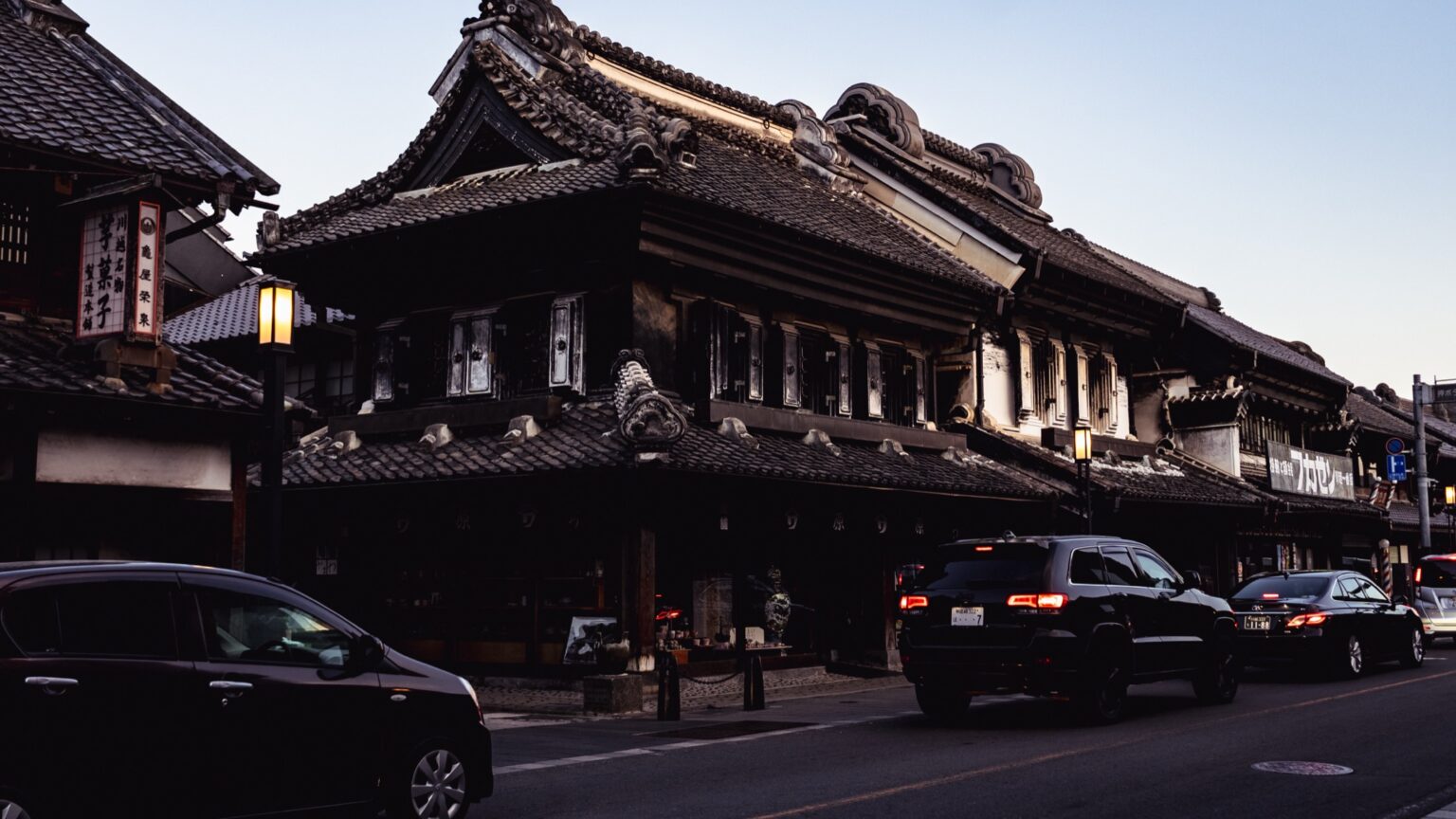
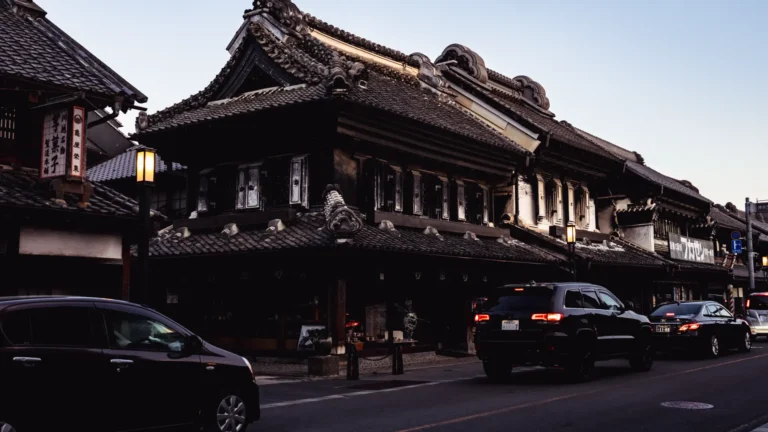
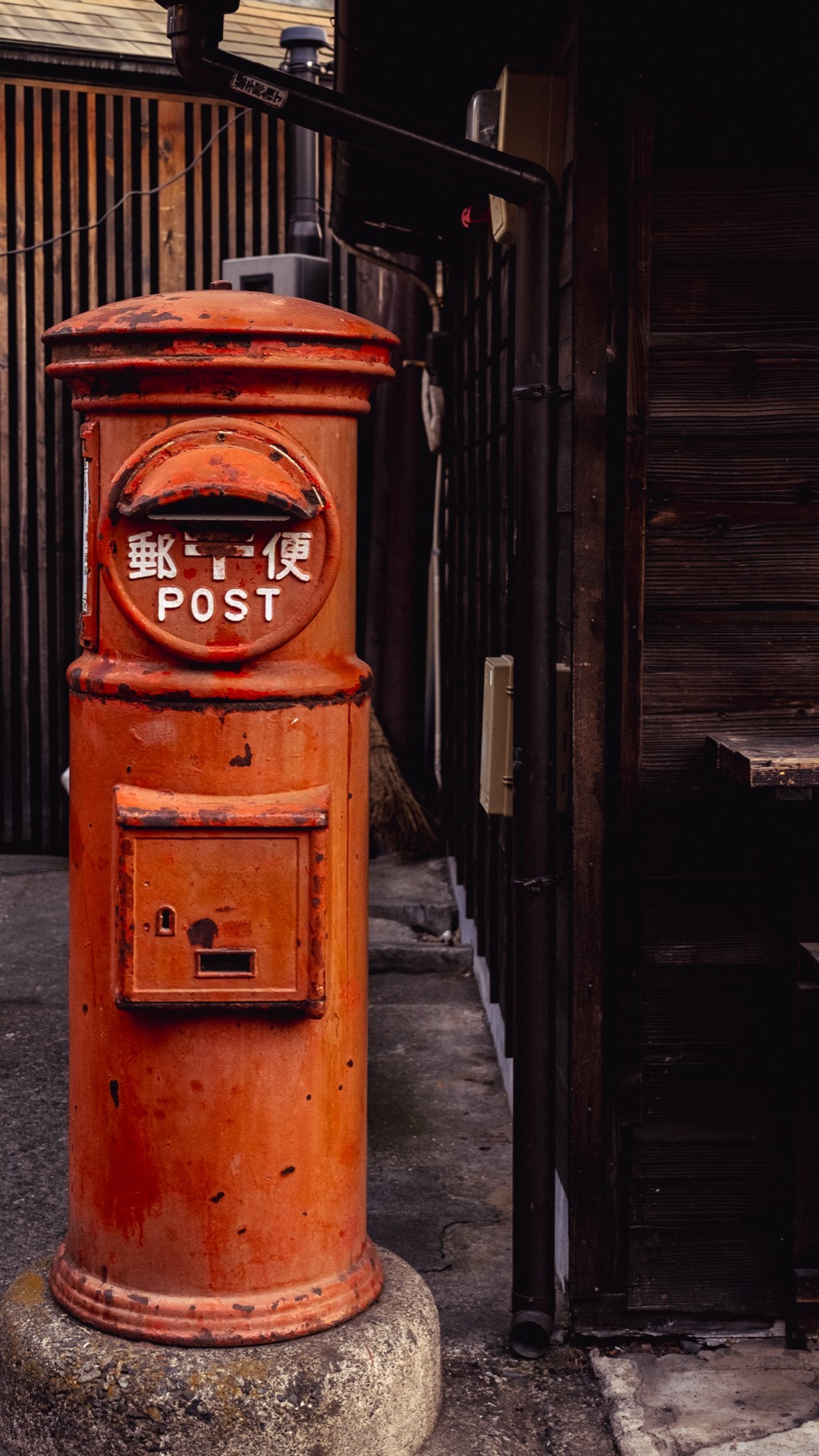
Ichibangai — Kawagoe’s Kurazukuri street — is a run of about 30 surviving Edo-style kurazukuri: black, clay-walled fireproof merchant warehouses, the oldest of them (the Osawa House, 1792) a National Important Cultural Property. The streetscape exists because of a disaster: after the Great Fire of 1893 burned through a third of the town, the thick-walled storehouses that survived became the model for rebuilding, and that fireproof look is exactly what makes Kawagoe “Little Edo” today. It’s free to walk, anchored by the Toki no Kane bell tower and an old round red postbox, and it’s the heart of any visit.
This is the street everyone comes for, and it earns it. The buildings are genuinely old, genuinely black, and genuinely heavy — they were built to stop fire, not to charm tourists, and that gives the whole street a serious, lived-in weight you don’t get from a reconstruction. Here’s what you’re looking at, and when to walk it.
A street built to survive fire
The black buildings aren’t a style choice — they’re armour. In the Edo period, after repeated fires, the shogunate pushed fire-resistant dozō-zukuri (thick clay-walled, tiled storehouses), and Kawagoe — a wealthy merchant town tied closely to Edo by trade — built its shops that way. When the Great Kawagoe Fire of 1893 destroyed about a third of the town, it was these thick-walled kura that came through standing. So when the merchants rebuilt, they rebuilt in kurazukuri on purpose — and roughly 30-odd of those buildings still line Ichibangai today.
The one that started it is the Osawa House (大沢家住宅), put up in 1792 by a kimono-and-cloth merchant and now a National Important Cultural Property — the oldest kurazukuri in town, and one of the buildings that survived 1893 and convinced everyone else to build the same way.
The buildings to pick out
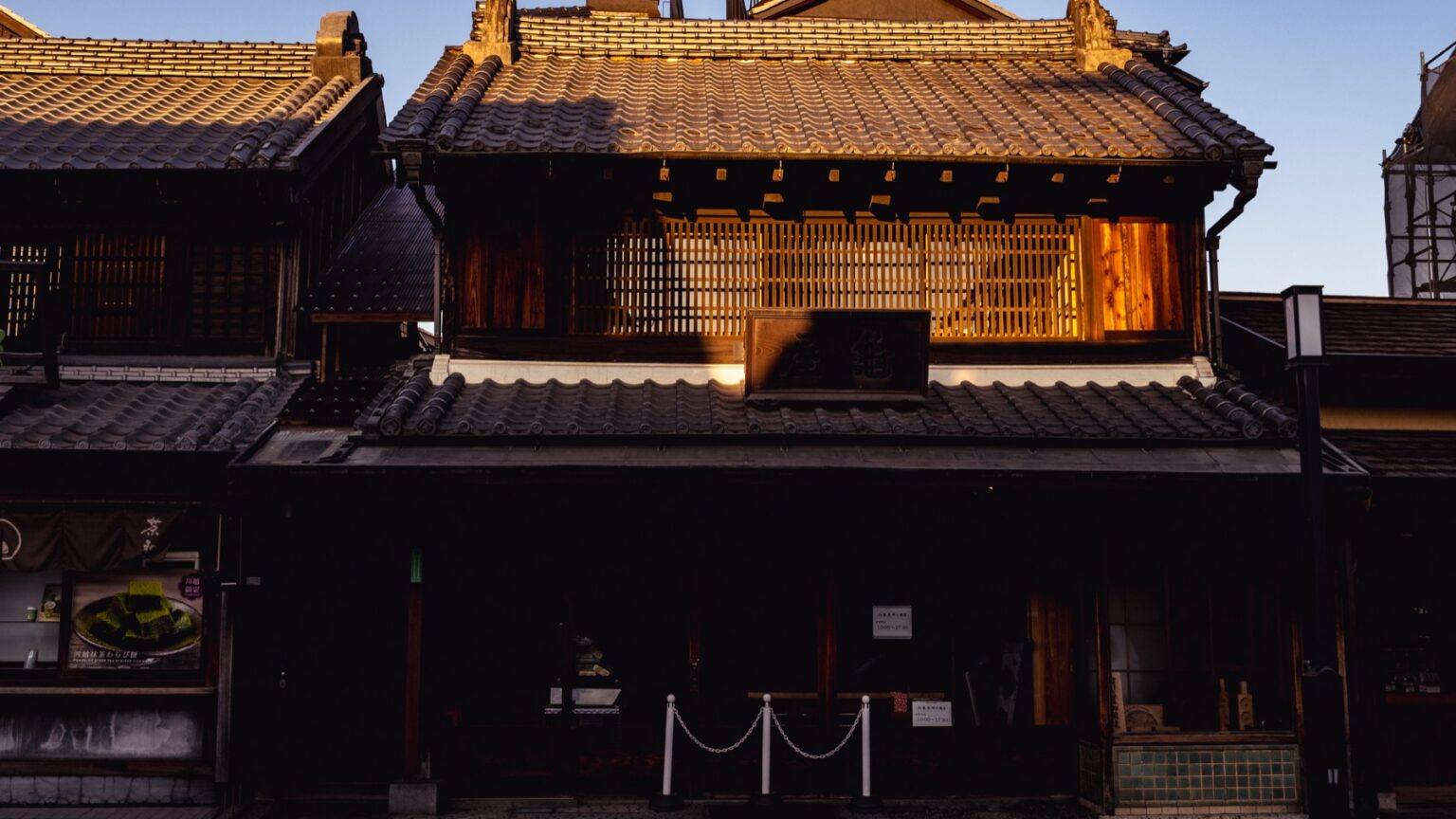
Osawa House (1792)
The oldest kurazukuri on the street and a National Important Cultural Property — the building that set the template.
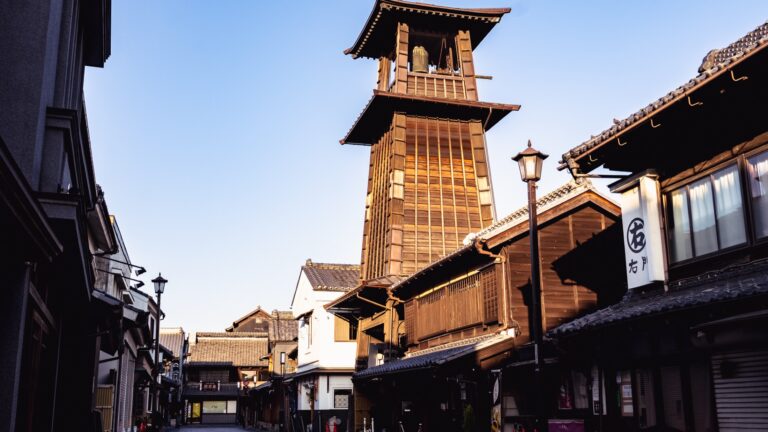
Toki no Kane
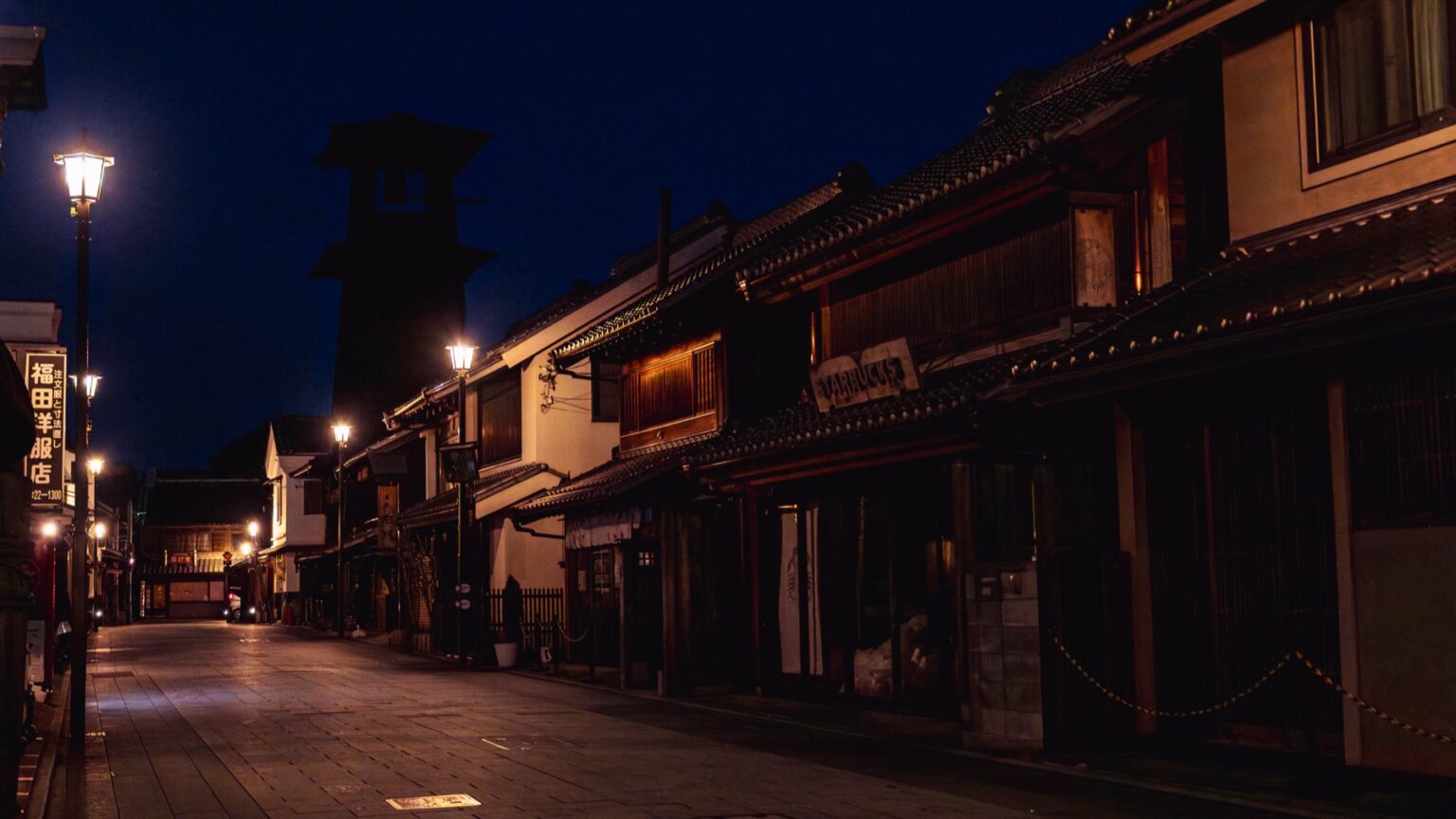
The bell tower rising over the warehouses is the symbol of Little Edo, and it’s right here. If you like Little Edo, Chiba has a quieter, canal-based version in Sawara. The bell tower guide →
The former 85th Bank
A 1918 Taishō-era western-style landmark with a corner tower (~27 m) — once the tallest building in town, now a preserved landmark (Resona Koedo Terrace).
The round red postbox
A Shōwa-era cylindrical postbox that still takes mail — one of the most photographed small details on the street.
When to walk it
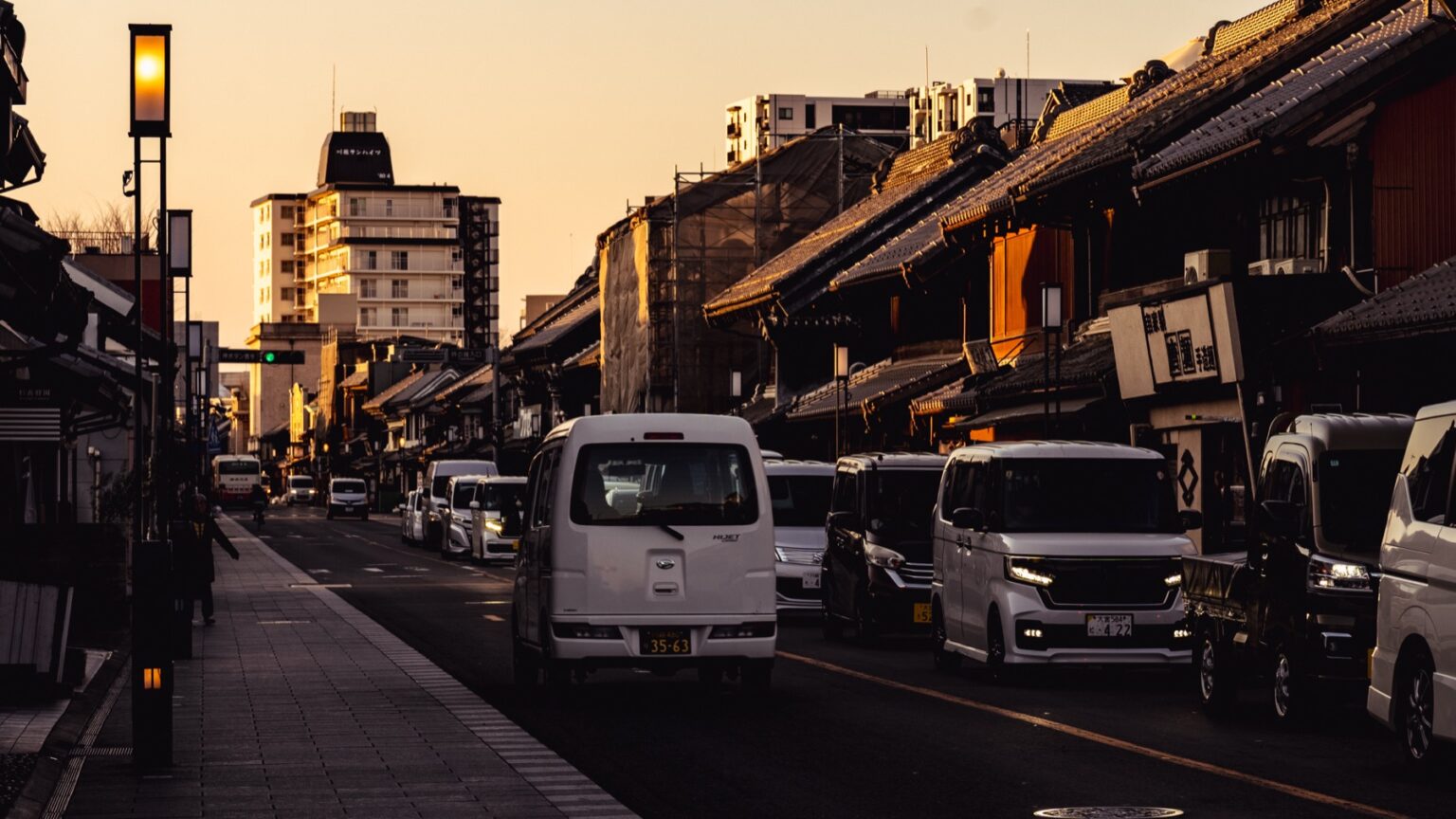
The street runs roughly north–south, so the light moves across the warehouse fronts through the day, and the crowds move with the clock. My honest advice: the buildings look their best, and your photos look their best, at the two quiet ends of the day.
Eat your way down it
Kawagoe runs on sweet potato (satsumaimo) — you’ll find it as soft-serve, chips, croquettes, senbei and more from shops along the street. Just off Ichibangai is Kashiya Yokocho, the candy alley, packed with old-fashioned sweet shops. For the full route through the old town — transit, timing and every stop — start with my Kawagoe day-trip guide.
Getting to Ichibangai
The Kurazukuri street is in central Kawagoe, about a 15–20 minute walk from the stations or a short hop on the Koedo loop bus. Kawagoe Station (JR & Tobu) is the main gateway from Tokyo; Hon-Kawagoe (Seibu) is a touch closer to the old town. Making a night of it? Compare Kawagoe and Tokyo hotels, and since the old town is one of Saitama’s top spots for kimono rental and Little Edo experiences, both are worth booking ahead. Full transit details are in the sightseeing guide.
Kawagoe Day-Trip Guide
The whole Little Edo day, with transit and timing.
Toki no Kane
The bell tower at the heart of this street.
Kitain Temple
Surviving Edo Castle rooms and 538 rakan statues.
Kawagoe Kumano Shrine
Hands-on luck rituals you can actually try.
Kawagoe Castle: Honmaru Goten
The domain lords’ surviving palace hall.
The Kimono Starbucks
Coffee in a kurazukuri townhouse beside the bell.
What is the Kurazukuri street in Kawagoe?
It’s Ichibangai, the main street lined with about 30 surviving kurazukuri — black, clay-walled, fireproof Edo-period merchant warehouses. It’s the historic core of Kawagoe’s “Little Edo” district.
Why are the buildings black and so heavy-looking?
They’re dozō-zukuri fireproof storehouses: thick clay walls and tiled roofs built to survive fire. After the 1893 Great Kawagoe Fire, the kura that survived became the model for rebuilding the whole street.
What’s the oldest building on the street?
The Osawa House (大沢家住宅), built in 1792 by a cloth merchant. It survived the 1893 fire and is a National Important Cultural Property — the oldest kurazukuri in Kawagoe.
Is it free, and how long do you need?
The street itself is free to walk; you only pay for shops and food. Allow about an hour to stroll it, or half a day if you’re stopping to eat and visiting the bell tower and candy alley.
When is the best time to visit to avoid crowds?
Early morning (dawn) or evening blue hour. From late morning to mid-afternoon, especially on weekends, the street is very crowded and the road stays busy with traffic.
How do I get to the Kurazukuri street?
About 15–20 minutes on foot from Kawagoe or Hon-Kawagoe stations, or a short ride on the Koedo loop bus. See the Kawagoe day-trip guide for transit from Tokyo.
Join travelers discovering Japan's hidden side
Weekly dispatches from off-the-beaten-path Japan — spots and stories you won't find in guidebooks.
No spam. Unsubscribe anytime.
Welcome aboard!
You're in. See you in your inbox soon.