Saitama · Festival · 17–18 October 2026
The Kawagoe Festival returns on Saturday 17 and Sunday 18 October 2026, with 26 towering dashi floats rolling through the historic kurazukuri merchant streets of “Little Edo”, about half an hour by train from Ikebukuro to Kawagoe Station. Its history spans more than 370 years, it carries UNESCO intangible-heritage status, and it drew 661,000 visitors in 2025 by the city’s own count. Its most famous sight — the hikkawase float face-offs — has no timetable at all, and that is the single most useful thing to understand before you go.
What the Kawagoe Festival actually is
The festival traces its origins to 1648, when the lord of Kawagoe, Matsudaira Nobutsuna, donated festival equipment to Hikawa Shrine; a shrine procession was under way by 1651, and the float tradition grew over the centuries that followed. It developed under the influence of Edo’s great tenka matsuri and preserves elements of those float-festival traditions in a former castle town near Tokyo.
The designations back that up: the Kawagoe Hikawa Festival Float Event is a nationally designated Important Intangible Folk Cultural Property (2005) and one of the 33 festivals inscribed together by UNESCO as “Yama, Hoko, Yatai, float festivals in Japan” (December 2016).
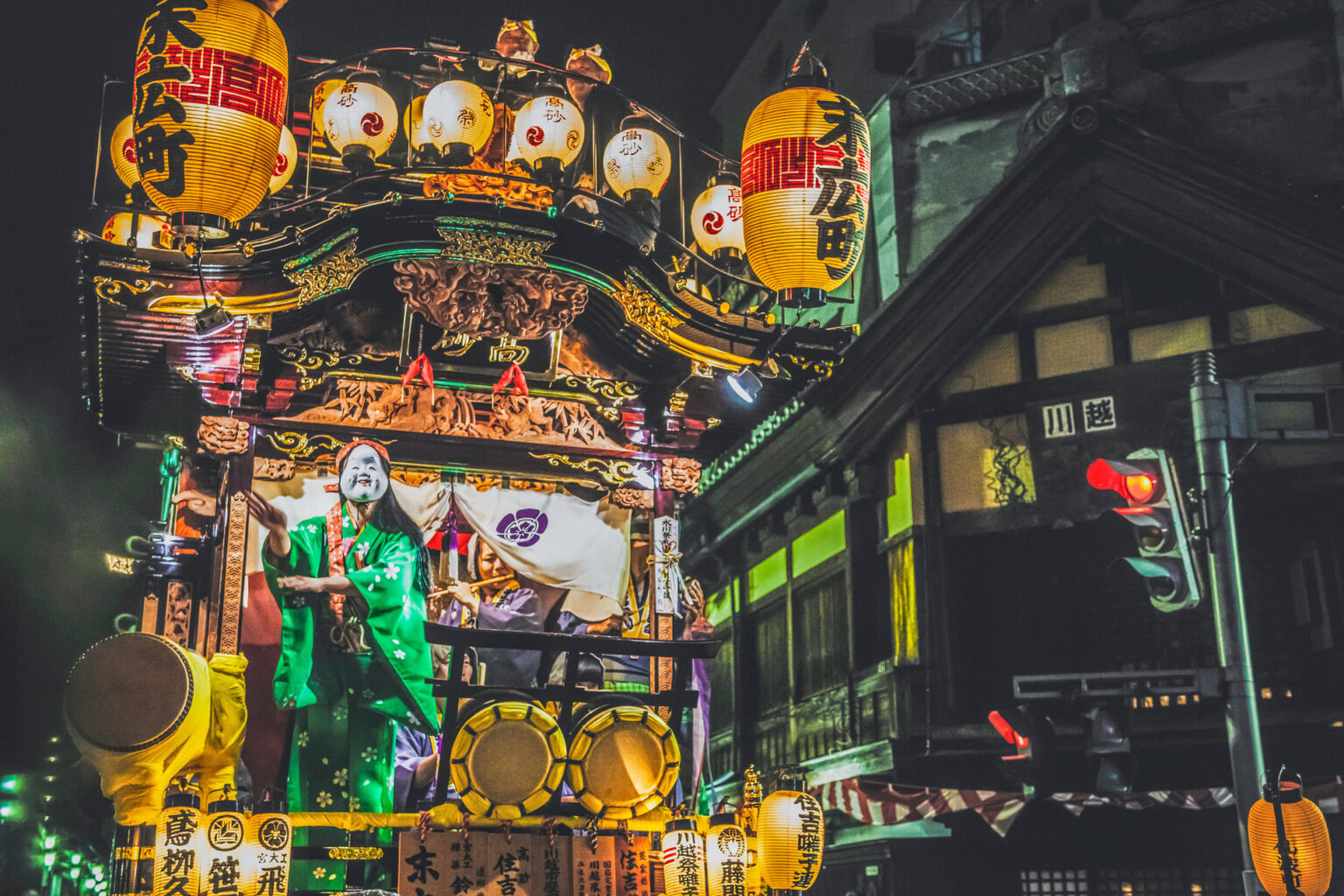
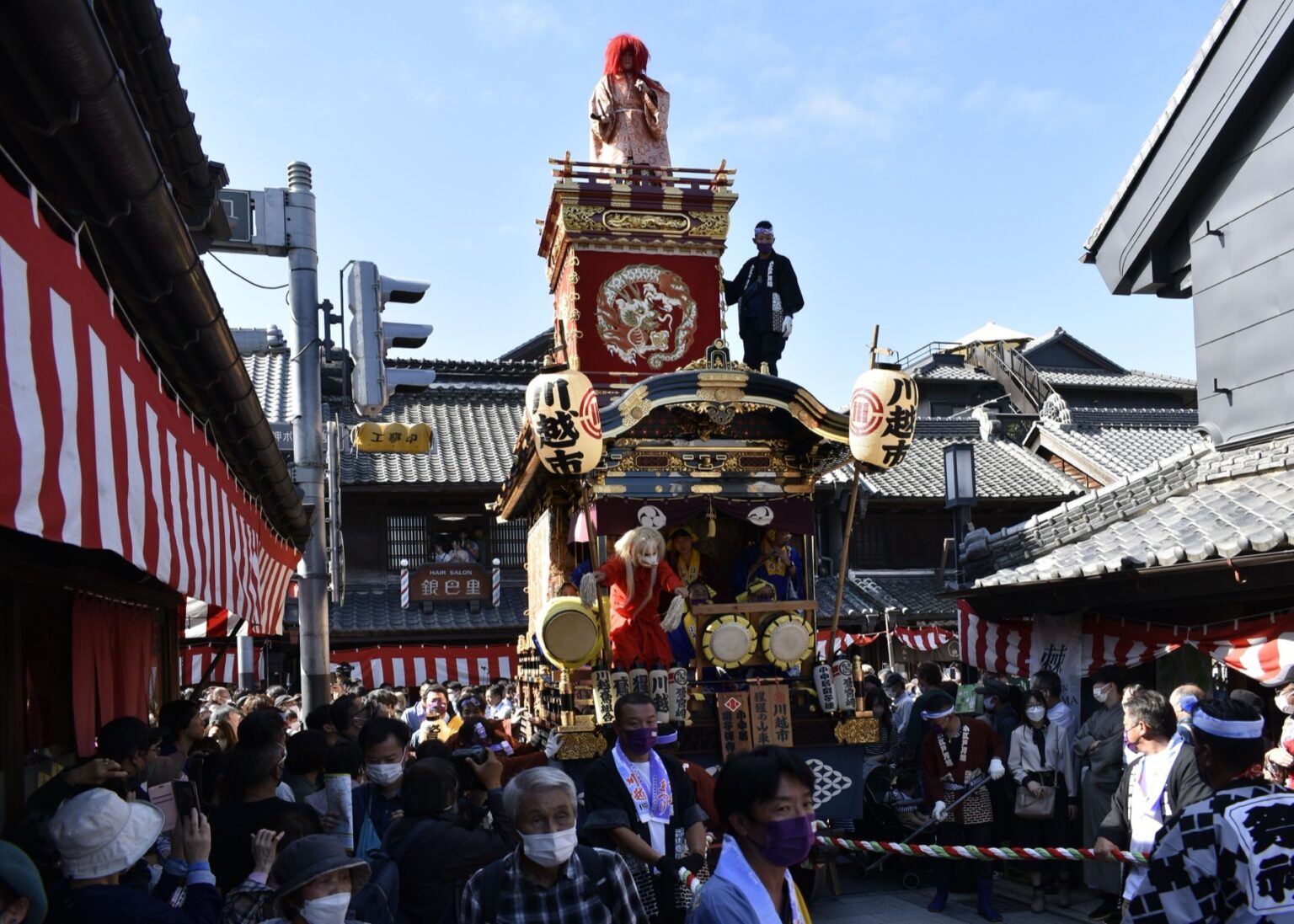
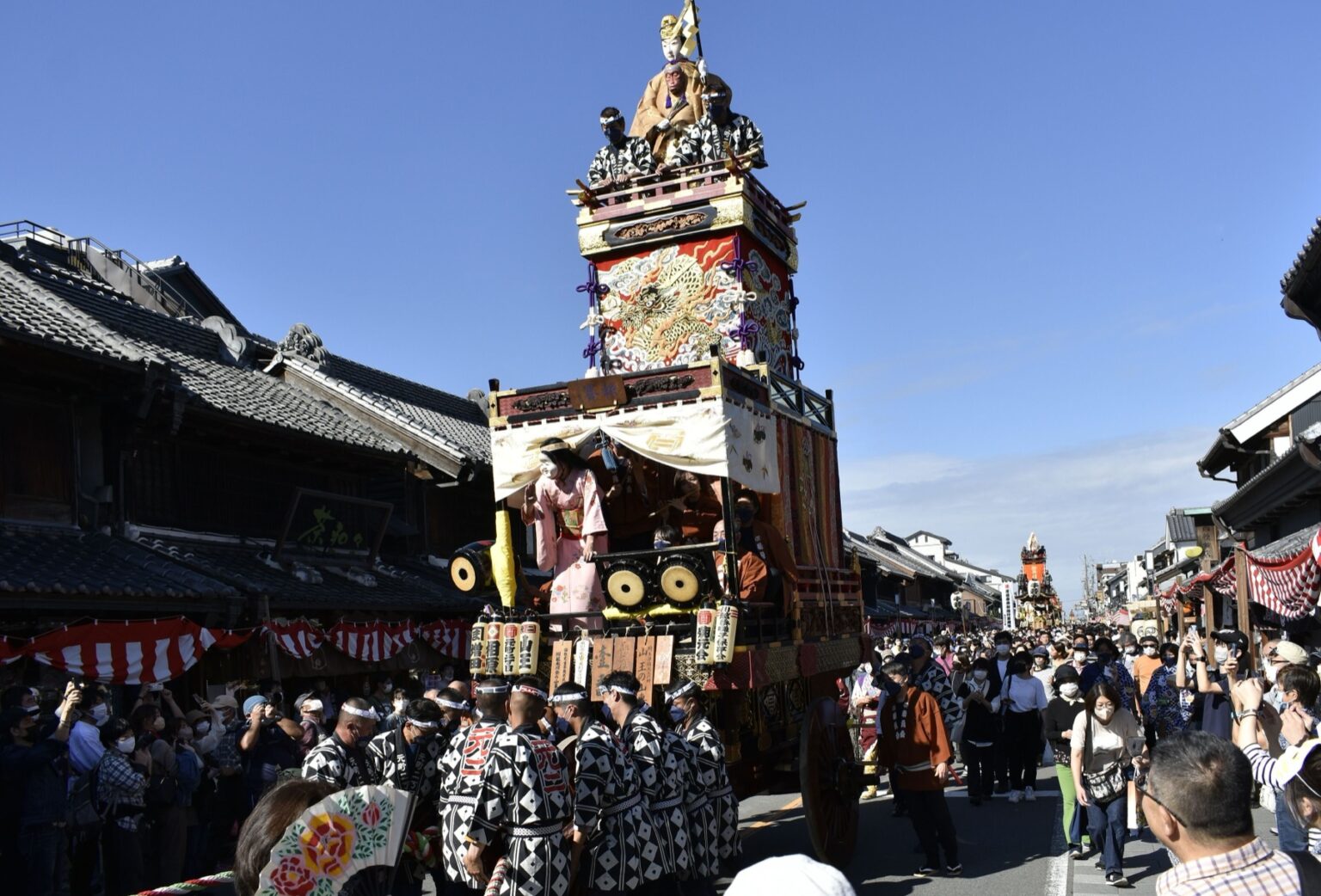
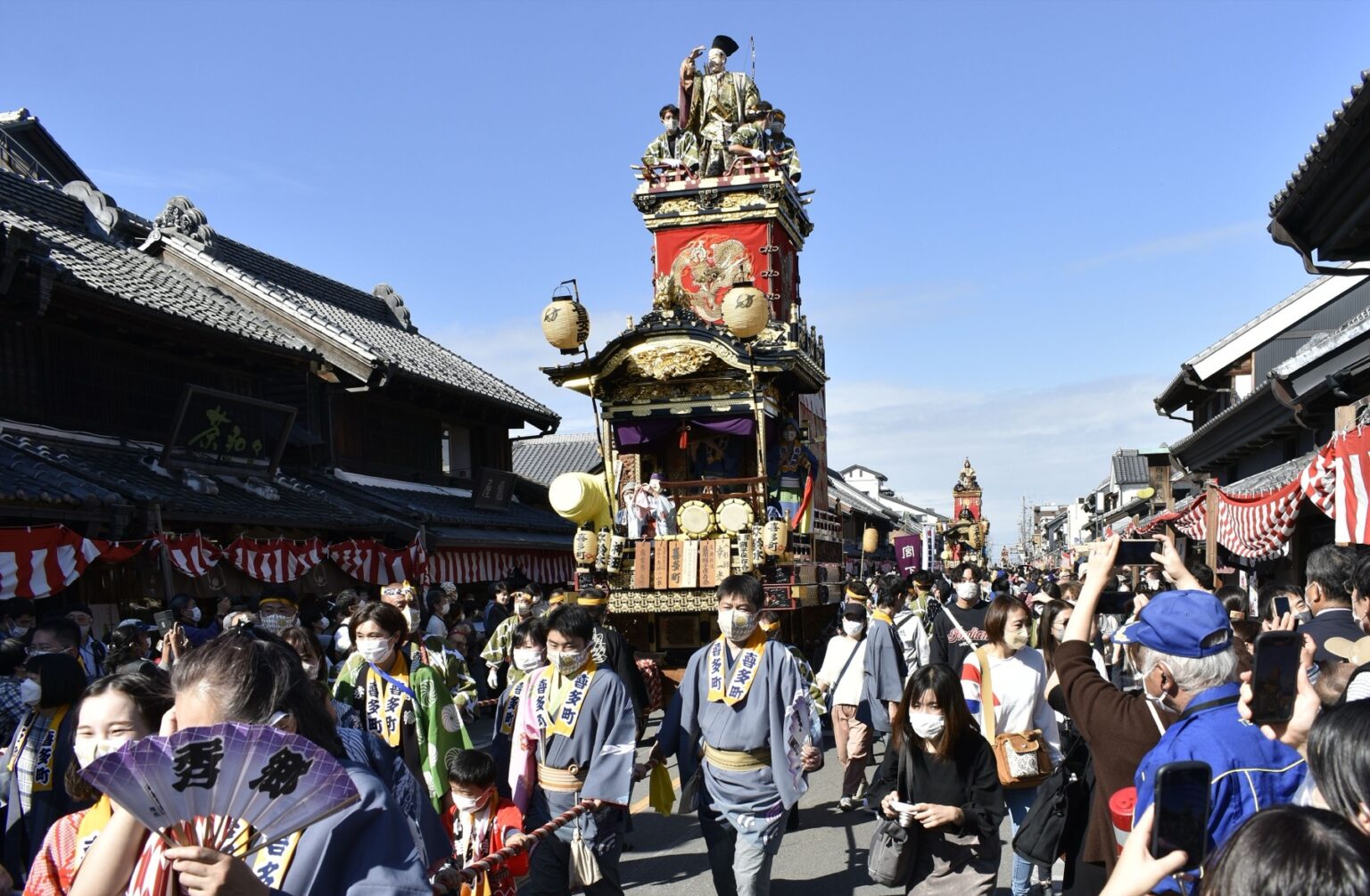
The floats themselves are two-tiered towers topped with elaborate dolls — historical and mythical figures, one per neighbourhood — with musicians and masked dancers performing on the stage below. Most belong to neighbourhood blocks that maintain them (the lineup also includes the city’s own Shojo float), and they are big enough that watching one swing through the kurazukuri streets is the whole show.
The 2026 schedule — and the event with no schedule
The official 2026 programme lists few fixed times — most of the festival simply happens in the streets. These are the published points:
| When | What |
|---|---|
| Sat 17 Oct, 13:00–~14:30 | Shinkosai — the Hikawa Shrine procession through town |
| Sat 17 Oct, 18:00–~19:00 | Yoiyama — floats parked and lit, musicians playing on each |
| Sun 18 Oct, 13:30–~16:00 | Float procession past City Hall (2026 note: no stationary line-up this year) |
| Throughout, esp. after dark | Hikkawase — no fixed time or place, see below |
Hikkawase is the reason to stay after dark. When two or more floats meet, they wheel to face each other and their musicians and dancers compete — drums against drums, fox mask against lion mask — while the pulling teams roar and lanterns swing. The official pamphlet says it plainly: it happens wherever floats happen to meet, with no set time or spot, and the night hours are the festival’s climax. No particular encounter is guaranteed — that is half the fun.
Hikkawase has no start time: follow the drum sound, and keep the live float map open.
The 26 floats of 2026
The association has already published which dashi appear in 2026 — 26 of them, each carrying its neighbourhood’s doll. You will see names like Renjaku-cho’s Dokan (the samurai who built Edo Castle), Wakita-cho’s Ieyasu, Motomachi 1-chome’s Ushiwakamaru, Suehiro-cho’s Takasago, and the city’s own Shojo float. Three floats sit this year out (Kishimachi 2-chome, Saiwai-cho’s Okina and Naka-cho’s Raryo-o) — so a page showing 29 is counting the full roster, not the 2026 participants.
Getting there: three stations, one rule
The rule: take the train. The designated central zone bans vehicles 10:00–22:00 on both days, the buses divert all day, and the association’s access advice is public transport, full stop.
| From | Line → station | Time / fare |
|---|---|---|
| Ikebukuro | Tobu Tojo Line → Kawagoe or Kawagoe-shi | ~26–28 min · ¥490 |
| Seibu-Shinjuku | Seibu Shinjuku Line → Hon-Kawagoe | ~44 min by Koedo ltd. express · ¥600 + ¥600 seat |
| Shinjuku | JR Saikyo/Kawagoe Line → Kawagoe | ~60 min · ¥810 |
Hon-Kawagoe is the closest station to Ichibangai — the street’s own access guide calls it about a 10-minute walk. From Kawagoe Station (Tobu/JR) allow roughly 15–20 minutes on foot in normal times, and more in festival crowds; Kawagoe-shi (Tobu) is the third option, on the district’s southern side.
Last trains out on the Saturday, on the current regular timetables: around 23:44 to Ikebukuro (Tobu), 23:03 to Seibu-Shinjuku from Hon-Kawagoe (the Koedo limited express finishes at 22:00), and 23:02 towards Shinjuku on JR. Check the operators’ latest notices for festival-day extras before counting on anything later.
Crowds, and how the city actually runs it
Kawagoe City’s GPS-based counts put the festival at 738,000 visitors in 2024 and 661,000 in 2025 — measured as people staying 30 minutes or more, excluding residents. The association’s 2026 house rules are specific: keep left and keep moving on the main streets, no smoking while walking (designated areas only), push your bicycle inside the zone, and drones are banned outright.
One planning suggestion — and it is a suggestion, not a finding from the city’s totals: Saturday morning, before the 13:00 Shinkosai procession, is the gentlest way in; the evenings are the show and will be the densest. Crowding varies street by street with the float movements, which is another argument for the live-map app.
Driving anyway? Six official temporary lots hold about 790 cars in total (8:30–22:00, gates locked at 23:00), spaces are limited, and the four school-ground lots (P3–P6) may be unavailable when the ground is in poor condition — the pamphlet says so itself. From the expressways it is Kawagoe IC (Kan-Etsu) or Kawajima IC (Ken-O); park-and-ride from a station outside town beats all of it.
Stay on the line, skip the last-train sprint
The town between the floats
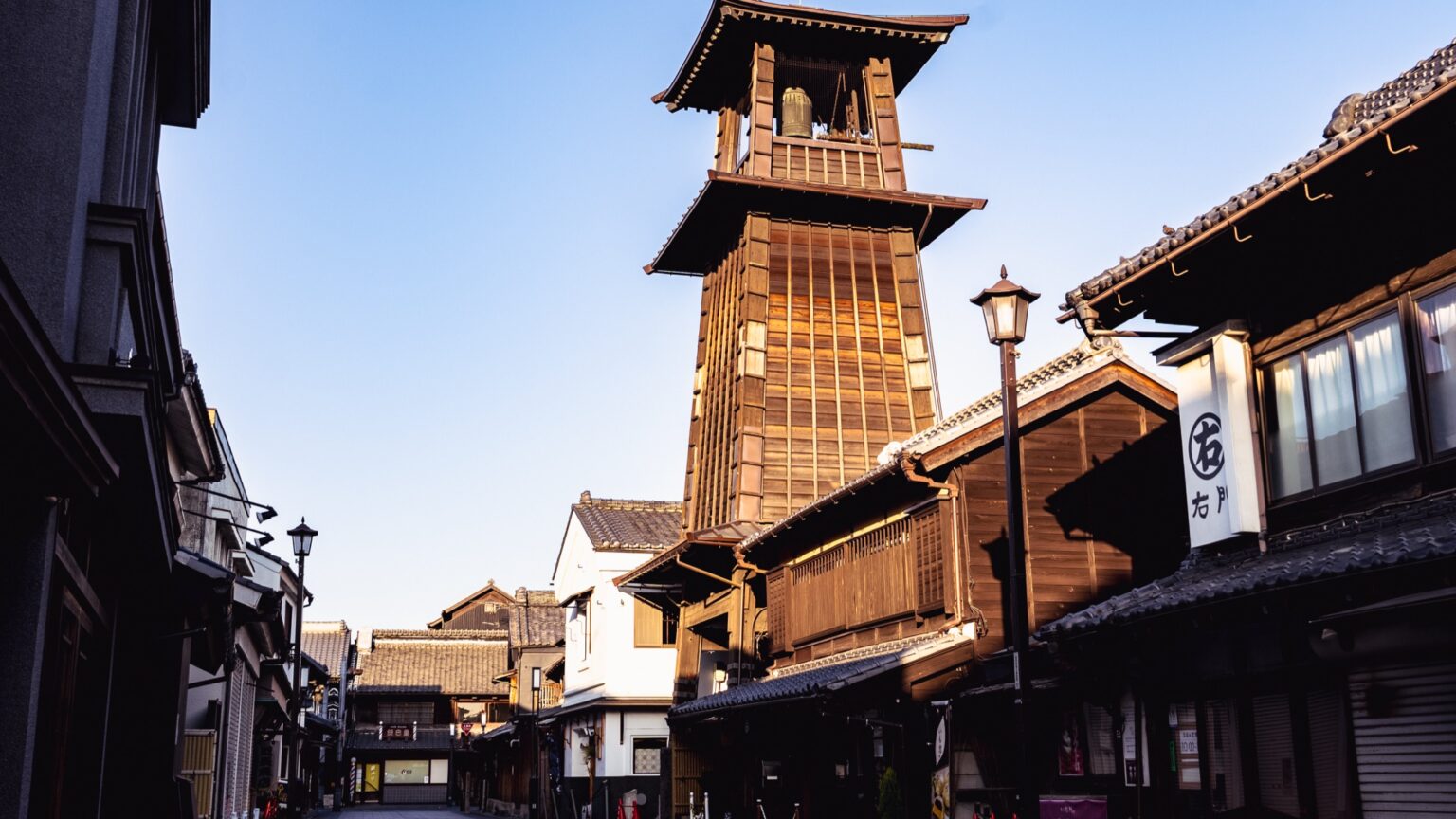
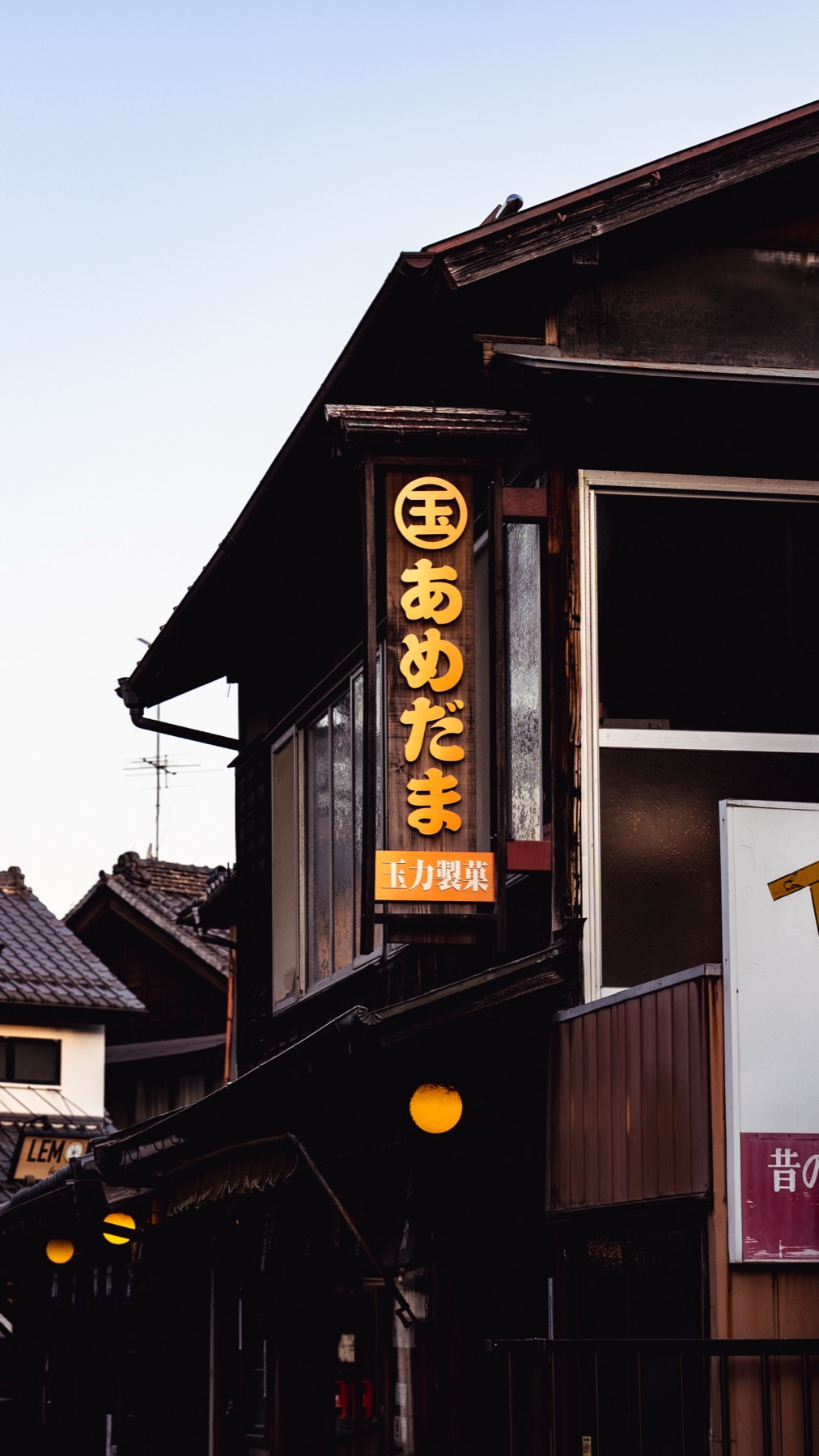
Kawagoe rewards the gaps in the festival day — our Kawagoe sightseeing guide covers the town in full. The kurazukuri warehouse street the floats roll through is a destination in its own right; the Toki no Kane bell tower is two minutes off it; and Kashiya Yokocho — penny-candy alley — feeds the queue between events.
If you want the festival’s machinery without the crowds, the Kawagoe Festival Museum on the main street is in normal operation and displays actual festival floats during its regular opening hours. Our guide to the Kawagoe Starbucks by the bell tower covers the town’s best coffee break.
For the wider season, Saitama hides more colour than it gets credit for: our Saitama autumn leaves guide and the October in Japan hub carry the rest, and the foliage-forecast explainer covers the leaf timing; for the month after, our Japan in November guide maps the whole calendar.
One same-weekend fact worth knowing: Hotokuji’s floor-maple special opening in Kiryu starts the very same Saturday, 17 October — though the temple’s own colour season usually arrives around mid-November.
Frequently asked questions
When is the Kawagoe Festival in 2026?
Saturday 17 and Sunday 18 October 2026 — the designated central streets close to vehicles 10:00–22:00 on both days. For weather: check the official site and app on the day; in a past year the City Hall float procession was cancelled for rain while the festival itself continued, so individual events can change.
Is the Kawagoe Festival free?
Watching from the public streets is free, with no tickets or reserved seating for the street events. Food stalls, transport and attractions are separate.
What time is the hikkawase?
There is no set time or place — the official 2026 programme states this explicitly. Float face-offs happen wherever two dashi meet, all day, and peak after dark. Stay into the evening, follow the drum sound, and use the official Kawagoe Matsuri Navi app to see float positions live.
Which station should I use?
Hon-Kawagoe (Seibu) is closest — about a 10-minute walk to Ichibangai by the street’s own access guide. Kawagoe Station (Tobu Tojo/JR, ~26 min from Ikebukuro for ¥490) and Kawagoe-shi (Tobu) also work; allow extra walking time and expect station crowds everywhere.
How crowded does it get?
The city measured 661,000 visitors in 2025 and 738,000 in 2024 by GPS. Evenings are the climax and the densest hours; if you want a gentler entry, Saturday morning before the 13:00 procession is the sensible bet, though crowding varies street by street.
Can I drive to the Kawagoe Festival?
You can, but the centre is closed 10:00–22:00 and the six official lots (~790 cars, 8:30–22:00) fill early — and the school-ground lots close outright in wet conditions. The association’s advice is public transport, and it is right.
Sources
Official sources for every date, time and number above, checked 21 September 2026
- Kawagoe Festival Association — 2026 (Reiwa 8) schedule, traffic regulation and access page, the 2026 participating-float list, the official 2026 pamphlet (parking, bus changes, visitor rules) and the history page (1648 origin, 2005 and 2016 designations)
- Kawagoe City — tourism statistics (GPS-based festival visitor counts, 2024–2025)
- Eagle Bus — Koedo Loop Bus festival-day notice; Tobu and Seibu bus diversion PDFs linked from the association’s 2026 page
- Fares and last trains — JR East’s post-March-2026 fare search, Seibu and Tobu official fare/timetable tools (regular timetables as of 21 September 2026; check operators’ festival-day notices)
- Hotokuji special opening — official 2026 schedule
- Festival photographs: MitsunoriEgawa (CC BY 4.0) and 江戸村のとくぞう (CC BY-SA 4.0) via Wikimedia Commons, credited under each image. Townscape photographs: the author’s own.
Join travelers discovering Japan's hidden side
Weekly dispatches from off-the-beaten-path Japan — spots and stories you won't find in guidebooks.
No spam. Unsubscribe anytime.
Welcome aboard!
You're in. See you in your inbox soon.