Western Heartland · A Thousand Years of Capital

Kansai — Kyoto, Osaka, Nara, and the smaller cities the day-trippers miss.

More than a thousand years of capital history. Ancient temples, kaiseki, and the half of Kansai that international tourism still skips.

Kansai (Kinki) covers Kyoto, Osaka, Nara, Hyogo, Wakayama, Shiga, and Mie. The cultural core of pre-modern Japan. Kyoto and Osaka draw the crowds; the other five prefectures are where HJG focuses — the Kii Peninsula, Lake Biwa, the Tamba region.

When to visit

Mid-to-late November for autumn foliage at Kyoto temples. Late March / early April for cherry blossom at Maruyama Park, Philosopher’s Path. May for Aoi Matsuri (Kyoto’s oldest festival). Mid-to-late January, after the New Year rush, for the quietest temple visits of the year.

How to get there

Kansai International Airport (KIX) is the gateway; JR Haruka express to Kyoto in 75 minutes. Osaka, Kyoto and Nara are linked by frequent JR lines — the Kyoto, Nara and Yamatoji lines — plus private railways.

All Kansai articles

Tofukuji Temple, Kyoto: Tsutenkyo Bridge, Autumn 2026 Hours, Fees and Access
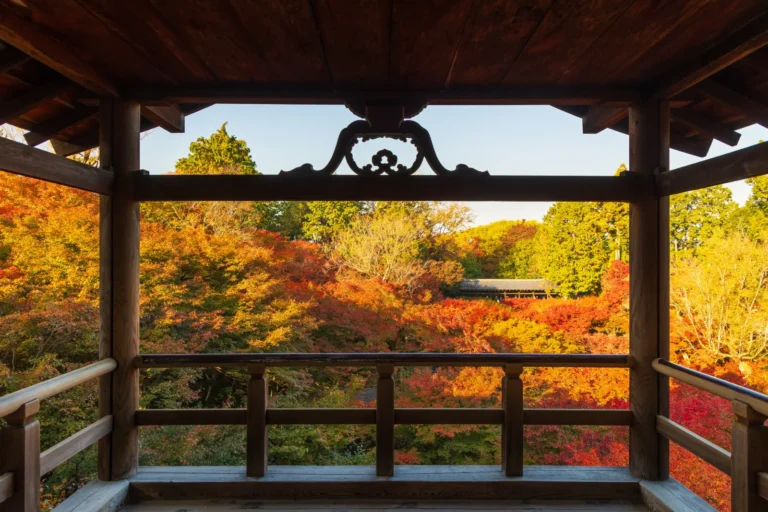
Looking out from inside the roofed Tsutenkyo bridge at Tofukuji over a valley of red, orange and yellow maples

Tofukuji's autumn period runs 14 November to 6 December 2026: Tsutenkyo bridge opens at 8:30 and costs adults ¥1,000, the Hojo garden ¥600, with no combined ticket. The photography rule on the bridge, translated from the temple's visitor guide, usual leaf timing, the JR trains from Kyoto, a half-day route with Fushimi Inari, and what each part of the temple is.

Lesser-Known Kyoto Autumn Temples and Shrines: 9 Places with Access and Crowd Notes (2026)

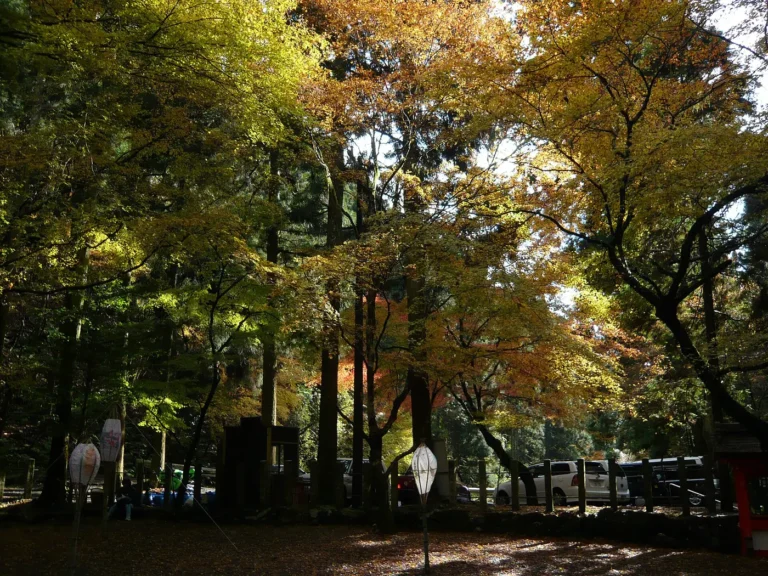
Tall trees with leaves turning yellow, orange and red over a shaded shrine yard, paper lanterns on poles in the foreground and parked cars and vans visible behind a low fence.

Nine temples and shrines from my list of 54 lesser-known places in Kyoto, all with autumn colour documented by their own sites, Kyoto City or Weathernews. Five have a checkable access or timing difference, three more were included for their location in city dispersal areas (a policy, not a crowd count), and Adashino is a companion stop to Giōji. None is guaranteed quiet; each entry says what can still make it busy. Plus Enkoji's and Rurikoin's 2026 booking rules.

Kyoto’s Temple Natto: Daitokuji, Ikkyuji and Keihoku’s Sticky Legend

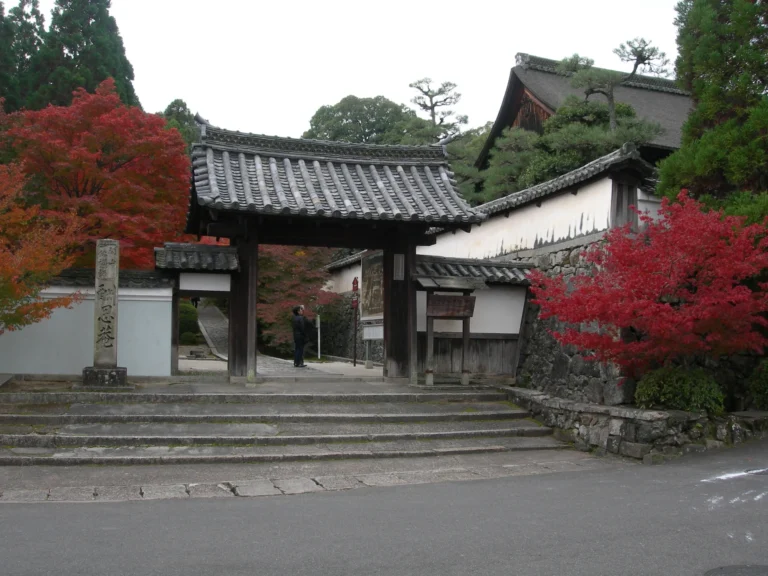
The outer gate of Ikkyuji at the top of a short flight of stone steps: a small gate with a dark tiled roof between white walls, a stone pillar inscribed with the temple name at the left, and maples in bright red leaf on both sides.

Daitokuji natto has no strings: soybeans fermented with koji mould, salted and sun-dried until black. Where to buy it in front of the temple (from ¥500 for 50 g), why Ikkyuji's natto is sold only by the temple, and why Keihoku's natto legend is about the sticky kind, with access for each and the weekend bus connections for Keihoku.