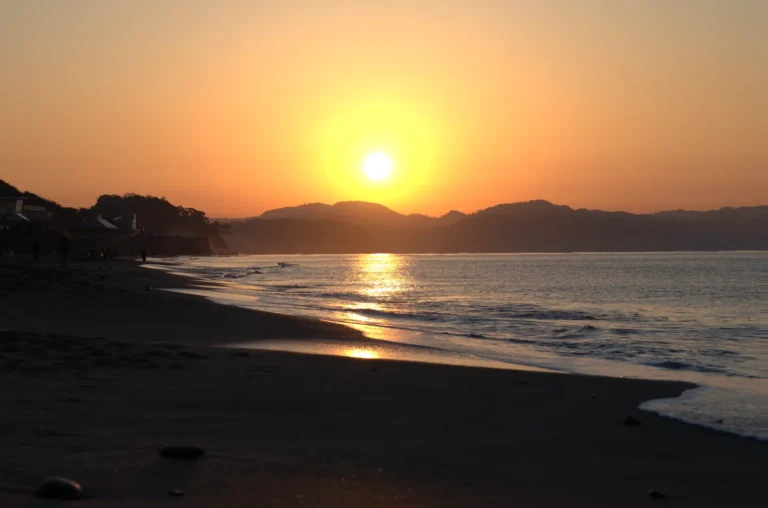
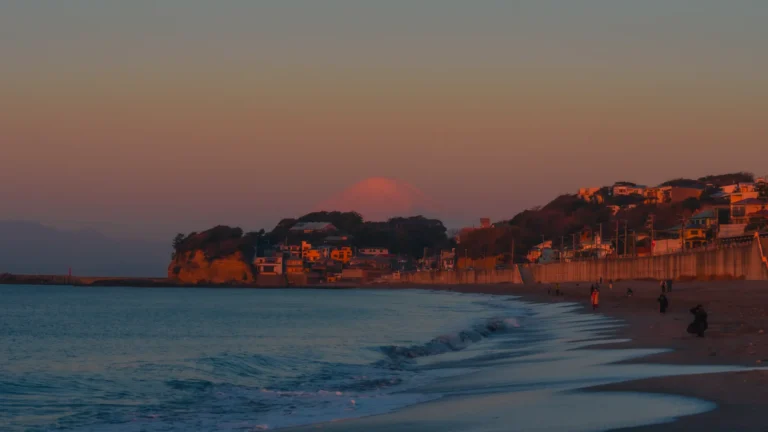
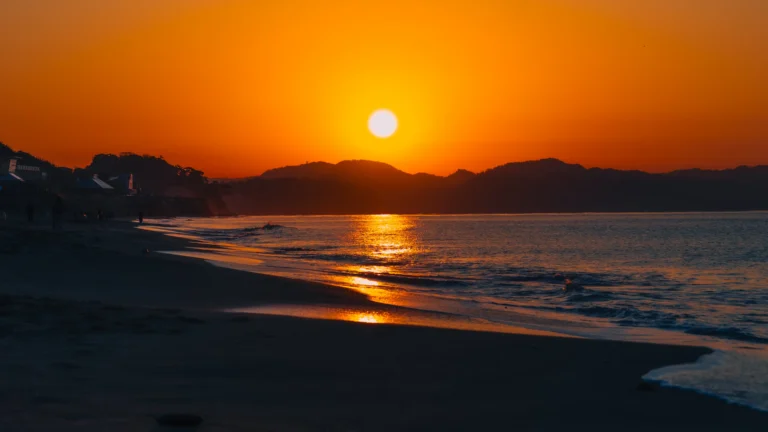
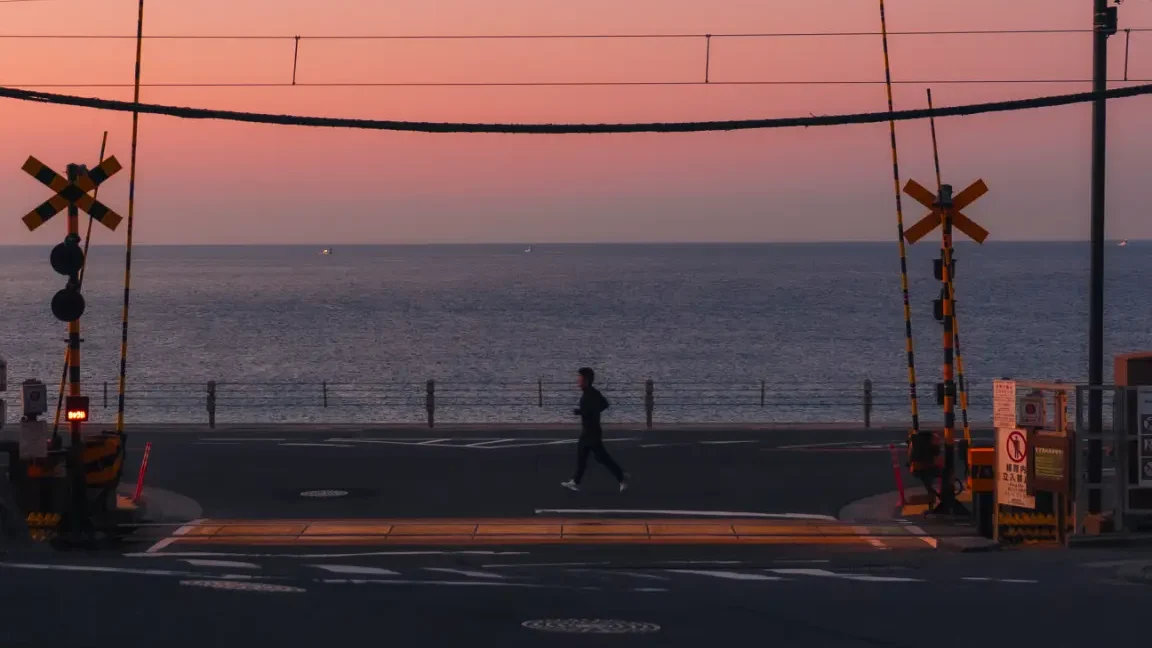
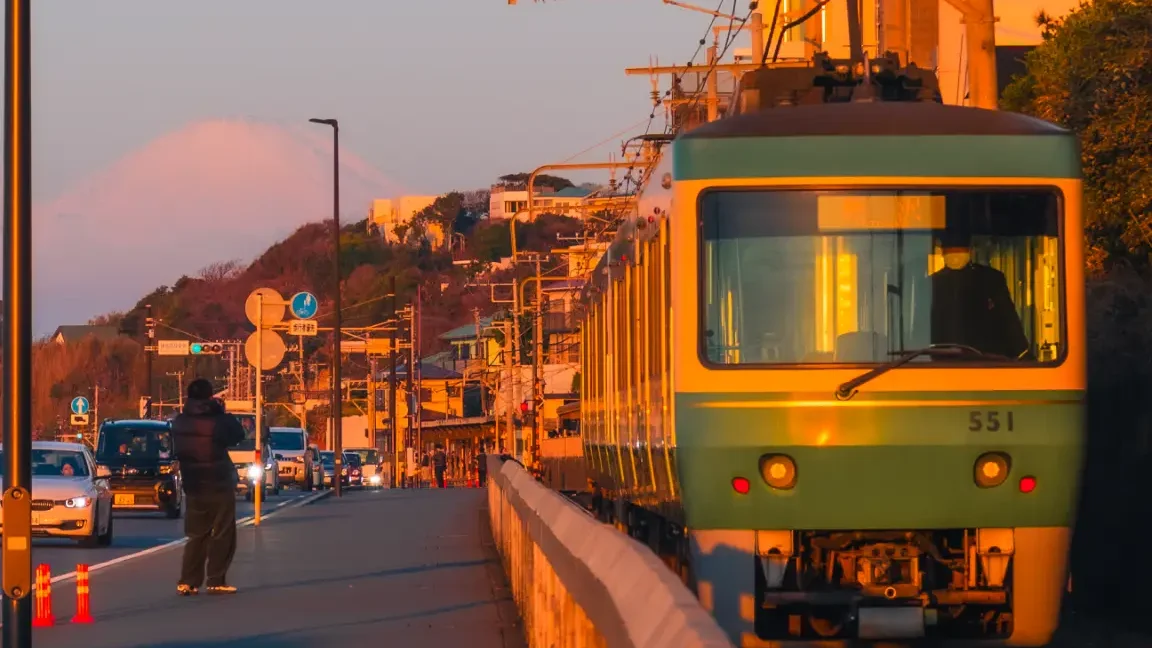
For fans of the iconic 90s anime Slam Dunk, the image is instantly recognizable: a small railway crossing, the green and yellow Enoden train gliding past, and the sparkling Shonan coast in the background. This is the Kamakura Koko-mae crossing, more famously known as the Slam Dunk crossing in Kamakura.
It’s a scene etched into the memory of a generation. However, its immense popularity has turned a quiet, residential spot into a crowded tourist destination. This guide covers how to visit briefly, safely and with minimum disruption to the neighborhood — which, in practice, means going at first light.
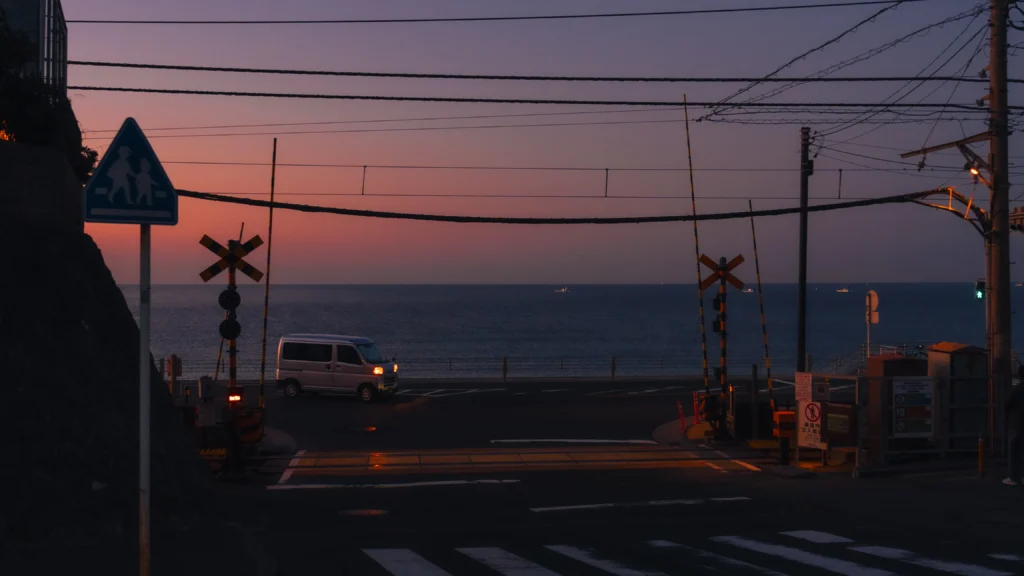
Table of Contents
Quick Facts
| Feature | Details |
| Official Name | Kamakura-koko-mae No. 1 Level Crossing (鎌倉高校前1号踏切道) |
| Location | 1 Chome Koshigoe, Kamakura, Kanagawa |
| Best Time to Visit | Around sunrise — which shifts with the season, from about 4:25 AM in midsummer to about 6:50 AM in midwinter. Check the sunrise time for your date and arrive 15–30 minutes before. |
| Time Needed | 15-30 minutes. This is a residential area, not a park. |
| Nearest Station | Enoshima Electric Railway (Enoden) “Kamakura-koko-mae Station”. |
| Cost | Free. |
| Crucial Note | This is a residential area with active crowd-control measures: Kamakura City has run staff guidance to a designated photo area, roadside-stopping warnings and AI-camera congestion trials around the station. Follow staff instructions. |
The Slam Dunk Crossing in Kamakura: An Anime Pilgrimage Site
The crossing is located right next to Kamakura Koko-mae Station on the beloved Enoden line. Fans associate this view with the opening sequence of the Slam Dunk anime, and for years visitors from across Japan — and now the world — have come to capture that nostalgic frame. The view from the slight hill opposite the crossing perfectly frames the tracks, the sea, and Enoshima Island in the distance, creating a picture-perfect moment where fiction and reality meet.
The Challenge: Overtourism in a Quiet Neighborhood
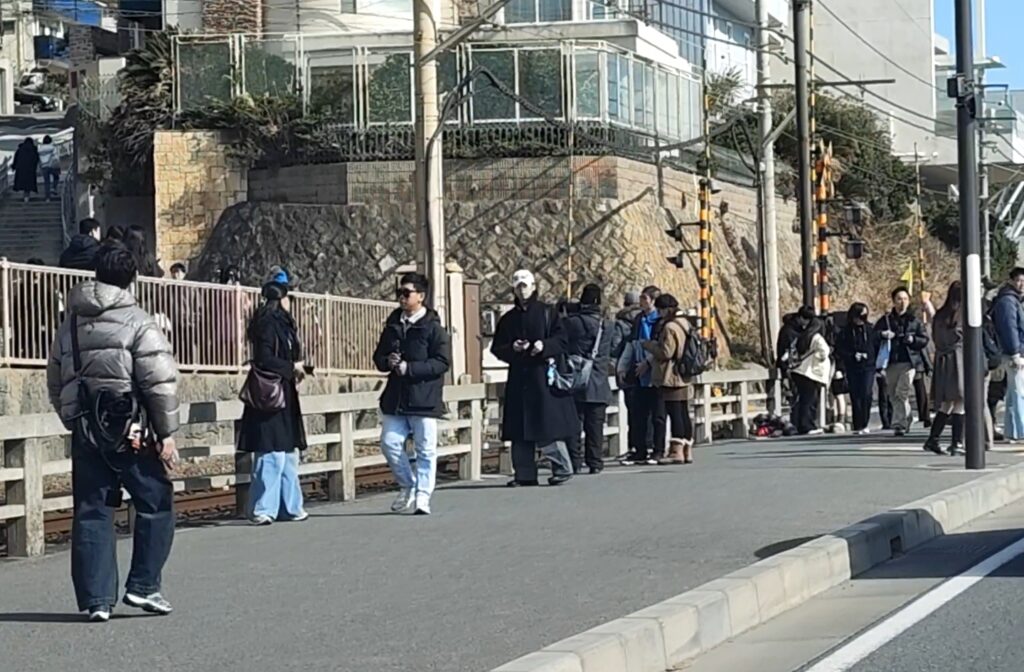
The spot’s global fame has come at a cost. On busy days the narrow street and sidewalk fill completely — in a four-day Kamakura City trial in September 2025, the designated photo area alone recorded 9,490 users. This creates a dangerous situation with traffic and poses a significant disruption to the daily lives of the residents who call this area home. Stepping into the road for photos, blocking traffic, and creating noise are common issues.
The Least Disruptive Time to Visit: First Light
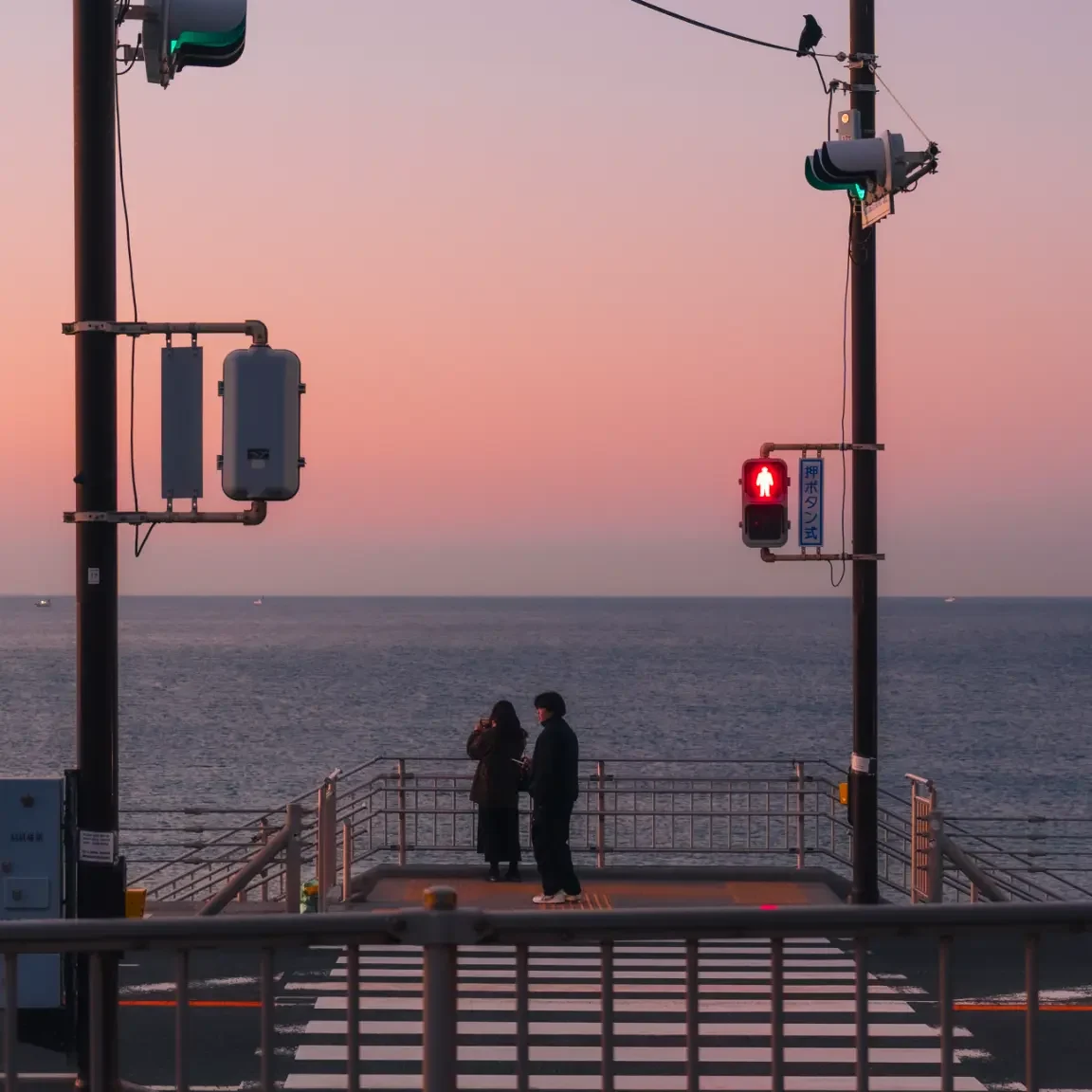
The one time this place is close to its on-screen self is first light. The road is usually near-empty, the light is soft, and you can take a quick photo without blocking anyone. Two honest notes: sunrise here shifts from about 4:25 AM in midsummer to 6:50 AM in midwinter, so check the time for your date — and the classic view faces west toward Enoshima, so dawn gives you soft side-light rather than a sun-in-frame shot. Even at dawn it is still a residential street: keep voices low, stay off the roadway and tracks, and move on after a few minutes.
Make the sunrise easy: sleep nearby the night before
A Guide to Responsible Visiting: Manners Are Essential
This crossing is not a tourist park; it is part of a functioning neighborhood and a public road. Kamakura City has responded with real measures: staff guiding visitors to a designated photo area, warnings against stopping in the roadway, and AI-camera trials to track congestion. Note that staff are mainly present in busy daytime hours — at dawn you are on your own judgment, which makes the rules below matter more, not less. Think of yourself as a guest in someone’s home.
•Do NOT Enter the Road or Tracks:
It is illegal and extremely dangerous. Wait for the pedestrian signal and stay on the sidewalk.
•Be Quiet:
This is especially important in the early morning. Residents are sleeping. Avoid loud conversations and noises.
•Do Not Block Traffic:
Do not stand in the middle of the road or block the flow of cars, cyclists, or pedestrians.
•No Trespassing:
Never enter private property (gardens, driveways, etc.) for a better photo angle.
•Keep it Brief:
Take your photos and move on. Do not linger for extended periods.
•Take Your Trash Home:
There are almost no bins here. Take every bottle and wrapper with you. And two more rules from the railway itself: no tripods, ladders, flash or lighting near the tracks or station — and follow any instruction from city staff, security or railway staff immediately.
How to Get to the Kamakura Koko-mae Crossing
Access is simple via the Enoden line, which runs between Kamakura and Fujisawa.
1.Take the Enoden Line: From either Kamakura Station or Fujisawa Station, board the Enoshima Electric Railway.
2.Alight at Kamakura-koko-mae Station (鎌倉高校前駅): The station itself is famous for its platform with a direct ocean view.
3.Walk from the Station: the crossing is right beside the station on the Fujisawa (Enoshima) side — less than a minute on foot.
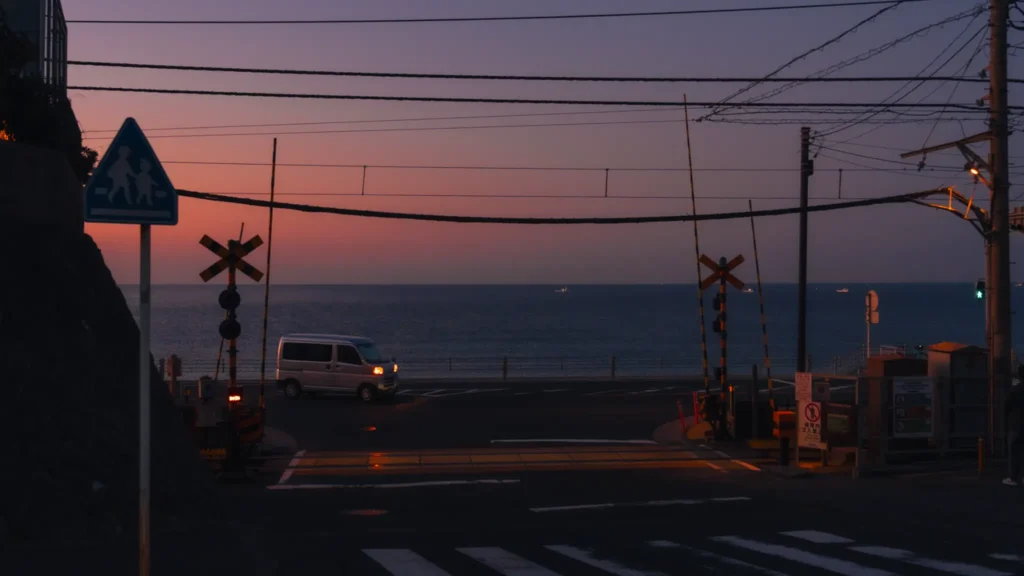
Map showing the precise location of the Kamakura Koko-mae No. 1 Crossing.
Connecting Your Journey from Shichirigahama
As we covered in our Guide to a Sunrise Walk at Shichirigahama Beach, this iconic crossing is just one station away from Shichirigahama. It’s a pleasant 10-15 minute walk along the coast, making it easy to combine both experiences in a single, peaceful morning.
Build the morning around it: the crossing is one stop from Shichirigahama’s sunrise beach walk, and pairs naturally with Tsurugaoka Hachimangu and Hasedera once Kamakura proper wakes up. Shooting more of Japan? Here’s the camera gear I actually carry, and more early-start day trips from Tokyo.
Would rather go with a guide? You can compare guided Kamakura tours on Viator and check each itinerary before booking.
Frequently Asked Questions (FAQs)
What is the best time to visit the Slam Dunk crossing?
Around sunrise — but the time shifts with the season, from roughly 4:25 AM in midsummer to 6:50 AM in midwinter. Check the sunrise time for your date and arrive a little before. It is the only window when the street is reliably quiet.
Is it dangerous to take photos there?
It can be very dangerous if you do not follow the rules. Never stand in the road or on the railway tracks. The area is narrow and used by local traffic.
How do I get the famous anime shot?
Shoot only from the sidewalks, or from the designated photo area when city staff are directing visitors there. Never step into the road or onto the tracks for an angle, and skip tripods entirely.
Can I visit at sunset?
Sunset is also beautiful but tends to be more crowded than sunrise. If you visit at sunset, all the same rules of respect and safety apply.
Are there any facilities like restrooms or shops?
No — and note there are no restrooms at Kamakura-koko-mae Station either. Use facilities before you arrive; Shichirigahama or the larger stops are your best options.
Sources
[1] Kamakura City — crowd-management trials and visitor guidance around Kamakura-koko-mae Station (designated photo area, September 2025 trial, AI-camera congestion monitoring).
[2] Enoshima Electric Railway — official visitor notices: no entry to tracks, no tripods/ladders/flash near stations, follow staff instructions.
[3] Visit Kamakura — Respect Kamakura visitor guidelines. Sunrise times: NAOJ calendar for Kanagawa.
Visit at first light, keep it short and quiet, and the crossing gives you what the daytime crowds never see — the quiet frame that made a generation fall for it in the first place.
Join travelers discovering Japan's hidden side
Weekly dispatches from off-the-beaten-path Japan — spots and stories you won't find in guidebooks.
No spam. Unsubscribe anytime.
Welcome aboard!
You're in. See you in your inbox soon.