
Kamakura · Shrines & Luck
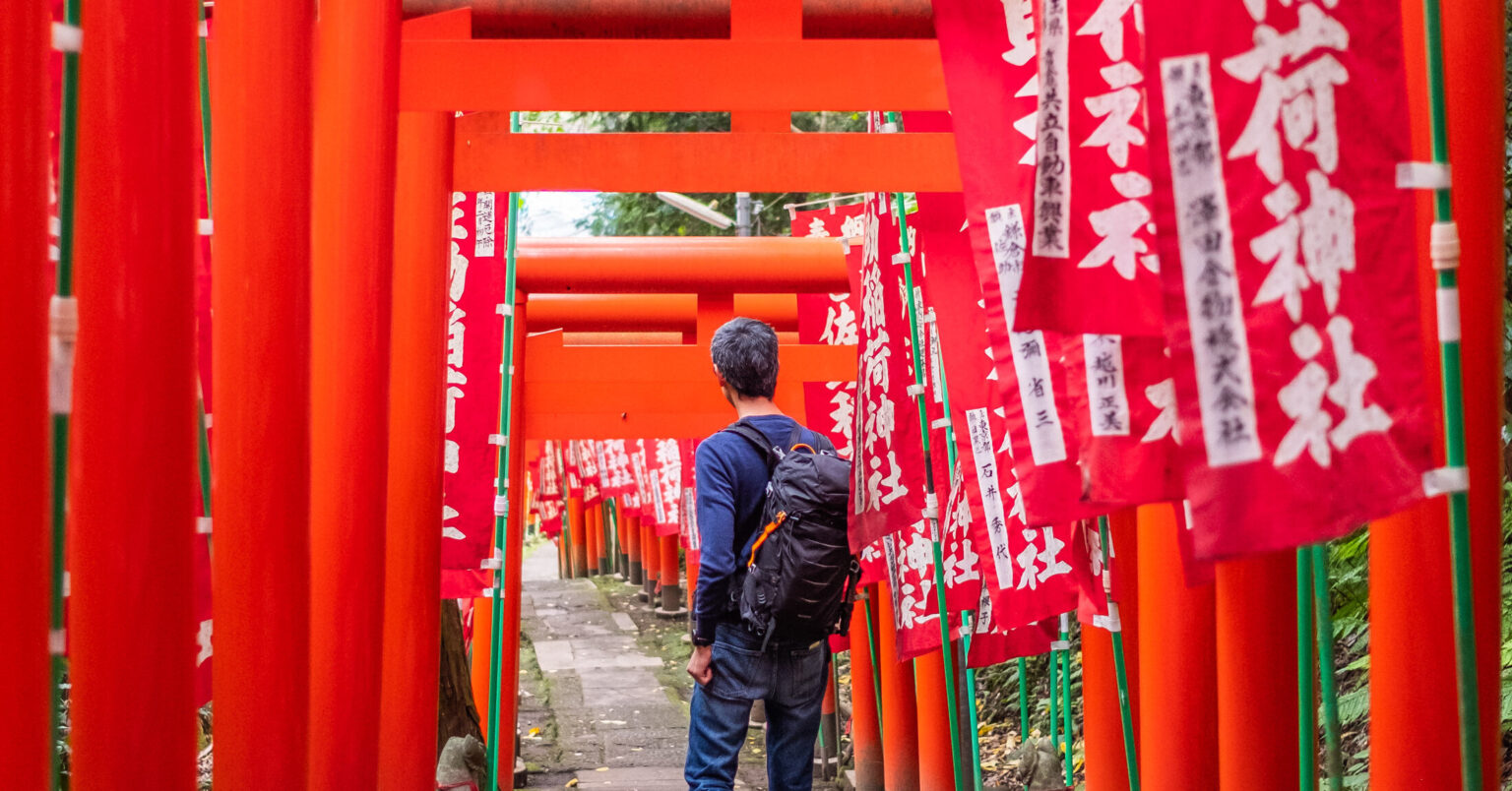
“Power spot” is Japanese-made English — a phrase for places believed to recharge your luck that spread here in the 1990s and never really translated back out. Kamakura’s two best ones share a single wooded valley, twenty-five minutes on foot from the station’s west exit: at Zeniarai Benten you wash your money in a cave spring (8:00–16:30, entry free), and five minutes along the valley lane, 49 vermilion torii climb to Sasuke Inari, the “success shrine” where wish-makers leave white foxes in pairs. This week a Japanese design magazine put Sasuke Inari on its coast power-spot list, beside Hachimangu and Enoshima — here is the version you can actually walk.
Japan’s National Diet Library traces “power spot” usage to around the 1990s, and a government translation guide politely warns that the phrase means nothing abroad. It means something specific here: a place people visit as much to fix something particular — money, promotion, a relationship — as to sightsee. On 3 September the design magazine Modern Living named its three for the Kamakura–Shonan coast: Tsurugaoka Hachimangu, Sasuke Inari, and Enoshima Shrine. Two of those I have full guides for already. What no one hands you is the working version: the two luck shrines that sit in the same quiet valley behind the station, close enough to do slowly in half a morning — and that is where I would send you first.
Zeniarai Benten: wash it, then watch what happens
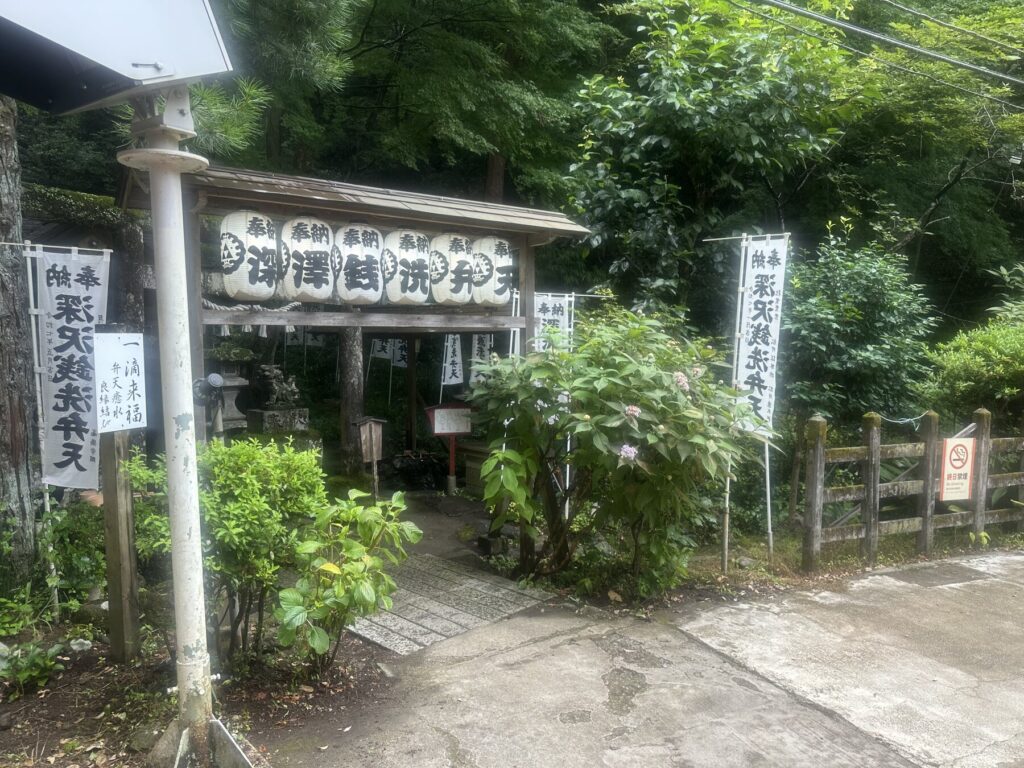
The full name is Zeniarai Benzaiten Ugafuku Shrine, and the entrance sets the tone: you walk straight into a cliff, through a tunnel cut in the rock, and come out inside a bowl of stone walls that the town simply is not part of anymore. The tunnel itself is newer than it feels — it went through around the Second World War — but the site is dated by tradition to 1185, when Minamoto no Yoritomo — seven years before he became the Kamakura shogunate’s first shogun — dreamed that the deity Ugafukujin told him to find a hidden spring in the north-west valley and use it to pray the country back onto its feet. By the shrine’s telling, the year, month and day of that dream were all Snake — and the snake is Benzaiten’s messenger, which is why the shrine still runs on a serpentine calendar: mi-no-hi, the Snake Days that recur every twelve days on the old zodiac cycle, are its feast days and its busiest mornings.
The money-washing came later, and it has a named author: tradition credits Hojo Tokiyori, the fifth regent of the Kamakura shogunate, with washing coins in the spring in 1257 to pray for his family’s prosperity. Seven and a half centuries on, that is exactly what everyone in the cave is still doing.
1. Get the basket
At the shrine office just inside the tunnel, pick up a zaru — a shallow bamboo basket — and candles and incense. The basket is lent free; the offering for the candle-and-incense set has been quoted at ¥100–200 in official materials over the last few years, so carry coins.
2. Light, then enter the cave
Light the candle from the standing flame, plant your incense, and take your basket into the okumiya — the low cave at the back where the spring rises. The water, Zeniarai-sui, is counted among Kamakura’s Five Famous Waters.
3. Wash the money
Coins, notes, whatever you brought: lay it in the basket and ladle spring water over it. Nobody hurries you. Dry the notes flat and pocket the coins wet if you like; the shrine leaves what happens next entirely to you.
4. Give worshippers the inner ledge
This is a working shrine, not a photo set. On Snake Days the bowl fills with people doing serious business with the deity; the cave’s inner ledge is theirs.
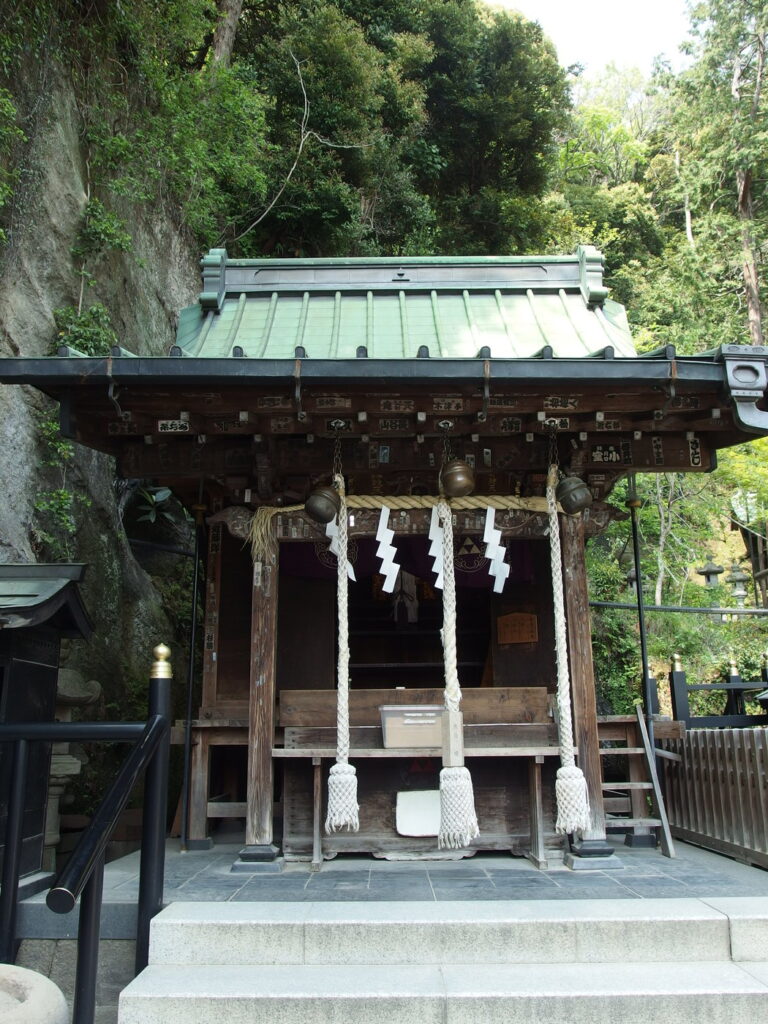
Five minutes down the lane: the fox valley
Leaving Zeniarai, drop back downhill and follow the narrow residential lane along the valley floor — five minutes, and the town thins out again almost immediately. This pocket of green is the kakure-sato — the “hidden hamlet” — and it earned the name properly: in a separate dream the shrine dates to Yoritomo’s exile years, an old man calling himself the Inari of the hidden village told him when to raise his army. When the campaign ended with the Minamoto ruling Japan, Yoritomo had the fox god’s valley shrine rebuilt in gratitude. The man who received the dream had been addressed by his court office, Hyoe-no-suke — “Suke-dono” — and the neighbourhood is still called Sasuke, the valley that helped the Suke.
Forty-nine vermilion gates climb the hillside, and past the last one the shrine dissolves into moss, ferns and several hundred white porcelain foxes.
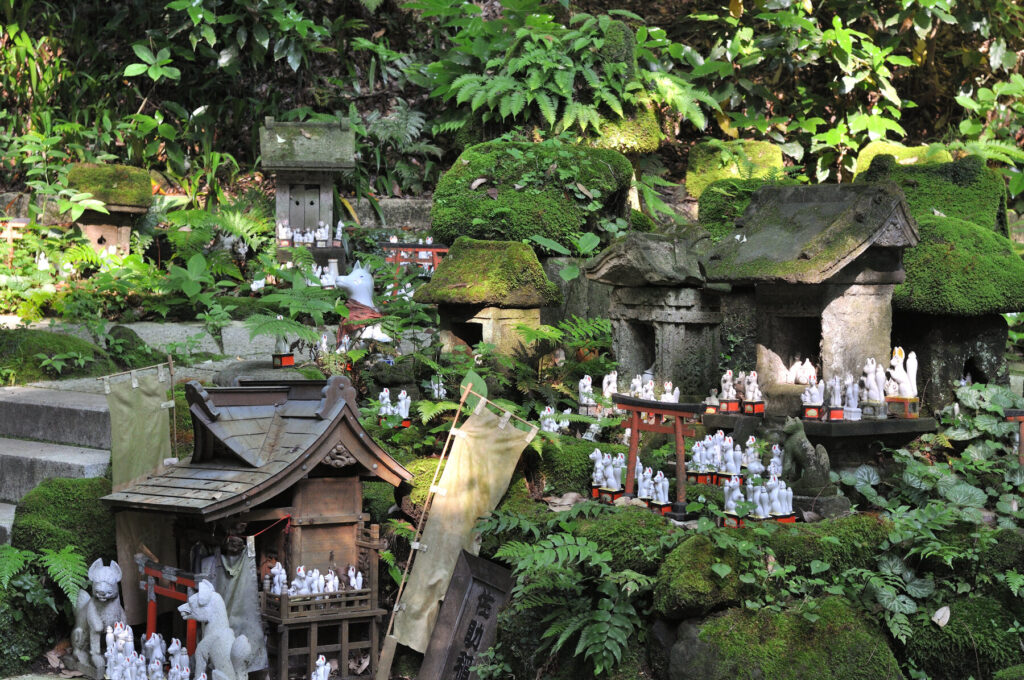
Sasuke Inari is nicknamed the shusse inari — the success-in-life shrine — because the man it helped went from exile to shogun, which remains the most persuasive career testimonial in Japanese history. The custom here is specific, and most English write-ups miss it: you offer the small white foxes in pairs when you make the wish, so most of what covers the hillside is hope still pending. The result is one of the strangest and most beautiful accumulations in Kamakura: ledges, stumps and stone lanterns crowded with hundreds of paired porcelain foxes slowly being absorbed by the green.
The worship hall you see is young: it was completed in February 2020 after typhoon damage interrupted its rebuilding, which is why the timber still glows against the old moss around it. The shrine keeps an eleven-faced Kannon in its Kannon hall, shown once a year on 18 May.
The four luck shrines, side by side
Doing the circuit properly
| Shrine | The luck | Hours | Cost | Time needed |
|---|---|---|---|---|
| Zeniarai Benten | Money — wash it in the cave spring | 8:00–16:30 (arrive by 16:00) | Free; small offering for candles/incense | 40–60 min |
| Sasuke Inari | Career & breakthroughs — the “success Inari” | Grounds always open; offices daytime | Free; paired foxes from the office if you wish to offer | 30–45 min |
| Tsurugaoka Hachimangu | Victory & marriage — Masako’s stone for couples | 6:00–20:00 year round | Free grounds | 60–90 min |
| Enoshima Shrine | Love, art & fortune — three sister goddesses | Island always open; Hoanden 8:30–16:30 | Free; Hoanden ¥200; Escar ¥500 | Half a day |
The two everyone already names — and what to check there
Tsurugaoka Hachimangu: the Masako stone and the ginkgo
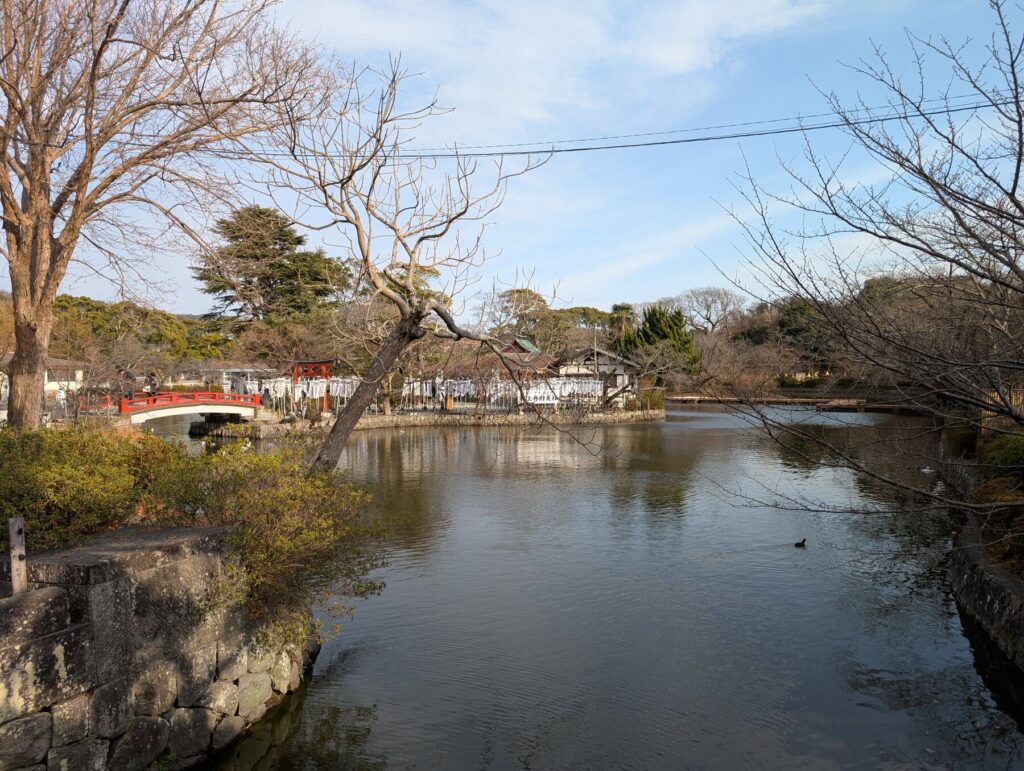
Tsurugaoka Hachimangu is Kamakura’s centre of gravity and the samurai capital’s victory shrine; my full guide covers it properly. For the luck-hunting version, walk to the island in the Genji Pond: behind the little Hata-age Benzaiten shrine there sits the Masako stone, the shrine’s own designated prayer stone for marital harmony, named for Hojo Masako — Yoritomo’s wife and, after his death, the most powerful woman in samurai history. And spare a minute for the great ginkgo by the stairway — the tree associated with the 1219 assassination legend. Wind toppled it on 10 March 2010; shoots from its root system, and the replanted section of the parent trunk, are growing beside the spot.
Enoshima Shrine: three goddesses across the bay
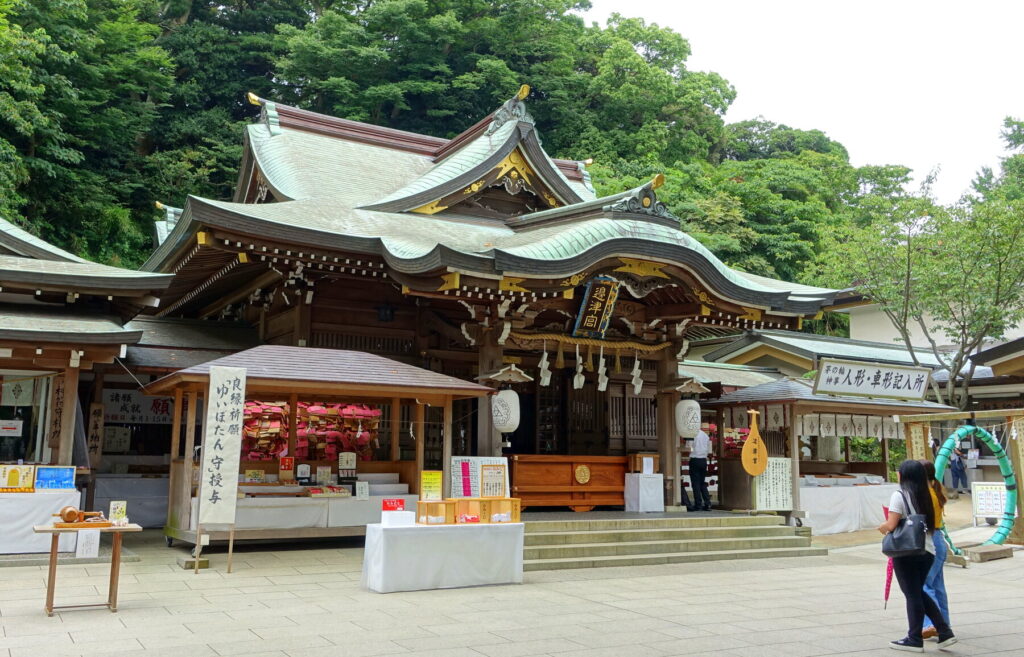
Enoshima Shrine — across the city line in Fujisawa — is not one building but three, strung up and across the island: Hetsumiya for Tagitsuhime, Nakatsumiya for Ichikishimahime, Okutsumiya for Tagirihime — three sister sea goddesses, which is why the island covers love, art, fortune and safe passage all at once. By Hetsumiya stands the paired-trunk ginkgo called the Musubi no Ki, the “tree of joining”, hung with pink ema from couples. In the Hoanden hall next door sits one of Japan’s famous Benzaiten statues — the biwa-playing, famously unclothed Myoon Benzaiten (8:30–16:30, ¥200 adults). Note one number many English pages still have wrong: the Escar — the island’s outdoor escalator — has cost ¥500 for adults (all three sections) since 1 October 2025, not the ¥360 you will read on stale pages. My island walking guide and sunset-and-shirasu evening plan take it from there.
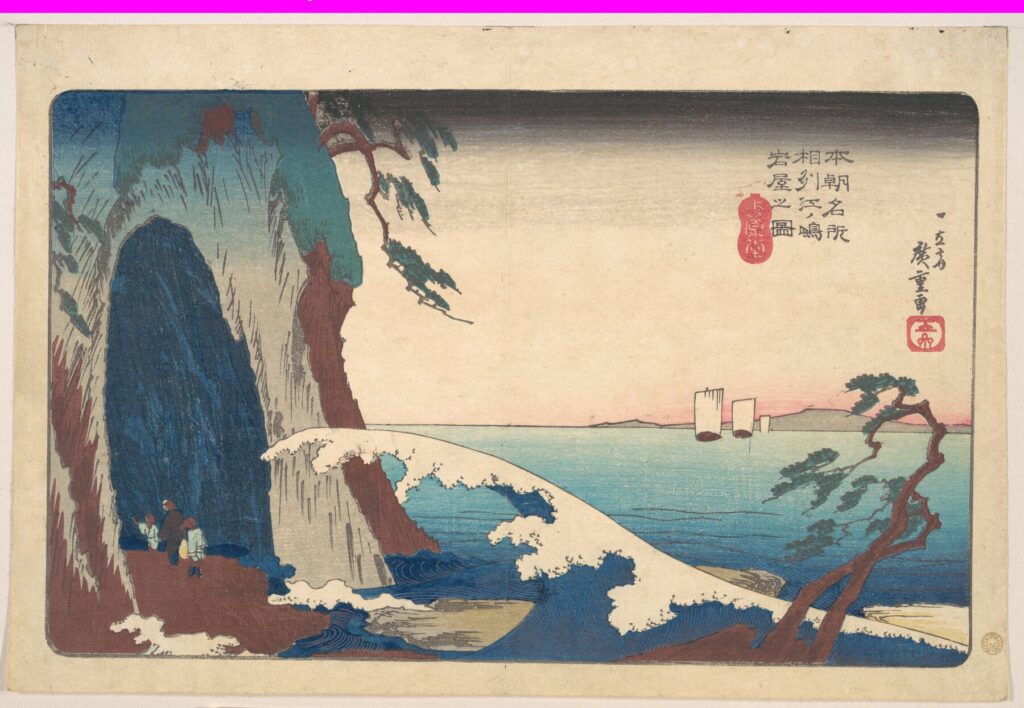
None of this is a modern marketing act, which is the part I find quietly moving. Edo-period woodblock prints show pilgrims queueing into the same Iwaya cave, crossing to the same torii with Fuji floating behind — Enoshima was a mass-market power spot two centuries before the phrase existed; the prints are the receipts.
The half-day route, and what it costs to get here
Morning: the valley pair
Kamakura Station west exit by 8:30 → 25 minutes’ walk (the last stretch is genuinely steep) → Zeniarai Benten before the groups → 5 minutes to Sasuke Inari → back downhill by noon. In dry weather, the hiking course behind Sasuke Inari adds roughly an hour of dirt trail to the Great Buddha, with Hasedera ten minutes beyond — skip it after rain.
Afternoon: pick one, not both
Either Hachimangu and a slow Komachi-dori, or the Enoden line out to Enoshima — the little train via the Slam Dunk crossing is half the point. Trying to do both after the valley is how people end up hating Kamakura.
The tickets that pay off — and the one that may not
Coming from Tokyo, Odakyu’s Enoshima–Kamakura Freepass (¥1,640 from Shinjuku, child ¥430) covers the round trip plus unlimited Enoden and earns its keep easily. Already in Kamakura? A single Enoden hop to Enoshima is about ¥260, so the ¥800 day pass Noriorikun only pays if you will ride three or more times. The valley walk itself needs no train at all.
If it rains
Honestly: still go. The Zeniarai bowl in drizzle, incense smoke pinned low under the cliffs, is the best version of the shrine, and rain deepens the moss at Sasuke Inari. Wear a raincoat rather than carrying an umbrella — the ladle and the basket want both hands. Skip only the hiking trail.
Stay a night, own the morning
Day-trippers hit the valley at 11. Sleep in Kamakura or by the Enoshima shore and you can be inside the Zeniarai tunnel at 8:00 with coins in hand. Booking has the widest hotel pick around the station; Rakuten Travel is the one that carries the small Japanese inns the international platforms miss.
What the English internet gets wrong
I checked the big English pages against the shrines’ own materials while writing this, because that is the whole point of this site. Three things to unlearn:
Kotoku-in is not Sasuke Inari
A major English travel platform’s Sasuke Inari article carries the address of Kotoku-in — the Great Buddha temple, a different valley entirely. The shrine is at Sasuke 2-22-12; trust the shrine, not the info card.
What “Suke-dono” actually was
The same piece calls “Sukedono” Yoritomo’s childhood name. The shrine’s own history derives it from his court office, Hyoe-no-suke. Details like this are the difference between a shrine’s own tradition and a mistranslation of it.
Prices that moved
Enoshima’s Escar at ¥360 survives on plenty of English pages; it has been ¥500 since October 2025. And nobody mentions that Zeniarai’s candle-and-incense offering has crept from ¥100 toward ¥200 in recent official materials — small numbers, but they are the ones you feel at the counter.
Booking the Kamakura Day
Three doors in. The hotel is the one that changes what time you reach the cave.
FAQ
Is washing money at Zeniarai Benten really free?
Entry is free and the bamboo basket is lent free. The candle-and-incense set is a small offering — officially published figures over recent years range from ¥100 to ¥200, and arrangements change, so carry small coins and read the sign at the office on the day.
What is a Snake Day (mi-no-hi), and should I aim for one?
The old calendar assigns each day a zodiac animal on a twelve-day cycle; Snake Days are Benzaiten’s feast days, because the snake is her messenger. The shrine is at its liveliest and most crowded then. Aim for one if you want atmosphere; avoid one if you want the cave to yourself. Japanese calendar sites list mi-no-hi dates.
How hard is the walk from Kamakura Station?
About 25 minutes from the west exit, flat through the neighbourhood and then genuinely steep for the final approach. It is pavement the whole way — the hiking-trail section beyond Sasuke Inari is a separate, optional dirt route. Ordinary shoes are fine for the shrines themselves.
Can I drink the spring water at either shrine?
No. Sasuke Inari’s Reikosen spring is explicitly marked not drinkable, and at Zeniarai the spring is for washing money, not filling bottles. Buy a drink at the station; there is little for sale in the valley itself.
Do the white foxes at Sasuke Inari mean a wish came true?
The shrine’s own custom is the reverse of what many blogs say: you offer a pair of white foxes when you make the wish. The hundreds on the hillside are hopes in progress, not victory laps — which, once you know it, makes the place feel very different.
Is half a day really enough for both valley shrines?
Yes — comfortably, including the walk out and back. Zeniarai wants 40–60 minutes, Sasuke Inari 30–45. What half a day is not enough for is adding Hachimangu and Enoshima on top; pick one for the afternoon and save the other for its own trip.
Sources
The sources behind every figure above
- Sasuke Inari Shrine official site — 49 torii, kakure-sato legend, Hyoe-no-suke etymology, paired-fox custom, Reikosen no-drinking notice, Kannon opening 18 May (sasukeinari.jp, history and topics pages)
- Kamakura City Tourism Association — Zeniarai Benten hours 8:00–16:30 / arrive by 16:00, voluntary-offering entry, Zeniarai-sui and the Five Famous Waters (trip-kamakura.com facility page)
- Kanagawa Prefectural Tourism Association — 25-minute walk from Kamakura Station west exit, basket lending and offering mechanics, Snake-Day feast days (kanagawa-kankou.or.jp)
- Prefecture- and city-hosted visitor materials (2020–2026) — candle/incense offering figures from ¥100 to ¥200
- Tsurugaoka Hachimangu official site — gates 6:00–20:00, Masako stone behind Hata-age Benzaiten on the Genji Pond island, great ginkgo felled 10 March 2010 with regrowth (hachimangu.or.jp access and grounds pages)
- Enoshima Shrine official site and Fujisawa City tourism — three halls and goddesses, Hoanden statues, hours 8:30–16:30 and ¥200 adult fee (enoshimajinja.or.jp, fujisawa-kanko.jp)
- Enoshima Escar operator announcement — ¥500 adult / ¥250 child from 1 October 2025 (enoshima-seacandle.com)
- Odakyu Electric Railway — Enoshima–Kamakura Freepass ¥1,640 / ¥430 from Shinjuku; Enoden — Noriorikun day pass ¥800 / ¥400 (official ticket pages)
- Kamakura City tourism trail notice (24 October 2023) — Daibutsu hiking course fully passable after the 2019 typhoon closures
- Town News Kamakura (14 February 2020) — Sasuke Inari worship hall completed February 2020 after typhoon-delayed rebuilding
- National Diet Library reference casebook — “power spot” usage spreading from around the 1990s; MLIT translation guidance on the phrase
- Yoritomo dream legends at both valley shrines are presented by the shrines and tourism bodies as tradition, and are written as such here
Join travelers discovering Japan's hidden side
Weekly dispatches from off-the-beaten-path Japan — spots and stories you won't find in guidebooks.
No spam. Unsubscribe anytime.
Welcome aboard!
You're in. See you in your inbox soon.