Kanagawa · Hakone · Onsen
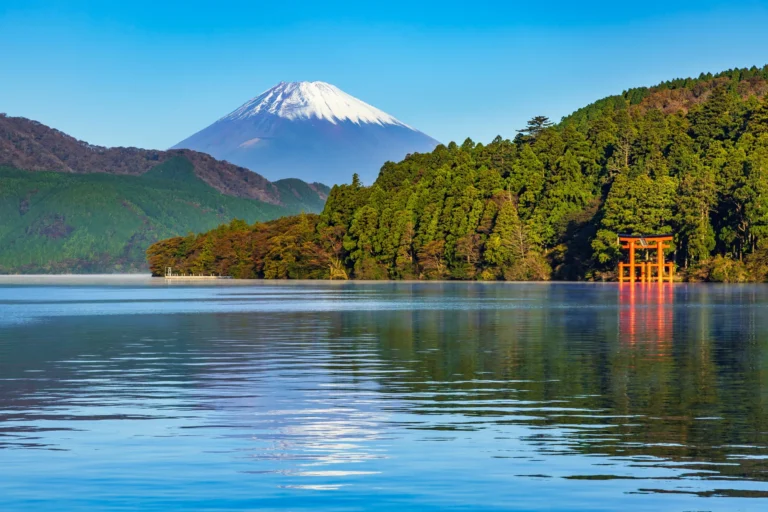
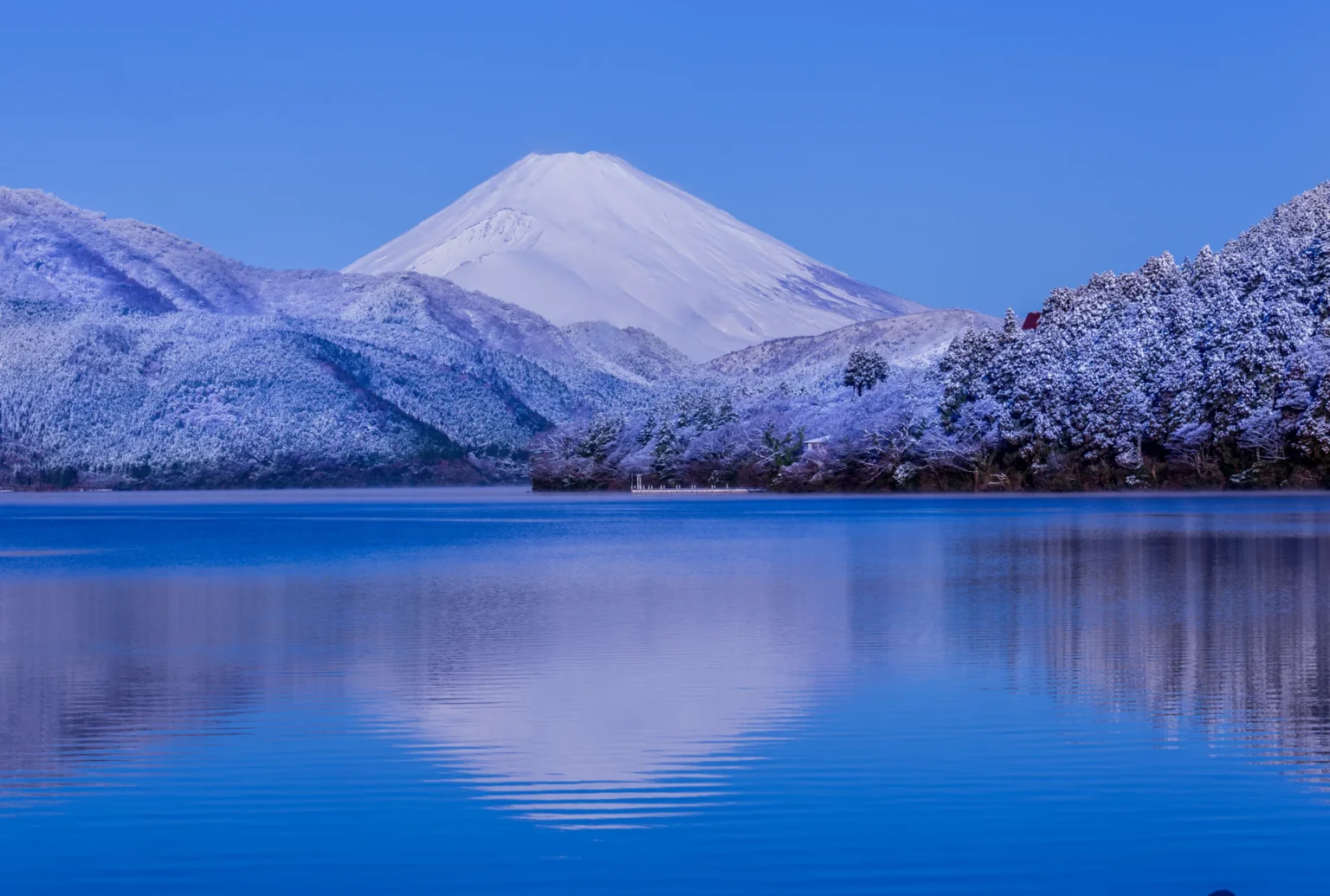
Ryuguden Honkan at Lake Ashi is a day-use hot spring inside a 1938 building that was taken apart, carried over the mountains and rebuilt here — and it is one of the few baths in Hakone where Mount Fuji and Lake Ashi appear in the same view. A weekday adult pays ¥2,300, plus ¥600 if you need a towel. Tattoos are refused outright.
One thing to fix in your head before anything else, because it is counter-intuitive: Honkan means main building, but the Honkan is the day-use bathhouse. The ryokan’s guest rooms are in the annex. Get those the wrong way round and you will book the wrong thing.
I wrote this because the English-language material on this place is thin, and the three things a visitor most needs to know are the three things nobody states plainly: what it really costs once you include a towel, what happens at the door if you have a tattoo, and whether the Fuji view is a marketing line or something you can plan around.
All three have answers. None of them are on the operator’s English page.
What does it actually cost?
¥2,300 for an adult on a weekday and ¥2,600 at weekends and on public holidays, tax included. Those prices took effect on 1 April 2026, up ¥100 from the year before. Children of elementary-school age pay ¥1,300 or ¥1,600, and children from three years old pay ¥700 or ¥1,000. The ¥50 bathing tax that applies from age twelve is already inside those figures, so there is nothing extra at the desk.
Two things make the real number higher, and both catch visitors out.
| Item | Weekday | Weekend / holiday |
|---|---|---|
| Adult admission, general public | ¥2,300 | ¥2,600 |
| Adult admission, member rate | ¥1,900 | ¥2,200 |
| Towel set (bath + face towel) | ¥600 | ¥600 |
| Yukata rental | ¥500 | ¥500 |
| Bathing set, including yukata | ¥940 | ¥940 |
| Realistic total, bringing nothing | ¥2,900 | ¥3,200 |
The ¥400 nobody tells you about. That member rate is not a loyalty scheme you need history with — Seibu Prince Global Rewards is free to join, and it takes the weekday adult price from ¥2,300 to ¥1,900. If you are travelling as a couple that is ¥800 back for a few minutes of sign-up. Do it before you arrive rather than at the desk.
Shampoo, conditioner and skincare are provided free in both bathing areas — the women’s side has cleansing wash, lotion and milk, the men’s side hair tonic and aftershave. What is not provided is a towel. Japanese day-use bathers habitually bring their own, so the ¥600 towel set is the visitor add-on here. A cheap face towel from any convenience store will do the job if you would rather not pay it.
Can you go if you have tattoos?
No. This is the flattest refusal I have read on a Japanese onsen page, and I want to quote it rather than paraphrase, because visitors keep being told that Japanese tattoo rules are soft in practice.
The operator’s own day-use page states that entry is firmly refused to organised-crime members and to anyone with tattoos, and that if a tattoo is discovered after entry the visit will be stopped immediately and the guest will be asked to leave. There is no cover-sticker allowance and no exception for small or fashion tattoos published anywhere on the site.
Turning up with a covered tattoo and hoping is not a plan. Two hours from Tokyo, it is an expensive way to find out.
Hakone as a whole is more mixed than that, and the differences are worth knowing before you choose where to bathe. Every rule below is from the facility’s own site.
| Facility | Tattoo rule | Adult price / note |
|---|---|---|
| Hakone Yuryo (箱根湯寮) | Allowed. Restrictions officially lifted on 1 April 2025, stated in Japanese and English | ¥1,700–1,800 weekday, ¥2,000–2,200 weekend |
| Yunessun (箱根小涌園ユネッサン) | Conditional since 1 October 2025 — permitted if fully covered by two of the facility’s own paid cover seals | Onsen area ¥1,500–1,800 by date tier |
| Ryuguden Honkan | Refused, with ejection if discovered | ¥2,300 weekday, ¥2,600 weekend |
| Tenseien (天成園) | Refused — and it also bars tattoo-lookalike stickers, so covering does not help | 23-hour operation; towels and yukata included |
If you have tattoos, go to Hakone Yuryo instead. It lifted its restriction in April 2025 and says so on its English page, it is three minutes from Hakone-Yumoto station on a free shuttle that runs every ten to fifteen minutes, and it is cheaper. One honest warning: its English page contradicts itself further down, where older text still says tattoos are not admitted. The Japanese policy notice and the top of the English page both confirm the lifting, but if you want certainty, ask at the desk. Note also that it does not rent towels — it sells them, ¥550 for a bath towel and ¥300 for a face towel.
Is the Mount Fuji view real, and when can you actually see it?
The view is real, but the operator states it without any weather caveat at all, so I will supply one. Mount Fuji spends a lot of the year behind cloud, and the month you visit changes your chances enormously.
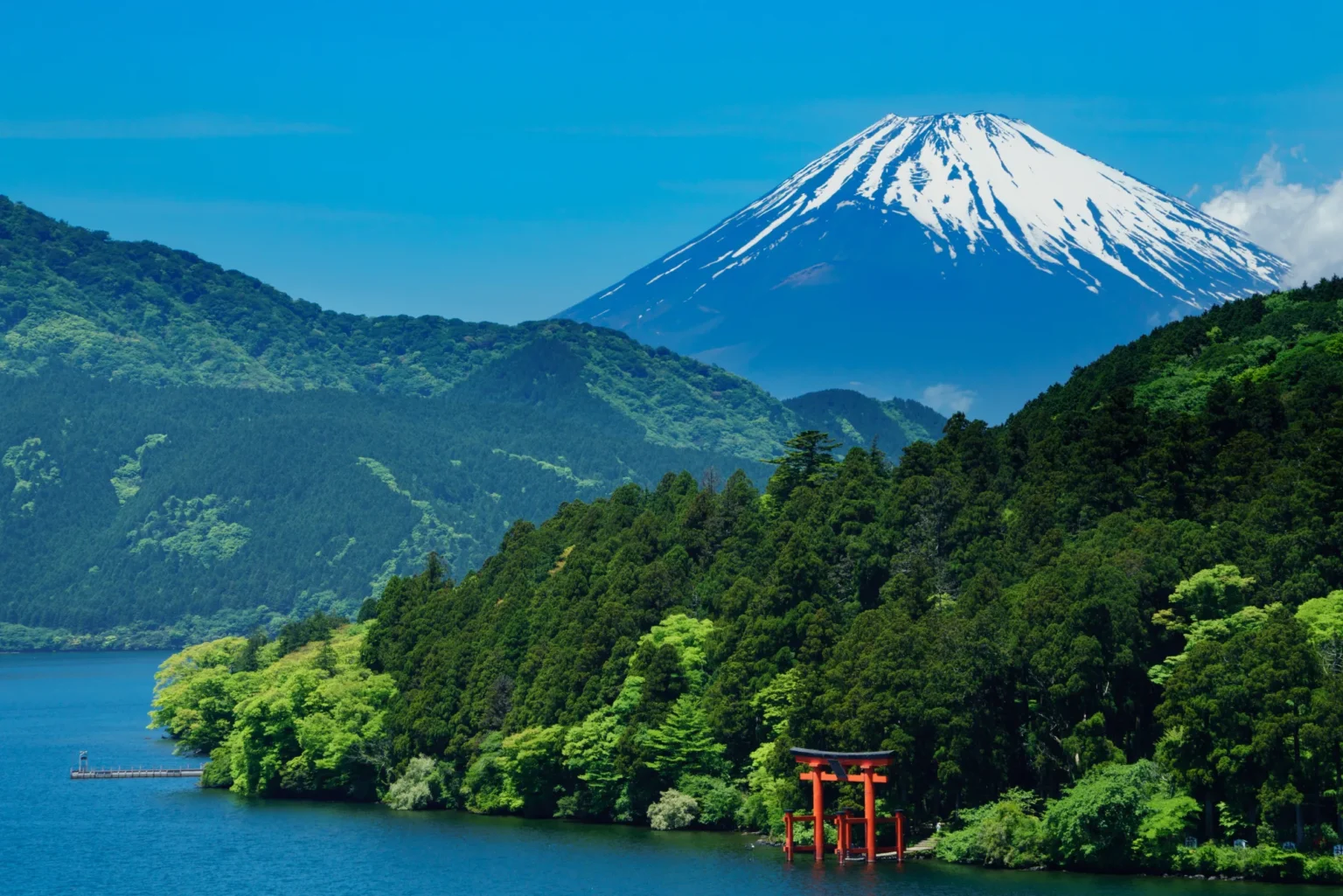
There is no Hakone-specific visibility statistic. I looked, and the Hakone Tourism Association’s own Fuji viewpoint page gives no month, no season and no figure. What does exist is the Tokyo Metropolitan Government’s continuous count of days Mount Fuji was visible, observed at 9am from its own building, running since the 1990s. It is Tokyo rather than Hakone, so treat it as a rough seasonal guide and not as Hakone odds. The broad winter-versus-summer pattern is very likely to apply here too, but I cannot give you a Hakone number, because nobody publishes one.
| Average days per month Mount Fuji was visible, observed from Tokyo | |||||
|---|---|---|---|---|---|
| Jan 19.1 | Feb 13.6 | Mar 9.4 | Apr 4.9 | May 4.2 | Jun 1.8 |
| Jul 2.4 | Aug 1.7 | Sep 2.9 | Oct 5.8 | Nov 11.3 | Dec 18.1 |
January averages 19.1 visible days and August 1.7 — about eleven times the chance. That gap is why a summer visitor who books this bath for the view often leaves disappointed while a January visitor thinks the place is magic. Those monthly figures are long-run averages and add up to roughly 95 days a year; the most recent completed fiscal year, April 2025 to March 2026, ran better than average at 111 days, with January and December the best months.
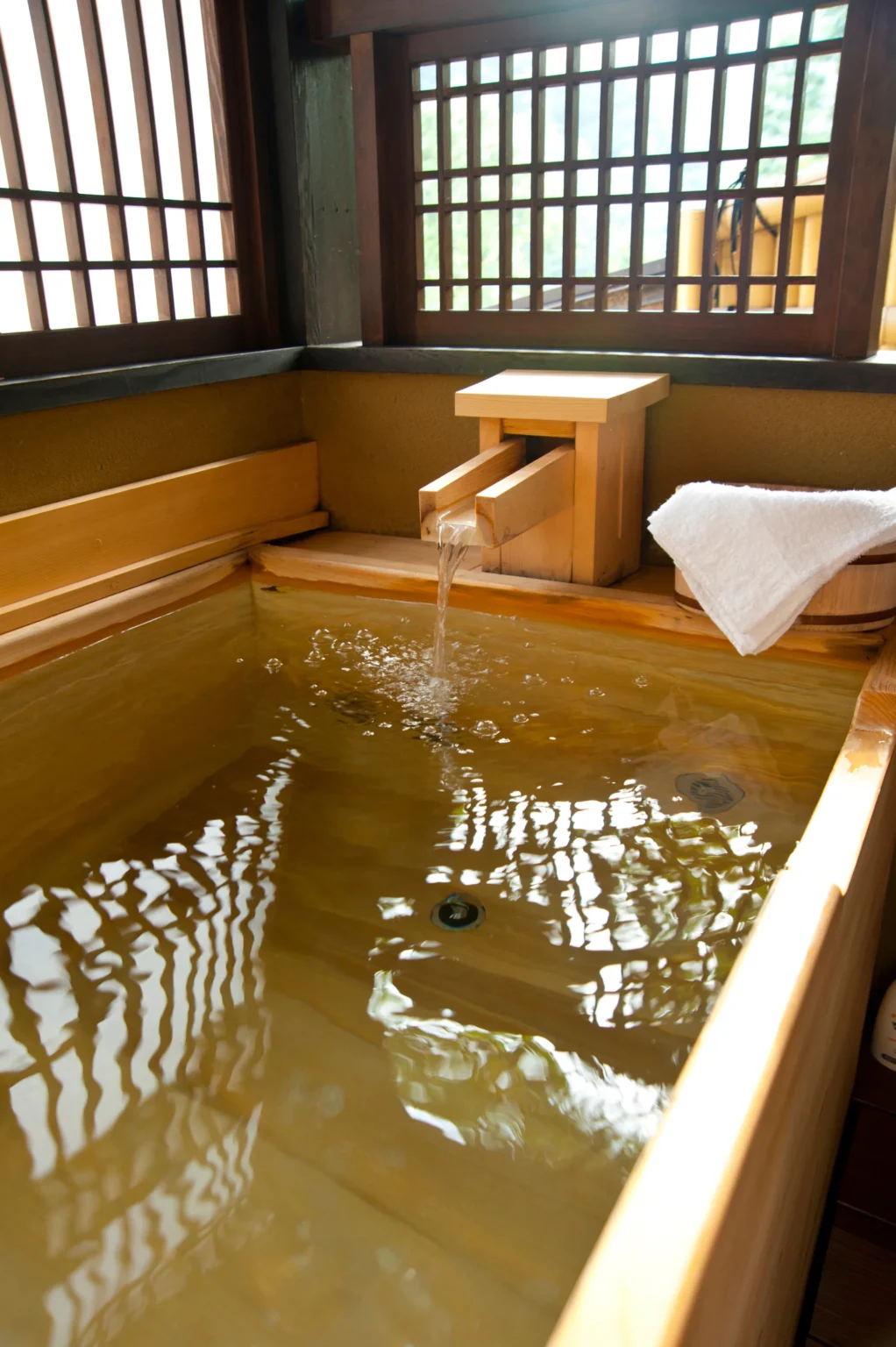
A detail the operator publishes but does not spell out, and it matters if you are male. The two official photographs captioned as showing both Lake Ashi and Mount Fuji are the women’s open-air bath and the men’s indoor bath. The men’s open-air bath, named Yumedono, carries no such caption. So the documented Fuji-and-lake view is from the women’s outdoor bath and the men’s indoor one. Men should not assume the open-air bath is where the view is.
There is a nice piece of local lore behind why a Fuji-view onsen here is unusual at all. In Hakone it was long said that hot springs do not well up where Mount Fuji is visible. That saying is recorded by the tourism association in the context of a different spring, so I will not stretch it onto this one — but it explains why a bath with this particular combination of water and view is a late arrival rather than an old institution.
The building is the actual reason to come
Making a day of it
Ryuguden Honkan is a nationally Registered Tangible Cultural Property, and its story is stranger than the bath.
It was built in 1938 — not here, but on Bentenjima on Lake Hamana in Shizuoka, as the Hamanako Hotel, a top-tier hotel with western rooms, French cooking and horse-carriage transfers from the station. Its exterior was modelled on the Phoenix Hall at Byodoin in Uji, the building on the back of the ¥10 coin. It was built under Tobishima Shigeru, then head of the construction firm known today as Tobishima Corporation.
It lasted about eighteen months before closing. After the war the whole building was dismantled over roughly five months, moved by rail to Atami and then hauled over mountain roads to Lake Ashi, and rebuilt across more than a year by shrine carpenters and craftsmen brought in from around the country. It reopened here in 1957 as Ryuguden, this time as a Japanese ryokan with every room converted to tatami. Keyaki and hinoki went into it.
Prince lists Nehru and Adenauer among the figures who used the property after it reopened in 1957. The current Emperor Emeritus and Empress Emerita stayed in 1964, when they were Crown Prince and Princess. A Japan–UK summit was held here in 2003. Then in 2011 the main building was closed to overnight guests on safety grounds after the Great East Japan Earthquake, and it sat unused until 2017, when it reopened as a day-use bathhouse and was registered as a cultural property in the same year.
You are paying ¥2,300 to bathe on the ground floor of a pre-war luxury hotel that was carried over a mountain range and put back together by shrine carpenters.
How do you get there without a car?
The single simplest option is the direct highway bus. Odakyu’s Hakone line runs from Busta Shinjuku, the terminal at Shinjuku’s south exit, to a stop called Hakone-en in about two hours forty minutes on the current timetable, and Hakone-en is a ten-minute walk from the bathhouse. No transfers, no working out which bus company you are on. Be aware that some Prince Hotels pages still show an older figure of about 2h25 and name the west exit — go by the bus operator’s own timetable, which was revised in June 2026. For the train routes and whether the Hakone Freepass pays for itself, see the Tokyo to Hakone guide.
If you are already inside Hakone, take the Hakone Tozan bus from Hakone-Yumoto towards Moto-Hakone-ko, about thirty minutes, then pick up the free Lake Ashi area loop bus for about five minutes. That loop bus is genuinely useful: it links The Prince Hakone Lake Ashinoko, Ryuguden, Hakone-en and Moto-Hakone, which means it connects the bath to Hakone Shrine and the Moto-Hakone boat piers at no cost.
From Shinjuku, direct
Odakyu Hakone Highway Bus from Busta Shinjuku, about 2 hours 40 minutes to the Hakone-en stop. The least complicated route, and it drops you a ten-minute walk away.
From Odawara
Izuhakone bus to Hakone-en, about 1 hour 20 minutes. From Hakone-Yumoto the same company takes about 1 hour 5 minutes.
By car
About 45 minutes from the Gotemba interchange, 65 from Atsugi. Hakone-en has a large car park at ¥1,000, rising to ¥1,200 at weekends and peak periods. Published capacity figures differ between the operator’s own pages, so do not treat any single number as gospel on a busy weekend.
By boat
Hakone-en has its own pier. Point-to-point adult fares are ¥1,200, a 40-minute loop is ¥2,400 and a day pass ¥2,900, at fares revised in April 2026.
The trap that catches almost everyone: Hakone has two rival transport groups. The famous pirate ships on Lake Ashi are Odakyu’s. The boat that serves Hakone-en, where this bath is, is a different company, Hakone Yusen. The Hakone Free Pass is an Odakyu product, and I could not confirm on Odakyu’s own pages whether it covers anything on the Seibu and Izuhakone side — the buses to Hakone-en, the Komagatake ropeway, the Hakone-en cruise or the bath itself. I am not going to guess for you. If the Free Pass is central to your plan, check coverage for Hakone-en before you buy, or budget for paying separately on this side of the lake.
One genuinely useful modern detail: contactless card and phone payment now works across the Odakyu-group transport — the Tozan train, cable car, buses, the pirate ships and the Hakone Ropeway — and paying that way upgrades the cruise and ropeway from a return ticket to a one-day unlimited one. That does not extend to the Seibu side, so carry another payment method for Hakone-en.
Plan the Hakone side of your trip
Where does it sit among Hakone’s day-use baths?
At the expensive end, and you are paying for the building and the view rather than for scale. Yunessun’s onsen area starts at ¥1,500, Hakone Yuryo is ¥1,700 on a weekday, and Ryuguden Honkan is ¥2,300. Tenseien runs a twenty-three-hour operation and includes towels and a yukata in the price, which changes the comparison if you are staying late.
Come here for
The heritage building, the lake, and the chance of Fuji from the water. It is a place to sit still in for two hours, not a facility to work through.
Go to Hakone Yuryo for
Tattoos, a lower price, and the easiest access of any Hakone day onsen — a free shuttle from Hakone-Yumoto every ten to fifteen minutes.
Go to Yunessun for
Families and anyone who wants a swimsuit area as well as a bath. Its tattoo rule is conditional rather than closed.
Go to Tenseien for
Late nights. Towels and a yukata are included, which quietly closes most of the price gap.
What are the rules once you are inside?
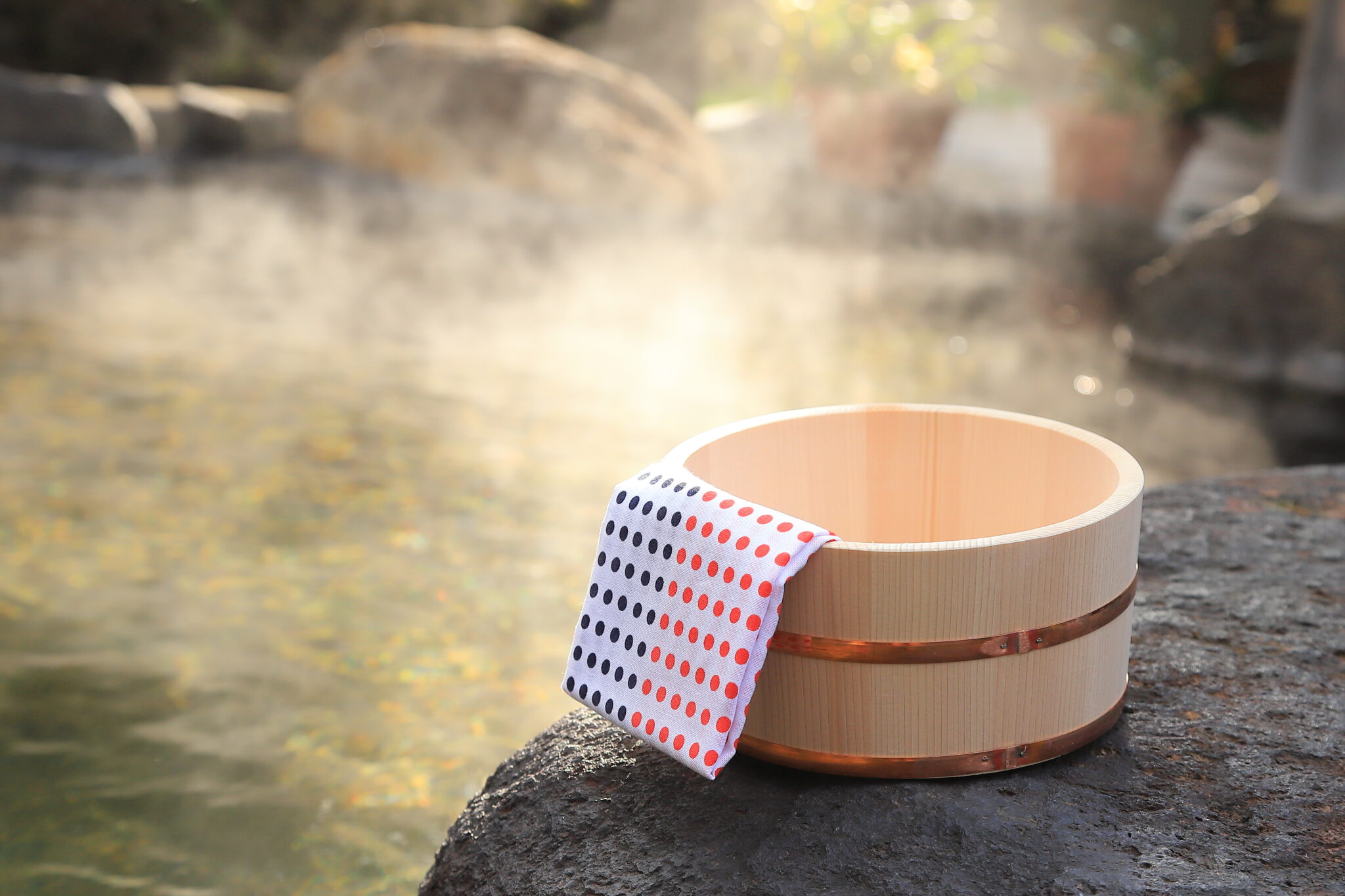
You bathe naked, you wash before getting in, and the small towel stays out of the water. The operator publishes its own etiquette list and it is unusually complete, so these are its rules rather than my advice: wash your body before entering, tie long hair up so it does not touch the water, no swimwear, no towel in the bath, no cameras, no phone use, no swimming or diving, no loud voices, and no saving places in the washing area or sauna.
Two rules catch foreign visitors specifically. Photography inside the bathing area is prohibited outright — a Prince property in the same complex words it as a ban on recording by any medium, for any reason. And at Ryuguden Honkan mixed bathing is not allowed for children aged seven or older, or taller than 120cm, which means a mixed-sex family group has to split at the changing rooms sooner than many visitors expect. The age-seven line follows national health ministry guidance and is common across Japan, but the exact rule is set facility by facility, so check the one you are visiting.
If you want a source in English you can trust. Japan’s Ministry of the Environment publishes a leaflet called The ABCs for the Safe and Secure Use of Onsen, compiled with the Japanese Society of Balneology. It covers the practical health side rather than manners — how long to soak, when not to bathe at all — and recommends three to ten minutes once or twice a day while you are getting used to it. There is more on the customs themselves in our guide to onsen etiquette.
What else is there, and should you stay the night?
The bathhouse sits a ten-minute walk from Hakone-en, a leisure complex with an aquarium, a ropeway up Komagatake, boat piers and restaurants. The free loop bus links the whole lakeside strip including Hakone Shrine, so a half day here assembles itself without much planning.
On staying: the difference between the two neighbouring hotels is sharper than it looks, and it is worth understanding before you book.
| Ryuguden (the ryokan) | The Prince Hakone Lake Ashinoko | |
|---|---|---|
| Access to this bath | Free, and from 6:00 rather than 9:00 | A discounted rate, not free |
| Its own bath | Separate annex bath, guests only | Guest-only onsen — and towels are provided |
| Rooms | 24, all facing Lake Ashi and Fuji | Larger hotel, opened 1978, by the architect Togo Murano |
| Bring your own towel? | Yes — bring the one from your room | No, they are at the bath |
If the bath is the reason you are coming, staying at Ryuguden itself is the move: entry is free, you get the early-morning window that day visitors never see, and you walk there along a second-floor corridor rather than paying at a desk. The exact discount at the Prince is not published, so ask at check-in rather than assuming it matches the member rate.
Staying by the lake instead of day-tripping
The 6am bath and the free entry only exist if you sleep there, and Lake Ashi at dawn is a different place from Lake Ashi at noon. Booking has the widest coverage of the Hakone hotels; Agoda is worth a second look because Hakone pricing between the two moves independently.
Common questions
How much is Ryuguden Honkan day-use onsen?
¥2,300 for an adult on a weekday and ¥2,600 at weekends and on public holidays, tax and the ¥50 bathing tax included, at prices effective from 1 April 2026. Towels are not included: a bath and face towel set is ¥600, so budget ¥2,900 if you arrive with nothing. Joining Seibu Prince Global Rewards is free and cuts the weekday adult price to ¥1,900.
Can I enter with a tattoo?
No. The operator’s own page refuses entry to anyone with a tattoo and states that a guest found to have one after entering will be asked to leave. No cover-sticker allowance or small-tattoo exception is published. If you have tattoos, Hakone Yuryo near Hakone-Yumoto lifted its restriction on 1 April 2025 and is the straightforward alternative; Yunessun allows tattoos that are fully covered by two of its own paid seals.
Can you really see Mount Fuji from the bath?
Yes, on a clear day, but the odds depend heavily on the month and the operator publishes the claim without any weather caveat. Official Tokyo observation data gives an average of 19.1 days in January against 1.7 in August. Note also that the operator’s own captions place the Lake Ashi and Fuji view at the women’s open-air bath and the men’s indoor bath — the men’s open-air bath carries no such caption.
Do I need to book, and can non-guests use it?
Anyone can use it — there is a published general-public price alongside the member rate, so you do not need to be staying anywhere. Everything points to walk-in for ordinary bathing, with reservations documented only for the private rooms, the restaurant and a web-only plan. That said, no official page states outright that no reservation is needed, so if you are travelling a long way on a peak weekend it is worth a call to 0460-83-1126.
What are the opening hours?
9:00 to 20:00 on weekdays and 8:00 to 20:00 at weekends and on public holidays, with last admission at 19:00 every day. Guests staying at the Ryuguden annex get a longer window, 6:00 to 20:00, which is the practical argument for sleeping there if the bath is your reason for coming.
Does the Hakone Free Pass cover getting there?
I could not confirm it, and I would rather say so than guess. The Free Pass is an Odakyu product, while Hakone-en, the Komagatake ropeway and the cruise that serves its pier are run by the Seibu and Izuhakone side. Check coverage for Hakone-en specifically before buying if this bath is central to your plan, and budget for paying separately on this side of the lake.
What makes the building a cultural property?
It is a nationally Registered Tangible Cultural Property, registered in 2017. It was built in 1938 on Lake Hamana in Shizuoka as the Hamanako Hotel, with an exterior modelled on the Phoenix Hall at Byodoin in Uji. After closing within about eighteen months and surviving the war, it was dismantled, moved by rail and road to Lake Ashi, and rebuilt by shrine carpenters, reopening here in 1957.
Related reading
How to use an onsen
The etiquette in full, including what actually happens with tattoos and where to find private baths.
Onsen etiquette in Japan
The cheaper cousin
Neighbourhood bathhouses rather than hot springs, at a fraction of the price.
Japanese sento guide
A Fuji bath you can sleep in
A Kawaguchiko room with its own Fuji-view bath, on the other side of the mountain.
Ooike Hotel, Kawaguchiko
When Fuji shows up
The visibility question in far more detail, with the forecast HJG runs daily.
Mt Fuji visibility forecast
If you are building a wider trip around this, the Mt Fuji hub covers the viewpoints on the Yamanashi side, and our guide to travelling Japan in heavy snow is worth reading if you are chasing those January odds.
Sources checked
Prices, opening hours, towel and rental fees, the spring name and the tattoo rule: the operator’s own pages for 絶景日帰り温泉 龍宮殿本館 at princehotels.co.jp, read on 1 September 2026, with the April 2026 price revision notice. Cultural property status: the Agency for Cultural Affairs national register. Building history: Prince Hotels’ own history page for the property. Etiquette: the operator’s published bathing manners list, and Japan’s Ministry of the Environment leaflet The ABCs for the Safe and Secure Use of Onsen. Mount Fuji visibility: the Tokyo Metropolitan Government’s continuous observation record — Tokyo rather than Hakone, used here for seasonality only, because no Hakone-specific figure is published. Rival facilities’ prices and tattoo rules: the official sites of Hakone Yuryo, Yunessun and Tenseien. Access, fares and parking: the operator’s access pages, Hakone Yusen’s April 2026 fare revision, and Odakyu’s Hakone portal for contactless payment. Hakone Free Pass coverage of the Hakone-en area could not be confirmed and is reported as unverified.
Join travelers discovering Japan's hidden side
Weekly dispatches from off-the-beaten-path Japan — spots and stories you won't find in guidebooks.
No spam. Unsubscribe anytime.
Welcome aboard!
You're in. See you in your inbox soon.