
Western Tokyo · Mount Mitake · Trails, cable car and shrine
Mount Mitake is a 929 m mountain in Ome, western Tokyo, reached from Shinjuku by JR, a bus and a cable car, with Musashi Mitake Shrine on its summit. The Tokyo Mitake Visitor Center’s trail page, headed 18 September 2026 and checked on 3 October, lists the Rock Garden loop below the shrine (about 2 hours 30 minutes of walking, by the centre’s course map) as open, and the Shin’en-no-Mori side path and the route over Onara Pass to Hatonosu as closed. The centre’s own English map, a PDF made in 2014, still draws both closed routes as ordinary trails.
Mount Mitake at a glance: which Mitake this is, and how it compares with Takao
This is the Mitake in Tokyo: 御岳山, read みたけさん, a 929 m mountain in Ome, western Tokyo, inside Chichibu-Tama-Kai National Park. Several other places in Japan have names that look or sound alike, and two of them, Mitake Gorge and Mount Ontake, are close enough to cause trouble in a search.
Mount Mitake, Tokyo (御岳山)
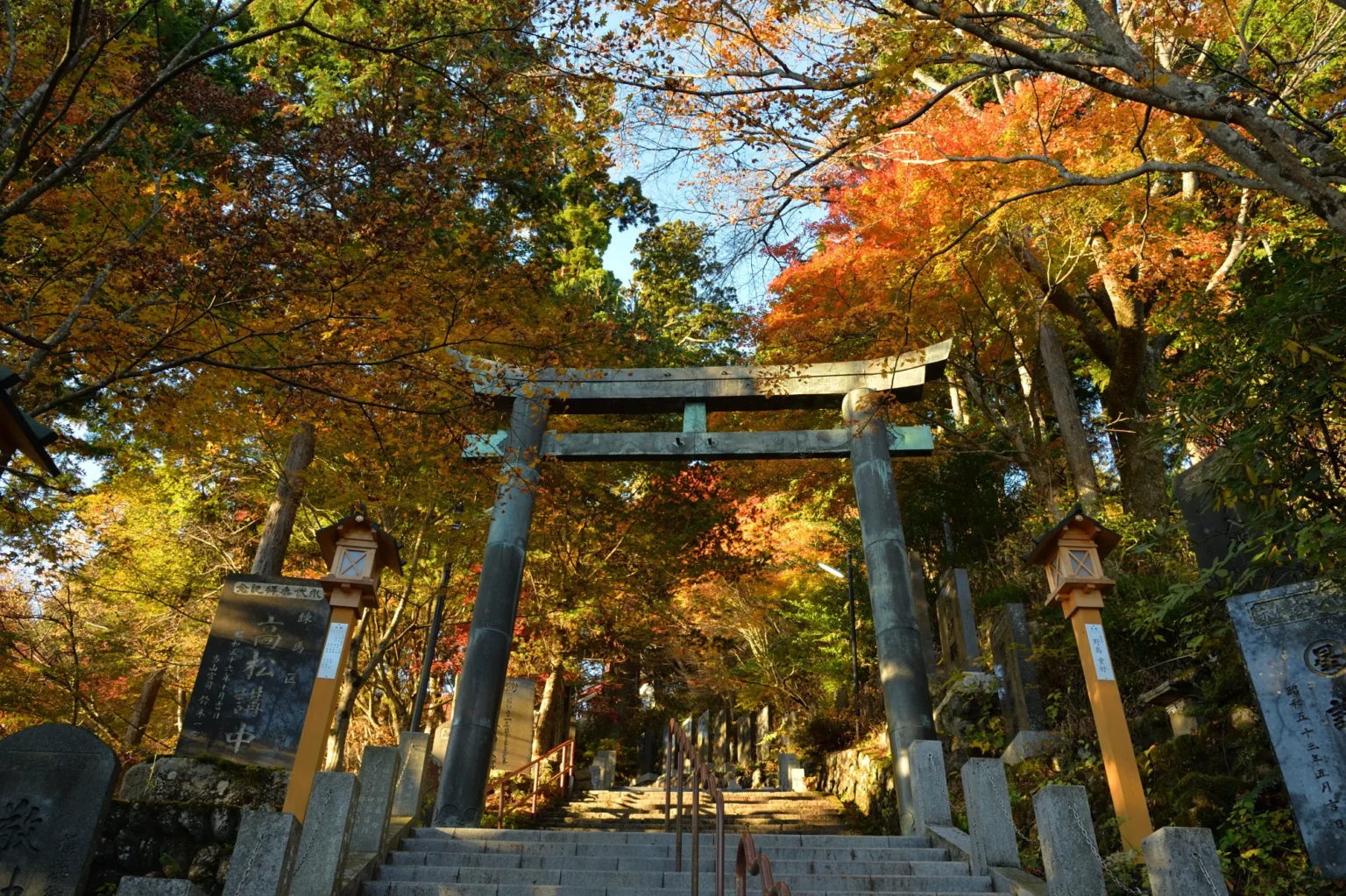
This page. A cable car climbs to Mitakesan Station at 831 m, and Musashi Mitake Shrine stands on the 929 m summit, above a village of shukubo, the pilgrim lodges.
Mitake Gorge (御岳渓谷)
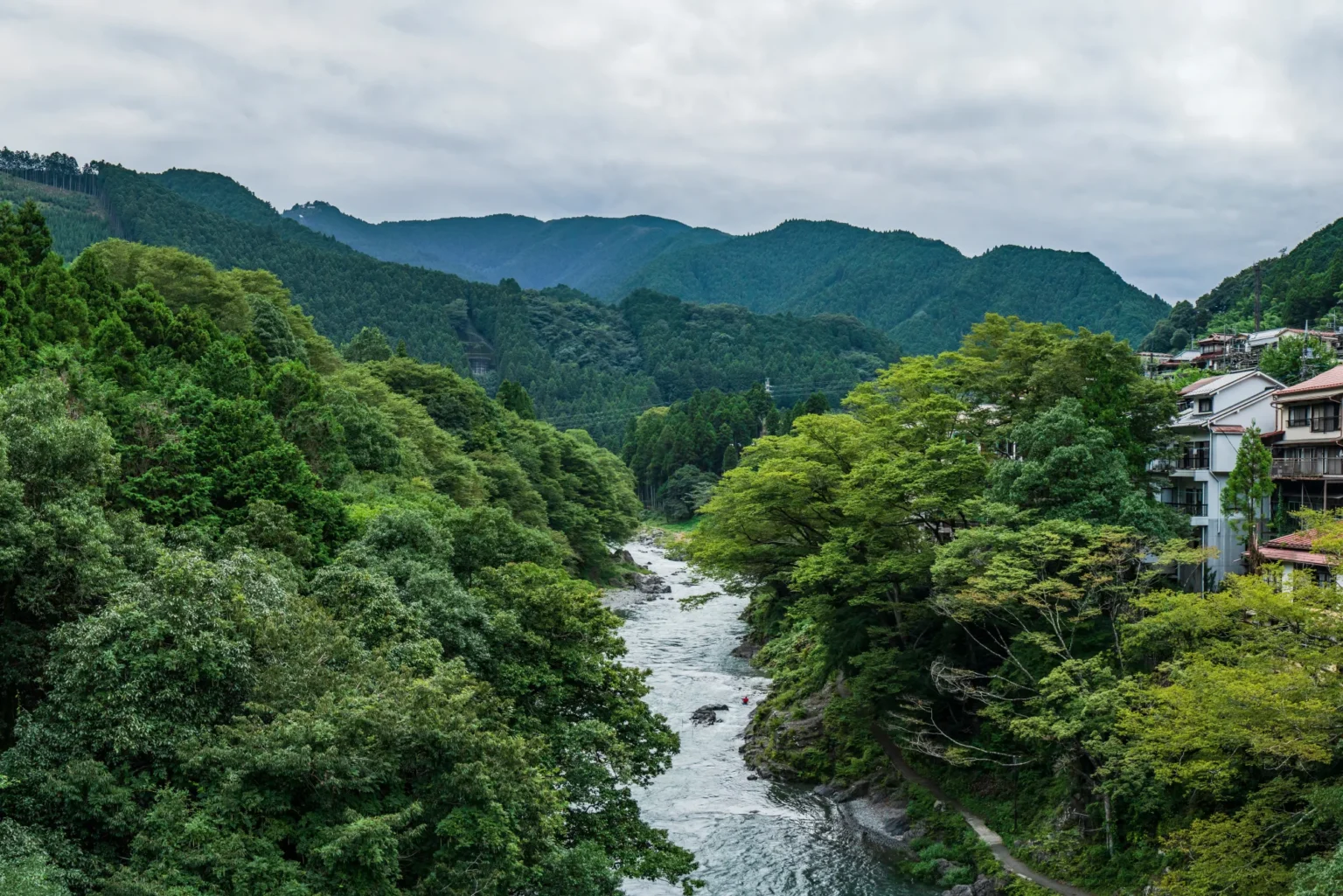
The Tama River valley at the foot of the mountain, by JR Mitake Station. Its riverside promenade was open on the Visitor Center’s 18 September 2026 report; the Mitake Kobashi footbridge, washed away by Typhoon No. 19 in 2019, is not there now.
Mount Ontake (御嶽山)
A different mountain, read おんたけさん: 3,067 m at its Kengamine summit by the Geospatial Information Authority of Japan’s figure, on the Nagano–Gifu border.
Shosenkyo, Mitaka and Mitake-cho
Shosenkyo is a gorge in Kofu, Yamanashi, sometimes written 御嶽昇仙峡. Mitaka (三鷹) is a city in Tokyo. Mitake-cho (御嵩町) is a town in Gifu.
Against Mount Takao, Mitake is further from Shinjuku. JNTO calls the two Tokyo’s most popular hiking destinations and says Mitake tends to be less crowded. In my Tokyo autumn leaves guide, Takao is half a day to a full day by Keio train, and Mitake a full day with the change at Ome. For Takao itself, see my page on Diamond Fuji from Mount Takao and the city. Okutama, at the far end of the same JR Ome Line, is a separate day.
The name “Rock Garden” misleads. Mitake’s is a mossy stream valley below the summit, where the path crosses the water on stepping stones; it has nothing to do with the raked gravel of a Zen temple. More on it further down.
Getting there from Shinjuku: train, bus and cable car, leg by leg
On the Saturday connection worked out in Two plans from Shinjuku, a 07:44 train from Shinjuku puts you at the top station before 10:00.
One leg per row; the last column gives the source of each figure and, for the train, what to board at Shinjuku.
| Leg | Time and fare | Notes |
|---|---|---|
| JR, Shinjuku to Mitake (御嶽), change at Ome | About 80–90 min at weekends on the faster trains, up to about 2 hours with a long wait at Ome; 86–136 min on weekday mornings | JR East’s October 2026 timetable. Board a Chuo Line train for Ome (青梅); the trains on to Mitake start at Ome |
| Walk to the Mitake-eki bus stop (御岳駅) | About 3 min | The cable car operator’s route map |
| Nishi Tokyo Bus to Cable-shita | About 10 min, ¥340 | Nishi Tokyo Bus hiking timetable, revised 1 April 2026 |
| Walk to Takimoto Station | About 6 min | The operator’s route map. The shrine calls the stop “Cable-shita (Takimoto Station)” |
| Cable car, Takimoto to Mitakesan | About 6 min, ¥700 one way (adult) | Mitake Tozan Railway’s timetable and fares page; fare since 1 October 2026, return ¥1,400 |
| Walk to Musashi Mitake Shrine | 25–35 min | Paved, then about 330 steps by the shrine’s count; the times are the shrine’s 25, the operator’s about 30 and the Visitor Center’s 35 |
The weekday range in the table covers every Ome-bound departure from Shinjuku between 06:00 and 12:00. All these JR times run from leaving Shinjuku to leaving Mitake, because JR’s pages for these trains give only a departure time at Mitake.
At weekends, aim for the Holiday Rapid Okutama. Apart from one limited express on 8 November (below), every train from Shinjuku towards Mitake in the October 2026 timetable ends at Ome, so plan on the change. The three morning Holiday Rapid Okutama departures from Shinjuku (06:45, 07:44 and 08:38 on Saturdays and holidays) end there too, and a separate Holiday Rapid Okutama (Nos. 81, 83 and 85, on Saturdays and holidays until 29 November) leaves Ome two or three minutes later for Mitake and Okutama. On Saturday 10 October, for example, No. 5 leaves Shinjuku at 08:38 and reaches Ome at 09:35; No. 85 leaves Ome at 09:38 and Mitake at 10:01. The only through train I found in JR East’s October 2026 timetable runs on 8 November, the day of the shrine’s autumn grand festival: a one-day limited express (train 9351M) leaving Shinjuku at 09:16 and reaching Mitake at 10:36. Check JR East for its tickets.
The JR station is written 御嶽 and the bus stop 御岳駅. Both read Mitake, with a different character for “take”, and the stop adds eki, station. The cable car operator tells you to search for 御岳駅 when looking up bus times. Buses from that stop up to Cable-shita are scheduled from 7:30 to 18:07 on weekdays (17 a day) and from 7:12 to 18:07 on Saturdays and holidays (23 a day), and Nishi Tokyo Bus warns that traffic can upset the timetable.
You can also walk. The Visitor Center gives about 40 minutes from JR Mitake Station to Takimoto Station (the operator’s route map says about 45), and about 1 hour 30 minutes from Takimoto up to the summit if you skip the cable car. The trail between Otsukayama and JR Kori Station was open on the 18 September report, but the centre describes it only as a way down, about 2 hours from the Otsukayama summit to Kori.
The change at Ome and the bus from the Mitake-eki stop are easier with live train and bus times on your phone, and the Visitor Center’s trail page is worth a look on the morning you go. Once you are on the trails, though, the centre warns that many places on the mountain get no phone signal, so save its course map before you start walking.
Data for the day
The cable car and the lift: fares, hours and paying
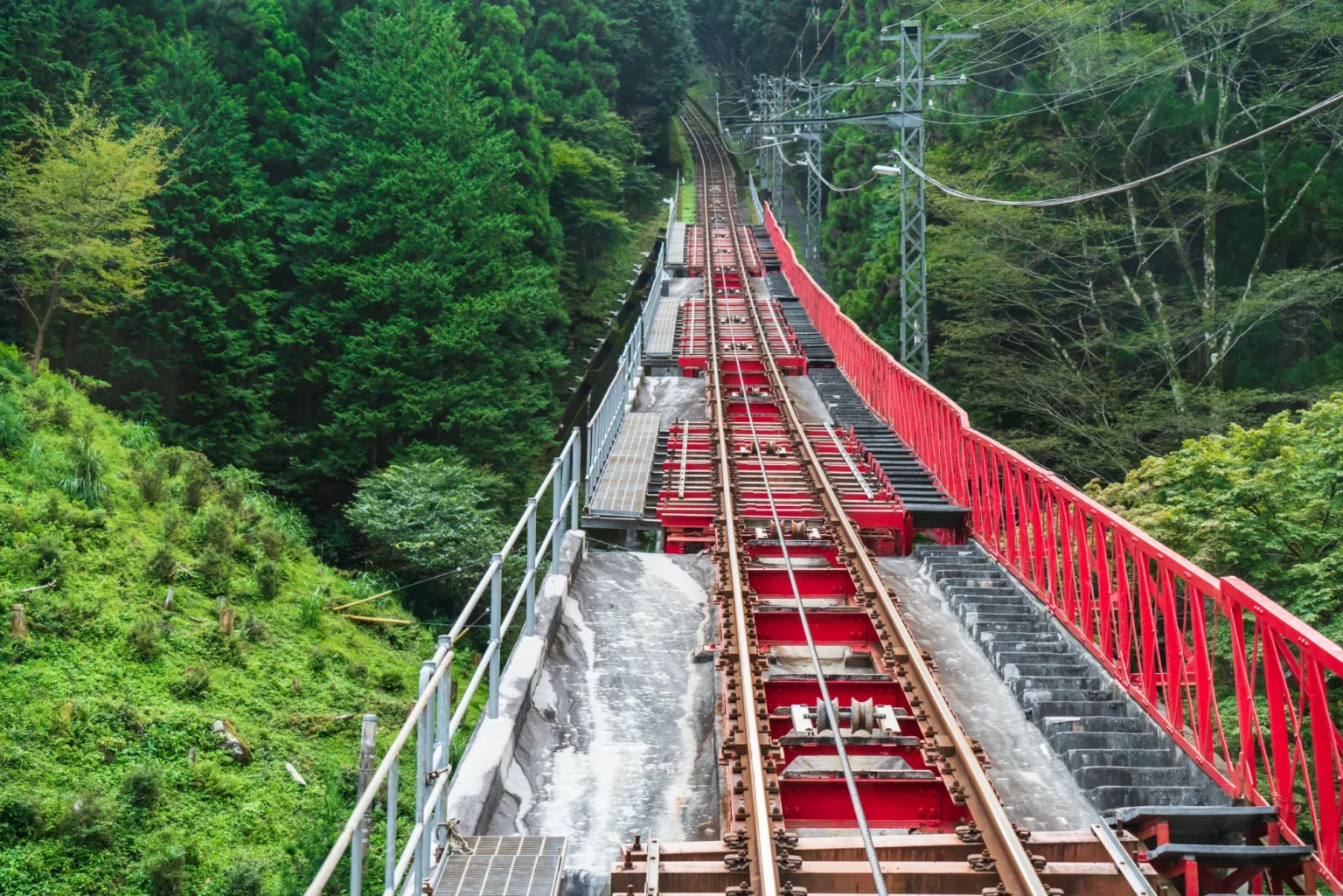
An adult pays ¥700 one way and ¥1,400 return since the fare rise of 1 October 2026, and a child ¥350 and ¥700. The old and new fares side by side are in the Mitake section of my Tokyo autumn leaves guide. A one-way ticket is valid on the day you buy it; a return covers one round trip within two days.
The line climbs from Takimoto Station at 407.6 m to Mitakesan Station at 831.0 m in about 6 minutes. Its operator, Mitake Tozan Railway, calls it the steepest cable car in the Kanto region: an average gradient of 22 degrees, and 25 degrees on the steepest section. Cars leave both stations at the same time, from 7:30 to 18:30 every day, with extra cars when it’s busy. The posted timetable is still labelled as the edition of 18 March 2023, and the operator’s October notice says the cable car runs to its normal timetable.
How long you wait depends on the day. On Saturdays, Sundays and holidays there are 32 cars: every 16 minutes from 7:54 to 10:18 and from 14:50 to 16:10, but only every 32 minutes from 12:42 to 14:50. On weekdays there are 27: every 20 minutes from 8:20 to 10:40, and otherwise 18 to 35 minutes apart, mostly every 30 minutes.
The operator says PASMO and Suica work on every leg from JR Mitake Station: the bus, the cable car and the lift. At the gate each person taps their own card, since one card can’t pay for two, and you can buy a ticket at the machines with an IC card too. If you don’t have one yet, here is how to get and use IC cards in Japan.
Carry cash for now. In a notice dated 28 September 2026, the operator said a system fault meant its shops could not take IC cards or credit cards, and its staffed ticket window could not take IC cards. Tapping in at the gate, and buying at the ticket machines with an IC card, still worked. Its notices of 1 October still described the fault as ongoing, and its list of notices showed no fix when I checked on 3 October. Look at the notices on mitaketozan.co.jp before you go.
The lift, the swing and pet tickets, from the operator’s pages:
The lift
A single-seat lift from Mitakedaira, the plaza at the top station, rises in 2 minutes to the area the operator renamed TOKYO MITAKE TERRACE in September 2026, timed to its railway week from 19 September; its English fare table still calls the upper station Daitenboudai. ¥100 one way and ¥200 return (the return was ¥190 until 30 September). The operator says it opened in 1959.
When the lift runs
Mainly on Saturdays, Sundays and holidays, plus weekdays at New Year, in Golden Week, in August and in November, with no service in rain or storms. In October 2026: 9:30–16:10 on the 3rd, 4th, 10th, 11th, 12th, 17th, 18th, 24th, 25th and 31st, stopping from 12:00 to 13:00.
The swing
The Mitake Musasabi Swing, a two-seat observation swing the operator opened on 21 June 2024 at 882 m: ¥500 a ride for up to two people. In October it runs on the lift’s days, 9:30–15:45 with the same lunch break; the operator posts each month’s days in its notices.
Dogs and pets
Dogs ride the cable car without a cage on a pet ticket: ¥160 one way and ¥320 return up to 10 kg, ¥320 and ¥640 above that, in the pet spaces at the front and back of the car with the lead kept short. The railway’s model-course page says only small pets you can hold may ride the lift.
The operator’s English page, updated on 30 September, already lists the new fares, but gives no date for the change and nothing about the trails. Two other English pages had not caught up when I checked on 3 October: japan-guide’s Mitake page (last updated in January 2026) still quoted the old 1200 yen return, and Tokyo Cheapo’s (August 2025) the old ¥190 lift return; both figures were right until 30 September.
Driving and parking at Takimoto
Private cars cannot drive to the summit, so drivers park at Takimoto Station. Set the navigation to 御岳登山鉄道 滝本駅 or its phone number, 0428-78-8121. The operator warns that entering 御岳山 sends you onto a closed road, and the shrine says its own name can bring up a road you can’t use. The operator gives about 60 minutes from Hachioji IC, 40 from Ome IC and 30 from Hinode IC, via Route 411 and a metropolitan road.
Parking at Takimoto is ¥400 an hour on weekdays, capped at ¥1,500 a day, and the gate shuts at 19:00. The operator’s full figures:
| Takimoto car park | Operator’s figure |
|---|---|
| Spaces | 136 |
| Hours | 7:10–19:00; no car can enter or leave between 19:00 and 7:10 |
| Weekdays | ¥400 an hour, up to ¥1,500 a day (rates since 1 April 2025) |
| Saturdays, Sundays and specified periods | ¥450 an hour, up to ¥2,000 a day; the specified periods are New Year, Golden Week and Obon |
| 24 and 25 October 2026 | Gate planned to close at about 21:45 for the evening kagura; usual hours if the event is cancelled |
The rate table names Saturdays, Sundays and those periods, not public holidays, so check the rate on a holiday Monday. At busy times you may not find a space, the operator warns.
Which trails are open in autumn 2026?
The Rock Garden loop was open on the Tokyo Mitake Visitor Center’s trail page, headed 18 September 2026 and checked on 3 October, along with the paths from the summit to Mount Odake, Hinode-san and Otsukayama and the descents to Tsurutsuru Onsen and Kori Station. Near the summit, a side path through the Shin’en-no-Mori forest and the route over Onara Pass to Hatonosu Station were closed.
Here is the centre’s table in its own section names, with the reason and date it gives for each closure:
| Section (the centre’s name) | Status | Reason and date |
|---|---|---|
| Omotesando, Takimoto Station to the shrine | Open | Paved |
| Rock Garden | Open | On 2 October the centre posted that the water level had settled and the path was passable as normal |
| Mitake to Mount Odake | Open | No note given |
| Mitake to Hinode-san; Hinode-san to Tsurutsuru Onsen | Open | Only a note that the Hinode-san toilet would be out of use on 4 October (power cut) |
| Mitake to Otsukayama; Otsukayama to Kori Station | Open | No note given |
| Shin’en-no-Mori course, Tengu-no-Koshikake-sugi to the torii plaza | Closed for the time being | A large fallen tree blocks it; no end date |
| Mitake to Onara Pass to Hatonosu Station | Closed | A collapse between Mitake and Onara Pass (no date given); Hatonosu to Onara Pass closed since 9 May 2020 after a landslide |
| Mitake forest road, Nanayo Falls towards Kami-Yozawa | Closed all day | Disaster-recovery works on the road |
| Hinode-san to Kami-Yozawa | Closed | Rockfall risk between Kuromo-iwa and the Kakidaira area on Kanto Fureai no Michi route 6, “Sugi no Kokage no Michi”, since 25 January 2025 |
| Hinode-san, Mimuro-yama, Atago-yama to Futamatao Station | Partly closed | Mimuro-yama to Atago-yama, for tree felling, from 9 September 2024 to 31 March 2027 (extended) |
| Mitake Gorge promenade | Open | The Mitake Kobashi footbridge, washed away in 2019, is not there |
The Shin’en-no-Mori closure is a side path from the Tengu-no-Koshikake-sugi cedar to the torii plaza. The centre’s loop directions turn left at the fork just before that cedar, so as I read them the loop doesn’t use the closed stretch, though the centre doesn’t say so in as many words.
The Hatonosu end has been shut since 9 May 2020; the centre gives no date for the collapse between Mitake and Onara Pass. Onara Pass itself can still be reached on foot by the Unazawa forest road: the centre lists its closure between the Unazawa park area and the pass as lifted (still closed to vehicles).
Check on the day. The trail page carried a note about 4 October while its heading still said 18 September, so it changes without a new date at the top. Read the Visitor Center’s trail page and its dated Mitake now posts before you set out.
The centre’s English map is out of date on closures. The English map on the Visitor Center’s download page, a PDF made in 2014, still draws the route to Hatonosu Station over Ohnara Pass, the Shin-en-no-Mori path and the paths to the Kami-youzawa bus stop as ordinary trails, with walking times and no closure note. Use it for the layout of the mountain and the trail page for what is open. Three English write-ups I read on 3 October, MATCHA’s (2018), GaijinPot’s (2020) and travelynotes’ (2024), mention no closures either.
Bears: what the Visitor Center lists and what Tokyo asks
The Visitor Center keeps a list of bear reports around Mitake. Its newest entry, on the page as last updated in July 2026, is a bear seen near the Rock Garden rest house at about 9:00 on 10 May 2026.
Reports on or beside the Rock Garden loop, from the Visitor Center’s list, marked photo-confirmed where the centre marks them:
- 10 May 2026, about 9:00: one bear near the Rock Garden rest house (not marked photo-confirmed)
- 2 October 2025, about 8:00: two, a mother and young, near the Okunoin-guchi toilet (photo-confirmed)
- 27 August 2025, about 12:00: one between Tengu-no-Koshikake-sugi and Tengu-iwa (photo-confirmed)
- 8 June 2025, about 13:00: one near the Okunoin-guchi toilet (photo-confirmed)
The list also has one on the cable car track at about 7:00 on 1 December 2025, photo-confirmed. The centre says its list can include animals that only looked like bears, such as serows or wild boar.
On 14 July 2026 the Tokyo Metropolitan Government added bear rules to its usage rules for nature parks in Tokyo. They are phrased as advice. Wear bear-deterrent gear, such as a bear bell, a whistle or a radio. Go in a group rather than alone, avoid heading into the mountains at dawn and dusk, and turn back if you see bear droppings or footprints. Trail runners and mountain bikers are asked to make noise and slow down where they can’t see far ahead. The Visitor Center’s own advice: carry a bell when you walk alone or on quiet trails, leave quietly if you meet a bear, never go closer to photograph it, and take your rubbish home, food waste above all.
The Tokyo Metropolitan Government’s TOKYO Kumap maps reported sightings and signs across Tokyo, updated as reports come in (in Japanese). What Hachioji City and the Takao Visitor Center ask of hikers in western Tokyo is in the bears section of my Tokyo autumn leaves guide.
How long does the Rock Garden loop take?
About 2 hours 30 minutes of walking, excluding breaks, by the Tokyo Mitake Visitor Center’s courses page. The centre’s newer hiking map, from 2025, gives 2 hours 40 minutes from the centre round the loop and back. Add your stops on top, and about 20 minutes more for the Nanayo Falls variant.
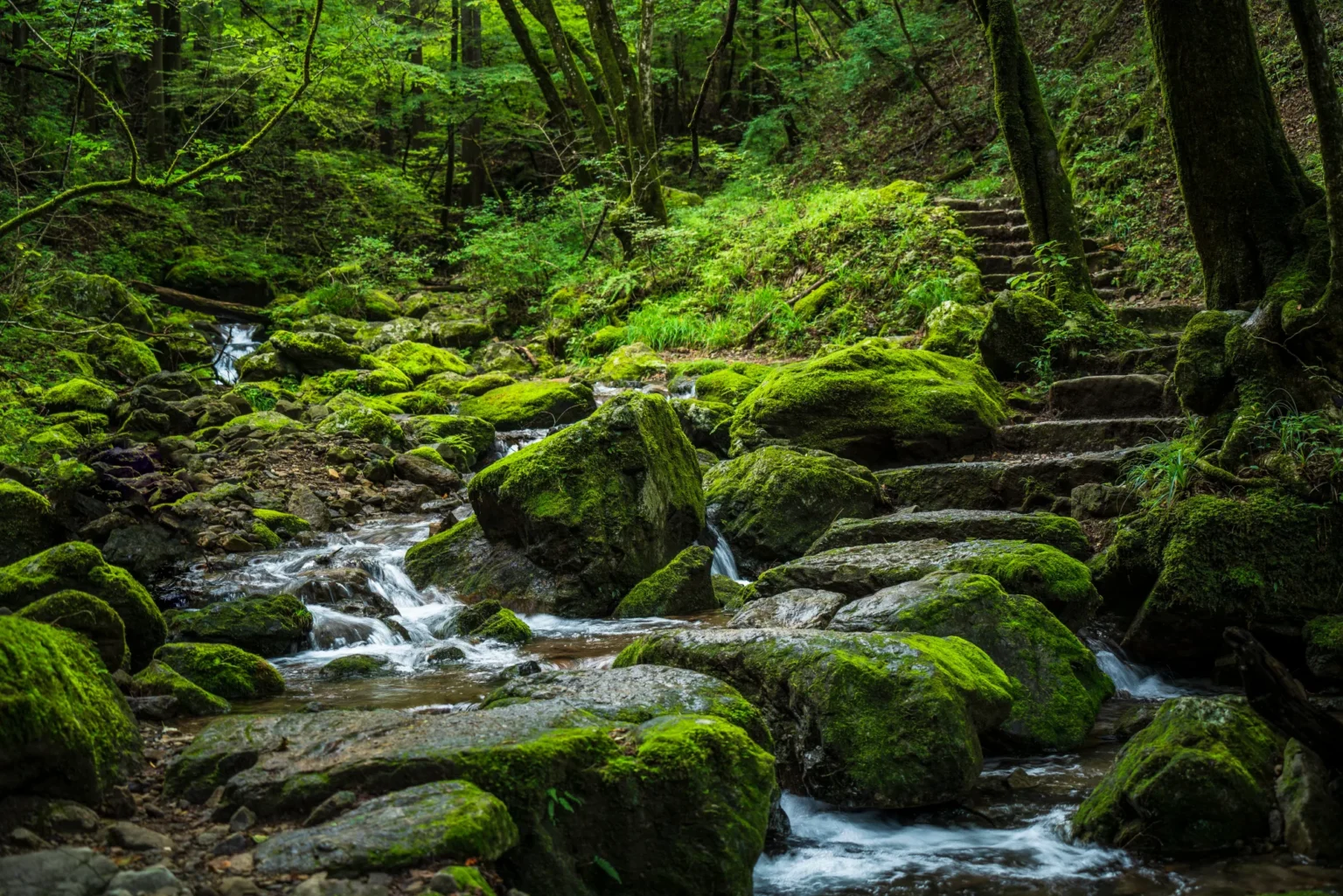
The Rock Garden proper is the stretch of path beside a mountain stream, among moss-covered boulders, that the cable car operator puts at about 1.5 km. The loop is longer. From the top station it goes out past the Visitor Center and Nagaodaira to the Tengu-iwa rock, then along the stream to Ayahiro Falls, and back by way of the shopping street. The centre is 10–15 minutes from the top station by its own two figures.
The centre’s Rock Garden page times each stretch from the top station round to it again; its walking minutes come first in each row.
| Minutes | Stretch, in the centre’s order |
|---|---|
| 15 | Mitakesan Station to the Visitor Center |
| 20 | Keep right at the Nagaodaira fork (left is the Nanayo Falls variant) |
| 5 | To Tengu-no-Koshikake-sugi, the big cedar (turn left at the fork just before it) |
| 30 | To Tengu-iwa, a jutting rock with a tengu statue on top; chains let you climb it |
| 5 | To the start of the Rock Garden; the path crosses the stream on stepping stones |
| 20 | To the rest area at the midpoint, with arbours and tables |
| 10 | To Ayahiro Falls |
| 5 | Keep right at the Otake-michi fork (left is the way to Mount Odake) |
| 50 | To the shopping street (町場通り), past the Okunoin-guchi toilet |
| 20 | Back to Mitakesan Station |
The centre gives its 2 hours 30 minutes from more than one starting point (its courses page counts from the centre, its course map from Mitake-san), while this table runs from the top station and back, so its stretch times add up to more than 2 hours 30 minutes.
Other figures you’ll see are measured differently. The cable car operator’s model course gives the Rock Garden 3–4 hours, without saying where it starts. Time Out’s English page (November 2025) describes a 90-minute trail that starts and ends at the shrine. travelynotes (2024) says the whole hike took its writer about an hour and a half, and MATCHA (2018) gives the loop around three hours. The 2:30 itself is in English already: the centre’s English map says “2:30 walk around from Nagao daira”.
Ayahiro Falls is about 10 m high, and the cable car operator and the Ome tourism association both say the shrine uses it for misogi, its purification rites. The Okunoin-guchi toilet, on the stretch back to the shopping street, has had its men’s urinals out of use since a notice of 12 April 2026, still posted on 3 October.
After heavy rain, check before you go down to the stream. The path crosses the water on stepping stones, so look at the centre’s Mitake now posts and trail page first. On 2 October 2026 it posted that the water had settled and the Rock Garden was passable as normal.
Route variants: Nanayo Falls, Mount Odake and Hinode-san
Nanayo Falls is the variant to decide on first. At the Nagaodaira fork the left branch drops to the falls and climbs back to rejoin the loop at Tengu-iwa, adding about 20 minutes. The Visitor Center warns of steep slopes and iron stairs on the way and suggests that anyone unsure of their fitness, or with small children, skip it; the direct way from Nagaodaira is easier.
Nanayo Falls
About +20 min on the loop (Visitor Center). The cable car operator mentions long stairs and an iron ladder, says the falls don’t suit a walk with a dog, and describes a seven-tier fall.
Mount Odake
1,266 m (Geospatial Information Authority of Japan). About 2 h 30 min one way from the Mitake summit, with rocky and chained sections for strong walkers; three stars on the centre’s three-star scale, and 5 hours of walking for the round trip counted from the centre. Open on the 18 September report.
Hinode-san
902 m. About 1 hour from the Visitor Center, 2 hours of walking for the round trip, two stars. The way down to Tsurutsuru Onsen, about 1 h 30 min from the summit, was open; the way down to Kami-Yozawa, which the centre’s courses page still describes, was closed.
Otsukayama
920 m. About 30 min from the Visitor Center, 1 hour round trip, one star, with tables and benches at the top. You can go on down to JR Kori Station, about 2 hours from the summit.
Musashi Mitake Shrine: the steps, the wolf guardian and what’s shut on weekdays
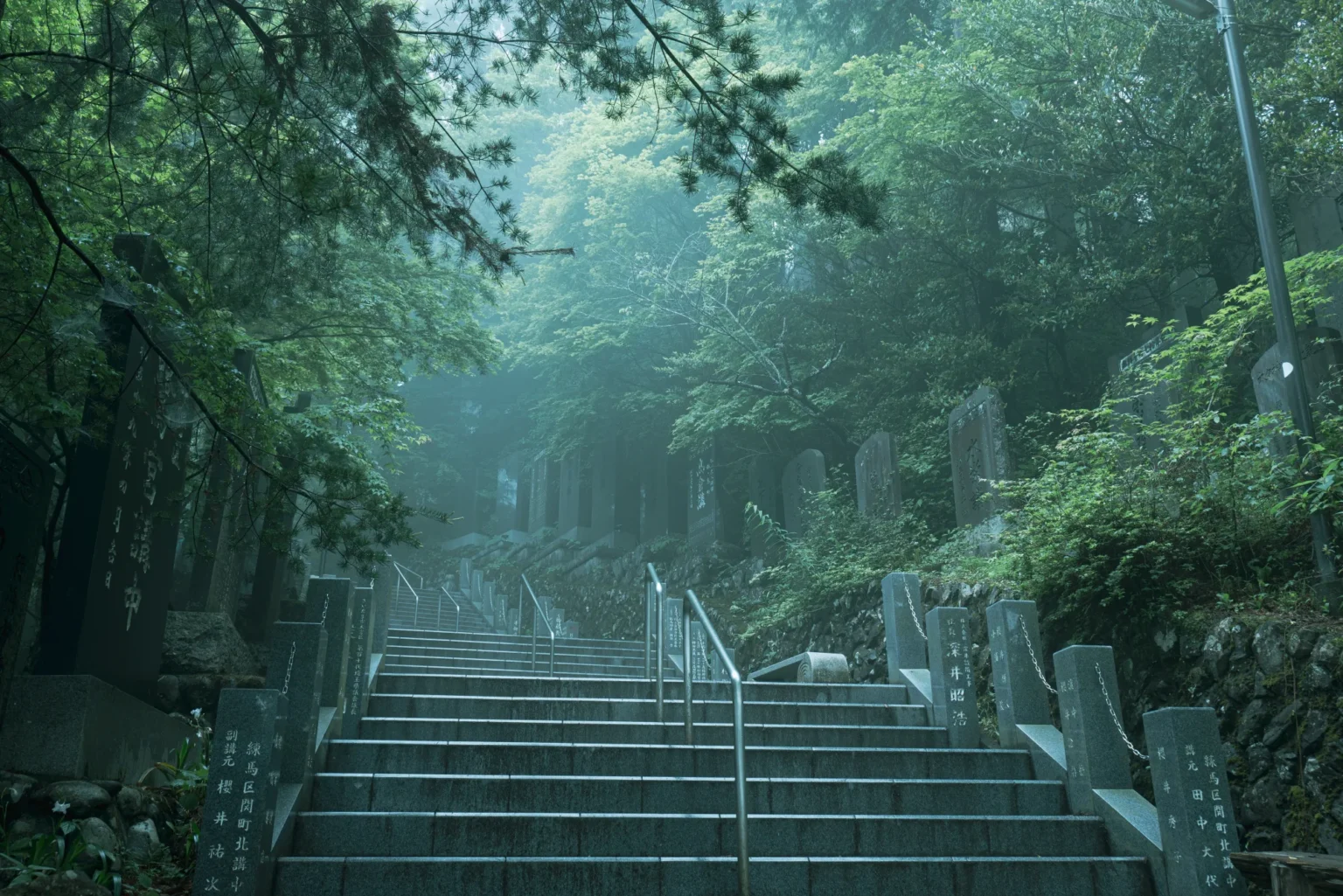
From Mitakesan Station it is 25–35 minutes on foot, depending on whose figure you take: 25 by the shrine, about 30 by the cable car operator and 35 one way on the Visitor Center’s courses page. The lane is paved. It’s flat for the first 6–7 minutes, turns steep once you enter the village of shukubo, passes a lane of souvenir shops and ends with about 330 steps.
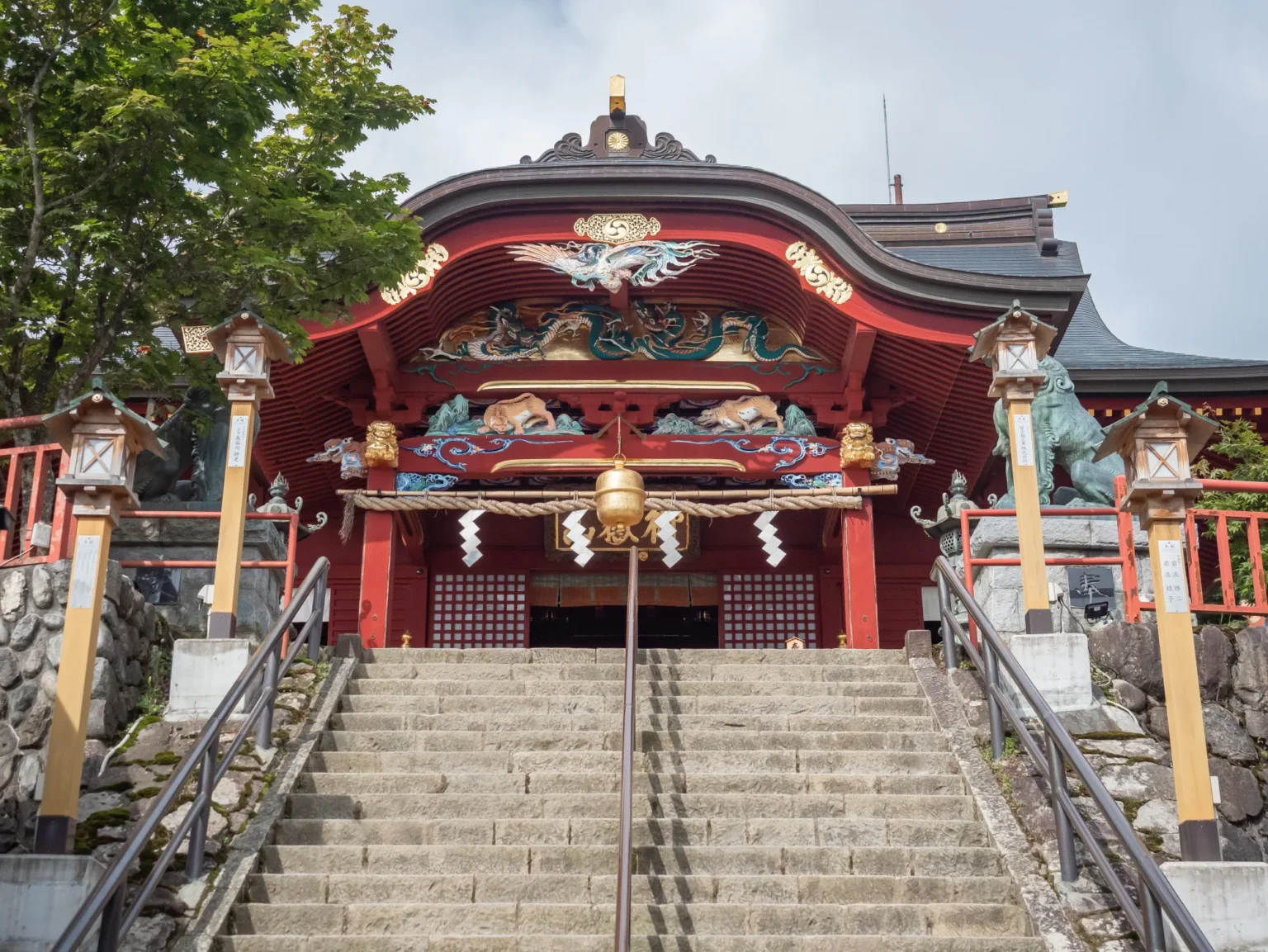
Costs first: the Treasure Hall is ¥500 for an adult and ¥300 for a child, and a dog blessing starts at ¥3,000 a dog. Days and hours are in the table.
| What | When | Cost and notes |
|---|---|---|
| Shrines inside the fence behind the main sanctuary (honden) | 9:00–16:00 | Open to visit freely |
| Treasure Hall | Saturdays, Sundays and public holidays only, 9:30–16:00 | Adult ¥500, child ¥300; the national-treasure armour is back on display in 2026 |
| Dog blessing | 9:00 to about 15:30, no booking | From ¥3,000 per dog, about 10–15 minutes; paused for about ten days from New Year |
| Shrine office and amulet counter | About 8:30 to about 16:00 | The usual hours, as given in the shrine’s Obon notice of August 2026 |
The weekday gap is the Treasure Hall. The shrine’s notice of April 2026 says it reopened from 4 April on weekends and holidays, and that this year the national-treasure armour Akaito-odoshi yoroi (赤絲威鎧, late Heian period) is back on show, with an armour listed as an important cultural property withdrawn in its place. Special openings can keep other hours: at Obon 2026 it opened from 10:00 to about 15:00.
The shrine’s history begins in legend. It says the shrine was founded in the reign of Emperor Sujin. Its oldest written record says that in 736 the monk Gyoki enshrined a statue of Kongo Zao Gongen to pray for the protection of the eastern provinces. The name changed from Mitake Zao Gongen to Mitake Jinja in 1874, after the Meiji Restoration, and to Musashi Mitake Jinja in 1952.
The shrine puts it plainly: 武州御嶽山の「おいぬ様」は、実はニホンオオカミです。 Oinusama of Bushu Mitake is, in fact, a Japanese wolf.
That wolf, worshipped as Oguchi-magami, is why dog owners come; the shrine says people praying for their dogs’ health now come in numbers. The dog blessing is held outdoors at the Oguchi-magami worship spot, with dog and owner together: fill in a form at the amulet counter and tell the staff. The shrine advises against bringing dogs for New Year visits on 1–3 January.
On the way up, just before the shopping street, stands the Jindai Keyaki, a zelkova designated a national natural monument in 1928. The cable car operator says on one page that it is said to be about 1,000 years old and on another gives an estimated 1,200, so treat the age as tradition.
Planning the day: start times and the last way down
In November the daylight, more than the timetable, decides when you need to be off the trails. By the National Astronomical Observatory of Japan’s calculation for the shrine’s coordinates, the sun sets at 16:49 on 1 November and 16:30 on 30 November 2026, and the Visitor Center warns that the plantation forest around Mitake gets dark early under the trees. NAOJ’s figure ignores the surrounding mountains, so down in the stream valley the sun is likely to go sooner.
The day’s fixed points, from the timetables in use in October 2026 and NAOJ’s sunset figures for the shrine:
| Time | What happens |
|---|---|
| 7:12 or 7:30 | First bus from the Mitake-eki stop to Cable-shita (7:12 on Saturdays and holidays, 7:30 on weekdays) |
| 7:30 | First cable car, from both stations |
| 16:30–16:49 | Sunset at the shrine in November 2026: 16:42 on the 8th, 16:37 on the 15th, 16:33 on the 22nd |
| 18:07 | Last bus from the Mitake-eki stop up to Cable-shita |
| 18:21 | Last weekday bus down from Cable-shita |
| 18:30 | Last regular cable car |
| 18:51 | Last Saturday and holiday bus down from Cable-shita, to Ome Station |
| 19:00 | Takimoto car park shuts; no cars in or out until 7:10 |
The weekday last-bus gap
On weekdays the last regular cable car, at 18:30, reaches Takimoto after the last bus from Cable-shita has gone at 18:21. That is my reading of three published figures, the cable car’s 18:30, the bus’s 18:21 and the 6-minute walk between Takimoto and Cable-shita; neither operator says it. If you’re on that car, the walk from Takimoto to JR Mitake Station takes about 40–45 minutes. On Saturdays and holidays a later bus leaves Cable-shita at 18:51 for Ome Station, and the 18:30 car leaves time to reach it.
Two plans from Shinjuku
Both are worked out from the timetables in use in October 2026: JR East’s October edition, Nishi Tokyo Bus’s of 1 April 2026 and the cable car’s, labelled 18 March 2023. Trains and buses can run late, so treat the connections as a guide.
Shrine half day, a weekday that isn’t a public holiday
The 10:36 Ome Special Rapid from Shinjuku reaches Ome at 11:34, and the 11:42 local from Ome leaves Mitake at 12:02. Take the 12:10 bus from the Mitake-eki stop and the 12:40 cable car, and you’re at the top station at about 12:46 and the shrine before 13:30. The cable car operator puts its shrine walk, riding up from Takimoto and walking back to the top station, at about an hour, or about two hours with lunch and shopping. These are weekday-timetable times, so the plan doesn’t work on Monday 12 October, Tuesday 3 November or Monday 23 November, public holidays that run to the Saturday and holiday timetables. On other weekdays the Treasure Hall is closed.
Rock Garden day, a Saturday or holiday
Holiday Rapid Okutama No. 3 leaves Shinjuku at 07:44; at Ome, No. 83 leaves at 08:46 and Mitake at 09:02. The 09:12 bus and the 9:30 or 9:46 cable car get you to the top station before 10:00 and the Visitor Center by about 10:10. With 2½ hours of walking, lunch and the shrine, plan on a car down between 14:50 and 16:10, when they leave every 16 minutes; mid-November sunset is around 16:37. Nos. 81, 83 and 85 from Ome run until 29 November, so check the timetable after that.
What to bring
The Visitor Center’s minimum kit for these trails is proper shoes, rain gear, a pack that fits, a map, a compass, a headlamp, something to drink and food for the walk. It asks walkers to start down early from autumn into winter, because the forest gets dark early, and not to forget the headlamp. Poles can help on the steep slopes of the Nanayo Falls variant. Bring cash while the operator’s card fault lasts, and a bell if you’ll walk alone or on quieter paths, as the centre suggests. For layers and shoes, see what to wear on an autumn-leaf hike in November.
Two things for the walk
As an Amazon Associate I earn from qualifying purchases.
Practical notes: toilets, shops, safety and the Visitor Center
Toilets
The Visitor Center counts 12 around the mountain, in buildings and along the trails, four of them on the Rock Garden loop.
The station shops
The operator’s shops at Takimoto and Mitakesan stations keep 8:45–17:00 in October 2026, with different hours on 31 October for stocktaking.
Safety and climbing plans
The Visitor Center says 10 or more mountain accidents a year happen around Mitake. It asks walkers to leave a climbing plan with family or in a trailhead box. The centre adds that there is almost nowhere on the mountain itself to hand one in; for Mount Mitake, it says, you can hand one in at JR Mitake Station.
The Visitor Center
Free, 9:00–16:30, closed on Mondays (the next day when Monday is a public holiday) and over New Year. Applying that rule, it opens on Monday 12 October, Sports Day, and closes on Tuesday 13 October.
Autumn on Mount Mitake: when the colour comes and dates to plan around
Expect colour in November. The cable car operator’s flower calendar names November as the autumn-colour month, with four maples: コハウチワカエデ (Siebold’s maple), オオモミジ (Acer amoenum), メグスリノキ (Nikko maple) and チドリノキ (hornbeam maple). japan-guide, updated 8 September 2026, gives Mitake early to late November and says its colour comes a week or two before central Tokyo’s; the same entry calls it “the 1000 meter tall Mount Mitake”, against the 929 m the shrine, the operator and the Visitor Center give. Weathernews’ Mount Mitake page (in Japanese) puts the usual peak at late October to mid-November and carries its forecast for the year.
The operator’s October notice invites visitors to come for trees that are just starting to turn. Weathernews’ forecasts for 52 spots across the country are in a table on my koyo tracker; that table is a snapshot dated 3 September, not a live feed, and when I checked on 3 October it had no row for Mount Mitake, while its “Mitake Shosenkyo” row is the gorge in Yamanashi.
These are the autumn 2026 dates the shrine, the operator and the Visitor Center had posted by 3 October.
| Date | What | For your visit |
|---|---|---|
| Mon 12 Oct (holiday) | Kagura and gagaku performance, Kagura-den, from 11:00 | Free, about 2 hours; the lift and swing run that day |
| Sun 18 Oct | 80th votive kendo tournament, torii plaza, about 9:00–15:45 | The shrine expects the cable car and car park to be crowded from the morning |
| Sat 24 Oct | Takigi kagura, organised by the Mitake-san tourism association, on a stage in the torii plaza, 20:00 | Extra cable cars planned at 19:00 and about 21:30, and the car park gate planned to close at about 21:45; if the event is cancelled, the extra cars may be dropped and the car park keeps its usual hours |
| Sun 25 Oct | Yoru kagura, Kagura-den, 20:00 | The same extra cars and car park hours |
| Sun 8 Nov | Autumn grand festival, 11:00, the fixed date on the shrine’s annual festival calendar | Anyone may attend the ceremony in the hall for ¥1,000; tell the amulet office (神符授与所) at least 10 minutes before. JR runs its one-day limited express from Shinjuku |
| Wed 18 Nov | Volunteer-led maple hike through the Rock Garden, listed by the Visitor Center | Japanese application form, arriving by 31 October; 20 places, by lottery if oversubscribed |
| Sun 22 Nov | Yoru kagura, Kagura-den, 20:00 | The operator’s November operations notice wasn’t out when I checked on 3 October; see Night kagura below |
| November weekdays | The lift also runs on weekdays in November, by the operator’s general pattern | Check the operator’s November notice for the exact days |
Two of these come with a deadline or a fee: applications for the 18 November maple hike (a Japanese form, 20 places) must arrive by 31 October, and attending the 8 November ceremony in the hall costs ¥1,000, with word to the amulet office at least 10 minutes before.
I could not find a 2026 announcement of the Tenku Momiji light-up. As of 3 October 2026 the Mitake-san Tourism Association’s site still showed its 2022 notice, which lit the approach from the top station to the shrine from 15 October to 23 November that year, 18:00–21:30. That notice went up on 11 October 2022, so a 2026 one could still appear. The cable car operator has also postponed opening applications for its own guided autumn walking tour, because of the system fault (notice of 1 October).
Outside autumn, JNTO’s page names May and June as the best time for the Rock Garden. For the rest of Japan in November, see Japan in November 2026.
Night kagura and staying on the mountain
The shrine’s night kagura (yoru kagura) starts at 20:00, after the regular last cable car at 18:30, so seeing it means an extra car or a night on the mountain. Performances are free and last about two hours, depending on the programme.
Extra cars on the kagura evenings. On 24 and 25 October the operator plans extra cars at 19:00 and about 21:30, which may be dropped if the event is cancelled; its notice doesn’t say which station each leaves from. The performances run about two hours from 20:00, so by my arithmetic the 21:30 car could leave before the end; check with Takimoto Station (0428-78-8121) before you count on it to get down. For 22 November, neither the notices nor the news releases listed on the operator’s top page mentioned extra cars when I checked on 3 October, and its November operations notice wasn’t out yet. In 2022 it announced extra cars for a night kagura in a separate news release a few days ahead, on 24 November for the performance of 27 November, so look at mitaketozan.co.jp in the week before. The Takimoto car park gate is planned to close at about 21:45 on 24 and 25 October, or at the usual 19:00 if the event is cancelled.
The other answer is a night on the mountain, in a shukubo.
Staying in a shukubo
The cable car company’s guide says 24 shukubo still line the oshi village and take ordinary guests. The Visitor Center says every oshi shukubo is run by a priest of Musashi Mitake Shrine, from oshi households that go back to the Edo period, and the shrine says the oshi still host its pilgrim groups (講).
Choosing one
The Mitake-san Tourism Association keeps a lodging list, in Japanese, with 24 numbered places, most of them linking to their own websites.
New to shukubo? My guide to shukubo and minshuku explains what a shukubo is and how booking one works, before you pick a lodge from the list.
Read the shukubo and minshuku guideMount Mitake FAQ
Can I walk up Mount Mitake without the cable car?
Yes. The Tokyo Mitake Visitor Center gives about 1 hour 30 minutes on foot from Takimoto Station, the cable car’s lower station, to the summit, and about 40 minutes from JR Mitake Station to Takimoto. The paved Omotesando path was open on its 18 September 2026 report.
Is the Mitake Rock Garden open now?
It was listed as open on the Visitor Center’s trail page, headed 18 September 2026, when I checked on 3 October, and on 2 October the centre posted that it was passable as normal. The side path through Shin’en-no-Mori is closed by a fallen tree.
How long does a Mount Mitake hike around the Rock Garden take?
About 2 hours 30 minutes of walking, excluding breaks, on the Visitor Center’s courses page; its 2025 hiking map gives 2 hours 40 minutes. The Nanayo Falls variant adds about 20 minutes.
Is the Treasure Hall at Musashi Mitake Shrine open on weekdays?
No. It opens on Saturdays, Sundays and public holidays only, 9:30–16:00, for ¥500 (adult) or ¥300 (child). The shrines inside the fence behind the main sanctuary can be visited freely from 9:00 to 16:00.
Can I take my dog up Mount Mitake?
Yes. Dogs ride the Mitake cable car without a cage on a pet ticket, ¥160 one way up to 10 kg. Only small pets you can hold may ride the lift, and the operator says Nanayo Falls doesn’t suit dogs. The shrine blesses dogs from ¥3,000, with no booking.
Which station and bus stop do I use for the Mitake cable car?
Get off the JR Ome Line at Mitake Station (御嶽), walk about 3 minutes to the Mitake-eki stop (御岳駅) and ride a Nishi Tokyo Bus about 10 minutes to Cable-shita, for ¥340. Takimoto Station is about 6 minutes’ walk on.
Is Mount Mitake the same as Mitake Gorge or Mount Ontake?
No. Mitake Gorge is the Tama River valley at the foot of the mountain, by JR Mitake Station. Mount Ontake (御嶽山) is a different, 3,067 m mountain on the Nagano–Gifu border.
Before you set out, open the pages that change from week to week: the Visitor Center’s trail page and the operator’s notices on mitaketozan.co.jp, for the month’s operations and the card fault. I read them on 3 October 2026.
Sources
The primary sources behind the figures above, checked on 3 October 2026
- Tokyo Mitake Visitor Center: trail status; Mitake now; courses; Rock Garden course; access and hours; toilets; bear reports; maps; maple hike; about Mitake
- Mitake Tozan Railway: fare release, 4 September 2026; timetable and fares; access and parking; October operations; system fault, 28 September; tour notice, 1 October; lift and terrace release; model courses; sights; flower calendar; swing; English page
- Musashi Mitake Shrine: top page; access; history; Oinusama; Treasure Hall; Treasure Hall, April 2026; dog blessing; festivals; kagura 2026; kendo 2026
- JR East, October 2026: Shinjuku and Ome timetables; train 9351M. Nishi Tokyo Bus: hiking timetable, 1 April 2026
- Tokyo Metropolitan Government: bear rules, 14 July 2026; TOKYO Kumap. Mitake-san Tourism Association: notices; lodging list
- Geospatial Information Authority of Japan: mountain elevations. National Astronomical Observatory of Japan: November 2026 sunsets. Agency for Cultural Affairs: armour; Jindai Keyaki. Ministry of the Environment: Chichibu-Tama-Kai National Park. JNTO: Mt. Mitake
Join travelers discovering Japan's hidden side
Weekly dispatches from off-the-beaten-path Japan — spots and stories you won't find in guidebooks.
No spam. Unsubscribe anytime.
Welcome aboard!
You're in. See you in your inbox soon.