Ibaraki · Festivals · Summer 2026
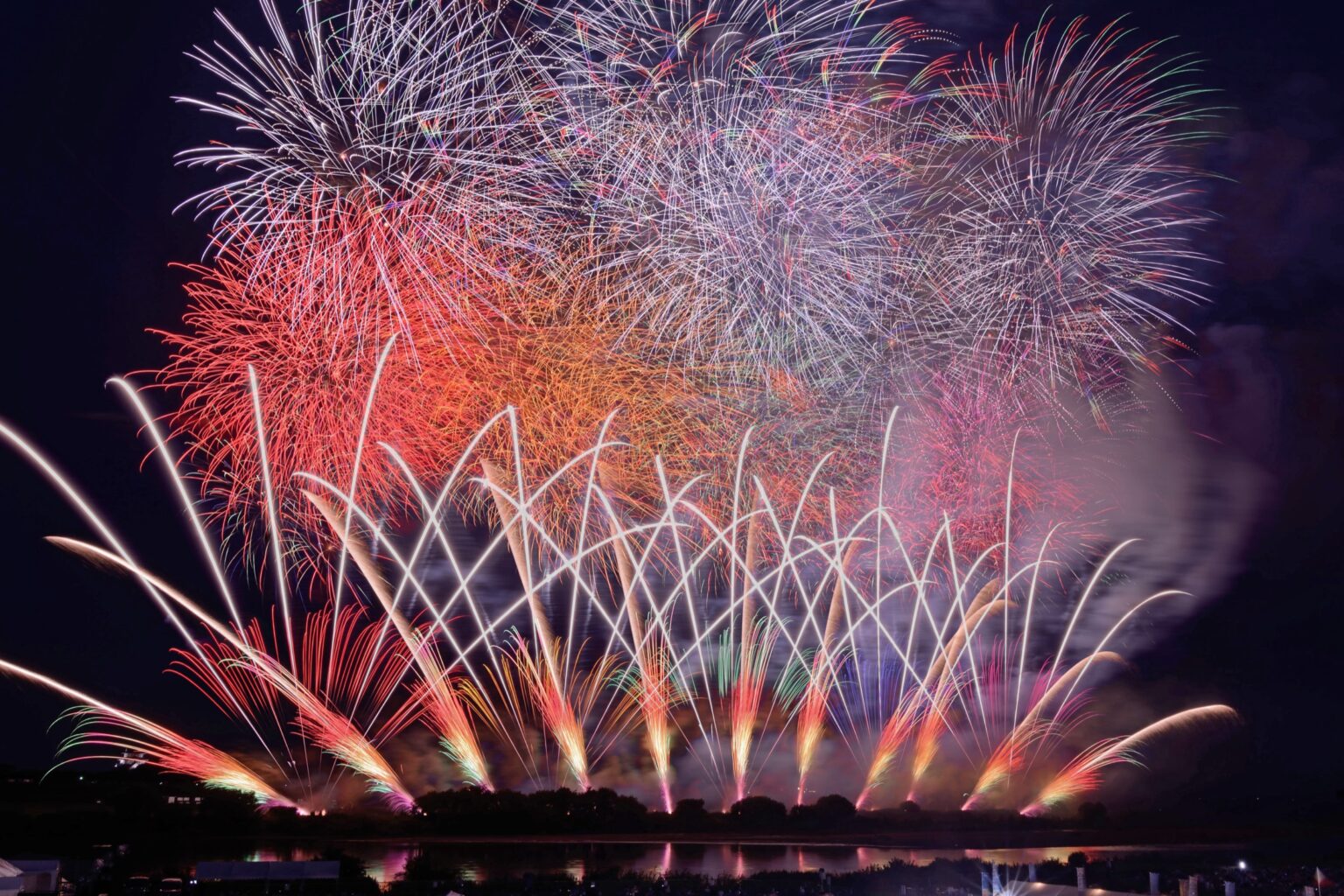
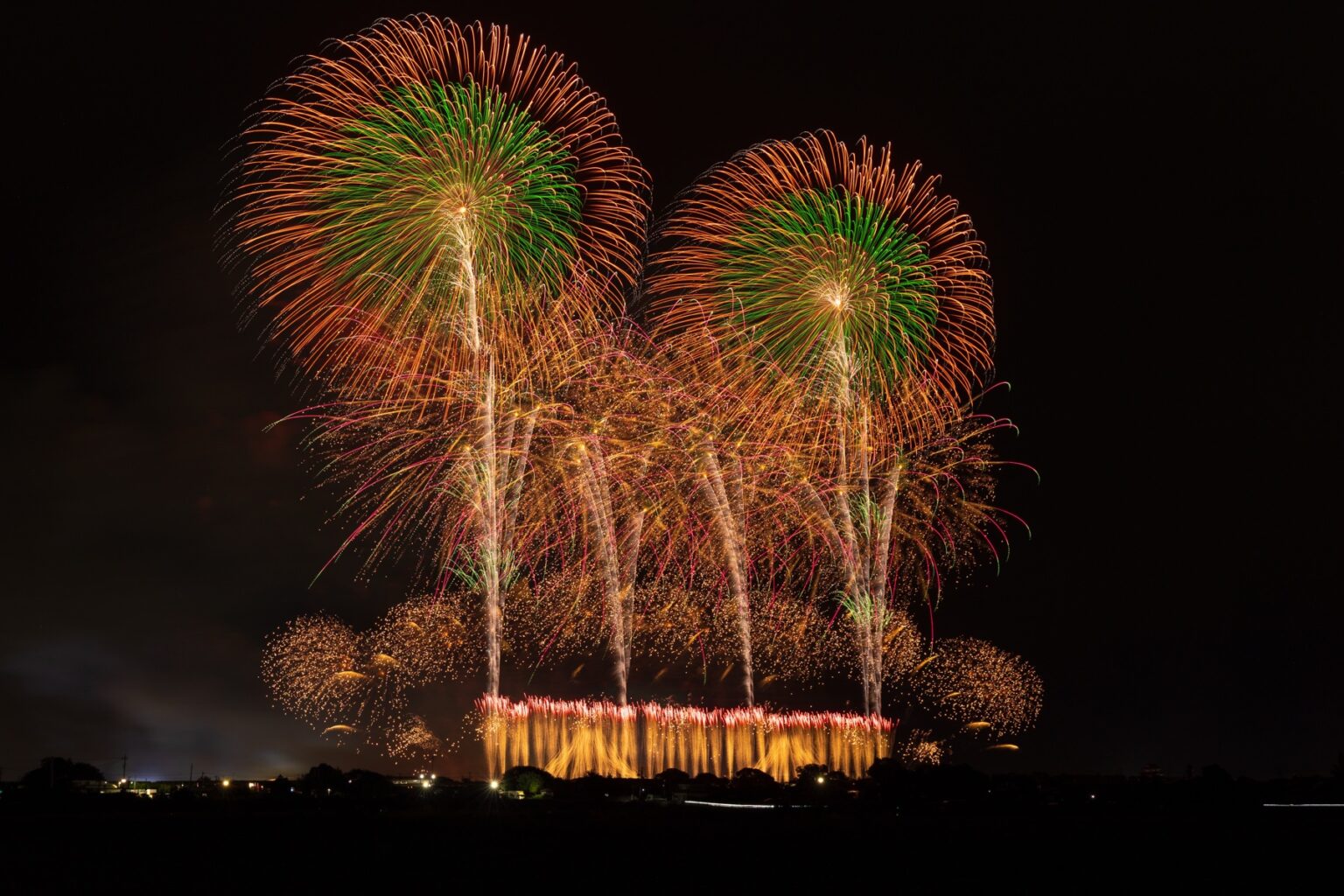
The Tone River Grand Fireworks (Tonegawa Daihanabi) launches about 30,000 shells in a single night, which makes it one of Japan’s largest-class fireworks festivals — and the 39th edition is set for Saturday 19 September 2026, from 18:30 to 20:30, over the river at Sakai Town in Ibaraki, roughly 60 km north of central Tokyo. Four of the country’s top pyrotechnic companies perform together in one program, drawing very large crowds.
Why this one stands out
Japan has thousands of summer fireworks festivals, but only a handful fire on this scale. The official site bills the show as Nihon saidai-kyū — “among Japan’s largest-class” — with 30,000 shells over about two hours. That’s a careful phrase, and worth keeping: it isn’t billed as the single biggest in the country, but it sits firmly in the top tier.
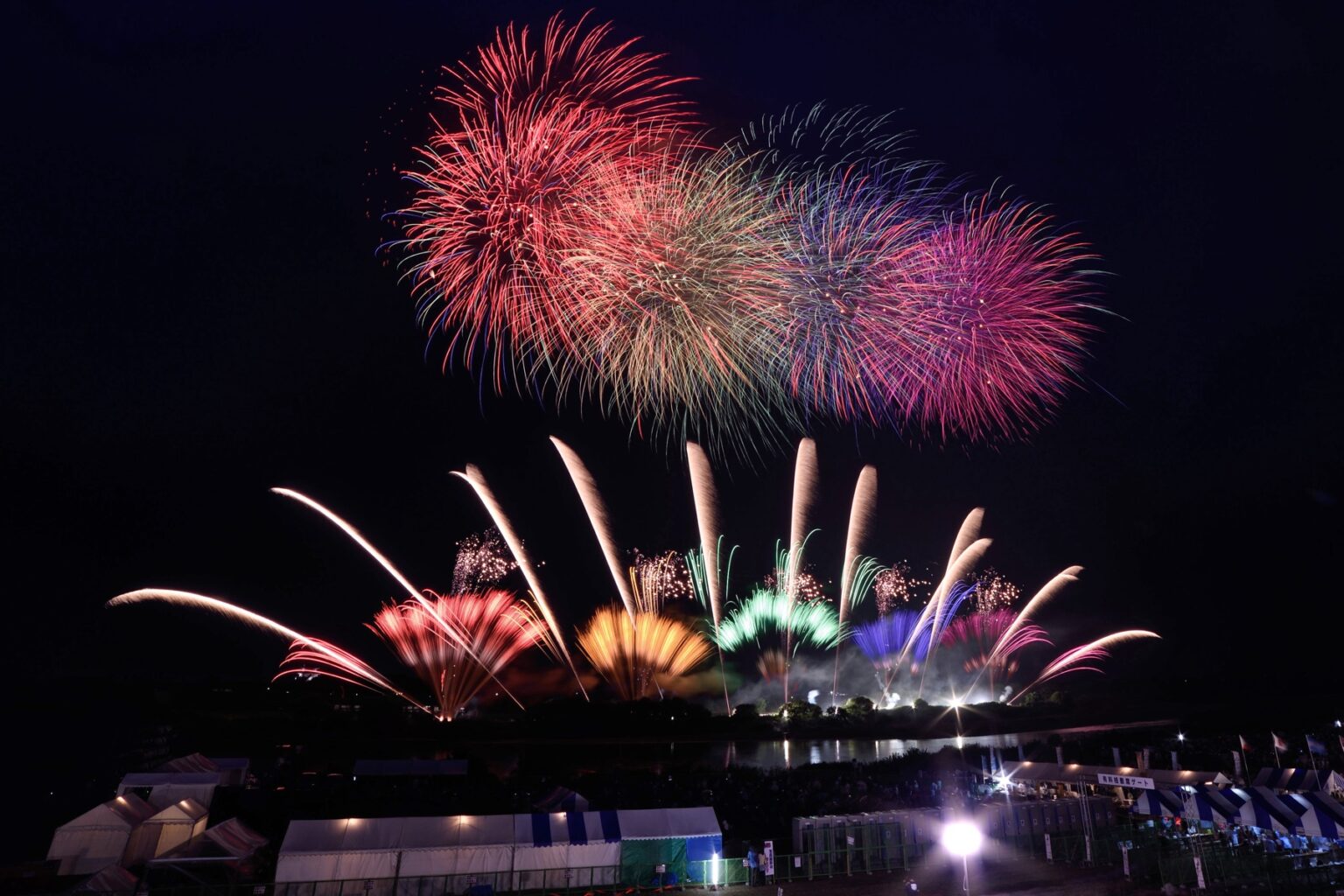
What sets it apart is the format. The festival is built as a competition between four of Japan’s leading pyrotechnic houses — Yamazaki Enka, Nomura Hanabi Kōgyō, Beniya Aoki Enka-ten and Marugo. Each brings its own signature sequences, so instead of one long programme you get four distinct styles trying to outdo each other. The largest shells are 10-gō (shaku-dama, blooming roughly 300 m across).
Not to be confused with: the Koga Fireworks (古河花火大会) is a different festival, held in early August on the Watarase River in Koga City and famous for a giant three-shaku shell. The Sakai event on the Tone River does not launch a three-shaku shell — its headline is the four-maker competition and the sheer volume of 30,000 shells.
2026 at a glance
| Detail | 2026 |
|---|---|
| Edition | 39th (第39回) |
| Date | Saturday, 19 September 2026 |
| Venue opens | 13:00 |
| Ceremony | 18:00 |
| Fireworks | 18:30–20:30 (about 120 minutes) |
| Shells | Approximately 30,000 |
| Organizer | Sakai Town Tourism Association |
| Weather | Cancelled if severe — no postponement date |
Tickets and seats
You can watch for free from the open riverbank if you arrive early, though the organiser bans reserving spots in advance and blocking walkways, so follow the official map and staff directions. For a guaranteed view, paid seats go on sale 15 July 2026 at 10:00 through the e+ (eplus) ticket site, as paper tickets. Prices for the main Sakai-machi venue span a very wide range — these are representative 2026 types (tax included):
| Seat type | Price (tax incl.) |
|---|---|
| Slope free-seating (B / C) | ¥2,000 |
| Chair seat E | ¥3,000 |
| Chair seat D | ¥5,000 |
| Chair seat C / Slope free A | ¥6,500 |
| Chair seat B | ¥8,000 |
| Chair seat A | ¥12,000 |
| Priority seat (2 people) | ¥25,000 |
| Table B / wheelchair-accessible table (4) | ¥42,000 |
| Table A (4) | ¥62,000 |
| Luxury reclining seat (2) | ¥81,000 |
| Camping-car + table | ¥350,000 |
| Premium camping-car + table | ¥500,000 |
The full seating chart is finalised closer to the on-sale date, so check the official site for the exact layout. Prices above are from the official 2026 listing and are tax-included.
Where to watch
Paid seats — Sakai Riverside Park
The official venue, directly under the action. The surest plan if you’re coming a long way; book the moment tickets open on 15 July.
Free riverbank
Open stretches of the bank are free, but the best spots go hours ahead. Bring a leisure sheet and come in the afternoon.
Goka side (opposite bank)
Local viewers also gather across the river at Tone River Recreation Park in Goka. It is not part of the official festival site, and some Goka-side and Sekiyado-side areas are restricted, no-viewing zones, so check the official venue map and no-entry list before choosing the opposite bank.
Getting there from Tokyo
This is the part that catches people out — Sakai Town has no station of its own, so plan transport before you plan anything else.
By train + shuttle: the nearest station is JR Koga (古河駅). On event day the festival runs official, pre-registered shuttle buses (applications open 15 July):
- Tobu Minami-Kurihashi Station (east exit) ↔ Asahi Bus Sakai depot — about ¥1,800 one-way / ¥3,000 round trip (adult).
- JR Koga Station (east exit) ↔ the Sashima area — about ¥2,200 one-way / ¥4,000 round trip (adult).
By car: the venue is reached via the Ken-Ō Expressway (local guides point to the Sakai-Koga interchange, a few kilometres away). Note that there is no free parking; the official site releases full parking details closer to the event, with reserved paid spaces booked through its parking system.
Heads-up on local buses: several regular bus services into the Sakai area are suspended or turned back on event afternoon to manage the crowds, so don’t rely on an ordinary timetable — use the official festival shuttles or drive with a booked parking space.
One honest warning: it’s typhoon season
Mid-to-late September is the heart of Japan’s typhoon season, and this festival has no rain date — if the weather turns severe, the show is cancelled outright rather than postponed. If you’re travelling specifically for it, build in a flexible day and watch the forecast in the final week.
See our live Japan typhoon season 2026 page for current storm status, and Japan in August 2026 for how the late-summer festival calendar fits together.
Where to stay: Koga, the nearest city with hotels and a station, fills up fast on festival night — book early if you don’t want a late dash back to Tokyo. Search hotels around Koga → or compare on Agoda
We may earn a small commission from bookings, at no extra cost to you.
Southeast Asia traveler tip: September evenings here are warm and humid, and the riverbank means mosquitoes after dark. Bring a leisure sheet, repellent, water and a hand fan; pack out your rubbish. A Japan eSIM keeps maps and messaging working in the riverbank crowds. Crowds of 300,000 mean exits are slow — leaving 10 minutes before the finale, or waiting it out calmly, both beat the crush.
Make a day of it
Treat it as a day trip rather than a quick stop. Come into Koga or the riverside in the afternoon, settle in well before the 13:00 venue opening if you want a free spot, picnic through the early evening, and let the four makers run from 18:30. If you’re staying in Tokyo, check the last trains carefully — with this many people, the journey back is part of the event.
Akita Kantō Festival
More summer spectacle: Akita’s lantern-pole festival, one of Tōhoku’s big three.
Skip the crowds in Japan
How to handle Japan’s busiest sights and festivals — and the quieter swaps a local goes to instead.
Gion Matsuri, Kyoto
If festivals are your reason to visit, the other end of the spectrum — Kyoto’s grandest summer festival.
Japan in August 2026
Where the fireworks, heat and crowds sit in the wider late-summer picture.
FAQ
When is the Tone River Grand Fireworks in 2026?
Saturday, 19 September 2026. The venue opens at 13:00, the ceremony begins at 18:00, and the fireworks run from 18:30 to 20:30 — about two hours. It’s the 39th edition.
Is it free to watch?
Yes, from the open riverbank if you arrive early. For a guaranteed view there are paid seats from ¥2,000 up to ¥500,000, on sale from 15 July 2026 through the e+ ticket site.
Those tents are part of a national trend — paid seating now runs at 8 in 10 major Japanese fireworks festivals, with premium tiers averaging ¥40,611. My breakdown of when paid fireworks seats are worth it (and where free still wins) puts Sakai in context: it’s one of the holdouts where the free bank still delivers.
How many fireworks are launched?
About 30,000 shells over roughly two hours, which the official site describes as “among Japan’s largest-class.” It’s run as a competition between four leading pyrotechnic houses.
Is it the biggest fireworks festival in Japan?
It’s one of the largest-class (Nihon saidai-kyū), not officially the single biggest. With ~30,000 shells it’s firmly in the top tier, but the official wording stops short of claiming the national number-one spot.
How do I get there from Tokyo?
The nearest station is JR Koga, about an hour north of Tokyo. On event day take an official festival shuttle bus (from JR Koga or Tobu Minami-Kurihashi, pre-registration from 15 July), or drive via the Ken-Ō Expressway and book a paid parking space — there is no free parking, and many local buses are suspended that afternoon.
What happens if it rains?
Light rain is usually fine, but the festival has no rain date: in severe weather it’s cancelled rather than postponed. Since mid-September is typhoon season, watch the forecast closely if you’re travelling specifically for it.
Sources: official festival site sakai-hanabi.com (schedule, access and ticket pages); Sakai Town Office press release via PR TIMES; Sakai Town Tourism Association; Asahi Bus service notices. Date, times, shell count and 2026 prices verified June 2026; seat layout and parking details are finalised by the organizer closer to the event.
Join travelers discovering Japan's hidden side
Weekly dispatches from off-the-beaten-path Japan — spots and stories you won't find in guidebooks.
No spam. Unsubscribe anytime.
Welcome aboard!
You're in. See you in your inbox soon.