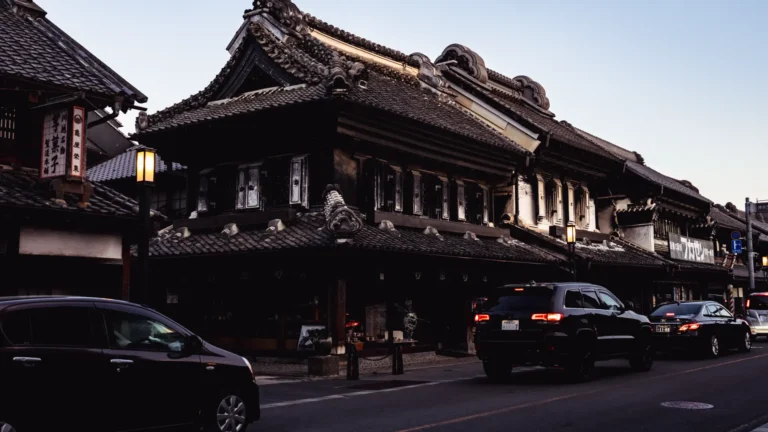
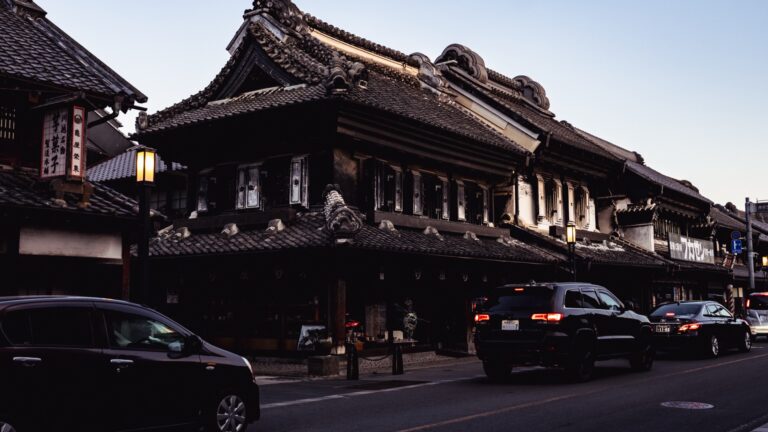
Kawagoe · Saitama · Kanto
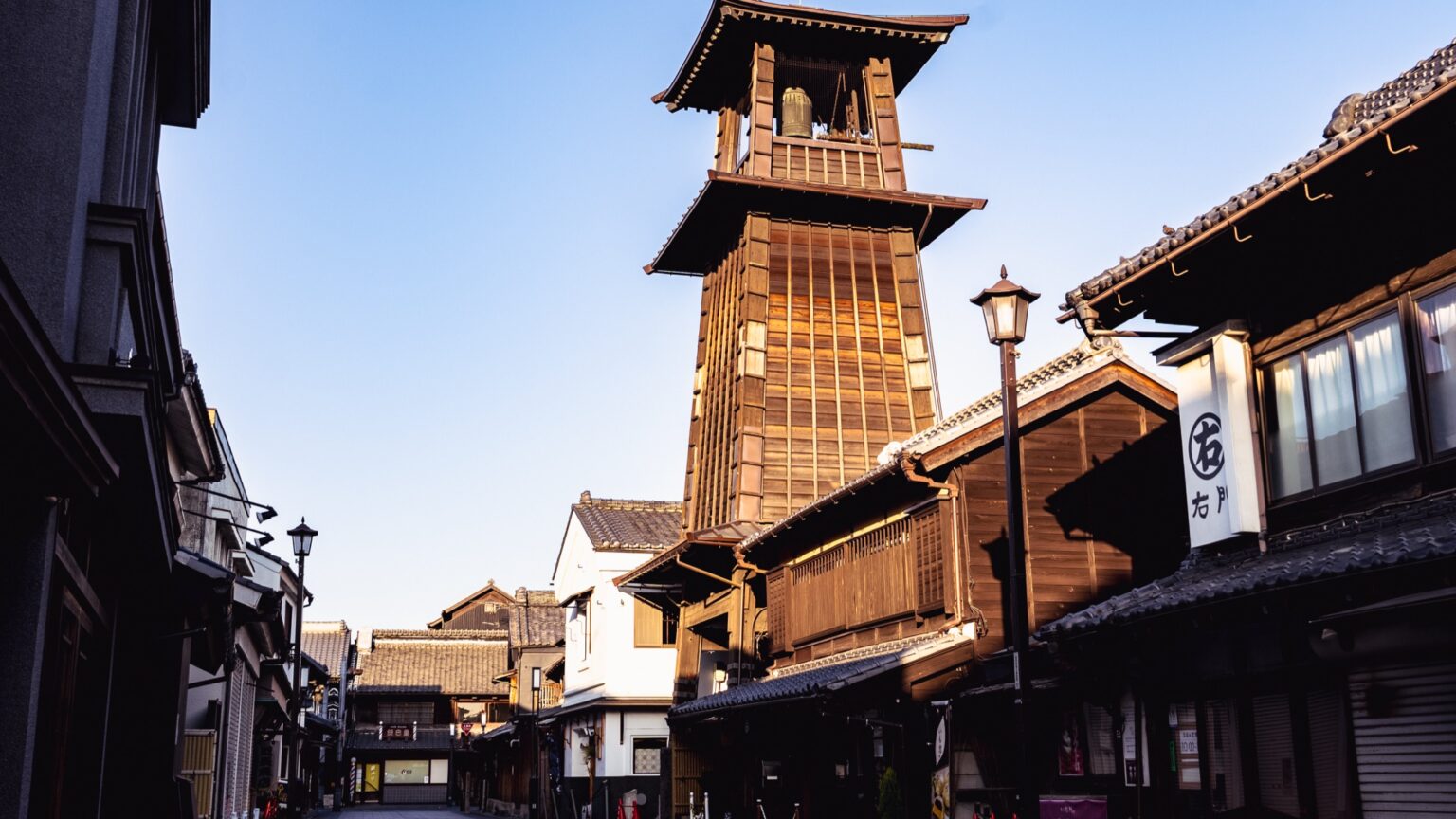
Toki no Kane — the “Bell of Time” — is the symbol of Kawagoe: a roughly 16-metre, three-storey wooden bell tower in the Kurazukuri warehouse district that still rings four times a day, at 6 am, noon, 3 pm and 6 pm. The tower standing today is the fourth, rebuilt in 1894 right after the Great Fire of 1893, and its chime is one of the Environment Ministry’s “100 Soundscapes of Japan.” You can’t climb it and you don’t pay to see it — but it’s the one photo everyone carries home from Little Edo.
I spent a morning-to-evening walk around this tower, and the truth is the bell looks like a completely different building depending on when you stand under it — pale at dawn, gold by mid-morning, a black cut-out at sunset. This is what it is, when it rings, and how to get the shot.
The symbol of Little Edo
If Kawagoe has one image, this is it. The bell tower stands a short walk off the main Kurazukuri street, hemmed in by the black clay-walled merchant warehouses, and it has been telling the town the time for nearly four centuries. It is wooden, three storeys, and topped with the bell itself — and because it rises a clear storey or two above everything around it, you can pick it out from streets away. It isn’t a museum and there’s nothing to buy a ticket for; the point is simply to stand under it, hear it ring if your timing is good, and photograph it.
A bell rebuilt before the shops
The first tower was raised in the Kan’ei era (1624–1644) by Sakai Tadakatsu, the lord of Kawagoe, to ring the hours over the castle town. Fire took it down again and again over the centuries, and each time it went back up. The tower you see now is the fourth, and its story is the one I like best: in 1893 the Great Kawagoe Fire burned through about a third of the town, and the merchants — before they had even rebuilt their own shops — put the bell tower back up first, in 1894, so the town would have its sense of time again. The thick-walled kurazukuri warehouses that survived that same fire are why Kawagoe looks the way it does today, and the bell is their centrepiece.
When the bell rings
The bell sounds four times a day. It’s struck mechanically now rather than by hand, but the sound is the real thing — in 1996 it was chosen as one of the Environment Ministry’s “100 Soundscapes of Japan” (残したい日本の音風景100選), so it’s officially worth standing still for.
| Ringing time | Good to know |
|---|---|
| 6:00 am | Dawn ring — you’ll likely have the street to yourself |
| 12:00 noon | Midday, busiest foot traffic |
| 3:00 pm | Afternoon, good light on the timber |
| 6:00 pm | Evening ring, around sunset in much of the year |
How (and when) to photograph it
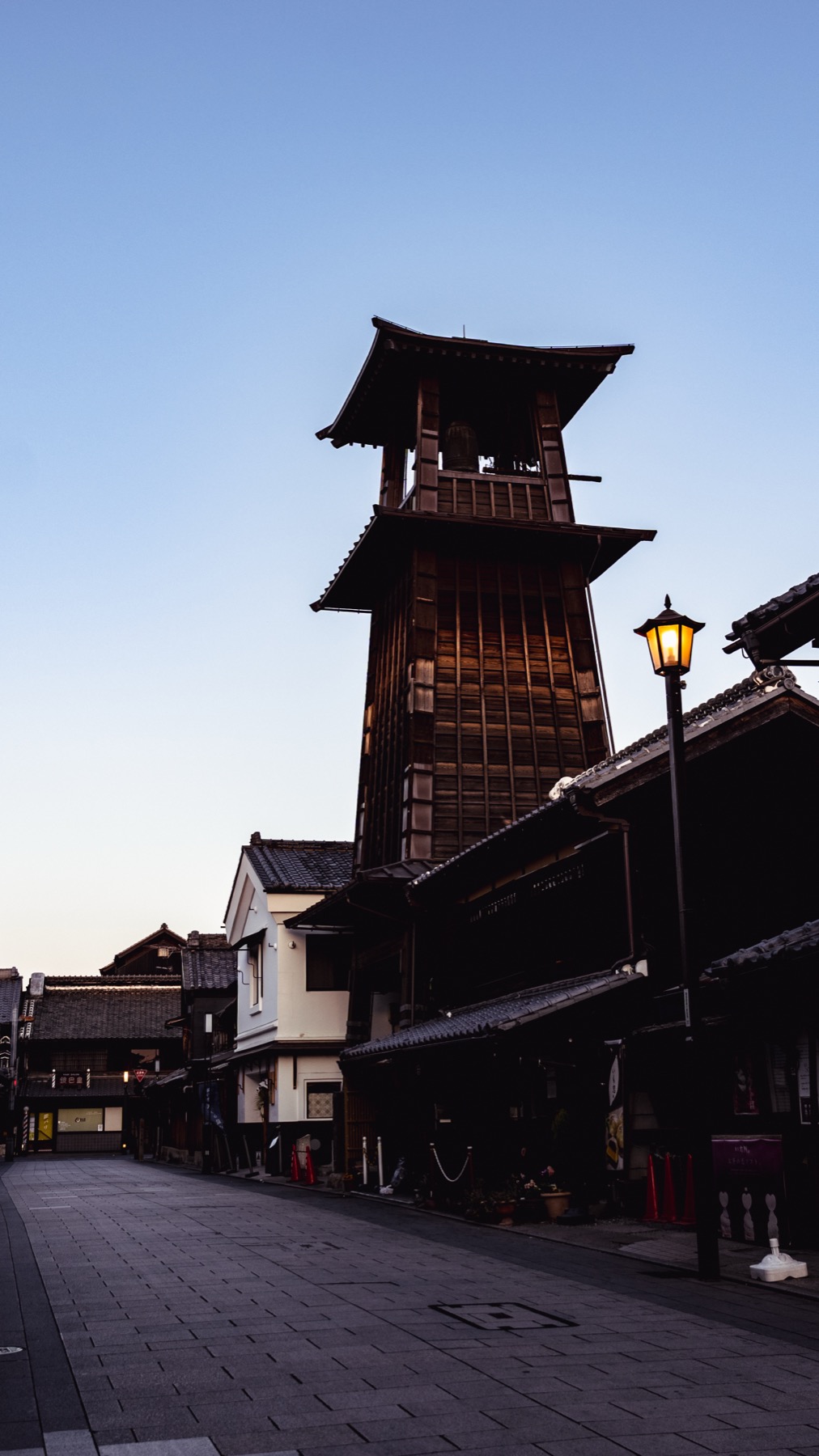
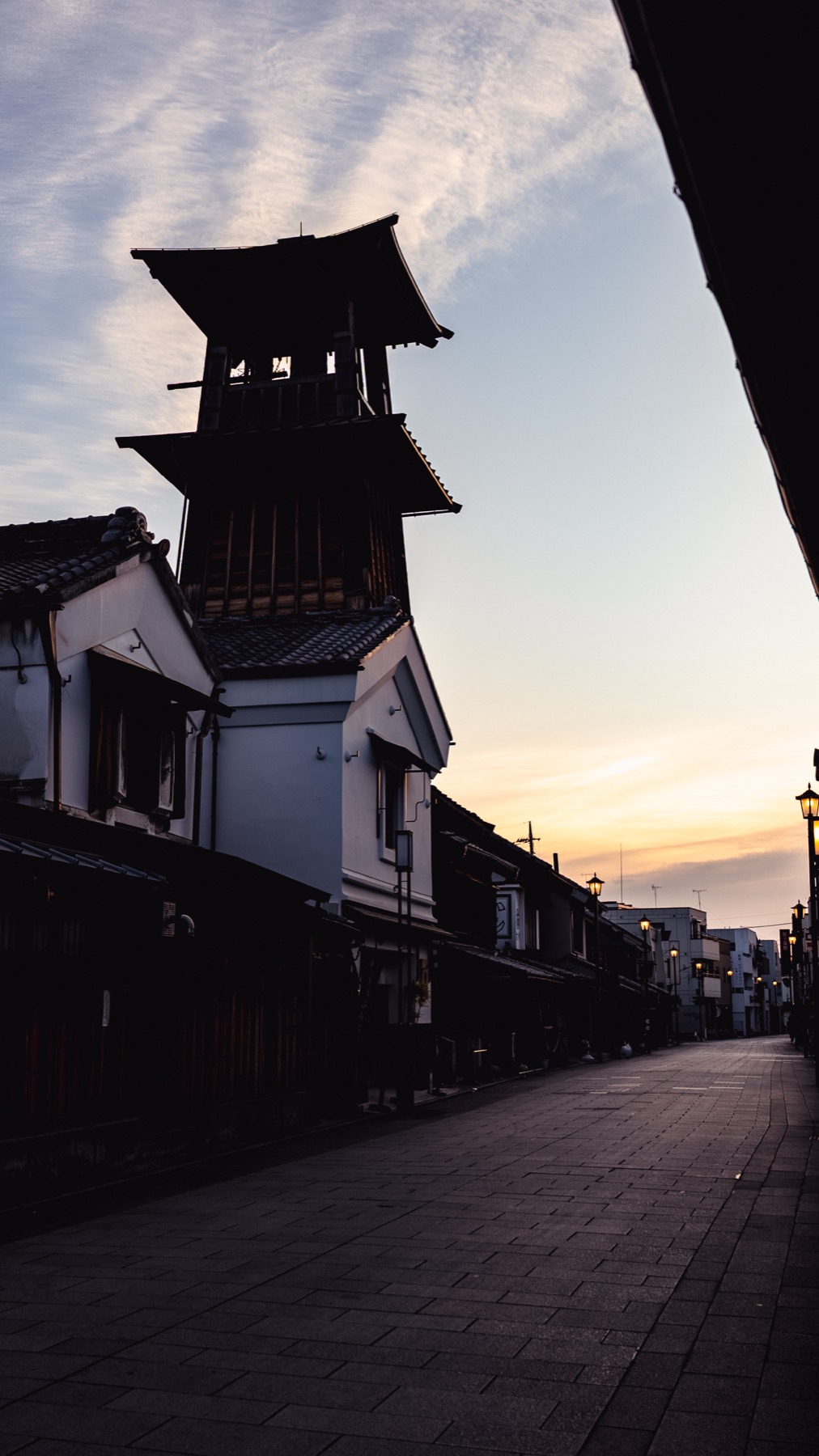
Because you photograph the tower from the street, not from inside, the light is everything — and it changes the building completely. Here’s what each time of day gives you, from the same spot.
Dawn (around 6 am)
Soft, even light and an empty street — the only time the cobbles are clear of crowds. Pair it with the 6 am ring.
Golden hour (morning)
The timber turns warm gold against a blue sky — the postcard shot, looking up the street toward the tower.
Sunset / 6 pm
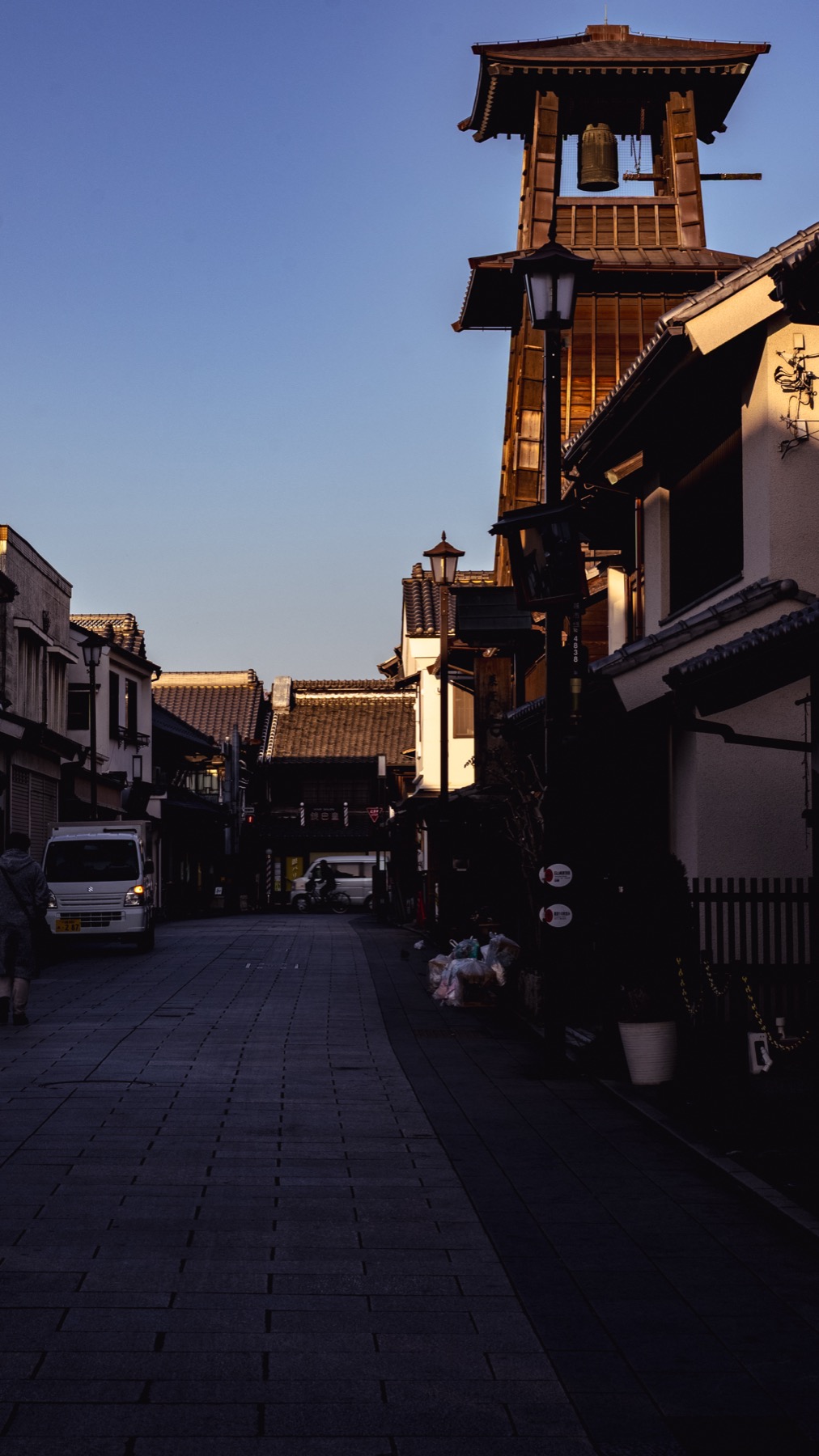
Shoot it as a silhouette down the street, with the evening ring as your soundtrack.
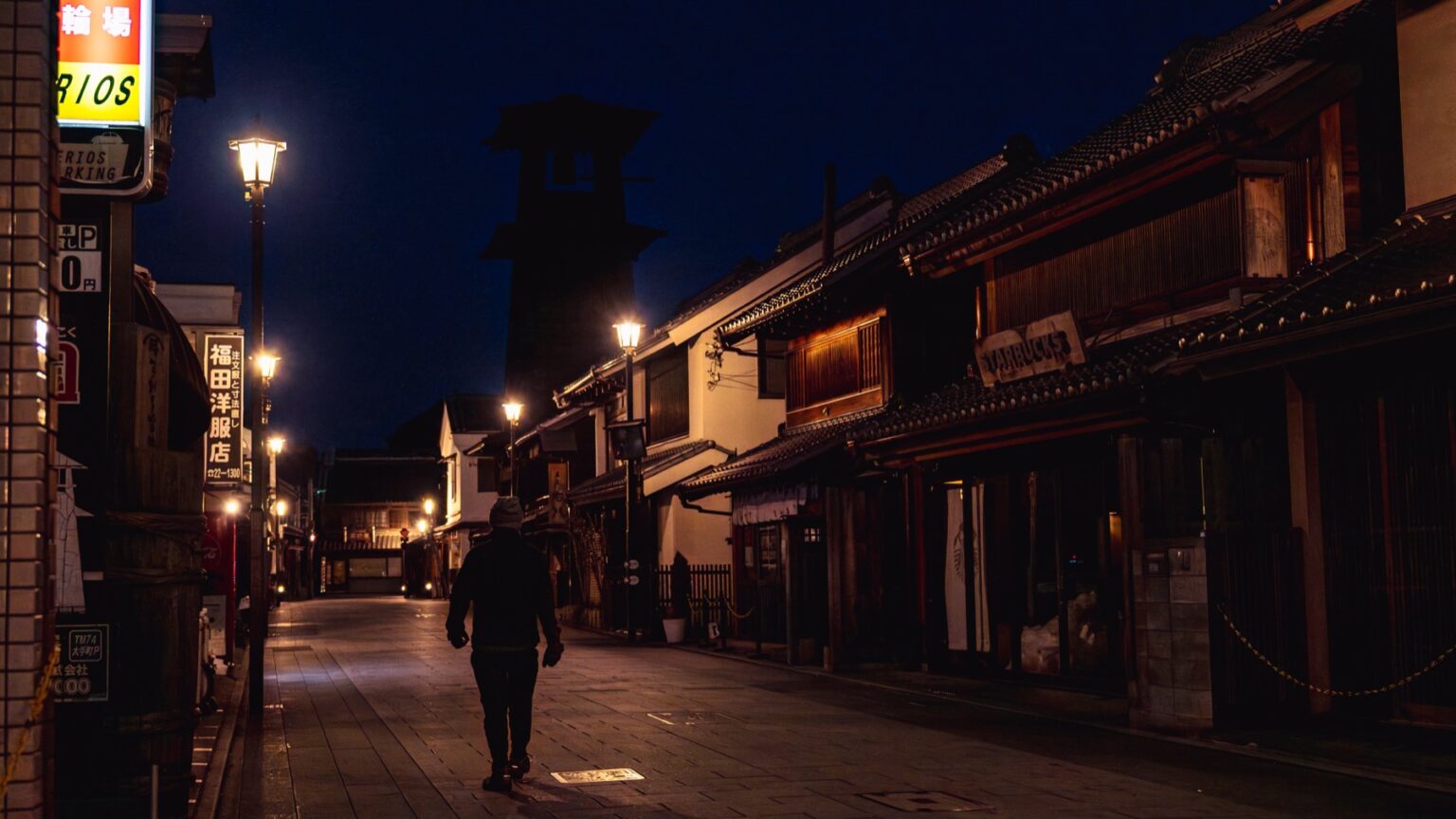
Blue hour / night
The street lamps come on and the crowds vanish; a tripod gets you the quiet, glowing version below.
What’s right next to it
The bell tower sits in the middle of the best half-day in Kawagoe, so don’t make a special trip just for it. A few steps away is Kashiya Yokocho, the candy alley, and the whole Kurazukuri warehouse street runs right past — this is also where you eat your way through Kawagoe’s famous sweet-potato treats. For the full day, including transit and the other stops, start with my Kawagoe day-trip guide.
Getting to the bell tower
Toki no Kane is in central Kawagoe’s Kurazukuri district, about a 15–20 minute walk from the stations (or a short ride on the Koedo loop bus). Hon-Kawagoe Station on the Seibu line is closest; Kawagoe Station (JR & Tobu) is the main hub from Tokyo. Full access details — which train from Tokyo, the bus passes, timing — are in the sightseeing guide.
Kawagoe Day-Trip Guide
Plan the whole Little Edo day — the warehouse streets, the bell tower and the food.
Kitain Temple
Surviving Edo Castle rooms and 538 rakan statues.
Kawagoe Kumano Shrine
Hands-on luck rituals you can actually try.
Kawagoe Castle: Honmaru Goten
The domain lords’ surviving palace hall.
The Kimono Starbucks
Coffee in a kurazukuri townhouse beside the bell.
Senba Toshogu
A quiet Tokugawa shrine in the trees.
What times does the Toki no Kane bell ring?
Four times a day — 6:00 am, 12:00 noon, 3:00 pm and 6:00 pm. It’s struck mechanically now, but the chime is the original sound, chosen in 1996 as one of Japan’s “100 Soundscapes.”
Can you go inside or climb the bell tower?
No — Toki no Kane is viewed from the street only; there’s no interior access and no climbing. It’s free to see.
How tall is Toki no Kane and how old is it?
It’s a three-storey wooden tower about 16 metres tall. The first was built in the Kan’ei era (1624–1644); the tower today is the fourth, rebuilt in 1894 just after the Great Kawagoe Fire of 1893.
When is the best time to photograph it?
Dawn and morning golden hour for an empty street and warm light, or blue hour after sunset for the lamplit version. By midday the narrow street is crowded.
Where is the bell tower and how do I get there?
In central Kawagoe’s Kurazukuri district, about 15–20 minutes on foot from Kawagoe or Hon-Kawagoe stations, or a short ride on the Koedo loop bus. See the Kawagoe day-trip guide for transit from Tokyo.
What’s near Toki no Kane?
Kashiya Yokocho (the candy alley), the Kurazukuri warehouse street, and Kawagoe’s sweet-potato food stalls are all a few steps away — it’s the centre of the old town.
Join travelers discovering Japan's hidden side
Weekly dispatches from off-the-beaten-path Japan — spots and stories you won't find in guidebooks.
No spam. Unsubscribe anytime.
Welcome aboard!
You're in. See you in your inbox soon.