First Trip to Japan
Your first Japan trip, in the right order.
The basics in one place: when to go, how many days you need, how to get around, and what’s worth booking early.
First-Time Guide
Your first trip to Japan — pick your route in two minutes.
No 40-tab browser spiral. Tell me how long you have and what kind of traveler you are — I’ll point you straight to the guides that fit.
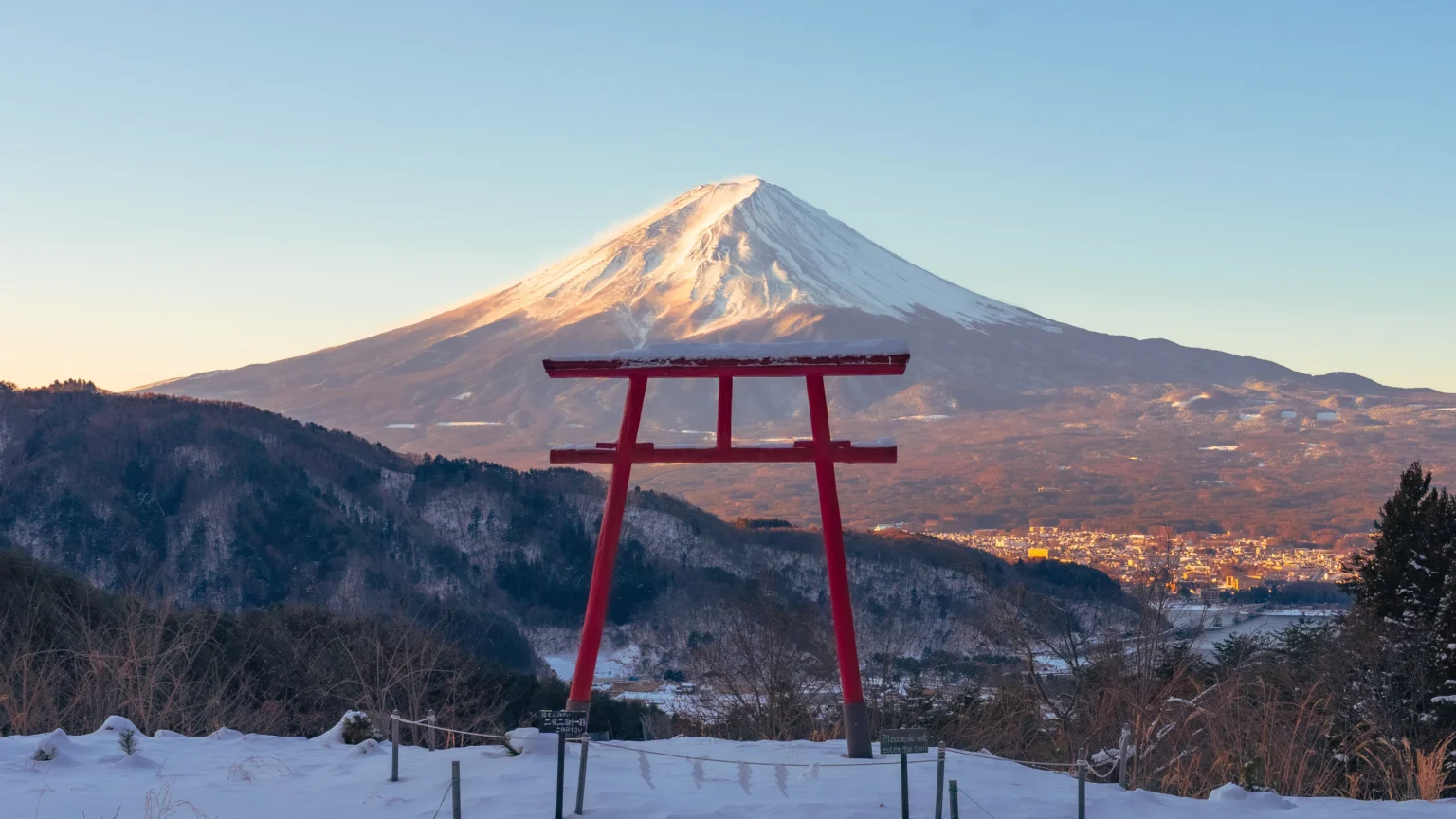
Tenku no Torii, above Lake Kawaguchiko — my photo, ten minutes from home.
How many days do you have?
Count full days on the ground — arrival and departure days are usually half-days at best.
The classic first-timer loop
Tokyo → Kyoto → Osaka, day by day — hotels, trains, and dinners already picked, with booking links in one place. Only 5 days? Same loop, minus Osaka.
Open the 7-day itinerary → 8–10 DaysClassic + one quiet detour
Same three cities, plus time for a day in Hakone, Nara, or a ryokan night in the Japanese Alps.
See how to extend the loop → 12–16 DaysGo where crowds thin out
Add one quieter region — Mt. Fuji, Kamikochi, Kanazawa, or Shikoku — without rushing the classics.
See the quieter picks →What draws you most?
Pick the one that actually makes you book a ticket.
Nature & trails
Quiet walks, sacred forests, and valleys the tour buses rarely reach. 40+ guides.
FoodFood & markets
Morning markets, standing bars, and the dish you came for.
OnsenOnsen & ryokan
Hot-spring inns reviewed from real stays — where the evening bath is the point of the trip.
CultureTemples & old towns
Historic post towns, temple streets, and quiet places beyond the standard route.
What’s still on your mind?
The four questions every first-timer asks — with straight answers.
Can I get by without Japanese?
Short answer: yes, mostly. Here’s what actually helps.
Read the 2026 tips →Is Japan expensive right now?
The yen, JR Pass math, and the hidden fees nobody warned you about.
See the budget guide →When should I actually go?
Month-by-month tradeoffs — weather, crowds, prices — and my honest pick for a first trip.
See the month-by-month guide →How do I get around?
Trains, IC cards, eSIM, and why the JR Pass may not be worth it in 2026.
Plan transport →Still unsure? Start here.
Two ways to go deeper without the reading rabbit hole.
Take the 60-second quiz
Five questions. One region of Japan that actually fits the trip you want — plus the three guides that match it.
Find my region →Get the 7-day prep email
One short email per day for a week. Budget, packing, seasons, booking order. One short email a day, in the order you’ll need them.
Join the list →Join travelers discovering Japan's hidden side
Weekly dispatches from off-the-beaten-path Japan — spots and stories you won't find in guidebooks.
No spam. Unsubscribe anytime.
Welcome aboard!
You're in. See you in your inbox soon.
First-Timer Essentials
What I’d sort before landing in Japan
The router above picks your path. The steps below keep the trip from wobbling.
I’ve visited and photographed all 47 prefectures. Here’s the short first-trip checklist I’d give a friend. Japan is easy to travel, but it rewards a little preparation: arrival paperwork, money, trains, internet, season, and shopping rules.
1. Do Visit Japan Web before your flight.
As of 2026, Visit Japan Web is still the official online service for arrival procedures such as immigration and customs. It’s not a visa, and paper customs forms still exist, but registering before you fly is usually smoother. Since January 2024, immigration and customs use a unified 2D code on Visit Japan Web — don’t rely on the old Customs Declaration App. It’s free — use only the official Digital Agency site and ignore paid look-alikes.
2. Carry three layers of money: card, IC card, cash.
Cards work widely in cities, but Japan isn’t fully cashless. Small restaurants, older ryokan, temple areas, rural buses and lockers may still want yen. For transport, get an IC card: Welcome Suica is deposit-free and valid for 28 days (its remaining balance isn’t refundable). On iPhone or Apple Watch, Welcome Suica Mobile is built for visitors and valid 180 days after issue. Suica notes: the physical Welcome Suica lasts 28 days with top-ups capped at ¥20,000 (cash-first machines); the visitor Suica app is iOS-only.
3. Do the JR Pass math, not the JR Pass habit.
The nationwide JR Pass is no longer an automatic first-trip buy. In 2026 the ordinary 7-day pass is ¥50,000 (14-day ¥80,000; 21-day ¥100,000), and overseas agency prices rise from October 1, 2026. For a simple Tokyo–Kyoto–Osaka trip I’d buy individual tickets; I only weigh the pass for a fast long-distance loop like Tokyo–Kyoto–Hiroshima. If your route really crosses the line, compare passes and activities on Klook. And a date to know: from October 1, 2026, passes bought through overseas agencies cost more (7-day ¥53,000) — if the math does work for you, buy direct on the official site.
4. Book the fragile nights first.
Your first night, last night, Kyoto weekends, cherry-blossom and autumn-foliage dates, and special ryokan stays shouldn’t be left late. I lock in refundable rooms early, then tighten the route later. For city bases, compare cancellable hotels on Booking.com before chasing one-night detours. Which site to open first depends on the kind of stay, and I compare Trip.com, Booking.com, Agoda and Rakuten Travel in my guide to hotel booking sites in Japan.
5. Put internet on your phone before you land.
An eSIM is the cleanest option if your phone supports it and is unlocked; pocket Wi-Fi still makes sense for families or heavy shared use. Free Wi-Fi exists, but I wouldn’t plan a first arrival day around it. Save your hotel address, first train route and a few offline map areas before the flight.
6. Pick the season by tradeoff.
My one-line answer: late October to November is the easiest first-trip weather; late March to April is beautiful but crowded; May after Golden Week is underrated; June is rainy; July to September is hot, humid and typhoon-prone; winter is excellent for onsen, clear skies and snow country. Full month-by-month comparison — weather, crowds, prices — in Best Time to Visit Japan.
7. Know that tax-free shopping changes in late 2026.
Through October 31, 2026, eligible visitors still get the consumption-tax exemption at the shop. For purchases from November 1, 2026, Japan shifts to a refund method: you pay tax-inclusive prices first, then receive the tax-equivalent refund after customs confirms the goods are leaving Japan. Keep tax-free goods accessible for departure inspection. Practical part: the refund needs the goods with you at the customs check before you check your bags, within 90 days of purchase.
First-Time Japan FAQ
Quick answers before you book
How many days should I spend in Japan the first time?
Seven to ten nights is the sweet spot for most first-timers. With 5–7 days, keep it classic and simple (Tokyo–Kyoto–Osaka). With 12–16 days, add one quieter region such as Mt. Fuji, Kanazawa, the Japanese Alps or Shikoku.
Is Visit Japan Web required in 2026?
It’s not a visa, and paper customs forms still exist. But Visit Japan Web is the recommended online route for immigration and customs declarations, and the current unified 2D code is the one to prepare before arrival.
Do US travelers need a visa for Japan?
US passport holders don’t need a visa for short-term tourism under 90 days. Visa rules depend on passport nationality, not residence, so non-US passport holders should check the official list.
Is the JR Pass worth it for a first Japan trip in 2026?
Usually not for the basic Tokyo–Kyoto–Osaka route. The nationwide pass can still pay off on fast long-distance loops, but compare your actual train fares first instead of buying it out of habit.
Should I use cash, card or Suica in Japan?
Use all three: a credit card for hotels and big purchases, an IC card (Suica or Welcome Suica) for trains and small payments, and enough yen for small shops, rural areas, older inns and buses where card readers fail.
Do I need an eSIM or pocket Wi-Fi in Japan?
You want one of them. An eSIM is easiest for solo travelers with an unlocked compatible phone; pocket Wi-Fi suits groups. Don’t depend only on free public Wi-Fi on your first arrival day.
When is the best time to visit Japan for a first trip?
For comfort, late October to November is my easiest pick. Cherry-blossom season is wonderful but crowded and expensive. Summer has festivals, but much of Japan is hot and humid, with typhoon risk in August and September.
What changes about tax-free shopping in Japan in 2026?
For purchases from November 1, 2026, Japan moves to a refund method: you pay tax-inclusive prices at the shop, then receive the tax-equivalent refund after customs confirms the goods are being taken out of Japan.