Climbing season status
The 2026 climbing season ended on 10 September 2026
The official trails to the summit and the mountain huts are closed. Climbing to the top is not something to attempt now — the route markers, the huts and the first-aid stations that operate only during the season are gone until next summer, and so is the entry reception.
Some 5th Stations may still be reachable for sightseeing, depending on road, weather, snow and bus conditions on the day. That is not the same as the climbing trails being open.
Dates and current conditions: the official Mt Fuji climbing site.
Mt. Fuji · Trip Planning
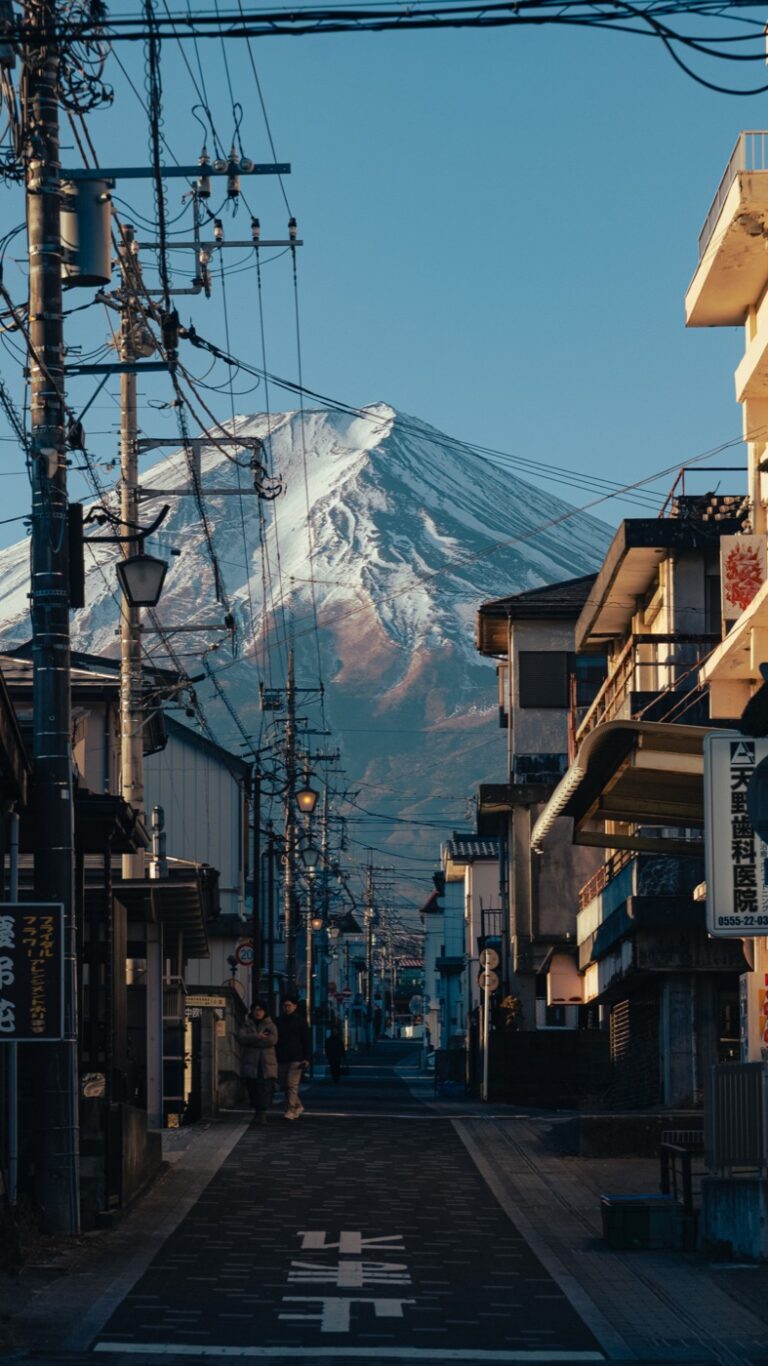
Quick answer: in the colder months a day trip works well; from late spring through early autumn, when Mt. Fuji hides most days, an overnight adds the dawn window that decides most sightings. A Mt. Fuji day trip from Tokyo starts after sunrise, whatever you ride: the earliest verified public-transport run (local trains from Shinjuku at 5:15) reaches Kawaguchiko at 7:58, the first highway bus arrives at 8:30, and the last bus home leaves at 20:15. Whether those hours are enough depends heavily on the month. Tokyo Metropolitan Government observation data makes the seasonal gap clear: in fiscal 2025, Mt. Fuji was visible from the TMG building on 20 days in December and 21 in January — versus 5 in July and 2 in August. Those are Tokyo-side observations, not Kawaguchiko odds, but the seasonal pattern holds across the region, and it is the single most important fact for this decision. Here is the honest breakdown, from someone who checks this mountain from his window every morning.
The sixty-second decision
Day trip works if
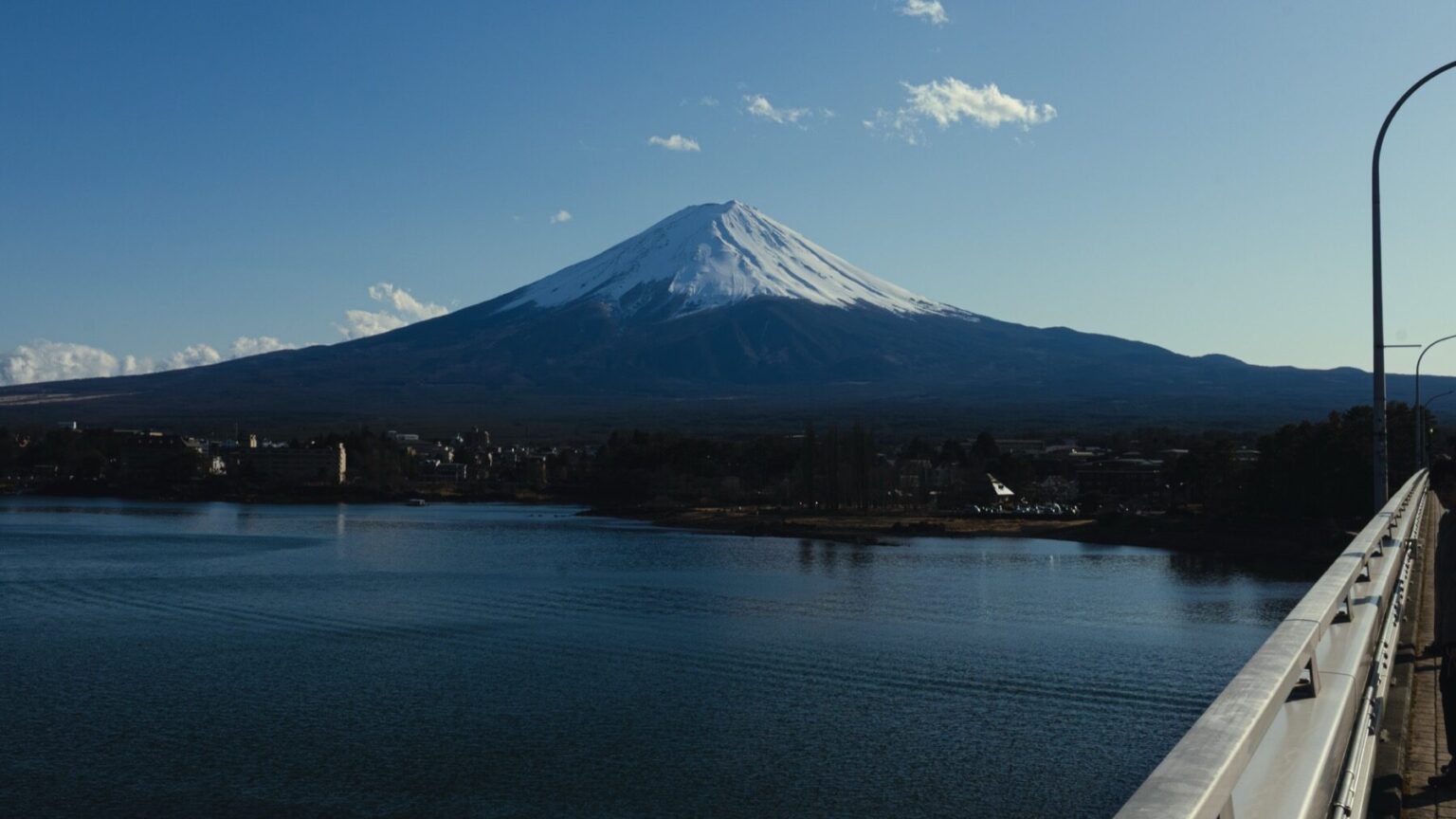
You are traveling in the colder months — the December and January counts (20 and 21 visible days in fiscal 2025, 41 in all) were about six times July and August’s (5 and 2, just 7 in all) — or your Tokyo schedule is tight and seeing the Fuji area matters more than catching the mountain at first light. Winter bonus: sunset lands around 16:35, well inside a day trip.
Overnight wins if
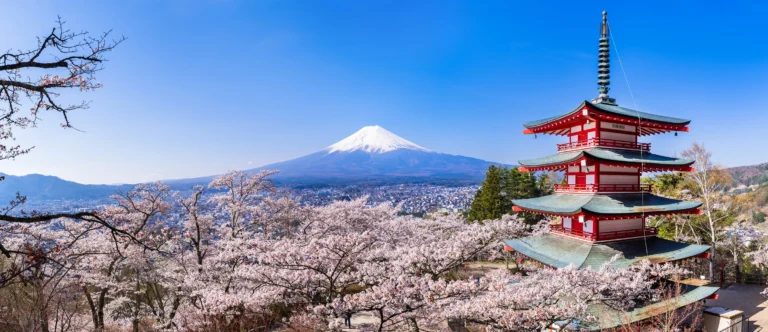
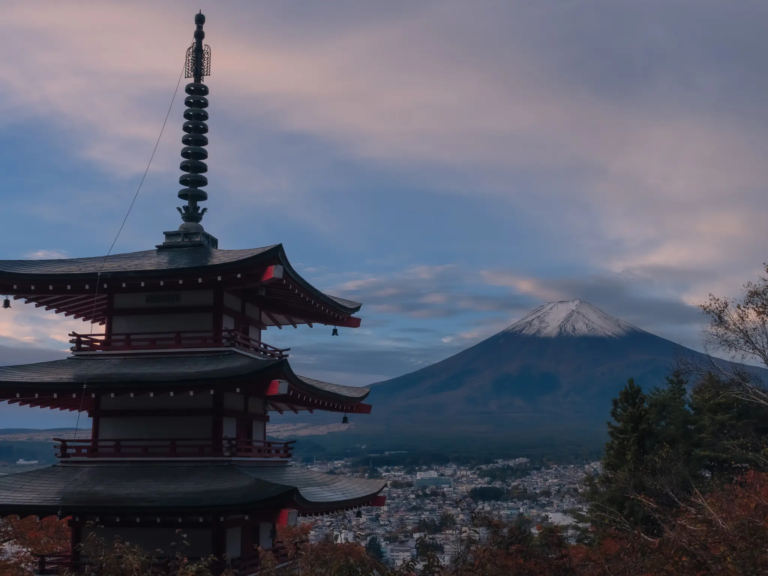
You are coming in or near the summer months, when visible days are scarce and practical guidance — matching what I see from Fujiyoshida — favors the first hours after dawn, which no same-day arrival from Tokyo can reach (earliest is 7:58). Photographers, and anyone who wants the Chureito Pagoda at sunrise, should sleep here.
The third option
A guided day tour (sampled at US$68 from Shinjuku, US$85 from Tokyo Station; ~10 hours) removes most transport planning and typically packs in Kawaguchiko, Oshino Hakkai and the pagoda area. The route is fixed and the weather stays weather — you trade flexibility for simpler logistics, a fair trade on your one spare day.
What a day trip actually looks like
Here is how the timetable shapes your day. The cheapest early run is local trains: Shinjuku 5:15, change at Takao and Otsuki, Kawaguchiko 7:58, ¥2,580. The 6:55 bus from Busta Shinjuku arrives at 8:30. The Fuji Excursion express (direct, no transfer) leaves Shinjuku at 7:30 and arrives at 9:28 — four weekday round trips run regularly, with extra services on selected dates, so check the date-specific timetable. Going home, the last direct bus leaves Kawaguchiko at 20:15 and reaches Shinjuku at 22:00. A roughly 8:00-to-20:00 window is genuinely enough for the lake’s north shore, the pagoda climb and an udon lunch — and in summer it even includes sunset (19:04 in early July), if the sky cooperates.
The catch is what you cannot reach: first light. In early July the sun rises at 4:33 — more than three hours before the earliest arrival — and on many warm-season days a mountain that was visible around dawn is partly or fully hidden by late morning. That is a pattern I watch from my window, and the practical guides say the same: mornings are your best chance, and no timetable can put a same-day visitor into them. Winter is kinder to day-trippers — the visible-day counts are several times higher, and sunset (~16:35) happens while you are still on the ground.
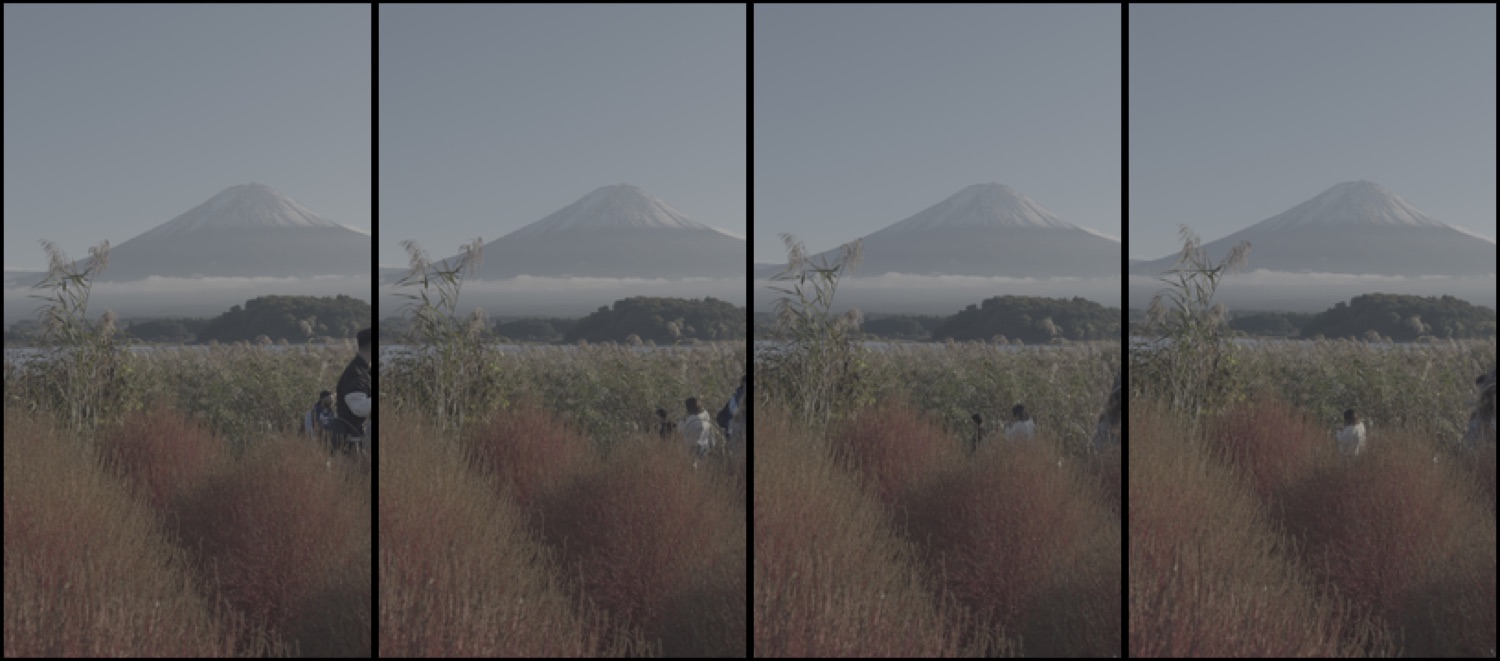
What the overnight actually buys
One thing, mostly: dawn. Sunrise at the Fuji Five Lakes runs from the 4:30s in midsummer to about 6:50 at the winter solstice, and practical guidance consistently favors those first hours — which matches what I observe here, particularly in the warm months. Sleeping in Kawaguchiko or Fujiyoshida means standing at the lake wall or on the pagoda steps during those hours, instead of on a train from Shinjuku. Be clear about the math, though: one night buys you one dawn — the morning after your arrival day. It adds a viewing window a day trip simply does not have; it does not guarantee the mountain shows. (Two dawns require two nights.)
The overnight also relaxes the evening. A day-tripper can technically catch sunset before the 20:15 bus; an overnighter enjoys it without watching the clock, then follows it with an onsen bath, a hotel dinner or an izakaya round in Fujiyoshida’s Nishiura district — the full case for each side is in our Kawaguchiko vs Fujiyoshida guide.
The local trick: book the weather, not the date
If your Tokyo itinerary has a movable day, use it: pick the day with the most favorable forecast — while accepting that Fuji can hide behind its own local cloud on a day forecast clear. The 7:30 Fuji Excursion makes a reactive day trip practical if seats remain, and a refundable room can convert a promising forecast into an overnight — within its stated cancellation deadline, which may fall before forecasts firm up. Our Mt. Fuji visibility data shows how often the mountain actually appears month by month — use it for expectations, not guarantees.
| Option | Indicative price | On the ground | Best for |
|---|---|---|---|
| Highway bus day trip | ¥4,400 round trip | ~8:30–20:00 | Winter visits, tight budgets |
| Fuji Excursion out + bus back | ¥6,400 (¥4,200 + ¥2,200) | ~9:30–20:15 | Comfort on a movable-day plan |
| Guided day tour | Sampled US$68–85 (GYG); Klook comparable (listed ₩69,800) | ~10 hours, fixed route | Lower-planning single day |
| Overnight stay | Transport + room (verified samples: guesthouses ~US$60; Kawaguchiko 3-star from ¥9,234 on November dates — rates may be per room or per bed) | An unhurried dusk + the dawn window | Summer-window visits, photographers, slower trips |
For the day-tour route, compare Mt. Fuji day tours on Klook and GetYourGuide’s Tokyo departures — typical full-day itineraries cover the lake, Oshino Hakkai and the pagoda area. For the overnight route, check rooms on Booking.com (Lake Kawaguchiko search), Agoda or Trip.com — and read the cancellation terms, because a refundable rate is what makes the weather-reactive strategy work. Staying without a car changes which neighborhoods make sense: our car-free Fuji guide covers that.
Timing notes that catch people out
The Kawaguchiko ropeway’s hillside attractions keep daytime hours (the swing operates 9:30–16:00, weather permitting; the ropeway’s 2026 renovation closure ran May 11 to July 15 and had ended as of this update — check the official page for current hours). The sightseeing boat costs ¥1,000 and boards about ten minutes’ walk from the station; check its official timetable for the day. Arakurayama Sengen Park itself is open around the clock, which is why sunrise at the pagoda belongs to people who slept nearby. And if you are climbing the mountain rather than looking at it, that is a different article entirely — start with the mountain hut guide.
Make one reversible move
For everything else on the trip — what has a release date, what merely needs watching, and when each clock fires — see the Japan Trip Booking Timeline.
Want this as a month-by-month checklist? Pick your travel month – or have your whole plan reviewed in writing.
FAQ
Is a Mt. Fuji day trip from Tokyo worth it?
In the colder months, usually yes — the December and January observation counts were about six times the midsummer ones, and even midday often delivers. In and around midsummer, be honest with yourself: the regional data shows only a handful of visible days per month, and morning is the recommended window. If summer is your timing, one night here adds a dawn viewing window that no day trip has — an extra chance, not a guarantee.
What time should I leave Tokyo for a day trip?
Earlier is better. The earliest verified run is local trains at 5:15 arriving 7:58 (¥2,580); the 6:55 bus arrives 8:30, and the 7:30 Fuji Excursion arrives 9:28. Later starts eat directly into your best-odds hours.
Can I see sunrise at Chureito Pagoda on a day trip?
Not from Tokyo by public transport. The earliest verified arrival is 7:58 — about 3 hours 25 minutes after sunrise on July 1, and still 1 hour 8 minutes after it on December 21. Sunrise at the pagoda means sleeping in the area, ideally near Shimoyoshida Station.
Should I just book a guided tour instead?
If you have exactly one day, would rather not manage timetables, and accept a fixed route, the sampled US$68–85 full-day tours are reasonable value — the routes hit the right spots. What you give up is the freedom to move your Fuji day to the best-looking forecast, which is the self-guided traveler’s biggest edge in the warm months.
What if Mt. Fuji doesn’t show up at all?
It happens, in every season. The Fuji Five Lakes are still a worthwhile day — the lake shore, Oshino Hakkai’s spring ponds, the udon culture of Fujiyoshida — but if seeing the mountain is the point, build in flexibility: a movable day-trip date, or a night here for the extra morning window.
Sources
Checked August 13, 2026: Highwaybus Shinjuku–Fuji Five Lakes timetables (both directions); Fujikyu Railway — Fuji Excursion express; Tokyo Metropolitan Government — monthly count of days Mt. Fuji was visible from the TMG building; Sunrise/sunset times for Fujikawaguchiko; Mt. Fuji Panoramic Ropeway; Kawaguchiko sightseeing boat; JR East and Fujikyu timetables for the 5:15 local-train itinerary (¥2,580); japan-guide on viewing conditions; GetYourGuide (Mount Fuji full-day trip, US$68 Shinjuku / US$85 Tokyo Station) and Klook (comparable tour listed at ₩69,800) as displayed August 13, 2026; guesthouse and Kawaguchiko hotel samples from our Kawaguchiko vs Fujiyoshida verification. Timetables and prices change seasonally — re-check before you travel.
Join travelers discovering Japan's hidden side
Weekly dispatches from off-the-beaten-path Japan — spots and stories you won't find in guidebooks.
No spam. Unsubscribe anytime.
Welcome aboard!
You're in. See you in your inbox soon.