Climbing season status
The 2026 climbing season ended on 10 September 2026
The official trails to the summit and the mountain huts are closed. Climbing to the top is not something to attempt now — the route markers, the huts and the first-aid stations that operate only during the season are gone until next summer, and so is the entry reception.
Some 5th Stations may still be reachable for sightseeing, depending on road, weather, snow and bus conditions on the day. That is not the same as the climbing trails being open.
Dates and current conditions: the official Mt Fuji climbing site.
This morning — today’s verdict from the town below · checked daily from Fujiyoshida
Mt. Fuji · Live Guide 2026
Mt. Fuji
Visibility forecast, viewpoints, climbing & huts — from Nobu, who watches Fuji from his Fujiyoshida window every morning.
Live, every morning
Is Mt. Fuji visible today?
A verified verdict from Fujiyoshida — not a guess. Updated each morning, with a 7-day outlook.
For the week-ahead weather side — cloud, wind and rain, not just today’s photo verdict — use the 7-day Mt. Fuji weather outlook.
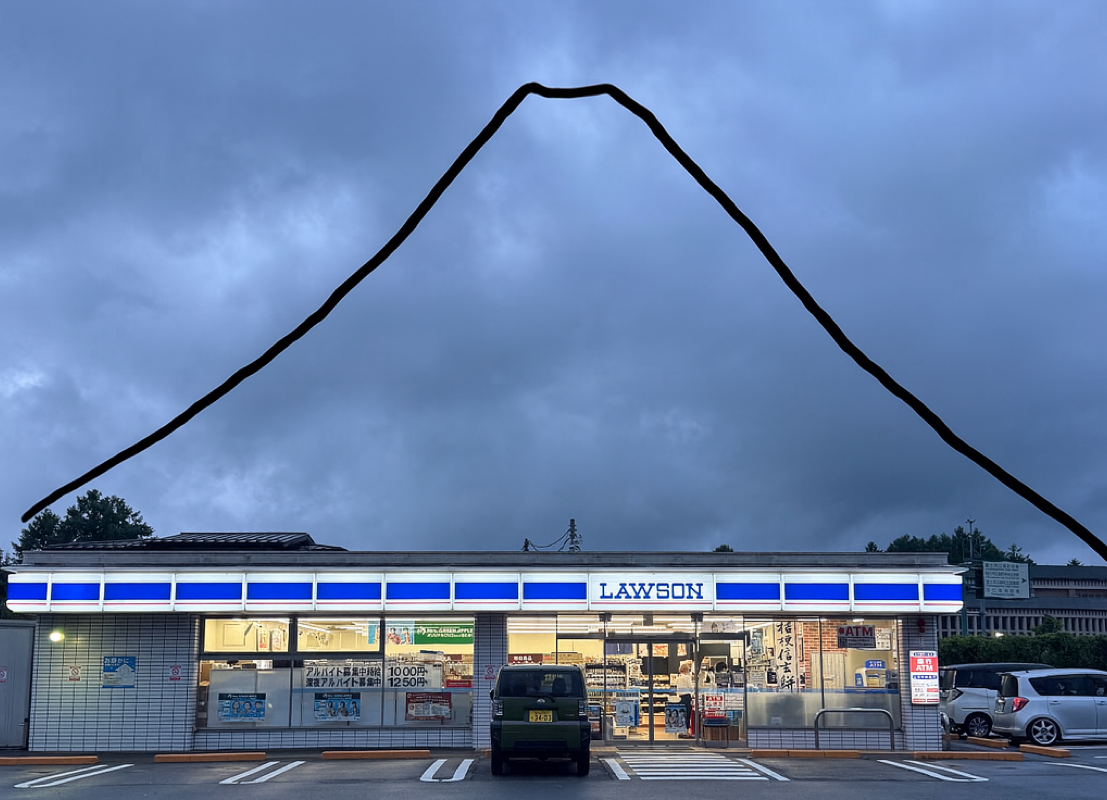
Checked each morning from Fujiyoshida
Nobu’s morning verdict is written by hand from Fujiyoshida — a local read, not an algorithm.
Not up at 6am? I’ll email you the next clear-Fuji morning.
I’m Nobu, and I watch the mountain from Fujiyoshida. Leave your email and I’ll send a short note when Fuji clears, something blooms, or a hut opens bookings — no noise, unsubscribe anytime.
PLAN THE TRIP
Book the base before you chase the view
Fuji works best when you sleep close, move early, and keep the weather window flexible.
Kawaguchiko hotels
Use free-cancel options so you can move with the forecast.
Search Booking → Compare on Trip.com →Fuji-view inns
Rakuten has ryokan and onsen listings that foreign OTAs often miss.
Browse Rakuten →Bus and day tours
Useful if you are coming from Tokyo and want the logistics handled.
Compare Klook options →Rental car freedom
For Motosu, Saiko, Shoji, and sunrise viewpoints beyond the buses.
Compare rentals →From Nobu
The first time I came to Fujiyoshida, I stayed four days and never saw the mountain. Not once — just clouds where Fuji was supposed to be. That frustration is why I started posting every morning, so you don’t have the same experience I did. I check the weather, I look out my window, and I tell you what I see.
Follow @is_fuji_visible_today →When the mountain shows itself
Japan’s tourism season and its Fuji-visibility season are almost opposites. The best window is December–February: cold, clear, snow-capped. The odds are Fuji City’s 8 a.m. record from the Shizuoka side, 1991–2025.
BY THE NUMBERS
Japan’s Sacred Mountain, by the Numbers
Routes, travel times, seasons, and the story behind each spot.
3,776 m
Japan’s tallest peak — 12,389 ft. On clear winter mornings you can see it from Tokyo.
1707
The Hoei eruption. Still an active volcano, monitored continuously.
2013
Honored as a cultural site, not a natural one — for centuries of spiritual meaning.
Early Jul – Mid Sep
About 63–72 days a year: in 2026, Yoshida and Subashiri run July 1–Sep 10 (72 days), Fujinomiya and Gotemba July 10–Sep 10 (63 days). In 2026 a ¥4,000 fee applied on all four routes, payable online in advance or on the day; the Shizuoka routes also required registration and a short safety course, done in advance on FUJI NAVI or on site at the 5th Station.
Yamanashi / Shizuoka
The summit border has never been officially drawn. Roughly 100 km from Tokyo.
126 km
Nearly a perfect stratovolcano cone, built over about 100,000 years.
Get your bearings
Where is it, exactly?
Fuji sits about 100 km west of Tokyo, ringed on its north side by five lakes. Tap a pin — drag and zoom the map like any other.
The Mt. Fuji region
Five lakes on the north side, Tokyo ~100 km east. Tap any pin to explore.
GETTING THERE
From Tokyo to Mt. Fuji
Three ways to reach the Fuji Five Lakes from central Tokyo — the bus is fastest and cheapest.
Highway Express Bus
~1h45m, ¥2,200 one-way, Shinjuku Bus Terminal to Kawaguchiko Station. Direct with no transfers and reservable online (Keio, Fujikyu); departure intervals vary, so check the timetable for your date, and expect traffic on holidays and Fridays. Best for: first-time visitors, day trippers, anyone on a budget.
Train (Fuji Excursion, or via Otsuki)
The direct Fuji Excursion (Fuji Kaiyu) limited express runs Shinjuku → Kawaguchiko with no transfer in about 1h54, ¥4,200 one-way. Cheaper route: JR Chuo Line (Kaiji/Azusa) to Otsuki, then the Fujikyu line — a local or the Fujisan View Express — to Kawaguchiko, ~2h30m: about ¥2,580 on ordinary trains all the way, ¥3,600 with the Kaiji or Azusa limited express to Otsuki, or ¥4,000–4,200 if you also take the Fujisan View Express. A JR Pass covers only the JR portion; the Fujikyu section (Otsuki–Kawaguchiko) is not JR-Pass eligible on either option. Best for: JR Pass holders and Kansai+Fuji combos.
Chuo Expressway
~1h30m, ~¥7,000 (toll+gas), rental ¥6,000–10,000/day; you need a licence valid in Japan (a 1949 Geneva Convention International Driving Permit, or for some countries an official Japanese translation of your licence). You can reach the lakes and remote spots freely, park free at most of them, and catch Diamond Fuji at sunrise — just watch for Chuo Expressway traffic on weekends. Best for: multi-day trips, families, photographers.
Compare rentals →NOBU’S QUICK PICK
How I’d actually get there & book it
Whichever way you travel, here’s where I’d start — deep-linked to the Fuji-area options, not a generic homepage.
Mt. Fuji day tour from Tokyo
Rather not juggle buses and timetables? A small-group day tour picks you up in Tokyo and runs the whole route for you. Best for first-timers and tight schedules.
See Fuji tours on Klook →Sleep by Lake Kawaguchiko
A lakeside base is what lets you catch a clear morning Fuji before the clouds build. Pick free-cancellation rooms so you can move with the forecast.
Kawaguchiko hotels → Compare on Trip.com →Ride the train on your pass
Already travelling Japan on a rail pass? The JR leg to Otsuki is covered — grab the pass and let the scenic Fujikyu line finish the run to Kawaguchiko.
Japan Rail Pass →Some links above are affiliate links: they cost you nothing extra and help keep this guide free.
One-day tip: take an early morning bus from Shinjuku (the first departures leave around 6:00 AM) to be on site before clouds build. Check Keio or Fujikyu timetables.
Where to see it
Pick your Mt. Fuji.
Nine viewpoints around the mountain, shown across the seasons — filter by what you’re after, tap to explore. Times are from central Tokyo.
Viewpoint 01 · 100 min from Shinjuku
Chureito Pagoda
A five-story pagoda, cherry blossom and Fuji in one frame. Best at dawn in early April.
Read the Chureito Pagoda guide →RARE PHENOMENA
The Many Faces of Fuji
One mountain, dozens of named moments. These are the four I watch the calendar for.
Diamond Fuji
The sun rests precisely on the summit — only twice a year at any given viewpoint.
Aka Fuji
A late-summer dawn phenomenon when the snow-free slopes turn copper under low sun.
Sakasa Fuji
On wind-still mornings, the Fuji Five Lakes mirror the mountain symmetrically on the surface.
Kage Fuji
At summit sunrise, the mountain throws its own shadow across the clouds below — a perfect cone.
BEST MONTHS
When to Come
Same mountain, very different odds depending on the season.
Blossoms, then shibazakura
Cherry blossoms frame the peak from late March into April, and the shibazakura carpets follow April into May.
Cherry blossoms → Shibazakura festival →Climbing season, worst views
The trails open July through September, but this is when cloud most often hides the mountain — the worst visibility season of the year.
Climbing guide → Yoshida Fire Festival (Aug 26–27) → Yabusame & hoofprint divination (Sep 18–19) →Clear skies return
Koyo colour runs October into November and the air sharpens again. The summit’s first snowcap normally falls around October 2, though recent warm autumns have pushed it later (Oct 23 in 2025, Nov 7 in 2024).
Best time to see Fuji → Rainbow Flower Festival →The clearest mornings
I get the clearest mornings of the year now — and it’s Diamond Fuji season.
Snow & clothing →Dec–Feb · ~80% of mornings
In Fuji City’s 35-year 8 a.m. record, Fuji shows, whole or in part, on about four mornings in five, and in full on more than half. Cold but sharp — travel light, wake early.
Jun–Aug
Humid summer air hides the peak most days. Early dawn or just after a typhoon are your only real chances.
Climbing isn’t seeing
Summer is the only climbing season and the worst season to see Fuji from below.
Right now
Live Mt. Fuji Cameras
Watch the mountain in real time on fujigoko.tv — live feeds from across the Fuji Five Lakes, updated around the clock.
Live cameras operated by fujigoko.tv. These links open the fujigoko.tv portal; follow its live camera list to pick a feed.
Through my lens
47 prefectures, one lens.
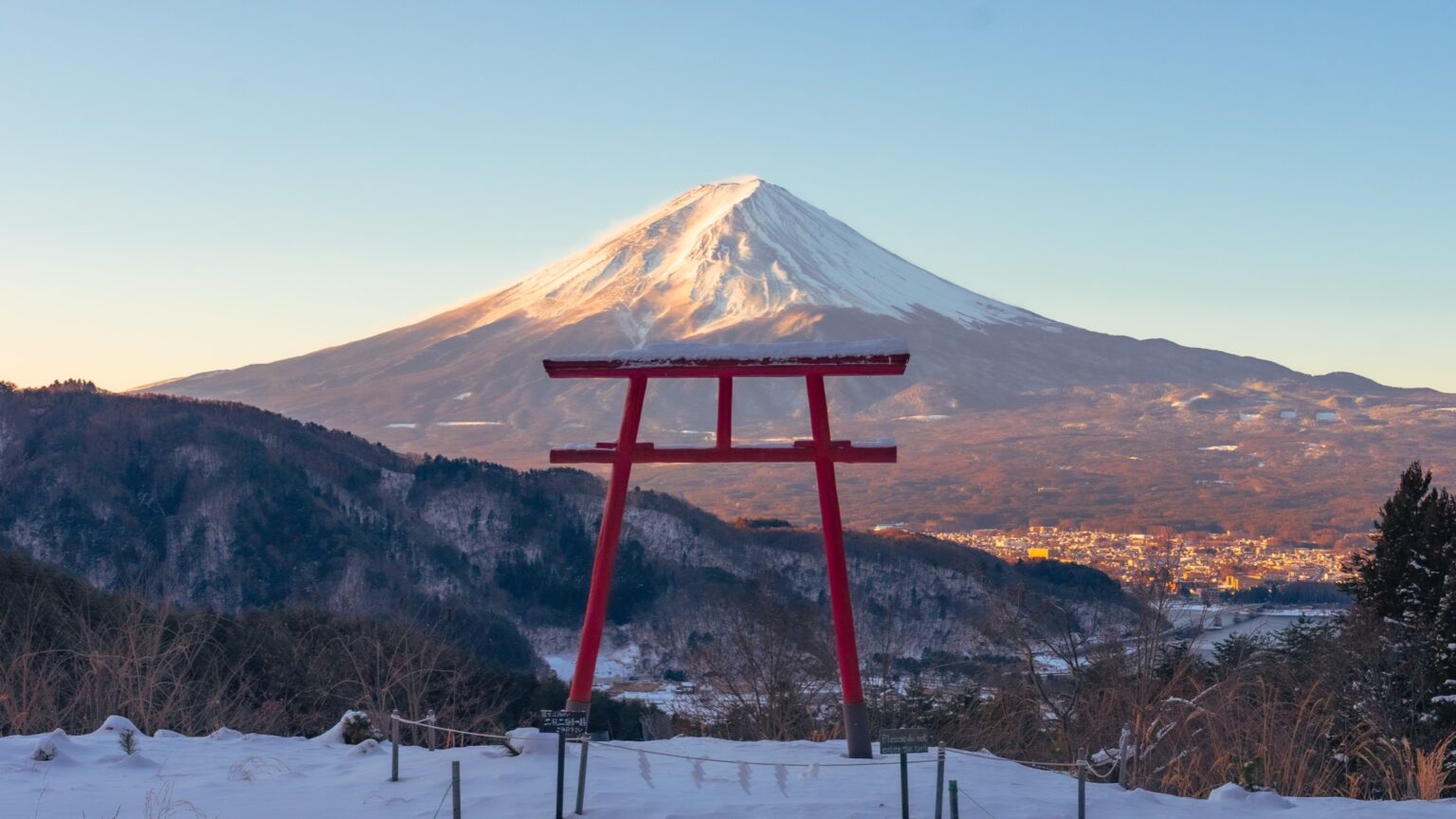
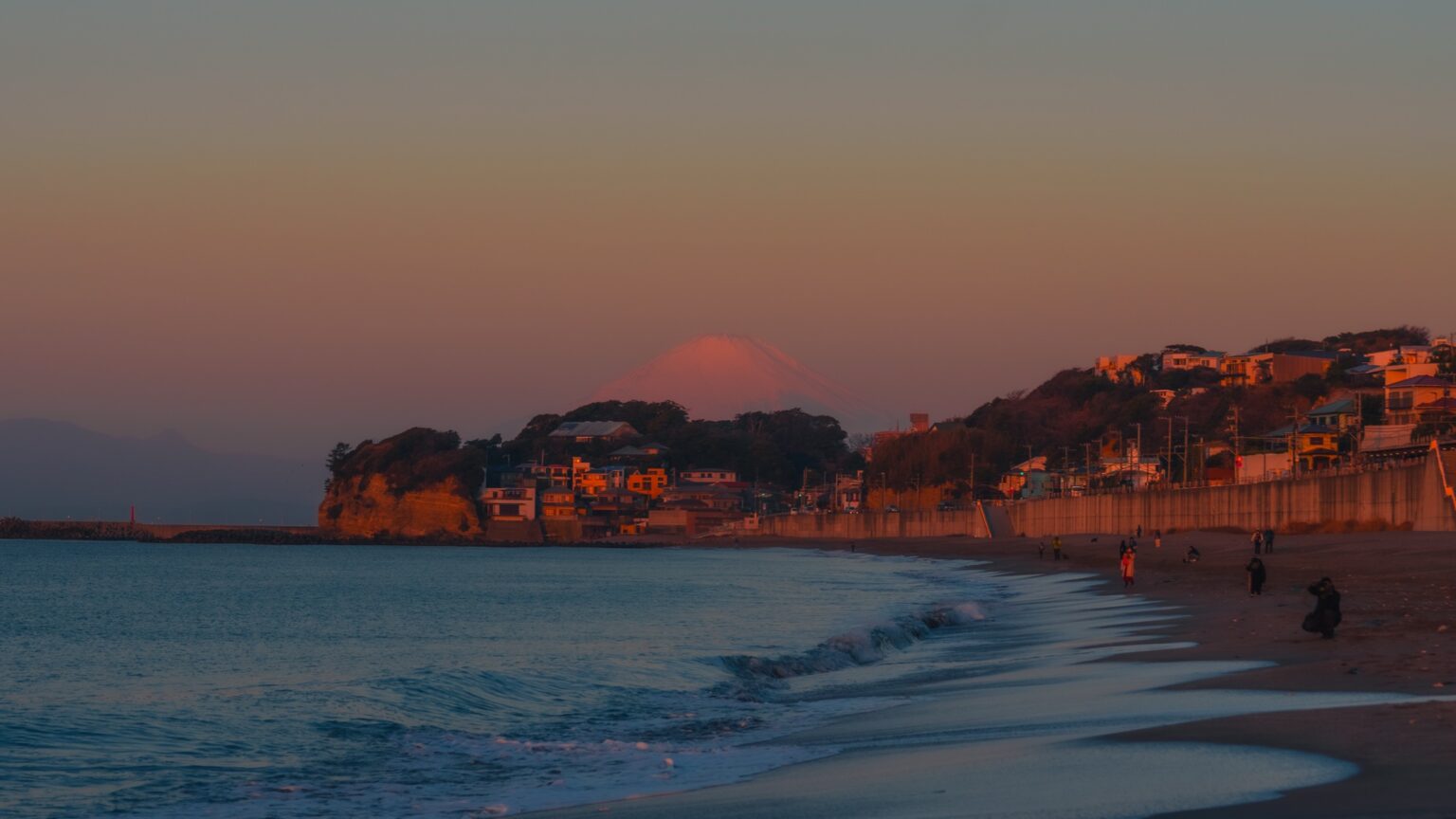
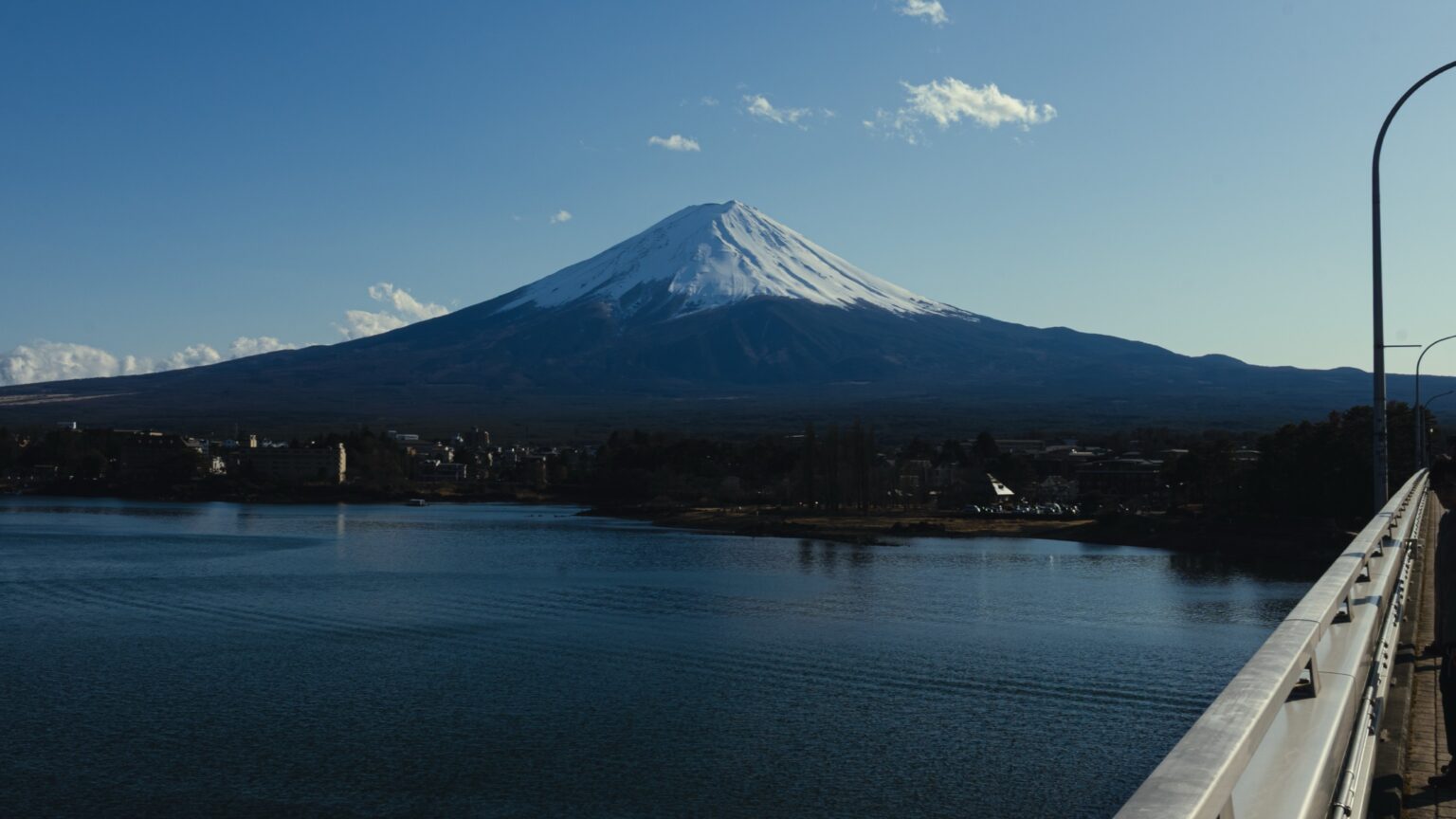
A few favourites from around the mountain — all shot by Nobu.
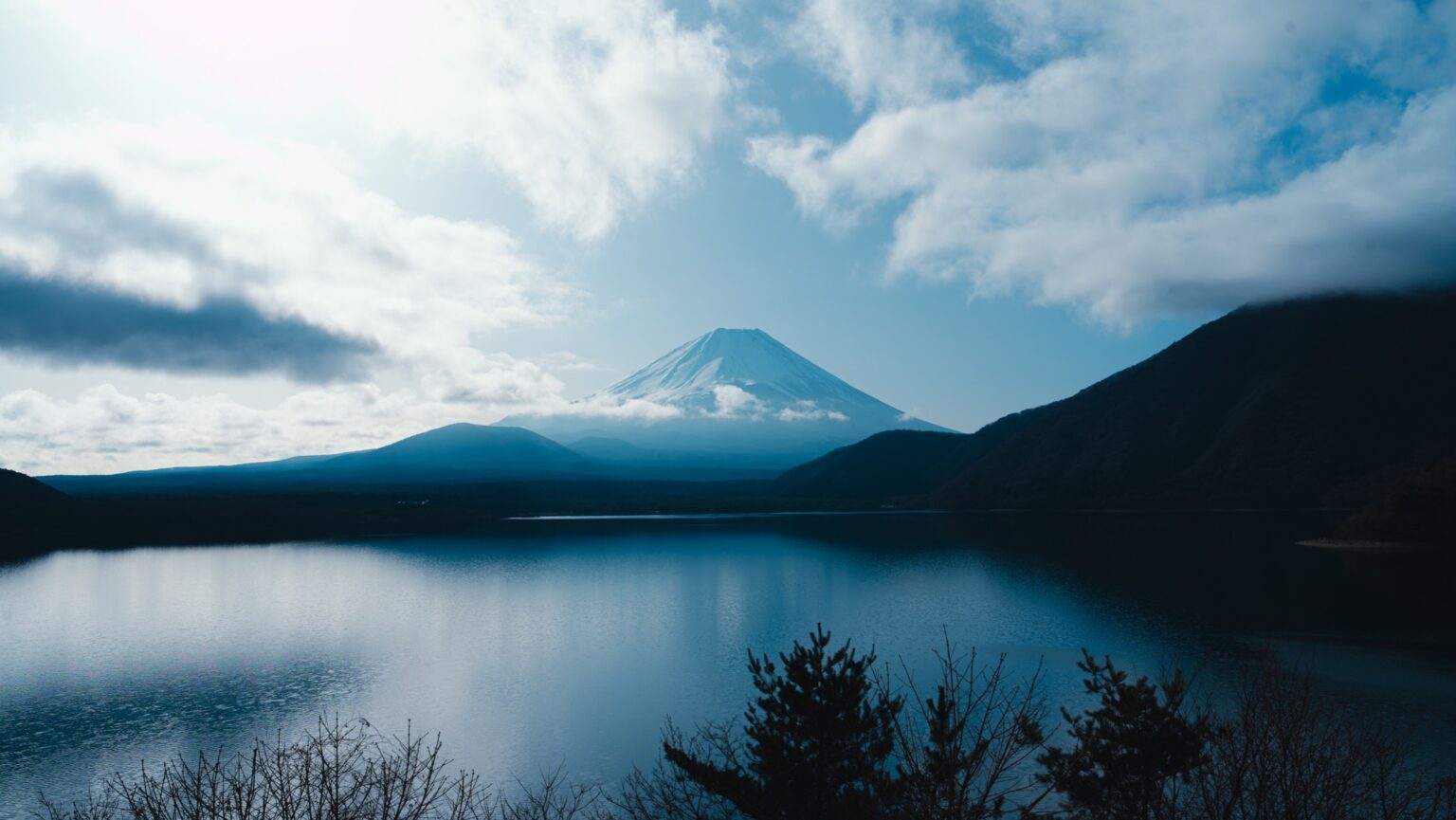
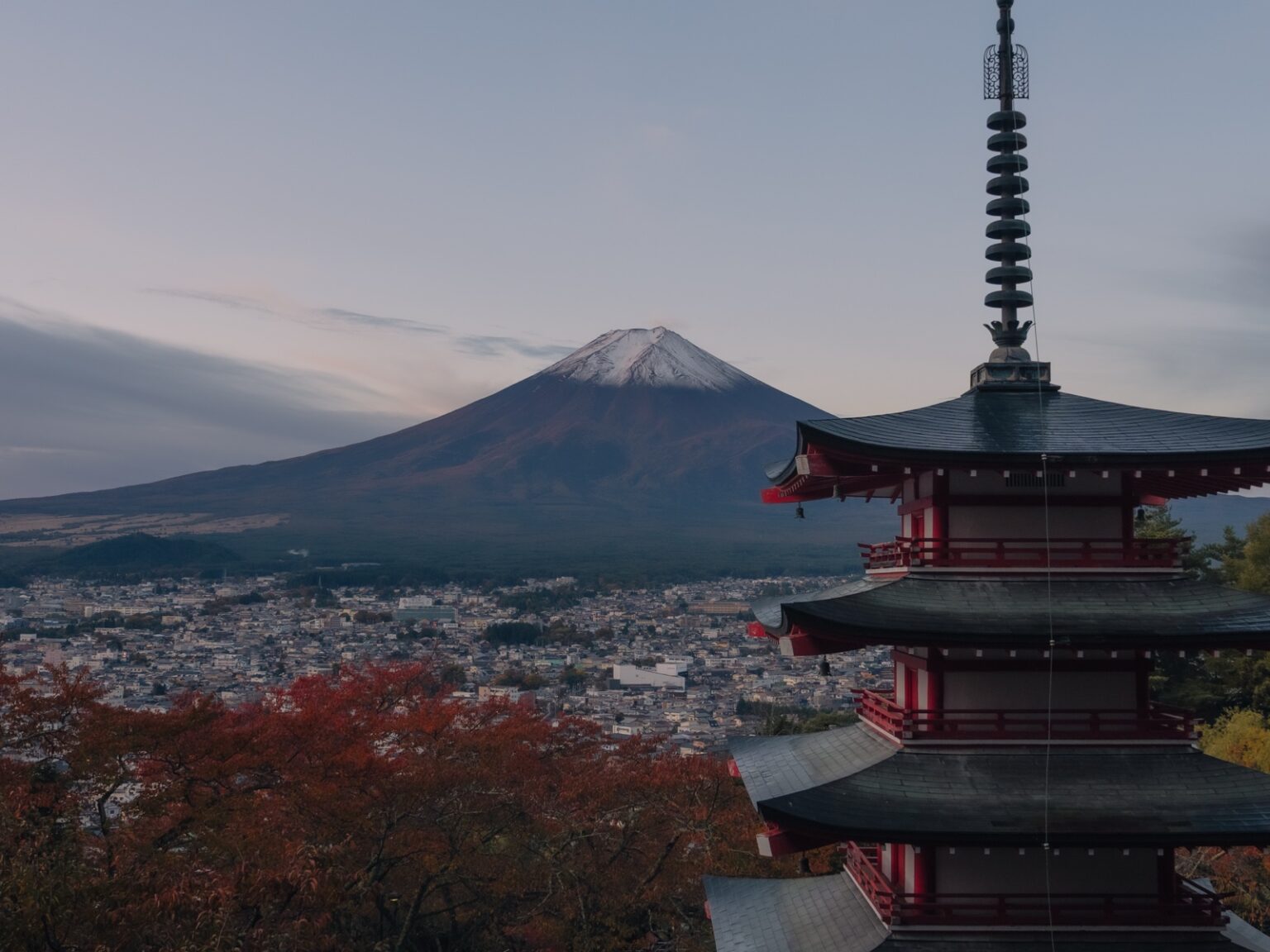
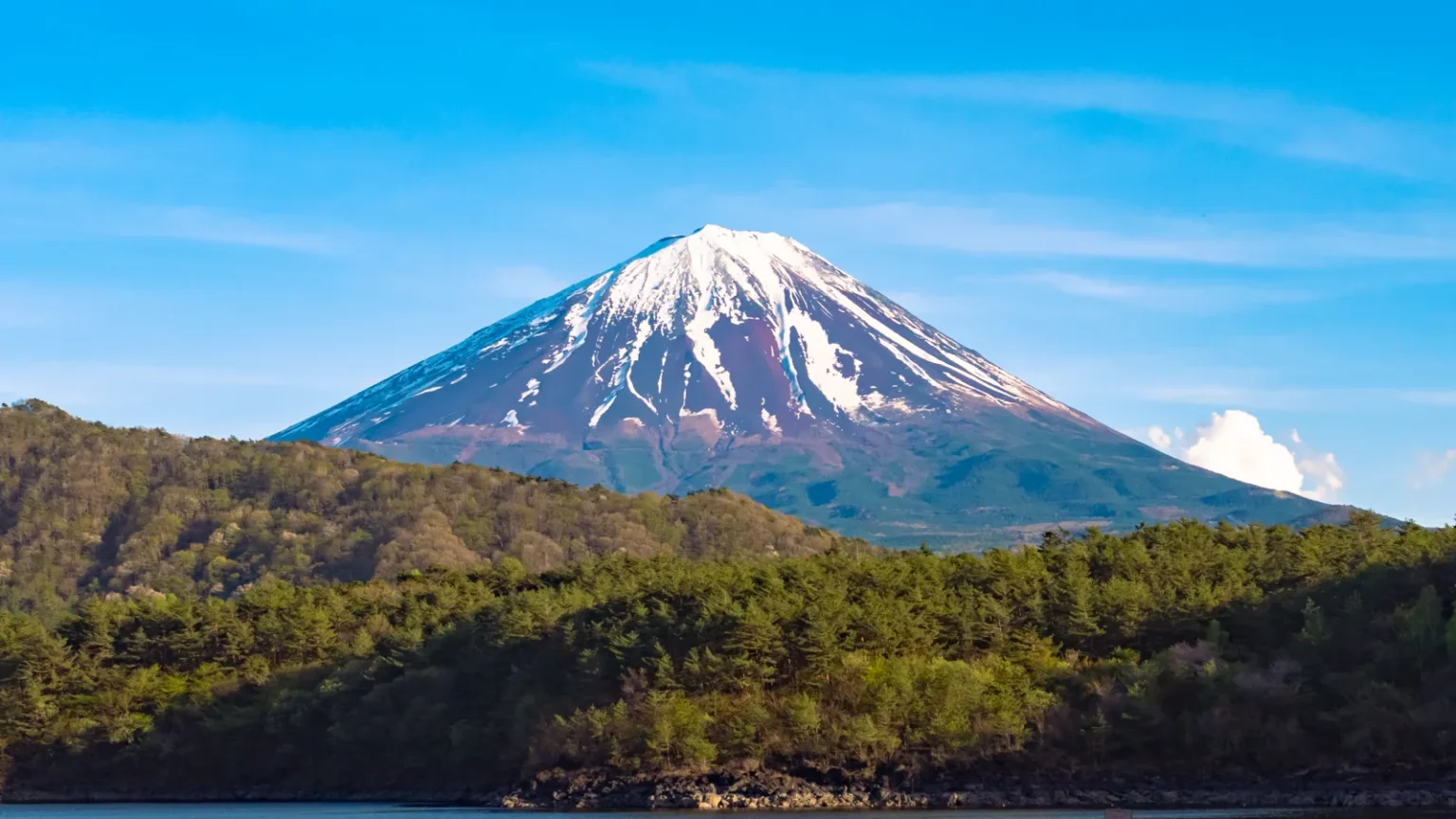
Plan your visit
When to go, how to get there, what to see.
Best time to see Fuji
December–February for clear, snow-capped mornings (Fuji out on ~85% of December mornings, fully clear on ~62%). Cherry blossom mid-April. Climbing July–September only.
Month-by-month guide →From Tokyo to Mt. Fuji
Highway bus from Shinjuku (~1h45m, ¥2,200, direct) or the Fuji Excursion train. Bus is fastest and cheapest for first-timers.
Full access guide →Lakeside & ryokan
Kawaguchiko for the classic reflection view, or a hut at 3,400m if you’re climbing. Book early for cherry and autumn seasons.
Where to stay →Climbing Mt. Fuji 2026
Yoshida trail rules (the 2 PM–3 AM gate and the 4,000-a-day cap on day climbers), the ¥4,000 fee, hut reservations, and how to time the summit for sunrise.
Climbing guide →Build your day
Sample itineraries
06:45 · Shinjuku
Highway bus to Kawaguchiko
Reserve the Keio/Fujikyu bus the night before and take an early departure. ~1h45m, ¥2,200, no transfers — the simplest way in.
09:30 · Shimoyoshida
Chureito Pagoda
Four stops on the Fujikyu line from Kawaguchiko, a 10-minute walk, then ~400 steps up. The pagoda-cherry-Fuji frame is best in clear morning light.
12:30 · North shore
Lake Kawaguchiko & Oishi Park
Lunch by the lake, then the flower fields at Oishi Park with Fuji behind. Back near Kawaguchiko Station, the ropeway on the lake’s south-east shore gives the wide view.
17:30 · Back to Tokyo
Onsen, then the evening bus
Soak with a Fuji view before the ride home — or stay the night and catch the mirror-calm dawn.
Day 1 · dawn
Chureito at first light
Be on the steps before sunrise for soft alpenglow on the snow cap. Off-season dawns are calm, but in cherry season expect crowd control and long waits — the 2026 Sakura Festival was cancelled over crowding, so arrive early and come by train.
Day 1 · midday
Lake-hop west: Saiko → Motosu
Quieter lakes, dramatic reflections. Motosu is the ¥1,000-note view and the furthest from the buses.
Day 1 · night
Stay lakeside (Kawaguchiko)
So you’re in position for dawn, when lighter winds give the best chance of a clear reflection.
Day 2 · dawn → late AM
Reflection dawn, then the season’s colour
Yamanakako or Motosu for the mirror; then Shibazakura (spring) or Oishi Park kochia (autumn).
Why winter
The clearest skies of the year
Fuji City’s 35-year record has the mountain out — whole or in part — on about 85% of December mornings, and fully clear on about 62%, by then usually snow-capped. (Climbing is closed; this is a viewing trip.)
06:30 · Check first
Read the morning verdict
Open today’s forecast before you commit to the trip — winter is reliable, but not every day.
Morning
Chureito or Kawaguchiko
Snow-capped Fuji over the lake or behind the pagoda. Around Lake Yamanaka, Diamond Fuji (the sun setting on the summit) can be seen from mid-October to late February, from a different spot as the season moves.
Tip
Dress for the cold
The lakes get well below freezing at dawn. Worth it — winter mornings are the year’s clearest.
READY TO BOOK ONE?
Turn a plan above into a booking
The easy 1-day version
Skip the logistics of the first-timer plan with a guided Mt. Fuji day tour that runs the whole route from Tokyo.
Fuji day tours →Stay the night, drive the lakes
The overnight plans want a lakeside base and, ideally, a car for the dawn viewpoints most tours skip.
Kawaguchiko hotels → Compare on Trip.com → Rent a car →Stay connected all day
A Japan eSIM keeps maps, live bus times and the Fuji weather forecast in your pocket the whole trip.
Japan eSIM →WHERE TO STAY
Where to Stay
From our own under-renovation guesthouse to lake-view hotels and luxury onsen ryokan — places we’d actually book ourselves.
Kichin-yado Daruma
A traditional house we’re restoring into a small guesthouse in the Fuji Five Lakes, steps from the best Fuji viewpoints. Opening soon.
Instagram →The Kukuna
A modern resort on Lake Kawaguchi with floor-to-ceiling windows framing Mt. Fuji from your bed, plus a rooftop infinity onsen.
Agoda → Trip.com →Hoshinoya Fuji
Japan’s first proper glamping resort on Lake Kawaguchi — private cabins on a forested hillside, fire pits, and morning coffee with a Fuji view.
Trip.com →Ooike Hotel
A Fuji-view onsen ryokan on Lake Kawaguchi. I stayed in a 4th-floor annex room with its own Fuji-view bath. Standard rooms from ¥18,000/person with kaiseki, plus a free shuttle from Kawaguchiko Station.
Rakuten → Full guide →We earn a small commission at no cost to you. See all 12 hotels & ryokan →
WHERE TO EAT
Where to Eat Near Mt. Fuji
Yamanashi eats best when local — miso-thick hoto, Showa-era diners, and a retro night quarter.
Tiger Shokudo
A no-frills corner diner in Fujiyoshida serving teishoku sets and donburi.
Tiger Shokudo →Gensuke Fujiyoshida
A Showa-era diner where time has softened the edges — katsudon sets, patterned curtains, careful old hands.
Gensuke →Hoto (ほうとう)
Yamanashi’s defining dish — wide flat noodles in a thick miso and kabocha stew. Look for it at restaurants around the Fuji Five Lakes.
Shoya, Lake Yamanaka →Nishiura Quarter
Fujiyoshida’s Showa-era alley of tiny izakaya and snack bars; neon comes on as Fuji fades to silhouette.
Nishiura Quarter →Aozora Ichiba
A super-cheap open-air greengrocer on Lake Kawaguchi’s north shore — bargain fruit and veg for a self-catered stay.
Aozora Ichiba →Hakkai Tofu, Oshino
Silky oboro tofu, airy fried tofu and a Mt. Fuji-shaped block from Oshino spring water.
Hakkai Tofu →Kadoya Tofu, Oshino
The “Tofu Station” near Oshino Hakkai — warm morning tofu and flavored shiso, sesame and yuzu.
Kadoya Tofu →Pandian
A wood-fired, natural-yeast bakery on Lake Kawaguchi — dense Jomon-style hard bread and soft koji steamed buns.
Pandian →CLIMB
Climbing Mt. Fuji
In 2026 the Yoshida trail (Yamanashi) and Subashiri (Shizuoka) run July 1 – September 10 (72 days); Fujinomiya and Gotemba (Shizuoka) run July 10 – September 10 (63 days). Outside those dates the routes to the summit are closed and unserviced (only Fujinomiya’s 5th–6th Station section stays open until early November).
Complete Climbing Guide 2026
The four trails, this year’s new rules, costs, and what to pack.
Read the guide →Reserve & Pay the Permit
Walk through the English booking screen, the ¥4,000 fee, and how to book your Yoshida climb date ahead (optional in 2026: you could also pay at the 5th Station). (The Shizuoka routes need registration but have no daily cap.)
Reservation guide →Sunrise Photo Guide
Where to stand and when, so you don’t miss the first light.
Catch sunrise →Mountain Huts Guide
Rooms, meals, and the booking rules you need to know.
Plan your stay →What Two July Incidents Teach
A 2nd-station rescue and a fatality on the Fujinomiya route in one day — the lessons on pacing, planning and turning back.
Read the lessons →Winter Climbing Warning
Read this before you even think about attempting Fuji off-season.
Read the warning →Midnight Bus to the 5th Station
In summer 2026 (3 July–9 September) Fujikyu ran a late-night bus from Shinjuku straight to the Yoshida trailhead — how it worked, and who it suits if it returns.
Read the guide →GO DEEPER
Go Deeper
Detailed guides — start where you have questions.
Is Mt. Fuji Visible Today?
Thirty-five years of monthly odds, live camera links, and my daily check-in.
Visibility today →Climbing Mt. Fuji 2026
Yoshida trail rules, fees, and the 4,000-a-day cap on day climbers.
Climbing guide →Mt. Fuji Hut Reservations
How to book a hut at 3,400m, the 3D Secure trap, and dinner at altitude.
Hut booking →Diamond Fuji 2026-2027 Calendar
Where and when the setting sun aligns with the summit.
Diamond Fuji →Fujikyu Passes 2026
Which Fujikyu pass pays and which doesn’t — the ¥2,400 1-Day pass is valid for one day, not two.
Fujikyu passes →Day-Trip Onsen Near Mt. Fuji
Eleven baths around the lakes compared — Fuji views, tattoo rules, prices and closures.
Day-trip onsen →Chasing Autumn Down Mt. Fuji
Golden larch from the air, two quiet waterfalls, and the colour’s slide downhill — three dated stops.
Autumn stops →Lake Yamanaka Autumn Leaves Festival
Planned 30 Oct–15 Nov 2026, maples lit 16:30–20:30 on the quieter lake.
Festival guide →Mount Mitsutoge
The classic Fuji-view climb: open routes, the 2026 trail closure, and autumn at its foot.
Mitsutoge guide →Susono’s Metasequoia Avenue
Rust-red dawn redwoods framing Fuji inside a sports park no guide lists — a dated field report.
Metasequoia →Beni-Fuji from the First Fujikyu Train
Pink alpenglow at dawn, with a month-by-month sunrise timetable for Nov–Feb.
Beni-Fuji →Mt. Fuji from the Shinkansen
Seat E always faces Mt. Fuji — timing and photo tips.
Shinkansen seat →The Matterhorn Train
A Fujikyu local in Swiss colours — 35 years as sister railway to the line to Zermatt.
Matterhorn train →Oishi Park Flower Park
A different bloom every month on Kawaguchiko’s north shore.
Oishi Park →Hana no Miyako Koen
Yamanakako’s flower park, where sakura and tulips overlap in mid-April.
Hana no Miyako →Kawaguchiko Ohashi Bridge
A lesser-known bridge with a clean sightline to Mt. Fuji.
Ohashi Bridge →Hataori-Machi Festival 2026
Fujiyoshida’s weaving festival on 18 October 2026: textile stalls, a South Indian lunch and Mt. Fuji in view.
Festival report →Good to know
Mt. Fuji, answered
Is Mt. Fuji visible today?
Check the live visibility forecast at the top of this page. It uses Japan Meteorological Agency data to calculate a visibility score from 1–10 for both the north (Yamanashi) and south (Shizuoka) sides. Early morning gives you the best chance — clouds tend to build after 10 AM.
Can you see Mt. Fuji from Tokyo?
Yes, on clear winter days. Tokyo Tower, Shibuya Sky, and several spots along the Tama River offer views. But the mountain is 100 km away, so visibility depends heavily on air clarity. For the best views, head to the Fuji Five Lakes area (1.5–2 hours from Tokyo).
How much does it cost to climb Mt. Fuji?
The mandatory trail fee is ¥4,000 per person on all four routes (introduced in 2025). Mountain hut prices vary by hut and date; in 2026, for example, Goraikoukan charged ¥16,000 a night with dinner and breakfast. Add transport to the 5th station, food, toilet coins and any rental gear, and a typical overnight climb from Tokyo runs roughly ¥25,000–45,000 total.
Is Mt. Fuji visible in summer?
Rarely during the day. Summer humidity creates haze that obscures the mountain most afternoons. Your best chance in summer is very early morning (before 7 AM) or after a typhoon clears the air. Winter and autumn are far better for visibility.
How do I get to Mt. Fuji from Tokyo?
The simplest option is the direct highway bus from Shinjuku to Kawaguchiko Station (about 1h45, ¥2,200). By train, the direct Fuji Excursion limited express runs Shinjuku–Kawaguchiko with no transfer (~1h54, ¥4,200); or take the JR Chuo Line to Otsuki and change to the Fujikyu Railway (~2.5 hours, cheaper). By car, it’s a 90-minute drive via the Chuo Expressway.
Is there a Mt. Fuji visibility forecast for a specific date?
Yes. For a day-by-day forecast, live cameras, and the 35-year morning-visibility odds from Fuji City’s 8 a.m. record (Fuji at least partly visible on roughly 75–85% of December–February mornings, and fully visible on roughly 53–62%; July lowest at about 25%, with only about 10% fully visible), see my dedicated page: Is Mt. Fuji Visible Today? → I update it from Fujiyoshida and cross-check against Japan Meteorological Agency data.
Don’t miss a clear morning
Get the verdict in your inbox
Nobu’s morning Fuji forecast — a heads-up on the days it’s actually worth the trip. Weekly, no spam.
Connects to MailerLite · unsubscribe anytime
Before you go
Will you see it tomorrow?
I check every morning. Get the verified verdict, the live cameras, and the 7-day forecast before you make the trip.
Japan's Hidden Gems (44 by region)
Beyond Mt Fuji: explore Japan's hidden gems by region.
Tabi-no-Eki Kawaguchiko Base
A roadside food market and restaurant on Lake Kawaguchiko’s north shore — a 1 kg Fujizakura-pork katsudon and a big local market.
Asumiko Pond (Hasu-ike)
A Fuji-worship lotus pond with a hydrangea slope in Fujiyoshida — quiet, free, and off the tourist trail.
Skip the Crowds in Japan (2026)
Fuji’s headline spots get packed — here’s the calm alternative for each.