
Chiba · Sawara (Katori) · Day trip
Sawara is an Edo-period canal town in Katori, Chiba — dark-timbered merchant houses lining a stone-banked river, with flat-bottomed boats still working the water. It grew rich shipping rice and sake down to old Edo, and in 1996 it became the first district in the Kanto region to be nationally protected as an Important Preservation District for its traditional buildings. It sits close enough to Narita Airport to fill a spare half-day, and far enough off the usual routes that most foreign visitors never hear of it.
What Sawara is
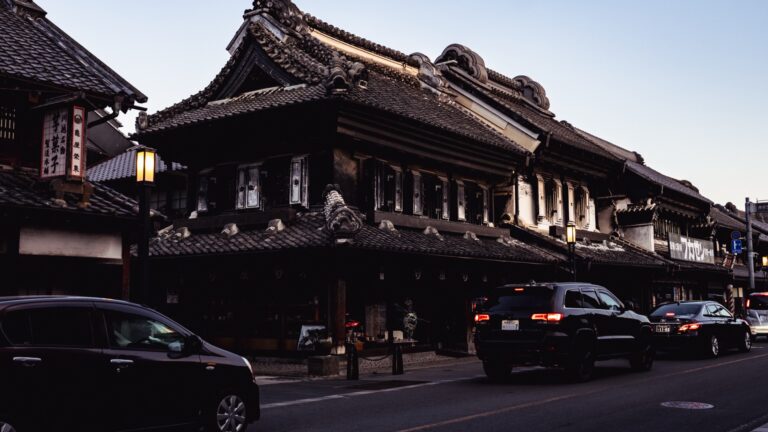
In the Edo period, before railways, the fastest way to move goods was by water. Sawara sat on the Ono River, a short link to the Tone River and on down to Edo, and it became a busy trans-shipment port for rice, sake and soy sauce from the north. The merchants who ran that trade built the shops and warehouses that still stand along the canal, and enough of them survived that the whole quarter was designated in 1996 — the first such district in Kanto.
What you get today is a working townscape rather than a museum. Many of the old buildings are still shops and restaurants run by the same families, so you can walk the same street the boats supplied two centuries ago, with shops and restaurants still trading from storehouses that date to the 1800s. It is smaller and quieter than Kawagoe, Saitama’s better-known “Little Edo”, which is part of the appeal.
The Ono River boat ride
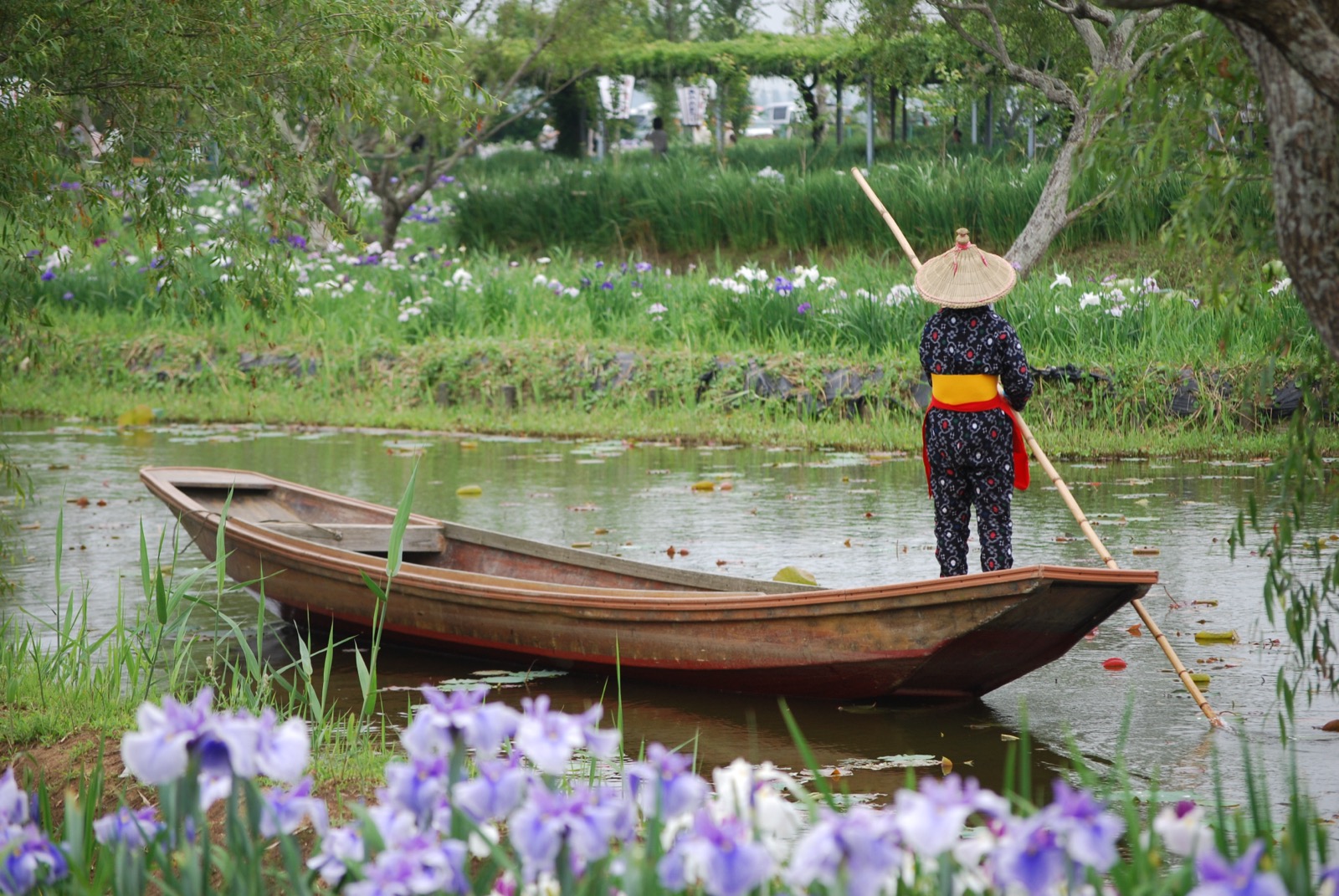
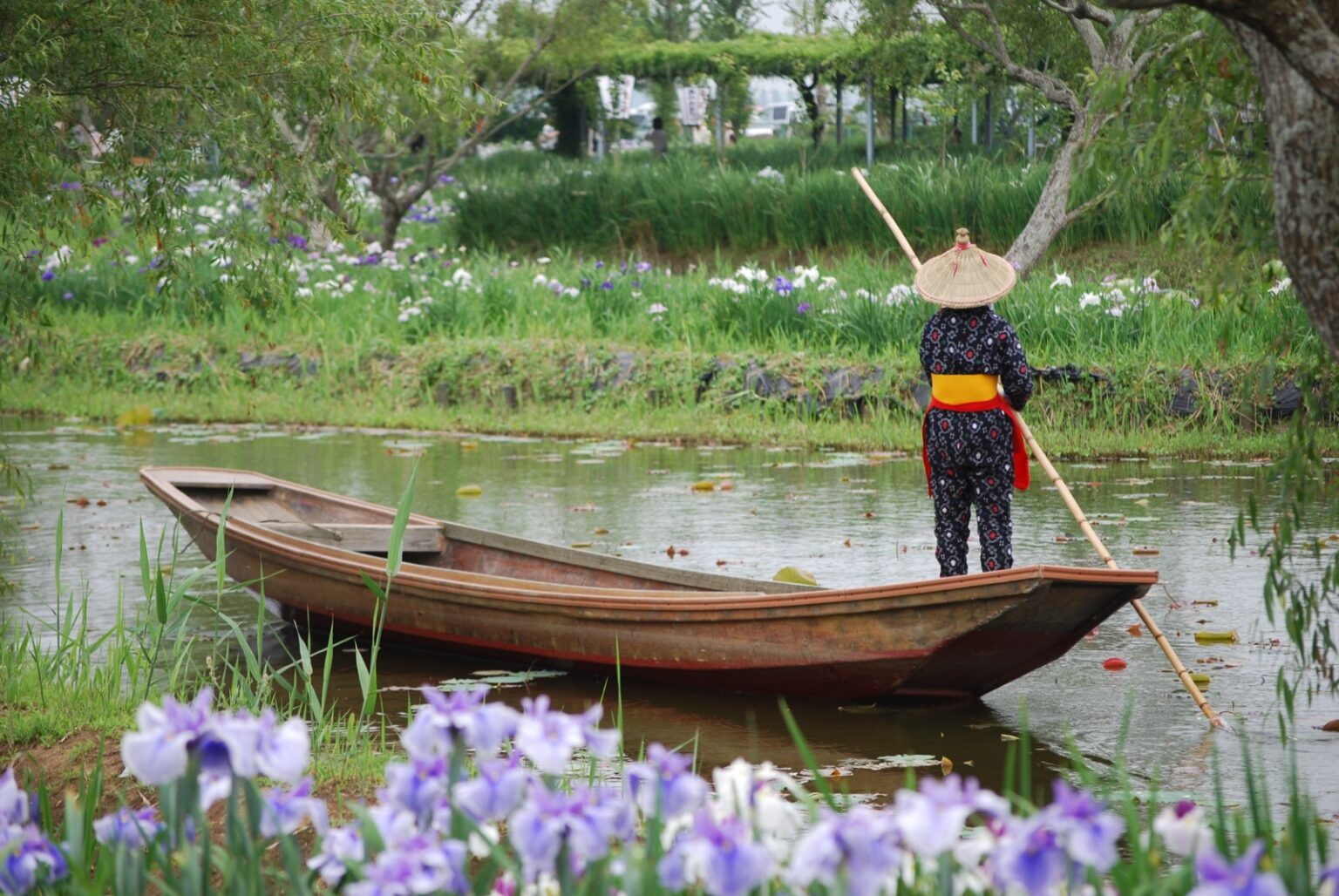
The thing most people come for is the boat. Flat-bottomed sappa-bune push off from a stone loading dock — the dashi — directly in front of Ino Tadataka’s former residence, and drift for about 30 minutes along the willow-lined canal while a boatman poles and talks you through the buildings you pass. It is slow, low to the water, and the best way to see the town from the angle it was built for.
| Detail | Information |
|---|---|
| Fare | Adults ¥1,300 · elementary-school children ¥700 |
| Duration | About 30 minutes |
| Hours | 10:00–16:30 (the finishing time shifts with the season) |
| Boarding | The dashi dock in front of Ino Tadataka’s former residence |
| Operator / phone | Burekimera — 0478-55-9380 |
| Closures | Irregular; runs are affected by high or low water, so call or check on the day |
Before you count on the boat: it is a small operation on a real river, so times move with the season and the water level, and closures are irregular rather than fixed. If the ride is the reason you are going, phone ahead the same morning, and have a walking plan ready in case the water is too high or low that day.
Ino Tadataka, the man who measured Japan
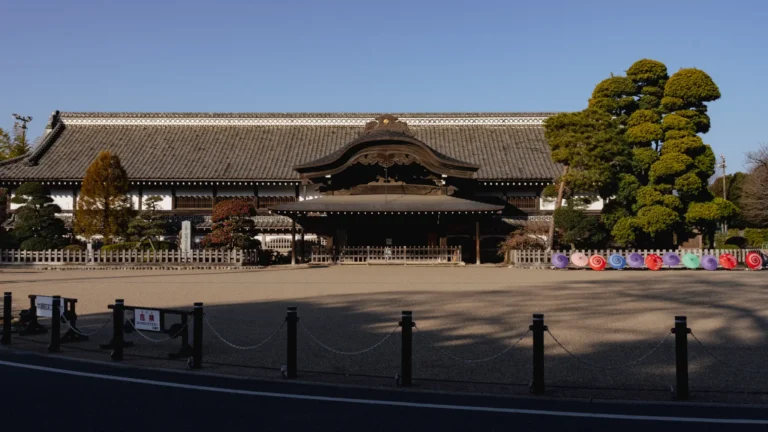
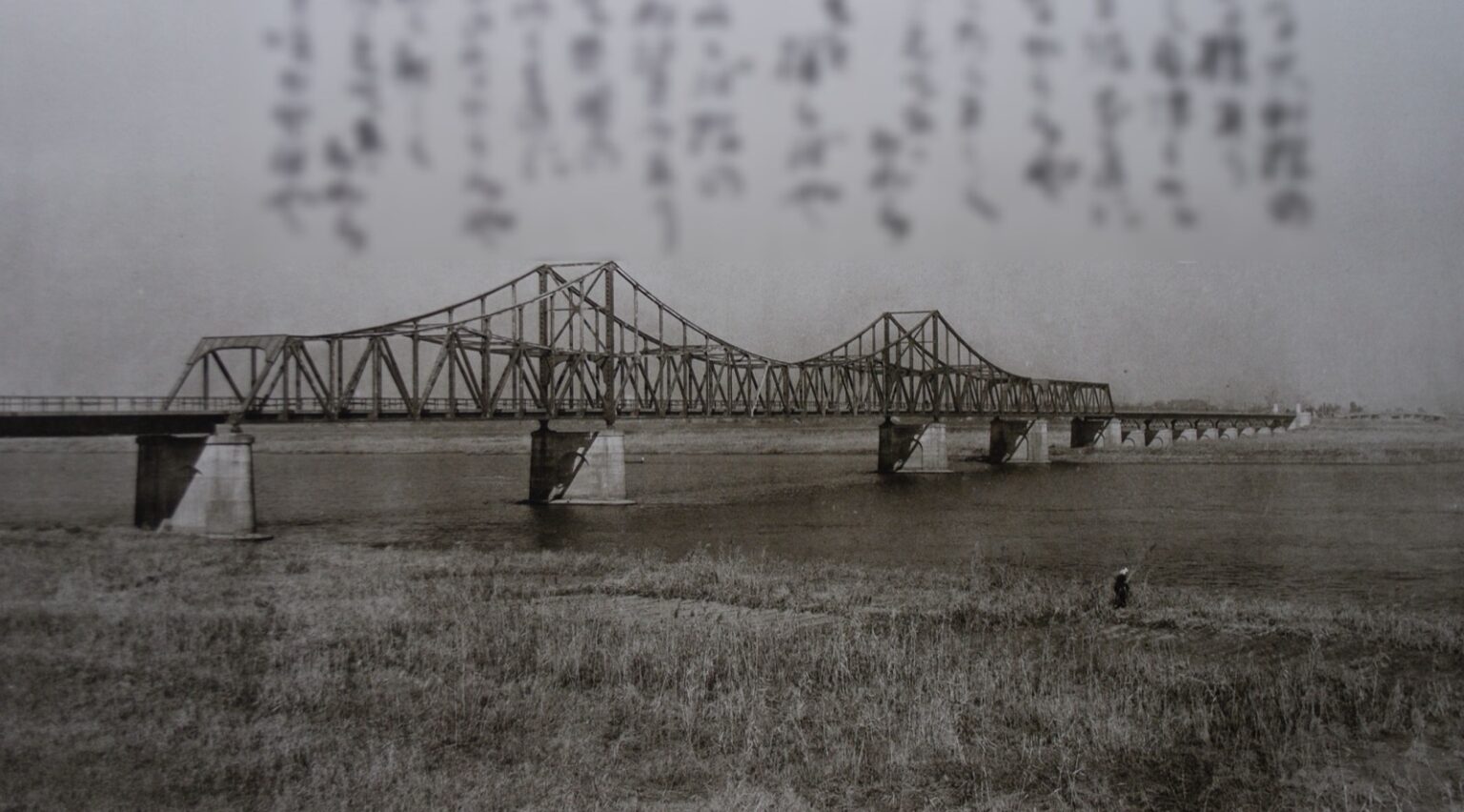
Sawara’s most famous resident is Ino Tadataka (1745–1818), a sake and rice merchant who, after retiring from the family business, spent seventeen years walking the coasts of Japan and produced the first survey-accurate map of the whole country. His former residence, right by the boat dock, is a nationally designated Historic Site; the study room inside was laid out to his own design in 1793. Across the river, the Ino Tadataka Museum holds his instruments and some of the maps themselves. If you have any interest in how Japan was first drawn, it is worth the entry — check the museum’s current hours and fee before you go.
Walking the old town
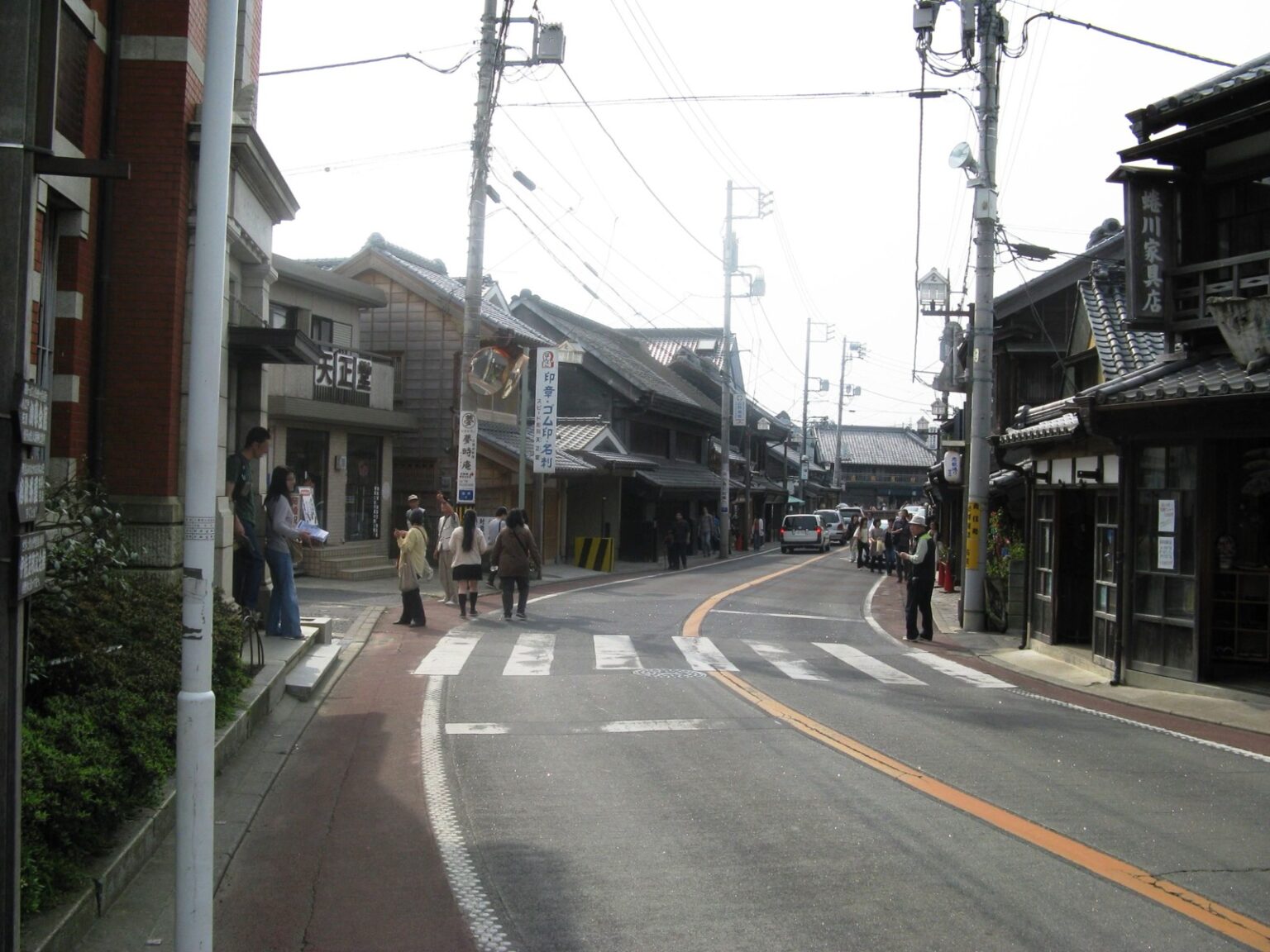
Beyond the canal, the pleasure of Sawara is simply the streets: rows of kura storehouses and merchant shopfronts in dark timber and white plaster, most still trading. Look for the Mitsubishi Building, a Western-style brick structure from 1914 that began as a bank branch and now serves as a gallery, and the older wooden houses along Katori Kaido that carry dates from the 1850s onward. It is a compact grid, easy to cover on foot, and at its best in the low morning light before the day-trip crowds build.
The Sawara Grand Festival
Twice a year the town fills with towering wooden floats topped by giant figures, pulled through the narrow streets to the sound of Sawara-bayashi music. The Sawara Grand Festival is part of the group of Japanese float festivals inscribed on UNESCO’s Intangible Cultural Heritage list. There is a summer festival tied to Yasaka Shrine (around July) on the east side of the river, and an autumn one tied to Suwa Shrine (around October) on the west — the exact dates move each year, so confirm them before planning a visit around the crowds. Festival days are spectacular but busy, and boat and traffic arrangements can change, which is worth knowing either way.
Getting there, and fitting it in
Sawara Station sits on the JR Narita Line, and the preservation district is about a 15-minute walk south from the station. Because that line runs through Narita, Sawara works unusually well as a layover: if you have a long connection or a spare morning at the start or end of a trip, it is one of the few genuinely old townscapes you can reach without doubling back into Tokyo. From central Tokyo it is roughly 1.5 hours by train (via the Narita Line) or by highway bus — still an easy day out. Trains on the Narita Line are not frequent, so check the return times before you settle into a canal-side lunch.
Nearby, and where to eat: Sawara pairs naturally with Katori Jingu, one of Japan’s oldest and most important shrines, a few kilometres south — easy to add with a car or a short taxi. In town, the old street is known for grilled eel and for sake, with a couple of the storehouses still working as breweries that offer tastings. Opening days vary, so confirm before planning a meal around a particular shop.
Staying near Sawara or Narita
Many people see Sawara on a Narita layover and sleep near the airport; others make a night of it in one of the town’s converted-machiya stays to have the streets to themselves after the day-trippers leave. Booking and Agoda have the widest spread of Narita and Katori hotels, and Rakuten Travel is the one to check for Japanese-run inns and the machiya conversions.
More ways to set up the trip: browse machiya stays and inns on Rakuten Travel · Narita-area day tours and activities on Klook · and a Japan eSIM keeps the boat operator’s number, maps and return-train times in your pocket.
Good to know
Is Sawara worth a visit?
Yes, if you like old townscapes and are near Narita or looking for a quiet day out of Tokyo. It is a small, working Edo-era canal quarter rather than a big attraction — the appeal is the boat, the storehouses and the calm, not a long list of sights. Give it a half-day.
How much is the boat ride and can I just turn up?
The Ono River boat ride is ¥1,300 for adults and ¥700 for elementary-school children, and takes about 30 minutes, running roughly 10:00–16:30 with the finish time shifting by season. You board at the dashi dock in front of Ino Tadataka’s former residence. Closures are irregular and depend on the water level, so it is safest to call the operator (0478-55-9380) the morning you plan to go.
How is Sawara different from Kawagoe?
Both are called “Little Edo”, but Kawagoe (in Saitama) is larger, busier and built around a warehouse street and a bell tower, while Sawara (in Chiba) is smaller and built around a canal, with boats instead of crowds. If you have seen Kawagoe and want the quieter version, Sawara is it.
Can I visit Sawara on a Narita layover?
It is one of the better layover options. Sawara Station is on the JR Narita Line, the same line that serves Narita, and the old town is about 15 minutes’ walk from the station. Trains are not frequent, so build in a buffer and check the return time before you go.
When is the Sawara Grand Festival?
There are two: a summer festival around July (Yasaka Shrine, east side) and an autumn festival around October (Suwa Shrine, west side). The dates change each year, so confirm them on the town’s official information before planning around them. Both are UNESCO-listed float festivals and draw large crowds.
Kurazukuri Street, Kawagoe
Saitama’s louder “Little Edo” — the warehouse street, building by building.
Kawagoe Day-Trip Guide
The full Little Edo day if you want to compare the two.
Narai-juku
A preserved Edo post town in the Kiso valley, walked end to end.
Beyond the Golden Route
Where Sawara fits into a wider off-the-track trip.
Join travelers discovering Japan's hidden side
Weekly dispatches from off-the-beaten-path Japan — spots and stories you won't find in guidebooks.
No spam. Unsubscribe anytime.
Welcome aboard!
You're in. See you in your inbox soon.