Live Status Board · Spring
No 2027 cherry blossom forecast exists yet — the first private-sector forecast typically lands in mid-December, and the rest follow through January, revised every one to two weeks until the petals fall. Until then, this board runs on the only data that exists yet: the Japan Meteorological Agency’s 30-year averages, city by city. When the 2027 forecasts land, each row switches over, and once the season starts the Fuji row carries my own reports from Fujiyoshida.
Coming in autumn instead? Follow the colour on the Japan fall foliage (koyo) tracker.
Sakura status board
Sakura timing across Japan - tracked cities
Rebuilt JST · colours from typical windows
These colours are typical-year timing, not live conditions, except on rows carrying a dated forecast or report. Colour locates tracked cities by prefecture - it does not describe the whole prefecture. Where several tracked cities share one prefecture, the most advanced status wins the colour; an overridden row takes the colour of the status it reports. Grey prefectures are not tracked on this board. The table below is the source of truth.
| Region / Spot | Status |
|---|---|
| Fukuoka
JMA average | SEASON OVER · NEXT 2027
Typical window: Mar 22 – Apr 7 (30-yr pattern; 2027 forecasts pending) |
| Tokyo
JMA average | SEASON OVER · NEXT 2027
Typical window: Mar 24 – Apr 7 (30-yr pattern; 2027 forecasts pending) |
| Nagoya
JMA average | SEASON OVER · NEXT 2027
Typical window: Mar 24 – Apr 9 (30-yr pattern; 2027 forecasts pending) |
| Kyoto
JMA average | SEASON OVER · NEXT 2027
Typical window: Mar 26 – Apr 11 (30-yr pattern; 2027 forecasts pending) |
| Osaka
JMA average | SEASON OVER · NEXT 2027
Typical window: Mar 27 – Apr 11 (30-yr pattern; 2027 forecasts pending) |
| Kanazawa
JMA average | SEASON OVER · NEXT 2027
Typical window: Apr 3 – Apr 15 (30-yr pattern; 2027 forecasts pending) |
| Fuji Five Lakes / Chureito
Runs ~10 days behind Tokyo; ~650 trees at Arakurayama | SEASON OVER · NEXT 2027
Typical window: Apr 5 – Apr 20 (30-yr pattern; 2027 forecasts pending) |
| Sendai
JMA average | SEASON OVER · NEXT 2027
Typical window: Apr 8 – Apr 20 (30-yr pattern; 2027 forecasts pending) |
| Aomori / Hirosaki
JMA average | SEASON OVER · NEXT 2027
Typical window: Apr 22 – May 3 (30-yr pattern; 2027 forecasts pending) |
| Sapporo
JMA average | SEASON OVER · NEXT 2027
Typical window: May 1 – May 13 (30-yr pattern; 2027 forecasts pending) |
When the 2027 forecasts will actually arrive
Four organizations publish the forecasts everyone quotes. None has released a 2027 call yet — here is when each one showed up for the 2026 season, which is the best guide to when to check back. One thing worth knowing: the Japan Meteorological Agency itself stopped issuing sakura forecasts after the 2009 season. The JMA observes and records opening and full bloom; the forecasting is all private-sector.
| Forecaster | First 2026-season release (actual) | 2027 status |
|---|---|---|
| Japan Meteorological Corporation (JMC) | December 18, 2025 | NOT RELEASED — expect mid-December 2026 |
| Weathernews | January 8, 2026 | NOT RELEASED — expect early January 2027 |
| Weathermap (sakura.weathermap.jp) | January 22, 2026 | NOT RELEASED — expect late January 2027 |
| Japan Weather Association (tenki.jp) | January 29, 2026 | NOT RELEASED — expect late January 2027 |
This board switches from averages to forecast data as each release lands, labeled by source. If you only check back once, mid-January is the sweet spot — by then at least two independent calls exist.
Kaika to mankai: how fast the season moves
Japanese forecasts track two dates: kaika (first blossoms open on the reference tree) and mankai (full bloom). The gap between them is not the same everywhere — it stretches in the warm south and compresses in the north:
| City | Average kaika → mankai | What that means for you |
|---|---|---|
| Fukuoka | ~9 days | Slow build — arriving at kaika still works |
| Kyoto | ~9 days | Same slow build as Kyushu |
| Osaka | ~8 days | Splits the difference |
| Tokyo | ~7 days | One week from first petals to full canopy |
| Sendai | ~5 days | Fast — don’t dawdle after the kaika news |
| Sapporo | ~5 days | Fastest; spring arrives all at once up north |
After mankai, the viewing window runs about a week — longer if it stays cool and still, days shorter if rain or wind moves in. So the practical formula is: kaika date + roughly one week = full bloom; full bloom + roughly one week = petals coming down in earnest. If you hear about kaika in Tokyo while you’re still at home, Tokyo has roughly two weeks of season left. The Fuji Five Lakes run about ten days behind Tokyo, so my area becomes the backup as the city peak fades.
Forecasters also lean on two rules of thumb you’ll see quoted: the 400°C rule (blossoms open when Tokyo’s cumulative daily average temperatures from February 1 reach 400°C) and the 600°C rule (same idea with daily maximum temperatures). They’re Tokyo-calibrated heuristics, not physics — but they’re why a warm February moves every forecast earlier within weeks.
Dates already booked? Find your row
| Your dates | Where the season will be (typical year) | One-line reason |
|---|---|---|
| Mid-February | Kawazu (Izu Peninsula) | Early-blooming Kawazu-zakura runs a month ahead of Tokyo |
| Late March | Tokyo, Fukuoka, Nagoya | Average kaika Mar 22–24, full bloom around Mar 31 |
| First week of April | Kyoto, Osaka, Kanazawa | Kansai full bloom averages Apr 4; Kanazawa opens Apr 3 |
| Second week of April | Fuji Five Lakes, Sendai | Chureito’s ~650 trees peak around Apr 12; Sendai Apr 13 |
| Late April | Aomori / Hirosaki | Hirosaki Castle’s moats peak around Apr 26 |
| Golden Week (early May) | Sapporo, Hakodate | Sapporo full bloom averages May 6, Hakodate a few days earlier — the season’s last act |
The six bases I’d actually book
The board above tracks ten cities; you don’t need ten hotels. These are the six bases that cover every version of a 2027 sakura trip, each with the one reason it earns its spot.
Tokyo — the reference clock
Typical window: Mar 24 – Apr 7 · Best for: first-timers, flexible day trips
Tokyo’s reference tree is the benchmark everyone watches first, so basing here keeps you closest to the fastest-moving sakura news. When the peak passes, Ueno’s crowds thin but the quiet corners I like keep going — start with Inokashira Park.
Kyoto — the slow build
Typical window: Mar 26 – Apr 11 · Best for: temples + canals at full bloom
Kyoto’s nine-day kaika-to-mankai build is one of the country’s more forgiving windows — even a rough guess at dates usually catches something. Skip the Philosopher’s Path crush and try the Yodo Suiro waterway, which most visitors never find.
Fuji Five Lakes — the insurance policy
Typical window: Apr 5 – 20 · Best for: Fuji-and-sakura photos, missed-Tokyo recovery
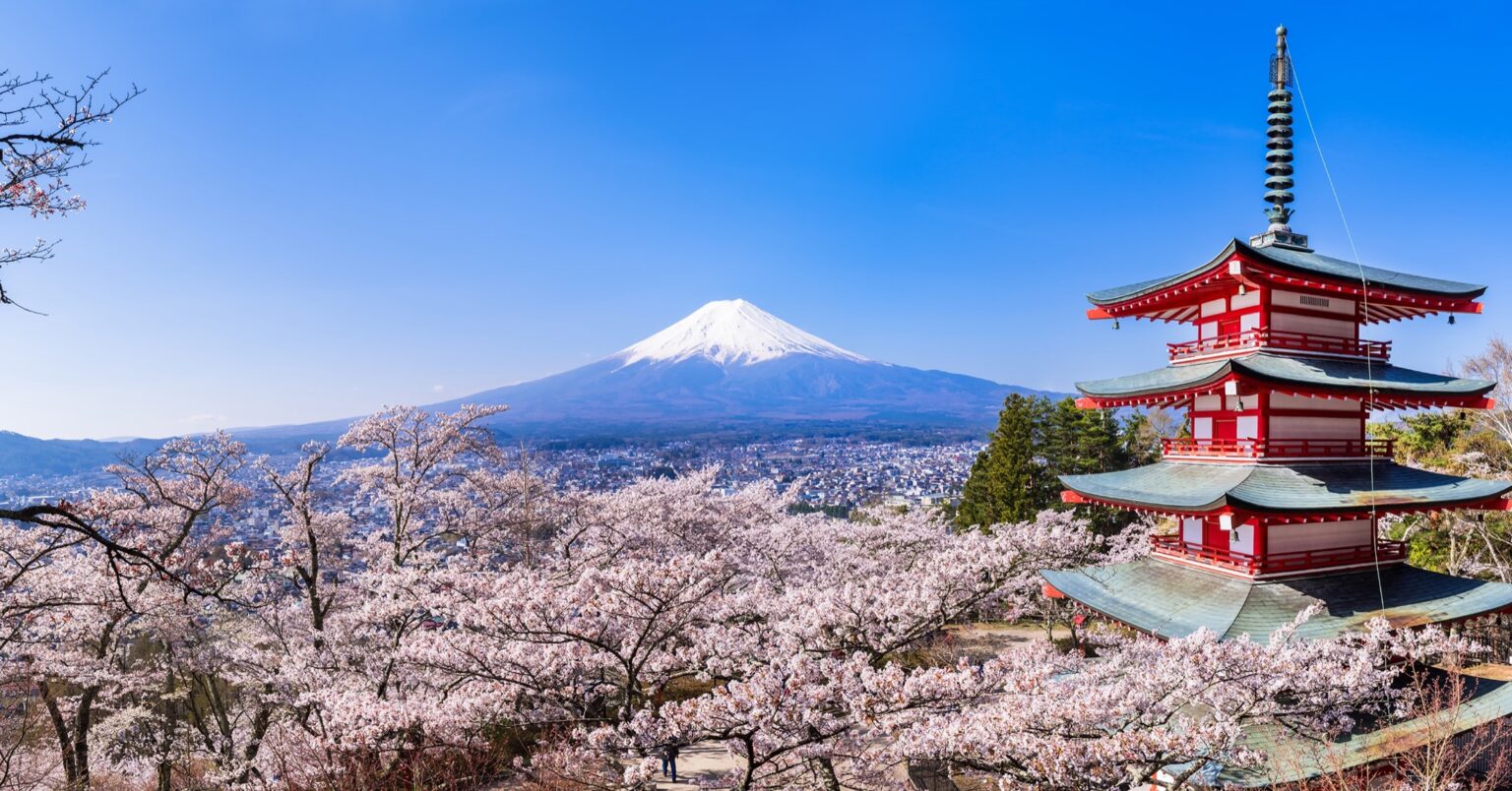
I live in Fujiyoshida, and my area runs about ten days behind Tokyo: when Shinjuku’s petals fall, Chureito Pagoda is just opening. I update the board’s Fuji row from the ground through the season — here’s exactly where I shoot. Rooms: Lake Kawaguchiko stays.
Kawazu — the February head start
Typical window: mid-Feb – early Mar · Best for: winter trips that still want sakura
About 850 early-blooming Kawazu-zakura line the river here — roughly 8,000 across the town in all — a month before Tokyo moves. The 2026 festival ran February 7 – March 8; 2027 dates land on this page once announced. Full logistics in the Kawazu festival guide.
Hirosaki — the late-April northern peak
Typical window: Apr 22 – May 3 · Best for: castle moats, petal rafts, fewer tourists
Hirosaki Castle’s moats turn pink with floating petals right as Honshu’s season ends — the famous hanaikada. It’s the best sakura most April visitors never consider, and hotel pressure is a fraction of Kyoto’s. Pair it with the forecast guide’s northern strategy.
Sapporo — the Golden Week finale
Typical window: May 1 – 13 · Best for: May visitors, plum-and-cherry double bloom
Hokkaido compresses spring: plum and cherry bloom almost together, five days from kaika to mankai, and Maruyama Park fills with barbecue smoke — hanami, northern style. If your only window is Golden Week, this is your row on the board.
Official 2027 dates, as they land
Festival organizers publish dates months ahead; forecast-dependent events stay TBA until winter. This table only ever contains officially announced dates or clearly labeled previous-season references — never guesses.
| Event | 2026 season (reference) | 2027 status |
|---|---|---|
| Kawazu-zakura Festival (Shizuoka) | Feb 7 – Mar 8, 2026 (36th) | NOT ANNOUNCED |
| Naha kanhizakura (Okinawa) — Japan’s first blossoms | JMA average first bloom: Jan 16 | Climate average only — not a 2027 forecast |
Also worth timing: the Matsuda Sakura Festival’s Fuji-view slopes in Kanagawa — details in our Matsuda festival guide.
How to plan before the forecasts exist
The planning sequence that works: pick your target window from the averages above, book refundable accommodation early — late March in Tokyo and Kyoto is one of the hardest hotel windows of the Japanese year — then fine-tune with the December-to-March forecast revisions. The full method is in our sakura forecast guide, and the deeper planning logic in the spring planning guide.
Hotel reality: sakura-week rooms in Tokyo and Kyoto move 3-6 months ahead at peak prices. Compare Booking.com, Agoda or Trip.com and hold one refundable room in your anchor city — not several — with the cancellation deadline saved to your calendar.
Want this as a personal checklist? Pick your travel month on the Booking Dates page – it saves on your device and shows the one reversible step for your month.
FAQ
When will the first 2027 cherry blossom forecast be published?
Based on 2026-season actual release dates: the Japan Meteorological Corporation published first (December 18, 2025), followed by Weathernews (January 8), Weathermap (January 22) and the Japan Weather Association (January 29). Expect the same rhythm for 2027 — first call mid-December 2026, everyone on the board by late January 2027. This page switches from averages to forecast data as each release lands.
Do Tokyo or Kyoto cherry blossoms bloom first?
Tokyo, by about two days on average (kaika March 24 vs March 26) — but Kyoto reaches full bloom later (April 4 vs March 31) because its build is slower. The practical route order for catching both at peak in a typical year: Tokyo first, then Kyoto.
How accurate are the 30-year averages for planning?
They are the statistical center: individual years land within about a week either side in most cases. Treat the last week of March into the first week of April as the Tokyo-Kyoto-Osaka bullseye, and hold flexibility until the forecasts narrow it.
Should I wait for the forecast before booking anything?
No — refundable accommodation for the statistical window should be locked before the forecasts exist, because the best refundable rooms in the main sakura window often move before the first forecast is published. What you should wait on: non-refundable commitments and day-by-day itineraries.
I can only travel in mid-April. Am I too late for 2027 sakura?
Not at all — you’re perfectly timed for the second wave: the Fuji Five Lakes (typical peak around April 12, with Mt. Fuji behind the blossoms), Sendai (April 13) and Kanazawa’s tail end. Late April gets you Hirosaki’s castle moats, and Golden Week still catches Sapporo.
How big is the gap between Kawazu-zakura and the main sakura season?
About a month. Kawazu-zakura is a different, early-blooming variety that peaks in late February on the Izu Peninsula (the 2026 festival ran February 7 to March 8), while Tokyo’s somei-yoshino averages March 24 for first bloom. They’re also deeper pink — don’t expect the pale somei-yoshino look.
Can full bloom really end within days?
Yes. The average viewing window after mankai is about a week, but one strong rain-and-wind front can strip trees in two or three days — and unseasonably warm weather shortens it too. Cool, still weather stretches it beyond a week. That’s why this board keeps updating after full bloom, not just before it.
What if my dates miss the peak?
Chase the front. Arriving before the main bloom: look south, or to early varieties like Kawazu-zakura (February). Arriving after: move north or higher — the Fuji Five Lakes run about ten days behind Tokyo, then Sendai, Hirosaki in late April, and Hokkaido into Golden Week.
What data does this board use?
Out of season: JMA 1991–2020 station averages. From December–January: the current forecasts, labeled by source. From March: observation-based statuses, with the Fuji Five Lakes row verified first-hand from Fujiyoshida. Every overridden row carries its verification date.
Sources
Japan Meteorological Agency sakura opening and full-bloom station records (1991–2020 averages) and the JMA’s December 2009 announcement ending its own forecasts; 2026-season first-release dates from the Japan Meteorological Corporation, Weathernews, Weathermap and the Japan Weather Association; kaika-to-mankai intervals from Tokyo District Meteorological Observatory and JMA station data; 400°C/600°C rules as described by Weathernews and tenki.jp; Kawazu-zakura Festival official site (2026 dates); Okinawa kanhizakura from JMA Naha records; Fujiyoshida City official sakura data for the Arakurayama/Chureito area. 2027 forecast data will be added per release, each labeled with source and date.