
Monthly Guide · Autumn
November is the month Japan’s autumn actually delivers: typhoon season has wound down, Tokyo runs a dry, crisp 17°C by day, and the colour front completes its two-month descent from the mountains into Kyoto’s temple gardens. It is also a month where one date does most of the crowd damage: the November 21–23 holiday weekend lands inside Kyoto’s typical peak. (For the city itself — the 2026 booking requirements, the price changes and the transport that actually works — see our Kyoto in November 2026 guide, and for the mountains north of the city, Kifune and Kurama.) This calendar maps the month day by day — confirmed dates, typical colour windows, and the weeks where booking early matters most. November follows October, when the colour is still in the mountains, and it sits inside the wider picture in our month-by-month comparison.
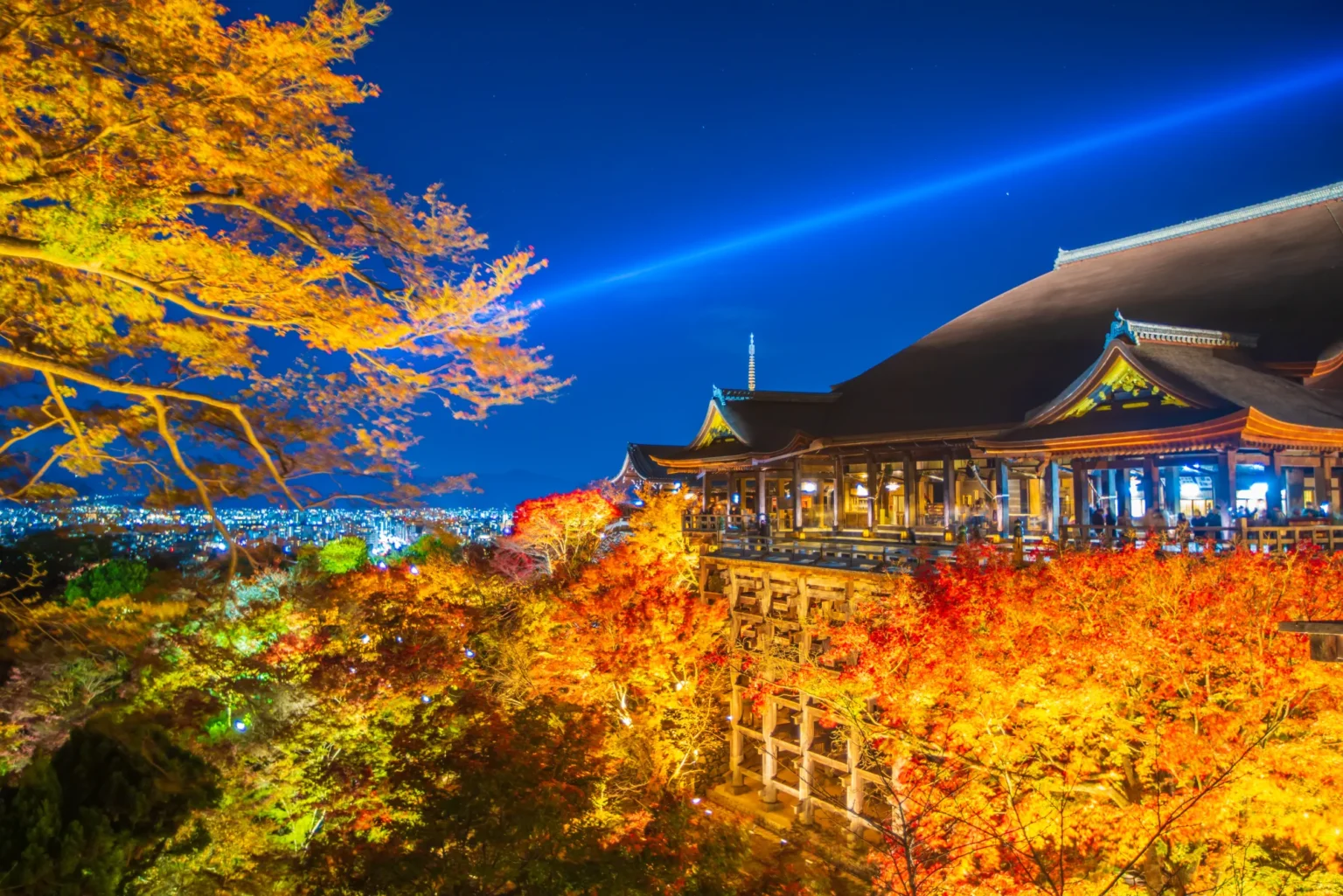
If you would rather have the after-dark maples organised for you, Klook runs an Arashiyama night-maple day tour built around the illumination season — one booking instead of four temple queues.
November 2026 at a glance: the calendar
Rule-based recurring dates are labelled as such; colour windows are typical patterns, not fixed dates.
Reading the calendar: solid entries are confirmed 2026 announcements; “rule-based” marks recurring events whose 2026 details were unannounced at review; colour windows are typical-year patterns, not fixed dates – the live tracker carries the current state. Region codes: KNT=Kanto · KNS=Kansai · CHB=Chubu · CGK=Chugoku · KYS=Kyushu.
Running for much of the month: Korankei’s momiji festival (1–30 November in 2026; the light-up, buses and parking are in our Korankei guide), Nabana no Sato’s illumination (2026 season confirmed through spring), and the Shosoin Treasures exhibition in Nara to Nov 9. The Kyushu sumo tournament holds Fukuoka Nov 8–22 – day tickets exist but sell fast.
Where the colour is, week by week
Two Saitama sites sit inside that first band and are covered by almost nobody in English: Tsuki-no-Ishi Momiji Park and Torii Kannon.
Hotel demand tends to tighten as the late-November colour and the holiday dates overlap. Kyoto’s November is one of its highest-pressure months — the city tourism association logged 86.9% occupancy and a ¥29,085 average room rate across its ~the hotels Kyoto City Tourism Association surveys in November 2025 — so the practical move is a refundable Kyoto room the moment your dates firm.
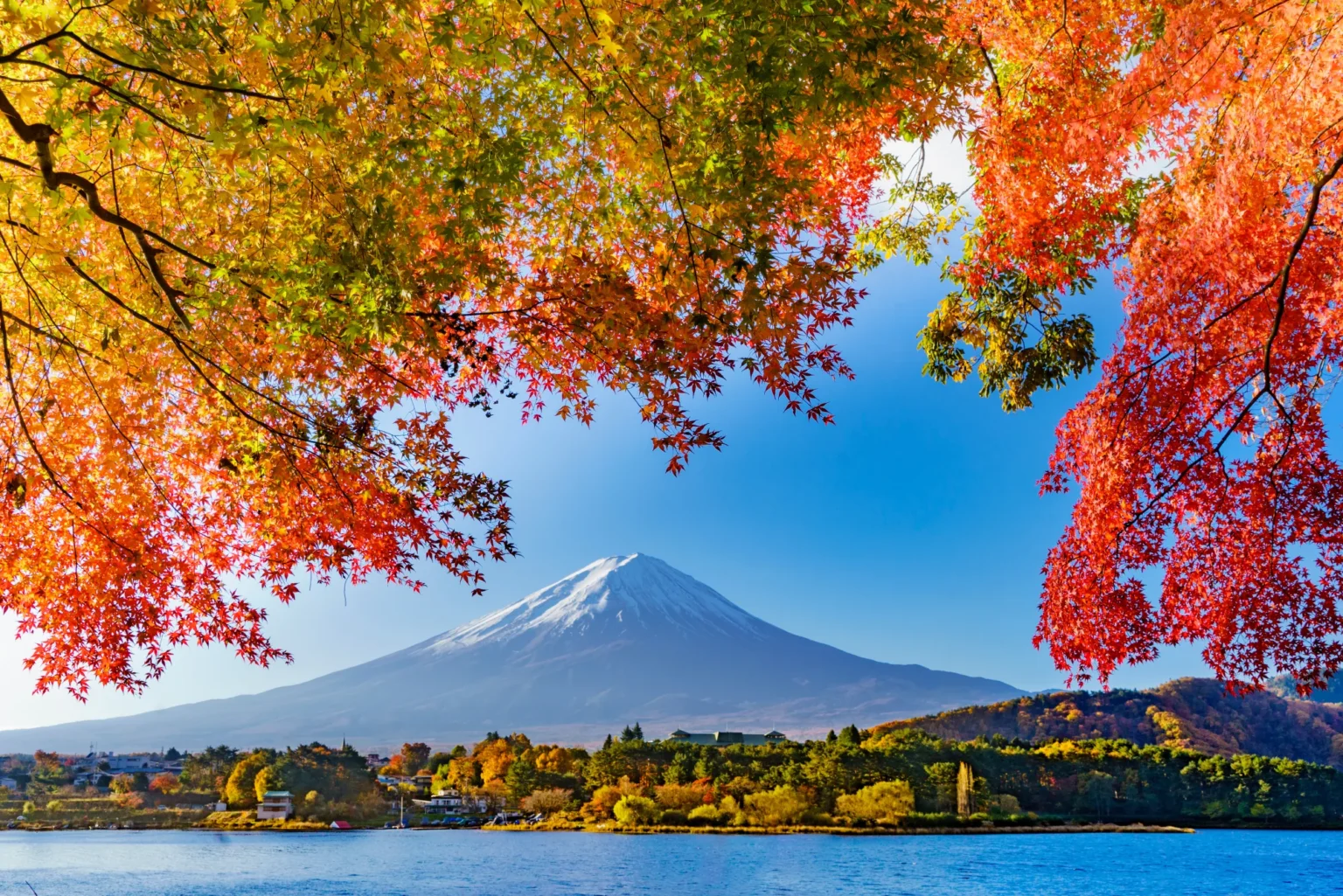
The 2026 forecasts so far — and November’s spots lean late
Japan Meteorological Corporation (2 September) and Weathernews (3 September) published their first 2026 calls with the same headline: a warm autumn, best viewing on time or later than normal almost everywhere. The Japan Weather Association followed on 1 October with the same broad call: around average or later than average. The typical-year bands above still hold as structure, but for 2026 dates, work from the forecast. Weathernews published its second forecast on 8 October: spots that usually peak from late October onward — almost all of November’s — are expected to be somewhat later than average in many places. Spot dates below are from Weathernews’s spot pages as of 10 October, after that second forecast, and will be revised as real colour arrives:
| Spot | Forecast best viewing from |
|---|---|
| Lake Yamanaka | ~8 Nov |
| Nikko temples & shrines area | ~12 Nov |
| Kawaguchiko lakeshore | ~15 Nov |
| Miyajima (Momijidani) | ~19 Nov |
| Mount Takao / Korankei | ~22–23 Nov |
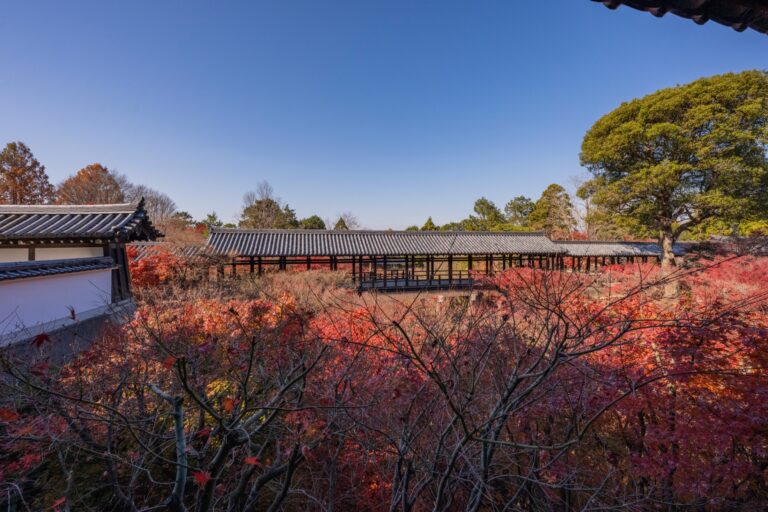
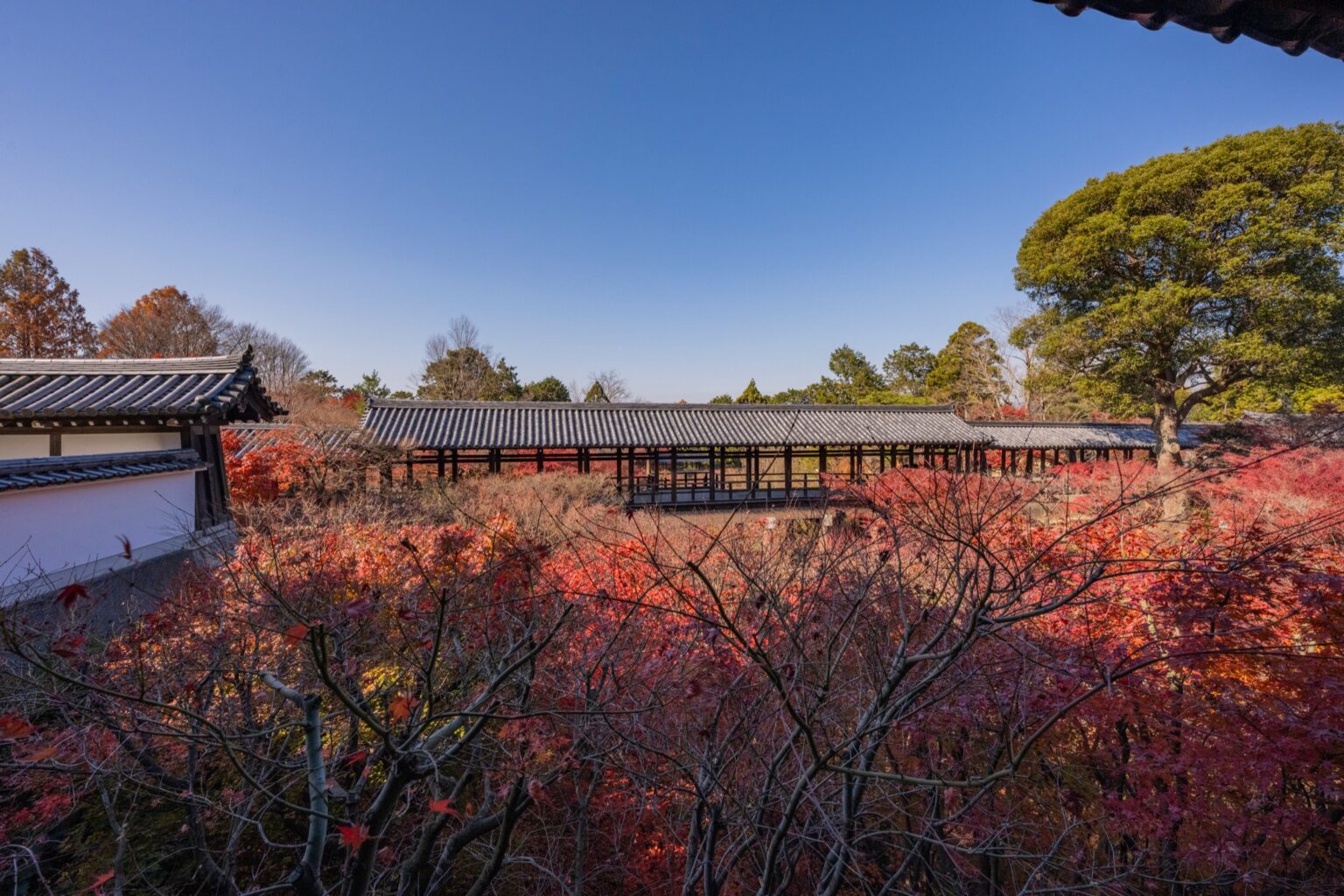
| Kyoto: Arashiyama / Tofukuji / Eikando / Kiyomizu | 23–25 Nov |
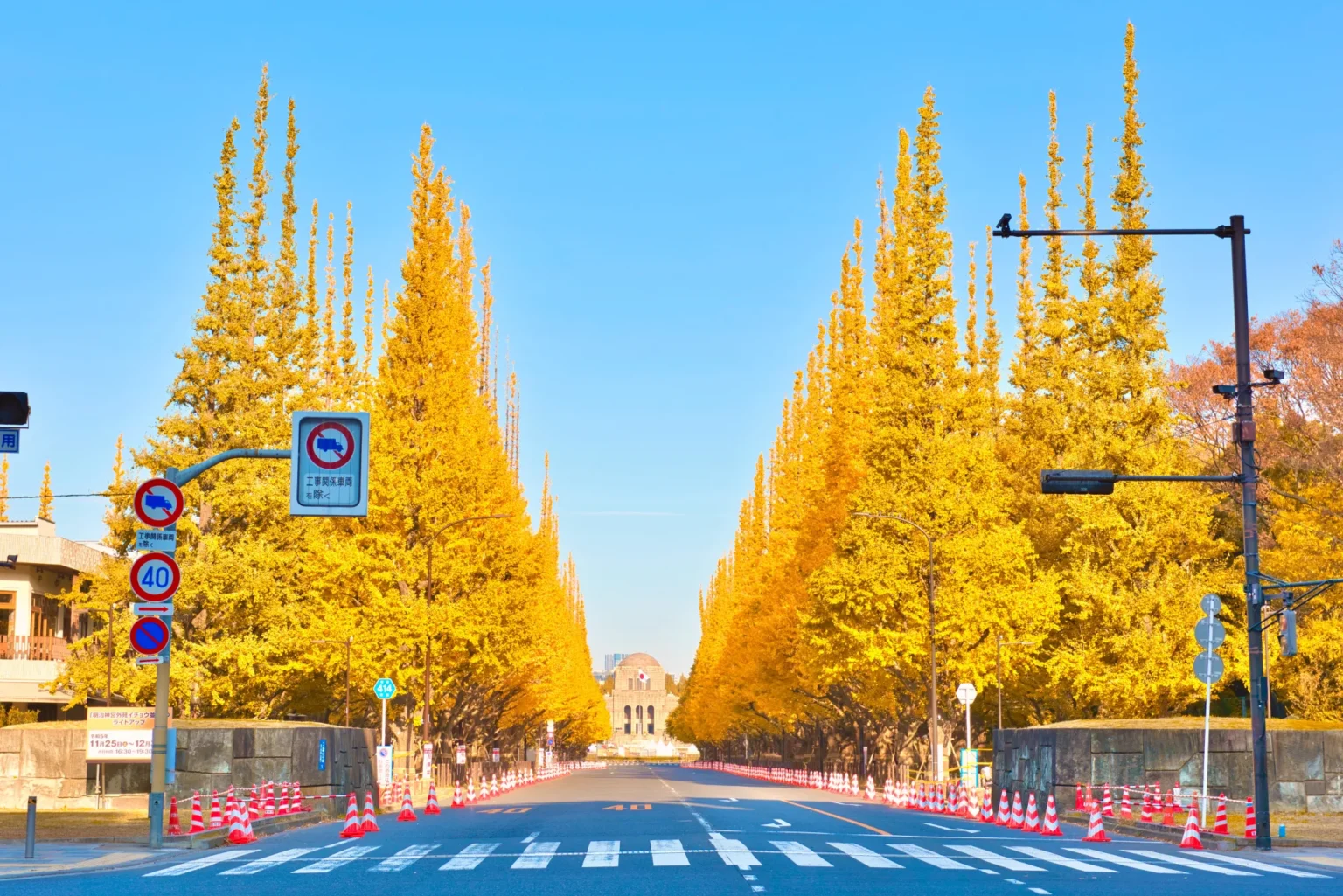
| Meiji Jingu Gaien ginkgo | ~29 Nov |
| Tokyo gardens (Rikugien, Koishikawa) | 3–4 Dec |
The Japan Weather Association’s first forecast (1 October) gives start dates for four of the sites above, all earlier than Weathernews’s: Arashiyama from 13 November, Korankei from 16 November, Miyajima from 18 November and Mount Takao from 19 November. For Eikando, Tofukuji and Meiji Jingu Gaien its spot pages give windows of late November to early December, which run past Weathernews’s dates, and for Kiyomizu early December, which starts after them.
The practical reading: trips ending around 15 November match Lake Yamanaka and Nikko’s temple town best; Kyoto’s listed sites sit at 23–25 November — the first of them on the last day of the crowded 21–23 holiday weekend — and Tokyo’s ginkgo and gardens run into December. Our forecast explainer covers how these calls get revised, and our Tokyo autumn leaves guide sets out where to go, from the city gardens to the hills in the west.
Kyoto after dark: what is actually confirmed for 2026
Night viewing is the reason many people pick late November, and it is also where the bad information lives. Here is the position as of late August 2026 (Kiyomizu-dera re-checked September 27), taken from each temple’s own site rather than from listings.
| Temple | Night opening, autumn 2026 | What the official source says |
|---|---|---|
| Eikando (Zenrin-ji) | Nov 20 – Dec 6, confirmed | Entry 5:30–8:30 p.m., gates close at 9; ¥1,000 for junior-high age and above. The daytime treasure exhibition and the night opening are separate admissions — you cannot stay on from one into the other. No reservation needed, and the temple asks visitors to come by public transport, and private cars and large tour buses are not allowed for the duration. |
| Kiyomizu-dera | Nov 21 – 30, confirmed | The temple’s 2026 schedule keeps the gates open until 9:30 p.m. (last entry 9 p.m.) on these ten days, and no reservation is needed. The Jojuin garden opens on the same dates, with evening entry 6–8:30 p.m. (Re-checked September 27, 2026.) |
| Tofuku-ji | No night opening listed | The visiting pages carry no night viewing at all. Note a daytime change instead: from November 1, 2026 the Hojo garden admission rises to ¥600 (Tsutenkyo and Kaisan-do are not affected). |
| Nanzen-ji | No night opening listed | Daytime only, and the gates close at 5 p.m. through November — earlier than most visitors expect. |
| Kibune / Kurama | Not yet announced | Neither Kifune Shrine nor the Eizan Railway had announced the autumn lantern event or the illuminated “maple tunnel” train run at the end of August. |
A related distinction that trips people up: the Japan Meteorological Agency also publishes a “maple colouring date” for Kyoto, and its long-term average is December 5 — two to three weeks after the tourist-board peak of mid-to-late November. They are measuring different things, so do not average them. The most recent two readings were December 20 in 2024 and December 10 in 2025, both later than the long-term average.
The five weeks of November, as five different trips
What’s actually on in November 2026
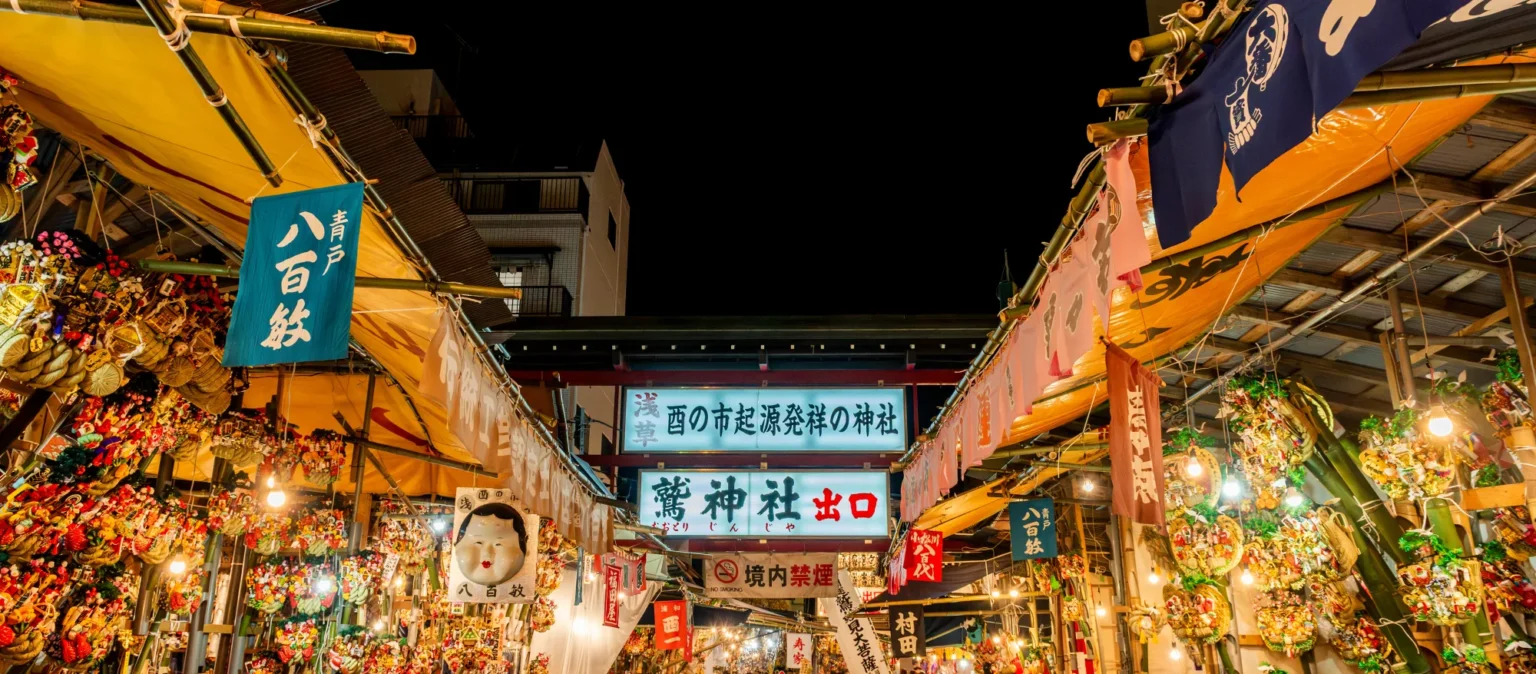
Tori-no-Ichi — Nov 7 & 19
Asakusa’s Ohtori Shrine confirms two rake-market days for 2026 (no third this year). Go after dark: lantern rows, hand-clap sales rituals, and a shrine forecourt turned into a night market.
Karatsu Kunchi — Nov 2–4
Saga’s UNESCO-listed float festival keeps its fixed dates. Fourteen lacquered giants hauled through the streets; the Nov 3 beach-pull is the signature scene.
Fuji Kawaguchiko Momiji Festival — Nov 7–29
The maple tunnel on Kawaguchiko’s north shore, lit until 21:00 nightly — half an hour earlier than last year. I live one town over: weekday mornings are the quiet window if photographs matter to you, and the full festival guide covers the new hours, the parking change and the last bus back. At Lake Yamanaka, the smaller Yamanakako Autumn Leaves Festival starts earlier, with planned dates of Oct 30 – Nov 15.
Shichi-Go-San — Nov 14–15 peak weekend
Families in formal dress bring three-, five- and seven-year-olds to shrines; the formal date, Nov 15, is a Sunday in 2026, making that whole weekend the busiest shrine window of the month — beautiful to see, slow to move through.
Illuminations begin — 2026 dates confirmed
Officially announced for 2026–27: Nabana no Sato and Ashikaga Flower Park from 17 Oct, Yomiuriland from 29 Oct, Marunouchi from 12 Nov (25th edition, to 14 Feb) and Sagamiko Illumillion from 14 Nov. Osaka’s Hikari-Renaissance stays December-only, and the next Kobe Luminarie is scheduled for 29 Jan–7 Feb 2027.
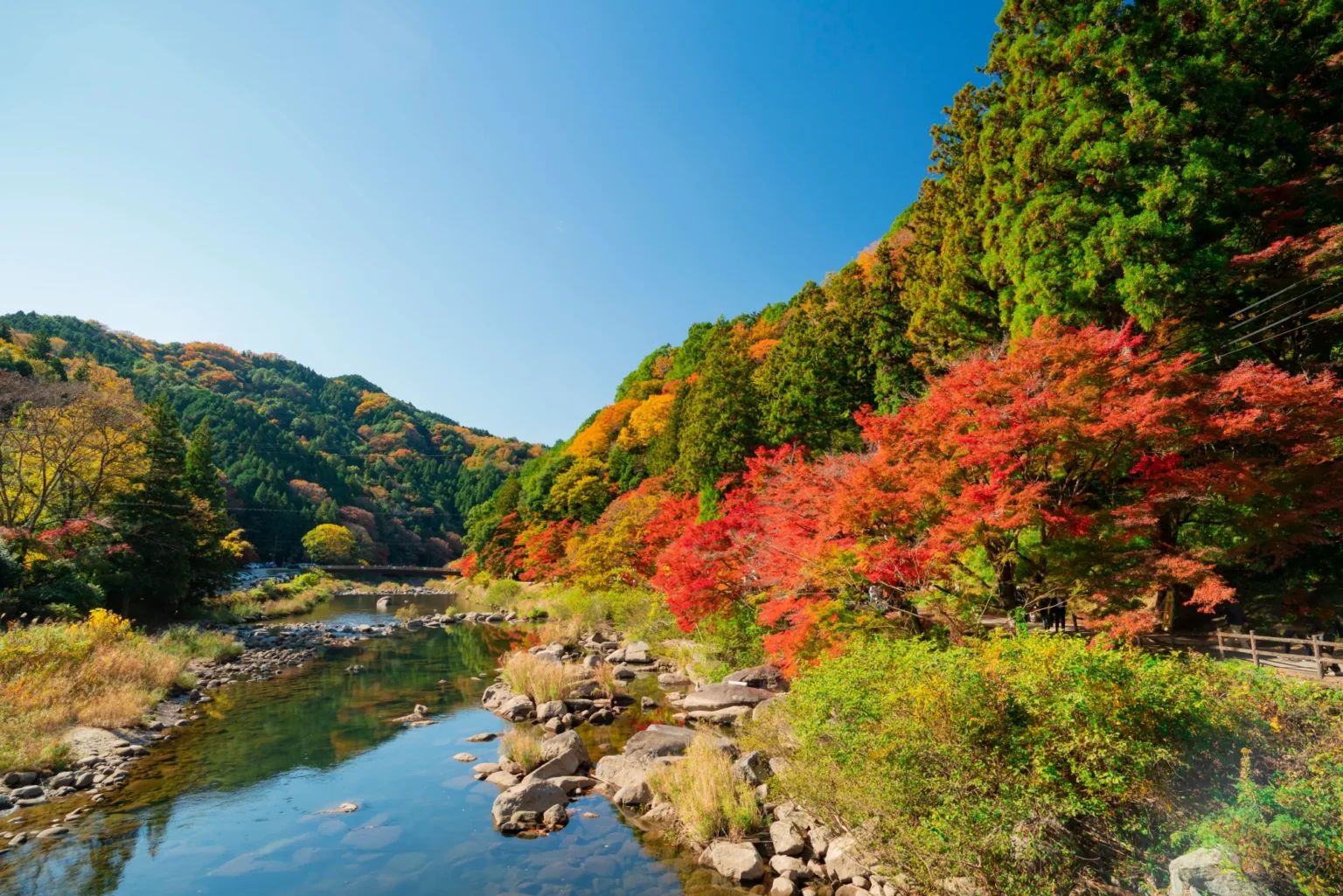
What November actually costs, and where the crowding really is
Two things get repeated about November that the numbers only half support.
“November is the busiest month for visitors to Japan.” Nationally, it is not. On JNTO’s confirmed arrivals, November was the sixth-busiest month of 2025 and the fourth-busiest of 2024 — and October beat it in both years. On national arrival numbers alone, November is the quieter half of that pair — though Kyoto’s late-November temple crowds are a separate, local problem.
“Kyoto in November is expensive.” This one is true, and measurably so. Kyoto City Tourism Association’s hotel data puts the average room rate for November 2025 at ¥29,085 against a full-year average of ¥21,286 — about 1.37 times. In 2024 the gap was wider still, ¥28,686 against ¥20,195. Occupancy ran 86.9% in November 2025 versus 80.6% across that year, and November has held the high-80s for three years running. One caveat on reading those figures: an average room rate is an industry aggregate across all hotel types, not the price you will see on a booking site.
The rule change that lands on November 1
If you shop, November 2026 is not a normal month: Japan’s tax-free system changes on November 1, 2026, and the change is structural rather than cosmetic.
You pay the tax, then get it back
Under the new refund system, shops charge the full tax-inclusive price. You claim the consumption tax back after customs confirms at departure that you are carrying the goods out — the reverse of the current counter-side deduction.
The fiddly rules disappear
The general-goods/consumables split goes, along with the ¥500,000 consumables cap, the sealed-packaging rule and the “ordinary daily-use goods” requirement. One threshold remains: ¥5,000 or more before tax. In practice the ceiling becomes what you can carry out yourself and present to customs.
Some things stop qualifying
Gold and platinum bullion and coins are excluded, and in practice what you can personally carry out becomes the ceiling.
Do it on your phone
At the airports handling most visitors — Narita, Haneda, Kansai, Chubu, Fukuoka, New Chitose and Naha — Visit Japan Web covers the customs confirmation online, inside the dedicated network area before security, instead of queueing at a terminal. The refund itself comes from the shop or its refund provider.
One consequence worth planning around: shops that had not completed the digital-records registration by October 31, 2026 lose their tax-free licence on that date. Early November is exactly when the gaps will show, so do not assume a small shop can still process a refund. If shopping is a real part of your trip, our tax-free shopping guide goes through the mechanics, and the Visit Japan Web walkthrough covers the registration you will need anyway for immigration and customs. One more piece of November admin: the Japan Rail Pass price rise on October 1 applies to exchange orders bought through overseas travel agents. The official web sales service was still holding the pre-rise price when we checked, with the seven-day ordinary pass at ¥50,000 — but JR describes that hold as temporary and has not said when it ends, so treat the online channel as time-sensitive and re-check before you buy. Whether any pass is worth it is a separate question, and the honest maths is here.
Weather: what November actually feels like
| City | High / Low (JMA avg) | Rain | Feel |
|---|---|---|---|
| Tokyo | 16.7 / 8.8°C | ~96 mm | Crisp, mostly dry; jacket mornings, knit afternoons |
| Kyoto | 17.3 / 8.4°C | ~74 mm | Similar days, colder temple mornings |
| Osaka | 17.8 / 10.2°C | ~73 mm | The mildest of the big three |
| Sapporo | 8.7 / 1.6°C | ~114 mm | First snow is normal; winter kit territory |
| Fukuoka | 18.2 / 10.6°C | ~91 mm | Autumn-mild; Kunchi week is usually comfortable |
| Naha | 25.0 / 20.4°C | ~119 mm | Still short-sleeve Okinawa |
Pack in layers around a 17/9 split: long sleeves and a light knit for daytime, a jacket or light coat after dark. The month moves fast, though, and the averages hide it: in Kyoto the normal overnight low drops below 10°C around November 8, below 8°C around the 18th and below 7°C by the 23rd — which is to say, by the time the maples peak, the evenings you spend standing still under them are firmly single-digit cold. Kyoto also swings harder between day and night than Tokyo does (an 8.9°C spread against 7.9°C), so dressing for the afternoon is the classic mistake at a night opening. Sapporo is a different proposition entirely by then: the normal low crosses below zero around November 24, and the month’s normal snowfall is 30 cm. Typhoon risk has largely passed by November; stray late systems exist but rarely trouble Honshu itineraries. The Pacific side settles into a comparatively clear-sky stretch, which is good news for photographers. Tokyo’s first kogarashi (winter’s opening north wind) often gets its name-check this month; it is a headline, not a hazard. For city days, the night light-ups and the mountains, see our guide to what to wear in Japan in November.
FAQ
Is November a good month to visit Japan?
For many travellers, yes: comparatively dry, stable weather on the Pacific side, low typhoon risk, full autumn colour, and no winter-holiday closures. The trade-off is Kyoto crowds and hotel prices in the second half of the month.
When is peak autumn colour in November 2026?
Typical years run: mountains and Fuji Five Lakes peaking in the first half, Kyoto and Tokyo building from mid-month to a late-November peak that spills into early December. Actual 2026 timing shifts with autumn temperatures — our live koyo tracker switches to forecast data as the season progresses.
Kyoto looks booked out for my dates — what now?
Base outside and ride in: Otsu (10 minutes by train), Osaka or even Nara put you in the temples by early morning, often for far less. Early morning is also the crowd answer — the famous gardens are at their calmest before 9 a.m., whatever the calendar says.
Is anything closed in November?
Very little at city level — sights run normal hours throughout. The exceptions are alpine: high-mountain transport winds down through the month, with the Tateyama Kurobe Alpine Route’s final day on November 30 and some ropeways and mountain roads closing earlier — put altitude plans in the first half of the month.
What festivals happen in Japan in November 2026?
Confirmed: Karatsu Kunchi (Nov 2–4), Tori-no-Ichi in Asakusa (Nov 7 and 19), the Fuji Kawaguchiko Momiji Festival (Nov 7–29), and Shichi-Go-San season around Nov 15. Recurring events like Arashiyama’s Momiji Festival (typically the second Sunday) had not published 2026 details at the time of writing.
Is November too late for the Fuji Five Lakes?
No — it is arguably the area’s best month. The Momiji Corridor typically peaks in the first half of November and the 2026 festival runs Nov 7–29; by late month the maples thin, but clear-day Fuji visibility improves as winter air arrives.
Will I see snow anywhere in November?
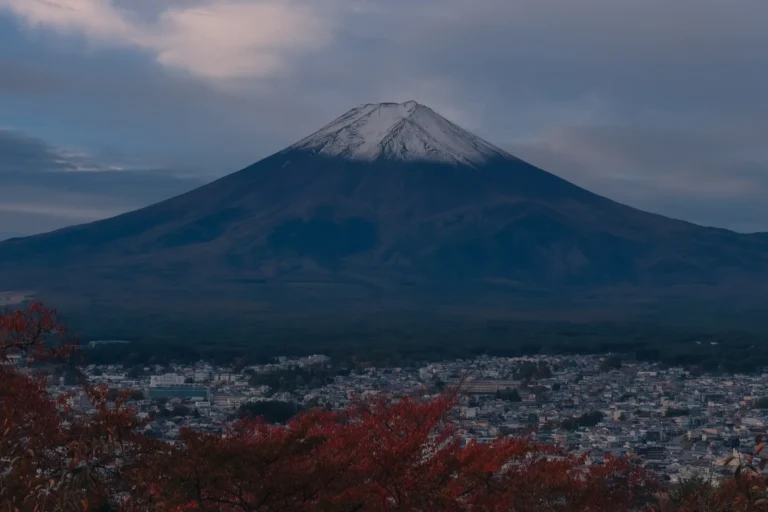
Probably in Hokkaido — Sapporo’s first accumulating snow is normal this month (November averages 8.7°C by day, 1.6°C at night). Honshu’s cities stay snow-free; what you may see instead is the season’s first dusting on Fuji and the high Alps, which photographs beautifully above the remaining colour.
Sources
JMA 1991–2020 monthly climate normals, rounded in prose (Tokyo, Kyoto, Osaka, Sapporo, Fukuoka, Naha stations) and JMA typhoon climatology; JMC first 2026 foliage forecast (2 Sep 2026, n-kishou.com) and Weathernews first and second 2026 forecasts (3 Sep and 8 Oct 2026) with spot pages, checked 10 Oct 2026; Japan Weather Association first 2026 forecast (1 Oct 2026, tenki.jp) with spot pages, checked 5 Oct 2026; official 2026–27 illumination announcements from Nagashima Onsen (Nabana no Sato), Ashikaga Flower Park, Yomiuriland, Marunouchi.com, Sagamiko Resort and kobe-luminarie.jp; Cabinet Office public-holiday list for 2026; Otori Shrine (Asakusa) official 2026 Tori-no-Ichi dates; Karatsu Shrine and Karatsu tourism for Kunchi; Fujikawaguchiko tourism office for the 2026 Momiji Festival; Arashiyama Hoshokai for the Momiji Festival rule; Kyoto City Tourism Association November 2025 occupancy and rate data and its list of quieter districts; Eikando (Zenrin-ji), Tofuku-ji, Nanzen-ji, Kifune Shrine and Eizan Railway official sites for 2026 night-opening status; JMA phenological records for the Kyoto maple date; JNTO confirmed arrival statistics for 2024 and 2025; National Tax Agency and Japan Customs on the November 1, 2026 tax-free refund system; Japan Sumo Association for the Kyushu tournament; Fuji City daily Mt Fuji visibility log; Suntory / Beaujolais official for the Nov 19, 2026 release. Live colour status: our koyo tracker, updated through the season. Late in the month, the Aigi Tunnels near Nagoya unlock a disused stretch of the original Chuo Line for nine days only, 28 November to 6 December. Further south, Yujaku Park in Oita and Raizan Sennyoji in Fukuoka cover the first and third weeks of November respectively.
Join travelers discovering Japan's hidden side
Weekly dispatches from off-the-beaten-path Japan — spots and stories you won't find in guidebooks.
No spam. Unsubscribe anytime.
Welcome aboard!
You're in. See you in your inbox soon.