Kyoto · November 2026
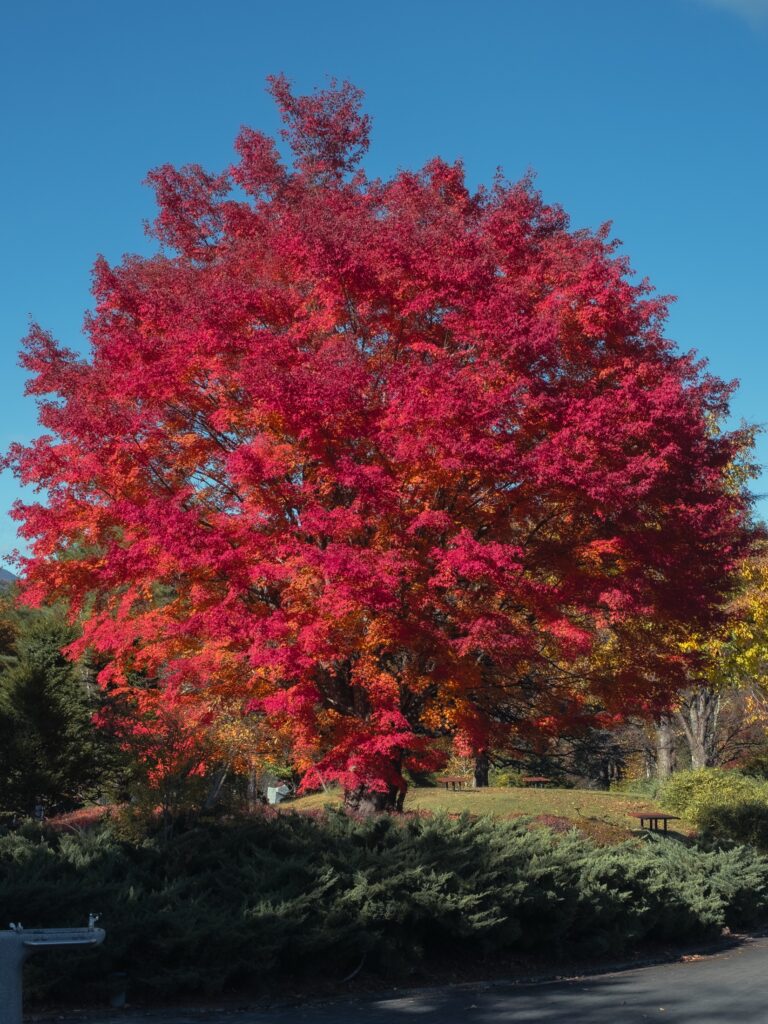
The first 2026 forecast puts Kyoto’s headline maples — Tofuku-ji, Eikan-do, Kiyomizu-dera, Arashiyama — at their best around 24–26 November. Those estimates may be revised as the season develops.
The dates are the easy part. Three Kyoto sites require advance booking this autumn, Tofuku-ji’s garden price rises on 1 November, Eikan-do’s autumn daytime admission is ¥1,500 rather than its familiar ¥1,000 regular rate, and the bus-only one-day pass has been withdrawn. These are the booking, ticket and transport details to check before you go.
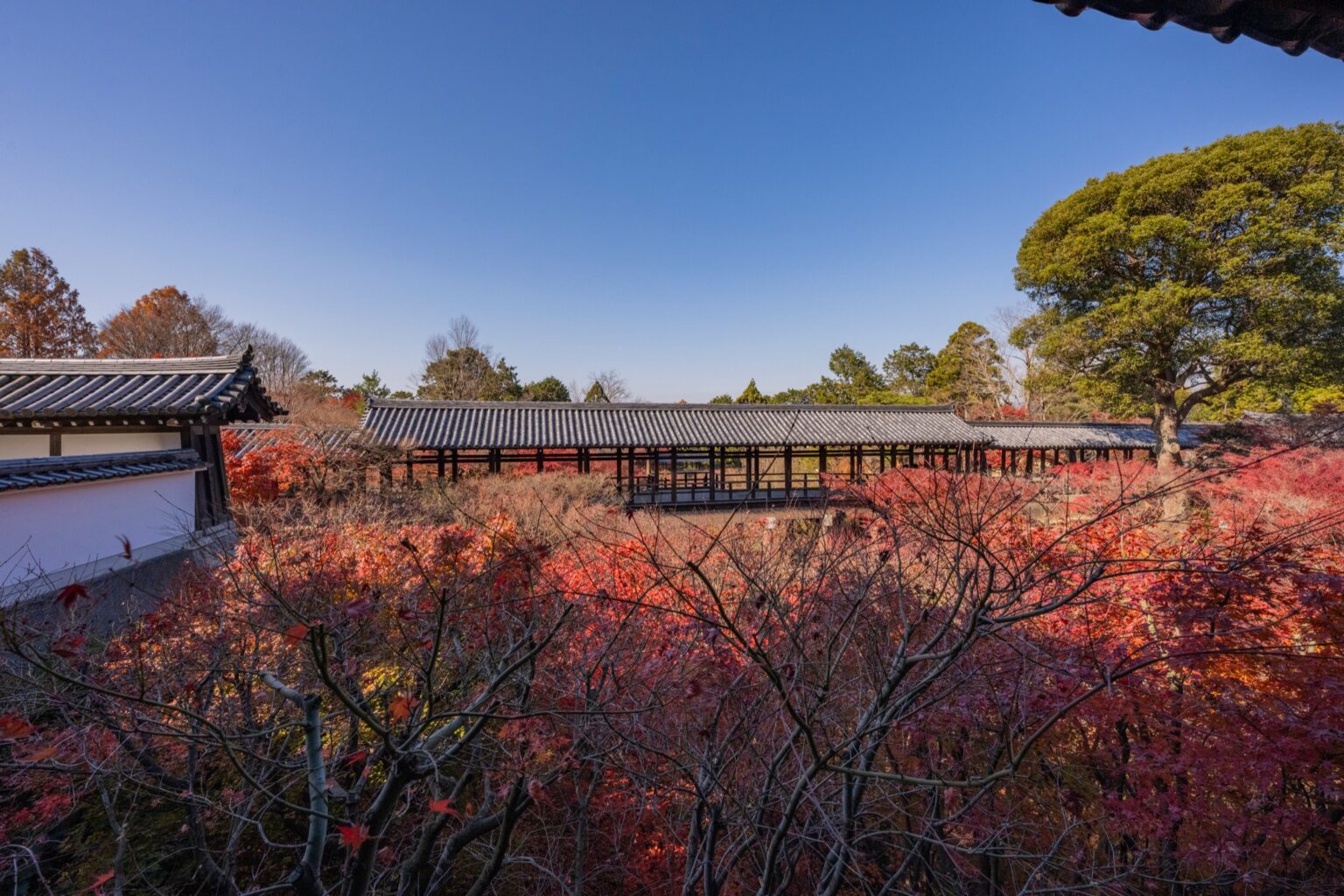
Three Kyoto sites requiring advance booking in autumn 2026
Kyoto’s official tourism site identifies three places that require advance reservation for specified periods this autumn — two temples and a garden. The requirements come from official Japanese-language notices:
| Site | 2026 reservation window |
|---|---|
| Rurikoin (瑠璃光院), temple | Advance booking required 13 Nov – 6 Dec |
| Enkoji (圓光寺), temple | Timed-entry booking required 10 Nov – 10 Dec |
| Murin-an (無鄰菴), garden villa | Advance booking required |
2026 autumn admission at Eikan-do and Tofuku-ji
Autumn pricing at these two temples is not the same as the rest of the year, and 2026 brought a change. The figures below are from each temple’s own Japanese pages, read on 21 September 2026.
| Temple / ticket | 2026 autumn price |
|---|---|
| Eikan-do — daytime, autumn exhibition (11 Nov–6 Dec) | ¥1,500 adult (¥1,300 for groups of 30+) |
| Eikan-do — night light-up (20 Nov–6 Dec) | ¥1,000, junior-high age and up |
| Eikan-do — regular rate, outside the exhibition | ¥1,000 adult |
| Tofuku-ji — Tsutenkyo & Kaisando (14 Nov–6 Dec) | ¥1,000 adult (¥600 outside autumn) |
| Tofuku-ji — Hojo garden | ¥600 from 1 Nov 2026 (was ¥500) |
| Tofuku-ji — combined ticket | Not sold during 14 Nov–6 Dec |
Two details worth spelling out. First, ¥1,000 is Eikan-do’s regular admission, not its autumn daytime rate: daytime during the exhibition carries a ¥500 premium. The visible 2026 fee table on the official page lists ¥1,500, although an image alt attribute on the same page still contains the ¥1,000 regular figure — go by the visible table. Some English-language guides also still list ¥1,000 for autumn daytime. Day and night are separate tickets.
Second, Tofuku-ji withdraws its combined ticket during the autumn window. From 14 November to 6 December 2026, adult admission to both the Tsutenkyo bridge and the Hojo garden totals ¥1,600, because no combined ticket is sold in that period. Neither temple takes reservations for ordinary autumn admission.
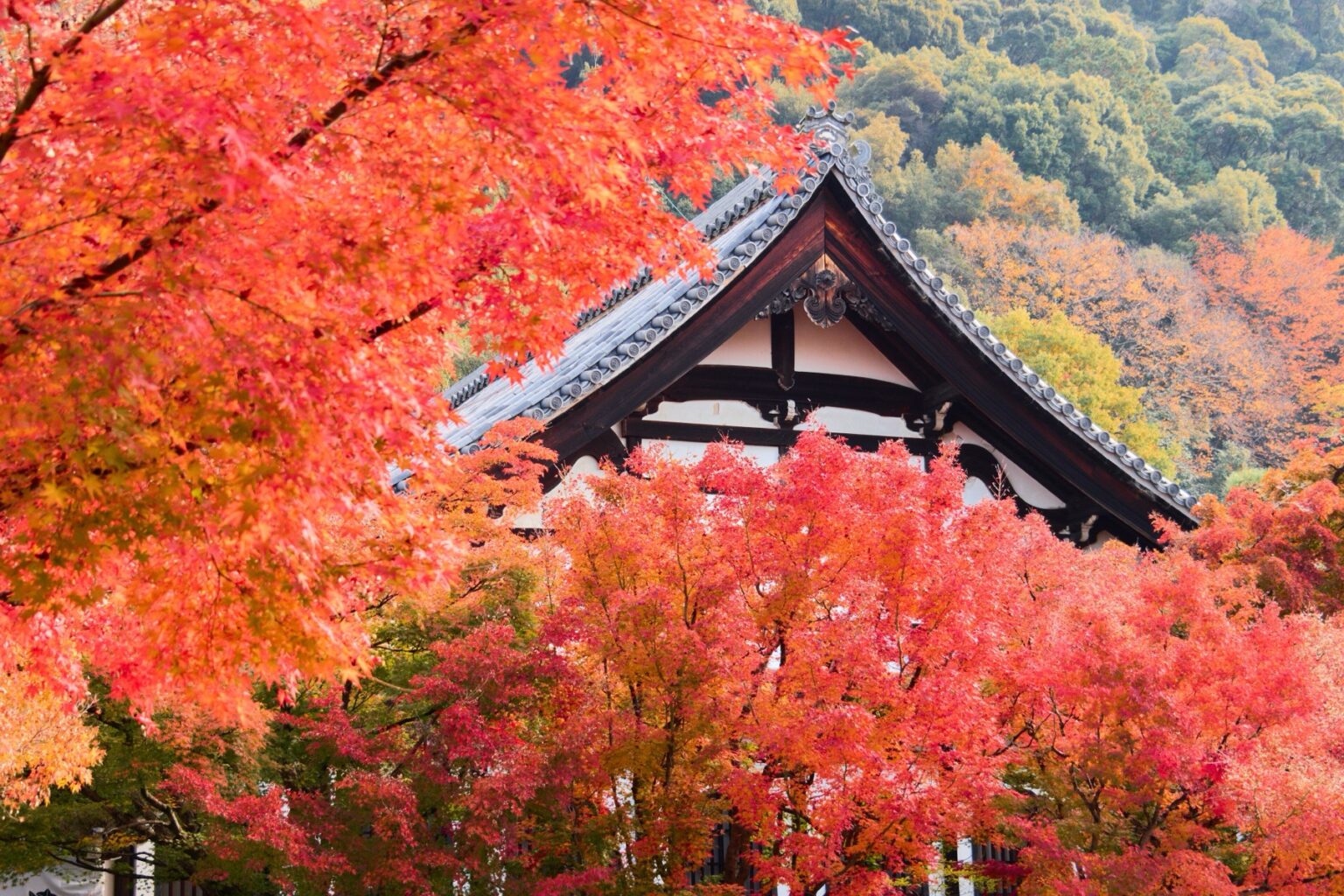
Night viewings, with the 2026 dates
Kyoto’s night illuminations run on short, specific windows. These are the published 2026 dates.
Eikan-do — 20 Nov to 6 Dec
Reception 17:30–20:30, gates close 21:00, ¥1,000. No reservation, walk-up only. The night ticket is not garden-only: it includes the Main Hall and the Mikaeri Amida, the Buddha that looks over its shoulder.
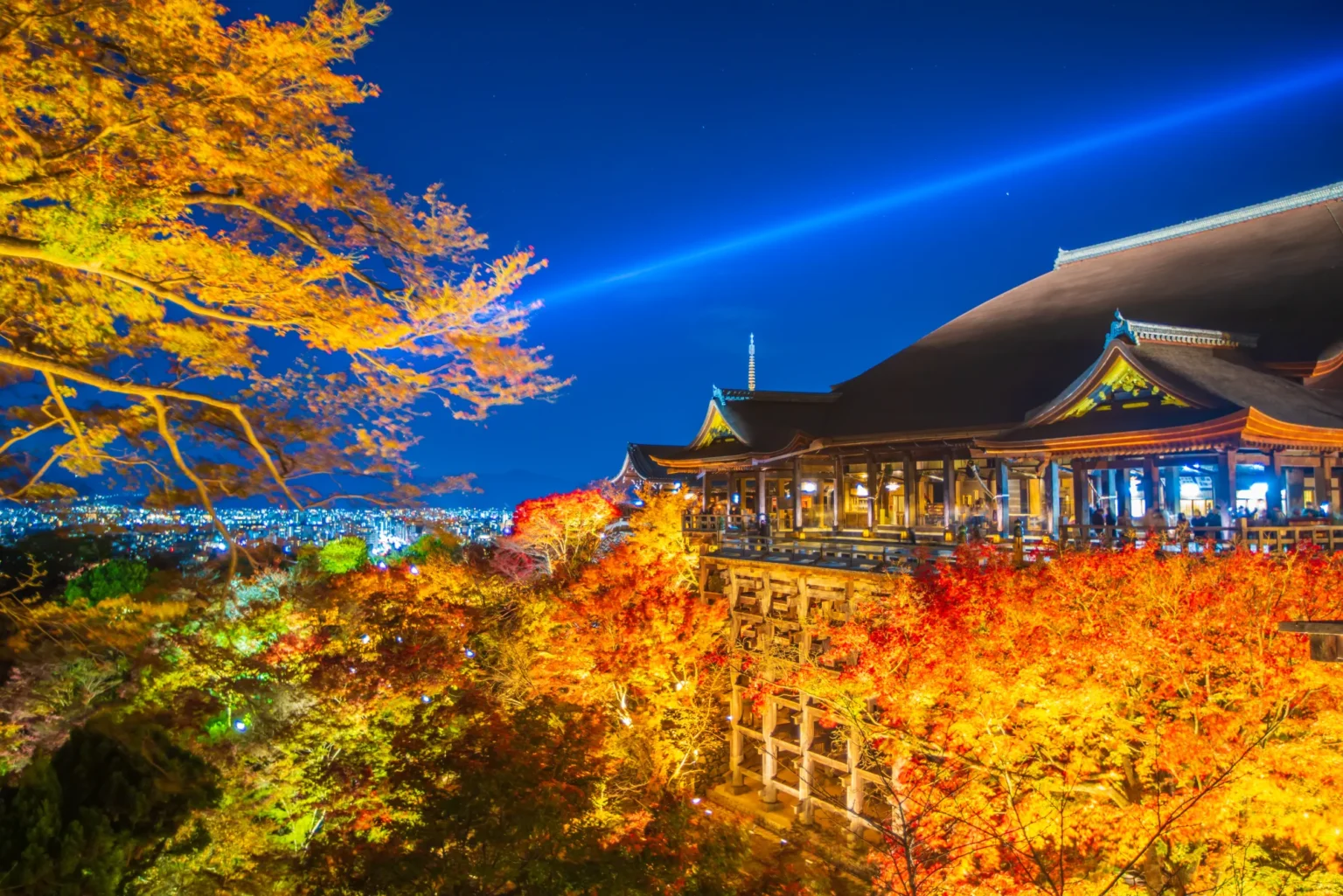
Kiyomizu-dera — 21 to 30 Nov
Ten days only. For these dates the temple publishes extended opening hours of 6:00–21:30, last admission 21:00 — and unlike Eikan-do it does not list a separately ticketed evening session. No reservation required.
Jojuin garden — 21 to 30 Nov
Kiyomizu’s “Garden of the Moon”, opened only for special periods. Two reception windows, 10:00–16:00 and 18:00–20:30, with a gap between. The official page did not list a 2026 admission fee when we checked on 21 September.
Getting around: the pass that no longer exists
Guides still recommend the city bus one-day pass. Sales ended on 30 September 2023 and the last day it could be used was 31 March 2024; it has not returned. What exists in November 2026:
| Ticket | Price / what it covers |
|---|---|
| City bus single ride | ¥230 adult, within the uniform-fare area |
| Subway & Bus 1-Day Pass | ¥1,100 — all municipal subway and city bus routes, plus designated sections of Kyoto Bus, Keihan Bus and West Japan JR Bus. Valid to the end of service that day, not 24 hours |
| Subway-only 1-Day Pass | ¥800 — unlimited municipal subway travel |
| Subway + Randen 1-Day | ¥1,300 — an alternative route to Arashiyama by subway and Randen |
| Sightseeing express EX100 / EX101 | ¥500 — Saturdays, Sundays and public holidays only, from Kyoto Station bay D1. Both serve Gojozaka for Kiyomizu-dera; EX100 continues to Gion and Ginkakuji |
New for 2026: Keihan Bus’s Kiyomizu-dera Line, launched on 1 July 2026 and running on weekdays — excluding specified dates — through to 29 January 2027. The operator states its purpose as easing overtourism pressure on city buses and Kyoto Station.
The bus-only adult fare is ¥500, and passengers without reservations can board if seats are available. A separate ¥1,500 package on selected departures includes Kiyomizu-dera admission, so no separate temple ticket purchase is needed; that package requires advance booking. Services are seat-limited.
Two practical details for bus passengers. Under Article 38 of Kyoto City’s bus conditions of carriage, hand luggage is subject to limits of 10 kg in total weight, 0.027 m³ in total volume (27 litres) and 1 metre in length.
And since March 2026 the city has run a real-time bus-crowding display, showing how full the next service is before it arrives. Check it before deciding which bus to take.
A note on a change that is not in force yet: Kyoto plans resident-priority bus fares during fiscal 2027 (April 2027–March 2028), subject to approval. The proposed fares are roughly ¥350–400 for non-residents against ¥200 for eligible residents. For November 2026 the uniform-area adult fare remains ¥230 for everyone.
How full Kyoto gets: the published figures
In November 2025, the hotels surveyed by the Kyoto City Tourism Association reported occupancy of 86.9% and an average daily room rate of ¥29,085. Foreign overnight stays at those hotels passed 612,000 that month, up 8.5% year on year.
That November rate was about 64% higher than the ¥17,744 recorded in July 2026 — a cross-year historical comparison rather than a forecast for November 2026, but a fair indication of how the autumn market behaves.
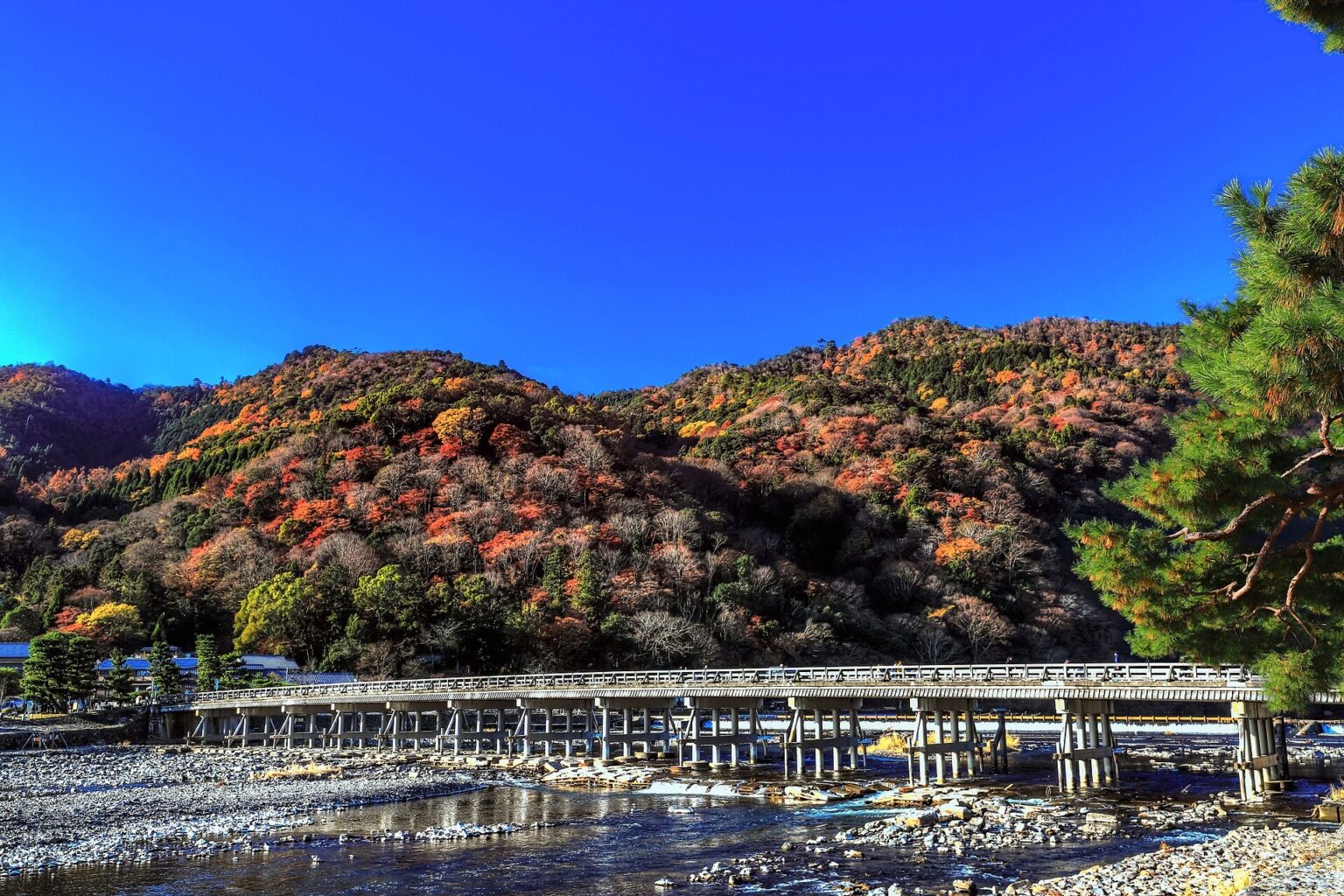
Two sets of dates to plan around rather than stumble into. The Arashiyama Momiji Festival falls on 7–8 November 2026, a boat pageant on the Oi River that is likely to increase congestion around Togetsukyo. And the 21–23 November holiday weekend falls immediately before the first forecast’s viewing dates — actual colour and crowding will depend on the weather and on later forecast updates, so allow extra time at popular sites.
The city’s own planning tools are more useful than a static crowd list. The Kyoto Travel Comfort Map, updated on 15 September 2026, shows expected conditions by time of day on a five-level scale for eleven locations — including Togetsukyo’s north end, the Bamboo Grove, Hanamikoji and the Kiyomizu-zaka approach. Kyoto’s own emphasis is on shifting your hours rather than your destinations, which is also the argument our guide to Kyoto at dawn and after dark makes.
Plan early for late-November Kyoto
Where Kyoto sends you instead
The city officially promotes six quieter districts — Keihoku, Ohara, Takao, Yamashina, Nishikyo and Fushimi — under the banner “Totteoki no Kyoto”. Be realistic about two of them: Ohara and Takao are themselves famous for maples, so in the last week of November they are quiet only by Kiyomizu’s standards. Yamashina, Nishikyo and Fushimi are also promoted as alternatives, though conditions vary by site and date.
If you would rather be out of the city altogether, the Kifune and Kurama mountain walk is 30 minutes north by train and covers its own 2026 access complications. Three more worth considering: the Kyoto Botanical Garden, which holds a substantial maple collection; the Higashiyama route walked at golden hour rather than at midday; and Kyoto’s own morning and evening programmes, REI-MEI and YOI-YOI, built around how different the same streets are at 07:00.
If you would rather leave the city entirely, our seven days in Kansai beyond Kyoto covers the wider region, and for the month as a whole see Japan in November 2026. The rest of the country’s colour is mapped in the three great foliage spots and explained in how the foliage forecast actually works; and for lower-key alternatives, our quiet autumn stops around Mt. Fuji.
Frequently asked questions
When do Kyoto’s autumn leaves peak in 2026?
Weathernews’s first 2026 forecast puts Arashiyama and Tofuku-ji around 24 November, Eikan-do around the 25th and Kiyomizu-dera around the 26th. These estimates were issued in early September and may be revised — check the latest forecast in early November, but follow each venue’s own booking schedule.
Which Kyoto sites need advance booking in autumn 2026?
Three, per Kyoto’s official tourism site: the temples Rurikoin (13 Nov–6 Dec) and Enkoji (10 Nov–10 Dec, timed entry, bookings open 20 October 2026), and the Murin-an garden villa. Eikan-do, Tofuku-ji and Kiyomizu-dera do not take reservations for ordinary autumn admission.
How much does Eikan-do cost in autumn?
¥1,500 adult for daytime during the autumn exhibition (11 Nov–6 Dec 2026), and ¥1,000 for the night light-up (20 Nov–6 Dec), sold separately. ¥1,000 is Eikan-do’s regular admission outside the exhibition period, which is easy to mistake for the autumn daytime rate.
Is the Kyoto bus one-day pass still available?
No. Sales ended on 30 September 2023 and it could last be used on 31 March 2024. Use the Subway & Bus 1-Day Pass (¥1,100), the subway-only pass (¥800) or the subway+Randen combination (¥1,300). Single city-bus rides are ¥230 within the uniform-fare area in November 2026.
Do tourists pay more for Kyoto buses?
Not in 2026. Kyoto plans resident-priority fares — roughly ¥200 for eligible residents against a proposed ¥350–400 for others — during fiscal 2027, subject to approval. For a November 2026 trip the uniform-area fare is ¥230 for everybody.
Which days are likely to be busiest in Kyoto in November 2026?
7–8 November (the Arashiyama Momiji Festival, around Togetsukyo especially) and 21–23 November (the Labour Thanksgiving holiday weekend, which falls just before the first forecast’s viewing dates). If your dates are fixed, use the city’s Travel Comfort Map to choose your hours instead.
Sources
Primary sources, all read on 21 September 2026
- Eikan-do Zenrin-ji — 2026 autumn special page (dates, hours, ¥1,500 day / ¥1,000 night) and its ordinary admission page
- Tofuku-ji — visitor guide (autumn dates, hours, photography and goshuin rules) and the 1 November 2026 price-change notice
- Kiyomizu-dera — 2026 autumn night viewing, Jojuin garden opening and 2026 opening hours
- Kyoto City Tourism Association — 2026 autumn reservation requirements, the Travel Comfort Map and the November 2025 / July 2026 hotel occupancy reports
- Enkoji — official 2026 timed-entry notice (10 Nov–10 Dec; bookings from 20 October)
- City of Kyoto — bus and subway fares and passes, the discontinued bus one-day pass notice, the FY2027 resident-priority fare plan, and the passenger bylaw’s hand-luggage limits
- Keihan Bus — Kiyomizu-dera Line press release (1 July 2026 launch, fares, bundled admission)
- Weathernews — first 2026 foliage forecast, spot pages for Arashiyama, Tofuku-ji, Eikan-do and Kiyomizu-dera
- Arashiyama Hoshokai — Momiji Festival 2026 dates
Join travelers discovering Japan's hidden side
Weekly dispatches from off-the-beaten-path Japan — spots and stories you won't find in guidebooks.
No spam. Unsubscribe anytime.
Welcome aboard!
You're in. See you in your inbox soon.