
Shopping & tax · 2026–2027 transition guide
Japan’s tax-free system is in the middle of the biggest restructure since it was opened to tourists. The current “instant exemption at the register” model runs until October 31, 2026. From November 1, 2026, the entire country switches to a refund method: pay the full tax-inclusive price in store, have customs confirm at departure that you are taking the goods out of Japan, and the store (or the refund company it uses) then pays the consumption tax back. Whether you’re shopping this week or next year, the rules below cover what changes, what stays the same, where to actually buy, and how not to lose the refund.
The 30-second summary
If you’re in Japan now through October 31, 2026: the old system applies — show your passport at the register, get the 10% consumption tax exempted on the spot, but don’t open the sealed bags. From November 1, 2026 onwards: pay the full price in store; when you leave, have customs confirm your purchases before you check in your bags; the store or its refund company then pays the consumption tax back — sealed packaging is gone, the daily limit is gone, the general/consumables split is gone. The ¥5,000 minimum and the requirement to physically take goods out of Japan stay in both systems.
The big change: November 1, 2026
Set the date in your phone calendar if your trip crosses it. Japan’s tax-free system, which has worked the same way for years, switches to a fundamentally different model on a single day. There is no transitional overlap — the old system stops working on October 31 and the new one starts on November 1.
The 2025–2026 transition timeline
Old system vs new system: side by side
Same goal in both systems — foreign visitors don’t pay Japan’s 10% consumption tax on goods they take out of the country. The mechanics couldn’t be more different.
Direct exemption (current system)
Pay the tax-exempt price at the register
- Show your passport at a tax-free counter
- 10% consumption tax is removed at point of purchase
- “Consumables” (food, cosmetics, alcohol) sealed in special tamper-evident packaging
- Sealed bags must not be opened until you leave Japan — a packable spare bag and a luggage scale help you get sealed purchases home without blowing your airline’s weight limit.
- ¥500,000 daily cap on consumables per store
- General goods and consumables tracked separately
- Items must physically exit Japan with you
Refund method (new system)
Pay the full tax-inclusive price; the store refunds the tax after customs confirms at departure
- Pay the full tax-inclusive price at every register, no on-the-spot exemption
- Before checking in your bags, scan your passport at a tax-free terminal (kiosk) in the departure lobby; at seven major airports you can use Visit Japan Web instead
- Green on screen: customs check done. Red: customs inspects the goods
- The store or its refund company pays the refund after the customs check, by a method the store sets (bank transfer, card, app, or cash at the airport are the examples given)
- No sealed packaging requirement — but anything used up in Japan gets no refund, and one missing item cancels the refund for its whole receipt
- No ¥500,000 daily cap, no general / consumables split
- You must depart within 90 days of purchase — otherwise the refund is forfeit
- Items still must physically exit Japan with you (customs may inspect)
Decision tool · Updated April 2026
When are you shopping — and what does that mean for you?
Pick the line that matches your trip dates. The rules update as you select.
The five rules that apply in both systems
Some things stay constant across the November switchover. These are the conditions you need to satisfy regardless of when you visit.
| Eligibility | Temporary visitors with a “Short-Term Stay” landing permission. Must have entered Japan within the last six months. Diplomats, public servants on “Official” status, and US military personnel entering under the Japan-US Status of Forces Agreement are also eligible — the six-month rule doesn’t apply to them. |
|---|---|
| Minimum purchase | ¥5,000 (before tax) at the same store on the same day. Receipts from different stores or different days cannot be combined. |
| Passport required | The original passport of the person making the purchase. Photocopies and digital copies are not accepted; the passport must be physically presented. |
| Items must physically leave Japan | Customs may inspect on departure. Tax-free items cannot be given as gifts inside Japan or shipped home (since April 1, 2025). |
| Buyer’s name on payment | The purchase must be made by the passport holder. Using a family member’s credit card with a different name on it can void the exemption. |
Where to shop: the major tax-free retailers
Before the haul outgrows the suitcase
Japan has over 50,000 designated tax-free locations, but the chains below cover roughly 80% of foreign-visitor spending. All accept tax-free transactions; check for the “Japan Tax-free Shop” logo (the orange and white shop sign) at each branch — not every individual location of a chain participates.
Electronics & cameras
One-stop shops for electronics that have expanded into cosmetics, snacks, and souvenirs. The major chains compete on price closely, so most travellers pick by location rather than brand.
Department stores
Premium experience — high-end fashion, luxury goods, cosmetics, food. Most operate a central tax-free counter where you process all purchases from that day’s shopping at once. Bring your passport to the counter and you’ll be issued a single combined exemption.
Discount & general merchandise
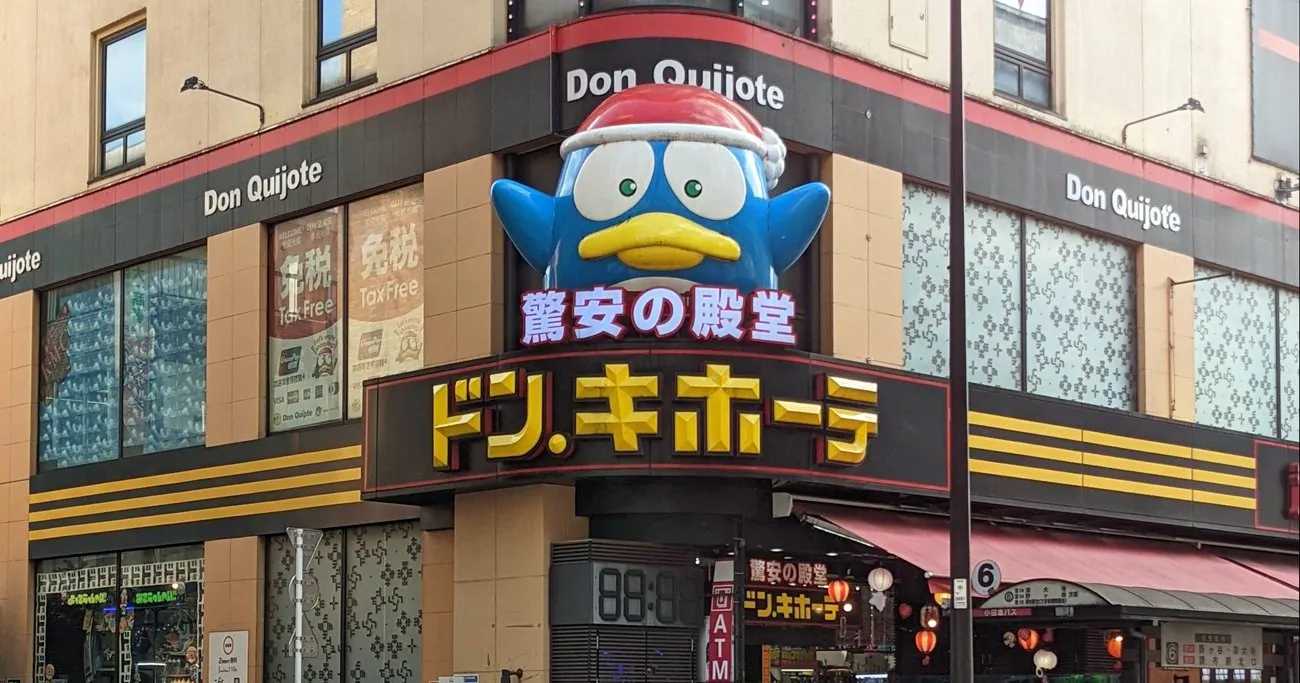
Famously eclectic ranges, often at the lowest prices in the country. The default option for travellers buying a wide variety of items in one stop.
Drugstores & cosmetics
Japanese drugstores carry pharmacy items alongside the cosmetics and skincare lines that drive a huge share of foreign-visitor spending. Highly competitive on price — the price gap between chains on any given product is often less than 5%.
Fashion & apparel
Domestic and international brands offering tax-free on clothing and accessories. Uniqlo’s nationwide tax-free coverage is uniquely useful — you can shop in any branch, not just flagship stores.
Airport duty-free (separate system)
A separate scheme from the in-country tax-free system. Airport duty-free shops sell internationally bonded goods (alcohol, tobacco, cosmetics) without local taxes — you can buy after passing immigration regardless of which in-country system is in effect.
The mistakes that cost travellers the refund
Customs at the airport is the choke point. These are the top reasons a tax-free benefit gets clawed back at departure.
| Mistake | What actually happens |
|---|---|
| Opening sealed cosmetics or food bags before leaving Japan (current system only) | The full consumption tax must be paid at the airport on the contents of the broken bag. Customs catches this with the original receipt. |
| Mailing tax-free purchases home yourself after buying | The tax exemption is voided if you arrange the shipping yourself after buying — that self-shipping route was abolished April 1, 2025. A store’s own direct-shipping service, arranged by the store when you buy, is a separate tax-free export route and still works; ask before you buy. |
| Combining receipts from different stores or days to hit the ¥5,000 minimum | Not permitted. Each ¥5,000 threshold must be cleared at a single store on a single day. Department stores with central tax-free counters are the exception — combined purchases within the same store are fine. |
| Using someone else’s credit card for the purchase | If the cardholder name and the passport name don’t match, the store may decline to process the exemption. Use cash, your own card, or your own digital wallet. |
| Skipping the customs check at departure, or doing it after checking in your bags (new system, from Nov 2026) | No refund. The check (a passport scan at a tax-free terminal, or Visit Japan Web at seven airports) has to be done before you check in your bags, with every item from the receipt in hand. Checked bags cannot be taken back for it, and the official notice is blunt: “No Customs procedure, No Refund.” |
| Departing more than 90 days after purchase (new system) | No refund for that purchase. The customs check must happen on a departure within 90 days of the purchase date, counted from the day after: buy on November 1 and the last day is January 30. |
Pre-shopping checklist
Bring with you, every time
- Original passport (photocopies are not accepted)
- Credit card or cash in the buyer’s own name
- A reusable bag for general goods (consumables get a sealed bag from the store)
- An idea of what you actually want — the ¥5,000 minimum is per store per day
For the new system (from Nov 2026)
- Save every tax-free receipt in one envelope, and keep every item from each receipt with you — one missing or used-up item cancels the refund for that whole receipt
- Note each purchase date — each purchase has its own 90-day limit
- Plan to be at the airport 30–60 minutes earlier than usual: the customs check must be finished before you check in your bags, and a red result means an inspection
- Ask each store how it pays the refund: the store or its refund company sets the method, and you register it when you buy
FAQ
Why is Japan changing the system?
The Japan Tourism Agency cited persistent fraud under the old system — tax-free items being kept in Japan rather than exported, sealed bags being opened and resold domestically, and difficulty enforcing departure verification. The refund method shifts the verification step to the moment of departure, when customs has direct visibility into who’s leaving and what they’re carrying. The simpler-rules side effect (no sealed bags, no daily limits) is mostly a customer-experience improvement.
What about the airport’s duty-free shops — does the November 2026 change affect them?
No. Airport duty-free shops (the ones inside the international departure zone after immigration) operate under a separate “bonded goods” scheme and are unaffected by the November 1, 2026 switch. You can shop there as normal regardless of the system in effect for in-country tax-free.
Can residents of Japan ever shop tax-free?
No, not in the foreign-visitor sense. Japanese residents and foreign residents with mid-to-long-term visas (working visas, student visas, spouse visas) pay full consumption tax. Returning Japanese citizens who have been living abroad for over two years can sometimes use it for the first six months after re-entry, but the eligibility check is strict.
Will the airport tax-free kiosks work in English?
First, the airport terminals (kiosk or electronic terminals) do not pay refunds. They are for the customs check: you scan your passport and the screen shows green (done) or red (inspection). The Japan Tourism Agency and National Tax Agency guidance we checked in October 2026 does not list the languages the screens support. The JTA does publish its traveller leaflet and video in English, Simplified and Traditional Chinese, and Korean. At Narita, Haneda, Kansai, Chubu, New Chitose, Fukuoka and Naha you can skip the terminal and do the check on your own phone through Visit Japan Web, as long as you have registered on it beforehand.
Does the 10% rate ever change?
The standard rate is 10% on most goods. A reduced rate of 8% applies to food and non-alcoholic beverages purchased for take-home consumption (this is unrelated to the tax-free system — it’s a regular Japanese tax rule). The tax-free system gives you back the consumption tax you would otherwise have paid, regardless of which rate applied to the item.
What if I miss the customs check at the airport?
Under the new system, no customs check means no refund. The check has to happen when you leave Japan, before you check in your bags; the official guidance only describes doing it at departure. Build it into your departure routine before check-in. Once customs has confirmed, the refund comes from the store or its refund company, by the method and on the timing the store sets.
Plan the rest of your shopping trip
Tax-free is just the mechanism. Here’s what’s actually worth buying, where to shop, and the admin to sort before you land.
Join travelers discovering Japan's hidden side
Weekly dispatches from off-the-beaten-path Japan — spots and stories you won't find in guidebooks.
No spam. Unsubscribe anytime.
Welcome aboard!
You're in. See you in your inbox soon.