Japan · Nationwide · What to wear in November
In Tokyo, Kyoto and Osaka in November, layers under a jacket you can take off indoors beat a winter coat. Pack extra warmth for Hokkaido and the mountains, for dawn and evening at the Fuji lakes, and for long evenings at the light-ups. By the 1991–2020 normals of the Japan Meteorological Agency (JMA), Tokyo, Kyoto and Osaka average 0.0 November days with a low below 0°C, while JMA’s Kawaguchiko station at the Fuji Five Lakes averages 9.1, close to Sapporo’s 9.7.
City averages for the month, the festival calendar and the 1 November tax-free change are in Japan in November 2026; this page is about the bag. The clothing decision comes down to three questions: whether your route goes into the mountains or to Hokkaido, where you’ll be at 6 a.m., and how long you’ll stand outside after dark.
Jump to: city days · night light-ups · lakes and mountains · Hokkaido · Okinawa · temples and ryokan · autumn-leaf hikes · buying a layer in Japan · FAQ
What to wear in Japan in November: the short answer by situation
Pack layers for the cities and add warmth only for the hours and places that need it.
| If you’ll be… | Wear or add |
|---|---|
| In Tokyo, Kyoto or Osaka by day | Long sleeves, a light knit or fleece, and a jacket you can take off on trains and indoors |
| At a temple light-up or illumination after dark | The city layers plus a warm jacket, hat, gloves and something for the neck |
| At the Fuji lakes or Okunikko on a day trip | The city layers plus a warmer jacket at the Fuji lakes (normal November high 13.8°C); a thick jacket for Okunikko (8.6°C), as Nikko’s tourism site recommends for autumn |
| Sleeping at the Fuji lakes or in Okunikko | An insulated jacket, hat and gloves for dawn and evening |
| In Kamikochi or on the Alpine Route | Down jacket, windproof layers, gloves, neck warmer and waterproof shoes with grip; Kamikochi’s 2026 buses stop after 15 November |
| In Sapporo, Hokkaido | A real winter coat and boots with grippy soles; the first lying snow normally comes around 12 November |
| In Okinawa | Summer clothes and one light long-sleeve layer for the evenings |
| At temples and ryokan | Warm socks and a shoe bag; at most ryokan the yukata doubles as sleepwear |
| On an autumn-leaf hike | Layers you can shed, a waterproof shell and shoes with grip |
What to pack for Japan in November: one suitcase
Every day
Long-sleeve tops, a light knit or fleece, a jacket that packs small, trousers, and walking shoes you can slip off and on at temple doors.
Evenings out
A layer that closes to the chin, a hat or neck warmer, and gloves. Disposable heat packs (kairo) can wait until you land: convenience stores and drugstores sell them.
Only if your route needs it
A winter coat and boots with grip for Hokkaido; an insulated jacket for dawn and evening at the Fuji lakes, and a thick or down jacket by day as well in Okunikko, Kamikochi and on the Alpine Route. Beach clothes if Okinawa is on the list.
Leave at home
Pyjamas, if every night is in a ryokan that provides a yukata. A heavy winter coat, if the trip is Tokyo, Kyoto and Osaka only: a warm jacket over layers covers their evenings.
No Japan November outfit works for both a Kyoto afternoon and a Kawaguchiko dawn, so pack layers you can add or take off.
City days in Tokyo, Kyoto and Osaka: dress for the train as well as the street
You won’t need a winter coat in the three big cities by day. What you need is an outer layer that comes off easily, because a city day in November keeps moving you between cool streets and trains, shops and other indoor spaces where you may want a layer off.
What to wear in Tokyo in November
Long sleeves, a light knit or fleece, and a jacket you can carry. The month swings: in November 2025 JMA’s Tokyo station ranged from a lowest low of 5.1°C (19 and 21 November) to a highest high of 22.4°C (17 November). On the trains, JR East says its heating and cooling settings depend on each car’s design and how it is used, so they differ by car and by line. On many of its cars, sensors read the temperature, humidity and crowding inside and the temperature outside, and a computer switches the heating and cooling on and off car by car. So wear an outer layer you can unzip or take off on board if you feel warm, and put it back on when you step outside.
What to wear in Kyoto in November
By day, the same as Tokyo. In November 2025 JMA’s Kyoto station ran from 3.8°C (20 November) to 22.3°C (6 November), in a month whose mean temperature matched its 1991–2020 normal. That’s a single year; the long-term city figures are in the weather section of Japan in November 2026.
Kyoto temples, day and night. Pack warm socks for temple floors and a bag for the shoes you take off (see temples and ryokan). If a Kyoto day ends at a night opening, dress for the next section instead; night fees and booking rules are in Kyoto in November 2026.
How cold is it standing at a night light-up in November?
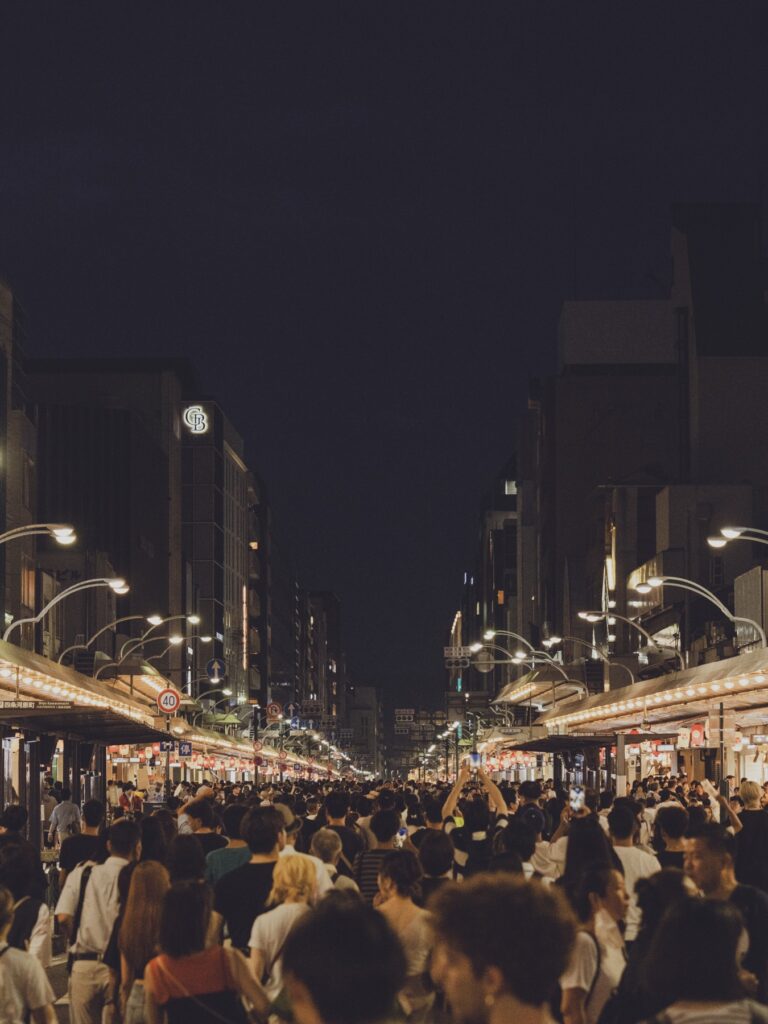
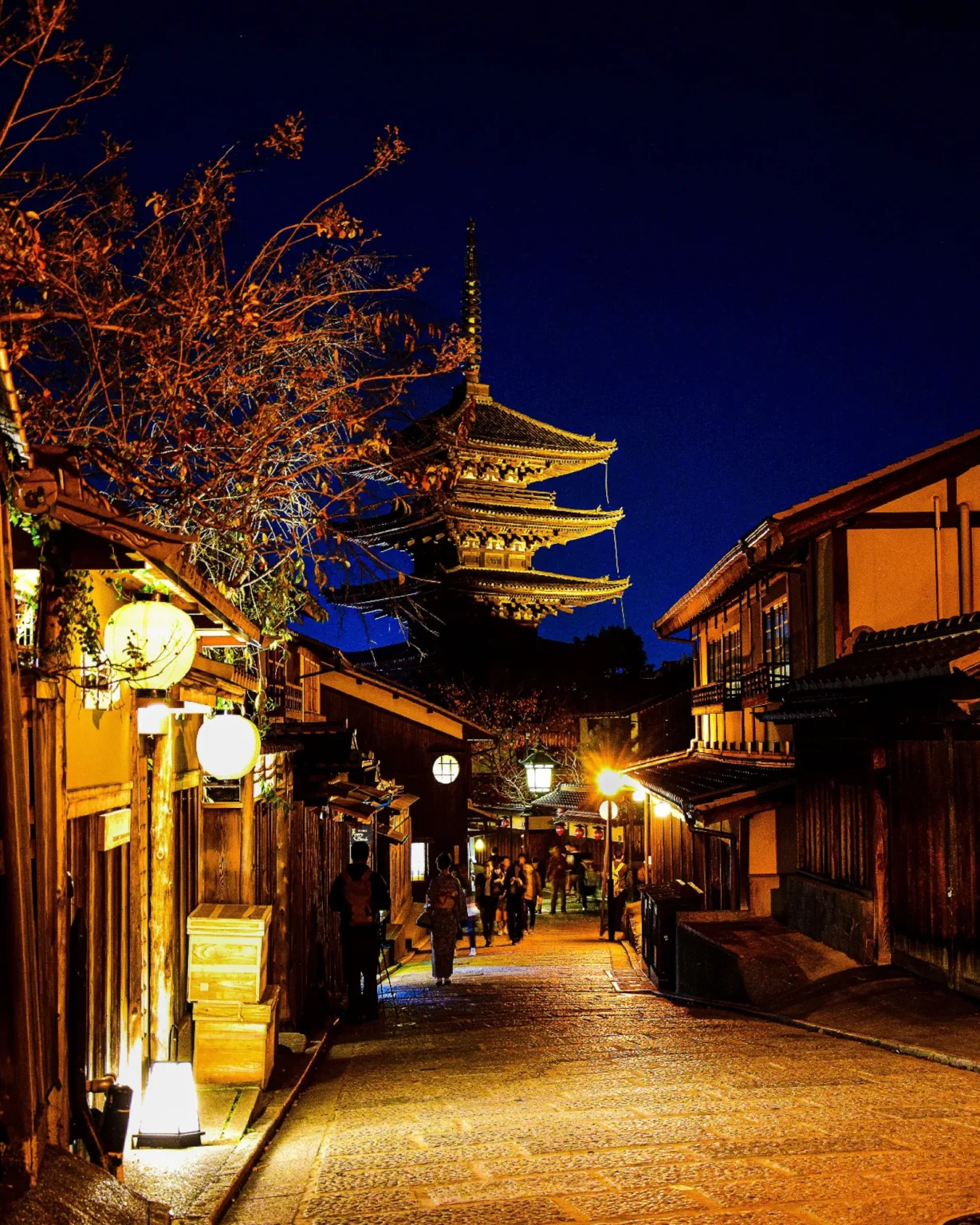
Colder than the same street in mid-afternoon, and for a long stretch: on their November 2026 light-up dates, Kodai-ji, Kiyomizu-dera and Eikan-do close their gates, and Sapporo’s Odori illumination switches off, four to six hours after sunset.
On a phone, swipe the table sideways for each venue’s 2026 dates and entry times; the Kyoto ones are repeated in the paragraph under it.
| Venue | Gates close or lights off (time after sunset, November 2026) | 2026 dates and entry |
|---|---|---|
| Kodai-ji, Kyoto | 22:00 (4 h 57 min to 5 h 14 min) | 23 Oct – 13 Dec; lights on at 17:00, last entry 21:30; no changeover between day and night visitors |
| Kiyomizu-dera, Kyoto | 21:30 (4 h 41 min to 4 h 44 min) | 21–30 Nov; last entry 21:00 |
| Eikan-do, Kyoto | 21:00 (4 h 11 min to 4 h 14 min) | 20 Nov – 6 Dec; night entry 17:30–20:30, separate from the day session |
| Sapporo White Illumination, Odori | Lights off 22:00 (5 h 53 min to 5 h 59 min) | 20 Nov – 25 Dec; lit from 16:30 |
| Fujikawaguchiko Autumn Leaves Festival | Lights off 21:00 (lit from sunset) | 7–29 Nov; end time from the organiser’s 2026 notice |
Those are closing times, not how long a night session lasts or how long you’ll stay. The 2026 night openings run 23 October – 13 December at Kodai-ji (last entry 21:30), 21–30 November at Kiyomizu-dera (last entry 21:00) and 20 November – 6 December at Eikan-do. Eikan-do’s night session is separate from its day session: it admits visitors from 17:30 to 20:30 and closes its gates at 21:00, three and a half hours after night admission opens. Kodai-ji runs straight on from the day, with the lights on from 17:00.
The sunset times are from the National Astronomical Observatory of Japan (NAOJ) for 2026. The table counts from Kyoto’s 17:03 on 1 November, 16:49 on 20 and 21 November and 16:46 from 27 November, and from Sapporo’s 16:07 on 20 November and 16:01 on the 30th; Tokyo’s sunset runs from 16:46 on 1 November to 16:28 on the 30th. NAOJ calculates them for a sea-level point in each city with a clear horizon and ignores mountains, so they aren’t a sunset time for the Fuji lakes.
Of the five light-ups in the table, this guide gives November 2025 evening readings for two: Sapporo’s Odori illumination and the Autumn Leaves Festival. Between 20 and 30 November 2025, JMA’s Sapporo station, at the observatory in Chuo-ku rather than on Odori itself, averaged 5.0°C at 8 p.m., with 8 p.m. readings from 1.1°C to 8.0°C. Between 7 and 29 November 2025, the same dates as the 2026 Autumn Leaves Festival, JMA’s Kawaguchiko station averaged 5.3°C at 8 p.m., from 0.0°C to 9.9°C. Both are single-year readings from 2025.
A layer for standing still
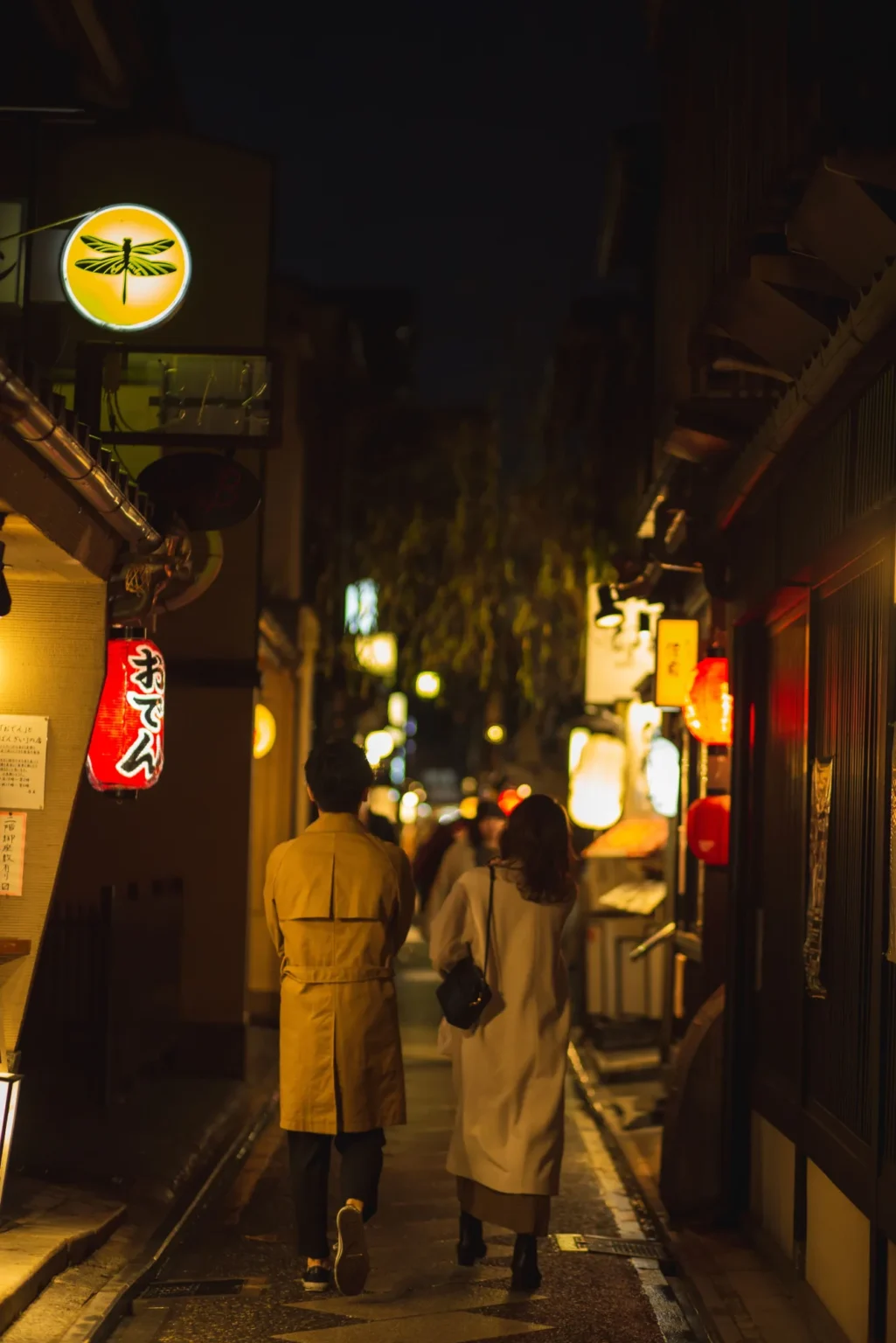
An insulated or down jacket that closes to the chin, worn over the city layers. It goes on when you stop walking to queue or to stand at a viewpoint.
Hands, head, neck
Gloves you can use a phone screen with, a hat, and a scarf or neck warmer. They weigh little and fit in a pocket until the sun goes down.
For the standing part. Stick-on heat packs go on your clothing; the product listing says not to put them directly on skin. If you’d rather have a supply waiting at your hotel, these outdoor stick-on heat packs (two packs of 10) on Amazon Japan ship to addresses in Japan; check that your front desk will hold a parcel for you before you order (how Amazon Japan delivery to your hotel works).
As an Amazon Associate I earn from qualifying purchases.
Fuji lakes, Okunikko and the Japan Alps in November: dawns close to Sapporo’s, or colder
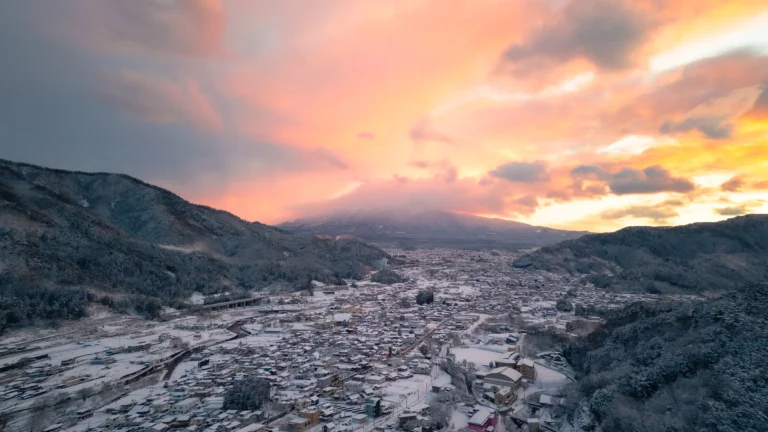
Go up to the Fuji lakes or Okunikko and the early mornings turn wintry. JMA’s Kawaguchiko station averages 9.1 November days with a low below 0°C, close to Sapporo’s 9.7, and its Okunikko station by Lake Chuzenji averages 15.1. The afternoons don’t match: Kawaguchiko’s normal November high is 13.8°C, about 5°C above Sapporo’s 8.7°C.
Everything in this table is a JMA 1991–2020 November normal; the third column is the normal low for the last ten days of the month.
| JMA station | November days with a low below 0°C | Low, 21–30 Nov |
|---|---|---|
| Tokyo | 0.0 | 7.1°C |
| Kyoto | 0.0 | 6.5°C |
| Kawaguchiko, 859.6 m (Fuji Five Lakes) | 9.1 | 0.5°C |
| Sapporo | 9.7 | −0.4°C |
| Okunikko, 1,291.9 m (by Lake Chuzenji) | 15.1 | −1.3°C |
Osaka, like Tokyo and Kyoto, averages 0.0 such days. The normal rounds an average of under 0.05 such days per November to 0.0, so it tells you such lows are at most very rare, not that they cannot happen. Through the month, Kawaguchiko’s ten-day normal lows run 4.0°C, 2.2°C and 0.5°C against Sapporo’s 4.0°C, 1.3°C and −0.4°C, never more than 1°C apart.
At the Fuji Five Lakes, a day trip from Tokyo, JMA’s Kawaguchiko station averages 9.1 November days with a low below 0°C. Sapporo averages 9.7; Tokyo, Kyoto and Osaka, 0.0.
JMA counts these by calendar day rather than by morning, but at the lake in November 2025 they were mostly mornings: of the 13 such days that month, 12 bottomed out between 04:45 and 06:56, and one dipped to −1.0°C at 23:50. No count of these below-freezing days turned up in the English guides checked for this article on 28 September 2026.
The Fuji Five Lakes
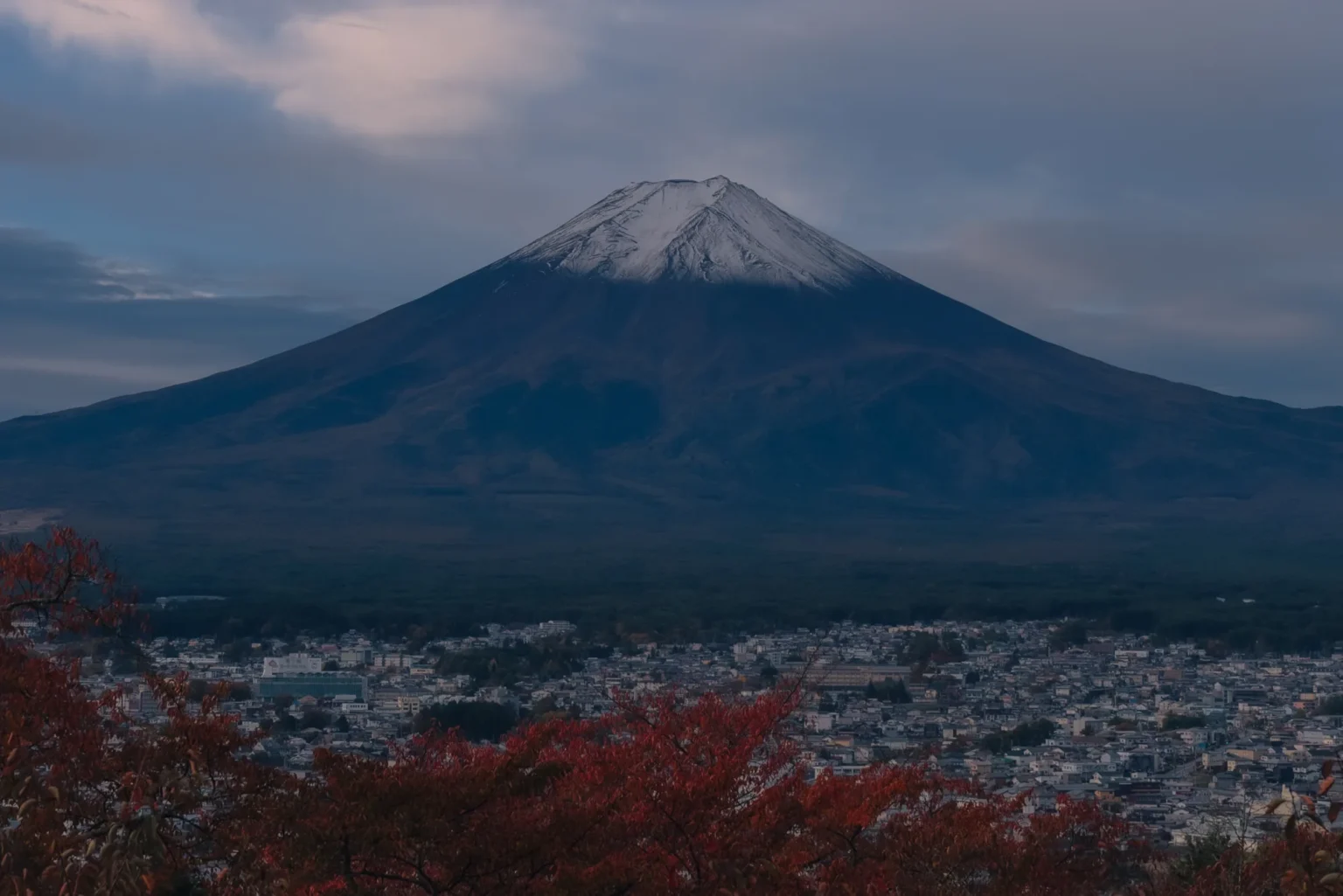
I live in Fujiyoshida, next door to Fujikawaguchiko, the town around Lake Kawaguchi. JMA’s Kawaguchiko station there is an automated station at 859.6 m. In November 2025 it recorded 13 days with a below-freezing low; the first came on 4 November (−1.1°C) and the coldest on 20 November (−2.9°C), yet 17 November reached 19.5°C.
On the afternoon of 19 November 2025 I was on the north shore of Lake Kawaguchi. The station’s hourly readings for that day were −1.2°C at 6:00, 9.4°C at 14:00, 0.0°C at 20:00 and −0.3°C at 21:00. Early November is gentler than late November: the ten-day normal lows fall from 4.0°C to 0.5°C, and at 6:00 on 2 November 2025, when I was out before sunrise at Arakurayama Sengen Park in Fujiyoshida, the station read 3.7°C.
The Fujikawaguchiko Autumn Leaves Festival (Momiji Matsuri) runs 7–29 November 2026, lit from sunset to 21:00 according to the organiser’s 2026 notice; check its page again before you go. Parking and the buses back are covered in Fujikawaguchiko Autumn Leaves Festival 2026. For clothing near Fuji month by month, see Mt Fuji snow and what to wear in winter, and for the lake towns set against the summit and Tokyo, Mt Fuji weather, zone by zone.
Nikko: the town and Okunikko are different trips
“Nikko” covers two climates. JMA’s Okunikko station, by Lake Chuzenji at 1,291.9 m, averages 15.1 November days with a low below 0°C; its normal November high is 8.6°C and its ten-day normal lows run 1.8°C, 0.1°C and −1.3°C. In November 2025 it logged 15 days with a low below 0°C, three more with a low of exactly 0.0°C, and a lowest of −4.1°C on 20 November.
Down in the town, JMA’s Nikko-Higashimachi station (561 m) started in November 2022 and has no normals. In November 2025 its low went below 0°C on three days, 18–20 November, and on the 18th only late at night, so two of the three were sub-zero mornings.
Above the Irohazaka. Nikko City tells drivers that roads can be frozen even on clear days with no snow from the end of autumn, and names Okunikko, above the Irohazaka, among the hilly districts where cars on normal tyres are seen stuck. That advice is for drivers; for walking, I read it as a reason to wear soles with grip up there. Nikko’s official tourism site recommends a thick jacket in Okunikko in autumn (September to November), because it can stay cold even during the day. For when the colour peaks, see Japan’s 3 great autumn foliage spots.
Kamikochi and the Alpine Route
Kamikochi’s season ends in mid-November. Alpico runs its 2026 buses on all three routes into Kamikochi until 15 November; the road is closed to private cars all year, and from 16 November it’s closed to all traffic, buses included. The official Kamikochi site lists 8.9°C highs and −1.1°C lows for the first half of November, averages for 2022 calculated from Kamikochi Visitor Center (Ministry of the Environment) data. Its English site puts Kamikochi 5–10°C below Matsumoto, which itself averages 7.8 November days with a low below 0°C (JMA).
For November, the official site calls a down jacket and warm, windproof tops and bottoms essentials, and adds a neck warmer and gloves that work with a phone screen; it notes that snow sometimes falls even around Kappa-bashi. Everyday sneakers are fine for the walk from Taisho-ike to around Yokoo, it says, but in rain, puddles or mud hiking or trekking shoes are better. Month-by-month timing is in Best Time to Visit Kamikochi 2026.
Tateyama Kurobe Alpine Route. The route’s own clothing page files November under “Winter Style”: temperatures often drop below freezing, and the vehicles are heated but it’s very cold one step outside. Even without a walk planned you may cross snow, on the dam crest for instance, so it recommends waterproof, non-slip shoes and lists gloves, disposable heat packs, a scarf, a wool hat, a neck warmer and sunglasses. The 2026 timetable for the through route between Tateyama Station and Ogizawa covers 4–30 November, and the operator warns that the Bijodaira–Murodo section may be suspended or retimed after snow.
Day trip or overnight?
A day trip that arrives mid-morning and leaves before dusk meets the lakes at their mildest. The Japan National Tourism Organization (JNTO) lists both the Fuji Five Lakes and Nikko among day trips from Tokyo, though it suggests more than one day for the lakes if you can spare it, and says many travellers stay the night in Nikko. The 19 November 2025 readings above make the point: the station read 9.4°C at 14:00, and someone who stays the night can meet both ends of such a day. Pack the insulated layer if you’re sleeping there, setting out before dawn or staying for an evening light-up. For a midday visit to the Fuji lakes, the city layers plus a warmer jacket will do; for Okunikko, Nikko’s tourism site recommends a thick jacket in autumn.
Sleeping by Lake Kawaguchi
Sleeping by the lake means packing for more than the mild afternoon: JMA’s Kawaguchiko station has a normal November high of 13.8°C but averages 9.1 November days with a low below 0°C (1991–2020 normals). Check each property’s cancellation terms before you book.
Hokkaido in November: a real winter coat and boots with grip
Sapporo in November is the start of winter. By JMA’s normals the first snow falls around 28 October and snow first lies on the ground around 12 November, so bring a proper winter coat and boots with grippy soles. This section draws on JMA’s record for Sapporo, not a November visit of mine, with the 2025–26 season’s dates in the third column.
| Sapporo | Normal date (JMA) | 2025–26 season |
|---|---|---|
| First snow | 28 October | 23 October 2025 |
| First snow lying (1 cm or more) | 12 November | 8 November 2025 |
| Snow cover that lasts the winter | 6 December | 3 December 2025 |
The 2025–26 season ran three to five days early. The normals cover the seasons from August 1990 to July 2020. Sapporo also averages 9.7 November days with a low below 0°C and 0.9 days when the temperature stays below 0°C all day.
In November 2025 JMA counted 14 snow days in Sapporo. New snow of 1 cm or more was measured on five of them, 27 cm in all, including 13 cm on 8 November, when 12 cm lay on the ground. The month’s lowest was −2.2°C on 18 November; its highest, 16.1°C on 5 November.
Sapporo White Illumination. The Odori site runs 20 November – 25 December 2026, lit 16:30–22:00 (until midnight on 23–25 December), and the organiser says the hours may change without notice. NAOJ puts Sapporo’s sunset at 16:07 on 20 November, so the lights come on after sunset, and the November 2025 8 p.m. readings in the light-up section above (5.0°C on average, 1.1°C at the lowest) show the kind of evening to dress for. Boots matter as much as the coat: with the first lying snow normally around 12 November, be ready for snow and ice underfoot in the second half of the month.
Can you still swim in Okinawa in November?
It’s warm enough to want to, but Naha’s Naminoue Beach lists lifeguarded swimming for April to October, 9:00–18:00, so November falls outside that beach’s season. That covers one managed city beach in Naha only, and this section draws on official figures, not a November visit of mine.
Naha averages 15.7 November days with a high of 25°C or more, and 0.1 days of 30°C or more (JMA 1991–2020); the normal low for the last ten days of the month is 19.3°C. In November 2025 Naha reached 30.2°C on both 9 and 13 November, its daily highs averaged 26.0°C, and its lowest daily minimum was 16.6°C, on 30 November. Summer clothes will do by day, with one light long-sleeve layer for the evenings. The sun also sets later than in Tokyo: 17:48 on 1 November and 17:37 on the 30th (NAOJ, 2026).
Temples, ryokan and onsen towns: what changes when your shoes come off
Your socks become part of the outfit, and a small bag for your shoes is worth packing.
At temples
The organisers of Kyoto City’s winter (January–March 2026) and summer (July–September 2026) special openings ask visitors not to go barefoot, to wear socks to protect the cultural property, and to bring a shoe bag to cut plastic waste. Neither campaign runs in November. For a November example, Eikan-do’s 2026 page for its autumn exhibition and night light-up asks visitors to bring a shoe bag. Both are phrased as requests.
At a ryokan
The yukata you’re given is for the bath, dinner and bed. Go! NAGANO, the official tourism site of Nagano Prefecture and its tourism organisation, says it can be worn “even when going to bed”, and the Japan Ryokan Association’s guest guide calls it a cotton kimono “worn while sleeping or relaxing”, with a padded tanzen or a haori coat over it. Most ryokan provide one, so if every night is in a ryokan, pyjamas can usually stay home.
Toothbrush and razor
Since April 2022, Japan’s plastics law has required hotels and ryokan that hand out free plastic toothbrushes, razors, combs, hairbrushes and shower caps to cut back on them, so they may be at the front desk, charged for or given on request instead of in your room. Pack your own toothbrush.
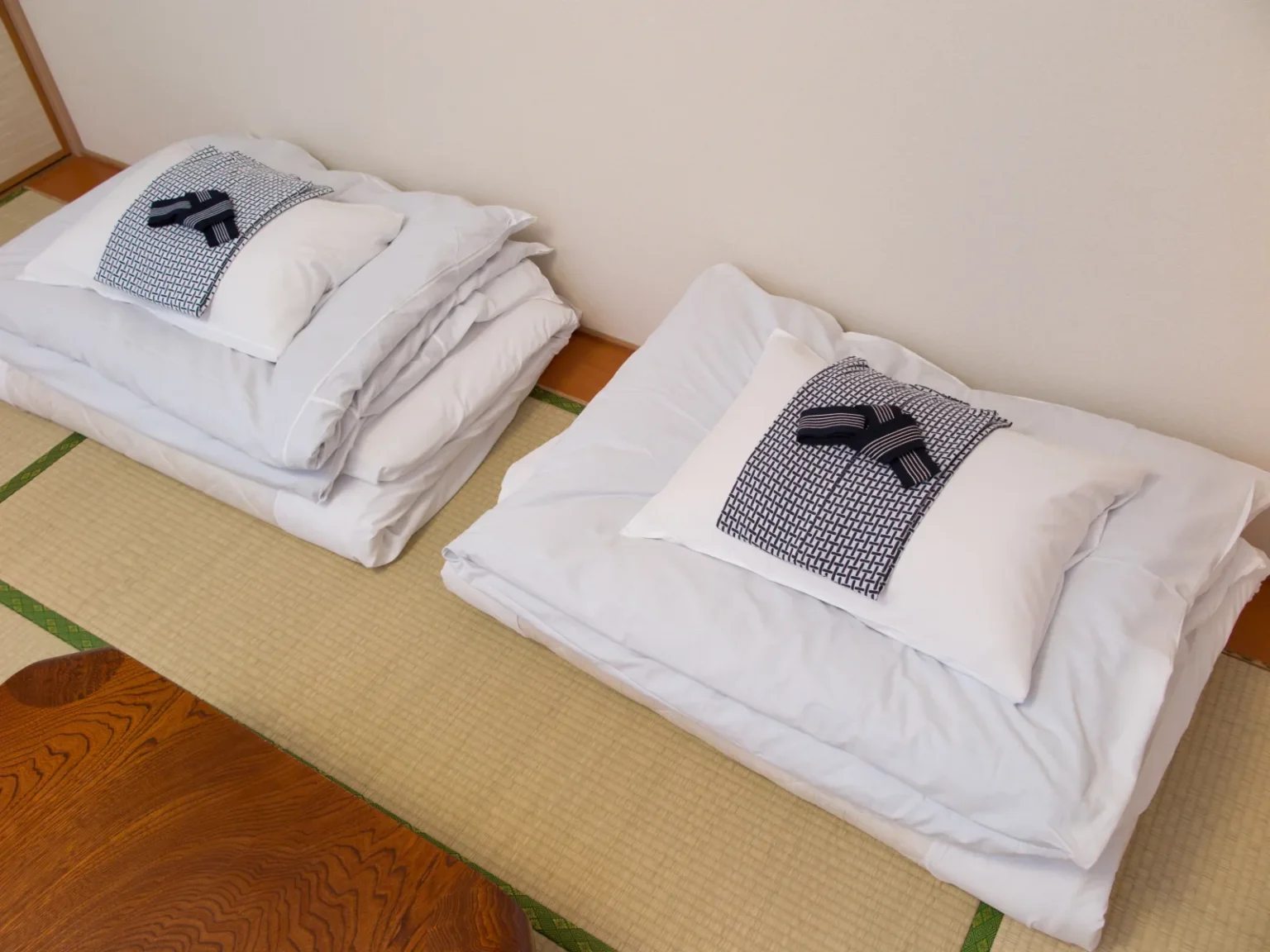
For walking between outdoor baths in an onsen town on a cold evening, take a warm layer of your own and ask the ryokan whether it lends a tanzen or haori. How the baths themselves work is in Onsen Etiquette in Japan, and what a ryokan stay involves, from booking to meals, is in the Japanese Ryokan Stay Guide 2026.
Once your shoes are off, your socks are what’s on the wooden floor. If you’re flying in from the US, buy thick ones before you leave: merino wool hiking socks (3 pairs; check the size chart) on amazon.com. As an Amazon Associate I earn from qualifying purchases.
Autumn-leaf hikes: grip, a shell and a bear check
Dress for a hike: layers you can shed on the climb, a waterproof shell and shoes with grip. The official sites for Kamikochi and the Alpine Route say the same about shoes. Kamikochi recommends hiking or trekking shoes in rain and mud because they’re waterproof and less slippery, and the Alpine Route recommends waterproof, non-slip shoes in November.
Layers
A base layer that dries fast, a fleece, and the jacket from your city kit. Take one off before you start sweating on the climb and put it back on at the top.
Shell
A light waterproof jacket also keeps the wind off at an exposed viewpoint.
Shoes
Soles with real tread for wet leaves, mud and, higher up, ice.
Near Tokyo, the Mt Takao autumn-leaf festival page run by the Hachioji tourism and convention association still showed the 2025 festival, 25 October – 14 December 2025, when checked on 28 September 2026. It says the leaves are usually at their best from mid-November to early December. For the 2026 timing across the country, follow the Japan Fall Foliage Forecast 2026.
Check for bears before you go. In the year to March 2026, Japan recorded 216 bear attacks involving 238 people, 13 of whom died. From April to August 2026 there were 56 more, involving 60 people, 6 of whom died. These are the Ministry of the Environment’s provisional figures as of the ministry’s update of 9 September 2026 and may be revised; the ministry aims to post each month’s count in the first week of the next month. Before a forest walk, read the local notices for the trail you’re on.
Forgot a layer? Buying one after you land
Most gaps can be filled after you land. Disposable heat packs (kairo) are sold at convenience stores and drugstores, and for a missing base layer, hat or gloves, a clothing shop or a delivery to your hotel will do.
If you shop tax-free, the rules change for purchases from 1 November 2026: shops charge the full tax-inclusive price, and the tax is refunded only after customs confirms at departure that you’re carrying the goods out of Japan, so consumables you use here, even partly, won’t qualify, and a layer you take out of its packaging to wear may not either. The details are in the tax-free section of Japan in November 2026.
If you’d rather not go shopping, an Amazon.co.jp order can go to your hotel if the front desk agrees to hold it; Amazon Japan delivery to your hotel covers the steps and the alternatives.
A base layer, delivered. One option for a forgotten base layer: a men’s fleece-lined thermal top-and-bottom set on Amazon Japan, sent to your hotel once the front desk has said yes.
As an Amazon Associate I earn from qualifying purchases.
Frequently asked questions
Do I need a winter coat for Japan in November?
Not for Tokyo, Kyoto or Osaka, which average 0.0 November days with a low below 0°C (JMA 1991–2020); layers and a jacket you can take off do the job. Bring one for Hokkaido. Take an insulated layer if you’re sleeping at the Fuji lakes, where JMA’s Kawaguchiko station averages 9.1 such days, and a thick or down jacket for Okunikko (15.1 such days), Kamikochi or the Alpine Route, even by day.
What should I wear in Tokyo in November?
Long sleeves, a light knit or fleece and a jacket you can take off, because you’ll keep moving between the street and trains, shops and other indoor spaces. In November 2025 JMA’s Tokyo station ranged from 5.1°C to 22.4°C.
What should I wear to Kyoto’s night light-ups in November?
Your day layers plus an insulated jacket that closes to the chin, a hat, gloves and something for the neck. On their 2026 night-opening dates, Kodai-ji (23 October – 13 December), Eikan-do (20 November – 6 December) and Kiyomizu-dera (21–30 November) close their gates at 22:00, 21:00 and 21:30, more than four hours after sunset. Bring a shoe bag too; Eikan-do’s 2026 autumn page asks for one.
How cold is Lake Kawaguchiko in November?
Mild by day, with a low below 0°C on 9.1 days in an average November at JMA’s Kawaguchiko station, close to Sapporo’s 9.7. The station’s normal November high is 13.8°C, and on 19 November 2025 it read −1.2°C at 6:00 and 9.4°C at 14:00.
Does it snow in Sapporo in November?
Usually, yes. JMA’s normals put Sapporo’s first snow around 28 October and the first snow lying on the ground around 12 November; in the 2025–26 season, snow first lay on 8 November 2025.
Can you swim in Okinawa in November?
This guide checked one beach: Naha’s Naminoue Beach lists lifeguarded swimming from April to October, so November is outside its season. For any other beach or tour, check its own season and current conditions. It is still warm: Naha averages 15.7 November days with a high of 25°C or more.
Can I buy warm clothes in Japan if I under-pack?
Yes. Disposable heat packs (kairo) are sold at convenience stores and drugstores, and an Amazon.co.jp order can go to your hotel if the front desk agrees to hold it.
Dates to re-check before you go. The Autumn Leaves Festival’s 21:00 finish comes from the organiser’s 2026 notice; look at its page again before 7 November. Mt Takao’s festival page still showed the 2025 festival on 28 September 2026. The environment ministry aims to post each month’s bear-injury count in the first week of the next month. Sapporo’s organiser says illumination hours may change without notice, and the Alpine Route’s Bijodaira–Murodo section can be suspended after snow.
On a trip built around Tokyo, Kyoto and Osaka, a jacket over layers covers most hours of the day. Plan the extra warmth for evenings at the light-ups, dawn and evening at the Fuji lakes, the mountains even by day, and Hokkaido; the rest of the bag can stay light.
Sources
Primary sources behind the figures above, checked on 28 September 2026
- JMA November normals, 1991–2020 (days with a low below 0°C, highs and lows): Kawaguchiko, Sapporo, Okunikko, Tokyo, Kyoto, Osaka, Naha, Matsumoto
- JMA ten-day normals: Kawaguchiko, Sapporo, Okunikko, Tokyo, Kyoto, Naha
- JMA observations, November 2025: Kawaguchiko, daily, Kawaguchiko, hourly on 19 November, hourly on 2 November, Okunikko, daily, Nikko-Higashimachi, daily, Nikko-Higashimachi, 10-minute readings on 18 November, Tokyo, daily, Kyoto, monthly, Kyoto, daily, Sapporo, monthly, Sapporo, daily, Sapporo, hourly on 20 November, Naha, monthly, Naha, daily
- JMA Sapporo: first snow and lying-snow normals, 2025–26 season dates; JMA station list and Kofu observatory notice on the Kawaguchiko station
- NAOJ 2026 sunrise and sunset: Tokyo, Kyoto, Sapporo, Naha; NAOJ on how the times are calculated
- Night openings, 2026: Kiyomizu-dera, Eikan-do, Kodai-ji, Sapporo White Illumination, Odori, Fujikawaguchiko Autumn Leaves Festival
- Kamikochi: official season and clothing guide, official English weather page, Alpico 2026 buses: Matsumoto–Shin-Shimashima, Sawando, Hirayu, Nagano Prefecture road rules
- Tateyama Kurobe Alpine Route: clothing advice, 2026 timetables
- Nikko: Nikko City winter driving notice, Nikko official tourism site, basic information; JNTO, easy day trips from Tokyo
- JR East FAQ on train heating; Naminoue Beach swimming hours
- Temples and ryokan: Kyoto City winter special openings, 2026, Kyoto City summer special openings, 2026, Go! NAGANO on ryokan yukata, Japan Ryokan Association guest guide, Ministry of the Environment plastics law FAQ, items for the lodging industry
- Hikes: Mt Takao Momiji Festival page, Ministry of the Environment bear pages and FY2026 injury figures, updated 9 September 2026
- Tax-free: National Tax Agency Q&A on the refund system, National Tax Agency detailed Q&A (question 39, on goods used in Japan), Japan Tourism Agency traveller page
Join travelers discovering Japan's hidden side
Weekly dispatches from off-the-beaten-path Japan — spots and stories you won't find in guidebooks.
No spam. Unsubscribe anytime.
Welcome aboard!
You're in. See you in your inbox soon.