Aichi Prefecture · Toyota City · Asuke · November maples
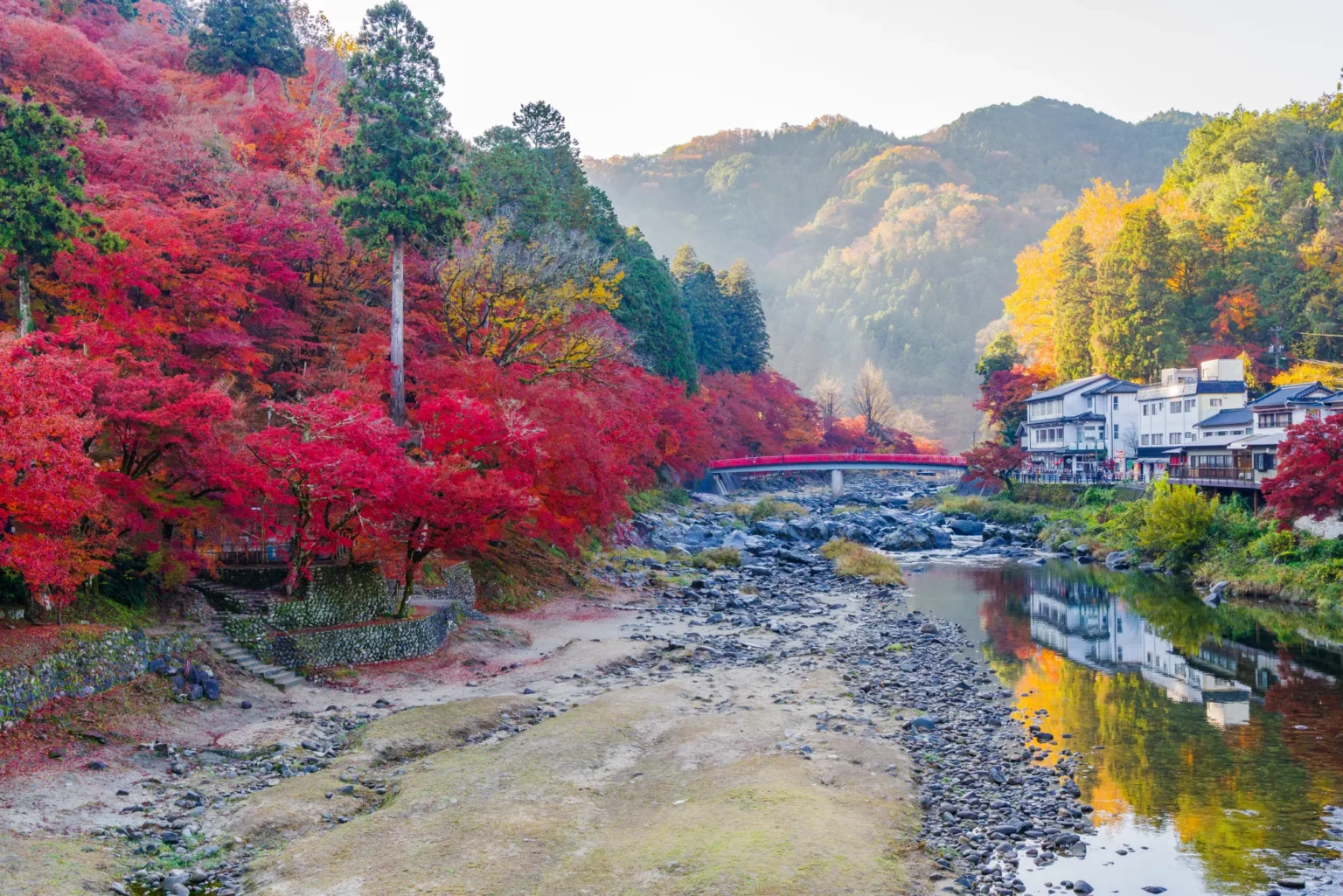
Korankei is a maple gorge on the Tomoe River in Asuke, Toyota City, reached from Nagoya by train and bus. The Asuke Tourism Association has set the 71st Korankei Momiji Matsuri for 1–30 November 2026, with the light-up every evening from sunset to 9 p.m. The usual peak is mid to late November; tenki.jp forecasts peak colour from 16 November. Go on a weekday if you can: the association warns that on November weekends and holidays the bus journey can take over two hours.
When are the Korankei maples at their best in 2026?
The Asuke Tourism Association says the colour usually peaks from mid to late November, “a little earlier or later depending on the year.” Two forecasters publish a date for Korankei:
| Source (read 11 Oct 2026) | What it says for Korankei |
|---|---|
| tenki.jp (Japan Weather Association) | Peak forecast from 16 November; status as of 11 October: green leaves, no colour yet |
| Weathernews | Peak from about 23 November; leaves start to fall from about 7 December; its status line still read “not yet”, dated 3 September |
| Asuke Tourism Association | Usual peak mid to late November |
The two forecasts are a week apart and may change, so check them again before you travel. Between them, the three sources point to the second half of November. For background on the forecasters, see who actually forecasts Japan’s autumn colours.
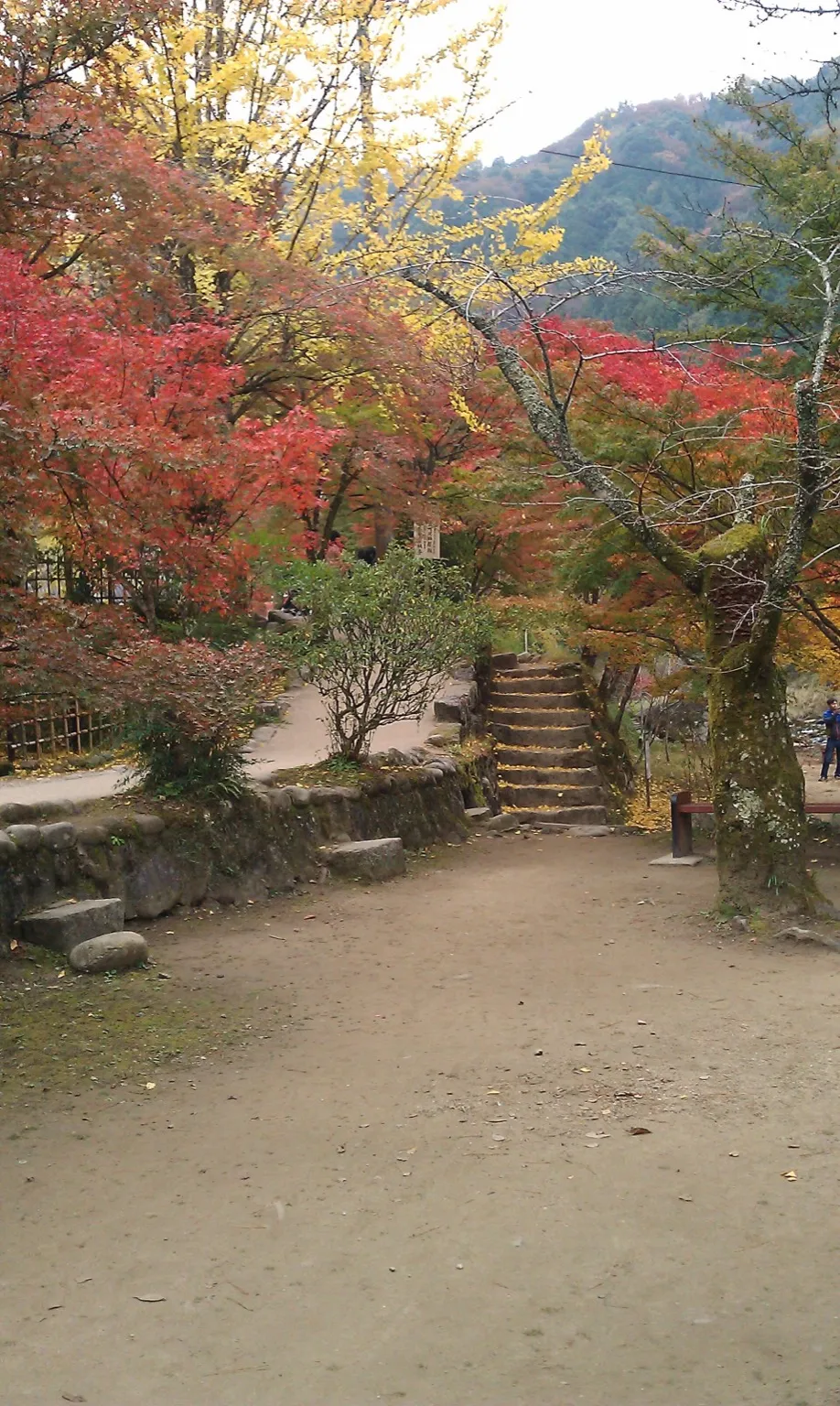
The association traces the maples to Sanei, the 11th priest of Koshakuji temple, who is said to have planted them in 1634 along the approach by the Tomoe River, reciting a sutra for each tree. The trees on Iimori-yama, the hill above, were planted from the end of the Taisho era into early Showa by local youth and women’s groups. It lists about 11 kinds of maple. On the number of trees, the association’s own pages say both about 3,000 and 4,000.
2026 Momiji Matsuri dates and light-up hours
The 71st Korankei Momiji Matsuri runs from Sunday 1 November to Monday 30 November 2026. The festival ground is Korankei Hiroba, the riverside square, and the park itself is open at all hours without a fee. The schedule below is from the association’s 2026 page, with its rain notes where it gives them.
| Event (2026) | When |
|---|---|
| Iimori-yama light-up | 1–30 Nov, every day, sunset to 21:00; no light-up on Sat 31 Oct |
| Opening ceremony, with Sanshu Asuke taiko drums | Sun 1 Nov, 16:00–17:00 (drums 16:00–16:30, cancelled in rain) |
| Bamboo lanterns at Koshakuji (about 1,000) | Saturdays and Sundays, 1–29 Nov, 18:00–20:30; cancelled in rain |
| Wishing candles on the riverbank (about 800) | Saturdays and Sundays, 7–29 Nov, 18:00–20:30; ¥500 a candle; cancelled in rain; entry to the riverbank may be restricted |
| Monkey performance | From 9:00 on most days of the festival; cancelled in rain |
| Junior marching band parade through Asuke | Sun 8 Nov from 13:00; cancelled in rain |
| Chindon street bands | 8 Nov, 23 Nov and 28 Nov, about 10:00–15:00; cancelled in rain |
| DENKEN stamp rally at three historic buildings in Asuke (free) | 31 Oct–30 Nov, during each building’s opening hours |
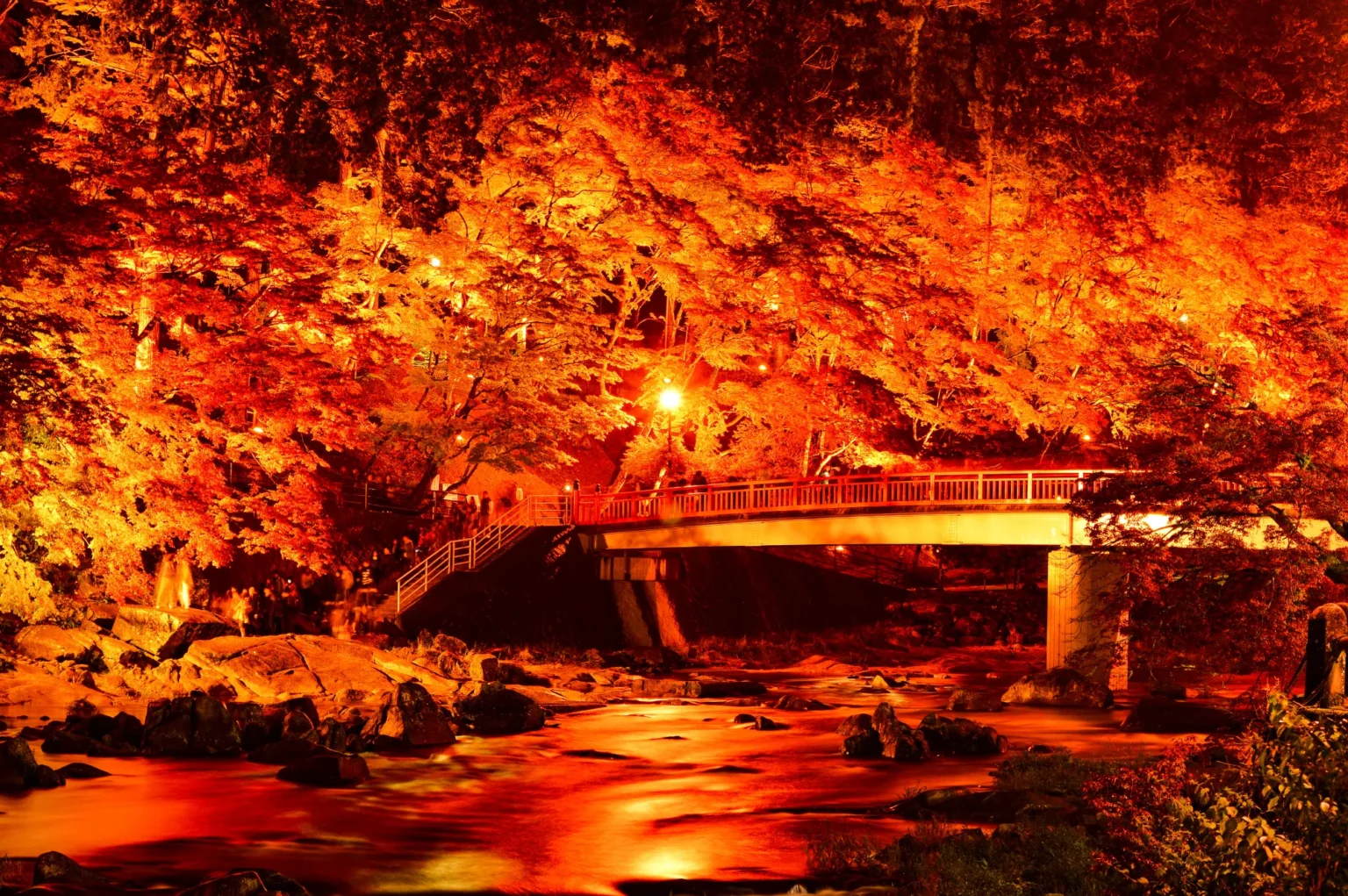
The association describes the light-up as Iimori-yama turning gold, with the red of Taigetsu-kyo bridge and the lights reflected in the Tomoe River. For timing, the National Astronomical Observatory of Japan lists sunset in Nagoya at 16:58 on 1 November, 16:47 on 15 November and 16:41 on 30 November 2026: before 5 p.m. all month.
Evenings in a river valley in late November are cold; what to wear in Japan in November has a section on night light-ups.
How bad are the crowds, traffic and parking?
The association’s access page says it plainly: on Saturdays, Sundays and holidays in November, traffic jams can make the bus journey take more than two hours, so please come on a weekday. In 2026, November holidays fall on Tuesday 3 and Monday 23 November.
| Parking in November 2026 | Detail |
|---|---|
| Fee | The association’s 2026 festival page lists ¥1,000 per entry for an ordinary car and ¥3,000 for a tour bus or microbus; fees for each temporary or overflow car park are not listed (checked 11 Oct 2026). Its Iimori-yama page gives ¥500 per entry outside November |
| Reservations | No reserved parking in 2026 |
| Regular car parks | Miyamachi (200 spaces), Asuke branch office (120), Kawami (100), Nishimachi No. 2 (70), Ochibe (60), Nishimachi No. 1 (20) |
| Opened when busy | Korankei multipurpose ground (100) and the former Iwagami-no-yu site (400) |
| Festival-only overflow | Asuke elementary, junior-high and high-school grounds and the Asuke sports ground |
| Who runs them | Sanshu Asuke Kosha, 0565-61-2300; its parking page shows which car parks are full or closed |
Car-park names and sizes are from the operator’s page for fiscal 2026; the fee and the no-reservations line are from the association’s 2026 festival page. The association’s detour map for 2026 was still “in preparation” on 11 October, with last year’s map shown in its place. Tour buses are asked to follow set routes from 14 to 30 November between 9:00 and 17:00.
Getting to Korankei from Nagoya without a car
The association lists three ways by public transport. Each ends with a bus to the Korankei stop: Meitetsu Bus from Higashi-Okazaki or Toyotashi, Toyota Oiden Bus from Josui, a station on the Meitetsu Toyota Line. None of the buses is JR. The times and fares in this table are the figures printed on the association’s English access map dated 1 April 2025; the map notes that times change with traffic, and the figures don’t include waiting for the bus.
| Route | Legs (time, fare: 2025 access map) |
|---|---|
| Via Higashi-Okazaki | Meitetsu Nagoya to Higashi-Okazaki, super express, 30 min, ¥750 (2025 access map); then Meitetsu Bus Okazaki–Asuke line (for Asuke) from the north exit, stop No. 4, 65 min, ¥900 (2025 access map) |
| Via Toyotashi | Meitetsu to Toyotashi Station; then Meitetsu Bus Yanami line (for Asuke), 50 min, ¥900 (2025 access map) |
| Via Josui | JR Chuo Line Nagoya to Tsurumai, 6 min, ¥200 (2025 access map); from Tsurumai, subway Tsurumai Line trains that run through onto the Meitetsu Toyota Line to Josui, 36 min, ¥720 for Tsurumai–Josui (2025 access map); then Toyota Oiden Bus Sanage–Asuke line (for Hyakunenso), 60 min, ¥500 (2025 access map) |
The association’s access page gives the Higashi-Okazaki bus as about 70 minutes, a little longer than the map. On the 2025 map’s normal-day times, the Higashi-Okazaki route adds up to about an hour and a half each way before any wait, which fits a day trip from Nagoya; in November, check the November bus timetable and the association’s weekend traffic warning first, and the return times if you want to stay for the light-up (below).
Bus times: the April 2026 timetables
The association says the November bus timetables differ from the usual ones; its links for the November Meitetsu Bus and Oiden Bus timetables said “in preparation” on 11 October 2026. It labels the April 2026 Oiden Bus timetable as the one for months other than November, and Meitetsu’s own timetable search notes that it doesn’t show temporary timetables for events. The times below are therefore the April 2026 timetables, not the festival ones: use them to see the pattern, then check the November timetables when they appear.
| Bus (April 2026 timetable) | Departures |
|---|---|
| Meitetsu Bus 18, Meitetsu Higashi-Okazaki Sta. to Korankei | 8 a day: first 6:35 on weekdays, 6:40 on Saturdays, Sundays and holidays; then 9:10, 10:10, 14:10, 15:10, 17:10, 18:10, 19:10 |
| Meitetsu Bus 18, Korankei to Higashi-Okazaki | 8 a day; last departure 18:48 |
| Meitetsu Bus 61, Toyotashi to Korankei | Weekdays 12 (6:25–21:45); Saturdays, Sundays and holidays 10 (7:30–21:45) |
| Meitetsu Bus 61, Korankei to Toyotashi | Weekdays 12, Saturdays, Sundays and holidays 10; last departure 20:40 on all days |
| Oiden Bus, Josui to Korankei (non-November timetable) | Weekdays 17 that reach Korankei (3 more stop at Asuke Hospital, about 10 min on foot); Saturdays, Sundays and holidays 15 |
| Oiden Bus, Korankei to Josui (non-November timetable) | Weekdays 18, last departure 21:08; Saturdays, Sundays and holidays 15, last departure 20:12 |
Set against the light-up, which ends at 21:00, the last departures from Korankei on these April 2026 timetables are:
- To Higashi-Okazaki, 18:48 every day: before the lights end. The association also notes there is no weekday bus back to Higashi-Okazaki after 19:00.
- To Toyotashi, 20:40 every day: before the lights end.
- To Josui, 21:08 on weekdays: after the lights end; 20:12 on Saturdays, Sundays and holidays: before.
The 21:08 weekday Oiden Bus is the only April-timetable bus after 21:00; that doesn’t guarantee you can watch to the end, reach the stop in time, or connect onward at Josui.
Whether the November timetables keep, add or drop any of these was not published on 11 October 2026. Until they are, don’t count on a bus after the light-up. A local taxi firm, Hinode Taxi (0565-62-0064), has its stand behind the Korankei bus stop, in the car park of the Toyota City Asuke branch office.
If Korankei is one stop on a longer JR trip
Driving to Korankei
The association’s access page lists four exits, with its own distance and time estimates (it gives no festival-time figures):
- Toyota-Matsudaira IC (Tokai-Kanjo Expressway): Prefectural Road 39 towards Iida, 14 km, about 20 min.
- Toyota-Kanpachi IC (Tokai-Kanjo Expressway): Route 153 towards Iida, 13 km, about 20 min.
- Kuragaike IC (Tokai-Kanjo Expressway): Prefectural Road 343, 11 km, about 15 min (the festival page says 12 km).
- Chikaraishi IC (Sanage Green Road): Route 153 towards Iida, 9 km, about 15 min.
The Tokai-Kanjo Expressway is now ETC-only. NEXCO Central Japan switched Toyota-Matsudaira and Toyota-Kanpachi to ETC-only on 15 April 2025, and from 9 April 2026 every interchange on the road became ETC-only, as Norimono News reported. Without an ETC unit and card, the association says to use Toyota IC on the Tomei Expressway. If you rent, ask for an ETC card with the car.
If you do drive (best on a weekday)
What’s there: the gorge, the temple, the hill and the old town
Tomoe River and Taigetsu-kyo
The gorge follows the Tomoe River, with Korankei Hiroba, the festival square, beside it. The association’s description of the light-up singles out the red of Taigetsu-kyo bridge and its reflection in the river. The wishing candles are set out on the riverbank near Tomoe-bashi bridge, below the Nishimachi No. 2 car park.
Koshakuji (香積寺)
A Soto Zen temple founded in 1427 on the site of the Asuke clan’s residence, the “Ko” in Korankei. Two cedars said to have been planted by Sanei still stand. The association’s temple page gives ¥300 for a goshuin seal. On festival weekends its approach is lined with bamboo lanterns.
Iimori-yama (飯盛山)
The hill at the centre of Korankei, 251 m high and 131 m above the road, an Aichi prefectural historic site with sacred rocks at the summit. There is no toilet at the top. During the 2026 festival the summit routes are closed at night; the Koshakuji grounds below stay open.
Sanshu Asuke Yashiki
Inside Korankei Hiroba; its operator pitches it as a place to learn how rural people used to live, with craft workshops. ¥300 for adults, ¥100 for elementary to high-school students; 9:00–17:00 (last entry 16:30); usually closed on Thursdays but open every day in November.
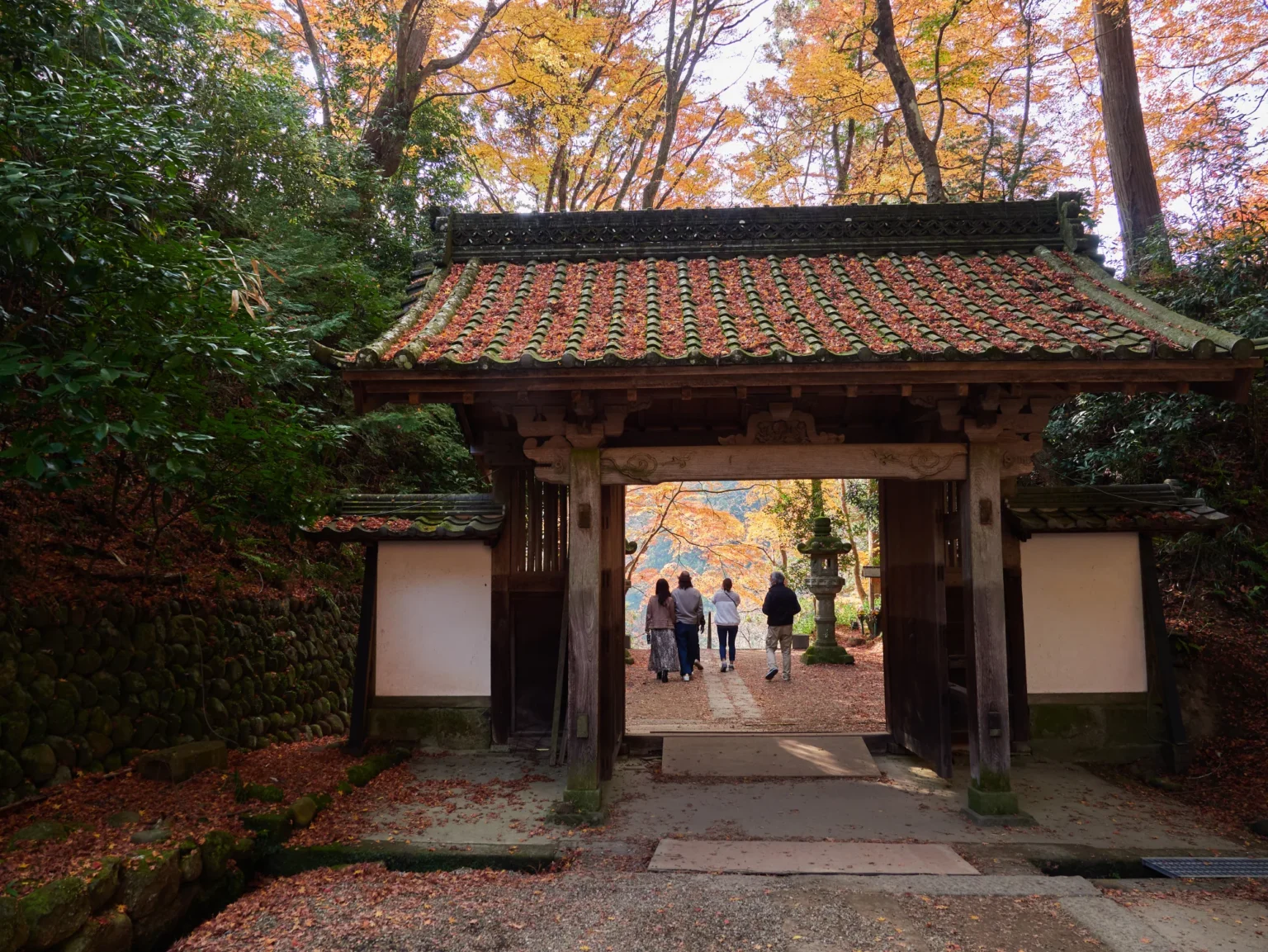
Korankei got its name in 1930 from Motoyama Hikoichi, then president of the Osaka Mainichi newspaper: “ko” from Koshakuji and “ran” for the cool air over the Tomoe River, according to the association.
Asuke, the town next to the gorge
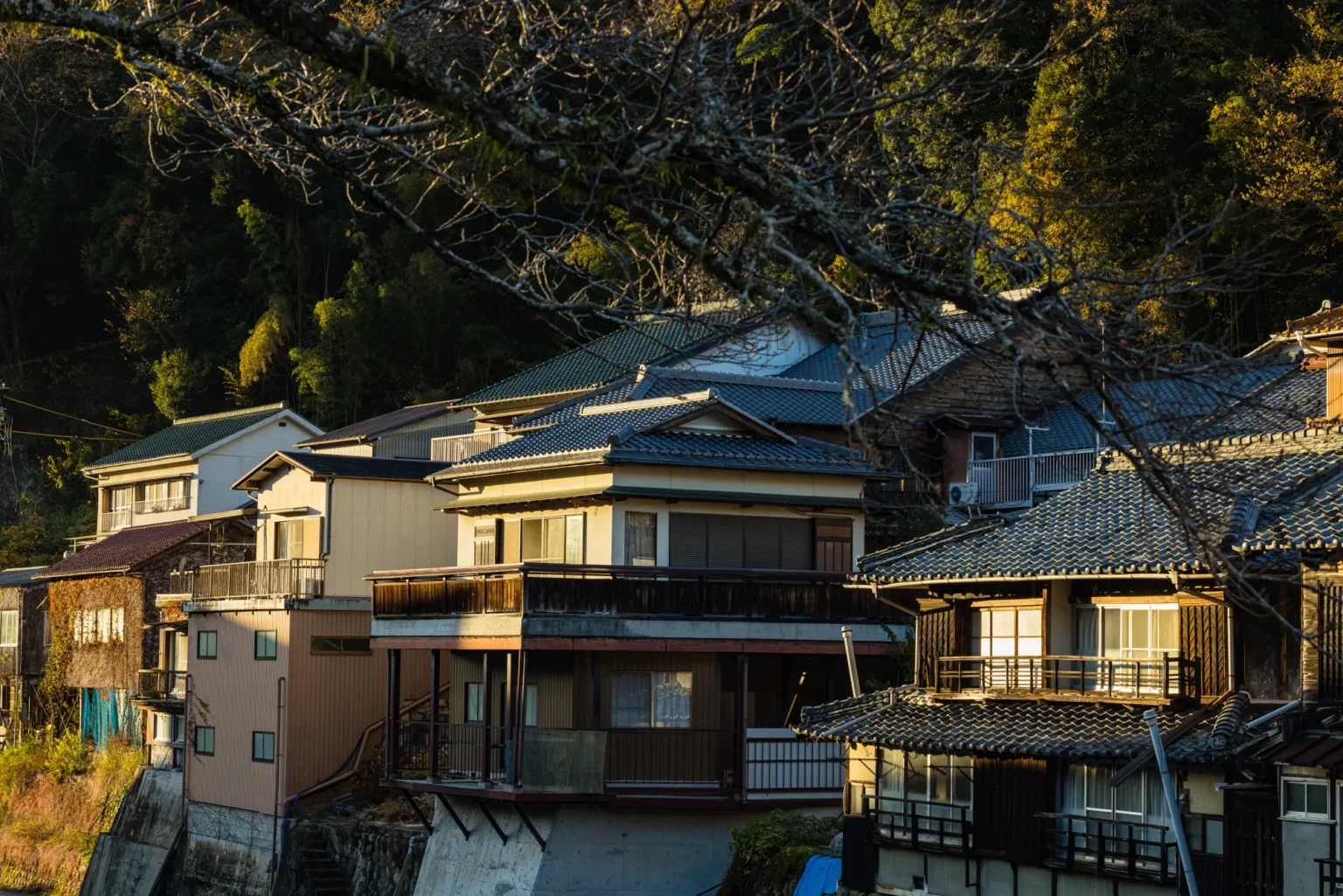
Korankei sits at the edge of Asuke, a post town on the road that carried salt from Mikawa Bay inland to Shinshu and Mino, according to the association. It says the townscape runs for about 2 km and was rebuilt after a fire in 1775 with plastered merchant houses; in June 2011 it became the first district in Aichi Prefecture chosen as a national Important Preservation District for Groups of Traditional Buildings. The festival’s free DENKEN stamp rally (see the table above) uses three of its historic buildings.
Where to stay for Korankei
The association’s lodging page (checked 11 October 2026) lists six places to stay in Asuke itself: Kobatoya, The Ninja Mansion, Maruhachi (まる八), Yamashiroya Ryokan (山城屋旅館), Tamadaya Ryokan (玉田屋旅館) and Hyakunenso (百年草), the stop where the Oiden Bus terminates. It lists Koran-tei (香嵐亭) as closed indefinitely from 1 February 2025. The same page lists hotels in the wider area, including in Toyota City. They are given here as the association lists them, not ranked or reviewed.
That matters for the light-up. On the April 2026 timetables the only bus back from Korankei after 21:00 is the 21:08 weekday Oiden Bus to Josui, and the November timetables were not out on 11 October. Staying in Asuke removes the last-bus problem, but check each place’s distance from the light-up, the walk back at night and its check-in times. If you day-trip from Nagoya instead: the association’s routes all start from stations reached from Nagoya, and Meitetsu Nagoya and JR Nagoya stations are in the same station complex, per its access map.
For a day trip: base yourself in Nagoya
Combining Korankei with the rest of a November trip
More day trips from Nagoya
Inuyama, Tokoname, Seto, Ena Gorge and the Kiso post towns are in day trips from Nagoya; for Magome itself, see Magome-juku and the walk to Tsumago.
The rest of November
Japan in November 2026 has the month day by day, with colour forecasts for other spots.
On to Kyoto
If Kyoto is also on your route, Kyoto in November 2026 covers booking rules, 2026 prices and crowd timing, and lesser-known Kyoto autumn temples lists nine places with access and crowd notes.
Other foliage spots
Three more spots with 2026 peak dates are in Japan’s 3 great autumn foliage spots; for the word itself, what momiji means.
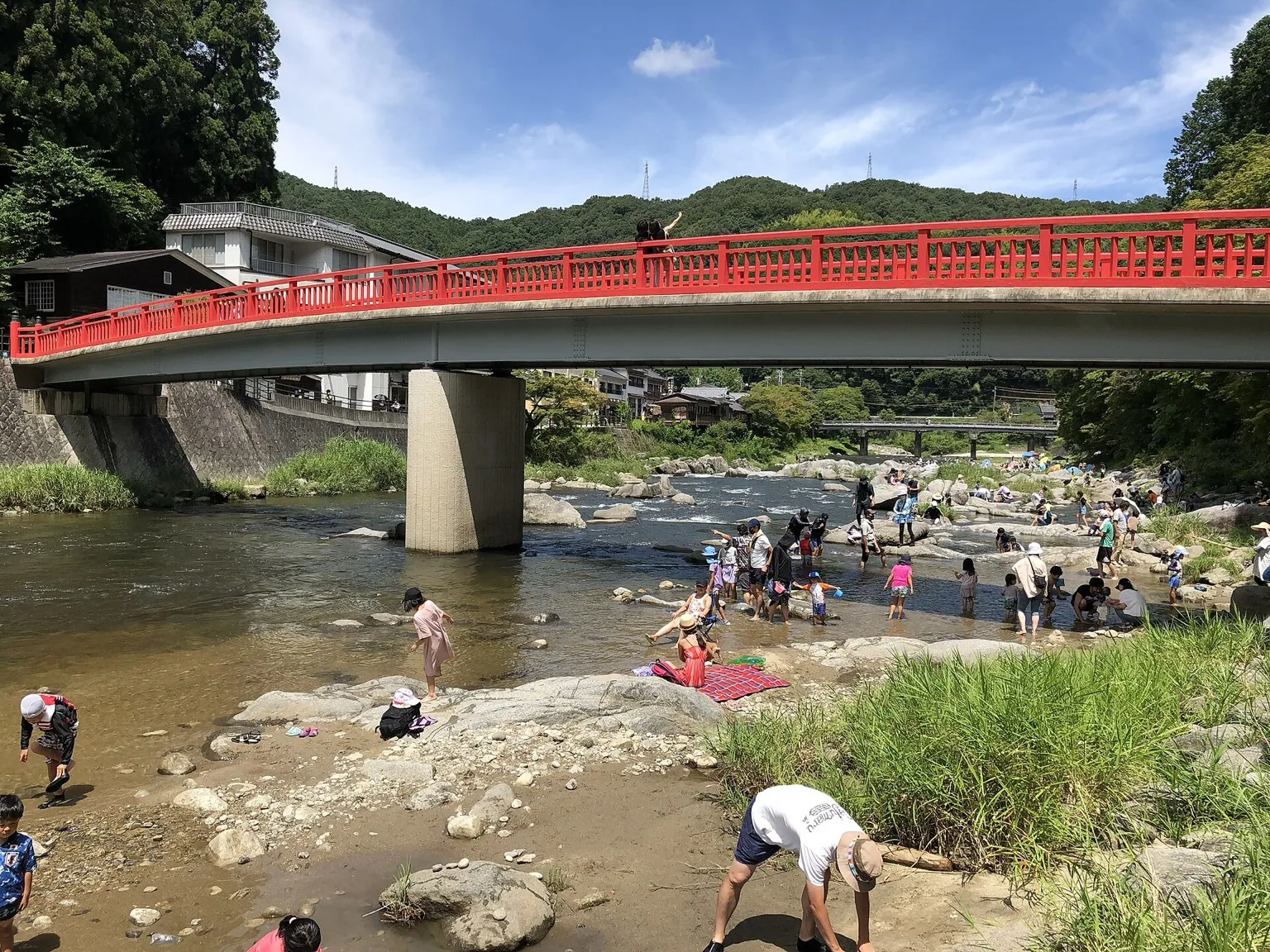
Outside November the gorge is green: the association describes summer visitors cooling off in the shade and playing in the river, and katakuri (dogtooth violet) flowering from mid-March to early April.
FAQ
When is the best time to see the Korankei autumn leaves in 2026?
The Asuke Tourism Association gives mid to late November as the usual peak. As read on 11 October 2026, tenki.jp forecast peak colour from 16 November and Weathernews from about 23 November; forecasts may change, so check again before you go.
What are the Korankei light-up hours in 2026?
Every day from 1 to 30 November 2026, from sunset to 21:00. The association says the period and hours will not be extended, and there is no light-up on 31 October. Sunset in Nagoya is 16:58 on 1 November and 16:41 on 30 November.
How do I get to Korankei from Nagoya without a car?
Take a train to Higashi-Okazaki or Toyotashi (Meitetsu) or to Josui (JR Chuo Line to Tsurumai, then subway Tsurumai Line trains that run through onto the Meitetsu Toyota Line), and change to a bus to the Korankei stop: Meitetsu Bus from the first two, Toyota Oiden Bus from Josui. The association’s 2025 access map gives 50 to 65 minutes on the bus and notes that times change with traffic. Fares on that map are 2025 figures, and Meitetsu Bus has applied to raise fares from 1 December 2026. The November timetables differ from the usual ones and were not out on 11 October 2026.
Is Korankei covered by the JR Pass?
Only the 6-minute JR Chuo Line ride from Nagoya to Tsurumai on the Josui route, plus JR trains to Nagoya (Hikari and Kodama on the Tokaido Shinkansen). Meitetsu (including the Toyota Line to Josui), the Nagoya subway and the buses to Korankei are not JR, so you pay those fares.
How much is parking at Korankei in November?
The association lists ¥1,000 per entry for an ordinary car for the 2026 festival, with no reserved parking; fees for each temporary or overflow car park are not listed (checked 11 Oct 2026). The association’s Iimori-yama page gives ¥500 outside November. It also warns of traffic jams on November weekends and holidays, so drive on a weekday if you can.
Is there a direct bus from Yakusa Station in 2026?
No. The association says the Yakusa–Korankei direct bus will not run in 2026 and asks visitors to use the Oiden Bus and Meitetsu Bus.
Can I stay in Asuke to see the light-up to the end?
Yes: staying in Asuke removes the last-bus problem, but check the distance to the light-up, the walk back at night and check-in times. The association’s lodging page lists six places to stay in Asuke, including Tamadaya Ryokan and Hyakunenso (checked 11 October 2026). On the April 2026 timetables only the 21:08 weekday Oiden Bus to Josui leaves after the 21:00 end of the light-up.
Sources
Official pages, operator timetables and third-party forecasts behind the figures above, checked on 11 October 2026
- Toyota City Asuke Tourism Association: 71st Korankei Momiji Matsuri 2026 (events, light-up, parking fee, buses); access (routes, weekend warning, ICs, taxi); English access map (2025 figures, dated 1 April 2025); Oiden Bus Sanage–Asuke line, April 2026 timetable (for months other than November); places to stay; Korankei through the seasons; light-up; Koshakuji; Iimori-yama; Asuke townscape
- Sanshu Asuke Kosha: Korankei car parks, fiscal 2026; Sanshu Asuke Yashiki hours and fees
- Meitetsu Bus: Korankei stop timetables (revision of 1 April 2026); fare revision application (7 August 2026)
- Expressway: NEXCO Central Japan, ETC-only toll gates from spring 2025; Norimono News, Tokai-Kanjo fully ETC-only from 9 April 2026
- Aichi Now (Aichi Prefecture): 71st Korankei Momiji Matsuri; Korankei
- Third-party forecasts: tenki.jp, Korankei; Weathernews, Korankei
- Japan Rail Pass: scope of validity; Nozomi and Mizuho
- National Astronomical Observatory of Japan: sunrise and sunset in Nagoya, November 2026
Join travelers discovering Japan's hidden side
Weekly dispatches from off-the-beaten-path Japan — spots and stories you won't find in guidebooks.
No spam. Unsubscribe anytime.
Welcome aboard!
You're in. See you in your inbox soon.