
Yes, tourists can use most Japanese onsen, especially public bathhouses and inns that offer day-use bathing, though the hours and any guest-only periods are set by each place. The etiquette itself is simple: wash your whole body before you get in, keep your small towel out of the water, and bathe with nothing on. Tattoos are the one thing to plan around. There is no national rule, so each place sets its own policy, and booking a private bath is usually the safest way around it.
This guide covers the natural hot springs (onsen). If you are heading for a neighbourhood city bathhouse instead, that is a slightly different thing with its own price rules and layout, and we cover it in the Japanese sentō guide.
What is an onsen, and how is it different from a sentō?
An onsen is a natural hot spring. Under Japan’s Hot Springs Act (温泉法), passed in 1948, water counts as an onsen if, at the point it comes out of the ground, it is 25°C or warmer, or it carries at least one of the mineral substances the law lists, in the set concentration. The temperature test is measured at the source, not the tub, so a cool spring can still legally be an onsen if its mineral content qualifies.
A sentō is something else: a neighbourhood public bathhouse, regulated separately under the Public Bath House Act, that usually fills its tubs with heated tap or well water. Because a general sentō counts as an everyday public utility, its entry fee is capped by each prefecture. The two can overlap, though, since some sentō do pipe in genuine hot-spring water. In short, onsen describes the water; sentō describes a licensed type of bathhouse. For the city bathhouses, see the sentō guide; everything below is about the natural springs.
How to use an onsen, step by step
The sequence is the same whether you are at a grand resort or a small mountain bath. Do it in this order and you will be fine.
- Undress fully in the changing room. The changing area is gender-separated. Take everything off; there is no swimwear in the bath. Leave your clothes and your phone in a basket or locker.
- Wash your whole body first. Sit at one of the washing stations, where you will find a stool, a bucket, and usually a hand-held shower, and clean yourself properly. The bath is only for soaking, never for washing.
- Rinse off every trace of soap. No suds should travel into the shared water, so rinse thoroughly before you leave the station.
- Do a kakeyu. Even after washing, it is customary to pour a few scoops of the hot bath water over yourself, starting from your feet and working up. This eases your body into the heat and softens the jolt of a sudden temperature change.
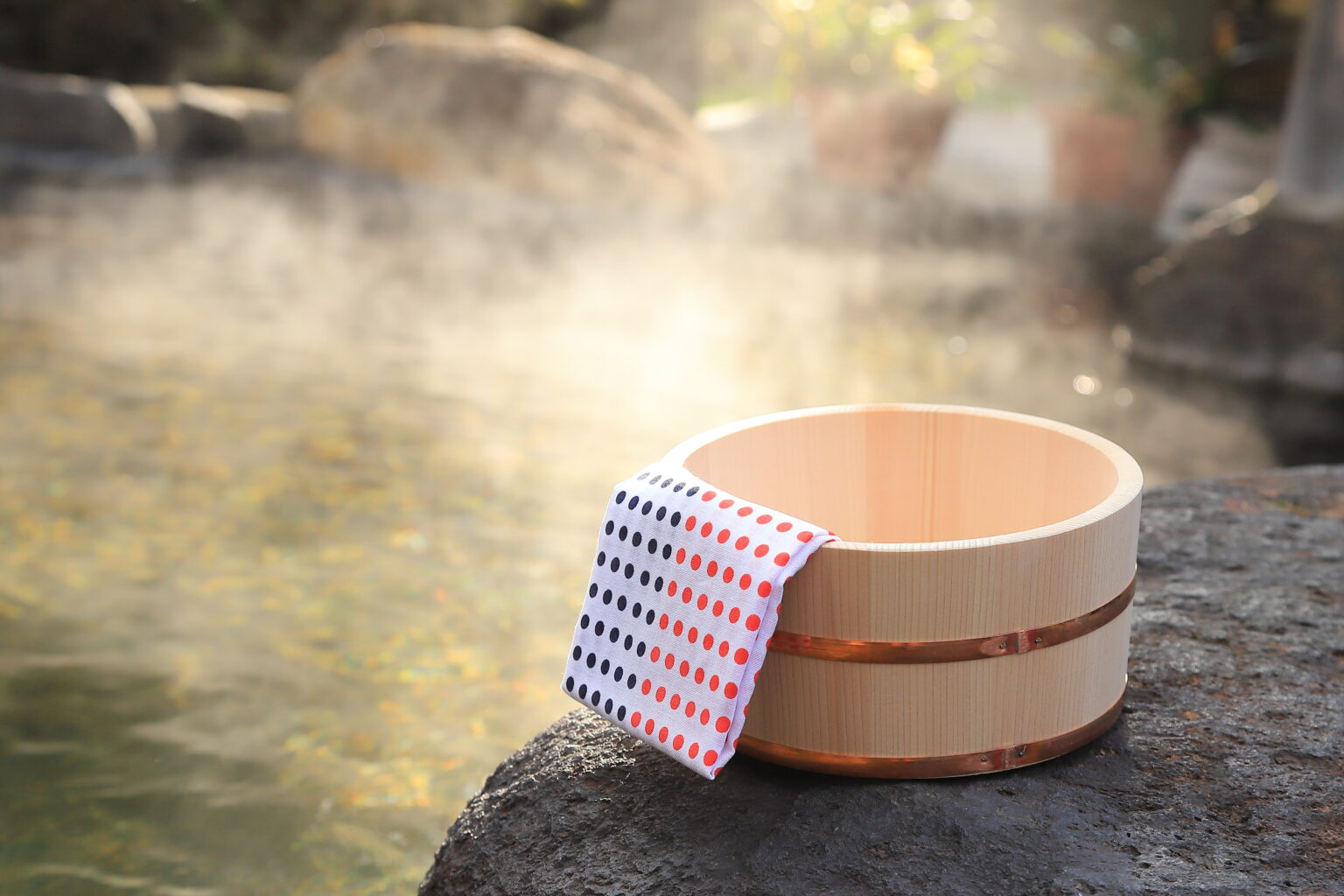
- Keep the small towel out of the water. That little towel is for washing and for a bit of modesty on the way in. It does not go into the bath. Most people fold it and rest it on their head, or set it on the rim while they soak.
- Get in slowly and stay calm. Ease into the water, do not swim or splash, and keep your voice down. If your hair is long, tie it up or wrap it in the towel so it does not trail in the water.
- After the bath. Many people rinse lightly or simply pat dry with the small towel before stepping back into the changing room, so you are not dripping across the floor.
Onsen with tattoos: the real rule is “check the place”
This is the question that worries most visitors, and the answer is straightforward. There is no single national rule on tattoos in Japanese hot springs. Each onsen, sentō, or ryokan sets its own policy, so the only reliable way to know is to check that specific facility before you go. Many public baths still ask guests to cover tattoos or turn tattooed bathers away, but a growing number now describe themselves as “tattoo-friendly.” Japan’s tourism agency issued guidance back in 2016 encouraging bathhouses to accommodate tattooed foreign visitors, for instance by allowing a cover-up seal or offering a private bath, but that was guidance for facilities to consider, not a binding nationwide law.
In practice, you have three paths.
- Find a tattoo-friendly onsen. Some places openly let you bathe with visible tattoos. JNTO itself points visitors toward these, and dedicated directories list them. Confirm the individual facility’s current policy, because it can change.
- Cover a small tattoo. Where the facility allows it, a skin-tone waterproof patch (sold online and at some drugstores) can do the job, but only when the whole design fits under the sticker. Full sleeves and large back pieces usually cannot be covered this way, and the place still has to permit it.
- Book a private bath. The most reliable option is to reserve a private bath: a rentable kashikiri onsen, or a room with its own in-room or open-air bath. You bathe alone or only with your party, so tattoos are rarely an issue, though it is still worth confirming the property’s policy when you book.
A few concrete, officially stated examples help show how varied this is:
| Town | Official tattoo position | Note |
|---|---|---|
| Kinosaki Onsen (Hyōgo) | All seven public sotoyu bathhouses welcome tattoos, any size, no cover needed | Baths inside individual inns may differ — ask your ryokan |
| Kurokawa Onsen (Kumamoto) | No town-wide rule; policy differs inn by inn | Note tattoos on the inquiry form, or book a kashikiri private bath |
| Beppu (Ōita) | Widely seen as Japan’s most tattoo-welcoming onsen city | Acceptance is still set place by place — check each bathhouse |
Never assume a blanket yes or no — when in doubt, a private bath is the safest bet.
For a worked example of how strict a single facility can be, Ryuguden Honkan on Lake Ashi refuses tattooed guests outright and says it will ask them to leave if one is found after entry, while Hakone Yuryo a few kilometres away lifted its restriction entirely in April 2025. I set the two side by side, with prices, in the Hakone day-use onsen guide.
Private baths: kashikiri, rotenburo and in-room baths
“Private” and “open-air” get mixed up a lot, so it is worth separating them.
A kashikiri (貸切) bath is a private bath you reserve for a set block of time, giving you and your party exclusive use during that slot. You usually book it in advance or at the front desk and collect a key; it can be indoor or open-air. A rotenburo (露天風呂) simply means an open-air bath, one set outdoors so you can enjoy the air and the view. A rotenburo can be communal or private; the word only tells you the bath is outside. And many ryokan have in-room baths, sometimes an in-room open-air bath, that you can use whenever you like.
Japan’s tourism agency describes private onsen at a ryokan in roughly these two forms: a bath built into your room, and a kashikiri bath you reserve for a set time. Whether a private bath needs booking and whether it costs extra depends on the property. An in-room bath is often included in the room rate, while a reserved kashikiri bath usually carries an added charge and needs booking ahead, so confirm the specific policy and price with your inn. If you are travelling as a couple or a family, or you would simply rather not bathe with strangers, this is the route worth spending on. Rakuten Travel is a good place to compare ryokan with private and in-room baths.
What to wear (and not wear)
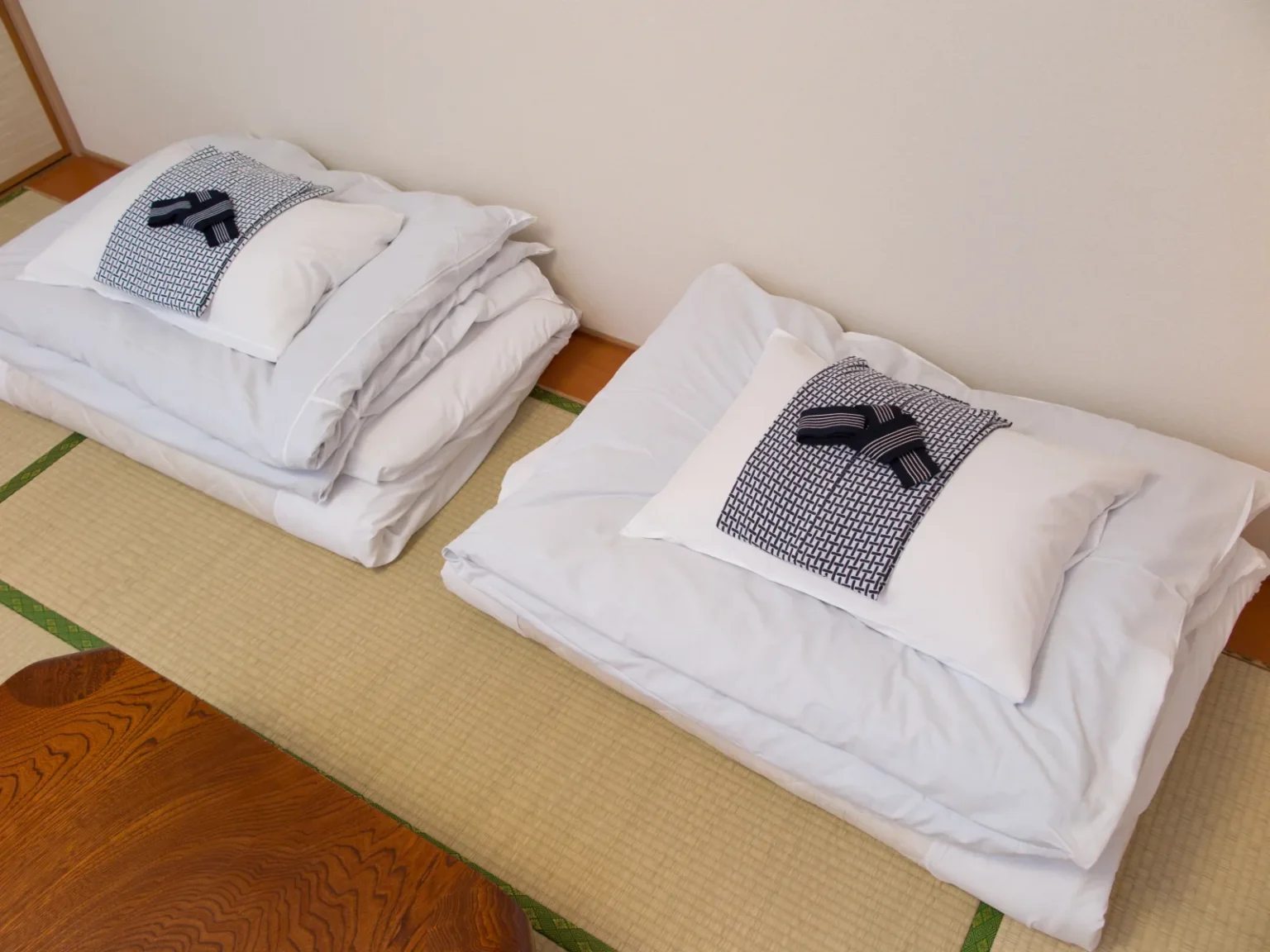
At the vast majority of onsen you bathe fully nude. As JNTO puts it, onsen bathing is typically enjoyed in the nude, so clothing, swimwear included, stays in the changing area. A small number of venues do allow or require swimwear, chiefly swimsuit-friendly spa complexes and a small number of mixed baths that may hand out a yuami-gi (a light bathing garment worn in the water), but those are the exception and a different kind of facility. Whether swimwear is permitted varies by venue and can change, so check that place’s own rules first. The one thing that is consistent: the small towel is for washing and modesty on the way in, not for wearing in the water.
One practical note on kit: many day-use baths rent or sell towels, but not all — a compact quick-dry towel in your day bag means never having to check.
Small things that catch first-timers out
- Baths are gender-separated by default. At almost all onsen the baths and changing rooms are split by sex, and you undress completely before entering your side.
- Read the curtain, then the kanji. Entrances are usually marked with a noren curtain, commonly red for women and blue for men, but colour is only a convention. The safe move is to check the character: 女 means women, 男 means men.
- Some inns swap sides. A number of ryokan rotate their men’s and women’s baths, switching at a set time or on alternating days so guests can try both. The schedule is set by each place, so check the posted times or ask at the desk.
- No phones or cameras in the bathing area. To protect everyone’s privacy, leave your phone in your basket or locker. Photographing other bathers is completely off-limits.
- Not after drinking, not when unwell. Japan’s Ministry of the Environment advises against bathing after alcohol, while intoxicated, or during an illness with a fever. Do not soak too long either; start with a few minutes, drink water beforehand, and get out to cool down if you feel light-headed.
- Take off metal jewellery. In sulfur springs especially, silver and some other metals can discolour or tarnish, and you would rather not lose a ring in the changing room anyway.
- Mixed bathing is now rare. Konyoku still exists, mostly at remote, historic springs, but it is uncommon and not something a first-timer will typically run into. Where it survives, the rules vary by place.
Why washing comes before soaking
The logic behind all of this is simpler than it looks. The bath is shared, and the water is meant to stay clean, so the washing happens outside the tub and the tub is only for soaking. Almost every rule, from rinsing off the soap to keeping the towel and your hair out of the water, comes back to that one idea. Once it clicks, the etiquette stops feeling like a test and starts feeling obvious.
Where to try an onsen in Japan
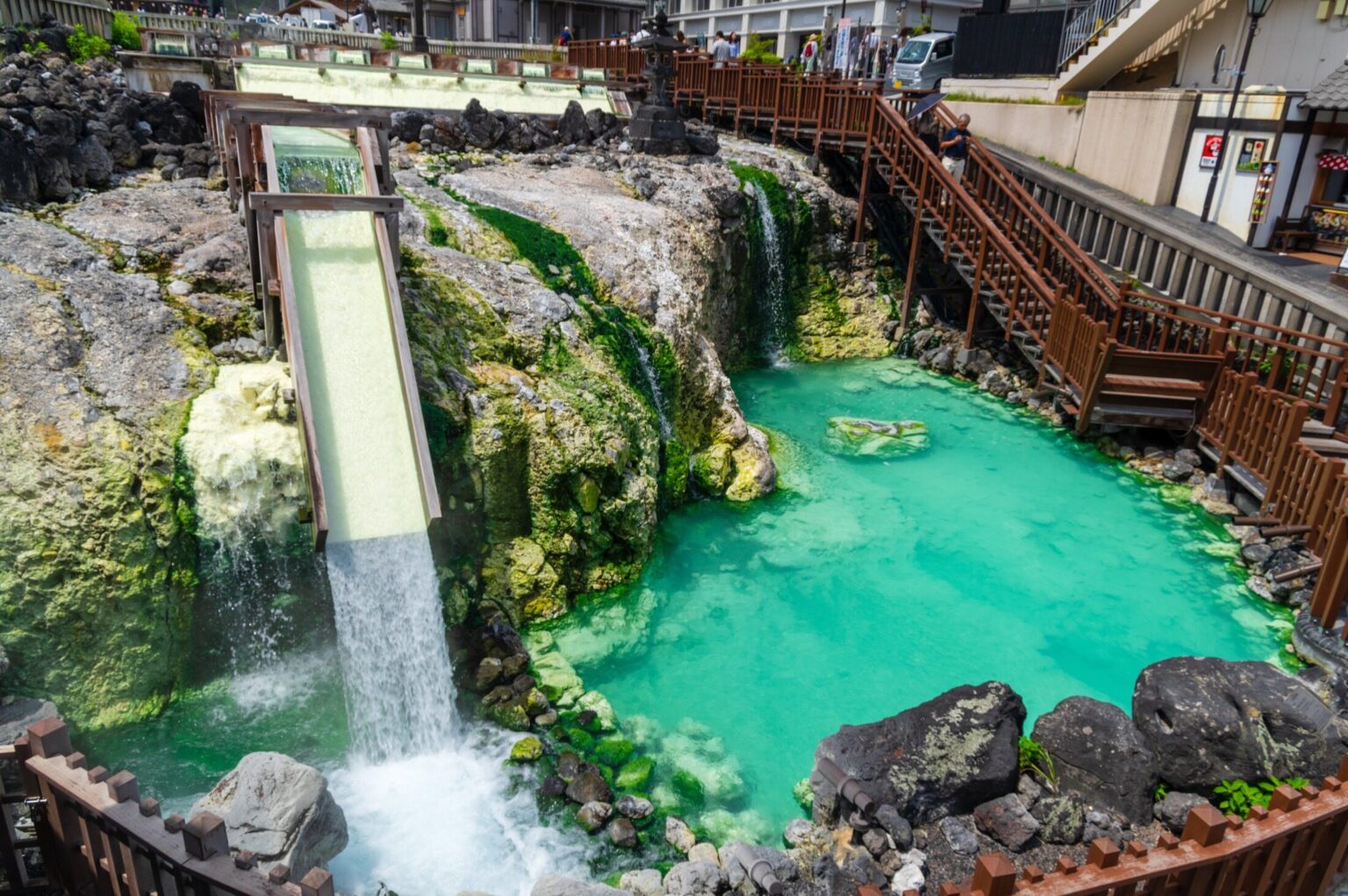
Day-use (higaeri) bathing is widely available, so you can soak without staying overnight, though opening hours, fees, and whether towels are included differ from place to place, and some baths are reserved for overnight guests at certain times. A handful of towns are worth planning a trip around — including Kusatsu (Gunma), pictured above, which pairs well with a cool day trip from Tokyo:
- Kinosaki Onsen (Hyōgo, Kansai). A hot-spring town built around sotoyu-meguri, strolling between its public bathhouses in a yukata. Day visitors can usually buy a pass for the open public bathhouses; check the official site for any temporary closures. See our Kinosaki Onsen visit.
- Kurokawa Onsen (Kumamoto, Kyūshū). A rustic mountain town in the Aso area. You can buy a wooden “Nyūtō Tegata” pass at participating inns or the information center, then pick three of the participating open-air baths. Popular baths fill up, so go early.
- Unzen Onsen (Nagasaki). A historic resort on the Shimabara Peninsula, known for its steaming sulfurous “Unzen Jigoku” and its easy day-trip baths. Here is walking Unzen’s Jigoku.
- Ginzan Onsen (Yamagata, Tōhoku). A riverside town famous for its rows of Taishō-era wooden ryokan, lit by gas lamps at night. Some inns open their baths to day visitors, but availability varies.
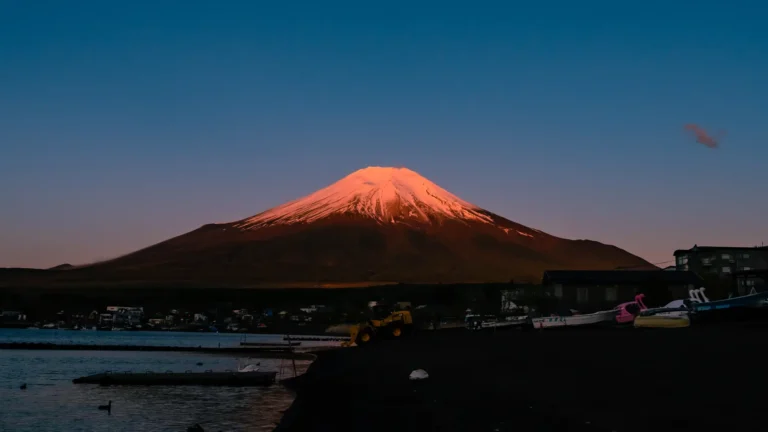
Closer to home for me, the Fuji–Kawaguchiko area has plenty of hot springs too, and a few ryokan there put a private or in-room bath facing Mount Fuji. Worth being realistic about the view, though: whether you actually see Fuji depends on the weather, the season, and the room, so confirm what a given inn offers rather than assuming. If you want to build a soak into a Fuji trip, compare onsen stays around Lake Kawaguchiko, and for the ryokan side of the experience, the yukata, the meals, the check-in ritual, see what to expect at a ryokan — and if the shared-bath rhythm appeals, a temple or family-inn stay runs on the same etiquette. Getting to most of these towns is easiest by train, and a Japan Rail Pass can make a multi-stop onsen loop cheaper if you are covering distance.
Some of the links above are affiliate links. If you book through them we may earn a small commission, at no extra cost to you.
Frequently asked questions
Can tourists use an onsen in Japan?
Yes. Most onsen welcome visitors, though hours and any guest-only periods are set by each place. Just follow the basics: wash and rinse at the shower stations before you get in, bathe nude, keep the small towel out of the water, and stay quiet.
Can I use an onsen if I have tattoos?
It depends on the facility, because there is no national rule. Look for a tattoo-friendly onsen, cover a small tattoo with a patch where the place allows it, or, the reliable option, book a private (kashikiri) or in-room bath where coverage rules do not apply. Always confirm the specific facility’s current policy.
Do I have to be fully naked?
In the standard gender-separated communal baths, yes, and swimwear is not worn. If undressing around strangers is uncomfortable, book a private kashikiri bath for your party — though you will still normally bathe nude there unless the place specifically allows swimwear or a bathing garment.
Do you wear a swimsuit in an onsen?
Usually no. A few swimsuit-friendly spa complexes and some mixed baths (which may lend a yuami-gi bathing garment) are exceptions and a different type of facility. Check that venue’s own rules, since they vary.
What is the difference between an onsen and a sentō?
An onsen uses natural hot-spring water defined by Japan’s Hot Springs Act; a sentō is a neighbourhood public bathhouse, usually using heated tap water, with a prefecture-capped fee. Some sentō do use real spring water, so the two can overlap. See our sentō guide.
What is a kashikiri onsen?
A kashikiri (貸切) bath is a private bath you reserve for a set period, for your party’s exclusive use. It can be indoor or open-air, is usually booked ahead or at the front desk, and often carries an extra charge.
Can I take photos inside an onsen?
In the shared bathing and changing areas, no — phones and cameras are not allowed, to protect everyone’s privacy, so leave yours in your basket or locker. In a private or in-room bath, follow the property’s rules and never photograph other guests.
Sources and last checked
Last checked: August 2026. Onsen etiquette and definitions were verified against Japan’s Ministry of the Environment (Hot Springs Act definition), the Japan National Tourism Organization (how to enjoy an onsen), the Japan Tourism Agency’s ryokan Q&A, and the Japan Onsen Association. Facility-specific tattoo policies were checked against official town sources, including Visit Kinosaki, the Kurokawa Onsen FAQ, and Visit Ōita. Tattoo rules, prices, hours and day-use windows are set by each facility and change over time, so confirm the current details directly with the place you plan to visit.
Join travelers discovering Japan's hidden side
Weekly dispatches from off-the-beaten-path Japan — spots and stories you won't find in guidebooks.
No spam. Unsubscribe anytime.
Welcome aboard!
You're in. See you in your inbox soon.