
Autumn · Where it arrives first
In October, autumn reaches Japan’s highlands weeks before the famous Kyoto maples turn in November. The Northern Alps larches, the old Kiso post towns and the Tohoku gorges all colour well before the lowland temples — and with a fraction of the crowds. These are eight places at their best in October 2026 — six in the highlands where the season starts, and two gorges in Tohoku that turn in the same month. For the month’s weather, festivals and day-by-day calendar, start with our Japan in October 2026 guide.
I live near Mt. Fuji and spend most of October in Nagano, because that is where the season starts. Everyone photographs the Kyoto temple maples in late November; almost no one is in the mountains in early October, when the colour is already running down the valleys. Here is where I go, and why each one is worth it this month specifically.
| Spot | Region | Why October |
|---|---|---|
| Kamikochi | Nagano | Valley larches & Karasawa colour from late September |
| Hakuba | Nagano | Maple foliage mid–late October, crisp 4–19°C days |
| Kiso Valley | Nagano | Post towns in their autumn window, Oct–early Nov |
| Togakushi | Nagano | Fallen maple turns the shrine gravel red |
| Ashiu Forest | Kyoto | Beech & maple turn Oct–Nov (guided only) |
| Yakushima | Kagoshima | Comfortable shoulder-season hiking, fewer crowds |
| Oirase Stream | Aomori | Late-Oct colour; 2026 forecast points to early Nov |
| Geibikei Gorge | Iwate | Boat rides; usual foliage mid-Oct to early Nov |
Kamikochi, Nagano
A flat, car-free alpine valley where a seven-kilometre riverside trail runs beneath the Hotaka peaks. In autumn the valley larches turn gold and the colour at Karasawa starts as early as late September, well before anywhere in the cities.
Why October: the season is winding toward its November 15 close, the summer crowds are gone, and the larches are at their best. My full Kamikochi guide covers the walk, access and where to stay. Private cars can’t drive in, so check the buses and park-and-ride lots in my Kamikochi access guide.
Hakuba, Nagano
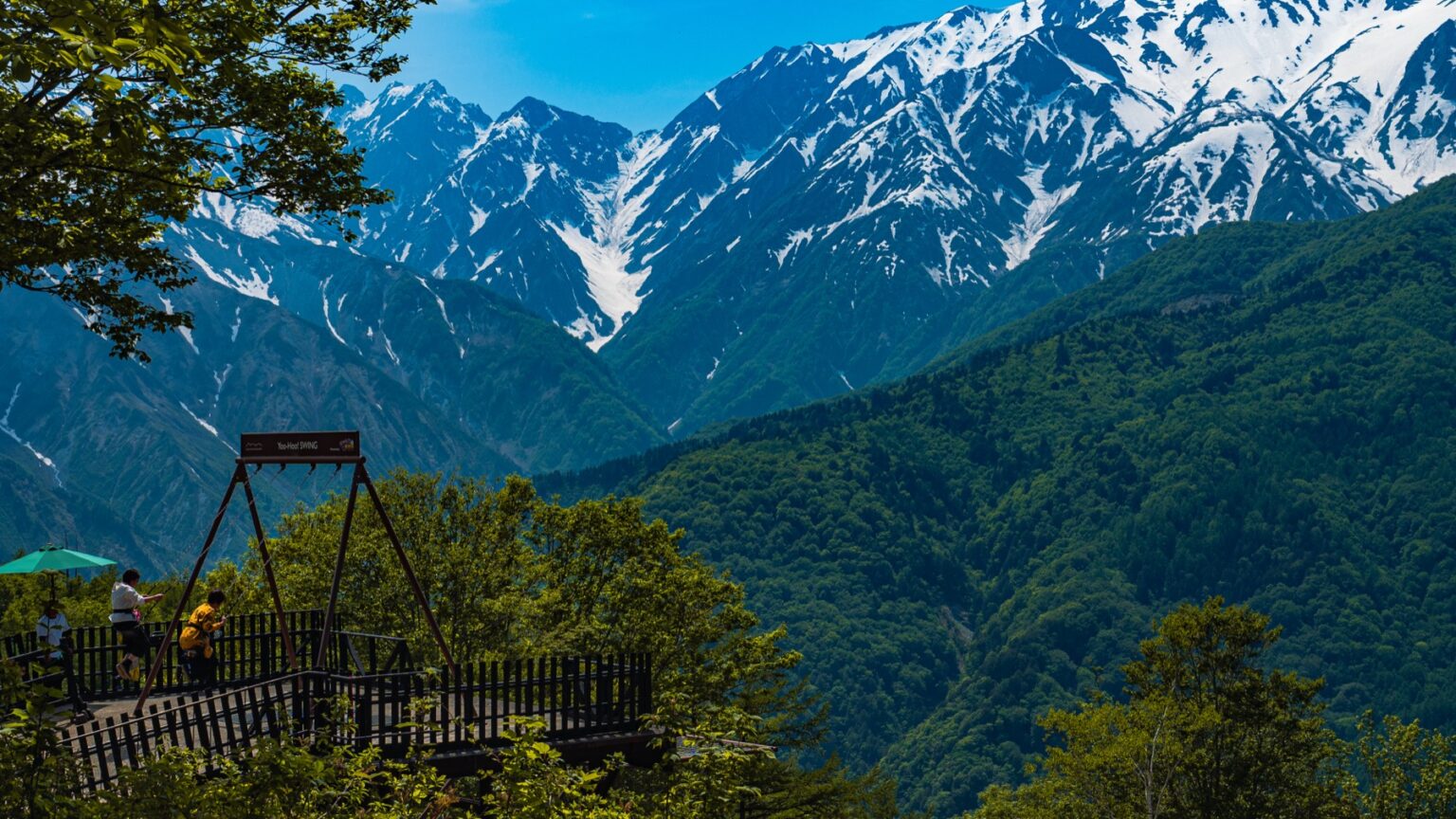
A Northern Alps village better known for powder, but its gondolas run in autumn too, lifting you to alpine decks with the Hakuba Sanzan in front of you.
Why October: the maple foliage burns against the still-green lower forest, and village days run a crisp 13–19°C and drop to 4–11°C at night, colder toward month-end — a genuine Tokyo-escape window. The year-round Hakuba guide has the foliage timing and how to get up the mountain.
The Kiso Valley, Nagano
The Edo-era post towns of Narai-juku and Tsumago, linked by old highway and a short train ride, walked the way travellers did 300 years ago.
Why October: the autumn window here runs October through early November, with crisp walking weather and the surrounding forest turning — and far fewer buses than spring or summer. Here is the one-day Narai-to-Tsumago route.
Togakushi, Nagano
A mountain shrine complex reached through an avenue of 400-year-old cedars, deep in the highlands northwest of Nagano City.
Why October: this is when fallen maple turns the shrine gravel red and all the facilities are open for the season. Autumn slots fill a week or two ahead, so plan early. Access and seasonal dates here.
Ashiu Forest, Kyoto
A primeval beech-and-maple research forest in Kyoto’s far north that you can only enter with a guide — moss, giant trees, and an old narrow-gauge railway.
Why October: the beech and maple turn from October into November, and the autumn guided slots fill early because numbers are capped. How the guided trek works.
Yakushima, Kagoshima
The ancient-cedar island off southern Kyushu, where the Jomon Sugi trail and the west-coast drive run through deep evergreen forest.
Why October: this is shoulder season — the summer heat and crowds have eased and the hiking is comfortable, even if the evergreen forest does not change colour the way the mainland does. The west-coast drive guide is the easy way in.
Oirase Stream, Aomori
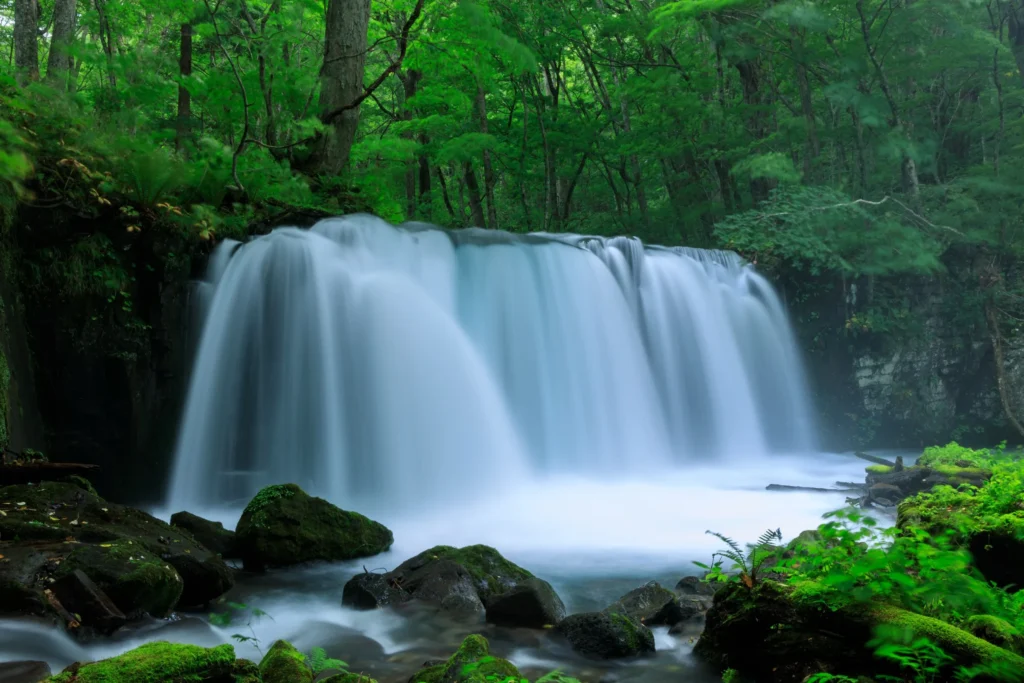
A fourteen-kilometre stream running out of Lake Towada through a gorge of moss, boulders and waterfalls, with a walking route beside it. End to end, Yakeyama to Nenokuchi takes about five hours; you can walk a shorter section and use a scheduled bus for the rest, if you check the stops and departure times first.
Why October: the stream’s usual window is late October to early November. As of its 3 September survey Weathernews forecast the viewing season to begin around 1 November 2026, with leaves starting to fall around the 11th — so late October catches the early colour rather than the best of it. Check the current forecast before fixing a date.
This year’s car restriction fell in September, not late October. Oirase closes Route 102 through the gorge to private cars for a few days a year. In 2025 that ran from 27 October to 2 November, which is why it is widely described as a foliage-season measure. The 2026 dates were 7 to 13 September, and the organisers’ own site records them in the past tense. So this year’s programme does not overlap the usual late-October window — but check current road notices before driving the gorge rather than assuming nothing else applies.
Two practical things follow from that. Parking inside the gorge is tiny — the roadside bays at Ishigedo, Choshi Otaki and the pull-ins between them come to under seventy spaces in total — so an early start matters more than it looks on a map. At the Yakeyama end there is a free car park of about 340 spaces, which is where the September shuttle ran from; if you leave a car there, work out the walking section and the way back before you start.
Without a car, the bus is JR Bus Tohoku and the season is short. The autumn timetable runs to 17 November 2026, with the extra services ending on the 11th, and JR Bus Tohoku’s scheduled services to Oirase and Lake Towada do not run from 18 November 2026 until 31 March 2027. From Hachinohe it is 1 hour 36 minutes to the Oirase visitor centre and 2 hours 5 to Nenokuchi; from Aomori, about two hours. Shin-Aomori has exactly one direct departure a day. The Japan Rail Pass and the JR East Pass are accepted on these buses; the JR East–South Hokkaido Rail Pass and the JR Tohoku–South Hokkaido Rail Pass are not.
One closure to check before you go. A retaining wall near the public toilets by Tamadare-no-taki gave way on 14 April 2026, and Aomori Prefecture barricaded about 150 metres of trail; no restoration date has been published. What came afterwards does not settle it — the prefecture’s full-path inspection later that April found no serious hazards, a 14-kilometre walking event covered the whole route on 12 and 13 September 2026, and a tourist-office-supplied page currently states there are no closures on the path or Route 102. None of that establishes whether that specific section has reopened, so treat its status as unconfirmed here: contact the Oirase visitor centre before you set out, and follow any barriers or diversion signs on the ground.
If you want the walk one-way, note where the boat actually goes. From Nenokuchi the Lake Towada sightseeing boat runs to Yasumiya on the lake, about 50 minutes for ¥1,760 per adult — it does not return to Yakeyama or to that car park, so sort out onward or return transport separately. Our Tohoku itinerary puts Oirase in a wider route.
Basing yourself for Oirase
Geibikei Gorge, Iwate
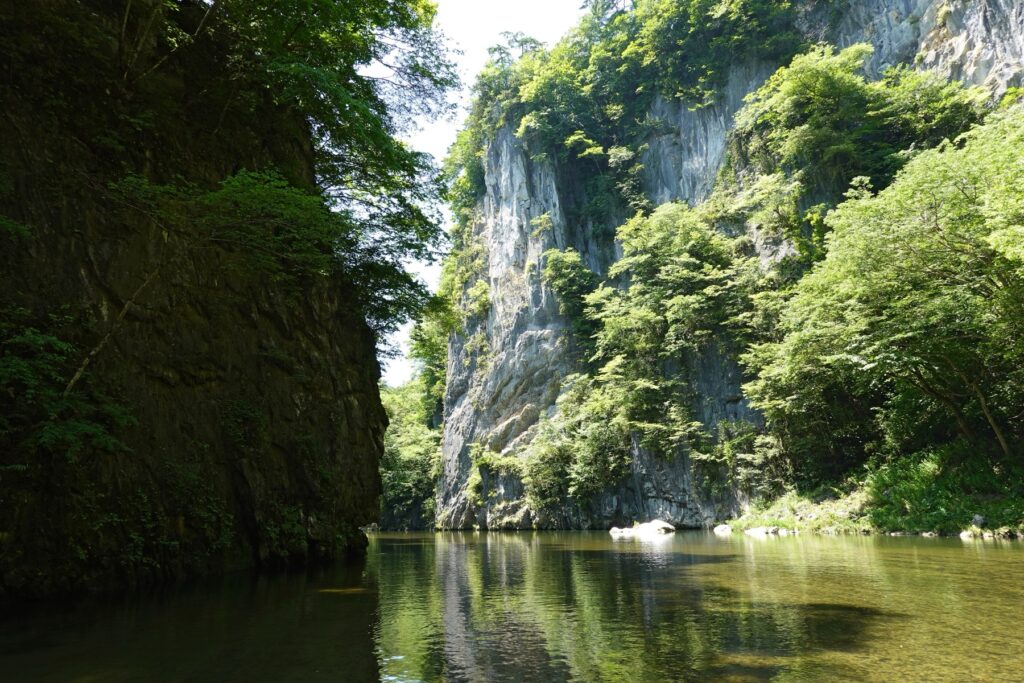
A two-kilometre limestone gorge on the Satetsu river, seen from a flat-bottomed boat that a boatman poles upstream and back. The round trip takes about 90 minutes, the boatman sings on the way down, and at the turning point you walk up to the rock face to throw fortune pebbles at a hole in it.
Why October: the usual foliage season runs from mid-October into early November, and Iwate Prefecture’s tracker still had the gorge green on 17 September. Scheduled departures continue until 16:00 throughout October.
The fares were revised on 1 April 2026: ¥2,000 for adults, ¥900 for primary-school children and ¥200 for preschool children aged three and over. Individuals do not need to book — buy at the counter — and only groups of fifteen or more do. The last departure is 16:00 through 5 November, 15:30 on 6–10 November and 15:00 on 11–20 November, so departures continue to 16:00 throughout October and it is late-autumn afternoons that need checking against the date.
The full route only came back on 10 August 2026. Bridge repairs at Miyoshigaoka had been forcing the boat to turn back early, which also meant the fortune-pebble throwing was off. The operator announced on 10 August that the repair was finished and that the normal route and the pebble throwing had resumed.
The train stops for ten days this year, and four of them are in October. JR East is replacing sleepers on the Ofunato Line between Ichinoseki and Kesennuma. Three of the ten days, 15 to 17 September, have already passed; the ones still ahead are 6 to 9 October and 8 to 10 December. On those days the gorge operator runs a free replacement shuttle: it leaves the west exit of Ichinoseki Station at 10:20 and reaches the Geibi rest house at 10:45, in time for the boat at about 11:00, and the return leaves the rest house at 13:10 and reaches the station at 13:35.
On a normal day the train from Ichinoseki takes about 33 minutes and costs ¥530, with eight services a day on a weekday. Geibikei Station is unstaffed and does not accept Suica or any other IC card, so buy a paper ticket before you leave Ichinoseki. One more small thing if you are planning lunch: the rest house restaurant has 44 scheduled closure days between 2 September 2026 and 28 January 2027, mostly Wednesdays and Thursdays, so check its calendar rather than assuming a fixed rest day.
Geibikei is not Genbikei. Two gorges, both in Ichinoseki, with names one character apart. Geibikei is the limestone one with the boat, on the Satetsu river. Genbikei is a different gorge on the Iwai river, full of potholes and rapids, free to enter and open all year — and the one with the dango basket that slides down a wire to you. If you want the boat ride, you want Geibikei, on the Satetsu river.
Basing yourself for Geibikei
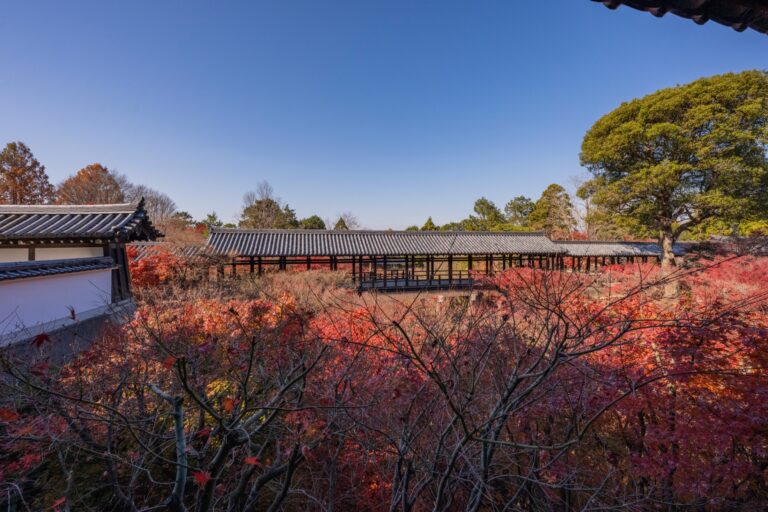
Chasing the classic Kyoto-and-maple shot? Those lowland temple maples do not peak until mid-to-late November — come then for the postcard. October belongs to the highlands and the northern gorges, where the colour arrives first.
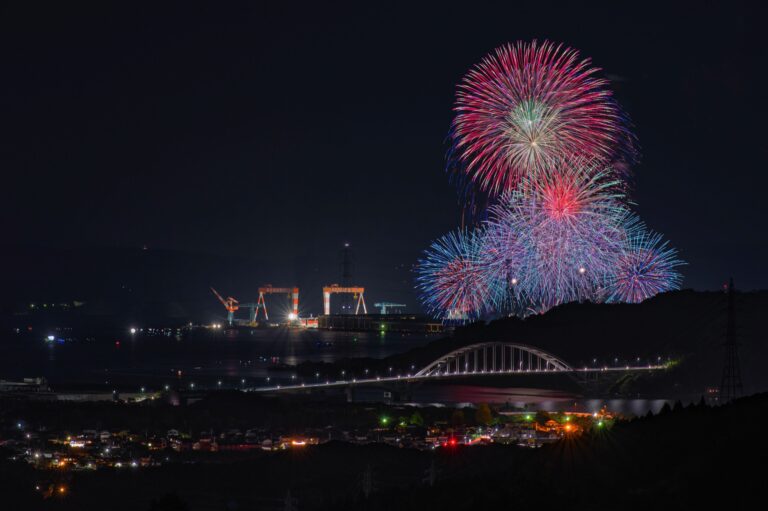
One city event worth planning around the same month: Osaka’s Naniwa Yodogawa Fireworks fires on October 17, 2026 — a rare chance to pair highland foliage with a major fireworks night in the same trip.
For where the colour front is right now – typical windows today, live forecasts from September – see the Japan Autumn Leaves Live Status Board.
Frequently asked questions
Where does autumn start first in Japan?
In the highlands. The Northern Alps and Nagano’s mountain valleys — Kamikochi, Hakuba, Togakushi — begin colouring from late September into October, weeks before the lowland city maples in Kyoto and Tokyo, which peak in mid-to-late November.
Is October a good time to visit Japan?
Yes. October has cool, stable weather after the summer heat and the worst of typhoon season, early autumn colour in the highlands, and far smaller crowds than the November foliage peak or the spring cherry season. It is one of the best months for the mountains.
When do the Kyoto maples turn?
Kyoto’s famous temple maples usually peak from mid-to-late November, not October. If you want the classic temple-and-maple photograph, plan for November; October is better spent in the highlands, where the season starts.
Is October crowded in Japan?
Less than you might fear. The big domestic foliage rush is in November, and international cherry-season crowds are in spring. In early-to-mid October the mountain spots above are quiet, though guided trips like Ashiu Forest still fill a week or two ahead.
Plan an October trip
Base in Nagano and four of these are within reach. Book the bed first.
More for September 2026: Where autumn colour begins: Daisetsuzan (September) · Day trips from Nagoya during the 2026 Asian Games
Join travelers discovering Japan's hidden side
Weekly dispatches from off-the-beaten-path Japan — spots and stories you won't find in guidebooks.
No spam. Unsubscribe anytime.
Welcome aboard!
You're in. See you in your inbox soon.