
Yes, tourists can stay overnight at a Japanese Buddhist temple. This kind of temple lodging is called a shukubo, and you generally do not need to be Buddhist to book one. The catch is that not every temple offers lodging, and each one sets its own rules for rooms, meals, morning prayers, curfews and payment. A minshuku is a different thing again: a small, usually family-run guesthouse. This guide covers the two traditional stays that a first-timer most often confuses with a ryokan, and shows you how each one actually works.
These facts were checked against official Japanese sources: JNTO, the Koyasan Shukubo Association and individual temple sites. Prices, prayer times and curfews change and vary by property, so treat the details here as a starting point and confirm with your temple or inn before you book.
| Lodging | What it is | The feel |
|---|---|---|
| Shukubo | Buddhist temple lodging | Quiet, spiritual, very early mornings |
| Minshuku | Small, usually family-run guesthouse | Homely, local, budget-friendly |
| Ryokan | Traditional inn, often with fuller meals and service | Polished and pricier; see our ryokan guide |
| Business hotel | Western-style budget hotel | Practical, private, no frills |
| Guesthouse / hostel | Budget rooms, often shared | Cheap and social |
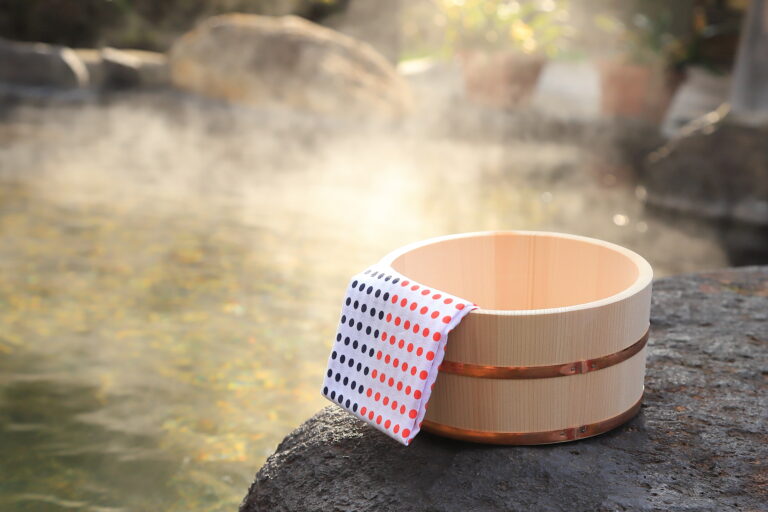
Ryokan get their own deep-dive in what to expect at a ryokan, and the shared-bath etiquette that applies to all of these is in the onsen etiquette guide. This article stays with shukubo and minshuku.
What is a shukubo?
A shukubo (宿坊) is temple lodging: overnight accommodation run by or attached to a Buddhist temple. (In a few old pilgrimage areas the word also covers shrine- or yamabushi-run lodges, which I flag below.) Historically it housed pilgrims and travelling monks, and today it welcomes ordinary travellers at the temples that offer stays. International visitors are welcome, and you generally do not need to be Buddhist — shukubo take guests of all faiths, though house rules and the amount of English support differ from temple to temple.
Expect a traditional room: futon bedding laid out on tatami mats, often with shared, gender-separated communal baths and shared restrooms, though some temples and rooms have private facilities. Some shukubo are cash-only, so it pays to confirm the payment method before you arrive. The one thread through all of it is that a temple is not a hotel, and the details vary by temple.
Where to try a shukubo
The honest differentiator between these places is who runs them — it changes the meals, the morning, and the whole feel:
| Place | Run by | What that means for you |
|---|---|---|
| Koyasan (Wakayama) | Shingon Buddhist monks | The classic temple stay: shojin ryori, morning service, ~50 temples take guests |
| Minobusan (Yamanashi) | Nichiren temple town lodgings | Morning service at Kuonji open to all — but you sleep in surrounding lodgings, not Kuonji itself |
| Zenkoji (Nagano) | Sub-temple lodges (often cited as 39) | Vegetarian dinner + option of the pre-dawn O-Asaji service |
| Dewa Sanzan (Yamagata) | Yamabushi mountain-ascetic families | Pilgrim lodging, limited English, book direct |
| Mt. Mitake (Tokyo) | Oshi — hereditary Shinto priests | Not Buddhist: a shrine stay, and meals can include fish |
| Kyoto | Individual temples (e.g. Chion-in’s Wajun Kaikan) | Only certain temples take guests; terms differ |
Koyasan (Mount Koya), Wakayama
Koyasan is Japan’s best-known place for a temple stay. It is the sacred mountain center of Koyasan Shingon Buddhism, inscribed as part of the UNESCO World Heritage “Sacred Sites and Pilgrimage Routes in the Kii Mountain Range,” and around 50 of its temples run shukubo that welcome overnight guests. (The mountain has more than 100 temples in total, only about half of which offer lodging, so treat the number as approximate.) The Koyasan Shukubo Association, founded in 1958, runs the official reservation service for its member temples and can book in English; some temples also take direct reservations. Ekoin is one well-known example, with a morning service and a daily goma fire ritual for guests. Most people arrive on the Nankai Koya Line to Gokurakubashi, then take the cablecar up and a bus into town — Nankai’s “Koyasan World Heritage Ticket” bundles the round trip with a bus pass, though check the current terms before you travel.
Minobusan (Minobu), Yamanashi
Closer to my part of the country, Minobusan is the mountain around Kuonji, the head temple of Nichiren Buddhism in Yamanashi. Its daily morning service in the main hall is open to anyone (no reservation or fee, and you need not be a Nichiren follower), starting at 5:30 a.m. as of the temple’s own 2024 notice (older listings gave a seasonal time, so reconfirm on the official site). One important detail: you cannot sleep inside Kuonji’s own precincts. Instead, the surrounding Minobusan area has a number of shukubo temple inns — JNTO counts at least 20, with Kakurinbo the best-known English-friendly option — so you book a nearby lodging and walk up for the service. We cover morning prayers at Minobusan Kuonji and the temple itself in Minobusan Kuonji.
Zenkoji, Nagano
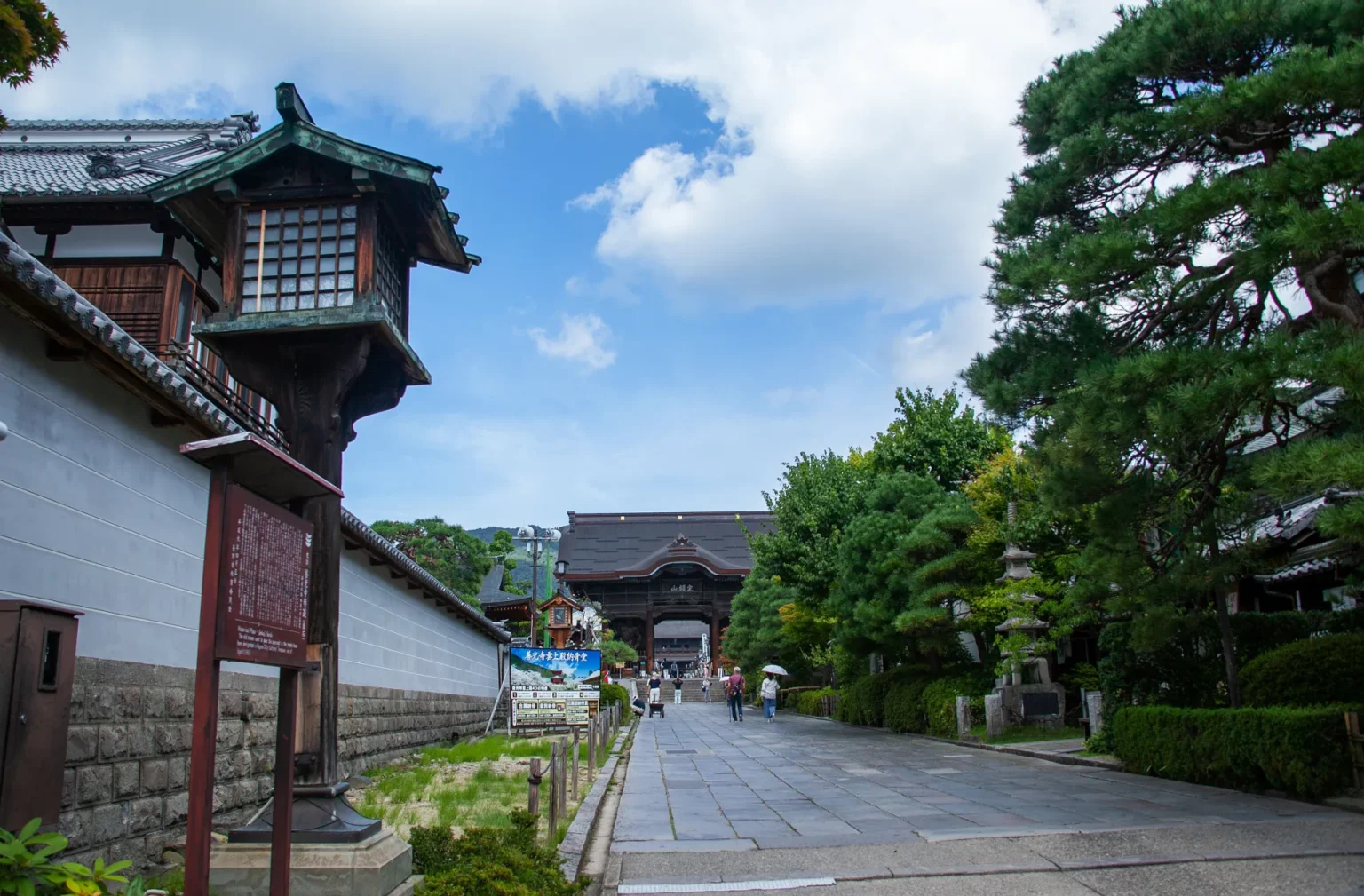
Zenkoji has a long-standing group of shukubo (its sub-temple lodgings, often cited as 39) that host overnight guests, usually with a vegetarian evening meal and the option to join the pre-dawn O-Asaji service the next morning. Offerings and English support vary by lodge, and the dawn service tracks sunrise through the year. See our full Zenkoji temple guide.
Dewa Sanzan, Yamagata
Around Mt. Haguro in the Dewa Sanzan, a small number of shukubo (historically run by yamabushi mountain-ascetic families rather than by conventional temple monks) take overnight guests, and several now welcome foreign visitors alongside pilgrims. Only certain lodges accept independent international travellers and availability is limited (fewer than 30 remain), so confirm directly before booking.
Mt. Mitake, Tokyo
On Mt. Mitake in western Tokyo, a cluster of shukubo around Musashi Mitake Shrine take overnight guests. Note that these are traditionally run by oshi (hereditary Shinto shrine priests) rather than Buddhist monks, so the experience differs from a temple stay and the meals can include fish. Confirm the details with each lodge. Our Mount Mitake guide covers staying on the mountain and the night kagura, as well as the cable car and the trails.
Kyoto
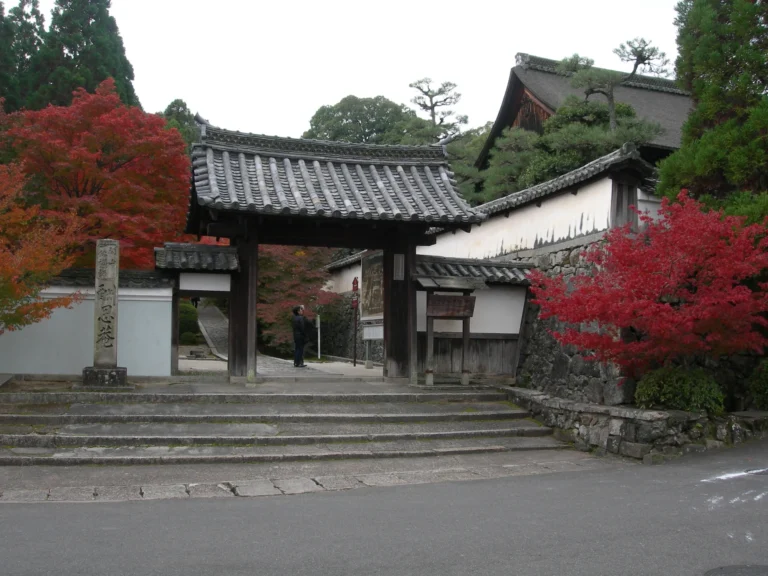
A few Kyoto temples also take lodgers, such as Chion-in’s Wajun Kaikan and some Myoshinji sub-temples, with morning practices led by resident monks. Only certain temples accept overnight guests and terms differ, so check the specific temple’s policy.
A typical night at a shukubo
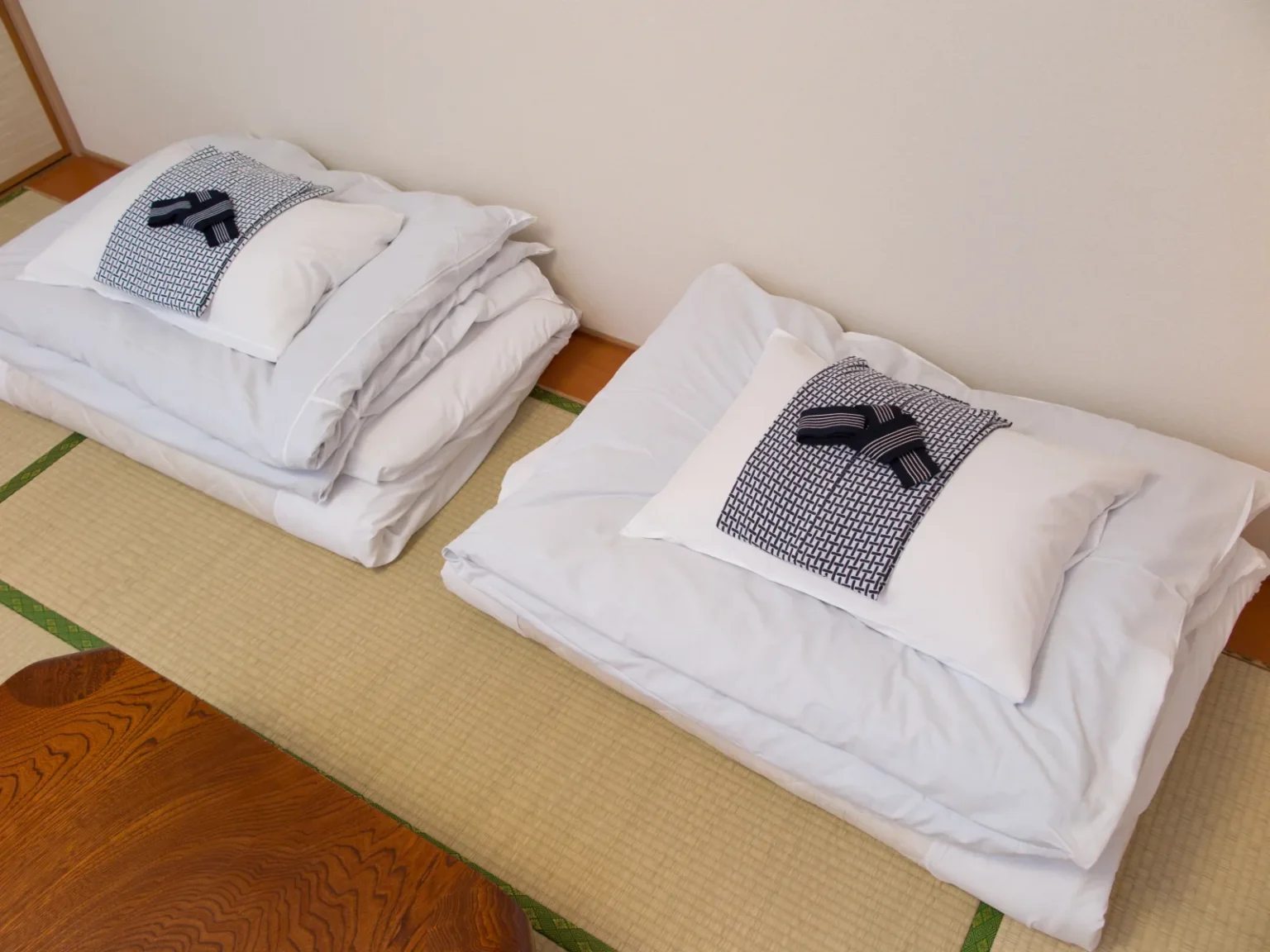
The rhythm is calm and early. You check in during the afternoon or early evening, often before a set deadline. Dinner is usually shojin ryori, the Buddhist vegetarian cuisine, served in your room or a dining hall. Then comes the bath — shared and gender-separated at most temples, running on the same etiquette as any Japanese bath — some quiet time, and an early night — many temples lock the gate at a curfew hour. In the morning, guests are warmly invited to sit in on the temple’s early service before a simple breakfast. Exactly when each of these happens is set by the temple, so the schedule you are handed at check-in is the one that counts.
| When | What happens |
|---|---|
| Afternoon | Check in — often before a set deadline |
| Evening | Shojin ryori dinner, in your room or a hall |
| Night | Bath, quiet time — gates often lock at a curfew hour |
| Pre-dawn | Optional morning service with the monks |
| Morning | Breakfast, checkout — usually early |
Morning prayers and the optional extras
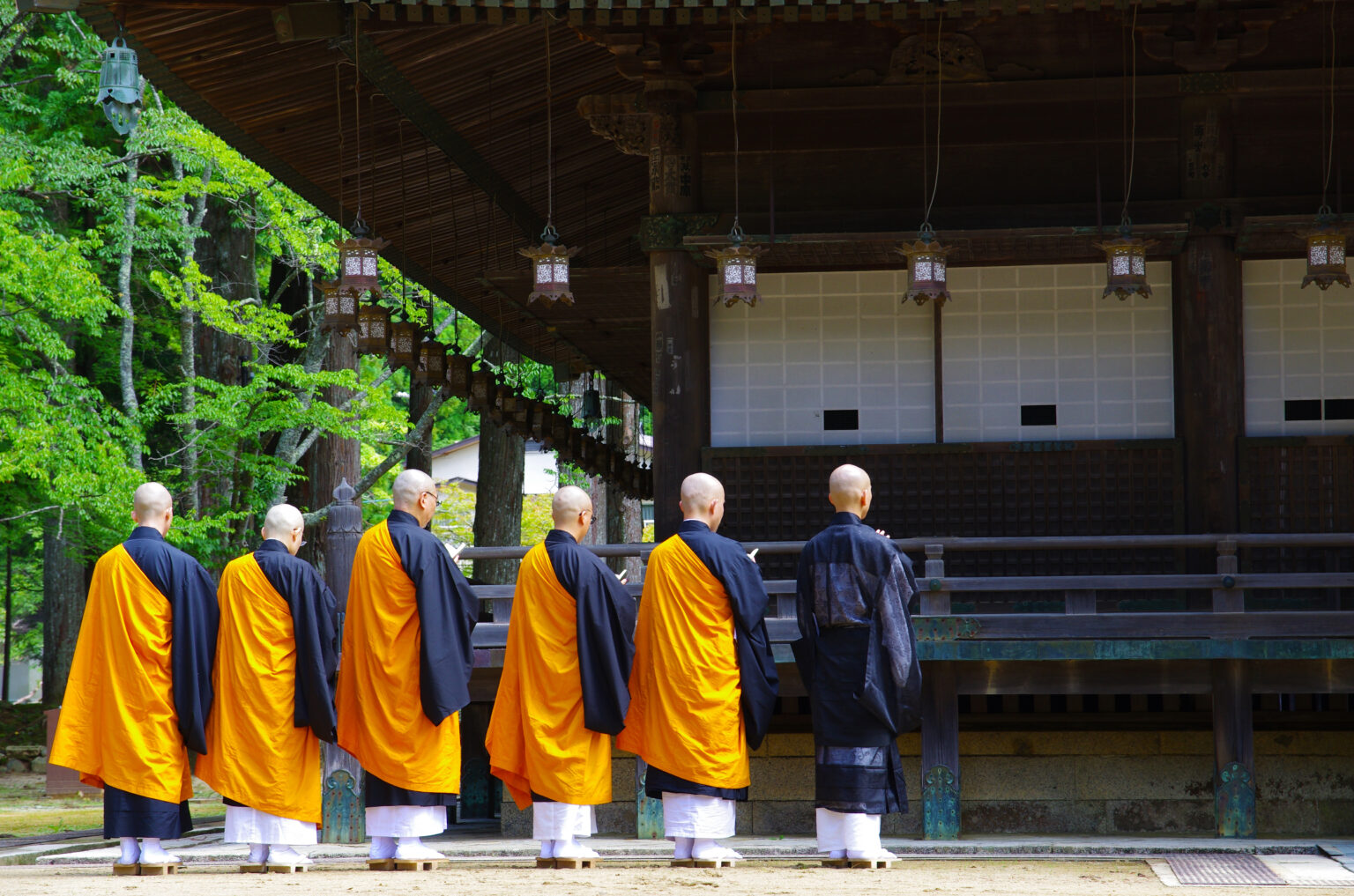
At most shukubo, overnight guests are invited to the early-morning Buddhist service, known as gongyo or asa no otsutome. Temples and JNTO describe attending as optional and welcomed rather than required, and the form of the service depends on the temple’s Buddhist sect. Services usually begin around dawn — roughly 6 a.m. at many temples, though Koyasan’s Ekoin, for one, starts at 7 a.m. — and run about 30 to 60 minutes.
Some temples layer on other optional experiences. Certain esoteric (Shingon) temples, Ekoin among them, hold a goma fire ritual, but that is not something every temple offers. Depending on the temple and plan you may also be able to add sutra copying (shakyo) or a form of seated meditation (Shingon temples like Ekoin offer Ajikan, while zazen is the Zen tradition), so check what your chosen temple actually provides.
Shojin ryori: temple cuisine
Shojin ryori is Japanese Buddhist temple cooking that avoids meat and fish, and typically leaves out dairy and eggs as well. It also traditionally avoids the “five pungent roots” such as garlic and onion, which were thought to over-stimulate the senses and disturb meditation. The result is a quiet, seasonal, plant-forward meal that is a distinctive part of a temple stay.
What is a minshuku?
A minshuku (民宿) is typically a small, family-run guesthouse, often just a few rooms in the owner’s own home. You find them most in rural areas, resort and hot-spring towns, and ski, coastal or farming districts rather than in big-city centres. Compared with a ryokan, a minshuku is usually simpler and more budget-friendly, with fewer amenities.
In practice that often means shared bathrooms rather than a private one, and rooms with tatami and futons that you are usually expected to lay out and put away yourself. Home-style meals, commonly dinner and breakfast, are a typical part of the stay and are often eaten in a communal dining room, with rates charged per person. All of this varies by property, so confirm what is included before you book. The appeal is the human one: a night in someone’s home, local cooking, and a host who knows the area.
How to book, and what to check
You can reserve a shukubo directly through a temple’s own website, through a temple-lodging association such as the Koyasan Shukubo Association (which offers instant online booking for some temples and a request service for others), and in some cases by email or a booking platform. Minshuku are usually booked through booking sites, regional reservation services, or directly. Before you commit, a few things are worth confirming, because they differ so much from place to place:
- Payment. Card acceptance varies: some temples (like Ekoin) take major cards and e-money, others (like Kodaiin on Koyasan) are cash-only. Bring enough yen and confirm in advance.
- Check-in deadline and curfew. Many shukubo ask you to arrive by a set time and lock the gate at night; one Koyasan temple closes its entrance at 9 p.m., while another sets a 7 p.m. last check-in but has no curfew. Check your temple’s specific times.
- Meals. Many shukubo, especially on Koyasan, include dinner and breakfast as shojin ryori, but plans vary; note any dietary needs when booking.
- English. On Koyasan the monks are used to foreign guests and you can generally book in English; elsewhere, help may be more limited.
Book early for popular dates, and if your first-choice temple is full, compare nearby places to stay or, on Koyasan, add a night in the town below the mountain. For getting to and around Mount Koya and joining a guided walk of the Okunoin cemetery, day tickets and small-group experiences are easy to arrange in advance, and a guided cultural tour can be worth it if your time is tight.
Some of the links above are affiliate links. If you book through them we may earn a small commission, at no extra cost to you.
Who should choose a shukubo or minshuku?
A shukubo or minshuku suits travellers who want a quiet, early-rising, culturally immersive night in a simple tatami-and-futon room and are comfortable with shared bathrooms and an early gate. It is a poor fit if you need hotel-level comfort, a late check-in, or a private en-suite in every room. Some properties do offer private bathrooms, and curfew and check-in cut-offs vary widely, so if any of that matters, confirm it before you book. Chosen with open eyes, though, both give you something a hotel cannot: a night lived to a temple’s or a family’s own rhythm.
What you’re buying isn’t a room — it’s a night lived to someone else’s rhythm.
If temple culture is the draw more than the overnight itself, pair a stay with a day at a quieter country temple — Murōji in Nara is the kind of place these mornings prepare you for.
Frequently asked questions
Can tourists stay at a temple in Japan?
Yes, at temples that run a shukubo (temple lodging) and accept guests, though not every temple offers a stay. International visitors are welcome and you generally do not need to be Buddhist.
Do I have to join the morning prayers?
Usually no. Temples and JNTO describe the early-morning service as optional and welcomed rather than required, though it is one of the highlights of a temple stay. Details vary by temple, so check yours.
What is shojin ryori?
Buddhist temple cuisine that avoids meat and fish, and typically dairy and eggs, and traditionally the “five pungent roots” like garlic and onion. It is not automatically vegan or allergen-free, so confirm your needs when booking.
What’s the difference between a minshuku and a ryokan?
A minshuku is usually a small, family-run guesthouse: simpler, cheaper, often with shared bathrooms and self-service futons. A ryokan is a more polished traditional inn with fuller service and meals; we cover it separately in our ryokan guide.
Is Koyasan the only place for a temple stay?
No. Koyasan is the best known, but shukubo also take guests around Zenkoji (Nagano), Minobusan (Yamanashi), the Dewa Sanzan (Yamagata), Mt. Mitake (Tokyo, where lodgings are run by Shinto priests) and select Kyoto temples.
Do shukubo have a curfew, and do they take cards?
Many set an early check-in deadline and a night curfew, and both differ a lot by temple. Card acceptance also varies: some take cards and e-money, others are cash-only — so bring yen and confirm before you arrive.
Sources and last checked
Last checked: August 2026. Details were verified against the Japan National Tourism Organization’s temple-stay guide and guesthouse guide, the Koyasan Shukubo Association, individual temple sites including Ekoin and Minobusan Kuonji, and Nankai Railway. Temple lodging rules, prayer times, meal plans, curfews and prices change and vary by property, so confirm the current details directly with each temple or inn before booking.
Join travelers discovering Japan's hidden side
Weekly dispatches from off-the-beaten-path Japan — spots and stories you won't find in guidebooks.
No spam. Unsubscribe anytime.
Welcome aboard!
You're in. See you in your inbox soon.