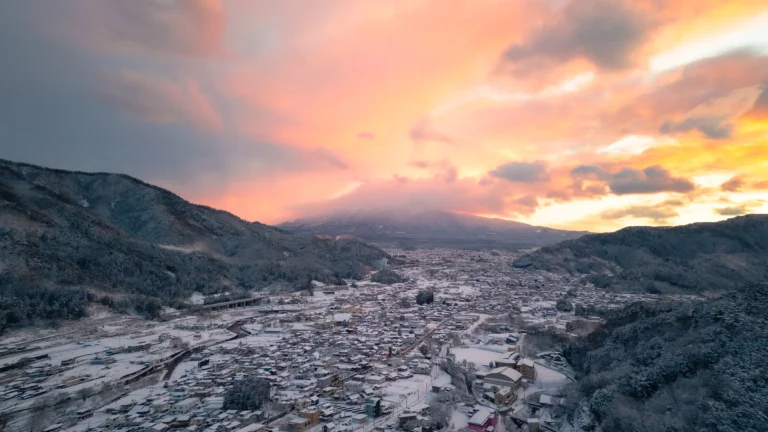
Today, October 23, 2026: Mt. Fuji was hidden by cloud in Nobu's on-site check from Fujiyoshida at 11:49 JST.
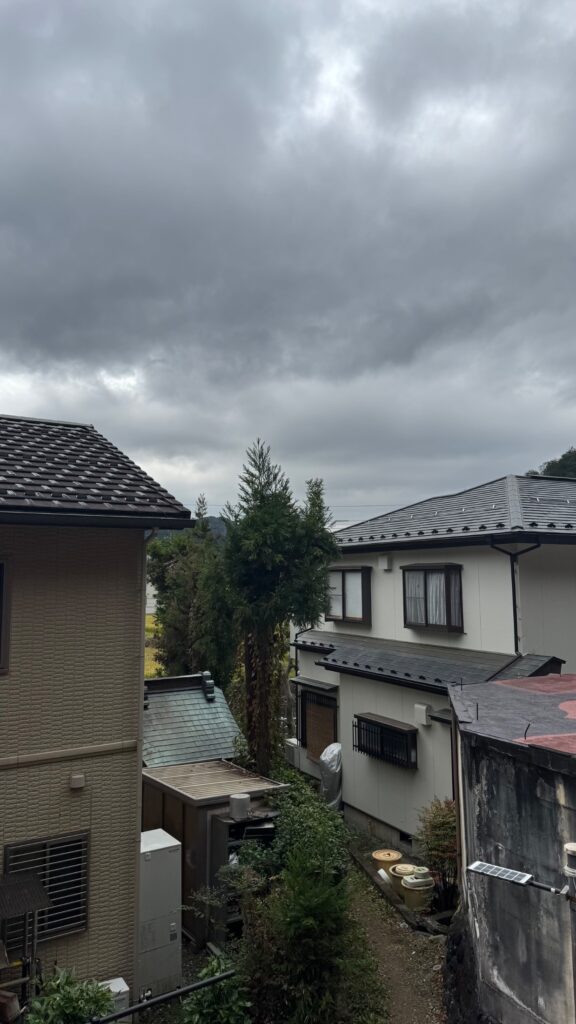
- Best viewpoint nowFujiyoshida
Checked in person from Fujiyoshida by Nobu, a long-time resident, usually in the morning. See how this compares to algorithmic forecasts ↓
Cloud is covering Mt. Fuji in the latest check — but visibility can change within hours. Check back later in the day, or get an email the next time Fuji clears.
Mt. Fuji · Visibility · Live
Is Mt. Fuji Visible Today? A 2026 Forecast Guide by a Fujiyoshida Local
December: 85% of mornings with at least part of Fuji out. July: 25%. Most travellers don’t realise the gap. Thirty-five years of monthly data, the live tools that work, and the seven viewpoints worth planning your day around.
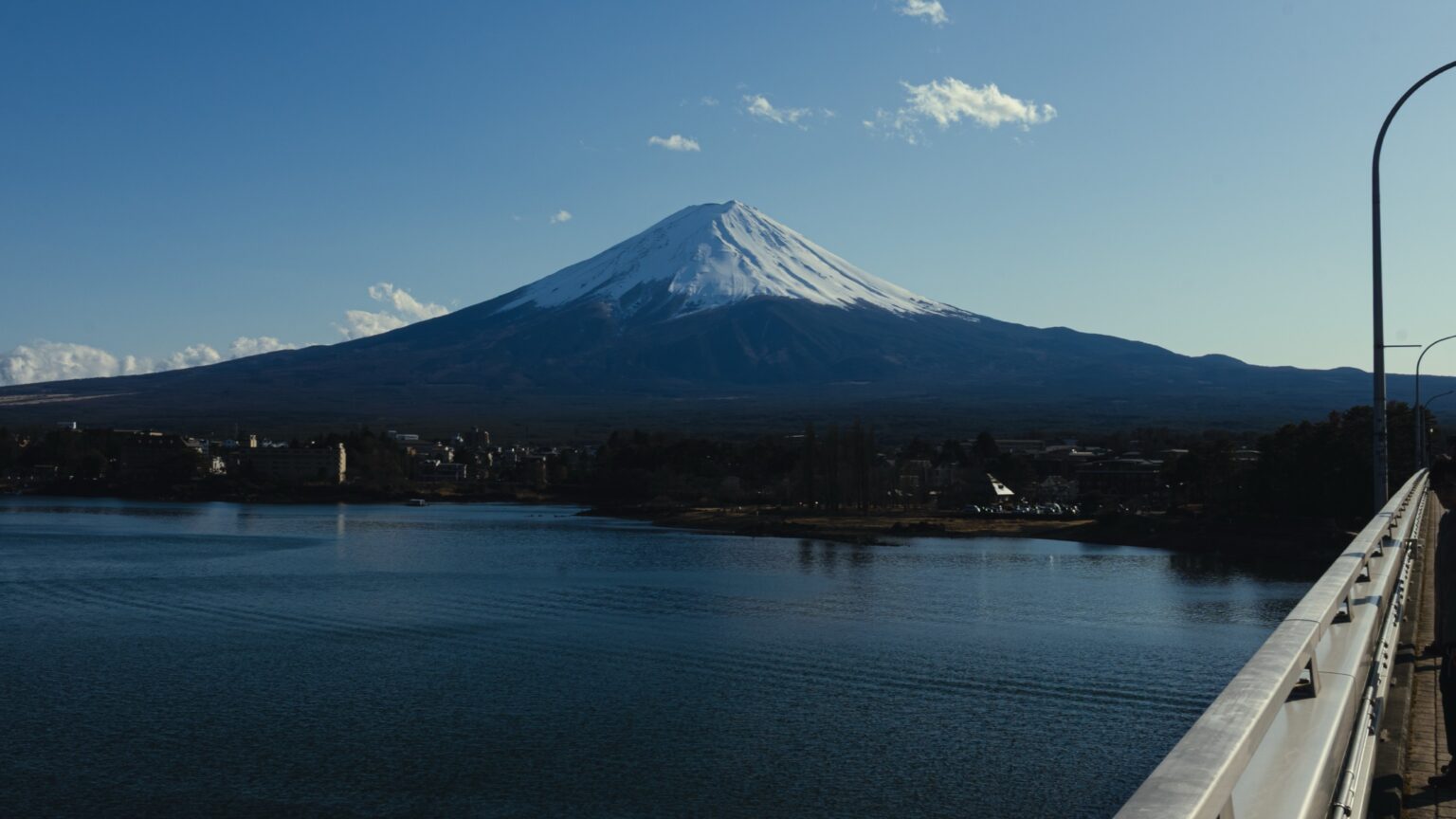
Not up at 6am? I’ll email you the next clear-Fuji morning.
I’m Nobu, and I watch the mountain from Fujiyoshida. Leave your email and I’ll send a short note when Fuji clears, something blooms, or a hut opens bookings — no noise, unsubscribe anytime.
Part of the full Mt. Fuji travel guide.
Observed, not forecast: a resident’s morning photo vs. the model
This page answers one question a weather model can’t: what did Mt. Fuji actually look like from the base this morning? Almost every day, Nobu — a Fujiyoshida resident who lives at the foot of the mountain — photographs the peak and records whether it was visible, partly out, or hidden. Forecast tools such as isfujivisible.com estimate visibility days ahead from global weather data, which is genuinely useful for choosing your trip dates. But on a microclimate mountain like Fuji, the model and the mountain disagree more often than you’d expect — and the only way to know for sure is to look. Here is one such morning.
If the model and the mountain disagree, give yourself more mornings
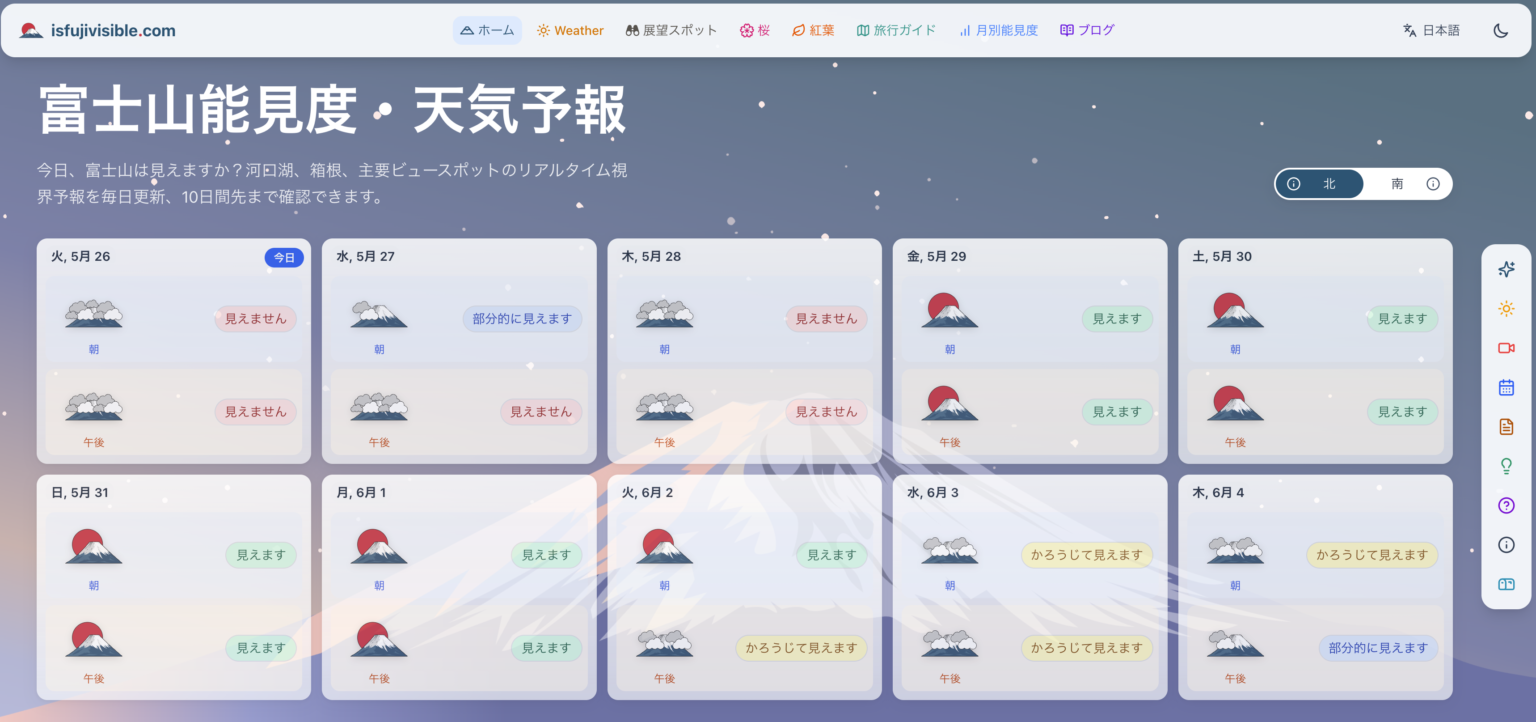
Underlying data: Yr.no, a weather service using the ECMWF global model. Excellent for weekly planning, with no on-site verification step.
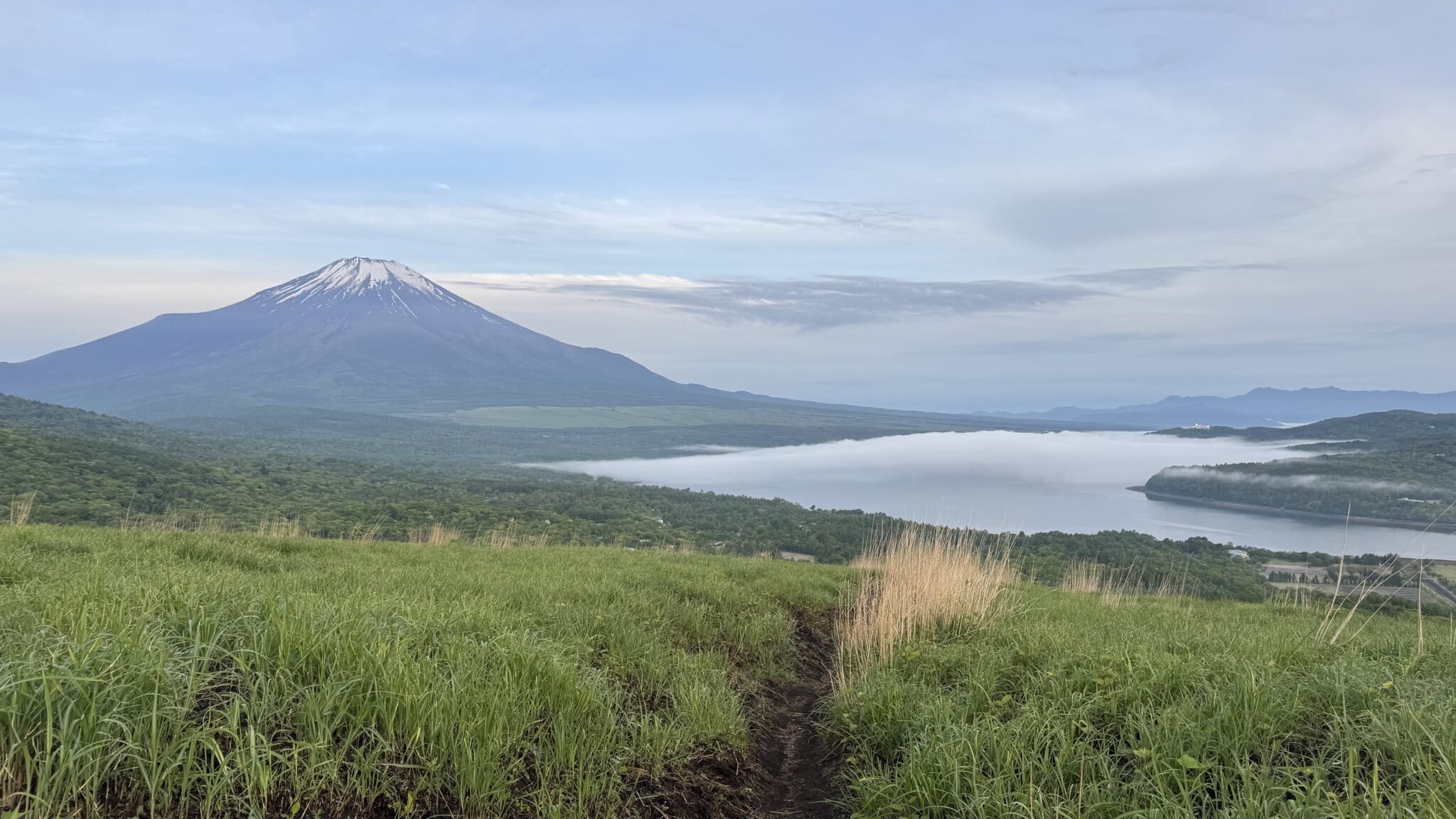
Photographed first from Lake Yamanaka (04:54), then Fujiyoshida (05:25). May 26, 2026 — Nobu, this page’s author.
See a reader’s own confirmation from that morning
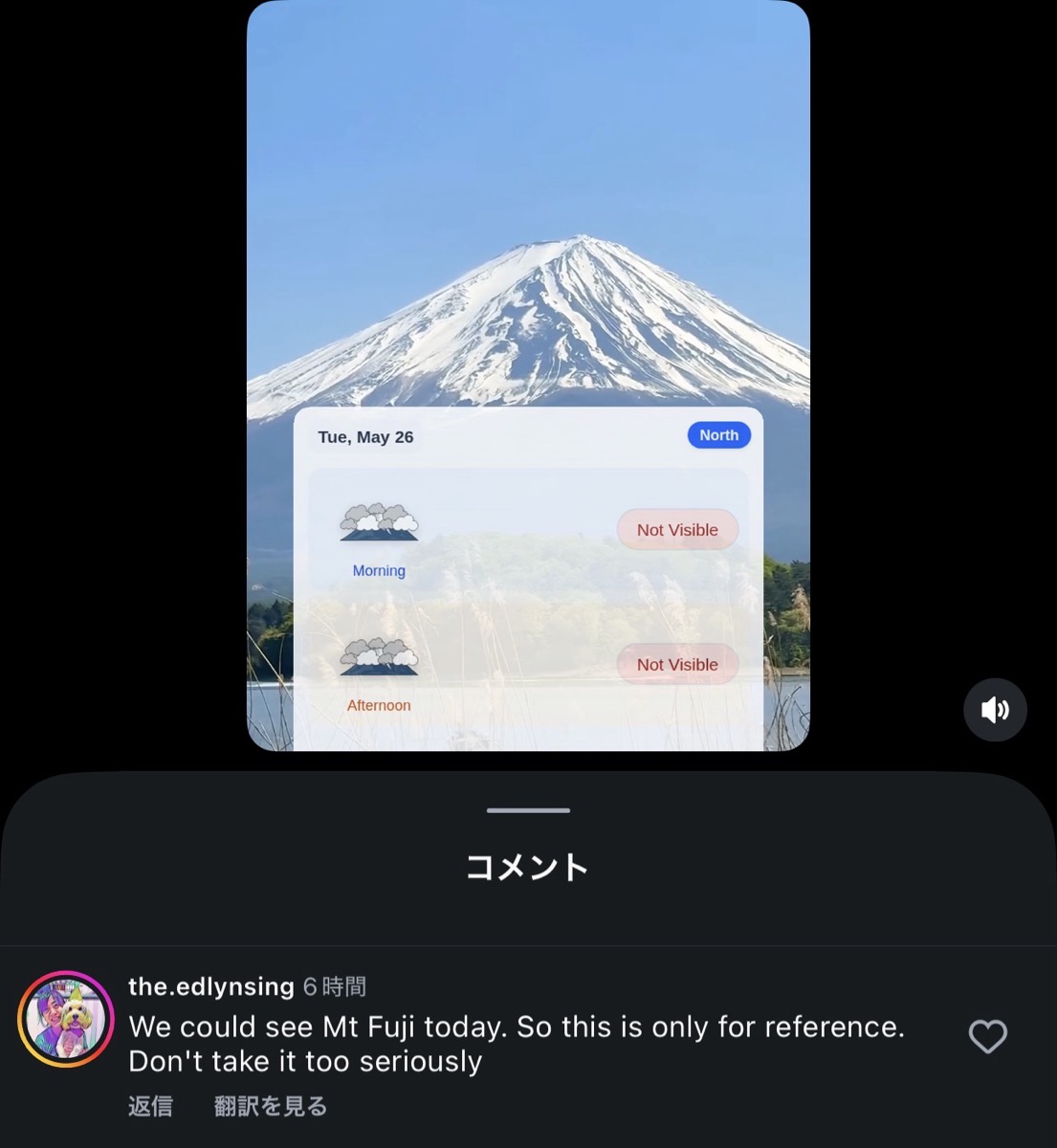
It wasn’t only us who saw it. On isfujivisible.com‘s own Instagram Reel posted that same morning, one of their viewers replied to say they had actually seen Mt. Fuji — and suggested taking the model prediction as reference only.
“We could see Mt Fuji today. So this is only for reference. Don’t take it too seriously.”
— Instagram reader comment on isfujivisible.com’s May 26, 2026 Reel
Use a forecast to pick your dates; use a photo from the base to decide your morning. For the day’s temperature, rain, wind and what to wear, see the Mt Fuji weather forecast. A global weather model gives you a useful 7-day outlook — but this page gives you an in-person check from the base, usually posted in the morning, when you’re deciding whether to drive out to the lake. Our accuracy log below shows the mornings the forecast matched what we actually saw, alongside the mornings it didn’t — because Mt. Fuji’s microclimate sometimes catches everyone, us included.
The record — what actually happened
Last 14 days — verified from Fujiyoshida
A photographed verdict on whether Mt. Fuji is visible from the base on most days, usually checked in the morning; days without a check are left out. No algorithm, no model — just the mountain.
Forecast score vs what I saw — last 30 days
The forecast score is this site’s own 0–10 visibility score, calculated from Japan Meteorological Agency weather forecasts. JMA itself does not forecast whether Mt. Fuji will be visible.
Days the score got it wrong (13)
- 2026-10-23 — forecast score 5/10, but Nobu's photo verdict was hidden.
- 2026-10-21 — forecast score 6/10, but Nobu's photo verdict was visible.
- 2026-10-19 — forecast score 2/10, but Nobu's photo verdict was visible.
- 2026-10-18 — forecast score 2/10, but Nobu's photo verdict was visible.
- 2026-10-15 — forecast score 7/10, but Nobu's photo verdict was partial.
- 2026-10-13 — forecast score 2/10, but Nobu's photo verdict was visible.
- 2026-10-11 — forecast score 2/10, but Nobu's photo verdict was visible.
- 2026-10-07 — forecast score 5/10, but Nobu's photo verdict was hidden.
- 2026-10-04 — forecast score 6/10, but Nobu's photo verdict was hidden.
- 2026-10-03 — forecast score 7/10, but Nobu's photo verdict was hidden.
- 2026-09-28 — forecast score 1/10, but Nobu's photo verdict was partial.
- 2026-09-25 — forecast score 5/10, but Nobu's photo verdict was hidden.
- 2026-09-24 — forecast score 6/10, but Nobu's photo verdict was visible.
Our Mt. Fuji observation record — 149 days from Fujiyoshida
Observed, not forecast. A first-hand record of what Mt. Fuji actually looked like from Fujiyoshida — one in-person check a day by Nobu, most often in the morning, with a photo and the time of the check logged. 149 days logged across the 151 days from May 26, 2026 to Oct 23, 2026 — 2 days missed and left out rather than guessed. The summit was clearly out on 53 (36%), at least partly out on 70 (47%), and fully hidden on 79 (53%). We compare this against Fuji City's long-run south-side record, kept since 1990 — a separate dataset measured differently.
Percentages are rounded independently and may not total exactly 100%.
Month-by-month — our observed record
| Month | Days observed | Visible | Partial | Hidden | Visible % |
|---|---|---|---|---|---|
| May 2026 | 6 | 5 | 0 | 1 | 83% |
| Jun 2026 | 30 | 6 | 3 | 21 | 20% |
| Jul 2026 | 30 | 15 | 1 | 14 | 50% |
| Aug 2026 | 30 | 11 | 6 | 13 | 37% |
| Sep 2026 | 30 | 6 | 5 | 19 | 20% |
| Oct 2026 | 23 | 10 | 2 | 11 | 43% |
There is a single question that defines the Mt. Fuji portion of any Japan trip: will the mountain actually be visible the day I’m there? Most online answers are vague — “depends on weather.” The honest answer is sharper than that. Mt. Fuji has 35 years of recorded morning-visibility data (the City of Fuji’s 8 a.m. checks, 1991–2025), and the variance between months is enormous. The mountain is at least partly visible on 85% of December mornings, but on only 25% of July mornings. If you understand the seasonal arithmetic, the time-of-day pattern, and the live tools that actually work, you can stack the odds. This is the version of the visibility guide I’d give a friend planning their first Fuji trip.
35-year monthly morning visibility — City of Fuji 8 a.m. record
% of mornings (8:00 a.m. check) Mt. Fuji was fully or partially visible from Fuji City, Shizuoka — a 35-year average drawn from the city’s official observation record (1991–2025). Source: City of Fuji — Mt. Fuji observation record and methodology · 2025 report, PDF (1991–2025 data).
The pattern is climatic, not random. Summer is dominated by warm, moist Pacific air rising up the mountain’s flanks, condensing into cloud bands that sit on the peak through the day — for one summer month up close, see my log-backed guide to whether you can see Mt. Fuji in August. Winter brings dry continental high pressure from Siberia — clear, cold, photographer’s weather. The shoulder months (March–April, October–November) are transitional and unpredictable. October is the inflection point: 69% of mornings show at least part of the mountain.
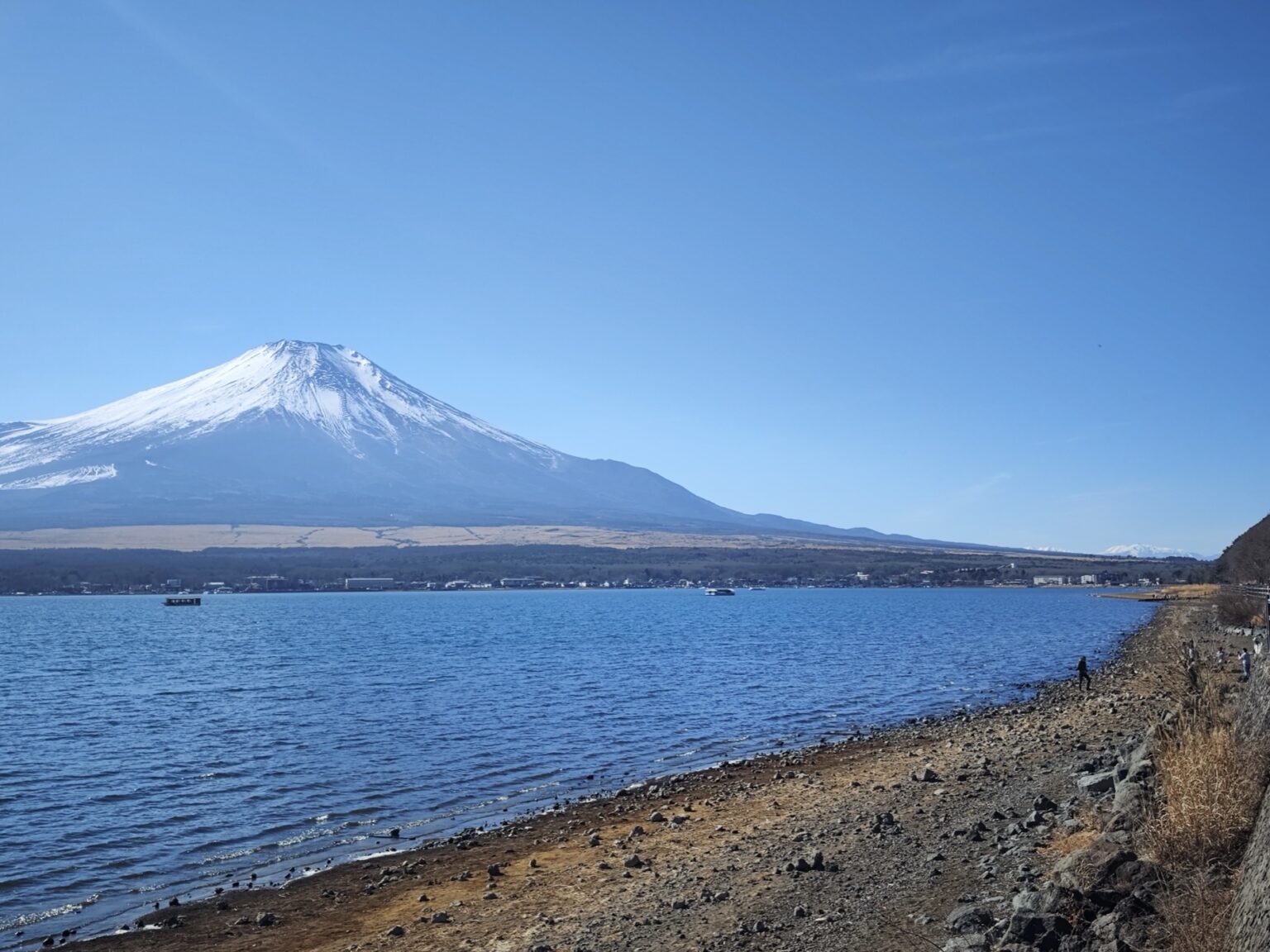
Lake Kawaguchi, late December morning. The classic photo.
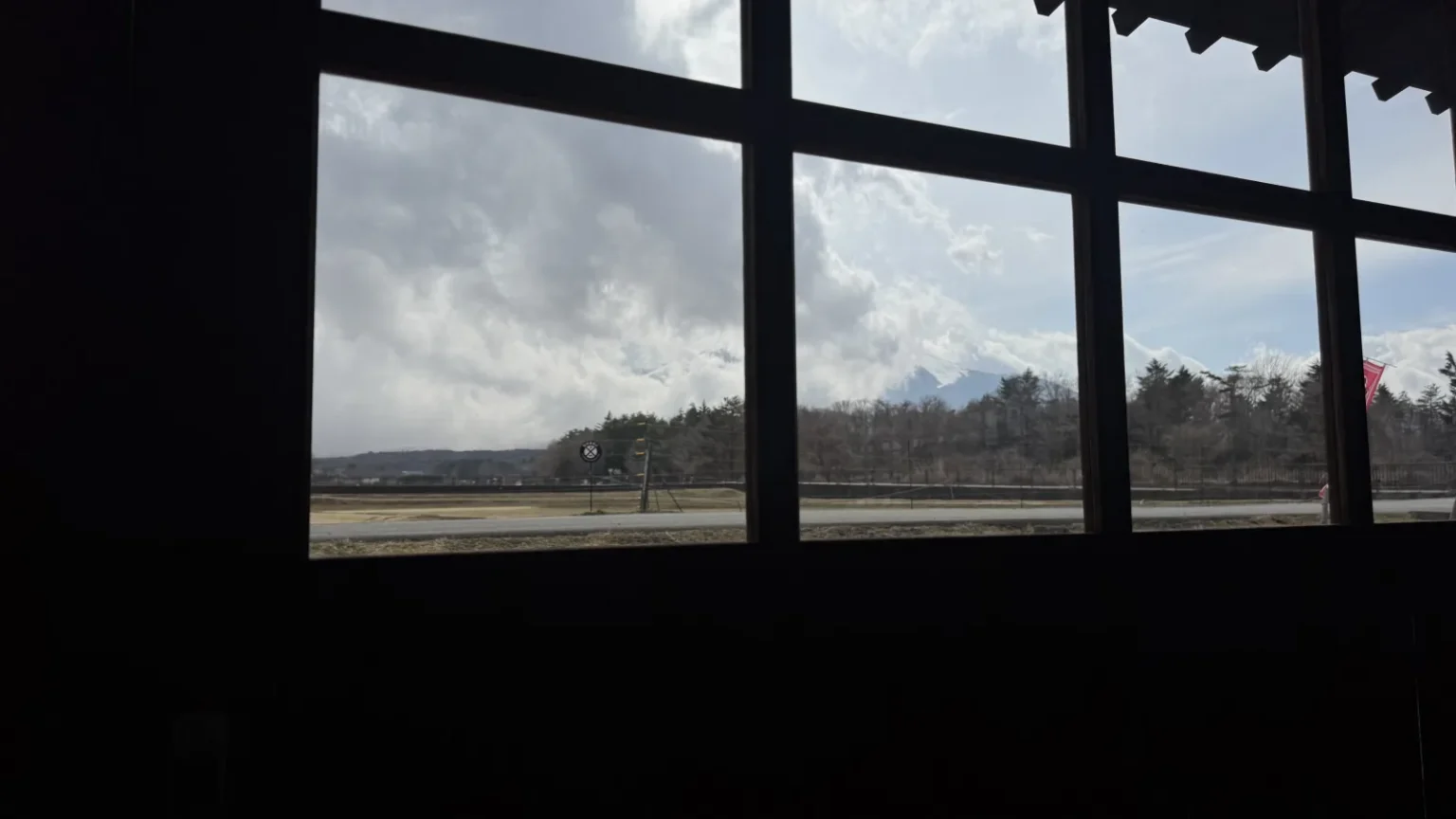
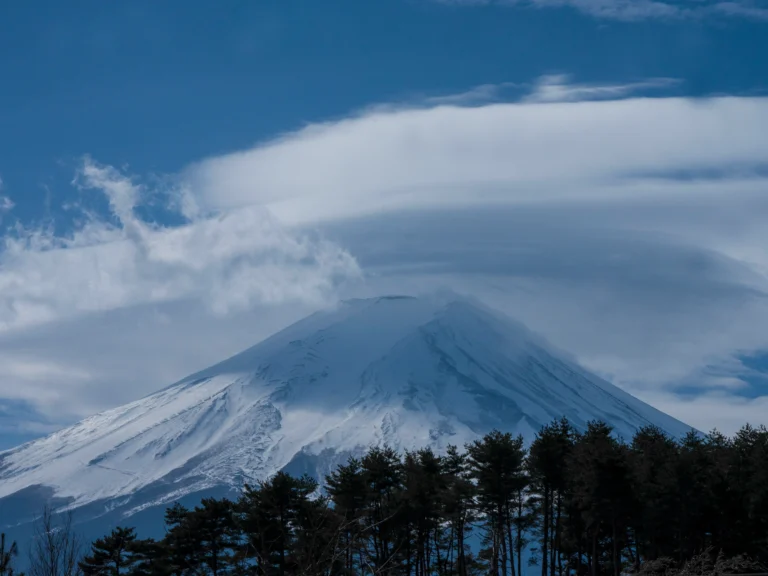
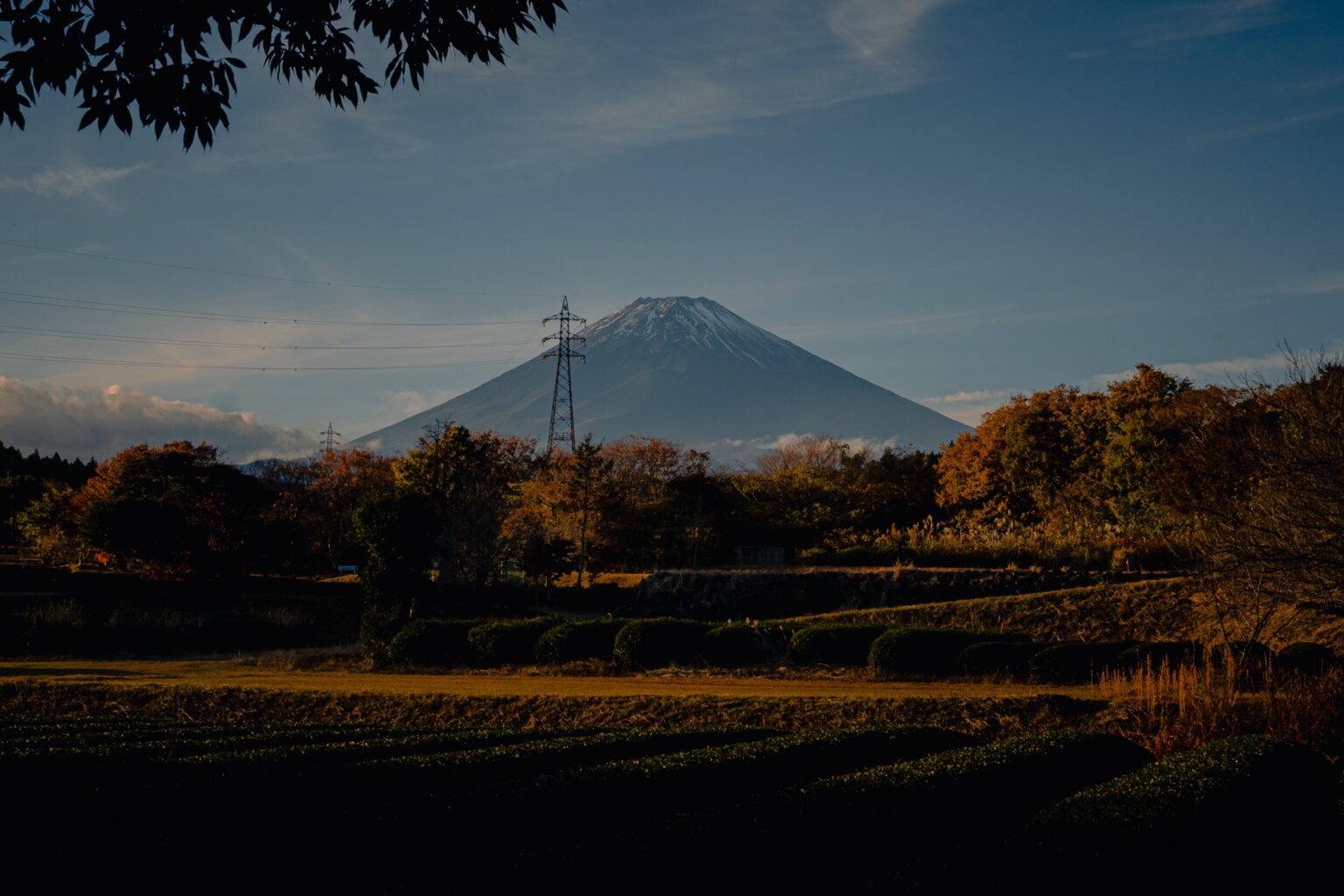
Same area on a cap-cloud day, from the Hanaan restaurant window near Yamanakako. This summit-wrapping pattern is most common June–September, but it can form whenever moist air is pushed up over the summit.
Tools that actually tell you “is it visible today?”
Three live tools are worth bookmarking. None is perfect, but used together they give you a reliable read most mornings.
@is_fuji_visible_today
Nobu’s own account: Mt. Fuji visibility updates from Fujiyoshida, a running record of whether the mountain is showing or not.
Best for: a first-hand look at how Fuji looked in his latest post.
FujisanWatcher live cameras
Yamanashi Tourism’s live-camera grid — Shindo Pass, Lake Kawaguchi, Fujiyoshida, Lake Motosu, Lake Shoji, Fujigamine and Lake Yamanaka. Refreshed every 60 seconds.
Best for: checking from your hotel breakfast table — if Kawaguchi is clear, drive immediately.
Tenki.jp / JMA detailed forecast
Read past the sunny/cloudy icon: the page gives a foothill forecast for Fujinomiya and a table of temperature and wind at altitude. Use the cameras to check whether the summit is actually clear.
Best for: spotting the rare “Fuji above the clouds” — an overcast valley can still hide a clear peak.
Hakone is the other side of the mountain and worth knowing about: at Lake Ashi you can watch for Fuji from inside a hot spring. The odds by month, and the honest caveats, are in the Ryuguden day-use onsen guide.
Seven viewpoints worth planning your day around
A base by the lakes, so the viewpoints are a short dawn drive
Each of these has a different optimal season, time of day, and access pattern. Pick one or two for a single trip; trying to chase all seven dilutes the experience.
| Viewpoint | Best season | Best time | Why go |
|---|---|---|---|
| Kawaguchiko Ohashi Lake Kawaguchi bridge |
Dec – Feb | Sunrise – 9 AM | The most accessible classic shot. Mountain reflects in the lake on still mornings. |
| Chureito Pagoda Arakurayama Sengen Shrine |
Apr (sakura) Oct–Nov (autumn) |
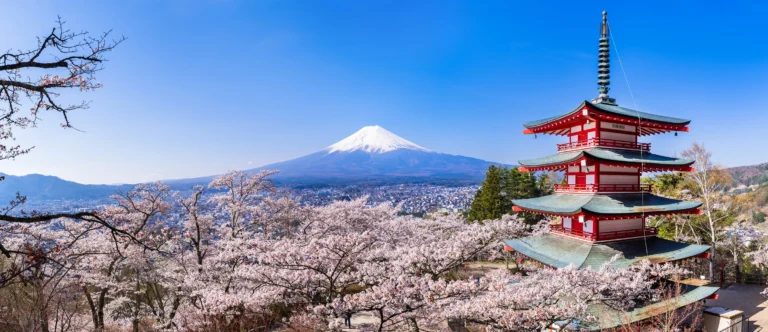
Dawn (before tour buses) | The five-storey pagoda + Fuji + cherry blossoms shot. Heavily photographed; arrive at 5:30 AM in season. |
| Lake Yamanaka Yamanakako |
Nov – Feb | Sunrise (still water) | Larger lake than Kawaguchi, fewer crowds, better mirror reflections in winter. |
| Shichirigahama Beach Kamakura, Sagami Bay |
Dec – Feb | Sunset (Fuji + Pacific) | Fuji from the Pacific side, framed by the ocean and Enoshima island. 1 hour from Tokyo. |
| Oishi Park | May (nemophila) late Jun–mid Jul (lavender) |
Morning | Seasonal flowers in foreground, Fuji across Lake Kawaguchi behind. The best summer Fuji-with-flowers viewpoint. |
| Lake Saiko (Iyashi-no-Sato) Nenba thatched village |
Year-round | Mid-morning | Reconstructed thatched-roof village + Fuji in the background. Quiet alternative to the main lakes. |
| Tenku no Torii Kawaguchiko sky gate |
Year-round (best Nov–Feb) | Sunrise | A torii gate on a mountain ridge looking down on Kawaguchi, with Fuji directly behind. Recent viral spot — the operator asks for a ¥200 contribution (¥100 for ages 6–17); check the full guide on access and hours before planning a dawn visit. |
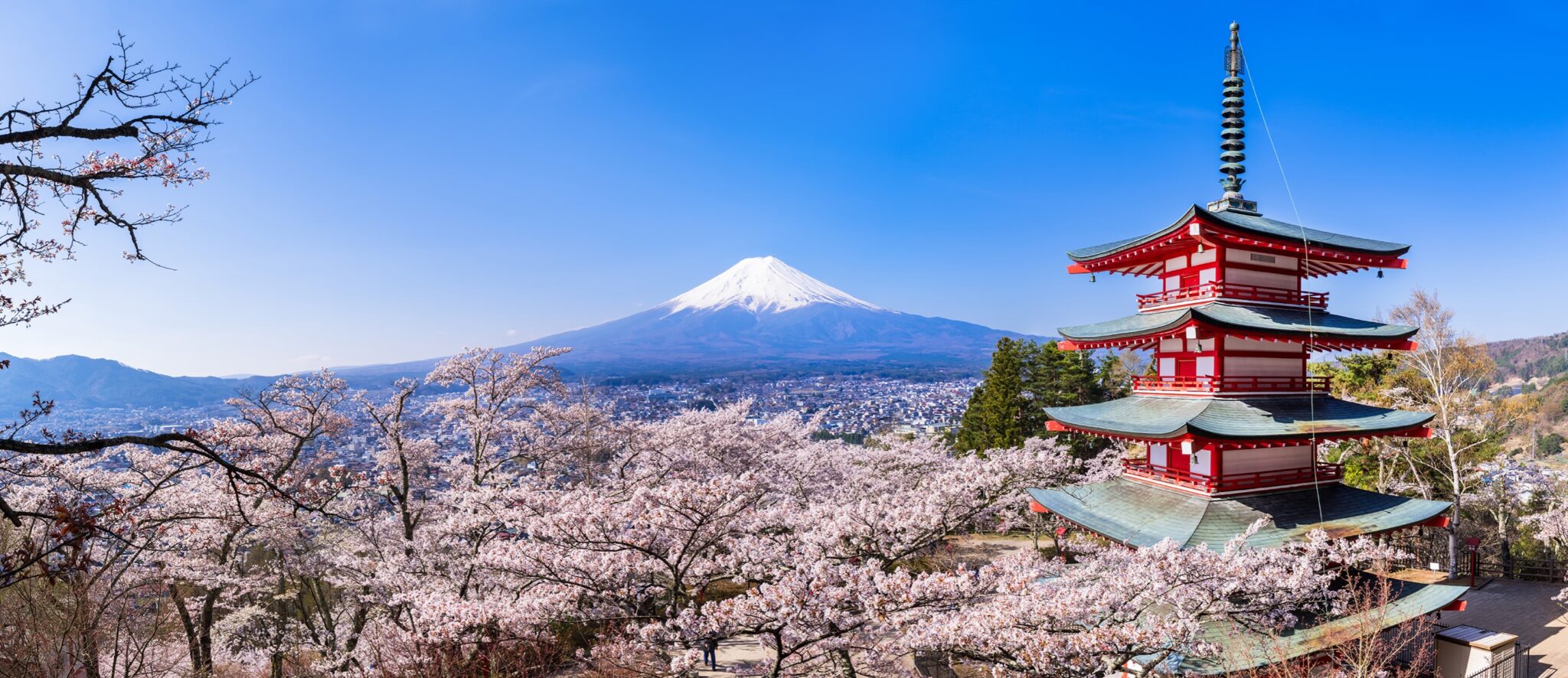
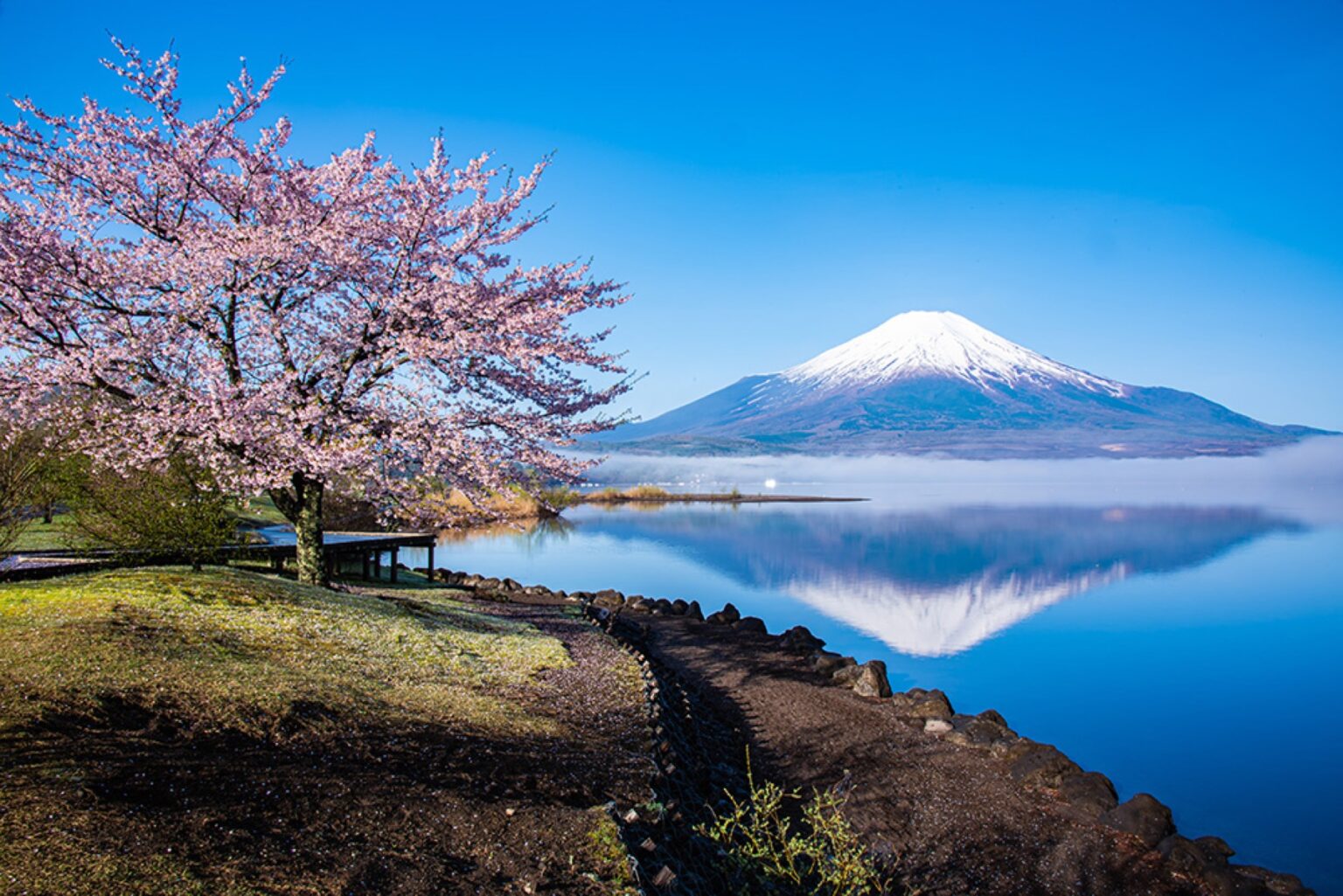
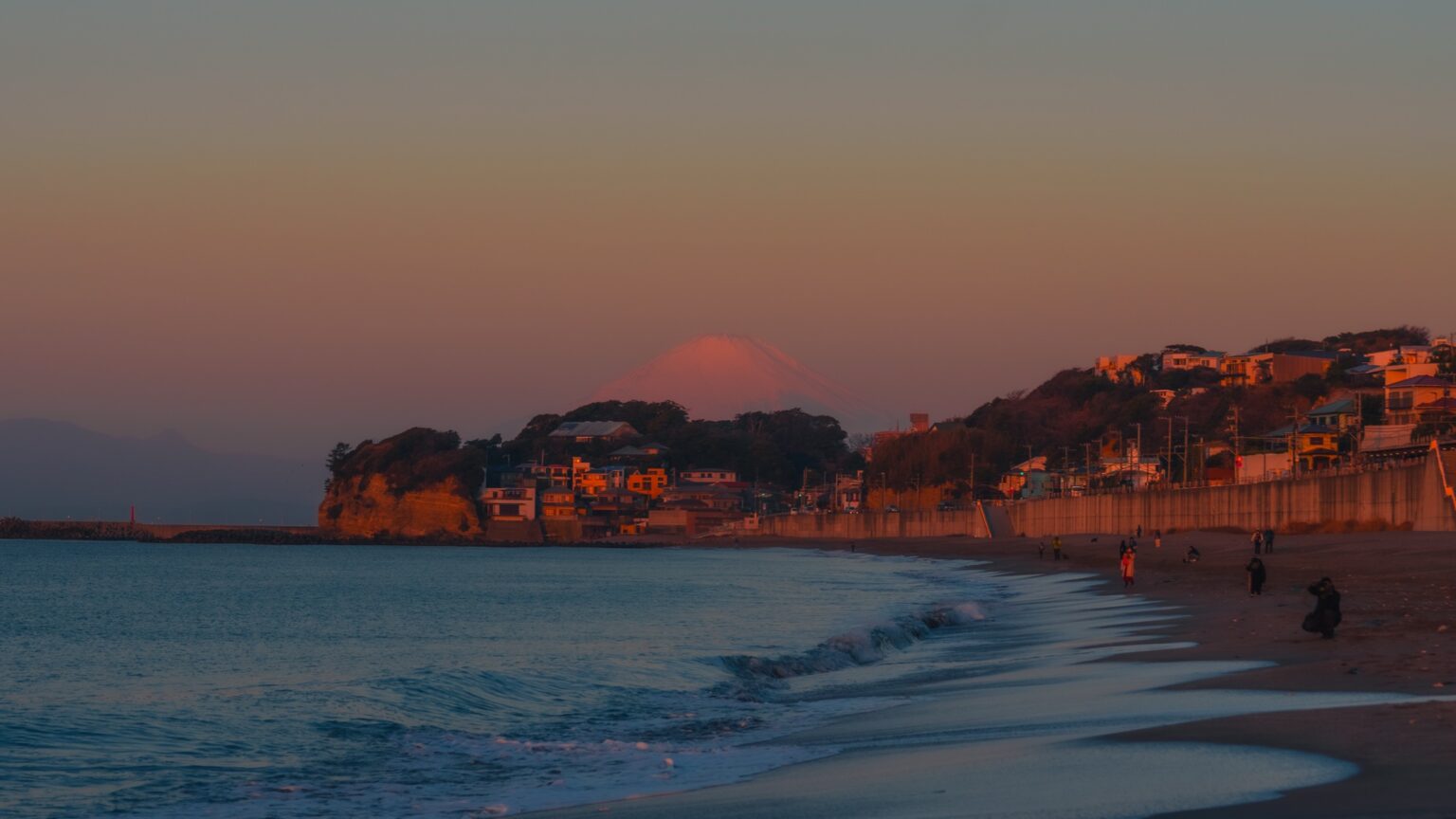
“Fuji shows, at least in part, on 85% of December mornings and 25% of July mornings. The variance between months is enormous, and most online guides skip past it.”
Shooting Fuji from these viewpoints?
If you are planning your day around a clear Fuji, a few small things make the photos worth the early start — and my full camera kit is here. Everything below is on Amazon Japan, so you can have it delivered to your hotel before you go.
Flying in from the US or Canada? If you shoot, these are the two I’d have in the bag before you fly — on amazon.com: travel tripod, fast SD card. Already in Japan? The Amazon Japan picks below deliver to your hotel.
Tatsumi Shokudo (Susono)
A Showa truck-stop diner for lunch at the foot of Fuji.
Should You Climb Mt Fuji — or Just See It?
Climb it, or just see it? A 2026 decision guide.
Travel tripod
For the blue-hour and dawn shots when Fuji is sharpest and the light is too low to shoot handheld.
Fast SD card
So you are not deleting frames at the viewpoint when the cloud finally lifts.
Spare battery
Cold mornings drain batteries; a charged spare saves the shot you waited for.
Why the time of day matters as well as the season
Even within a “good” month like December, time of day matters more than most travellers realise. The mountain warms during the morning, drives convection, and pulls valley moisture upward into cumulus clouds that wreathe the summit by mid-afternoon. The same peak that’s perfectly visible at 6 AM is often hidden by 2 PM.
- Sunrise – 8:30 AM: highest probability of a clean view, year-round. Air is coldest, atmosphere is most stable.
- 8:30 AM – 11 AM: still good in winter; visibility starts dropping in summer.
- 11 AM – 4 PM: lowest visibility window, especially May–September.
- Late afternoon – sunset: occasionally clears as convection dies down. Worth checking again at 4–5 PM.
For trip planning: book a ryokan in Kawaguchiko or Yamanakako so you wake up at the lake. Walking to the shore at 6 AM and seeing the mountain is a different experience from driving up at 11 AM and finding it gone. See Best Time to See Mt. Fuji for a longer monthly breakdown.
How often is Mt. Fuji actually visible in summer? One local’s morning log
From May 26 to August 12, 2026, I checked Mt. Fuji in person from the Fuji Five Lakes almost every day, usually in the morning, and recorded whether the summit was out — 78 of those 79 days (I missed one, July 14, and have left it out rather than guess it). The result: the summit was fully visible on 32 days (41%); the mountain was partly visible on 5 (6%) and completely hidden on 41 (53%). These are observed conditions, not a forecast. Summer really is the hardest season to catch it — but not as hopeless as the all-day weather stats suggest, because a summit that is clear at 6 a.m. often clouds over by noon. The table below is a dated snapshot; the live record higher on this page updates automatically as new checks are posted.
| Period (2026) | Days logged | Fully visible | Partial | Hidden | Fuji at least partly visible |
|---|---|---|---|---|---|
| Late May (26–31) | 6 | 5 | 0 | 1 | 83% |
| June | 30 | 6 | 3 | 21 | 30% |
| July (missed Jul 14) | 30 | 15 | 1 | 14 | 53% |
| August (1–12) | 12 | 6 | 1 | 5 | 58% |
| All (78 of 79 days) | 78 | 32 | 5 | 41 | 47% |
Two caveats, stated plainly. This is a single summer, not a multi-year average — treat it as what one season looked like on the ground. The long-term monthly odds above (December ~85% of mornings, July ~25%) come from the City of Fuji’s 35-year 8 a.m. record, taken from the south side of the mountain, and count any part of the mountain in view, not just the summit, so they measure a different viewpoint, hour, span of years and definition than my single summer of summit checks from the north side; the two figures answer different questions. What the log adds is the traveller’s version: even in June, the worst month I recorded, Fuji showed itself at least in part on 9 of 30 days. If you are here in summer, the move is to check at dawn and be ready — not to write the mountain off.
For the full numbers behind this — 80 days, month by month, with the forecast-vs-reality breakdown — see my Mt Fuji summer visibility data report.
How accurate is the Mt. Fuji weather forecast? I checked one summer — 72 daily checks, May–Aug 2026 — against reality
On 30 of these 72 checks — 42% — the auto-logged forecast score agreed with the summit verdict I recorded in person from Fujiyoshida; the rest it got wrong, and when it did the error skewed optimistic: on 29 checks the score called the summit clearer than it turned out, against 13 checks it under-called the other way — roughly 2:1 toward over-optimism. Honestly, for a general weather forecast that’s about what I expected: it reads the valley sky, not the cloud that pins itself to the summit.
| What Fuji actually did (my in-person verdict) | Checks | Forecast agreed | Agreement |
|---|---|---|---|
| Summit fully visible | 27 | 15 | 56% |
| Partial | 5 | 3 | —* |
| Summit hidden | 40 | 12 | 30% |
| All checks | 72 | 30 | 42% |
Two honest caveats. First, this is a summer-2026 snapshot — 72 daily checks from late May to early August, nothing more; June ran 13/30 (43%) and July 15/30 (50%), while late May (5 pairs) and early August (7 pairs) are too thin to rate. The winter half is still being logged, and I’ll let this number move as the year fills in, so please don’t read 42% as an annual or a December figure. Second, these are summit-visibility verdicts, which is a harsher question than the 35-year fully-or-partly-visible odds elsewhere on this page (December ~85%, July ~25%) and than my raw 73-day log (summit fully visible 28/73). The takeaway isn’t that the forecast is bad — it’s a general JMA-fed weather forecast, not a bespoke summit-visibility model — but that it under-calls the cloud that parks on Fuji’s top in summer, which is exactly why a local walking out and looking up each morning still earns its place next to the app.
Fuji Visibility Alert
Fuji hidden today? Watch the next clear window.
I check Mt. Fuji from Fujiyoshida and compare it with the JMA forecast. When a clear viewing window looks likely, I'll send you a short email so you can adjust your plans in time.
If Mt. Fuji is hidden — Plan B that’s worth your trip
Statistically, you may arrive on a day when Fuji is fully cloud-wrapped. The Fuji Five Lakes region is dense with worthwhile alternatives, especially within the Kawaguchiko–Yamanakako–Saiko area. Three I’d build a half-day around:
Yamanashi’s signature dish: flat udon, miso broth, pumpkin and root vegetables. Hoto Fudo has multiple Kawaguchiko locations; the cloud-shaped Higashi-Koiji branch was designed by the architect Takeshi Hosaka. Hanaan at Hana no Miyako Park is the under-the-radar pick — Fuji-view garden seating included.
Kimono-dyeing master Itchiku Kubota’s lifework, displayed in a Gaudí-inspired building on the north shore of Lake Kawaguchi. Even on a fogged-out day, this is one of the most quietly extraordinary museums in Japan.
Fuji Chōbō no Yu Yurari near Saiko offers day-use baths with potential summit views when the cloud breaks. Kuku-Na in Kawaguchiko is the upscale option (rooms with private outdoor baths). Even hidden, the soak is the soak.
For a longer “what to do regardless of weather” Kawaguchi–Saiko itinerary, our Oishi Park flower-park guide and Lake Saiko guide cover the alternatives in depth.
Book the right base
Fuji visibility is morning-dependent, and the difference between staying in Tokyo vs. Kawaguchiko is the difference between catching it and missing it. The drive from Tokyo to Kawaguchiko is 2–2.5 hours; leave Tokyo at 6 AM and you arrive around 8:00–8:30: in July and August the clear window has often closed by then, and even in winter there is little slack for traffic.
Where to stay
Three bases for an early-morning look at Mt. Fuji
No room can promise a clear morning. Staying locally makes an early start easier, and if the summit stays hidden, a second night is a second try.
Links in this box go to Booking.com and Hostelworld and are affiliate links: if you book through them, HJG earns a commission at no extra cost to you. Access times, distances and rules are from each property’s official site or its Booking.com or Hostelworld listing in October 2026; check the listing for your dates.
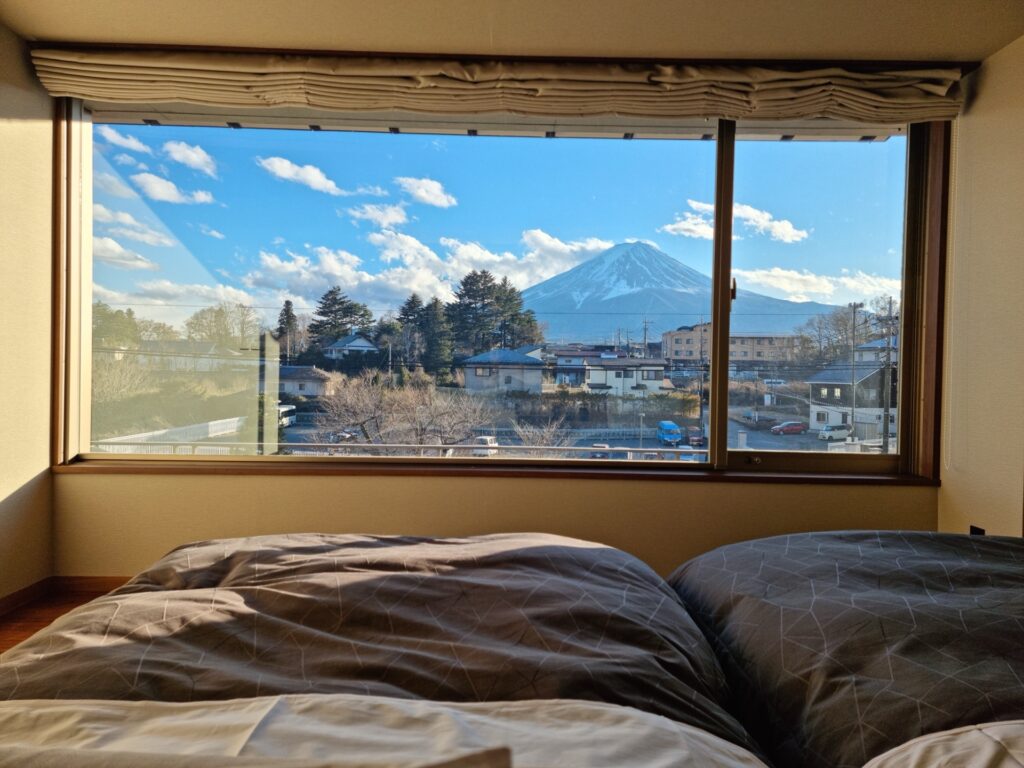
For waking up with Mt. Fuji in the window
Ooike Hotel 大池ホテル
Funatsu, by Lake Kawaguchi · 12 min on foot from Kawaguchiko Station, or the hotel’s station shuttle (14:30–19:00; reserve ahead)
I stayed in a 4th-floor annex room with a private Fuji-view bath. The annex’s 4th- and 5th-floor rooms were renovated in April 2021, and the hotel lists every annex room type with a Mt. Fuji view.
Catch: The main building’s no-view rooms cannot see Mt. Fuji, so book an annex room if the view is the point. Checkout is generally 10:00 (11:00 for annex rooms and the main building’s 4th-floor room with an open-air bath).
See rooms & dates for Ooike Hotel on Booking.comAffiliate link · HJG may earn a commission · My full stay review
For walking to the Chureito Pagoda viewpoint
SARUYA Hotel
Shimoyoshida · 5 min on foot from Shimoyoshida Station
Private rooms with futons or beds in a renovated 80-year-old Japanese building, with a shared kitchen.
Catch: Many rooms share showers and toilets, check-in is 15:00–19:30 only, and there are no cots or extra beds.
- PagodaAbout 1 km away
Affiliate link · HJG may earn a commission
For a low-cost bed near Kawaguchiko Station
K’s House Mt. Fuji
Kawaguchiko · About 13 min on foot from Kawaguchiko Station
Dorms and private Japanese-style rooms, some with their own bath and toilet, plus a guest kitchen, coin laundry and no curfew.
Catch: The hostel says Mt. Fuji cannot be seen from inside the building; you step outside or walk to a viewpoint. Check-in is 15:00–19:30.
See beds & dates for K’s House Mt. Fuji on HostelworldAffiliate link · HJG may earn a commission
FAQ
Is Mt. Fuji visible from Tokyo?
On clear winter mornings, yes — from elevated viewpoints (Tokyo Skytree, Roppongi Hills; Bunkyo Civic Center’s free observation lounge is closed until its planned reopening in December 2026) and from west-facing high-rise hotels. The heatmap above comes from observations in Fuji City, so treat it as a guide to the season rather than Tokyo odds; December and January are reliable, summer is rare.
Is Mt. Fuji visible from the Shinkansen?
Yes, on clear days, between Mishima and Shin-Fuji stations on the Tokaido Shinkansen (check your train’s times for when it passes there). Sit on the right side of the train going Tokyo→Kyoto, left side going Kyoto→Tokyo. The view lasts about 4–5 minutes.
What’s the best month overall?
December if you only care about the odds of seeing the mountain (at least partly visible on 85% of December mornings, wholly on 62%, in the City of Fuji’s 35-year 8 a.m. record). November if you also want autumn leaves at Chureito and the Fuji Five Lakes. April for cherry blossoms with Fuji, but the odds drop to 58% (36% for the whole mountain).
What if I’m visiting in summer?
Manage expectations down. Plan to wake at sunrise for the best chance, expect cloud by mid-morning, and treat any clear summit as a bonus rather than the planned shot. The summer climbing season (July–September) also overlaps the statistically worst stretch for visibility from below: June to August in the City of Fuji’s 35-year 8 a.m. record, with July the lowest month.
Is there a Mt. Fuji webcam app?
FujisanWatcher (Yamanashi Tourism) is the most reliable web-based live-camera grid; it works on mobile browsers without an app install. SkylineWebcams has several Fuji-area feeds (Kawaguchiko, Yamanakako, Shojiko, Arakurayama and Oshino, among others). For social-media context, follow @is_fuji_visible_today for its visible-or-not calls.
Can I climb Mt. Fuji to “see it”?
You can climb it in the summer season (in 2026, July 1 or 10 to September 10 depending on the trail; that season is now over), but you can’t see its shape from on it — below, inside or above the cloud, the full outline needs a viewpoint further away. To photograph Fuji as a shape, you have to be elsewhere. See our Climbing Mt. Fuji 2026 guide for the climbing logistics including the ¥4,000 fee introduced in 2025.
Is there a fee to view Mt. Fuji?
It depends on the spot. A few of the viewpoints listed above ask for a small fee or contribution for the site itself — Tenku no Torii asks for a ¥200 contribution toward its upkeep (¥100 for ages 6–17), and the Iyashi-no-Sato village at Lake Saiko charges adults ¥500 to enter — while Oishi Park is open at all hours with free entry. Check each site before you go; the view itself is just looking up at the sky.
How do I time a trip around the cherry blossom + Fuji combination?
The Chureito Pagoda + sakura + Fuji shot peaks roughly April 7–14 in a typical year, depending on bloom timing. April mornings show Fuji less often than winter ones (58% in the City of Fuji’s 35-year 8 a.m. record, against 85% in December; both count mornings when at least part of the mountain shows), but the combined sakura + Fuji morning at Chureito is one of the most photographed scenes in Japan when it lands. Check the live IG account in the days before to plan around the weather.
How many days a year is Mt. Fuji visible?
Per the City of Fuji’s official 8 a.m. observation record, kept since 1990 from the Pacific (southern) side, Mt. Fuji is fully or partially visible on about 215 days a year on average — 59% of mornings over 1991–2025 — and fully visible on about 134. December peaks at 85% of mornings (62% fully visible); July drops to 25% (10% fully). The 2025 record, a better-than-average year: 136 days fully visible, 95 partially, 134 not visible at all.
Visibility is best in December and January (dry continental high pressure from Siberia), worst in June and July (Pacific monsoon humidity). Both the season and the time of day matter — see the morning vs. afternoon section above.
Is Mt. Fuji visible tomorrow?
Tomorrow is a forecast question, not an observation one. The Mt Fuji weather page shows a JMA-based visibility snapshot for the next few days, and JMA’s English forecast covers the week ahead for Yamanashi Prefecture. For trip-planning more than 24 hours ahead, that multi-day outlook is more reliable than any single-day guess.
One rule of thumb: if today is clear and the surface high-pressure pattern is stable, tomorrow morning is usually clear too. A passing low or front collapses visibility within 6–12 hours.
How long does Mt. Fuji stay visible each morning?
On a clear day, the typical morning window runs from sunrise to about 9 AM, sometimes extending to 11 AM in winter. After that, daytime heating drives convection on the slopes and cumulus cloud builds over the summit, thickening through the early afternoon.
The window closes fastest in summer (often by 7 AM in July and August) and lasts longest in December and January, when the mountain can stay clear well past noon. If you only have one day for photos, arriving at the lake before 6 AM is the single highest-impact decision.
How can I check if Mt. Fuji is visible right now?
Three real-time tools, used together:
- This page’s morning verdict — a Fujiyoshida resident photographs the mountain and posts the result almost every day, usually in the morning (and again during the day when conditions change). The latest entry is at the top of this page.
- FujisanWatcher — Yamanashi Tourism’s live camera grid, refreshing every 60 seconds from seven points around the Fuji Five Lakes.
- JMA Kawaguchiko AMeDAS — sunshine, humidity, wind and rain at the official lakeside observation station. It is a ground-level reading, not a cloud forecast for the mountain, so use it alongside the cameras.
Look first at recent camera images from the viewpoint you plan to use; the forecast and the station readings give supporting context.
What does “partial visibility” mean for Mt. Fuji?
Partial visibility usually means the lower slopes show clearly but the summit is wrapped in cap cloud (kasa-gumo, 笠雲) — a lenticular cloud that forms when moist air rises over the peak and condenses at altitude. Locally it is also called tsumami-gasa (“pinch hat”) because of its disk-like shape.
Cap cloud can clear within 30 minutes or persist all day, depending on the high-altitude wind. Photographs taken in this state often have a “mountain in mist” aesthetic and are considered beautiful in their own right — Hokusai painted Fuji wrapped in cap cloud more than once. If you see partial visibility in this page’s morning verdict, do not assume the day is lost; wait an hour and check again.
How we make today’s call — sources and methodology
Read the full methodology, sources & provenance
The in-person verdicts on this page are ground-truth human observations by a Fujiyoshida-based photographer, logged alongside a forecast score the site derives from Japan Meteorological Agency data. We do not rely on foreign weather models for Mt. Fuji — we use Japan Meteorological Agency data because its observation stations are on and around the mountain.
Primary data sources
- Ground observation from Fujiyoshida. Mt. Fuji is checked in person and photographed from the base by Nobu, a long-time Fujiyoshida resident — usually in the morning, sometimes later in the day. The morning verdict on this page is based on what is actually visible, not modeled. Updates are also posted to @is_fuji_visible_today on Instagram.
- JMA Kawaguchiko AMeDAS station (47640). Wind direction, humidity, temperature, sunshine duration and precipitation from the Japan Meteorological Agency’s official observation station at Lake Kawaguchi, with records going back to 1933. JMA Kawaguchiko archive →
- JMA Mt. Fuji summit AMeDAS (47639). Temperature, pressure, humidity, sunshine duration recorded hourly at the 3,776 m summit. Used as a high-altitude cross-check for cloud-cap likelihood.
- City of Fuji visibility record (observed since May 1990). The City of Fuji, Shizuoka has officially observed Mt. Fuji’s visibility three times a day (08:00, 12:00, 16:00) from city hall since May 1990; the monthly probabilities on this page use the city’s published 1991–2025 dataset — 35 complete years. This record is the source of the 35-year monthly probabilities in the heatmap above. City of Fuji methodology →
- FujisanWatcher live cameras (山梨県観光部). Real-time imagery from seven public cameras around the Fuji Five Lakes (Shintōge, Lake Kawaguchi, Fujiyoshida, Sen’en, Lake Shōji, Fujigamine, Lake Yamanaka), used as live cross-reference. Yamanashi prefecture cameras →
- Shizuoka Mt. Fuji View cameras (静岡県). South-side live cameras for cross-confirmation of visibility from the Pacific-facing slopes. Shizuoka prefecture cameras →
- tenki.jp summit-altitude forecast (日本気象協会). A forecast for the foothills (Fujinomiya) plus a table of temperature and wind at altitude for the next few days. Used as a tomorrow-and-after look-ahead. tenki.jp Mt. Fuji →
- imafuji.earth. Its own weather instruments and photos from the mountain (the summit station runs in the summer season), presented for climbers and lay readers. Cross-referenced for current summit conditions. imafuji.earth live data →
Which weather data this page uses
Yr.no, the source for some competing visibility sites, is a weather service whose forecasts for Japan come from the ECMWF global model. This page uses Japan Meteorological Agency weather inputs alongside my own observations from the mountain’s north side and the live cameras.
What this page does not predict
This page does not publish a numeric atmospheric-visibility forecast (km) for distant viewpoints — that needs a dedicated visibility model this page does not have. If you need precise visibility ranges (for example, to photograph Mt. Fuji from Tokyo Skytree or Enoshima), check the JMA visibility (視程) bulletin on the day. Our morning call answers the practical question: from a Five Lakes base or nearby viewpoint, would you see the mountain in a recognisable, photographable form?
Provenance & citation
First published February 8, 2026, and updated continuously since — the live morning verdict, the long-term monthly-odds heatmap (now on the 35-year record) and this methodology have been part of this page since launch, before the recent wave of monthly-visibility guides elsewhere. The raw observation record belongs to the City of Fuji — credit them for the data itself. The monthly probability processing, the ground-truth verdicts from Fujiyoshida and the presentation here are Hidden Japan Gems’ own work: if you reference these processed figures or this format, please credit and link this page.
Today’s verdict above is posted from Fujiyoshida by Nobu almost every day, usually in the morning — see the live tracker at the top of this page. Monthly odds: City of Fuji official observation record, 1991–2025 (35 years). Page reviewed July 21, 2026; monthly odds, forecast-accuracy figures, the Tenku no Torii contribution and the Iyashi-no-Sato fee re-checked September 27, 2026.
Stack the Odds For a Clear-Fuji Morning
If your dates are in the unstable months (April–September), the single biggest move is staying within 2 km of a Fuji-view bridge. Three booking paths:
Related reading: Fuji is still an active volcano, and experts keep warning about how a future ashfall could disrupt Tokyo.
Where to stay near Mt Fuji: compare hotels and prices on Booking.com or Trip.com — booking early pays off in peak season.
Join travelers discovering Japan's hidden side
Weekly dispatches from off-the-beaten-path Japan — spots and stories you won't find in guidebooks.
No spam. Unsubscribe anytime.
Welcome aboard!
You're in. See you in your inbox soon.