
Comparison · 2026 edition
Short answer: for most first-time visitors, the JR Pass stopped being worth it in October 2023. Here’s the long answer — with real numbers for four realistic trips.
The 15-second version
If your trip is Tokyo → Kyoto → Osaka and back, don’t buy the pass. If you’re also adding Hiroshima, Hokkaido, or Kyushu, the 14-day pass probably wins. Below are the exact numbers.
Decision tool · Updated June 2026
Pick your trip — get the verdict in five seconds
Choose the line that’s closest to what you’re planning. The recommendation updates as you select. The math behind each verdict is in the scenarios below.
What changed in October 2023
Before October 2023, a 7-day Japan Rail Pass cost ¥29,650 — roughly the price of two Tokyo→Kyoto Shinkansen round trips. It was one of the best travel deals in the world. JR raised the price 65–77% overnight:
| Pass | Pre-Oct 2023 | Post-Oct 2023 (current, 2026) |
|---|---|---|
| 7-day Ordinary | ¥29,650 | ¥50,000 |
| 14-day Ordinary | ¥47,250 | ¥80,000 |
| 21-day Ordinary | ¥60,450 | ¥100,000 |
| 7-day Green (First class) | ¥39,600 | ¥70,000 |
The break-even point moved dramatically. Where the old pass paid for itself on a single Tokyo→Kyoto round trip, the new one often requires an Osaka→Hiroshima→Tokyo circuit to make sense.
What changed on October 1, 2026
Since October 1, 2026, JR has split the price list between overseas agencies and its official website (travelling in autumn 2026? Start with our October or November guide). Buy direct on JR’s own website and the price is unchanged; buy through a third-party agency — Klook, Trip.com, JTB — and it costs 5 to 6% more (JR’s price page, checked 1 October 2026).
| Pass | Through Sep 30, 2026 (all channels) | From Oct 1, 2026 (JR website direct) | From Oct 1, 2026 (travel agencies) |
|---|---|---|---|
| 7-day Ordinary | ¥50,000 | ¥50,000 | ¥53,000 |
| 14-day Ordinary | ¥80,000 | ¥80,000 | ¥84,000 |
| 21-day Ordinary | ¥100,000 | ¥100,000 | ¥105,000 |
| 7-day Green | ¥70,000 | ¥70,000 | ¥74,000 |
| 14-day Green | ¥110,000 | ¥110,000 | ¥116,000 |
| 21-day Green | ¥140,000 | ¥140,000 | ¥147,000 |
Practical takeaway: if you’re travelling from October 2026 onward and you prefer agency convenience (English support, e-voucher delivery, easier customer service), lock the pass in before September 30 to keep the lower price. If you’ll buy direct from JR’s official website, the price isn’t changing on October 1 — but JR says that hold is temporary and will announce when it ends.
Nozomi is now included (with a catch)
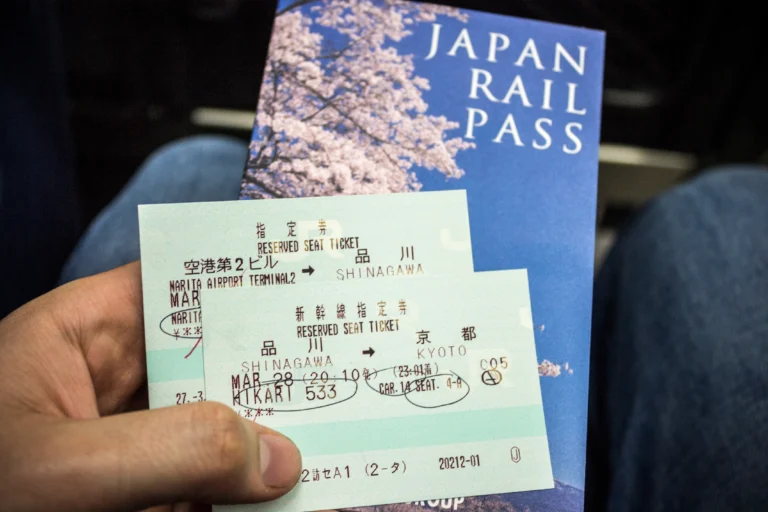
One mitigating change: the pass now lets you ride the fastest Nozomi and Mizuho trains, with a supplement. The supplement is ¥4,960 per ride between Tokyo and Kyoto (¥4,180 if you only go as far as Nagoya). Two Tokyo–Kyoto Nozomi round trips add ¥19,840 on top of the pass price. Most budget travellers stick to Hikari, which is free under the pass but runs about 20 minutes slower.
The pass cannot be used to book the Supreme Class private rooms on the Tokaido Shinkansen in advance, and the Nozomi supplement does not change that; what they cost and how to book one is in Shinkansen private rooms: price and booking.
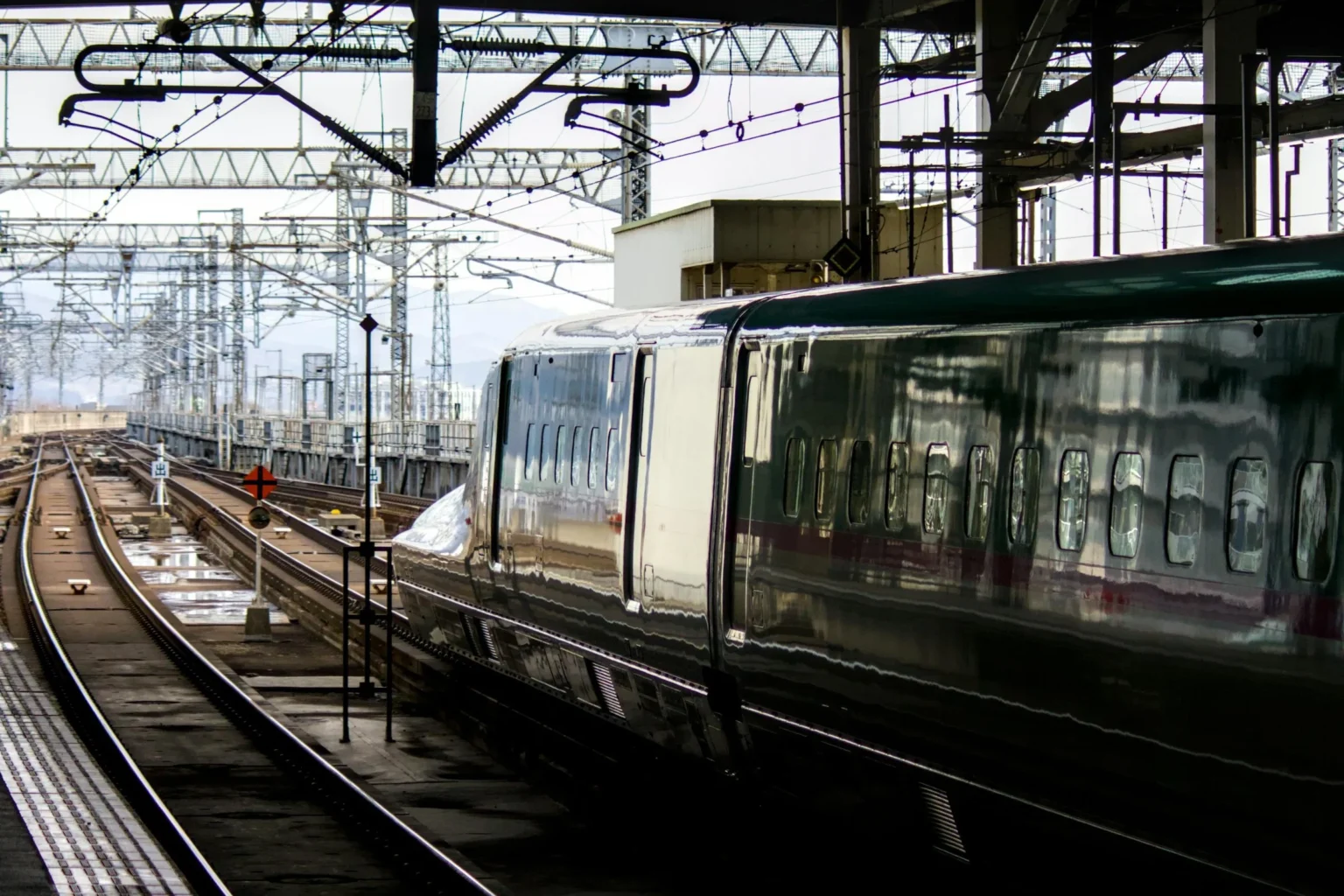
The reference prices for individual tickets
Where I actually book the tickets above
All figures are reserved-seat, regular-class, adult fares as of early 2026:
| Route | Train | One-way fare |
|---|---|---|
| Tokyo ↔ Kyoto | Hikari/Nozomi | ¥14,170 |
| Tokyo ↔ Osaka | Hikari/Nozomi | ¥14,720 |
| Kyoto ↔ Hiroshima | Sakura/Nozomi | ¥11,420 |
| Tokyo ↔ Hiroshima | Nozomi | ¥19,440 |
| Tokyo ↔ Sendai | Yamabiko | ¥11,410 |
| Tokyo ↔ Hakodate (Hokkaido) | Hayabusa | ¥23,430 |
| Tokyo ↔ Kanazawa | Kagayaki | ¥14,380 |
| Osaka ↔ Fukuoka | Sakura/Nozomi | ¥15,600 |
Short local segments (Kyoto↔Osaka, airport transfers, city metros) run ¥500–1,500 each and are not covered by any JR Pass anyway — use an IC card (Suica/ICOCA) for those.
Four real trips, four honest verdicts
Four scenarios that cover roughly 90% of first-time-visitor trips. Each shows pass cost vs individual-ticket cost, then the call.
Scenario A
7 days: Tokyo → Kyoto → Osaka, fly home
Trains needed: Tokyo→Kyoto (one-way), Kyoto→Osaka local, and nothing else major. Most sightseeing is intra-city on metros and buses.
Individual-ticket total: ¥14,170 (Tokyo→Kyoto) + ¥570 (Kyoto→Osaka local) = ¥14,740.
7-day Pass cost: ¥50,000.
Difference: The pass costs you ¥35,000 more for the exact same trip. This is our recommended 7-day itinerary — and the pass is a flat no.
Verdict: Skip the passScenario B
14 days: Tokyo → Hakone → Kyoto → Hiroshima → Osaka
Trains needed: Tokyo→Odawara for Hakone (¥3,410), Odawara→Kyoto (¥12,950), Kyoto→Hiroshima round trip (¥22,840), Hiroshima→Osaka (¥10,620), Osaka→Tokyo (¥14,720 if needed).
Individual-ticket total: Approximately ¥64,540 including the Hakone leg and a final Osaka→Tokyo if you fly home from Narita/Haneda instead of Kansai.
14-day Pass cost: ¥80,000.
Difference: The pass costs ¥15,460 more. Still loses — but the margin is tight, and the pass covers unlimited short trips (Nara day trip, Miyajima ferry, Himeji Castle) that would add another ¥6,000–10,000 in individual fares. Call it break-even once you factor in two day trips.
Verdict: Break-even — depends on day tripsScenario C
14 days: Tokyo → Hokkaido → Tohoku → Kyoto → Osaka
Trains needed: Tokyo→Hakodate (¥23,430), Hakodate→Aomori (¥7,490), Aomori→Sendai (¥10,630), Sendai→Tokyo (¥11,410), Tokyo→Kyoto (¥14,170), Kyoto→Osaka (¥570), Osaka→Tokyo for flight home (¥14,720).
Individual-ticket total: Around ¥82,420.
14-day Pass cost: ¥80,000.
Difference: The pass saves you ¥2,420 outright, and that’s before you add Miyajima/Nara/Nikko day trips. For a long north-south circuit like this, the 14-day pass finally earns its price back.
Verdict: Buy the 14-day passScenario D
10 days focused on the Kansai region (Kyoto / Osaka / Nara / Kobe / Hiroshima)
Trains needed: Inbound Shinkansen from Tokyo if you land there, then almost everything is inside Kansai — short JR hops of ¥500–1,500. Hiroshima round-trip from Kyoto is the only major Shinkansen.
Better option: The regional JR West Kansai-Hiroshima Area Pass — 5 days for ¥17,000, covers everything from Kyoto to Hiroshima unlimited. Buy two 5-day passes back-to-back for ¥34,000 total. A national 7-day pass at ¥50,000 is overkill.
Verdict: Use a regional pass, not the national JR Pass. Regional passes are dramatically better value when your trip stays in one area.
Verdict: Regional pass wins
The three-question decision tree
Still not sure? Answer these, in order:
- Are you doing more than one long Shinkansen trip outside the Tokyo–Kyoto–Osaka triangle? If no, skip the pass.
- Are you staying inside one region (Kansai, Kyushu, Hokkaido)? If yes, buy the regional pass — JR West, JR Kyushu, and JR East all sell them — from ¥17,000 for JR West’s Kansai–Hiroshima pass up to ¥35,000 for JR East’s wider pass (its cheaper Tohoku Area Pass was withdrawn in March 2026). For Hokkaido the maths is different: my Hokkaido Rail Pass guide compares the five-day pass with individual tickets on the usual Sapporo routes.
- Are you doing a long circuit — Tokyo + Hokkaido + Kyushu, or Tokyo + Hiroshima + 5+ day trips? Then the 14-day national pass wins.
If you’re still on the fence, book individual tickets. In 2026 Klook and Trip.com both sell individual Shinkansen tickets online in English, at face value, with e-tickets you scan at the turnstile — no station-counter queuing. That was the entire original pitch of the JR Pass, and it’s now available without one.
Where to actually buy
- Individual Shinkansen tickets: Klook and Trip.com both sell in English with e-tickets. SmartEx (JR Central’s own app) also works for Tokyo↔Osaka but is Japanese-oriented.
- National JR Pass: Buy directly through JR East/JR West websites or partners like Klook. Allow 7–10 days for delivery of the paper voucher if ordering from abroad.
- Regional passes: Buy on arrival at the regional JR office (Kyoto Station, Osaka Station, etc.) — or pre-book through Klook for a small discount.
FAQ
Can I use the JR Pass on the Tokyo Metro or Osaka subway?
No. The pass is for JR-operated lines only. City metros (Tokyo Metro, Toei, Osaka Metro) are separate and require an IC card or single tickets.
Does the JR Pass cover airport transfers?
Partially. Narita Express (Tokyo) and Haruka (Kyoto/Osaka/Kansai airport) are covered. Keikyu line to Haneda is not. Skyliner to Narita is not.
Can I still buy the pass outside Japan?
Yes. Until September 30, 2026 an overseas agent charges the same as JR’s own online service; from October 1 the agent price is higher (¥53,000 against ¥50,000 for the 7-day ordinary adult pass). Don’t let this force your hand — the main decision is whether to buy the pass at all.
What if my route changes mid-trip?
Individual tickets are refundable up to the moment of departure for a small fee (¥340). A JR Pass is not refundable once you’ve exchanged the voucher. Individual tickets give you more flexibility.
Plan the trip you actually want
If this pricing math matches what you were seeing elsewhere — good. If it surprised you, welcome to the 2026 reality. Our 7-day click-to-book itinerary uses individual tickets for exactly this reason.
Open the 7-day itinerary → See the 2026 budget guide →Getting the JR Pass?
If your route comes out cheaper with the nationwide pass, Klook sells it with Asia-friendly checkout and airport pickup.
Join travelers discovering Japan's hidden side
Weekly dispatches from off-the-beaten-path Japan — spots and stories you won't find in guidebooks.
No spam. Unsubscribe anytime.
Welcome aboard!
You're in. See you in your inbox soon.