Aichi · Kasugai · Abandoned railway
A 1.7 km stretch of Japan’s original Chuo Line — four brick tunnels driven in the late 1890s, abandoned in April 1966, and padlocked ever since apart from two short openings a year — is open to the public for nine days this autumn, from Saturday 28 November to Sunday 6 December 2026. Admission is ¥100, as it was last year. It is a 33-minute train ride from Nagoya, and there is no car park.
What is actually down there
The Chuo Line between Nagoya and Tajimi opened to passengers on 25 July 1900. To get through the gorge of the Shonai River the engineers drove fourteen tunnels into the hillside across roughly eight kilometres between Kōzōji and Tajimi. Thirteen of them still exist; number nine was taken out of use in 1940 and physically removed in 1965, during cutting work at Kokokei station.
In 1966 the line was doubled and rerouted through new tunnels, and the old alignment was switched out of service in stages across a single week in April. The section that opens to the public — tunnels 3, 4, 5 and 6 — ran its last train on 7 April 1966. Then it sat in the woods for four decades.
Today tunnels 1 and 2 are still used by JR Central for track maintenance. Tunnels 3 to 6 were acquired by the preservation committee through a national trust arrangement and are the ones you can walk. Tunnel 7 belongs to Nagoya City, and 8 and 10 to 14 to Tajimi City on the Gifu side, which are closed: when a resident asked Tajimi City in 2023 about opening them, the city replied that a survey had found risks of collapse and harm to the natural environment, and that development was not feasible.
| Tunnel | Name in the committee’s records | Length | Status |
|---|---|---|---|
| No. 3 | Tamano No. 3 | 76 m | Open · Registered Tangible Cultural Property |
| No. 4 | Tamano No. 4 | 75 m | Open · Registered Tangible Cultural Property |
| No. 5 | 隠山第一 | 99 m | Open |
| No. 6 | 隠山第二 | 333 m | Open · longest and darkest |
When it opens, and why nine days
Twice a year, in spring and autumn. In recent years the autumn opening has followed a consistent shape: nine days beginning on a Saturday and ending on a Sunday, in the window from late November into early December. Looking at the committee’s own attendance records, that pattern holds back to at least 2016 — 2020 ran 28 Nov to 6 Dec, 2023 ran 25 Nov to 3 Dec, 2025 ran 29 Nov to 7 Dec. The 2026 dates, 28 November to 6 December, sit exactly where you would expect.
The rest of the year the site is locked. The committee states it plainly: 「愛岐トンネル群は通常時は施錠されており立入りできません。春と秋の公開時と催事などの場合のみ入場可能です。」 There is no way to see the tunnels outside the openings and the occasional event.
Will the maples actually be out?
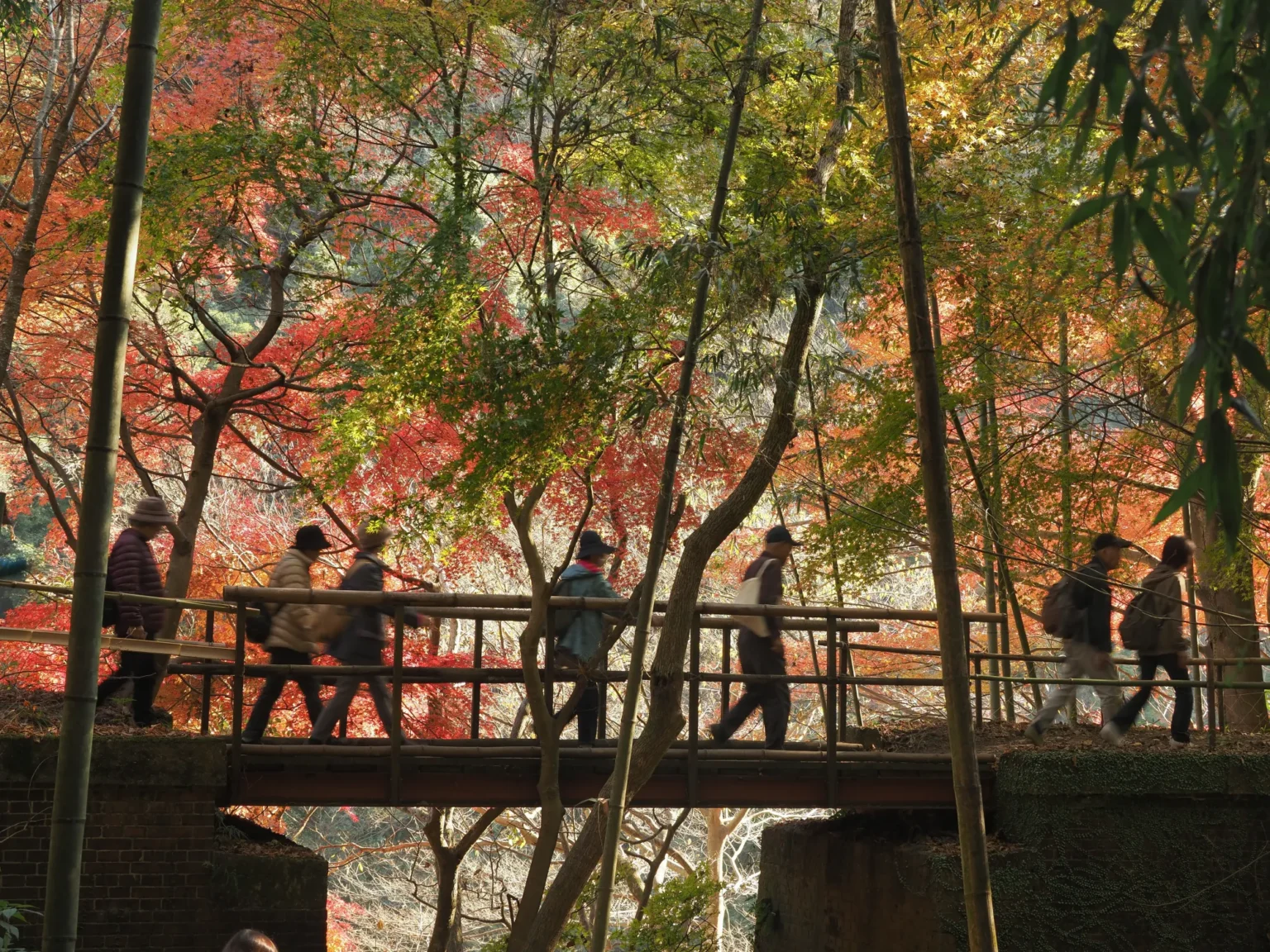
This is the main uncertainty, and the organisers say so themselves. After the 2025 opening the committee’s chairman wrote: 「紅葉については期間の前半に最盛期が訪れ、後半は落葉が始まるなど公開期日の設定は難しいと痛感しています。」 — the peak came in the first half of the period, the leaves were already dropping in the second half, and setting the dates is difficult.
It is not a one-off. In 2024 he thanked the people who had given up because the colour ran late. In 2022 the great maple had already dropped while other spots were at their best. In 2021 the timing varied by location and tree, with the hillside above tunnel 6 holding on longest. The committee’s own line on its website is that the trees are not heavily managed, so 「その見え方は毎年変わります」 — how it looks changes every year.
The weather service Weathernews lists the average peak here as late November. Taken with the chairman’s remarks, the practical reading is that the first weekend of the nine days is the safer bet in most years, and that no one — including the people who run the site — can tell you in September what the trees will do in December. If precise timing matters to you, our live koyo tracker follows the forecasts as they are published, and the November guide sets out how the front moves down the country.
Tunnel 6 is the dark one
At 333 m it is the longest of the four, and it bends, so daylight does not reach the middle. Soot from steam locomotives is still on the walls and roof. This is why a torch is on the committee’s list rather than a suggestion.
The surface is old ballast
The committee asks for shoes with a solid sole because crushed stone from the trackbed is still underfoot. Kasugai’s tourism association adds that there are steps between the entrance gate and reception, and that wheelchairs cannot be taken in.
Rain cancelled it
Both recent openings carried the note 「雨天中止」 — cancelled in rain. The 2026 listing on Aichi Prefecture’s official tourism site (Aichi Now) carries the same note. The committee runs a dedicated phone line from a month before each opening precisely so you can ring and ask whether it is going ahead.
No pets
Pets are not admitted. That has appeared in the notices for both of the last two openings, and in the 2026 listing.
Getting there, and the two things that catch people out
Base yourself for a nine-day window
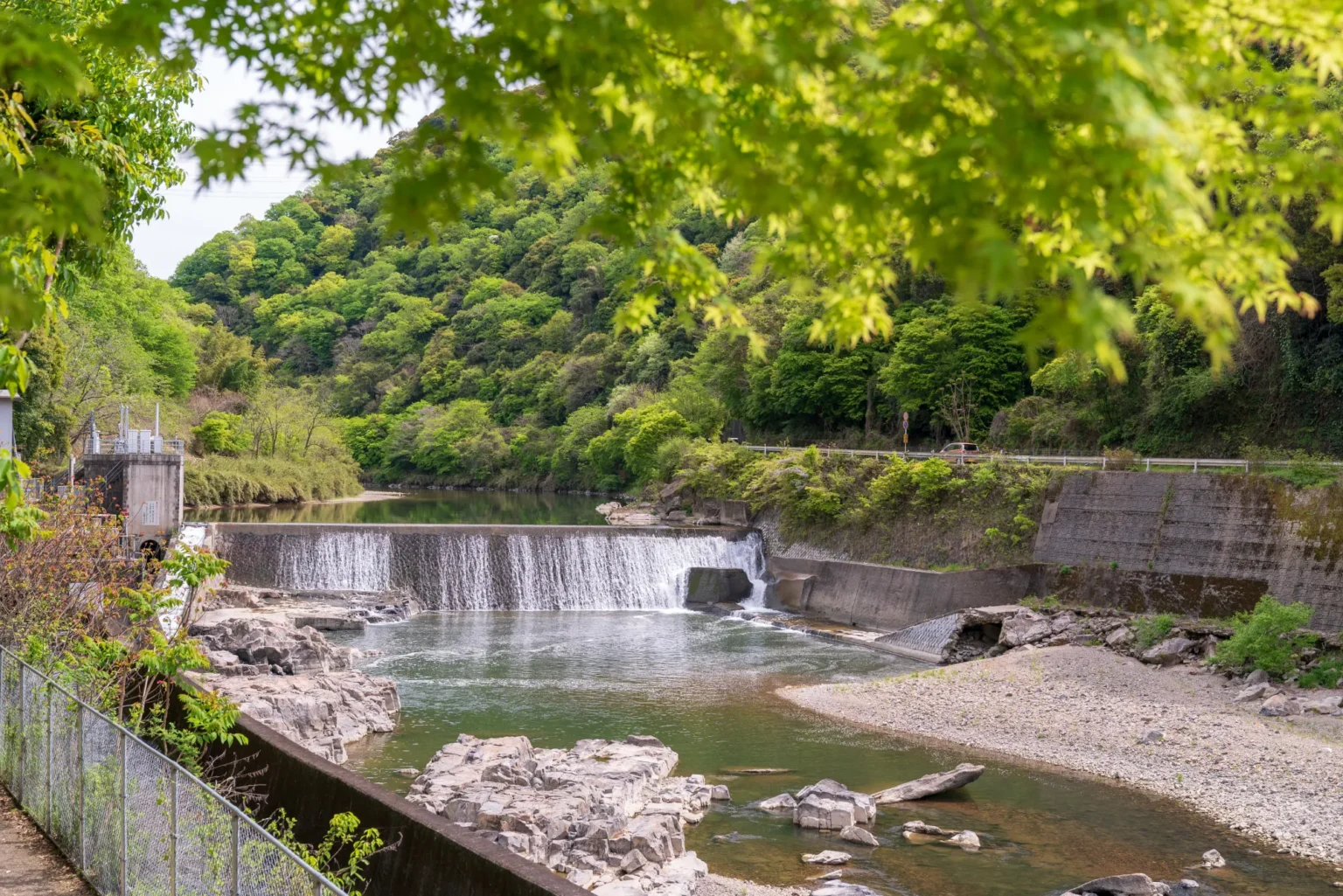
Jōkōji is on the JR Chuo Line, 33 minutes from Nagoya with no change, for ¥520 on a paper ticket. I ran the search on JR Central’s own planner for a weekday in September 2026: the 10:10 from Nagoya arrives 10:43. From Tajimi it is 8 minutes and ¥210; from Kōzōji, 4 minutes and ¥200.
The first catch is the service pattern. JR Central’s timetable for Jōkōji shows every listed train as a Local — the station’s column is ticked for Local only, and left blank for Semi Rapid, Rapid and the Shinano limited express. In the middle of the day that means two trains an hour in each direction. During the opening the committee says 「一部の快速列車が停車します」, some rapid services make an extra stop, and the 2026 listing on Aichi Prefecture’s official tourism site (Aichi Now) repeats that line, but which rapid trains stop is a limited-period arrangement and I had not found the 2026 train list when I checked on 20 October.
The second catch is that Jōkōji is unstaffed. It does not appear in JR Central’s list of stations with a ticket window. The organisers’ advice is to buy a return ticket before you set off, or tap in with an IC card — TOICA and manaca both work. If you are new to the system, our guide to IC cards in Japan covers which card works where.
From the station it is 300 m upstream along the path below the platform to the entrance gate. The committee calls it a five-minute walk; the tourism association says six or seven. Jōkōji itself has a certain reputation among Japanese railway enthusiasts — the committee’s own map describes it as 「崖っぷちの秘境駅」, a remote station on the edge of a cliff.
What ¥100 gets you
The 2026 autumn terms listed on Aichi Prefecture’s official tourism site (Aichi Now) are the same as the 2025 autumn and 2026 spring openings: gates open at 9:30, last admission is 14:00, and the site closes at 15:00. Admission is ¥100 on the day, free for primary school age and under, with no advance booking. At past openings, reception was 300 m upstream of Jōkōji station.
The route is an out-and-back: 1.7 km in, the same 1.7 km back, about two hours at a walking pace with the four tunnels along the way. Distance markers on the committee’s map put tunnel 4 at 0.5 km, tunnel 5 at 1.1 km and the turnaround at 1.7 km, near the Aichi–Gifu prefectural boundary.
There are three toilets on the route — by the steps at the entrance, at the brick plaza, and at the Tajimi end of tunnel 6. A marshalling area called the Marché has food and drink stalls; at the 2025 opening there were four traders plus the committee’s own stand selling postcards, enamel tea bottles and badges. Since autumn 2024 the committee has also issued a 「廃線印」, an abandoned-line stamp modelled on the temple stamps pilgrims collect.
The great maple, and what it is officially called
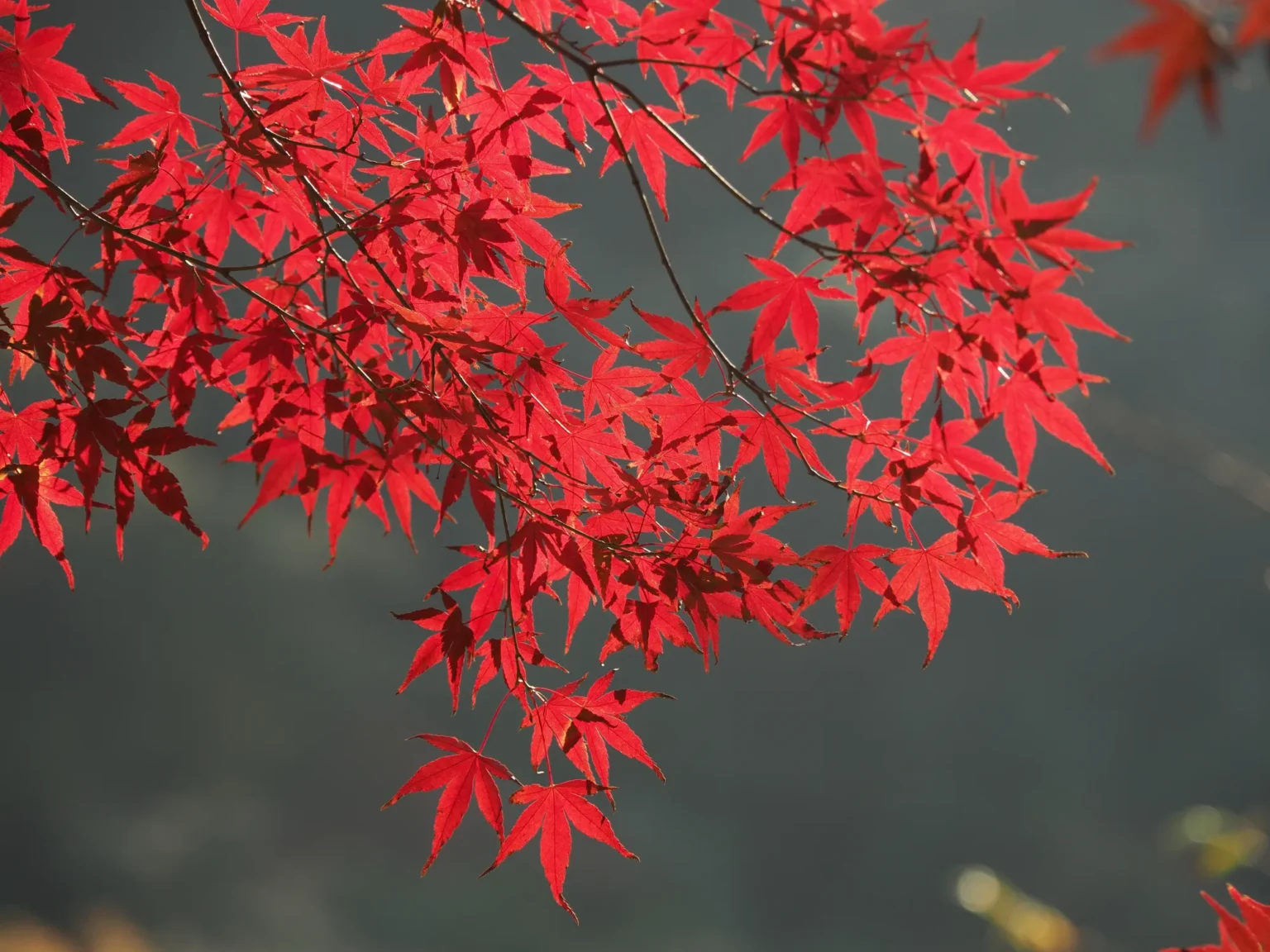
Just past the Tajimi end of tunnel 4 stands the tree everyone photographs. On 27 June 2025 Kasugai City designated it a municipal natural monument under the name 「旧中央線のイロハモミジ」 — the Japanese maples of the old Chuo Line.
The designation covers four trees, not one. The city’s statement of reasons records them at 17.0 m tall with a girth of 2.29 m, 17.5 m and 1.59 m, 16.3 m and 1.84 m, and 13.2 m and 1.29 m. The 2.29 m girth is the largest of any tree of its kind in Kasugai. The city puts the age at about 120 years and reasons that the trees seeded themselves after the line opened in 1900 and grew up alongside it — which makes them, in the city’s words, the oldest Japanese maples in the municipality.
The committee calls the group 「三四五(みよい)の大モミジ」 and describes it as the mother tree of the site. Where that name comes from, I could not establish. It does not appear in the city’s designation papers, in the Aichi prefectural tourism material, or in the Chunichi Shimbun’s report on the designation, all of which use the official name. Explanations circulate on personal blogs; none of them traces to a source I can stand behind, so I am leaving it as a name the site uses rather than one I can explain.
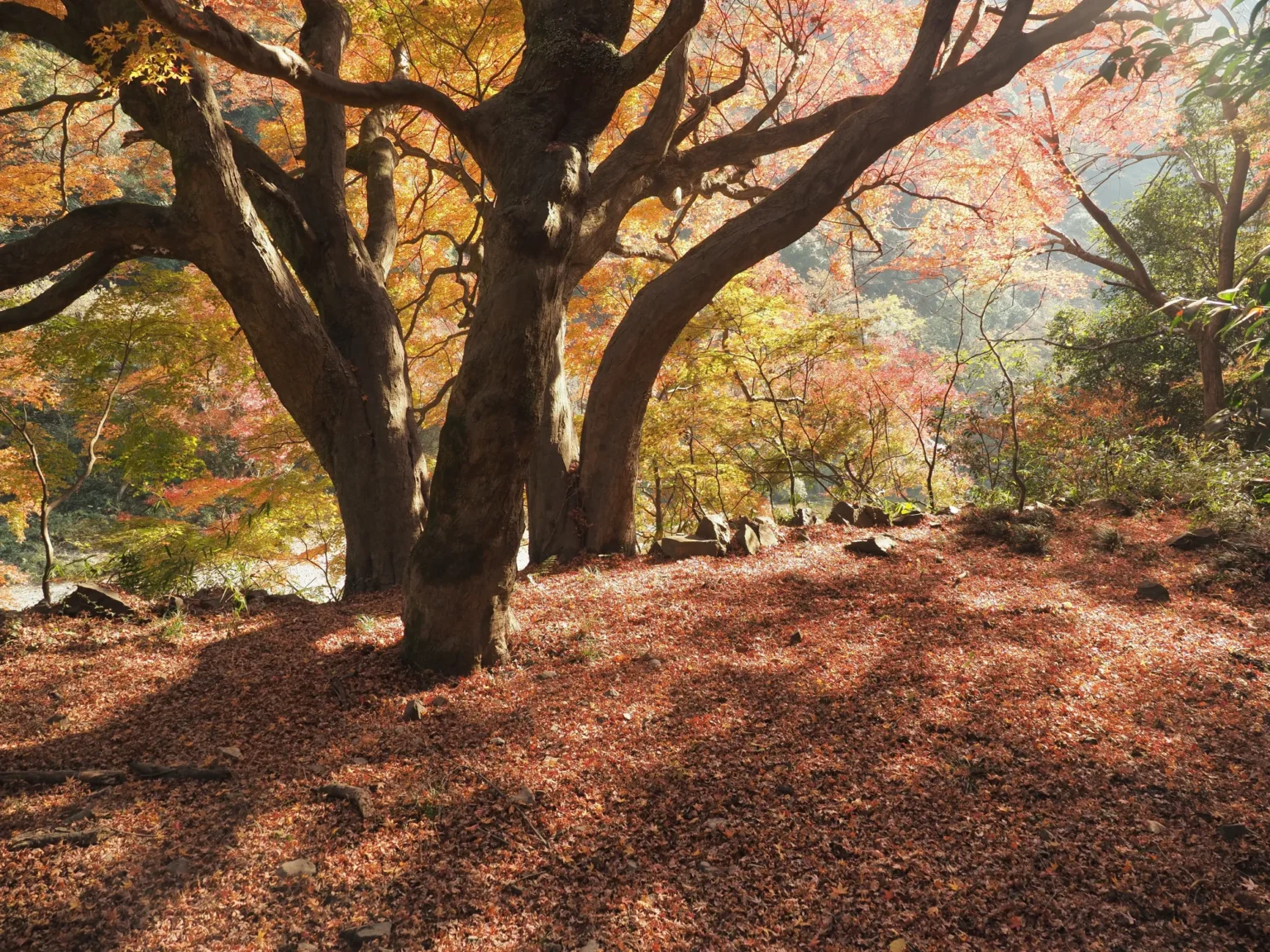
How many maples there are along the line depends which official page you read. The committee’s walking map says 300 self-seeded maples on the 1.7 km; its own written history says more than 200 on the reopened section with more on the surrounding slopes. Both are the committee’s numbers. I have not found a count anyone has actually verified.
Why the brickwork is the real reason to come
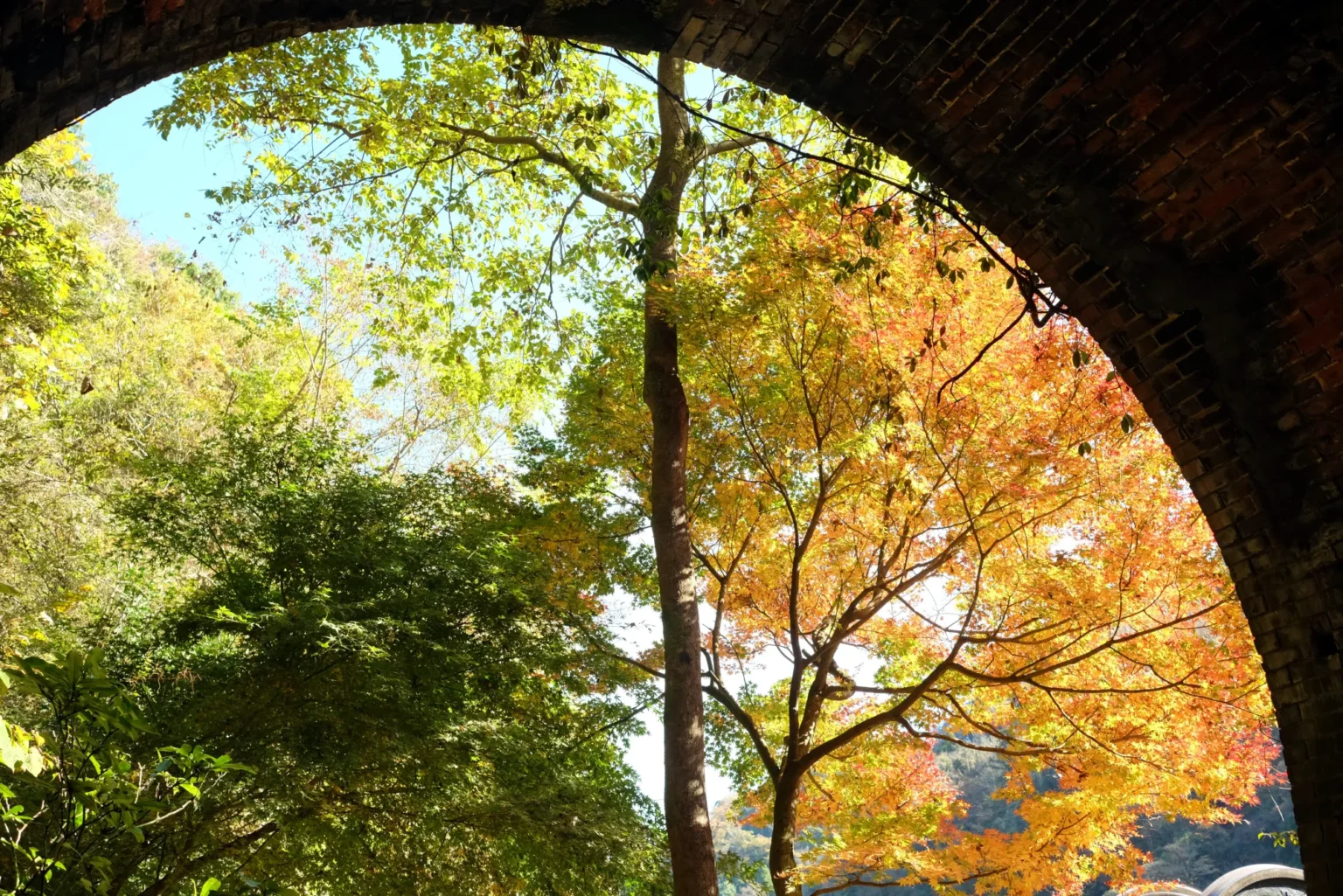
Take a torch and look at the walls, because this is the part that makes the site more than a pretty walk. In July 2016 three structures here became Registered Tangible Cultural Properties: the Tamano No. 3 and No. 4 tunnels and the Kasaishibora culvert. The committee describes them as the first railway tunnels in the three Tōkai prefectures to be listed. Separately, in February 2009, four of the tunnels were certified by the Ministry of Economy, Trade and Industry as Modernisation Industrial Heritage.
The Agency for Cultural Affairs describes Tamano No. 3 as a single-track horseshoe section in brick, 76 m long and 4.6 m wide, with refuges inside and a portal given pilasters and a cut-stone base to make it look deliberate. Tamano No. 4 is 75 m, also horseshoe, with the side walls laid in stretcher bond — the committee’s own diagram notes that stretcher bond is what you see on the arch inside a tunnel, while English bond carries the load lower down — and cut stone used at points such as the coping.
Two details are worth carrying in with you. The committee’s own guide explains that the brickwork uses English bond, which it describes as the strongest of the common patterns, and attributes the choice to engineers trained under Edmund Morel, the British engineer brought to Japan in the early Meiji period. And the portal of tunnel 6 has its voussoirs laid seven rings deep, because the geology there was bad enough to cause leaks and collapses during construction; the committee’s English pamphlet says a seven-fold voussoir is believed to be unique to this tunnel group.
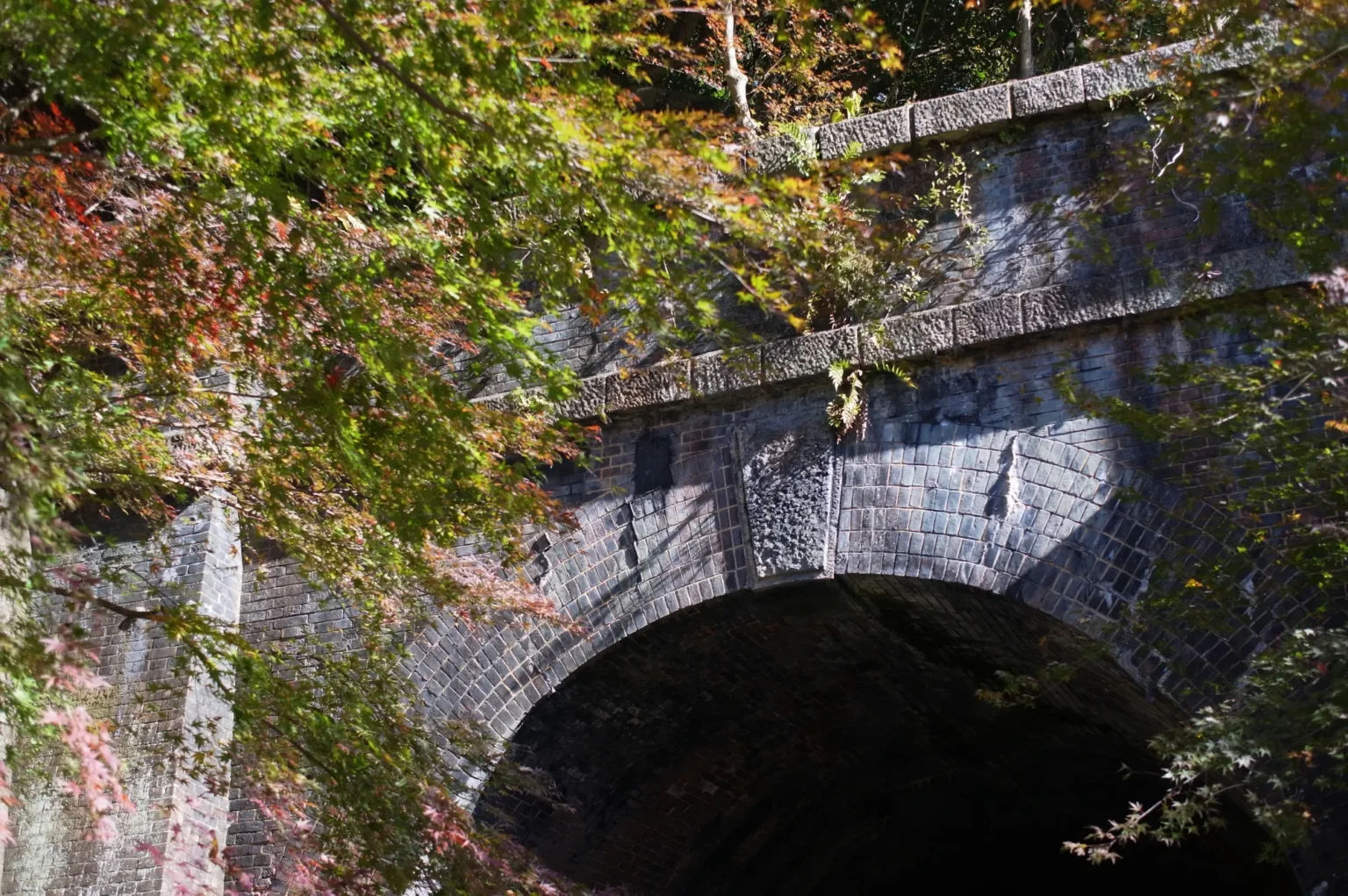
The committee has also counted the bricks. Working from the Railway Agency’s 1911 construction summary, it puts the total used between Nagoya and Tajimi at 18,902,211 — about 18.9 million. Its own note adds that the largest previously cited brick structure in Japan, the Usui Pass tunnels near Karuizawa, is usually given as 16 million, so this line may be the country’s largest single use of brick. The committee presents that as a possibility rather than a settled fact, and so do I.
What the English-language sources get wrong
I checked nine English sources for a dedicated page on this site: japan-guide.com, JapanTravel, Time Out, Tokyo Cheapo, Voyapon, MATCHA, Kasugai City’s English pages, Aichi’s official tourism site and JNTO. Eight have nothing. JNTO’s English sitemap contains no page mentioning Aigi or Kasugai at all, though it does cover Korankei. Kasugai City’s English section runs to five pages and none of them mentions the tunnels.
The one exception is Aichi Now, the prefecture’s official tourism site, which has English event pages for both the spring and autumn openings and covers them in reasonable detail. But its autumn page contradicts itself: the header shows 28 November to 6 December 2026 while the event information block below still reads 29 November to 7 December 2025. The page carries its own warning that it may not be current. If you are checking dates, use the committee’s site.
Making a day of it from Nagoya
Two hours of walking plus roughly 70 minutes on trains for the return leaves most of a day free, and the line you arrive on is the useful thing here. The modern Chuo Line carries on past Tajimi into the Kiso Valley, which makes the post towns a natural second day rather than a same-day add-on: our one day in the Kiso Valley itinerary runs Naraijuku to Tsumago by train, and there are separate guides to Naraijuku and Magome-juku. For other options out of the city, we have a round-up of day trips from Nagoya, and if the railway itself is the draw, Japan’s sightseeing trains covers the ones worth booking.
If you are still working out where to base yourself, Nagoya hotels put you 33 minutes from the gate, and Rakuten Travel is worth comparing for Japanese business hotels that the international sites list thinly. This particular trip is a ¥520 local train and needs no pass at all; whether one pays off across the rest of your itinerary is a separate sum, and our honest math on the JR Pass works through it. If it does add up, passes and shinkansen tickets can be arranged before you land. Given that the committee only publishes details close to the date and cancels for rain, an eSIM is genuinely useful for checking on the morning.
Questions worth answering before you go
Are the 2026 opening hours and admission fee confirmed?
Yes, on Aichi Prefecture’s official tourism site (Aichi Now): 28 November to 6 December, 9:30 to 15:00 with last entry at 14:00, ¥100 (free for primary age and under). As of 20 October 2026 the preservation committee’s own page still said details would follow, so check it, or ring 080-9492-5458, before you travel.
Do I need to book?
No. Both recent openings stated 「事前申し込み(予約)不要」 — no advance application needed — with payment on the day. There is no booking form anywhere on the committee’s site. The 2026 listing on Aichi Prefecture’s official tourism site (Aichi Now) says the same: 「※ 事前申込不要」.
How long does the walk take?
The committee allows about two hours for the full 3.4 km return, not counting stops. With the last admission at 14:00 and the gate closing at 15:00 in recent years, arriving at lunchtime leaves you doing it at a march.
Is it suitable for a wheelchair or a pushchair?
No. Kasugai’s tourism association states that there are steps between the entrance gate and reception and that wheelchairs cannot be brought in. The route itself is old track ballast rather than a made path.
What happens if it rains?
The opening is cancelled. Both recent editions carried 「雨天中止」 in the announcement. The committee runs a dedicated enquiry line from a month before the opening for exactly this question.
Can I see the tunnels at any other time?
Not the ones described here. The site is locked outside the spring and autumn openings and occasional events. The Gifu-side tunnels are not open at all — Tajimi City has said a survey found collapse risk and environmental concerns.
Which is better, spring or autumn?
They are different rather than ranked. Autumn runs nine days and drew 37,029 people in 2025; spring runs five days and drew 10,856 in 2026, so spring is markedly quieter. Spring gives you the maples in new leaf; autumn gives you the colour, with the timing risk described above.
Sources
The primary sources behind every figure above
- Dates, fees, route, rules, attendance: NPO Aigi Tunnel Group Preservation and Revival Committee — official site, the 2025 autumn and 2026 spring opening reports, the walking map and the attendance summary PDF.
- Cultural property status: Agency for Cultural Affairs national heritage database, entries for the Tamano No. 3 and No. 4 tunnels and the Kasaishibora culvert.
- The maples: Kasugai City designation notice and statement of reasons, 27 June 2025; Chunichi Shimbun, 3 July 2025.
- Trains: JR Central journey planner and the Jōkōji station timetables for the March 2026 revision; JR Central’s list of staffed ticket windows.
- Access and accessibility: Kasugai City Tourism and Convention Association.
- Peak timing: Weathernews autumn foliage page for the Aigi Tunnel Group.
- English coverage: site searches on japan-guide.com, JapanTravel, Time Out, Tokyo Cheapo, Voyapon, MATCHA, Kasugai City English pages, Aichi Now and JNTO, all run on 2 September 2026.
- More in this series: Yujaku Park and Raizan Sennyoji and two more in Saitama, two Kyushu autumn sites checked the same way.
Join travelers discovering Japan's hidden side
Weekly dispatches from off-the-beaten-path Japan — spots and stories you won't find in guidebooks.
No spam. Unsubscribe anytime.
Welcome aboard!
You're in. See you in your inbox soon.