
Lake Yamanaka · Autumn 2026
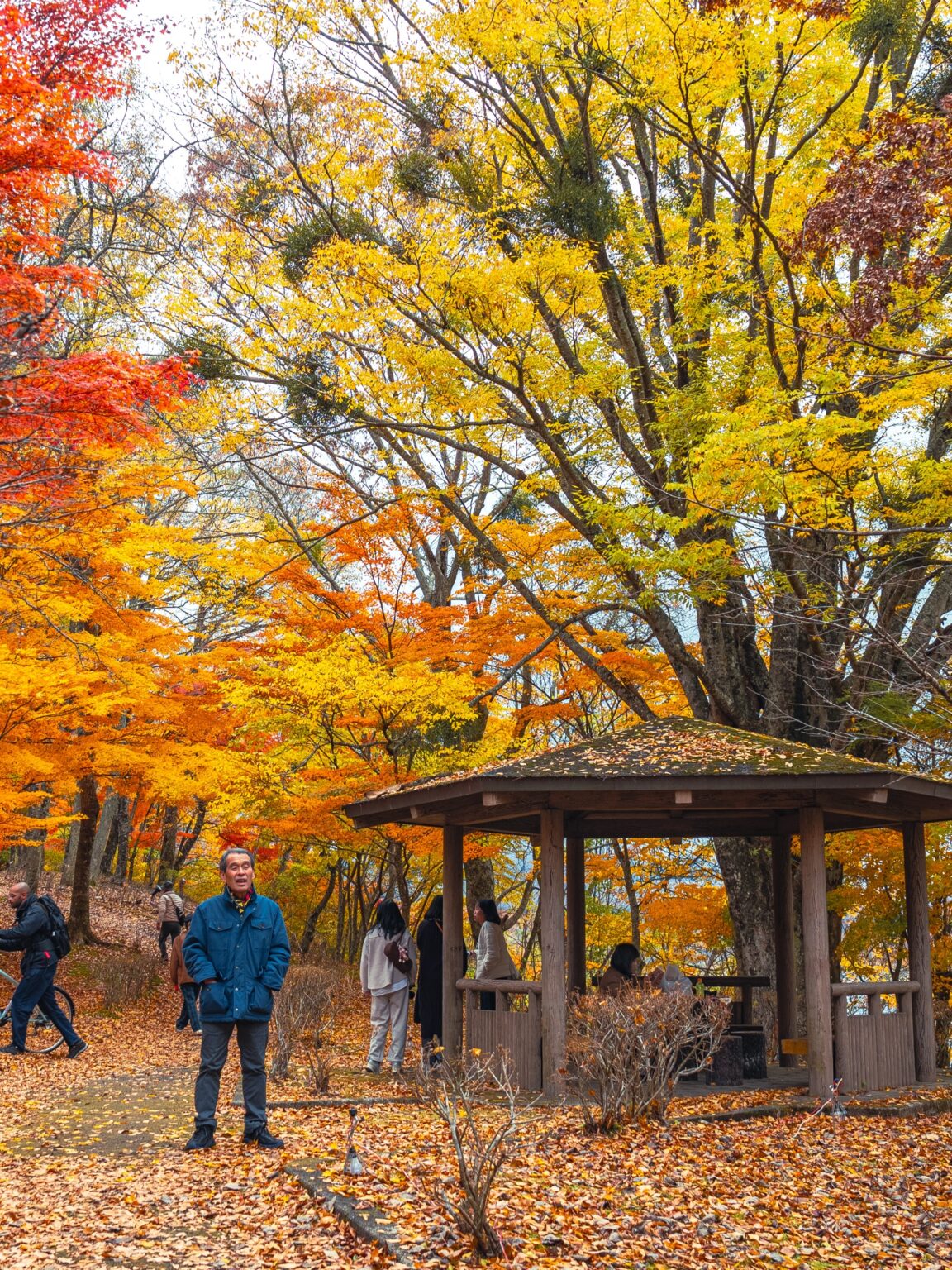
Lake Yamanaka’s autumn leaves festival — the Yuyake no Nagisa Momiji Matsuri — is planned for 30 October to 15 November 2026 — seventeen days at Asahigaoka Lakeside Green Park on the lake’s southern shore. The maple corridor along the water is lit every evening from 16:30 to 20:30, and the park itself stays open around the clock. I live one town over in Fujiyoshida, and I photographed the park at full autumn colour on 11 November 2025.
What this festival actually is
Strip away the name and it is simple: a stretch of lakeshore park where the maples grow thick along the walking path, lit from below every evening for two and a half weeks while the colour holds. The venue, Asahigaoka Lakeside Green Park, sits where the forest meets the water on Yamanaka’s southern shore — the stretch of shore here is on Japan’s official “100 Best Shores” (Nagisa Hyakusen) list — and the festival’s name, “sunset shore”, explains itself the moment the sun drops behind the trees across the water.
The 2026 outline from the tourism association: 30 October (Friday) evening to 15 November (Sunday) night, published as planned dates, with the light-up running 16:30–20:30 every day and the lights switching off automatically at 20:30 — their wording, and they mean it, so don’t budget a 20:25 arrival.
Outside those hours the park is simply an open park, free to stroll at any time of day — though separately ticketed events do sometimes set up inside it, so treat “free” as covering the paths and the maples and check individual event announcements for anything with a gate. The association’s own note on timing: mornings are the quiet window.
The association also lists food stalls and its now-traditional wine festival among the plans for 2026, with details “to follow” — treat the eating and drinking as probable rather than promised until the follow-up announcements land.
What it looks like when it works
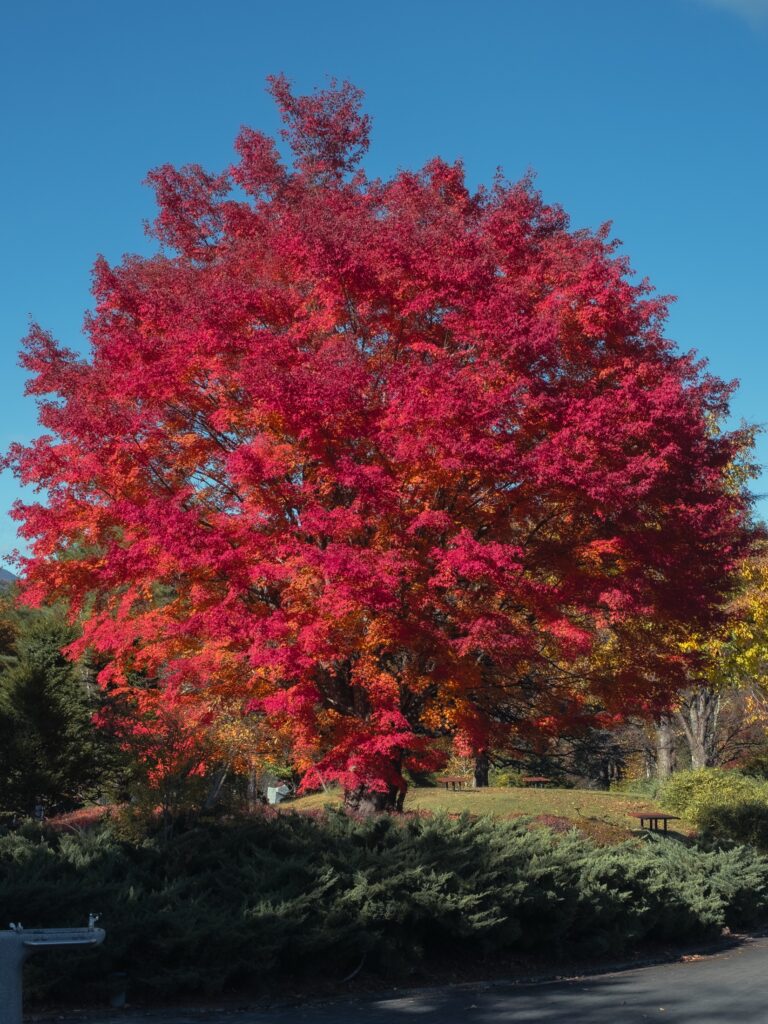
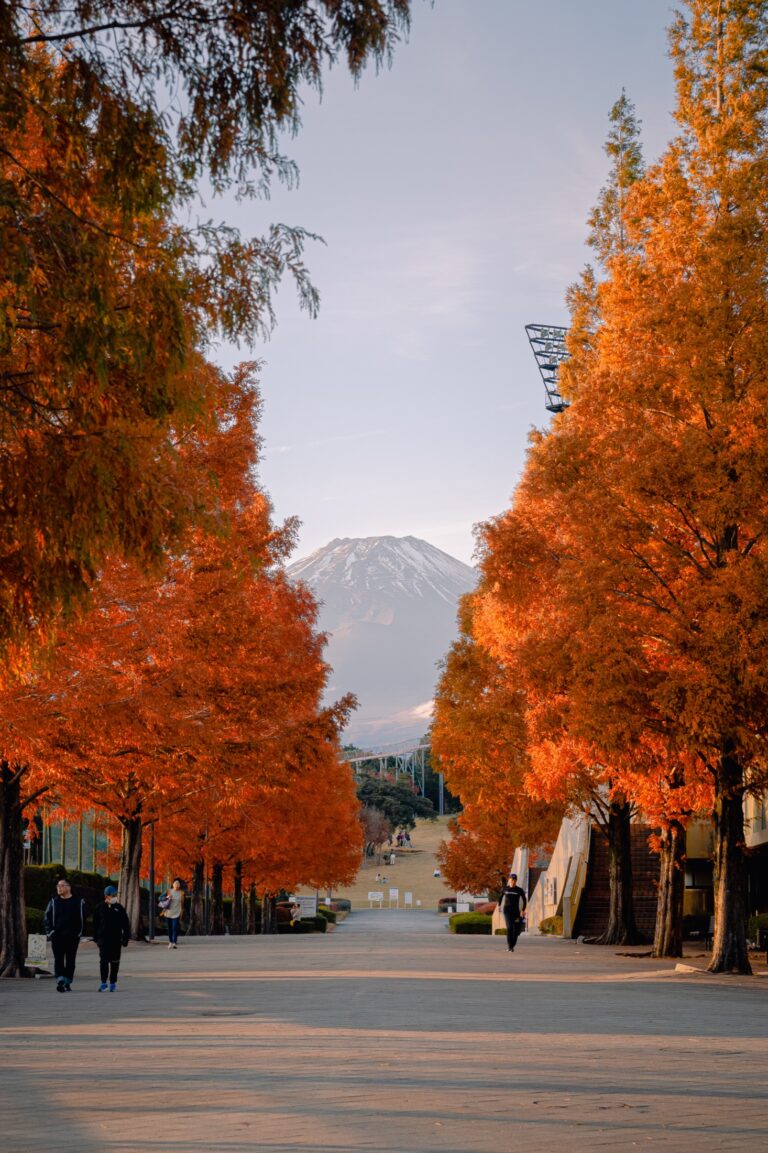
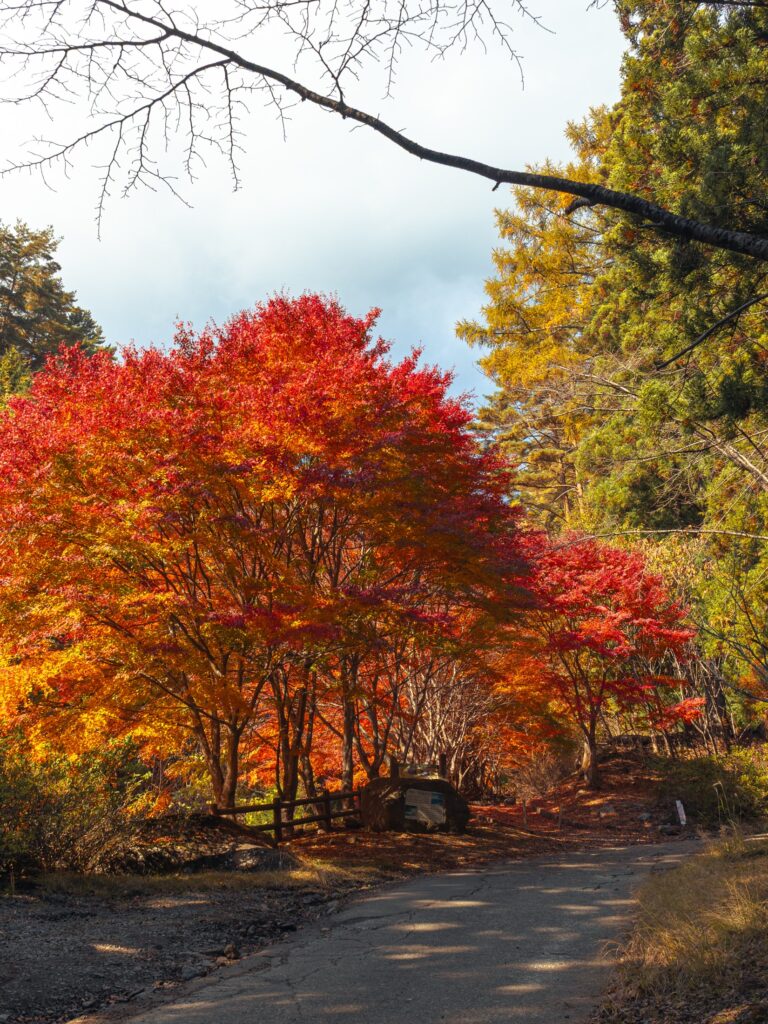
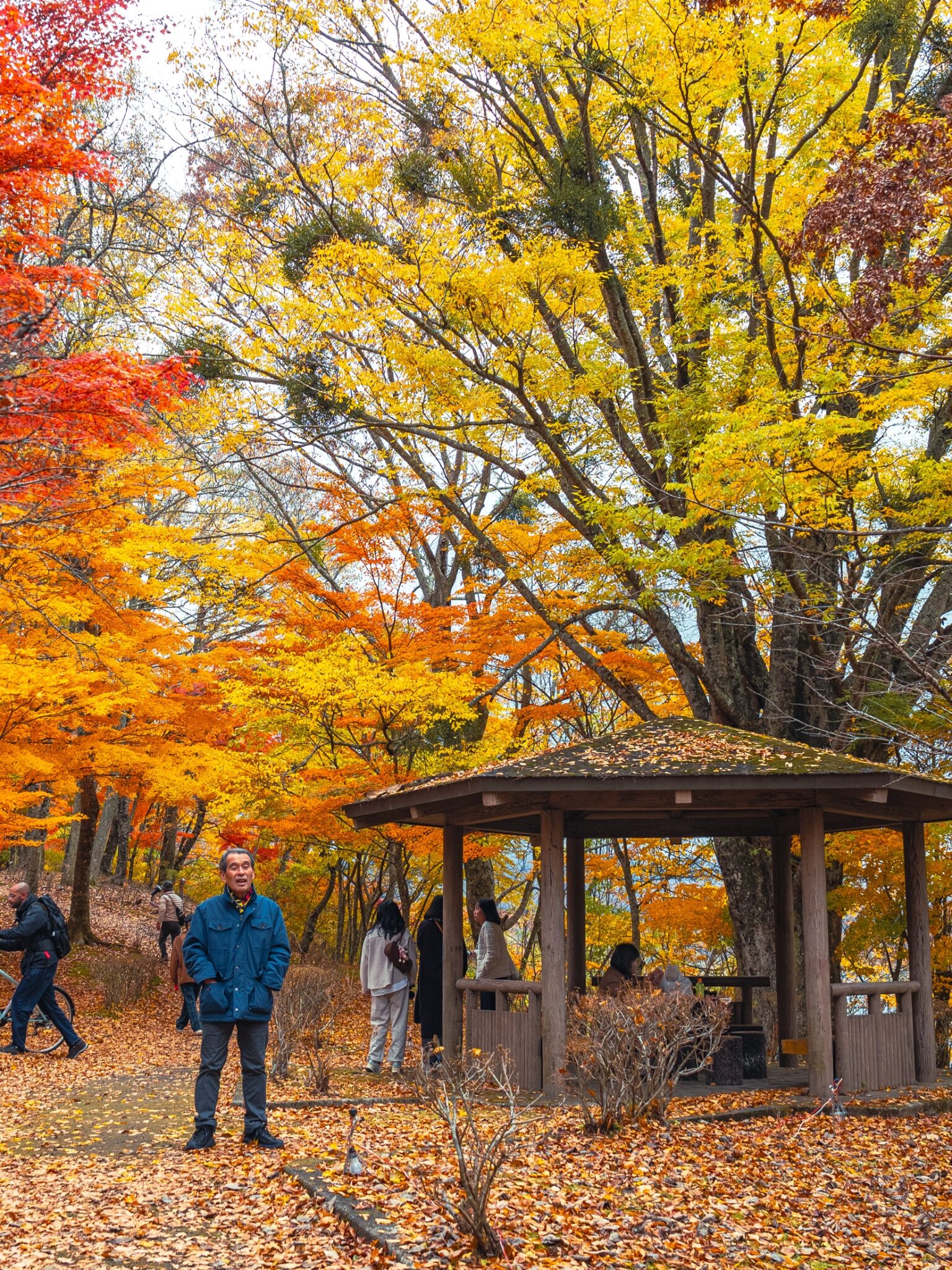
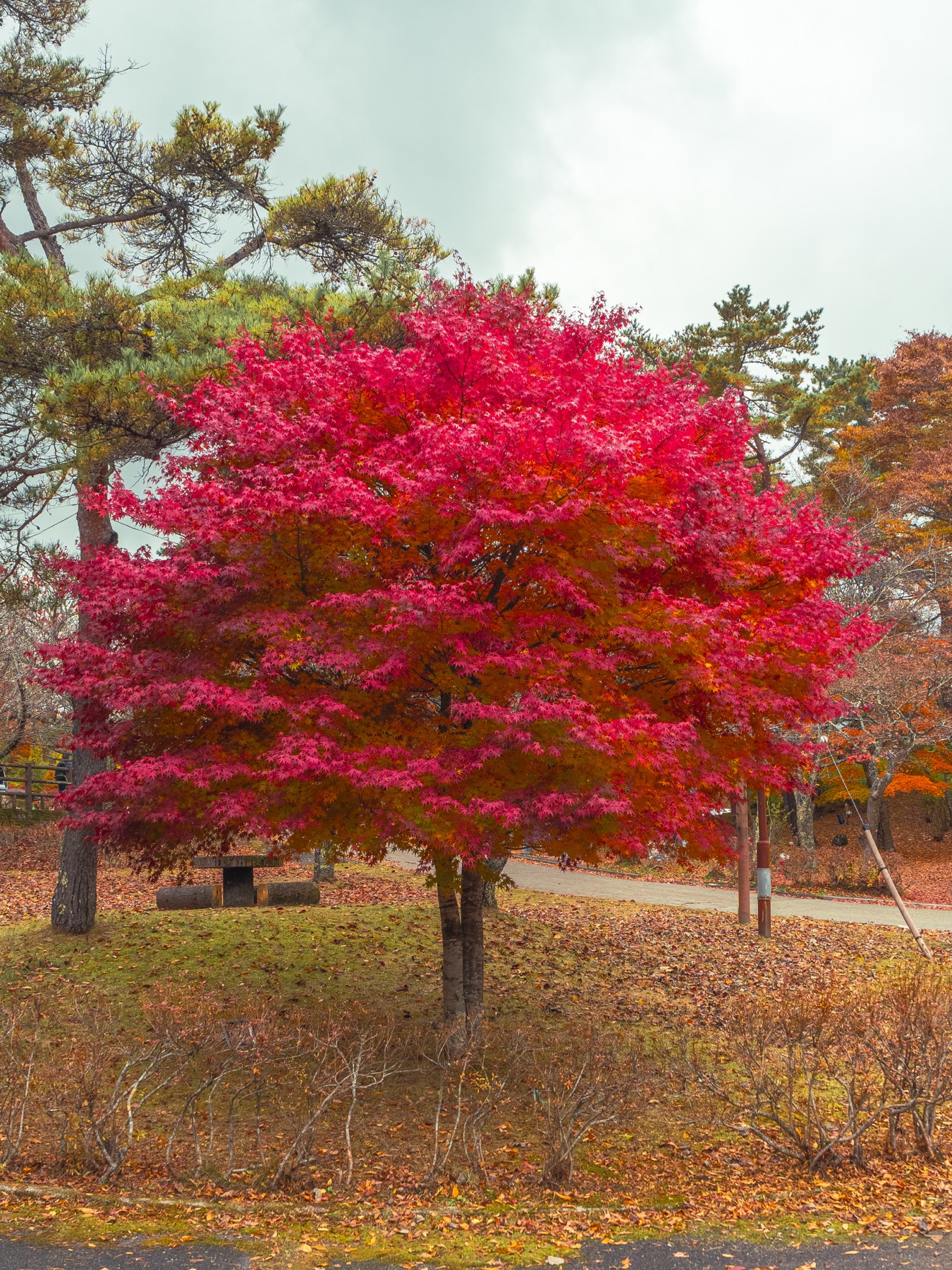
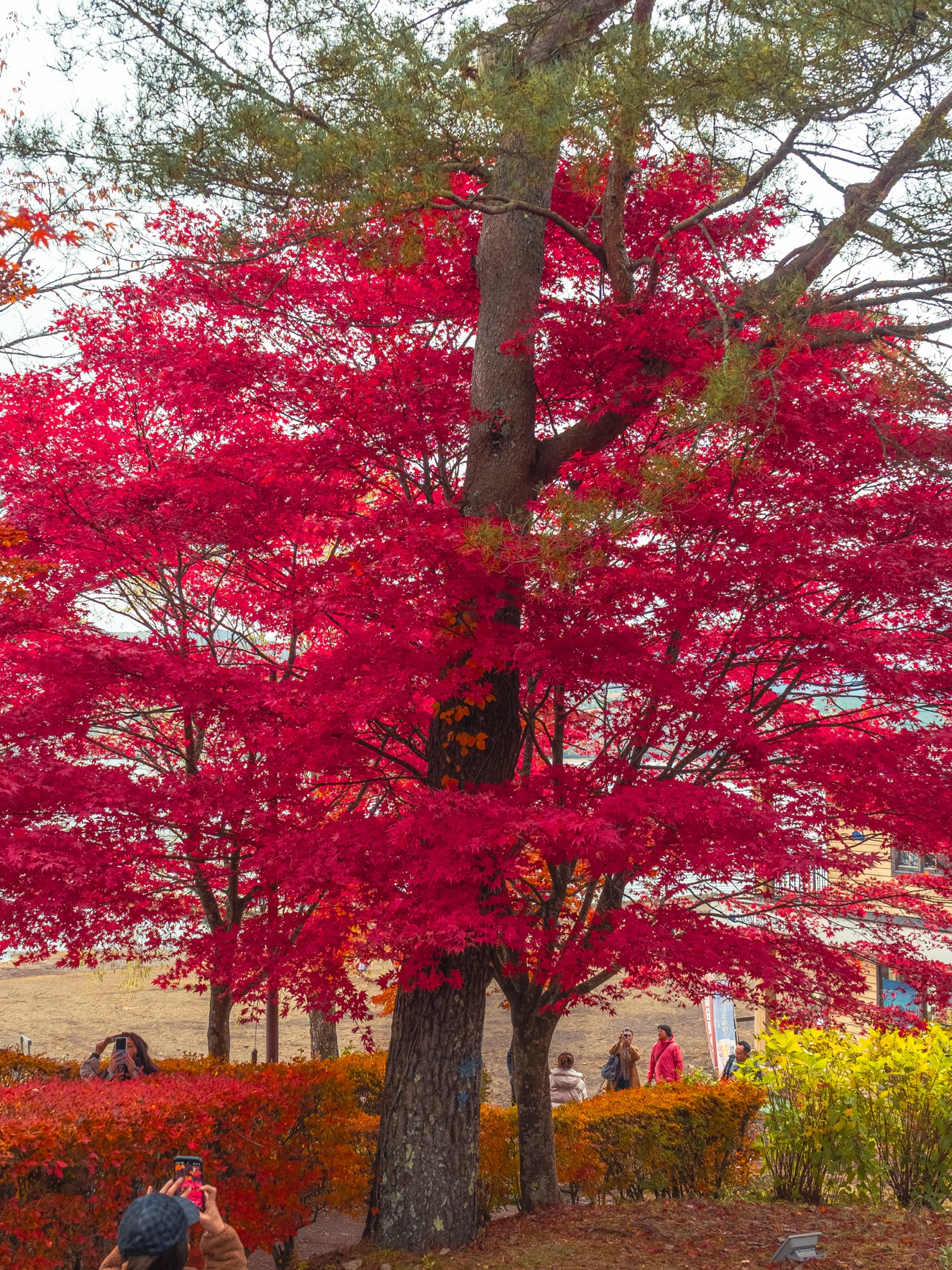
My photographs here are from one visit, 11 November 2025, just after midday. The association’s own gallery note says mornings are the quiet window — and on a weekday, even midday was: the corridor, the pavilion, the lakeside giants in full red, and almost nobody in frame.
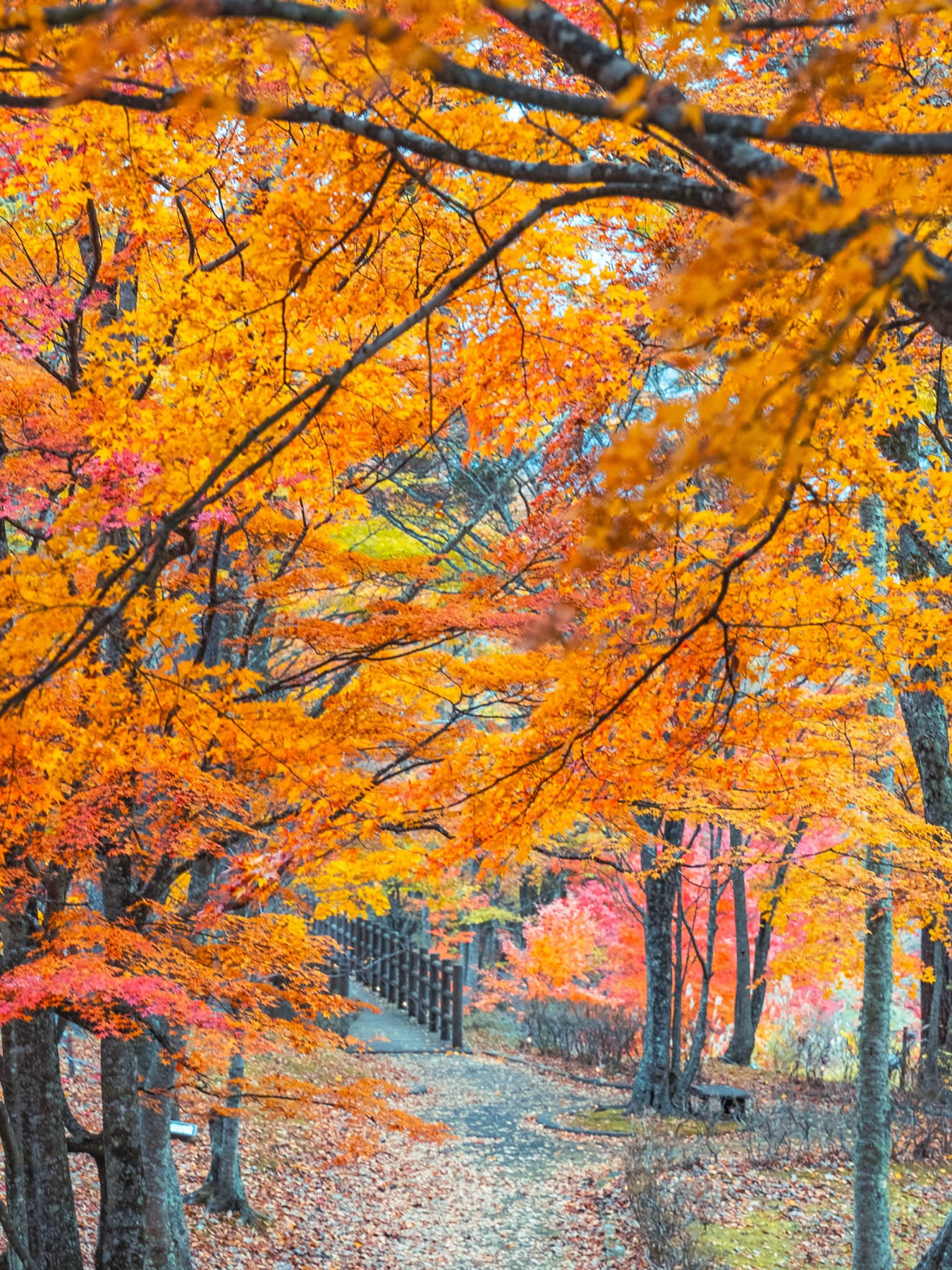
Daytime
Free run of the corridor, soft light through the canopy, and the lake as a backdrop. If you want photographs rather than atmosphere, come in the morning and walk the full shoreline stretch — the mix of colours shifts as you go.
The light-up
From 16:30 the maples along the path are illuminated — the festival’s signature sight, and the association’s tip that mornings are quiet tells you the evenings are not. Dress warmer than you think — November evenings by this lake at 980 metres bite.
The photo spot
The association flags one location as the shot of the festival — the Koibito-bashi (“lovers’ bridge”) area on the shoreline path. Expect to wait your turn for the angle at busy times.
Getting there, and the bus trick
Asahigaoka is the transport hub of the lake, which makes this the rare Fuji-area evening event you can do without a car. Book a highway bus from Shinjuku’s Busta terminal that serves Yamanakako — not every Fuji-bound departure does — and get off at Asahigaoka, five minutes’ walk from the park. Local route buses use the same stop, and the Keio Ripple-mae stop is one minute from the park.
Driving, it is about ten minutes from the Yamanakako IC on the Higashi-Fujigoko toll road, twenty from Shin-Gotemba. One access note from the official page: the venue’s large-bus parking is reservation-only — a rule aimed at tour groups, not private cars. Regular drivers park around the Asahigaoka hub; on peak weekends, earlier is easier.
The tempting pairing is Diamond Fuji, and it can work — but read the calendar first. The famous Panorama-dai alignment falls around mid-October, before the festival opens; during the festival window the alignment moves to lakeshore points instead, shifting day by day (the association’s reference dates put it at Hirano’s shore around 31 October and further along the lake through mid-November). Check the dated spot list in our Diamond Fuji guide, watch the weather, and on the right afternoon you can catch the sun on Fuji’s summit and still make the lit corridor the same evening. The Yamanakako access guide covers the bus network in detail.
Stay for the light-up instead of racing the last bus
Where it sits in the Fuji autumn calendar
The Fuji Five Lakes run two big leaf festivals in parallel, and they are not interchangeable. Kawaguchiko’s Autumn Leaves Festival runs 7–29 November 2026 — bigger, later, and centred on the Momiji Corridor. Yamanaka’s runs earlier (30 October–15 November) and smaller, with the lake itself doing more of the work. The nine-day overlap, 7–15 November, is when a two-lake evening double-header becomes possible — plan the transfer rather than improvising it. And if rooms by Yamanaka are gone for your dates, Kawaguchiko’s much larger hotel base is about thirty minutes away by car, by the tourism association’s own estimate.
For the wider season: Chureito Pagoda is about thirty minutes away by car, over the ridge in Fujiyoshida; three quieter stops — golden larch and two waterfalls — get their own dated autumn guide; the Mt. Fuji hub collects everything else the mountain does in autumn; and if you are building dates around foliage forecasts, our guide to how Japan’s autumn colour actually moves explains how the front works its way down to the lakes.
Frequently asked questions
What are the 2026 dates for the Lake Yamanaka autumn leaves festival?
30 October to 15 November 2026, published by the Yamanakako Tourism Association as planned dates. The light-up runs 16:30–20:30 every evening, switching off automatically at 20:30. The park stays open and strollable all day; any separately ticketed events inside it are announced on the official page.
Is it worth going in the daytime instead of the light-up?
Yes, and the association itself notes mornings are the quiet window. I photographed everything on this page just after midday at full colour, with almost no one around. The light-up is the signature experience; daylight suits photography.
Can I get there without a car?
Comfortably — the Shinjuku highway bus stops at Asahigaoka, five minutes’ walk from the park, and local buses use the same stop. If you stay for the full light-up, check your last bus back or sleep by the lake; evening departures thin out.
Will the leaves be at their peak during the festival?
Usually the window is chosen to catch it, but colour follows the weather. In 2025 the association recorded full colour on 11 November, five days before that year’s close. Colour varies year to year, so check the association’s foliage updates close to your visit; early in the festival, expect colour still building.
How does it compare with the Kawaguchiko autumn festival?
Yamanaka is earlier and smaller in scale, with the lakeshore as the stage — on my weekday midday visit it was close to empty. Kawaguchiko (7–29 November 2026) is larger and more famous, centred on the Momiji Corridor. In the nine-day overlap of 7–15 November you can do both — allow about thirty minutes by car between the lakes, longer by bus.
Are there food stalls?
The 2026 plan lists a food area with multiple vendors and the festival’s customary wine event, with details still to be announced — check the official page close to your dates rather than building a dinner plan on it.
Sources
Official sources for the dates and details above, checked 20 September 2026
- Yamanakako Tourism Association — Yuyake no Nagisa Momiji Matsuri event page (2026 dates, light-up hours, access, large-bus parking rule, 11 Nov 2025 colour note)
- Yamanakako Tourism Association — Asahigaoka Lakeside Green Park page
- Fujikawaguchiko Tourism — Kawaguchiko Autumn Leaves Festival 2026 announcement (for the comparison dates)
- All photographs on this page: taken by the author at the venue on 11 November 2025.
Join travelers discovering Japan's hidden side
Weekly dispatches from off-the-beaten-path Japan — spots and stories you won't find in guidebooks.
No spam. Unsubscribe anytime.
Welcome aboard!
You're in. See you in your inbox soon.