Kyoto · Kibune & Kurama
About 30 minutes by Eizan Railway from Demachiyanagi, two mountain sanctuaries are joined by a forest trail: Kurama-dera, whose path climbs over a ridge through exposed cedar roots, and Kifune Shrine, with its vermilion-lantern staircase. From Kurama Station, the temple’s own route timings total roughly 80 minutes on foot to Kifune Shrine.
Three details to check before you plan the day: the cable car’s operating status — a fault suspension notice was still posted when we checked on 21 September 2026 — the last bus out of Kibune, which leaves at 17:35 on weekdays and 18:14 at weekends and on holidays even though the Hongu stays open until 20:00 through 30 November, and which website to trust for Kibune information.
Cable-car status and walking times
Kurama-dera runs a very short railway — about two minutes over roughly 200 metres of track — and it is often presented as the way to skip the climb. As checked on 21 September 2026, the temple’s latest posted notice announced a fault-related suspension on 30–31 August, warning it might continue from 1 September, and we found no later restart notice. Check the temple’s current notice before travelling.
Separately, the temple lists scheduled morning inspection closures for 25 September and 27 October 2026, and its safety filings record a motor fault in January 2026 and lightning-related suspensions in February.
Two things to weigh. First, the cable saves less time than people assume: from Kurama Station the temple’s listed journey times total 28 minutes on foot against 17 minutes using the cable car — about eleven minutes, excluding any wait. Second, riding it was never a fare: the temple asks a ¥200 adult donation each way towards maintaining the mountain’s halls, and describes the ride as a thank-you for that contribution.
Kurama to Kibune: the temple’s own numbers
Kurama-dera publishes leg-by-leg timings for the traverse. From Kurama Station: 3 minutes to the Niomon gate, 5 minutes to Yuki Shrine, 20 minutes up the zigzag tsuzura-ori approach to the Main Hall, 30 minutes on to Mao-den, then 20 minutes down to Kifune Shrine — about 80 minutes of walking before stops.
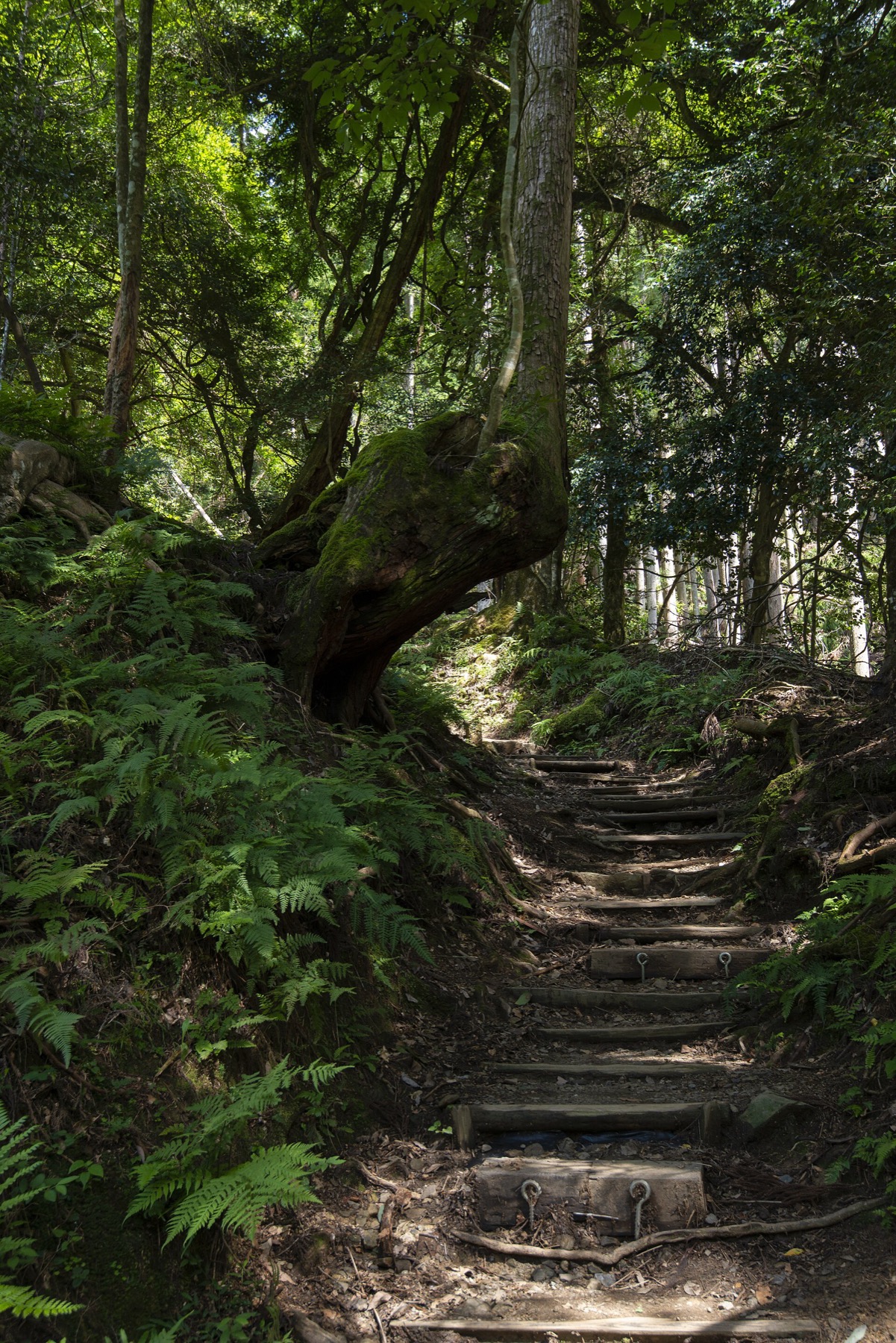
The famous section is the kinone-michi, where the bedrock is so shallow that cedar roots run across the path in a raised web. The temple explains that it keeps the trail unsurfaced and leaves fallen trees in place to avoid interrupting the natural cycles of the mountain. In practice that means dirt, roots and slick footing after rain, so wear proper shoes.
The temple’s own names for the choice: the cable-car round trip is “the path of ease”; the walk over to Kibune is “the path of practice”.
Which direction? Going Kurama → Kibune puts the long climb before the descent into the village. Reverse it and you climb from Kibune, which is steeper but shorter, and you finish at a train station rather than a bus stop — worth weighing against the bus times below. Sei Shonagon included Kurama’s winding approach among things “near yet far” in The Pillow Book.
What it costs, and what is open
| Item | 2026 detail |
|---|---|
| Kurama-dera aizan-hi | ¥500 (unchanged since April 2023) |
| Kurama-dera Main Hall | Open 9:00–16:15 |
| Reihoden treasure hall | ¥200 extra, 9:00–16:00, closed Tuesdays; shut 12 Dec–end Feb |
| Cable car | ¥200 adult donation each way — check current status |
| Kifune Shrine | Free, open daily |
| Kifune amulet office | 9:00–17:00 year-round; prayers to 15:00 |
The aizan-hi is not called an admission fee: the characters mean “love-the-mountain contribution”, and the temple frames it as upkeep of the mountain rather than a ticket. Note that dogs may walk the mountain — unusual for a major temple — though not into the halls or onto the cable car, and there is no parking at the temple at all.
Kifune: what to do with the extra hours
Kifune Shrine is free and open every day. The Hongu’s visiting hours are 6:00 to 20:00 from 1 May to 30 November, and 6:00 to 18:00 from December to April. Its famous water fortune, the mizuura-mikuji, is drawn blank and reveals its text when floated on the sacred spring — and the shrine’s Japanese visitor information explicitly includes the mizuura-mikuji within those Hongu hours, not within the 9:00–17:00 amulet-office hours.
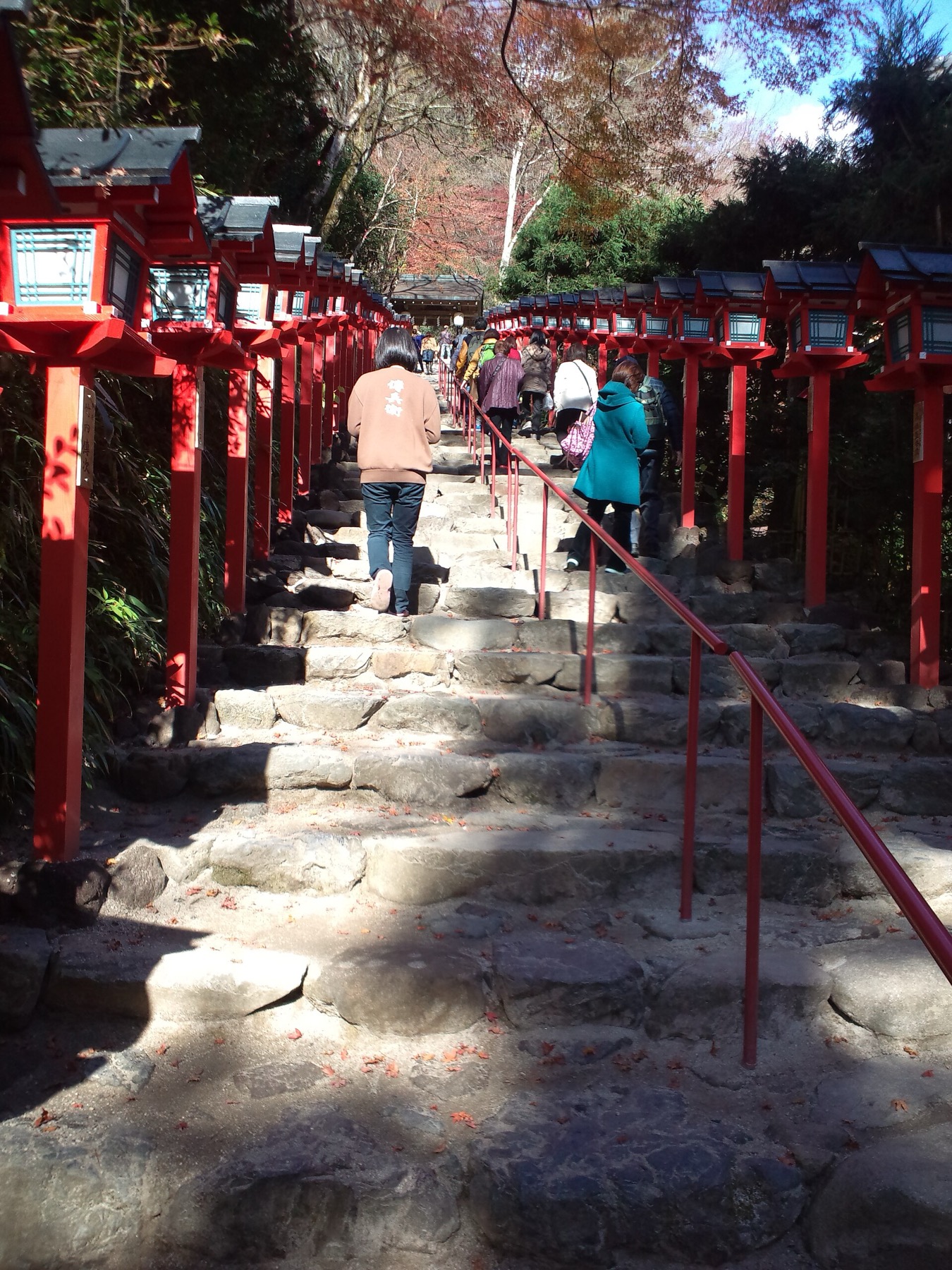
The other detail worth knowing: according to the shrine’s English visitor page, the kasuga lanterns lining the staircase are lit daily from sunset until closing. The staircase photograph does not require a special illumination event — only that you are still there at dusk. Which raises the question of how you get back.
Getting back down. Kyoto Bus route 33 shuttles between Kibuneguchi Station and Kibune — four minutes, ¥200, IC cards accepted. Under the timetable checked on 21 September 2026, the last departure from Kibune was 17:35 on weekdays and 18:14 on Saturdays, Sundays and holidays.
The Hongu stays open until 20:00 through November, so if you stay past the last bus, allow for the walk: Kurama-dera’s own route guide puts Kifune Shrine to Kibuneguchi Station at about 40 minutes on foot, downhill on a narrow road shared with traffic. Check the last train towards Demachiyanagi and your onward connections for your travel date.
Kifune is three shrines, not one: the Hongu with the spring, the Yui-no-yashiro halfway up, and the Okumiya at the top — the original site, moved from after a flood in 1055, with and, by shrine tradition, a sacred cavity known as the ryuketsu beneath the sanctuary that may not be viewed. The shrine’s own recommended order is Hongu, then Okumiya, then Yui-no-yashiro on the way back, which is not the order you walk past them.
Trains, the maple tunnel and the tickets
From Demachiyanagi, the Eizan Railway reaches Kibuneguchi in 28 minutes and Kurama in 31, for ¥470 either way, every 15 minutes through the middle of the day. To reach Demachiyanagi from Kyoto Station, the railway’s own advice is the JR Nara Line one stop to Tofukuji, then Keihan to the terminus — about 15 minutes of riding.
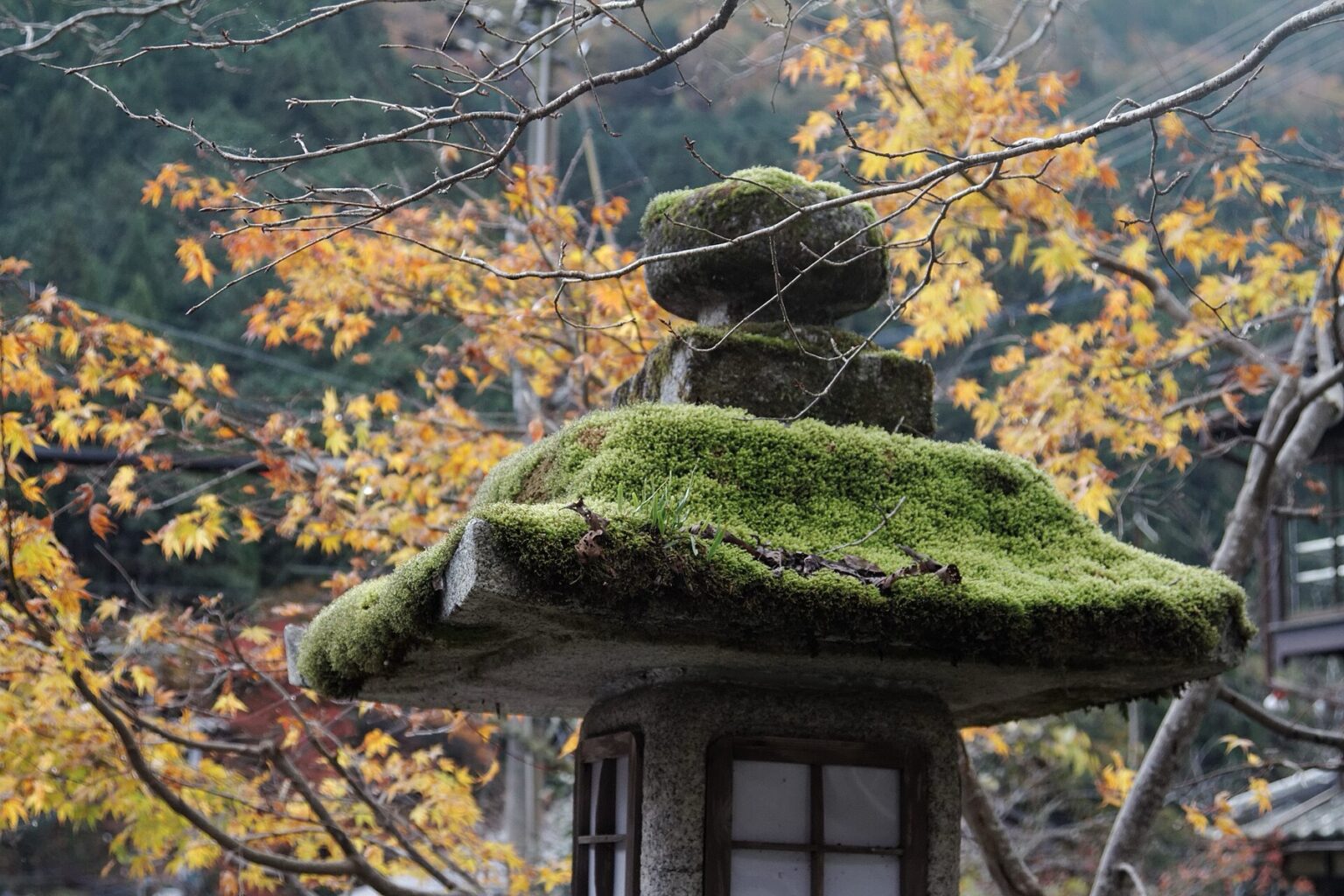
The panoramic Kirara trains, which have eight seats per car turned to face the windows, need no reservation and no supplement — the same ¥470 as any other train, and those window-facing seats are unreserved. Between Ichihara and Ninose the line runs through the “maple tunnel”, 250 metres of track roofed by about 280 maples. During the autumn light-up, trains dim their interior lights and slow through it.
On fares: a simple Eizan return to Kurama is ¥940, below the ¥1,200 day-pass price, so compare the pass against the fares for any extra rides you plan. The ¥2,100 Subway & Eizan Kurama-Kibune day ticket, on sale through March 2027, covers the Kyoto subway, the Keihan link from Sanjo to Demachiyanagi and the whole Eizan line — it may be worth it if your day also includes enough subway and Keihan travel.
Use the shrine’s current website. On 21 September 2026, kibune.jp — a domain some English guides still cite for Kibune visitor information — displayed trading-card affiliate content rather than anything about Kibune. For shrine information, use kifunejinja.jp.
One source discrepancy worth noting: the shrine’s English history gives 1633 in its reconstruction chronology, while the Japanese text gives Bunkyū 3 (1863). This guide follows the Japanese text.
Make it a full Kyoto day — or stay north
When to come
November
The maple tunnel season, with the Hongu open to 20:00 until the 30th. Also the busiest month, and the one where the last bus matters most. The 2026 illumination dates were unannounced when we checked in September — confirm before committing.
22 October
The Kurama Fire Festival, one of Japan’s three great fire festivals, run by Yuki Shrine on the Kurama-dera approach. In 2026 it falls on a Thursday. Expect severe crowding on a single-track railway.
Winter
In winter 2026 Kifune’s snow-dependent illumination ran on Saturdays and Sundays between 17 January and 28 February, sunset to 20:30, with the day’s decision posted on social media at 15:00. Those are past-season details — check the announcement for the coming winter. Kurama’s Reihoden closes 12 December to the end of February.
For the wider season, our guide to Kyoto in November 2026 covers the temple reservations and price changes that now shape an autumn trip, and Japan in November maps the month nationally. If Kyoto’s centre is too much, Higashiyama at golden hour and Kyoto at off-hours are the two time-shifting strategies that work, and seven days in Kansai beyond Kyoto goes further afield. For how the colour moves, see the foliage forecast explained.
Frequently asked questions
Is the Kurama cable car running?
Check before you go. As of 21 September 2026 the temple’s latest posted notice announced a fault-related suspension on 30–31 August, warning it might continue from 1 September, and we found no restart notice. Separate morning inspection closures are listed for 25 September and 27 October. From Kurama Station the walk to the Main Hall takes about eleven minutes longer than the cable route.
How long is the Kurama to Kibune hike?
About 80 minutes of walking from Kurama Station by the temple’s own leg-by-leg timings: to the gate (3 min), Yuki Shrine (5), Main Hall (20), Mao-den (30), then down to Kifune Shrine (20). Add stops. It is a dirt trail with exposed roots and stone steps, not a paved walkway.
How much does it cost to visit Kurama-dera and Kifune Shrine?
¥500 for Kurama-dera’s aizan-hi, and Kifune Shrine is free. Add ¥200 for the Reihoden treasure hall if it is open, and ¥470 each way on the Eizan Railway.
What time is the last bus from Kibune?
Under the timetable checked on 21 September 2026: 18:14 on Saturdays, Sundays and holidays, and 17:35 on weekdays, on route 33 to Kibuneguchi Station (¥200, four minutes). The Hongu stays open until 20:00 through November, so staying later means walking down — Kurama-dera’s route guide gives about 40 minutes from Kifune Shrine to the station.
Do I need a reservation for the Kirara panoramic train?
No — the railway states no reservation and no supplement are required. Seats are unreserved and the fare is the ordinary ¥470. The eight window-facing seats per car fill first.
When is the maple tunnel light-up in 2026?
Unannounced as of 21 September 2026. The railway published its 2025 autumn schedule on 22 October 2025, which does not establish when the 2026 dates will appear — check the railway’s news page. The tunnel can only be seen from inside a train.
Sources
Primary sources, read on 21 September 2026
- Kurama-dera — official site: cable-car suspension notice, aizan-hi ¥500, Main Hall and Reihoden hours, the leg-by-leg route timings, trail policy and pets rule
- Kifune Shrine — official site: seasonal opening hours, amulet-office and prayer times, the three-shrine order, nightly lantern lighting (English page), snow light-up terms and parking
- Eizan Electric Railway — official site: fares, the timetable in force since 22 August 2026, Kirara reservation and supplement policy, maple-tunnel description and the 2025 autumn precedent
- Kyoto Bus — route 33 fares and timetables for Kibuneguchi–Kibune
- Photographs: Yanajin33 (CC BY-SA 4.0), Maarten Heerlien (CC BY 2.0) and KimonBerlin (CC BY-SA 2.0) via Wikimedia Commons, credited under each image.
Join travelers discovering Japan's hidden side
Weekly dispatches from off-the-beaten-path Japan — spots and stories you won't find in guidebooks.
No spam. Unsubscribe anytime.
Welcome aboard!
You're in. See you in your inbox soon.