Climbing season status
The 2026 climbing season ended on 10 September 2026
The official trails to the summit and the mountain huts are closed. Climbing to the top is not something to attempt now — the route markers, the huts and the first-aid stations that operate only during the season are gone until next summer, and so is the entry reception.
Some 5th Stations may still be reachable for sightseeing, depending on road, weather, snow and bus conditions on the day. That is not the same as the climbing trails being open.
Dates and current conditions: the official Mt Fuji climbing site.
Planning Mt Fuji · 2026
Should you climb Mt Fuji in 2026 — or just see it? The new ¥4,000 fee on all four trails, the 4,000-climber daily cap on the Yoshida route, and a gate that shuts from 2 PM to 3 AM make this a real decision rather than a default. A summit climb is a 10–12-hour overnight effort to a peak that is often wrapped in cloud, and — the part that surprises people — you can’t actually see Fuji’s famous cone while you’re standing on it. This guide gives you the 2026 rules in brief, an honest checklist for who should climb and who should skip it, and exactly where to go for the view if you skip.
What changed for climbing Mt Fuji in 2026?
2026 is the first year all four trails charge the same ¥4,000 fee and run a unified access system. The headline change is that Fuji is now a managed mountain: you pay, you register, and the gate closes in the afternoon to stop unprepared “bullet climbers” racing up overnight without a rest. The rules differ between the Yamanashi side (Yoshida) and the three Shizuoka trails, so here is the trail-by-trail reality.
| Trail | Side | Daily cap | 2026 season |
|---|---|---|---|
| Yoshida | Yamanashi | 4,000/day | Jul 1 – Sep 10 |
| Subashiri | Shizuoka | None | Jul 1 – Sep 10 |
| Gotemba | Shizuoka | None | Jul 10 – Sep 10 |
| Fujinomiya | Shizuoka | None | Jul 10 – Sep 10 |
All four cost the same ¥4,000, close the gate from 2 PM to 3 AM to anyone without a mountain-hut booking, and need you to sign up first — a recommended online reservation on Yoshida (same-day entry at the gate is still allowed while space remains), or the FUJI NAVI app with a short e-learning test on the three Shizuoka trails. The full registration walkthrough, gear list and trail-by-trail comparison live in my Climbing Mt Fuji 2026 guide — this page is about whether you should.
The rules exist for a reason. After Yamanashi brought in its fee, cap and reservations, climber numbers fell from about 221,000 in 2023 to roughly 204,000 in 2024 — after the new rules came in. The official aim is safety and crowd control, deterring under-equipped, under-prepared climbers. If you are fit, prepared and want the summit, none of this should stop you. If you’re on the fence, it’s a fair nudge to think twice.
Should you climb Mt Fuji in 2026? An honest checklist
Here’s the plain version. The climb is a genuine high-altitude hike, not a tourist stroll: from the Yoshida 5th station (2,300 m) you gain about 1,450 m to the 3,776 m summit, roughly 10–12+ hours of walking round trip, in thin air where oxygen is around two-thirds of sea level. Realistically it’s a two-day, one-night trip costing somewhere around ¥25,000–40,000 from Tokyo once you add the fee, bus, a hut with meals and any rented gear. By most estimates 70–80% of climbers reach the top in season; altitude sickness affects a sizeable share and is the usual reason people turn back. Weigh it like this:
You want the summit, not the postcard
- You’re reasonably fit and can spend 2 days / 1 night on it
- You’ll sleep in a hut and go slowly to beat altitude sickness
- You have (or will rent) real layers, rain gear and boots
- The goal is the experience — sunrise from the crater, the achievement — not the famous view of the mountain
- You can book ahead and accept that cloud may hide the sunrise anyway
You came for the view of Fuji
- You have limited time or are travelling with kids or older family
- You’re not equipped for a cold, thin-air overnight hike
- What you actually want is the iconic cone in your photos
- You’re visiting outside the short Jul–Sep window
- You’d rather spend the day relaxed by a lake than queuing at a gate
What surprises first-timers: you can’t see Fuji’s cone while you’re on it
This is the part that surprises people. The perfect symmetrical cone — the one on every poster, the one at the Chureito Pagoda — is by definition a view from a distance. When you’re on the mountain, you’re standing on its slope: what you actually see is rocky volcanic terrain, rows of huts, and (cloud permitting) the plain far below. You climb Fuji for the summit experience and the sunrise, not to look at Fuji. And summer, the only time you can legally climb, is also the cloudiest stretch for seeing it — the rainy season often hides the peak into mid-July, and a clear goraikō sunrise is never guaranteed. If your trip is really about that view, the climb is the one place you can’t get it.
Where can I see Mt Fuji without climbing?
If you decide to skip the climb, you’re spoiled for choice — and unlike the trail, most of these are free, year-round, and best in the clear-aired cold months rather than cloudy summer. Before you set out, check my live “is Mt Fuji visible today” page and the best-time-to-see-Fuji seasonal guide, then pick the kind of shot you want:
Mirror-still lakes
The classic reflection. Lake Motosu (the view on the ¥1,000 note), the quiet shores of Lake Saiko, and the Kawaguchiko Ōhashi bridge.
The pagoda shot
The five-storied pagoda with Fuji at Arakurayama (Chureito) — just know it’s mobbed; the 2026 cherry festival was cancelled over crowds, so go on a clear weekday morning.
Retro streetscapes
Fuji rising over old shopfronts and tangled wires at Honmachi 2-chōme and the Shōwa lanes of Nishiura, Fujiyoshida.
The sky gate
The torii framing Fuji from above Kawaguchiko at Tenkū-no-Torii.
Flowers in the foreground
Seasonal blooms with Fuji behind at Ōishi Park, Hana no Miyako, the spring Shibazakura festival, and — from late August to mid-October — the same fields replanted with 80,000 autumn zinnias.
From the train
No effort at all: the right Shinkansen seat for a window pass, or the red dawn Fuji from the first Fujikyu train.
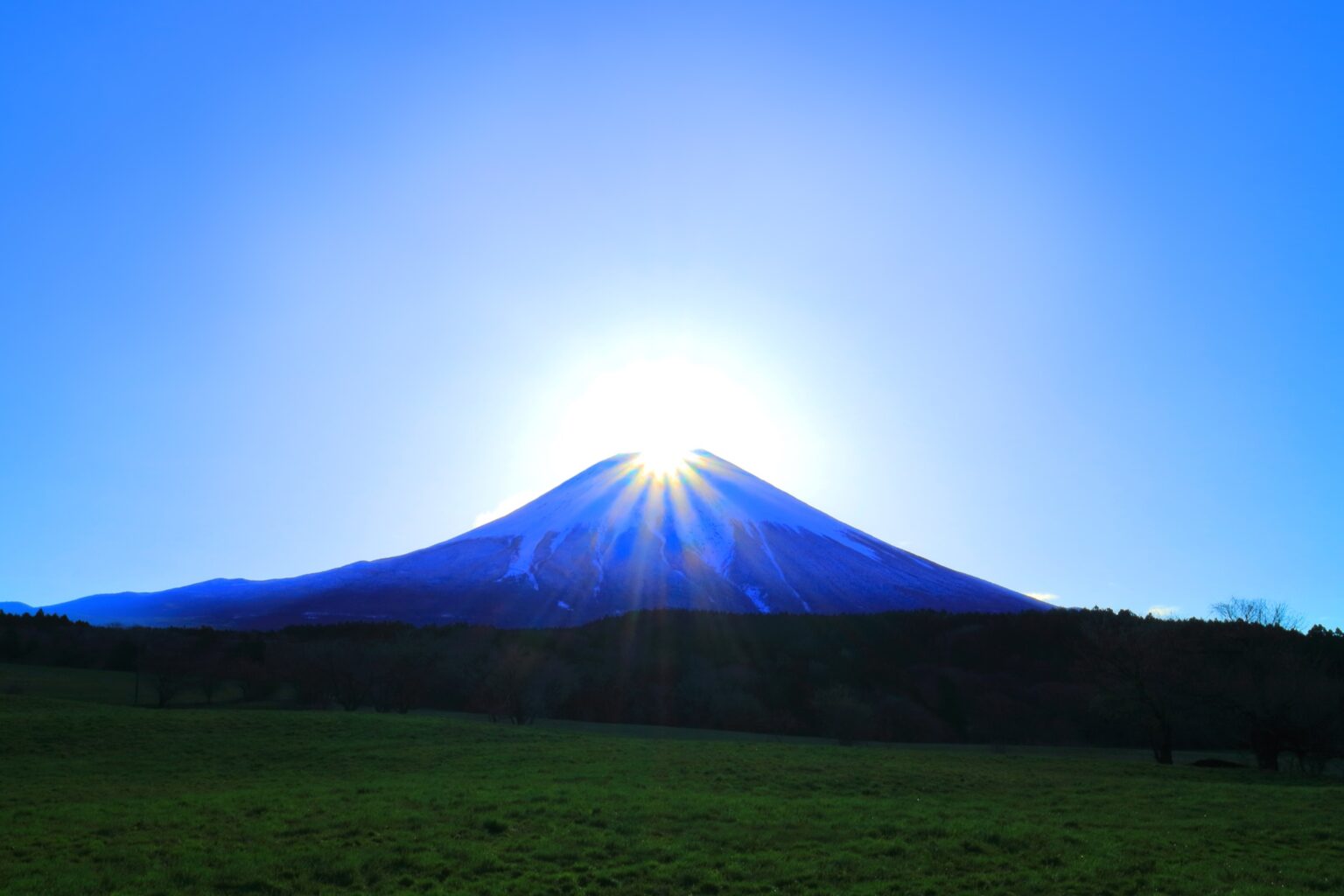
Diamond Fuji
The sun cresting the exact summit, a few dates a year — see the calendar, the 9 Lake Yamanaka spots, or even from Tokyo.
Fuji over the sea
If you’re near Kamakura, the mountain floats above the surf at Shichirigahama.
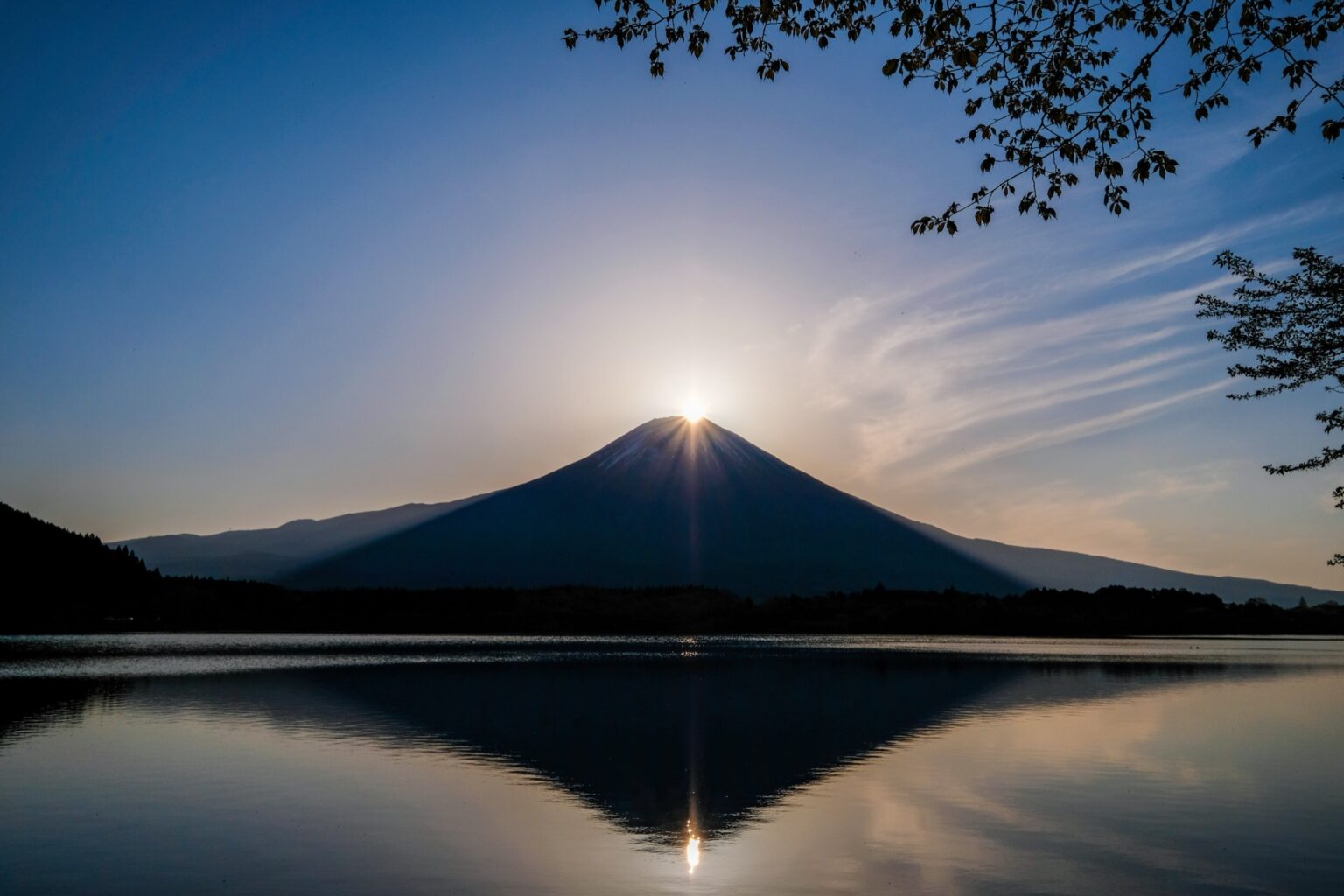
For the full picture, the Mt Fuji travel hub maps every viewpoint, how to get there from Tokyo, and where to stay; if crowds are your worry, Fuji also features in my wider guide to skipping the crowds in Japan.
Still set on climbing? Do it safely
If you’ve read all that and still want the summit — good, it’s a genuine bucket-list experience. Just do it properly: book a mountain hut so you can break the climb and acclimatise (it also gets you through the 2 PM gate), and reserve ahead, since Yoshida is capped at 4,000 climbers a day and busy mornings can reach it (same-day entry at the gate is still available while space remains). My detailed guides cover the logistics: the full 2026 climbing guide, what a night in a mountain hut is actually like, the sunrise (goraikō) timing, and — please read this one — why climbing off-season is genuinely deadly. If you’re going through the night, here’s what the dusk-to-dawn ascent actually feels like, plus what to wear for a summit that feels like winter even in July.
And before you lock the plan in, read the lessons from the two serious incidents Fuji saw in a single day this July — a sharper argument for the two-day, hut-based pattern than any rulebook.
Plan Your Mt Fuji Trip
FAQ
Is climbing Mt Fuji worth it in 2026?
It depends what you want. If your goal is the summit experience and a sunrise from above the clouds, and you’re fit and prepared, yes — it’s a memorable two-day climb. If you mainly want the famous view of Fuji’s cone, no: you can’t see that shape while you’re on the mountain, and seeing it from a lake or pagoda is cheaper, easier and more reliable.
How much does it cost to climb Mt Fuji in 2026?
The trail fee is ¥4,000 per person on all four routes. Adding round-trip transport from Tokyo, one night in a mountain hut with meals, and any rented gear, a realistic all-in budget is roughly ¥25,000–40,000 per person for a two-day, one-night climb.
Do I need a reservation to climb Mt Fuji in 2026?
On the Yoshida trail (Yamanashi) an online reservation is recommended but you can still pay at the gate while the daily 4,000-climber cap holds. The three Shizuoka trails (Subashiri, Gotemba, Fujinomiya) require you to register through the FUJI NAVI app and complete a short e-learning test first, which issues a QR entry certificate. Either way, to pass the gate after 2 PM you need a mountain-hut booking.
Can you see Mt Fuji without climbing it?
Yes — and for most travellers who mainly want the famous view, seeing it from the ground is the easier and more reliable choice. The iconic cone is a distance view, so the best sights are from lakes (Motosu, Saiko, Kawaguchiko), the Chureito Pagoda, retro streets in Fujiyoshida, the Shinkansen window, or even Kamakura’s coast. Most are free and year-round, and clearest in the cold months, not the cloudy climbing season.
When is the Mt Fuji climbing season in 2026?
July 1 to September 10 on the Yoshida and Subashiri trails; July 10 to September 10 on the Gotemba and Fujinomiya trails. Outside these dates the trails and huts are closed and climbing is dangerous — off-season Fuji has killed experienced climbers.
What’s the difference between the Yoshida and Shizuoka trails in 2026?
Yoshida (Yamanashi) has a hard 4,000-climbers-per-day cap and a 5th-station gear check, but no mandatory test. The three Shizuoka trails have no daily cap but require the FUJI NAVI app with e-learning and a confirmation test. All four charge ¥4,000 and close the gate from 2 PM to 3 AM to climbers without a hut booking.
Where is the best place to see Mt Fuji without hiking?
For a first-timer, a clear winter morning at Lake Kawaguchiko or Lake Motosu is hard to beat, and the Chureito Pagoda gives the famous pagoda-and-Fuji frame (go early to dodge crowds). Check whether the mountain is actually out before you travel using a live visibility forecast — Fuji hides behind cloud more often than people expect.
Can I climb Mt Fuji in one day without staying in a hut?
It’s physically possible but strongly discouraged, and the 2026 rules make it hard on purpose: the gate closes from 2 PM to 3 AM to anyone without a hut reservation, precisely to stop overnight “bullet climbing,” which causes altitude sickness and accidents. Book a hut, split the climb over two days, and you’ll enjoy it far more.
Whatever You Decide
Climb it or photograph it — start by booking a base near the mountain.
Where to stay near Mt Fuji: compare hotels and prices on Booking.com or Trip.com — booking early pays off in peak season.
Join travelers discovering Japan's hidden side
Weekly dispatches from off-the-beaten-path Japan — spots and stories you won't find in guidebooks.
No spam. Unsubscribe anytime.
Welcome aboard!
You're in. See you in your inbox soon.