Tokyo · Diamond Fuji 2026-27
Tokyo gets its own Diamond Fuji, and the schedule is a patchwork: Mt. Takao’s most recent official window was 17–28 December 2025 with the sun on the summit around 16:00–16:15, the 2026 dates were still unannounced in mid-September, and one city venue has already committed — Sunshine 60 has announced viewing sessions from 13 November 2026 and again from 25 January 2027. The 2026 winter solstice falls on Tuesday 22 December, which is the axis the Takao window turns around.
Mt. Takao: the main event, with one honest caveat
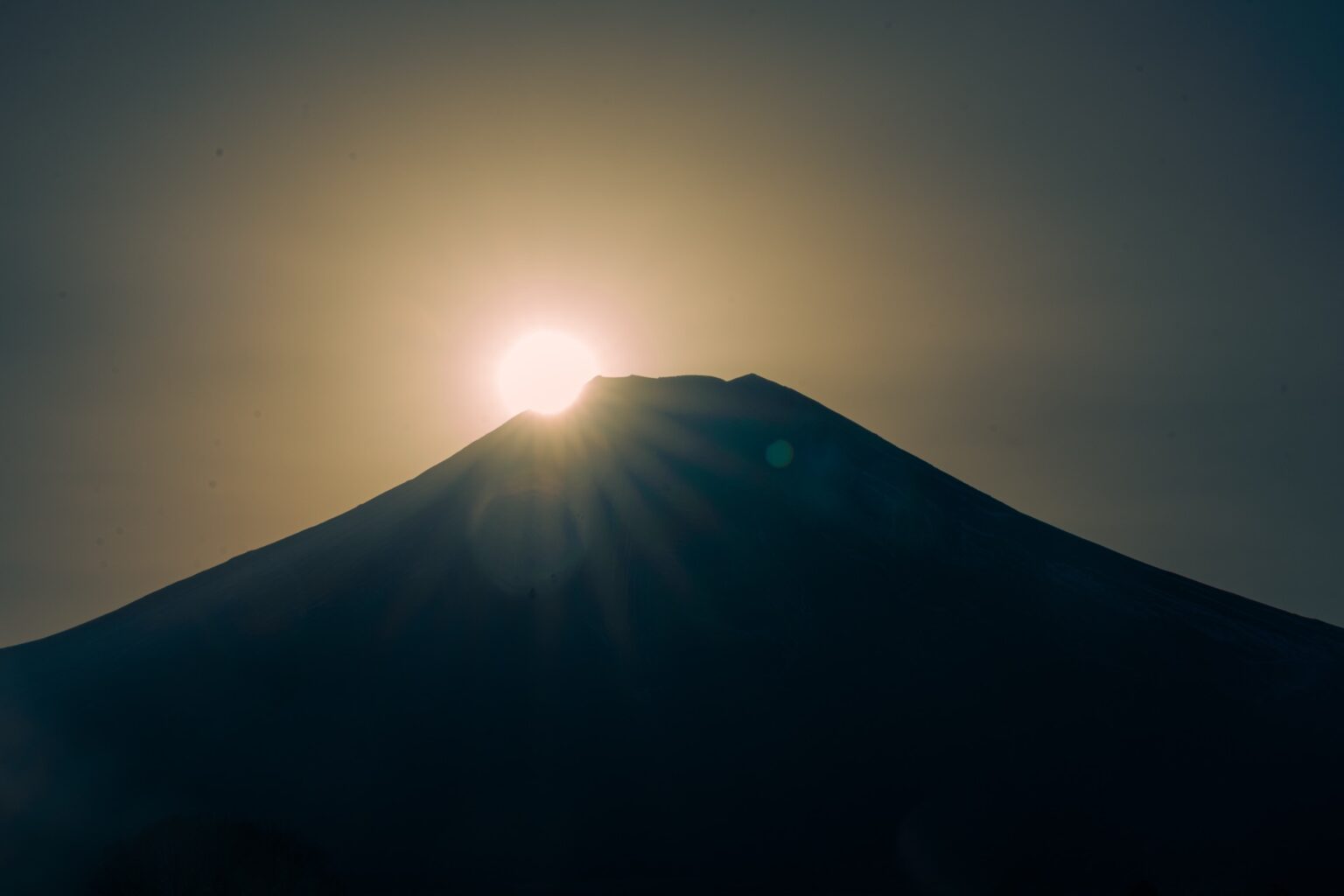
Mt. Takao is the classic Tokyo Diamond Fuji: a real summit view, an hour-ish of travel from Shinjuku to the trailhead, and an official viewing period published each season by the cable-car company. The caveat is the year. The operator’s current page still carries the 2025 season — 17 to 28 December, sun on the summit around 16:00–16:15, cable-car service extended to 18:00 for the period, weather permitting. The 2026 dates had not been posted when I checked on 14 September 2026. Since the window forms around the winter solstice (22 December in 2026), mid-to-late December is the safe planning assumption — but book flexibly until the operator publishes this season’s notice.
| Takao logistics | The current picture |
|---|---|
| Train | Keio Line from Shinjuku to Takaosanguchi, ~50 minutes, ¥430 one way |
| Up the mountain | Cable car part-way, then roughly 40–60 minutes on foot to the summit — the “1 hour from Shinjuku” you sometimes read stops at the trailhead, not the top |
| Timing | Be on the summit by 15:00; queues for the cable car build through the afternoon in the viewing period |
| Coming down | In 2025 the cable car ran until 18:00 during the window (weather permitting). A pre-bought return ticket saves the ticket-machine queue, not the boarding queue. Carry a headlamp if you plan to walk down |
| After | Takaosan Onsen sits next to Takaosanguchi Station — the warm ending to a freezing summit wait |
The city options: one announced, two watch-listed
You do not have to climb anything for Tokyo Diamond Fuji — but city sightlines depend on being high up or on the right river bank, and each venue runs its own calendar.
Sunshine 60 — dates announced
The Ikebukuro observatory has committed to this season: Diamond Fuji viewing sessions from 13 November 2026 and from 25 January 2027, with details published in stages. The rare Tokyo venue with 2026-27 dates already on paper (checked 14 September 2026) — watch its official page for times, capacity and booking.
Skytree & Tokyo Tower — watch their pages
Both towers have published official Diamond Fuji viewing announcements in past seasons — Skytree most recently for early February 2026, Tokyo Tower for 9 February 2026. Neither had posted 2026-27 dates when I checked. High-floor viewing runs on different dates from ground level, so wait for each venue’s own notice rather than borrowing a riverside calendar.
Arakawa riverbank — free and specific
MLIT’s viewing lists include exact riverbank points with yearless reference dates: near Toda-bashi around 8–9 January and 29–30 November; by the Adachi Urban Agriculture Park around 19–20 January and 22–23 November. Free, station-walkable, and unstaffed — you bring the timing discipline.
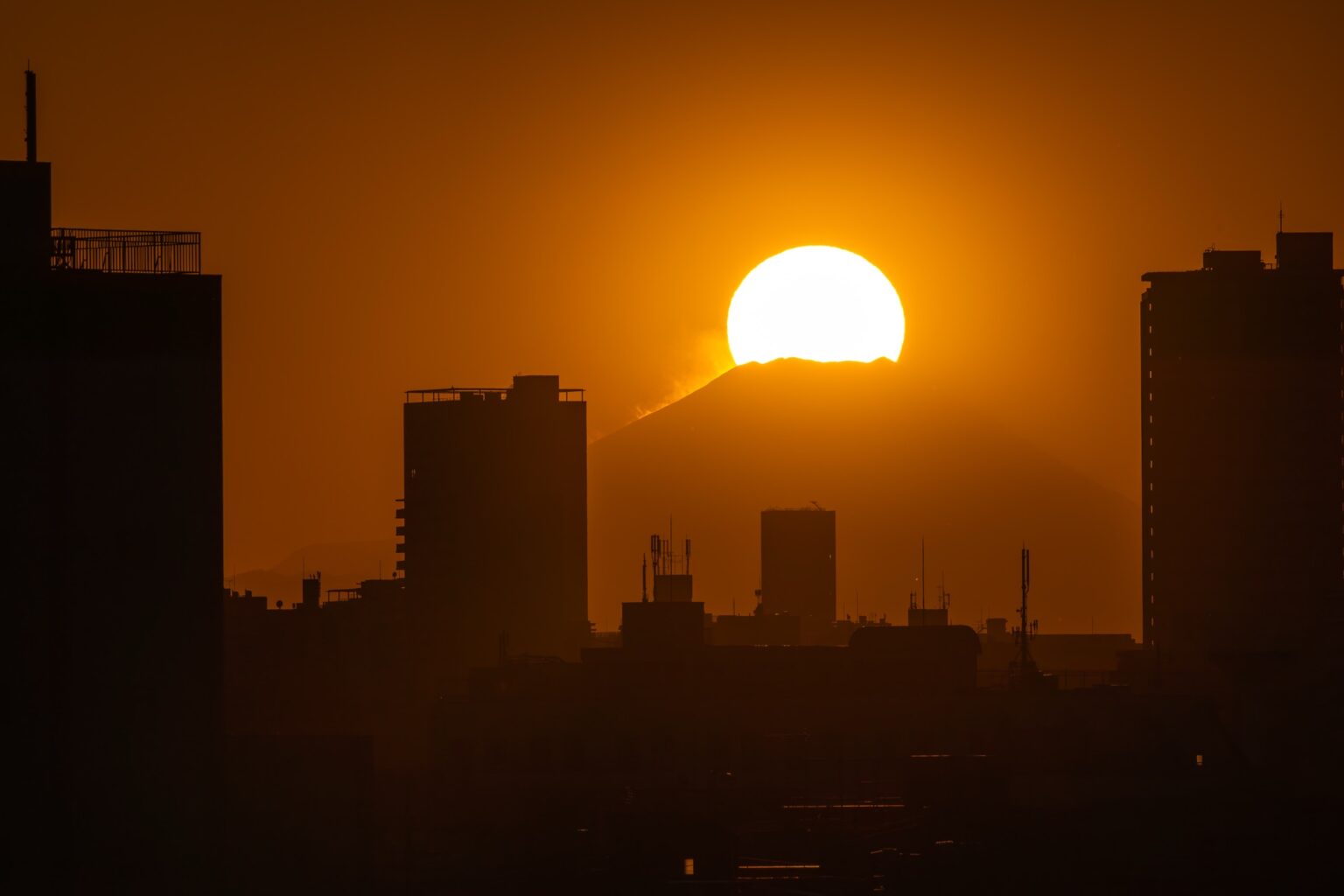
One physics note that sorts out most confusion about dates: viewing dates differ because each location sees the summit in a slightly different compass direction, and the sunset point drifts along the horizon through the season. That is why Arakawa’s references sit in November and January, Takao’s around the solstice, and high floors differ from the ground — MLIT’s own calculations note they do not account for viewing-floor elevation. The reliable method is boring: use each venue’s own published dates.
Photographing it from 55 km out
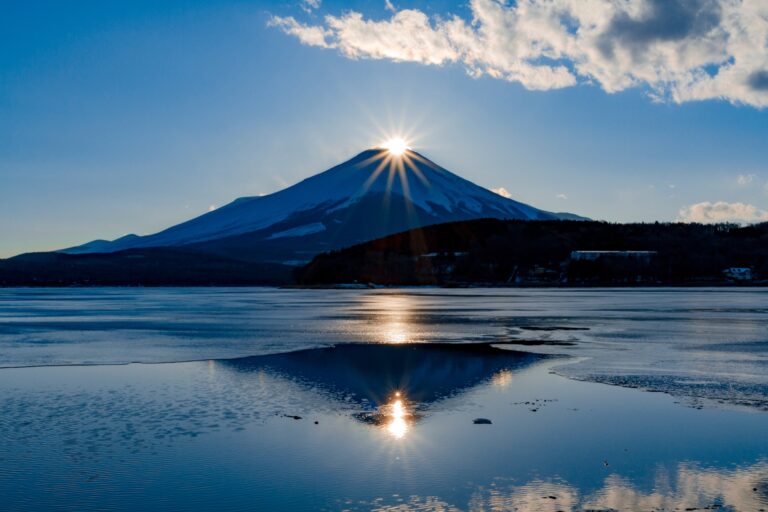
From Takao, Mt. Fuji stands about 55 km to the west-southwest — so the mountain is a modest triangle on the horizon, not the wall it is from Lake Yamanaka, which sits within about 15–20 km of the summit. The sun’s apparent size is the same everywhere; what changes with distance is how small Fuji gets around it. A longer lens (200mm-plus) isolates the summit-and-sun moment; a phone gets the scene, not the diamond.
Two safety points that outrank any composition advice: never look at the sun through an optical viewfinder — compose on the rear screen — and remember that an ordinary ND filter is a contrast tool, not a solar filter; it does not make staring at the sun safe for eyes or sensor. Cold is the other equipment issue: a summit wait in late December is a below-freezing hour of standing still.
The December-evening kit
Picking your date, honestly
Until the Takao operator posts its 2026 notice, the decision tree is short: if your trip is fixed for mid-to-late December, plan a Takao evening near the solstice and hold a backup slot the next day for weather; if your trip is in November or late January, Sunshine 60’s announced sessions and the Arakawa reference dates are the play; if the sky is your worry, my morning visibility report shows whether Fuji is out at all, and the seasonal guide explains why winter gives Tokyo its clearest Fuji sightlines. Cloud on the day means no diamond — there is no indoor version of this. For day-by-day alignment predictions around Tokyo — including riverside positions no venue announces — the Japanese-language shooting calendar by Fujiyoshida photographer Oi is the tool I check; treat its calculated predictions as candidates with the site’s own error caveats, and the reading guide is in our calendar hub.
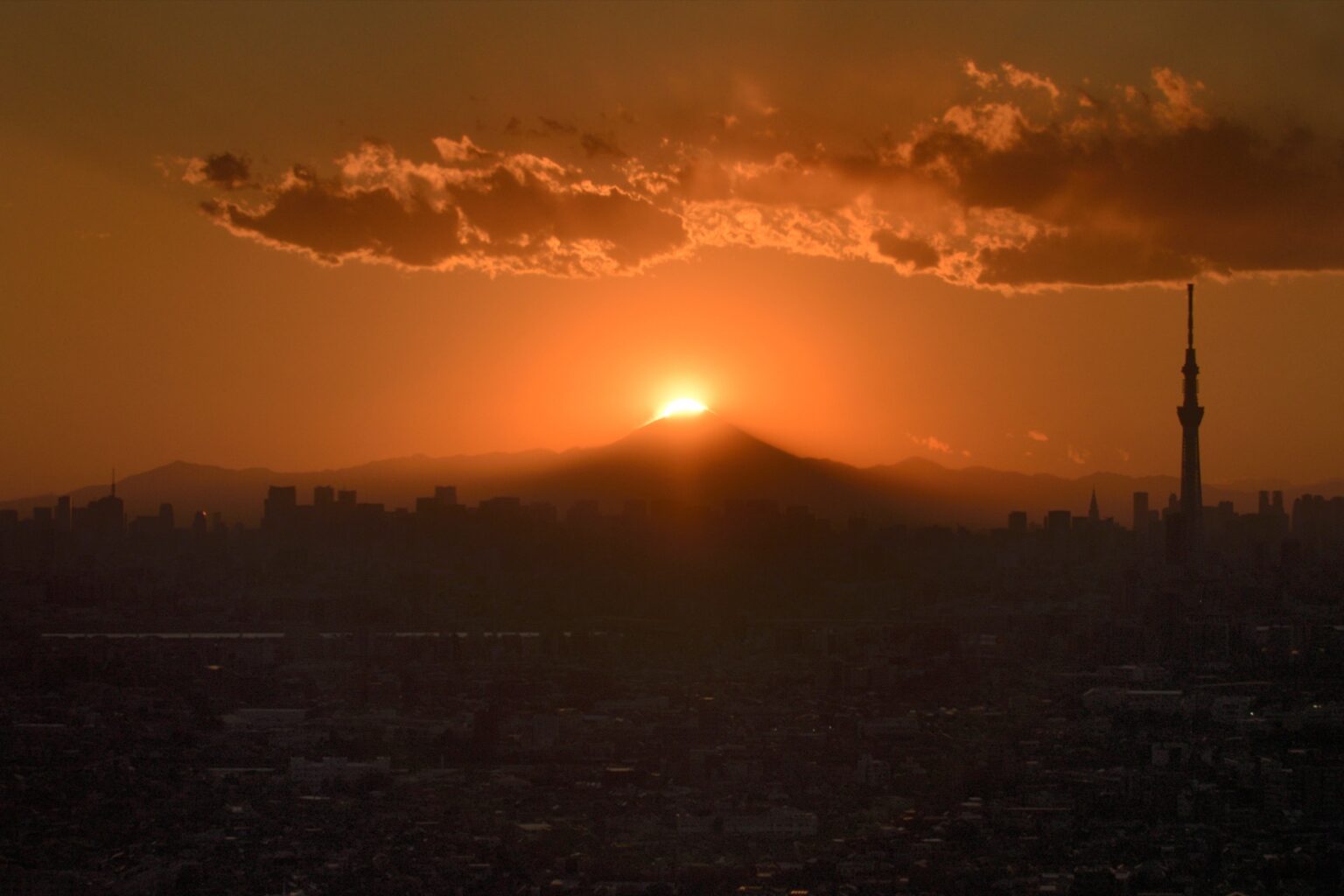
If the December window and your itinerary refuse to line up, the phenomenon doesn’t end at the city limits: the national Diamond Fuji calendar tracks where the alignment travels across the year, and the Mt. Fuji hub collects every other way to meet the mountain. For whether the peak will even be visible on your dates, the Mt. Fuji weather guide covers the forecasting.
Frequently asked questions
What are the Mt. Takao Diamond Fuji dates for 2026?
Not announced yet, as of 14 September 2026. The most recent official window was 17–28 December 2025, and the period forms around the winter solstice — 22 December in 2026 — so mid-to-late December is the planning assumption. Check the cable-car operator’s Diamond Fuji page for the official notice before fixing plans.
Is the winter solstice the best date?
It is the geometric centre of Takao’s season, not an officially designated best day. Any clear evening inside the published window can produce the alignment from the right standing position; a clear sky matters far more than hitting 22 December exactly.
Does the cable car run late enough to get down after sunset?
In 2025, service was extended to 18:00 during the 17–28 December window, weather permitting — the 2026 arrangements had not been announced at last check. If you would rather not depend on it, walking down takes about an hour and needs a headlamp.
Can I see Diamond Fuji from a Tokyo observation deck?
Yes, on venue-specific dates. Sunshine 60 has announced sessions from 13 November 2026 and 25 January 2027 (details to follow); Skytree and Tokyo Tower have both run official viewings in past seasons and are worth watching for this season’s notices. High-floor dates differ from ground-level dates, so rely on each venue’s own announcement.
Is Tokyo or Lake Yamanaka better for this?
Different products. Tokyo gives you train access and a smaller, farther Fuji (~55 km from Takao); Yamanaka puts you 15–20 km from the summit with nine relay spots and the lake reflection, but needs a longer trip. If Diamond Fuji is the goal rather than the bonus, Yamanaka wins; the spot-by-spot guide has the reference dates.
What happens if it’s cloudy?
No diamond — the sun must be visible at the moment it meets the summit. Inside a multi-day window you simply try the next evening, which is the strongest argument for not travelling to Tokyo for one fixed evening only.
Sources
Official sources for the dates and figures above, checked 14 September 2026
- Takao Tozan Railway — Diamond Fuji page (2025 window 17–28 Dec, 16:00–16:15 viewing, 18:00 extension, weather clause; 2026 not yet posted)
- Sunshine City — 2026 annual programme release (Diamond Fuji sessions from 13 Nov 2026 and 25 Jan 2027)
- MLIT Kanto — Diamond Fuji date lists (Arakawa reference points; year-to-year drift and elevation caveats)
- Tokyo Skytree — most recent viewing notice (Feb 2026); Tokyo Tower operator announcement for 9 Feb 2026 — both venues’ 2026-27 notices pending
Join travelers discovering Japan's hidden side
Weekly dispatches from off-the-beaten-path Japan — spots and stories you won't find in guidebooks.
No spam. Unsubscribe anytime.
Welcome aboard!
You're in. See you in your inbox soon.