
Yamanashi · Lake Yamanaka · Flowers
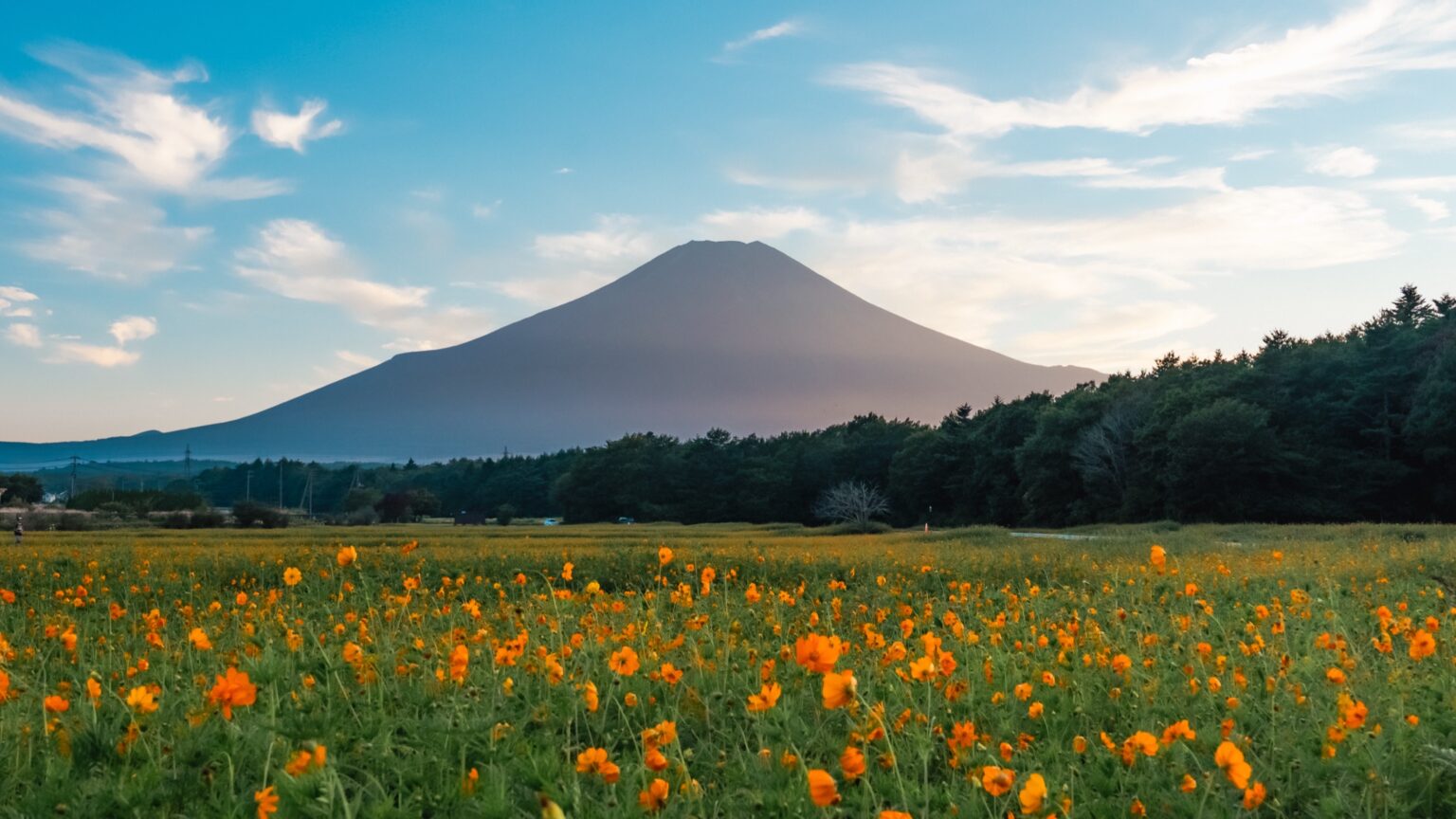
Hana no Miyako Koen sits at about 1,000 m just north of Lake Yamanaka, and the part everyone photographs — 30 hectares of flower fields with Mt Fuji behind them — costs nothing to walk into. You pay only for parking (¥300 a car) and, if you want it, the enclosed Seiryū-no-Sato zone (¥600 in season). The single biggest planting is not the tulips: it is 3.2 million yellow cosmos that open in late August and run to mid-October.
I have now been twice in one year: April 20 for the weeping cherries and the first tulips, and August 25 for the yellow cosmos. Those two visits produced completely different parks, and neither is the one most English guides describe — they tend to stop at “tulips and sunflowers.” What follows is what actually blooms when, what the fees really cover, and the one thing about the evening light here that I only learned by staying late.
What you are actually visiting
The park splits cleanly in two, and understanding the split saves you money.
The flower fields (free)
Roughly 30 hectares of open planting — tulips, poppies, zinnias, sunflowers, cosmos — laid out in bands with Mt Fuji to the south. No gate, no ticket. This is the postcard, and it costs nothing but the car park.
Seiryū-no-Sato (paid)
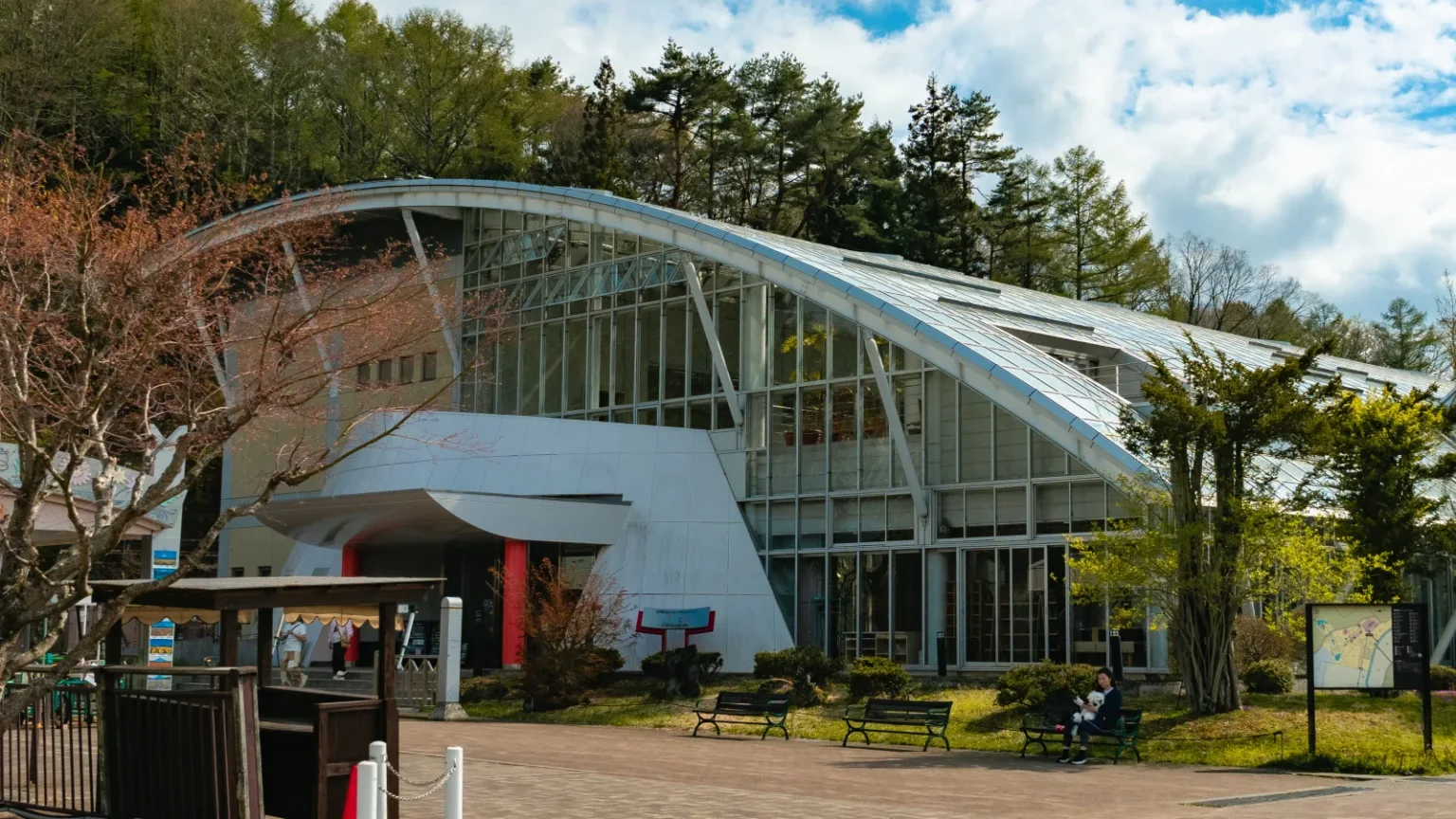
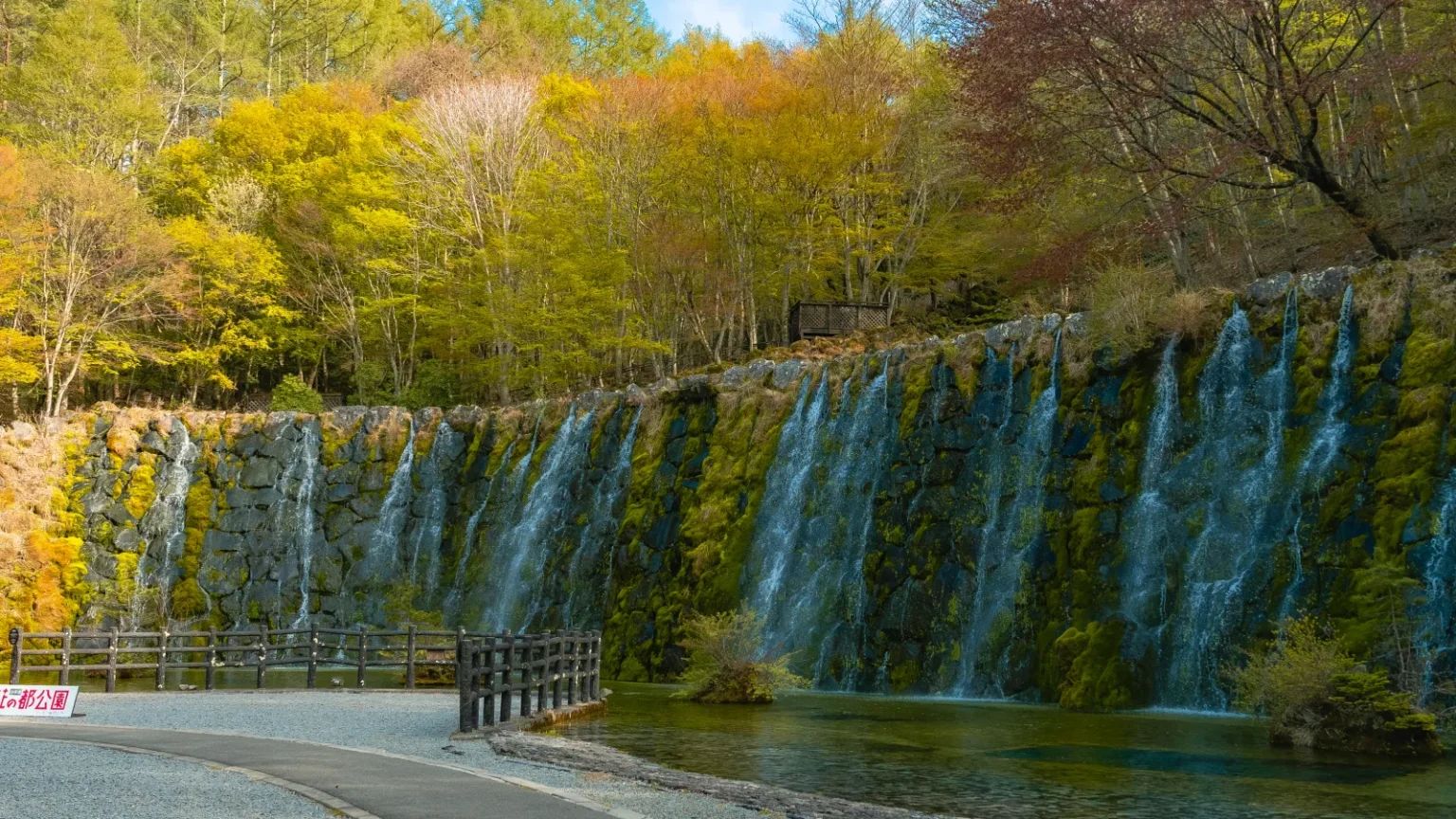
A separate enclosure holding the constructed Myojin-no-Taki waterfall, a water playground for children, and the all-weather Floral Dome “Furara.” One ticket covers all of it. ¥600 for adults in the April–October season.
The flower calendar, from the park’s own planting plan
Most English write-ups give you “tulips in spring, sunflowers in summer.” The park actually publishes a species-by-species schedule with planted quantities, and it reorders your priorities the moment you read it — the tulips everyone comes for are the smallest planting on the list.
| Flower | Official peak window | Planted |
|---|---|---|
| Tulips | Late Apr – early May | 110,000 |
| Kikarashi (field mustard) | Mid – late June | 3,000,000 |
| Baby’s breath | Late June – early July | 350,000 |
| Cornflower | Late June – mid July | 250,000 |
| California poppy | Late June – mid July | 400,000 |
| Corn poppy | Late June – mid July | 350,000 |
| Zinnia | Mid July – early Oct | 700,000 |
| Sunflowers | Mid – late Aug | 100,000 |
| Yellow cosmos | Late Aug – mid Oct | 3,200,000 |
| Cosmos (pink/white) | Mid Sep – mid Oct | 2,700,000 |
| Red buckwheat ‘Takane Ruby’ | Late Sep – early Oct | 180,000 |
| Late sunflowers | Late Sep – early Oct | 20,000 |
| Buckwheat | Late Sep – early Oct | 80,000 |
Two readings of that table are worth carrying with you. First, the flower this park does at genuine scale is cosmos: 3.2 million yellow, then 2.7 million pink and white, back to back from late August into mid-October. Second, these are planting plans, not promises — the park itself calls the windows “a guide only” and asks you to phone or check the bloom page before travelling, because weather moves everything and individual fields can sit between plantings.
The late-August gap nobody warns you about: the sunflowers are planted in waves. On August 22, 2026 the park’s own bloom notice said the first wave was past its peak and the second wave would start “around next weekend” — so a visitor arriving in the last week of August for sunflowers can find both waves missing at once. That is exactly when I went, and it did not matter: the yellow cosmos had already opened.
Late August: the yellow cosmos
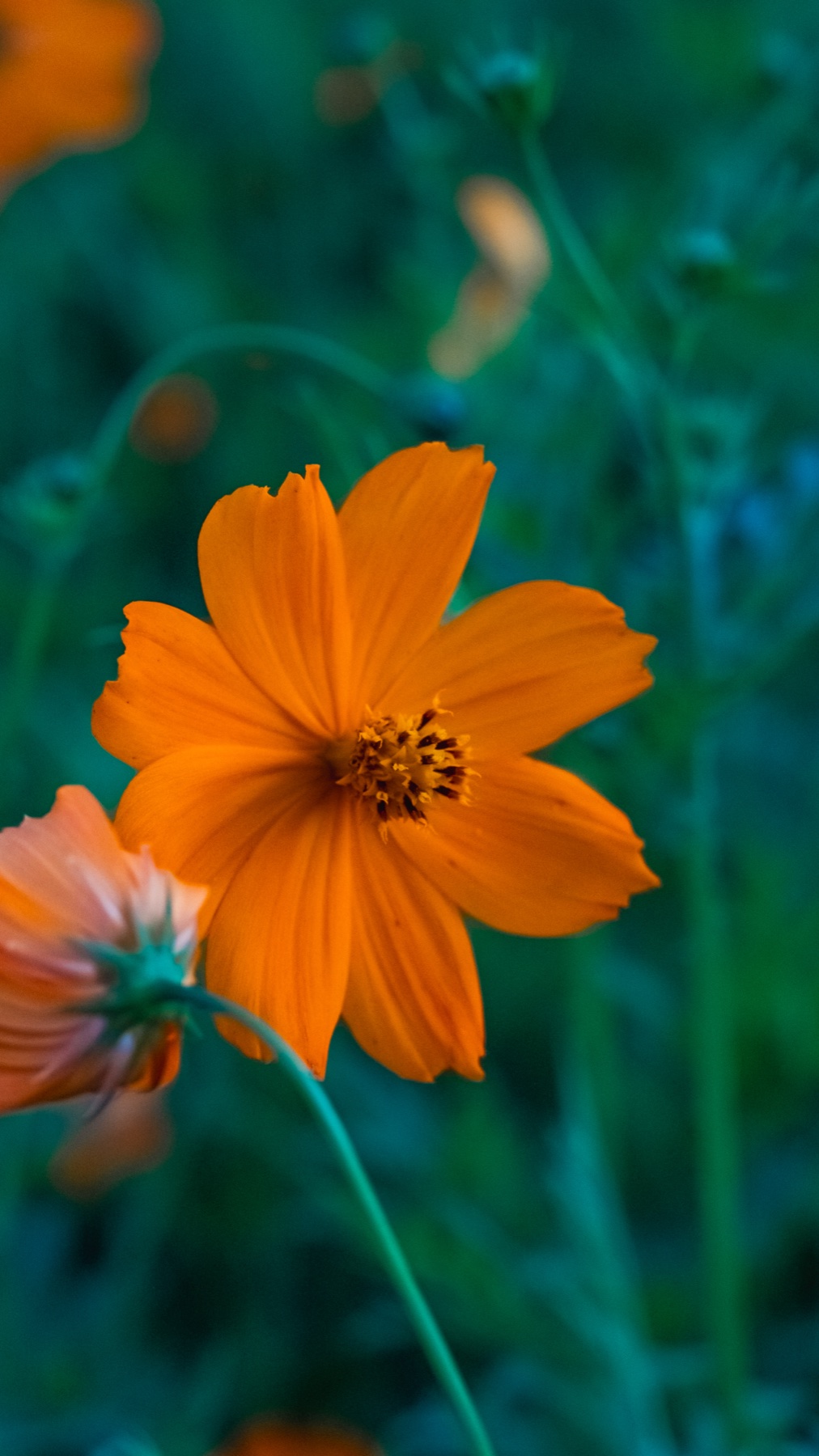
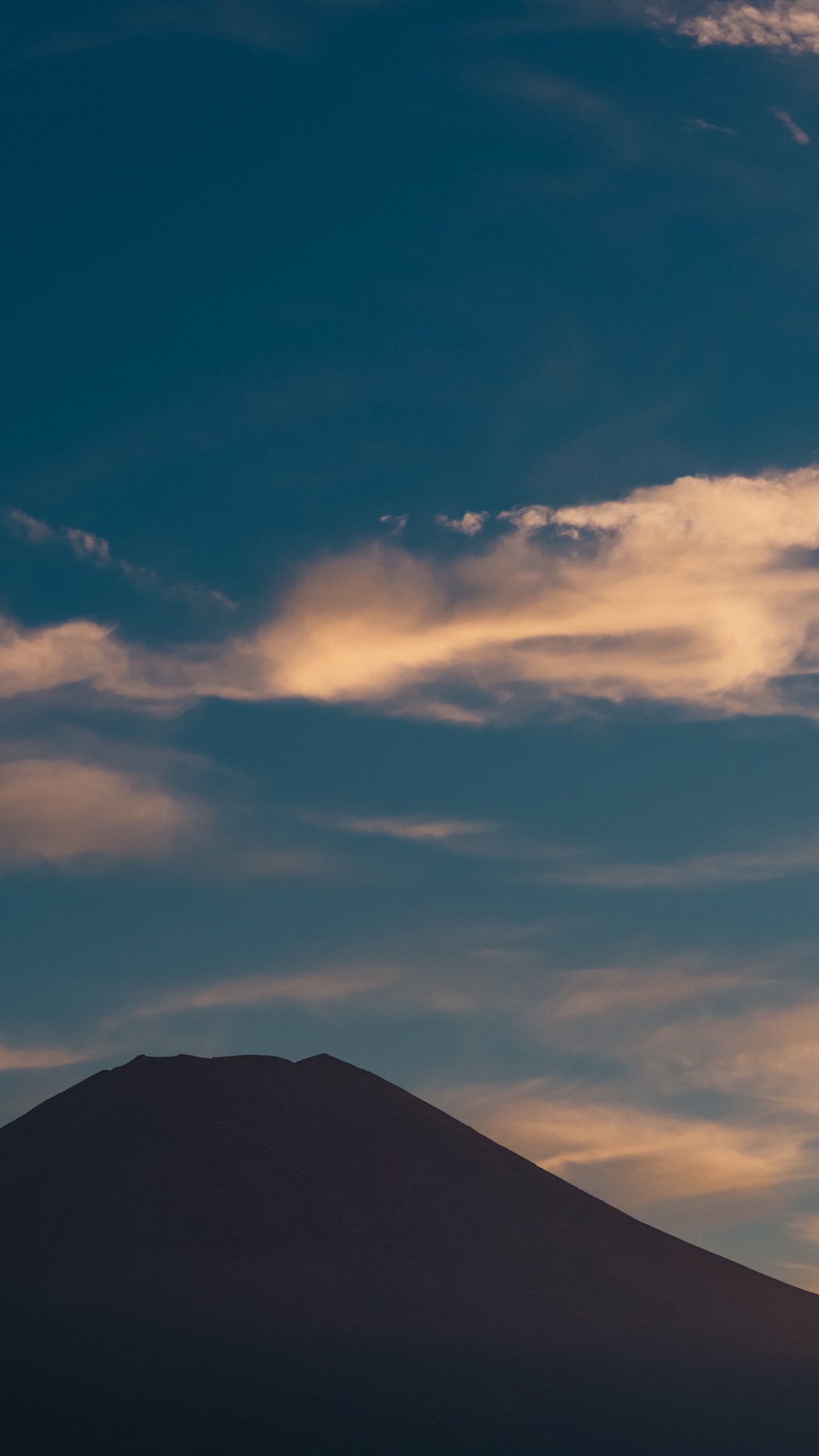
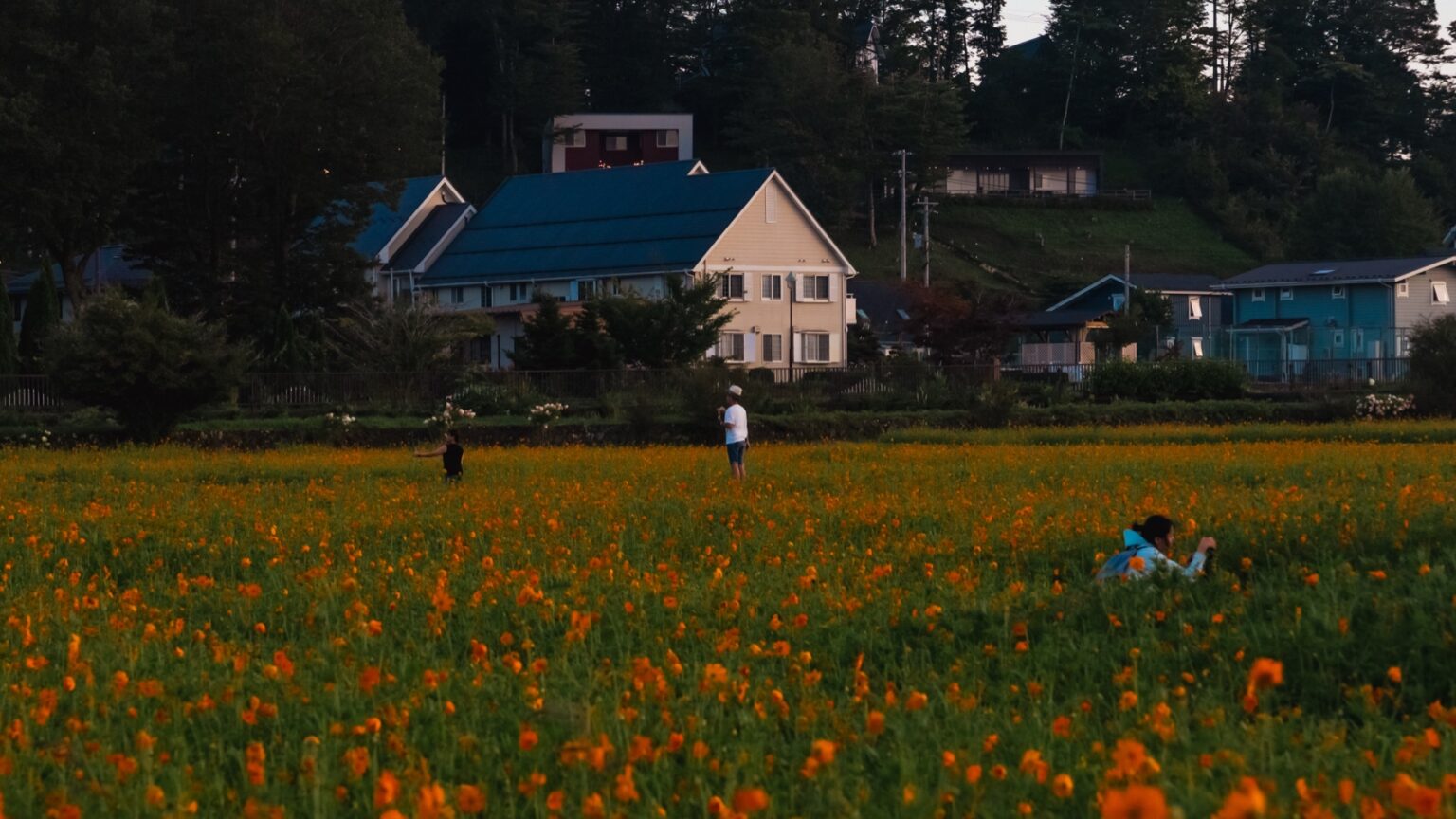
Kibana cosmos (Cosmos sulphūreus) is not the pink cosmos most people picture. It is shorter, tougher, and a hot orange-yellow, and here it goes in by the million. On the evening of August 25 the field read as solid orange from the road, with the bare late-summer cone of Fuji sitting above the treeline behind it.
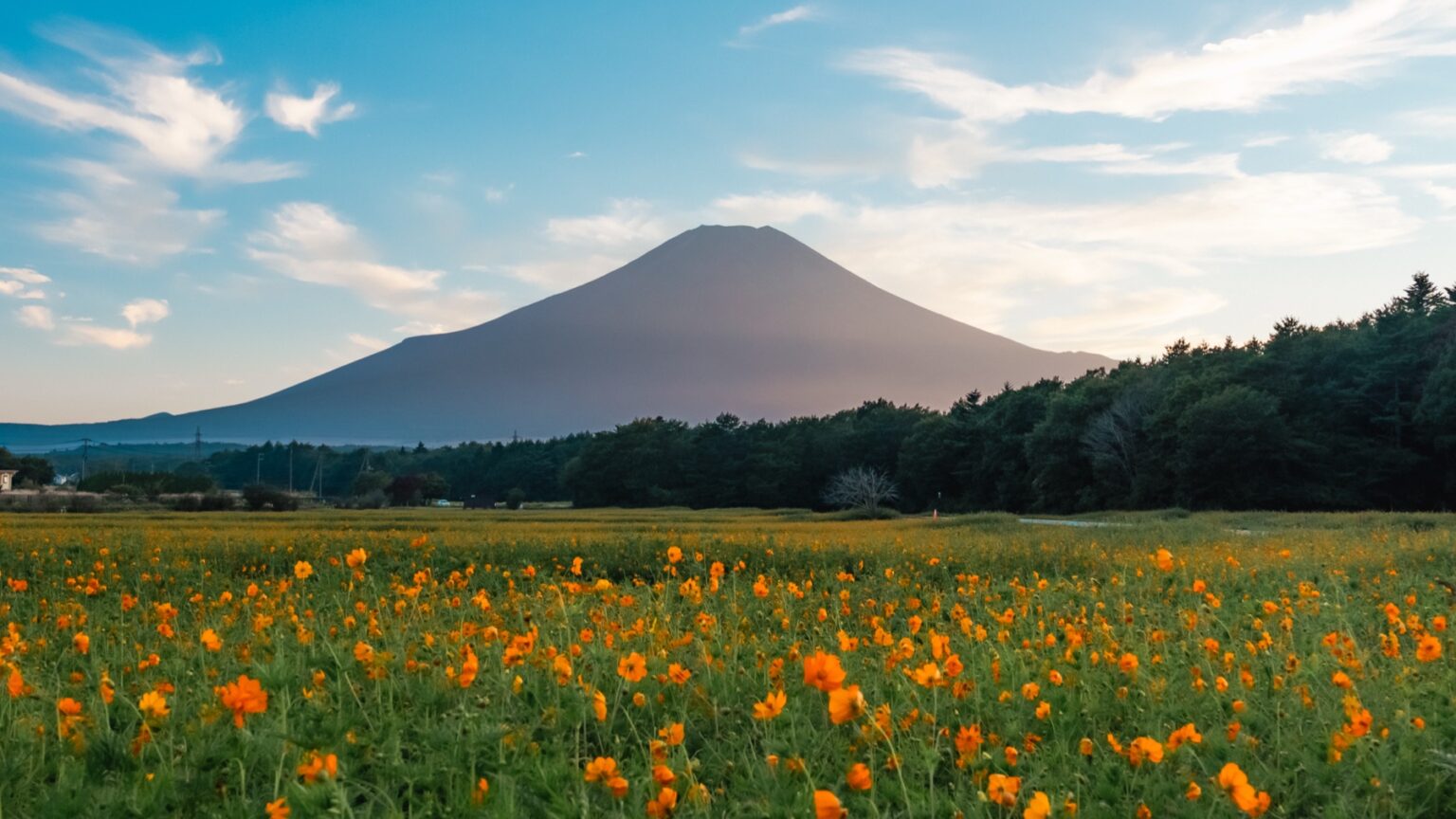
What makes this planting worth building an evening around is the height. The cosmos stand at roughly waist level, which means you can drop the camera to flower height and still keep the whole mountain in frame — something the ankle-high tulip beds in April will not do for you. Kneel at the edge of a band, focus on a single head, and Fuji does the rest.
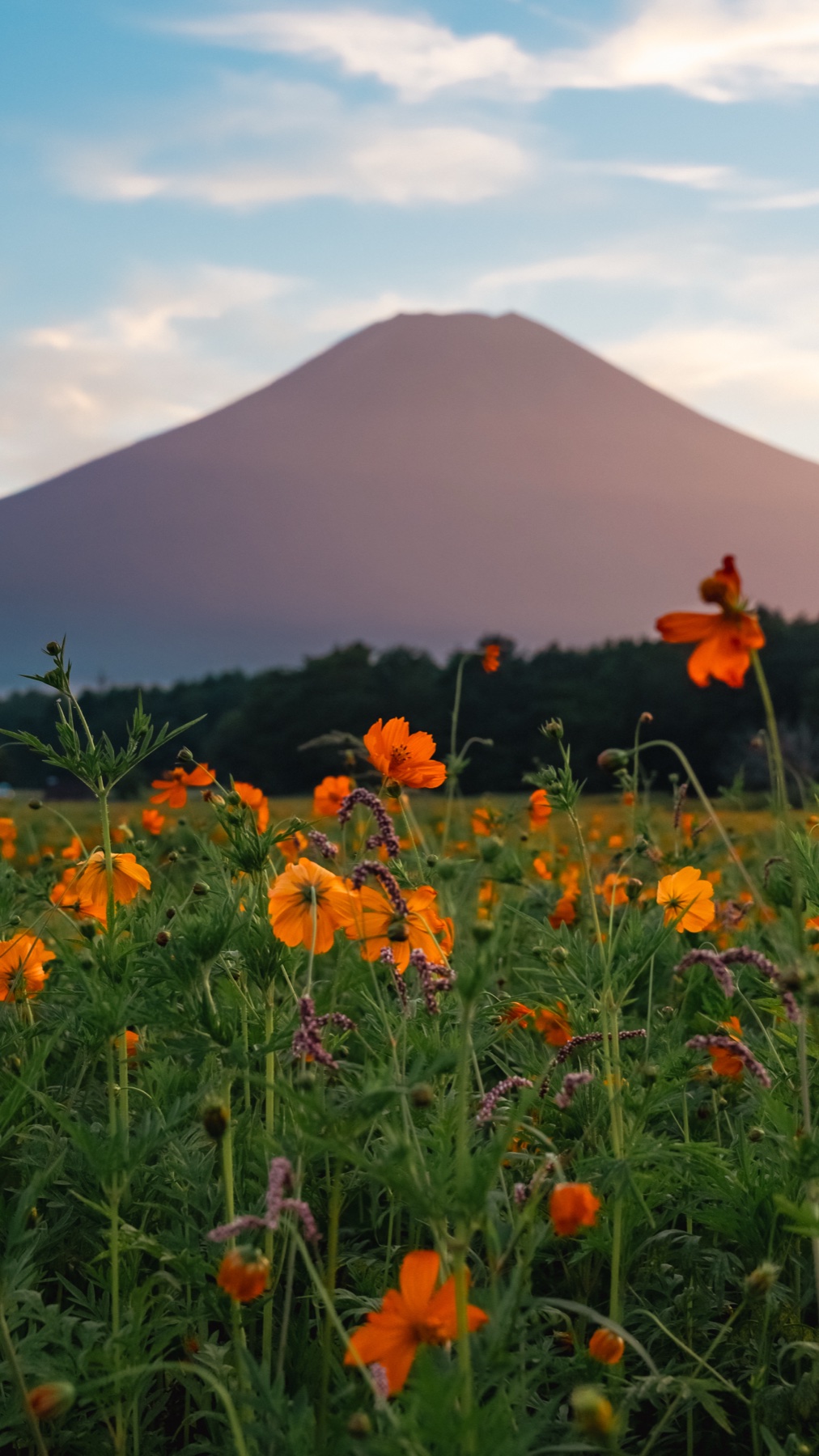
The tulips are the famous planting. The cosmos are the big one — twenty-nine of them for every tulip in the ground.
The evening hour, and what closes when
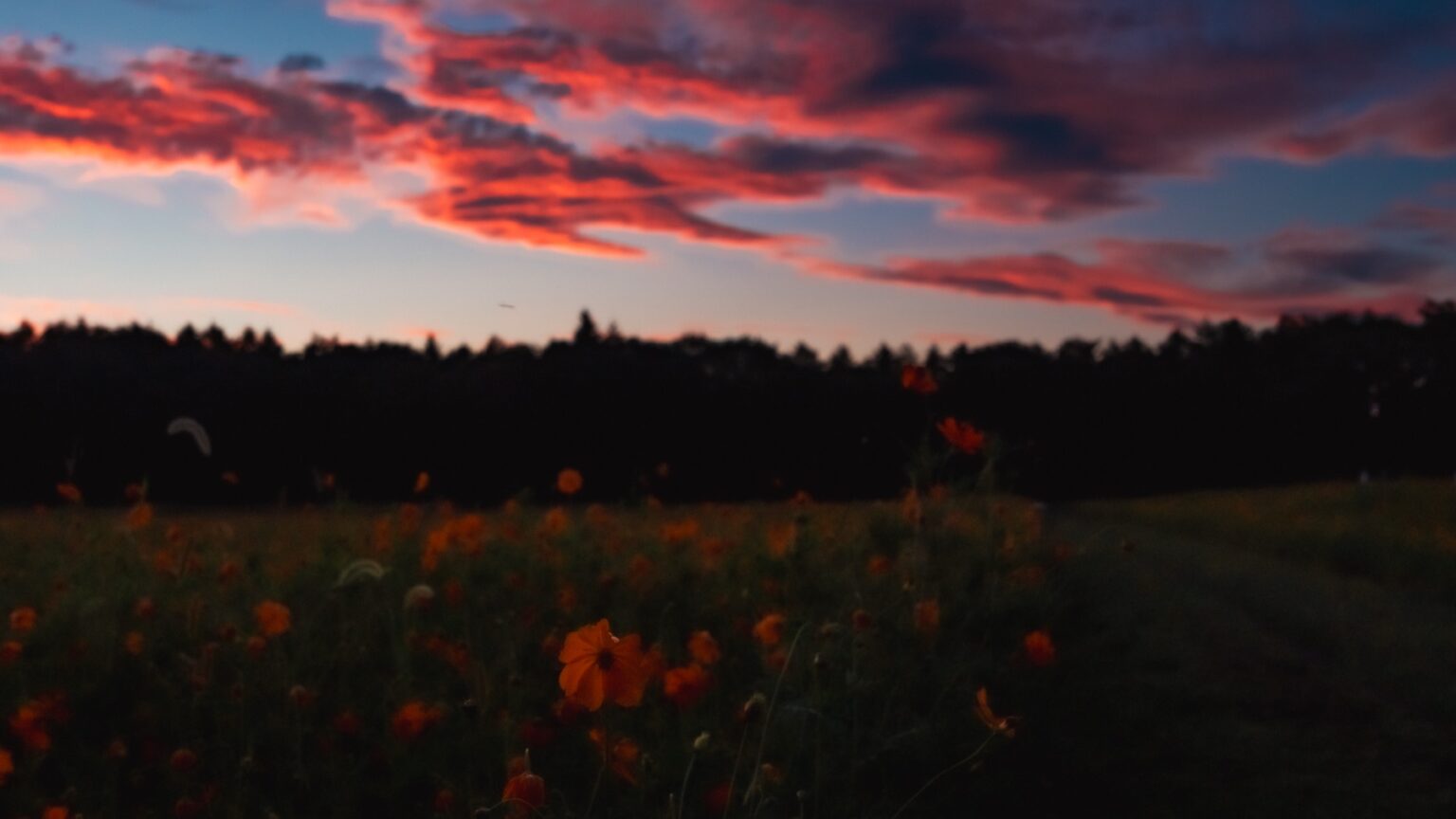
Here is the thing I learned by staying: the 17:30 closing time applies to the paid zone and the car park, not to the open fields. On August 25 I was still standing in the free flower fields at 18:23, well after Seiryū-no-Sato had shut, watching the sky go red over the cosmos. Nobody moved me on; there is no gate to close.
Do this properly, though. The official car park keeps the same hours as the park (to 17:30 in season), so an evening visit means sorting out where you leave the car before you commit to staying — and the park asks all visitors to use the paid lot rather than the village lanes. Take your rubbish with you, keep to the paths between the bands, and treat the fields as what they are: working plantings that a small team replants several times a year, left open on trust.
Spring: the weeping cherries and the tulips
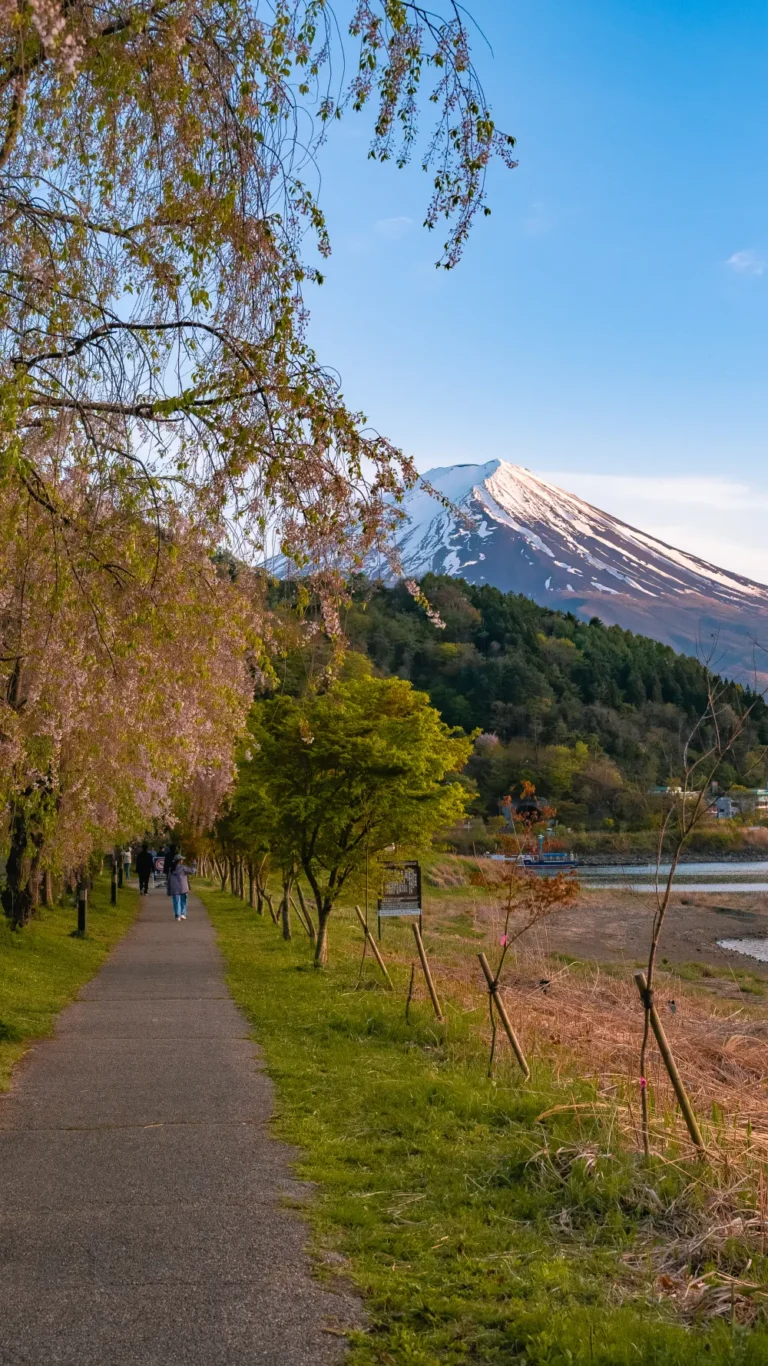
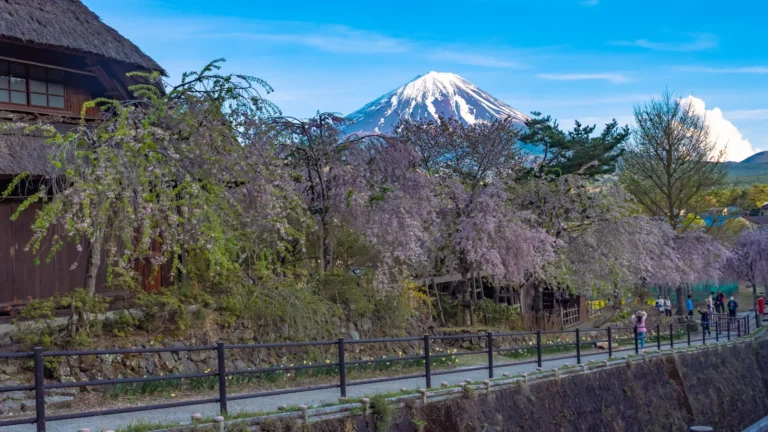
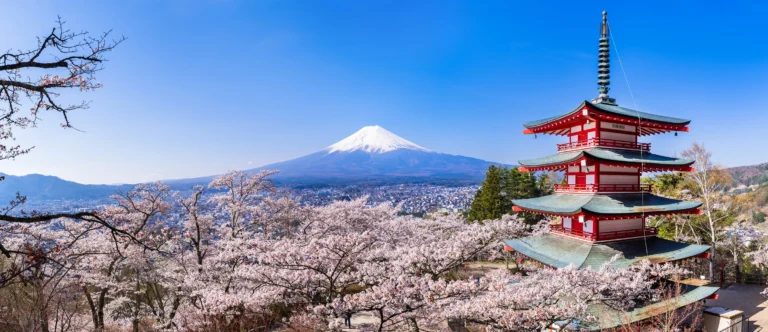
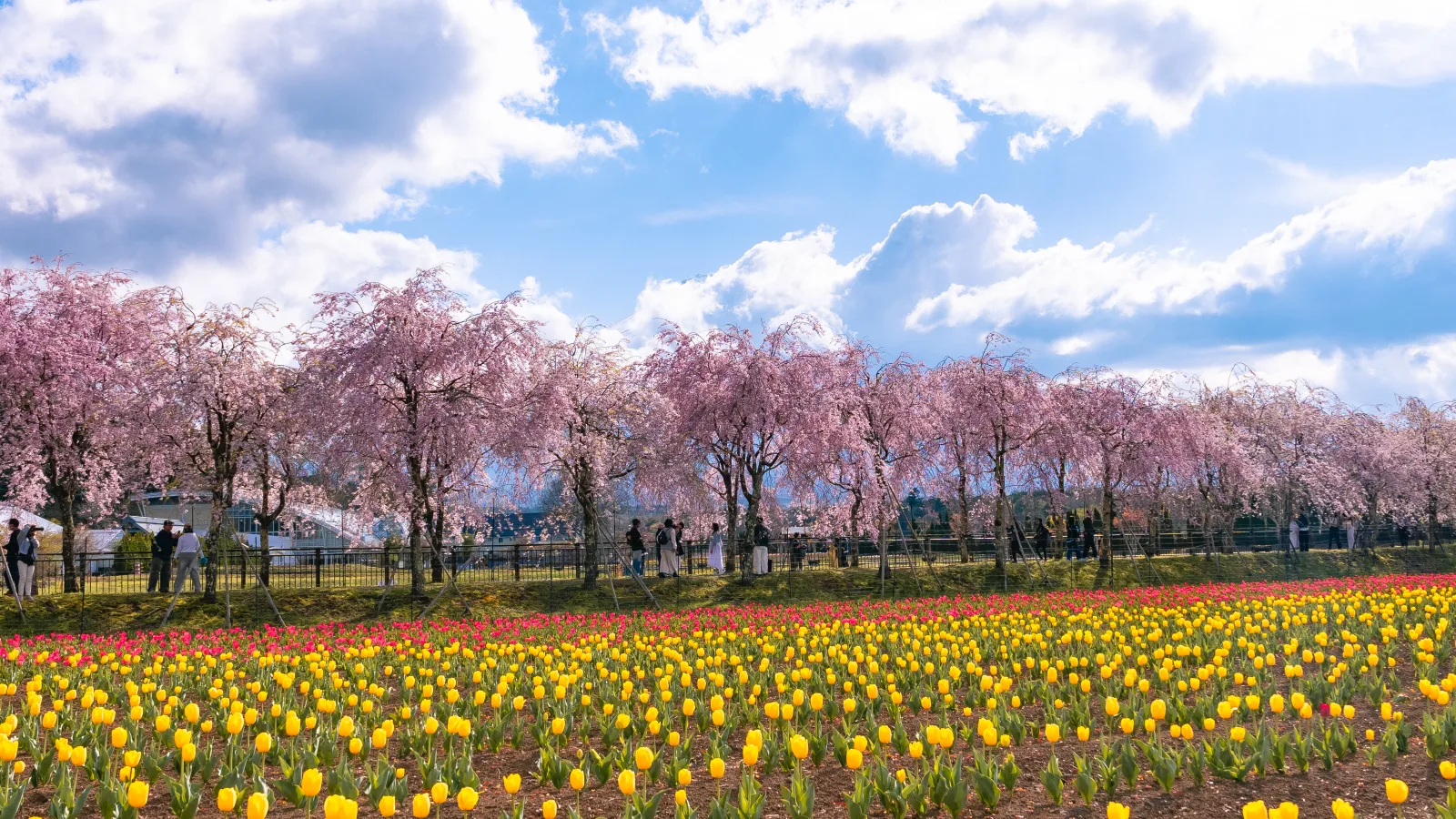
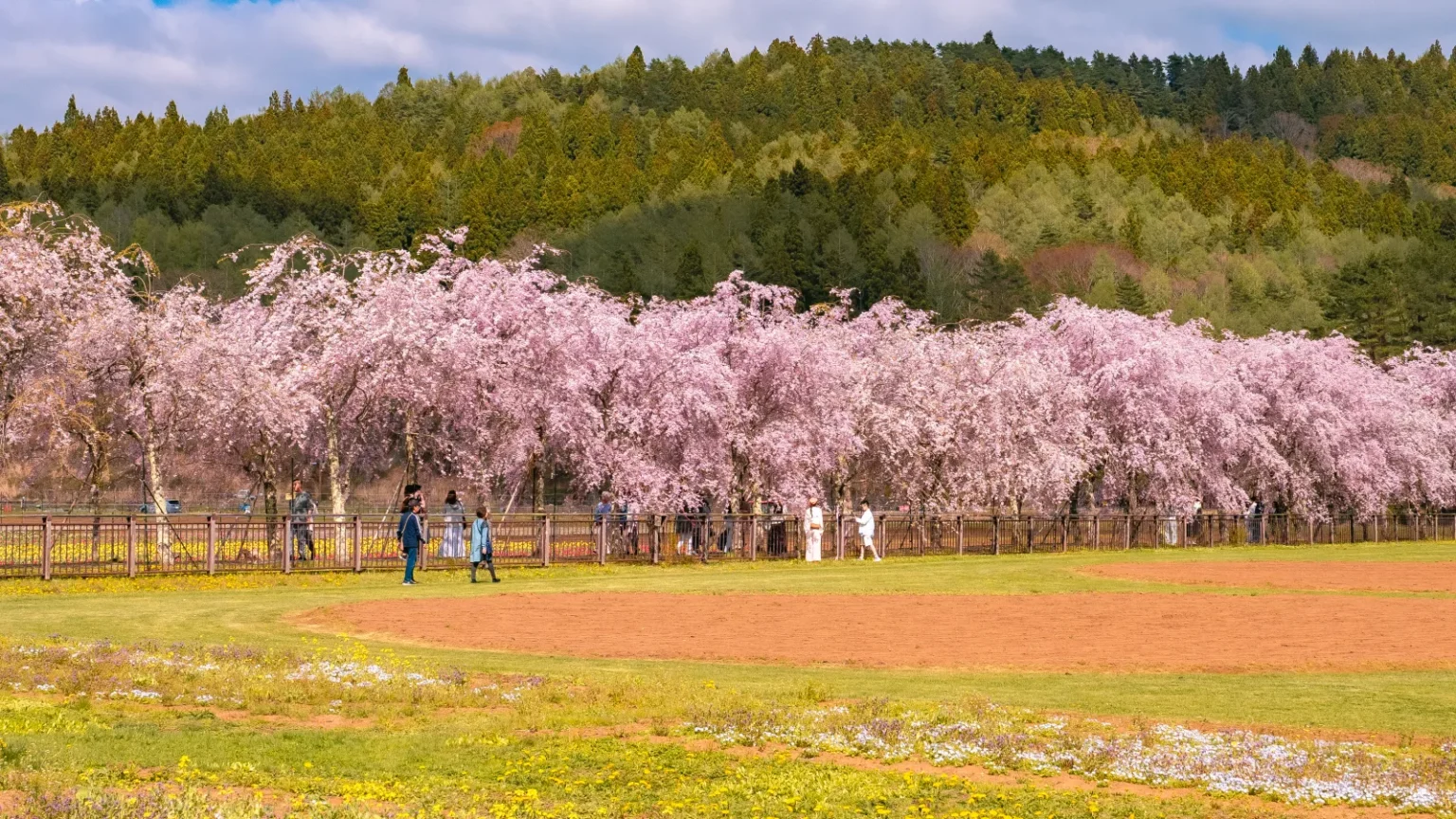
The other reason to come here is an overlap you cannot get in the lowlands. At 1,000 m the season slides two to three weeks behind Tokyo, so the weeping cherries are still going when the first tulips open. When I visited on April 20, 2026 the shidare-zakura were at their best and the tulip field was about half-open, with the yellows leading and the reds a couple of days behind.
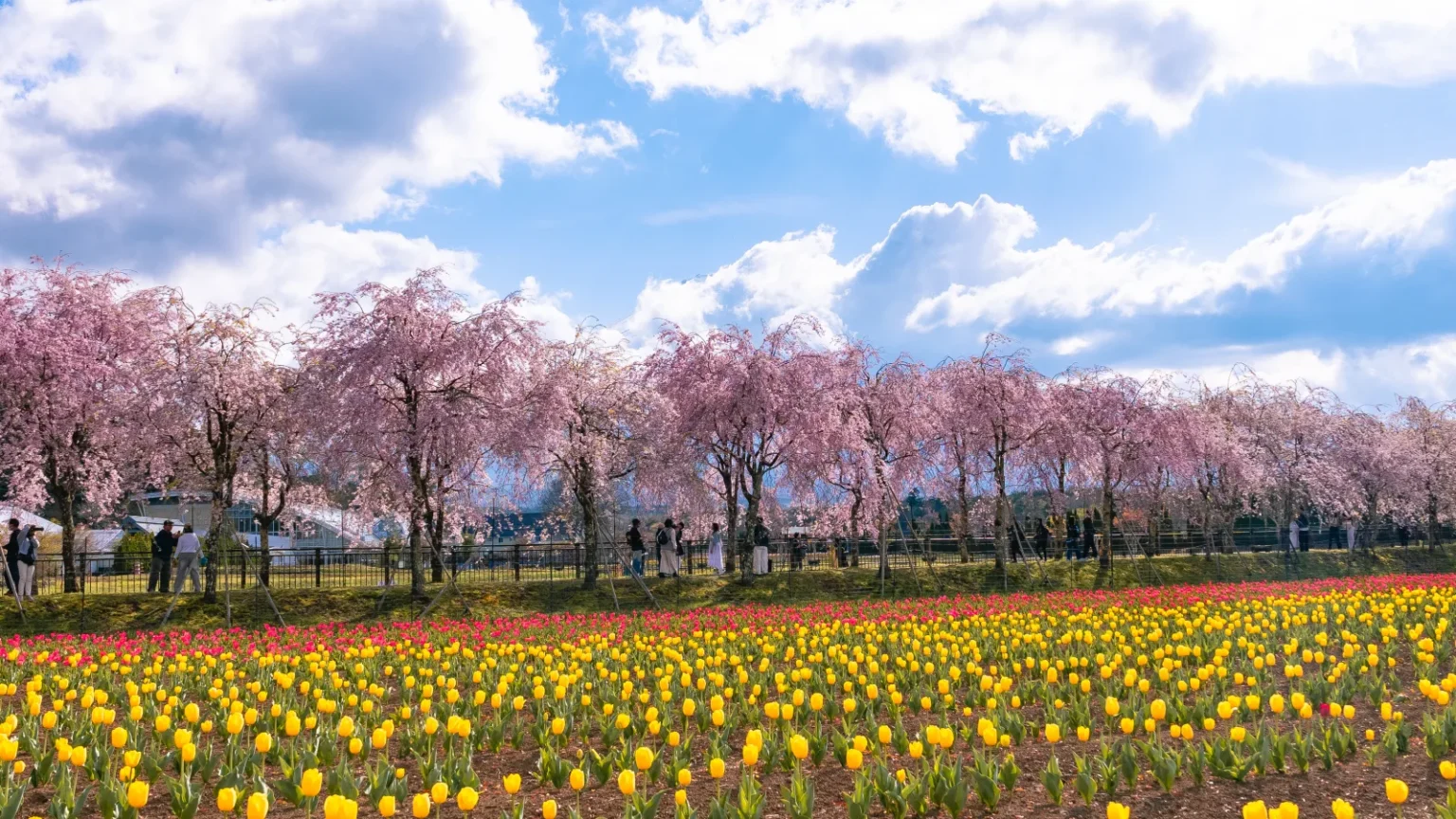
The cherries form a long row — perhaps forty trees — along the north-east fence of the main tulip field. They are not planted as a tunnel, but the branches droop enough to make one when you walk the inside path rather than the field-side path. Backlit late-afternoon frames suit them: the flowers hang rather than stand, so they take light from behind.
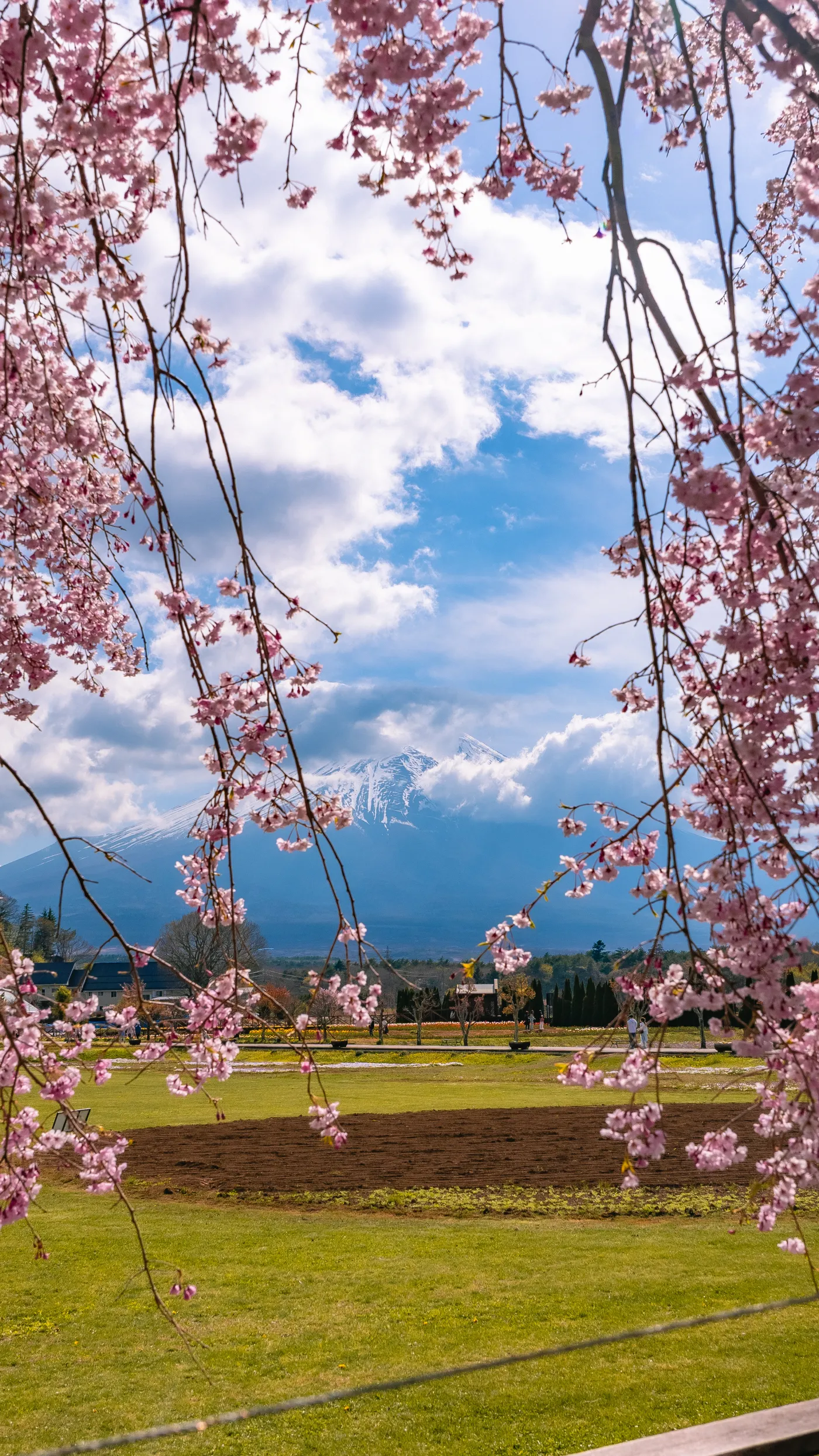
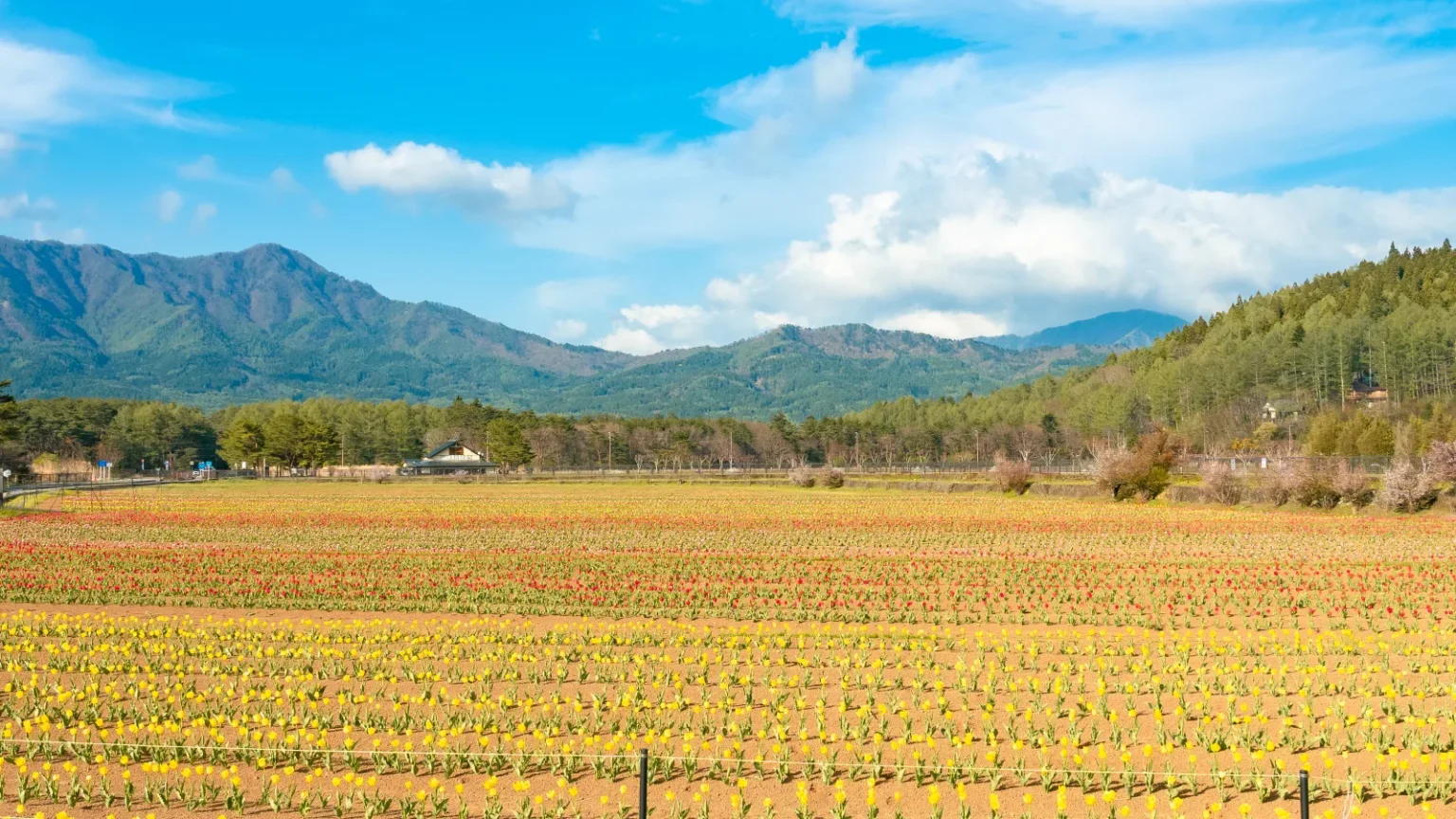
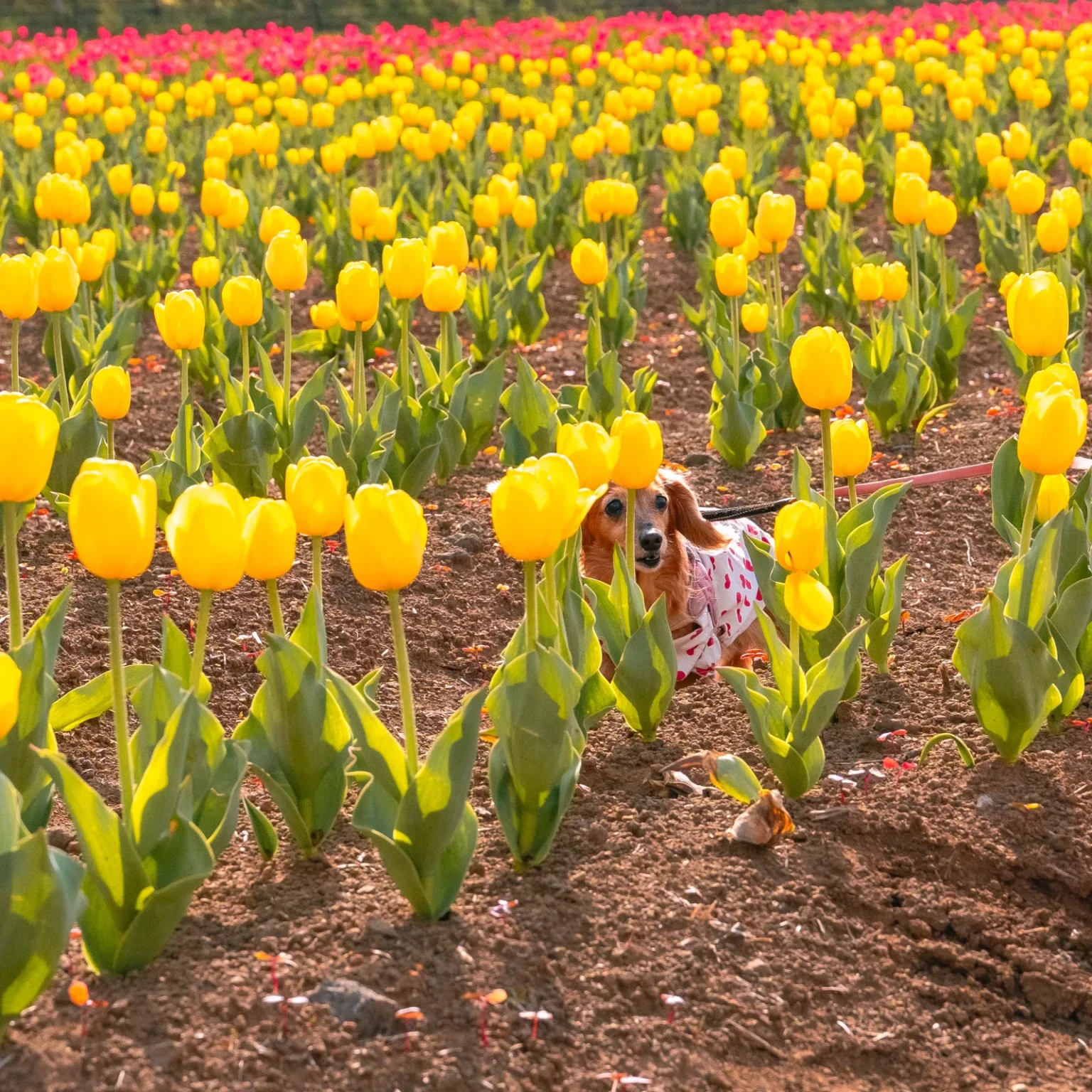
From most angles inside the field the treeline cuts the mountain in half; walk to the north edge of the tulip field for the full Fuji-with-blossom frame. The tulip field itself runs about 200 metres in long colour bands, and the narrow service rows between bands are walkable during bloom — that is where the low-angle shots come from. Staff patrol the lines, so stay on the earth and off the flowers.
Plan the Trip
Is the ¥600 paid zone worth it?
It depends entirely on who is with you, and the honest answer for most photographers is no.
With children — yes
The water playground is the draw between late spring and summer, and the Floral Dome is the rainy-day plan. One caveat: the park has posted that some of the water play equipment is out of service, so check the notices page before you buy on that basis alone.
For photographers — skip
Unless it is raining. Everything that makes this place worth the drive is outside the fence and free.
December to mid-March — go in
Adult entry is free in that window, the outdoor fields are dormant, and the dome is the only thing in bloom. Note the Tuesday closures in this period.
What one ticket covers
The Myojin-no-Taki waterfall, the water playground and the Floral Dome are all included in the single entry — there is no second charge inside.
Fees in full
| Seiryū-no-Sato entry | Apr 16 – Oct 15 | Oct 16 – Nov 30 | Dec 1 – Mar 15 | Mar 16 – Apr 15 |
|---|---|---|---|---|
| Adult | ¥600 | ¥360 | Free | ¥360 |
| Primary / junior high | ¥240 | ¥150 | Free | ¥150 |
| Adult, with disability | ¥360 | ¥220 | Free | ¥220 |
| Groups of 20+, adult | ¥480 | ¥300 | Free | ¥300 |
| Opening hours | 8:30–17:30 | 9:00–16:30 | 9:00–16:30 | 9:00–16:30 |
Under school age is free. Last entry is 30 minutes before closing. The outdoor flower fields are not part of this table — they are free all year.
Parking and getting there
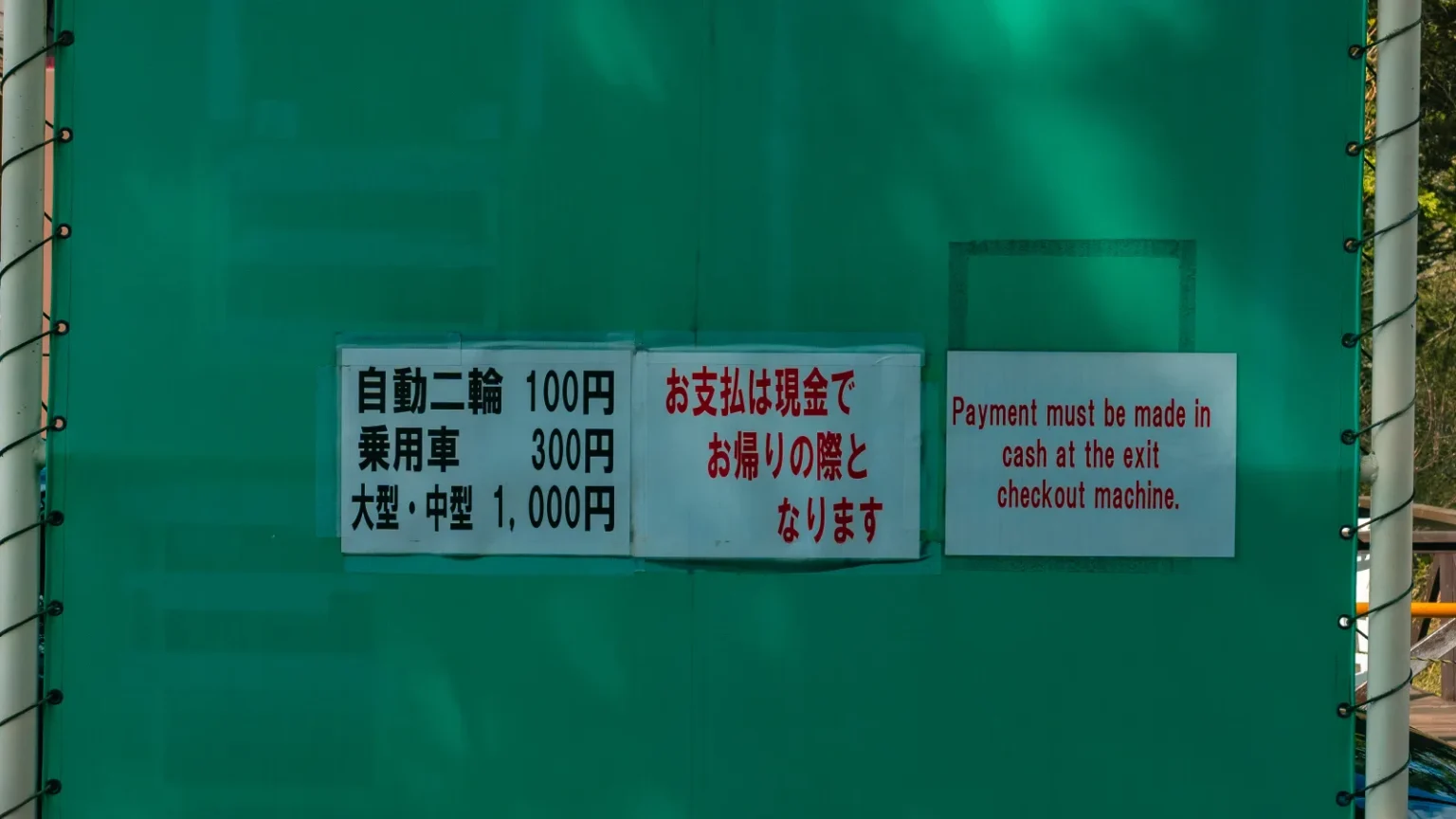
Parking is ¥300 for a car and ¥1,000 for a bus on the official rate, and the park asks all visitors to use the paid lot rather than parking in the village. The lot keeps the same hours as the park. Bring coins: payment is taken at the machine on the way out, and my April photograph of the fee board is the version to trust over any aggregator site.
| From | How | Notes |
|---|---|---|
| Kawaguchiko Station | About 25 minutes by car | Longer on peak-season weekends |
| Expressway | About 5 minutes from Yamanakako IC on the Higashi-Fujigoko Road | Roughly 2 hours from central Tokyo in clear traffic; allow considerably more on a peak weekend |
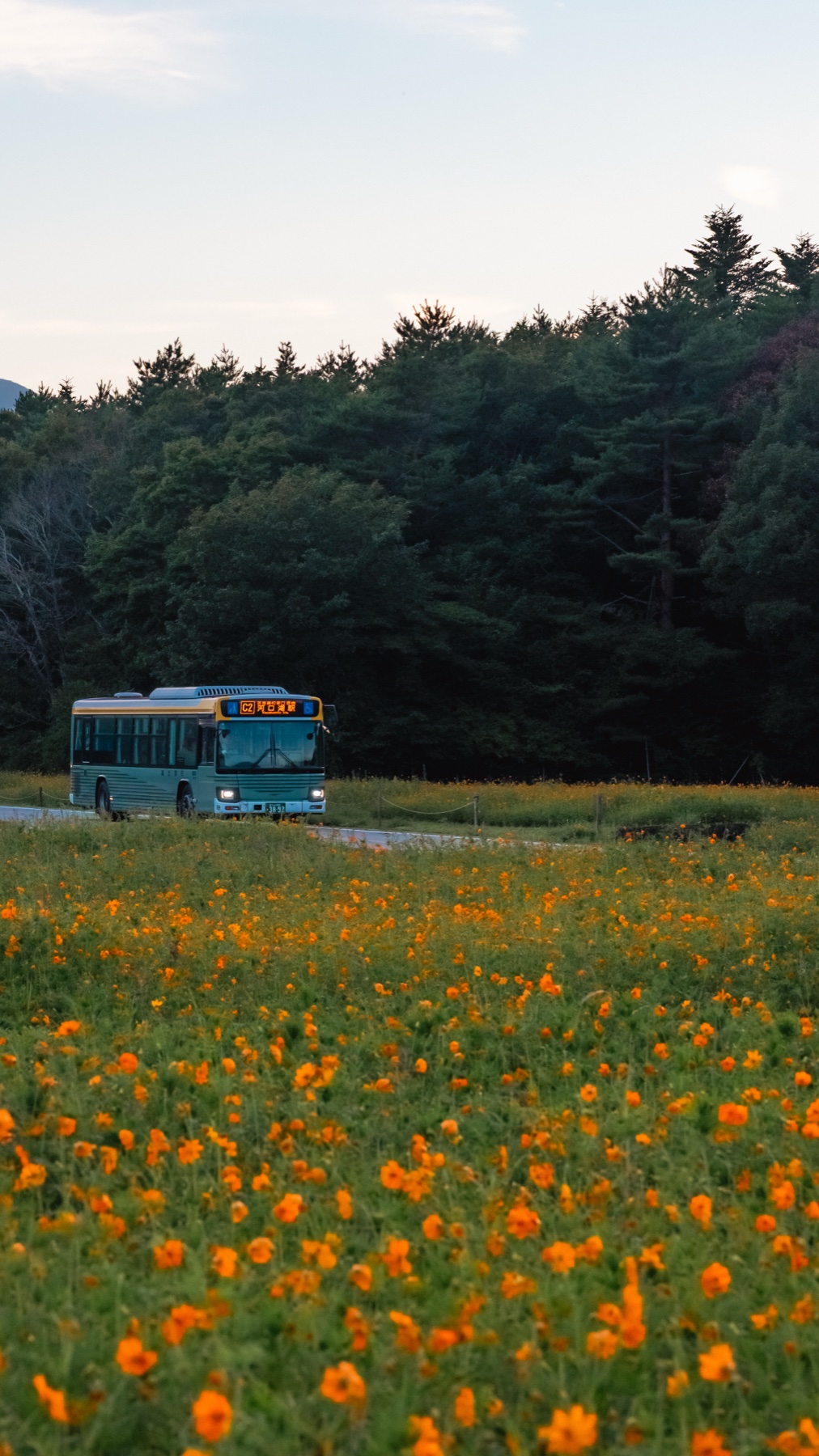
| By bus | The Fujikko-gō loop bus from Fujisan Station or Kawaguchiko Station serves the Yamanakako side | Services are limited and change seasonally — check the current Fujikyu timetable, and note that the last bus generally leaves well before the sunset light |
| On foot / by bike | Rental cycles are available inside the park | The fields are flat and the loop is easy |
If you want the evening light, drive or take a taxi. The bus timetable and the golden hour do not overlap in your favour here, and the field is not somewhere you want to be stranded after dark.
Practical notes
Dogs come free
Leashed dogs are welcome in the outdoor fields and there is no charge for them. For the indoor Floral Dome the park asks that they be carried or brought in a carrier.
Bring a picnic
The park explicitly allows packed lunches — eat on the lawn or the benches, and if the weather turns there is a free rest house, Shimizukan, with a tatami room you can use. That is unusually generous for a Japanese flower park.
Shade, sun and layers
There is essentially no shade in the fields. At 1,000 m the air runs cooler than Tokyo — the park itself suggests bringing an extra layer — but the sun is stronger, so a hat and sunscreen matter more than the temperature implies.
Wheelchairs
The park is usable by wheelchair and lends them at the car park. Be aware of small steps and level changes on the outdoor paths.
Food on site
There are restaurants and shops in the park — I wrote up Hanaan, the park canteen, separately — plus seasonal produce stands, including sweetcorn in summer.
Winter
The fields are dormant from December, adult entry to the paid zone is free, and the park runs an illumination in the colder months — the dates change every year, so check the official event page rather than trusting a fixed window.
Pair it with
The park is a 60–90 minute stop for most people, so it works best as one piece of a Yamanakako afternoon. Diamond Fuji at Lake Yamanaka is the winter version of the same instinct — a timed light event with the mountain as the subject — and hōtō at Shoya is the meal I default to afterwards. If the mountain is hiding, my Mt Fuji weather and visibility page explains what the odds actually are on any given morning, and the wider Mt Fuji guide has the rest of the region.
Staying near the fields
Yamanakako itself is quiet and puts you minutes from the park for an early morning or a late evening. Kawaguchiko, 25 minutes west, has far more choice and the Fuji-view onsen hotels. Booking carries the mainstream inventory for both; Rakuten Travel is the better hunting ground for small ryokan and pensions around the lake.
Hana no Miyako Koen: FAQ
Do I have to pay to see the flowers?
No. The outdoor flower fields — about 30 hectares, and the reason most people come — are free to walk into all year. The only unavoidable cost is parking at ¥300 per car. The ¥600 charge applies solely to the enclosed Seiryū-no-Sato zone with the waterfall, the water playground and the Floral Dome.
What is blooming right now?
Broadly: tulips late April to early May; poppies and cornflowers late June into mid-July; zinnias from mid-July to early October; sunflowers mid-to-late August in waves; yellow cosmos late August to mid-October; pink and white cosmos mid-September to mid-October; buckwheat in late September. The park calls these windows a guide only and posts an updated bloom notice — check it before you travel, especially in the last week of August when the sunflower waves change over.
When is the best time for Mt Fuji with flowers?
Late August through September gives you the best combination in my experience: the cosmos stand at waist height so the mountain stays in frame from low angles, and the air is often clearer than midsummer. April gives you cherries and tulips but the beds are low, and the mountain is easier to lose behind the treeline.
Can I stay for sunset?
The paid zone and the car park close at 17:30 in the April–October season, but the open flower fields have no gate — on August 25, 2026 I was still in them past 18:00 for the sunset. Plan your parking accordingly rather than assuming you can leave a car in the official lot after closing, and use the paid lot rather than village lanes.
Are dogs allowed?
Yes in the outdoor fields, on a lead. For the indoor Floral Dome the park asks that dogs be carried or brought in a bag or carrier. Confirm at the ticket window, as the rule has changed before.
Can I bring a picnic?
Yes — the park says so directly. Eat on the lawn or at the benches in good weather; if it is wet or the sun is fierce, the free Shimizukan rest house has a tatami room open to visitors.
How long should I allow?
Sixty to ninety minutes covers the free fields at an unhurried pace. Add thirty to forty-five minutes if you are taking children into the paid zone, and add an hour if you are staying for the evening light.
Can I get there without a car?
Yes, on the Fujikko-gō loop bus from Fujisan Station or Kawaguchiko Station, but the service is limited and seasonal. Check the current Fujikyu timetable before relying on it, and note that returning after sunset is not realistic by bus.
Join travelers discovering Japan's hidden side
Weekly dispatches from off-the-beaten-path Japan — spots and stories you won't find in guidebooks.
No spam. Unsubscribe anytime.
Welcome aboard!
You're in. See you in your inbox soon.