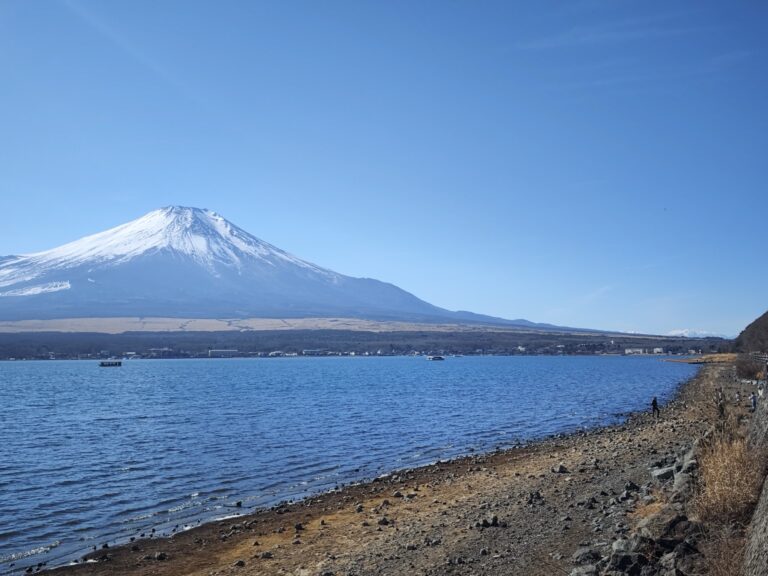
Lake Saiko is the quiet middle child of Japan’s Fuji Five Lakes. It’s the fourth one west of Tokyo, sitting between its busier neighbors — Kawaguchiko to the east (all hotels and sightseeing boats) and the smaller, wilder Shoji and Motosu to the west. Most travelers drive past it on the way somewhere else. Campers don’t. Photographers who care about a clean Fuji reflection don’t. Anyone who’s heard about the extinct fish that wasn’t actually extinct definitely doesn’t.
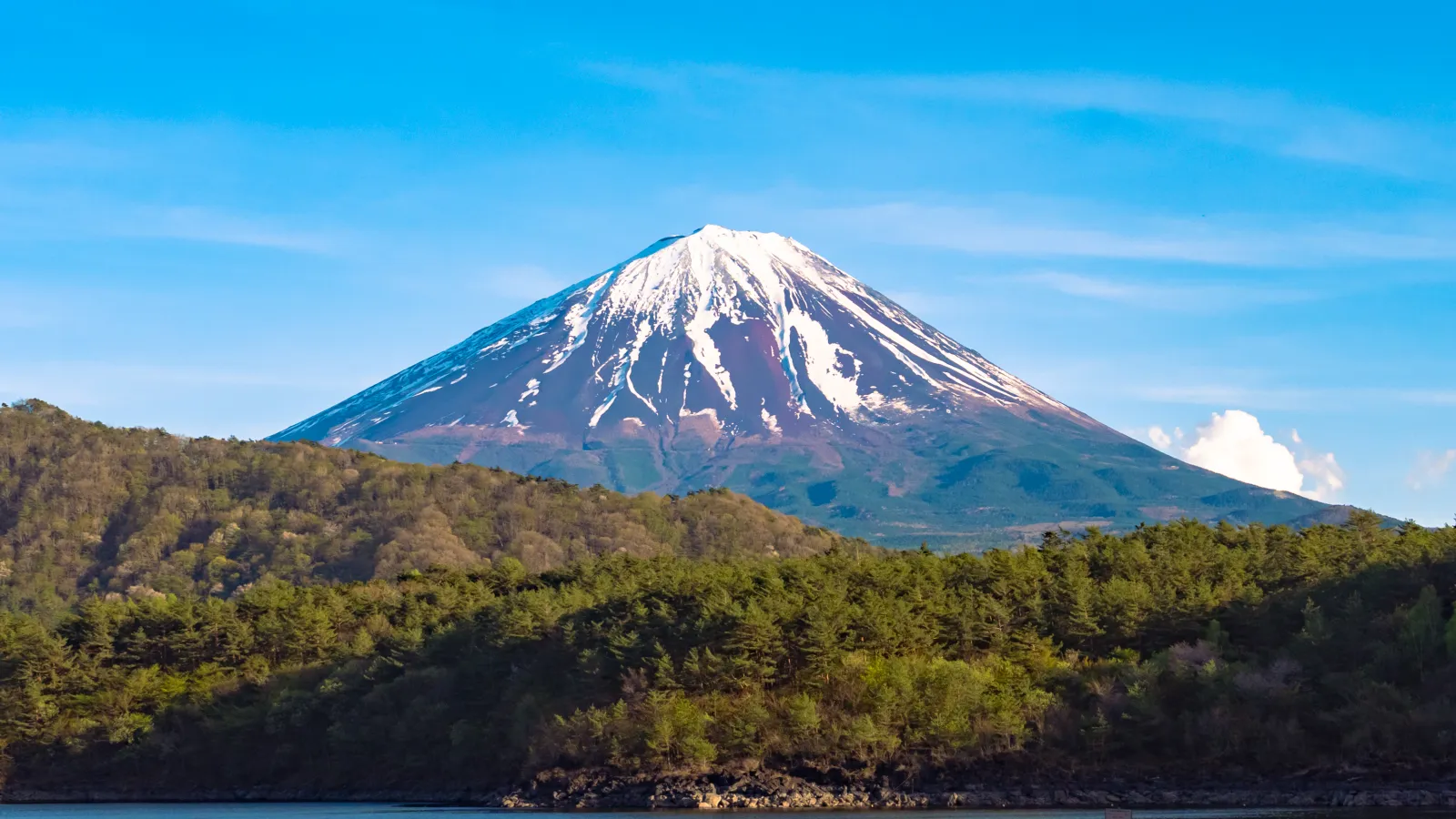
Lake Saiko and Lake Shoji, just west of here, used to be a single lake called Seno-umi (剗の海). In 864 AD, Mt. Fuji erupted from its northern flank. The lava flow hit the lake, split it in two, and solidified as the forest floor you now know as Aokigahara.
The three westernmost Fuji Five Lakes — Saiko, Shojiko, Motosuko — all sit at exactly 900 meters elevation. They’re connected underground. When one rises, the others rise with it. It’s the only physical proof left that they were once the same body of water.
The Basics, Quickly
(4th of 5)
(2nd of 5)
above sea level
distance
Water clarity ranks second in the Fuji Five (only Motosuko is clearer). The lake is part of the UNESCO World Heritage inscription for Mt. Fuji, registered in 2013 as one of its constituent cultural assets.
Why You Can’t See Much of It
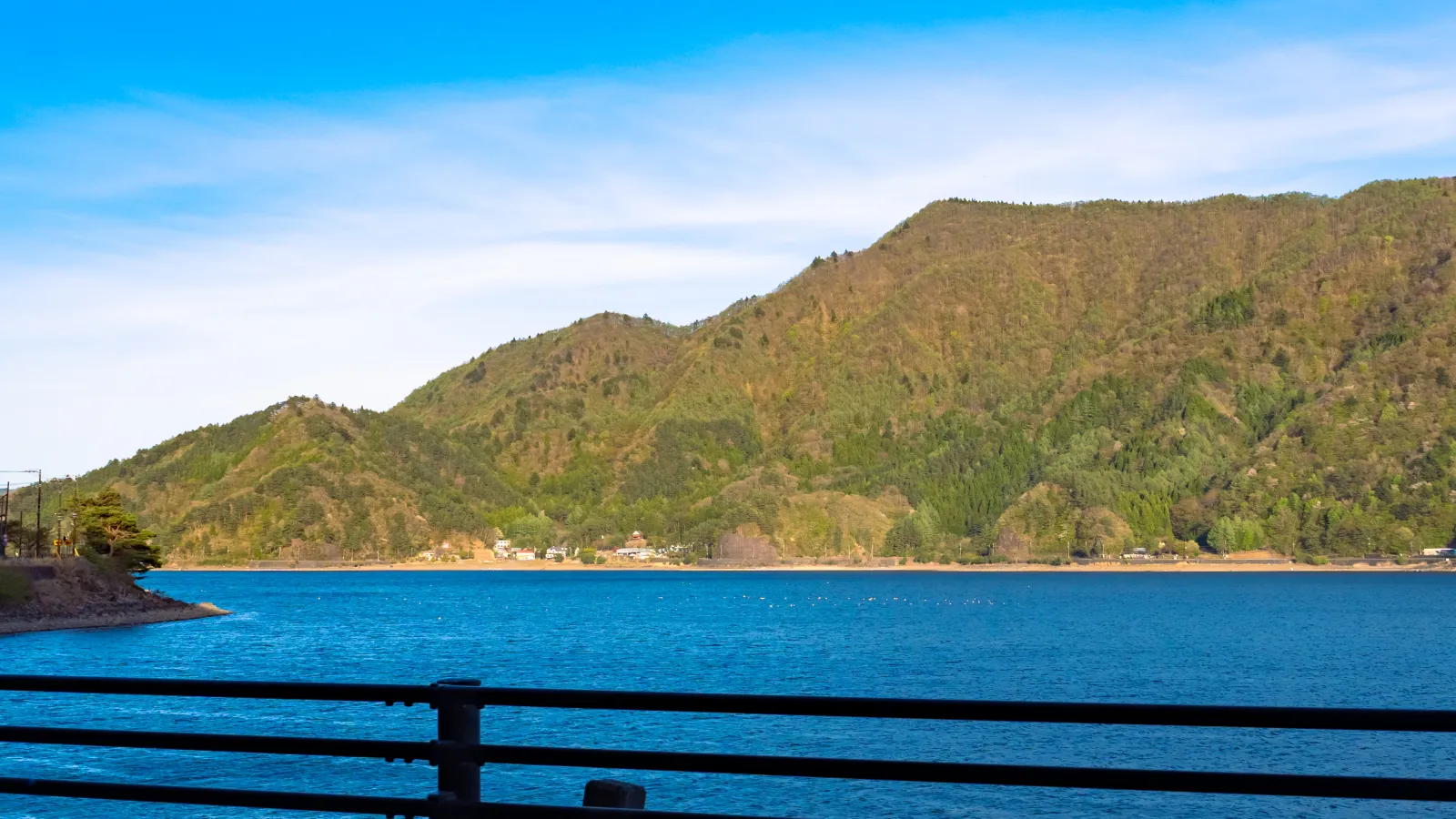
Most lakes in Japan are ringed by a public road. Saiko isn’t — not really. The northern shore has a narrow drive with a handful of viewpoints. The southern and eastern shores are forested and mostly inaccessible without walking in from a specific trailhead. You can drive the full loop in about 25 minutes, but you’ll look at water from maybe six discrete points.
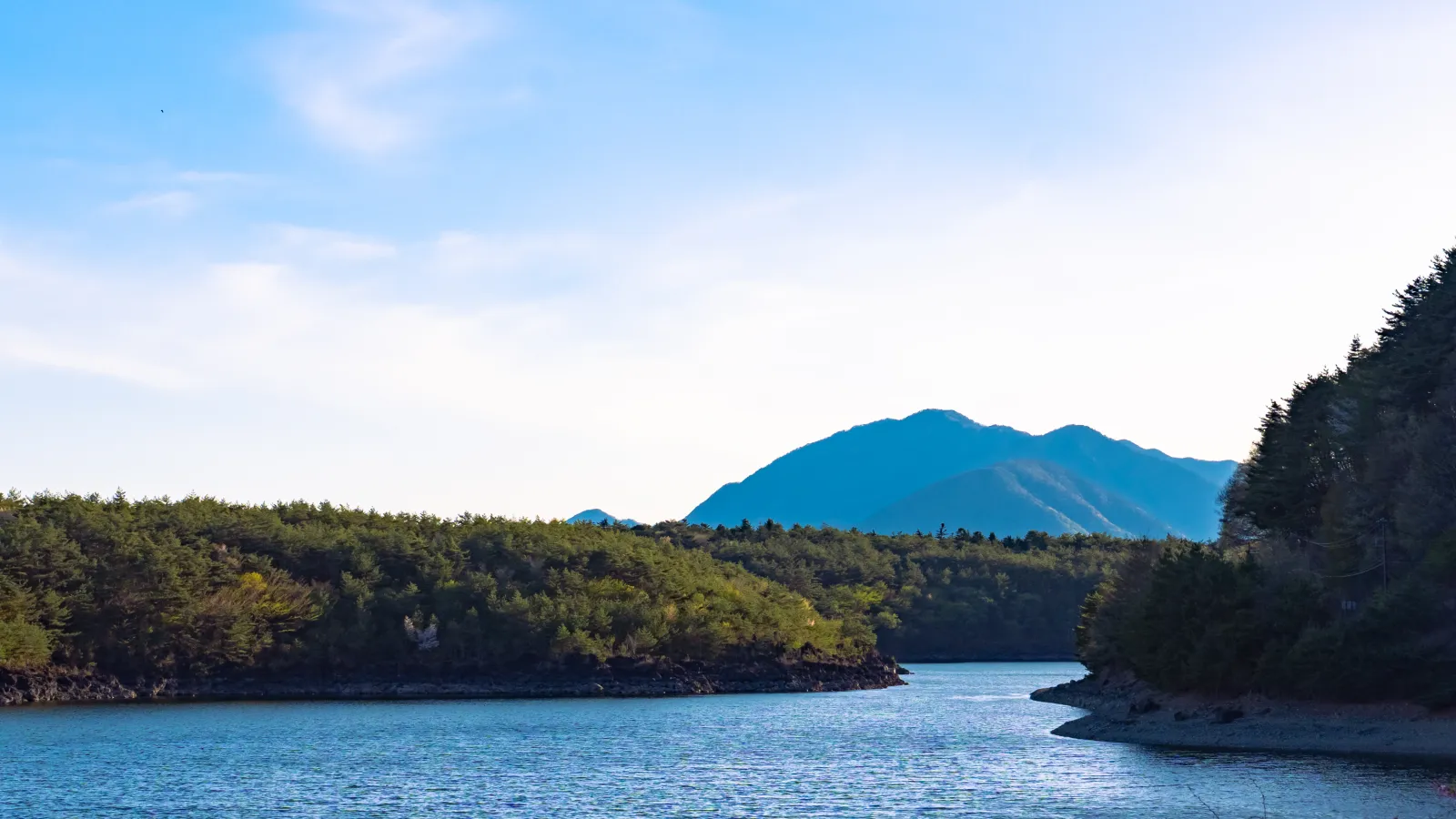
This turns out to be the point. Unlike Kawaguchiko, there are no tour boats, no lakeside resorts with illumination shows, no concrete walkways painted with heart-shaped photo markers. Saiko is camping country — a thin strip of active lakefront, a bigger strip of deliberately undeveloped forest, and the edge of the Aokigahara sea of trees beyond.
Where to See Mt. Fuji from Saiko
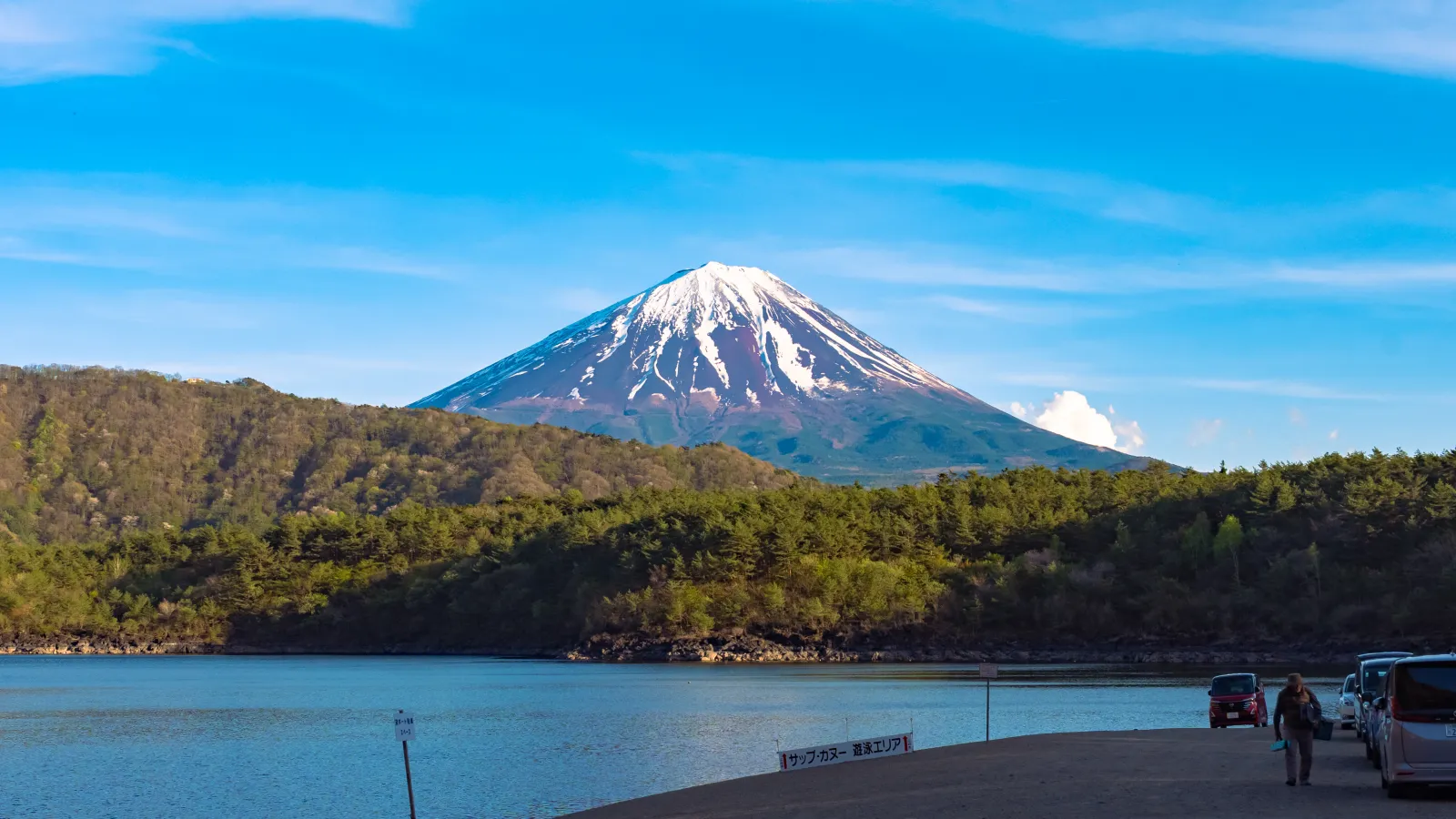
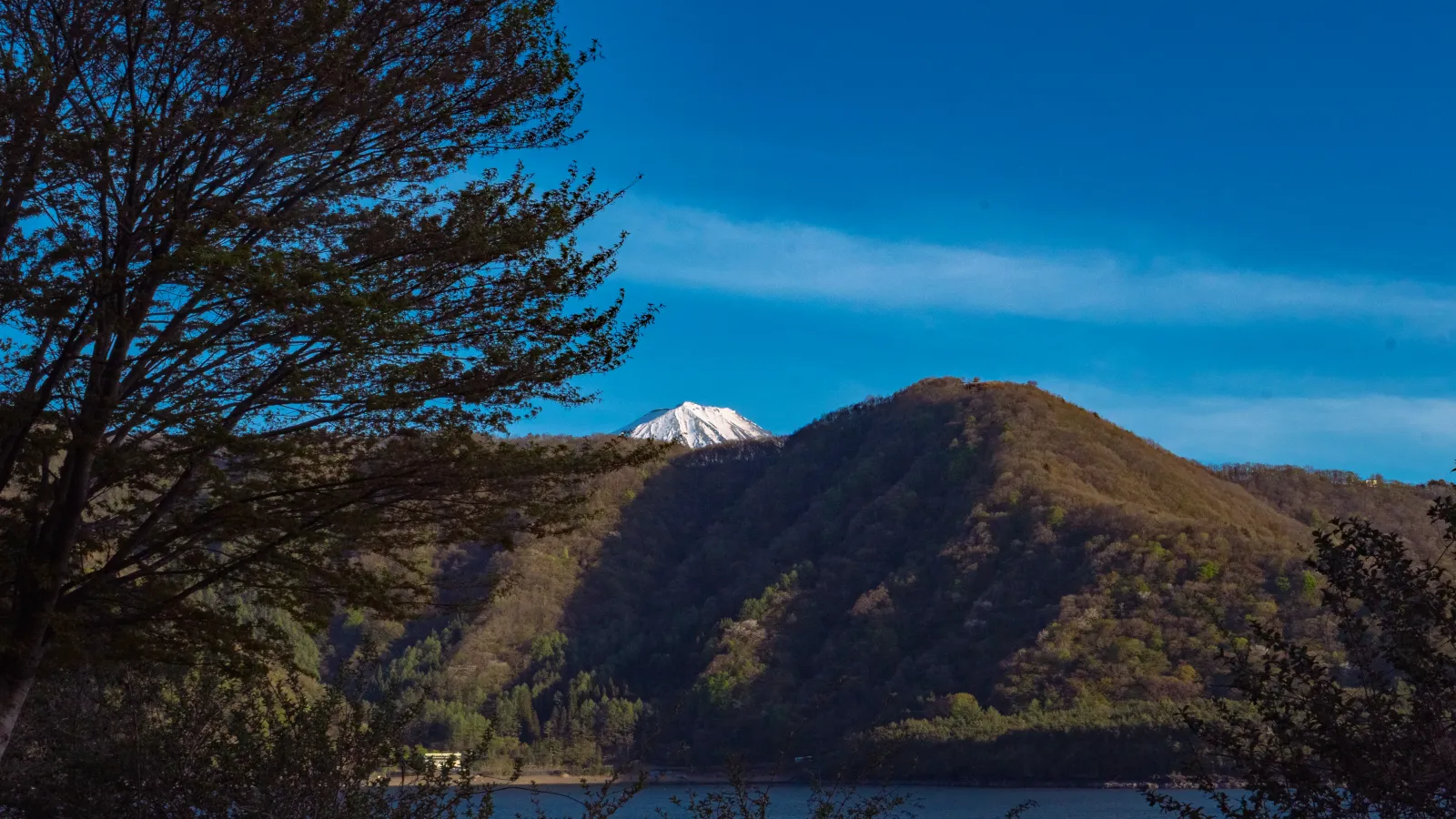
The Fuji view at Saiko is limited to basically two spots, and one of them is the undisputed winner.
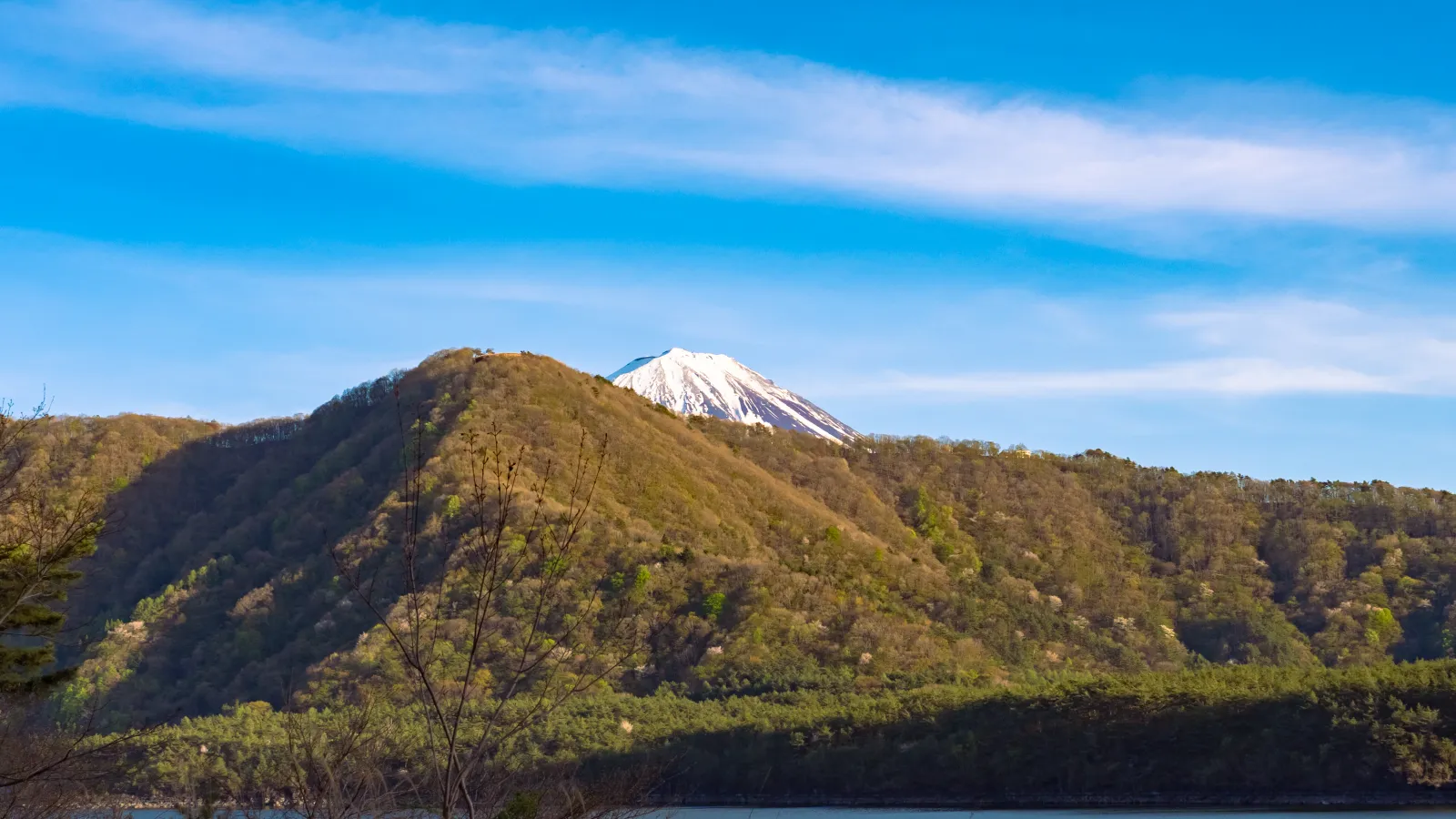
For the dedicated Fuji-view photographer
Early morning is clearer, before haze sets in. Winter and early spring give the sharpest visibility. The eastern two-thirds of the lake are blocked from Fuji by the Aokigahara ridge — you need to be on the west end, at or near Nenba-hama, to get the clean frame.
Camping: Why This Is the One You Want
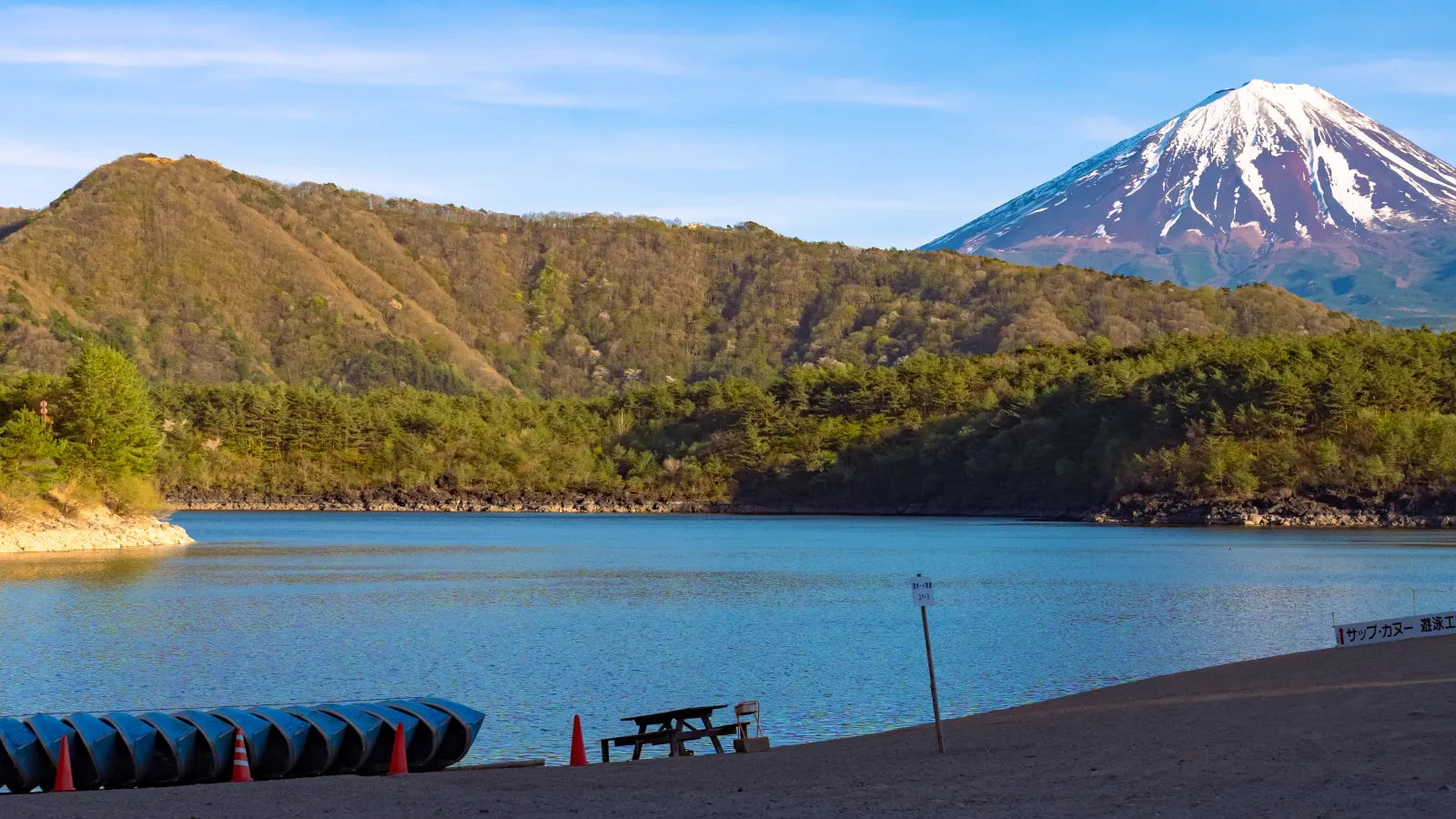
Saiko has been Japan’s campers’ open secret for years. Four lakeside campgrounds, all within 2–5 minutes of each other, each with its own character:
Saiko Kohan Campsite (西湖・湖畔キャンプ場)
Free-sites, first-come-first-served from 8 AM. Lakefront, minimal amenities, bungalows also available. The classic “cheap Saiko camping” option.
Saiko Jiyu Campsite (西湖自由キャンプ場)
The longest-running site at Saiko. Quiet crowd, mixed tent and campervan pitches. Direct lake access.
PICA Saiko (PICA富士西湖)
Powered sites, cabins, Mongolian-style pao tents, and proper bathhouses. Sunset canoe tours bookable from reception. The “glamping-friendly” option.
Hamayou Resort / Saiko Camp Village Noumu
Best SUP and kayak rentals on-site. Auto-camp pitches with private BBQ stands. Family-friendly but the lakefront vibe is genuine.
Reservations open 3–6 months ahead and most sites fill up for summer weekends (mid-July through August), all of Golden Week (late April to early May), and autumn foliage weekends. Weekday nights outside peak are almost always open. If you’re camping around October 22, 2026, my Japan meteor shower guide covers when to watch the Orionids and the dark spots I use around Fuji.
The Kunimasu Story (Worth Knowing Before You Go)
Kunimasu (Oncorhynchus kawamurae) — a species of landlocked salmon — was originally endemic to Lake Tazawa in Akita Prefecture. In 1940, acidic river water was diverted into Tazawa for a hydroelectric project and wiped out the entire population. The species was declared extinct.
What almost nobody remembered: in 1935, before the die-off, 100,000 Kunimasu eggs had been relocated to Lake Saiko as an experimental backup. For seventy-five years, those descendants lived here — mistaken by local fishermen for a dark-colored variety of the trout species himemasu. In March 2010, Sakana-kun, a celebrated fish illustrator and taxonomist, sent specimens to Kyoto University. The DNA came back Kunimasu. Japan’s first confirmed rediscovery of an extinct species.
Saiko and Tazawa signed a sister-lake pact in 2011. Bass fishing (which threatens Kunimasu) was removed from Saiko’s licensed species in 2023.
Other Things to Do
- Saiko Iyashi no Sato Nenba. The reconstructed thatched-roof village on Saiko’s west end — weeping cherries in late April, Mt. Fuji backdrop, ¥500 entry. See our Saiko Iyashi no Sato guide.
- Saiko Bat Cave (西湖コウモリ穴). Lava tube cave from the 864 Jogan eruption. ¥300 adult. Hard hats supplied. Hours vary by season — call 0555-82-3111 before visiting in winter as the cave has had reduced-hours or closure operations in some years.
- Saiko Wild Bird Forest Park (西湖野鳥の森公園). 210+ bird species documented on the edge of Aokigahara. Free. Best for birdwatchers; casual visitors find it underwhelming.
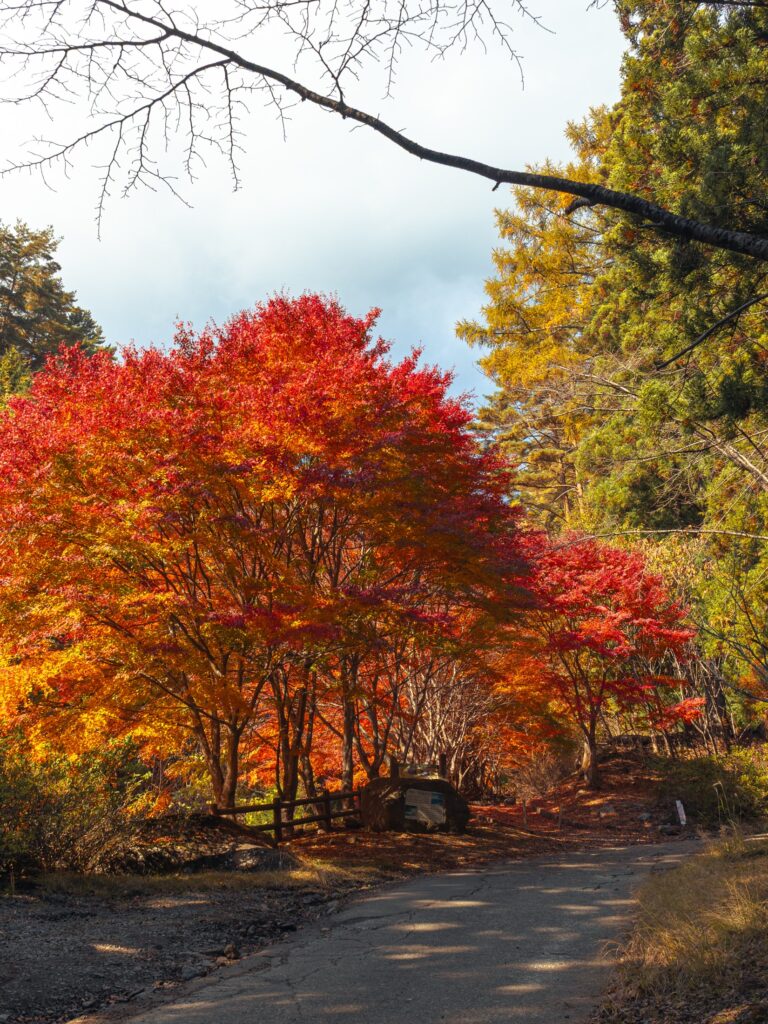
- Koyodai (紅葉台). Hilltop observation point with views over the Aokigahara canopy to Mt. Fuji. Worth the 20-minute climb, peak autumn color mid to late November.
- SUP and canoe. Hamayou Resort, PICA Saiko, 5 Lakes & MT, and Nagomi Nature Connections all rent gear. Half-day rentals start around ¥3,500; guided sunset tours around ¥6,000. No motorboats are allowed on most of the lake.
- Fishing. Himemasu, wakasagi, hera-buna, and yamabe. Day pass ¥1,700 adult (¥3,500 on the water). Strict no-worm rule in effect since 2008. Himemasu season Mar 20 – May 31 and Oct 1 – Dec 31.
Getting There
Plan your Saiko trip
By car
From Tokyo: 2 hours via the Chuo Expressway to Kawaguchiko IC, then 20 minutes on the Lake North View Line (Route 21). From Kawaguchiko town: 15 minutes. Parking at Nenba-hama is free and 24 hours; most lakeside campsites include parking with the booking.
Renting a car is genuinely better than public transit for this region — compare rates at DiscoverCars. Multiple branches sit within walking distance of Kawaguchiko Station.
By bus
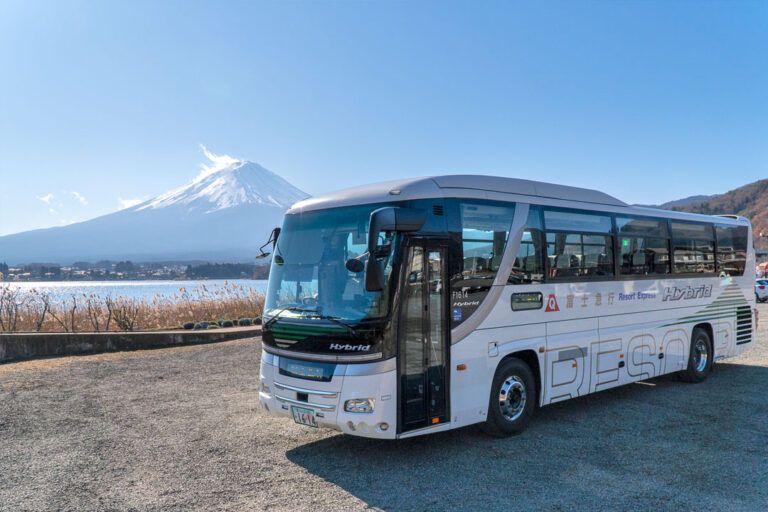
From Kawaguchiko Station, take the Saiko Shuyu Bus (Green Line). Stops at the Saiko Bat Cave, Saiko Iyashi no Sato Nenba, and continues to Lake Motosu. A one-day pass is ¥1,500 adult, ¥750 child, good for unlimited rides on the Kawaguchiko, Saiko, Motosu, and Shoji routes — worth it if you’re stopping at multiple points. Buses run every 30–45 minutes in peak season, every 1–2 hours in winter.
Saiko vs. Kawaguchiko: Pick One
Choose Kawaguchiko if:
- You want a hotel, not a tent
- You like sightseeing boats, cable cars, and lakeside illumination
- You have one day and want maximum Fuji photos
- English infrastructure matters
Choose Saiko if:
- You’d rather camp or stay in a small pension
- You want to paddle a canoe at 6 AM
- You care about the Aokigahara forest edge
- You don’t mind that the Fuji view is one spot instead of ten
- You like your weekends without tour buses
It’s also fine to do both. A classic pattern: one night at Kawaguchiko (hotel, dinner, the usual photo spots), one night at Saiko (camping or pension, campfire, canoe at sunrise). Most visitors who end up loving Saiko come this way.
Where to Stay (If Not Camping)
- Minshuku around Nenba and the lake edge. Family-run, ¥7,000–¥12,000 per person with two meals. Book by phone.
- PICA Saiko pao tents and cabins. The middle-ground option — more comfortable than tent camping, more atmospheric than a hotel.
- Hotels on the Kawaguchiko side. 15 minutes by car. See our Mt. Fuji hub for picks like Kukuna, Fufu Kawaguchiko, and Kozantei Ubuya.
Compare rates on Agoda, Booking.com, or Expedia.
Frequently Asked Questions
Is Saiko worth visiting over Kawaguchiko?
They’re different products. Kawaguchiko is for the Fuji-and-hotel experience. Saiko is for campers, paddlers, and people who prefer quiet. If you’re in the area for two nights, do both. If you only have a day, Kawaguchiko covers more ground.
Can I see Mt. Fuji from Saiko?
Yes — but essentially from one location. Nenba-hama on the west shore is the only spot with a full, unobstructed view of the mountain. The rest of the lake is shielded by the forested Aokigahara ridge. This is a feature, not a bug, if you’re chasing a specific Fuji composition.
Which Saiko campground should I book?
Depends on how you camp. PICA Saiko for comfort and amenities, Hamayou for SUP-and-kayak, Jiyu for the quietest site, and Kohan for the cheapest walk-up option. All four are within 2–5 minutes of each other on the northwest shore.
Can I swim in Lake Saiko?
Yes, in the marked swim zone at Nenba-hama. The water is cold — surface temperature around 22°C at peak summer and 10°C in autumn. SUP and canoe areas overlap with the designated swim zone; motorboats are restricted in most of the lake.
Is the Aokigahara forest really around the lake?
Yes. The 864 AD Jogan lava flow, which split Seno-umi into Saiko and Shojiko, became the bedrock of the Aokigahara “sea of trees.” The forest reaches the southern and western edges of Saiko directly. The Saiko Bat Cave and the Fugaku Wind Cave are both inside the forest and can be visited safely.
Are the Kunimasu fish on display somewhere?
Live specimens are in restricted, limited-public-access aquarium programs only (not on general display at the lake). The Yamanashi Prefectural Fisheries Research Station and a small exhibit at the Kawaguchiko-side Saiko Visitor Center cover the story. For most visitors, the rediscovery is a good story to know, not a fish you’ll personally see.
When’s the best season to visit?
Late April to early November for the full lake experience — camping, paddling, clear Fuji mornings, late shidare cherries at the Iyashi no Sato next door. November for autumn color at Koyodai. Winter is quiet but several facilities close or reduce hours; confirm ahead.
Final Take
Saiko is the Fuji lake that most people look at across the water but never actually visit. That’s the appeal. You trade the boat docks, the lakeside Starbucks, and the fifty photo spots at Kawaguchiko for one clean Fuji viewpoint, four serious campgrounds, a forest older than half the country, and the strange fact that the water you’re paddling on contains the last known survivors of a species the rest of Japan gave up on eighty years ago.
Book a campsite, pack a stove, and aim for the first Tuesday after a holiday weekend. The lake tends to be empty by then.
Last updated: April 2026. Hours, fees, and access verified against Yamanashi Prefecture Tourism, Fujisan.ne.jp, and each campground’s official booking page at time of writing. The Saiko Bat Cave has had inconsistent winter-hours information across English and Japanese sources — call 0555-82-3111 before a winter visit.
Join travelers discovering Japan's hidden side
Weekly dispatches from off-the-beaten-path Japan — spots and stories you won't find in guidebooks.
No spam. Unsubscribe anytime.
Welcome aboard!
You're in. See you in your inbox soon.