
Climbing season status
The 2026 climbing season ended on 10 September 2026
The official trails to the summit and the mountain huts are closed. Climbing to the top is not something to attempt now — the route markers, the huts and the first-aid stations that operate only during the season are gone until next summer, and so is the entry reception.
Some 5th Stations may still be reachable for sightseeing, depending on road, weather, snow and bus conditions on the day. That is not the same as the climbing trails being open.
This article is not an invitation to climb out of season. It exists because people try anyway, and because the mountain in winter is a different mountain. Read it as a description of the risk, not a route plan.
Dates and current conditions: the official Mt Fuji climbing site.
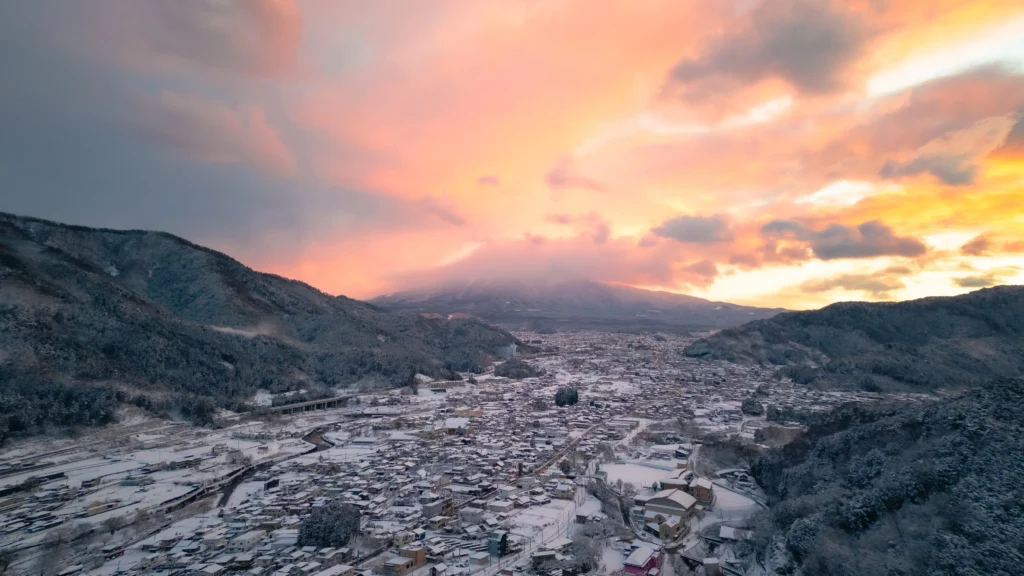
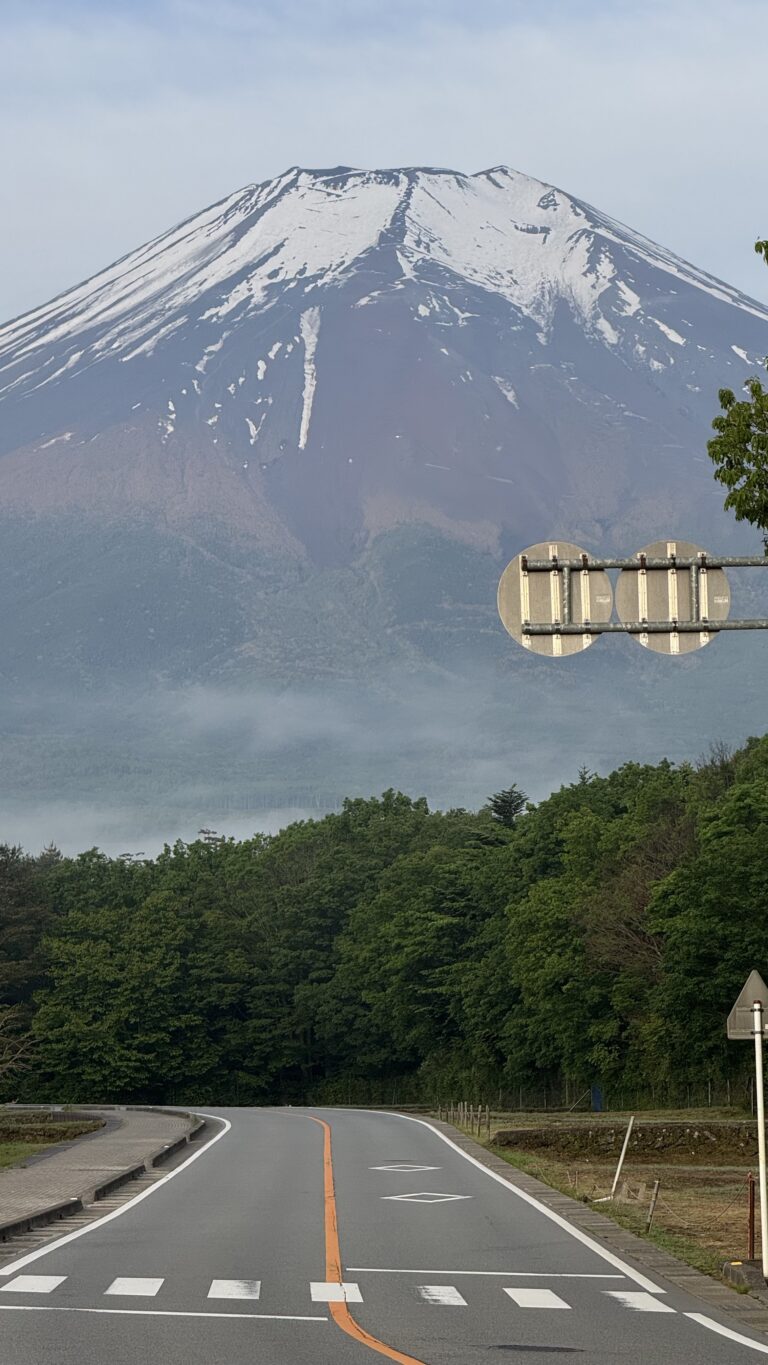
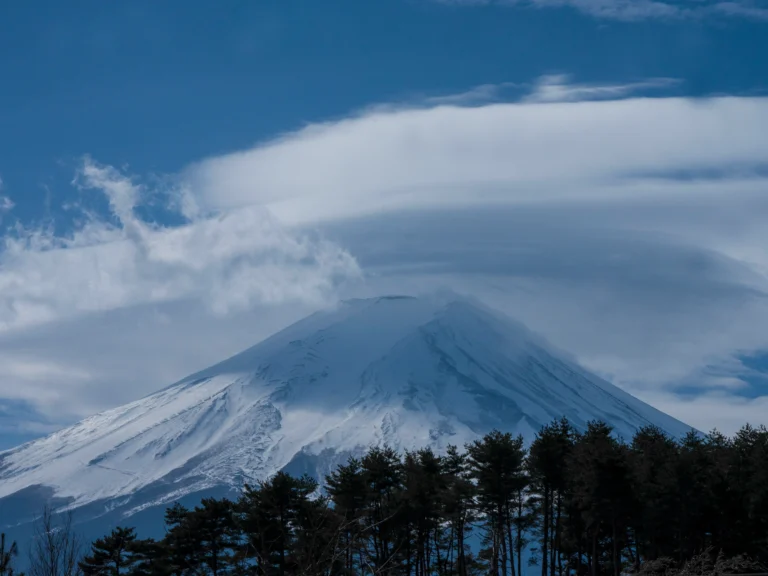
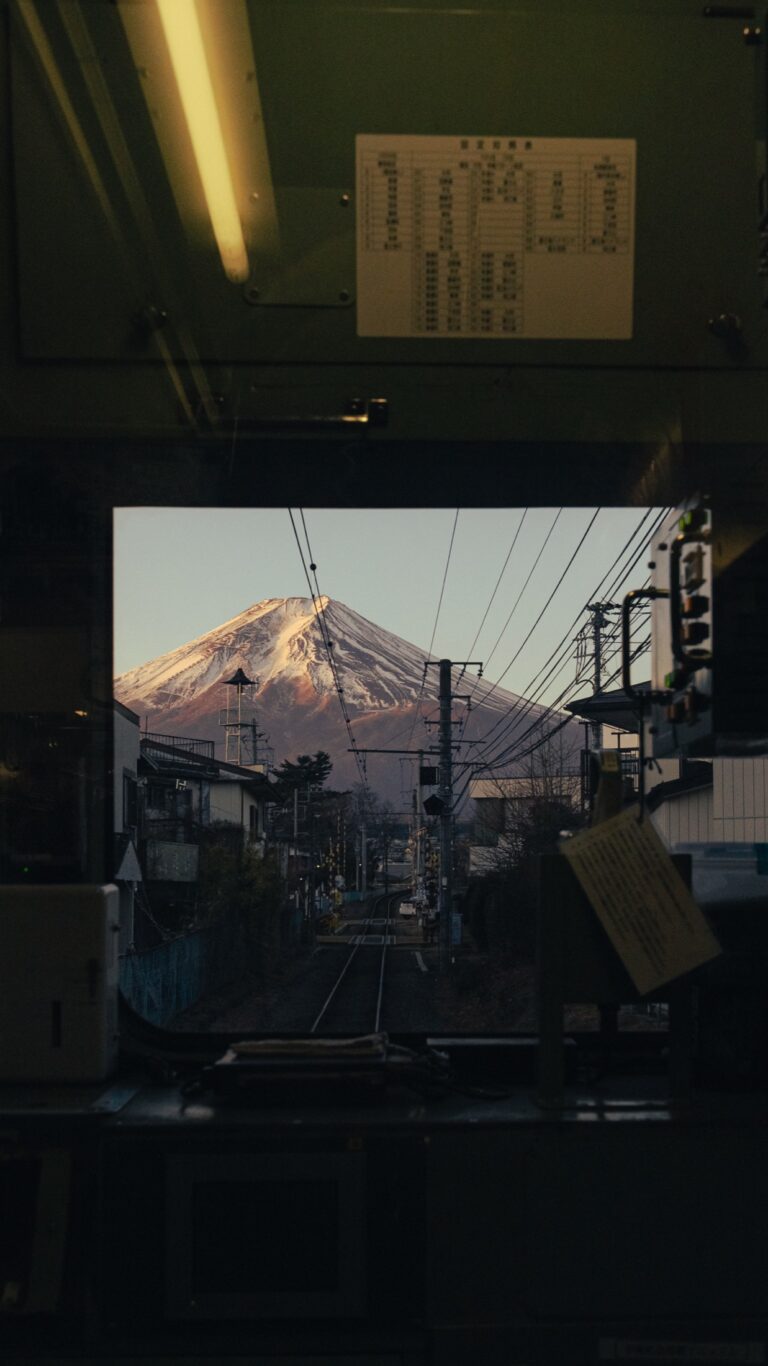
Dreaming of seeing Japan’s iconic peak draped in a pristine blanket of white? A winter trip to see the Mt Fuji snow is an unforgettable experience, but it requires careful planning. The crisp, clear air of winter offers the best views, yet the freezing temperatures and unpredictable weather can catch travelers unprepared. This guide provides everything you need to know about Fuji’s snow season, what to wear, and how to stay safe and comfortable, ensuring your winter adventure is nothing short of magical.
Table of Contents
Part of the full Mt. Fuji travel guide.
Quick Facts for Your Winter Fuji Trip
| Feature | Details |
| Best Snow Viewing | November to May |
| Peak Cold | January (average low −5.7°C / 22°F) and February (−4.8°C / 23°F), measured at Kawaguchiko |
| Road Conditions | Snow tyres or chains required on snowy or icy roads (most likely Dec–Mar); winter tyres recommended |
| Essential Gear | Insulated jacket, layers, non-slip boots, hat, gloves |
| Bad Weather Plan | Onsen, museums, and warm Houtou noodles |
Understanding Mt Fuji Snow: A Seasonal Q&A
Q1: When does Mt. Fuji get its first snow?
The first recorded snow cap of the season on Mt. Fuji is called hatsu-kansetsu (初冠雪). Up to and including the 2025–26 season, staff at the Kofu Local Meteorological Office declared it by eye, and on that method the 1991–2020 average date was 2 October. The last two came late: 23 October in 2025, and 7 November in 2024, the latest on record (the earliest was 9 August 2008). From the 2026–27 season the Japan Meteorological Agency judges summit snow from its analysed snow-depth data instead and publishes the result every hour, and it warns that the new dates cannot be compared directly with the old visual ones. As of the evening of 7 October 2026, JMA’s table still showed no snow on the summit. The first snow can be light and melt within days; a lasting cap usually builds later in the autumn.
Q2: Does it snow in the towns at the base, like Kawaguchiko?
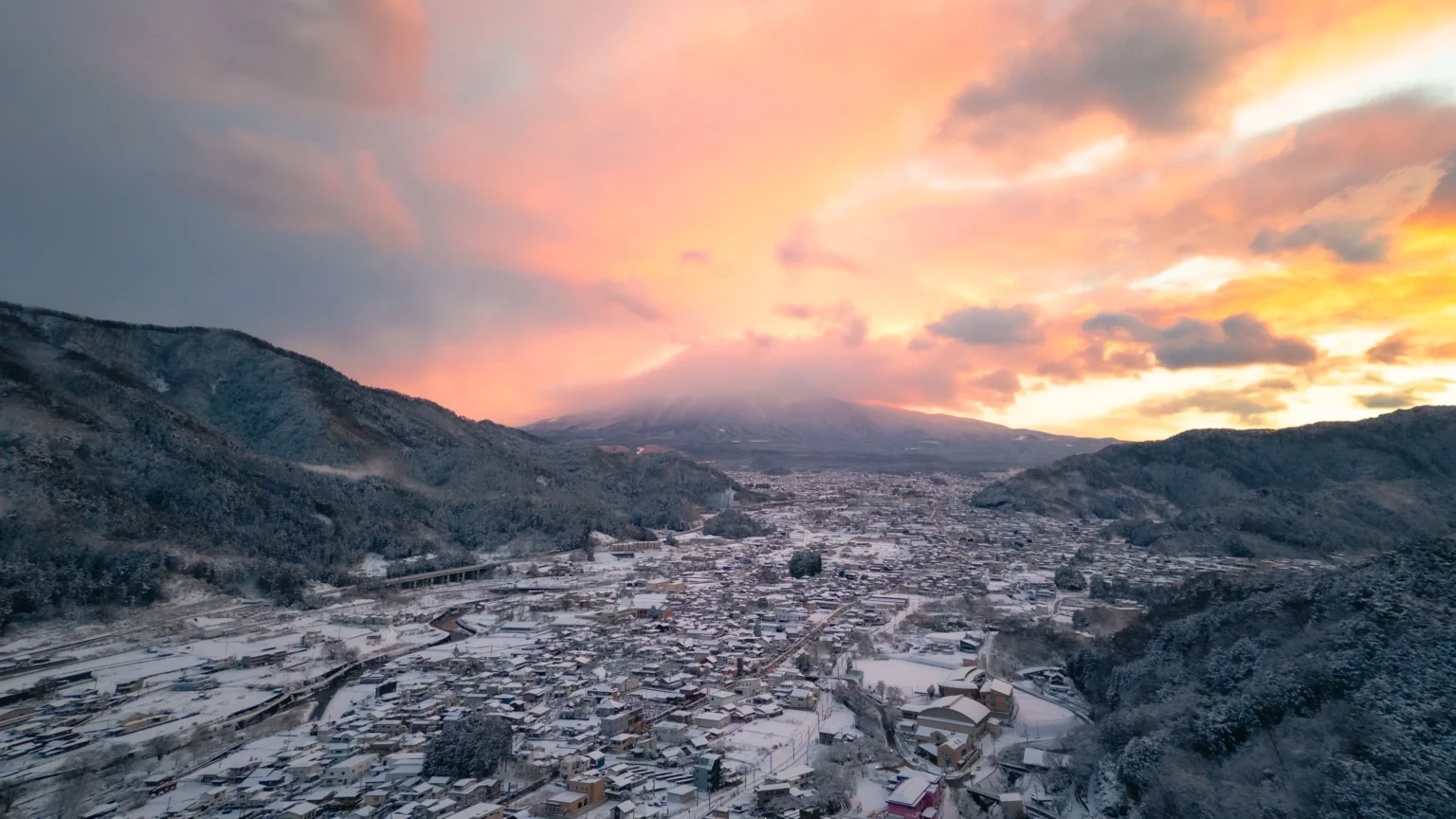
Yes, and there is a weather station in the town that says how much. Kawaguchiko sits at about 860 m, high enough for real snow rather than the wet slush Tokyo usually gets. Across the 1991–2020 averaging period the town recorded 97 cm of snowfall in an average year, almost all of it between December and March.
| Month | Snowfall in an average month | Snowiest single day (average) | Deepest snow on the ground (average) | Average daily low |
| November | 1 cm | 1 cm | 1 cm | 2.2°C / 36°F |
| December | 7 cm | 5 cm | 6 cm | −2.9°C / 27°F |
| January | 37 cm | 21 cm | 25 cm | −5.7°C / 22°F |
| February | 28 cm | 14 cm | 24 cm | −4.8°C / 23°F |
| March | 20 cm | 13 cm | 16 cm | −1.3°C / 30°F |
| April | 4 cm | 3 cm | 4 cm | 3.7°C / 39°F |
If your question is specifically about December, the honest answer is that it snows but not much: about 7 cm spread across the whole month in an average year, and it usually does not sit on the ground for long. The months that actually bury the place are January and February. Snow deep enough to change your plans is most likely in January and February, but March averages 20 cm of snowfall too, and a single storm can bring heavy snow in December, March or even April.
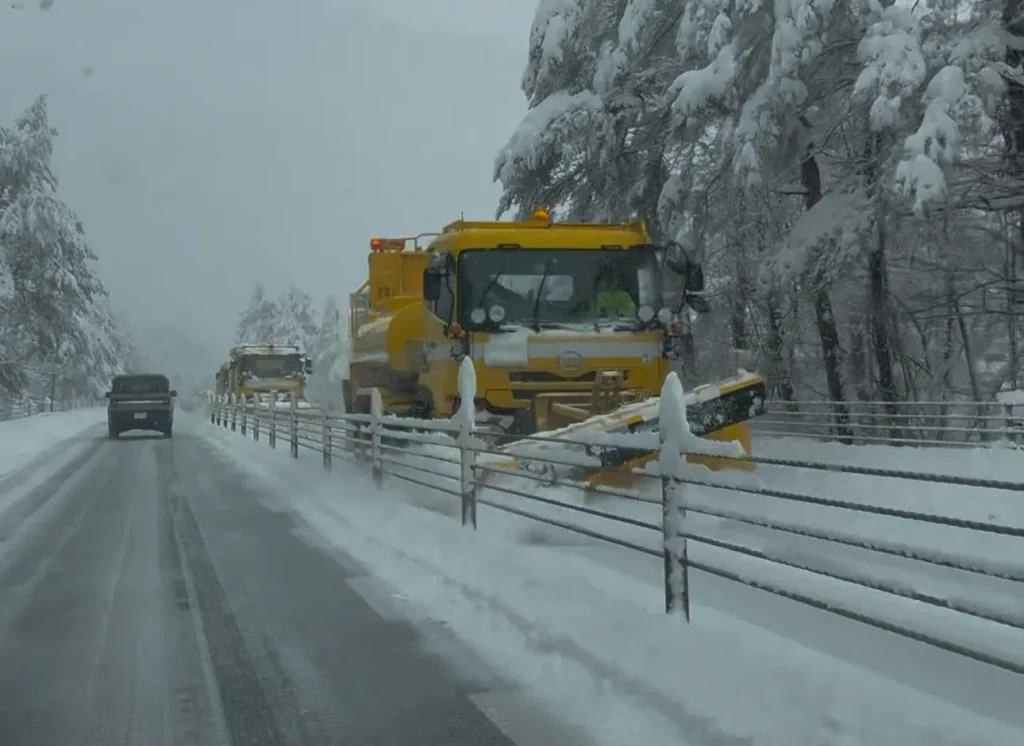
Two practical consequences. If you are driving between December and March, fit winter tyres: Yamanashi’s traffic rules require snow tyres or chains on snowy or frozen roads, roads ice over, and snow ploughs are a normal sight. In very heavy snow a chain restriction can be posted on some roads, and then chains are required even with winter tyres. And an average is not a forecast: snow here tends to come in single big dumps. In an average January the snowiest single day brings 21 cm, more than half of the month’s 37 cm.
If your trip overlaps a bigger storm, read my practical guide to traveling Japan during heavy snow for getting around safely.
Q3: How long does the snow on Mt. Fuji last?
The snow cap shrinks through spring and early summer as the snow line climbs, and how long it lasts varies from year to year. By July most of the mountain shows its reddish-brown volcanic rock, but patches of snow can still lie on the upper trails when the climbing season opens, so climbers should check trail conditions first.
Q4: How can I check the current snow conditions?
The most direct check is JMA’s summit snow table, updated every hour at about 25 minutes past. It is in Japanese: find the row 富士山(フジサン); the column 初冠雪日 is the season’s first-snow date, and 最新の積雪状況 is the latest status, where 積雪なし means no snow. For today’s forecast and my morning view from Fujiyoshida, see Mt Fuji weather today and the Mt Fuji visibility check. Live webcams are the next best thing; social media posts are not always dated to the day the photo was taken.
What to Wear Near Mt. Fuji: Monthly Clothing Guide (Nov-Apr)
Packing the right clothing is crucial for a comfortable winter trip. The temperature near Mt. Fuji is significantly colder than in Tokyo. Here’s a breakdown of what to wear.
November – December (Early Winter)
This period sees a crisp chill in the air. Layering is your best strategy. Start with a thermal base layer, add a fleece or wool sweater, and top it off with a light down or insulated jacket. Mornings and evenings are cold, but sunny afternoons can feel pleasant. Don’t forget a scarf and a pair of light gloves. If your trip takes in other parts of Japan in November, our guide to what to wear in Japan in November covers Tokyo, Kyoto and Osaka, night light-ups and Hokkaido.
January – February (Deep Winter)
This is the coldest time of year, with temperatures often dropping well below freezing, especially at night and in the early morning (20°F / -7°C or lower).
•Outerwear: A heavy, insulated, and windproof winter coat or down jacket is essential.
•Layers: Wear a thermal base layer and at least one mid-layer like a thick fleece or wool sweater.
•Footwear: Warm, waterproof, and non-slip winter boots are a must. Sidewalks and paths can be very icy.
•Accessories: A warm hat that covers your ears, thick gloves or mittens, and a scarf are non-negotiable. Pocket hand warmers (kairo) are a popular and effective way to stay warm.
March – April (Late Winter / Early Spring)
While technically spring, it still feels like winter, especially in March. The core winter clothing recommendations still apply. However, as you move into April, daytime temperatures can become milder. An outfit that allows you to easily remove layers is ideal. A mid-weight jacket combined with a fleece may be sufficient on warmer days, but always be prepared for a sudden drop in temperature.
What I actually wear — and where to get it fast
If you land without winter layers, you do not need to trek across Tokyo to find them. These are the pieces that keep you warm around Fuji in the cold months, all on Amazon Japan — have them sent to your hotel before you arrive.
Flying in from the US or Canada? A few of these are worth buying at home before you pack — on amazon.com: rain jacket & pants, hiking socks. Already in Japan? The Amazon Japan picks below can be sent to your hotel if it accepts guest parcels (ask first).
Thermal innerwear
The base layer that does the real work. Cheap, light, and the difference between miserable and fine.
Hand & foot warmers (kairo)
Disposable heat packs: pocket ones for your hands, stick-on ones for under a layer, toe warmers inside your boots. Locals live on these in winter.
Touchscreen gloves
Warm hands, and you can still work your phone for that Fuji photo without bare fingers.
Wind & rain shell
The wind off Fuji is the real cold. A shell over your layers blocks it.
Warm, quick-dry socks
Thin cotton socks and snow do not mix. Cushioned wool-blend socks keep your feet dry.
What to Do on a Rainy or Snowy Day
If the weather hides the mountain, don’t despair! The Fuji Five Lakes area offers plenty of cozy indoor alternatives.
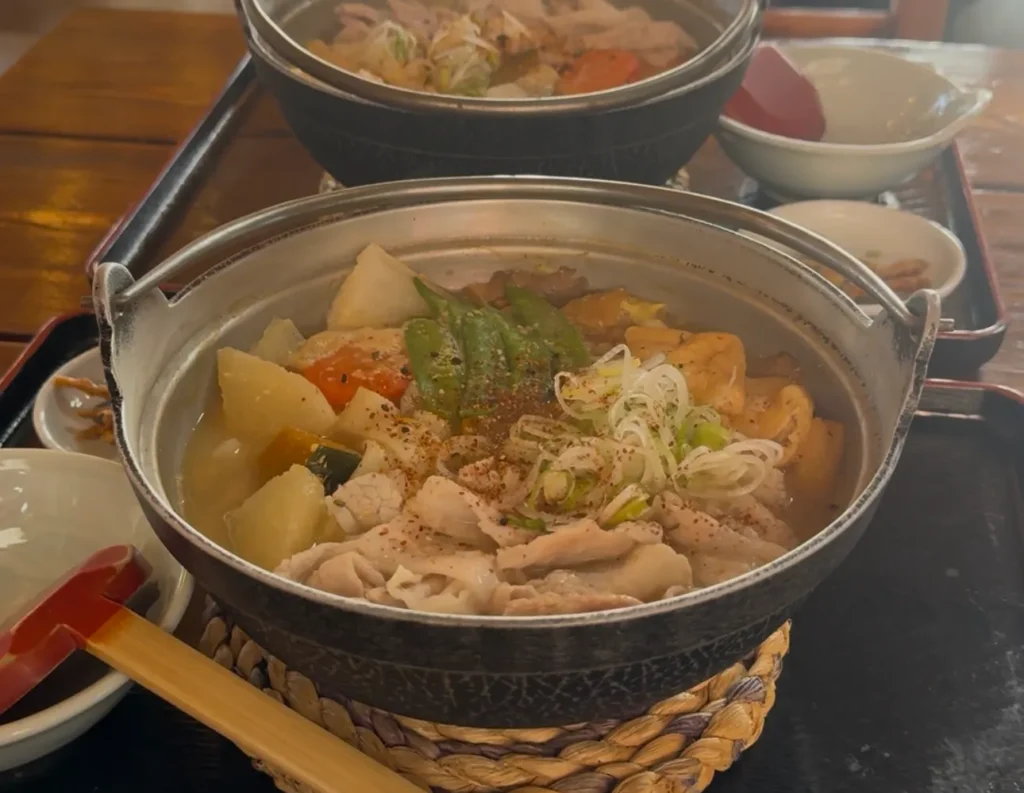
•Warm Up with Houtou Noodles: Escape the cold and savor a local delicacy. Houtou is a hearty, flat noodle soup simmered in a miso-based broth with pumpkin and other vegetables. It’s served bubbling hot in an iron pot and is the perfect comfort food for a winter day. Many restaurants specialize in this dish, with the Kosaku chain being one of the most famous.
•Relax in an Onsen (Hot Spring): Soaking in a natural hot spring while watching the snow fall outside is a quintessential Japanese winter experience. Many hotels and public bathhouses in the area have onsen with views of Mt. Fuji (on a clear day, of course).
•Explore Museums: The region is home to several unique museums, such as the Itchiku Kubota Art Museum (known for its stunning kimono collection and gardens) or the Kawaguchiko Music Forest Museum (with its collection of antique music boxes and European-style architecture).
Planning Fuji across the seasons? These pick up where the winter guide leaves off:
Climbing Mt Fuji 2026
Rules, fees and gear for the summer climbing season (in 2026 the summit trails were open from 1 or 10 July to 10 September).
Summit sunrise (goraiko)
For readers tempted to swap snowy-Fuji views for a sunrise from the top.
The overnight climb
The coldest part of an in-season climb is the pre-dawn summit push.
Should you climb at all?
Weighing the climb vs. just seeing Fuji? Decide here first.
Winter Fuji danger
Why the summit trails close outside summer, and why winter climbing is dangerous even for experts — the safety read.
Frequently Asked Questions
Does Mt Fuji have snow all year round?
No. The summit loses its snow in summer, and the season’s first snow usually arrives in autumn. On the old visual method, used up to and including the 2025–26 season, the 1991–2020 average date was 2 October and the earliest on record was 9 August 2008; dates from the Japan Meteorological Agency’s new method, used from 2026–27, are not directly comparable. To see whether there is snow on the summit today, check the Japan Meteorological Agency’s hourly summit snow table.
Can I climb Mt. Fuji in the winter?
No. In winter the trails from the 5th Station to the summit are closed under the Road Act, and entering them can bring a fine. Winter climbing is extremely dangerous: experienced, well-equipped mountaineers have died there, and rescue is slow and difficult.
Are roads around Fuji Five Lakes closed in winter?
Main roads are generally kept open by snow plows, but smaller, less-traveled roads may become impassable. Always check conditions before driving and ensure your vehicle has snow tires.
Is it worth visiting if I can’t see Mt. Fuji?
Absolutely. While seeing the mountain is the main draw, the area’s serene lakes, charming towns, delicious food, and relaxing onsen make it a wonderful destination even on a cloudy day.
Sources
The primary sources checked for this guide (27 September 2026)
- Japan Meteorological Agency — Kawaguchiko climate normals, 1991–2020
- Japan Meteorological Agency — first snow and current summit snow (hourly, from the 2026–27 season)
- Kofu Local Meteorological Office — seasonal observation records (Mt Fuji first-snow normal and records)
- Official Mt Fuji climbing site — off-season rules
- Kosaku (houtou restaurant) — official site
Information based on historical data and local travel guides. Always check current weather and road conditions before your trip.
Join travelers discovering Japan's hidden side
Weekly dispatches from off-the-beaten-path Japan — spots and stories you won't find in guidebooks.
No spam. Unsubscribe anytime.
Welcome aboard!
You're in. See you in your inbox soon.