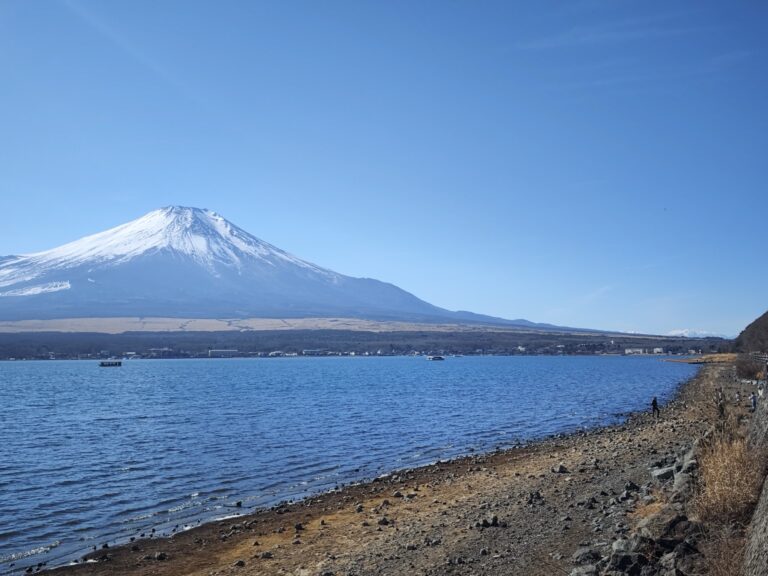

Lake Motosu (本栖湖) is the westernmost, deepest, and most pristine of the Fuji Five Lakes — and the lake on the back of the Japanese 1,000 yen bill. The exact viewpoint is the Nakanokura Pass Observation Deck (中ノ倉峠展望台), reached by a 20-30 minute uphill hike from the Koan Campsite parking. Lake Motosu allows no powered boats; the result is a stillness rare in the Fuji region. Best months: October-February for sharp Fuji clarity, late December to early January for Diamond Fuji.
The 1,000 yen bill photograph by Koyo Okada is the most reproduced image of Mt. Fuji on earth. Every Japanese person has handled it thousands of times. Standing at the exact spot — the wooden Nakanokura Pass deck looking down at the lake — is one of those moments where a familiar image becomes a place. The hike up is the price of admission. Bring sturdy shoes.
Part of the full Mt. Fuji travel guide.
Quick Facts
| Location | Motosu, Fujikawaguchiko-machi, Minamitsuru-gun, Yamanashi Prefecture |
|---|---|
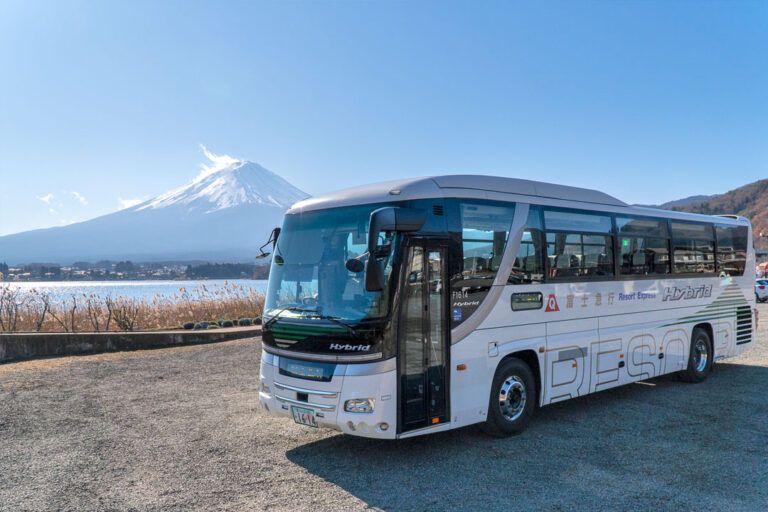
| Access | ~50 min by bus from Kawaguchiko Station to “Motosuko” bus stop · ~30 min by car from Kawaguchiko IC |
| Parking | Free parking along the lakeshore. Fills on weekends and Shibazakura festival period. |
| Famous for | The Mt. Fuji view on the Japanese 1,000 yen bill, photographed by Koyo Okada |
| Activities | Photography, hiking, camping, kayaking, windsurfing, fishing |
| Best time | October-February for sharp Fuji visibility · Late Dec / early Jan for Diamond Fuji |
| Facilities | Public toilets, campsites, a few small restaurants on Route 300 |
The lake itself: why Motosu is different
Lake Motosu is the westernmost, deepest (121.6 m), and most pristine of the Fuji Five Lakes. Its deep blue hue is so distinct it has its own name: “Motosu Blue”. The defining experience here is the raw, unfiltered connection with nature. Unlike the more developed Kawaguchiko shore, Motosu retains a wilder, more serene character.
Powered boats are banned — a measure taken to preserve the water quality. The only sounds you’ll hear are wind through trees and water lapping the shore. The lake invites quiet observation, whether you’re a photographer waiting for the right light on Fuji or someone seeking refuge from city noise.
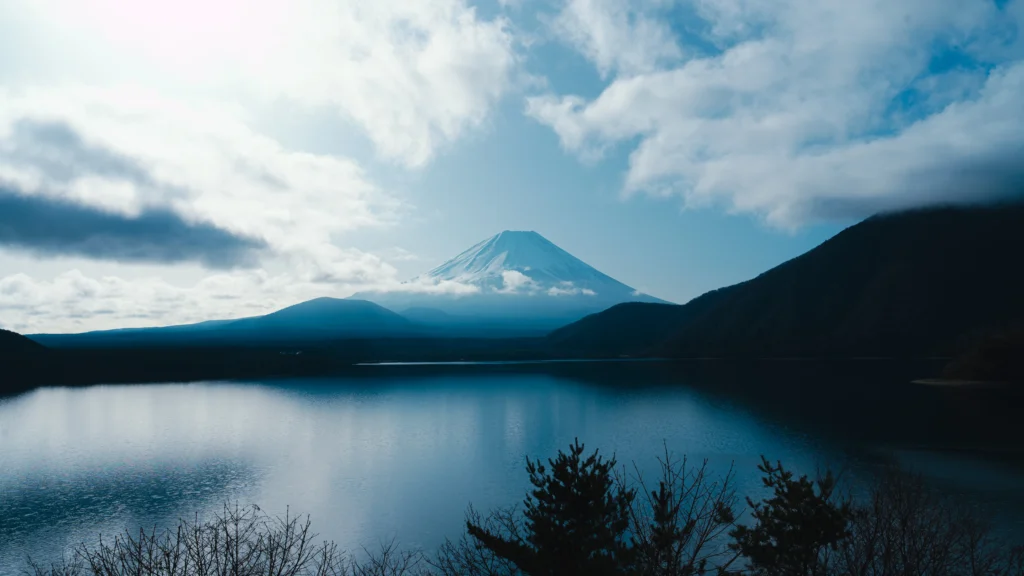
A clear-day view across Lake Motosu — exactly the kind of stillness the no-motor rule preserves.
Best time to visit
Shibazakura window
The famous Fuji Shibazakura (Moss Phlox) Festival takes place nearby, carpeting fields in brilliant pink. Cherry blossoms frame the lake in mid-to-late April.
Water sports peak
Deep green forests contrast with blue water. Peak for kayaking, canoeing, windsurfing. Annual Shinko-sai fireworks on Aug 3.
Sharpest Fuji clarity
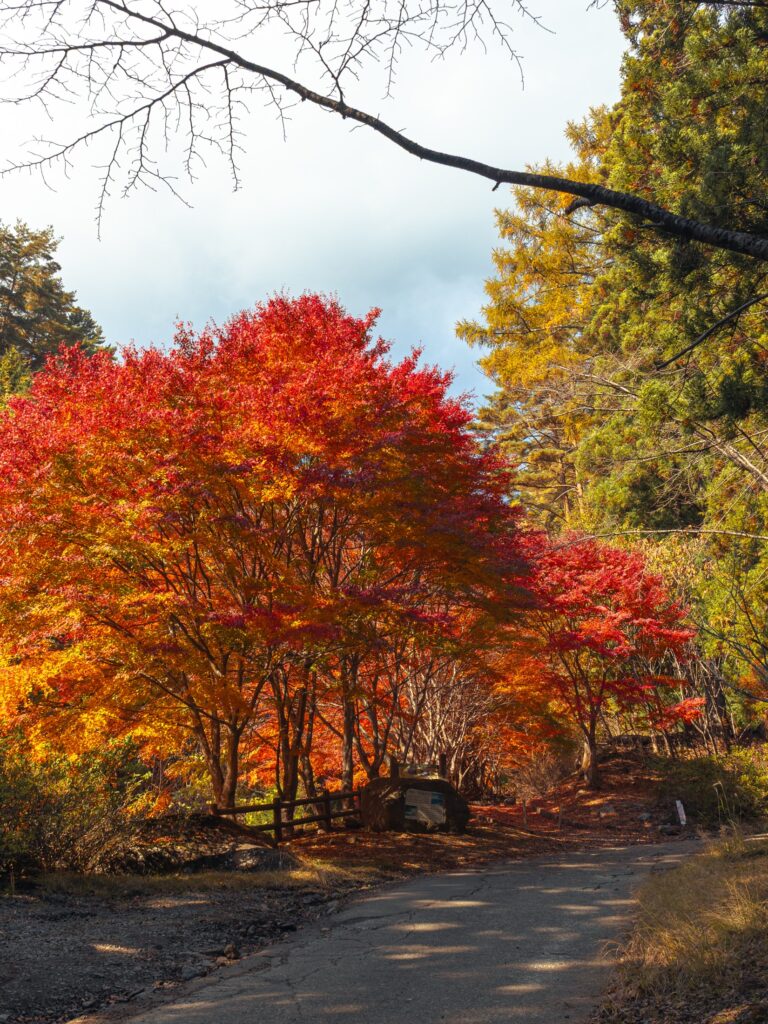
Shoreline erupts in red and gold. Crisp autumn air provides some of the clearest Fuji views of the year. Prime Himemasu salmon fishing season. From late August to mid-October, the shibazakura grounds ten minutes south run the Rainbow Flower Festival — 80,000 zinnias under Fuji.
Diamond Fuji
Coldest air = clearest views of snow-dusted Fuji. Late Dec to early Jan: Diamond Fuji from Ryugatake Mountain — the rising sun aligning perfectly with the peak.
How to get to the famous 1,000 yen view
The iconic viewpoint isn’t obvious from the main road. The Koyo Okada photograph on the 1,000 yen bill was taken from the Nakanokura Pass Observation Deck (中ノ倉峠展望台), reached by a hike up from the western shore.
- Drive or take a bus to the western shore. Head to the area near Koan Campsite (浩庵キャンプ場). There’s a free public parking lot there.
- Find the trailhead. From the parking area, look for the trailhead leading up the mountain. Well-trodden path, can be steep in places.
- Hike 20-30 minutes. The trail winds through forest. Manageable for most fitness levels, but wear sturdy shoes — sneakers or hiking boots, not sandals.
- Arrive at the wooden deck. The view unfolds: vast Lake Motosu, surrounding mountains, and the perfect symmetrical cone of Mt. Fuji. The exact frame of the banknote photograph is visible from this spot.
For those unable to hike, magnificent (though different) Fuji views are available from various points along the northern shore.
What to do at Lake Motosu
Capture the “Reversed Fuji”
On calm, windless mornings the lake becomes a mirror, creating a perfect reflection of Mt. Fuji — Sakasa Fuji (逆さ富士). Northern shore at dawn is the best window.
Kayaking + windsurfing
Crystal-clear water for kayak or SUP rentals. Lake Motosu is also a windsurfing mecca — consistent winds across the open expanse.
Himemasu fishing
Lake stocked with rainbow trout and Himemasu (landlocked salmon). Spring + autumn are peak seasons. Fishing permit required.
Yuru Camp pilgrimage
For fans of Laid-Back Camp (Yuru Camp△), Motosu is a pilgrimage site. Real-life Koan Campsite is the inspiration for the anime locations.
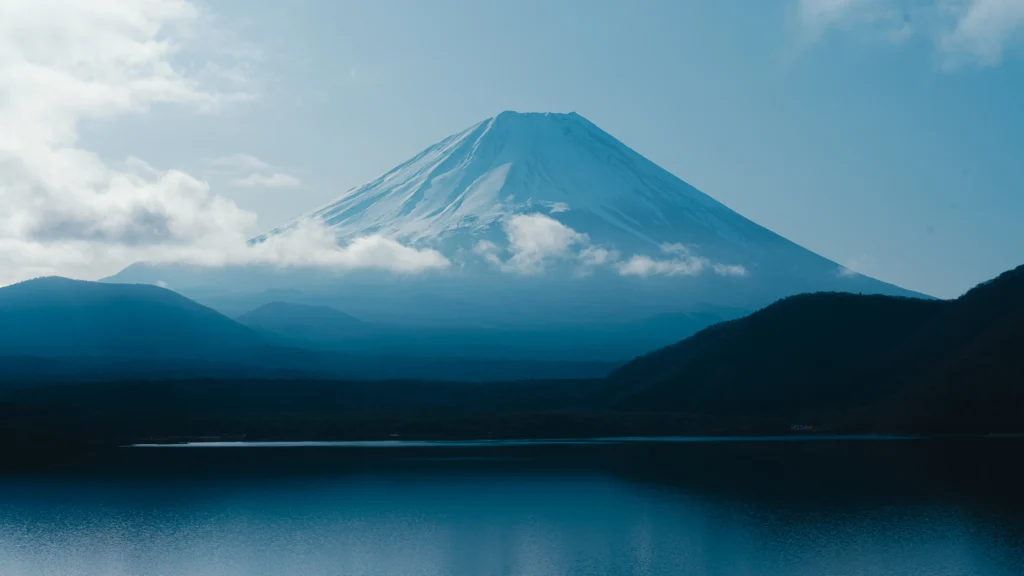
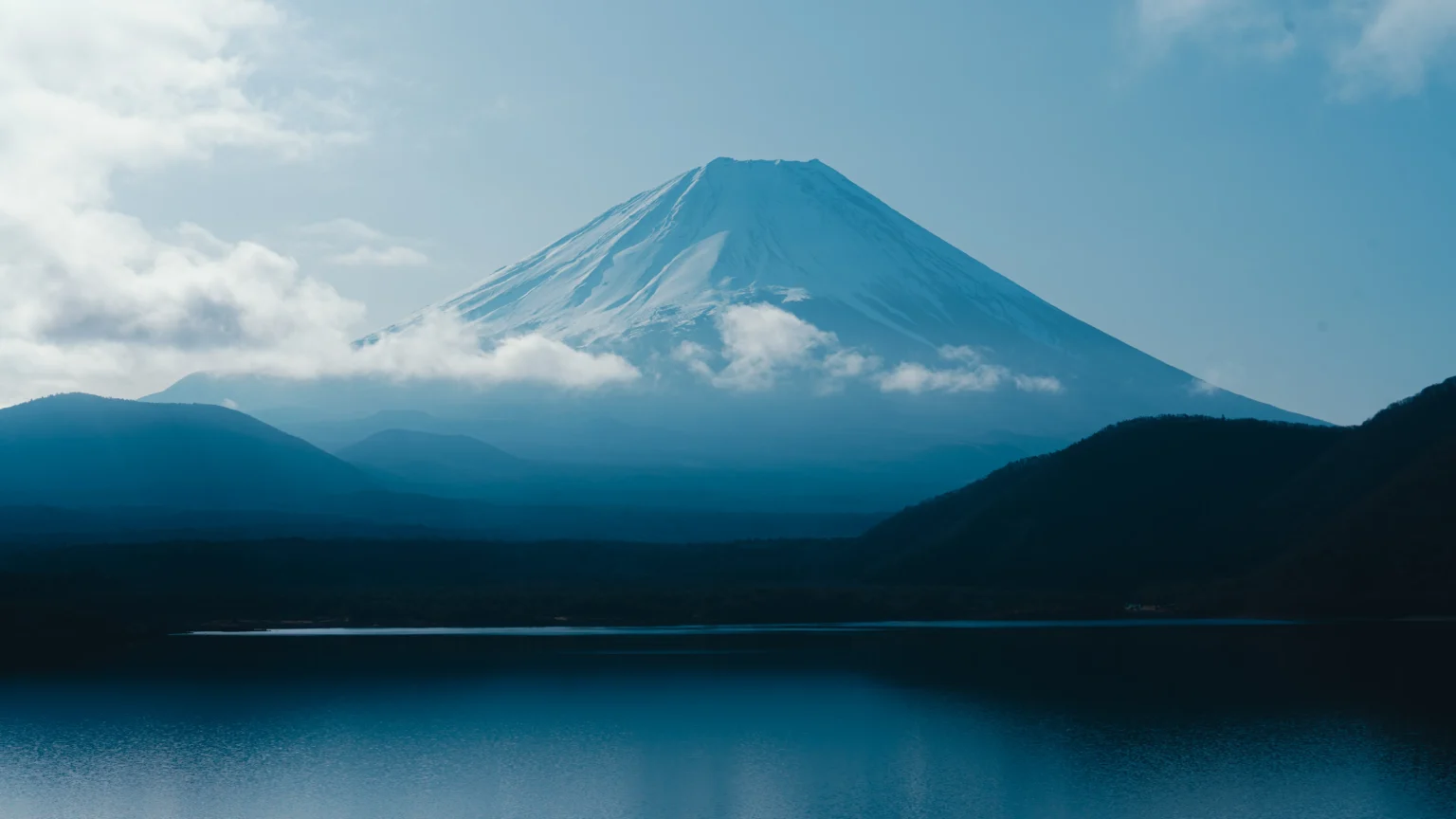
Wide-angle view of Mt. Fuji across Motosu’s waters. Tree silhouettes give the composition depth that the close-in 1,000 yen shot lacks.
Practical tips for your visit
Cash
Most small shops and rentals around the lake are cash-only. Larger hotels may accept cards. Bring sufficient yen.
Food
Restaurants along Route 300. Try Yamanashi’s Hoto noodles (hearty flat noodle soup with vegetables). Some places serve deer (shika) and wild boar (inoshishi).
Parking
Free parking at several points along the northern and eastern shores. Fills up on weekends and during the Shibazakura festival window.
Dress in layers
Temperature at the lake is significantly cooler than nearby towns, even in summer. Windproof jacket is wise.
Sunrise priority
06:00-08:00 light is the best Fuji visibility and the calmest water (= best Sakasa Fuji reflections). Set the alarm.
Drone restrictions
Drone use is prohibited in this protected zone of Fuji-Hakone-Izu National Park. Don’t bring one.
Half-day itinerary
FAQ
Where can I see the exact view of Mt. Fuji from the 1,000 yen bill?
The Nakanokura Pass Observation Deck (中ノ倉峠展望台) on the western shore of Lake Motosu. Park at Koan Campsite (浩庵キャンプ場), then hike up the marked trail for 20-30 minutes to reach the wooden deck.
Is it possible to swim in Lake Motosu?
Yes, but the water is cold year-round even in summer — Lake Motosu is the deepest of the Fuji Five Lakes (121.6m) and surface water rarely warms above 20°C. There are no designated swimming beaches. Most water activity is kayaking, SUP, and windsurfing rather than swimming.
What is the best way to get to Lake Motosu without a car?
Bus from Kawaguchiko Station to Motosuko bus stop (~50 minutes). From there, walk along the shoreline. Public transport to the Nakanokura Pass trailhead specifically is limited — taxi from Motosuko bus stop is the easiest option if you don’t have a car.
Are there restaurants and cafes right by the lake?
Some, but not many. The main restaurant cluster is along Route 300, a short drive from the northern shore. The lake shore itself is largely undeveloped — bring your own food/drink if you plan to spend several hours there.
When can I see Diamond Fuji at Lake Motosu?
Late December to early January is the Diamond Fuji window when the rising sun aligns with Mt. Fuji’s peak. Best viewing is from Ryugatake Mountain near the lake. Specific dates vary by exact viewing position; check the Diamond Fuji calendar for 2026-2027 dates.
Is Lake Motosu crowded?
Significantly less than Kawaguchiko. Even on weekends in peak season, Motosu retains a quieter character because of the no-motor rule and the absence of major tourist infrastructure. Weekday mornings are essentially empty.
Plan the Trip
Three doors into a Lake Motosu visit. Drive in early; camping at Koan puts you 5 minutes from the trailhead.
Related reading
- Lake Saiko 2026: The Quiet Fuji Lake — combine with Motosu for a western lakes day
- Diamond Fuji 2026-2027 Complete Calendar — when and where to catch it from Motosu
- Is Mt. Fuji Visible Today? — check before driving 30 minutes
Skip the Crowds in Japan (2026)
Skip the Chureito queue — Motosu and other calm Fuji views.
Join travelers discovering Japan's hidden side
Weekly dispatches from off-the-beaten-path Japan — spots and stories you won't find in guidebooks.
No spam. Unsubscribe anytime.
Welcome aboard!
You're in. See you in your inbox soon.