
Climbing season status
The 2026 climbing season ended on 10 September 2026
The official trails to the summit and the mountain huts are closed. Climbing to the top is not something to attempt now — the route markers, the huts and the first-aid stations that operate only during the season are gone until next summer, and so is the entry reception.
Some 5th Stations may still be reachable for sightseeing, depending on road, weather, snow and bus conditions on the day. That is not the same as the climbing trails being open.
Dates and current conditions: the official Mt Fuji climbing site.
Yamanashi · Mt. Fuji · 2026
2026 rules (season now over): All four trails charged a ¥4,000 entry fee (as in 2025), and none let you start up between 2:00 PM and 3:00 AM without a mountain hut reservation. New in 2026: Subashiri opened July 1, in line with Yoshida.
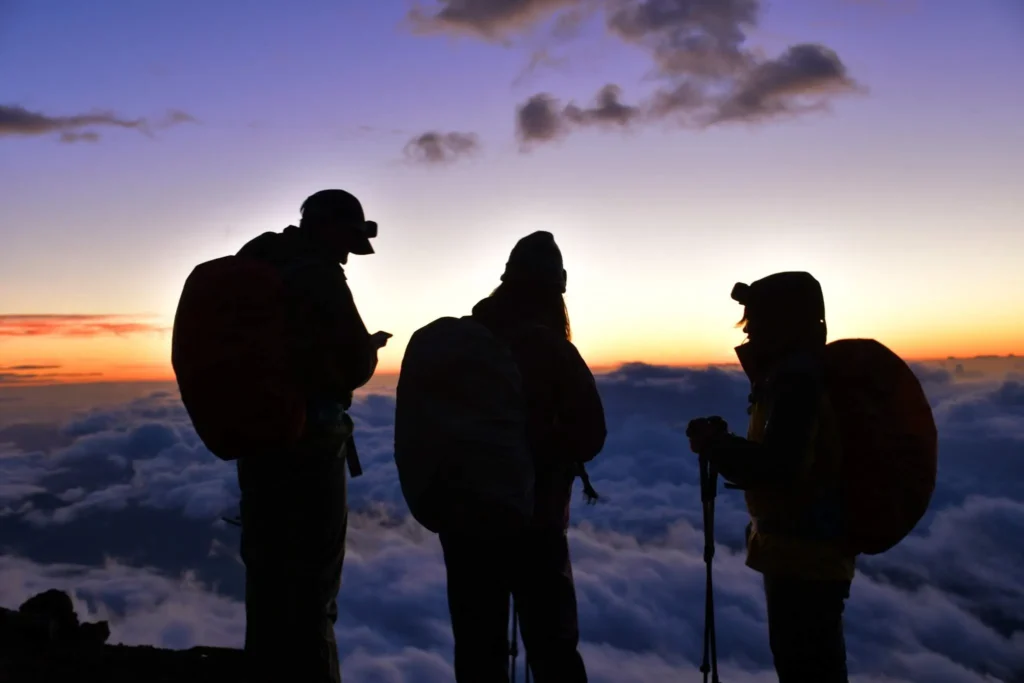
The sunrise from Mt. Fuji’s summit — goraikō — is not just a view. Somewhere between about 4:20 and 5:15 AM, depending on the date, the sun breaks above a blanket of clouds, and for one moment you’re the highest person in Japan. Getting to that moment, however, has changed drastically. The 2026 season’s rules governed reservations, fees, and gear, and this guide explains how they worked.
For weather conditions, check our Mt. Fuji Visibility Forecast before you go, and read our Mt. Fuji Snow, Weather & Clothing Guide for packing advice.
Part of the full Mt. Fuji travel guide.
Quick Facts
The 2026 Regulations: What You Must Know Before You Go
Climbing Mt. Fuji is now a regulated activity. In 2026, whether you climbed from the Yamanashi side (Yoshida) or the Shizuoka side (Fujinomiya, Subashiri, Gotemba), you went through an entry procedure.
The Mandatory ¥4,000 Entry Fee
In 2026, the ¥4,000 entry fee applied on all four trails, with exemptions for specified groups. The old voluntary “conservation cooperation fee” is abolished. The fee funds trail maintenance, safety patrols, and the new gate systems. Yamanashi’s exemptions included people with disabilities and their carers, curricular school activities, kindergartens, and walkers going only between Umagaeshi and the 5th Station; Shizuoka’s included people with disabilities and their carers, curricular education, and kindergarten or nursery nature walks. Procedures differed by prefecture.
The Yoshida Trail Gate System (Yamanashi)
If you’re hiking the popular Yoshida Trail, you’ll encounter a physical gate at the 5th Station.
- Gate Closed: 2:00 PM to 3:00 AM
- Daily Capacity: 4,000 climbers
- The Exception: If you have a confirmed mountain hut reservation, you can pass at any time and aren’t counted toward the 4,000 daily limit
- Equipment Check: Staff verify three items at the gate — warm clothing, two-piece rain gear, and proper trekking shoes. Climbers without the required gear could be turned back
In 2026 you could book an entry slot in advance via the Official Mt. Fuji Climbing Portal and pay the ¥4,000 online, or pay on the day at the 5th Station; part of each day’s 4,000 places was kept for same-day entry, and the official FAQ reports no day exceeding 4,000 during the 3:00 AM–2:00 PM entry hours in 2024 or 2025. New to the booking system? Our step-by-step guide to reserving and paying the Yoshida permit walks through the English booking screen one tap at a time.
The FUJI NAVI System (Shizuoka Trails)
For Fujinomiya, Subashiri, or Gotemba, use the new FUJI NAVI app (iOS and Android).
- 1. Register & Learn: Download, register, complete a short safety video and quiz. Available in English, Chinese, Korean, Vietnamese, and Thai
- 2. Pay: ¥4,000 fee through the app
- 3. QR Code: Show at the 5th Station learning hut to receive your entry wristband
- 4. Night Entry: Between 2:00 PM and 3:00 AM you must show proof of a hut reservation
Local tip: No smartphone? You can register, watch the video, and pay at the 5th Station (about 30 minutes, plus any queue) — but doing it in advance saves crucial time.
The End of “Bullet Climbing”
“Bullet climbing” (dangan tozan) — starting at night and hiking straight to the summit for sunrise without sleeping at a hut — was effectively ruled out in 2026: without a hut reservation you could not start up between 2:00 PM and 3:00 AM on any trail, and Yamanashi also required a pledge not to bullet-climb. The rule was implemented to drastically reduce altitude sickness, hypothermia, and accidents in the dark.
The risk these rules target isn’t theoretical: on 21–22 July 2026, Fuji saw a 2nd-station rescue and a fatal collapse on the Fujinomiya route — both in season, on official trails. I broke down what those two incidents teach about pacing, planning and turning back.
The 4 Trails Compared: Which Should You Choose?
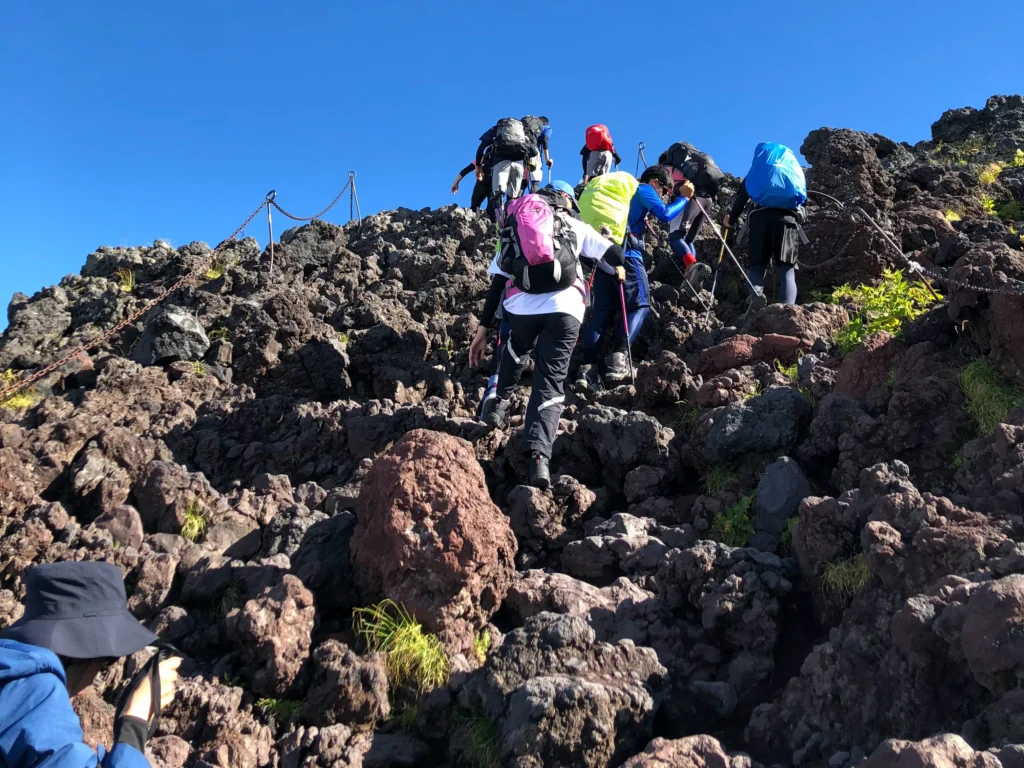
Mt. Fuji has four main trails, color-coded on all signs. Choosing the right one is critical to your success.
Yellow · Best for beginners
Yoshida Trail
- Start
- Subaru Line 5th Station · 2,305m
- Up · Down
- 5–7 hrs · 3–4 hrs
- Access
- Direct bus from Shinjuku (~2.5 hrs) or local bus from Kawaguchiko
~60% of climbers. Separate up/down paths and the most mountain huts (17+). Best first-timer choice — but extremely crowded.
Red · Forest route
Subashiri Trail
- Start
- Subashiri 5th Station · 1,970m
- Up · Down
- 6–8 hrs · 3–4 hrs
- 2026 Note
- Opened July 1, 2026 (was July 10)
Starts in beautiful forest before emerging above the tree line. Merges with Yoshida at the Hon-hachigome (upper 8th station). Descent features the sunabashiri — deep volcanic sand you can almost run down.
Blue · Shortest
Fujinomiya Trail
- Start
- Fujinomiya 5th Station · 2,400m
- Up · Down
- 4–6 hrs · 2–4 hrs
- Strength
- Closest to Kengamine (3,776m true peak)
Highest starting point makes this the shortest route. Very steep, and ascent and descent share the same path — congestion is common.
Green · Endurance test
Gotemba Trail
- Start
- Gotemba New 5th Station · 1,440m
- Up · Down
- 7–10 hrs · 3–4 hrs
- Elevation gain
- ~2,300m
The lowest start, the longest route, the hardest climb — and consequently the least crowded. Recommended only for highly experienced, fit hikers.
Mountain Hut Reservations: Book Early or Miss Out
Two ways past the hut-booking scramble
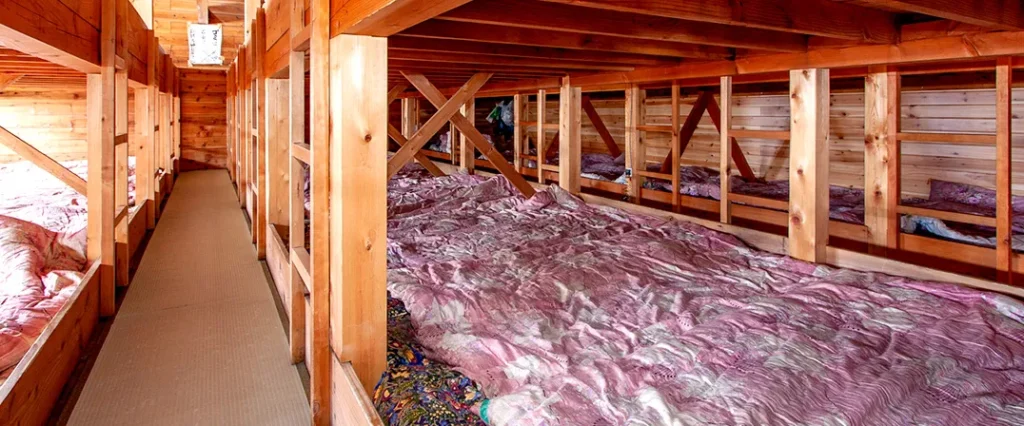
Staying at a mountain hut is mandatory if you want sunrise from the summit. For an inside look at what hut life is actually like, see our Mt Fuji hut reservations 2026. Huts aren’t hotels — they’re basic shelters, mostly with shared bunks, though some have curtained beds or small private rooms.
2026 Hut Booking CalendarWhen Do Reservations Open?
For the 2026 season, booking dates varied by hut, mostly between April and June. Some of the 2026 opening dates:
Kamaiwakan
Yoshida 7th · Bookings opened May 8
Ganso Muro
Yoshida 8th · Bookings opened May 16
Fuji Ichikan
Yoshida 7th · Bookings opened May 17
Tomoekan
Popular for private rooms
By altitude · 1 night · meals varyYoshida Trail Hut Prices
In 2026, expect roughly ¥13,500 to ¥17,600 per person for a night with dinner (usually curry rice), mostly with a packed breakfast — some huts, like Kamaiwakan, serve dinner only.
7th Station · 2,700–3,000m
¥13,500 – ¥17,600
E.g. Kamaiwakan ¥13,500 online Monday–Thursday, dinner only (breakfast dropped in 2018), plus a ¥200 toilet charge; Toyokan single room ¥15,400–¥17,600 with two meals. Good for acclimatization, but leaves a long summit push — the official model allows about four hours from a hut at about 3,000 m.
8th Station · 3,100–3,400m
¥14,500 – ¥16,500
Taishikan, 2026 shared room with two meals. Sleep higher; from Taishikan, at about 3,100 m, the hut allows 3–4 hours to the summit.
8.5th Station · 3,450m
¥16,000
Goraikōkan — highest hut on the Yoshida trail before the summit. 2026: ¥16,000 with dinner and breakfast, ¥14,000 room only.
Note: Fridays, Saturdays and holidays (especially Obon mid-August) cost more — in 2026 Taishikan added ¥1,000–¥2,000 and Kamaiwakan up to ¥2,500 — and fill the fastest. Book directly on hut websites or use aggregators like Japan Mountain Huts.
What to Bring: Gear and Costs
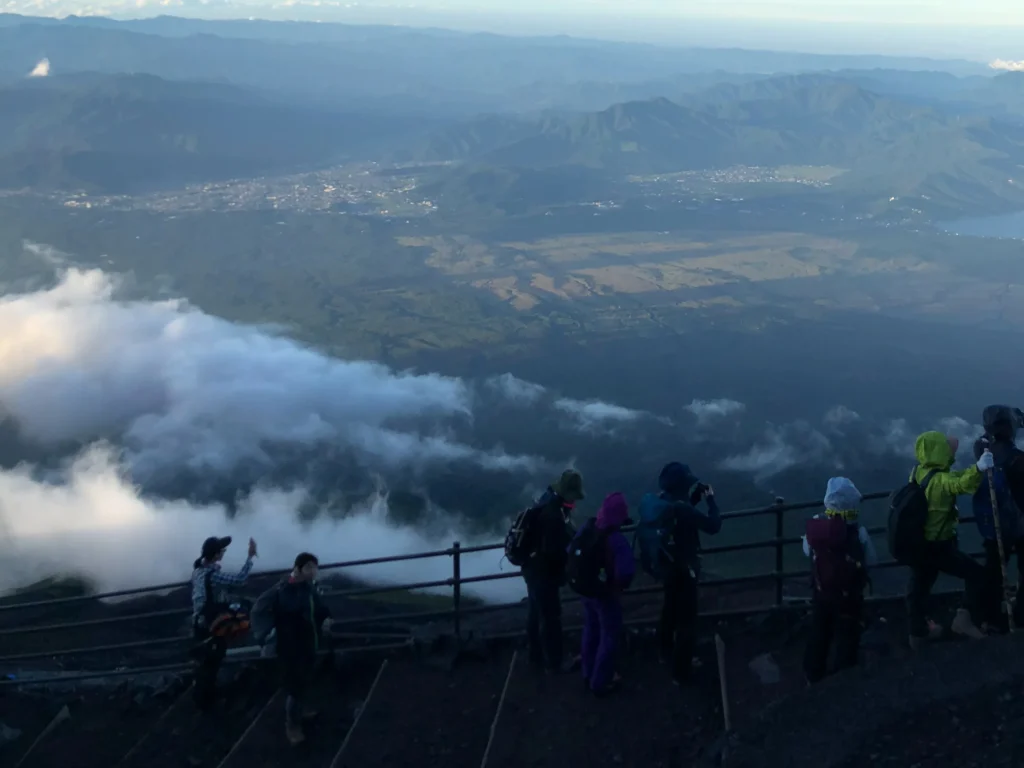
Don’t underestimate Mt. Fuji. Before dawn the summit can be near or below 0°C (32°F) even in August (JMA’s August normal daily low there is about 4°C), and severe storms can roll in without warning.
Checked at the gateMandatory Gear
Waterproof Rain Gear
Gore-Tex or similar, two-piece (jacket and pants). Ponchos are useless in high winds.
Warm Layers
Warm clothing — a fleece and a down jacket work well.
Proper Footwear
Footwear suitable for climbing — hiking or trekking boots with ankle support are best.
Highly Recommended Gear
Headlamp
Essential for the night climb to the summit.
30–40L Backpack
With a waterproof cover.
Water · 1–2 L
Refills available at huts but expensive.
Trekking Poles
Save your knees on the steep, slippery descent.
Portable Battery
Phone batteries drain incredibly fast in cold altitude.
The Golden Rule: Bring Cash
Bring cash. Lots of it. Toilets cost ¥200–300 per use (drop coins in a box). Drinks on the mountain cost ¥400–500 per bottle. Many huts don’t accept credit cards for snacks or branding your walking stick. Budget at least ¥5,000 in coins and ¥1,000 bills for on-mountain expenses alone.
Renting Gear
If you don’t want to carry bulky gear to Japan, rent it. Companies like Soranoshita and Yamarent offer full 6-to-12-piece sets (boots, rain gear, headlamp, bag, poles). For the 2026 season Yamarent’s published sets run from about ¥13,500 for a six-piece kit to ¥24,000–28,000 for the twelve-piece Gore-Tex packages, for one or two nights. Pick up in Shinjuku, Kawaguchiko, or at a Fifth Station shop.
The 10% discount is a different product, not a request at the counter. Yamarent runs a “tebura-wari” (hands-free) rate at 10% off, and the way it works catches people out: you have to put the listing marked 【手ぶら割】 in your cart rather than the standard one, which is the delivery version at full price. On the twelve-piece sets that is roughly ¥21,600 instead of ¥24,000. To qualify you collect and return at their physical shops rather than using delivery — the two need not be the same shop, so Shinjuku out and Kawaguchiko back is fine. Order at least two days before pickup, pay in advance, by the day before — and don’t plan on settling up at the counter, because the Fifth Station shops want everything paid before you arrive to keep the handover queue moving, collect any time from a week ahead up to the day itself, and return on the day you come down or the day after. You cannot split the return between a shop and the post, cannot stack it with another discount, and cannot change the items or pickup point once you have ordered. Two more practical notes: the Shinjuku shop serves customers in order of arrival, with priority for online time reservations between 1 June and 10 September (returns need no reservation), and the Fifth Station branches are separate shops at different trailheads — the Yoshida route one and the Fujinomiya one are not interchangeable, so book the one on your trail. Prices and terms move between seasons, so confirm on yamarent.com before you count on them.
Total
~¥46,000 (2026 prices)
If you’re traveling around Japan before or after your climb, a JR Pass can cover trains to the Mt. Fuji area (local buses to the 5th station are extra). Check JR Pass prices on Trip.com.
The gear I climb Fuji with
You can rent some of this at the 5th Station, but most climbers I meet would rather show up already sorted. It is all on Amazon Japan, so you can have it waiting at your Tokyo hotel before you head up — here is how to get an Amazon order delivered to your hotel, a convenience store or an airport locker.
Flying in from the US or Canada? A few of these are worth buying at home before you pack, rather than hunting for them here at the last minute — on amazon.com: headlamp, trekking poles, rain jacket & pants, hiking socks. Already in Japan? The Amazon Japan picks below can go straight to your hotel.
Should You Climb Mt Fuji — or Just See It?
Not sure the climb is worth it? Weigh it up first.
Trekking poles
The descent on loose volcanic gravel wrecks your knees. The single best comfort-per-yen buy.
Headlamp
The pre-dawn summit push is pitch dark and you want both hands free. Red mode keeps the hut peaceful.
Portable oxygen can
For the altitude headache that hits many first-timers above the 8th station.
Rain jacket & pants
Fuji weather turns fast and the wind above the tree line is cold. A poncho will not cut it.
Quick-dry hiking socks
Blisters end climbs. Cushioned, quick-dry socks are the cheap fix people forget.
Gloves
The upper trail is rocky and hands-on, and the summit is freezing while you wait for sunrise.
Daypack (20–30L)
A light pack for sightseeing days around the lakes that folds into a suitcase — for the climb itself, the 30–40 L pack above is the safer size.
Dry bag
Keeps your phone, passport and a spare layer dry when the rain comes in sideways.
Gaiters
Short gaiters keep the volcanic scree out of your shoes on the way down.
The Sunrise Strategy (Goraikō)
Our Mt. Fuji Sunrise (Goraikō) Photo Guide goes deeper on timing, camera setup, and what to expect at the summit. Sunrise from the summit (goraikō) is the ultimate goal. Depending on the date, the sun rises between about 4:20 AM (1 July) and 5:13 AM (10 September), using the official planning figures. If you’re climbing from Tokyo without a car, Fujikyu’s midnight bus straight to the 5th Station (departures July 3 – September 9 in 2026) was one way to reach the trailhead in the small hours — it arrived before the 3 AM gate opened, so summit sunrise still meant a mountain-hut stay.
The Standard Plan (Yoshida Trail)
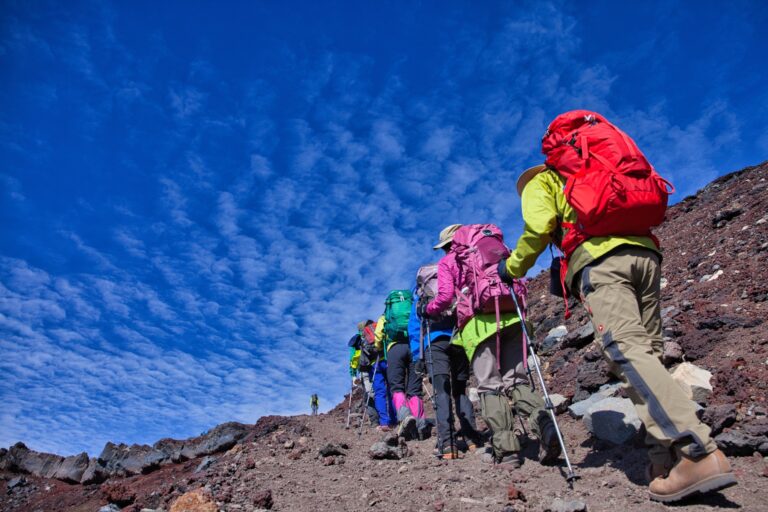
Arrive at the 5th Station. Spend 1–2 hours acclimatizing to altitude. Eat lunch, stretch.
Pass the gate and begin climbing.
Arrive at your 8th-station hut. Eat dinner and sleep by 7:00 PM. Bring earplugs and an eye mask.
Wake at about 12:10 AM, layer up, and leave the hut at 12:40 AM for the summit push, headlamp on. From a hut at about 3,000 m the official model allows about four hours, including rests and the pre-dawn queue. The trail will be a continuous line of headlamps.
Arrive at the summit (Kusushi Shrine). Find a spot facing east.
Sunrise (10 August; about 4:20 at the start of July).
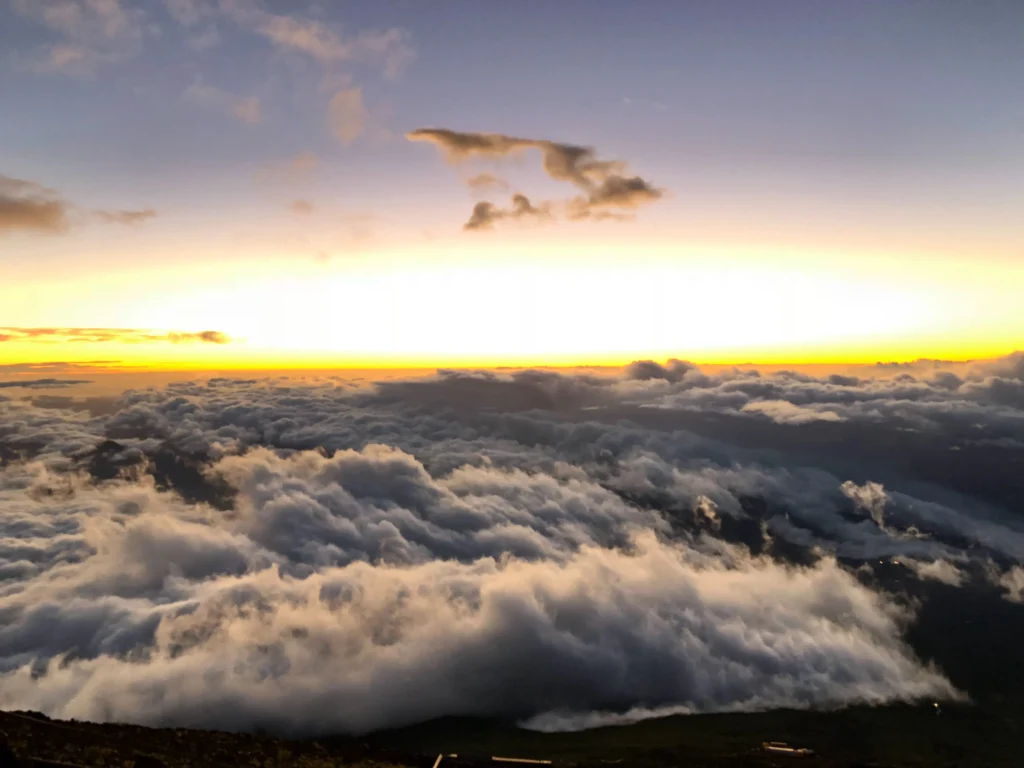
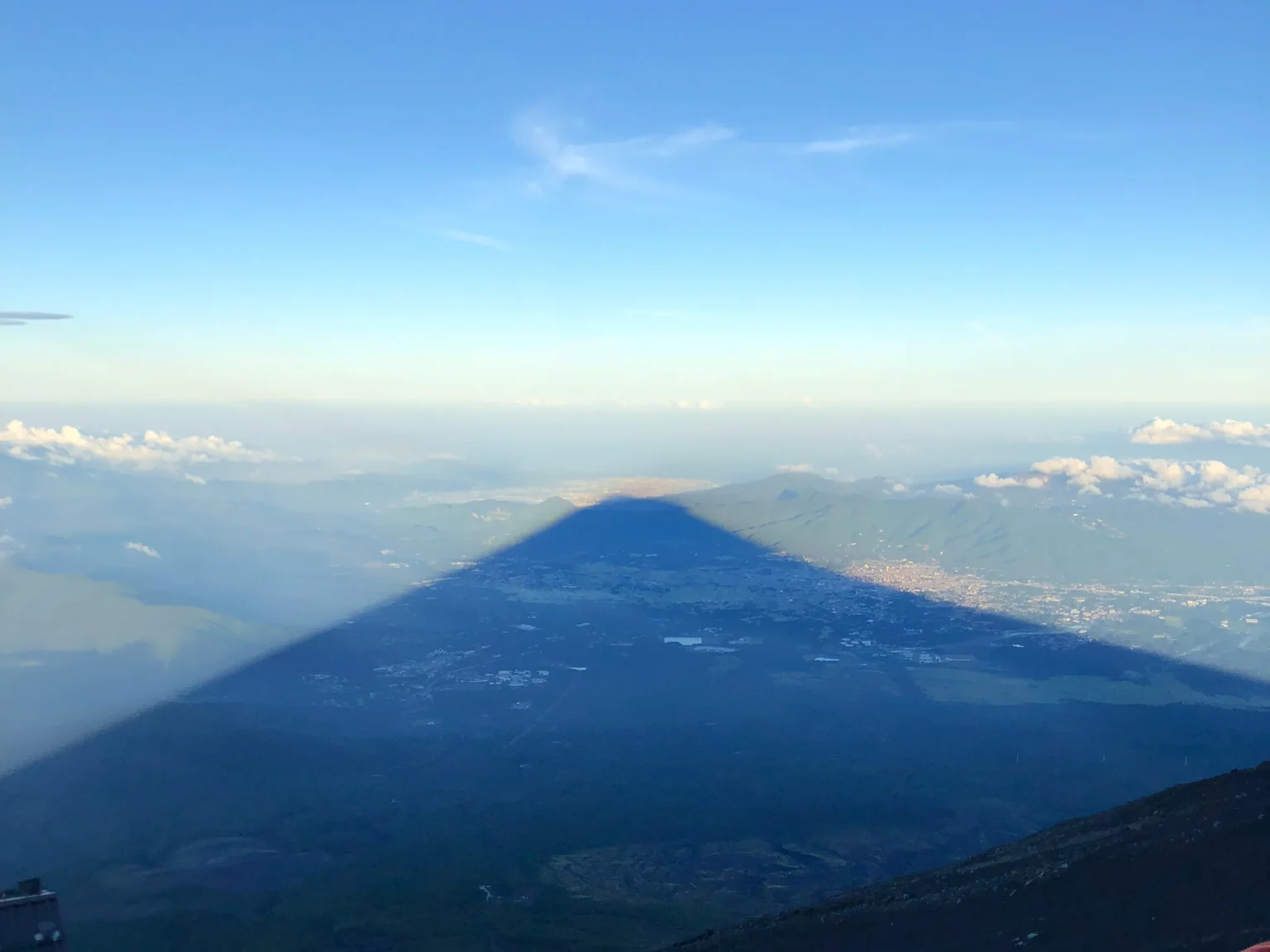
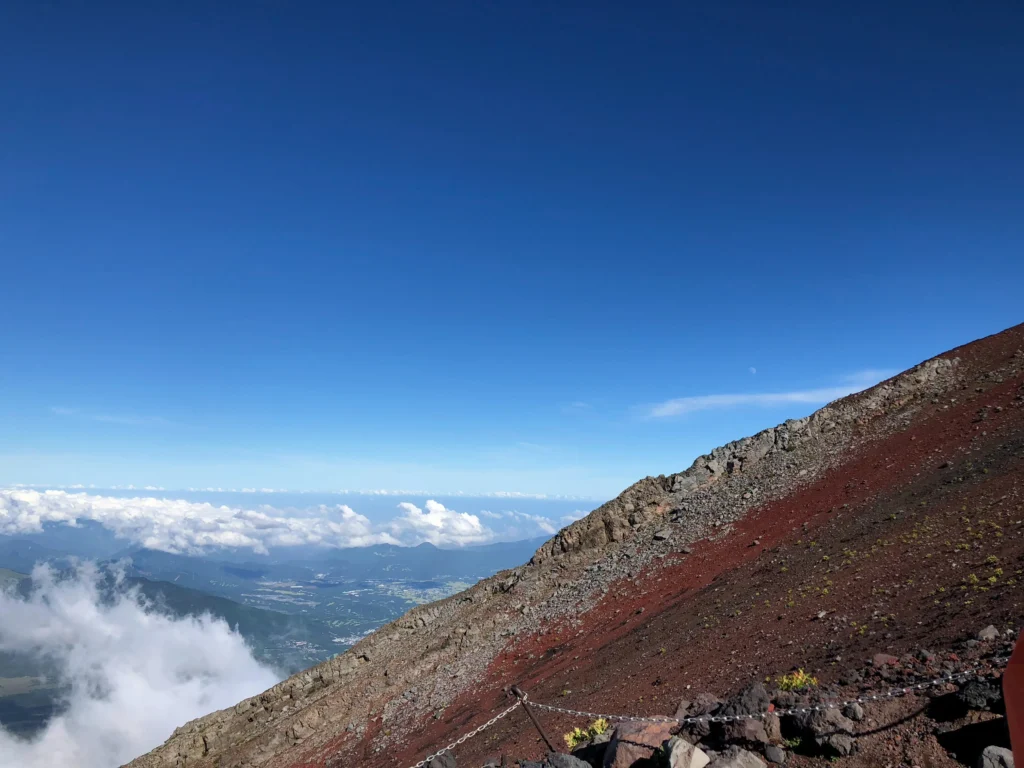
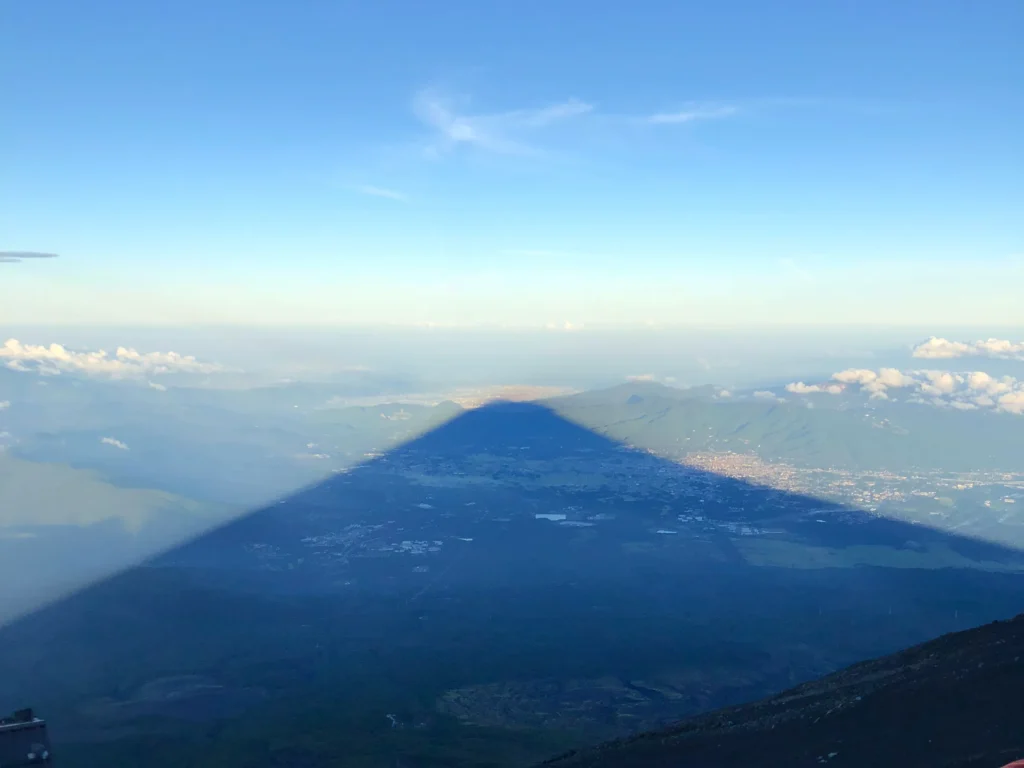
After sunrise, don’t immediately descend. If the crater path is open — in 2026 it was closed July 1–9 and opened on July 10; it closes with the season — walk the crater rim (Ohachi-meguri, ~90 minutes) to reach Kengamine (3,776m), the absolute highest point in Japan. Look west shortly after sunrise to see Kage Fuji (Shadow Fuji) — the mountain’s massive triangular shadow cast across the clouds.
Safety, Altitude Sickness & Emergency Contacts
If you’re tempted to climb outside the official Jul 1–Sep 10 window, read our Climbing Mt. Fuji in Winter — A Rescuer’s Urgent Warning first.
Mt. Fuji is safe if you respect it, but altitude sickness affects roughly 30% of climbers. Symptoms include headaches, nausea, dizziness, and shortness of breath.
How to Prevent It
- Acclimatize at the 5th station for at least an hour before hiking
- Ascend slowly. Drink plenty of water
- Don’t drink alcohol at the mountain hut
- Descending is the best remedy for altitude sickness, and the only safe move when it is severe. If you feel terrible, turn around — don’t push for the summit
Emergency Contacts
Police
110
Fire / Ambulance
119
Yoshida 5th Station
090-5190-0167
Gotemba Police
0550-84-0110
Fujinomiya Police
0544-23-0110
Cell coverage is surprisingly good on the mountain (docomo, for example, covered parts of the summit and many huts from early July to late August 2026), but batteries die quickly in the cold. Before you climb, submit a climbing plan — for Shizuoka trails, through the Shizuoka Police online form, Compass or YAMAP; for Yoshida, online via Compass.
If a typhoon or earthquake strikes during your trip, read our Disaster Preparedness Guide for Travelers in Japan.
⚠ Warning: Never climb Mt. Fuji outside the official summer season. The huts are closed, there is no rescue infrastructure, and the weather is lethal. Read our guide on Why Climbing Mt. Fuji in Winter is Dangerous to understand the risks.
Before You Go: Day 0 Preparation Checklist
Don’t leave anything to the last minute. Advance preparation saves time, although in 2026 the trail-entry procedures could also be completed on site.
2–3 months before
Book your mountain hut. Popular huts and dates fill early.
1–2 months before
Sort your trail entry. Optionally reserve a Yoshida slot on fujisan-climb.jp, or register on the FUJI NAVI app for the Shizuoka trails (both can also be done on the day at the 5th Station). Pay the ¥4,000 fee.
1–2 weeks before
Rent gear if needed — order 2+ days before pickup to keep the 10% shop-collection discount (Soranoshita or Yamarent). Submit your climbing notification via Compass.
The night before
Withdraw ¥5,000+ in cash (¥100 and ¥500 coins, ¥1,000 bills). Charge all devices. Pack everything.
Pre and Post-Climb Logistics
Rest and get to the trailhead
You’ll be exhausted after your climb. Don’t plan a heavy sightseeing day immediately afterward.
Where to Stay. Book a hotel near Lake Kawaguchiko or Fujiyoshida to rest and shower. See our guide on Where to Stay Near Mt. Fuji Without a Car or search Mt. Fuji Area Hotels on Agoda for the best rates.
Access from Tokyo. The easiest way to reach the Yoshida 5th Station is the direct highway bus from Shinjuku (~2.5 hours; 2026 summer daytime fares ¥4,500 one way online or ¥4,800 at the counter — the deep-night bus was ¥5,500 online or ¥5,800). Read our Tokyo to Kawaguchiko Access Guide. For broader Japan travel, see our Getting Around Japan Guide.
Want everything handled — hut, transport, guide? Klook offers highly-rated Mt. Fuji climbing tours that take care of the entire reservation puzzle.
View Mt. Fuji Climbing Tours →Post-climb reward. Once you’ve recovered, drive or bus to Lake Motosu — the view on the back of the older (2004-series) ¥1,000 note. It’s a 40-minute drive from Kawaguchiko and the perfect way to see the mountain you just conquered, from below.
Tips for Southeast Asian Visitors
Mt. Fuji is increasingly popular with travelers from Singapore, Thailand, Malaysia, and Indonesia. Here are practical tips specific to your trip.
Flights. Budget airlines fly direct to Tokyo from Singapore (Scoot, ~7 hours; Jetstar Asia stopped flying in July 2025), Bangkok (AirAsia X, ~6 hours) and Kuala Lumpur (AirAsia X, ~7 hours). Fares vary widely by date, so compare early.
Visa. Singapore passport holders get visa-free entry for up to 90 days, and so do Malaysians with an ICAO-compliant ePassport. Thai ePassport holders get up to 15 days visa-free, and Indonesians up to 15 days once they have registered their ePassport for the visa waiver. Always check the latest requirements before travel.
Temperature shock. Coming from Southeast Asia, the temperature difference is extreme. The Mt. Fuji summit in July averages 5°C (41°F) — compared to 28°C in Singapore or 30°C in Bangkok. At night it drops to near 0°C. Bring serious warm layers; a tropical wardrobe will not survive this mountain.
Food on the mountain. Hut meals are typically Japanese curry rice or simple bento. Halal-certified options aren’t available at huts. If you follow halal, bring food from convenience stores in the city — 7-Eleven and Lawson carry onigiri (rice balls) with seafood fillings and vegetable options that are generally halal-friendly (check labels for alcohol-based seasonings). Vegetarian options at huts are limited; inform the hut when booking.
Payment. Bring cash: toilets mostly take coins and many purchases at huts are cash, although several huts take card payment for bookings and the Fujinomiya-side summit toilet took PayPay in 2026. Withdraw yen from 7-Eleven or Post Office ATMs before you head to the mountain.
Climbing Mt. Fuji is profound, exhausting, and unforgettable. For a future climb, check next season’s dates and rules, reserve a hut when bookings open, respect the mountain’s environment — and you’ll be standing above the clouds for the sunrise of a lifetime.
Frequently Asked Questions
How do I climb Mt. Fuji in 2026?
You must pay a mandatory ¥4,000 entry fee and pass through a gate system. In 2026, on the Yoshida Trail you could book an entry slot online in advance or pay on the day; on the Shizuoka trails you registered and completed safety training on the FUJI NAVI app or at the 5th Station. You also need proper hiking gear and a mountain hut reservation if you plan to climb overnight.
Do I need a reservation to climb Mt. Fuji?
Not in advance for the climb itself in 2026, but you had to complete the entry procedure. On the Yoshida Trail an online reservation was optional (you could also pay on the day), and climbers without a hut booking were capped at 4,000 a day. For Fujinomiya, Subashiri and Gotemba, you registered on the FUJI NAVI app or at the 5th Station. Between 2:00 PM and 3:00 AM, every trail required a mountain hut reservation.
How much does it cost to climb Mt. Fuji?
The mandatory entry fee is ¥4,000. In 2026 a typical budget from Tokyo was about ¥31,000 to ¥50,000 — a round-trip daytime bus (about ¥9,000 booked online), one night in a hut (about ¥13,500–¥17,600), gear rental if needed (from about ¥13,500), and around ¥5,000 in cash for toilets and water.
Which Mt. Fuji trail is best for beginners?
The Yoshida Trail (Yellow). It has the most mountain huts, excellent infrastructure, first-aid stations, and separate paths for ascending and descending. As the most popular route, you’ll rarely be alone — making it safer for novice hikers.
When is Mt. Fuji open for climbing in 2026?
In 2026, Yoshida and Subashiri opened July 1 and closed September 10; Fujinomiya and Gotemba opened July 10 and closed September 10. The 2026 season has ended — check official announcements for the next season’s dates.
Is bullet climbing Mt. Fuji banned?
Effectively, yes, in 2026. Without a mountain hut reservation you could not start up between 2:00 PM and 3:00 AM on any trail, and Yamanashi required a pledge not to bullet-climb.
How do I book a mountain hut on Mt. Fuji?
In 2026, bookings opened between April and June for the summer season. Reserve directly through individual hut websites or aggregators like Japan Mountain Huts. Full advance payment is usually required, and popular huts and dates (8th-station huts, private rooms, weekends and Obon) fill early.
What should I bring to climb Mt. Fuji?
Three items were checked at the Yoshida gate in 2026: warm clothing, two-piece rain gear (jacket and trousers) and footwear suitable for climbing. You also need a headlamp, a 30–40L backpack, 1–2 liters of water, high-energy snacks, a portable phone charger, and ¥100 coins for pay toilets.
Related Mt. Fuji Guides
- Mt. Fuji Huts 2026: Rooms, Meals & Booking Rules
- Mt. Fuji Sunrise (Goraikō) Photo Guide
- Mt. Fuji Night Climb — A Visual Journey From Dusk to Dawn
- Best Time to See Mt. Fuji: A Complete 2026 Seasonal Guide
- Is Mt. Fuji Visible Today? Live Cameras + 7-Day Forecast
- Climbing Mt. Fuji in Winter: A Rescuer’s Urgent Warning
Join travelers discovering Japan's hidden side
Weekly dispatches from off-the-beaten-path Japan — spots and stories you won't find in guidebooks.
No spam. Unsubscribe anytime.
Welcome aboard!
You're in. See you in your inbox soon.