Yamanashi · Fuji Five Lakes · 2026–27
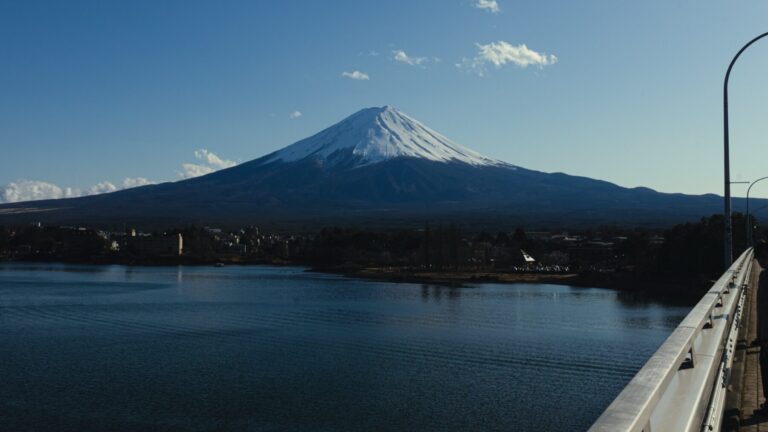
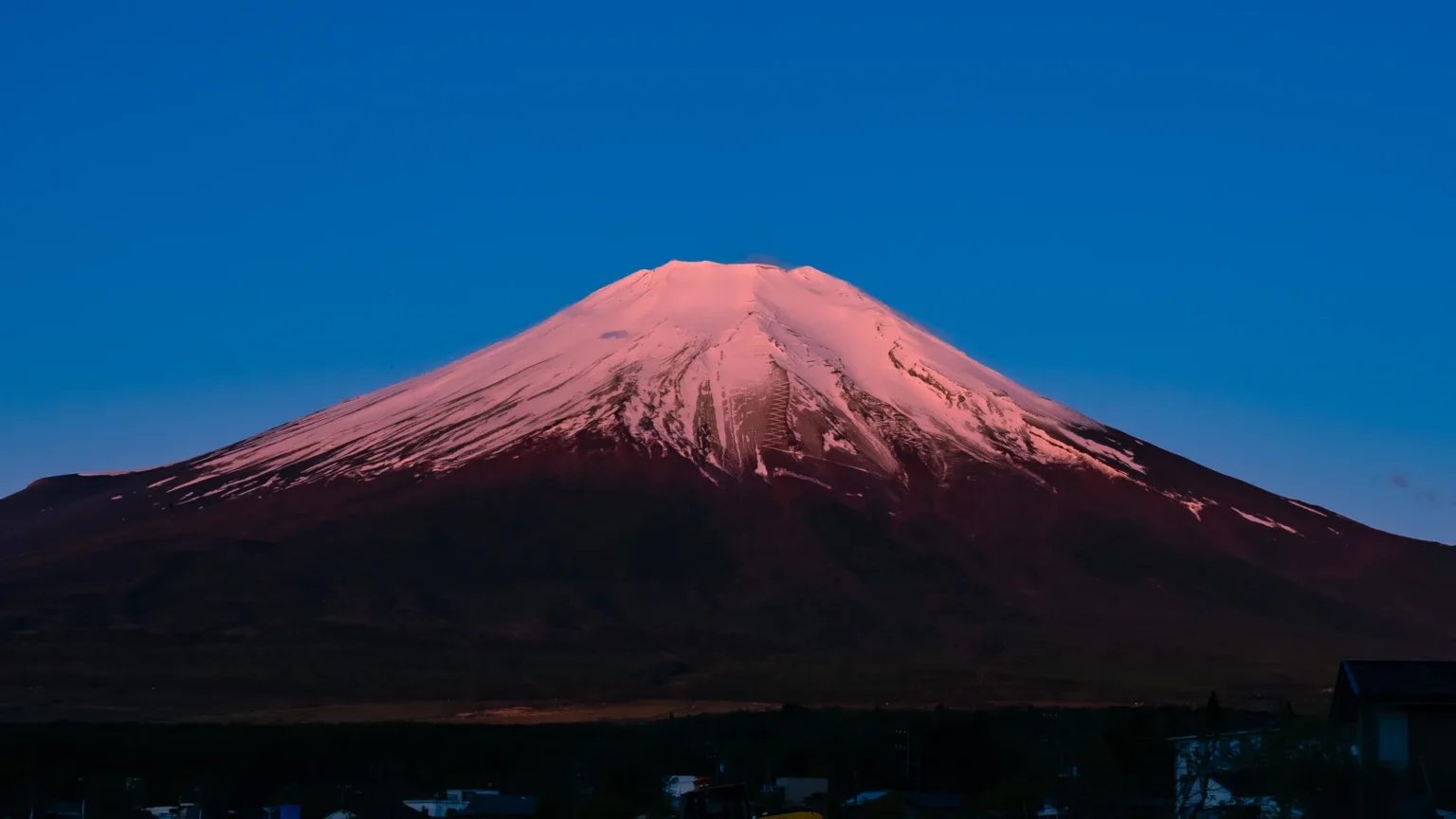
Two days at the Fuji Five Lakes give you two mornings, and the morning is when Mt Fuji shows itself. In the City of Fuji’s 8 a.m. record for 1991–2025, taken on the south side of the mountain rather than at the lakes, Fuji was at least partly visible on 85% of December mornings and 79% of November mornings, against 25% in July. That is a long-term average, not a sunrise forecast, but it shows when your odds are best. This plan puts the viewpoints in those two mornings — the Panoramic Ropeway on day one, the Chureito Pagoda at sunrise on day two — and keeps the afternoons for things that still work under cloud. It is built for November to February, on one night in Kawaguchiko, without a car.
One thing I always tell people about the Fuji Five Lakes: plan around the mountain, not the sights. The visibility records below are morning records, and two days give you only two mornings, so this plan puts the two viewpoints that need Fuji, the ropeway and the Chureito Pagoda, first thing on each day, and saves the stops that are still worth it when Fuji is hidden for later.
What does a 2-day Fuji Five Lakes itinerary look like?
Day one is Lake Kawaguchi: up the ropeway while the morning is clear, across the lake by boat to Oishi Park, then the north shore in the afternoon. Day two starts on the first train for sunrise at the Chureito Pagoda, then moves east through Fujiyoshida and Oshino to Lake Yamanaka, where you catch the bus back to Tokyo. Times are from the operators’ current timetables as we read them on 11 October 2026: the boat’s winter schedule (November to March), the Fujikyu train timetable from 14 March 2026, the bus timetables in force in October. Bus timetables can change from November, so recheck the return bus in particular when you book.
| Time | Plan |
|---|---|
| Day 1 — Lake Kawaguchi | |
| 06:45 | Highway bus from Busta Shinjuku; Kawaguchiko Station 08:30 |
| 09:00 | Red Line bus to the ropeway and pier stop (11 minutes); ride the ropeway, except 7–18 December 2026 (planned closure), when you go straight to the boat |
| 10:45 | Oishi Park Line boat from Funatsu pier (about 15 minutes); the next is 11:45 |
| 11:00–13:00 | Oishi Park and lunch on the north shore |
| Afternoon | Red Line to the Kubota Itchiku Art Museum stop: the Momiji Corridor in November |
| Evening | Onsen and dinner in Kawaguchiko |
| Day 2 — Chureito, Oshino, Lake Yamanaka | |
| 05:18 | First train to Shimoyoshida (05:31), walk and climb to the pagoda for sunrise |
| After sunrise | Walk down to Honmachi 2-chome street; the 08:05 or 08:36 train back to Kawaguchiko for breakfast and your bag |
| 09:45 | Fujikko-go bus from Kawaguchiko Station; Oshino Hakkai 10:14 |
| 12:14 | Fujikko-go on to Yamanakako Asahigaoka (12:46); lunch by the lake |
| Afternoon | Lake Yamanaka shore; from 30 October to 15 November 2026 (planned) the autumn-leaves light-up from 16:30 |
| Evening | Highway bus to Shinjuku from Asahigaoka (last direct bus 19:30 in the October timetable) |
Why does this plan put the viewpoints in the mornings?
Because that is when the mountain is most often out, and two days only give you two mornings. The City of Fuji keeps an 8 a.m. visibility record from the south side of the mountain; over 1991–2025 it shows these monthly odds of seeing at least part of Fuji. Sunrise times are for Kofu, the nearest city the National Astronomical Observatory lists, at sea level.
| Month | Fuji at 8 a.m. · Kofu sunrise on the 15th (2026–27) |
|---|---|
| October | 69% · 05:52 |
| November | 79% · 06:21 |
| December | 85% · 06:48 |
| January | 82% · 06:55 |
| February | 75% · 06:33 |
| March | 61% · 05:57 |
What the table means for you: from November to February the 05:31 arrival at Shimoyoshida puts you on the pagoda deck before sunrise, and in those months the record shows Fuji at 8 a.m. on 75–85% of mornings. These are historical odds from the south side of the mountain, not a forecast for your sunrise. On 15 October (05:52) and 15 March (05:57) sunrise in Kofu comes before you can climb from a 05:31 arrival, so check the time for your date. It also matches the visibility page I keep from Fujiyoshida, which puts the best time of day at roughly 5:30 to 8:30 a.m. For today’s view, check my morning visibility report; for the month-by-month picture, see the best time to see Mt Fuji.
Day 1: Lake Kawaguchi — ropeway, boat and the north shore
Take the first bus, go straight up the ropeway, and cross the lake by boat; leave the north shore for the afternoon, when the view matters less.
| The day at a glance | Plan |
|---|---|
| Early | Highway bus from Shinjuku, 06:45, at Kawaguchiko Station 08:30 |
| Morning | Red Line bus to the Mt Fuji Panoramic Ropeway; up to the 1,075 m deck (closed 7–18 December 2026 for inspection, planned) |
| Late morning | Boat across Lake Kawaguchi to Oishi Park |
| Afternoon | The north shore by Red Line; the Momiji Corridor in November (last Red Line from its stop 18:32) |
| Sleep | Kawaguchiko, near the station |
Start point: Kawaguchiko Station.
06:45 Shinjuku to Kawaguchiko
The first highway bus leaves Busta Shinjuku at 06:45 and reaches Kawaguchiko Station at 08:30. In the October 2026 timetable there are 55 buses a day each way, every ten minutes through the morning. The standard adult fare is ¥2,200; Fujikyu advertises ¥2,000 when you pay online. The catch is booking: from October, Keio-run buses are sold on Highway Bus dot com and Fujikyu-run buses on Fujiyama Connect, and moving between the two means cancelling and rebuying. Our Shinjuku–Kawaguchiko bus guide shows which site sells which departure. Coming from the airport instead? See Haneda or Narita for Mt Fuji.
Ask your hotel whether it will hold your bag before check-in, or use the lockers at Kawaguchiko Station, and travel light for the rest of the day.
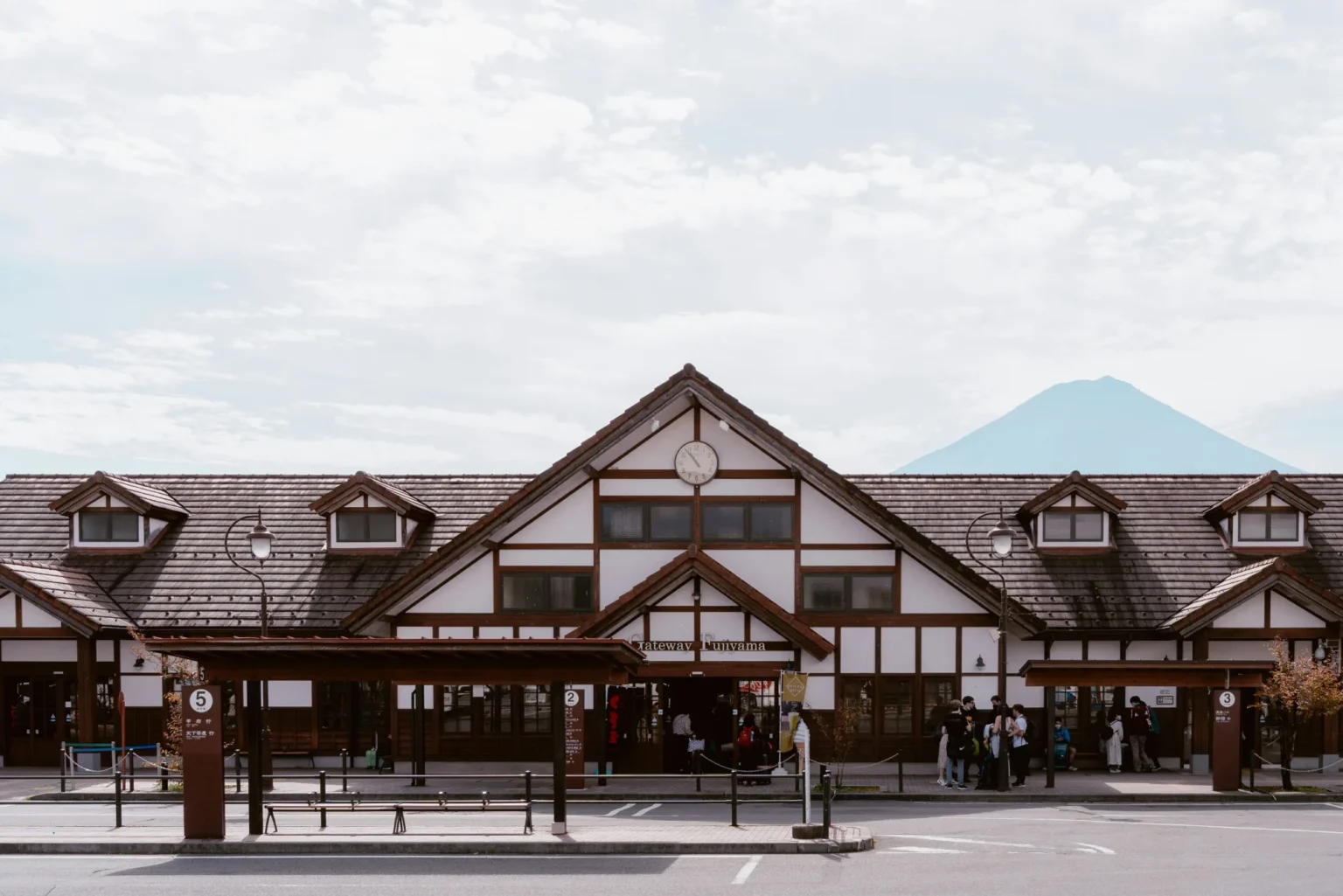
09:00 Mt Fuji Panoramic Ropeway
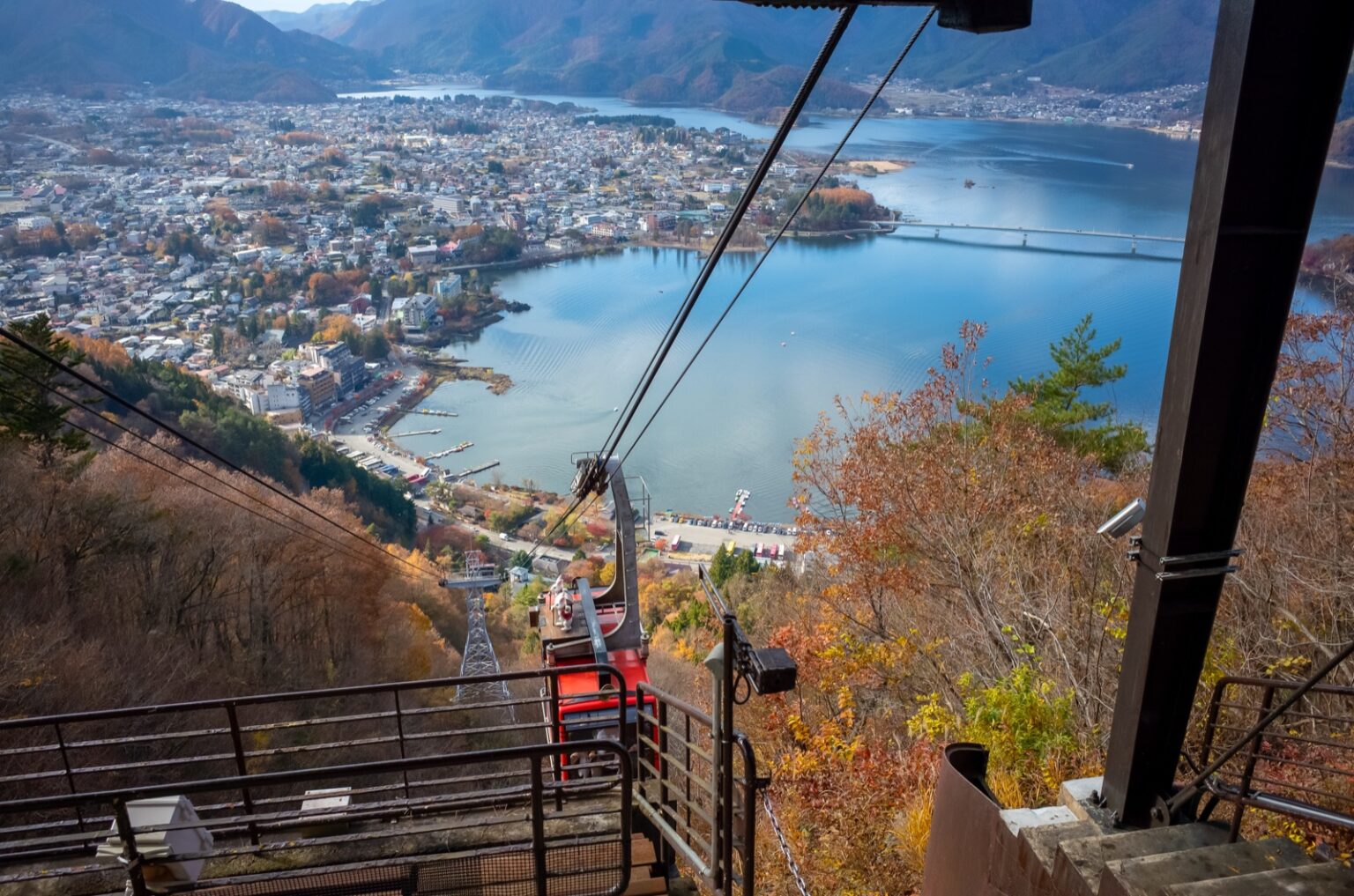
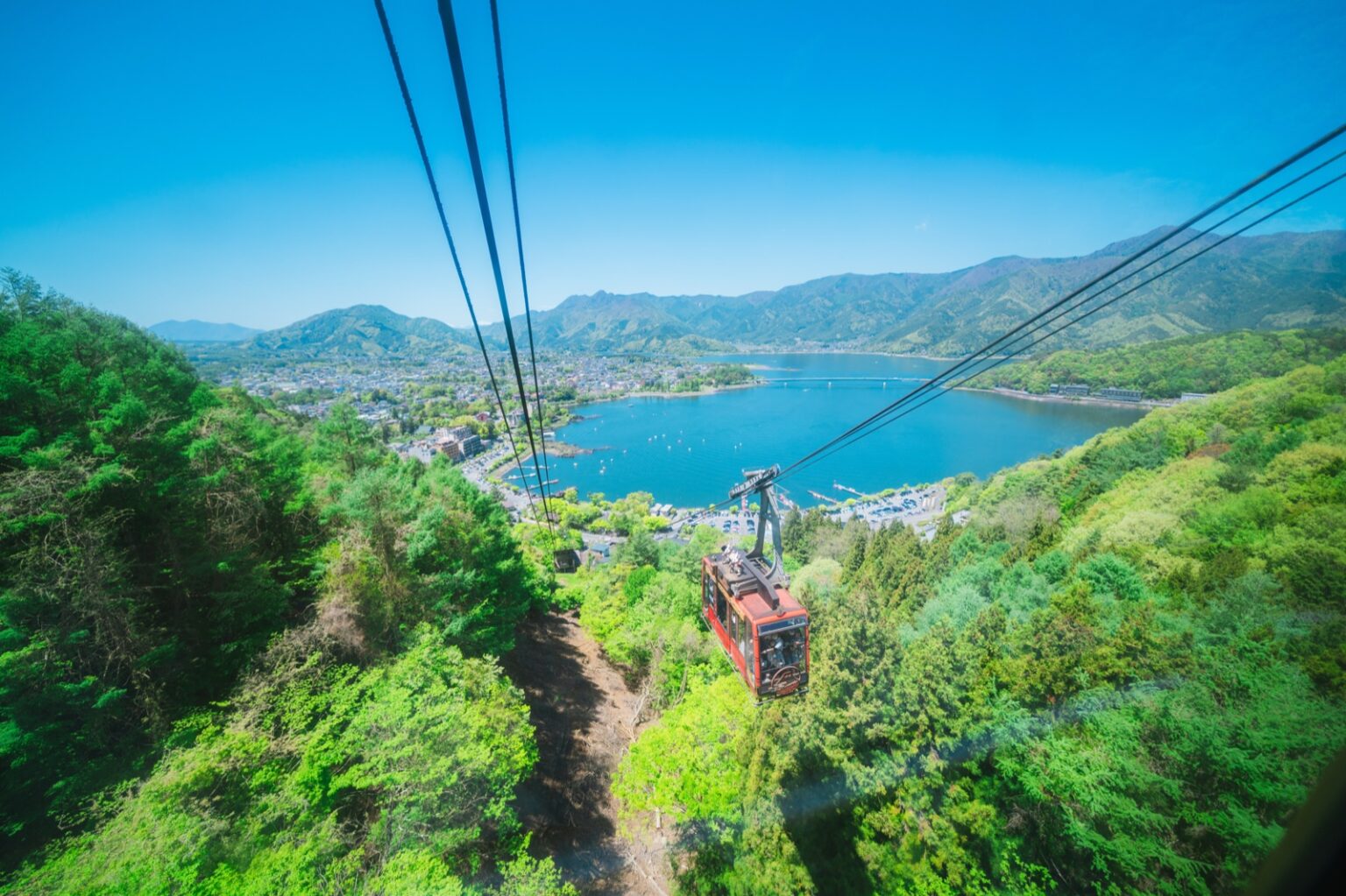
The Red Line sightseeing bus leaves Kawaguchiko Station every 15 minutes from 09:00 to 17:45 and reaches the stop for the boat pier and ropeway (遊覧船・ロープウェイ入口) 11 minutes later. The ropeway normally runs 8:30–17:00, with the last descent at 17:20, and climbs to a viewing deck at 1,075 metres with views of Lake Kawaguchi and Mt Fuji. A round trip is ¥1,000 for adults until 31 October 2026 and ¥1,200 from 1 November. The ropeway is closed for its annual inspection from 7 to 18 December 2026 (planned); on those dates, skip it and go straight to the boat. On 25–26 November it closes early, with the last ride up at 15:00 and the last ride down at 15:20. What’s at the top, including the new Fuji Fortune Terrace, is in our ropeway guide.
The ropeway climbs Mt Tenjo, the setting, the operator says, of the folk tale Kachi-Kachi Yama, in which a rabbit takes revenge on a wicked tanuki; you will see the two of them all over the summit. The ride takes about three minutes to the viewing deck at 1,075 m, with views of Lake Kawaguchi and Mt Fuji.
10:45 Boat to Oishi Park
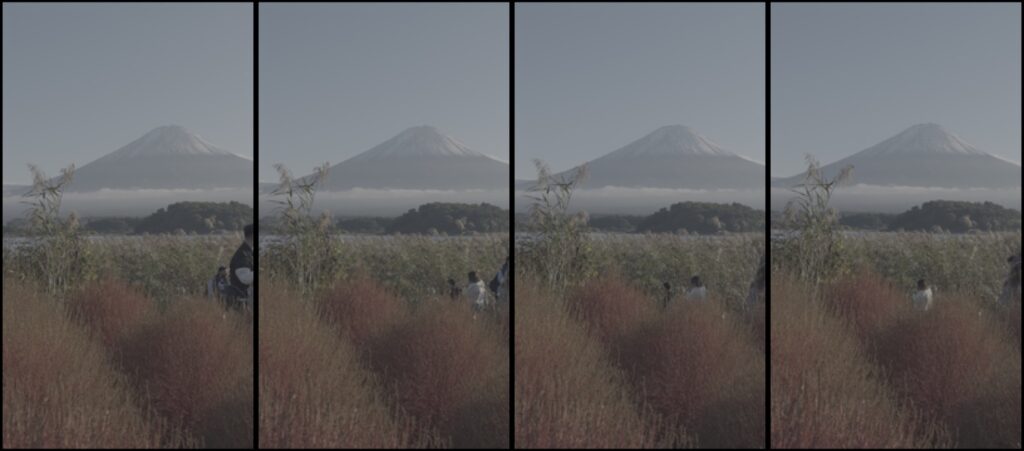
Fujigoko Kisen’s Oishi Park Line crosses from Funatsu pier, by the ropeway, to Oishi Park in about 15 minutes for ¥1,000 one way. On its winter schedule (1 November to 31 March) boats leave Funatsu at 9:45, 10:45, 11:45, 13:15, 14:15 and 15:15. Aim for the 10:45; if the ropeway queue makes you miss it, take the 11:45. If the boat isn’t running, the Red Line reaches the Oishi Park stop 27 minutes from the station. The ferry guide has the set ticket with the ropeway.
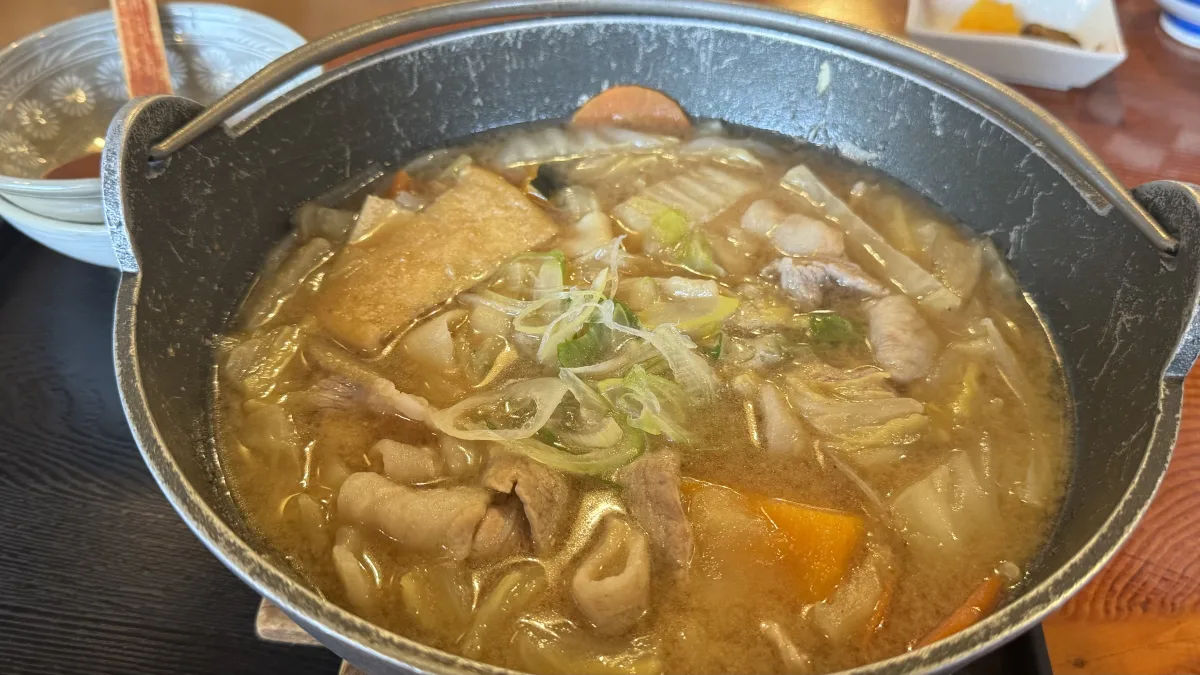
Oishi Park is a flower park on the north shore with Fuji across the water and seasonal plantings. Hoto, Yamanashi’s thick miso noodle stew, is the local lunch.
Afternoon: the north shore and the Momiji Corridor
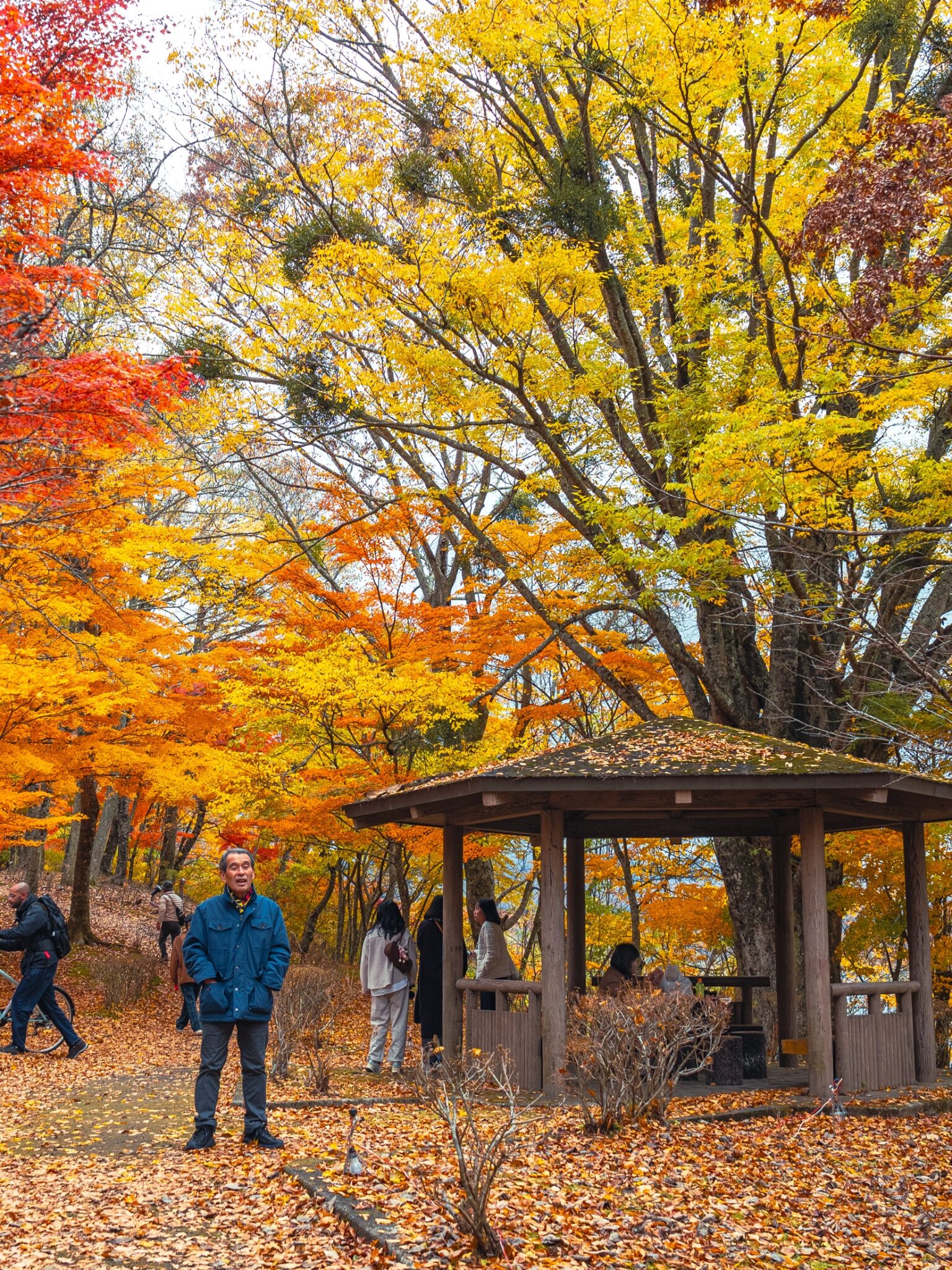
From Oishi Park, the Red Line runs back along the north shore. In November, get off at the Kubota Itchiku Art Museum stop for the Momiji Corridor, the maple-lined stream that the Fujikawaguchiko Autumn Leaves Festival lights up. The 2026 festival runs 7–29 November, with the illumination from sunset to 21:00. The last Red Line bus from that stop leaves at 18:32, well before the lights go off. Either take it, or arrange your way back (a taxi, for example) before you set out; the Kawaguchiko Station bus window is open until 19:00. I went on 19 November 2025 and was near the end of the colour; the festival guide covers the timing, the parking change for 2026 and the last bus.
For the evening, if your hotel has no bath of its own, our guide to day-trip onsen around Mt Fuji lists 11, with tattoo rules.
One night by Lake Kawaguchi: near the station if you are taking the 05:18 train, on the lake if you want the view from your room.
See Kawaguchiko stays on Booking.com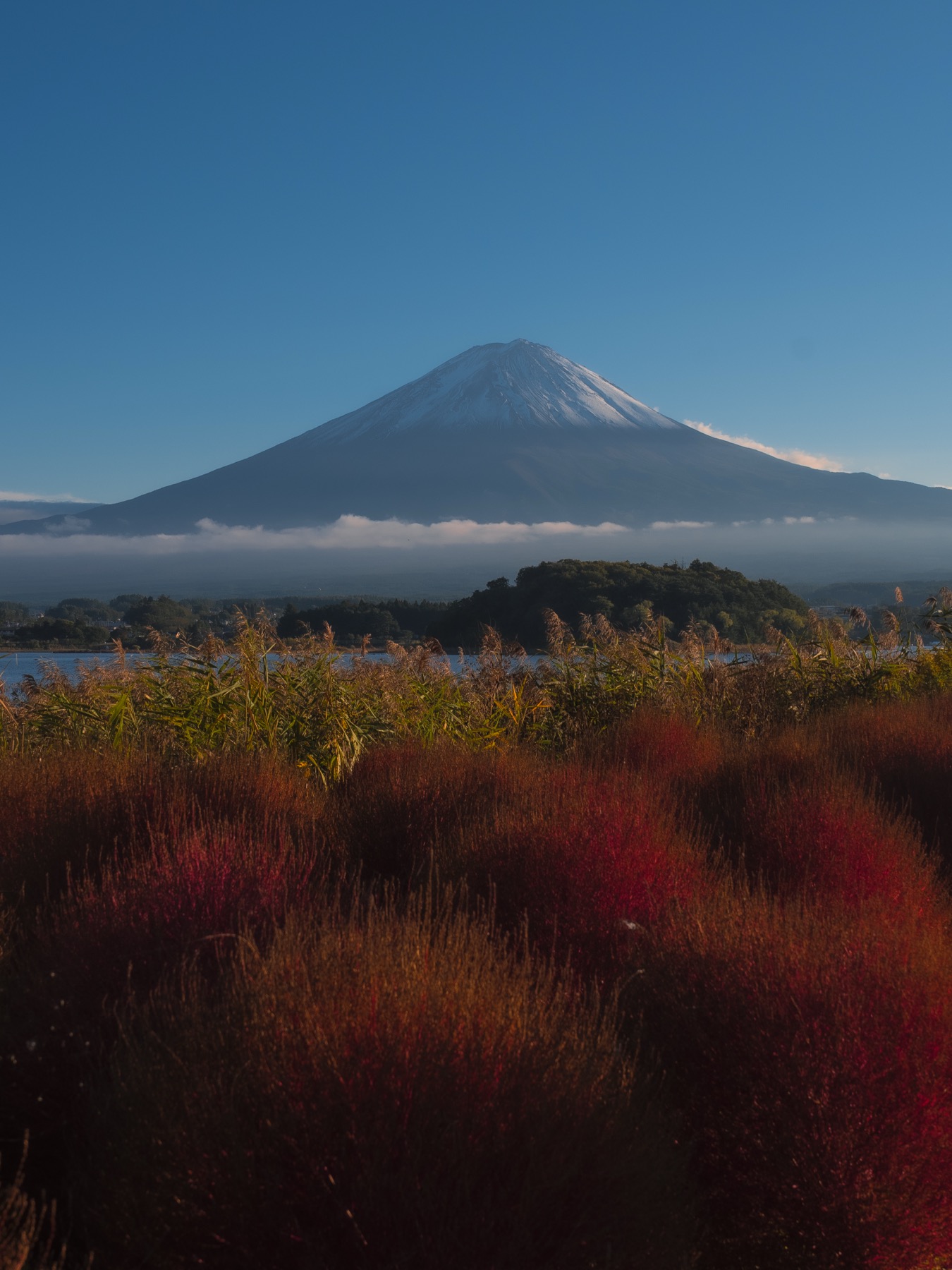
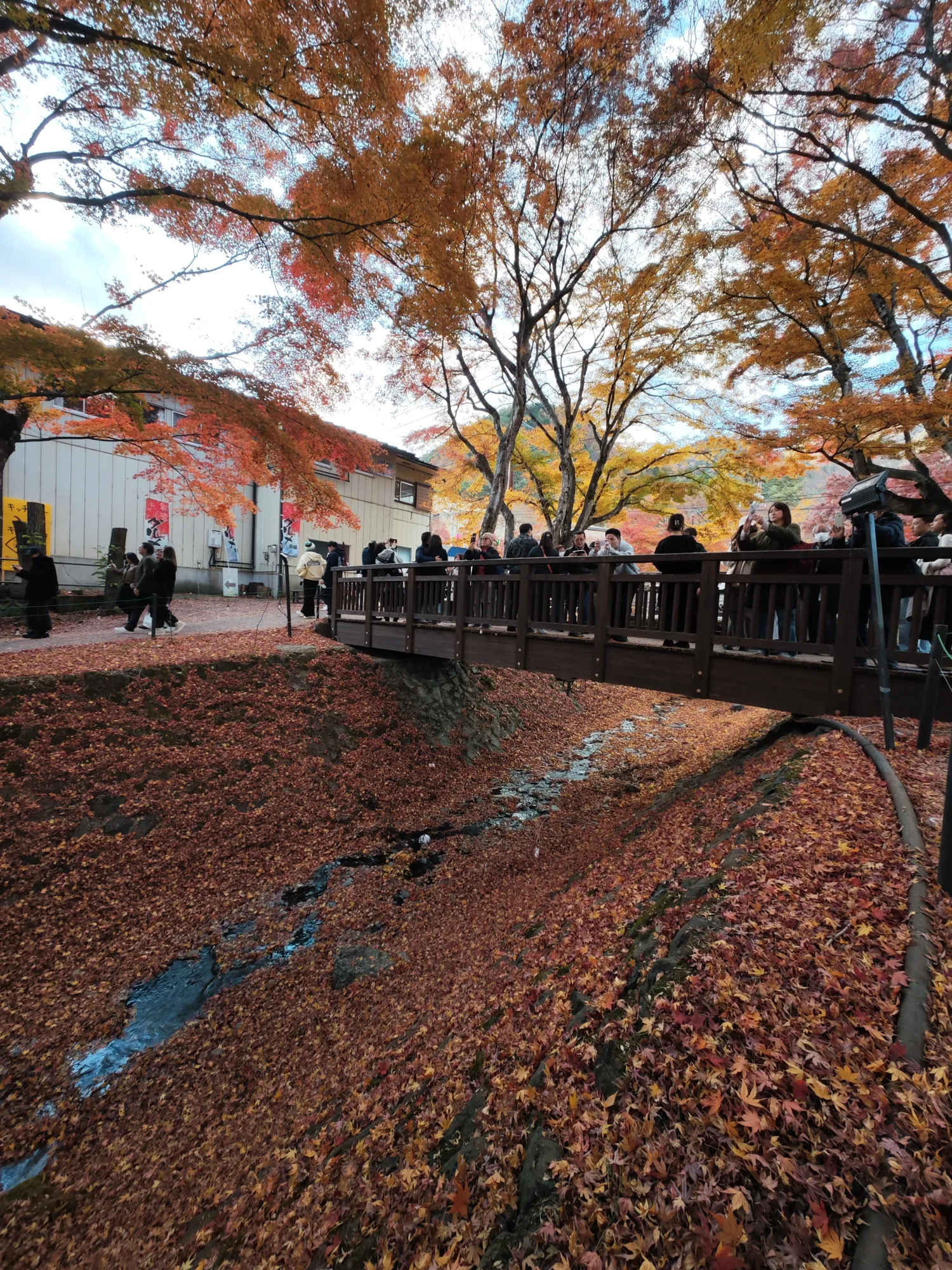
Lake Kawaguchi has the longest shoreline of the five lakes, Yamanashi Prefecture says, which is why the north shore feels like a separate trip from the station side. The Momiji Corridor is a short stretch of about 150 maples along a stream.
Hoto, if you skipped it at lunch
Thick flat noodles simmered with vegetables and pumpkin in miso, “the representative local dish everyone knows”, in Yamanashi Prefecture’s words; it says the tale that Takeda Shingen invented it as army food is told, but written records appear mostly from the Edo period on.
Where to sleep tonight
Near Kawaguchiko Station: the 05:18 train for the pagoda leaves from there tomorrow, and so does the Fujikko-go bus.
Day 2: Chureito at sunrise, Oshino and Lake Yamanaka
Be on the pagoda deck before sunrise, then work east by bus and finish at Lake Yamanaka, where the highway buses back to Tokyo start.
| The day at a glance | Plan |
|---|---|
| Before dawn | The 05:18 train to Shimoyoshida; walk up to the Chureito Pagoda for sunrise |
| After sunrise | Honmachi 2-chome in Fujiyoshida |
| Morning | Train back to Kawaguchiko for breakfast and your bag; the 09:45 Fujikko-go to Oshino Hakkai |
| Afternoon | On to Lake Yamanaka; highway bus back to Tokyo |
05:18 First train to Shimoyoshida
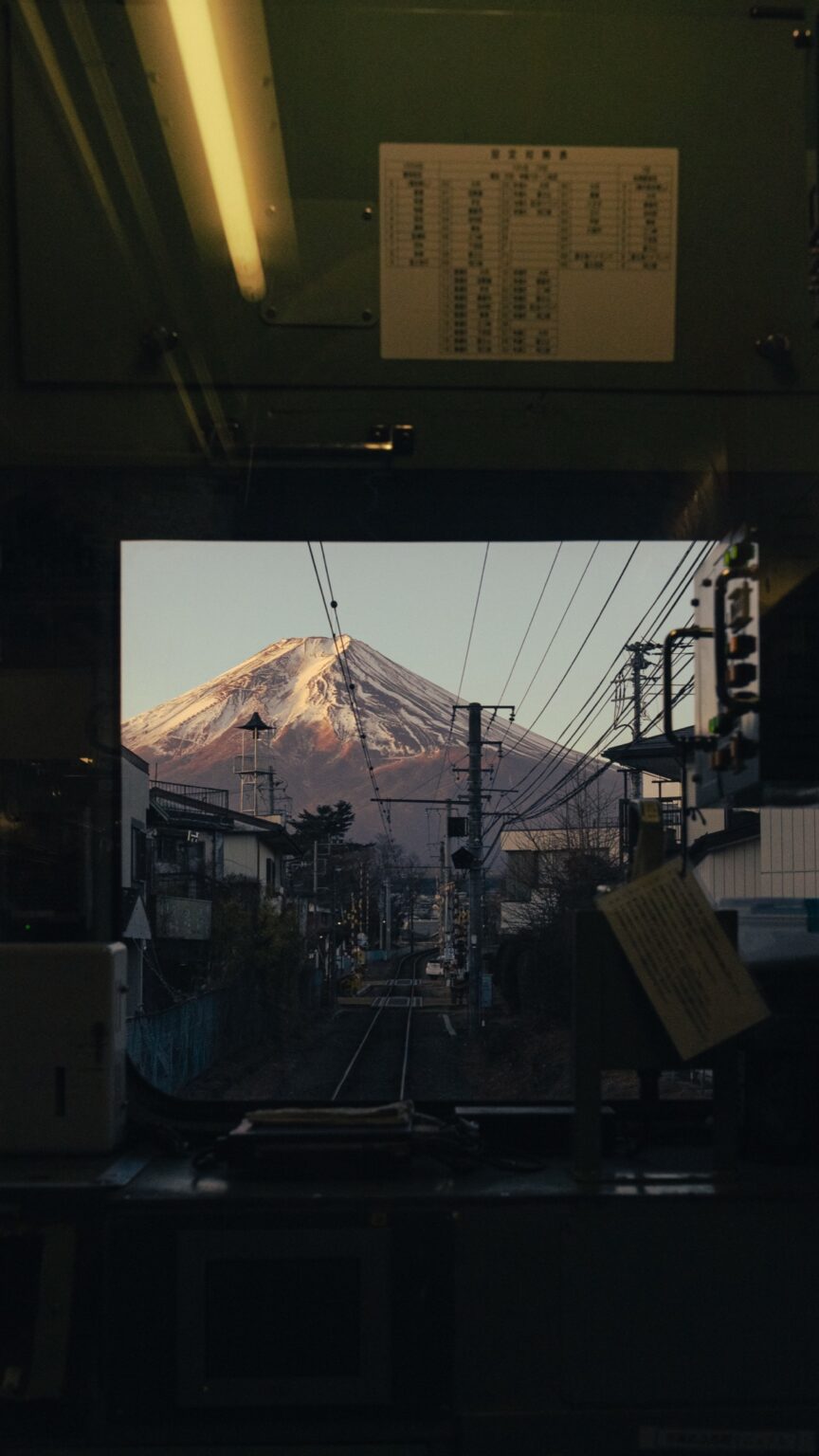
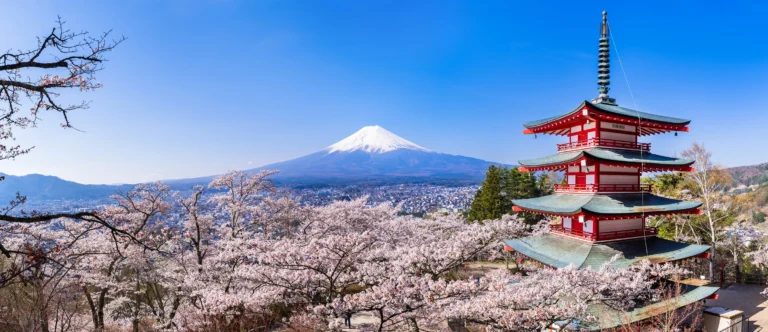
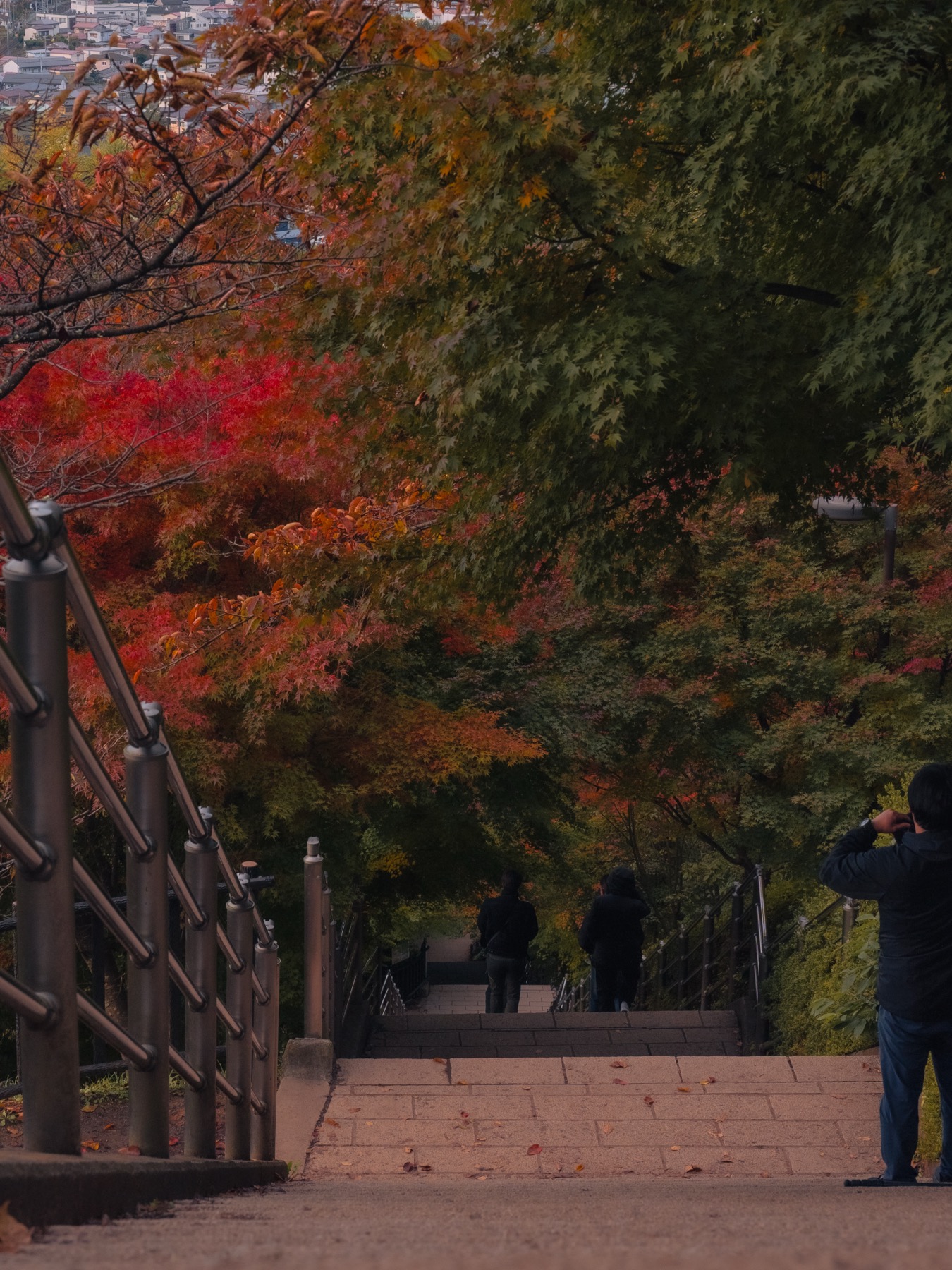
The first Fujikyu train toward Otsuki leaves Kawaguchiko at 05:18 and reaches Shimoyoshida at 05:31. The fare is ¥310 and the ride is 13 minutes. From the station it is a signposted walk of about 25 minutes to the pagoda, including the 398 Sakuya-hime stairs from Arakura Fuji Sengen Shrine; the observation deck is another 30 stone steps beyond the pagoda. In November to February that puts you on the deck before sunrise. Arakurayama Sengen Park is open at all hours, though temporary restrictions can apply.
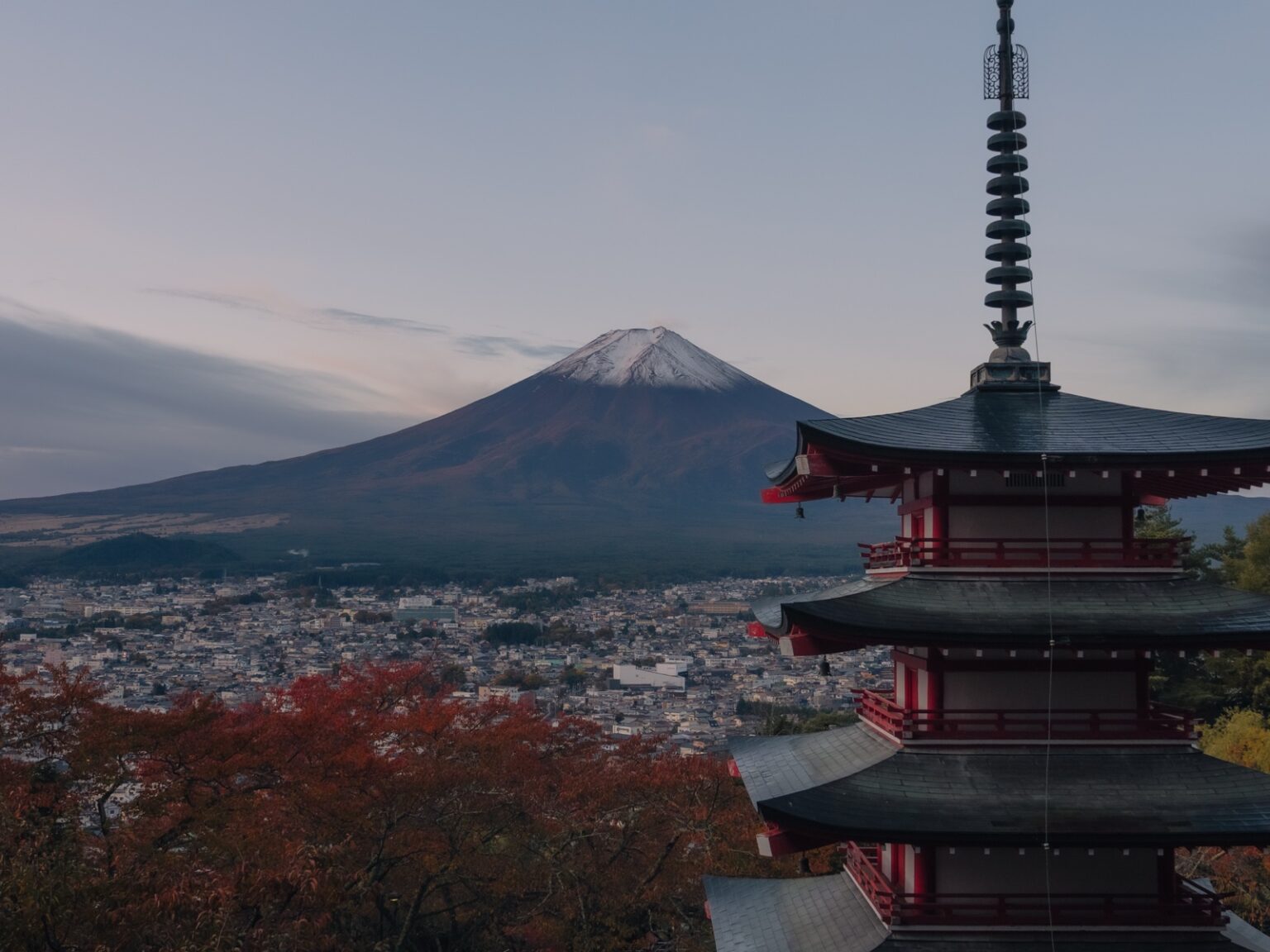
I climbed those steps in the dark on 2 November 2025 to watch first light reach the pagoda. Bring a torch for the stairs and something warm: in December and January you reach the deck around 6:00 and sunrise is not until about 06:50, so you will be standing still in the cold for close to an hour. Our Chureito Pagoda guide has the walk turn by turn.
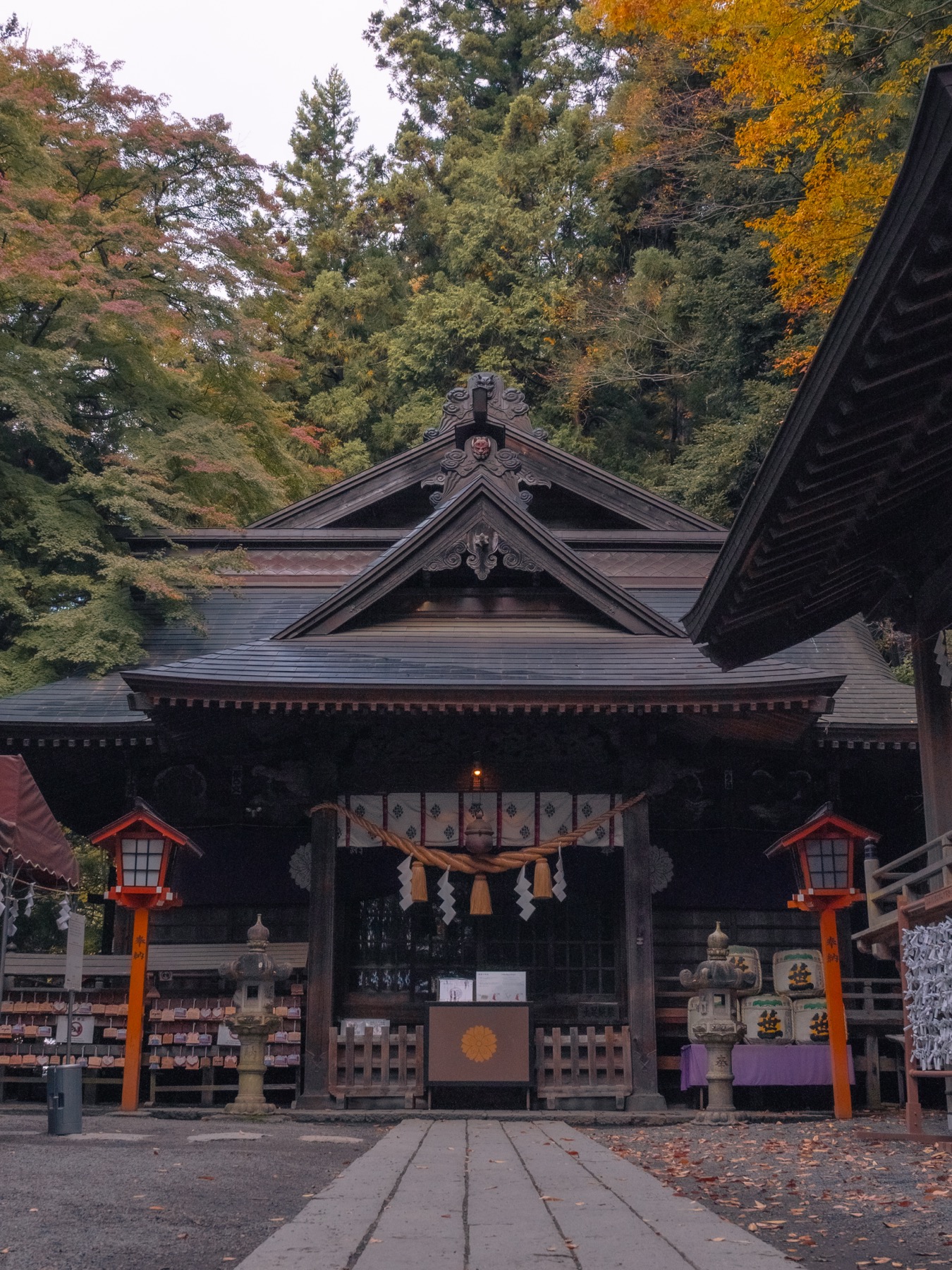
The pagoda is not a temple building but a memorial: built from 1959 to 1962 by a committee chaired by Fujiyoshida’s mayor, it holds the memorial tablets of 1,055 people from the city who died in war, and it stands above Arakura Fuji Sengen Shrine, which dates itself to 706. Visit it quietly.
After sunrise: Honmachi 2-chome
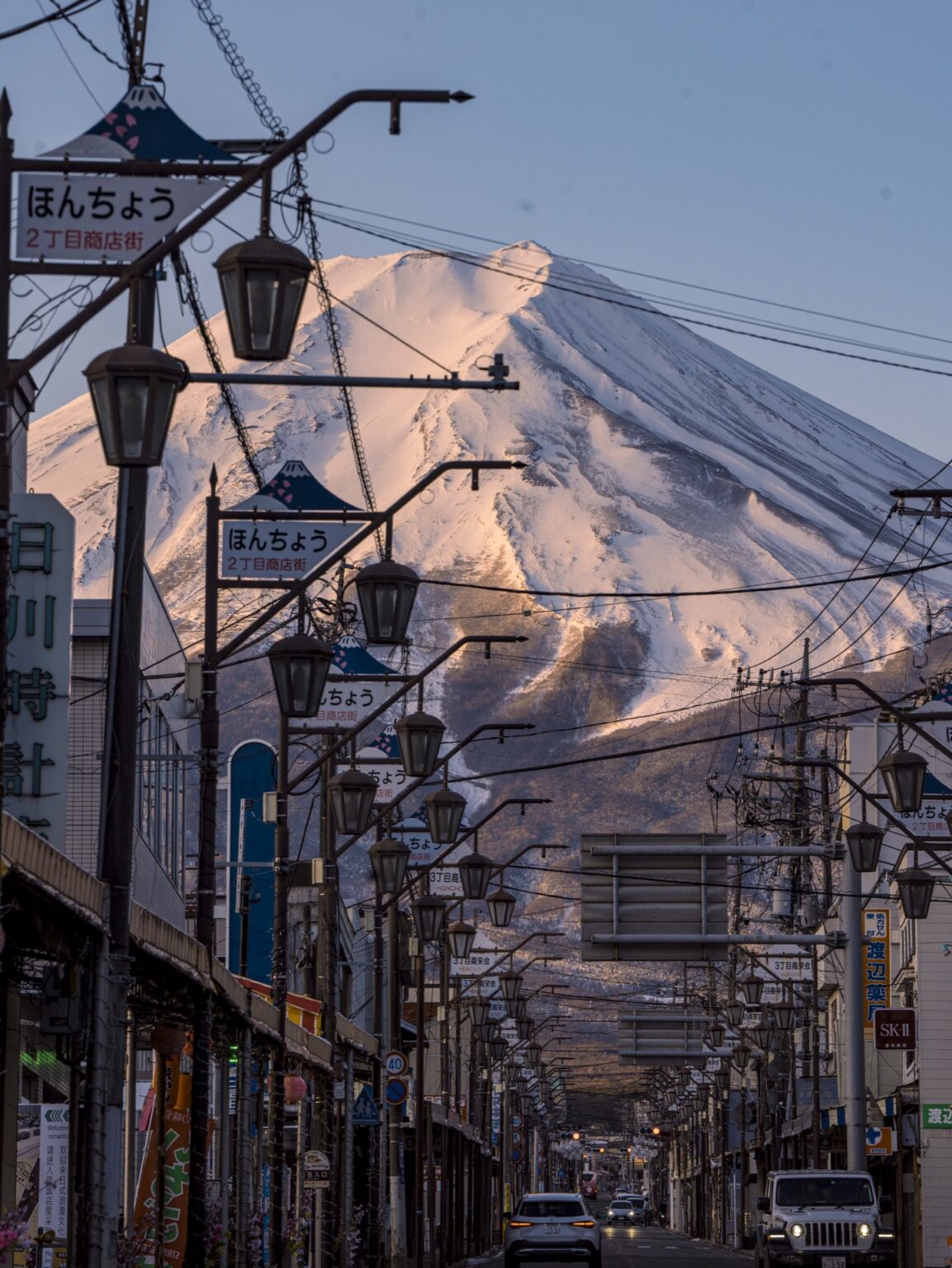
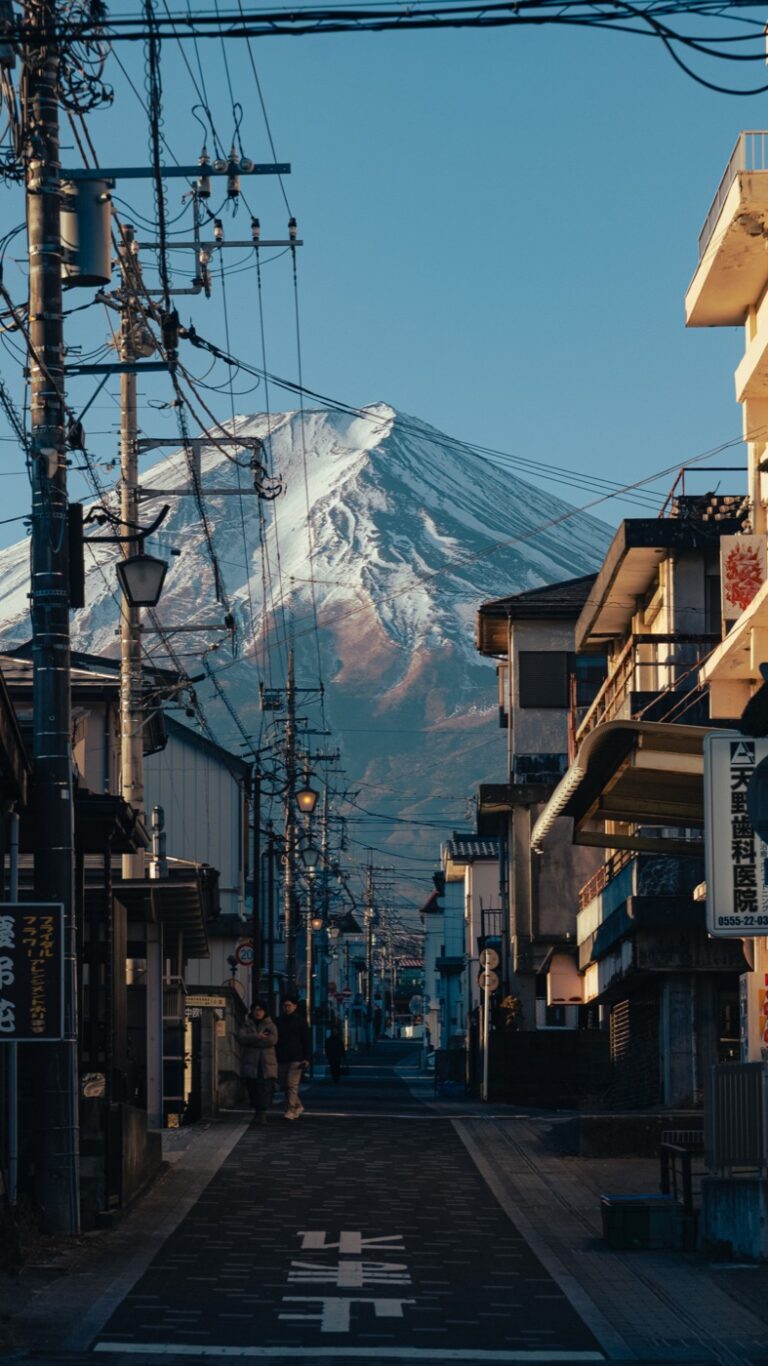
Ten minutes’ walk from Shimoyoshida Station is the street where Fuji sits at the end of a row of shop signs and lamp posts. This is a working street with cars and Fujikyu buses: stay on the pavement, don’t stand in the road, and don’t block shop doors. The local chamber of commerce has asked photographers to stop standing in the middle of it. Our Honmachi guide has the walk from the station and the etiquette. Then take a train back to Kawaguchiko (¥310) for breakfast and your bag. There are no trains from Shimoyoshida towards Kawaguchiko before 07:14; after that they leave at 07:45, 08:05, 08:36 and 09:02, the same at weekends. In January, when sunrise is at 06:55, the 08:36 is the realistic one; it reaches Kawaguchiko at about 08:49, leaving under an hour before the 09:45 bus, so check your hotel’s breakfast time and ask it to keep your bag ready. If you linger, the 10:45 Fujikko-go reaches Oshino Hakkai at 11:14; you then have an hour there before the 12:14, or about three hours if you take the next direct bus at 14:14 (Asahigaoka 14:46).
09:45 Fujikko-go to Oshino Hakkai
The Fujikko-go is Fujikyu’s sightseeing bus for Fujiyoshida, Oshino and Lake Yamanaka. It leaves Kawaguchiko Station 11 times a day, from 06:50 to 17:15, and calls at Fujisan Station on the way. The 09:45 reaches Oshino Hakkai at 10:14. Pay the fare as you ride: on this route the coupon costs more than the two rides (see tickets). Oshino Hakkai is a village of eight spring-fed ponds; give yourself about two hours to walk between them and eat. For a snack, Oshino has two tofu shops we have written about: Hakkai Tofu, at the Jotenji bus stop, where the same 12:14 bus calls at 12:20, and Kadoya Tofu.
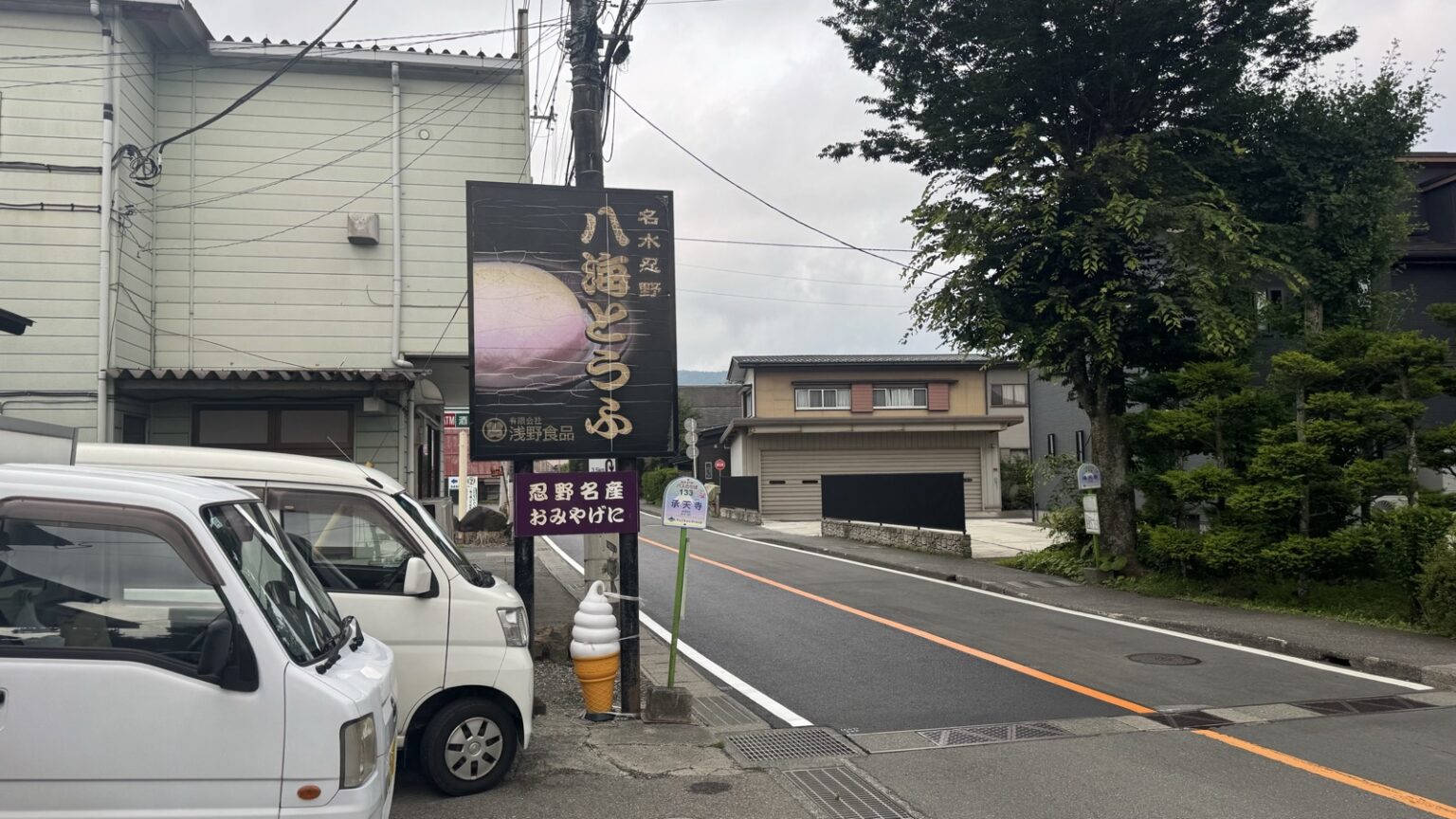
Oshino Hakkai is a group of eight spring-fed ponds, designated a national natural monument in 1934, and all eight are component parts of the Fujisan World Heritage site. Yamanashi Prefecture says the water is snowmelt and rain from Mt Fuji that has filtered through the lava for decades before it wells up here, which is why it is so clear and cold.
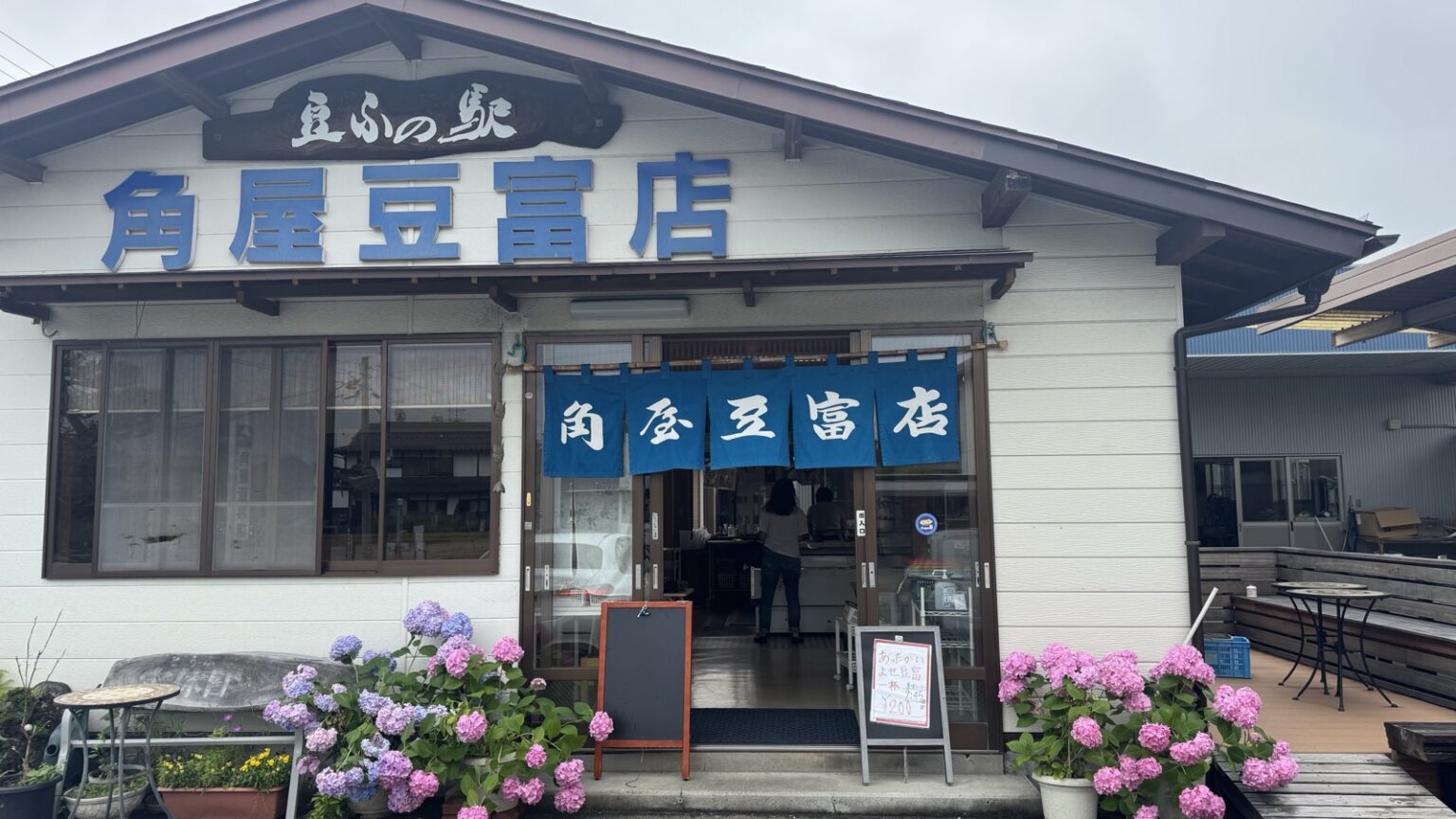
12:14 On to Lake Yamanaka
Only every other Fujikko-go goes straight from Oshino Hakkai to Yamanakako Asahigaoka on the south shore; on the timetable the direct runs leave Oshino Hakkai at 08:14, 10:14, 12:14, 14:14 and 16:14 and take 32 minutes. The 12:14 gets you to Asahigaoka at 12:46. The other runs go round the north shore to Hirano. Asahigaoka is the lake’s transport hub: local buses and the highway buses to Shinjuku stop here.
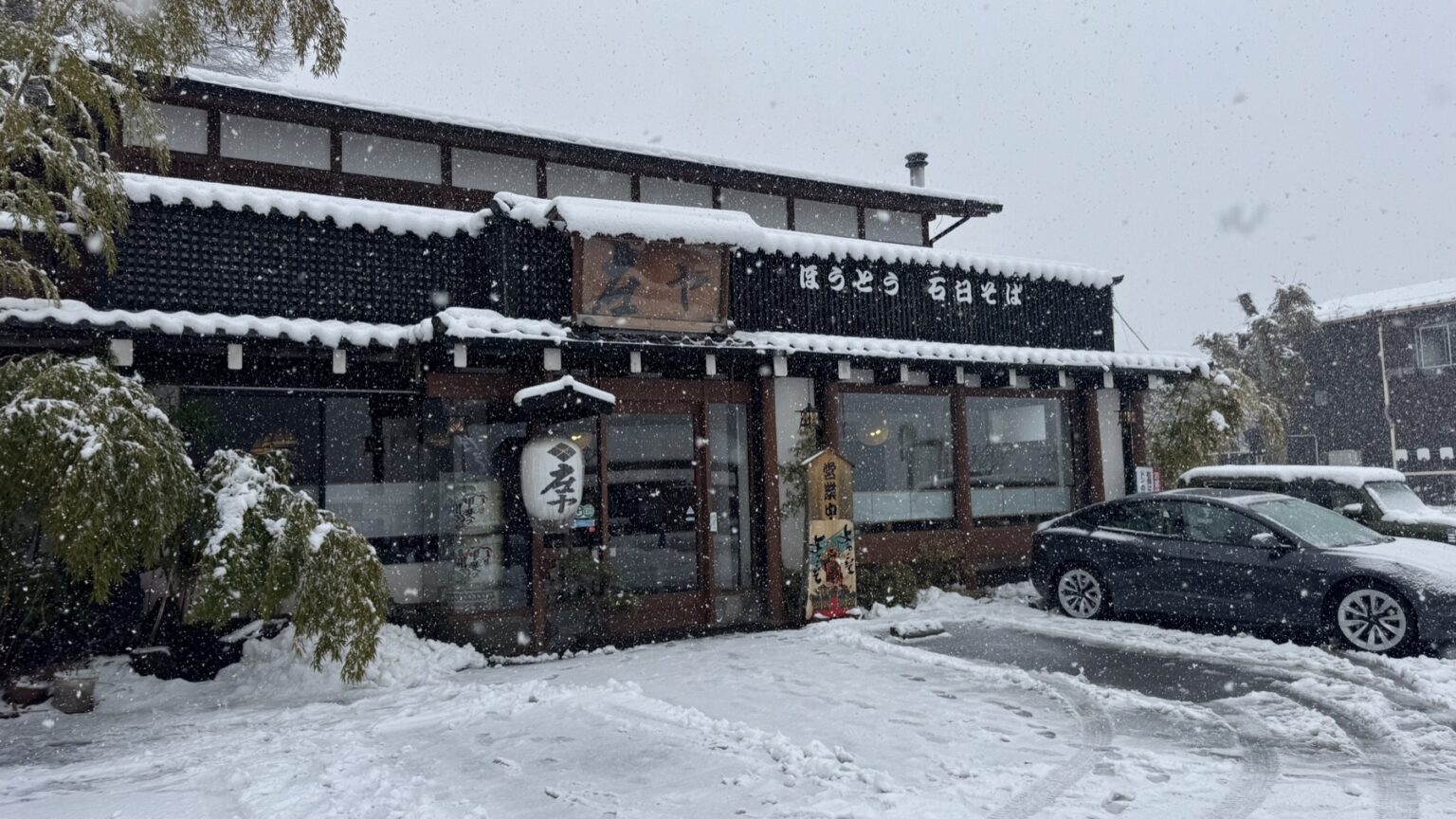
For lunch, Shoya serves pork hoto by the sightseeing-boat pier; it closes on Thursdays, so pick somewhere else by the lake that day.
Afternoon: the lakeshore, then home
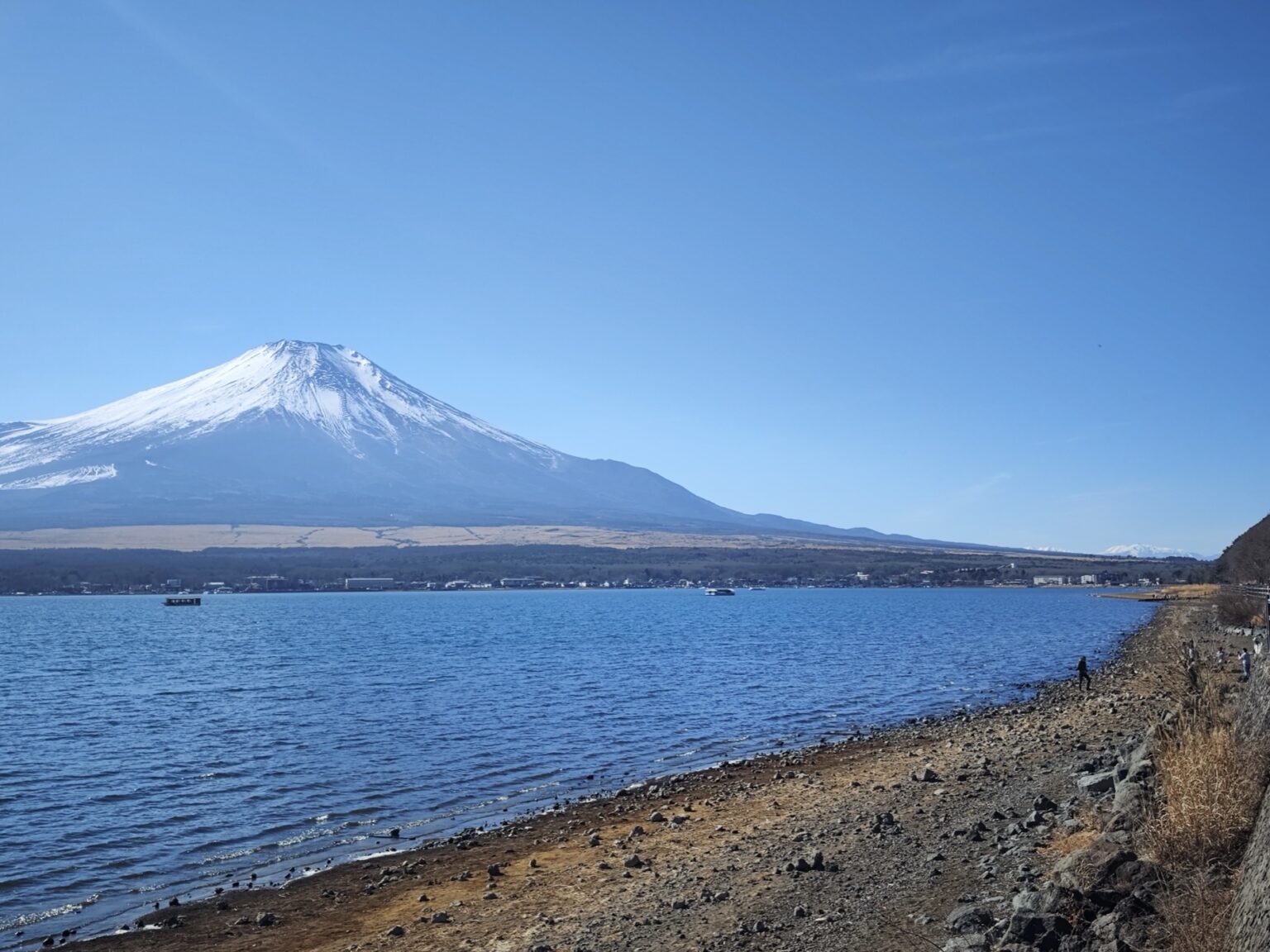
What you do here depends on the month. From 30 October to 15 November 2026 (the tourism association’s planned dates) the Yamanakako Autumn Leaves Festival lights the maples at Asahigaoka Lakeside Green Park, five minutes’ walk from the bus stop, from 16:30 to 20:30. In winter, Lake Yamanaka is the Diamond Fuji lake. The tourism association’s reference list, which can shift by a day or two, puts the sun on the summit at Hana no Miyako Park from late November to mid-January, at about 15:23–15:46, and at other lakeshore points on other dates. Treat it as an optional detour: Hana no Miyako Park is a stop on the Fujikko-go, so check the bus times there and back before you commit. Our Lake Yamanaka Diamond Fuji guide lists all nine spots and their dates.
Highway buses run from Asahigaoka to Busta Shinjuku. In Keio’s timetable for October 2026 the last direct bus left Asahigaoka at 19:30, so during the festival you would see the lights for about three hours, not until 20:30; Fujikyu publishes its timetable for the route as an image, so check the November and winter times when you book. For the fare, Fujikyu lists ¥2,650 between Shinjuku and Yamanakako Hirano, the far end of the route (¥2,350 paid online on Fujikyu’s services); your fare from Asahigaoka is shown when you book. Book the seat in advance, because this bus is reserved-seat only.
Want a second night for the light-up or a Diamond Fuji evening? Sleep at Lake Yamanaka instead of rushing the last bus.
See Lake Yamanaka stays on Booking.comLake Yamanaka is the largest of the five lakes, 6.57 km², and the highest, at 980.5 m above sea level, and whooper swans spend the winter on it, according to the village.
Which tickets should I buy for two days?
Pay as you go. On Fujikyu’s fare tables (11 October 2026), the passes do not save money on this particular route. On day one, the ropeway (¥1,200 from November) and the boat (¥1,000) come to ¥2,200, and the Red Line rides add a few hundred yen each: ¥180 from the station to the ropeway stop and ¥440 between the station and the Kubota Itchiku stop, with a short hop from Oishi Park in between. That is about ¥3,000, a little under the ¥3,300 Circular Pass, so the pass does not save money on this route. On day two, the two Fujikko-go rides, Kawaguchiko to Oshino and Oshino to Asahigaoka, cost about ¥1,100 together, less than the ¥1,800 one-day coupon. The coupons pay off only if you add stops.
| Ticket | Price and what it covers (adult, listed 11 October 2026) |
|---|---|
| Lake Kawaguchi Circular Pass | ¥3,300: two days on the Red, Green and Blue Line sightseeing buses, a ropeway round trip, and either the Appare lake cruise or one Oishi Park Line crossing. A little more than day one’s separate fares (about ¥3,000 from November); not worth it on the ropeway’s closure dates |
| Red, Green and Blue Line coupon | ¥1,500 for one day or ¥2,000 for two, buses only |
| Fujikko-go coupon | ¥1,800 for one day or ¥2,200 for two (Fujikyu’s Japanese page; its English page still showed older prices). Day two’s two rides cost about ¥1,100 without it |
| Fujikyu train, Kawaguchiko–Shimoyoshida | ¥310 each way |
| Highway bus, Shinjuku–Kawaguchiko | ¥2,200, or ¥2,000 paid online on Fujikyu’s services |
| Highway bus, Lake Yamanaka–Shinjuku | For reference, ¥2,650 between Shinjuku and Hirano at the end of the route (¥2,350 paid online on Fujikyu’s services); check the Asahigaoka fare when booking |
If you do want the Circular Pass, note that Fujikyu’s bus page still listed it at ¥3,300 on 11 October, before the ropeway’s 1 November fare rise, so confirm the price for November dates. The Circular Pass and the Red Line coupons are sold online and at the Kawaguchiko Station bus ticket office; the Fujikko-go coupon is sold online and at the Fujisan Station and Asahigaoka bus windows. Our Fujikyu pass guide works through the rail passes if you are coming by train.
Rather join a guided Fuji day out for part of the trip? Compare Mt Fuji tours and activities.
See Mt Fuji tours on KlookCan I do this itinerary by train instead of the bus?
Yes. The Fuji Excursion limited express runs from Shinjuku to Kawaguchiko in just under two hours for ¥4,200, and every seat is reserved. The Japan Rail Pass covers only the JR part, Shinjuku to Otsuki; on the Fujikyu line you pay the fare plus a ¥600 express charge. Check what time your train reaches Kawaguchiko: if it is after 9:00, take the next Red Line bus to the ropeway and aim for the 11:45 boat, with the 13:15 as the fallback. Tokyo to Kawaguchiko by bus, train or car compares the options.
How does the plan change by season?
November
Both lakes have autumn festivals: Lake Yamanaka 30 October–15 November and Kawaguchiko 7–29 November. Because this plan does Kawaguchiko on day one and Lake Yamanaka on day two, start between 7 and 14 November to catch both. The ropeway round trip rises to ¥1,200 on 1 November, and boats switch to the winter schedule.
December and January
The best odds of the year (85% and 82%). The ropeway is closed for inspection from 7 to 18 December 2026 (planned), so if day one falls then, start with the boat. The coldest mornings: expect temperatures below freezing at the pagoda at dawn. Sunset in Kofu is 16:33 on 1 December and 16:55 on 15 January, so the lakeshore afternoon is short. Hana no Miyako Park’s Diamond Fuji falls in these months.
February
Still 75% at 8 a.m. Lake Yamanaka’s Diamond Fuji Weeks is listed for 1–22 February 2027 in the village’s annual plan, marked subject to change. Sunrise in Kofu is earlier (06:33 on 15 February 2027), so leave the hotel on time.
Spring and summer
April brings cherry blossom at the pagoda but the odds fall to 58%; in summer they are 25–36%. If your dates are in June to August, read day trip or overnight before you book two days around the view.
Where should I stay for this plan?
Kawaguchiko, near the station, is the simplest base: the morning bus arrives there, the 05:18 train leaves from there, and the Fujikko-go on day two starts there. Staying on the Shimoyoshida side of Fujiyoshida instead lets you walk to the pagoda at dawn without the train, and gives you an izakaya evening rather than a hotel dinner. Kawaguchiko vs Fujiyoshida sets out the choice, and where to stay without a car covers the bus network. Lake-view rooms in Kawaguchiko are the first to sell out in the autumn-leaves weeks.
Prefer a ryokan with dinner and its own bath? Search the Fuji Five Lakes on a Japanese booking site.
Browse ryokan on Rakuten TravelWhat if Mt Fuji is hidden?
Adapt the stops, not the whole trip. The ropeway and the pagoda are the two stops that lose the most without the view; the boat, Oishi Park, Oshino and the lakeshore still work.
Cloudy on morning one
Skip the ropeway. Take the boat or the Red Line to Oishi Park, then the north shore and an early onsen. Tomorrow’s sunrise is your second chance.
Cloudy on morning two
Sleep in and take the 09:45 Fujikko-go. Oshino Hakkai and the hoto lunch don’t depend on the view, and if the cloud lifts, Lake Yamanaka’s shore is where you will be.
For the morning call, see today’s view from Fujiyoshida; Mt Fuji weather has the 7-day outlook.
FAQ
Is two days enough for the Fuji Five Lakes?
Yes, for Lake Kawaguchi, the Chureito Pagoda, Oshino Hakkai and Lake Yamanaka without a car. Two days give you two morning chances to see Fuji, which is the main reason to stay the night. The western lakes, Saiko and Motosu, are on the Green and Blue Line buses and would need more time.
What is the best month for a 2-day Fuji trip?
December, if the view is what matters: Fuji was at least partly visible on 85% of December mornings at 8 a.m. in the City of Fuji’s 1991–2025 record, taken from the south side of the mountain. Note that the Panoramic Ropeway is closed for inspection from 7 to 18 December 2026 (planned). November (79%) adds the autumn-leaves festivals on both lakes; January is 82% and February 75%.
Can I do the Fuji Five Lakes in two days without a car?
Yes. This plan uses the highway bus from Shinjuku, the Red Line sightseeing bus, one boat, the Fujikyu train and the Fujikko-go bus. The Red Line runs every 15 minutes from 09:00 to 17:45; the Fujikko-go runs 11 times a day from Kawaguchiko Station.
How do I get to the Chureito Pagoda for sunrise?
Take the 05:18 Fujikyu train from Kawaguchiko to Shimoyoshida (05:31, ¥310), then walk about 25 minutes, including the 398 stairs. From November to February that gets you to the deck before sunrise; on 15 December 2026, sunrise in Kofu is at 06:48. Trains back towards Kawaguchiko start at 07:14. If you stay on the Shimoyoshida side of Fujiyoshida, you can walk from your hotel.
Which bus pass should I buy?
For this exact route, none: pay as you go. On Fujikyu’s fare tables (11 October 2026), day one’s ropeway, boat and Red Line rides come to about ¥3,000, a little under the ¥3,300 Lake Kawaguchi Circular Pass, and day two’s two Fujikko-go rides cost about ¥1,100, less than the ¥1,800 one-day coupon. The passes pay off if you add more rides, such as the Green and Blue Lines to the western lakes.
What time is the last bus from Lake Yamanaka to Tokyo?
In Keio’s timetable for October 2026, the last direct bus to Shinjuku left Yamanakako Asahigaoka at 19:30. Timetables can change from November, so check the time for your date when you book; seats are reserved.
Should I stay in Kawaguchiko or Fujiyoshida?
Kawaguchiko for the lake, onsen hotels and the easiest bus connections; Fujiyoshida’s Shimoyoshida side if a sunrise at the Chureito Pagoda matters most, because you can walk there. For this plan, Kawaguchiko near the station is the simpler base.
Sources (checked 11 October 2026)
- Fujikyu Bus: Red, Green and Blue Line sightseeing buses, timetable and coupons; Fujikko-go timetable and coupons; Shinjuku–Fuji Five Lakes highway bus, fares
- Fujikyu Railway: Kawaguchiko Station timetable; Shimoyoshida Station timetable (both from 14 March 2026)
- Fujigoko Kisen: Oishi Park Line fares and timetable
- National Astronomical Observatory of Japan: sunrise and sunset in Kofu for November 2026, December 2026, January 2027 and February 2027
- Our own guides, each with its primary sources: Shinjuku–Kawaguchiko bus (Keio and Fujikyu timetables from 1 October 2026), Panoramic Ropeway (fares from 1 November 2026), Fujikawaguchiko Autumn Leaves Festival, Yamanakako Autumn Leaves Festival (Keio October timetable), Lake Yamanaka Diamond Fuji, Mt Fuji visibility (City of Fuji 8 a.m. record, 1991–2025)
- Checked 12 October 2026 — Mt Fuji Panoramic Ropeway: Kachi-Kachi Yama, ride time and deck altitude; Fujiyoshida City: Chureito memorial tower, bear notice; Arakura Fuji Sengen Shrine; Honmachi-dori manners (Fujiyoshida tourism); Oshino Hakkai natural monument (Agency for Cultural Affairs), World Heritage components (Oshino village); Oshino Hakkai water (Yamanashi); the five lakes (Yamanashi); Lake Yamanaka (Yamanakako village); Momiji Corridor, 2026 Autumn Leaves Festival; hoto (Yamanashi)
Join travelers discovering Japan's hidden side
Weekly dispatches from off-the-beaten-path Japan — spots and stories you won't find in guidebooks.
No spam. Unsubscribe anytime.
Welcome aboard!
You're in. See you in your inbox soon.