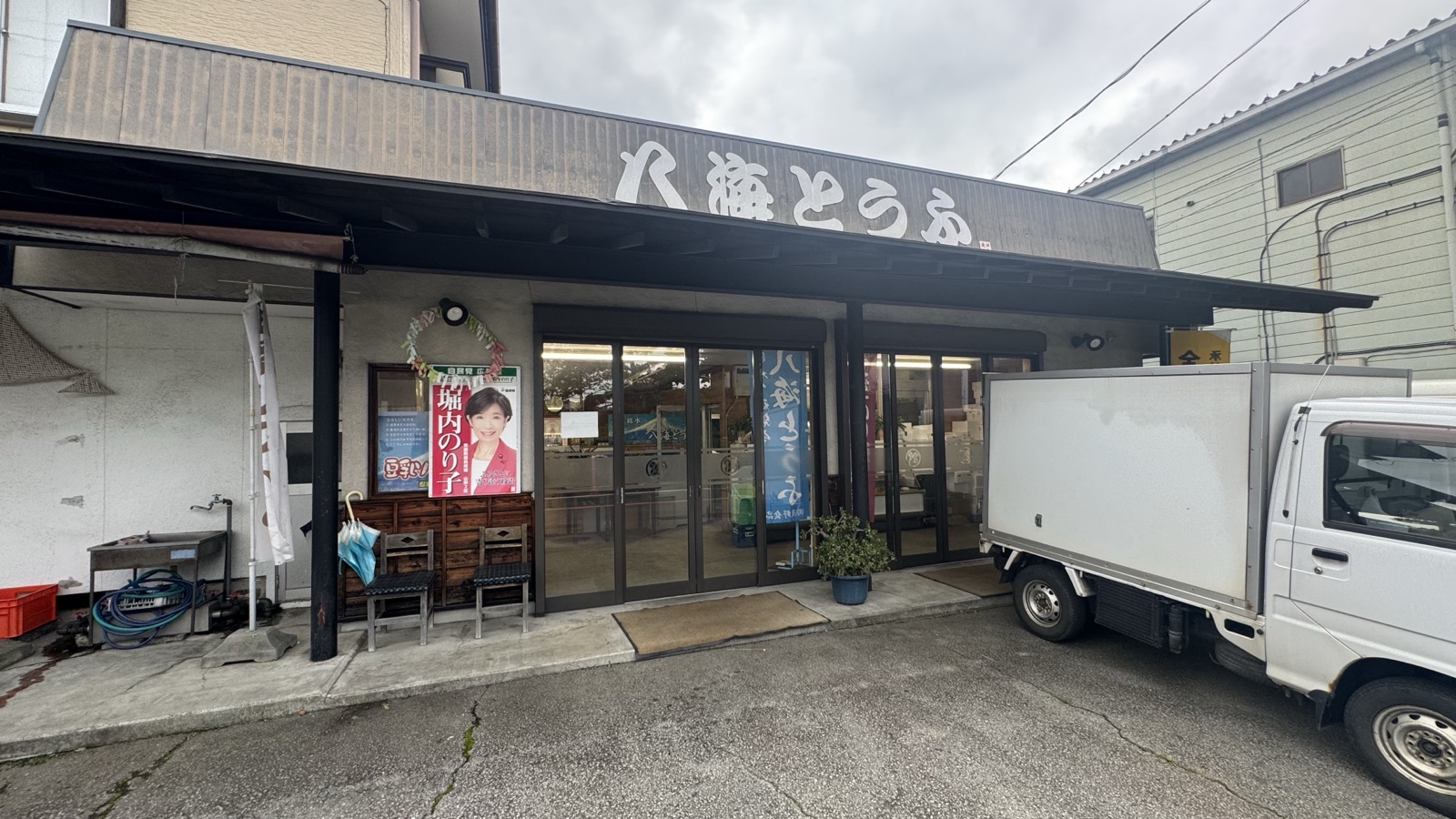
Most people come to Oshino for the eight famously clear spring ponds of Oshino Hakkai. I come for the tofu. A few minutes from the ponds, an old family tofu maker called Hakkai Tofu (八海とうふ / Asano Shokuhin) turns Mt. Fuji’s spring water into some of the softest, sweetest tofu I’ve had near the mountain. On my last trip I bought four things — oboro tofu, “steak” tofu, fluffy fried tofu and a scoop-style zaru tofu — and this is what they were like.
Hours and prices below are what I saw on my visit and from public listings; small shops change them, so call ahead if it matters. Oshino Hakkai — not the shop itself — is the World Heritage and famous-water site; more on that below.
Why this little tofu shop is worth the stop
Hakkai Tofu is run by Asano Shokuhin, a family maker with roots in Oshino going back to the Taisho era, the early 1900s. What makes their tofu taste the way it does isn’t a secret; they print it on a sign by the counter, and it lines up with how good tofu is made:
- Fuji-fed spring water. Oshino sits on Mt. Fuji snowmelt that filters down through the mountain for decades. Water quality matters enormously in tofu, and this spring water is part of what locals prize here.
- Domestic soybeans, including Hokkaido Tokachi beans, and natural nigari from Izu Oshima to set the curd.
- No anti-foaming agents and no silicone-treated packaging — their sign makes a point of it. It means a little more waste and work for them, and a cleaner soybean taste for you.
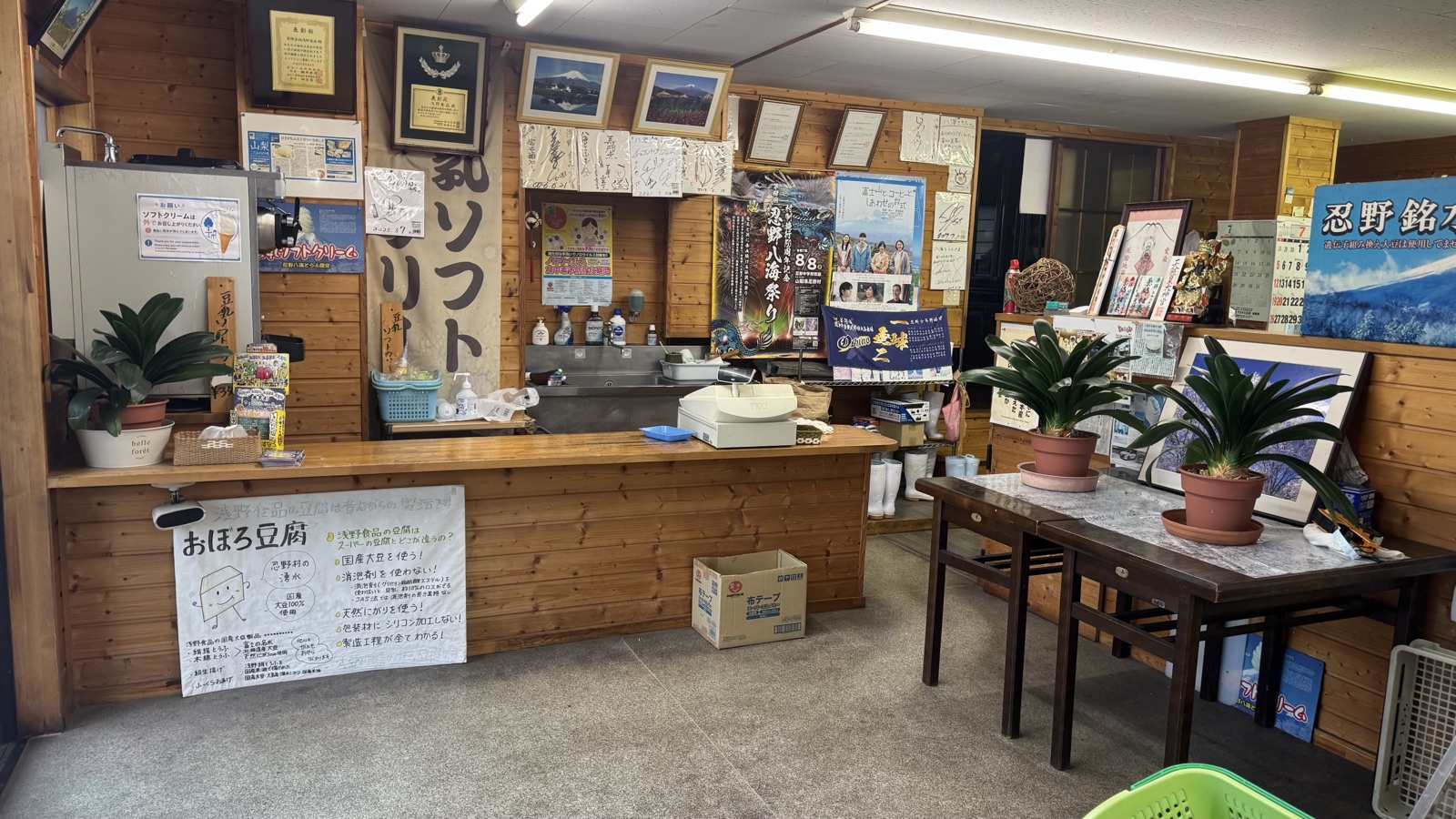
There’s also a bit of fun here. They also make a Mt. Fuji-shaped tofu (富士山豆腐), and run a soy-milk soft serve from the counter — a good cold reward on a hot Oshino afternoon.
What I bought, and how it tasted
I’m from Fujiyoshida, just over the hill, so I treat this like a grocery run rather than a souvenir stop. Four things came home with me:
- Oboro tofu (おぼろ豆腐). Loose, barely-set curds — the freshest, most fragile form tofu takes. I ate the first spoonful with nothing on it to catch the soybean sweetness, then added a few grains of salt. No soy sauce needed.
- “Steak” tofu (ステーキ豆腐). A firmer block made to hold together in a hot pan. A minute a side in a little oil, a splash of soy at the end, and it eats almost like a light cutlet.
- Fluffy fried tofu (ふわふわ揚げ). Airy on the inside, crisp at the edges. Warmed through and dipped in grated ginger and soy, it’s the one that disappeared first.
- Zaru-style tofu (ざる盛り豆腐). Scooped and served in a basket so the water drains as it sits — soft, clean, and best plain.
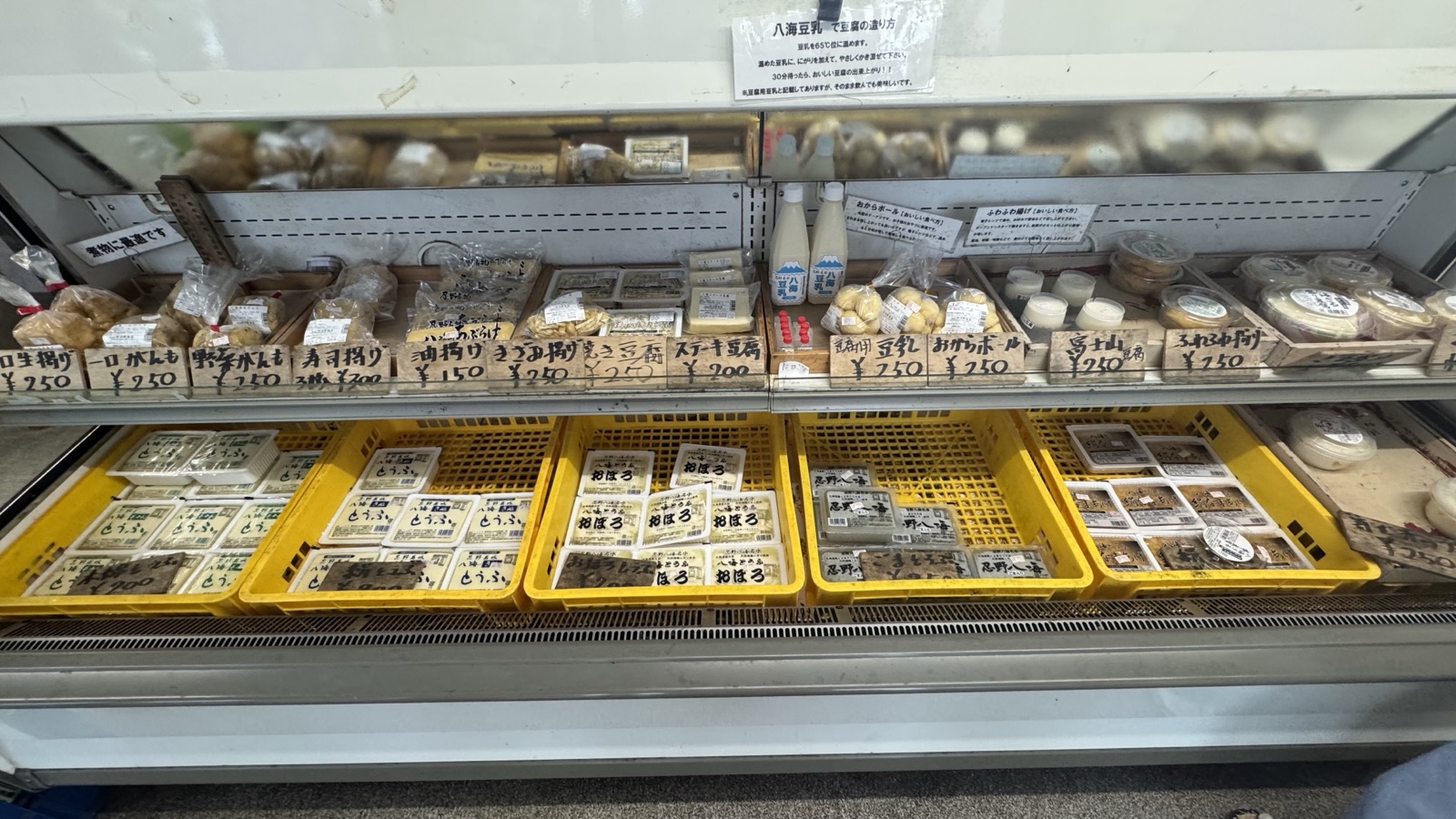
What’s in the case (prices from my visit)
| Item | What it is | Price |
|---|---|---|
| Oboro tofu · おぼろ豆腐 | Soft, loose fresh curds — eat plain | ¥200 |
| Steak tofu · ステーキ豆腐 | Firm block for pan-frying | ¥200 |
| Fluffy fried tofu · ふわふわ揚げ | Light, airy agé | ¥250 |
| Thin fried tofu · 油揚げ | For miso soup, rice, hot pot | ¥150 |
| Mt. Fuji tofu · 富士山豆腐 | Mountain-shaped novelty tofu | ¥250 |
| Soy milk · 八海豆乳 | Drink it, or set your own tofu | ¥250 |
| Soy-milk soft serve | Eat it there — a counter treat | Posted at the shop |
Prices are what was displayed when I visited and can change. The Mt. Fuji tofu and soft serve are the photogenic picks; the oboro and fried tofu are what locals actually carry home.
How to eat it (and get it home in one piece)
Fresh tofu this soft is a same-day pleasure, not a souvenir to pack in a suitcase. A few practical notes for travellers:
Fresh-tofu travel tips
- Eat it the day you buy it. Keep it cold until then — a cheap cool bag and a hotel-room fridge are plenty.
- Season lightly: a pinch of salt, a little soy, grated ginger, spring onion or bonito flakes. Great tofu wants almost nothing.
- Staying nearby with a kitchenette? The steak tofu and fried tofu are the easy wins to cook.
- Follow the date and storage on the label rather than any rule of thumb — it’s real tofu with no preservatives.
Getting there, hours & map
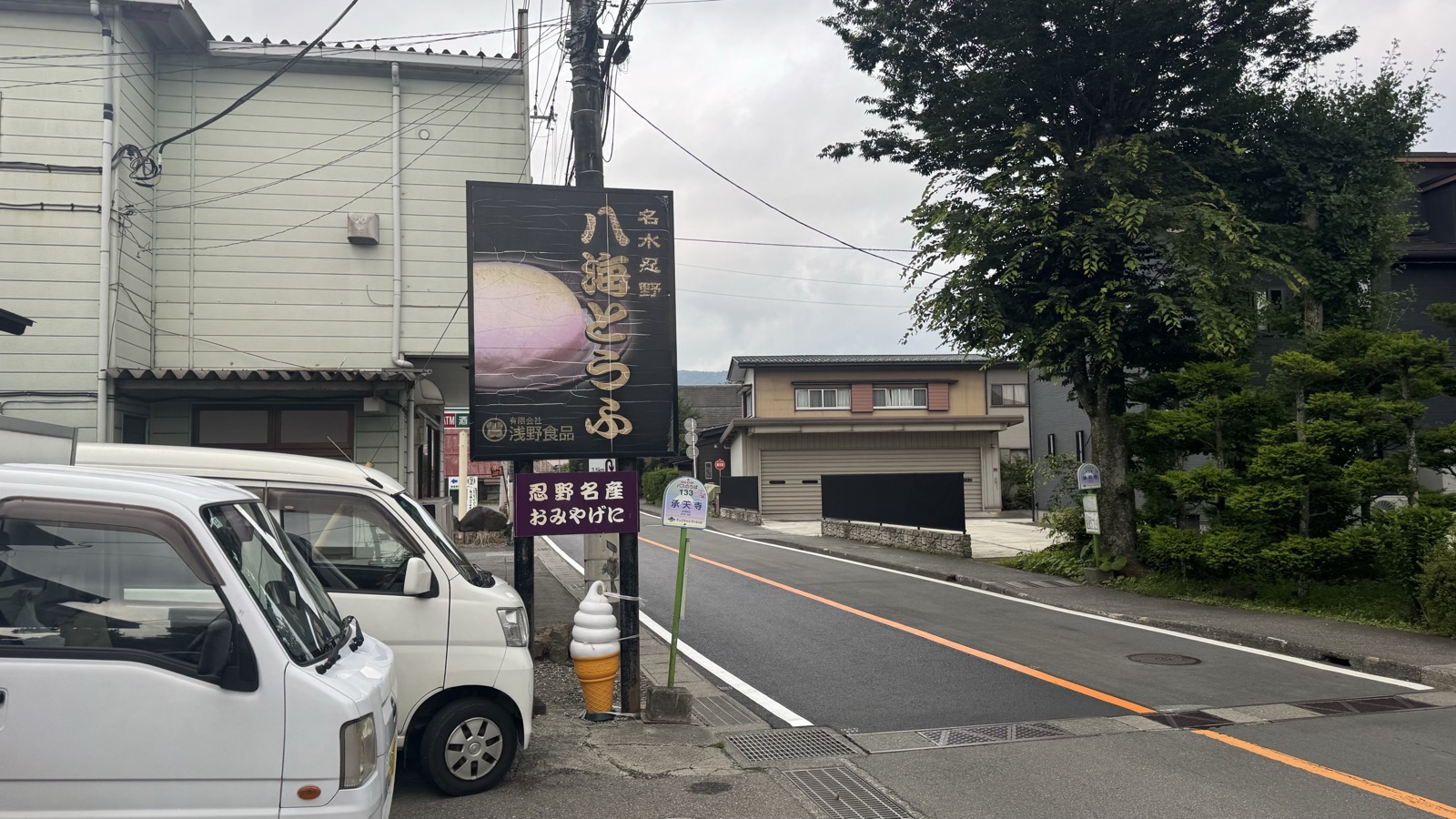
The shop sits right on the Oshino road with a bus stop, Jotenji, essentially at the door — you’ll spot the black signboard and the giant soft-serve model out front. If you’re driving, it’s a short hop from Oshino Hakkai’s car parks.
Pair it with Oshino Hakkai
The natural plan is to see Oshino Hakkai first, then swing by for tofu on the way out — the ponds are the reason the water here is famous. Oshino Hakkai is listed by Japan’s Ministry of the Environment among its 100 Famous Waters, and the site is a constituent part of the “Fujisan” UNESCO World Heritage listing. To be clear, it’s the ponds and the spring-water landscape that carry those titles, not the tofu shop — but it’s the same Fuji-fed spring water running under the whole village, and you can taste why people make a fuss about it.
Good to know
Can I eat the tofu straight away, or is it a packaged souvenir?
It’s fresh, preservative-free tofu meant to be eaten soon — ideally the same day. It’s not a sealed, shelf-stable souvenir, so plan to enjoy it on your trip rather than fly it home. The soy-milk soft serve is the one thing you eat on the spot.
Do they take cards, and is there English?
I’d treat this as a cash, Japanese-only local shop unless you confirm otherwise — bring yen and a translation app. Pointing at the case works fine; everything is on display.
What should a first-timer buy?
The oboro tofu to taste how fresh soft tofu should be, and the fluffy fried tofu to snack on. Add the Mt. Fuji-shaped tofu if you want the photo, and grab a soy-milk soft serve for the walk.
Is it near Oshino Hakkai?
Yes — it’s in the same village, a short drive or a bus stop or two from the ponds, so it slots neatly into an Oshino Hakkai visit.
When is it busiest?
Popular items can sell out, so mornings are the safest bet for the full range. It’s a small shop, so a quiet weekday morning is the most relaxed time to browse the case.
More around Mt. Fuji
More good eating around Mt. Fuji
Join travelers discovering Japan's hidden side
Weekly dispatches from off-the-beaten-path Japan — spots and stories you won't find in guidebooks.
No spam. Unsubscribe anytime.
Welcome aboard!
You're in. See you in your inbox soon.