Yamanashi · Lake Yamanaka
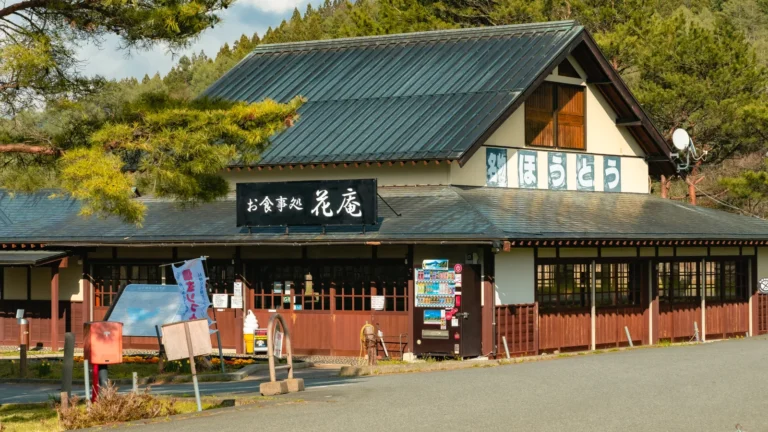
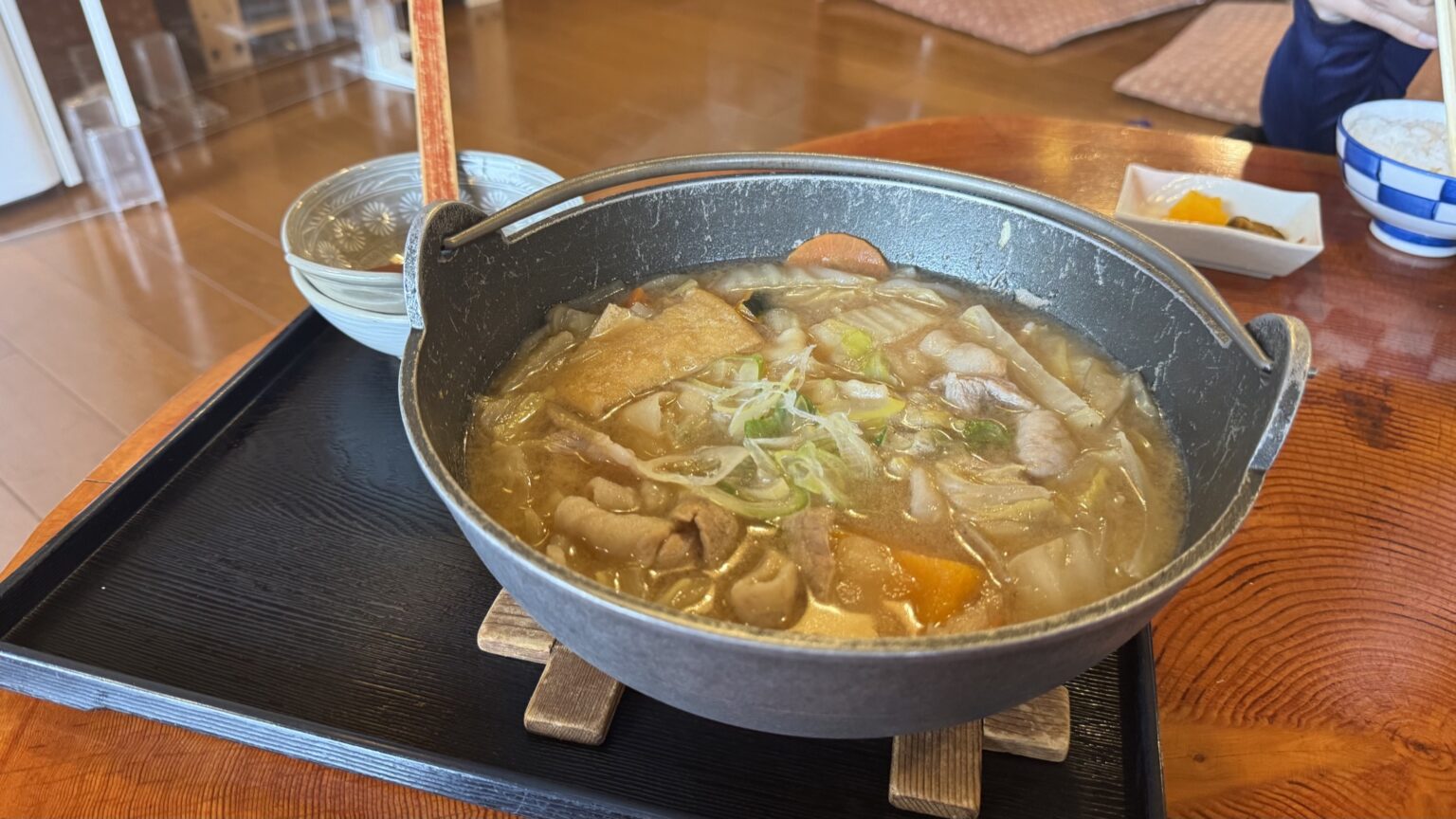
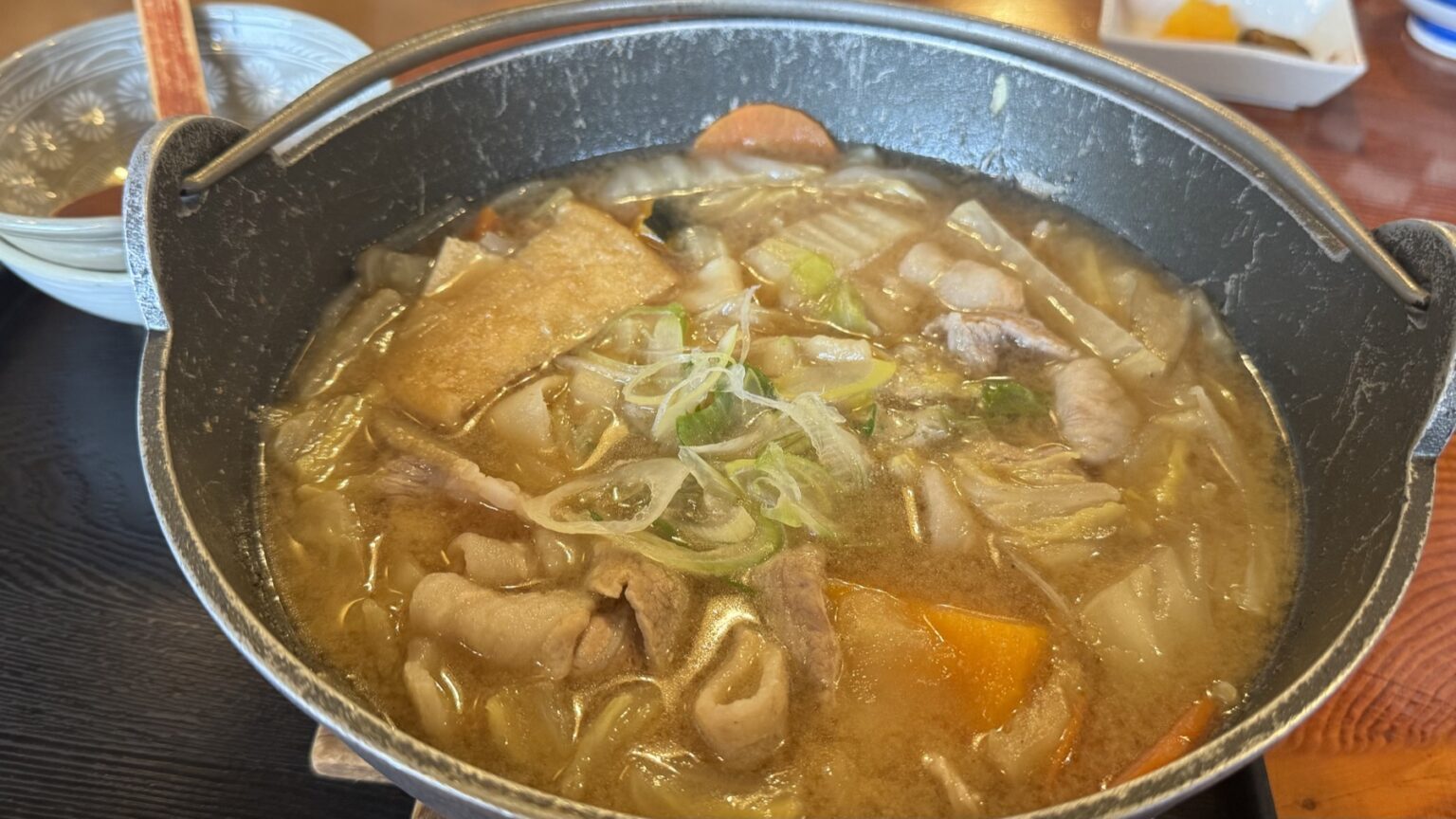
Hoto is what people in Yamanashi cook when it turns cold: flat, hand-cut wheat noodles dropped raw into a miso broth with pumpkin and root vegetables, so the starch off the noodles thickens the whole pot into something between a soup and a stew. At Shoya, a hoto specialist on the shore of Lake Yamanaka with Mt Fuji across the water, the pork version comes to the table still bubbling in a cast-iron pot.
What hoto actually is
It’s easy to read “noodles in miso soup” and picture udon, but hoto is its own thing. The noodles go into the pot uncooked, so instead of staying springy they soften and shed starch, and that starch is what gives the broth its thick, clinging body. Pumpkin is almost always in there, going sweet and half-dissolved at the edges. It comes from the old wheat-and-millet food culture of mountainous Kai — today’s Yamanashi — where the land was too steep and cold for much rice. People will tell you it was the field food of the warlord Takeda Shingen; that’s a nice old story rather than documented history, but it tells you how deep the dish runs here.
Shoya does hoto as its specialty — more than a dozen versions — and I went straight for the pork hoto, with slices of local pork through the miso and the broth thick enough to stand a spoon in. I paid about ¥1,600 for it on my visit; the shop’s current menu lists it a little higher, around ¥1,700, so take the price as a guide and check when you go. There’s a set that adds pumpkin hoto, fried smelt, rice and pickles if you want the full spread.
By the lake
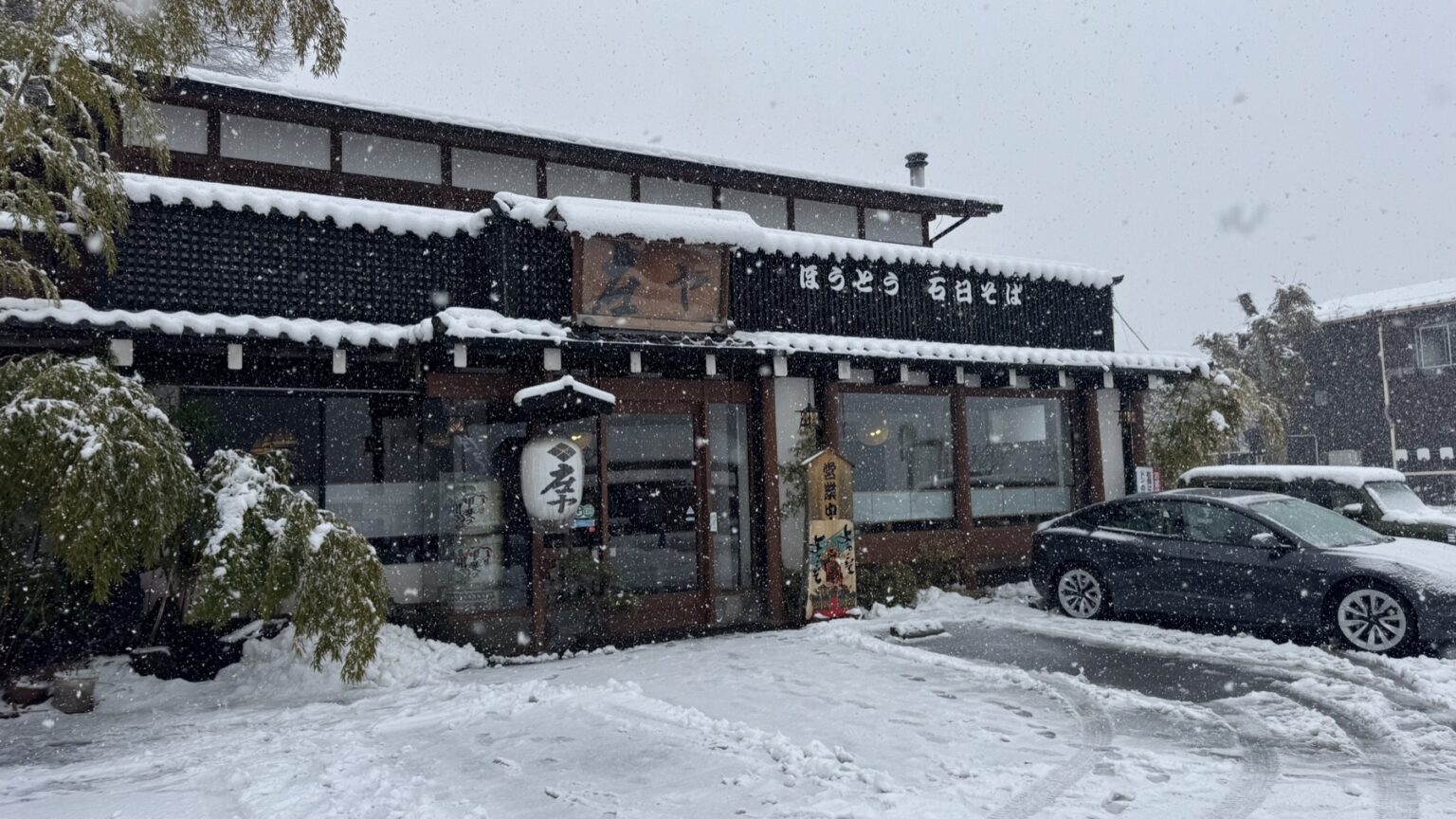
Shoya sits on the shore of Lake Yamanaka, near the sightseeing-boat pier, a few minutes from the Yamanakako interchange — so it folds easily into a loop around the Fuji Five Lakes. On a clear day you get the lake and the mountain; in the colder months, when the smelt (wakasagi) fishing is on, the shop will even cook up the fish you catch. It closes on Thursdays and keeps longer hours on weekends and holidays. If you come for the Yamanakako Autumn Leaves Festival, planned for 30 October to 15 November 2026 on the same lake, a pot of hoto here is a good way to warm up.
On the map
Good to know
What is hoto?
Hoto is a Yamanashi specialty: flat, wide wheat noodles simmered — uncooked — with pumpkin and root vegetables in a miso broth. The raw noodles release starch that thickens the broth, so it eats more like a hearty stew than a clear noodle soup, and it’s quite distinct from udon.
What did you order at Shoya?
The pork hoto (buta-niku hoto). I paid about ¥1,600 on my visit; the current menu lists it a little higher (around ¥1,700), so treat the price as a guide.
How do I get to Shoya?
It’s on the shore of Lake Yamanaka near the sightseeing-boat pier, a few minutes by car from the Yamanakako interchange — an easy stop on a Fuji Five Lakes drive. There are also buses toward Lake Yamanaka from Fujisan Station.
When is it open / closed?
Lunch and dinner, with longer continuous hours on weekends and holidays, closed on Thursdays. Confirm current times before a special trip.
Is hoto the same as udon?
No. Udon noodles are boiled separately and stay springy; hoto noodles are simmered raw straight in the miso broth, so they soften and thicken the soup. The flavour, texture and pumpkin make it its own dish.
Make a meal of it — stay by Mt Fuji
These spots are worth building a day around. Base yourself near Lake Kawaguchi or Lake Yamanaka and you can eat your way through Fujiyoshida, the lakes and Gotemba without rushing back to Tokyo.
Yabu
A beloved set-meal (teishoku) diner in Fujiyoshida.
Kintaro Soba
Mountain-yam soba at the foot of Fuji, in Gotemba.
Tiger Shokudo
A retro Fujiyoshida diner.
Gensuke
Another Fujiyoshida diner worth the stop.
Mt Fuji travel hub
Everything else around the mountain.
More good eating around Mt. Fuji
Join travelers discovering Japan's hidden side
Weekly dispatches from off-the-beaten-path Japan — spots and stories you won't find in guidebooks.
No spam. Unsubscribe anytime.
Welcome aboard!
You're in. See you in your inbox soon.