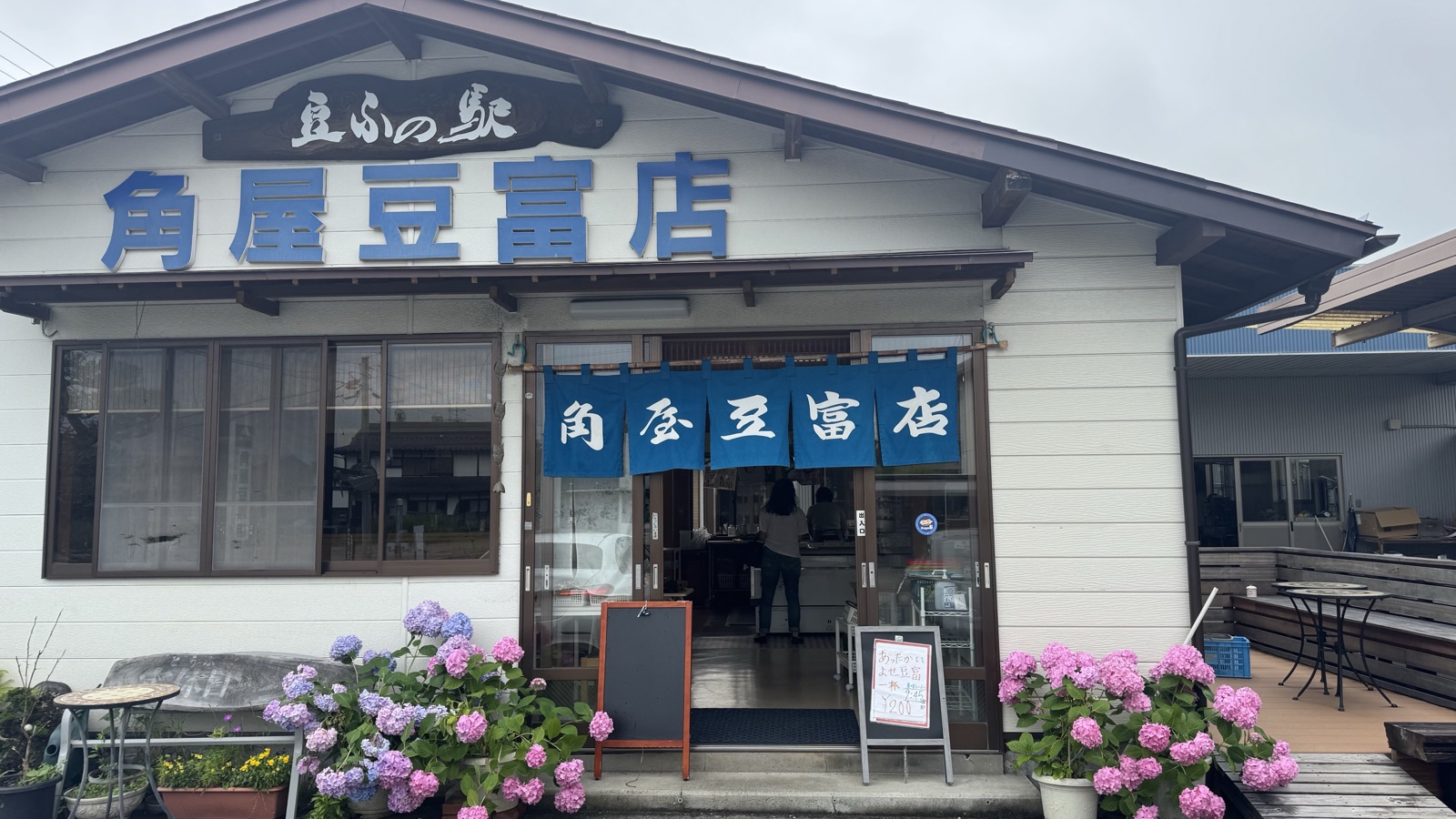
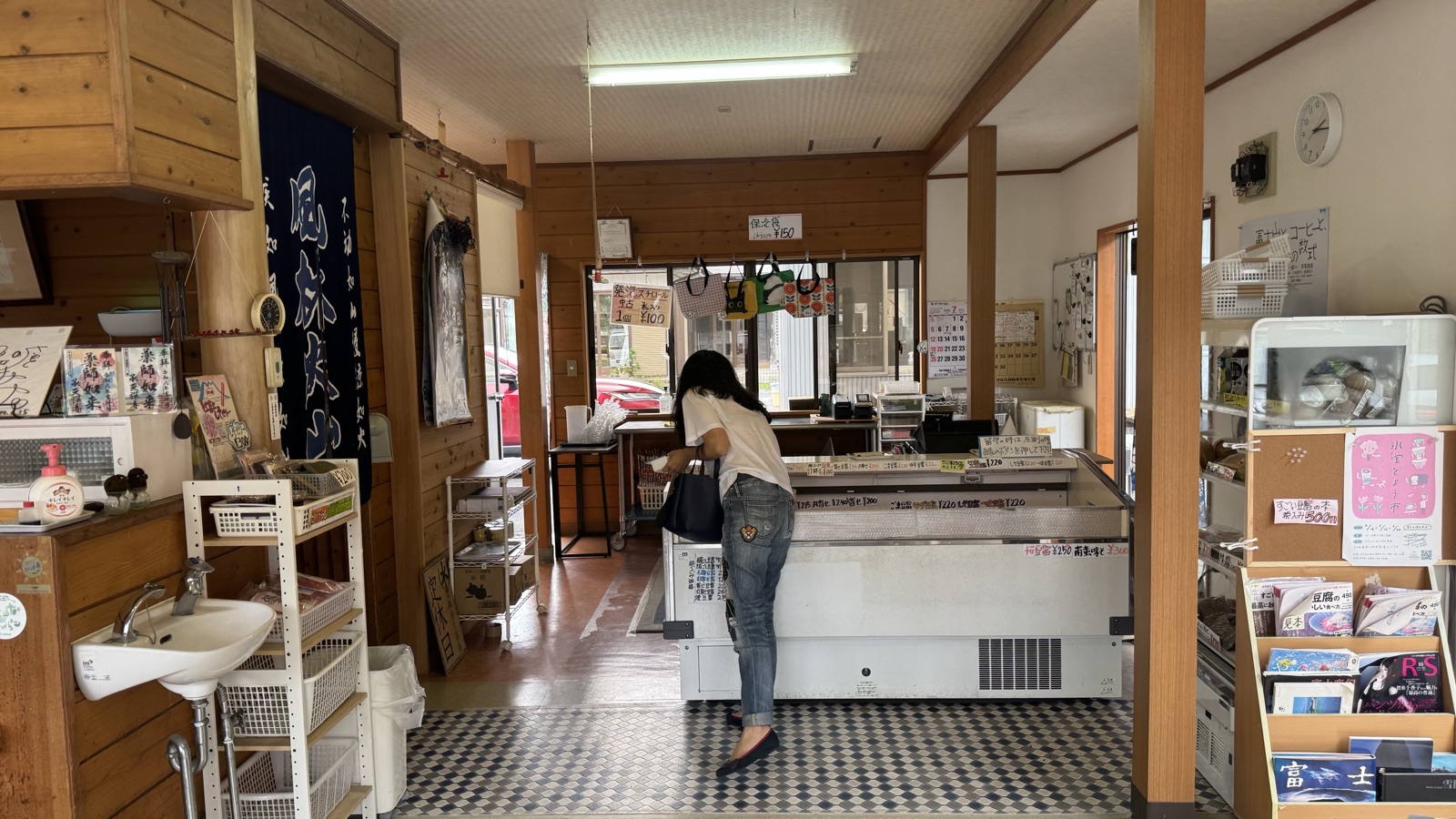
Go early. That’s the whole secret to Kadoya Tofu (角屋豆富店), a family tofu maker in Oshino that calls itself the “Tofu Station.” Get there in the morning and there’s still-warm tofu — and, when I visited, a little counter where they handed me a bowl to taste on the spot. I came for their flavored tofu and left having eaten warm yose tofu standing in the doorway, which is about the most Oshino thing you can do.
Hours, prices and the tasting below are what I saw on my visit and from public listings; a small family shop can change any of them, so call ahead if it matters. Oshino Hakkai — not the shop — is the World Heritage and famous-water site; more on that below.
Why Kadoya is worth going out of your way for
Kadoya has been making tofu in Oshino for generations — local write-ups put its founding back in 1949. Like its neighbours, it works with the water that made this village famous: Mt. Fuji snowmelt that surfaces here as some of the cleanest spring water in Japan. What makes Kadoya Kadoya is two things:
- They want you to taste it. On my visit there was a tasting counter, a small outdoor terrace, and a blackboard offering a bowl of warm yose tofu. Tofu this fresh, still faintly warm from the morning’s batch, is a different food from the cold block in a supermarket.
- Flavored tofu (変わり豆富). Alongside the plain yose tofu, they fold in shiso, sesame, yuzu and chili — little ¥220 tubs that are half souvenir, half snack.
What I bought, and how it tasted
I live over in Fujiyoshida, so Kadoya is a morning errand for me as much as anything. This trip’s haul:
- Yose tofu (寄せ豆腐). Soft, scooped, un-pressed tofu — the freshest form there is. Warm from the morning batch, it barely needs anything; I ate it with a few grains of salt before I even got home.
- Soy-milk yose tofu (豆乳入れ寄せ豆腐). An even richer, creamier version. This is the one to eat with a spoon, plain, like a savoury custard.
- Shiso tofu (しそ豆腐). Cool and herby, with the perfume of perilla running through it. Wants no soy sauce at all.
- Sesame tofu (胡麻豆腐). Dense and nutty — closer to a sesame pudding than a block of tofu. A little wasabi and soy, and it’s a dish on its own.
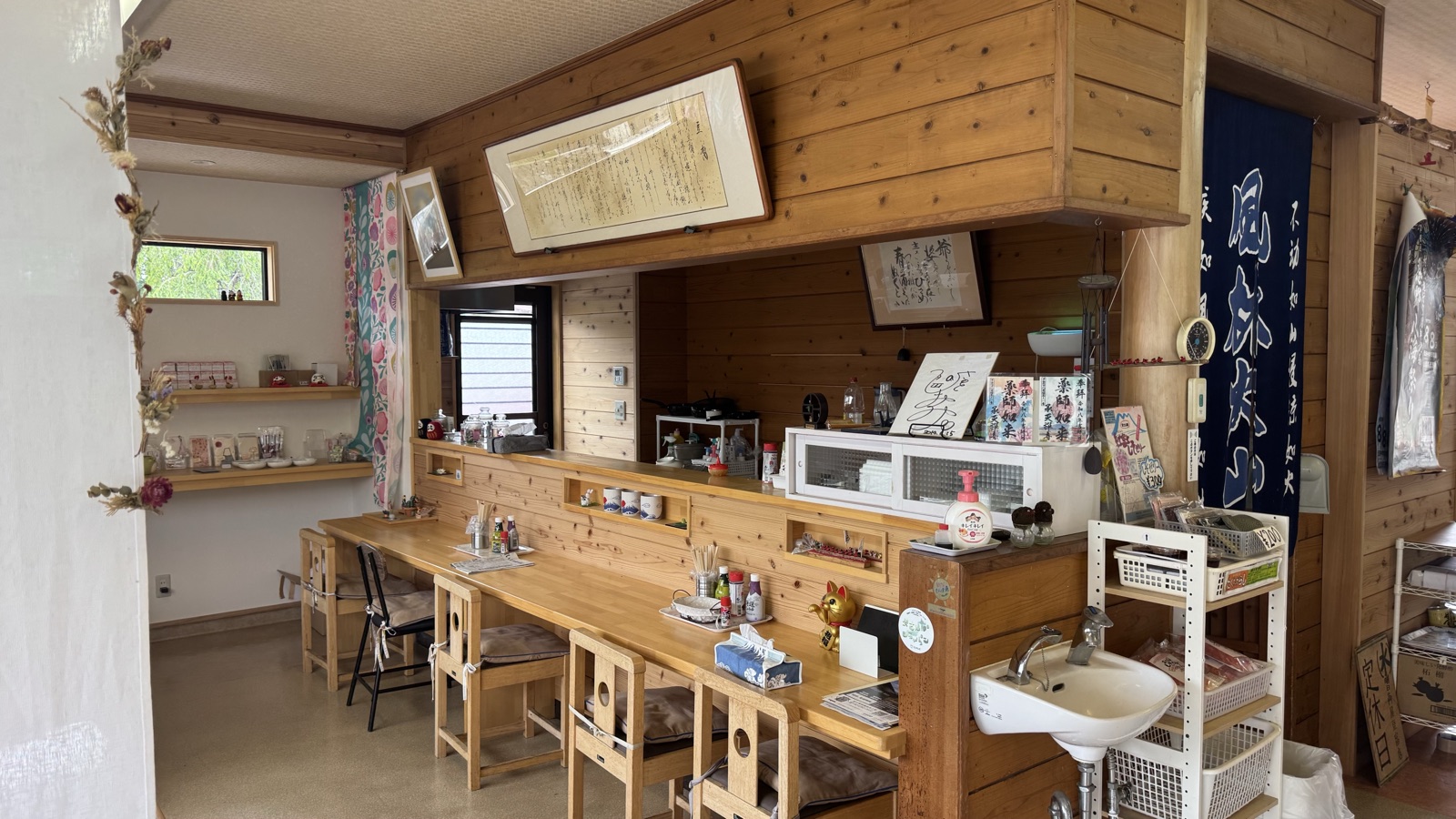
What’s in the case (prices from my visit)
| Item | What it is | Price |
|---|---|---|
| Yose tofu · 寄せ豆富 | Soft, scooped fresh tofu — eat plain | ¥200 |
| Warm yose tofu, a bowl | Served warm at the counter | ¥200 |
| Soy-milk yose tofu · 豆乳入り寄せ豆富 | Richer, creamier version | Posted at the shop |
| Sesame tofu · 胡麻豆富 | Dense, nutty, pudding-like | ¥220 |
| Shiso tofu · しそ豆富 | Cool and herby with perilla | ¥220 |
| Yuzu tofu · ゆず豆富 | Bright citrus perfume | ¥220 |
| Chili tofu · 唐辛子/一味豆富 | Gentle warmth | ¥220 |
| Edamame tofu · 枝豆豆富 | Green and sweet (seasonal) | ¥250 |
Prices are what was displayed when I visited and can change. They also sell a small cool bag (around ¥150) at the counter — handy if you’ve got a drive ahead.
How to eat it (and get it home in one piece)
This is fresh, preservative-free tofu, best eaten the day you buy it — not a sealed souvenir for the suitcase. A few notes for travellers:
Fresh-tofu travel tips
- Come in the morning for warm tofu and the full range — the best of it can be gone by afternoon.
- Eat it the same day and keep it cold until then; a cool bag (they sell one) plus a hotel fridge is enough.
- Go easy on seasoning. The flavored tofus want nothing; the plain yose wants a pinch of salt or a drop of soy.
- Follow the date and storage on the label rather than any rule of thumb.
Getting there, hours & map
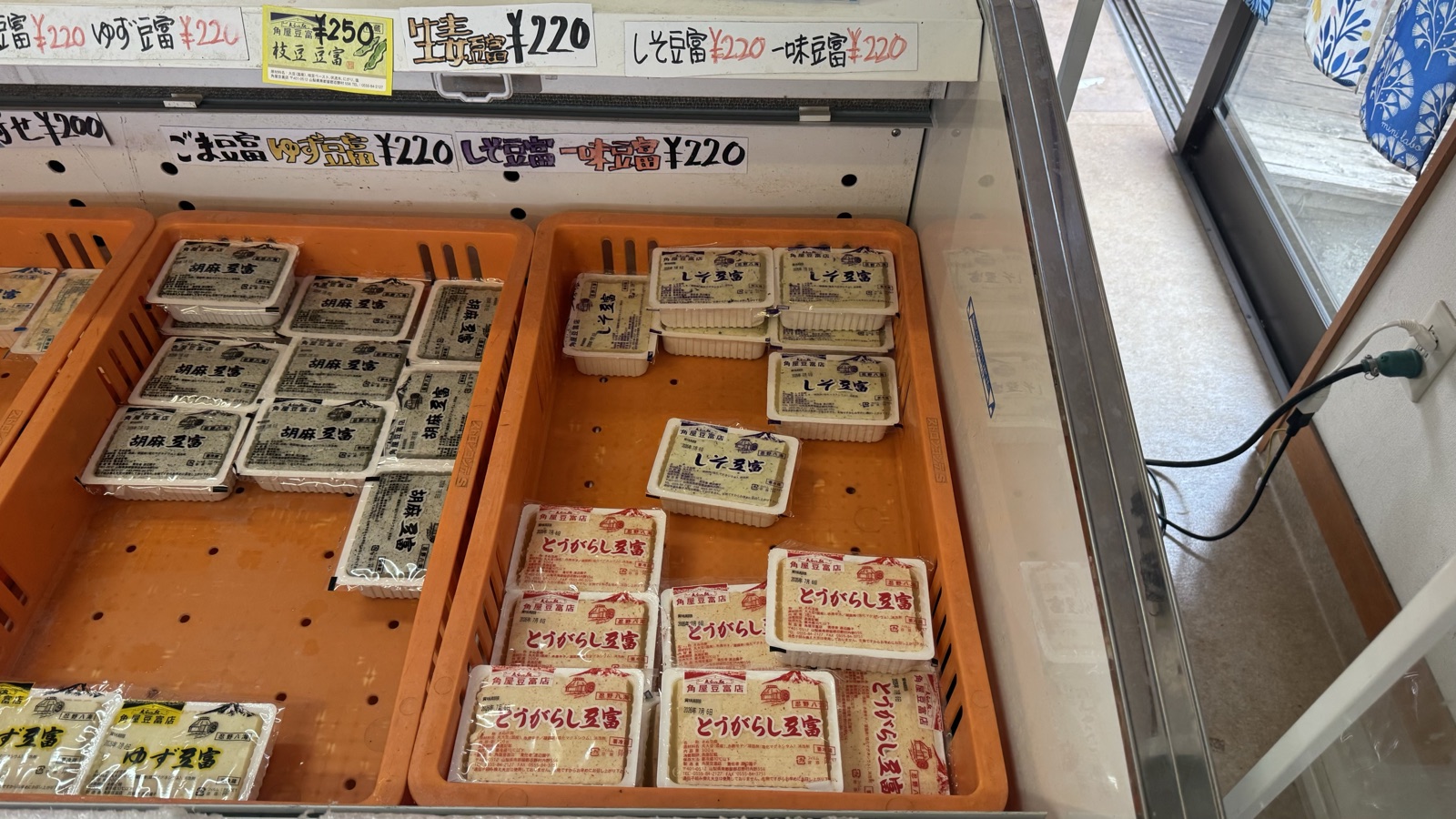
Kadoya is an easy drive — about five minutes from the Yamanakako IC on the Higashi-Fujigoko toll road — and it has its own small car park, which not every shop here does. It’s in the same corner of Oshino as the ponds, so it pairs naturally with a walk around Oshino Hakkai.
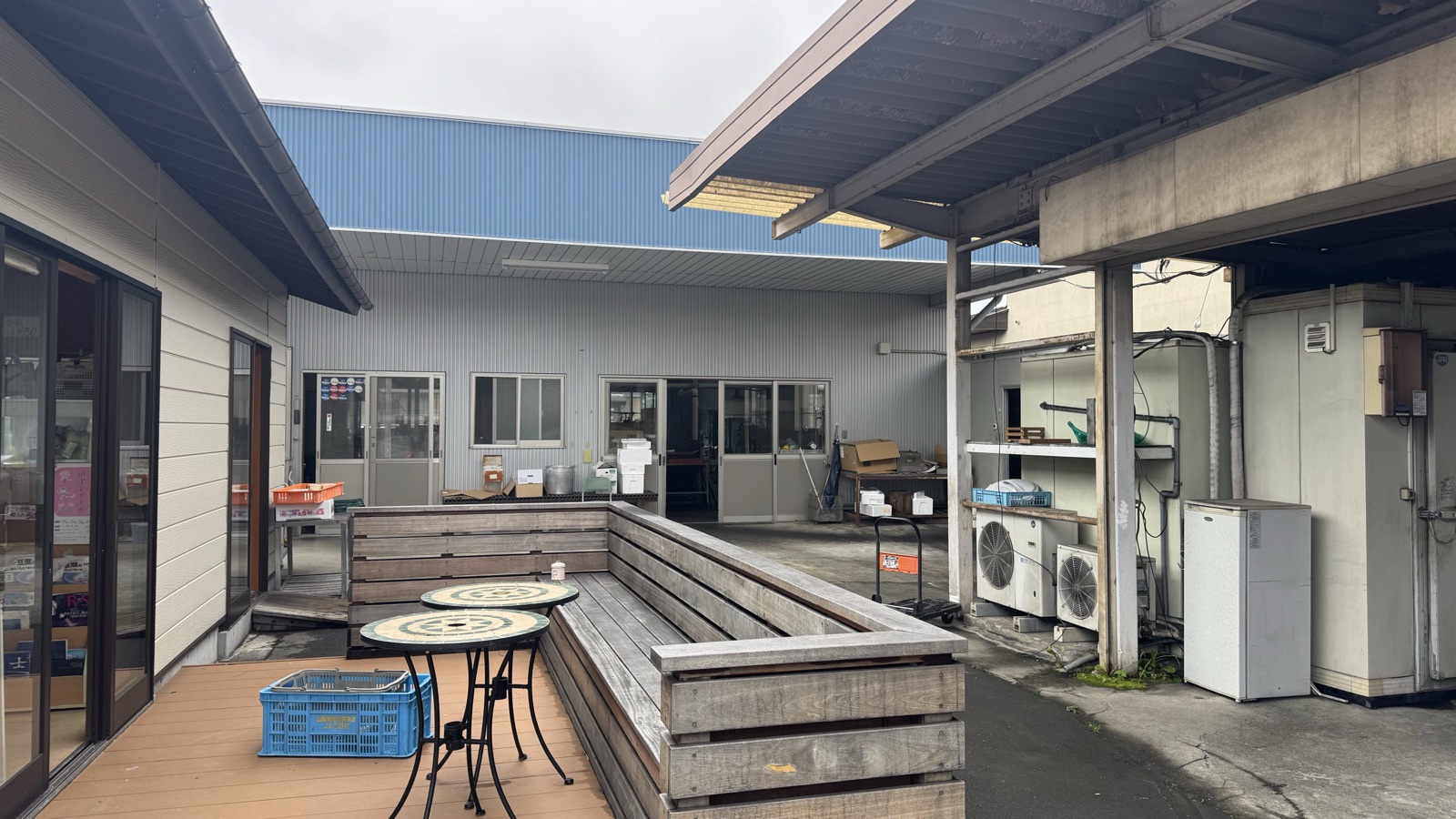
Pair it with Oshino Hakkai
The obvious morning is Oshino Hakkai first — the eight spring-fed ponds the village is known for — then tofu on the way back to the car. Those ponds are on Japan’s Ministry of the Environment list of 100 Famous Waters, and the Oshino Hakkai site is a constituent part of the “Fujisan” UNESCO World Heritage listing. It’s the ponds and the spring-water landscape that hold those honours, not the tofu shop — but Kadoya works with the same Fuji-fed spring water, and you can taste it in a spoonful of warm yose.
Good to know
Is there really free tasting?
On my visit there was a tasting counter and a blackboard offering warm yose tofu, and the samples are famously generous. That said, a small family shop can pause or change it any day, so treat it as a lovely bonus rather than a guarantee — and be a good guest if you’re only there to taste.
Why does everyone say to go in the morning?
Because the tofu is made fresh each day and the best of it — especially the warm, soft yose — goes early. Mornings mean the widest choice and the freshest texture.
Can I eat it right away, or is it a packaged souvenir?
It’s fresh, preservative-free tofu to eat soon, ideally the same day — not a shelf-stable gift. Enjoy it on your trip; the warm bowl at the counter is the one you have on the spot.
Do they take cards, and is there English?
Assume cash and Japanese only unless you confirm otherwise. Everything is on display, so pointing works; bring yen and a translation app.
Is it near Oshino Hakkai?
Yes — it’s in the same village, minutes from the ponds, and it has parking, so it fits neatly into an Oshino Hakkai visit.
More around Mt. Fuji
More good eating around Mt. Fuji
Join travelers discovering Japan's hidden side
Weekly dispatches from off-the-beaten-path Japan — spots and stories you won't find in guidebooks.
No spam. Unsubscribe anytime.
Welcome aboard!
You're in. See you in your inbox soon.