
Chureito Pagoda (忠霊塔) sits on Arakurayama in Fujiyoshida, Yamanashi — a five-storied 1963 peace memorial reached by climbing the 398 Sakuya-hime stairs. The view: Mt. Fuji framed by the pagoda’s tiered eaves, and during peak cherry blossom in mid-April, an explosion of pink across the foreground. Entry is free. From Shinjuku, the train route via Otsuki and the Fujikyu Line is about 2 hours.
The 398 stairs are not optional. The pagoda sits 100 m above the parking lot and the observation deck is another 30 stone steps beyond the pagoda itself. If you have knee issues, this stop is hard. If you can climb, it’s worth the climb — but timing matters more than fitness. The deck is a 5-meter-wide platform that holds maybe 15 people at once, and during the first week of April when the cherries open, a 40-minute queue is normal. Most of this guide is about how not to be in that queue.
Quick Facts
| Location | Arakurayama Sengen Park, Fujiyoshida, Yamanashi Prefecture |
|---|---|
| Main draw | Five-storied pagoda framed by Mt. Fuji, with cherry blossoms in spring |
| Best time for sakura | Typically mid-April; shifts ±5 days year to year (check forecasts) |
| Nearest train | Shimoyoshida Station (Fujikyu Railway Line) — 25 min walk |
| Nearest bus | Chuo-do Shimoyoshida (Highway Bus) — 18 min walk |
| Admission | Free (park, shrine, observation deck) |
| Time required | 1.5 – 2.5 hr including climb and viewing |
| Crowd level | Extreme during cherry blossom weekends; manageable other seasons |
| Accessibility | Not wheelchair/stroller accessible above the parking — long stairs |
The view, and why bother
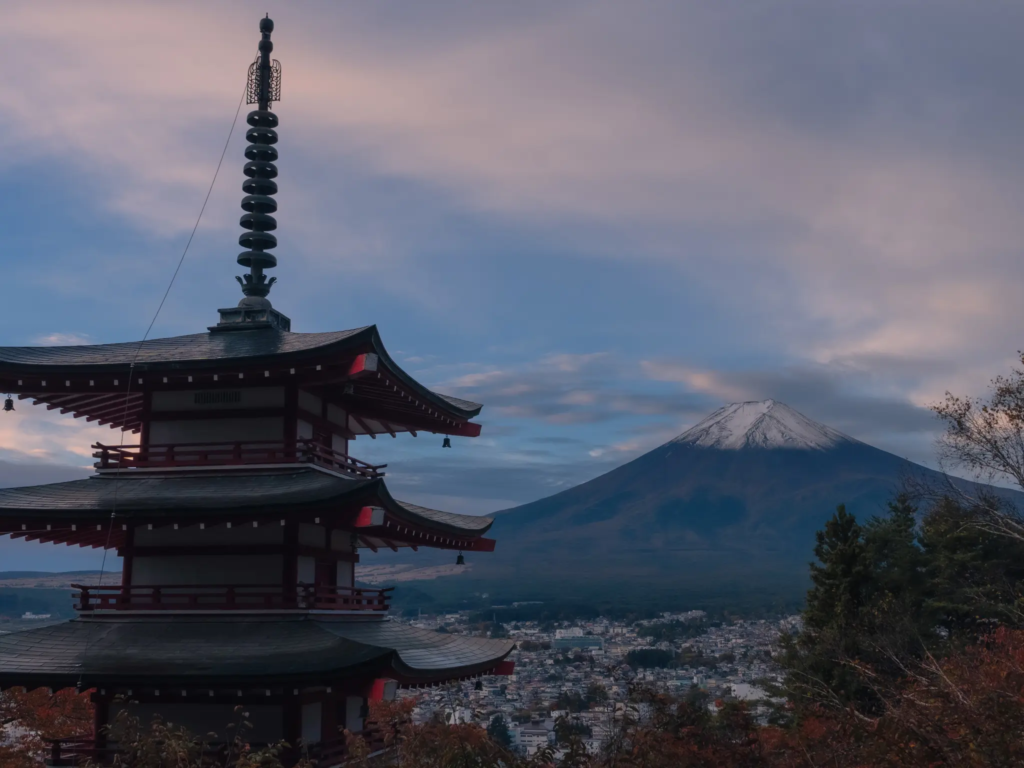
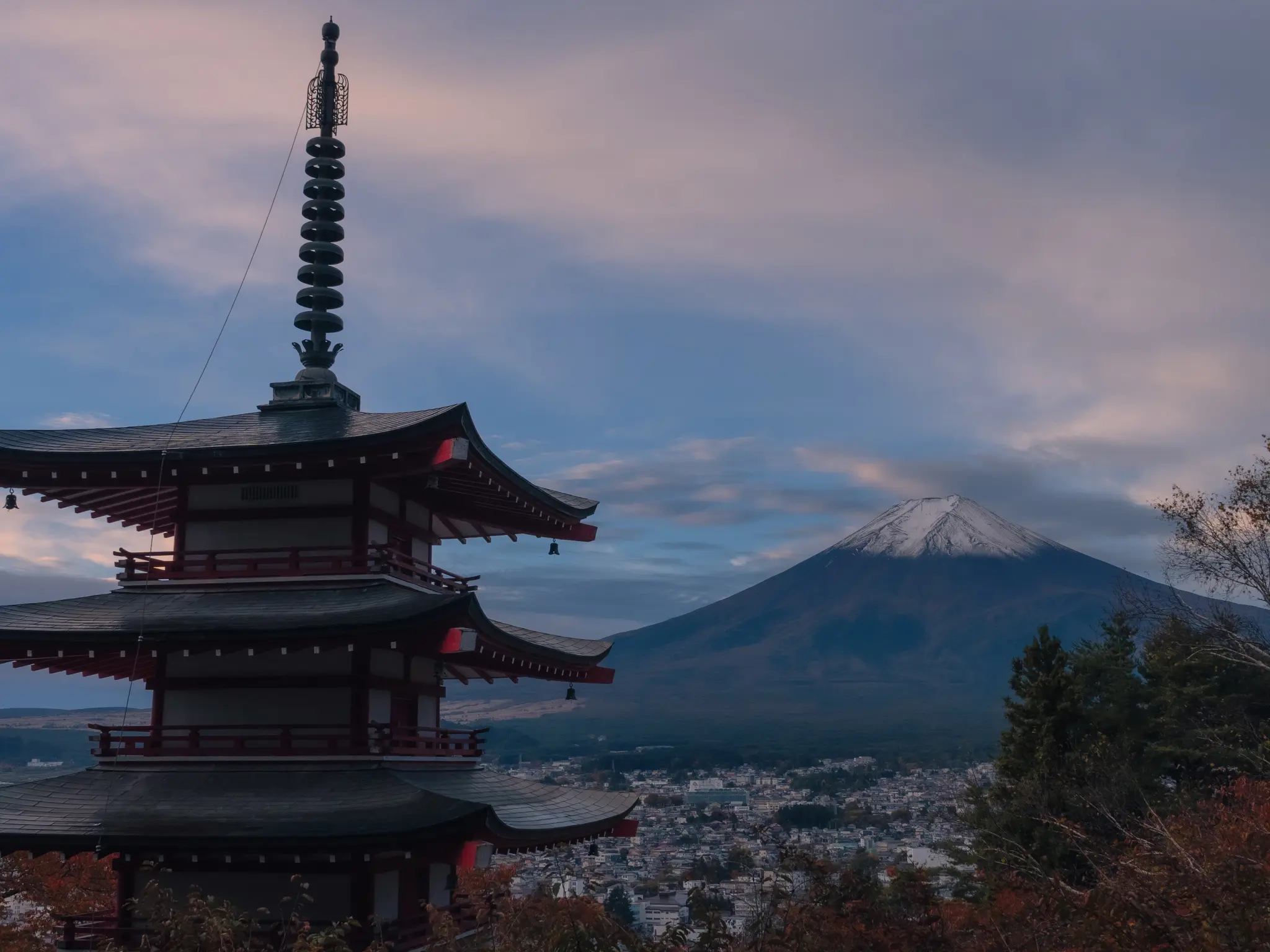
The composition that built the postcard: pagoda mid-frame, Fuji behind, sakura below. April 12 by my notes; the cherries peaked three days later.
The Chureito Pagoda is a Buddhist peace memorial built in 1963, part of the Arakura Sengen Shrine complex. It is not historically ancient — that’s a 20th-century structure on an 11th-century shrine site. The reason it has become one of Japan’s most photographed locations is purely about composition: from the observation deck 30 meters above the pagoda’s base, the eaves of the pagoda line up almost perfectly with the southern face of Mt. Fuji, and the cherry trees on the slope below add the spring foreground. No other accessible spot in Japan gives this exact triangulation.
For the other ten months of the year, the same composition still works — green leaves in summer, red maples in autumn, snow on Fuji and the pagoda in winter. The crowds in those off-seasons are 5-10% of what you’d see during the cherry week. If you can’t come in April, come in October.
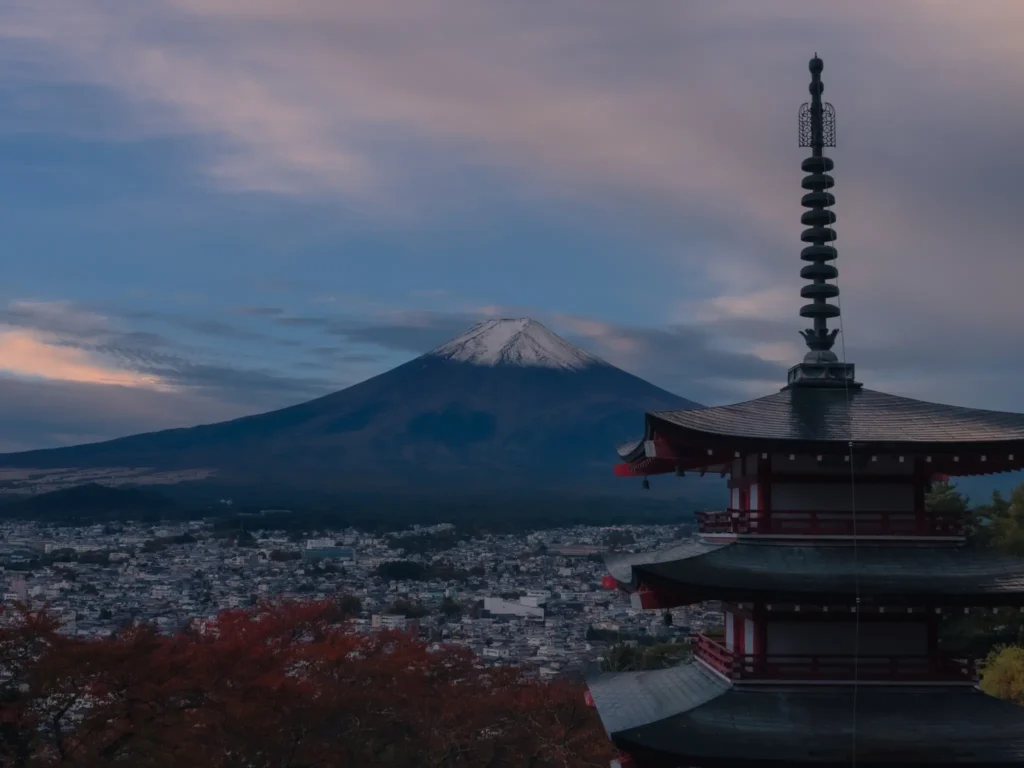
The reverse view: from the deck looking south over Fujiyoshida City to Mt. Fuji. The 398 stairs end here.
Best time to visit (and beat the crowds)
The cherry blossoms typically reach full bloom in mid-April. This is the most crowded time of year. The observation deck during the first weekend of bloom can have 30-50 minute waits just to take a photo from the railing. Below is how the crowds break across the day during sakura week — visit at the green hours.
The three strategies that actually work:
Visit on a weekday. Weekends are 2-3× more congested than weekdays during sakura week. If your trip dates are flexible, shift your Chureito day to Monday-Thursday.
Arrive before 08:00. Tour buses start arriving around 09:00 and crowds peak between 10:00 and 14:00. An early start also increases your chances of seeing a clear Fuji — by mid-morning, clouds typically start gathering around the summit.
Consider late afternoon. Crowds thin out sharply after 15:00. The light goes golden between 16:00 and 18:00. The deck stays open until dark; in spring this means the last good light around 18:00-18:30.
How to get to Chureito Pagoda: 3 options
Choosing your mode of transport is the most critical part of planning. Each option has distinct advantages and disadvantages, especially during the busy cherry blossom season.
JR + Fujikyu via Otsuki
Shinjuku → Otsuki: JR Chuo Line Limited Express (Azusa/Kaiji), ~60 min. Otsuki → Shimoyoshida: Fujikyu Railway, ~35 min. Then a signposted 25-minute walk through quiet Shimoyoshida streets to the shrine base.
Busta Shinjuku → Chuo-do Shimoyoshida
Direct bus from Busta Shinjuku (Shinjuku Expressway Bus Terminal). Drop-off at Chuo-do Shimoyoshida bus stop on the expressway. From there, descend a staircase from the expressway, walk along service roads, and pass through a tunnel under the highway — 18-20 minutes to the park entrance.
Guided day tour from Tokyo
Most tours combine Chureito Pagoda with Lake Kawaguchiko, Oshino Hakkai, or the Mt. Fuji 5th Station. Convenient for first-time visitors, but tours arrive at the pagoda during peak crowd hours and you’ll have 60-90 minutes there at most.
- You want the sunrise / pre-crowd shot: Train. Catch the 05:46 Azusa from Shinjuku. You’re at Shimoyoshida by 07:30, on the deck by 08:00.
- You’re budget-conscious and the day is flexible: Highway bus. ¥2,000 saves half the train fare; off-peak buses arrive at reasonable times.
- You’re short on time and want to combine 2-3 Fuji sights: Tour. Accept the peak-hour visit; you’re trading photo quality for logistics simplicity.
What to do at Arakurayama Sengen Park
Climb the 398 steps
The Sakuya-hime Stairs are the main path. Pace yourself — younger climbers do it in 8 minutes, older visitors in 20.
Arakura Sengen Shrine
The shrine at the base is a peaceful stop. Empty most days. The vermillion gate makes a strong photo on its own.
The observation deck
The designated platform for the iconic photo. 5 meters wide, holds ~15 people. Queue during peak season.
Explore the upper park
Beyond the pagoda there are walking trails and quieter viewpoints — most visitors never climb past the deck.
What to bring for the pagoda shot
Fuji framed by the five-story Chureito Pagoda is one of Japan’s most-shot views — and a crowded, timing-sensitive one. A little gear makes the difference, and my full camera kit is here. All on Amazon Japan, so you can have it delivered to your hotel first.
Flying in from the US or Canada? If you shoot, these are worth having in the bag before you fly — on amazon.com: travel tripod, fast SD card. Already in Japan? The Amazon Japan picks below deliver to your hotel.
Asumiko Pond (Hasu-ike)
A quiet lotus-and-hydrangea pond in the same town — a Fuji-worship lake off the tourist trail.
Travel tripod
For the dawn and dusk frames, and to hold your spot steady on the crowded upper platform.
Spare battery
You will wait for the light and a gap in the crowd. A spare keeps you ready.
Fast SD card
Bracket the pagoda, the blossoms and Fuji without running out of room.
Lens cleaning kit
The climb up to the platform means a warm lens in cool air — a quick wipe clears the haze.
Phone tripod mount
Shooting on a phone? A clip on the tripod gets you the same steady frame.
Practical tips for your visit
Comfortable shoes
Significant walking from the station plus 398 stone steps. Sandals get tiring fast.
Check Fuji visibility live
Use the live cameras at Mt. Fuji visibility forecast before you commit to the train ride.
Bring water + snacks
Limited refreshments at the park itself. A convenience store near Shimoyoshida Station is your last stop.
Restrooms
Public toilets at the park entrance and near the pagoda. Both can have lines during peak season.
Bus tour drop-off
Tour buses can’t drive up to the park (roads too narrow). All tour groups get dropped at Shimoyoshida Station and walk up.
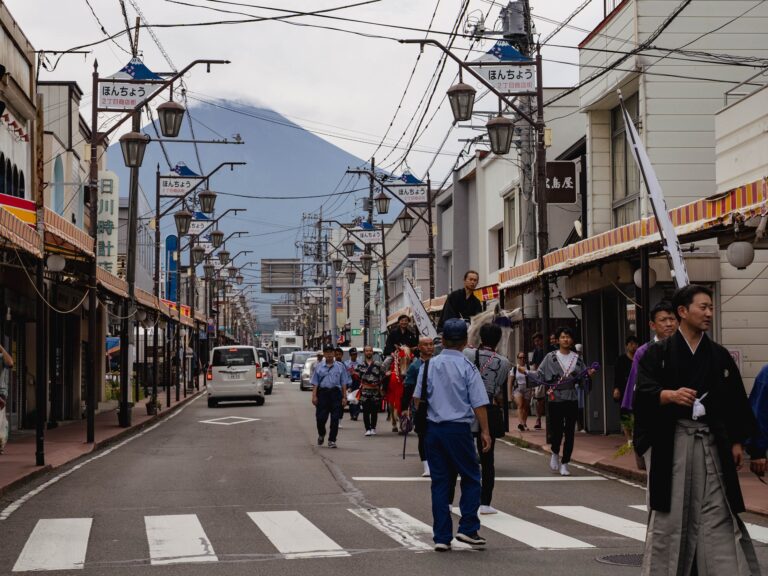
Timing note: on September 18–19 the same Shimoyoshida Station serves the yabusame festival at Omuro Sengen Shrine — a horse procession and hoofprint divination four minutes from the station, easy to pair with the pagoda.
Where to stay nearby
Many visit on a day trip from Tokyo, but staying overnight in the Fuji Five Lakes area allows for a more relaxed pace and sunrise access to the pagoda. Consider hotels around Kawaguchiko Station or Fujisan Station for the best access to transportation and amenities — both are 10-15 minutes from Shimoyoshida by Fujikyu line.
Sleep within 15 minutes of the stairs
Fujiyoshida itself has limited hotel inventory. Kawaguchiko has the most range — from budget guesthouses to lakefront ryokan with Fuji-view onsen. Rakuten Travel indexes the smaller traditional inns better than Booking for this area.
Where to eat nearby
Suggested half-day itinerary (train)
FAQ
How long does it take to climb the stairs to Chureito Pagoda?
About 15-20 minutes at a comfortable pace for an adult of average fitness. Faster climbers do it in 8-10 minutes. Older visitors or those carrying camera gear should plan 25-30 minutes including rest stops.
Is Chureito Pagoda accessible for wheelchairs or strollers?
No. The 398 stone stairs cannot be bypassed. There is no ramp or elevator. Wheelchair and stroller users can visit the lower shrine area and parking lot but cannot reach the pagoda or the observation deck.
When is the absolute best time for cherry blossoms at Chureito Pagoda?
Mid-April most years, though peak shifts ±5 days based on the spring forecast. Check the Japan Meteorological Agency cherry blossom forecast in the two weeks before your trip and target the first 2-3 days of full bloom for the best photo conditions.
Can I fly a drone at Arakurayama Sengen Park?
No. Drone use is prohibited at the park and across most public spaces in Japan, with stricter rules around shrines and crowded areas. Police are present during peak season.
Is it worth visiting outside of cherry blossom season?
Yes. The view of Fuji framed by the pagoda is striking year-round. Summer has lush green; autumn brings red maples and clearer Fuji visibility; winter offers snow-capped Fuji on cold clear mornings with virtually no crowds.
Plan the Trip
Three doors into a Chureito visit. If you’re aiming for sakura, book travel + hotel together — the Fujikyu line and Kawaguchiko hotels both fill 2-3 weeks ahead of peak bloom.
Related reading
- Mt. Fuji Cherry Blossom Guide 2026 — full Fuji + sakura context
- Arakurayama Sengen Park Sakura Festival Cancellation 2026 — what changed about the spring festival
- Is Mt. Fuji Visible Today? — check live cameras before you commit to the day
Join travelers discovering Japan's hidden side
Weekly dispatches from off-the-beaten-path Japan — spots and stories you won't find in guidebooks.
No spam. Unsubscribe anytime.
Welcome aboard!
You're in. See you in your inbox soon.