Mt. Fuji · Where to Stay
Quick answer: stay in Kawaguchiko for the lake view, onsen hotels and first-trip ease; stay in Fujiyoshida (Shimoyoshida side) for street-level Fuji photos, sunrise at the Chureito Pagoda and real izakaya evenings. Shimoyoshida Station — the Chureito Pagoda side of Fujiyoshida — is thirteen minutes and 310 yen from Kawaguchiko Station on the local Fujikyu line; Fujisan Station is closer still, about six minutes and 230 yen. In this guide, “Kawaguchiko” means the lake resort area, and “Fujiyoshida” means a city with several distinct neighborhoods — Shimoyoshida and Honcho near the pagoda, the Fujisan Station center, and the Fuji-Q side. Kawaguchiko is where you stay for the lake, and in November it is also where you stay for the autumn leaves festival, whose last bus back leaves at 18:32: onsen hotels along the water, in-house dinners, and Fuji-view rooms — if you book a room specifically sold as one. Fujiyoshida is where you stay for the town: udon shops, a retro shopping street that frames Fuji between its signboards, the Chureito Pagoda a twenty-minute walk from the station — and a real izakaya district for the evening. I live in Fujiyoshida and I send visiting friends to both. The decision comes down to your photographs, your evenings, your sunrise plans — and which neighborhood you actually book.
The sixty-second decision
Stay in Kawaguchiko if
You want the lake in front of you, an onsen bath after a day out, and dinner served in-house — and you are prepared to book a room specifically sold as a Fuji-view or lake-facing room, with a meal plan if you want dinner. The dawn reflection depends on wind and visibility, but staying on the shore is what makes trying for it easy.
Stay in Fujiyoshida if
Your best photos are street-level Fuji (Honcho Street, the Chureito Pagoda), you want udon at lunch and an izakaya at night rather than a hotel dinner, and you plan to be at the pagoda for sunrise. If your dates touch August 26–27, the Yoshida Fire Festival burns two kilometres of torches down these very streets — the town’s biggest night of the year. Book the Shimoyoshida/Honcho side for that walkability — the Fujisan Station and Fuji-Q areas are different stays. Staying by the line also means you can watch for the Matterhorn train, the Swiss-liveried local that runs this route.
Split the difference
The short train ride means no choice is fatal. With two nights, one base is usually simpler — split the stay only if both the lakeside hotel experience and pre-dawn pagoda access genuinely matter to you. One night? Sleep where your sunrise is.
What each place actually is
Kawaguchiko is a resort shoreline: hotels and ryokan strung along the water, souvenir shops and cafes near the station, and the mountain view across the lake as the main draw. It is built for visitors, and it does that job well. What it is not, especially after dinner hours, is busy — the station and resort strips go quiet early.
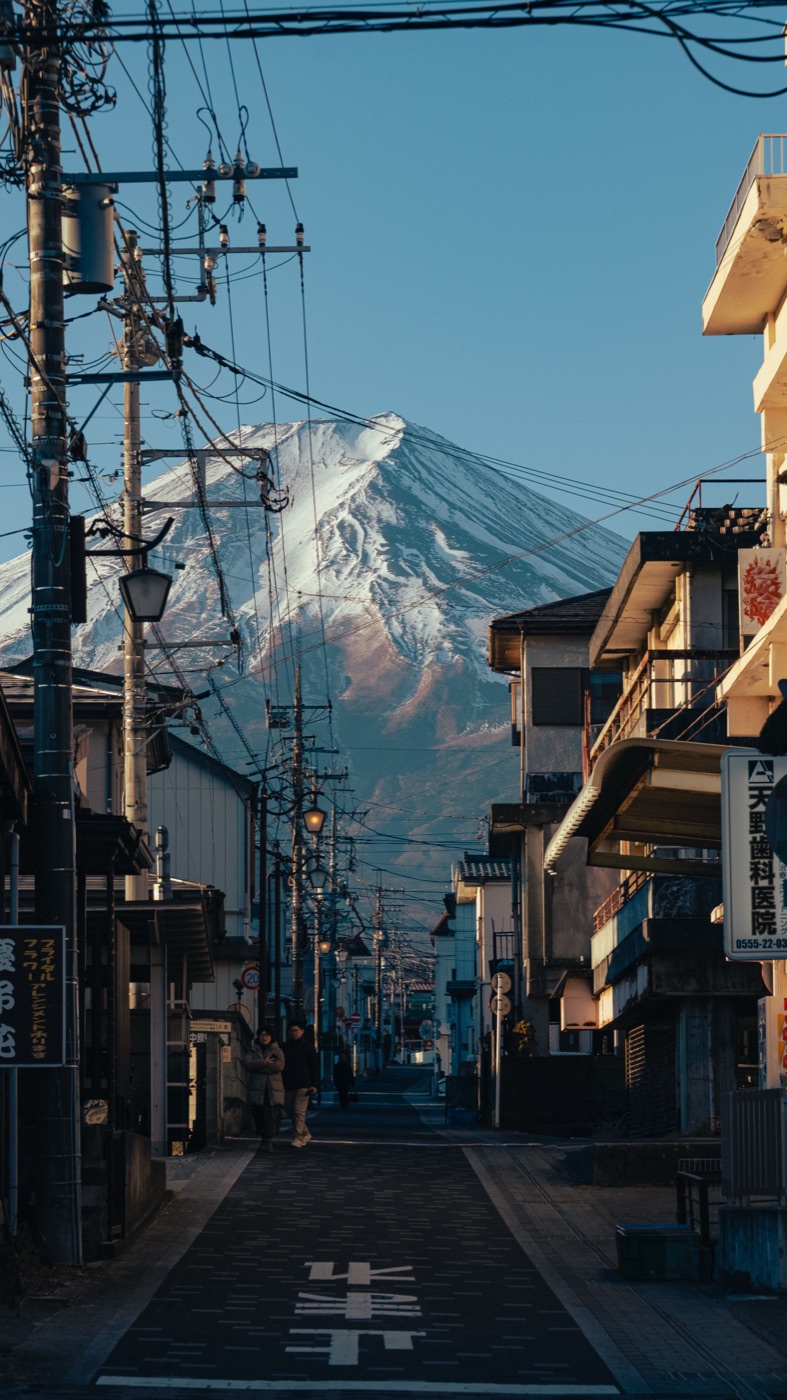
Fujiyoshida is a working city of udon shops, shrine approaches and weathered shopping streets that happens to sit directly under Mt. Fuji. Honcho Street’s view — the mountain rising at the end of a corridor of signboards and telephone wires — has become a widely shared Fuji photograph, and the streets around it are everyday ones: shops, schools, my own supermarket run. Visitors who stay on this side consistently tell me it feels like a different trip from the lakeside.
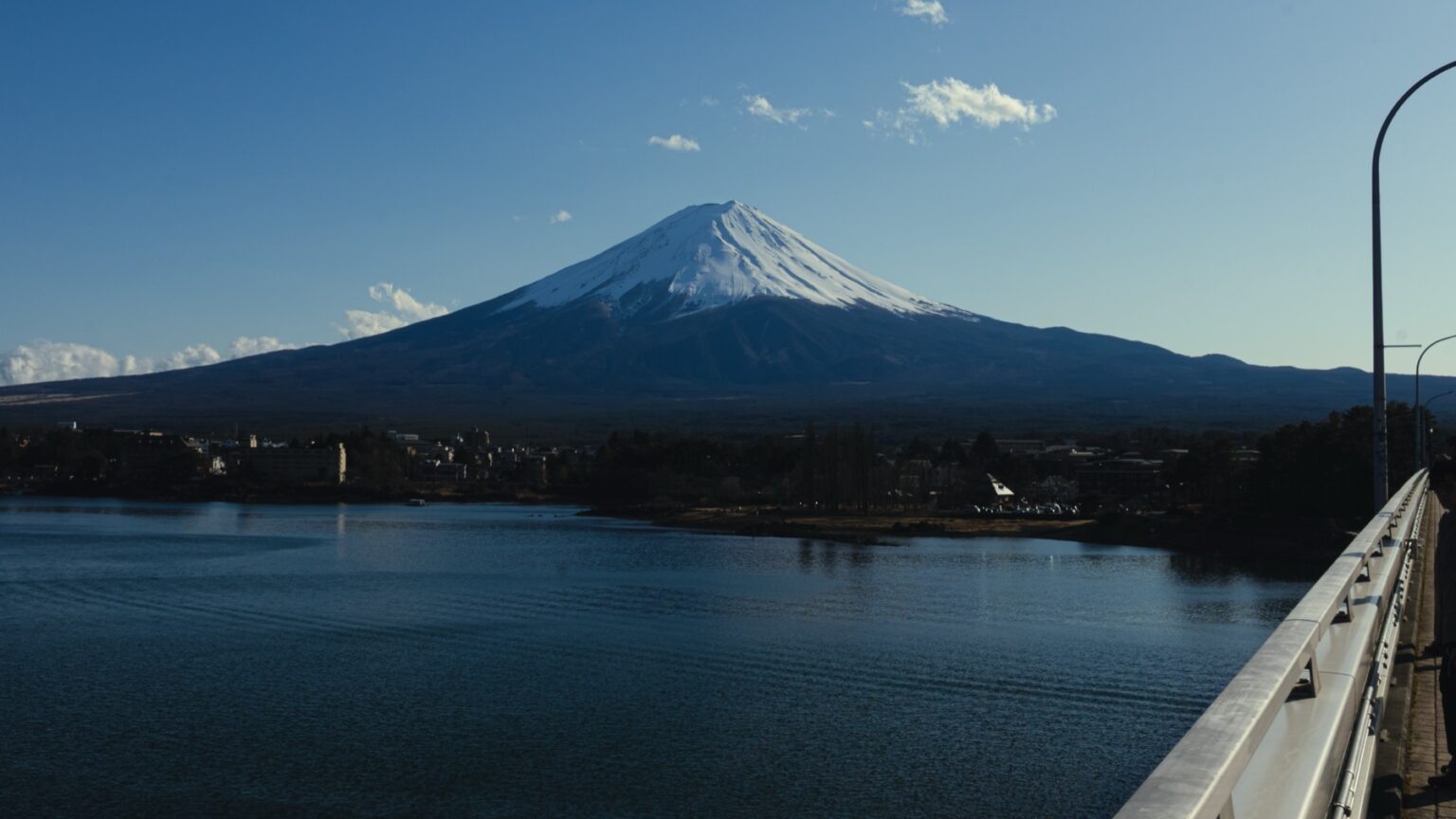
The photographs are different mountains
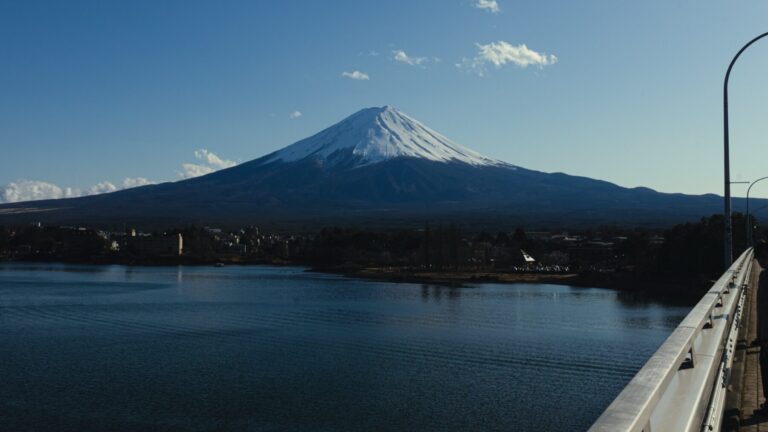
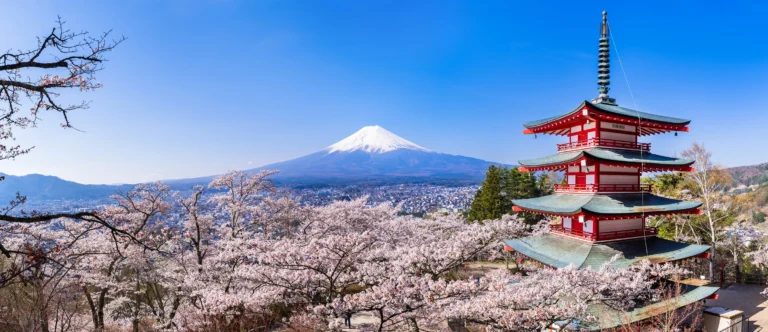
This is the cleanest way to choose. Kawaguchiko gives you Fuji over water — the north shore around Oishi Park lines the shot with lavender in July and kochia in autumn, and on windless mornings the lake gives you the reflection. Fujiyoshida gives you Fuji framed by streets, signboards and daily life — the pagoda-and-mountain frame from the Chureito deck (398 steps up from Arakurayama Sengen Park), and the street-level shots along Honcho Street where the mountain looks close enough to lean on. You can reach either viewpoint from either base by train or taxi — but neither view is outside your door if you sleep on the other side, and at dawn that difference is the whole game. Decide which photograph you came for, and you have mostly decided where to sleep.
Evenings: the part nobody warns you about
Here is the local reality. Kawaguchiko evenings mostly happen inside your hotel. Dinner hours vary by property — Fufu Kawaguchiko lists dinner from 18:00 to 20:30, and Fuji Lake Hotel from 18:00 to 21:00 with final entry at 19:00 — so check your meal plan and arrival deadline. Some daytime facilities also close early in the cold months (Kawaguchiko Base, for example, shuts at 16:30 on its winter schedule). If you are not eating where you sleep, plan carefully.
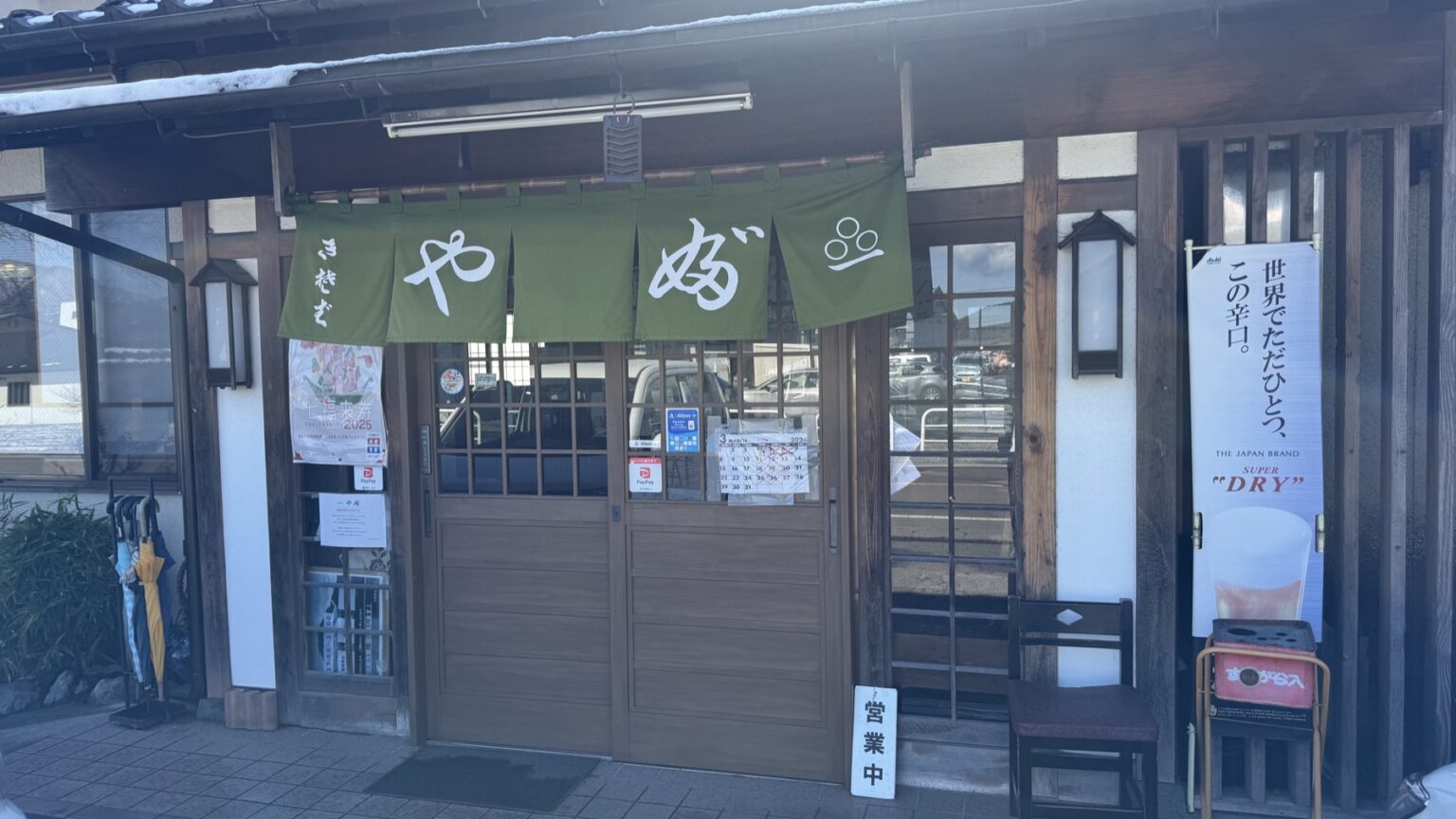
Fujiyoshida flips it. The famous Yoshida udon is a lunch culture — many shops serve only around 11:00 to 14:00 (Naka-no-Chaya’s hours exactly), though longer-hours exceptions like Togawa (10:00–19:00) exist — so build it into your daytime. After dark, the Nishiura district near Fujisan Station takes over: izakaya, bars and narrow-alley snack culture, officially promoted by the city as its nightlife quarter. If your idea of a good trip evening is a counter seat and a second round, sleep on this side.
Still weighing whether to sleep here at all? The day-trip-vs-overnight math — earliest arrivals, seasonal visibility data, what one dawn is worth — is in our Mt. Fuji day trip or overnight guide.
Sunrise decides it for photographers
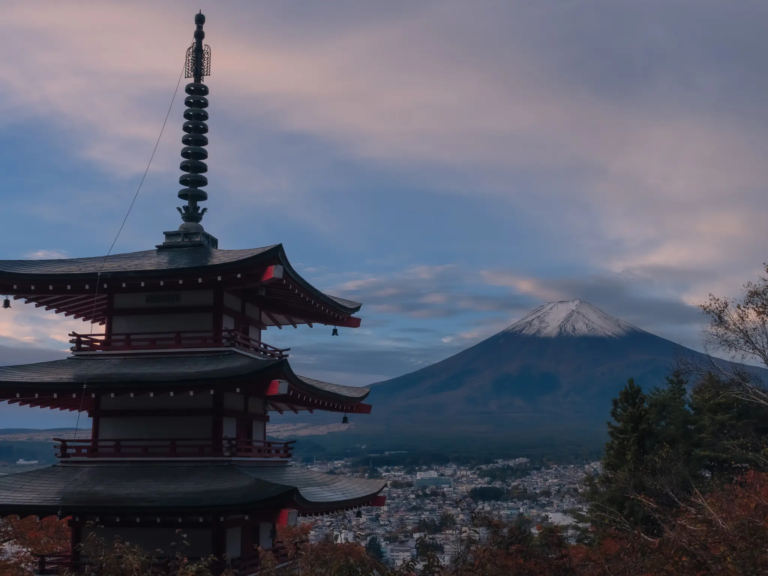
Arakurayama Sengen Park is open 24 hours (temporary access restrictions can apply), and the best light — Fuji going pink over the city — happens before most hotels serve breakfast. From a stay near Shimoyoshida or Honcho, you walk: about twenty minutes from Shimoyoshida Station to the park approach, then the 398 steps — note this does not hold from hotels out by Fujisan Station or Fuji-Q. From a Kawaguchiko lakeside hotel, the first train toward Shimoyoshida leaves at 5:18, which in high summer is already after first light. Sunrise at the pagoda while staying lakeside means a taxi or a very early start; sunrise on the lake while staying in Fujiyoshida has the same problem in reverse. Sleep where your dawn is.
Prices, honestly (checked August 13, 2026)
| Tier | Kawaguchiko | Fujiyoshida |
|---|---|---|
| Hostel / guesthouse | Kagelow (sample listing) ~US$65; area hostel average ~US$116 | Hostel average ~US$68; Fuji Matsuyama BASE (sample) ~US$61 |
| Mid-range hotel | Toyoko Inn Ohashi (sample) ~US$79 · SAWA Hotel (sample) ~US$76; Kawaguchiko 3-star searches from ¥9,234 on sampled November dates | Business hotels cluster near Fujisan Station; run your own dates to compare |
| Splurge | Lake-view villas and ryokan: Villa Stello (sample) ~US$280, with front-row water views priced well above that | Fuji-Q district (a different stay-feel from Honcho/Shimoyoshida): MYSTAYS Fuji Onsen Resort ~US$290 · Highland Resort ~US$346 |
In this snapshot, budget averages were nearly identical (about US$75 vs US$78) while hostel pricing favored Fujiyoshida — one sample, not a law. What is structural: Kawaguchiko’s lake-view tier is the premium product of the area, and in koyo season and sakura weeks that tier sells out first. Whichever side you choose, compare the same dates, room type and cancellation terms on Booking.com (Lake Kawaguchiko search), Agoda and Trip.com — inventory and pricing differ by platform, and always check the map: “Kawaguchiko” labels on OTAs sometimes stretch far from the lake.
Getting here and between (the numbers)
| Route | Time | Cost | Last departure |
|---|---|---|---|
| Shinjuku (Busta) → Kawaguchiko Stn by highway bus | ~1h45m | ¥2,200 | 23:25 (arrives 1:11 a.m.; the 22:25 bus arrives 0:11) |
| Tokyo Stn → Fujisan / Kawaguchiko Stn by bus | — | ¥2,300 | 21:10 (arr. Fujisan 23:12 / Kawaguchiko 23:17) |
| Shimoyoshida ↔ Kawaguchiko (Fujikyu line) | ~13 min | ¥310 | 22:25 / 22:10 |
| Fujisan Stn ↔ Kawaguchiko | ~6 min | ¥230 | — |
| Otsuki → Kawaguchiko (from JR Chuo line) | — | ¥1,170 | 23:10 |
Note the asymmetry: the last bus out of Shinjuku (23:25) arrives after midnight, but the last train between the two towns leaves at around 22:10–22:25. If you land late on the Kawaguchiko side with a Fujiyoshida bed — or the reverse — you are in taxi territory. And a bus arriving after midnight does not mean your hotel desk is open: confirm late check-in with the property directly, especially at ryokan with dinner service. Arriving without a car also changes which neighborhoods make sense at all: my car-free Fuji stay guide covers that decision, and the hotel tier rankings go deeper on specific properties.
Make one reversible move
For everything else on the trip — what has a release date, what merely needs watching, and when each clock fires — see the Japan Trip Booking Timeline.
Want this as a month-by-month checklist? Pick your travel month – or have your whole plan reviewed in writing.
FAQ
Which is better for a first-time visitor?
For most first-timers, Kawaguchiko is easier: more hotel choice, more English-ready infrastructure, and the lake view most people came for. If sunrise at Chureito or street-level Fuji photography is your priority, the Shimoyoshida side of Fujiyoshida is the sharper choice.
Can I see Mt. Fuji from anywhere in either town?
No — visibility depends on weather, and sightlines depend on buildings, terrain and which way your room faces. If the view matters, book a room explicitly sold as a Fuji-view room and confirm whether the view is from the room, the bath or a shared space. Our Mt. Fuji visibility data shows how often the mountain actually appears by season — use it for expectations, not as a guarantee for specific dates.
Is Fujiyoshida cheaper than Kawaguchiko?
At the guesthouse level, usually a little — and Fujiyoshida’s hostel average (~US$68 vs ~US$116) is markedly lower. At the top end both have expensive beds; Kawaguchiko’s premium buys the lake view, Fujiyoshida’s buys onsen resorts near Fuji-Q.
Where should I stay to climb Mt. Fuji?
For the nights before and after a Yoshida Trail climb, both towns work — choose by access to the seasonal trailhead buses, which serve the area around Fujisan and Kawaguchiko stations. If your itinerary includes an overnight ascent, that night is spent in a mountain hut on the trail, not in town.
Should I split two nights between them?
It works well if you pack light — lakeside night for the onsen and the water, Shimoyoshida night for the izakaya evening and the sunrise pagoda. But moving hotels costs a morning; with heavy luggage or a packed itinerary, one base plus the short train is usually the smarter play.
Sources
Checked August 13, 2026: Fujikyu Railway fares and station timetables (Otsuki, Shimoyoshida, Fujisan, Kawaguchiko); Highwaybus Shinjuku–Fuji Five Lakes; Fujikyu Bus Tokyo Station line; Fujiyoshida City tourism (Arakurayama Sengen Park) plus city pages for Honcho and Nishiura; Fujikawaguchiko Town notice on the station-front screen; Agoda area listings (2-adult searches, taxes as displayed) and Travelko November 2026 rates. Prices move — treat the tables as the shape of the market and re-check your own dates.
Join travelers discovering Japan's hidden side
Weekly dispatches from off-the-beaten-path Japan — spots and stories you won't find in guidebooks.
No spam. Unsubscribe anytime.
Welcome aboard!
You're in. See you in your inbox soon.