
Japan · Yamanashi · Fuji Five Lakes · Autumn leaves planning
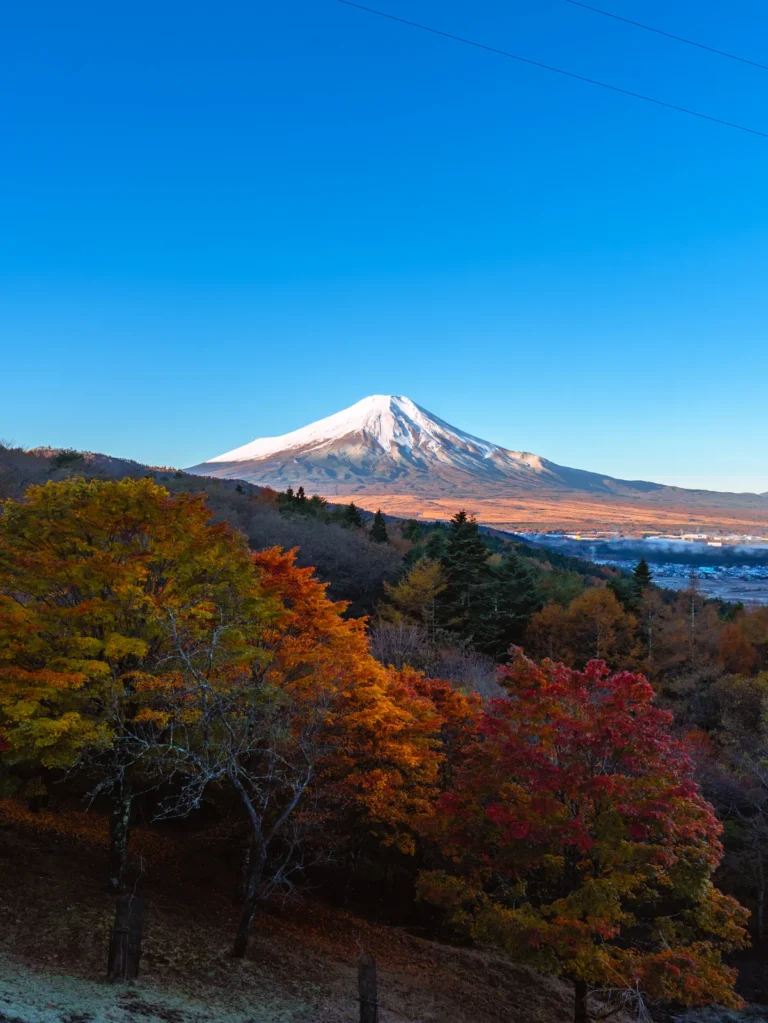
When are the autumn leaves best around Mt Fuji? On the mountain, the Subaru Line’s operator gives mid-October to early November for the roadside colour. At the north foot, Lake Yamanaka’s festival park was reported at full colour on 11 November 2025 and at its best on 12 November 2026, and Nijumagari Pass at its best on 11 November 2026. Ubuyagasaki was packed when I went; the other places I visited were much quieter.
I’m Nobu, and I live in Yamanakako village. Between 6 and 13 November 2026 I photographed ten autumn spots around the north foot of Mt Fuji, all by car, mostly early in the morning. To me, this year’s colour was about the same as usual. This page puts my dated observations next to selected official colour reports and usual seasonal windows. There is no forecast for 2027 here: at the end are the official pages to check before you go.
When were the leaves reported at their best at each place around Mt Fuji?
The table pairs selected official colour reports and usual seasonal windows with my dated observations. The foliage observations are dated on or before 15 November 2026. The 2027 sunrise and sunset times are astronomical calculations for Kofu, not foliage forecasts. A reported date is the day a source described the colour, not a record of the single best day of the year. The words differ by source: the Japan Meteorological Agency (JMA) records the day most leaves on one sample tree have turned red, while the tourism associations write “見頃” (at their best) or, for Lake Yamanaka in 2025, “色づきは10割” (fully coloured).
| Place and height | Dated colour reports, usual windows, and my 2026 visit |
|---|---|
| Fuji Subaru Line and Ochudo trail Road climbs from 857 m to 2,305 m at the 5th Station (road operator) | No dated records found. Usual windows only: roadside colour mid-October to early November, 5th Station from about mid-October (road operator); Ochudo larches early to mid-October (Yamanashi Tourism Organization) Me, 2026: not visited |
| Nijumagari Pass (SORAnoIRO deck), Oshino 1,150 m (Oshino village) | 2025: at their best around the first and second weeks of November (Oshino Tourism Association, post of 23 Oct 2026) · 2026: “見頃”, posted 11 Nov (Oshino Tourism Association) Me, 2026: 11 Nov, 6:33 a.m.: leaves starting to fall |
| Tenka-chaya, Misaka Pass About 1,300 m at the old tunnel (Yamanashi Tourism Organization) | No dated record found Me, 2026: 13 Nov, 2:19 p.m.: starting to fall |
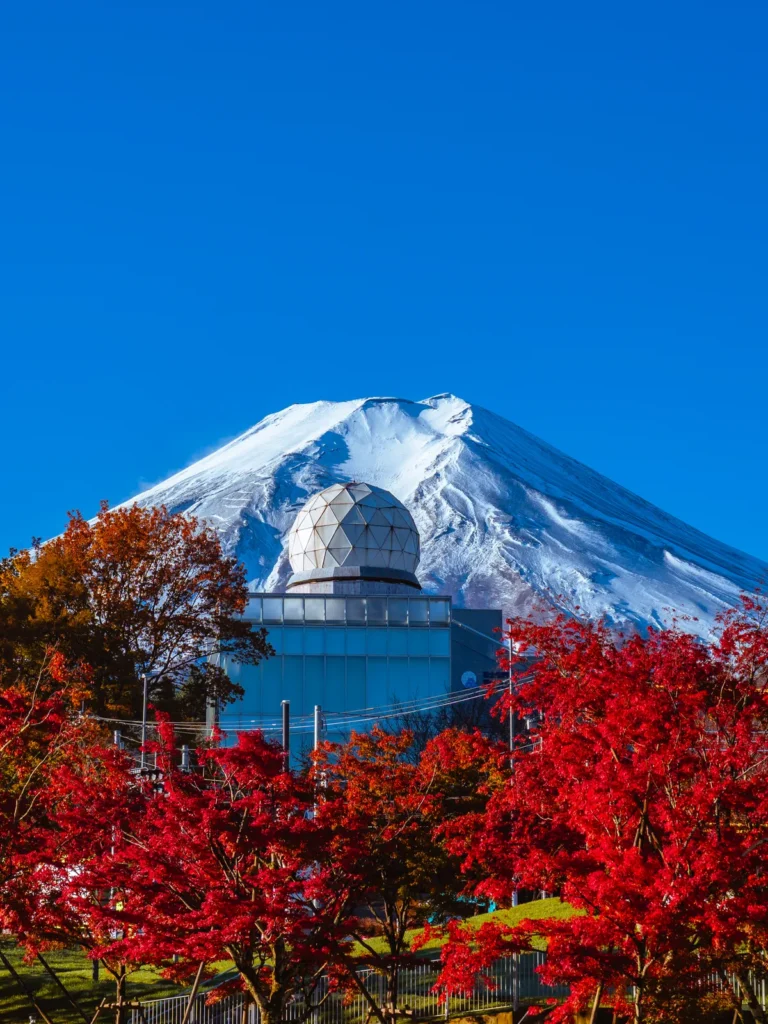
| Fujiyoshida: Kaneyama Falls, Fujisan Museum Park, Michi-no-Eki Fujiyoshida Not stated; the city calls Fujiyoshida “high” | Usual: late October to early November (Fujiyoshida tourist guide) · 2026: all three “見頃” in the city’s report updated 14 Nov; festival light-up extended to 15 Nov “because the colour is still at its best” Me, 2026: 11 Nov: Radar Dome area and the birch-and-maple path at their best; Kaneyama Falls just beginning to colour |
| Suwa-no-Mori Nature Park, Fujiyoshida About 900 m (Fujiyoshida city) | No dated record found Me, 2026: 11 Nov, 8:16 a.m.: starting to fall |
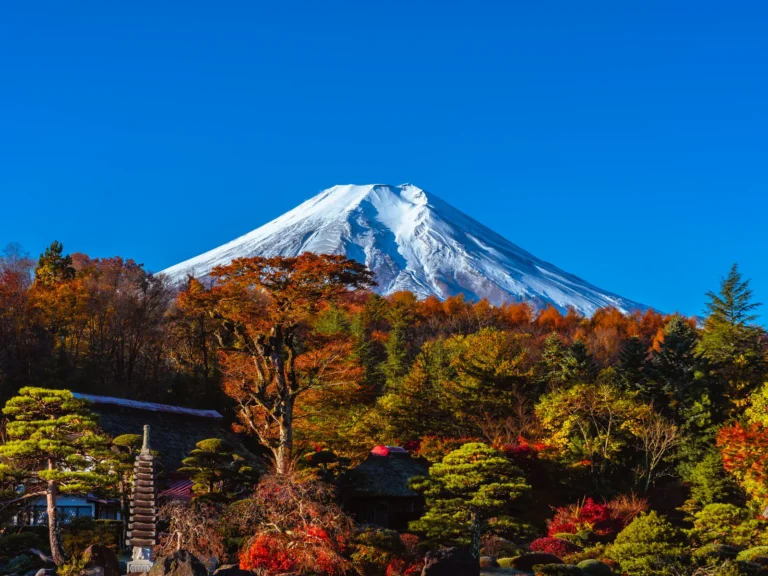
| Oshino Hakkai Not stated | No dated record found Me, 2026: 11 Nov, 7:08 a.m.: at their best |
| Lake Yamanaka festival park (旭日丘湖畔緑地公園) and the lakeside JMA’s Yamanaka weather station: 992 m | 2025: “色づきは10割” (fully coloured), 11 Nov · 2026: “見頃を迎えました” (now at their best), 12 Nov (both Yamanakako Tourism Association) Me, 2026: 6 Nov: festival shore and the ginkgo row beside Dallas Village at their best · 14 Nov: Lake Yamanaka at its best |
| Lake Kawaguchiko (Momiji Corridor, lakeshore) JMA’s Kawaguchiko weather station: 860 m | No dated records found. Usual for the Momiji Corridor: late October to mid-November; the 2026 festival page gives the lakeshore colour’s height as early to mid-November (both Fujikawaguchiko Tourism Association) Me, 2026: 13 Nov, 1:53 p.m.: Ubuyagasaki at its best |
| Kofu, in the basin (for comparison) JMA’s Kofu station: 273 m | JMA maple date: 28 Nov 2023 · 9 Dec 2024 · 5 Dec 2025 (normal, 1991–2020: 29 Nov). JMA ginkgo date: 25 Nov 2025 Me, 2026: not visited |
“No dated record found” means none on the official pages listed under Sources, as checked for this guide on 15 November 2026. Heights for the two lakes and Kofu are those of JMA’s weather stations, not of the viewing spots. JMA’s maple page, checked on 15 November 2026, showed no 2026 date for Kofu yet.
Do higher places colour first around Mt Fuji?
In the sources compared here, broadly yes, though they cover different trees, years and methods. The Subaru Line, which runs up the mountain to 2,305 m, gives October to November as its autumn-leaves season, with the 5th Station from about mid-October, and the Yamanashi Tourism Organization gives early to mid-October for the larches on the Ochudo trail. At the north foot, the dated reports in the table fall between 11 and 14 November: Lake Yamanaka’s festival park (11 November 2025, full colour; 12 November 2026, at its best), the Nijumagari corridor (11 November 2026, at its best) and Fujiyoshida’s report (14 November 2026, at its best). JMA’s maple dates for Kofu, at 273 m in the basin, are later: 28 November 2023, 9 December 2024 and 5 December 2025.
Within the north foot the order is less tidy. Fujiyoshida’s own festival page says that high-lying Fujiyoshida colours earlier than its surroundings, from late October to early November each year, but in 2026 the city’s report still listed Kaneyama Falls at its best on 14 November, and the light-up was extended to 15 November because, in the guide’s words, the colour was still at its best. Nijumagari, at 1,150 m, was posted “at its best” on 11 November 2026, the same week as Lake Yamanaka. So I treat height as a rough guide, not a rule.
What I saw in November 2026, day by day
The times are when my photos were taken. I travelled by car.
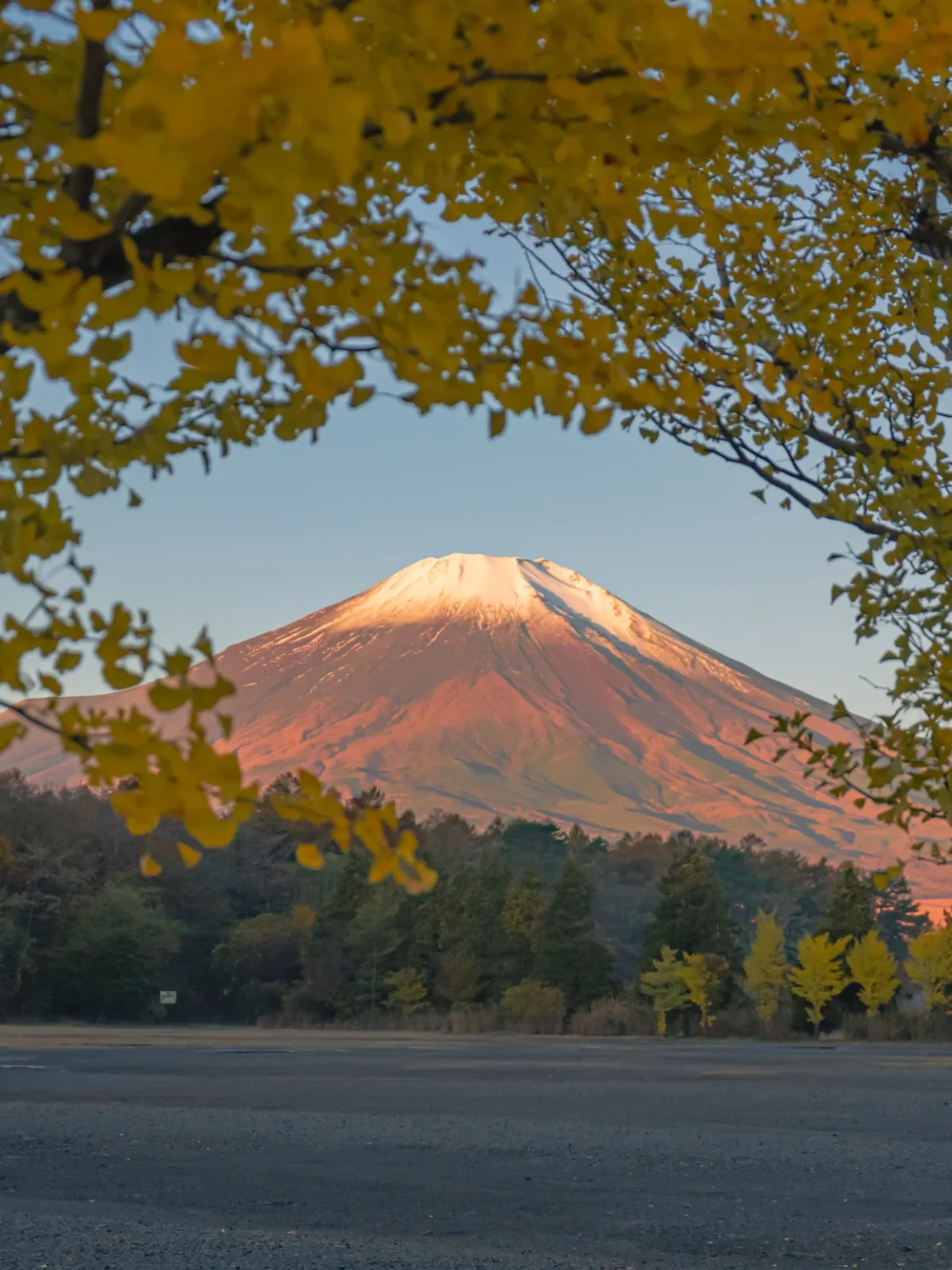
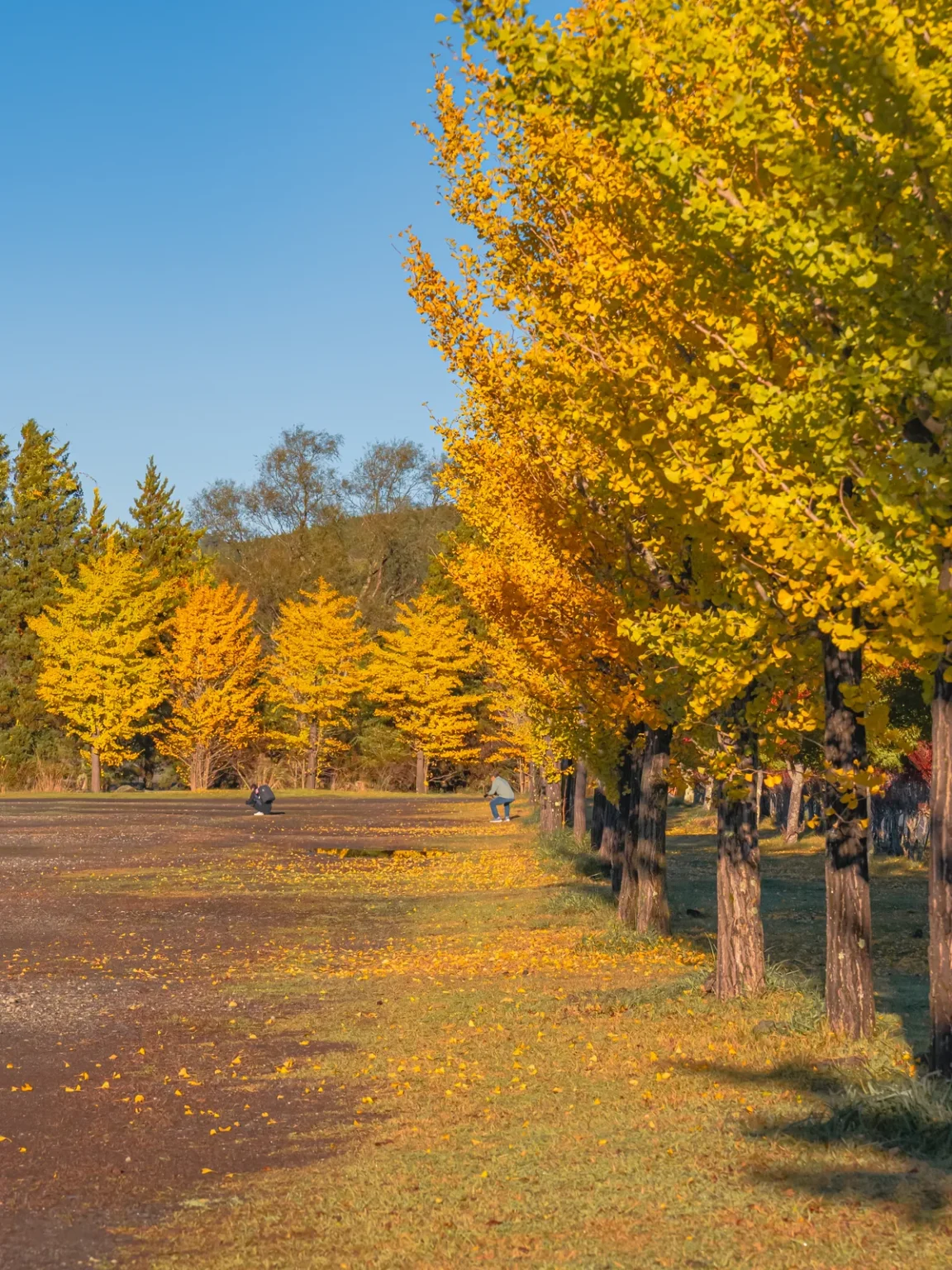
6 November: Lake Yamanaka
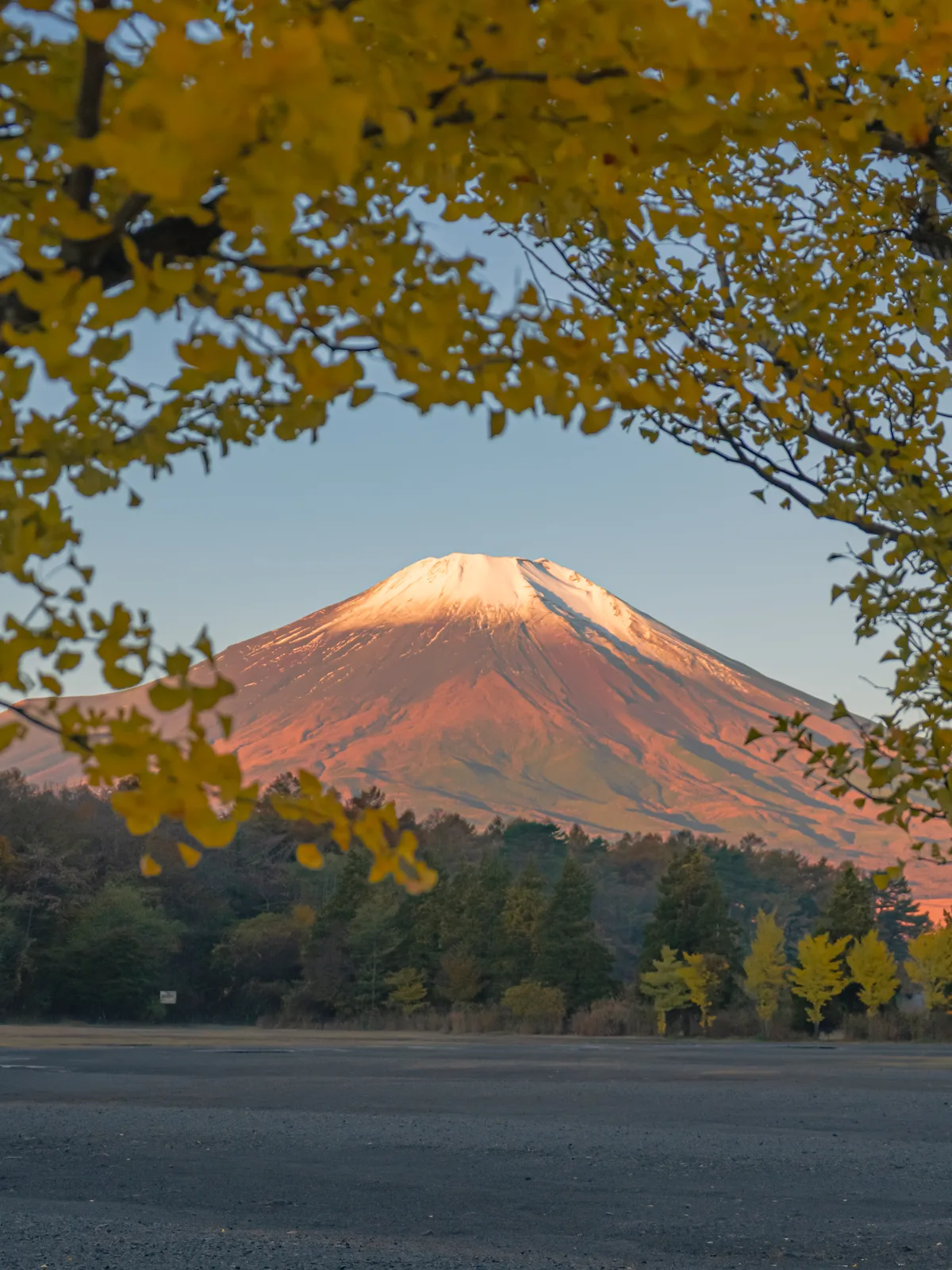
At the ginkgo row beside an empty lot next to Dallas Village, which is on my dog-walking route, the ginkgo were at their best. It had rained, and the puddles held the blue sky, Mt Fuji and the yellow trees. Mt Fuji turned red from about 6:10 to 6:30 a.m. It was 1°C, and I wore a down jacket. Four or five other people were taking photos. My photos from 7:40 are from the festival park (旭日丘湖畔緑地公園), and I photographed Mt Fuji from the shore below the Yuyake-no-Nagisa (夕焼けの渚) observation deck: the maples were at their best, and there was hardly anyone there that morning. When the sun came through, it was beautiful.
11 November: Oshino and Fujiyoshida
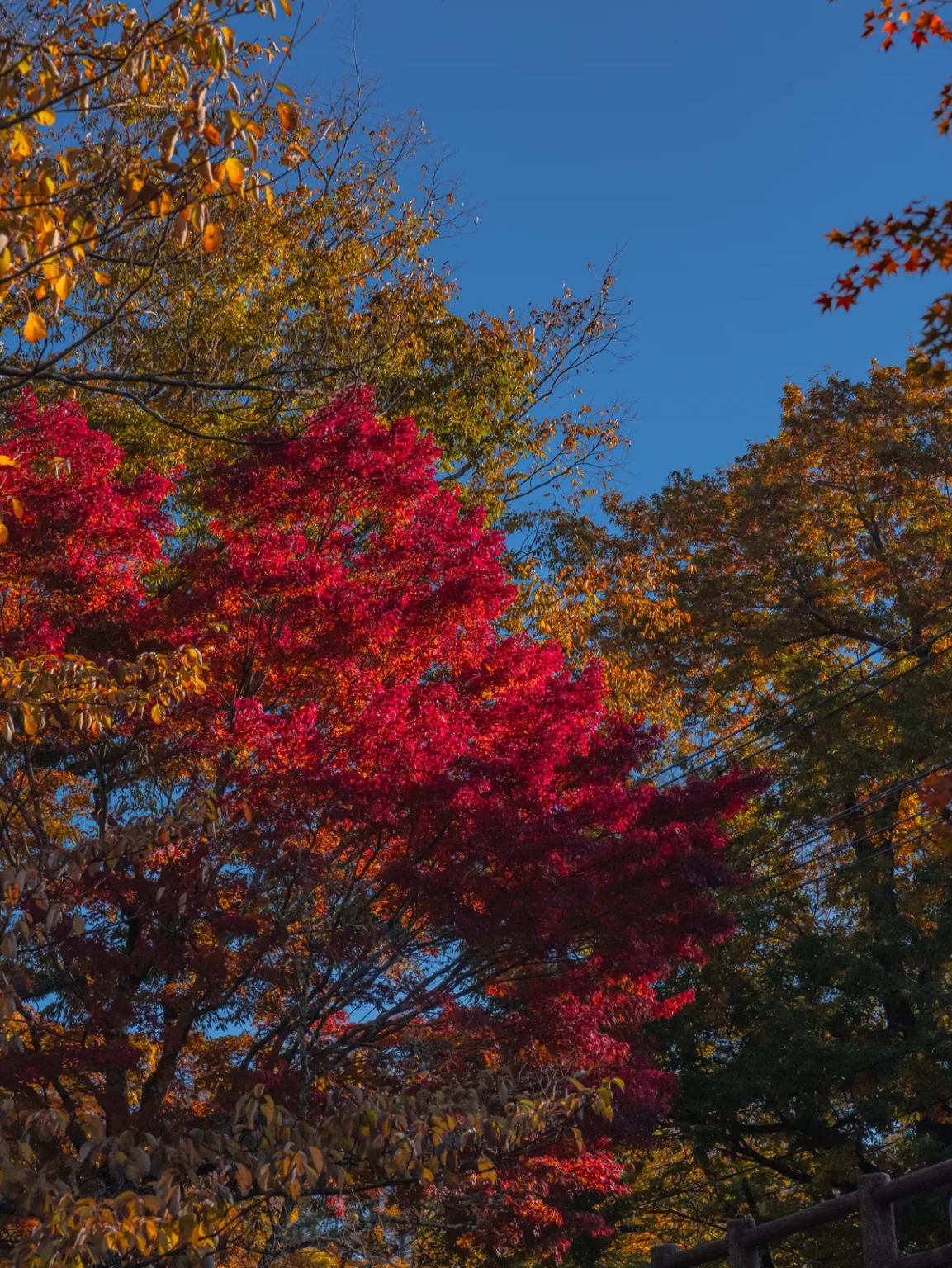
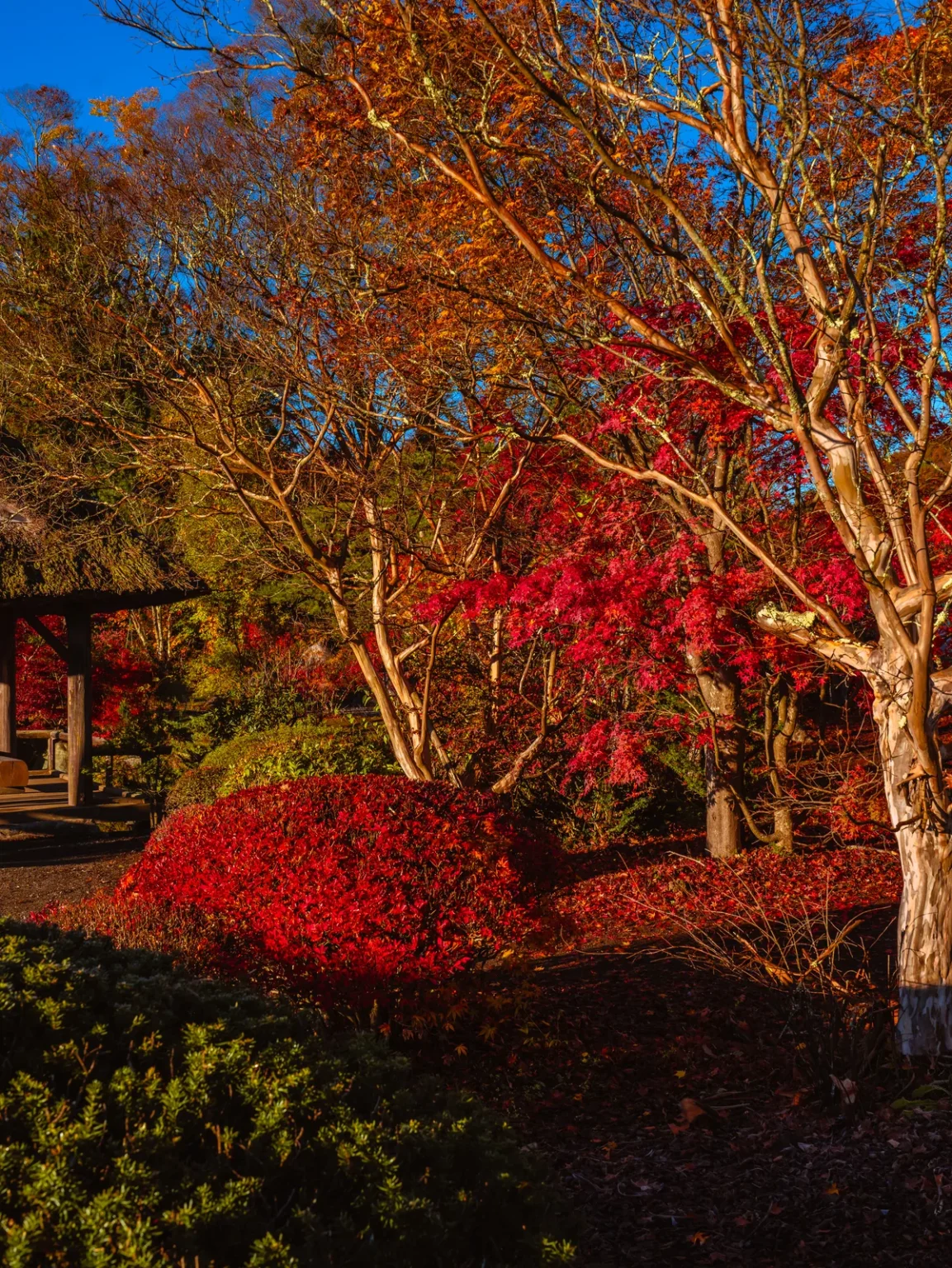
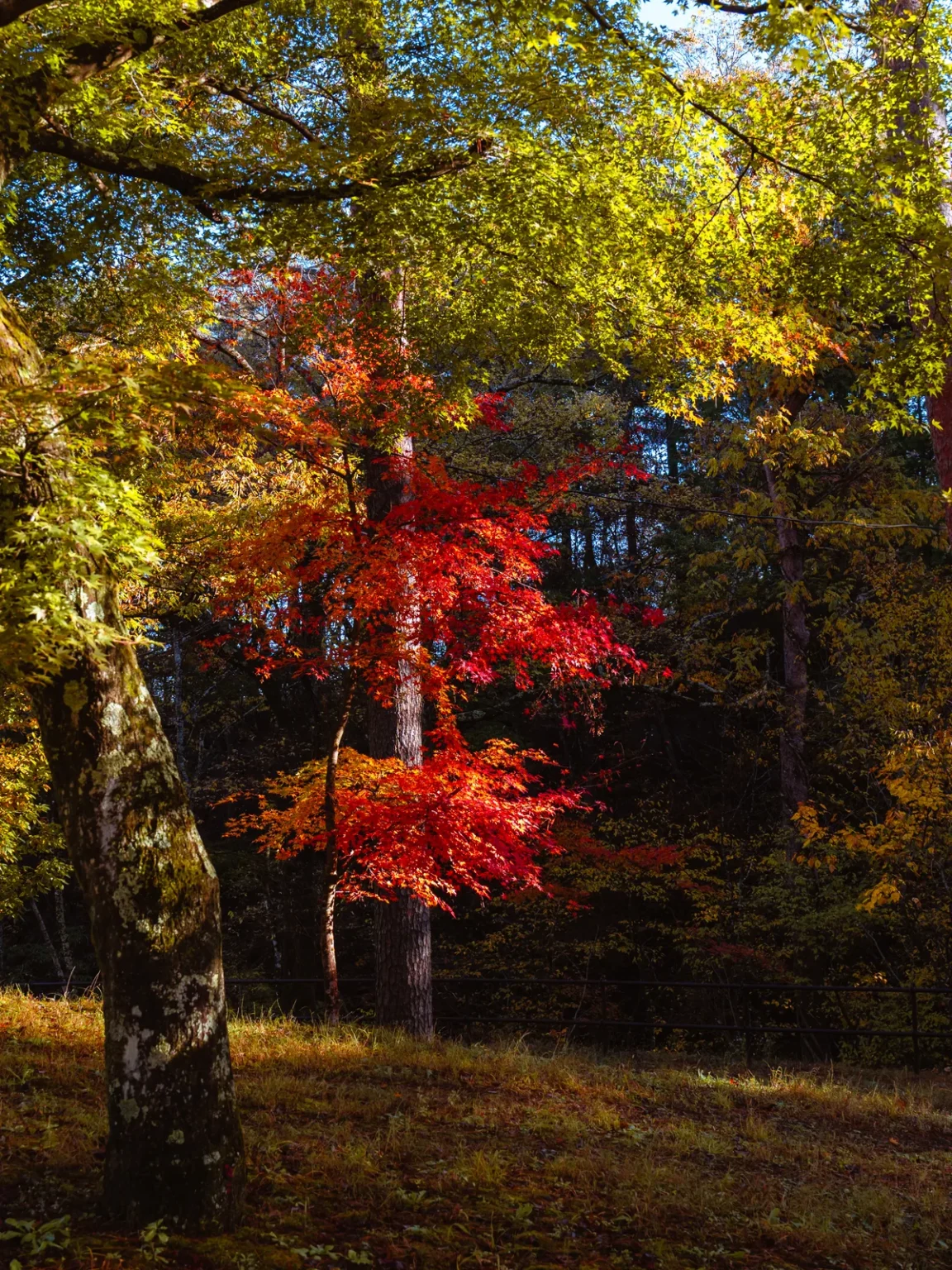
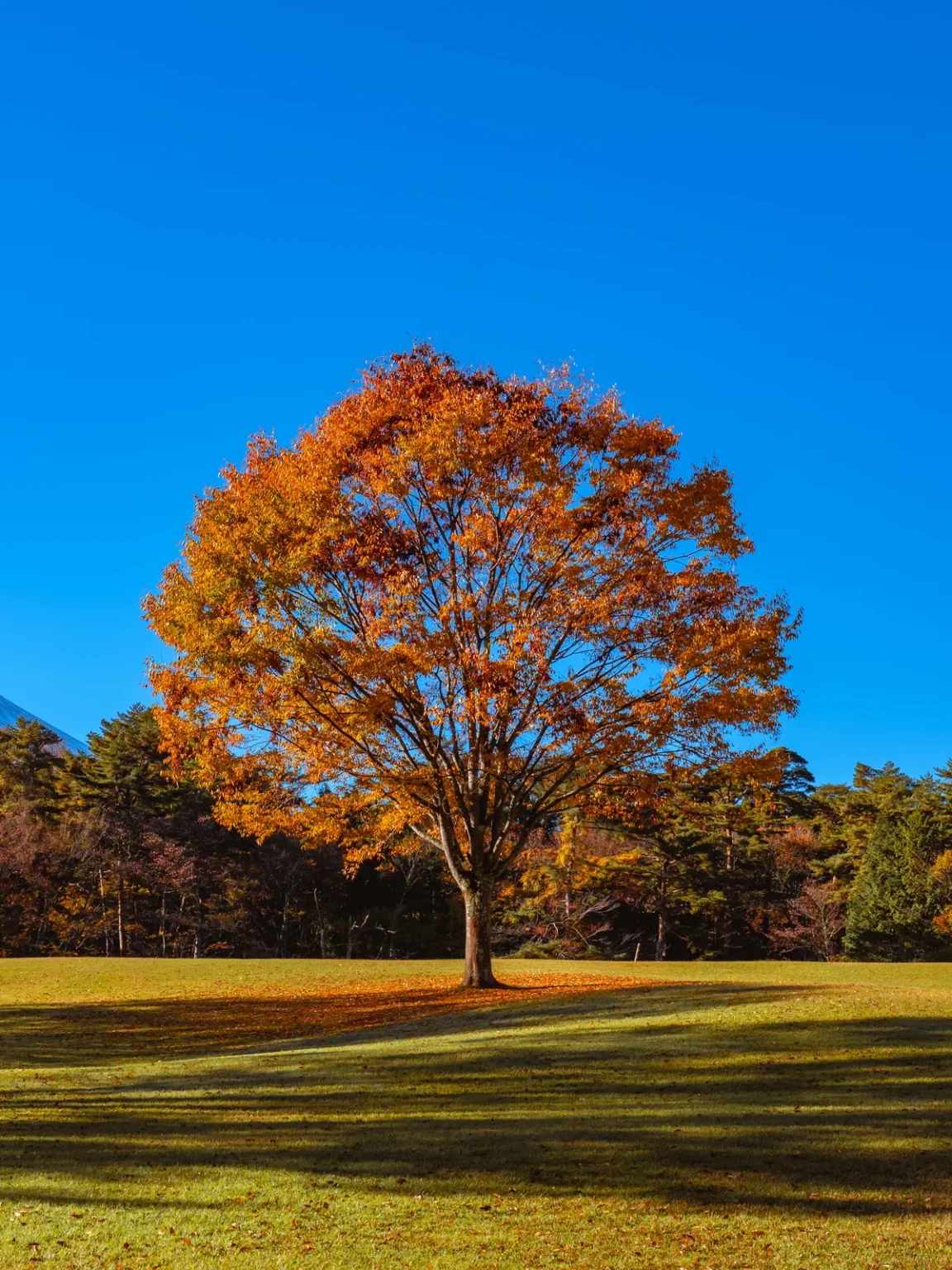
Six stops, with photos from 6:33 to 8:21 a.m. Nijumagari Pass at 6:33 a.m., after sunrise: frost on the ground, a frozen handrail and a slippery deck, two other people, and the leaves starting to fall. I hadn’t known you could see the Southern Alps from there; they had a lot of snow on them and looked beautiful. Oshino Hakkai at 7:08: the colour at its best and hardly anyone around; I photographed the Japanese garden from outside. The Mt Fuji Radar Dome Museum and Michi-no-Eki Fujiyoshida at 7:34: maples at their best, and the car park was not crowded. Kaneyama Falls at 7:39: the colour was only just beginning, with few people. A birch-and-maple path near Michi-no-Eki Fujiyoshida at 7:57: at its best, with hardly anyone on foot. Suwa-no-Mori Nature Park at 8:16: leaves starting to fall, and the person on the lawn in my photos was the caretaker.
13 November: Ubuyagasaki and Tenka-chaya
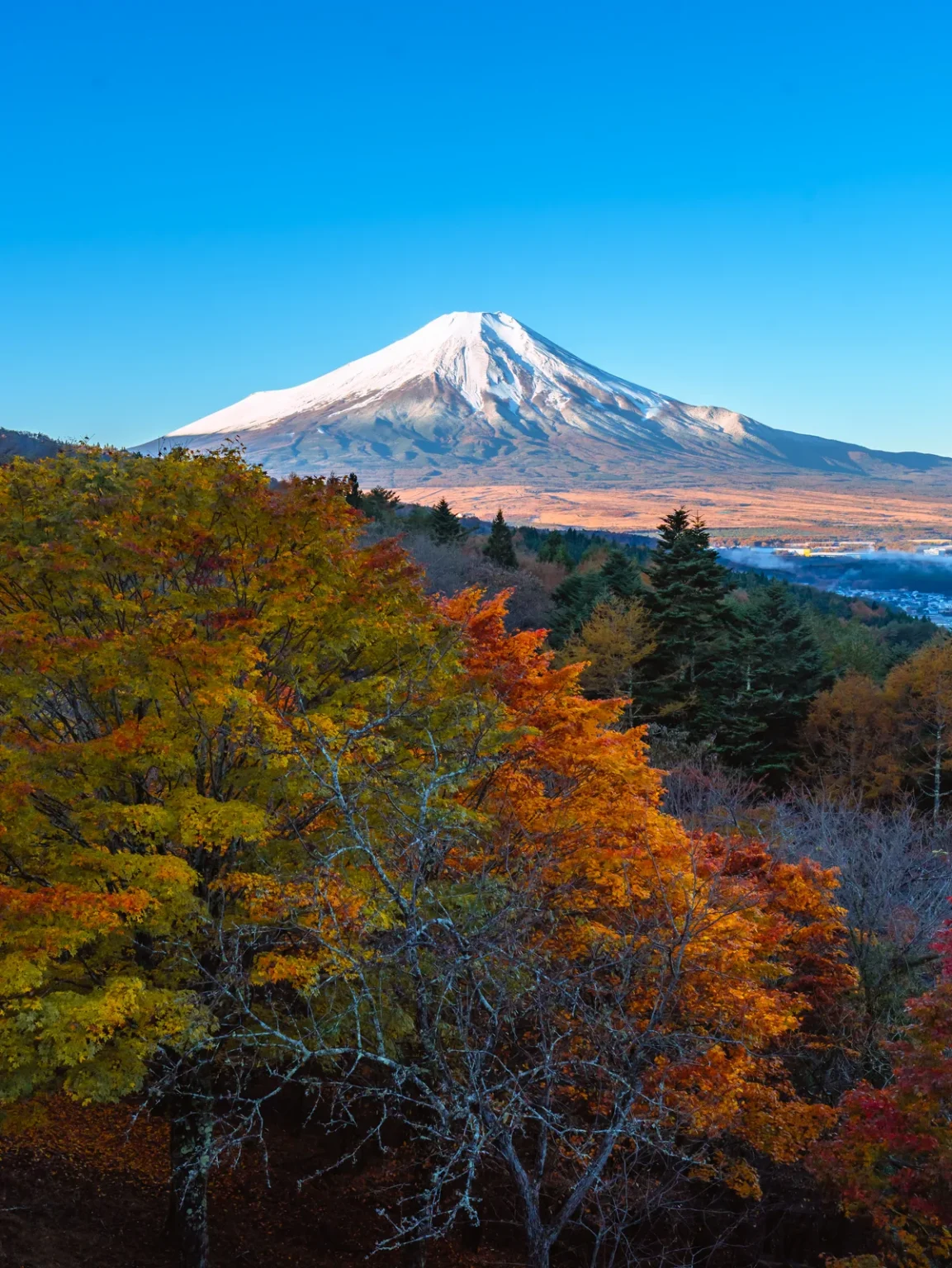
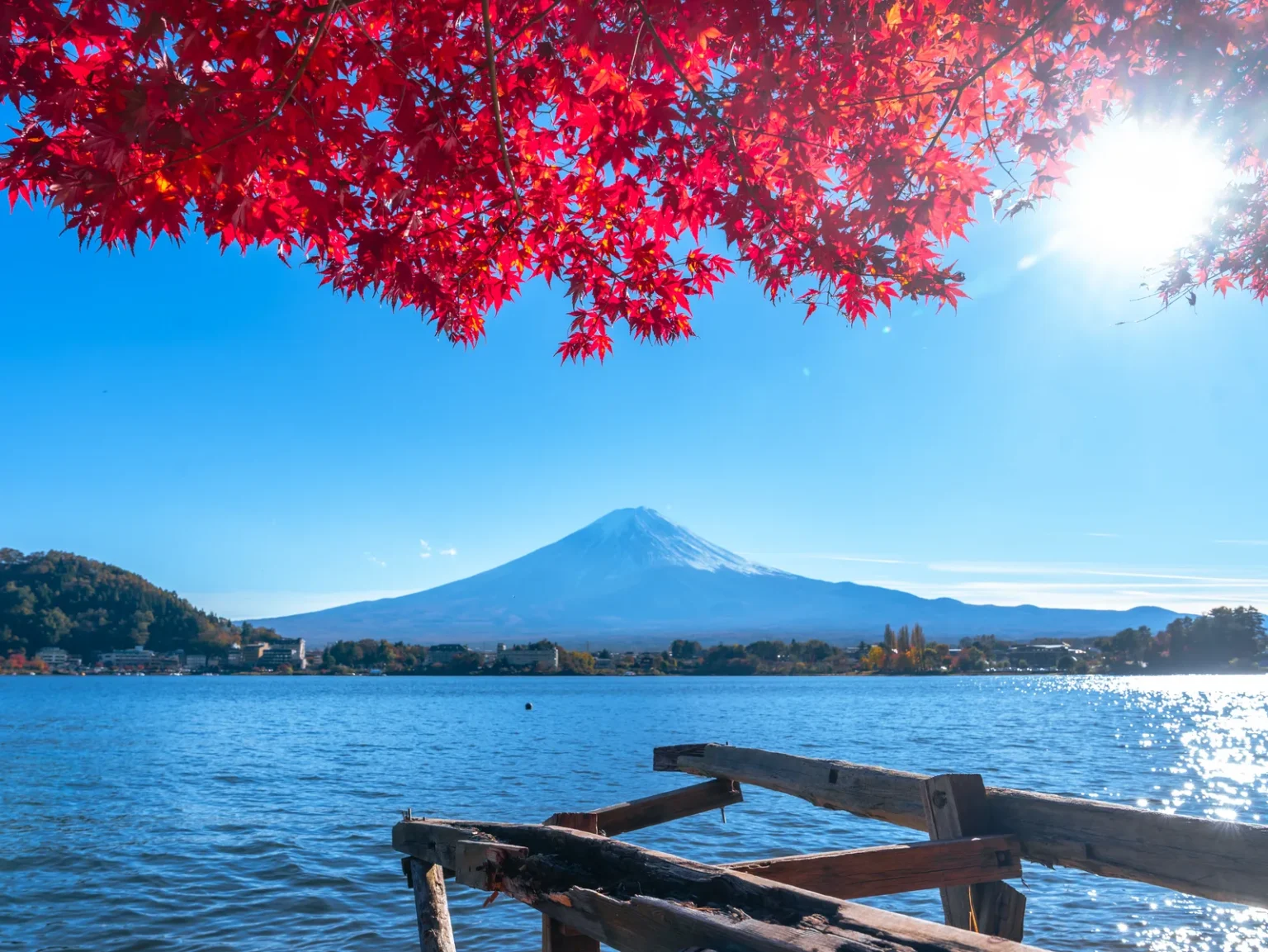
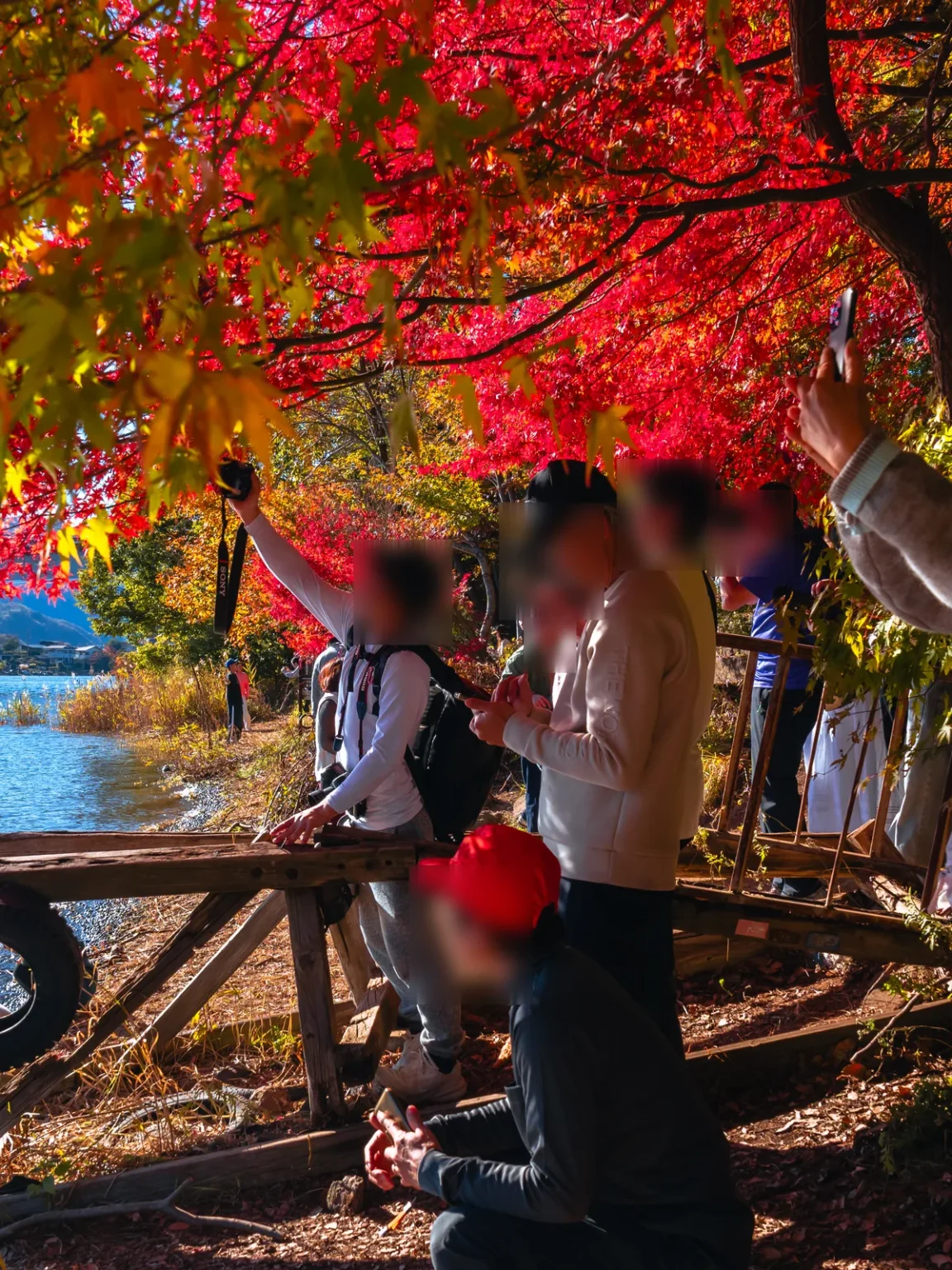
Ubuyagasaki on Lake Kawaguchiko, photos from 1:53 p.m.: the maples at their best, and it was crowded; there were far too many people, which made it hard work. Nobody queued; whoever got a gap took their photo and moved on.
Tenka-chaya, the teahouse on Misaka Pass, photos from 2:19 p.m.: I came up from the Kawaguchiko side. Leaves were starting to fall, there were no crowds, and the view was huge. I had hōtō in the teahouse and walked from the Mt Misaka trailhead to the Dazai Osamu literary monument. Some trees had been cut down, which I found a bit of a shame.
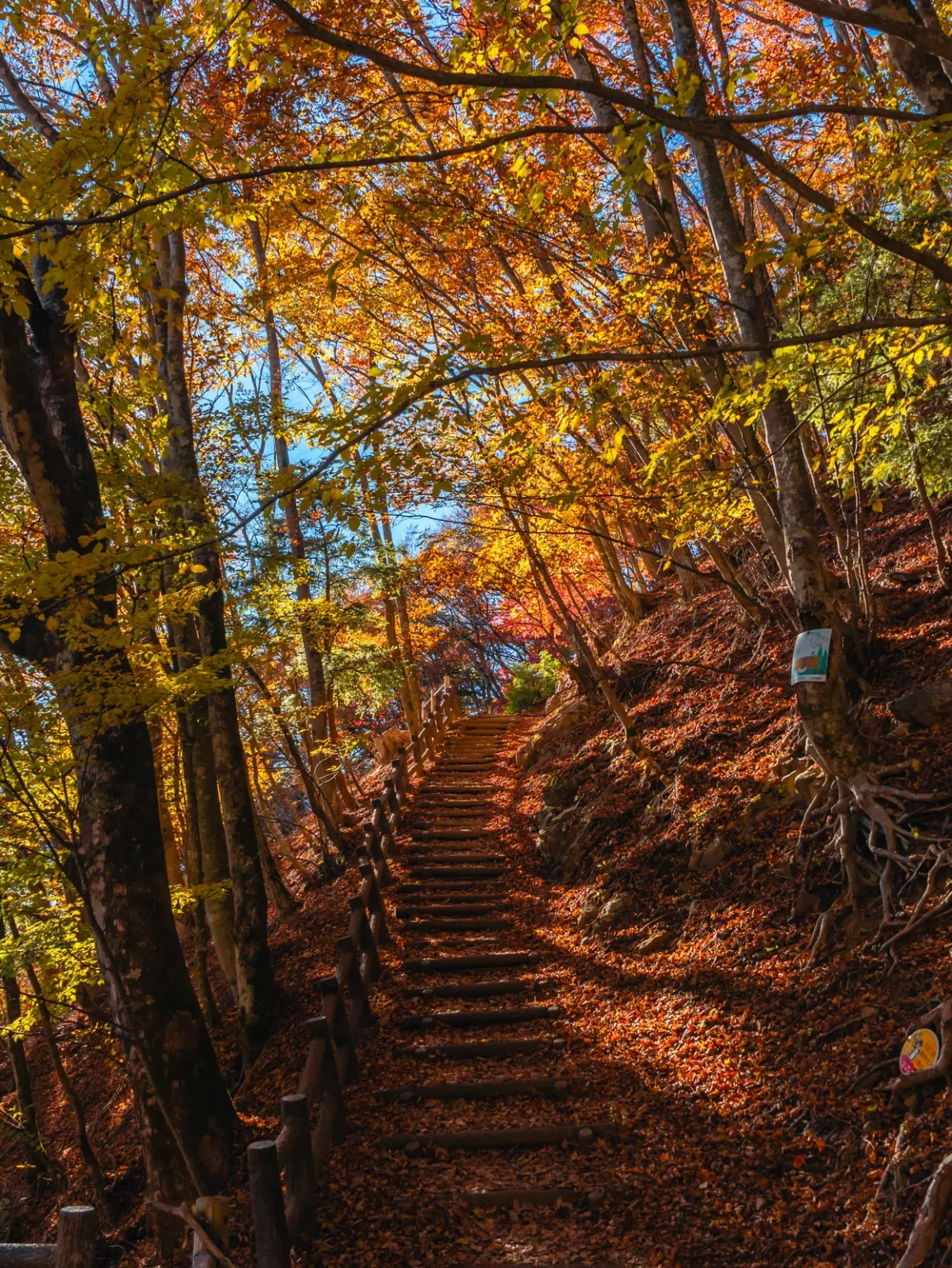
14 November
My note on 14 November: Lake Yamanaka was at its best.
I travelled by car on my November photo outings.
Compare rental cars near Mt FujiJapanese rental companies on RakutenWhere can I see autumn leaves near Mt Fuji with fewer crowds?
Ubuyagasaki was the crowded one. The other places were much quieter when I went. If I had to pick three for visitors from overseas: the birch-and-maple path and the ginkgo row, because they weren’t crowded, and Ubuyagasaki, which is busy but gives you the classic Mt Fuji-and-autumn-leaves photo. If you want to avoid the crowds there, I think early morning is the time.
Birch-and-maple path
Near Michi-no-Eki Fujiyoshida; I’m keeping the exact spot vague. 11 Nov, photos 7:57–8:09 a.m.: at its best, hardly anyone on foot. Lots of cars on the road beside it, almost all driving past. I parked at the michi-no-eki.
Ginkgo row, Yamanakako
Beside an empty lot next to Dallas Village; that is as precise as I’ll be. 6 Nov, photos from 6:15 a.m.: at their best, four or five other people taking photos. I parked at the Kirara car park.
Oshino Hakkai, early morning
11 Nov: hardly anyone, and the colour at its best. From where I photographed the garden, Mt Fuji wasn’t fully in view, but it is a lovely place.
Kaneyama Falls
11 Nov, 7:39 a.m.: few people. Colour just beginning that day. More in my three quiet fall foliage spots.
Nijumagari Pass
11 Nov, photos from 6:33 a.m.: two other people. The car park is wide, and there were only two cars when I arrived. There is a toilet.
Suwa-no-Mori Nature Park
11 Nov, photos 8:16–8:21 a.m.: the person on the lawn in my photos was the caretaker. My photos were taken before the city’s listed opening time. For an autumn visit, plan around the published hours of 8:30 a.m.–5 p.m. (1 October–14 May). Parking was free and there were toilets. On my visit on 11 November, I found no benches around the lawn in front of the car park. I could hear wild birds and heard no noise. To me it is a wide lawn for taking your time with Mt Fuji; I’d lie on the grass or bring an outdoor chair, and I’d recommend it for reading when you want some calm.
Tenka-chaya, Misaka Pass
13 Nov, mid-afternoon: no crowds, and the view is huge. Leaves were starting to fall.
Yamanaka festival shore, morning
6 Nov, photos from 7:40 a.m.: hardly anyone. For the light-up schedule, see my Yamanakako autumn leaves festival guide.
How should I plan next year’s autumn trip to Mt Fuji?
The dates above show conditions reported in earlier seasons; they do not establish the best dates for 2027. Check each location’s current reports before choosing where to go.
Dated colour reports
Lake Yamanaka’s festival park: “色づきは10割” (fully coloured) on 11 Nov 2025 and “見頃” (at its best) on 12 Nov 2026. Nijumagari: “見頃” around the first and second weeks of November 2025 (as described in a 2026 post) and on 11 Nov 2026. On my own visits from 6 to 13 November 2026, most places were at their best or starting to fall, and Kaneyama Falls was just beginning to colour.
Sunrise and sunset
The National Astronomical Observatory of Japan gives sunrise in Kofu, the prefectural capital, as 6:07 a.m. on 1 November 2027, 6:21 on 15 November and 6:35 on 30 November; sunset as 16:51, 16:39 and 16:33. On 6 November 2026, Mt Fuji turned red for me from about 6:10 to 6:30 a.m.
Festival windows
Lake Yamanaka’s festival was scheduled for 27 Oct–12 Nov in 2023, 25 Oct–17 Nov in 2024 (extended), 31 Oct–16 Nov in 2025 and 30 Oct–15 Nov in 2026. The 2026 schedules list Fujiyoshida’s light-up as 24 Oct–15 Nov (extended) and Kawaguchiko’s festival as 7–29 Nov. For evenings, see the Kawaguchiko autumn leaves festival guide.
What to wear
Dress for frost at dawn. It was 1°C at the ginkgo row on 6 November, and Nijumagari was frosted on 11 November; I wore a down jacket both times.
Mt Fuji in view
Some of the photos on this page show Mt Fuji with autumn leaves. Check the Mt Fuji visibility forecast the evening before and move your best spot to the clearest morning.
Where to base yourself
My Kawaguchiko vs Fujiyoshida comparison covers the trade-offs, and the two-day Fuji Five Lakes itinerary is built around morning views.
Places to stay by Lake Yamanaka and Lake Kawaguchiko.
See Lake Yamanaka stays on Booking.comSee Kawaguchiko stays on Booking.comCompare Kawaguchiko hotels on AgodaWhich official pages should I check before I go?
These are the pages behind the table. In 2026 Fujiyoshida’s report started updating on 22 October, and the Oshino Tourism Association posted a colour note on 23 October.
Fujiyoshida
The city’s autumn leaf report (Japanese), with a status for each spot. In 2026 it started updating on 22 October.
Lake Yamanaka
The tourism association’s festival page (Japanese), where its colour notes appear.
Oshino and Nijumagari
The Oshino Tourism Association’s site (Japanese), which posted dated autumn-leaf notes on 23 October and 11 November 2026.
Lake Kawaguchiko
The festival announcement links to the association’s Instagram for the current colour.
Subaru Line
The road operator’s road status page: from November the road can close for ice or snow.
Forecasts
The Japan Weather Association publishes leaf forecasts on tenki.jp (Japanese). How forecasts work is explained in Japan’s autumn forecast explained.
When comparing Mt Fuji day tours, check which of these places are included: browse Mt Fuji day tours on Klook. For everything else around the mountain, start at my Mt Fuji guide.
More from my November 2026 autumn visits around Mt Fuji
Ginkgo trees beside Dallas Village (6 Nov) · Lake Yamanaka autumn leaves festival (6 Nov photos) · Nijumagari Pass (11 Nov) · Oshino Hakkai (11 Nov) · Mt Fuji Radar Dome Museum (11 Nov) · Kaneyama Falls (11 Nov) · Birch-and-maple path near Michi-no-Eki Fujiyoshida (11 Nov) · Suwa-no-Mori Nature Park (11 Nov) · Ubuyagasaki (13 Nov) · Tenka-chaya, Misaka Pass (13 Nov) · All ten spots compared (summary)
Mt Fuji autumn leaves calendar: FAQ
When were the autumn leaves reported at their best at the Fuji Five Lakes?
For the places with dated reports: the Yamanakako Tourism Association reported Lake Yamanaka’s festival park at full colour on 11 November 2025 and at its best on 12 November 2026, and the Oshino Tourism Association put the Nijumagari corridor at its best around the first and second weeks of November 2025 and on 11 November 2026. These are reports from earlier seasons, not the best dates for 2027.
Do the leaves change earlier on Mt Fuji itself?
On the official windows, yes. The Subaru Line’s operator gives mid-October to early November for the roadside colour and about mid-October for the 5th Station, and the Yamanashi Tourism Organization gives early to mid-October for the Ochudo larches.
Is there a forecast for autumn 2027 on this page?
No. The foliage observations are dated on or before 15 November 2026. The 2027 sunrise and sunset times are astronomical calculations for Kofu, not foliage forecasts. For a forecast, look at the Japan Weather Association’s tenki.jp pages and the local reports listed above in the weeks before your trip.
Which autumn leaf spots near Mt Fuji were least crowded on my visits?
On my visits in November 2026, a birch-and-maple path near Michi-no-Eki Fujiyoshida, the ginkgo row next to Dallas Village in Yamanakako, Oshino Hakkai early in the morning, Nijumagari Pass, Suwa-no-Mori Nature Park and Tenka-chaya were all quiet. Ubuyagasaki on Lake Kawaguchiko was very crowded.
How did 2026 compare with a usual year?
To me, about the same as usual. Fujiyoshida extended its festival light-up to 15 November 2026 because the colour was still at its best.
Sources
My own visits and the official pages behind the dates above (checked 15 November 2026)
- My own visits on 6, 11 and 13 November 2026 (photo times from my camera), and my observation of Lake Yamanaka on 14 November 2026.
- Japan Meteorological Agency: maple colouring dates 2025–2026; maple colouring, all years and normals (PDF); ginkgo colouring dates; how maple colouring is observed (PDF); Yamanashi station heights
- Yamanakako Tourism Association: Yuyake-no-Nagisa autumn leaves festival (2026), and archived copies of the same page from 11 November 2023, 12 November 2024 and 18 November 2025 (Internet Archive)
- Oshino Tourism Association: autumn leaf note, 23 October 2026; autumn leaf note, 11 November 2026; Oshino village, Oshino’s mountains (Nijumagari height)
- Fujiyoshida official tourist guide: 2026 autumn leaf report; Yoshida autumn leaves festival 2026; Fujiyoshida city, Suwa-no-Mori Nature Park
- Fujikawaguchiko Tourism Association: autumn leaves festival 2026; Momiji Corridor
- Yamanashi Prefectural Road Public Corporation: Fuji Subaru Line guide (heights and seasonal notes)
- Yamanashi Tourism Organization: Ochudo trail; Tenka-chaya hill-climb course (height)
- National Astronomical Observatory of Japan: sunrise and sunset in Kofu, November 2027
Some links above are affiliate links — they cost you nothing extra and help keep this site going.
Join travelers discovering Japan's hidden side
Weekly dispatches from off-the-beaten-path Japan — spots and stories you won't find in guidebooks.
No spam. Unsubscribe anytime.
Welcome aboard!
You're in. See you in your inbox soon.