
Japan · Yamanashi · Fujiyoshida · Suwa-no-Mori Nature Park
Suwa-no-Mori Nature Park (諏訪の森自然公園), nicknamed Fuji Pines Park, is a city park in Fujiyoshida with a wide lawn facing Mt Fuji, about five minutes on foot from Kitaguchi Hongu Fuji Sengen Shrine. Parking is free. My photos there were taken between 8:16 and 8:21 a.m. on 11 November 2026: Mt Fuji was clear, the autumn leaves had started to fall, and I could hear wild birds and no noise.
I’m Nobu. I live in Yamanakako village, and on 11 November 2026 I visited several autumn spots around the northern foot of Mt Fuji by car. This park was the last of them. The lawn in my photos is the one straight in front of you as you get out of the car park. To me it is a place where you can take your time looking at a wide lawn and Mt Fuji, and I would also recommend it as somewhere to come and read when you want to calm down.
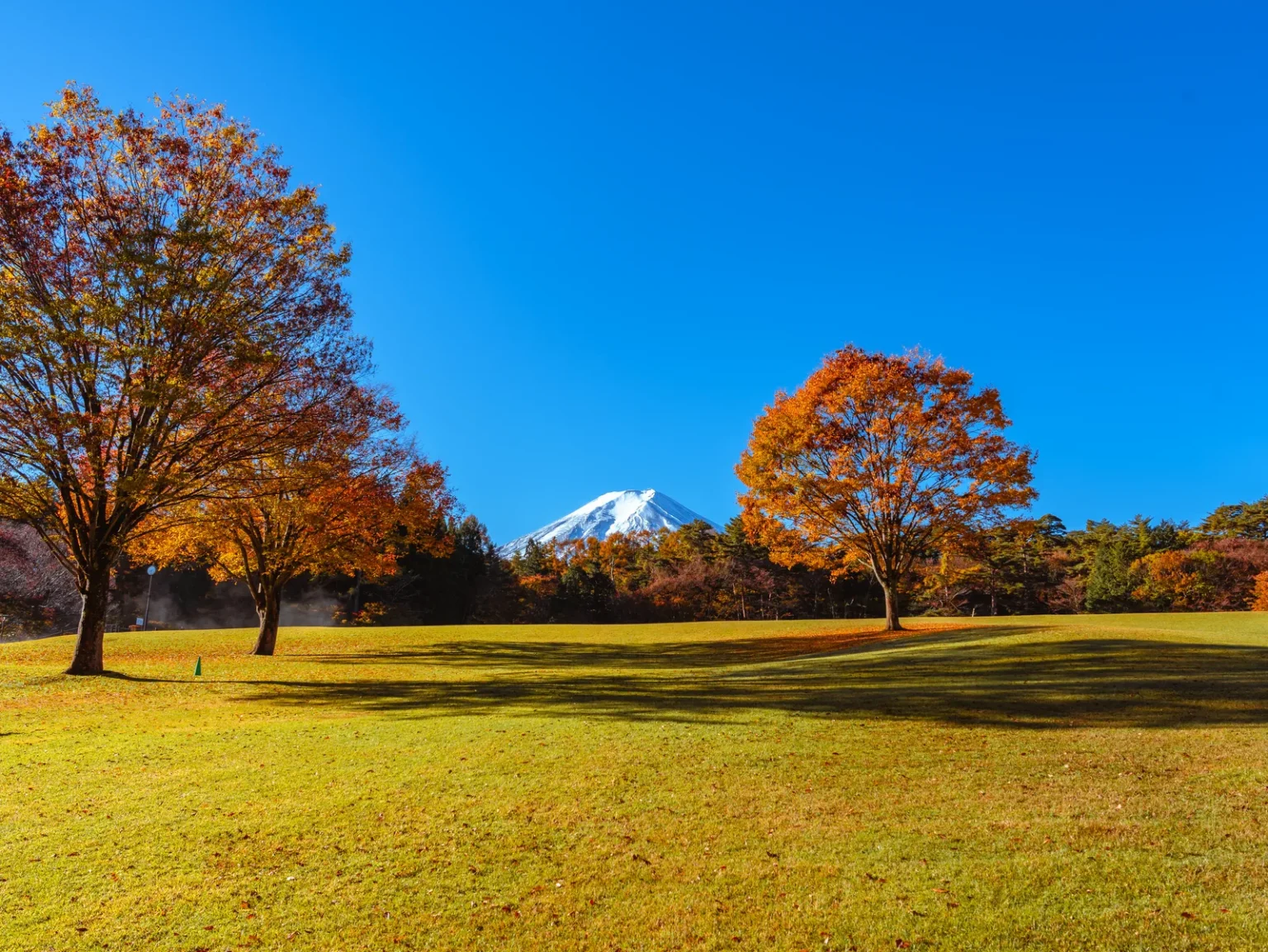
What does Suwa-no-Mori Nature Park look like in autumn?
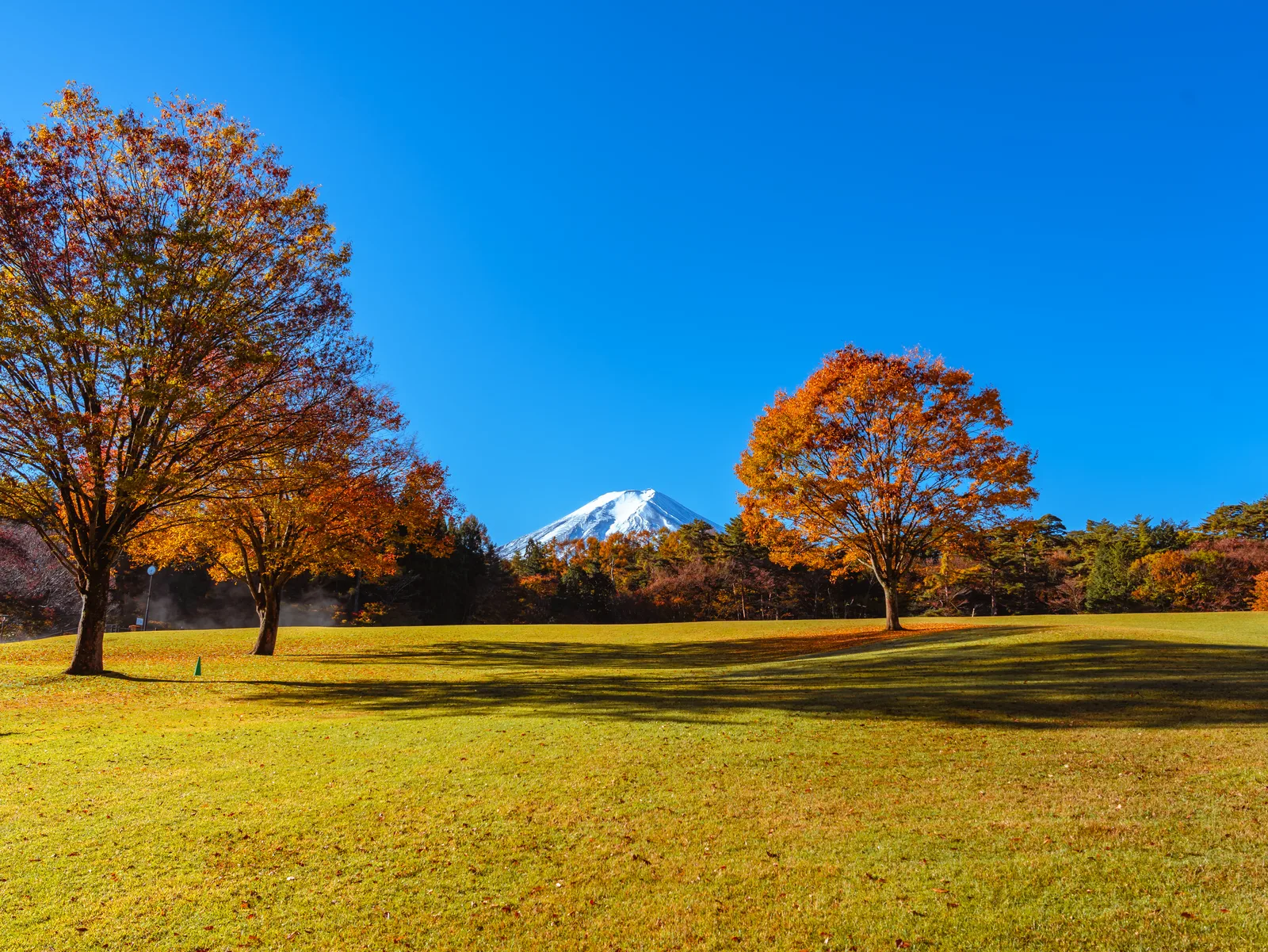
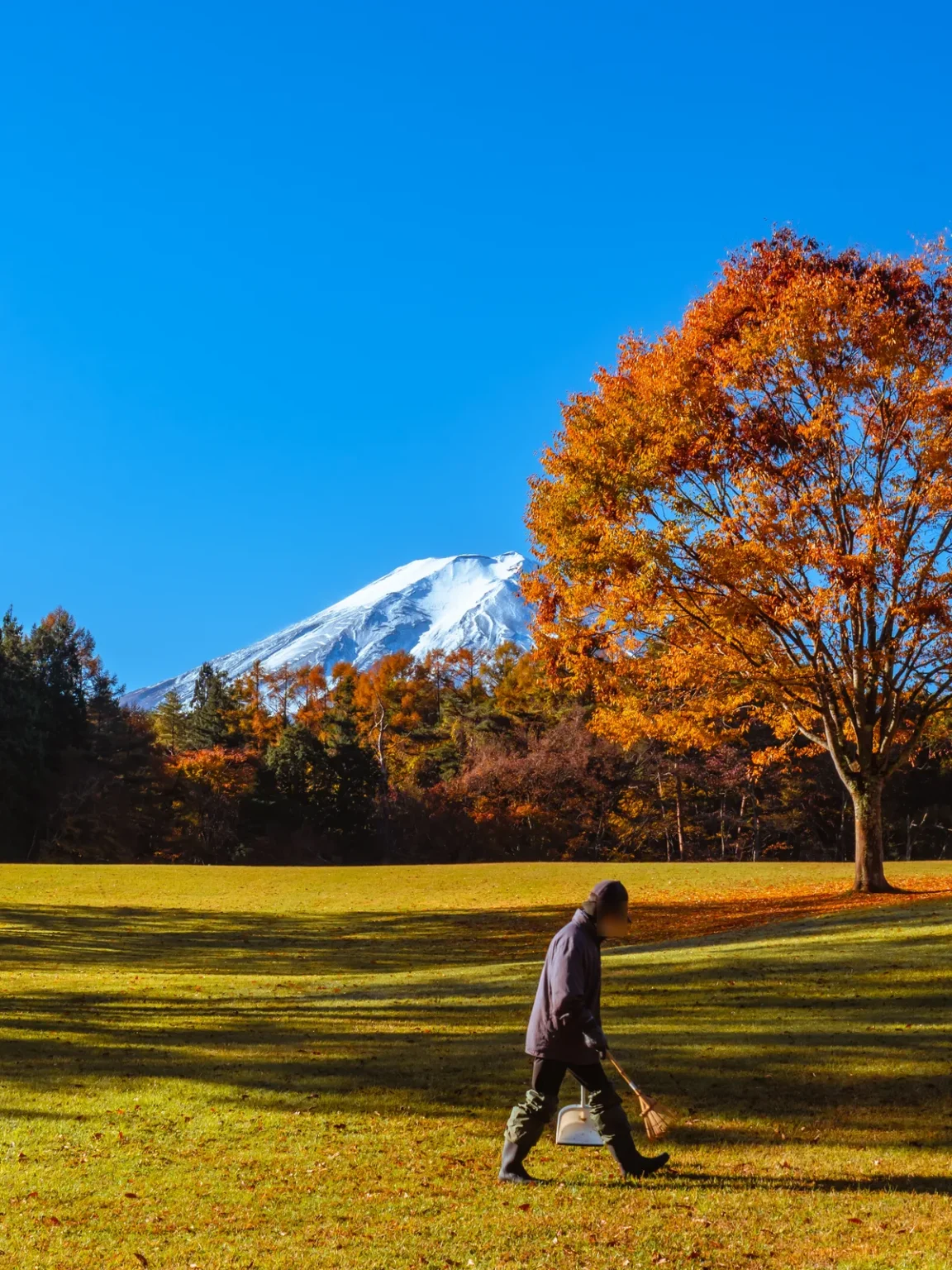
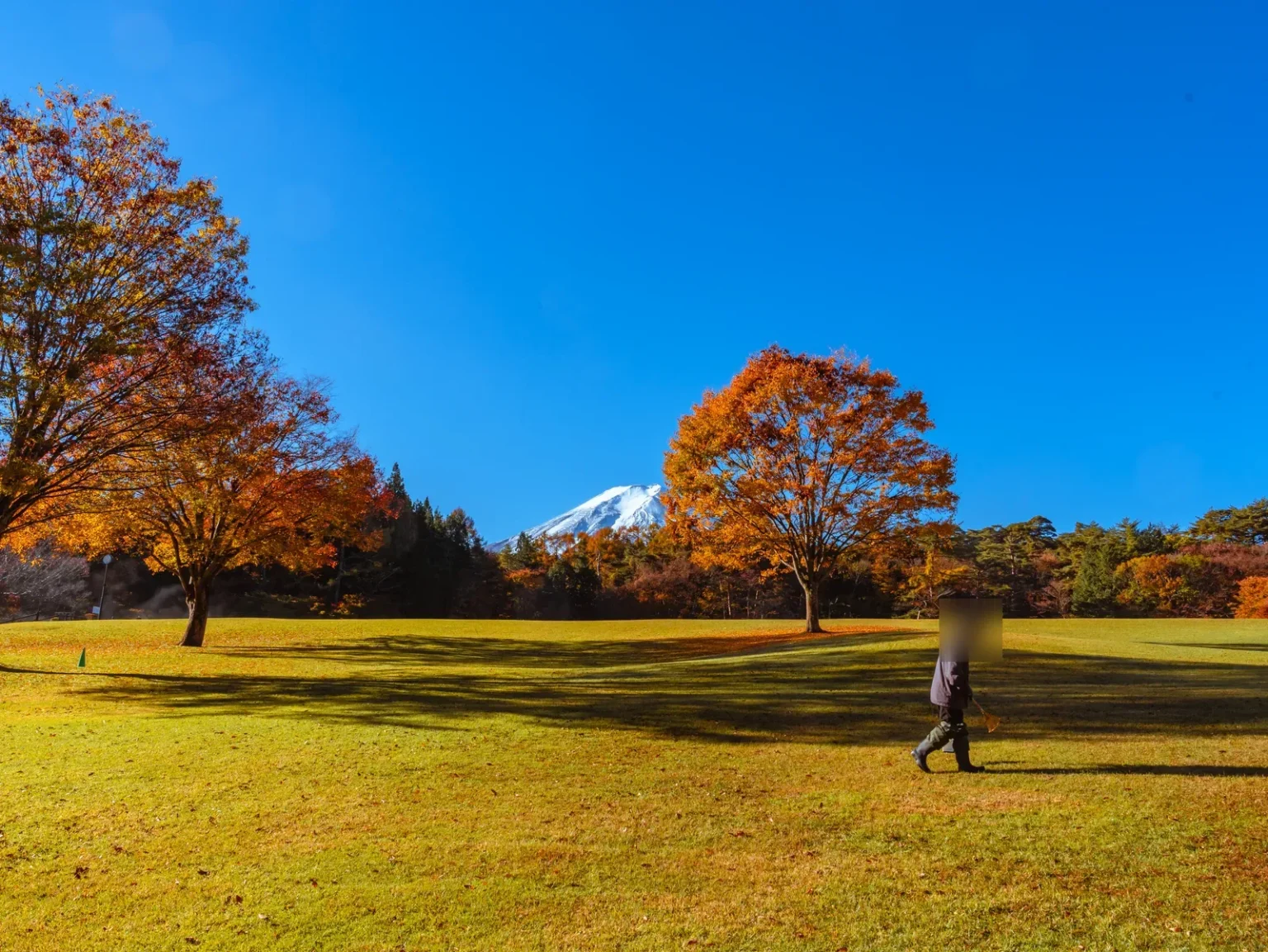
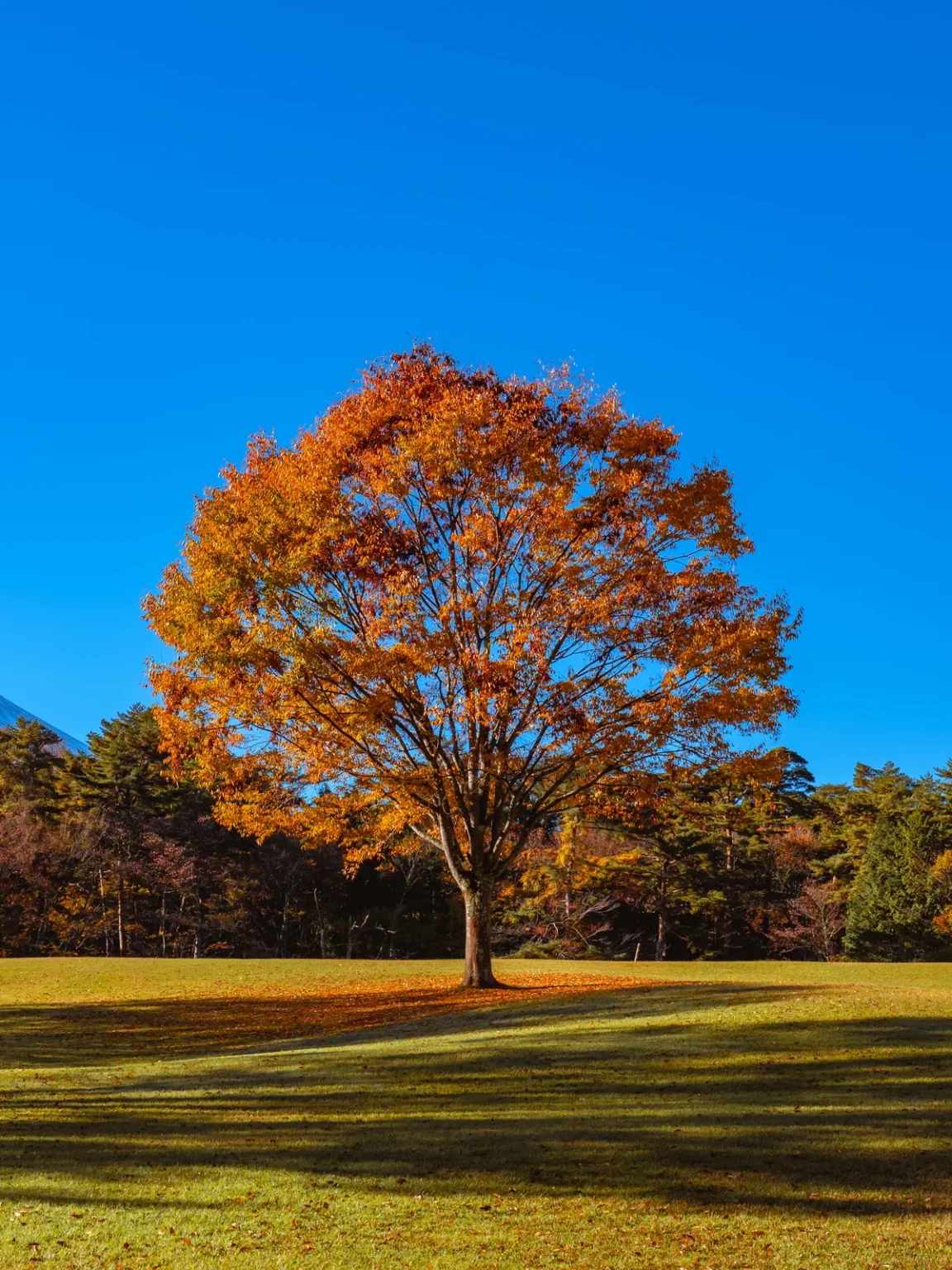
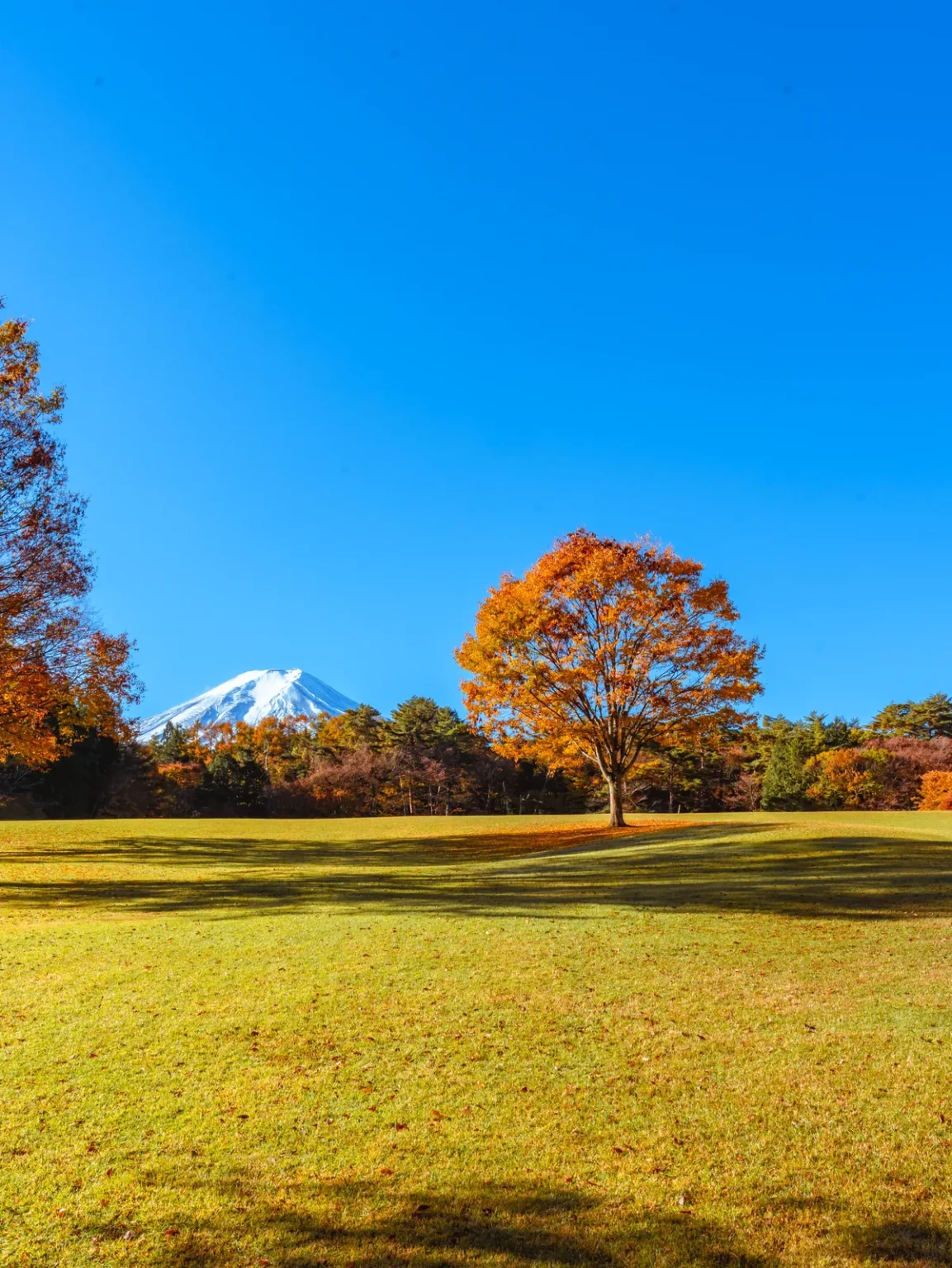
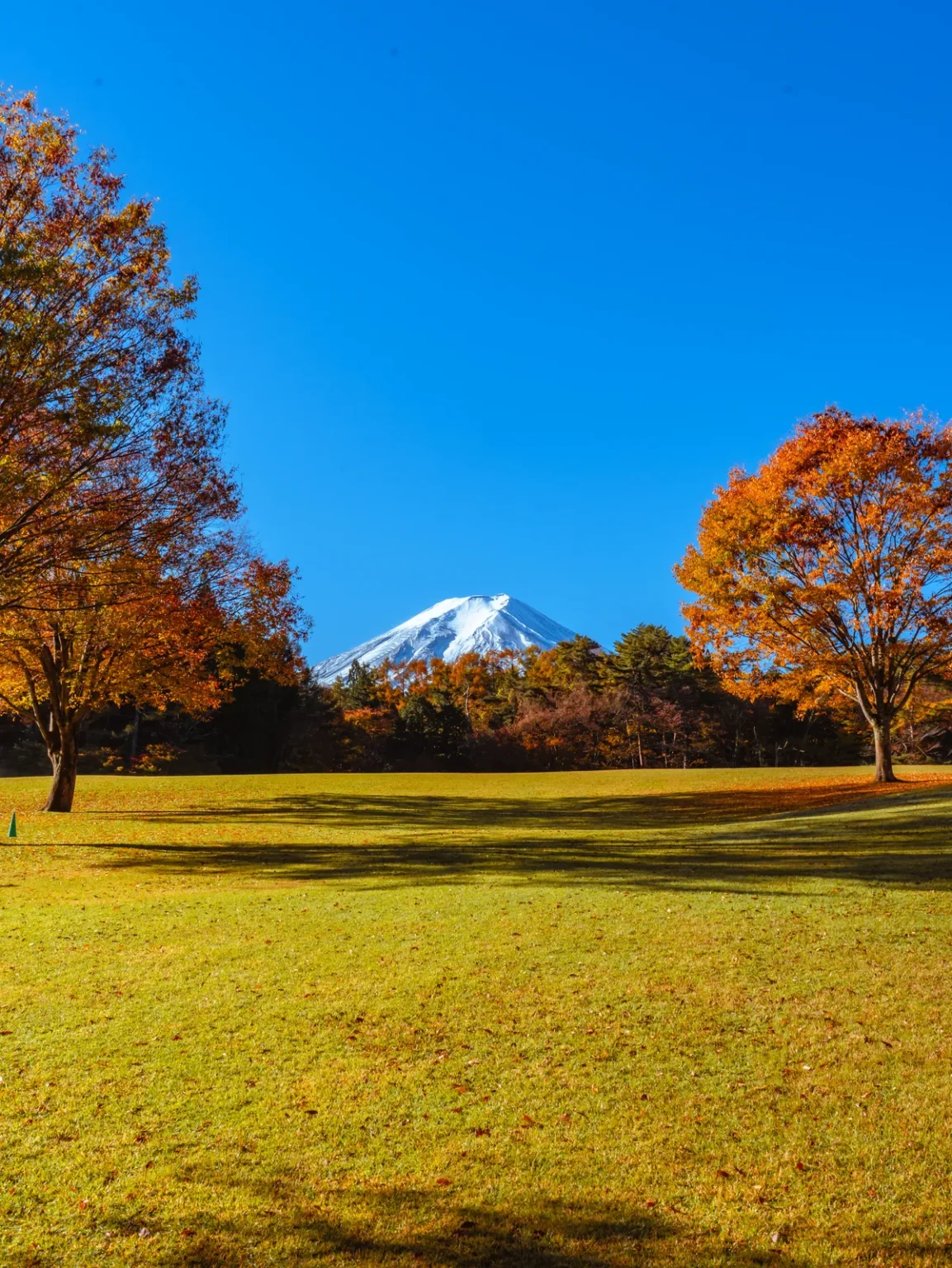
A big open lawn, a few large trees in orange and red standing on it, dark woods behind, and the snowy top of Mt Fuji rising over the treeline. That is what is in front of you when you step out of the car park. On 11 November 2026 the leaves were already starting to fall: in my photos they lie scattered across the grass, and the trees cast long shadows across it.
It was the last stop on my route that morning. The times below are when my photos at each place were taken, not arrival or departure times.
| Photo times, 11 November 2026 | Where |
|---|---|
| 6:33–6:51 | Nijumagari Pass |
| 7:08 | Oshino Hakkai |
| 7:34–7:38 | Mt Fuji Radar Dome Museum |
| 7:39–7:46 | Kaneyama Falls |
| 7:49–7:50 | Back near the Radar Dome |
| 7:57–8:09 | Birch-and-maple path near Michi-no-Eki Fujiyoshida |
| 8:16–8:21 | Suwa-no-Mori Nature Park (this page) |
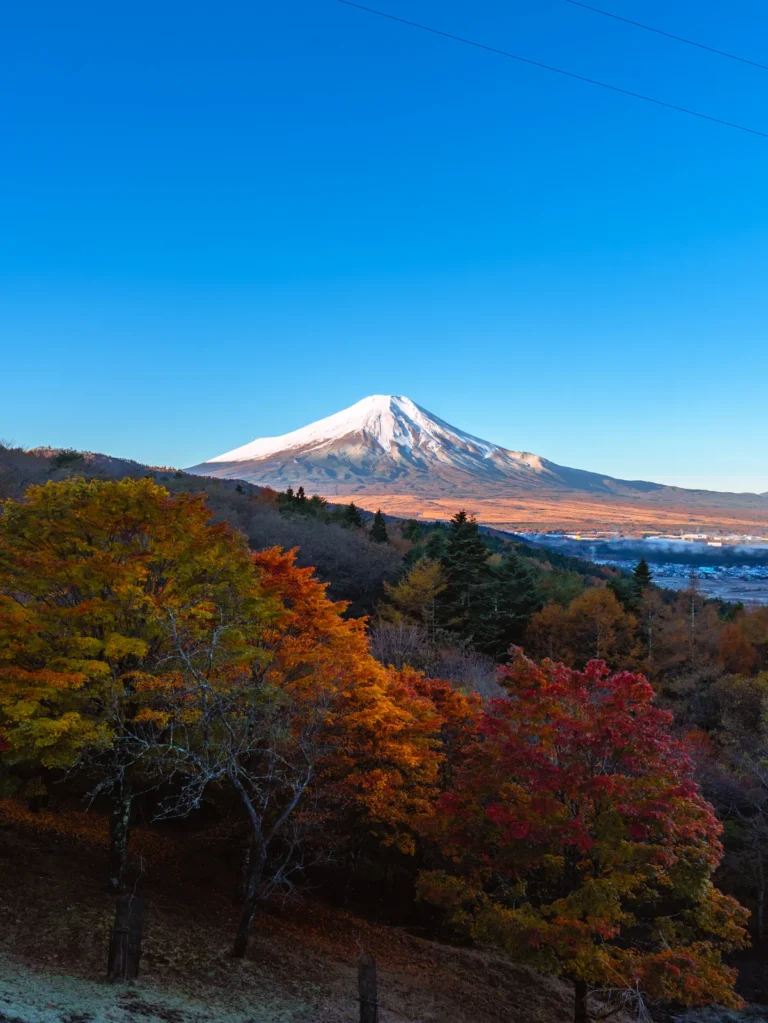
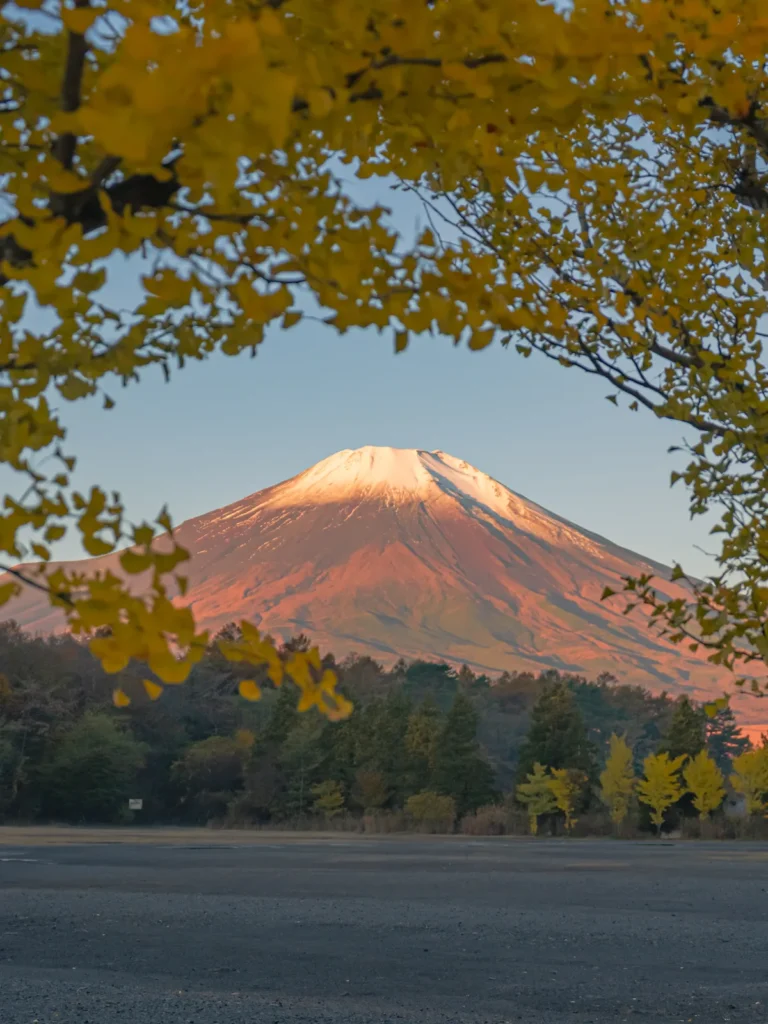
The photos on this page were taken between 8:16 and 8:21 a.m. The 8:16 one is of Mt Fuji over the trees with an orange tree leaning into the right of the picture; the rest are from 8:20 and 8:21.
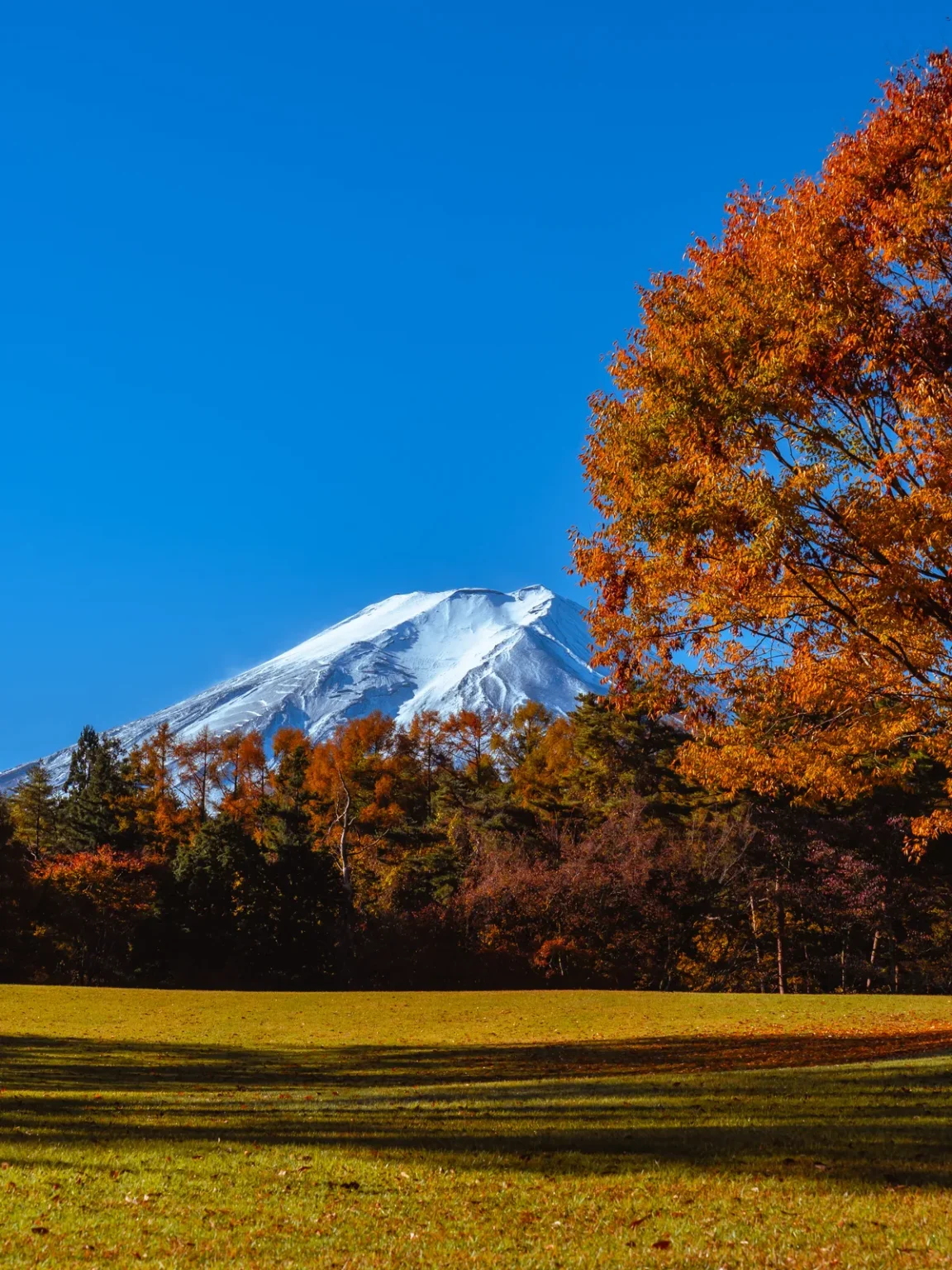
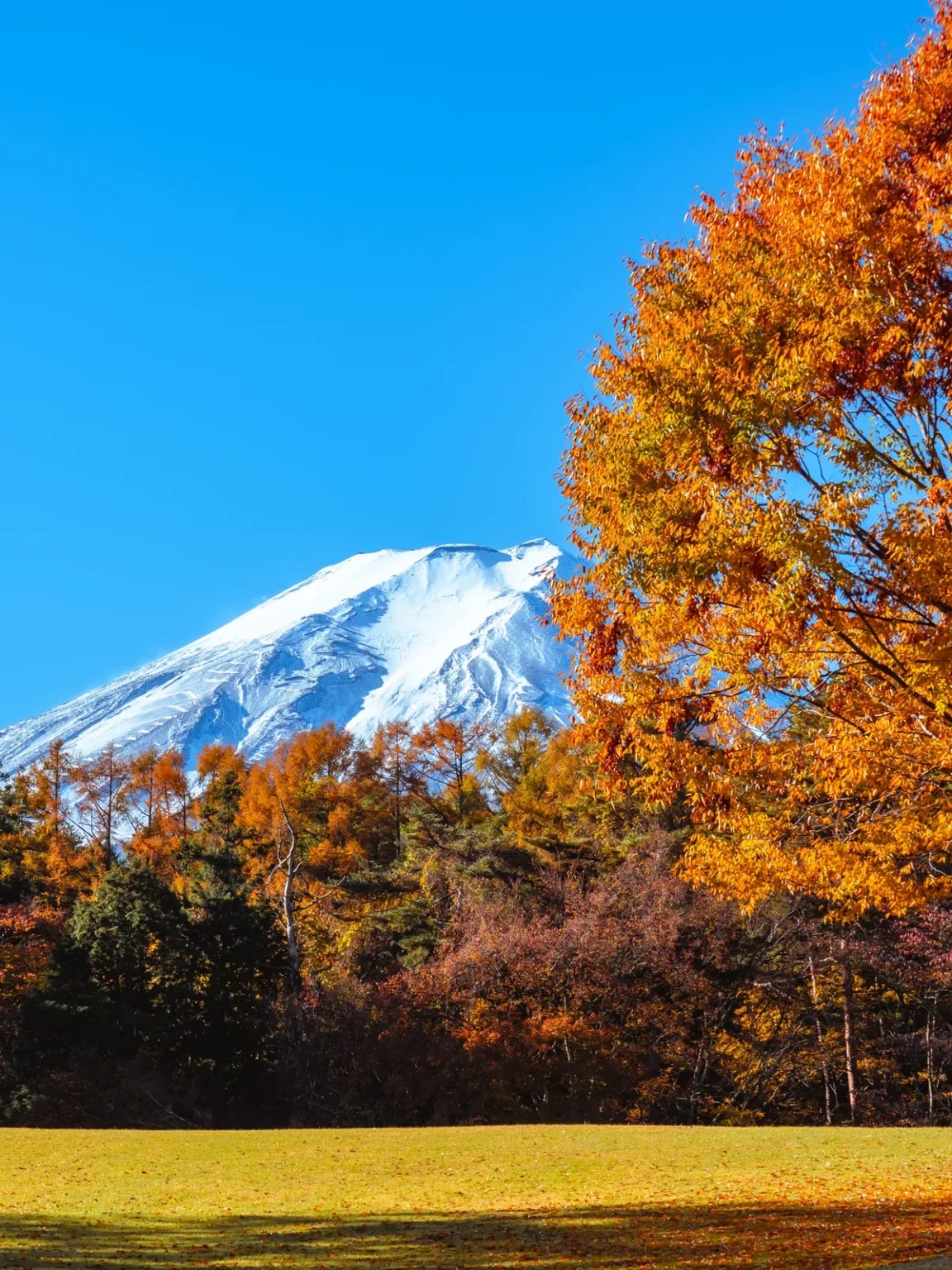
Fujiyoshida’s official tourist guide sells the park on exactly this: a green lawn with Mt Fuji straight ahead, Mt Fuji showing its face above the trees, and colourful trees in autumn.
Was Suwa-no-Mori Nature Park crowded?
Not the lawn straight ahead of the car park, in my photos. The person walking across it with a bucket, a dustpan and a rake is the park’s caretaker. In the 8:20 photo, a white haze hangs low among the trees behind.
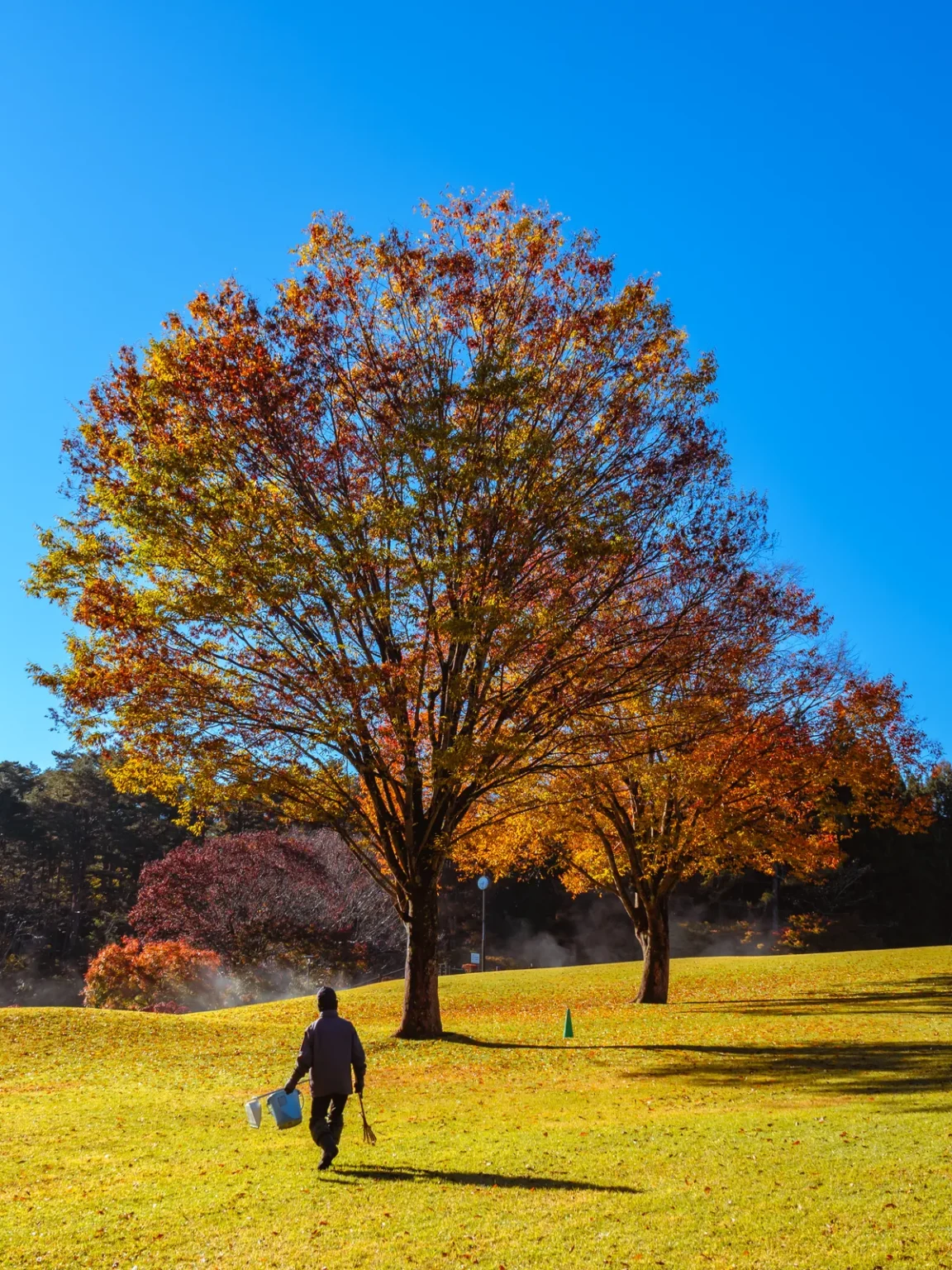
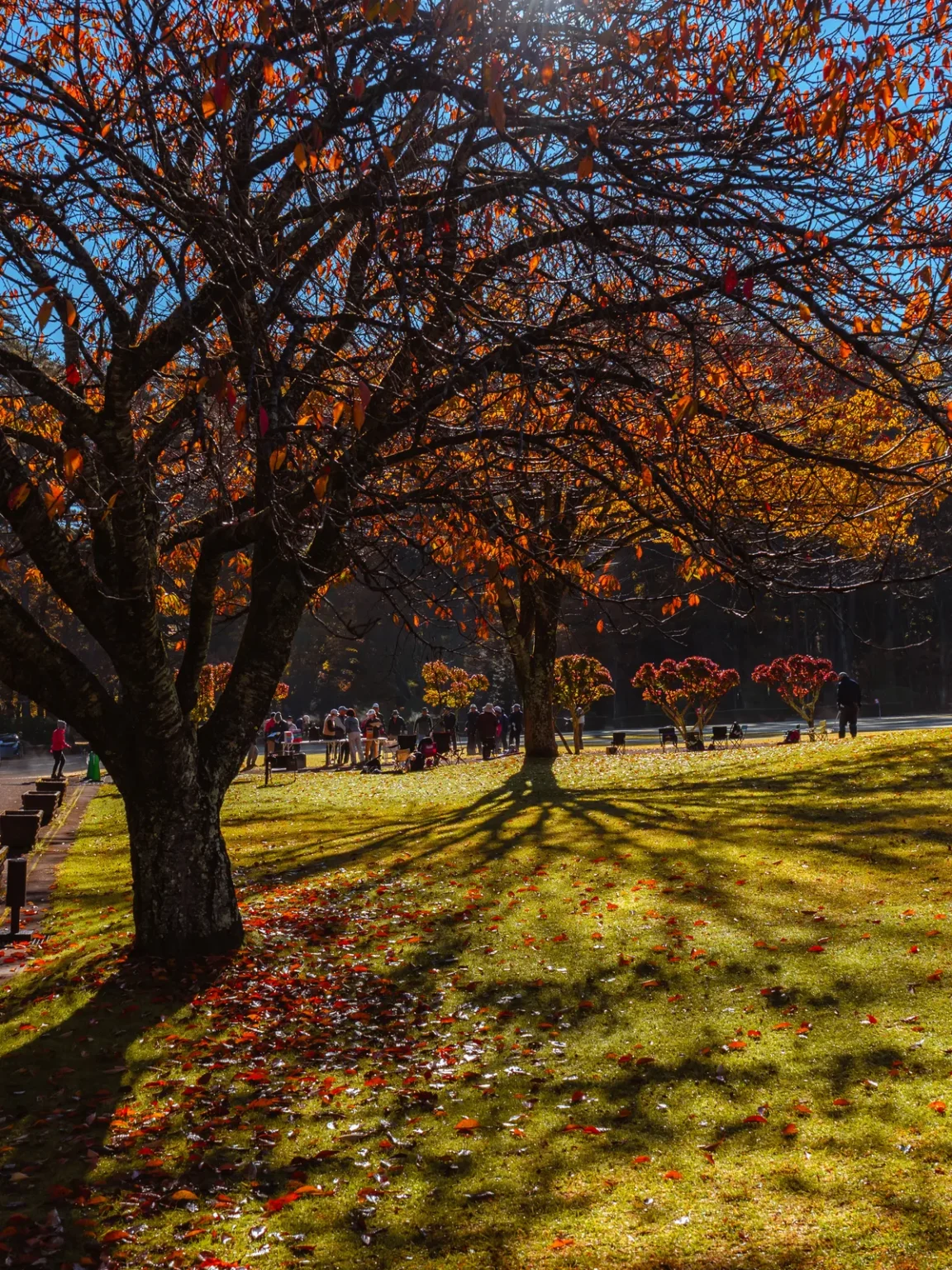
There were other people further off. One frame, taken under a tree with red leaves on the grass beneath it, shows a group beside a paved path, with folding tables and outdoor chairs set out.
What should you bring to Suwa-no-Mori Nature Park?
Something to sit on, or nothing at all. I saw no benches and no play equipment on my visit. I think lying on the grass, or bringing an outdoor chair, is the way to enjoy it. That morning I could hear wild birds, and there was no noise. If you want somewhere to sit with a book and Mt Fuji in front of you, this is what I’d recommend.
The city’s tourist guide describes the same idea in its own words: spreading out a packed lunch on a picnic blanket, ball games on the lawn, and people who sit in the shade of the pines to read or take a nap on a break from driving.
What are the rules at Suwa-no-Mori Nature Park?
No pets, no drones and no fires. The city’s page for the park is direct about the first one: there is no dog run, and dogs, cats and other pets may not be brought in. Before you plan a picnic around a stove, read the rest too.
Pets
Not allowed. The city notes that one guidebook wrongly listed a dog run here; there isn’t one.
Fire and cooking
The city prohibits fires, including fireworks, in its parks. Portable stoves are also prohibited, and this park’s barbecue area is out of use.
Drones
The city says drones cannot be flown in its parks; anyone with special reasons should talk to the parks department.
Banned equipment
Baseballs, softballs, golf clubs and throwing equipment are banned, as are bicycles, skateboards, roller skates and radio-controlled toys. Vehicles stay in the car park.
Toilets and access
There are toilets. The prefecture’s listing adds a wheelchair-accessible toilet, wheelchair parking spaces and an AED.
Hours
1 Oct–14 May 8:30–17:00 · 15–31 May 8:30–19:00 · 1 Jun–31 Aug 7:30–19:00 · 1–30 Sep 7:30–18:30, per the city. My photos are from 8:16 to 8:21, before the listed opening time. The city pages checked on 15 November 2026 did not say whether the car park opens before the listed hours, so plan around the city’s hours.
Why are there so many pines at Suwa-no-Mori?
They were planted. The city says the red pines here were planted in the Kan’ei era, around 1640, both as a windbreak and to guard against yukishiro (雪代, slush avalanches). Many of the trees are over 300 years old, and the city gives heights of 25 to 38 m. The park itself was established in August 1986 and covers 14 hectares, at about 900 m above sea level.
The name is older than the park. Yamanashi Prefecture’s Mt Fuji World Heritage Centre explains that the grove of Kitaguchi Hongu Fuji Sengen Shrine and the woodland spreading south of it have long been called Suwa-no-Mori, “the Suwa forest”, after Suwa Myojin, the guardian deity of Kamiyoshida village, which is said to have been enshrined here before the Sengen shrine. Today Suwa Shrine is a sub-shrine inside the Sengen shrine’s grounds, and its annual festival is now held as the Yoshida Fire Festival, one of the Sengen shrine’s main festivals. The Kanto Regional Forest Office has designated 10.79 hectares of the Suwa-no-Mori red pines as a protected forest and says the pine forest carries part of the Yoshida trail up Mt Fuji.
How do you get to Suwa-no-Mori Nature Park?
By car it is about 10 minutes from Kawaguchiko IC, and parking is free. By bus, ride from Fujisan Station to the 浅間神社前 stop, then walk about 15 minutes.
By car
From Fujiyoshida IC (Higashi-Fujigoko Road) or Kawaguchiko IC (Chuo Expressway), the city’s directions are: Route 139 towards Fujiyoshida, onto Route 138, turn right at the 浅間神社東 junction, then about 500 m straight on. From Yamanakako IC, take Route 138 towards Fujiyoshida and turn left at the same junction.
Parking
Free, 40 cars, according to Fujiyoshida’s tourist guide; the prefecture also lists 5 coach spaces. Parking was free when I went, and the lawn in my photos is the one straight in front of the car park.
By bus
Fujiyoshida’s tourist guide gives about 6 minutes by bus from Fujisan Station on the Fujikyu Line to the 浅間神社前 stop, then about 15 minutes on foot. Bus times are not covered in this guide; check the current timetable before you go.
With the shrine
The prefecture puts the park about 5 minutes on foot from Kitaguchi Hongu Fuji Sengen Shrine, so the two fit together in one visit.
I went to six places by car that morning, and this park was the last.
Compare rental cars near Mt FujiJapanese rental companies on RakutenWhere to stay nearby
Fujiyoshida and Kawaguchiko sit next to each other; my Kawaguchiko vs Fujiyoshida comparison covers the trade-offs. From Tokyo, the Tokyo to Kawaguchiko guide has the trains and buses. For visibility information, see the Mt Fuji visibility forecast.
If you would rather base yourself in Kawaguchiko, compare stays there.
See Kawaguchiko stays on Booking.comCompare Kawaguchiko hotels on AgodaWhen comparing Mt Fuji day tours, check whether Suwa-no-Mori Nature Park is included: browse Mt Fuji day tours on Klook. For more places to see the leaves, see my three quiet fall foliage spots, and for everything else around the mountain, start at my Mt Fuji guide.
More from my November 2026 autumn visits around Mt Fuji
Ginkgo trees beside Dallas Village (6 Nov) · Lake Yamanaka autumn leaves festival (6 Nov photos) · Nijumagari Pass (11 Nov) · Oshino Hakkai (11 Nov) · Mt Fuji Radar Dome Museum (11 Nov) · Kaneyama Falls (11 Nov) · Birch-and-maple path near Michi-no-Eki Fujiyoshida (11 Nov) · Ubuyagasaki (13 Nov) · Tenka-chaya, Misaka Pass (13 Nov) · When the leaves were reported at their best (calendar) · All ten spots compared (summary)
Suwa-no-Mori Nature Park: FAQ
Is parking free at Suwa-no-Mori Nature Park?
Yes. Fujiyoshida’s tourist guide lists 40 free spaces, and parking was free when I went. The official pages checked on 15 November 2026 neither list nor rule out an admission fee, so admission charges are not verified for this guide.
What are the opening hours?
From 1 October to 14 May, 8:30 to 17:00. The city lists longer hours for the rest of the year: 8:30–19:00 from 15 to 31 May, 7:30–19:00 from June to August, and 7:30–18:30 in September.
Can I bring my dog to Suwa-no-Mori Nature Park?
No. The city says dogs, cats and other pets may not be brought into the park, and there is no dog run.
Can I have a barbecue or fly a drone there?
No. The city prohibits fires, including fireworks, in its parks. Portable stoves are also prohibited, this park’s barbecue area is out of use, and drones are not allowed in the city’s parks.
Are the autumn leaves still good in mid-November?
On 11 November 2026 they had started to fall, with Mt Fuji clear and orange and red trees still on the lawn. That is one morning’s observation, not a forecast.
How far is it from Kitaguchi Hongu Fuji Sengen Shrine?
About 5 minutes on foot, according to the Yamanashi Tourism Organization.
Sources
My own visit and the official pages behind the facts above (checked 15 November 2026)
- My own visit on the morning of 11 November 2026; photos taken 8:16–8:21 a.m. (camera times).
- Fujiyoshida City: Suwa-no-Mori Nature Park; rules for park users; access; the red pines; city parks: drones and fire; bear sightings (updated 28 October 2026)
- Fujiyoshida official tourist guide: Suwa-no-Mori Nature Park (Fuji Pines Park)
- Yamanashi Tourism Organization: Fujiyoshida City Suwa-no-Mori Nature Park
- Yamanashi Prefectural Mt Fuji World Heritage Centre: Suwa-no-Mori exhibition leaflet, December 2023 (PDF)
- Kanto Regional Forest Office: Suwa-no-Mori red pine protected forest
- Ministry of Land, Infrastructure, Transport and Tourism: Mt Fuji yukishiro described as slush avalanches (Japanese)
Some links above are affiliate links — they cost you nothing extra and help keep this site going.
Join travelers discovering Japan's hidden side
Weekly dispatches from off-the-beaten-path Japan — spots and stories you won't find in guidebooks.
No spam. Unsubscribe anytime.
Welcome aboard!
You're in. See you in your inbox soon.