
Japan · Yamanashi · Oshino · Nijumagari Pass
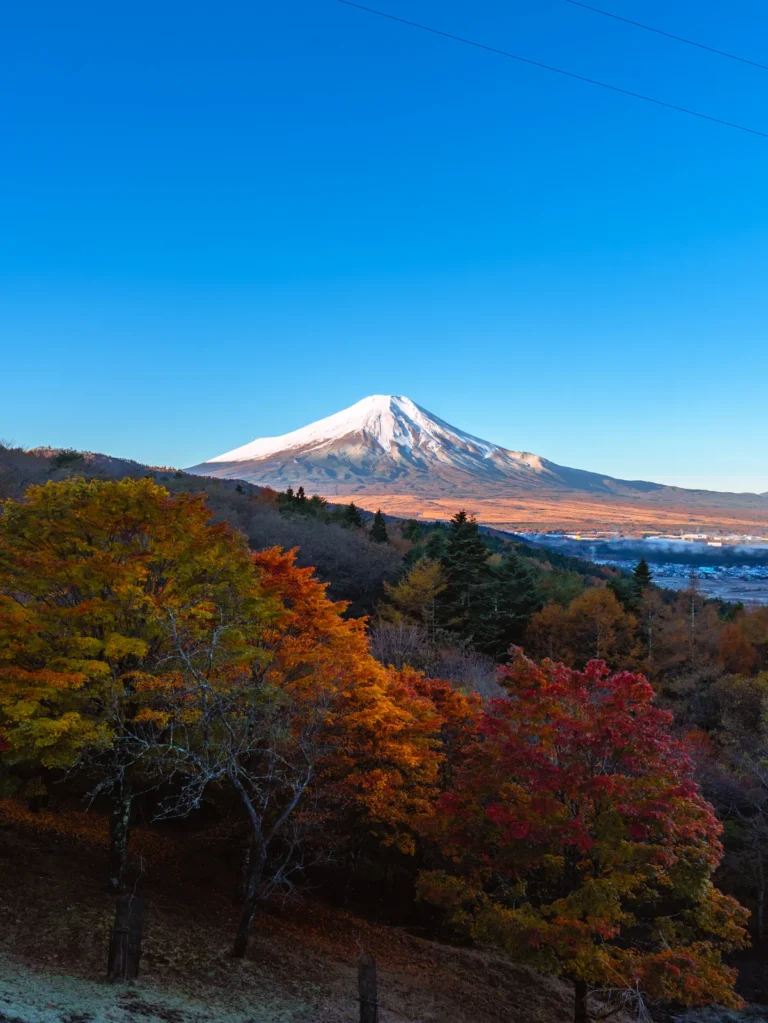
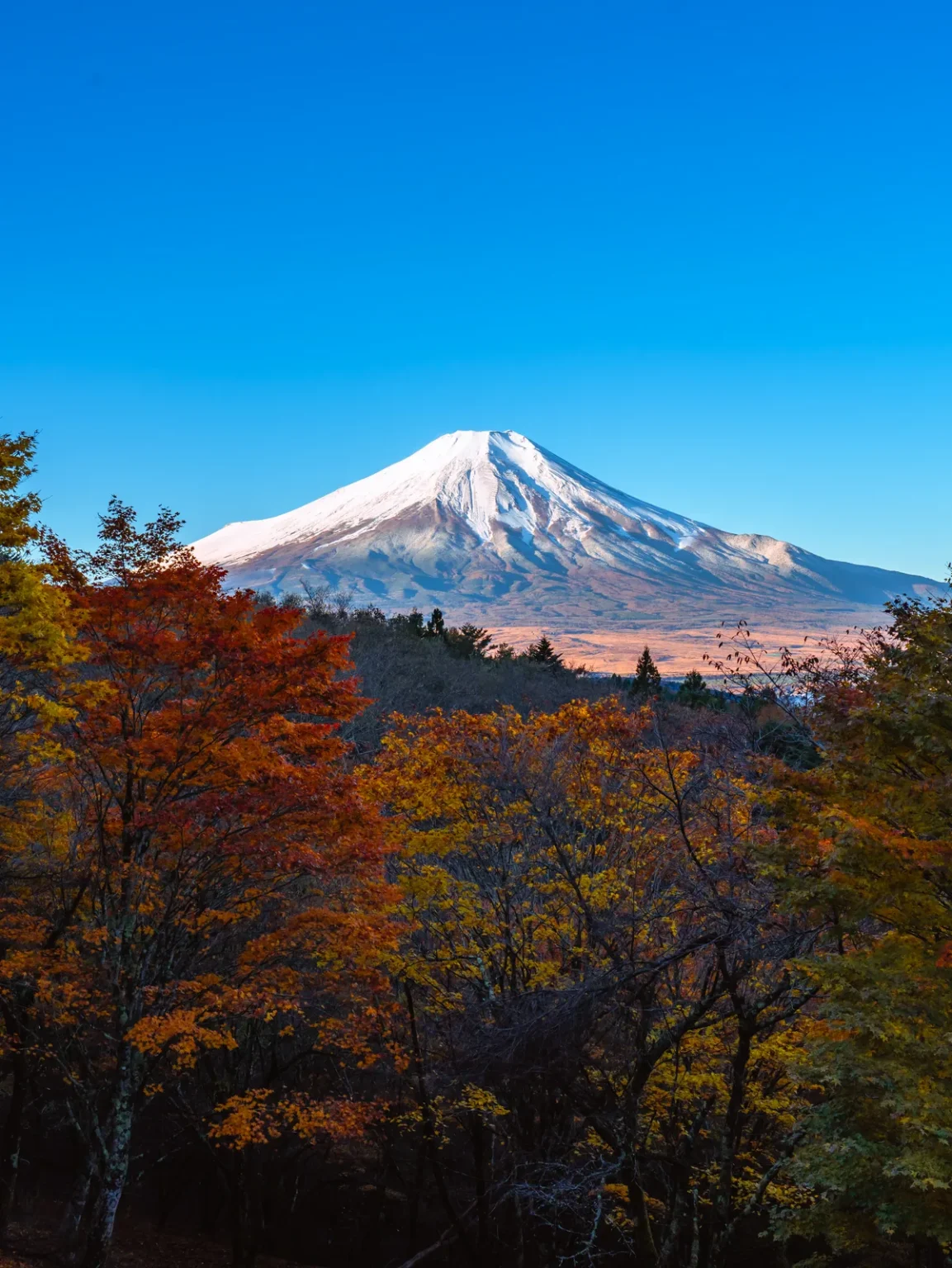
Nijumagari Pass (二十曲峠) is a viewpoint above Oshino village, at about 1,150 m above sea level, with a viewing deck, SORAnoIRO, facing Mt Fuji. I came up by car after sunrise on 11 November 2026. The leaves were starting to fall, the handrails were frozen, there were two other people, and the snow-covered Southern Alps were in view as well, which I had not expected.
I’m Nobu, and I live in Yamanakako village. On 11 November 2026 I visited several autumn spots around the northern foot of Mt Fuji by car, and Nijumagari Pass was the first. This page covers what my photos from 6:33 to 6:51 a.m. show, the Southern Alps, the leaves and the frost, the narrow forest road up from Oshino, parking and toilets, and why there is a viewpoint here at all.
What is Nijumagari Pass like early on a November morning?
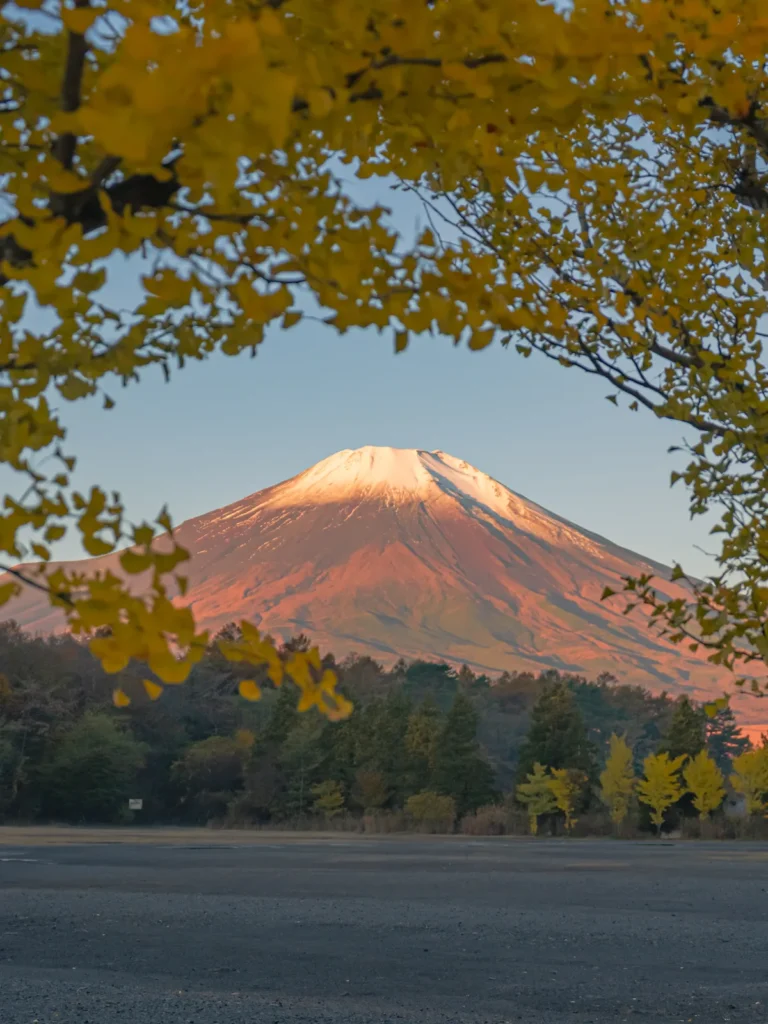
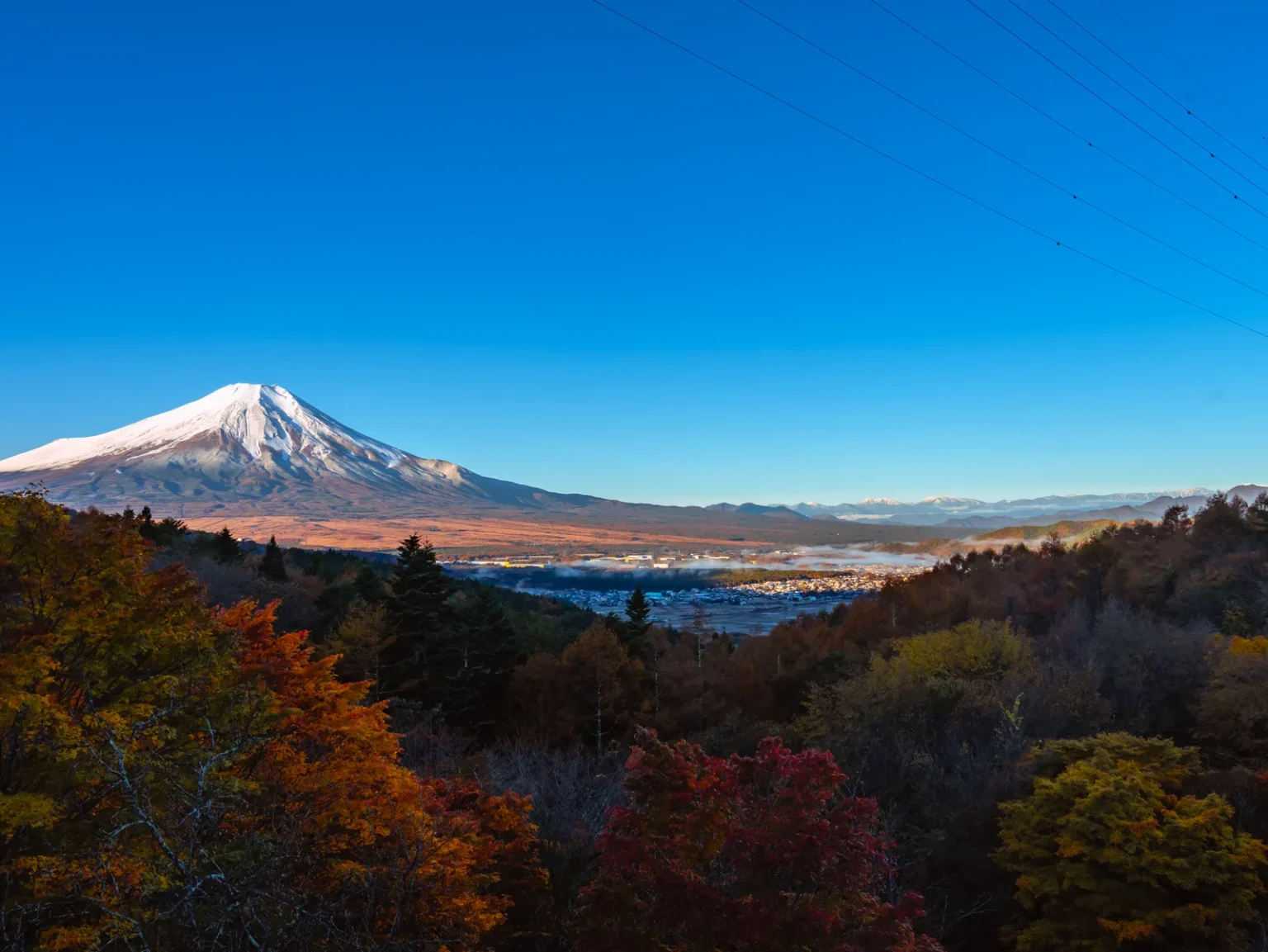
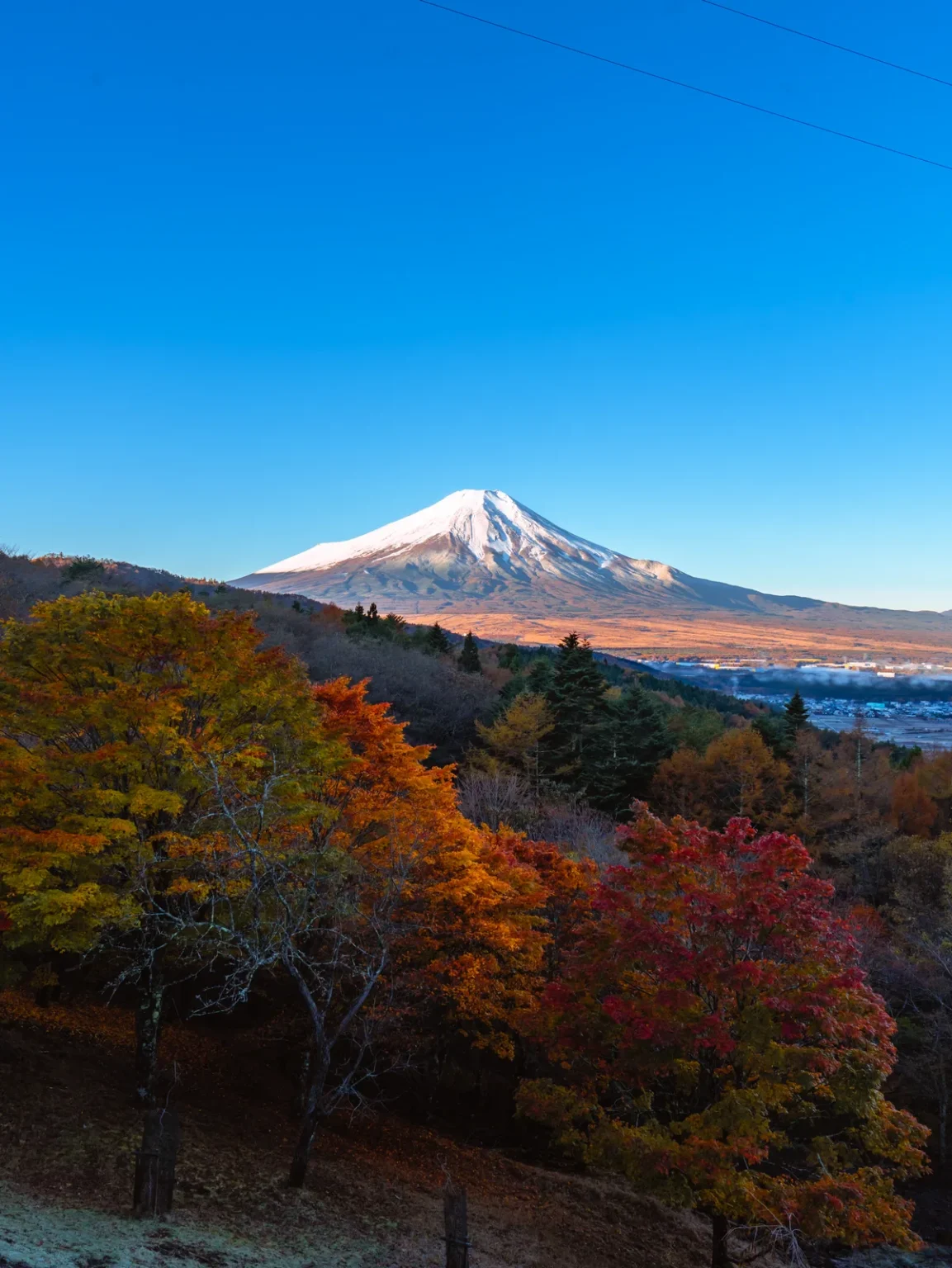
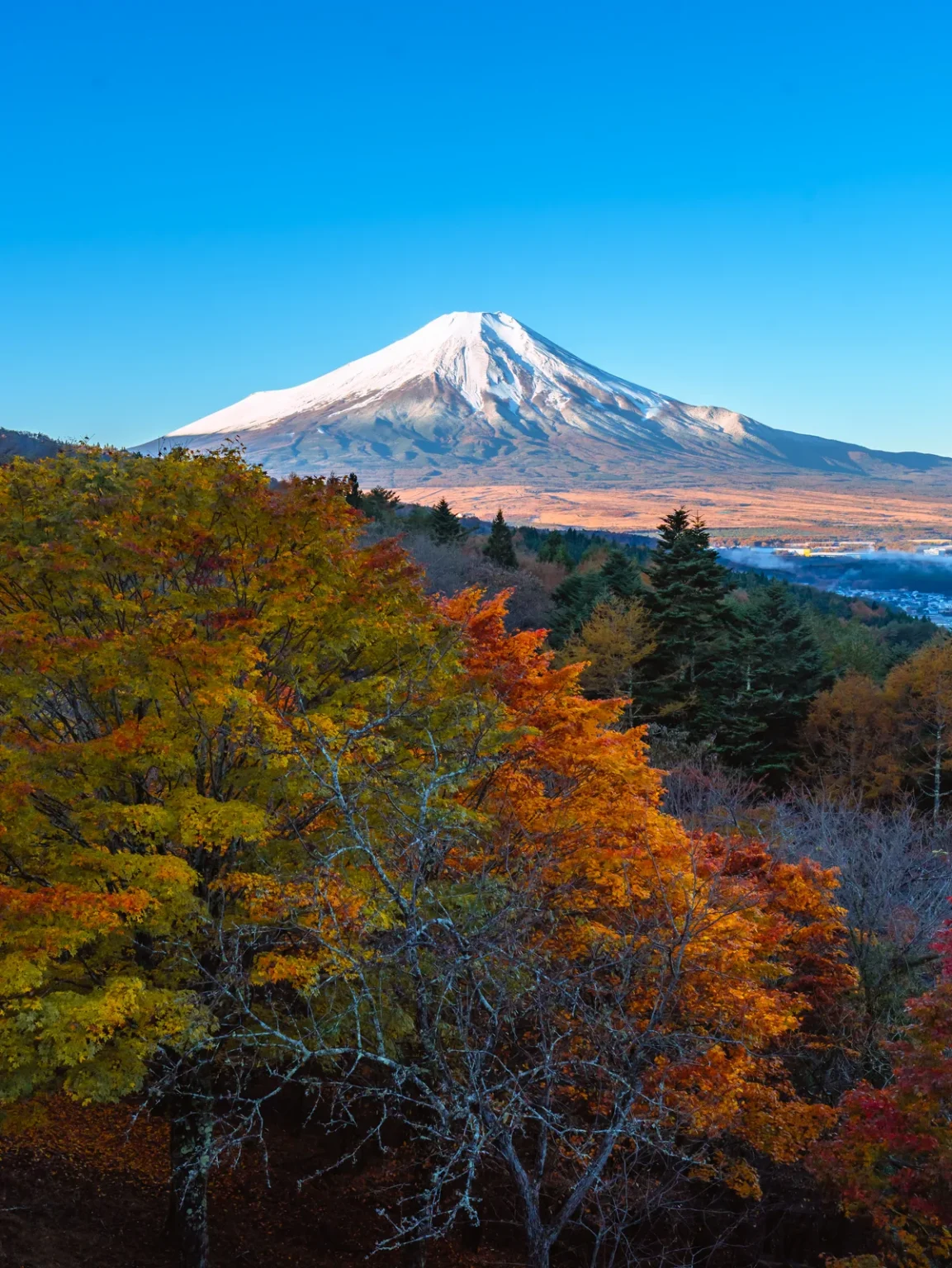
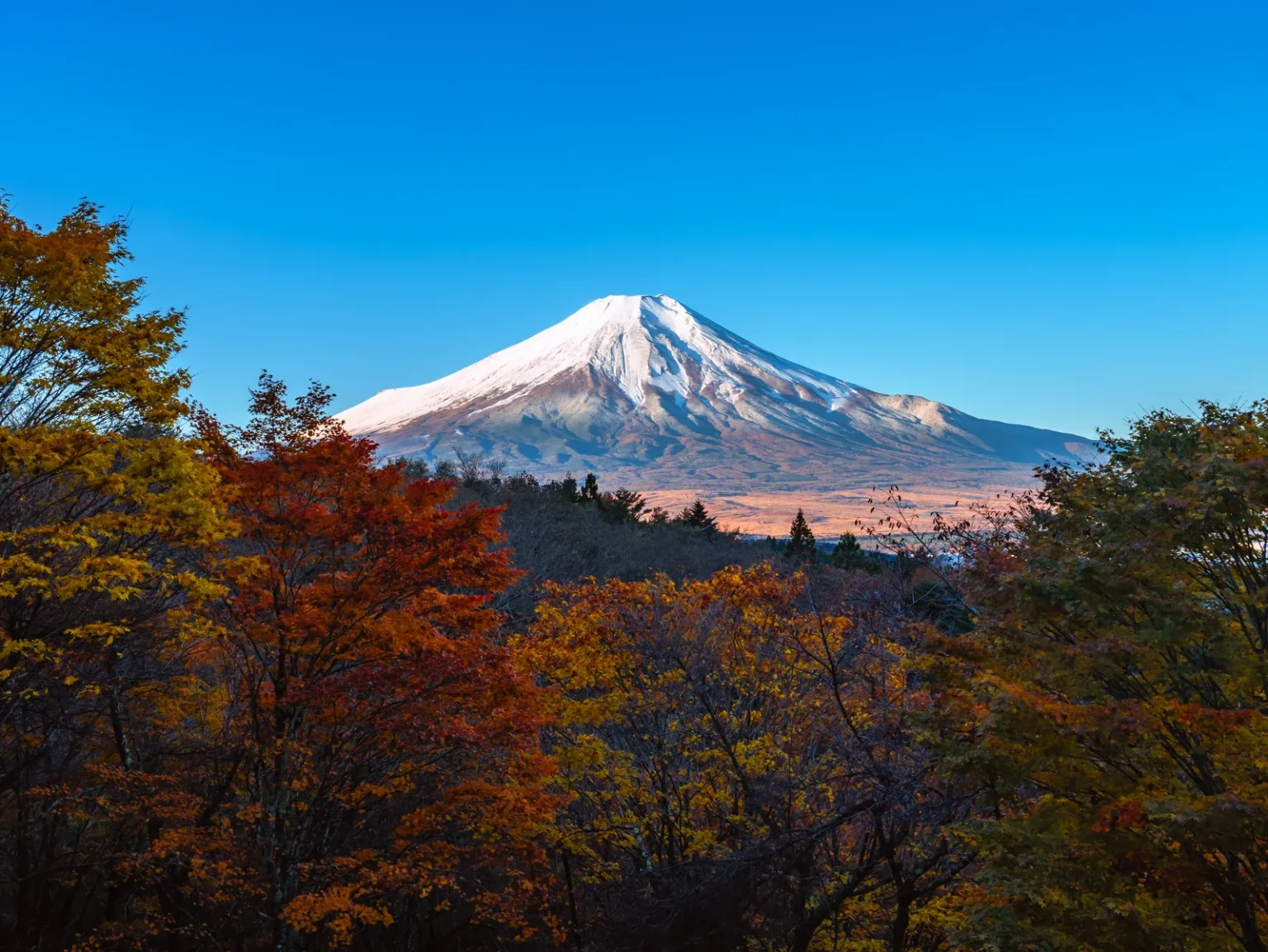
Clear and frosty. I arrived after sunrise; the National Astronomical Observatory of Japan gives sunrise in Kōfu, the prefectural capital, as 6:17 that day, and the earliest photo on this page is from 6:33. Fuji was already in sunlight, with snow down its upper slopes. The car park is wide, and there were only two cars in it when I arrived. Apart from me there were two other people.
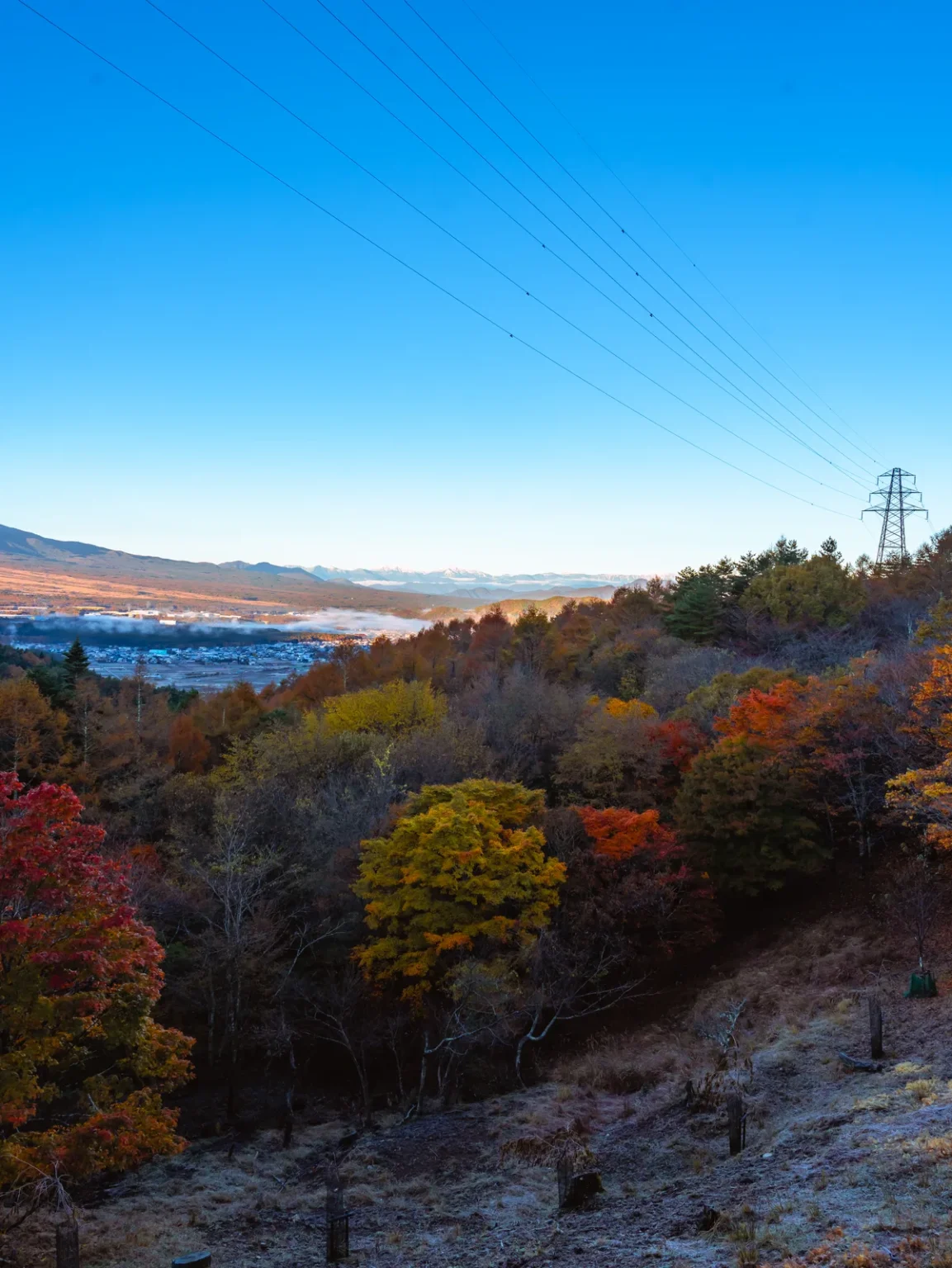
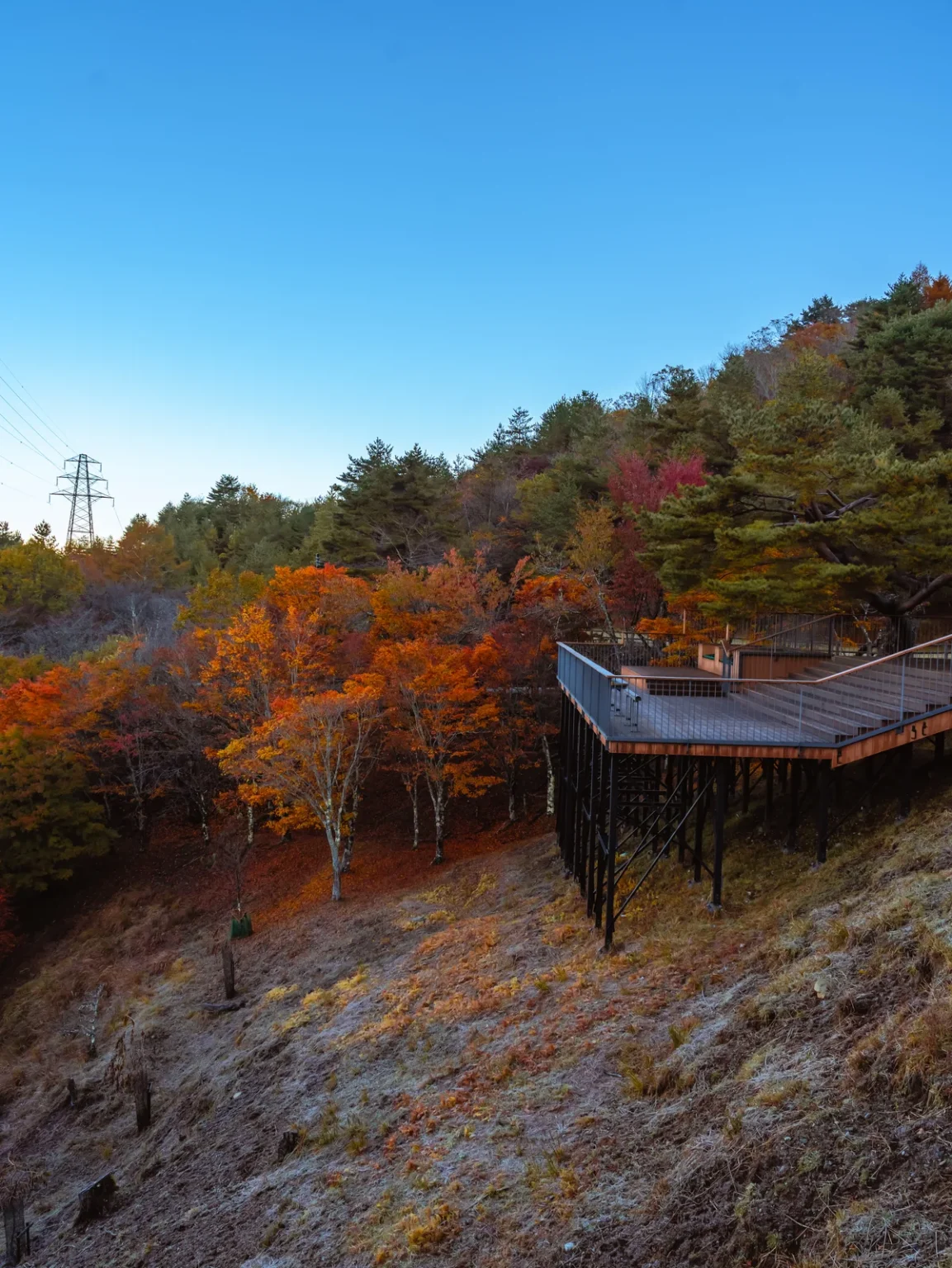
There had been a frost. In my photos the grass on the slope below the deck is white with it.
The times below are when my photos at each place were taken (camera times), not arrival or departure times. They show where the pass sat in my morning.
| Photo times, 11 November 2026 | Where |
|---|---|
| 6:33–6:51 | Nijumagari Pass (this page) |
| 7:08 | Oshino Hakkai |
| 7:34–7:38 | Mt Fuji Radar Dome Museum |
| 7:39–7:46 | Kaneyama Falls |
| 7:57–8:09 | Birch-and-maple path near Michi-no-Eki Fujiyoshida |
| 8:16–8:21 | Suwa-no-Mori Nature Park |
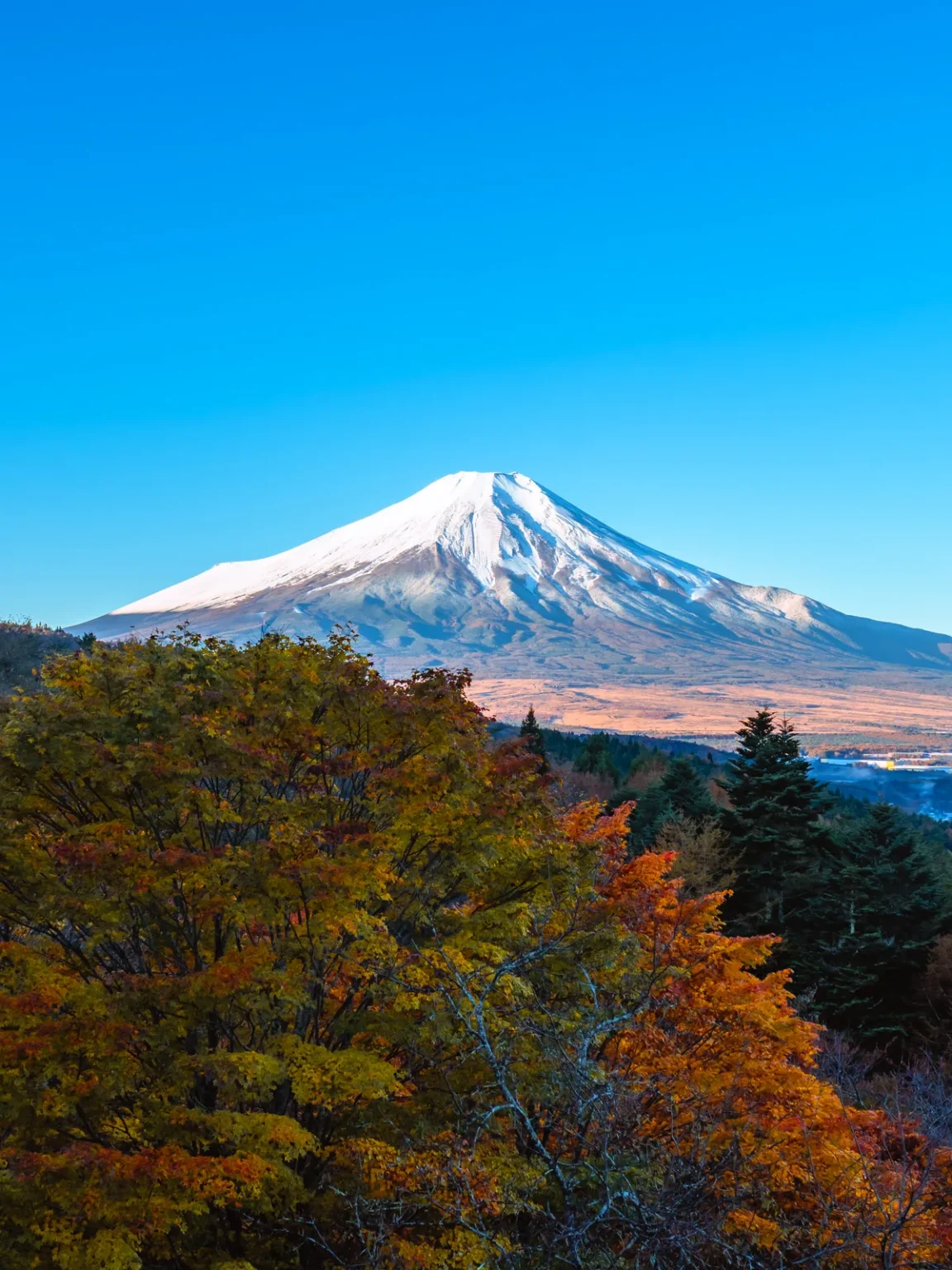
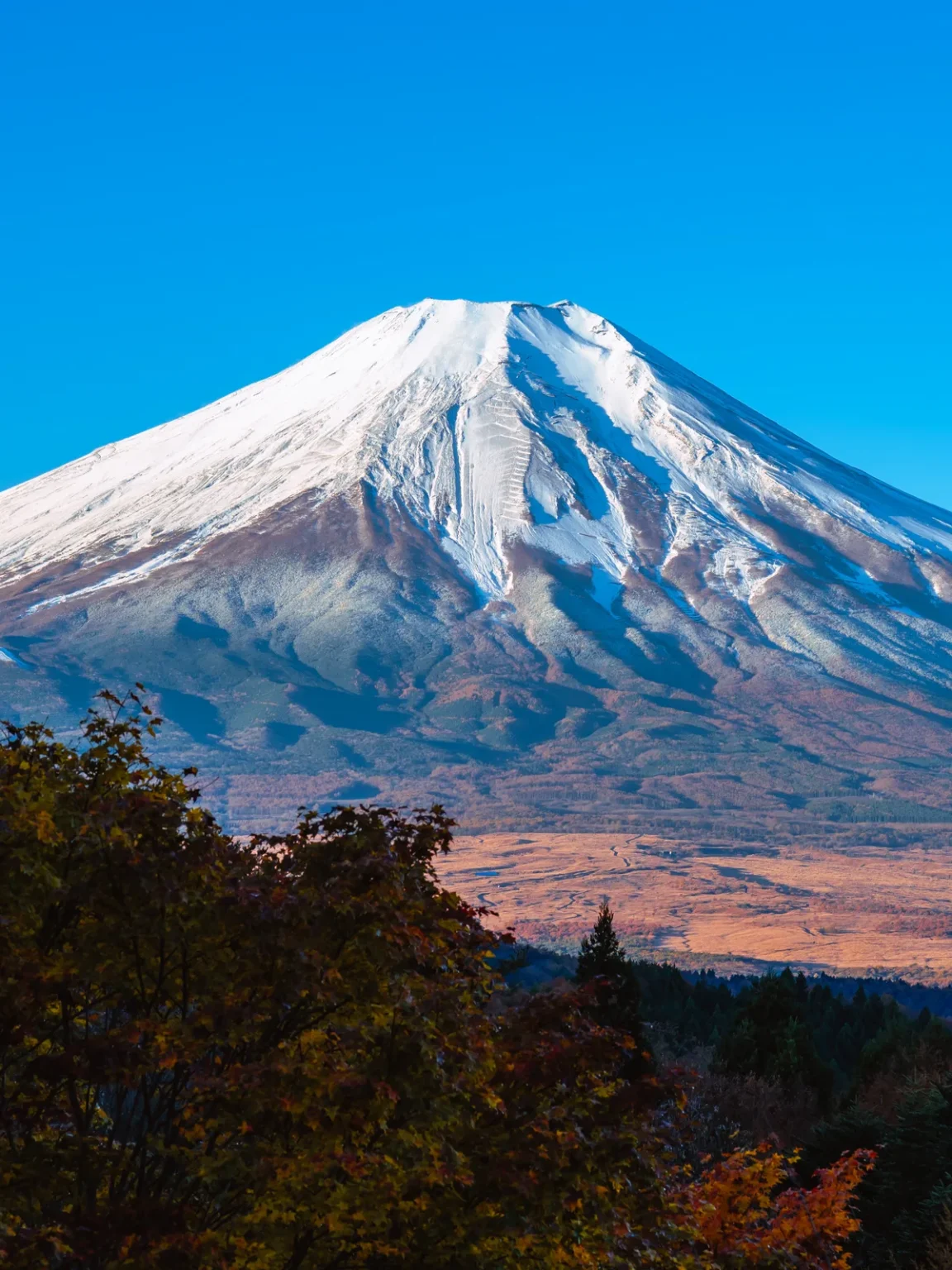
The Oshino Tourism Association’s update that same day said the previous day’s rain seems to have fallen as snow on Fuji, adding to the snow near the summit.
Can you see the Southern Alps from Nijumagari Pass?
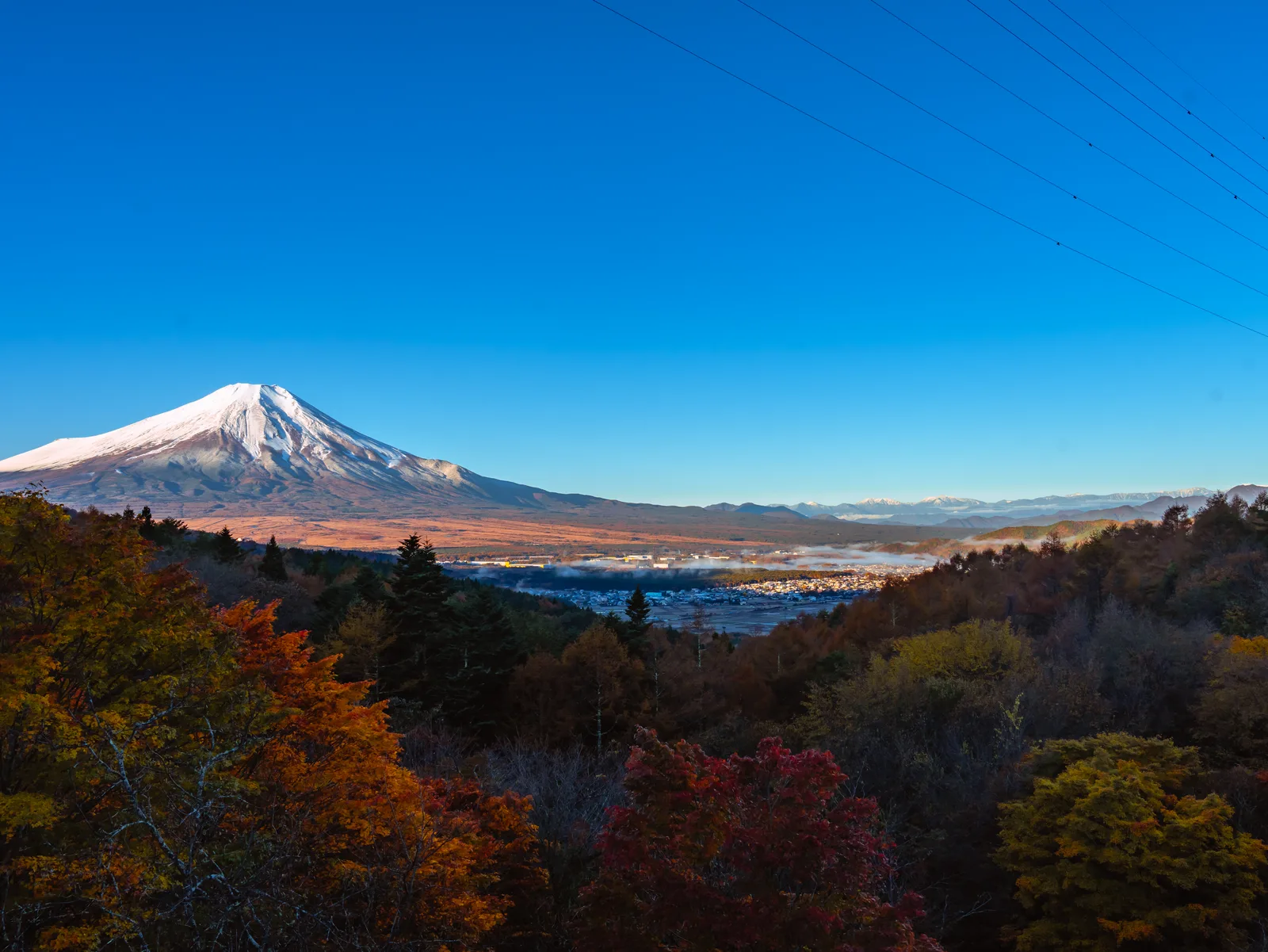
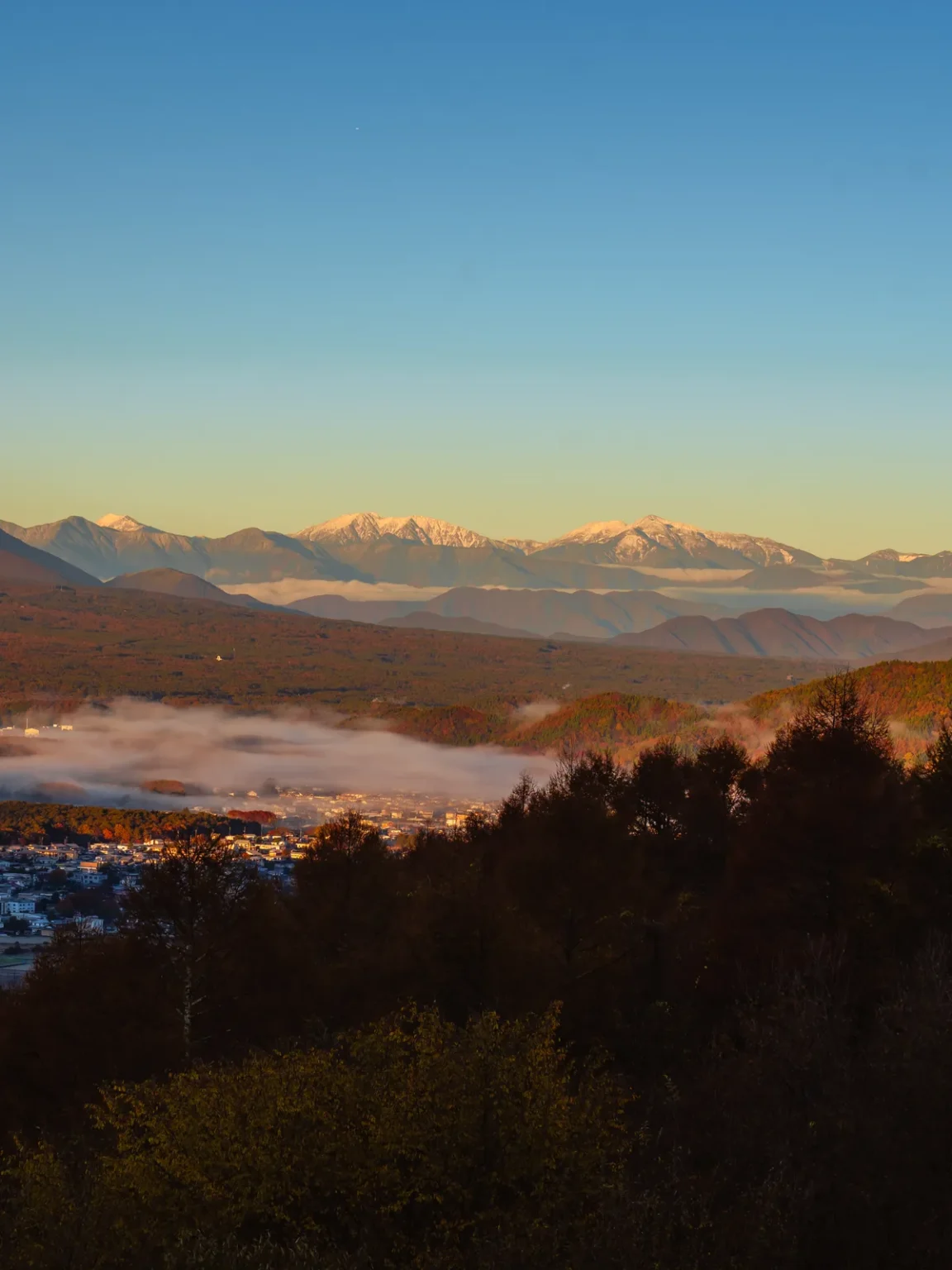
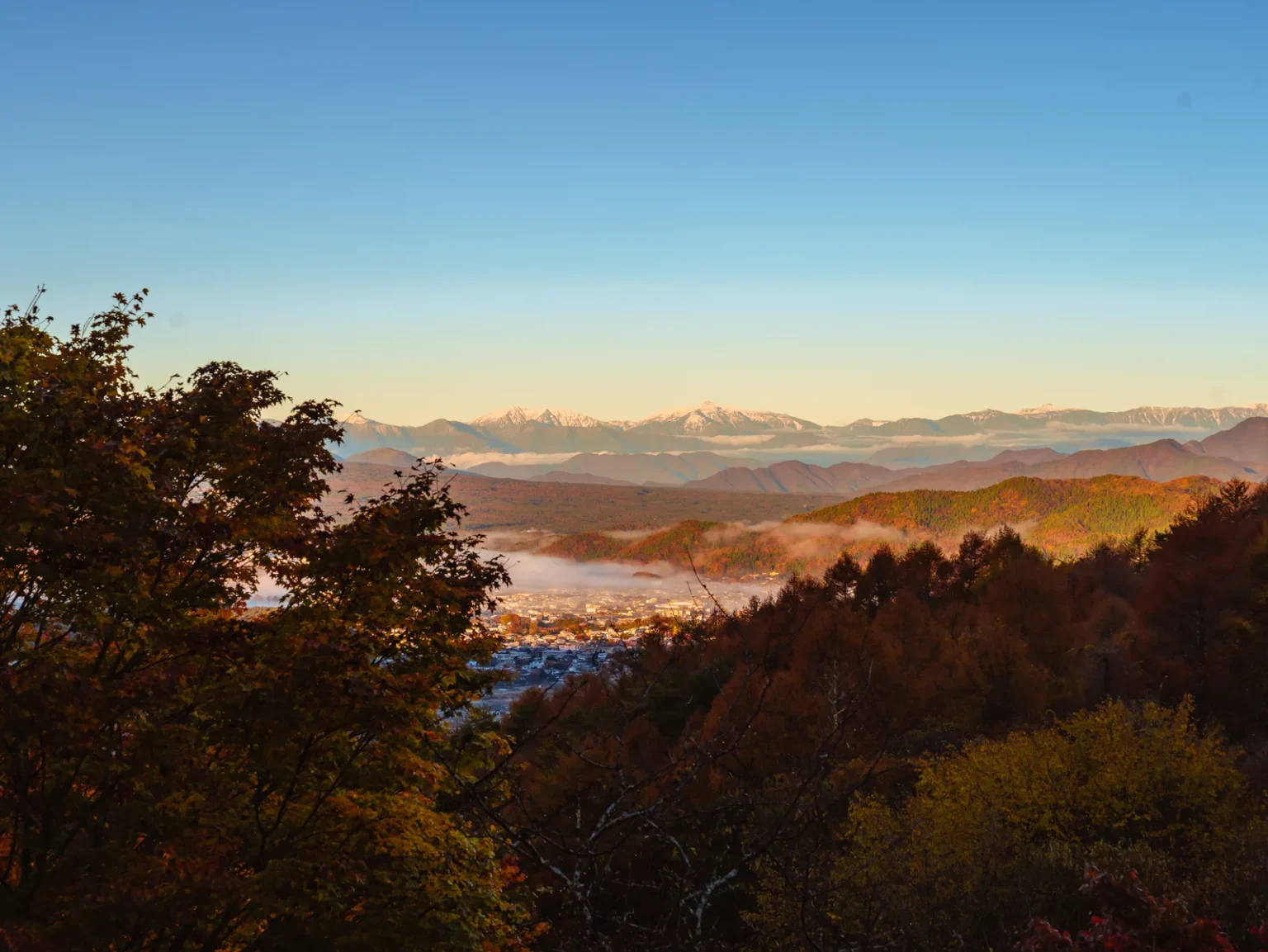
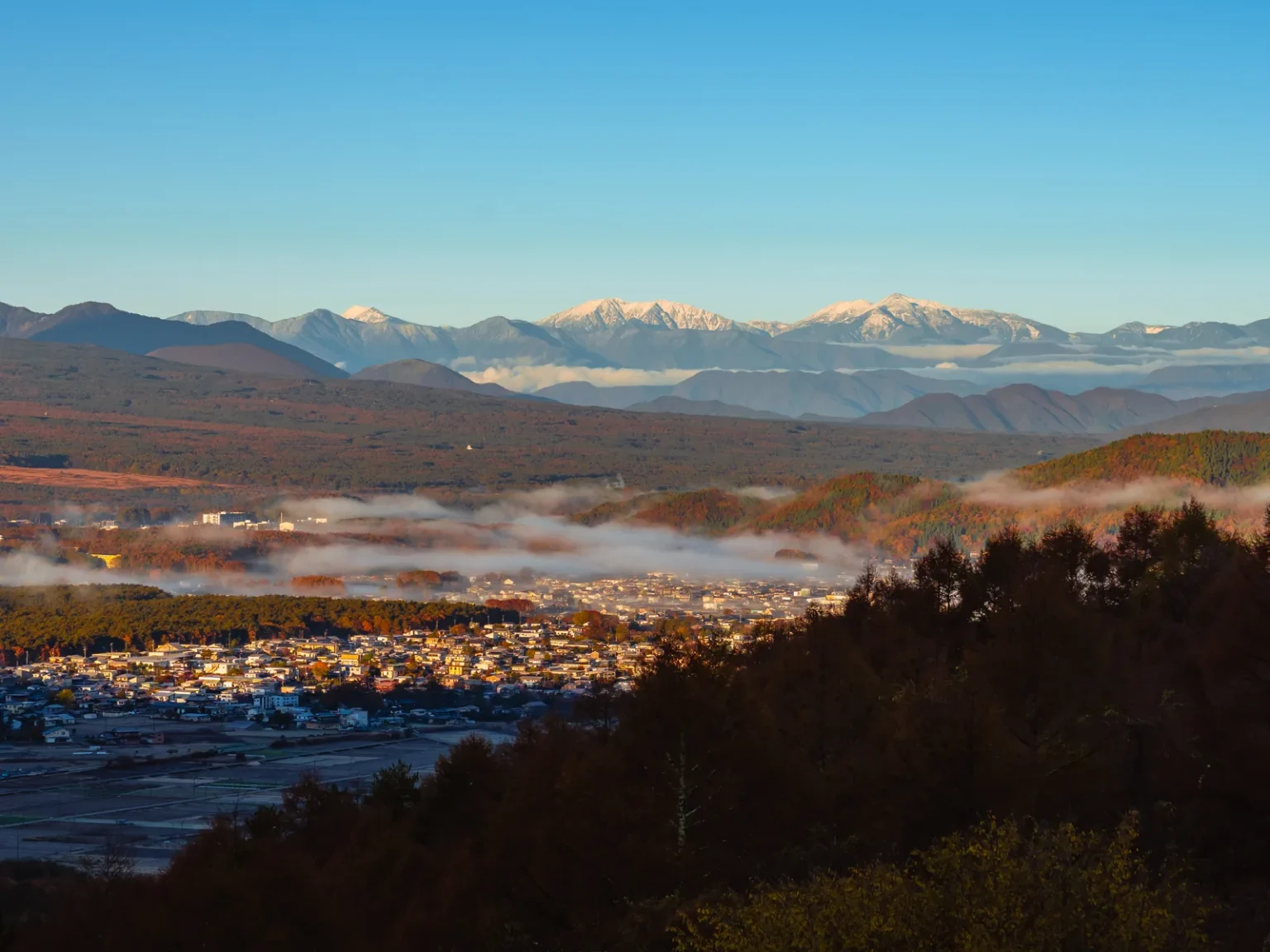
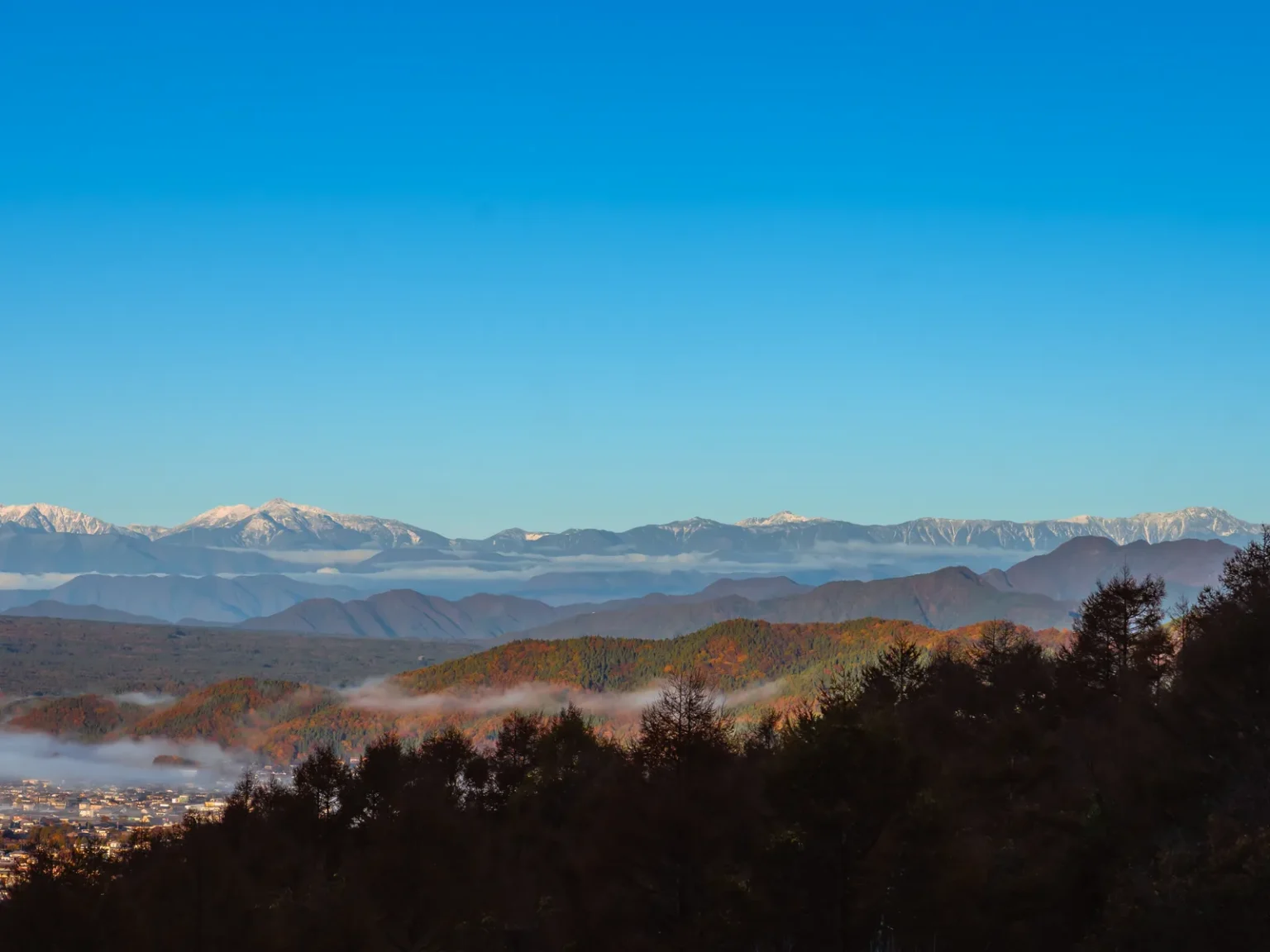
Yes, on a clear morning. I didn’t know this was a place where you could see the Southern Alps as well, and they looked really beautiful. There was a lot of snow on them. Looking away from Fuji, past the town in the valley, snow-covered peaks of the Southern Alps stretched along the horizon, and in my 6:33 and 6:36 frames the snow looks warm-coloured.
At 6:39 I took the range again at 70 mm.
Was there a sea of clouds?
No. There was no sea of clouds that morning. What you can see in my photos is thin mist lying low over the town in the valley, not a layer filling it. The Southern Alps were what stayed with me most from that morning. None of the official pages checked for this guide on 15 November 2026 describes when a sea of clouds forms here.
How were the autumn leaves at Nijumagari Pass on 11 November?
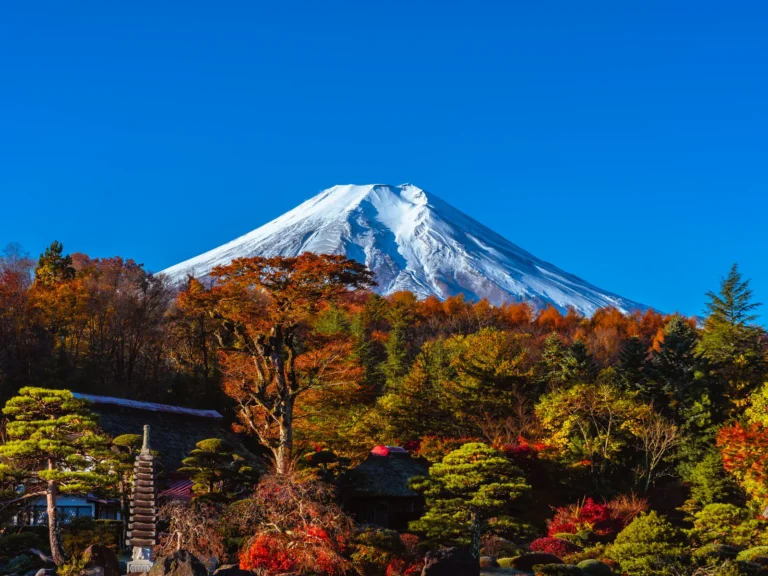
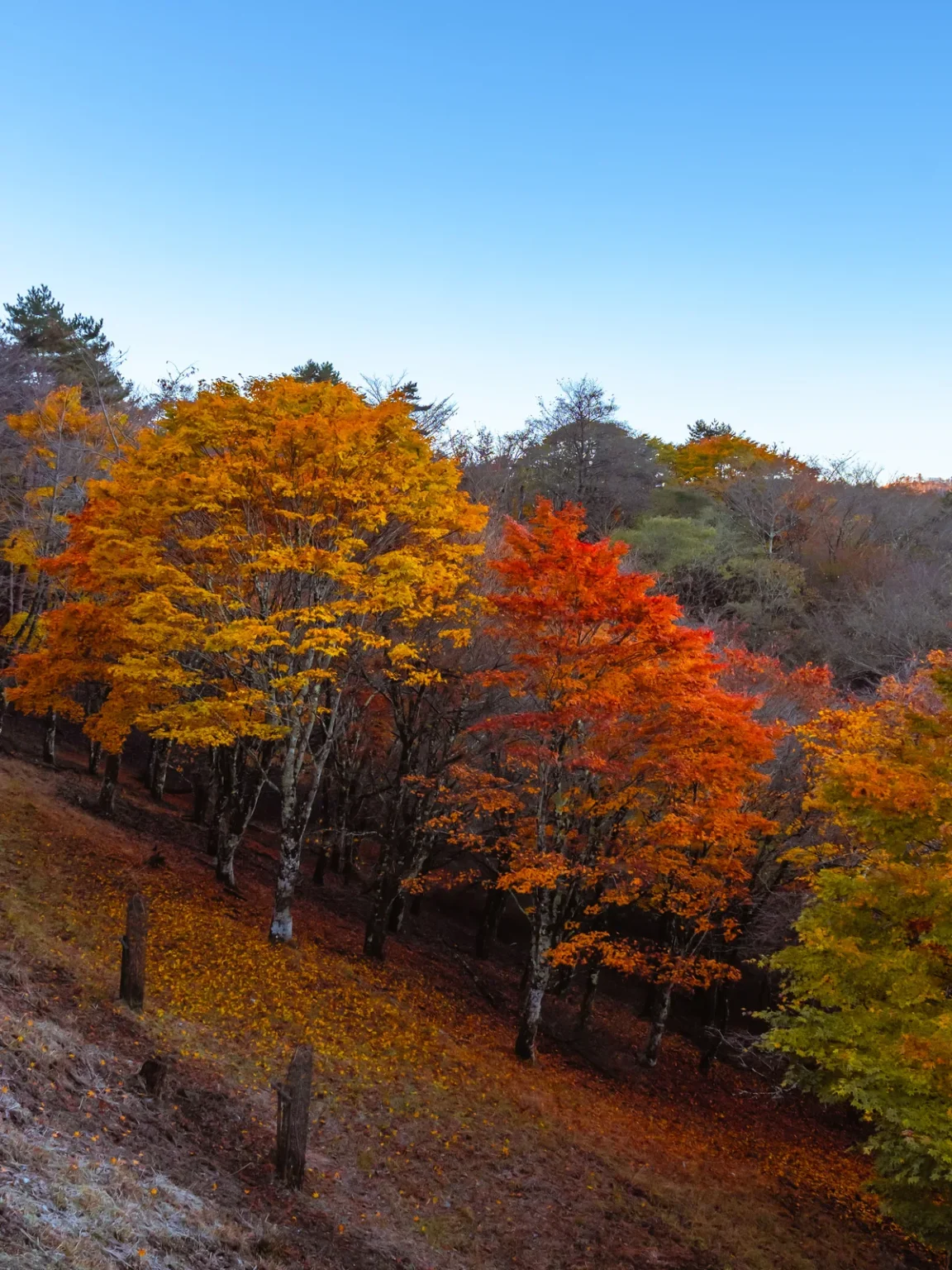
To me the leaves were starting to fall. The maples and other trees around the pass still had plenty of red, orange and yellow, and on the slope below there was already a carpet of fallen yellow leaves. The Oshino Tourism Association’s update posted the same day described the colour along the “autumn leaves corridor” at the SORAnoIRO terrace as at its best. Its 23 October update said that from the deck it was not there yet, though the trees along the way up were starting to turn, and that in 2025 the colour peaked around the first to second week of November.
What is the SORAnoIRO deck like?
A deck raised on steel legs over the slope, with railings along the edge and a set of wide steps. Yamanashi Prefecture’s tourism site says it opened as the Nijumagari Pass viewing terrace SORAnoIRO on 13 September 2022. On my visit there had been a frost: the handrails were frozen and the deck itself was slippery. I was wearing a down jacket.
Is the road to Nijumagari Pass hard to drive?
It has a lot of bends, and the prefecture describes it as narrow. I came up from the Oshino side. Please drive carefully, especially when you meet an oncoming car and have to pass each other.
For more on driving and winter conditions around the lakes, my Lake Yamanakako access guide covers the roads from Tokyo and the buses.
Where do you park, and is there a toilet?
There is a car park and a toilet at the pass. There is no bus to the top.
Parking
The car park is wide, and there were only two cars in it when I arrived. The prefecture’s tourism page lists “parking space” without a number. Parking charges are not mentioned on the official pages checked on 15 November 2026, so whether parking is free is not verified for this guide.
Toilet
There is a toilet at the pass. Step-free access and an accessible toilet have not been verified for this guide.
By car
The prefecture’s page gives about 35 minutes from Yamanakako IC on the Higashi-Fujigoko Road. My next photo after the pass, at Oshino Hakkai, is from 7:08 a.m.
By bus and on foot
The prefecture’s Gururi Fujisan route map says you cannot get to the pass by bus and suggests a taxi. The land ministry’s page gives a bus from Fujisan Station to the Uchino stop and then about 50 minutes on foot.
What to wear
I wore a down jacket. That day the Japan Meteorological Agency’s Kawaguchiko station, which is not at the pass, recorded a low of −0.6 °C (marked as based on incomplete data). The pass was frosty.
Diamond Fuji
The Oshino Tourism Association says you can see Diamond Fuji, the sun on Fuji’s summit, from here around the end of November and the beginning of January.
The prefecture’s route map says no bus goes to the pass. I came up by car, and went on to Oshino and Fujiyoshida by car the same morning.
Compare rental cars near Mt Fuji Japanese rental companies on RakutenWhat is the history of Nijumagari Pass?
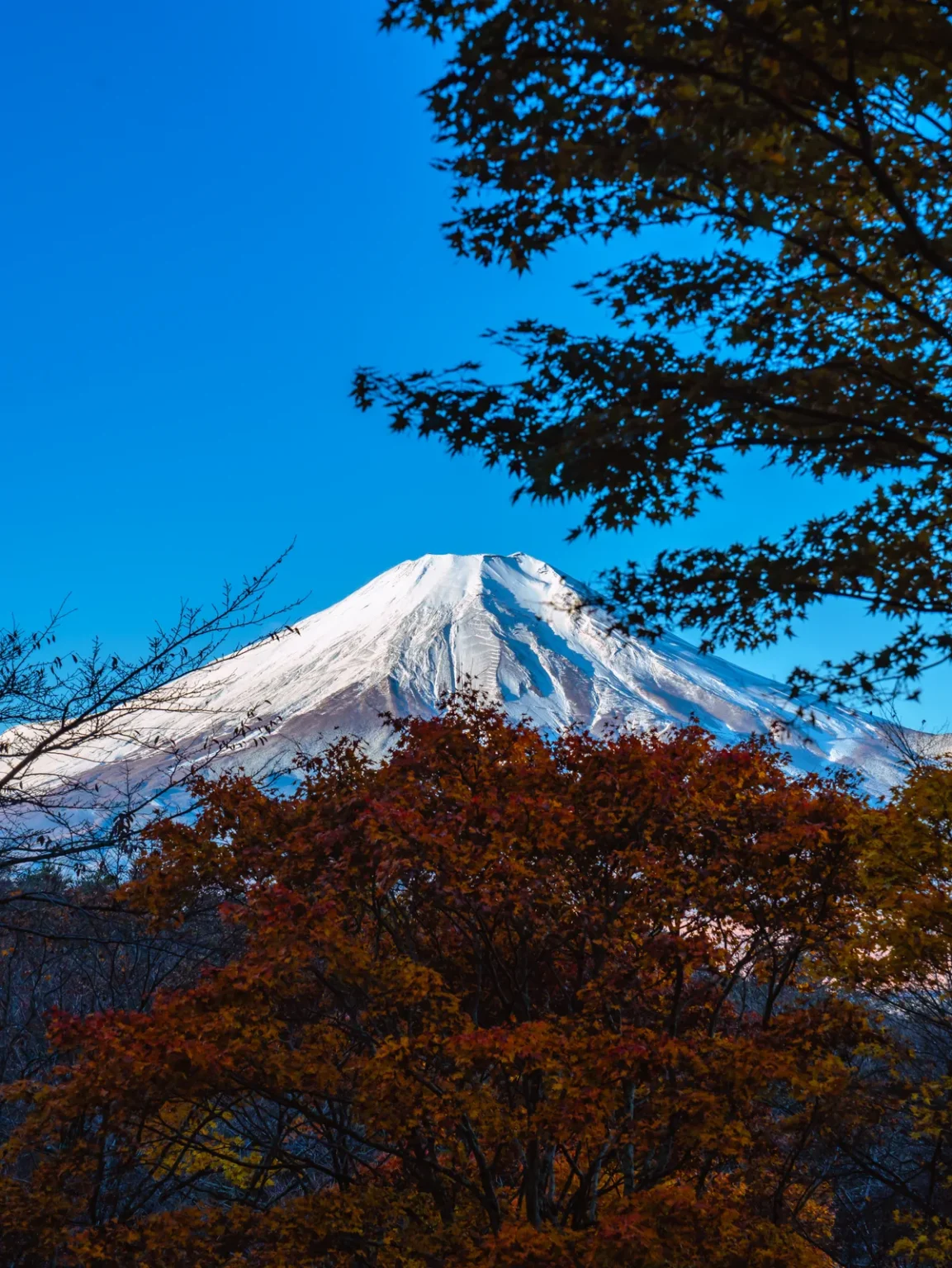
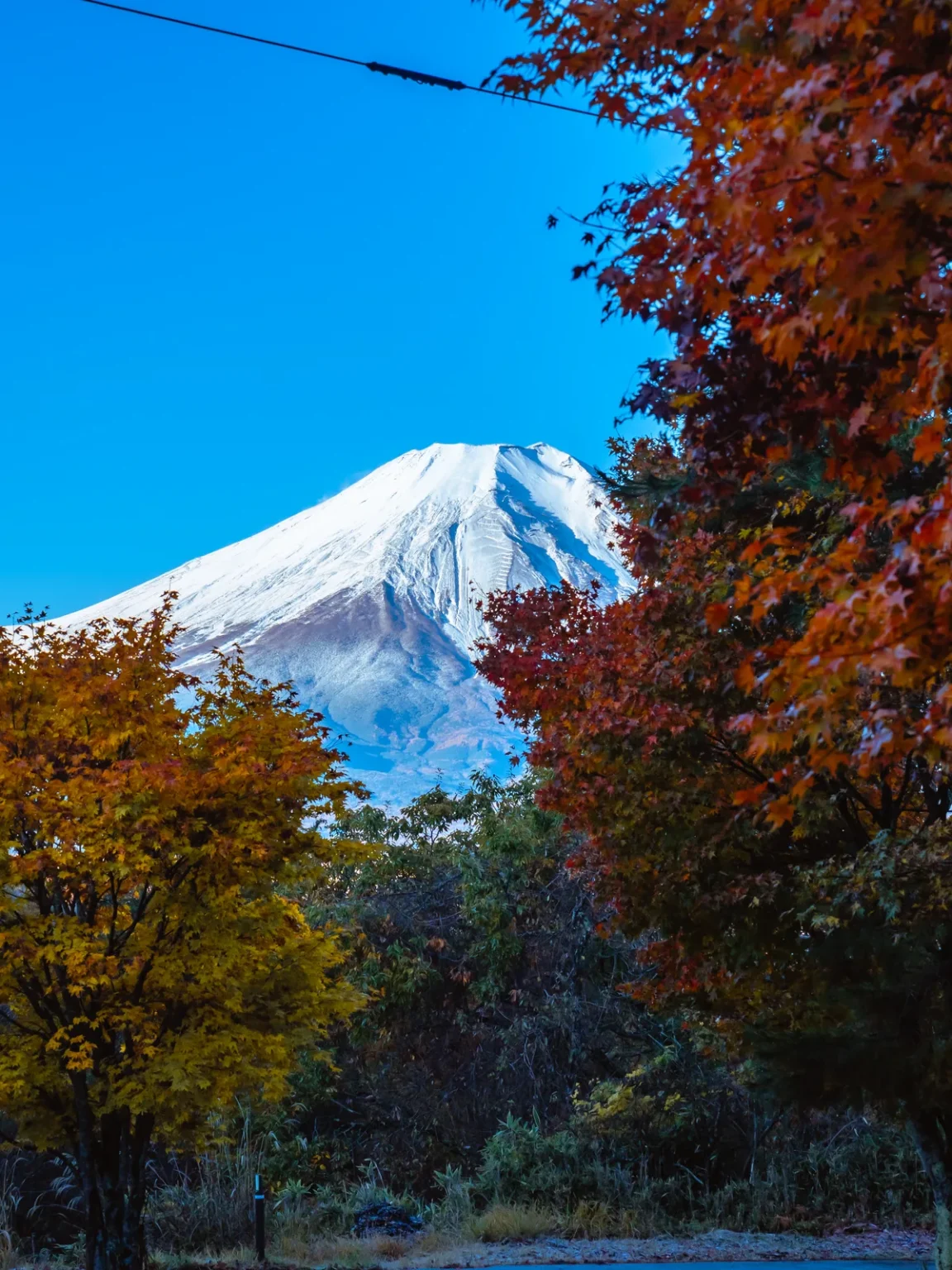
Oshino village’s page says the pass sits at the end of the hiking course over Mt Ishiwari and the neighbouring peaks (大出山・大平山・石割山), and has been crossed by hikers since long ago. As the name, “twenty bends”, suggests, the road is full of curves; now that a forest road has been built, you can simply drive up. The village and the prefecture both connect the view with the photographer Okada Kōyō (岡田紅陽), who loved and photographed Fuji from Oshino; through Okada’s work this view is known as “Oshino Fuji”.
The land ministry’s list of 100 views of Fuji from the Kantō region includes the view from the open ground at the pass, looking at Fuji rising over the Oshino basin, and says a ritual for the water god of Nijumagari Pass is held every June. The prefecture adds that the view is also on the New Fugaku Hyakkei and Fuji Hakkei lists. The SORAnoIRO deck itself is recent, from 2022.
In my photos there are small wooden posts in the grass on the slope below the deck, and a power line and pylon on one side of the view.
Making it part of a morning drive
My next photo after the pass, at Oshino Hakkai, is from 7:08. If you have time in Oshino later in the day, see my guides to two tofu shops there, Hakkai Tofu and Kadoya Tofu. For three more autumn stops, see my three quiet fall foliage spots; for the lakeside festival next door, my Yamanakako autumn leaves festival guide.
For a visit focused on the mountain views, check the Mt Fuji visibility forecast the evening before. For Diamond Fuji around the lake, see my Diamond Fuji spots at Lake Yamanaka, and for everything else around the mountain, start at my Mt Fuji guide.
Where to stay for an early start at the pass
Lake Yamanaka is where I live. If you want to base yourself by the lake, these are the places to compare.
Stays around Lake Yamanaka.
See Lake Yamanaka stays on Booking.com Compare Lake Yamanaka hotels on AgodaMore from my November 2026 autumn visits around Mt Fuji
Ginkgo trees beside Dallas Village (6 Nov) · Lake Yamanaka autumn leaves festival (6 Nov photos) · Oshino Hakkai (11 Nov) · Mt Fuji Radar Dome Museum (11 Nov) · Kaneyama Falls (11 Nov) · Birch-and-maple path near Michi-no-Eki Fujiyoshida (11 Nov) · Suwa-no-Mori Nature Park (11 Nov) · Ubuyagasaki (13 Nov) · Tenka-chaya, Misaka Pass (13 Nov) · When the leaves were reported at their best (calendar) · All ten spots compared (summary)
Nijumagari Pass: FAQ
Is there a fee for the SORAnoIRO terrace at Nijumagari Pass?
Not verified for this guide. Yamanashi Prefecture’s tourism page for the terrace, checked on 15 November 2026, gives no fee or opening hours, only that there is parking space.
Can you see the Southern Alps from Nijumagari Pass?
Yes, on a clear day. On 11 November 2026, Mt Fuji and snowy peaks of the Southern Alps fit in the same wide-angle frame from the pass, with a lot of snow on the Alps.
Is the road to Nijumagari Pass open in winter?
On 15 November 2026 the prefecture’s forest-road page listed no restriction on the Oshino village road up to the pass, but its general rules close forest roads in winter when ice or snow makes them unsafe. The road from the Tsuru side was closed for the time being because of falling rocks.
Can I get to Nijumagari Pass by bus?
Not to the top. The prefecture’s route map says no bus goes to the pass and suggests a taxi; the land ministry gives the Uchino bus stop and about 50 minutes on foot.
Was there a sea of clouds on 11 November 2026?
No. There was only thin mist lying low over the town in the valley.
Were the autumn leaves good at Nijumagari Pass in mid-November?
On 11 November 2026 they were starting to fall when I was there, with red, orange and yellow still on the trees. The Oshino Tourism Association’s update that day called the leaves at the terrace at their best.
Sources
My own visit and the official pages behind the facts above (checked 15 November 2026)
- My own visit on the morning of 11 November 2026; photos taken 6:33–6:51 a.m. (camera times).
- Oshino village: Oshino’s mountains (Nijumagari Pass)
- Oshino Tourism Association: Autumn leaves update, 11 November 2026; Autumn leaves update, 23 October 2026; Fuji view points
- Yamanashi Tourism Organization: Nijumagari Pass viewing terrace SORAnoIRO; Gururi Fujisan route map, Oshino (PDF)
- Yamanashi Prefecture, forest roads: Oshino village forest road Shishidome line; Prefectural forest road Shishidome line (Tsuru side); General notes on forest roads
- Yamanashi Prefecture: Register of public viewpoints, 2 December 2022 (PDF)
- Ministry of Land, Infrastructure, Transport and Tourism, Kanto Regional Development Bureau: Kanto’s 100 views of Fuji, no. 117: Fuji from Oshino
- National Astronomical Observatory of Japan: Sunrise and sunset in Kōfu, November 2026
- Japan Meteorological Agency: Kawaguchiko daily data, November 2026
Some links above are affiliate links — they cost you nothing extra and help keep this site going.
Join travelers discovering Japan's hidden side
Weekly dispatches from off-the-beaten-path Japan — spots and stories you won't find in guidebooks.
No spam. Unsubscribe anytime.
Welcome aboard!
You're in. See you in your inbox soon.