
Japan · Yamanashi · North foot of Mt Fuji · Autumn leaves
These are ten places around the north foot of Mt Fuji where I photographed autumn leaves on 6, 11 and 13 November 2026, with the colour and the crowd I found at each. For visitors from overseas, my top three are a birch-and-maple path near Michi-no-Eki Fujiyoshida and a row of ginkgo trees beside Dallas Village, neither crowded when I went, and Ubuyagasaki, which was crowded but gives the classic Mt Fuji-and-autumn-leaves photo.
I’m Nobu, and I live in Yamanakako village. Each of these ten places has its own guide on this site, with all the photos and the official details. This page is the short version for choosing between them: when I was there, what the colour was like, how busy it was, one practical line, and a link to the full guide. Two of them, the birch path and the ginkgo trees, I’m keeping vague on purpose, so there are no maps for those.
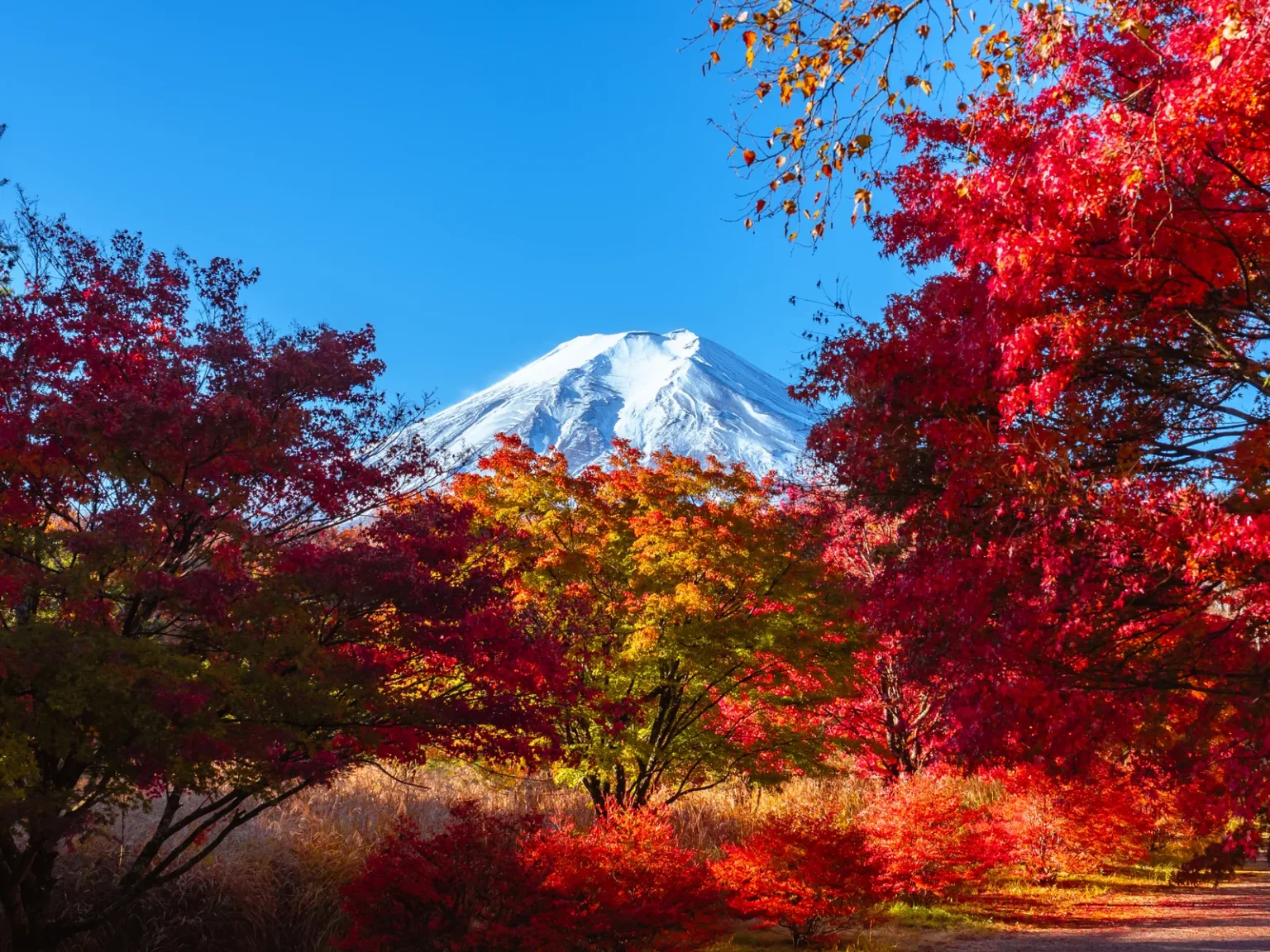
Which Mt Fuji autumn leaves spots would I pick?
If a friend from overseas asked me which of these ten to see, I would give them three. Two because they weren’t crowded when I went, and one because it gives the classic Mt Fuji-and-autumn-leaves photo, crowd or not.
1. The birch-and-maple path
Near Michi-no-Eki Fujiyoshida, 11 November 2026, 7:57–8:09 a.m. The maples were at their best. Plenty of cars use the road beside it, but almost everyone drives straight past, and there was hardly anyone on foot. Birch-and-maple path guide
2. The ginkgo beside Dallas Village
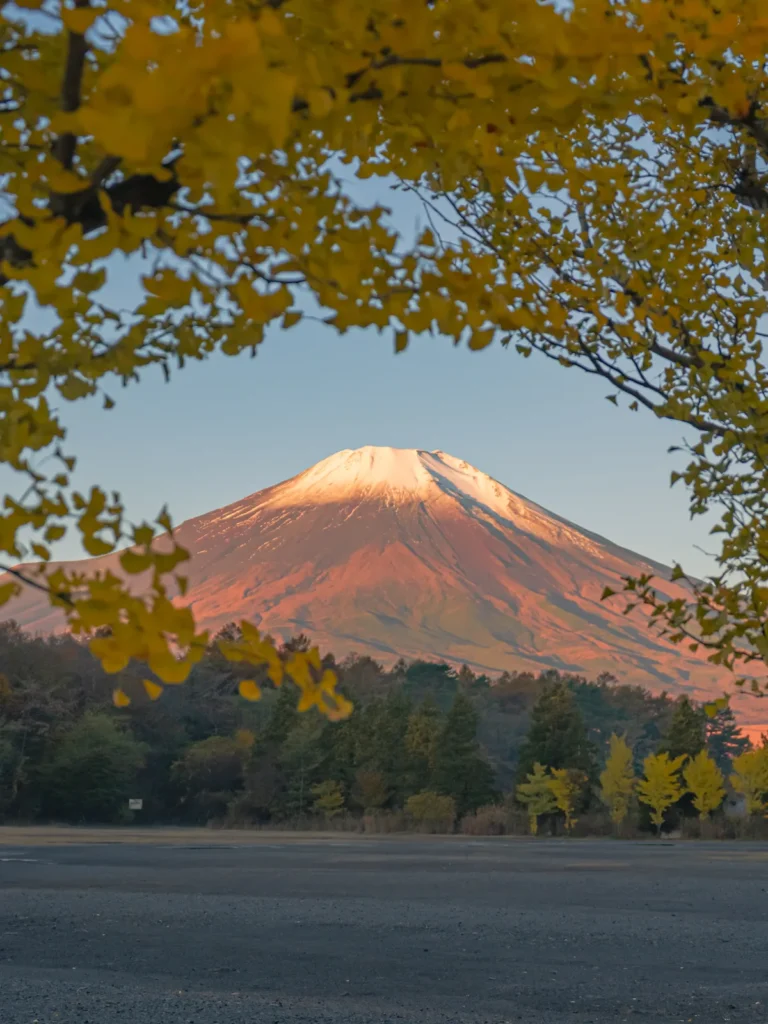
Yamanakako village, 6 November 2026, 6:15–7:30 a.m. The ginkgo were at their best, Mt Fuji turned red in the dawn light from about 6:10 to 6:30, and four or five other people were taking photos. Lake Yamanaka ginkgo guide
3. Ubuyagasaki
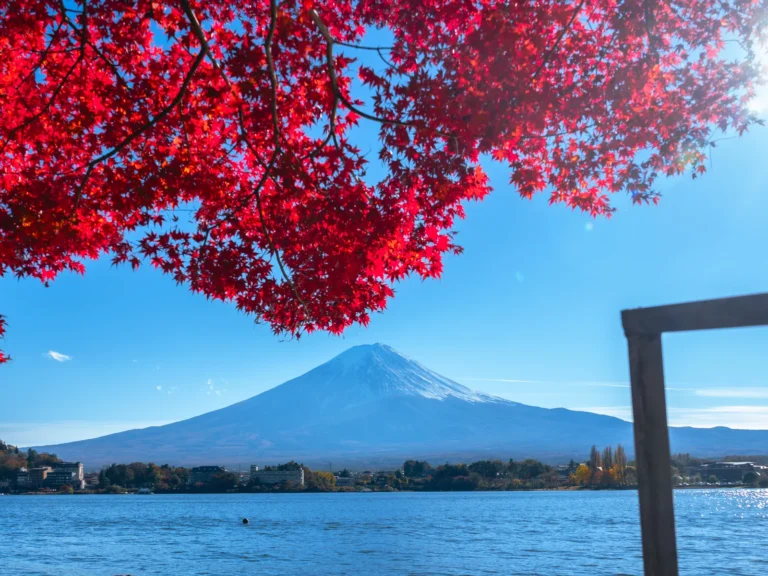
Lake Kawaguchiko, 13 November 2026, 1:53–1:59 p.m. The maples were at their peak and it was very crowded, but this is where you get the frame that says Mt Fuji and autumn leaves. Ubuyagasaki guide
How do the ten Mt Fuji autumn leaves spots compare?
Here is each place on the day I went, in my own words. Colour and people describe my observations on the dates shown (photo time ranges, not continuous stays), not the season and not next year.
| Spot and town | On my visit: date, colour, crowd |
|---|---|
| Ginkgo beside Dallas Village Yamanakako | 6 Nov, 6:15–7:30 a.m. Colour: At its best Crowd: 4–5 other people taking photos |
| Yamanakako autumn leaves festival shore Yamanakako | 6 Nov, 7:40–7:51 a.m. Colour: At its peak Crowd: Hardly anyone |
| Nijumagari Pass Oshino | 11 Nov, 6:33–6:51 a.m. Colour: Starting to fall Crowd: Two other people |
| Oshino Hakkai Oshino | 11 Nov, 7:08–7:11 a.m. Colour: At its best Crowd: Hardly anyone about |
| Mt Fuji Radar Dome Museum Fujiyoshida | 11 Nov, 7:34–7:50 a.m. Colour: At its best Crowd: Car park not crowded |
| Kaneyama Falls Fujiyoshida | 11 Nov, 7:39–7:46 a.m. Colour: Just starting Crowd: Few people |
| Birch-and-maple path Fujiyoshida | 11 Nov, 7:57–8:09 a.m. Colour: At its best Crowd: Hardly anyone on foot |
| Suwa-no-Mori Nature Park Fujiyoshida | 11 Nov, 8:16–8:21 a.m. Colour: Starting to fall People observed: a caretaker on the lawn and a group farther off |
| Ubuyagasaki Fujikawaguchiko | 13 Nov, 1:53–1:59 p.m. Colour: At its peak Crowd: Very crowded |
| Tenka-chaya, Misaka Pass Fujikawaguchiko | 13 Nov, 2:19–2:45 p.m. Colour: Starting to fall Crowd: Not crowded |
6 November 2026: two stops at Lake Yamanaka
Both of these were on Friday 6 November, at Lake Yamanaka, where I live.
Ginkgo beside Dallas Village
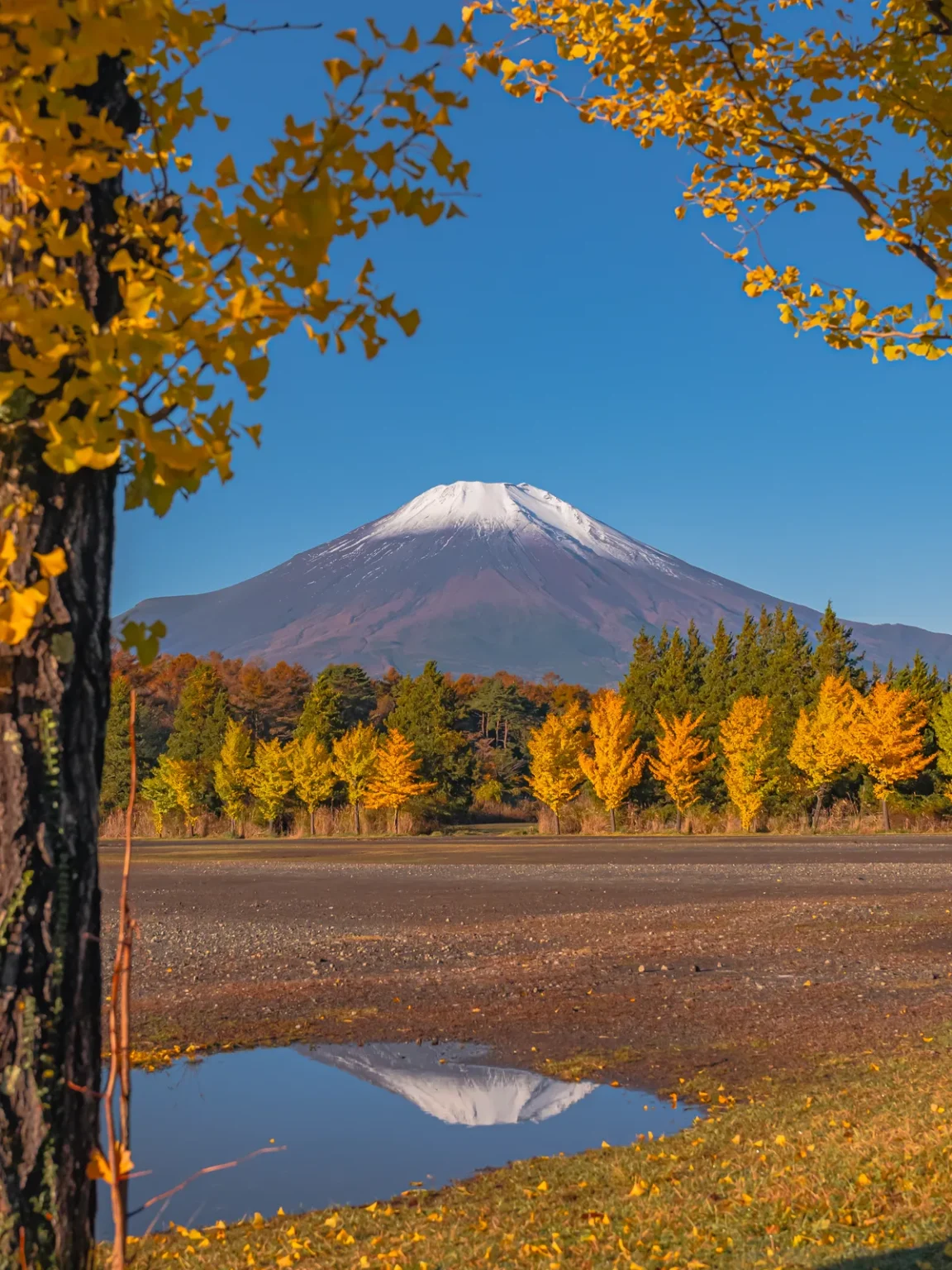
These ginkgo trees are on my dog-walking route. Of the ten places I visited this autumn, this is one of my three recommendations for overseas visitors. My photos there were taken between 6:15 and 7:30 a.m., the ginkgo were at their best, and Mt Fuji turned red in the dawn light from about 6:10 to 6:30. It had rained, and the scene I remember most is the puddles: blue sky, Mt Fuji and the ginkgo all reflected in the water. Four or five other people were taking photos. I wore a down jacket.
Practical: on this visit I parked at Kirara (山中湖交流プラザきらら); pre-dawn access and payment arrangements there were not confirmed for that guide. Beside an empty lot next to Dallas Village is all I’m saying about where the trees are, and there is no map. Read the Lake Yamanaka ginkgo guide.
The Yamanakako autumn leaves festival shore
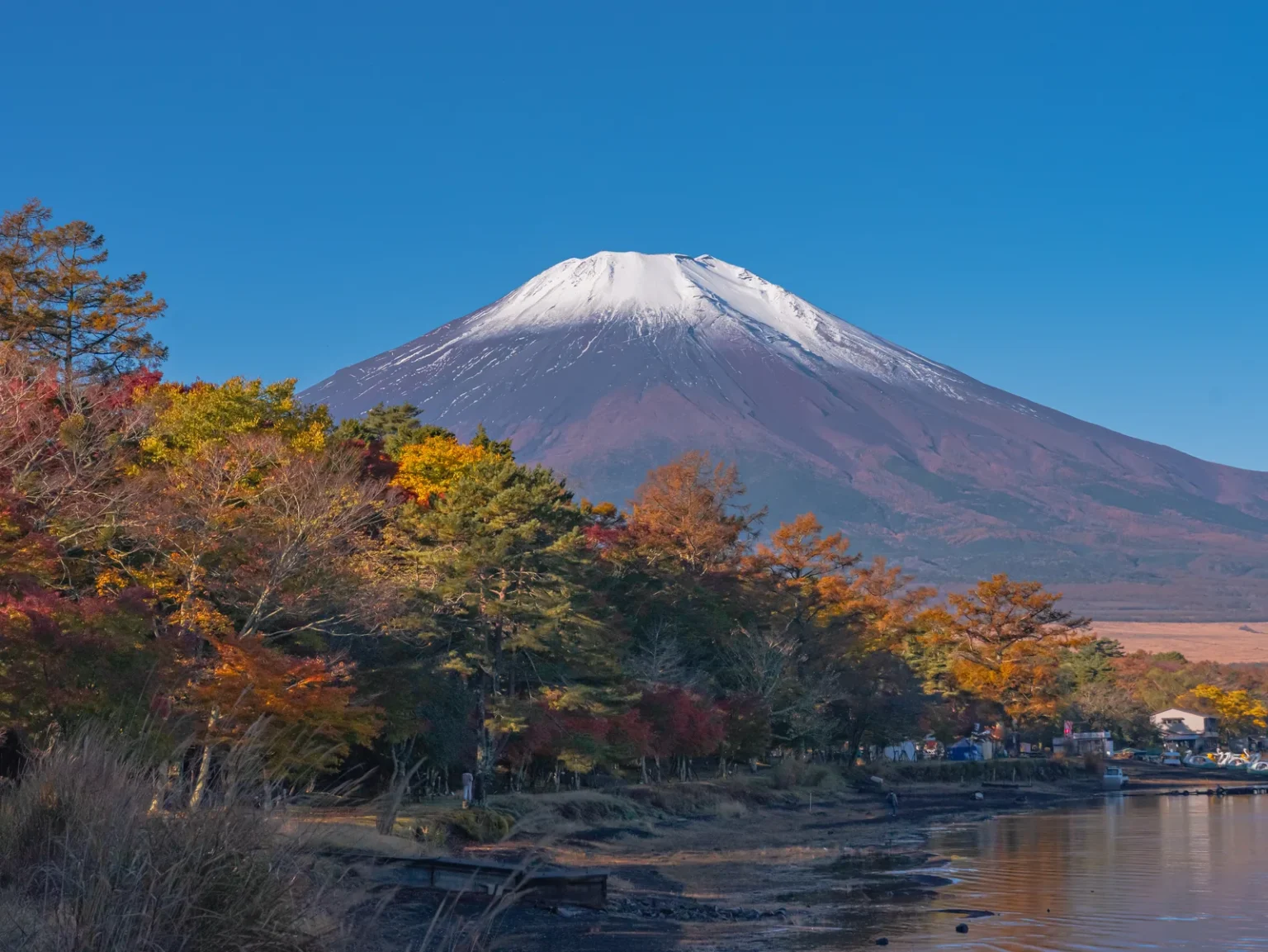
Asahigaoka Lakeside Green Park, the venue of the Yamanakako autumn leaves festival. My photos there were taken between 7:40 and 7:51 a.m. There was hardly anyone there that morning, the maples were at their peak to my eye, and when the sun broke through, it was beautiful. I photographed Mt Fuji across the water from the shore below the Yuyake no Nagisa observation deck. I didn’t go back for the evening light-up.
Practical: I parked a little away from the venue; the Yamanakako Tourism Association’s 2026 venue map marked free car parks around the park. Read the Yamanakako autumn leaves festival guide.
11 November 2026: six places around Fujiyoshida and Oshino
On Wednesday 11 November I visited six of these places, in this order: Nijumagari Pass, Oshino Hakkai, the Mt Fuji Radar Dome Museum, Kaneyama Falls, the birch-and-maple path and Suwa-no-Mori Nature Park. After Kaneyama Falls, I photographed the Radar Dome again before continuing to the birch-and-maple path. I went by car.
Nijumagari Pass
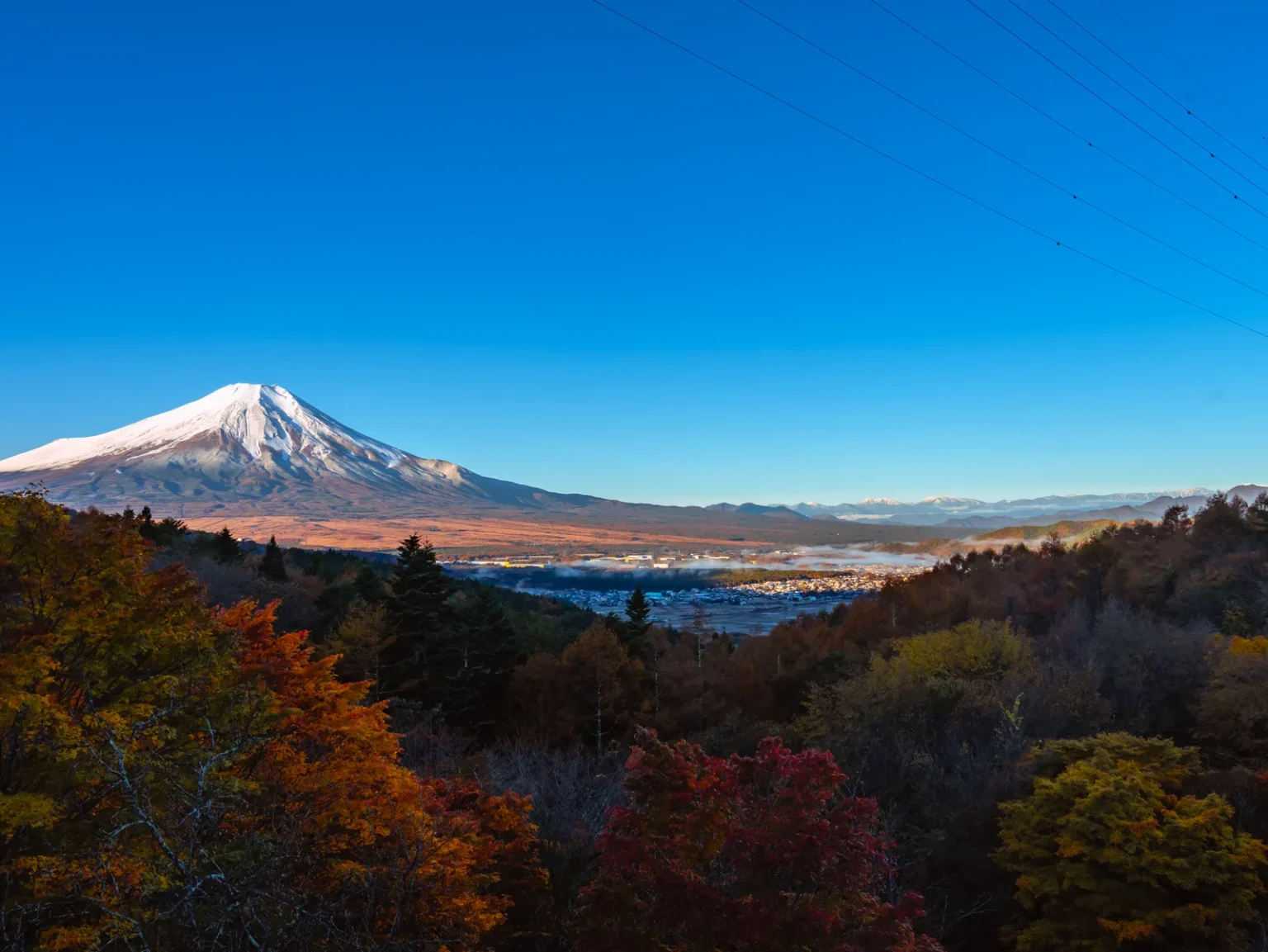
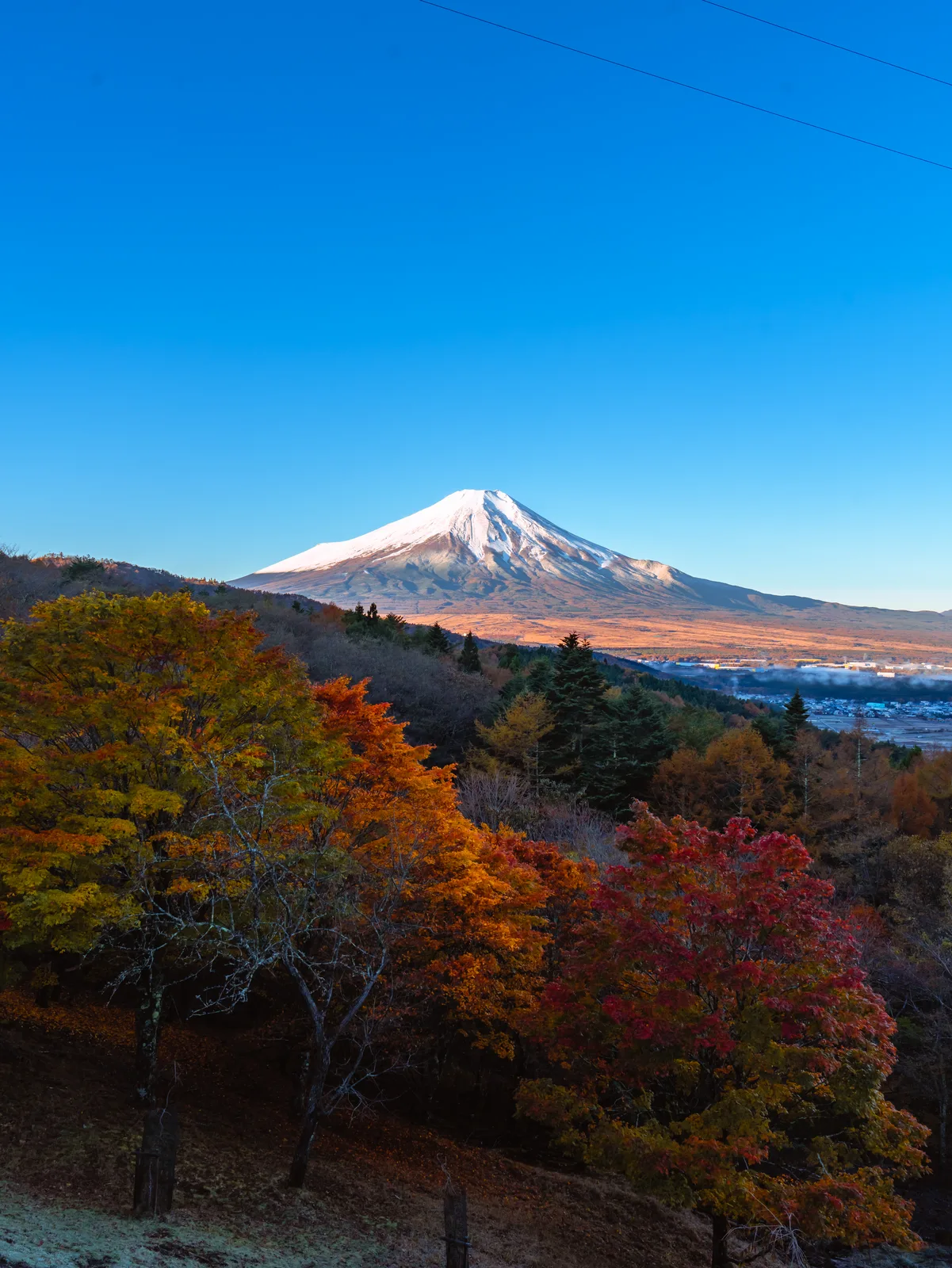
A viewpoint above Oshino village with a viewing deck, SORAnoIRO, facing Mt Fuji. I came up after sunrise, and my photos are from 6:33 to 6:51 a.m. The leaves were starting to fall, there had been a frost, and apart from me there were two other people. I didn’t know the Southern Alps could be seen from here as well; they looked really beautiful, with a lot of snow on them.
Practical: there is a car park and a toilet at the pass; the prefecture’s route map says no bus goes to the top. Read the Nijumagari Pass guide.
Oshino Hakkai
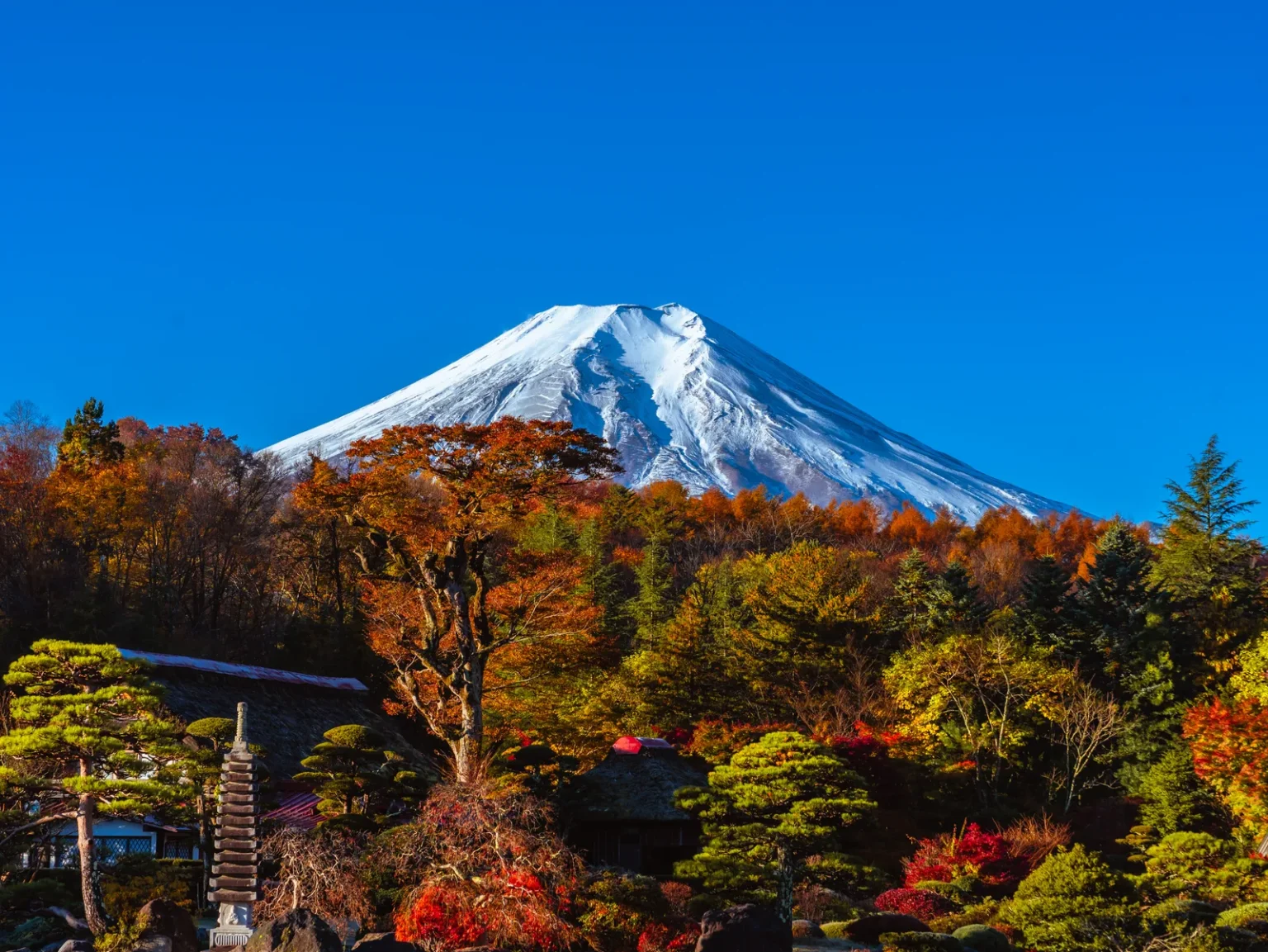
The eight spring-fed ponds of Oshino village. I went round the ponds, but the only place I photographed was a thatched garden with a water wheel, Hakkai Teien Hikobei Yashiki, from outside without entering; those photos are from 7:08 to 7:11 a.m. Hardly anyone was about, and the colour was at its best. For me the Japanese garden was superb. You can’t see the whole of Mt Fuji from where I stood, only the snowy top, but it is a very beautiful place.
Practical: Oshino Village gives about 25 minutes by bus from Fujisan Station; the car parks round the ponds are privately run, and fees vary. Read the Oshino Hakkai guide.
Mt Fuji Radar Dome Museum
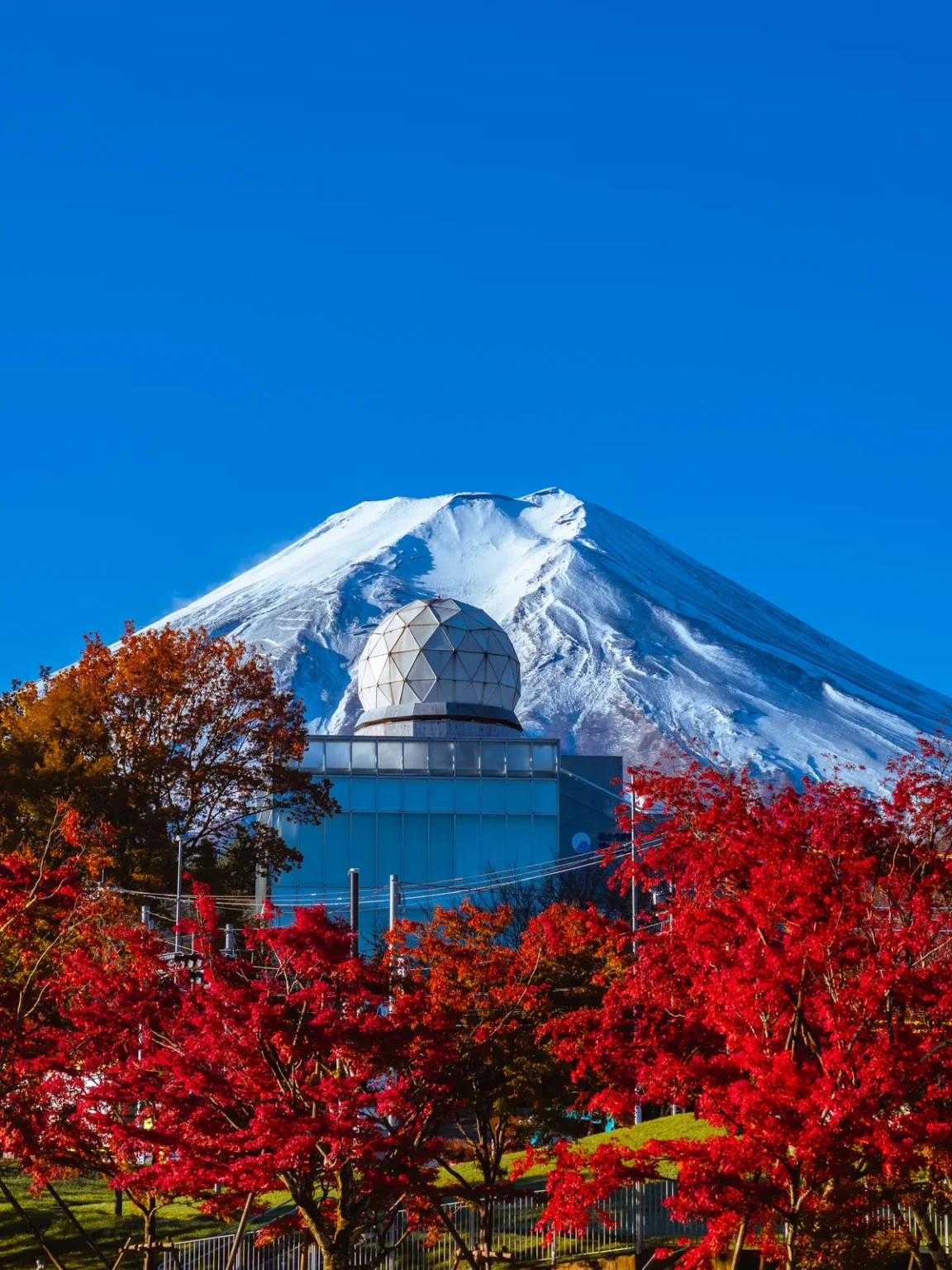
At Michi-no-Eki Fujiyoshida; the museum displays the original dome from Mt Fuji’s summit weather radar. My photos here are from 7:34 to 7:50 a.m. The maples were at their best. I only saw the museum from outside. The zoomed-in photographs looked striking.
Practical: the museum is open 9:00–17:00 (adults ¥630); the usual closing days in the city’s guide are Tuesdays (not public holidays) and 29 December to 1 January. I parked at the Fujisan Museum / Michi-no-Eki Fujiyoshida No. 2 car park, and it was not crowded. The michi-no-eki is also where I fill up on Mt Fuji spring water, about once a week. Read the Radar Dome guide.
Kaneyama Falls
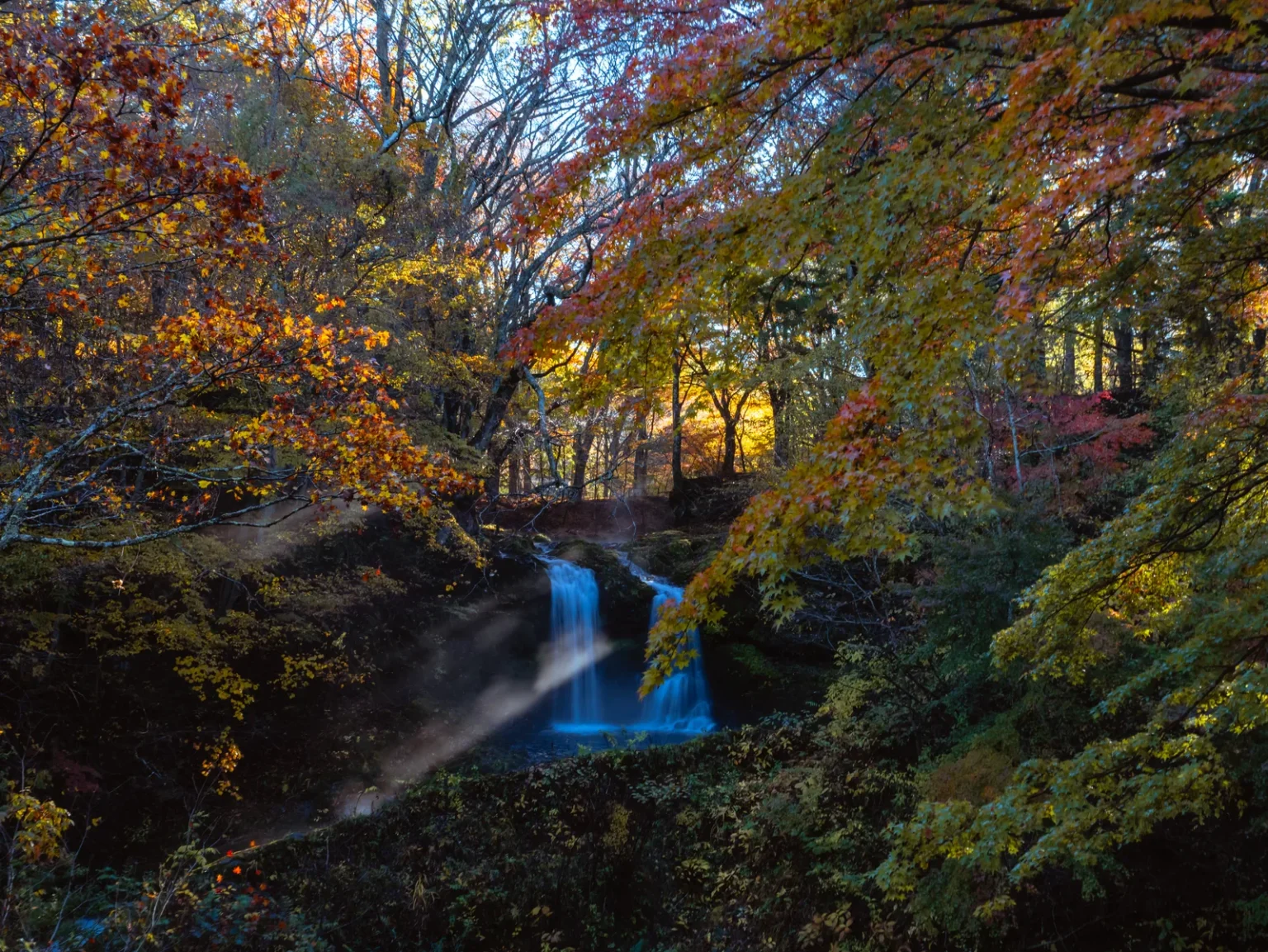
A double waterfall in Fujiyoshida, opposite the Fujisan Museum. My photos are from 7:39 to 7:46 a.m. To me it felt like the colour was only just beginning: the maples over the viewing deck were already red and orange, the trees right around the falls still mostly green and yellow. There were few people, and the falls with the autumn leaves around them were lovely. Several frames show a pale beam of light in the spray.
Practical: I parked at the Fujisan Museum / Michi-no-Eki Fujiyoshida No. 2 car park. By bus, the Fujisan Museum Park-mae stop is about 15 minutes from Fujisan Station. Read the Kaneyama Falls guide.
The birch-and-maple path
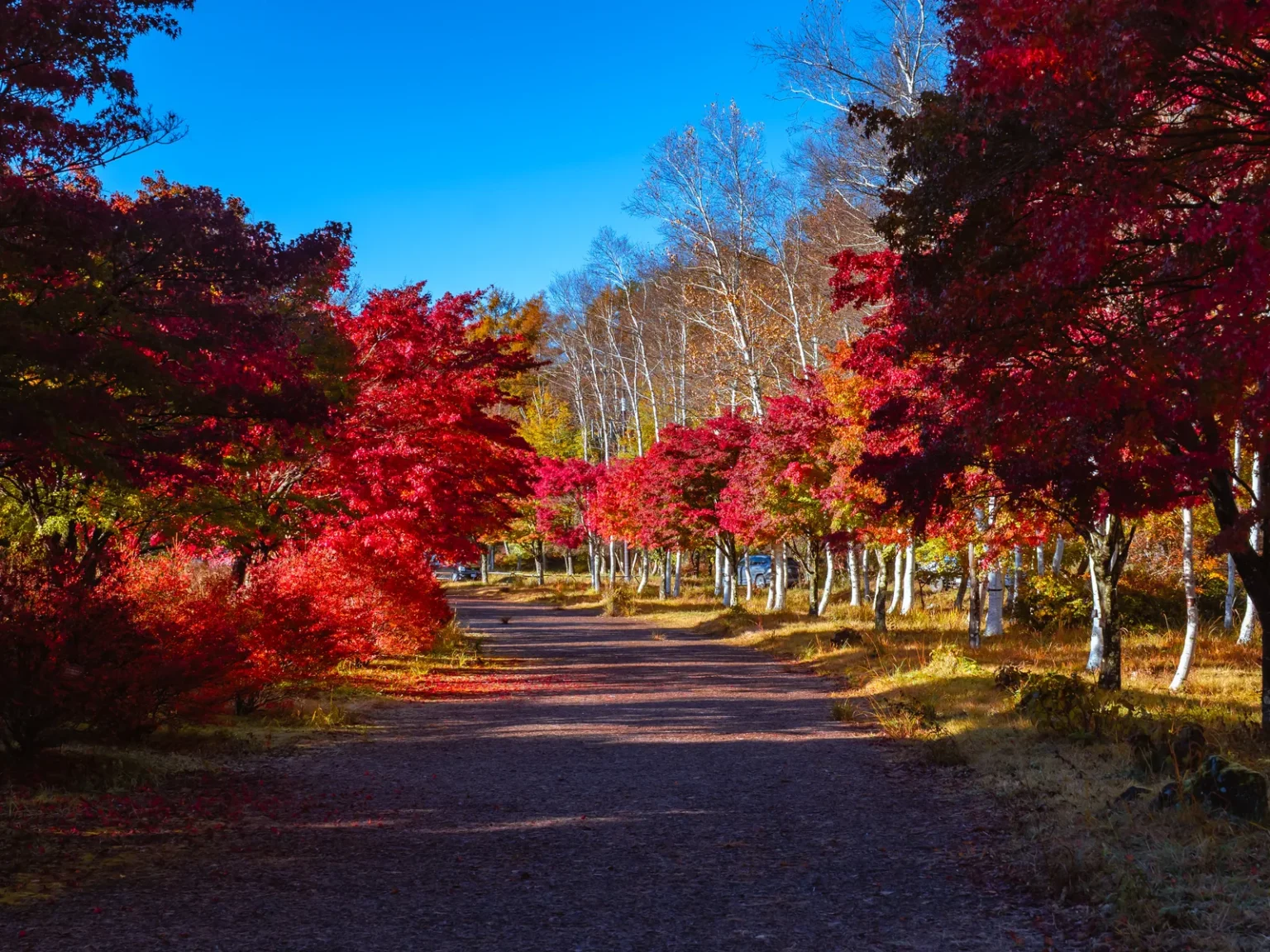
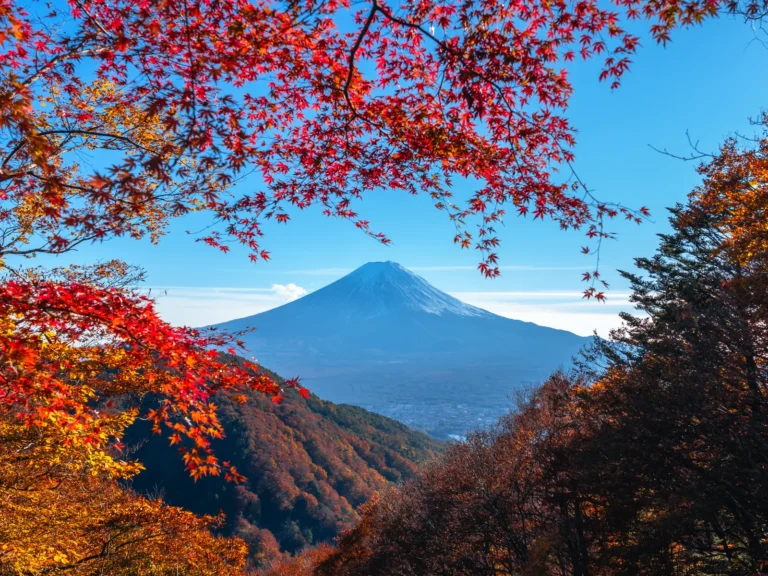
A walking path near Michi-no-Eki Fujiyoshida, lined with red maples and white birches, with Mt Fuji at the end of it. My photos of the path are from 7:57 to 8:09 a.m. The maples were at their best. Lots of cars use the road beside it, but almost everyone drives straight past. There was hardly anyone on foot, and yet it was a wonderful spot for autumn leaves.
Practical: I parked at the Michi-no-Eki Fujiyoshida car park, which the city’s guide lists as free. Take your photos from the walking path, not from a car stopped on the road. Read the birch-and-maple path guide.
Suwa-no-Mori Nature Park
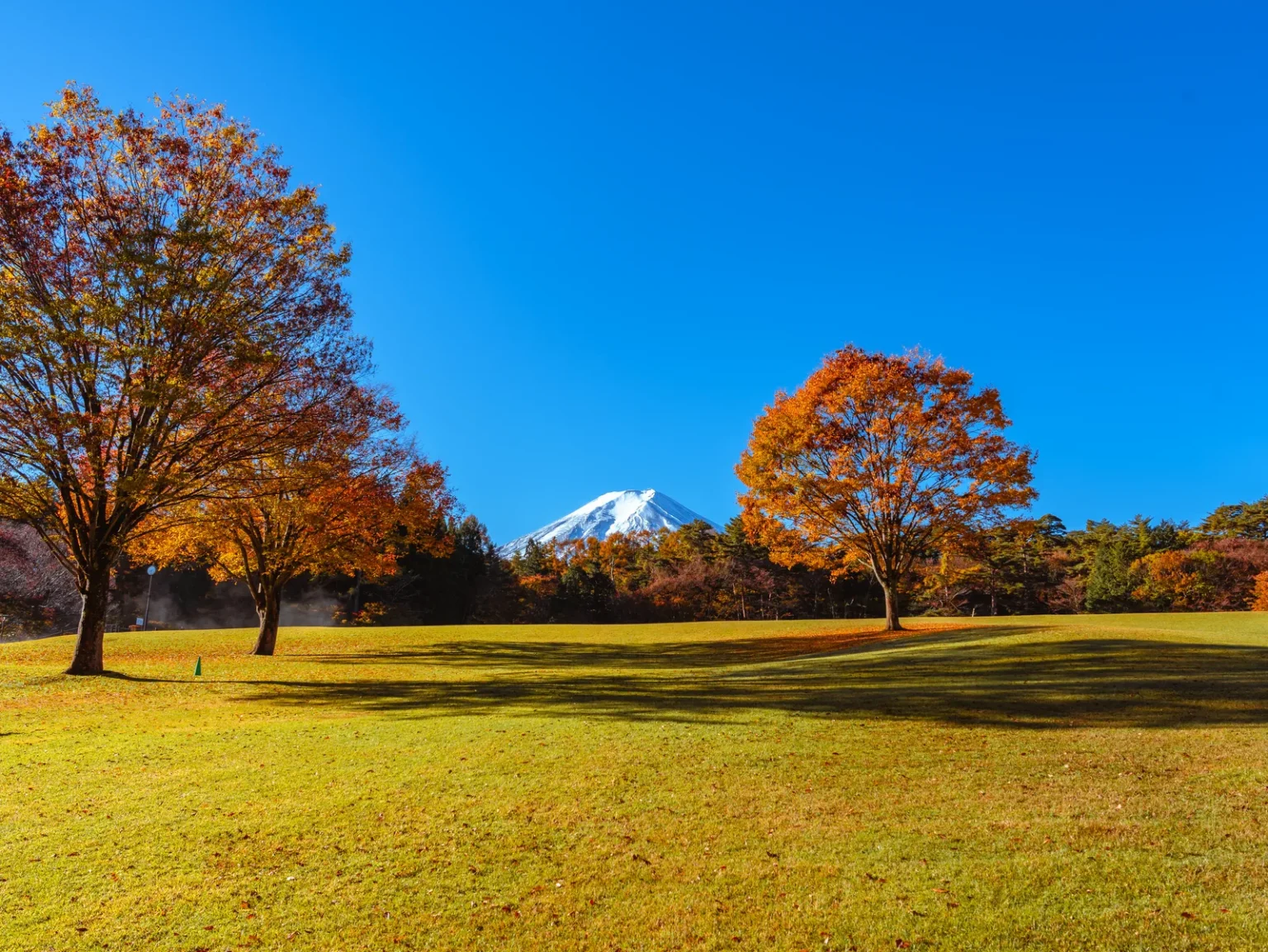
A city park in Fujiyoshida with a wide lawn facing Mt Fuji. My photos are from 8:16 to 8:21 a.m., of the lawn straight in front of you as you get out of the car park. The city lists November opening hours as 8:30–17:00; my photos were taken before that, and early car-park access was not confirmed. The leaves had started to fall. The person crossing the lawn in my photos was the park’s caretaker, and there was a group with tables and chairs further off. I could hear wild birds, and there was no noise. To me it is a place to take your time with a wide lawn and Mt Fuji in front of you.
Practical: Fujiyoshida’s tourist guide lists free parking for 40 cars; there are toilets. I saw no benches on my visit; I think lying on the grass or bringing an outdoor chair is the way to enjoy it. Read the Suwa-no-Mori Nature Park guide.
13 November 2026: two places on the Kawaguchiko side
Both of these are in Fujikawaguchiko town, and I photographed both on the afternoon of Friday 13 November.
Ubuyagasaki
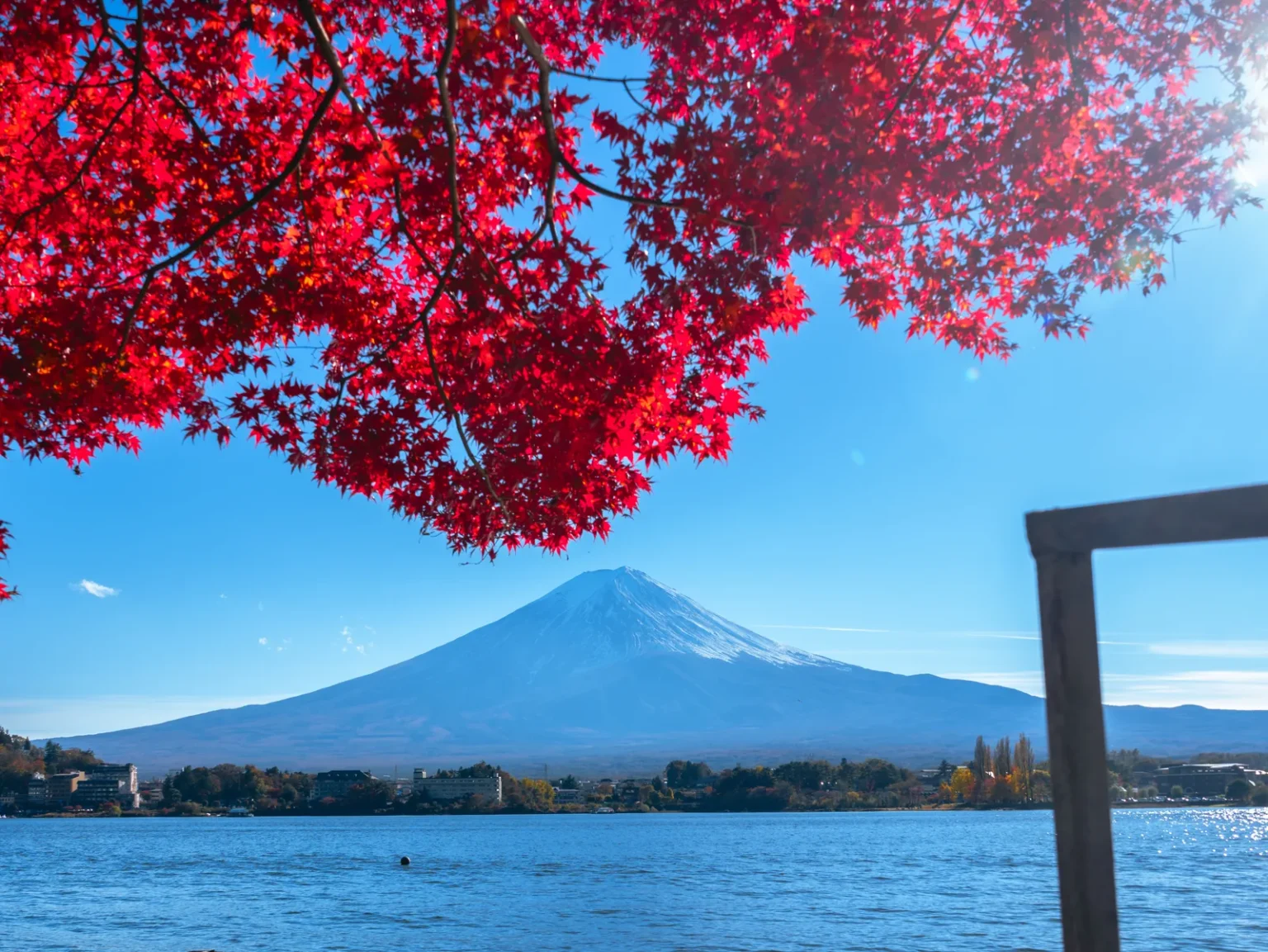
A cape on Lake Kawaguchiko where red maples hang over the water with Mt Fuji across the lake. My photos are from 1:53 to 1:59 p.m., and the maples were at their peak. It was very crowded on my 13 November afternoon visit: there were far too many people, and it was hard going. There was no queue: everyone competed for the shooting spots, and as soon as one opened up, the next person stepped in.
You can’t go onto the wooden pier. In my photos it is a frame of bare beams standing in the water, and I photographed it from the shore.
Practical: the Red-Line sightseeing bus reaches the Ubuya-mae stop (stop 13) 16 minutes from Kawaguchiko Station on Fujikyu’s April 2026 timetable; the prefecture’s page lists no car park. Read the Ubuyagasaki guide.
Tenka-chaya, Misaka Pass
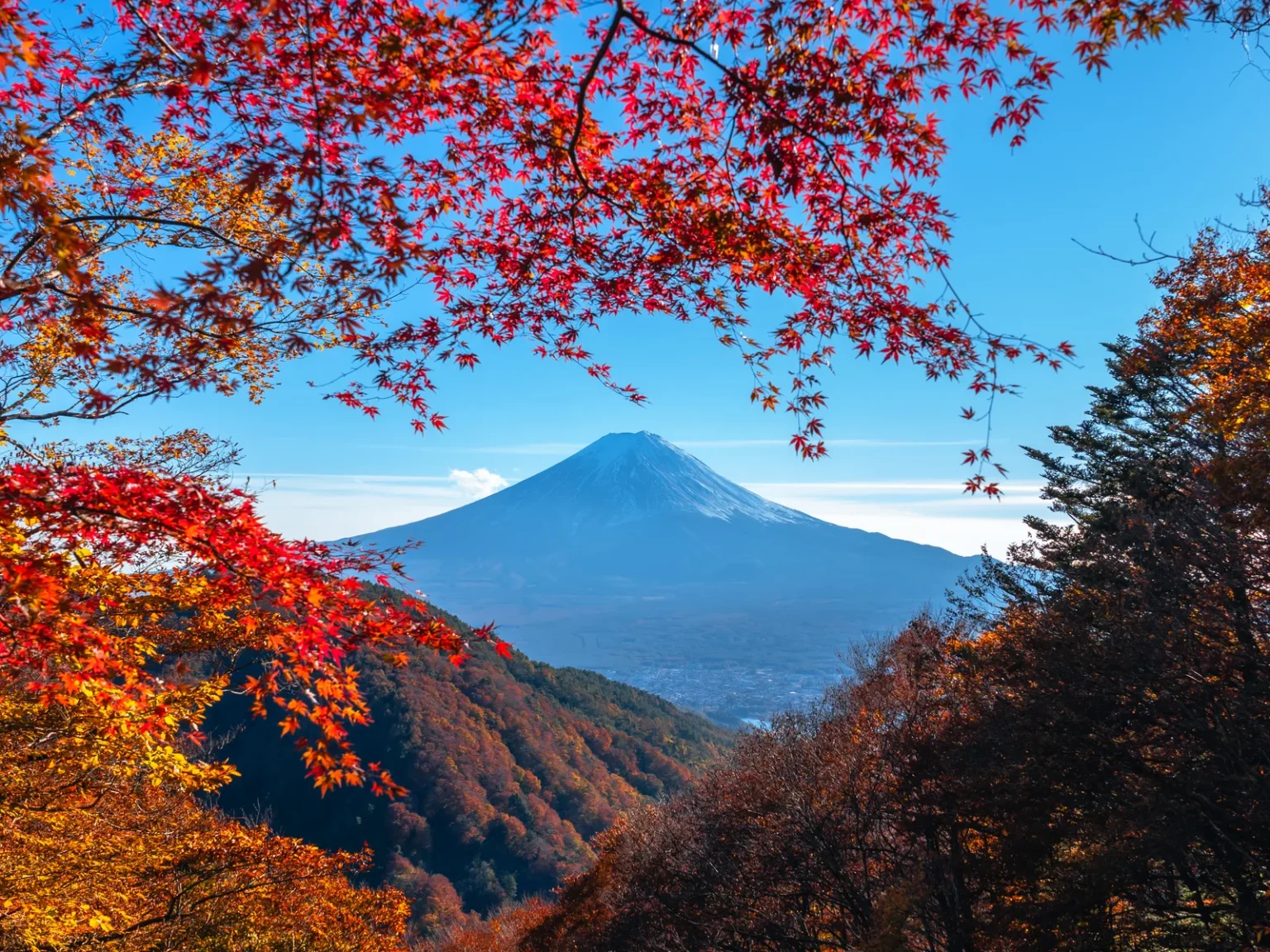
A wooden teahouse on the old Misaka Pass road above Lake Kawaguchiko, where Dazai Osamu stayed in 1938. My photos are from 2:19 to 2:45 p.m. The leaves were starting to fall, to me the view was overwhelming, and it was not crowded. I went in and had hōtō, and walked up to the Dazai Osamu monument. One thing I was a little sorry to see: some trees had been cut down.
Practical: the teahouse lists 10:00–16:00 and parking for 10 cars. Fujikyu’s sheet (revised 7 April 2025) shows one morning bus up, leaving Kawaguchiko Station at 9:50; it arrives at 10:18 and the return also leaves at 10:18, with no later bus down, so arrange your return before travelling; the teahouse says the bus does not run in winter, and the prefecture says the road may be impassable in winter because of snow. Read the Tenka-chaya guide.
When were the autumn leaves at their best this year?
On my visits the colour was at its best on 6 November at Lake Yamanaka and on 11 November at Oshino Hakkai, the Radar Dome and the birch-and-maple path, and at its peak at Ubuyagasaki on 13 November. On 11 and 13 November it was starting to fall at Nijumagari Pass, Suwa-no-Mori and Tenka-chaya, and on 11 November it was only just starting at Kaneyama Falls. Across the places I visited this autumn, the timing felt about the same as usual to me, and on 14 November Lake Yamanaka looked at its best to me.
The official pages say similar things in their own words. Fujiyoshida’s festival page says the city, being high, gets its autumn colour earlier than the area around it, from late October to early November each year. The Fujikawaguchiko Tourism Association’s festival page puts the height of the colour by Lake Kawaguchiko in early to mid November. None of this is a forecast for next year. For more Mt Fuji fall foliage, my three quiet fall foliage spots covers larch on the mountain’s flank, Kaneyama Falls and the Taro and Jiro Falls in Tsuru, and my Kawaguchiko autumn leaves festival guide covers the Momiji Corridor festival.
My Mt Fuji visibility forecast page covers checking whether the mountain is likely to be visible.
Can you see these autumn leaves without a car?
Some of them, yes. Each guide gives the bus details; this is the short version from those pages.
By bus from Fujisan Station
Oshino Hakkai (about 25 minutes, Oshino Village), Fujisan Museum Park-mae for Kaneyama Falls (about 15 minutes, the museum), and the 浅間神社前 stop for Suwa-no-Mori (about 6 minutes, then about 15 minutes on foot, the city’s tourist guide).
By bus from Kawaguchiko Station
Ubuyagasaki on the Red-Line sightseeing bus (16 minutes to Ubuya-mae, Fujikyu, April 2026). Tenka-chaya has one morning bus up on the Fujikyu sheet checked for that guide (arriving 10:18, with the only return also at 10:18), and none in winter, the teahouse says.
No bus to the top
Nijumagari Pass: the prefecture’s route map says no bus goes to the pass and suggests a taxi.
I went by car on all three days, and on 11 November that took in six of these places. If you need one for the north side of Mt Fuji, compare rental cars here.
Compare rental cars near Mt Fuji Japanese rental companies on RakutenComing from Tokyo, the Tokyo to Kawaguchiko guide covers the trains and buses.
Where to stay for these Mt Fuji autumn leaves spots
The ten split into three groups by town: Fujikawaguchiko (Ubuyagasaki, Tenka-chaya), Fujiyoshida and Oshino (the six from 11 November), and Yamanakako (the ginkgo and the festival shore). My Kawaguchiko vs Fujiyoshida comparison sets out the trade-offs on that side; Lake Yamanaka is where I live.
If you want to base yourself by one of the lakes, compare stays there.
See Lake Kawaguchiko stays on Booking.com See Lake Yamanaka stays on Booking.com Compare Lake Yamanaka hotels on AgodaWhen comparing Mt Fuji day tours, check whether the places you want are included: browse Mt Fuji day tours on Klook. For everything else around the mountain, start at my Mt Fuji guide.
Mt Fuji autumn leaves spots: FAQ
Which Mt Fuji autumn leaves spot would you recommend most?
My top three for visitors from overseas are the birch-and-maple path near Michi-no-Eki Fujiyoshida and the ginkgo trees beside Dallas Village in Yamanakako, which were not crowded when I went, and Ubuyagasaki on Lake Kawaguchiko, which was very crowded but gives the classic Mt Fuji-and-autumn-leaves photo.
How crowded was Ubuyagasaki?
Very crowded on my afternoon visit on Friday 13 November 2026. There was no queue; people competed for the shooting spots and swapped in as soon as one opened up. I think early morning is better if you want to avoid the crowd.
When were the autumn leaves at their best around Mt Fuji in 2026?
On my visits, the colour was at its best or at its peak on 6 November at Lake Yamanaka and on 11 November at Oshino Hakkai, the Radar Dome and the birch-and-maple path, and at its peak at Ubuyagasaki on 13 November. That is one year’s observations, not a forecast.
Where exactly are the birch path and the ginkgo trees?
I’m keeping both vague on purpose. The birch-and-maple path is near Michi-no-Eki Fujiyoshida, and the ginkgo trees are beside an empty lot next to Dallas Village in Yamanakako. There are no maps for either.
Can I reach these spots by bus?
Several of them. Oshino Hakkai, Kaneyama Falls and Suwa-no-Mori have buses from Fujisan Station, and Ubuyagasaki is on the Red-Line sightseeing bus from Kawaguchiko Station. Tenka-chaya had one morning bus up on the Fujikyu sheet checked for that guide, with the only return at 10:18, and no bus goes to the top of Nijumagari Pass.
Sources
My own visits and the official pages behind the facts above (checked 15 November 2026)
- My own visits on 6, 11 and 13 November 2026; photo times from my camera. Each spot’s full list of official sources is in its own guide, linked above.
- Fujiyoshida official tourist guide: Michi-no-Eki Fujiyoshida; Suwa-no-Mori Nature Park; Yoshida autumn leaves festival 2026
- Fujisan Museum: Access and parking
- Oshino Village: Access guide; Oshino Village Tourism Association: FAQ
- Yamanashi Tourism Organization: Ubuyagasaki; viewpoint on the Fujikawaguchiko–Fuefuki prefectural road; Gururi Fujisan route map, Oshino (PDF)
- Fujikawaguchiko Tourism Association: Fujikawaguchiko Autumn Leaves Festival 2026
- Yamanakako Tourism Association: Yamanakako autumn leaves festival 2026
- Tenka-chaya: hours, parking and access
- Fujikyu Bus: route map and timetable, revised 11 April 2026; timetable incl. Kawaguchiko Station–Tenka-chaya, revised 7 April 2025
Some links above are affiliate links — they cost you nothing extra and help keep this site going.
Join travelers discovering Japan's hidden side
Weekly dispatches from off-the-beaten-path Japan — spots and stories you won't find in guidebooks.
No spam. Unsubscribe anytime.
Welcome aboard!
You're in. See you in your inbox soon.