
Japan · Yamanashi · Yamanakako · Autumn leaves with Mt Fuji
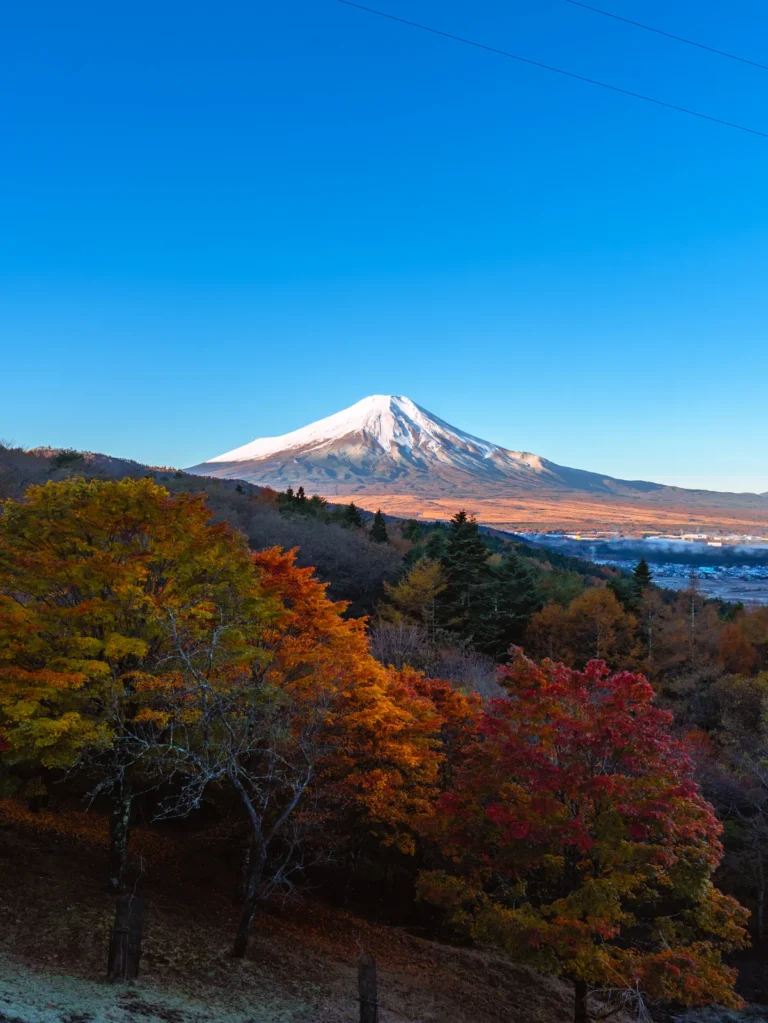
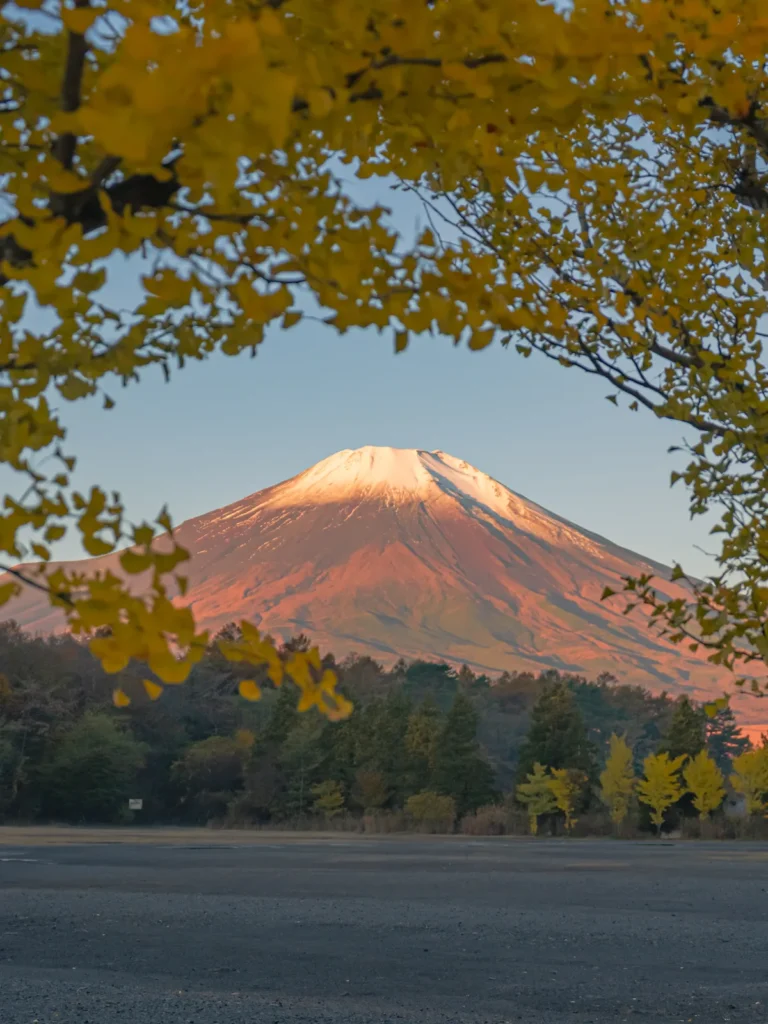
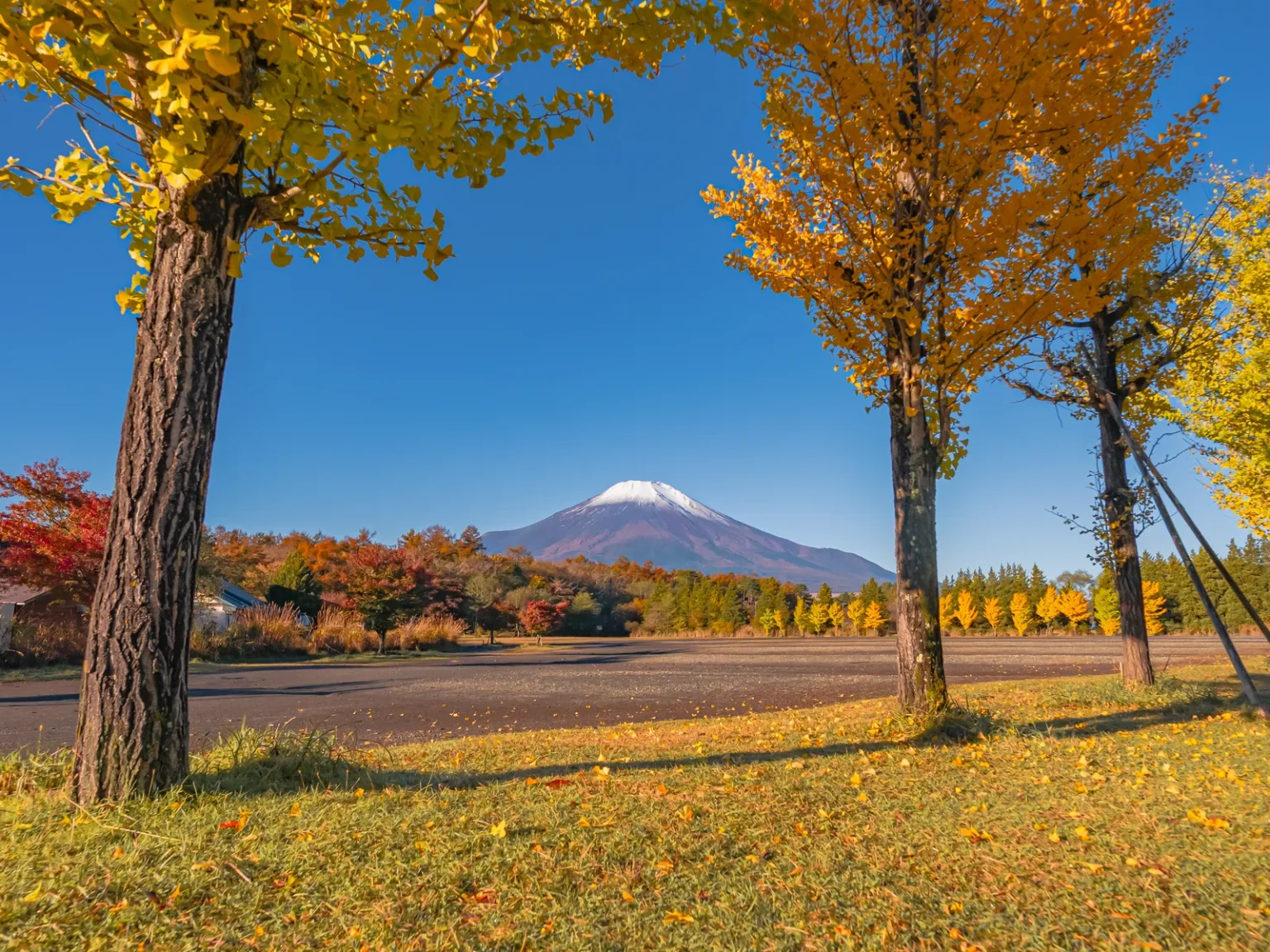
Beside an empty lot next to Dallas Village in Yamanakako, a row of ginkgo trees stands with Mt Fuji straight ahead. On 6 November 2026 the ginkgo were at their best. Mt Fuji turned red in the dawn light from about 6:10 to 6:30, and puddles left by the rain reflected the mountain. I parked at Kirara, the village’s lakeside park.
I’m Nobu, and I live in Yamanakako village. These ginkgo trees are on my dog-walking route, which is how I know them. Of the ten places I visited this autumn, this is one of my three recommendations for overseas visitors.
I’m keeping the exact spot to myself. “Beside an empty lot next to Dallas Village” is as far as I’ll go, and there is no map on this page. What I can give you is the useful part: when the colour was at its best, when the mountain turned red, the puddle reflections after the rain, what I wore, and the car park I used.
When did Mt Fuji turn red?
From about 6:10 to 6:30 a.m. In my frames from 6:15 and 6:16 the snow on the summit and the bare slopes below it are pink and red, and the lot in front is grey. The photos on this page were taken between 6:15 and 7:30 a.m. For context, the National Astronomical Observatory of Japan gives sunrise at Kofu as 6:12 that day.
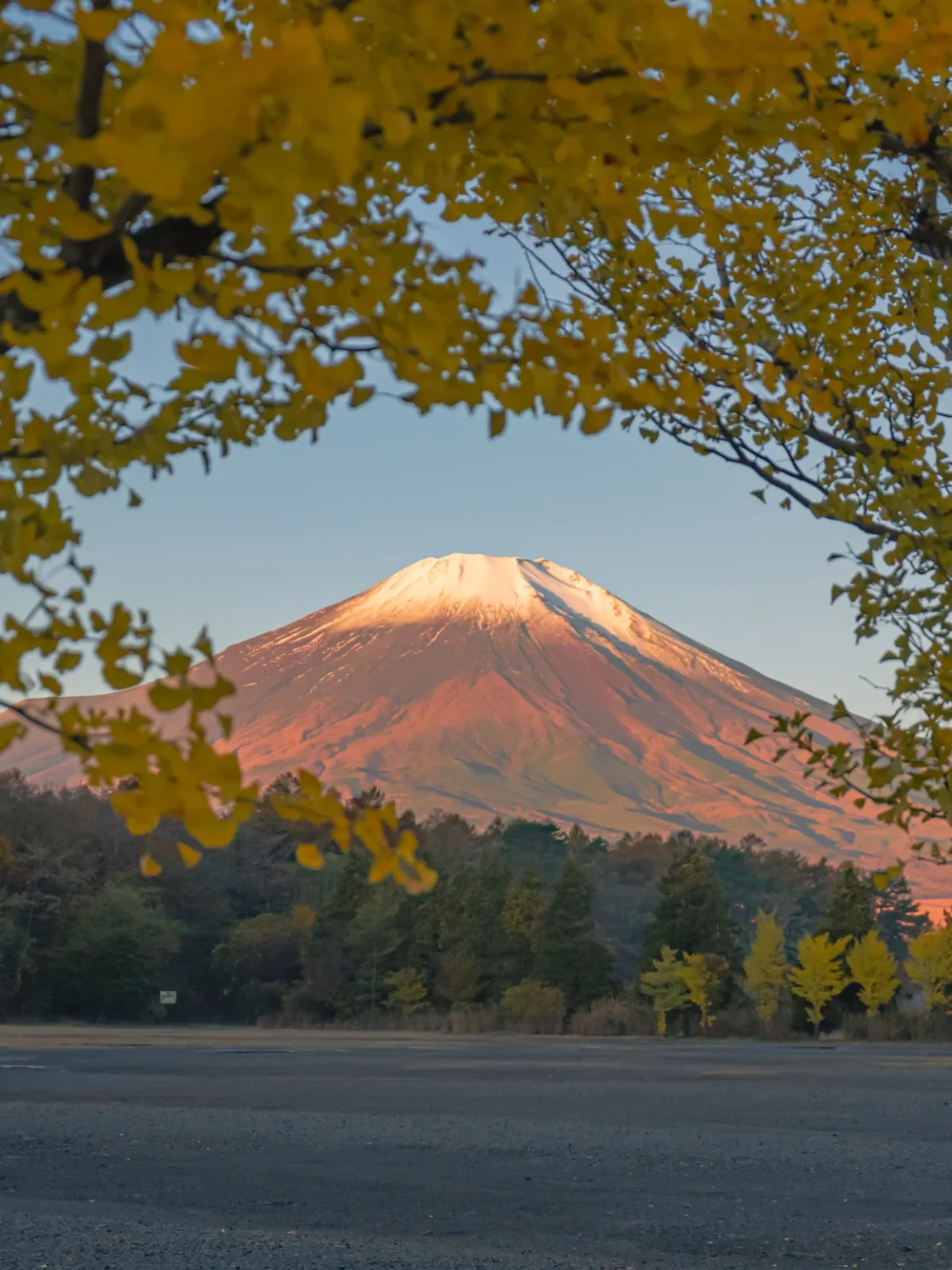
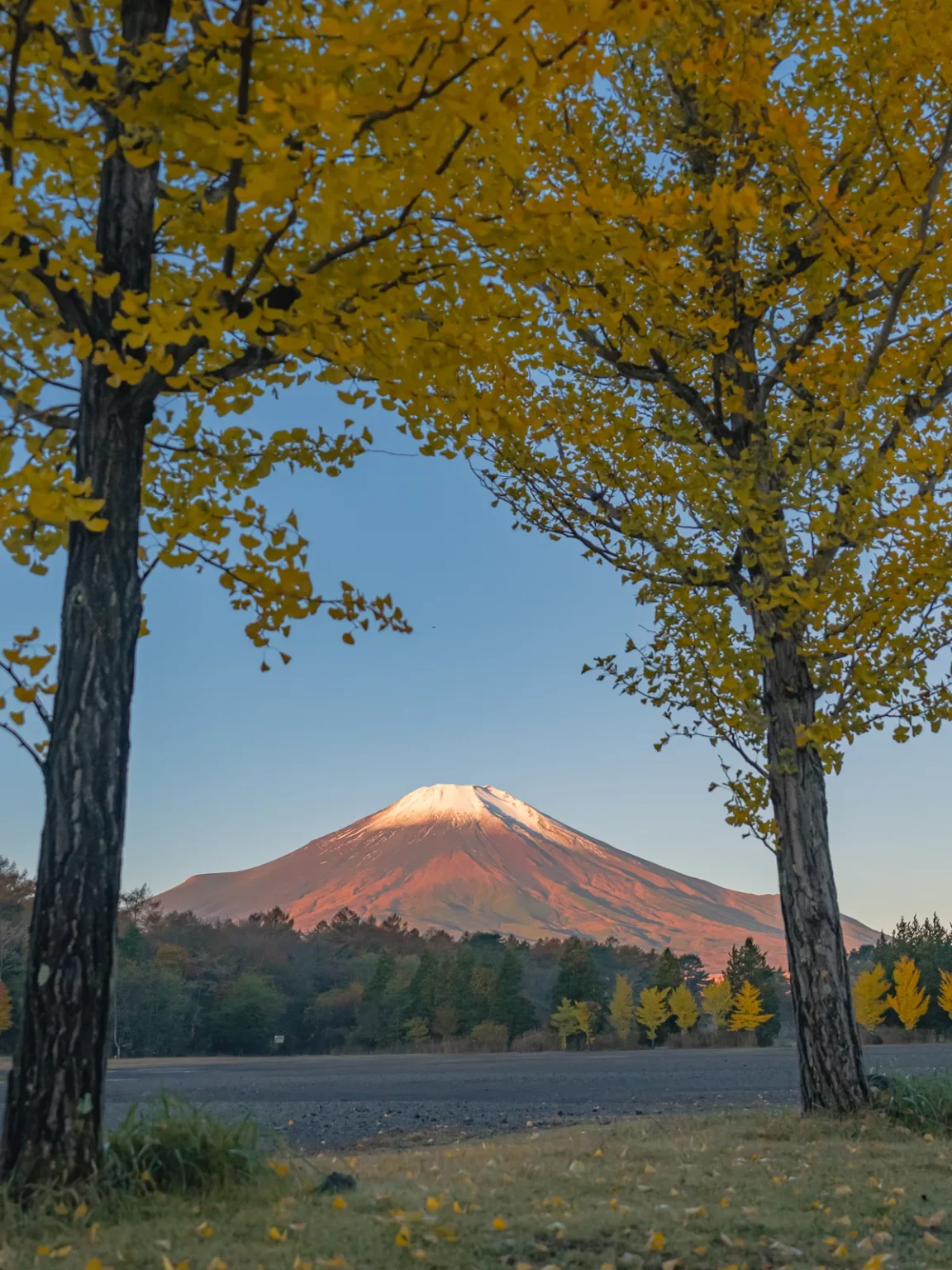
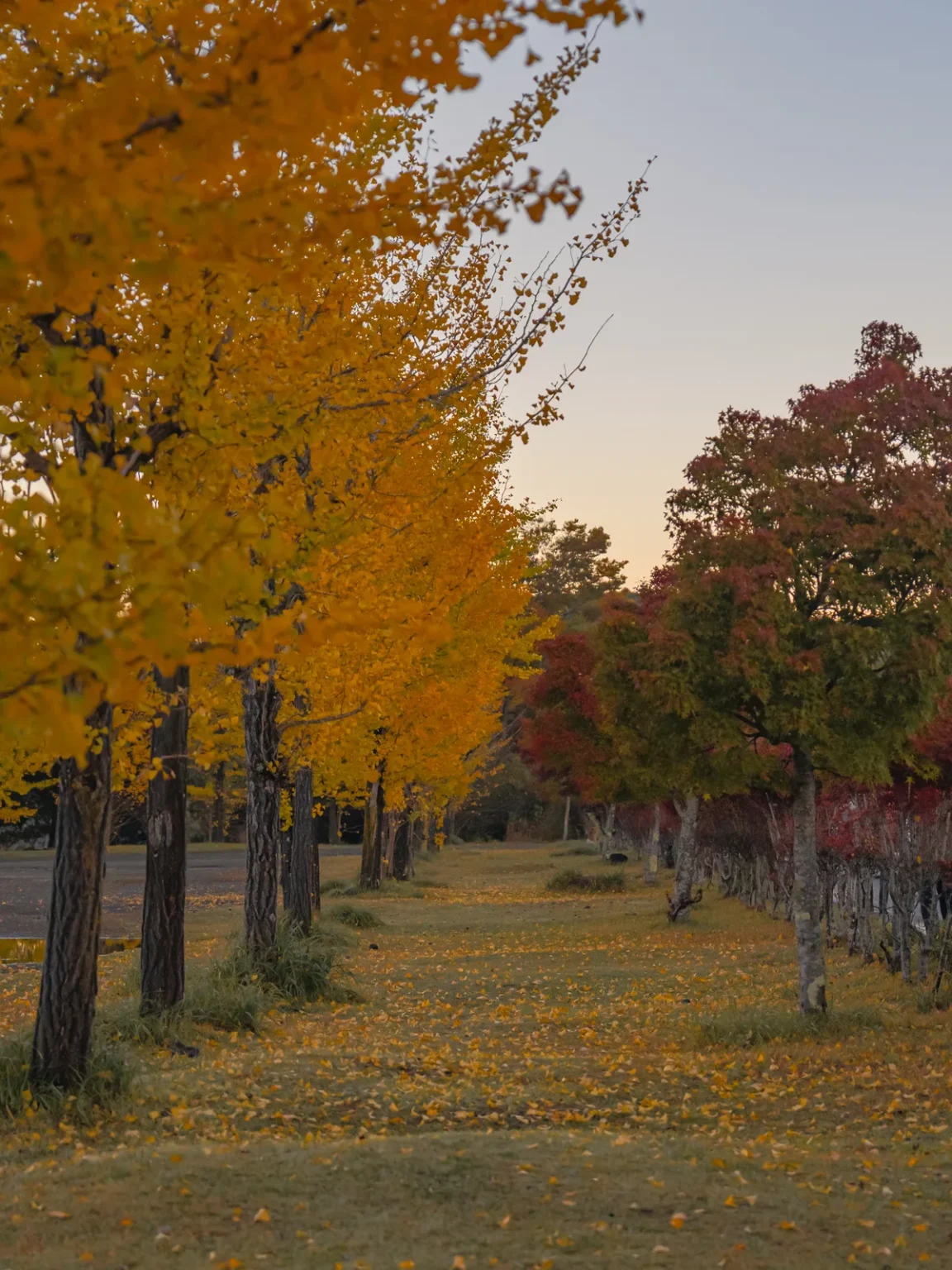
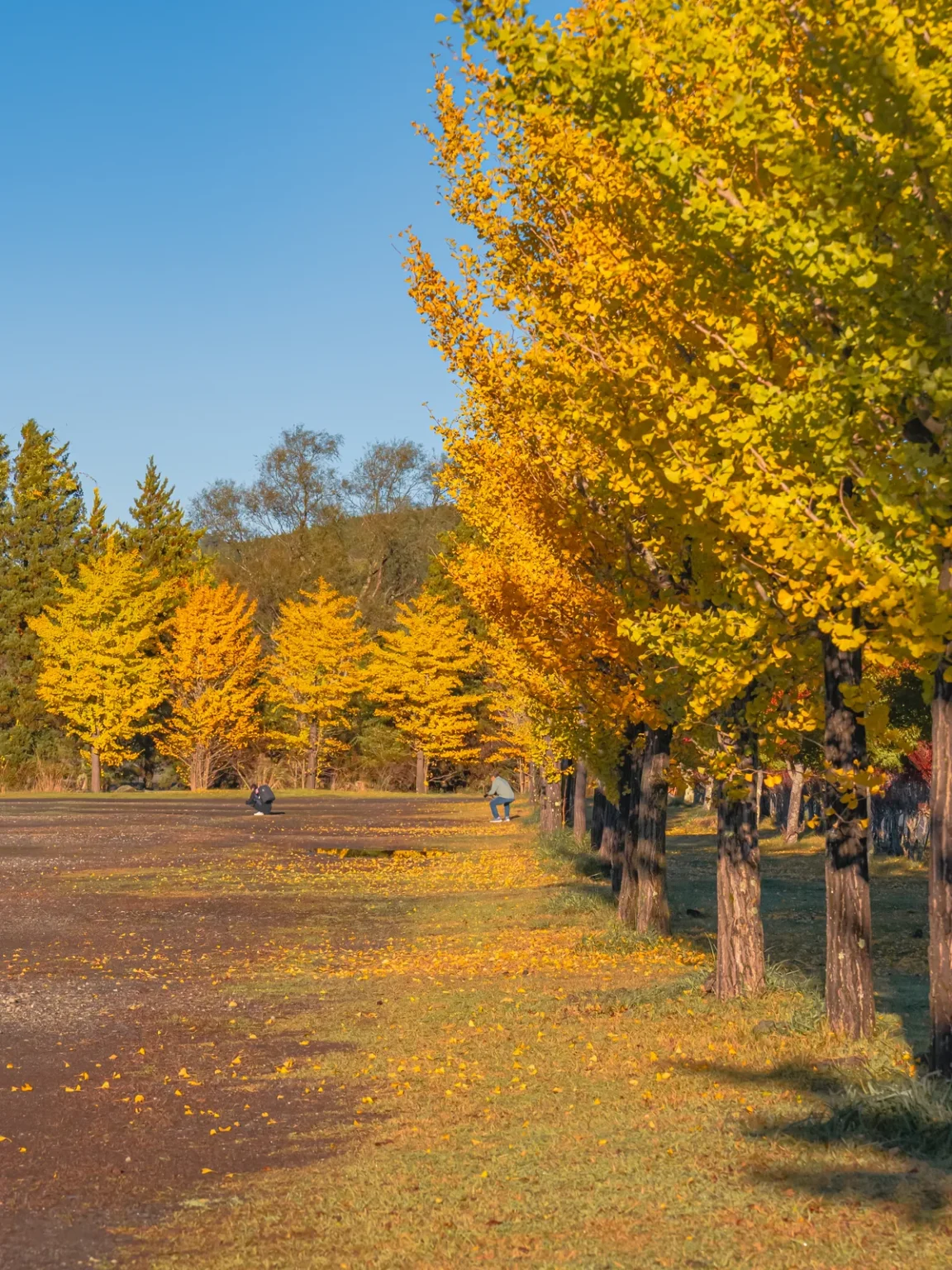
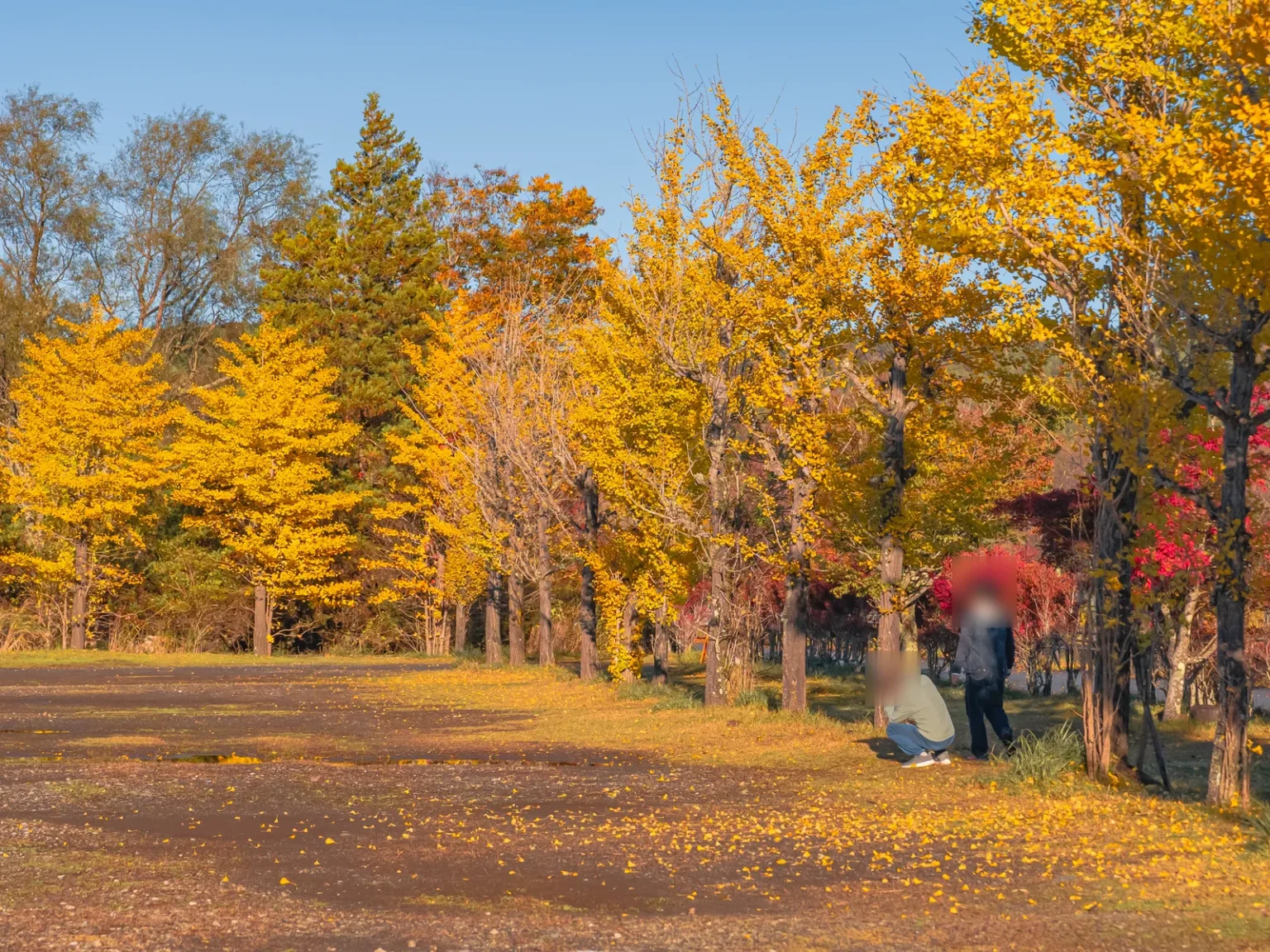
The ginkgo run off in a row into the distance, with red maples on the other side of the path and fallen yellow leaves on the ground.
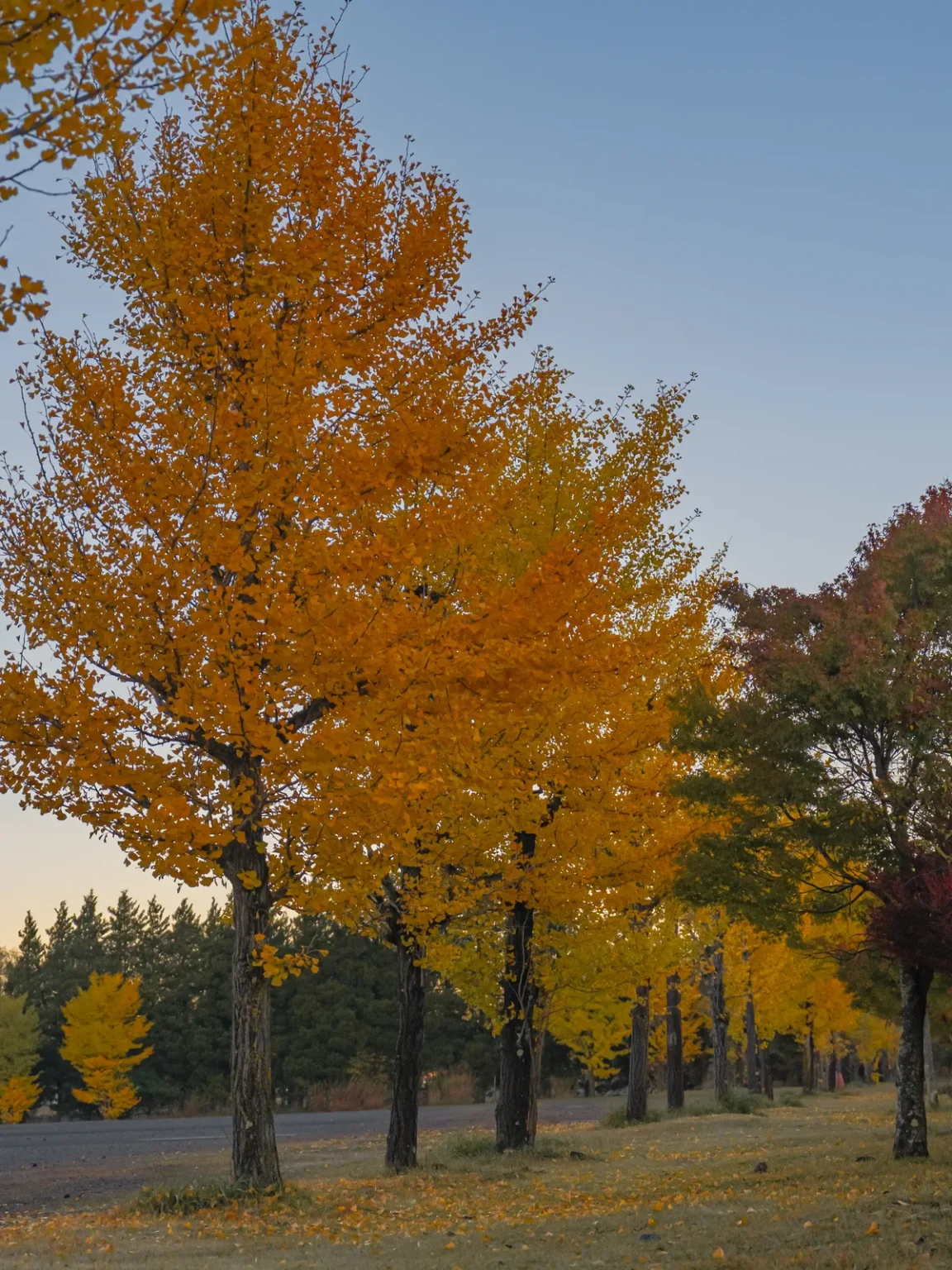
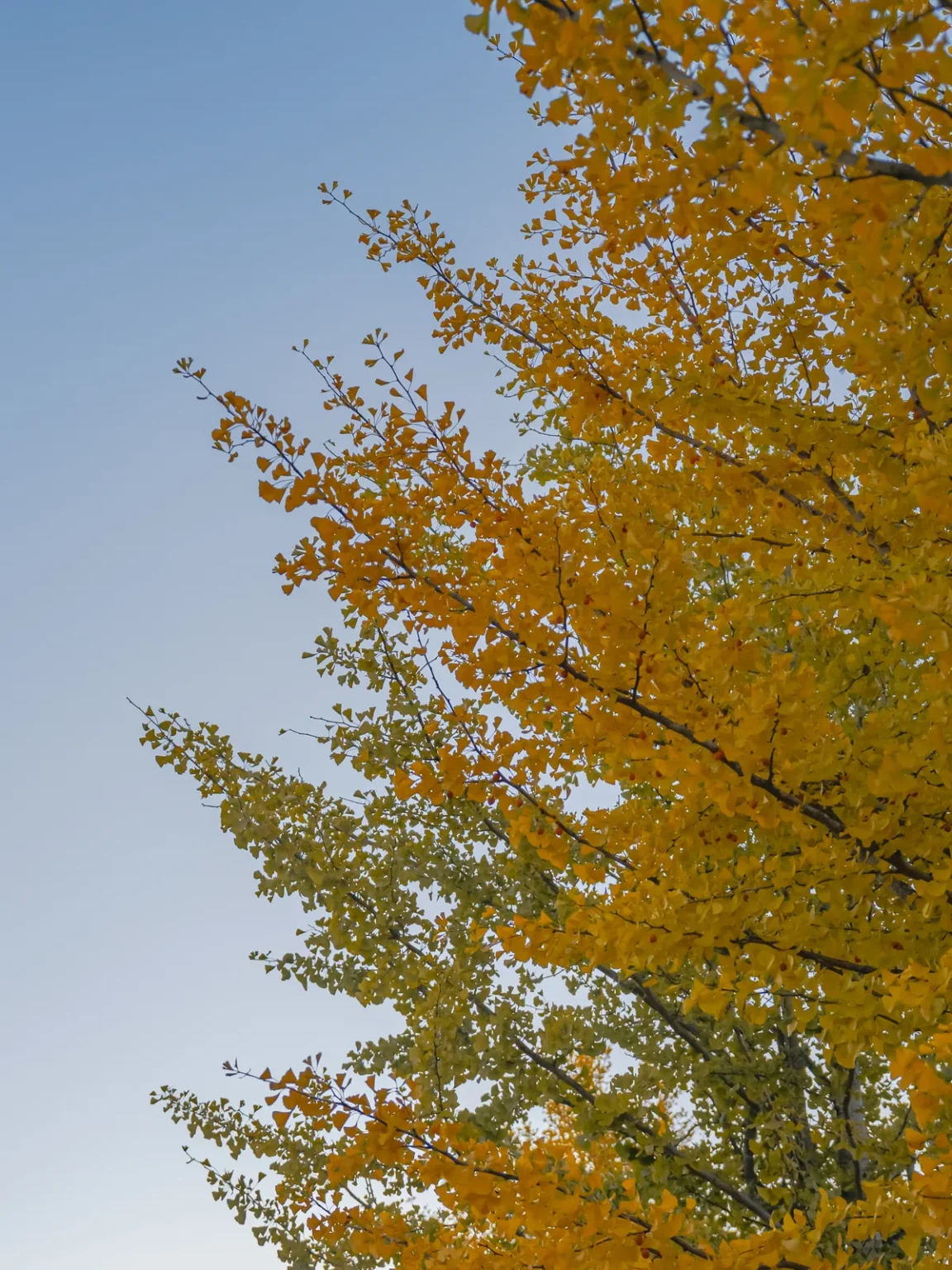
Yamanakako has a hot spring called Benifuji-no-yu (紅富士の湯), and a walking-course leaflet for the village on the prefecture’s tourism site says “beni-Fuji” (紅富士, crimson Fuji) can be seen from it early on clear winter mornings. On 6 November I saw Mt Fuji turn red with the ginkgo in front.
What did the ginkgo look like in daylight?
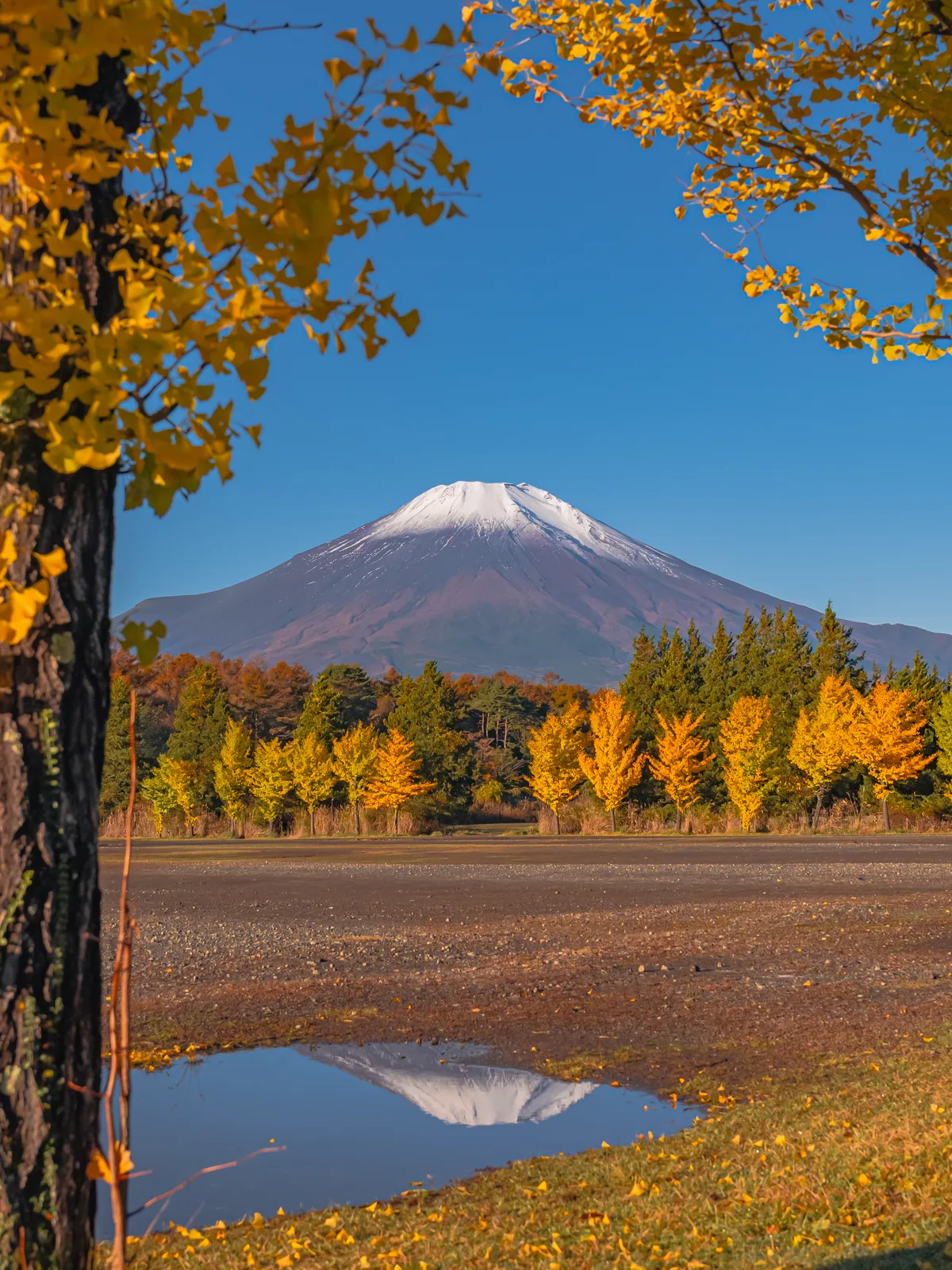
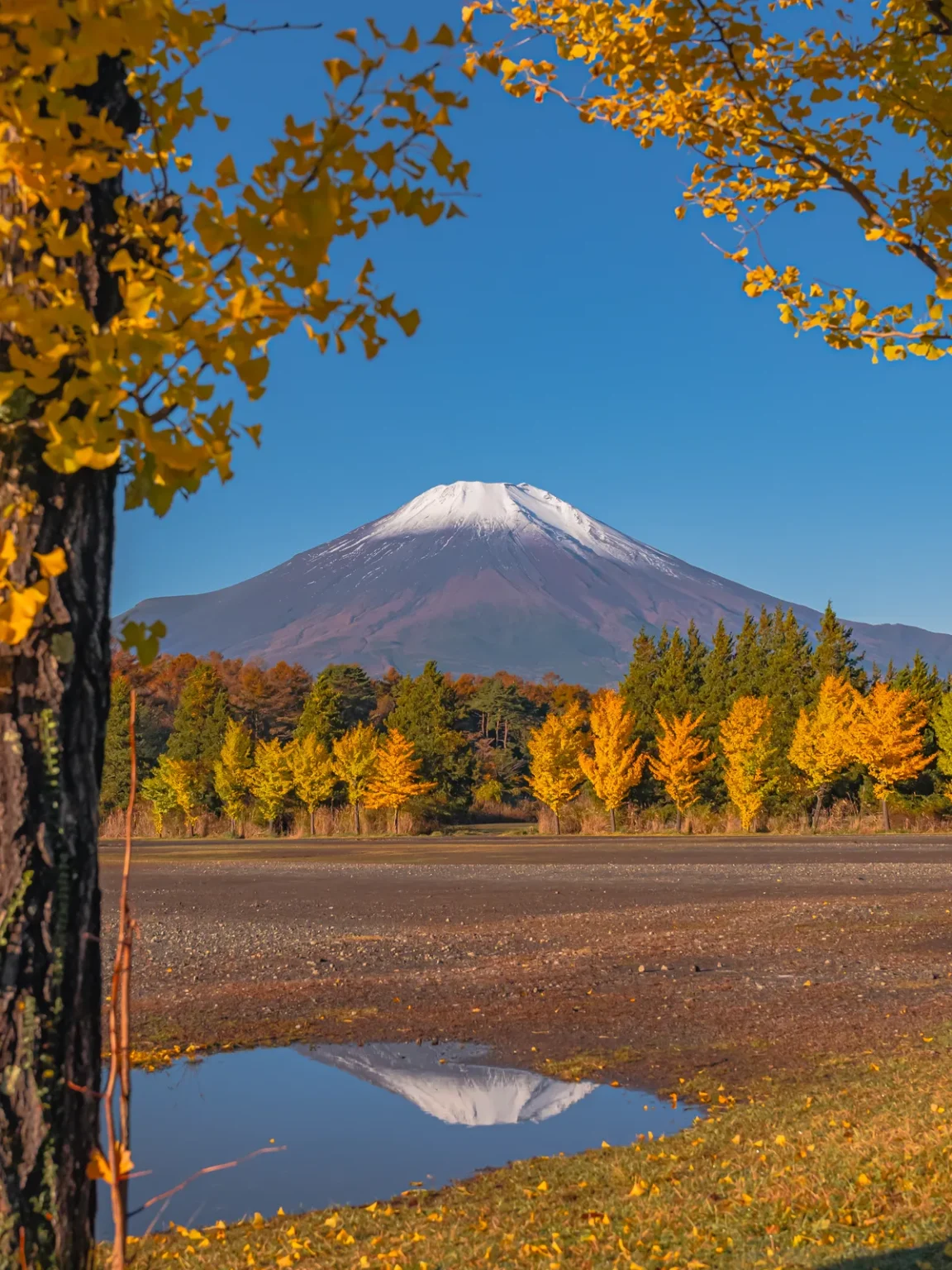
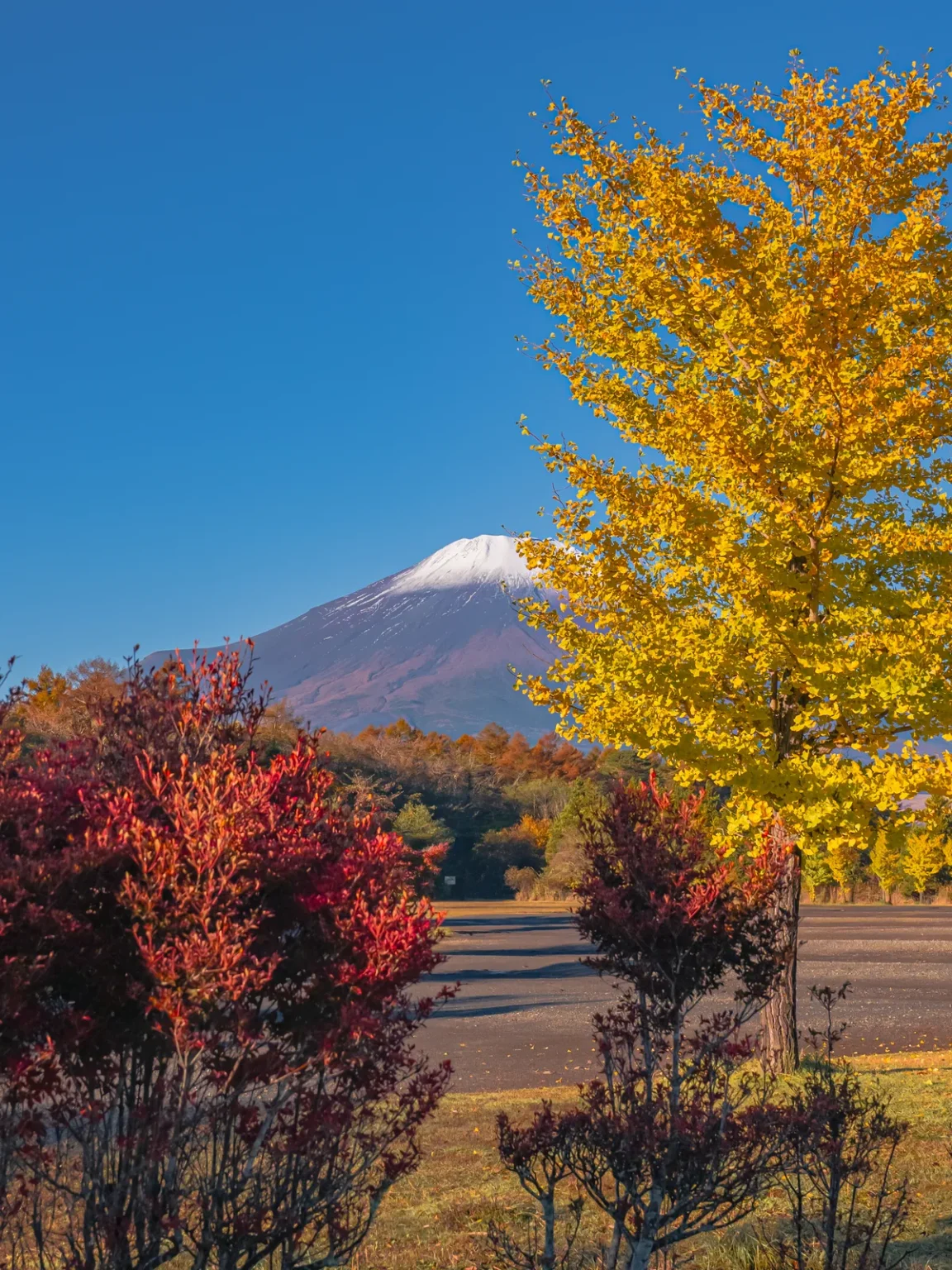
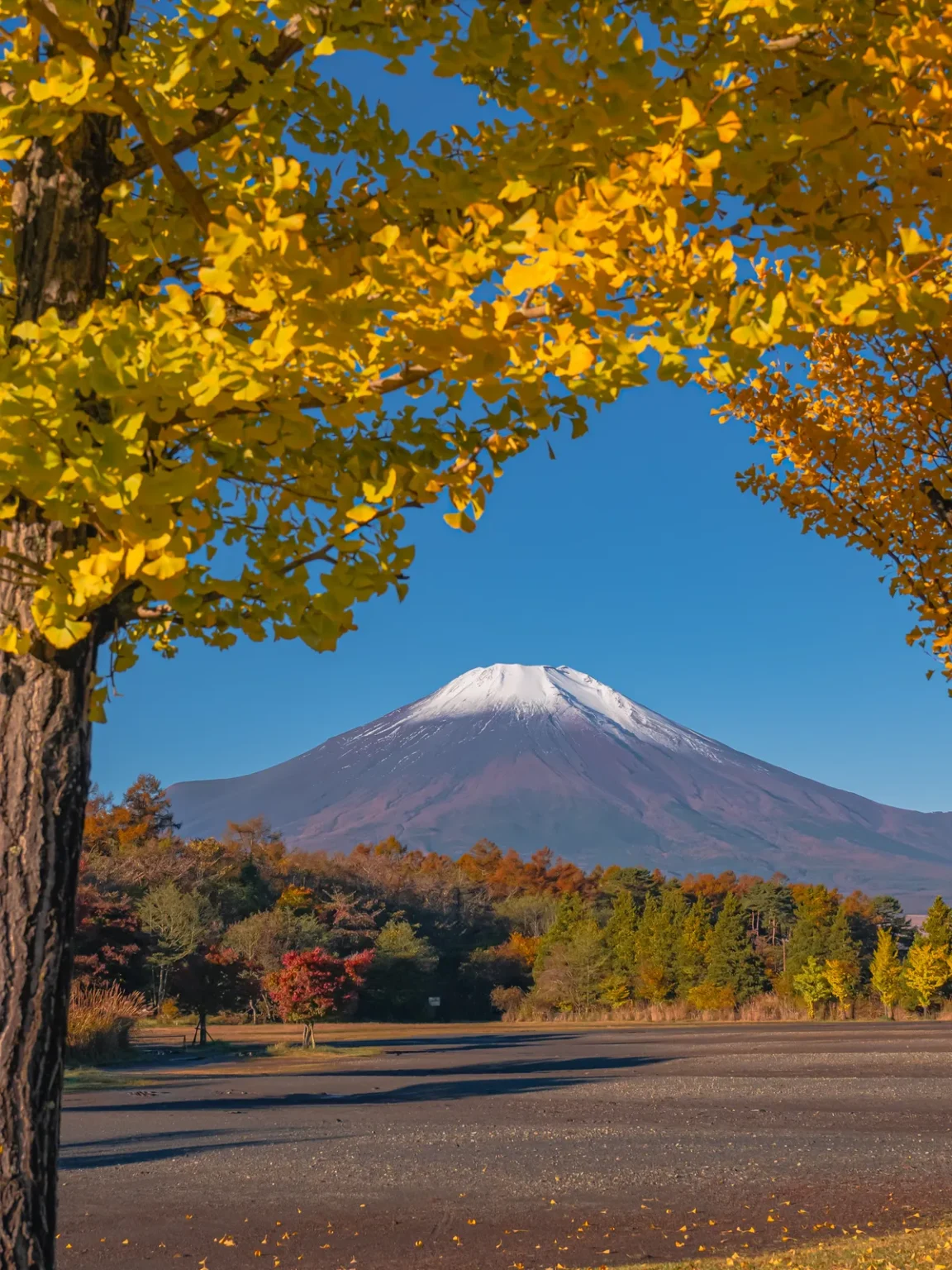
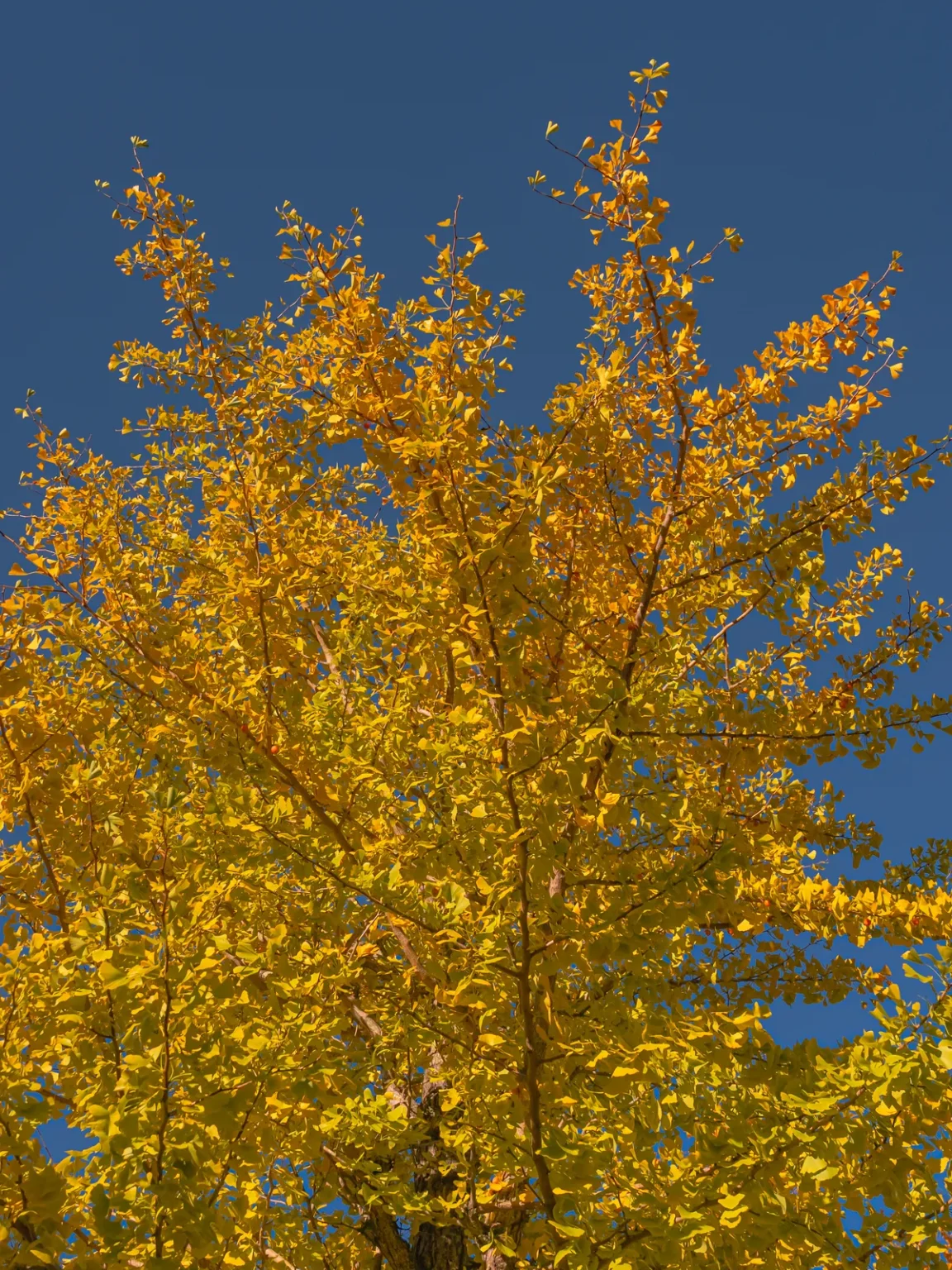
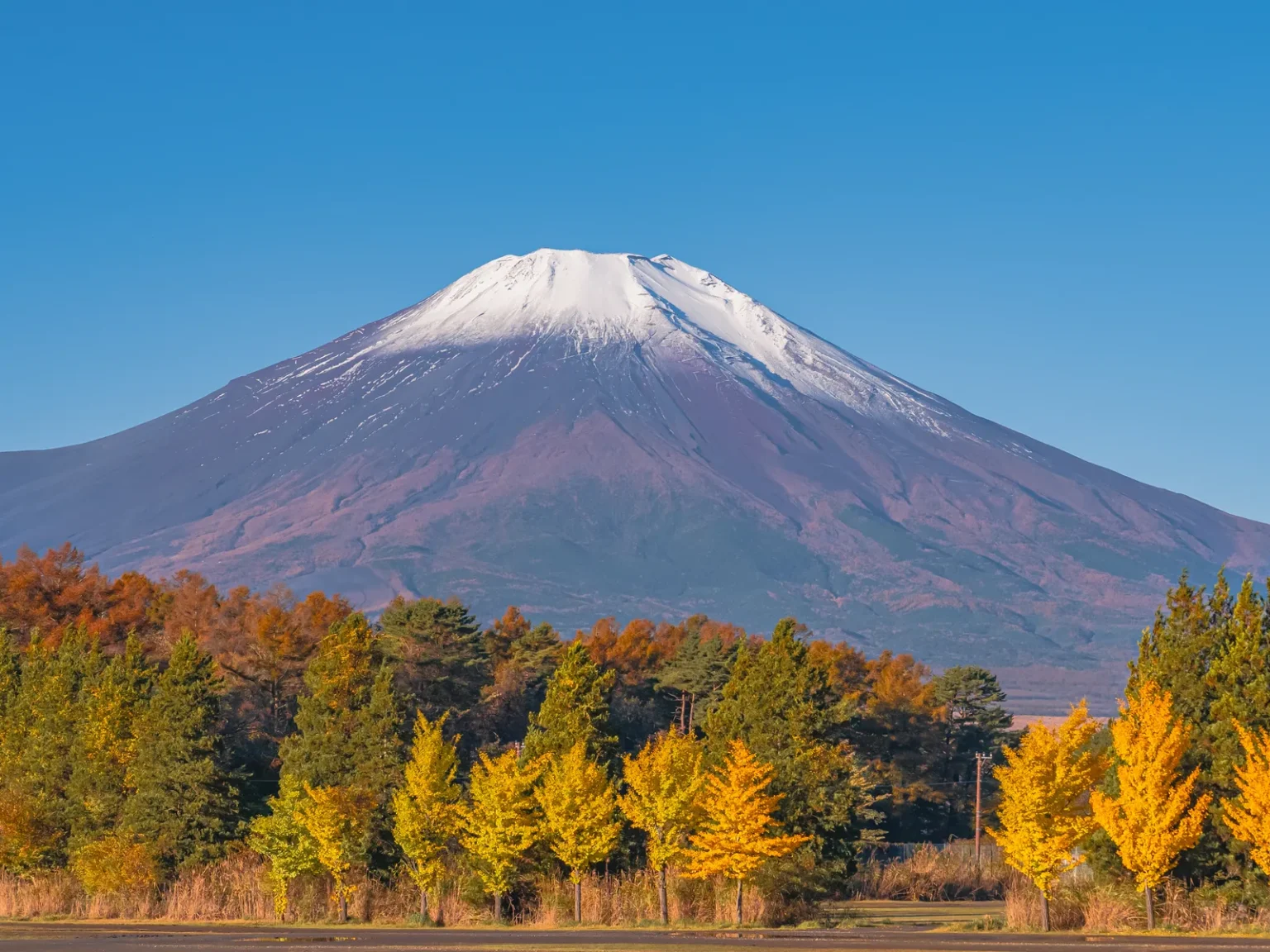
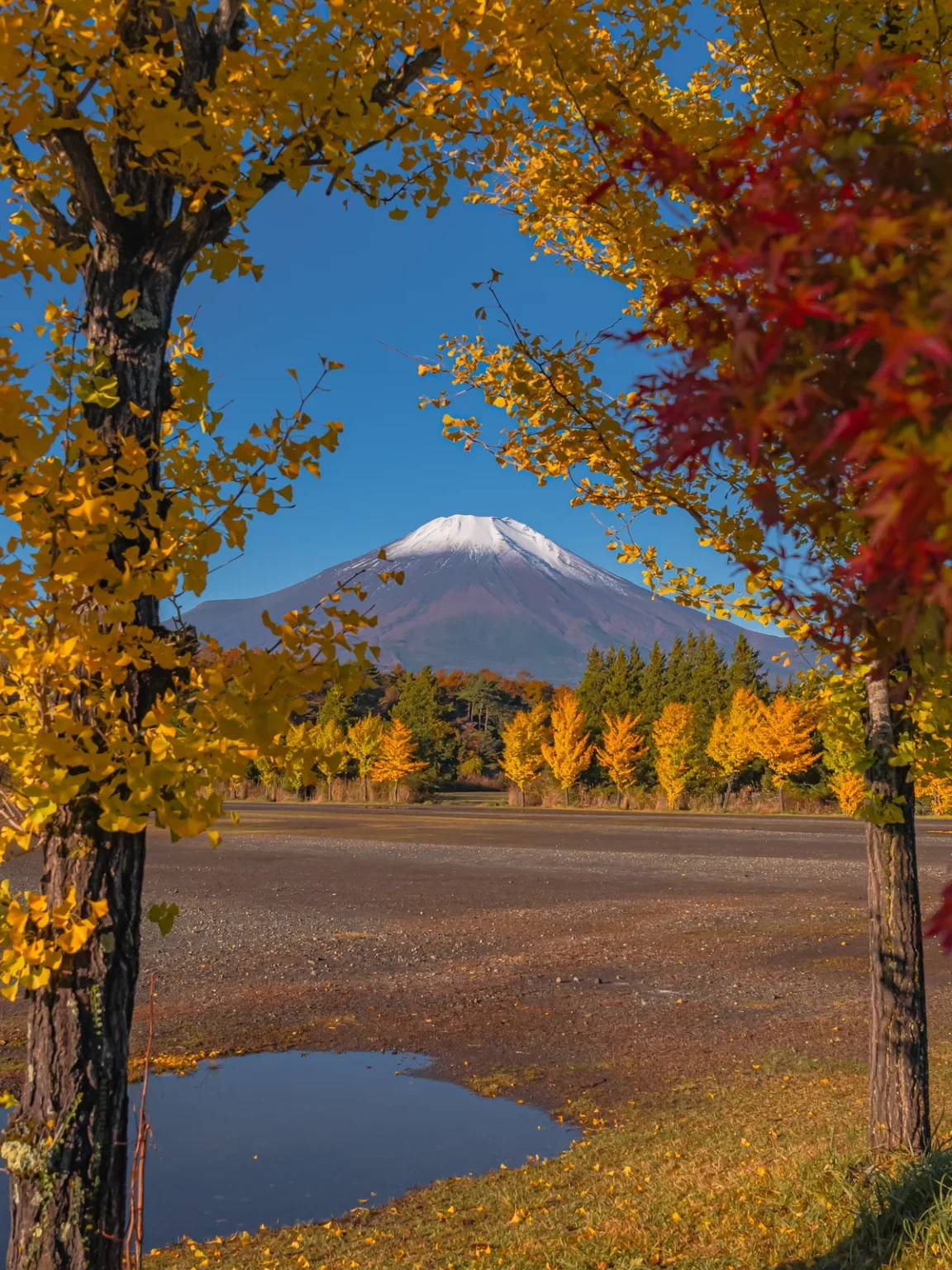
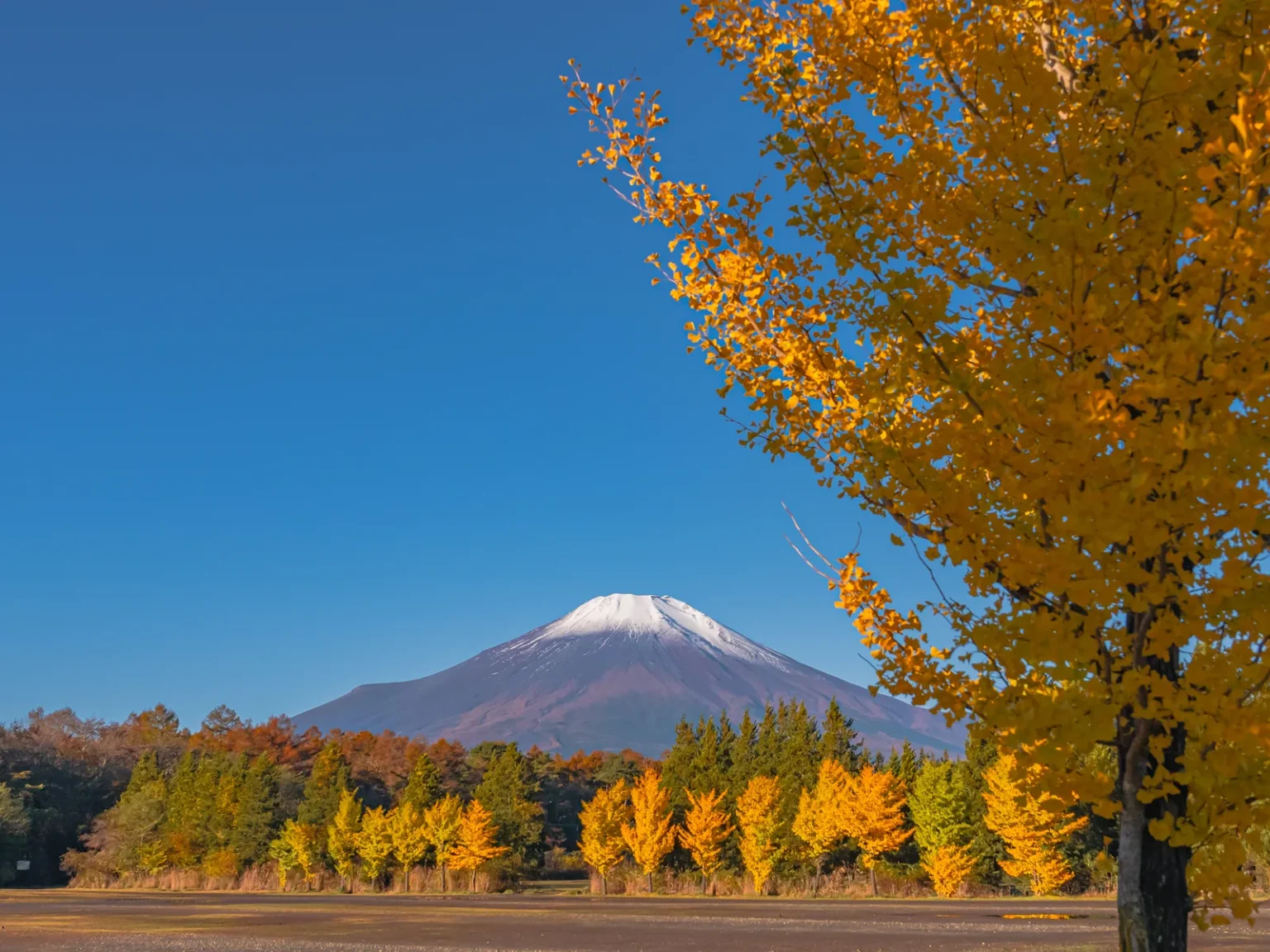
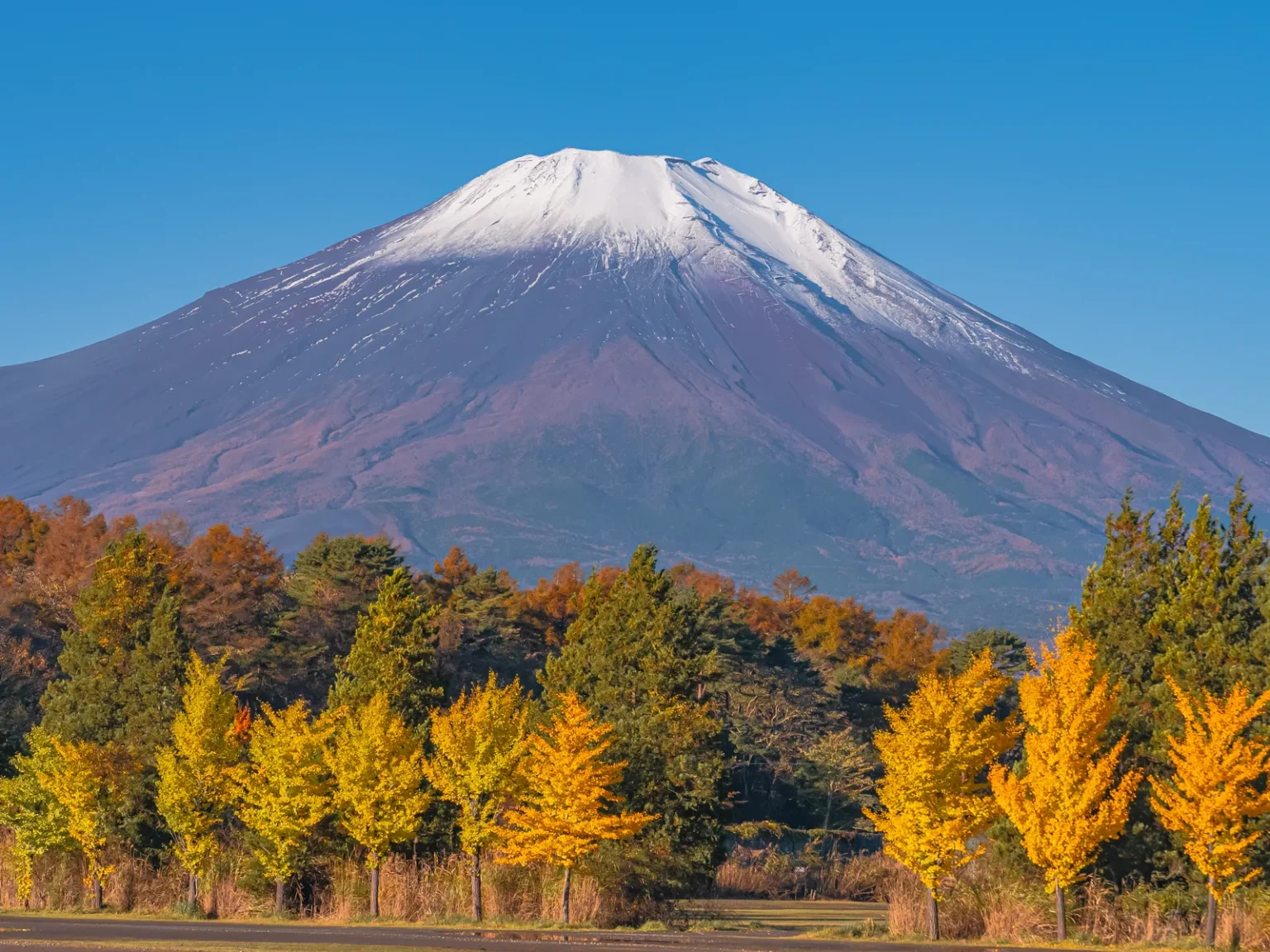
Bright yellow against a deep blue sky, with Mt Fuji white and sharp above the trees. The daylight photos on this page are from 7:16 onwards. A few red maples and other bushes mixed in among the ginkgo, and further back a line of yellow trees stood in front of dark conifers.
Puddle reflections after the rain
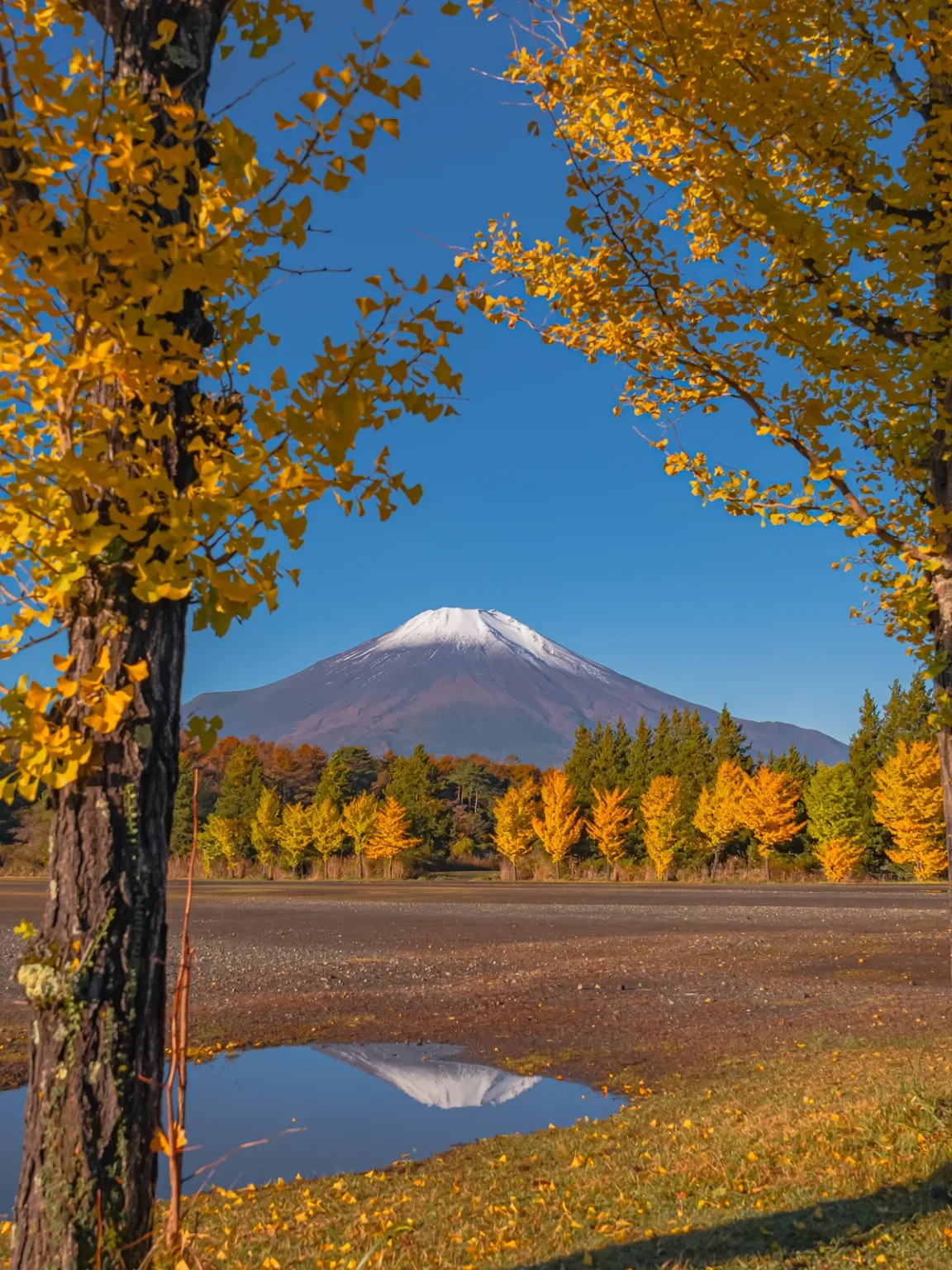
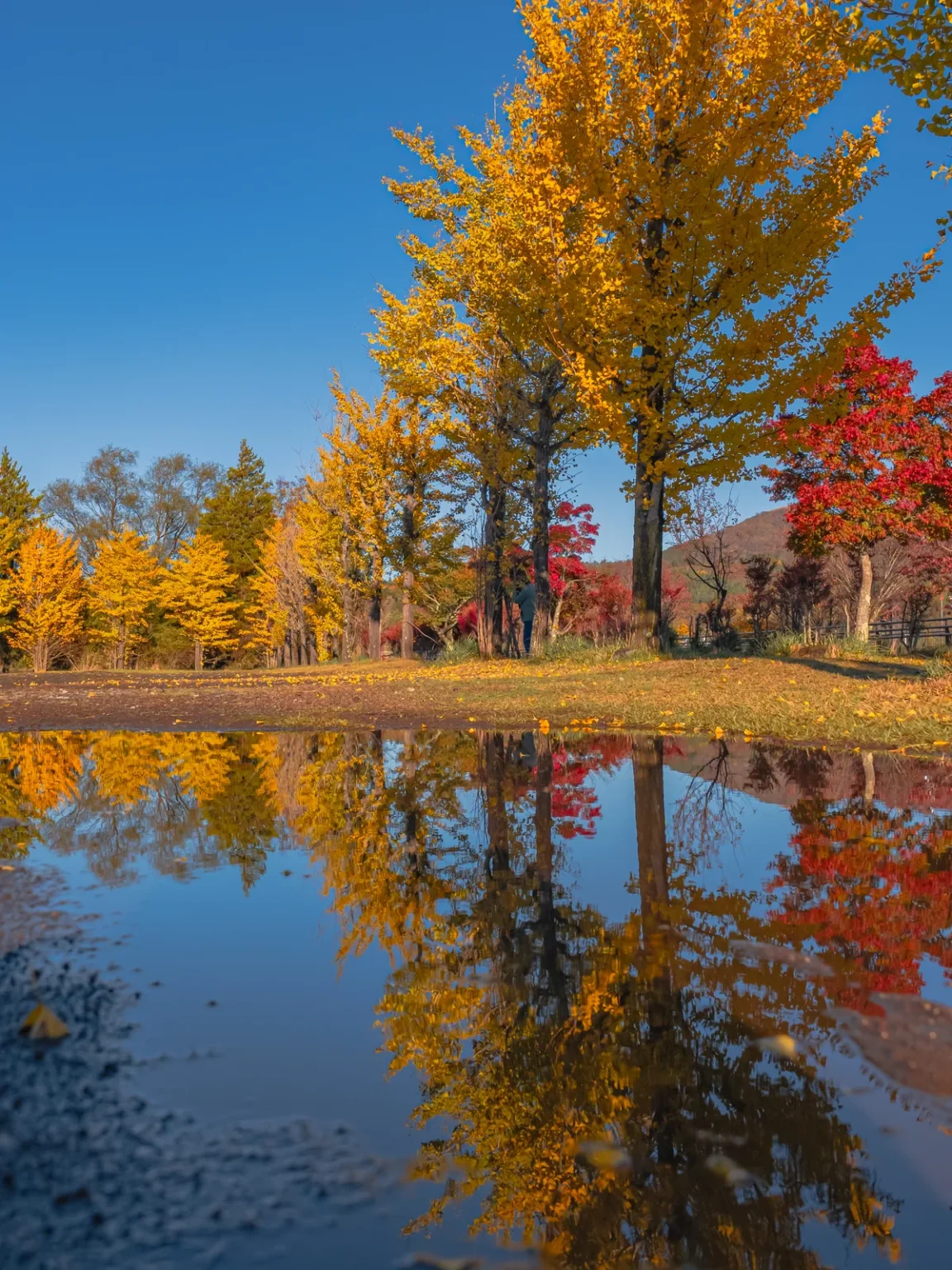
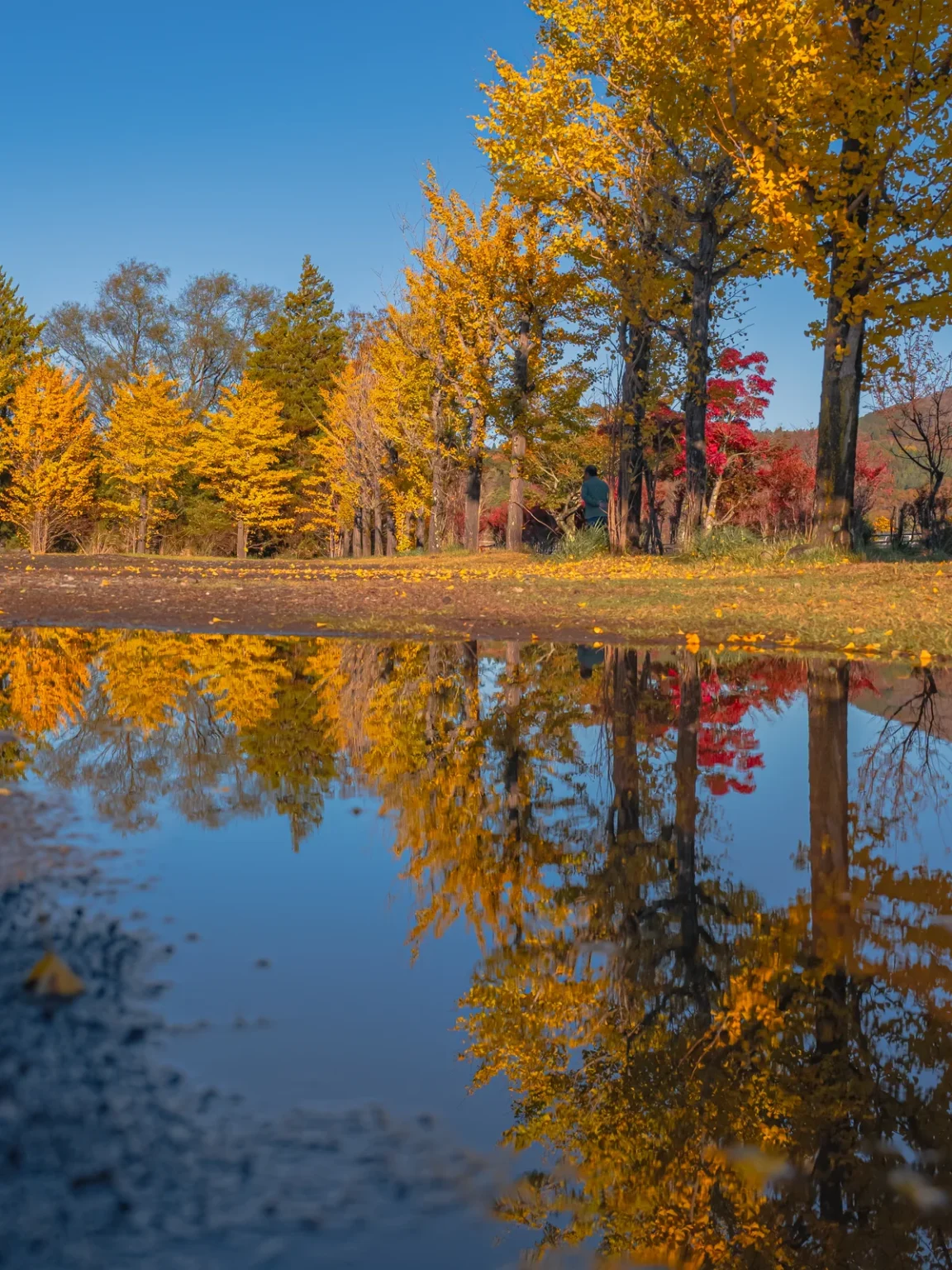
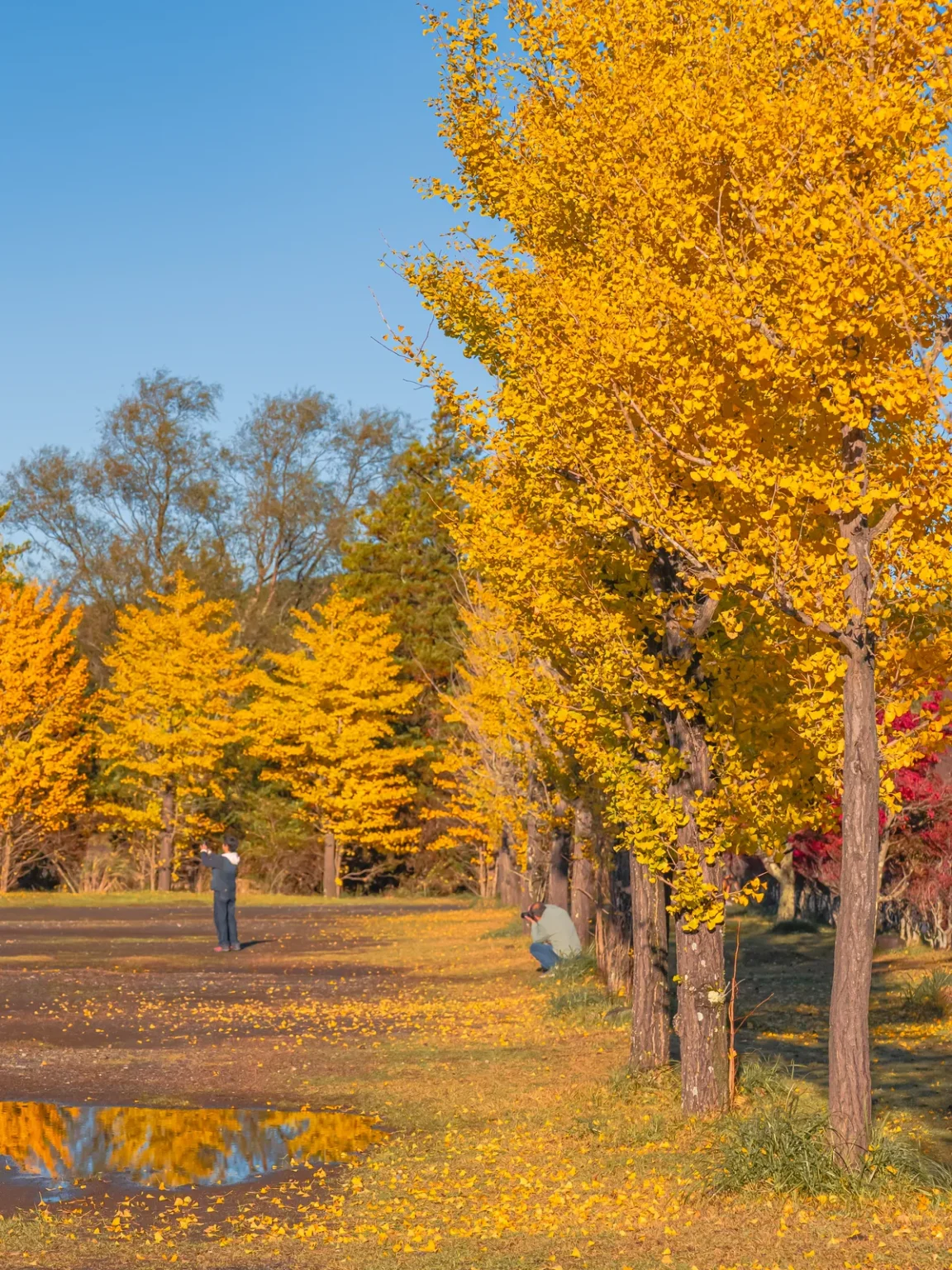
This was the scene I remember most from the whole morning: it had rained, and the water lying on the lot reflected the blue sky, Mt Fuji and the ginkgo. From beside the trees I could get the mountain twice in one frame, once in the sky and once upside down in the water.
At 7:23 a puddle held the trees themselves: the yellow ginkgo and a couple of red maples, upside down in the still water.
Was it crowded?
Not on 6 November 2026. There were four or five other people taking photos, on a morning with the colour at its best and Mt Fuji clear. Of the ten places I visited this autumn, this is one of my three recommendations for overseas visitors. Faces of people close to the camera are blurred.
Different focal lengths, 7:24 to 7:30
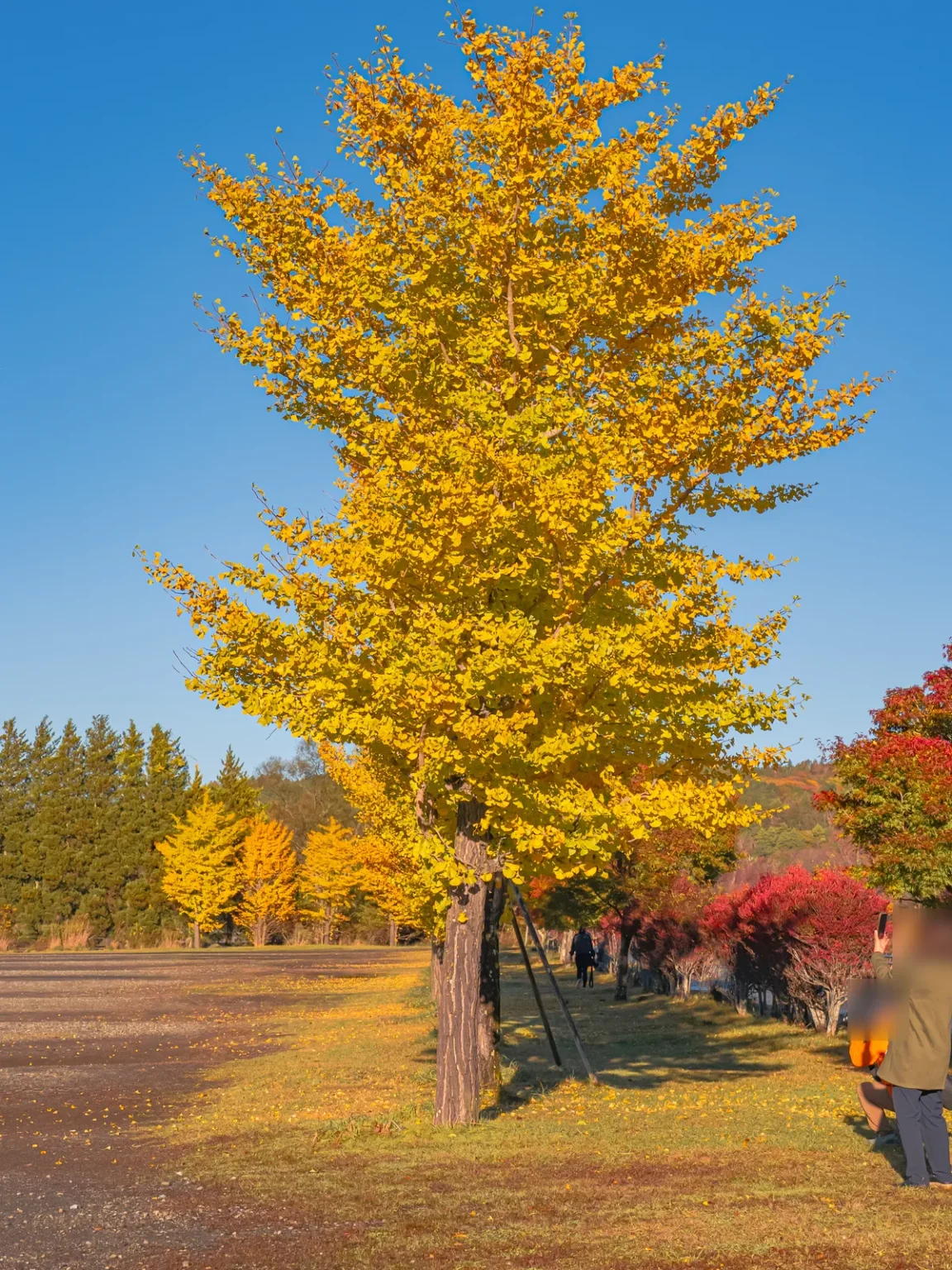
Between 7:24 and 7:30 I tried different focal lengths. At 70 mm the mountain fills the frame; under the red maples nearby, Mt Fuji sits right above them; and at 14 mm the ginkgo canopy covers the top of the picture and the mountain is small at the end of the lot.
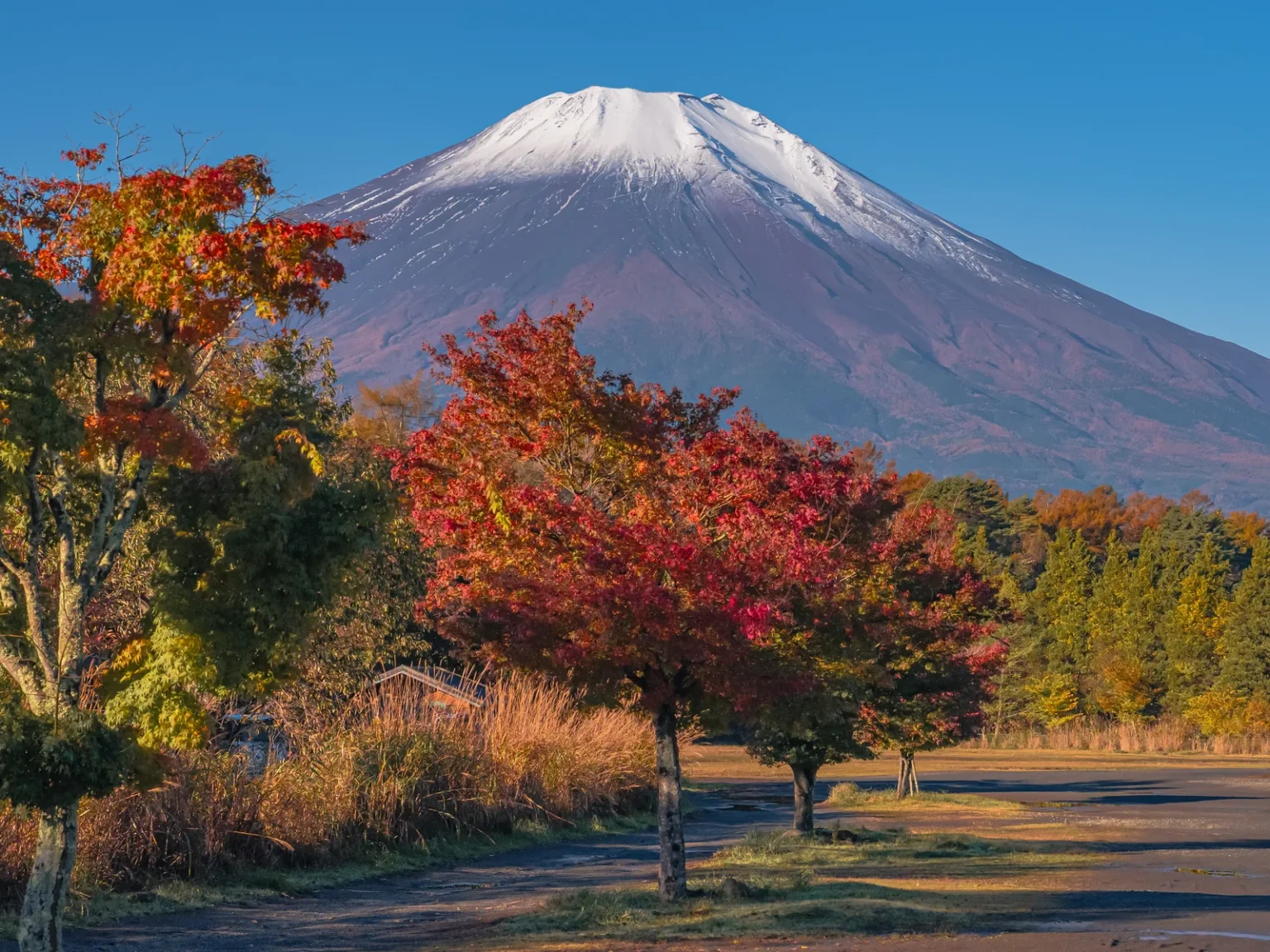
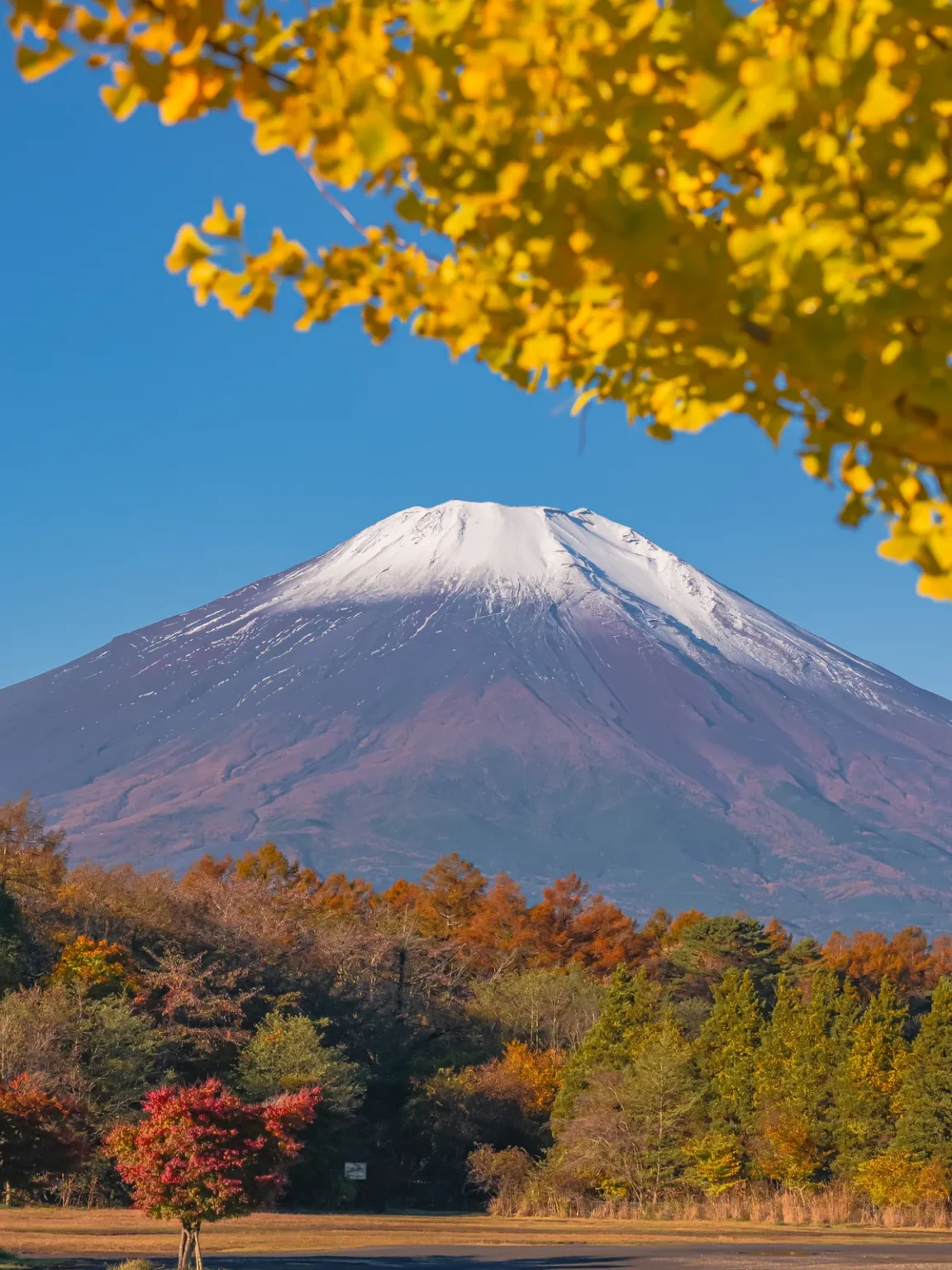
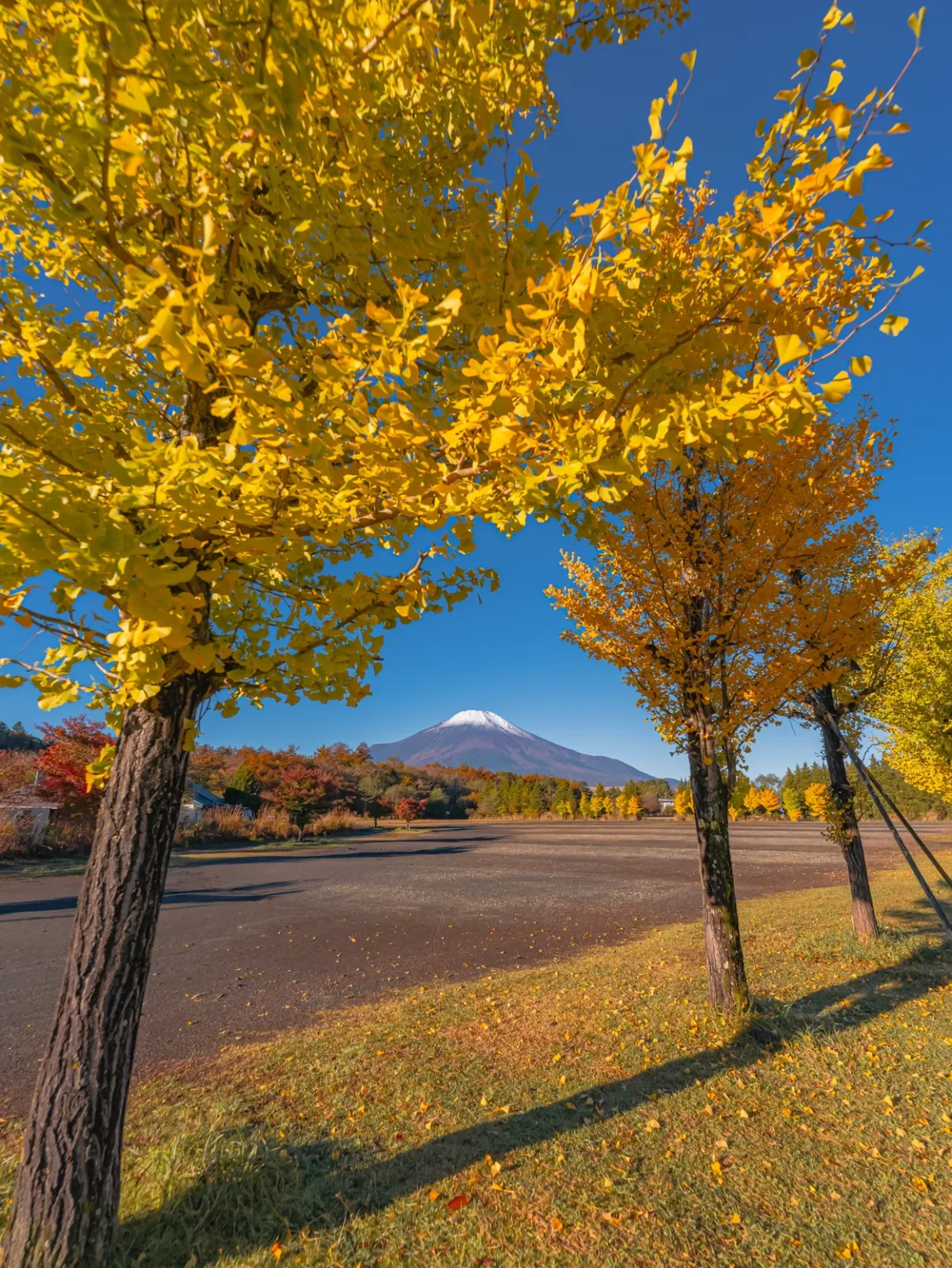
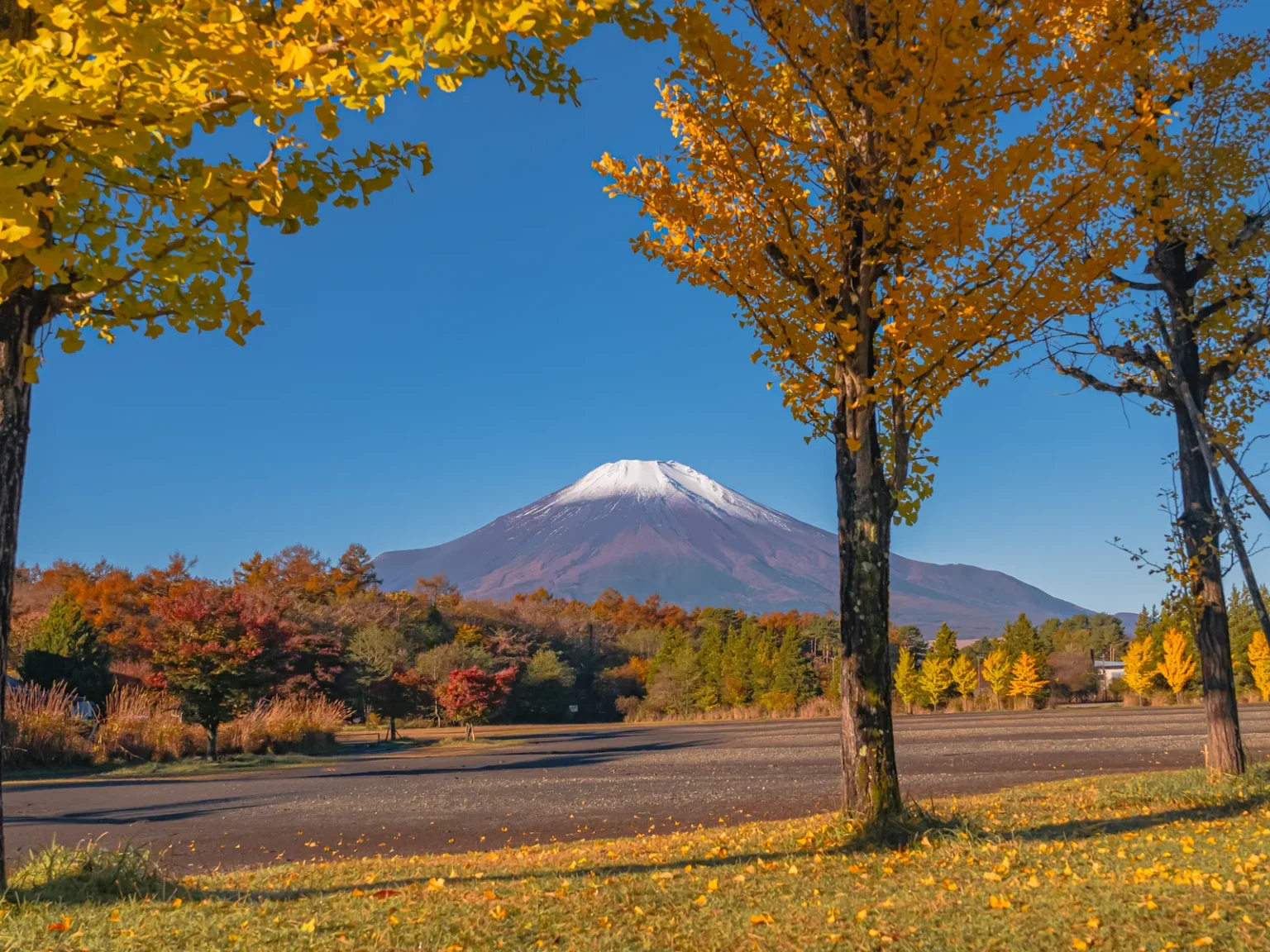
After that I photographed the lakeshore at the Yamanakako autumn leaves festival venue, between 7:40 and 7:51. The maples there were at their best too. For festival dates and light-up hours, see my Yamanakako autumn leaves festival guide.
Where exactly are the ginkgo trees?
Beside an empty lot next to Dallas Village in Yamanakako, and that is all I’m going to say. Dallas Village (クラフトの里 ダラスヴィレッジ) is listed by the prefecture’s tourism site as a craft workshop and barbecue restaurant; I use it here only as a landmark.
If you want a named, mapped place with Mt Fuji over the lake instead, Kirara itself is one: the prefecture’s page says it is popular with photographers for Diamond Fuji. For when and where that happens around the lake, see my guide to Diamond Fuji spots at Lake Yamanaka. For a view from above the lake, there is my visit to Myojinyama. My other two recommendations from those ten are a birch-and-maple path near Michi-no-Eki Fujiyoshida, and Ubuyagasaki on Lake Kawaguchiko, which gets crowded but gives you the classic Mt Fuji-and-autumn-leaves picture.
Where do you park? Kirara: fee, car parks and toilets
I parked at Yamanakako Communication Plaza Kirara (山中湖交流プラザきらら), the village’s lakeside park and sports ground, on this visit. Pre-dawn access and payment arrangements were not confirmed for this guide. Its own site lists a fee of ¥300 per car for anyone from outside the village; village residents park free with a pass card.
Parking
Car park 1 holds 150 cars and car park 2 holds 52 cars and 6 large vehicles, per Kirara’s site. Large vehicles from outside the village pay ¥1,000. Kirara says both car parks may be unavailable because of events: its notice listed the whole site, car parks included, as booked out from 15 to 18 October 2026 for a fireworks event.
Hours
Kirara’s usage guide, checked on 15 November 2026, says the park is open all year and opens at 8:30; its hours table gives no time for the car parks. The prefecture’s page lists 9:00–17:00. Pre-dawn access and payment arrangements were not confirmed for this guide.
Toilets
Kirara has a toilet block beside its outdoor theatre, Theatre Hibiki (シアターひびき), and the prefecture’s page lists an accessible toilet. Neither Kirara’s facility page nor the prefecture’s page gave toilet hours when checked on 15 November 2026.
By car
Kirara’s site gives about 15 minutes from Yamanakako IC, which you reach on the Higashi-Fujigoko Road (about 10 minutes from Kawaguchiko IC on the Chuo Expressway, or from Subashiri IC).
By bus
From Fujisan Station, a Fujikyu route bus takes about 25 minutes to Lake Yamanaka, per Kirara’s site; from the lakeside stops it says to change to the Fujikko-go loop bus (ふじっ湖号) for Kirara-mae (きらら前), 3 minutes from Yamanakako Hirano (山中湖平野) or 10 from Asahigaoka (山中湖旭日丘). The prefecture also gives a 12-minute walk from the Hirano highway bus stop. Bus times were not checked for this guide; check them before you go.
On Google Maps
Search 山中湖交流プラザきらら. Address: 479-2 Hirano, Yamanakako village, Yamanashi. My Lake Yamanakako access guide covers buses from Tokyo.
On this visit I parked at Kirara.
Compare rental cars near Mt FujiJapanese rental companies on RakutenWhat should you wear at dawn?
Something warm. I wore a down jacket. The Yamanakako Tourism Association’s festival page says the same thing in its own words for this season: mornings and evenings get cold, so dress for it.
When is the colour at its best?
On 6 November 2026 the ginkgo were at their best. To me, this year’s autumn colour was about the same as usual. The Yamanakako Tourism Association recorded its festival venue as at its best on 12 November 2026, and on 14 November Lake Yamanaka looked at its best to me. Those are this year’s observations, not a forecast for next year. That morning, the puddles reflected both the trees and Mt Fuji. My Mt Fuji visibility forecast page covers checking whether the mountain is likely to be visible.
If you are in Tokyo rather than at the lake, the city version of this is the Jingu Gaien ginkgo avenue.
Where to stay for a dawn start
Lake Yamanaka is where I live. For everything else around the mountain, start at my Mt Fuji guide.
If you want to base yourself by Lake Yamanaka, compare stays there.
See Lake Yamanaka stays on Booking.comCompare Lake Yamanaka hotels on AgodaWhen comparing Mt Fuji day tours, check whether Lake Yamanaka is included: browse Mt Fuji day tours on Klook.
More from my November 2026 autumn visits around Mt Fuji
Lake Yamanaka autumn leaves festival (6 Nov photos) · Nijumagari Pass (11 Nov) · Oshino Hakkai (11 Nov) · Mt Fuji Radar Dome Museum (11 Nov) · Kaneyama Falls (11 Nov) · Birch-and-maple path near Michi-no-Eki Fujiyoshida (11 Nov) · Suwa-no-Mori Nature Park (11 Nov) · Ubuyagasaki (13 Nov) · Tenka-chaya, Misaka Pass (13 Nov) · When the leaves were reported at their best (calendar) · All ten spots compared (summary)
Lake Yamanaka ginkgo and Mt Fuji: FAQ
Where is the ginkgo row with Mt Fuji at Lake Yamanaka?
Beside an empty lot next to Dallas Village in Yamanakako village. I’m not giving the exact spot or a map. I parked at Kirara (山中湖交流プラザきらら), the village’s lakeside park.
What time did Mt Fuji turn red on 6 November 2026?
On 6 November 2026 the mountain glowed red from about 6:10 to 6:30 a.m. The National Astronomical Observatory of Japan gives sunrise at Kofu as 6:12 that day.
When are the ginkgo at their best?
On my visit on 6 November 2026 they were at their best. That is one year’s observation, not a forecast.
Was it crowded?
Not on 6 November 2026. With the colour at its best and Mt Fuji clear, there were four or five other people taking photos.
How much is parking at Kirara?
Kirara’s site lists ¥300 per car and ¥1,000 per large vehicle for visitors from outside the village. Its car parks can be closed for events; a Kirara notice listed them as unavailable from 15 to 18 October 2026.
Sources
My own visit and the official pages behind the facts above (checked 15 November 2026)
- My own visit on the morning of 6 November 2026; photos taken 6:15–7:30 a.m. (camera times).
- Yamanakako Communication Plaza Kirara: parking, opening times, access, facilities, closure notice, October 2026
- Yamanashi Tourism Organization: Yamanakako Communication Plaza Kirara; Craft no Sato Dallas Village; Yamanakako village walking-course leaflet (PDF)
- Yamanakako Tourism Association: Yamanakako autumn leaves festival 2026, with colour updates
- National Astronomical Observatory of Japan: sunrise and sunset at Kofu, November 2026
Some links above are affiliate links — they cost you nothing extra and help keep this site going.
Join travelers discovering Japan's hidden side
Weekly dispatches from off-the-beaten-path Japan — spots and stories you won't find in guidebooks.
No spam. Unsubscribe anytime.
Welcome aboard!
You're in. See you in your inbox soon.